In this Hidden Brain episode, host Shankar Vedantam, together with financial psychologist Brad Klontz, examines why money worries persist despite material wealth. They introduce the concept of "money scripts"—unconscious financial beliefs passed down from parents, grandparents, and culture. Four scripts are identified: (1) Money Avoidance, which views money as dirty and leads to under‑earning and self‑sabotage; (2) Money Worship, which treats wealth as a cure‑all, creating a treadmill of consumption and debt; (3) Money Status, which equates net‑worth with self‑worth, prompting status‑driven spending; and (4) Money Vigilance, the saver script that emphasizes emergency cushions and modest spending, but can become overly anxious if taken to an extreme. The episode shares personal anecdotes (Brad’s graduate‑school debt, his family’s Great Depression‑era fears) and research findings (wealthy individuals spend proportionally less on conspicuous items, a values‑reflection intervention boosts savings by 73%). Finally, Vedantam and Klontz outline how to rewrite harmful scripts: increase awareness, confront shame, connect money decisions to personal values, and repeatedly affirm new, healthier narratives. The video concludes with a call to self‑reflection and a plug for the Hidden Brain podcast.
Chapters
Think about the last time your worries about money kept you up at night. Maybe you were stressed about a medical bill you didn't see coming, or a purchase you regretted before you even got home. We live in one of the richest countries in the history of the world, and still, 3 out of 4 of us say money is one of the biggest stressors in our lives. We tell ourselves it's just a math problem. If I earn more or saved more, the worry would finally stop. But would it? In this video, I want to tell you about 4 mental scripts that dictate how you think about money. 3 of them might secretly cause you to make choices that harm your financial well-being. One looks like the solution until it isn't. Brad Klontz is a financial psychologist who has spent decades studying why we do what we do with money. He's an expert, but even Brad is not immune to the power of the money scripts that that he would later identify. Years ago, Brad was fresh out of graduate school. Like so many people who pursue advanced degrees in the US, he was $100,000 in debt. He wanted to lift that burden fast. So he sold his truck, drained his savings, and bet everything on day trading. Things were going well at first, but then the market plummeted and Brad lost almost all the money he'd invested. Maybe you're thinking, why would a smart person do something so reckless? The answer came from a set of beliefs that Brad had absorbed as a child, long before he ever earned a dollar. Money scripts.
I use the word scripts because they're almost like a script written in a play that was passed down to me. And I don't even know who the author was. I don't know what they were thinking.
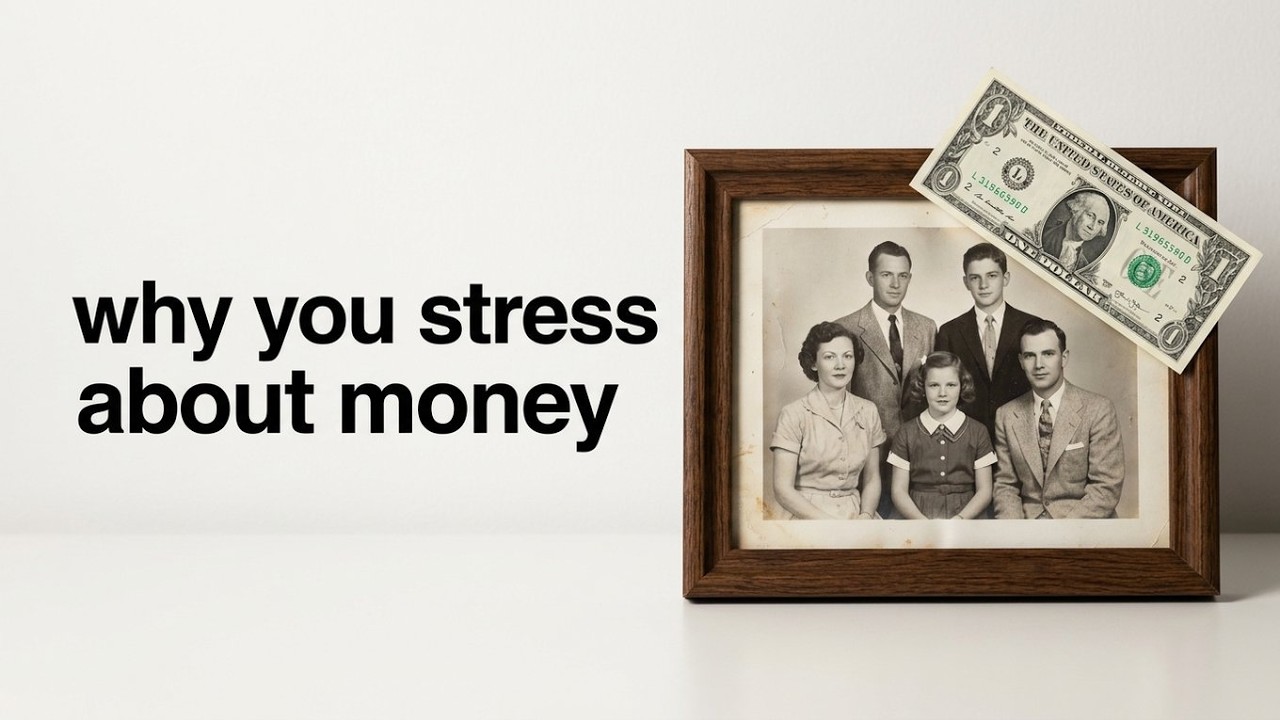
A money script is a financial belief that you inherit from your parents, your grandparents, and the culture in which you grow up. No one sits us down and tells us, This is your money script. We just unconsciously follow what we've learned. Brad's family followed money scripts created during the Great Depression. His grandfather walked into a bank one day and found all of his money was gone. In response, he decided he'd never again put a dollar in a bank. He lived into his 90s and kept his savings in a lockbox under his bed. That fear and anxiety passed down to subsequent generations. Brad's mother wouldn't go near the stock market. Brad grew up anxious about money without quite knowing why. This anxiety made him itchy to escape his graduate school debt fast. None of this was happening at a conscious level. And that's the strange thing about money scripts. The story behind it can disappear entirely, even though the feeling lives on. Your grandfather's panic becomes your mom's hesitation, and then it becomes your anxiety. Like puppets on a string, we don't realize how our money scripts are pulling us this way and that. So what are these money scripts? Brad has identified 4. The first is called money avoidance. If this is your script, you believe somewhere deep down that money is dirty, that rich people are greedy, that there's something almost noble in not caring about money at all. This script resonates because it carries a grain of truth. We can all picture someone wealthy who behaved badly. Think about the financier and sex offender Jeffrey Epstein, for example. But Bright finds that people with a money avoidance script tend to earn less and can unwittingly sabotage their own finances. One way they do this is by not holding their own financial choices to account or by denigrating everyone who's rich.
If you want to feel better instantly, the bailout is to vilify the the people who have something that you wish you had.
Money avoidance embraces the idea that money is the root of all evil. If that's your belief, how can you possibly consider doing anything that could make you rich? The next script, money worship, does the exact opposite. If this is your script, you believe that wealth is the answer to everything. Accumulate more money and more stuff, and all your troubles will vanish. Brad thinks this might be the most common script in America. Now, if you've ever been genuinely short on money, you know that more of it really does help. The trouble begins when you expect money to buy you happiness and solve every problem. You know how the story goes. You buy the thing you've been coveting, a new car or a luxury handbag. The thrill you get from this purchase is strong until it starts to fade. So you buy the next thing. You're on a treadmill. You can never stop. And this explains why so many of us spend more than we earn and carry debt we can never seem to pay down. Money avoidance and money worship are two sides of the same coin. Brad's third script is about something else— what money says about you to everyone else who's watching. He calls this script money status. If this is your script, you fuse two ideas that were never meant to be equated. Your net worth and your self-worth. What you have becomes a measure of who you are. People living the script spend to be admired. The new car, the fancy watch, the bigger house. Each expensive purchase broadcasts a message to everyone around them. The money status script is one we see everywhere in our world. Listen to a pop song or open Instagram, and the lesson is always the same: wealth. means luxury, and luxury means you're a success. But Brad says our culture lies to us about how rich people actually spend their money. In his research, he compared a group of people worth around $10 million to a middle-class group worth around $500,000.
They had about 18 times more money, but they only spent twice as much as that middle-class group on their watch, their house, their car, and their last vacation.
Many of the people actually building wealth do so quietly without drawing attention to their status. So we've talked about 3 of Brad's 4 scripts, and so far they all sound like traps, which raises a fair question. Is any money script actually good for you? Brad says yes. And that brings us to our final script. He calls it money vigilance. People who follow this script are the savers. They keep a cushion for emergencies, and have an eye toward the future. As a group, they carry the least credit card debt, and they lie less to their partners about money. Brad has noticed something surprising about them.
If you ask them how much they made, they're actually likely to tell you they make less than they actually do. The people who are least likely to brag about what they have are the people who tend to have the most.
Money vigilance sounds like a happy ending. Save, plan, spend. Stay grounded. But Brad is quick to warn that even this script has a downside. Pushed too far, money vigilance curdles into something else.
Some of the richest people I know were immigrants who had nothing, and their work ethic was so incredible, but they were so anxious about not having enough, they can have a difficult time enjoying life. And so really, we need to be able to do both. We need to be able to save for the future and enjoy the moment.
By now, you might be recognizing yourself in one or more of these money scripts. And this raises a vital question. If these scripts are written before we are born, are we just stuck with them? The answer is no. These scripts may be inherited, but they're not permanent. Brad's research shows that these beliefs can do real damage when we leave them unexamined. They predict how much you earn, how much you save, how much credit card debt you carry. But buried in that same research is a glimmer of hope.
You have the ability and the power to examine those beliefs, to modify and change them so you can better your life.
So let's look at how you can rewrite your money script. Brad says it starts with awareness. You cannot rewrite a script that you cannot see. And part of why these scripts stay invisible is shame. We hide our money fears, sometimes even from ourselves.
Shame is an emotional glue trap. And it keeps us stuck in our financial behaviors.
To get over that shame and move forward with awareness, Brad says it helps to focus on why you care about money. How does it actually add value to your life? In one experiment that Brad ran, a group of volunteers got a standard lesson on saving and compound interest. A second group brought a sentimental object into the lab. Brad then had the volunteers in the second group close their eyes. He asked them to picture how this object came into their lives and what it meant to them. Then he asked them about their financial goals. In other words, he had the volunteers subtly connect their money with their values. Members of the first group, the ones who got the standard finance lesson, they increased their savings by 22%. Volunteers in the second group increased their savings by 73%, more than 3 times as much. just by being prompted to reflect on their values. Brad eventually realized it was time to dig into his own attitudes and assumptions about money. He realized he had inherited a script that stretched back generations, one where he put in 70-hour work weeks and still felt lazy. So he literally wrote himself a new script and read it to himself at the end of every workday.
I have worked enough today. My family and my health is more important to me than this job. I'm getting up and I'm going home.
It took Brad a year of reading those words before he believed them, which tells you both how deep these scripts run and also how it's still possible to change them. At the start of this video, we talked about the common assumption that money troubles are a math problem. Earn a little bit more, save a little better, your worries will be at an end. But your bank balance is never the whole story. Underneath it runs a script that you didn't write, Handed down by people you may have never met. That script shapes how you save, how you spend, how you feel when the bill arrives. If you remember nothing else from this video, remember this: when it comes to crafting your money scripts, you should be the one holding the pen. So the next time money makes you anxious or reckless or ashamed, pause for a moment and notice the script you're following. And ask yourself, Is this the script I want to write for myself? Thank you for watching this video. If you'd like to keep exploring the hidden forces that shape your decisions, check out the Hidden Brain audio podcast. Each week, I sit down with leading researchers to unpack why we think, feel, and act the way we do. Listeners often tell us the show helps them understand themselves a little better and treat the people around them a little more kindly. You can find us on Apple Podcasts, Apple, Spotify, or at hiddenbrain.org. I'm Shankar Vedantam. See you soon.