How to Delegate (Without Losing Control)
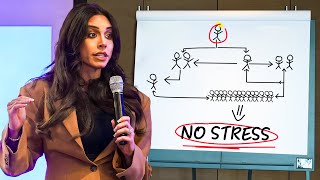
Shanli Liu shares how over-hiring at her companies led to laying off 23 customer-service reps, then walks through a four-level delegation framework: Investigation, Informed Progress, Informed Results, and Complete Ownership. She explains how to move team members through each level and when to use each one.
Chapters
What is up? In this video today, what I want to share with you is how I delegate without losing control. So I'll start off with just a little story, which is I didn't always know how to delegate, at least not effectively. And I think this is because typically we tend to be on one end of the spectrum or the other, which is like either we hold on really, really tight and we delegate nothing. And a lot of times what that does is it like keeps our team small. We tend to like burst at the seams at some point. And it kind of suppresses the team. And so some of your, you know, best people might leave or become resentful of the fact that you're just really overbearing and doing their job a lot of the time. The complete other side of the spectrum is that you delegate everything and you probably hire too soon. You delegate too soon. You don't give enough context to people and you don't really know how to do much. Like you don't understand how the machine works of your department. And so you can't really make informed decisions because you're kind of walking blind. Right. And so I think that the first thing that you have to be able to understand is which side you lean toward, right? And if you know which side you lean toward, then you can— that can make you more aware of how to cover your blind spots when you're trying to figure out how to delegate. And so when I first started off, I actually didn't know which side I swung to because I was inexperienced. And so it's like, I'm just kind of going with what's happening. I don't even know if— I think I may have started out really holding on tight. And then because we had such rapid growth, I think what happened was I just kind of was like, I have to let go. Right. And unfortunately, I didn't have experience in a lot of the areas that I had to let go and delegate to for the people I was hiring. And so a lot of mistakes were made. Right. And so one of those mistakes was one that stuck with me for a long time. It really made me determined to understand how to delegate without losing control, but also without suppressing your team by staying too involved. And so I'll tell you the story, which is when we were growing Gym Launch and Prestige Labs simultaneously, there was a year in which we were launching Prestige Labs. And Gym Launch was also exploding. And it seemed like an impossible task, but our team worked really well together. And so it came kind of to the point where we were like, all right, we need somebody to lead the way for Prestige Labs and to, you know, really take the team off the ground. And, you know, we kind of promoted somebody internally who had some experience, but not, not experience in like a fast growth, you know, like crazy fast growth company. And I think that's where I lacked experience was in understanding that there's a very big difference between, you know, leading sales or leading customer service or leading marketing in a normal company versus like an explosive company, right? It's very different. And so the experience doesn't always translate. And I put her in that department to take that company to the level it needed to because we knew that we had an existing customer base. So it was like, okay, it's not just going to be like a slow launch, it's like going to be an explosion off the bat. And so we need to be prepared, we need to staff up, etc., etc. And she did the math on what we were expecting in terms of volume. And so we hired like 23 people for essentially a customer service department. And I remember thinking like, that just sounds like a lot. But at the same time, you know, if the company is doing multiple millions of dollars a month, like, okay, I can see how that would work. And so we launched the, you know, product line and it all really went well. It actually went really well. But a couple of weeks in, I started noticing like a lot of disengagement on that team specifically. And I felt like the quality actually wasn't up to par despite how many people were there. And I was starting to get like a really weird feeling about it. And before I could do anything about it, I actually had one of the new reps say, hey, can I talk to you? And I was like, of course. So I got on a call with her and she said, listen, I understand that I just got a job here. She's like, but out of respect to you, I feel like you should know that I'm not working. I was like, what do you mean you're not working? She was like, no, like there's no work for me. And she's like, I'm pretty sure it's like me and like 6 or 7 others, like literally have no work. Like I answered like 3 chats all day. And I was like, oh, fuck. And so I was like, crap, okay, we overhired. Like, we didn't realize that very quickly efficiency is gained and you get processes and you get systems and all that. And so you don't need that many people. And so I went to the woman who had hired everyone and I said, look, like, look what's going on. Like, we actually don't need like more than half the team. Like, I think like 75%. And she was like, well, what do you want me to do about it? And I said, I mean, I've— and you have to understand, I was the kind of person who was like, if I ever— I will never do a layoff. I will never let people go for any reason like that. Like, that's wrong. That's, you know, that's harmful. It's all these things, right? And so I was facing this, the question myself of like, what do we do about this? And, you know, I talked to a couple mentors and I talked to a couple of people I really trusted and they were like, I think, you know what you need to do. You just don't want to do it. And I was like, I had, you know, identified with being someone that would never do something like that. So for me, it was very hard to face. And so then to even bring it to her was very painful for me because I felt very guilty. I felt like it's all my fault, which it was, but I also lacked experience and that's just kind of what happens. So I went to her and I was like, listen, like, I hate saying this, but like, we need to do a layoff. Like, we don't have anywhere else for these people to go. We're not anticipating growth like we just had. Like, there's nothing for them to do. And she was like, I don't want to do that. Like, I don't believe that's right. I think that's what big corporations do. I don't agree with you, etc., etc. And she wanted to keep everyone. She said, "Let me find work for them. I'll find work for them." And I was like, "You don't find work for people." Like, that's something I know. And so it ended up that we were at odds and, you know, she exited the company because we didn't agree. And I did a layoff. And it sucked. I definitely beat myself up over it for a long time for a lot of reasons. Probably too long, for sure. And I let it kind of take a stab at my confidence and how I felt as a leader. But more importantly, it taught me a lot of lessons that I realized later on, which is much more productive, right? To recognize the lessons that you learned rather than lull in self-hatred. And so what I realized it taught me was a couple of things. The first is that there are levels of delegation, right? And I did not properly identify this one. And I didn't identify that she was going to need more oversight than she had because she had experience but not in a rapid fast growth company like this. Right? The second piece of that is sometimes when you are growing really fast, you know, it's kind of like I could have done it, but it would have been done very poorly and I would have not met expectations. And so when I was making the decision to bring her in, I don't think it's the wrong decision to have somebody else do it. I think that the way that I let go of too much oversight was where the decision was wrong. So it's not all or nothing. It's not delegate or don't delegate. It's delegate to what extent. And so that's when I started reading a lot about delegation. I was like, I never want this to happen again. I feel like shit. And so I just want to prevent this from happening for myself. I want to be able to teach people how to effectively delegate without, you know, making a giant mistake like this, right? And so I don't even remember what book this came from, but it basically talked about the levels of delegation and it's really stuck with me. And I think I've kind of come up with my own interpretation of it, but I use it in my thinking when I'm trying to understand how I should delegate to people without losing complete control like I feel like I did in that situation. Alright, and so there's 4 levels. Okay, the first level is investigation. Investigation is where you essentially just delegate research to somebody else. You explain to them what you're looking for, what you want, and then you ask them to go retrieve information for you. And then they bring it back to you, and then you take action on that information. Right. And so this could be like taking customer surveys, it could be like, you know, finding if it's executive assistant or something could be like, you know, researching different places to travel. It could be, um, you know, gathering articles on how to hire a controller. It could be all sorts of things, right? And then that person brings that information to you, and then you do with that information what you will. That is a very— that's like the first level of delegation, right? So I would give that to somebody who's like brand new and has no idea about the thing I am asking them to retrieve information on, right? The second level is informed progress. Now, informed progress is where the leader, right, so like myself, would give somebody a task and then it would be with the understanding that they would take on the task and give me regular updates and I would help them when they're getting stuck, right? So they're informing me of their progress along the way. So it might be like, Sarah, I need you to go and launch this new product line that we want to launch. It's a new flavor of X for our supplements, and I want you to figure out what the sourcing, the pricing, and all that looks like. I want you to put me on the Asana project and then just like inform me when you hit these milestones. And so that's what informed progress looks like. So that's basically, in my mind, if somebody is competent and able to figure things out themselves but may not have experience in doing that exact thing, then I probably want to go with informed progress, which is like, I want you to keep me looped in the whole time because I do have experience or at least greater context than that person. And so I can help them when they get stuck or if they're going to make a decision that would be, um, less than desirable for the company. And then there's level 3, okay? Level 3 is going to be informed results. And so what that means is I'm going to give someone a product, I'm going to say, go start this new product line, you're going to figure out the SKUs, the pricing, the sourcing, all that. And then I don't want to hear about any of it until you're done, and I want to see the results, okay? So I want you to inform me of the results of you doing this thing. And so with that, it would be like giving that person that project and then saying, I don't want you to ask me anything along the way. I look at doing informed results as a teaching tool, right? So if somebody has been primarily doing projects in a way that is more of informed progress, where I'm looped in on everything, I'm trying to get them to take the next step. I'm going to tell them to not tell me and to use other people on the team, right, to help them throughout the way and then bring me the final end result. And so what I see that doing for people is when you're, when you're delegating at that level, it's teaching people to create a different support system besides their own supervisor. I'm saying like, "I want you to go work with the team and work with them to then produce a result that is, you know, they're going to want to feel more certain about because you're not helping them find it." And so, I look at that as probably the area of the most teaching is the gap between the boss being involved in every step of the way and then the boss not being involved until the very end. Now, once someone's done that multiple times and been very productive with it, then I would go to level 4, which is complete ownership. Right. And so complete ownership is, it's literally just like set it and forget it. And that is something that I wouldn't do with somebody until they've been in a role and been in a company for a couple of years, most likely. And sometimes if you're growing extremely fast and it is a role that, um, anything that they would do would not be detrimental to the company, you may do this at times. But with a lot of roles, you're still going to want to at least be informed of the result until they've been on your team and, you know, you know how they work and there's a lot more predictability and consistency in what you see come from them. And so for this, it would be, I'm going to give this to you. I'm going to give this task, project, etc. I'm going to give you the result that is desired, and then you're going to figure out how to do it. You're going to do it yourself. You're going to use other resources, and you don't even need to tell me when it's done. Right. And so a lot of the times, this would be how you would work with probably an executive assistant or like a director of operations who's doing things on your behalf. Right. And that's just when you've developed a level of trust that you've been able to go through all the other levels of delegation. And now you're at the point where you're like, I know they're going to get it done. And I know that 90% of the time they're going to do it the way that I would like it to be done. And if they don't do it the way that I would like it to be done, they're going to know why it didn't go well. And it's like, they will be able to tell themselves all the reasons that it didn't go well. I don't need to tell them for them because I know how intelligent this person is. And so when I'm thinking now about like hiring someone, bringing someone new in, delegating something, I'm going through in my mind how involved I want to be in that thing. And so I'll give you an example of something that I just started doing, which was a couple of quarters ago, I started passing off the organization of our quarterly meetings to my director of operations. And so what I basically said was, you know, you— she's been looped in on how I planned these out for the last couple quarters. So it was like, first I was looping her in, right? Like I was almost informing her of progress. And then now I'm like, okay, now I want you to do it and then loop me in at these points. Right? And all it is for this is like I'm on an Asana project and I see when certain things are done and I can just like comment on there if there's anything that we want to change. And I'm doing that because I want to make sure that she can be successful in her own right to get it done and that she also has autonomy, right? Because I'm saying like, hey, you can do things differently, you can do things your way, and then you can just check with me if you want me to tell you like, do I think that's going to work well or not? And it's new for her and it's obviously a big event for the company, so I want to make sure that she has my support.. But in probably 2 to 3 quarters, she'll do it all on her own and I won't be involved at all. I'm not going to be involved in approving anything. I'm not going to be involved looking at things ahead of time. I'm just going to probably show up and it's all completely done. I won't need to even be on the Asana task. And so I look at that as the evolution of how to delegate to someone. And like I said in the beginning, um, everyone messes up in how they delegate. And a lot of people, it's just not understanding or being aware of what kind of leader you are, if you're someone who really holds on tight or if you're someone who delegates too quickly. And if you can think about that for a few minutes, just look at your patterns, then you can decide, "Okay, then how does that affect the lens in which I see how I should delegate to other people?" And then hopefully you can avoid mistakes like I've made, like having to lay off, I think, like 23 people, which sucked and it was terrible. And that is why I feel like this video is very important because if you can just create this process for yourself that you can think through when you're giving things to people, then you will be a lot better off. And in the end, the more people— in the beginning, with— if everyone lacks experience, then you probably want more eyes on things, right? And so you are probably, in the beginning, if you are inexperienced, if people on your team are inexperienced, you probably want to be checking and QAing more than not. So if you found that video useful, go ahead, hit subscribe, and I will see you on the next one.










