How To Handle Challenging Conversations With Co-workers
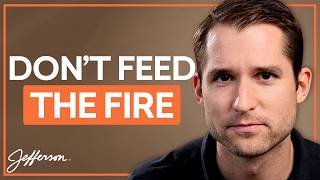
In this interview‑style YouTube segment, Jefferson Fisher, a trial attorney, shares a practical framework for navigating difficult workplace interactions. He begins by noting that coworkers are not family, but can become allies in stressful situations. Fisher treats gossip as a bonding mechanism and advises deflecting it with neutral responses such as “I don’t know, have you asked them?” to avoid feeding the fire while still gathering intelligence. He then critiques passive‑aggressive email phrasing (e.g., “per my last email”) and suggests concrete alternatives: forward the original message, add a friendly note, or use “bumping this to the top of your inbox.” A central communication tool throughout the conversation is the “Did you mean…?” question, which reframes potentially hostile remarks into neutral curiosity, allowing the speaker to seek clarification without accusation. Fisher applies this to credit‑stealing, recommending a private follow‑up that asks the colleague, “Did you mean to omit my name?” and then politely requests that the contribution be acknowledged. For micromanagers, he emphasizes incremental autonomy: ask for a small, self‑directed task, demonstrate success, and then request additional independence, framing the request as a way to reduce the manager’s own anxiety. The discussion shifts to the classic like‑vs‑respect dilemma. Fisher argues that being liked fosters lasting respect, and he outlines first‑impression tactics—consistent eye contact, genuine smiles, and pacing conversation like “easy‑listening” music to create a calm atmosphere. He introduces a communication metaphor of a “well” versus a “waterfall,” urging speakers to be concise, delivering information in small, memorable drops rather than overwhelming streams. He further advises slowing speech on key points to add weight and using vulnerability (e.g., admitting nervousness) to lower defenses and build trust. Finally, Fisher presents an argument‑de‑escalation analogy: arguments are knots that should be untied rather than won. Rapid apologies and genuine curiosity loosen the knot, preserving relationships. Throughout, his tone remains conversational, supportive, and grounded in courtroom experience, offering actionable phrasing, body‑language cues, and mindset shifts for anyone seeking to improve workplace communication.
Chapters
What is your overall approach to communicating with coworkers?
I find that people who you're working with, they're not your family as much as you want them to be, and sometimes they're your person in the, in the storm.
You can get like a Severance, right? Have you been watching Severance?
I have not.
Okay, but it's good.
Is it?
Okay, well, I mean, yeah, it's dark, but it's okay.
Okay. Oh, all right. I'm learning a lot about this etiquette life. It's the same thing with any difficult conversation. Whenever you have two people that are going through a common goal, they get closer. When you talk about the same thing, you communicate about the same thing, you are working towards a common objective, you typically talk bad about the same people.
Yeah, your boss.
Yeah, you talk about, can you believe this? And you're like, did you see what she's wearing? Like, you, yeah, it's like, oh, this coffee is really bad in here. You find ways of communicating with the person, whether it's by complaining, Complaining is often a very— or gossiping about people is a very communal thing. It's like it's bonding. Well, how do you handle, let's say, a lot of different topics we could go with coworkers. Let's put it in gossip because I think that could be a— okay, that tends to be a pretty common thing with somebody is you're in the office and somebody is gossiping about someone. And let's— mind you, the person you're— this coworker is not like your Bestie.
Not your bestie.
Not your bestie.
Not to be trusted.
And you're— because if it is your bestie, go for it. Say all the things you want to say.
Yeah.
But let's say just it's a very nosy coworker and they're gossiping about somebody and you don't know how to handle it because you don't want to really get into it. Here is what I would suggest is you go, I don't know, I'll ask them.
Oh, yes. Because then they'll be like, no, no, no, no, don't go ask them. Yes.
Or, yeah, so you could say, I don't know, I'll ask them. Like, it has such an immediate effect of like, no, no, I don't work over "Good, we're good." Or it's you— you could flip it and say, you know, "I don't know, have you asked them?" And they'll typically go, "No, but..." and they'll keep talking about it. As long as you're saying that, or just a simple, "Yeah, I don't know. Yeah, I don't— I'm not sure. I'm not sure. I don't know." You're not engaging in it. You're not feeding the fire. They're going to realize, "I can't go anywhere with this person.
I will find someone else to vent to." Although I do think sometimes it is valuable to be aware of office gossip. Yeah, because it is like intelligence, right? But I did—
sometimes—
but I did prepare a couple other scenarios that I just thought of, okay, about how to navigate workplace tension. And one of them is the passive-aggressive emailer, right? Whether sending vague jabs disguised as politeness, using phrases like, 'Pardon my lost email,' and 'Just to clarify,' which I find myself using them too sometimes.
I've seen lots of memes about these of like if you— somebody is saying, 'Per my last email,' means like, 'Look at my email.' Yeah, exactly. Like there's ways of trying to send that.
I mean, what would be a nicer way to— than to say, 'Per my last email,' because it's over— you're typing it, right? So it's— there's some things that are like when you write something, it's different communication than saying something face to face.
No doubt.
Well, is it better to say like, 'Please take a look at my last email'? Dated March 1st?
Well, let's talk about it. Let's etiquette this out. You could, in a sense, um, just forward the email to them.
Like, I've attached the email from March 1st.
You could, you could, you could. Yeah, instead of the per my last email, just, you could just forward it to them.
Yeah, and then say, did you see this?
Yeah, um, or it's, you could put this friendly at, just putting this at the top, you know.
Yeah, I'll do that. Like, you know, just, uh, you know, just, yeah, I'll say bumping this up to the top of your inbox.
Yeah, or you could have a simple— if they're like, hey, have you blah blah blah blah, you've already answered this, you could, you could just forward it to them. Like, to me, I don't find that being—
you don't get offended, right?
Great. I'm not. Now there's some people who would, or even if you just give like a simple yes or a no and you, you forward that or attach that last email, great. It's the per my last email type of thing that has become so I think the first time people typed it, no problem. But now it's become so part of culture to make it a much more passive thing. But let's say, let's say they don't send all of that. Let's just put it as they send a snarky email.
Yeah, which people do.
Oh yeah, people do. And they have—
sometimes I want to, but I stop myself.
Yeah. Um, I think that there are ways Here's how I would handle somebody who gives passive-aggressive comments at work, is you ask the question, should I read into that? Or did you mean? So let's say I'm talking with you and I'm sitting in your office. Let's just put it in face-to-face real quick. So, and you have a comment that makes me go, huh, I feel like that was a little, I felt like that was a jab. If you feel that, you can ask the question, should I? Should I read into that comment?
Yeah, that's great, because the way you're saying is it's neutral. The way you're saying it's from the heart, right? And it's more like a confused or curious as opposed to accusatory.
Exactly. And— or I love this, this question phrasing because it works with a lot of different things— is asking, beginning with, did you mean— did you mean for that to come across short? Did you "Did you mean to sound upset?" "Did you mean to be passive-aggressive?" Maybe not.
Yeah, we'll strike that one out. Yeah, yeah, yeah.
Okay. But if you said something as simple as, "Did you mean to sound upset?" Yes, that's great, because yeah. Most likely the response you're going to get is, "Oh no, no, no, no, no, I'm—" That's true. "I'm going to— no, no, no, I was doing this, I was doing this," and they'll justify or explain more, because sometimes, especially in email, We read the negative. In text message, we hardly ever read the positive into someone's words. We read the negative. We love the negative. So if I just responded to your text, okay, you're gonna go, what kind of okay?
Oh yeah, for Gen Z, that gives them like anxiety attacks now.
Is that right? Yeah. Well, if you have this just okay, It's usually okay, like it's just the worst possible thing because you don't, you know, you can't do anything with it. You don't know how to read into that. So typically we read the negative. Okay, I guess you're upset with me. I guess you hate me.
What about the credit stealer? The person who takes credit for group work or reframes your ideas as their own in front of the boss. What should you— should you confront them or should you find a way to get it back to the boss that they're a credit stealer?
Yeah, so what I would do is— huh, I don't think I've ever been asked this. I wouldn't do it right then and there and go, "Uh-uh, that's my idea," in front of the boss. Then that makes you look needy.
Yes, needy, and yeah.
Yeah, so what I would do is talk to that person after the meeting and begin with it, "Did you mean to give them my idea?" That's great.
"Did you mean to?" I'm just loving this "did you mean to?" I need to find ways I can use this more. Yes. Did you mean to, yeah, take credit for my idea or to give— yes, right.
So did you mean to give, you know, take the credit for my idea or not? Or you can say, did you mean to not mention my name in that idea? Right. So because you're now, you're really getting strategic. Did you mean not— did you mean to not bring up my name when you mentioned that? The response you're going to get most likely is the, oh no, I just, I totally forgot. They're not going to go, yes, I—
okay, then what would you say to that? We say, then can you please tell— do you mind, do you mind telling the boss? Or yes. Yeah, do you mind adding my name? Exactly.
So then I would make the ask for, then would it, would it be a bad time for us to do X, Y, and Z? Or would us to, would you mind raising that the next time we talk about this? Or do you mind sending an email? Now whatever that is, you're saying, then I would love to have you add the mention, or it would mean a lot to me if you added the mention to X, Y, and Z.
What about the micromanager, right? Your boss who doesn't trust you to do your job. They hover, they overcorrect, they nitpick unnecessarily?
So that's a symptom of them, not you. Yeah. And there's not much you can physically, verbally do to just change somebody's behavior because you can really only control what you can. So how do you manage somebody who's—
Yeah, you'll manage— you really just managing it. Yeah.
This is what comes to mind at least right now is if I can communicate with them to give me one little thing. Give me one thing that is my own. And once you complete that task, show them that you can complete another more. It's best to have these in little bitty conversations to where you have complete autonomy over something. And it's— you never want to make it like— what I compare micromanaging to is somebody is feeling like they are on the elevator, and they feel like the elevator is going to burst out from them. So they want to press every floor. They want to check every little thing that you're doing because they're afraid something's going to get dropped. And it's, again, the fear of— it's a fear within themselves, not, not of you. So if you can, in conversation, try to say, you know, I would love to have full autonomy over this little thing, or make that suggestion. And if This is gonna, if I can reach that, then I'd like a little bit more. It depends on context, but that's the mindset you wanna go into.
Let's move on to strangers and the art of winning people over. There's the age-old question, is it better to be liked or to be respected? Oh.
What's your take? Better to be liked because the person who is liked will naturally get more respect. And it lasts a lot longer. The people who like you or people who want to do things with you, for you, together. It's— I find that if you can make people want to be around you, then you're going to get more people who want to do things willingly rather than out of fear.
I agree with you, except maybe in a work setting, right? Because when you have strong relationships and goodwill, people are motivated to work for you. But if you come across as competent then like, if when people respect you for your competence, like, I feel that is also a very lasting influence. I mean, you hear about like bosses who are just terrible human beings, but people—
everybody wants to work for them, and then nobody's— nobody's sad when they die. I mean, yeah, that's true. Like, what kind of legacy do you want to leave? Like, and I think there's a difference too of somebody who's competent and they're resilient and all these under other wonderful things that you can absolutely be respected. I can be liked and be respected. You absolutely—
I mean, the ideal is to be both. So if we want to be liked, in terms of first impressions, how do we gain instant trust?
One would be smile a lot.
I always say that— eye contact and smile.
Yeah, eye contact and smile. And for people who have trouble with eye contact, a little trick is to end your sentences Looking at their eyes rather than feeling like you have to stare at their eyes the whole entire time. 2 is pace your conversation. So slow it down. What you're wanting to do is make it very calm and easy for them to be around you, want to listen to you. So I like to compare it to listening to different types of music. So again, because remember the music. Yeah, yeah. So think of the people you like to be around and apply a song to their personality.
Wow, this is getting like very technical. Okay, like a band.
Yeah, there's some people who are like, make you anxious because everything that they do is like a high-energy rock music where it's just always crazy. There are other people who are like easy listening where it's a lot slower, where you go, oh, kind of like I could put this on and listen to it all day. There are just different types of wavelengths and frequencies that we just enjoy hearing. Yeah, so if you want to— it's like the same type of people that you go, they just feel really warm. Yes. How do you, how do you explain that to people that just feel warm?
So, okay, so tell us about some of your trial tactics, right? Like, what— how does body language and speech affect strangers, and how do you establish yourself as a truth teller? Because I feel like you have to do that in your job every day in front of juries, right? Like, what do juries teach us about human nature?
What to do, what not to do. I find that trial attorneys, we want to persuade a jury to find in favor for my client. Now, there are limitations because I can only argue the facts that I'm given. I can't choose my facts, and I have to argue within the law. I can't choose what law applies. So when I am getting information, I'm going to make a point to somebody, it's very crucial that I am very concise. So good trial attorneys, you take 40 pages and you turn it into 2 sentences. And so same thing with like my content. I could talk way longer than 47 seconds or 30 seconds. You have to find ways to make it really concise, just the essentials of what matters. And how does that translate? It means when you're in conversations, especially difficult conversations, The less you say, the more you mean. It's this idea of the more words it takes to tell the truth, the more it sounds like a lie. Or more it's— you say something, the more it sounds like you don't know enough about it. So when you have to give information to somebody or respond, you want to keep your sentences very short and very concise. It's much, much better. I like to term it as instead of being a waterfall of information, you want to be a well. To where they always find like they just want a little bit more at a time.
And you know what, I can actually think of people that I know who are, yeah, people who are wells and people who are waterfalls. I'm gonna, I think I'm gonna use that to like distinguish between friends now. Oh cool, I love it. Um, and then how about using voice and vulnerability to persuade?
Voice and vulnerability?
Yeah, because you talk about how you use that in, in your courtroom.
The people who talk fast are the people who are typically not listened to in a courtroom because it's very hard to keep up with them. You have a lot of different people who have different styles. And when I can slow my words down, especially on important points, the more they're going to be remembered. At the end of the day, that's what I want these 12 people to do—remember. When they go back to deliberations and it's been 2 weeks, 3 weeks of trial, I'm going to need them to remember certain things. And other times they won't. So if I can slow my words down, they have more weight, punch. Like, there's a difference between me saying, I already told you I'm not going to do that, versus I already told you I'm not going to do that. Like, which one has more weight to it? Which one shows I'm more in control? I have more confidence. I have more weight in the conversation that I'm not going to be moved. It's always the second one. And what about vulnerability? Yeah, vulnerability is wonderful in conversation because it naturally removes people's defenses. If I can tell you before I'm having a conversation that I'm feeling nervous about it, you're not going to get upset. Like, nervous? How dare you? It's like, oh no, it's okay, we can talk. The other person wants to protect you. Yeah, we now want to almost kind of take your hand in the conversation. I'm listening, I'm listening. So there's a guy who I have not had a trial against him, but I've seen him. And he is not a guy who's very tall or big. He's a smaller guy. And in trial, he gets very nervous in front of other people, which is very weird as a trial attorney, but it happens.
And why did he choose to go into this profession?
Because he's passionate about advocating for people. I mean, it's the justice element. It's wanting to help people for the right reasons. And he does such a masterful job when he's in the courtroom. He'll tell the jury, he'll go, now, just so you know, I get a little nervous in front of people talking. And that's what every person in the jury thinks right there. Okay. And you know what they do? They go, I love this person. Forget the case. I don't care. Your client wins. Like, that's what happens. If they don't like the attorney, they're not going to like the client. If they don't like the attorney, you're going to lose. They're not going to find in favor of somebody that they don't like, and they will find reasons for that. But when he starts to kind of stutter and say, "I get nervous, but I'm going to represent my client," like everybody in the courtroom just goes— It's like a hero, yeah. "Just take the money." Like everybody just loves the guy. And so, but that's what happens every day. Somebody who's nervous in conversation, we root for them. We want to see them succeed. And so Being vulnerable is very much a strength. When you can tell someone how you're feeling in that moment, or you're telling someone, you know— I'm not perfect. Exactly, because perfection is not relatable. Vulnerability, struggles are. So when you can tell someone what you're struggling with— so the takeaway here, if I tell somebody I'm struggling to find the words to say this, or I'm struggling to control my nerves right now, you are just showing a little bit of yourself to make them feel, oh yeah, I know that feeling. And they're going to want to take your hand in that conversation, and it's going to go better.
And you can apply this to anything— to love, to career, to friends, to strangers—
as long as you're not doing passively of like, I struggle to understand how you could possibly— like, you don't want to use that. That's not the kind of struggle we're after.
So my favorite quote of yours is that smart people never win arguments because you lose the relationship.
Yeah, when you set out to win an argument, you will often lose the relationship. It is this idea that you can— if you set out to win every argument, all you do is win their contempt. You've won to be the first to apologize, most likely, and you lose their confidence, you lose their trust, you lose their respect, the connection. It's this idea that you can still win an argument and still be wrong. It does nothing. It does nothing. And so when you start to pull your way and I start to pull mine, all we do is make the knot tighter. It makes it harder to undo, and it takes longer for us to undo the knot. So instead of seeing arguments as something to win, I want you to see them as something to unravel, because it's all that is. Arguments are just a window into somebody's struggle. In that moment? What are they truly struggling with? And if you just keep tugging and I just keep tugging, it takes a very long time to undo that knot. If I can be quick to apologize, well, it's very easy to loosen that knot. Yeah, yeah.
Again, the de-escalation.
Yeah. But the harder I squeeze onto that apology and I'm never going to give it from you, we're just— it'll take 2 weeks, it'll take 6 months, it'll take a year before we undo that knot to have an actual conversation again.
Yeah, I love that analogy. And, and I feel that when we think of them as difficult conversations, I mean, arguments, if we handle them well, it actually is an opportunity to deepen a relationship. Like, when I think about the relationships I've been in, usually after you have that difficult conversation, then you come away thinking, oh, I have more of a connection. Absolutely.
Because you've been through the difficult with them. Like, you've been through the hard stuff, the ones you are. And that's meaningful. It's super meaningful because you, you've created bonding in, in that, in the struggle together. It's this idea that the deeper connection you want to have with somebody, then the deeper tolerance you must have for difficult conversation. It's if you've only had surface-level conversations, you're going to have a surface-level relationship. And the people that are able to go deep with you on something, even when it's hard, even when you're tearing up and sometimes you yell and you've experienced that, because that means I'm still here. Even when you're showing me all of your flaws, it means I still hear and I still want to be here with you. And that's— that, that means something to people. That is beautiful. If you enjoyed that clip and want to see the rest of the conversation, you can click right here. Or if you want to see the latest episode of the Jefferson Fisher Podcast, click right here and I'll meet you there.










