How to make fewer dumb decisions...
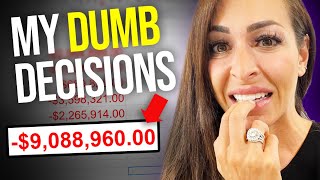
In this solo training, Layla (Leila) Hormozi, co‑CEO of Acquisition.com, shares a decision‑making framework aimed at entrepreneurs and CEOs who feel stuck or are making more bad than good choices. Drawing on her personal journey—from a fitness trainer with no business background to building Gym Launch, Prestige Labs, and a software lead‑generation company that now generates $85 million in revenue—she explains how a few “net‑zero” or “dumb” decisions can erase the value of many good ones. Hormozi identifies four root causes of poor decisions: the paradox of choice, the “prison of perfectionism,” lack of formal decision‑making training, and the tendency to turn practical problems into emotional ones. She then outlines a step‑by‑step process to avoid dumb decisions: (1) ask the right question, (2) separate the problem from its symptom, (3) test assumptions, and (4) map the most likely outcomes using upside, downside, worst‑case, and likelihood. The talk includes concrete examples—such as evaluating a underperforming marketing director with a decision matrix—and references insights from investors like Warren Buffett and Jeff Bezos to illustrate that long‑term success comes more from avoiding bad choices than from making brilliant ones. Hormozi quantifies the impact of dumb decisions (e.g., $9 million lost from her three worst choices) and encourages viewers to adopt the framework to protect themselves and their teams from costly errors.
Chapters
What is up? In this video, what I want to share with you is a training that I did on how to make better decisions, or more so how to stop making stupid decisions so that you can grow your business. And so if you are at a point where you feel like maybe you feel stuck, maybe you feel like things aren't growing as fast as you want them to grow, maybe you feel like you can't get yourself out of the business, oftentimes it is— those are symptoms of a root cause, which is that you're not making the best decisions, or maybe you might be making great decisions, but you've made enough stupid ones that outweighs the smart ones you have made. And so in this video, that is what I go over and that's why I made an entire training about it. And so if you don't know who I am, my name is Layla Hormozi, co-CEO of Acquisition.com, portfolio of businesses that does about $85 million per year in annual revenue. And I just made this video because I felt like it was something that was needed and is a problem I dealt with for many years. And I think a lot of the CEOs in our portfolio deal with. And so I hope it is of value to you. Have a great rest of your day, night, evening, drive, whatever you're doing. The topic I chose actually, and it was something that Chris had brought up, was how to make— well, it was really making tough decisions, but I, I've kind of reworded it into how to make fewer dumb decisions. And so I'll, I will tell you why I chose that to be the topic in a second, but I figured I'd give a little bit of background on myself. You know, I'm not like a professional speaker or presenter or anything like that. And so I don't, um, If I say, um, or like, it's just because I don't, I usually just am speaking to my clients. At this point, I think it was, we just celebrated, or I think coming in a month is our 5-year anniversary from our first company. And that company is called Gym Launch. And that is one that my husband and I started back in 2016. And to give you context prior to that, you'll see, I have like a picture right there in the corner of myself overweight and then myself competing in a bikini competition because Prior to that, I had no experience in companies. I had been a trainer for 7 years. And so I actually got into the fitness industry because I lost weight. I wanted to help other people lose weight. I didn't know anything about business, marketing, sales, nothing. I was just exercise science physiology major. And I really just wanted to help people. That was genuinely all I wanted to do. And I actually got interested in business because as soon as I got out of college and got out of my internships, you know, I had this idea of what my life would look like. I'm sure as many of you, you know, you start a business, you're really passionate about it, or you go into something you're really passionate about, and then you realize it was like, oh, I have to know how to sell and to market and to keep customers and to do billing and all these things. And that was really how I got into studying more of that side of the business aspect of things. And then I met my husband, and that's when we started our first company, Gym Launch. And essentially what that company grew to do was we've worked with over 5,000 gyms now, and essentially small micro gyms. And we have a business model that we like to put into their facility so that they can honestly just make more money and retain more clients. Because the average gym has really bad numbers. The average gym owner takes home like $18,000 a year only, and their churn is usually 20% month over month. And so we just saw a really big need for it in the industry. And it just so happened it was our first business together. And I think because of the combination of our skill sets, which was just happenstance, um, he's really good at marketing and vision, and I'm really good at managing people and leading people and operations. It just grew really quickly. And so that's a picture of, I think that was our 4th event, and we had 750 gym owners there. And it was a really great experience growing it. And now we've expanded into, we have a company called Prestige Labs, which does, we supply supplements and meals for facilities to sell through. So like a chiropractor, a physical therapist, a gym, they can all sell these through their facility. And it's built with that in mind so that then they have kind of proprietary things to sell so that they're not like price looking on Amazon and such. And then from there, we started a software company about 11 months ago that nurtures leads. And all of these, the supplements and the meals and the software came from the first company. It was really ideas that stemmed in there, but they deserved their own, you know, team and efforts behind them. So I kind of look at them more like product lines, if that makes sense. We're really passionate about giving back. You know, I think some of you may be familiar with like the ClickFunnels world. We were good friends with the CEO and we had said, it's really cool to have all these like make money awards, but like we don't really feel good taking make money award 'cause it just feels kind of grimy. And so we suggested he do, we wanted to start one for donating. So who can donate the most? We thought that was a better form of competition. And so we're on the board of After School All-Stars. It's a charity that they work with underprivileged kids. And so it's been a tough year for them because of, you know, not having contact with them in school, which has been hard. But they're a really great organization. And so at this point, we have about, between the 3 product lines, I have about 85 people on my team. And the reason I feel like I can share with all of you today is that I started with no experience 5 years ago. You know, I literally had no idea what I was doing. And so I just have a lot of in-the-trenches knowledge. And it's something I've become passionate about because I think I remember when we first started our company that my thought was, I cannot let this not work because of me. And my husband, or my partner at that time, right, he had so much faith in me. He was like, you're just so good with people. There's no way you can't do this. So I was like, all I need to do is acquire the skill. It's not like I have to— I know I have the right intentions. I'm the right kind of person. I just have to acquire the skill. And I think that what I realized along the way was the one skill that I was missing in the beginning, and that I think I've really honed in on in the last 2 years, is really just decision-making. And it's so interesting because it's not something that I really like would say is a skill, but now I would say it's a skill. And the biggest piece that I've, you know, taken away from that is I think that the people that I've observed that have, you know, I consider mentors and I look up to, it's not necessarily that they're more skilled than I am, but they make a few, like just a few better decisions than I do. Or more so, they make less bad decisions than I do. Right. And so that's why I felt this was a good topic to share. It's just something I've been really interested in, shedding light upon it with our clients and with, you know, friends of ours that we just have, you know, maybe we have equity in their business or something. It's been something that I think has been helpful. And so that's why I want to share that with everybody here. So the biggest piece is obviously we all know that you can't make progress without making decisions, right? And I think it's really interesting because I think we make about— the number is 30,000 decisions a day. And so you think about that, you think about your business, right? And you have like one big decision to make, but you have all these micro decisions you're making around it. And so I just really became obsessed with thinking like, how can I make less bad decisions? Because I feel like you can make a ton of really good decisions, but if you make one really bad one, it kind of outweighs it, which is my point here, which is like, no matter how many decisions that you make that are good, if you make one bad one, I've coined this phrase, you can get zero, right? And so it's essentially a net zero decision. Meaning that that one bad decision is so bad that it cancels out all of the good decisions that you just made. And I've seen that happen so many times with clients of ours, where it's like they have so much momentum. And it's oftentimes when you have the most momentum that you make the worst decisions. And so here's my theory behind it, as well as like, you know, the compilation of everything I studied. Often those net zero decisions are made in an attempt to avoid failure. So they don't come from a place of proactive, I'm aggressively taking action. They come from a place of, I don't want to mess up. And I see this happen so often, especially in the first couple years of a business. I feel like these are most often the decisions that are made. What I consider a good decision would be, you know, picking a growing market, finding a blue ocean, developing a proprietary technology that allows you to have a moat around your business, maintaining a really healthy margin, developing a high-performance culture, Picking the right business partner. Those are fundamentally very good decisions, right? A net zero decision. And these are ones that I took from examples from either myself or from people that I knew. First one is one that I've made, which is hiring the wrong COO. Picking the wrong investor. Selling to the wrong firm. Expanding into the wrong niche. Underinvesting in your product. Or failure to innovate fast enough. I've seen all of those take out a lot of businesses in the last few years.. And particularly within, you know, the client sector that I've, I've coached. And I consider those net zero, which is I've seen people who have had really great, beautiful 7 or 8-figure businesses and they've made one of those decisions. Like everything up until that point, they're batting 10 out of 10. And then they make that and it's 0 out of 10. It cancels everything else. And so I hope that just, if I can just help one of you on this call not make one of those decisions, then that would be, that would be enough for me. And so this is often the way that I see it happening, which is you get into business, and I think we all know this, right? It takes a ton of bold, decisive action to start the business because just in general, you have to feel— it's like that fierce fire. It's more of a masculine energy helping you get it off the ground and get it started. And then what continues to happen is in the beginning, you probably feel like a fraud because you're making all these mistakes. But the thing is, is that you're continuing to make mistakes, but then you'll correct them very quickly because you're taking a lot of action in the beginning. Then what starts to happen is you start to question yourself. I see this all the time. This is where the mistakes come in. And you start to say, I don't know if I'm so good at this. I don't know if I trust myself. And then you start to make mistakes by omission. And that's at the very top. That's the peak. That's usually when the business is actually in a very good state. And then you'll see the CEO starts to back off. They start to really like pull themselves, almost withdraw. And oftentimes it's the feeling of they don't want to talk to their team. Maybe they don't want to talk to their customers, or maybe they don't want to speak up as much because they're starting to lose confidence in themselves because they feel like, oh, I'm making mistakes all the time. But the reality is they're making decisions all the time. And at least they're aggressive mistakes that they can course correct quickly. But what happens from there, if they make the mistake by omission, is that then they go down the road where they start being more passive and decisions are made for them because they just put them off. They become indecisive and they put things off. They start to procrastinate. I've seen this cycle so many times with people. And I think that what everyone just tends to forget is that, you know, the mistakes by aggression is typically always the better way to go. Because if you make a mistake by omission, meaning you just put it off and never make the decision, it is a decision in itself. And it usually doesn't end up in our favor, right? So we have no control over that situation. So that's a cycle that I've observed. What I think this stems from is there's a dichotomy at play, and you probably all feel it, which is there's taking action. And then there's reflection. And you'll often see there's different CEOs that are oriented towards one or the other. Either they take a lot of thinking time or they're just very action-oriented. I think that what happens is that people say, oh, I shouldn't be taking so much action, right? Like I'm taking too much action. I need more reflection. But in reality, I think we all know here it's action plus reflection. And so it's, can you make all of those little mistakes, but also at the end of the day, or have that scheduled time to sit and reflect and think? And I just, it's, I think it's a hard balance for especially female entrepreneurs to find that, to find that sweet spot of like, where do I have, where am I taking enough action, but I'm also making sure it's the right action by reflecting upon that. And so that's where, you know, I think that as we say that decisions dictate the quality of our life, it also dictates the quality of our business. And that is what really fascinates me about it. And I've studied a lot of, actually, more so people that are in the investment arena. Because if you think about that, I think it's really fascinating because people that are investing for a living, you know, they're taking other people's money and making bets on it essentially. So it means they're making really high-priced decisions all day. And so I find that those people are really good to study because they have very few decisions to make and they're very, very important. And so I really like to study that kind of decision-making. But what I wanted to go over today was really two things, which the first is, you know, why don't we make good decisions? And then the second is just how not to make dumb decisions or how to make fewer of them. And so the first question being, you know, why don't we make the good decisions? And that being said, inaction is a decision in itself, right? So I think that we can agree on that, that a decision made by omission is also a decision. It's just one that is easier to deal with, 'cause you feel like it's not your fault, 'cause you didn't actually take any action, right? The first thing that I see is the paradox of choice, right? And so I think this is really interesting because personally I experience this all the time, which is if there was a study and it was on jam in the grocery store, right? So the store that had 24 choices of jam only attracted 60% of the shoppers and 3% of them actually bought the jam. Whereas the one that had 6 choices of jam attracted 40% of the shoppers, so a little bit less, but then 30% of them actually bought the jam. I know personally that when I go to Trader Joe's and I go into the peanut butter aisle, I'm like really set on it. I'm like, I'm buying peanut butter, almond butter, sunflower butter, something here. Like, it's amazing. Right. And I go there and then I'm like, I literally can't choose. It's either all or nothing. And then I choose nothing because that's easier because then there's no risk that I'm wrong. Right. And so I think that this is one of the major reasons that I feel that people don't is that especially as you start to gain more success and get momentum, It's like there's so many options. You're like, I could do so many things. I have no idea how to pick. The second piece is what I call, and actually this is from when I used to be in the fitness industry, is I called it the prison of perfectionism, uh, which is essentially that you believe that if you make the wrong decision, right, there's a wrong decision that you are going to, um, end up with more problems or an imperfect solution. And so here's the, what has helped change my mind completely about this. Is that, you know, you realize over time that with every decision comes consequence. And so every time you make a new decision or you're looking at a problem you're trying to solve in your business and you say, this is the solutions that I have available to me, it's not, do I want to solve this problem using this? But it's, would I like to trade the problems I have today for the problems that exist if I choose that solution? That has really helped me because I am a perfectionist at heart.. But now I realize whenever I make a choice, whenever I make a decision, I am not eliminating problems. I am trading problems. It was like mind-blowing for me. I'm like, oh my gosh, I am, I'm trading problems. It's like, if you want to continue to be the weight you are, say, if you want to lose weight, right? Then my problem is that I don't fit into my clothes and I don't feel good about myself. If I would like to lose weight, then my problem is that I'm sweaty all the time. I don't have time to get dressed. My clothes don't fit and I'm hungry all the time. Right? It's like they both kind of suck. But, you know, in my world, I'm like, well, I'd rather be in shape. Right? So I choose that. I'm like, I'd rather be hungry and like, you know, sweaty. That's what I would choose. And so I just look at it now as trading problems rather than trying to find a perfect solution. The third thing is just, I think that we've just never learned. And I think that's something that's really not taught in business. And it's something that I think we can all utilize with our teams as well. Right? Is decision-making framework. How are we going to make this decision, right? And there's never really been a formal process taught. I think that it's more, you know, there's little like vague things that are said, like, go with your gut. It's like, well, your gut is really helpful, but what if you're a really fear-based person? What if your base state is constant anxiety? Well, then your gut always tells you to go run and hide, right? And so I think that if we can develop a process for making decisions, right, and we learn that process, then we can protect ourselves from those emotions that we know don't actually serve us. And then the last piece of that, really going in with the emotional piece, is that we tend to take— and I don't know if you guys feel like you do this, I know I do this— is that I'll escalate a practical problem into an emotional problem. So what I mean by that is you see a problem in your business and you make it mean something that it doesn't need to mean. Right? And Chris, I know you've talked about this, which is what meaning do you assign to something? And so I've Uh, in the, in the fitness industry, we talk about taking a practical problem into an emotional one, right? Which is you step on the scale and you haven't lost weight. And so there's one of two things that you can make that mean, which is you could say, oh, maybe it's because I drank more water last night and I went out for sushi. And so I did use soy sauce, even though sushi was low carb, or it could mean I'm a fat POS and I'm never gonna lose weight. Person number one that chooses number one goes on with their day and they're not emotionally disturbed. Person number 2 that escalates it to mean that they're a complete failure at life goes on for it to ruin their day, and then the next day, and then their week, and then they just eventually feel like a fraud and then give up. And so I think that we do that with a lot of problems in our business too. You know, it's like, oh, our churn is a little bit higher than it's supposed to be. It's like, oh, I suck. My product sucks. Why can't I make something better? Right? Rather than like, hmm, what is the average churn for this market? Is this average? Is it below? Is it above? You know, what did we do the same week that our churn went up, right? Rather than looking at like it's a practical problem. I think that we take things a little bit more personally in our businesses. And so they tend to escalate to be emotional issues. And then I think what we all know is that when emotions go up, intellect goes down and we do not make the best decisions. And the reality of that is that when that happens, we pay the dumb tax, right? And I think this term was coined by Kevin Cunningham when he talks about the dumb tax. I love this question. So I would like you all, whether you have a notepad or you have something, a pen and paper, something to write this down. Okay. So I want to ask you a question, which is how much more money would you have, call it business money, personal money, whichever, if you could unwind your 3 worst financial decisions? It's a really fun question to ask yourself, right? So my husband and I did this exercise and I came up with mine, which was Frightening. It's $9 million. I would have $9 million more dollars in my bank if I had not made the 3 worst financial decisions. And it's funny because I would say half of that relates to when I talked about the net zero decisions, one I made there, which is simply just having the wrong person in the wrong role, right? For a not a long period of time, maybe a year. That being said, when emotions are high, the intellect goes down, we're more likely to pay more of that dumb tax. And I think it's interesting because you can almost quantify it in your business by just looking at the amount of money that you would've had if you didn't make the wrong, wrong or dumb decisions. Right. And so I think about that in terms of opportunity loss. I'm like, well, if I had had that $9 million, what would I have been able to do with that in the business that I can't now? Right. Like I could have bought an entire new building for our team. I could have flown everyone and moved them all in because we're a virtual team. I could have had the office by now. All all that money I could have reinvested in their moves and raising or adjusting their pay based on the state. Like there's so many things I could have done that would've moved the business forward, but instead it kind of just detracted. And so that's why I really think that you need a process to protect you from making the dumb decisions, right? Because we all know why we make them, but how do we protect ourselves from ourselves? I think it kind of goes along. I have a friend who is an entrepreneur and he has a process for protecting his team from his dumb decisions, which is he has to write them a proposal every time he wants to make one. And so everyone kind of finds the thing that works for them. And I want to share what I found that works for me. This quote is one that, you know, I said that I really like studying investors and the way that they make decisions. I think Warren Buffett is somebody who obviously is like, you know, the number one, and I would probably not invest like him because I'm not him. But I think that his principles for investing are fantastic, which I love this quote, which is outstanding Long-term results are produced primarily by avoiding dumb decisions rather than making brilliant ones. And I was listening to a breakdown about 2 weeks ago of Jeff Bezos, and which I found out it's pronounced Bezos, not Bezos. I didn't know this. And of Amazon. And it's really interesting when you think about it, right? Because nothing Amazon started with doing was brilliant. It was things that people were already doing. The difference was they did it all at once in the same business. And so it was a breakdown by Reid Hoffman, who's the founder of LinkedIn, or the former CEO. And he was breaking that down. And it's like, well, he didn't make some brilliant, you know, monumental decision. He just made good decisions and didn't make many bad ones at all. And so that really hits home for me because I think that sometimes we feel too that in order to have an outsized success in business, that we have to make these brilliant genius decisions. We must be these very smart intellectual people. And I just don't think that's the case. I think that it's, let's make less bad decisions and focus on that first. And I think that if you have fewer dumb decisions, then you have a higher quality of life. And I found 4 people that have quotes that echo something like that. And they were all the people you see here, Jeff Bezos, Warren Buffett, The Rock, Oprah. I consider them all successful. You know, whether I have all the same beliefs and values as them or not, I consider them successful. Here's my breakdown of my framework. In which I, this is actually what I work with my team on this, of how to make not dumb decisions. Essentially, I like saying it like that. Cause it just helps me really clarify. Like we're trying not to make dumb decisions. We're not trying to make brilliant decisions. Right. So the first step is asking the right question. Right. And the reason is because the wrong question always leads to the wrong answer and unattractive questions lead to unattractive answers. Right. Why am I so fat? Well, you're not going to get a good answer. It's a very unattractive question. Right. So here's one that I took from a client when I was on a coaching call with them, which was, well, our rent is too high. And then I'm like, well, what's the problem? Well, why is our rent so high? How can I get the rent lowered? This is like the— what I was walking them through. I'm like, well, what's the actual problem? What's the question that you need to ask? And that's what they got to is how can I get the rent lowered, right? I'm like, well, I don't know if that's a good question because like, what can you really do to lower the rent besides send this? You know, I have like a letter that we tell them to send to their landlords or whatever for like a break, but it's like, it's not very convincing. There's really not much you can do. So a really powerful question that you could ask though is how might I make an additional $2,000 per month to pay the rent so that we can remain in our beautiful building close to our employees? Like, how much more does that question serve you? And I think that oftentimes, and I challenge myself with this because I can be very like, no, that sucks. No, no, no. Like, just, eh, things. I'm more of a cynic in the business, right? Like, I'll find the problems. So I have to challenge myself to ask the creative questions to myself in order to find the right answer. How might I blank so that I blank? It's actually a form of copywriting. And I was like, that actually works for questions too. How might I do blank so that I can have blank? I think it's a question that just serves us a lot better. So the first piece is asking the right question, right? And if the, if the first answer that comes to your mind's like you, you draw a blank, then you know it's not the right question. Because if you're asking the right question, then you'll have multiple answers that come to mind. And it limits the overwhelm of options, right? Because I think that when you ask a creative question like that, then it opens doorways, but it also eliminates them because it's $2,000 a month. It's not unlimited money per month, right? Like I'm dialing in the specifics for the question. I'm not saying, how do I make double my profits next month to cover this, right? It's just, how do I make an extra 2 grand? Maybe throw an event on the weekend, maybe get a sponsor, maybe do a paid-in-full. Maybe sell this package right here. That's actually not that hard if you're thinking about it, if you're a brick-and-mortar business. There's a lot of ways. The second step is really separating the problem from the symptom. I think we all know this, right? Because the symptom is the surface level and the problem is deeper below. But I feel like most of the time what we do is we get really caught up in our own business that we don't see that we're talking about these symptoms as if they are the problem. And I know I've done this so many times, I've had to catch myself. This is one that I've seen come up so many times, especially with product-oriented business owners. So like, my problem, my problem, they say problem, I say symptom, is that I can't find the right marketing person. My business would only grow if I could find the right marketing person, right? Like, I just need this marketing person so that I can do this, right? So my business can grow. But in reality, this is what the problem really is, right? I am deficient enough in my understanding of marketing that I do not even know how to find and recruit a proficient marketing director. I lack the skill to find them. And so I think that it's really looking at it like that. Right. And I think in our businesses particularly, we might think, well, I just can't find any, any good people. You know, it's just because I'm local and I can't hire from all around the United States like you, Layla. I hear that one a lot. Or X, Y, and Z. Right. There's always some excuse. But I think that often it's pointing back at us or, you know, a decision that we've made at one point in time, you know, even a decision we made 3 years ago. Right. Maybe the person that is now looking for the marketing director that can't find them because you hired somebody who doesn't know how to find that person. Right. So there's so many layers to it, but it always goes back to us. And so I think if you position it differently like that, and you look at where's my deficit that I can't even identify why this is a problem. And then the questions that I think are helpful to ask, um, that, that helped me come to a conclusion are these three, which is one, What are the possible reasons I'm noticing these symptoms? Why is it such a— why am I noticing that I can't find a marketing person? Okay. Well, because our business isn't growing, right? That's a thing. What is not happening that if it did happen would make the symptom go away? Well, if our business was growing, I probably wouldn't need a marketing person because I'm assuming that that's what's going to fix the problem. And then the third, what is happening that if it stopped happening would make the symptom go away at all? I mean, in this case, I don't really think there is, right? There's nothing happening. There's no action being taken. It's something that's kind of like at a standstill. So I might say, okay, well, the problem is actually that like, I can't find a proficient marketing person, but the real problem is that I can't grow my business. And so is the only way to solve that through marketing, or is there a different way that I could grow the business? You just come up with more creative solutions. Third piece to this is testing your assumptions. And this is a piece that I got from a coach I had maybe 5 years ago. It really changed how I looked at things. But the question becomes, where are you substituting opinions for facts? Right? It's like we are literally assuming that something is word and it is truth when it is not. And so I wrote down some that I saw in the last year or so that people believed to be true, right? But weren't. A big obvious one is that many businesses assumed, right, that their business needed to be in person to grow. Completely false. I can tell you from personal experience, there are so many people that I know that are just thriving, even though they had to completely shut down their brick and mortar locations, because I primarily worked with brick and mortar businesses. And I've seen so many people have bigger businesses now, even with having to do that adjustment. So that's false, right? It's not an actual fact. Some other ones that I've seen in business. Uh, one, this is one from the software world. You cannot liquidate your cost of acquisition when you sell without sacrificing the experience of the customer. This is not true at all. That is an assumption made by the software world that's been around for, I don't even know how many years. They think it takes 12 to 18 months to liquidate your cost of acquisition. That's just like what's normal, right? But like, why has nobody questioned it? Second, you can't sell too much to your customers at once, otherwise you will lose goodwill. That is also a very interesting one. If you look at the studies that have been done on buying frenzies, which is that people are happier when they buy more all at once, from a business. And they often stick longer with the business too, when they're sold more in that time when they're in a buying frenzy. It's really interesting, right? So if you think about, I, this is a study done in the weight loss industry, right? People who, when they sign up for a weight loss program, buy supplements, buy meals, buy new attire, like a watch, all that, they're more likely to have success, right? And the people that are not sold as much will not. It's so crazy, right? But that's something that people assume. They're like, I can't sell that much to somebody. They would just think I'm all salesy, right? I would lose all this goodwill. Not true. Your loyal and longtime customers and partners will never leave you. I've seen a lot of people that have had that realization in the last year, right? Because people will leave when it serves them. And then you have the best product ever, for sure. I had to put that one on there because I just feel like anytime I'm talking to someone about their business, I'm like, well, what— it sounds like the product might be the issue. They're like, it's not. The product's not the issue. It's oftentimes because they're so close to the product that they don't realize that it actually is the issue., right? And so it's a belief that they're not testing, right? And so the way I see it is that if we turn our beliefs into assumptions, we expand our possibilities of our business. And so instead of saying, I believe X, Y, and Z, I've turned this into saying, I assume X, Y, and Z with everything. I assume my husband loves me and we're going to be married forever, right? I assume this business is going to continue to grow. I assume the sky is blue. Like, I don't care. I'm just gonna say I assume everything because my, I am so much more open because of it. And I found that in my business, I've come up with so many more creative solutions if I just assume everything and believe or hold truth to nothing. There's so much more flexibility in it and it just feels better, right? Because if we're super rigid in everything that we believe and everything we hold true, then it's really hard to have our beliefs broken for one, which is always how we grow, I think, as business owners. And for 2, how to change things. The 4th step to this. So after we've asked the right questions, we've tested our assumptions, right? Then we want to map out the most likely results. And so I do this all the time, actually on this whiteboard right here. I'm like, actually, this is where I do it. Like every time is I map out what the most likely results are going to be. So this is the simple equation that I use. You know, my dad's an engineer and he has a decision-making matrix that has about 16 points on it and he weighs them all in little decimals. And then there's like, 15 on the, the x-axis. And I'm like, I'm good, I'm gonna do this. I put my options on this side in this column, right? And then I ask these 4 questions, which is: 1, what's the upside? 2, what's the downside? 3, can I live with the worst-case scenario? So you think about the downside, and then you think, what's the absolute worst-case scenario of that? And then likelihood of occurrence. So I'll give you an example. What is the upside, right? So say that I have a director of marketing and I'm not sure if I need to fire them or not. I'm like, they're not doing well. They're not performing. I'm pretty sure that their team like knows it too. Our marketing isn't doing well. What do I do? Do I fire them? Do I coach them? Do I keep them? What is the upside if I keep them, right? Well, there's no time lost looking for a new person. The downside is that our company probably won't grow as fast as it could, and I will probably self-sustain really involved and split my time, which prevents me from doing anything else to grow the business. And then can I live with the worst case scenario? The worst case scenario in my mind, if I keep that incompetent person, would be that we don't grow because that person's a wrong fit and I'm dragged in and I'm just babysitting them all the time. And then we don't expand the business. Plus we get my time taken, right? It's like 3 minuses in a row. That's the worst case scenario from that one. Now, what if I say I'm gonna coach my director of marketing? Well, what's the upside? Okay. The possibility that she attains the skill needed to turn around the department I'm like, I don't know, 'cause she hasn't developed it by now, right? And I've been like on her butt the whole time, still not there. The downside is it will consume a lot of my time and money, and I'm not even an expert, right? Like my thing's not marketing. So like, I'm gonna try and coach her on something I haven't learned myself yet. Okay. That, that's a pretty likely downside. And then what's the worst case scenario? Well, I coach her and at 3 months she still sucks and we still lose a key teammate. And then the other teammates we might lose too, because they're just so sick of me keeping an underperformer. And then my last option is I could fire my director of marketing. All right. The upside there, I can find a person with the same values as our team, as well as a higher skill set, and they can drive company growth. That would be a very— that's a very appealing upside, right? What's the downside? Well, I have to spend the time and money to find another person, as well as I probably have to take over in the interim. So I have to bridge the gap. And if I'm going to do that, then I definitely need to be better than the last person who's in there. So it's going to take some of my time. It's annoying. And then what's the worst case downside there? Well, I don't find someone in time and I have to remain responsible for the department for longer than I would like. Right. So I like think about that. I'm like, well, I wouldn't like to do that, but is it best for the business? And so then I go into likelihood of occurrence, right? So I'm looking at how likely is it that the worst case scenario occurs? I think 80% for sure right here that we wouldn't grow from this person. I said 85% for the coaching. And I said 30% for if I fire them. So what I think is most likely is that if I fire them, I will find somebody that works out. So that is why I would make that decision and I would fire my director of marketing. So the way I look at this is the most probable, and I know it's a lot of words, but I'm like, each one is very important. The most probable compounding positive outcome plus lowest risk. Okay. Because if I fire my director of marketing, it's the lowest risk. If I take over the department in the short term, because I know I can at least run it better than them. So I consider that low risk. I consider it higher risk if they remain there. Positive outcome, because either I'm there or I have someone who's 10 times better than me there. That's definitely a positive outcome. And then compounding, compounding, because if I hire that person, Think about how many other things will get better. Now, all the departments have good cross-departmental communication. Now, all these teammates are higher performing. So these 6 people who are underperforming right now raised the occasion. I have more time on my plate so I can go grow the business. It's a compounding decision. I consider that to be the best choice. I know I talk fast sometimes. So I wanted to recap what we went over. Um, first, why we don't make the good decisions, right? So we've got the paradox of choice, which is when we have too many options, so we become overwhelmed and freeze. The second is the prison of perfectionism, which is when we want the perfect solution, even though it doesn't exist. We're actually just creating problems. The third is that we've never learned, but we have now. And then the fourth is turning the practical problems into emotional ones. We're just escalating things that are actually practical. We're saying that they mean something really bad about us, right? And so we freeze. And then how not to make the dumb decisions. So we're going to identify the right question. We're going to separate the problem from the symptom. Test our assumptions, and then map out the most likely results. I really appreciate you having me on. I appreciate all of you guys, and I hope one of you— it saves you from a bad decision. Oh, I'm sure. This is brilliant. Bye, everybody. You take care, everybody. Bye.










