I Ranked the Best Superbowl Ads 2026 [TIER LIST]
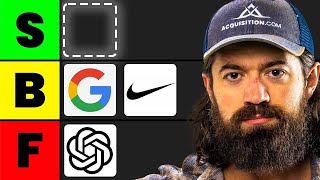
In this YouTube video, Alex Hormozi (Acquisition.com) conducts a detailed, ad‑by‑ad breakdown of the Super Bowl 2026 commercials, ranking each on a six‑point framework: attention, emotional resonance (care), dream‑selling, urgency, social proof, and clear next‑step (CTA). He assigns each ad a tier (S, A, B, C, D) and explains his reasoning, contrasting branding‑focused spots with direct‑response ones. The analysis covers Google Gemini (S tier), Ramp (A), Booking.com (C), Doritos (A), Jeep (A), Hims & Hers (D), a Roger Federer endorsement (C), GoDaddy (C), Instacart (B), Novartis breast‑cancer screening (B+), Nike (A), and Rocket Mortgage (A+). Hormozi also discusses broader advertising insights: the value of psychological triggers, audience‑specific messaging, crowdsourced creative (Doritos), data‑driven testing (reference to his Leads book), and the importance of aligning ad objectives with brand versus direct‑response goals. Interspersed dialogue from speakers B and C provides occasional humor but the core content remains Hormozi’s analytical commentary aimed at marketers and business owners.
Chapters
So Super Bowl ads are $8 million each now. The big question is, is it worth it? And what can you learn from them as a business to improve your advertising? I'm Alex Hormozi. I own Acquisition.com. I've run millions of dollars of ads, and today I'm going to tier up the ads at the Super Bowl across 6 key factors to determine whether it was a touchdown or fumble. Isn't that cute? Cute little analogy. Touchdown or fumble. First up, Google. Take it away. So at my last job, I was working across several different groups Um, you know what, let me practice that one again. Okay, when you're ready, tell me about the job that taught you the most. Okay, well, it was a role where I learned to take constructive criticism. I think she left. Oh no, doesn't like it. Okay, I got pretty used to, you know, working long hours with a small team. I got very comfortable, uh, multitasking, and I had to become really organized. Not bad, but try You're rephrasing your answer to sound more confident. Right, right. Okay. I was asked to make a lot of quick decisions and do a lot of negotiating.
One more book.
Talk about your experiences working with others. Oh, well, I'm at my best when I'm collaborating. If it's for the team, I'll do whatever it takes. This job description you shared mentions on-the-job training. Well, I am a fast learner. I don't always have all the answers, but I get the job I'm done, no matter how long it takes. And I'm not afraid to admit when I'm wrong. But most importantly, I show up every day, no matter what. All right, last question. When it comes to work, what motivates you? I guess knowing that people can depend on me. And knowing I can depend on them too. That's a great answer. Sounds like you're ready.
Hey James, thanks for joining us.
It's good to see you all. I've been looking forward to talking. So real quick, what we're going to be ranking these on is: did it grab attention, Did it make you care? Did it sell the dream? Did it create urgency? Did it show social proof? And most importantly, did it tell you what to do next? This ad I think was exceptional, honestly. I think it was exceptional for a number of reasons. The first is that they draw this really, you know, very sentimental story arc. It was almost like the Up movie where you get the whole love story in, you know, 2 minutes in the movie. This was basically that just done in like 30 seconds, but they were able to weave in product demonstration and usage throughout the entire thing, which I think made it incredibly compelling. In terms of what to do next at the end, I mean, they tell you about the product, but I think I think what they really drive is sentiment with this ad, which is that I think a lot of people would be like, I resonate with any one or many of those slides, 'cause either you've been the kid, you've been the adult, you've been the one for the job. They actually cut a lot of different audiences by showing all these very human experiences, and they've done it. They did it super well. In terms of proof, they're literally demonstrating. In terms of urgency, I don't think it would be on brand for them to create urgency, so I wouldn't knock them for that. It's just very direct response-y. And so big picture, the Google Gemini ad, I think I moved to S tier. I think it was exceptional. I haven't seen the rest of the ads, but I'm, I'm bullish on the start. I know. So ad number 2 is Ramp.com. Hey, should we pull Saquon off the field right now to submit his expenses? You better not say yes. Switch your business to Ramp.com. So this was a short ad, obviously. What is this, 15 seconds? So they probably spent $4 or $5 million for this ad instead of the full $8 for $30, unless it was $8 for $15. Somebody can fact-check me. Anyways, I think the hook was contextual to the audience that was watching, which was a football player, right? And so that made sense. Question-based hook around pain, fundamentals. And I'm a big fan of this, and I think not a lot of business owners do this, but it's demonstration. They start with a pain-based hook of what it's like to not have the product, and then they just immediately solve it with having the product through demonstration. I mean, if you're talking about 15 seconds to get a point across, I think it was a pretty effective ad. I probably would have done more with the end screen personally, and I probably would have said switch your business to rather than have it just be audio. Main reason is a lot of people are, you know, watching TV from afar. They don't have, you know, subtitles on. So I tend to be over-indexed on text personally, but that's just my own opinion. I would put that as an A. I think it was a good ad. So ad 3 is Booking.com. Let's run it. With hotels and vacation rentals, Booking.com has something for everyone. She sells. You got anything more boutique?
Oui oui oui, right this way. Now we're talking.
What about something more family friendly? Maybe a resort with a water park?
Or somewhere less family friendly?
Yep, one Vegas hotel for the bride-to-be.
What if we hate everything?
We have free cancellation. Find exactly what you're booking for. Booking.com. Booking. Yeah, personally not a huge fan of it. It felt super TV-ish. Now you might be like, well, this was run on TV, but it felt like an old ad, like it was a new— it's obviously it's a new ad, but like obviously the Muppets are an old brand, but it just felt like 2005 television. That's just— that's— that was my initial impression. They tried to demonstrate the use cases. I think the humor wasn't like super funny. And so I think I had a more difficult time of being like, oh, I'm this avatar personally. And so I probably would have done this ad completely differently if it were me. I probably would put this— I don't know if I want to use up a D, D all the way. I'll probably— I'm going to put this as C. C. Put this as a C. I didn't like starting with booking.com. That's what the first thing you see is booking.com. I don't know what that is yet. They hint at some pain. I had a harder time because the cuts were fast but weren't explanatory. Like I didn't know where we were going. Just felt super mid. Like compare that to the Google ad. It's like, what are we even talking about? Like I feel like it's not even close. So ad number 4 from Doritos is made from a fan contest. I'm actually really pumped to watch this one.
Aliens.
UFO detected. Dorito. Dorito. Yeah. All right, I like this ad. Uh, what's really interesting is that there's basically no words. Which I find great. So this is all like creative if you want to think about from that perspective. If you think about psychological triggers here though, well, what they're showing is that it's something super desired, right? Not only that, it's that somebody would literally risk their life in order to keep it, but then they've closed the loop at the end and showed that it's actually like peace, one person sharing with another. So as much as it's, I don't know if it was deliberate or not, but there's actually a lot of kind of like human psychology stuff that's kind of built into this. I'm a fan. I wouldn't, I mean, this is very on brand for Doritos, which is just like crazy, bold, right? Like, it's almost like they have a Red Bull brand but for chips. So kind of interesting there. The way that Doritos did this is the way that I would do this, which is at the end of the day, like, I'm gonna— we're gonna splice up these ads and I'll break down some of the things that I would have considered doing. You can't beat data. And so, like, you might have an opinion, somebody else might have an opinion, but at the end of the day, the best ad that's on here is the one that drove the most sales. Now, obviously, a big part of that happens with past history of brand. And so some advertisements have different objectives, right? A lot of— some ads might just be purely branding. They want to build positive sentiment of positive association between their product or their company and the target demographic or audience. Some of them are just reinforcing the existing position like Doritos is. Some of them are a pure direct response ad. So I think it really depends on the objective. But for here, from a data perspective, if zillions of people already submitted different ads and this one got upvoted the most or shared the most, then you already know you have almost like a pre-baked winner. And so like when I wrote the Leads book, which is all about advertising. One of the things that I break down in here is if you see this on page 37 and all the way through, I did headline tests for the headline of this book. And so I could have talked to 5 people and said, hey, do you like $100 million advertising or do you like $100 million leads or do you like $100 million promotions or like $100 million marketing? Right? I could have gone through all of these different iterations, but instead I just let the data talk. What they did was they let the data talk. And fundamentally, who am I to say one thing is better than another. But this was obviously the most viral ad that they were able to source. And here's the even more brilliant part. It cost them basically nothing. They just let the audience make it for them, which is basically crowdsourcing your advertising, which I'm a big fan of. And one of the great things about building communities, which you can check out at school.com. So they gave a million bucks for winning, but for most of these big ad agencies, it would cost them more than a million dollars to make the ad and not even be sure if it's going to be good or not. Here they got to spend a million dollars to crowdsource from the best creators out there that obviously love their product And if a customer makes an ad for your product, they're gonna know more intimately than anyone will at some ad agency where there's a bunch of, you know, tweens trying to figure out like whatever the hell they figure out. This is people who actually use the product. And so also as another quick side note, you might not be the demo. So if you, when I say demo, I mean demographic. So like you might not be the target. So if some of these ads you're like, I don't know if this really, like Ramp might not have, like if you're a business owner, Ramp makes sense. If you don't own a business, you probably don't care at all about Ramp, right? And so making sure that we're judging appropriately based on whether we are the avatar for the ad also carries weight. So I'm going to give this, um, I'm going to give this an A. So the next ad is Jeep.
Longest thing we ever do is live our lives, but life doesn't come with an owner's manual. Might have been nice, huh? But that means we get to write our own stories. Freedom is yes or no, or Or maybe. Freedom is for everybody, but it isn't free. It's earned. There are real heroes in the world, but not the ones in the movies. Real heroes are humble. They're not driven by pride. Pride is a terrible driver. Freedom is the roar of one man's engine and the silence of another's. Freedom is the ability to inspire. The most sacred thing in life isn't the path. It's the freedom to choose it. You don't have to be friends with someone to wave at them. We won't always agree on which way to go. But our differences can be our strength. Choose, but choose wisely. Choose what makes you happy. My friends, my family, my work make me happy. This Jeep makes me happy, even though my name is Ford. That's my owner's manual.
How long was this ad?
Get out there, write your own.
Was that whole thing— I was like, that was super long. Did they run that whole thing? So, if Jeep ran a 2-minute ad or 2.5-minute ad, then they spent whatever 8 times 5, which is a lot of 8 times 5s, right? When you're counting in millions. Okay, what I want to do is actually show you what happened in this ad because this is branding. And now, there was such a clear equation that they used that I want to break it down for you. So, they said Jeep equals freedom. This is literally as clear as day association as you can make. Then they said freedom is stuff our demo likes. If you like these things, you like Jeep. And then they just hit thing after thing after thing after thing after thing to be purposeful, to curate the associations that they wanted to make with Jeep. Notice they didn't say Jeep starting at $13, financed for 68 months and 0% APR, whatever. They didn't do any of that. This was a pure brand-based ad. There's obviously product placement inside of it, which is fine. We're trying to reinforce the brand. I would say that they're bearing very specific about the avatars that they're trying to attract. And so I would bet you that the things that they chose in terms of the stuff they liked are things that they know from customer research, because you're going to drop $40 million on an ad or whatever they spent. The customer research they did, I'll bet you they picked the words and things that they knew their demo liked. Now, if you watch this, I can tell you that this is probably not targeted at women. I can probably also tell you that this is going to lean to a more conservative crowd. I can tell you this is probably people who are more pro-military. We were thinking about this, like he said, freedom isn't free. That's that's more commonly a right-leaning narrative. They probably know their avatar is more right-leaning. They know their avatar. And so they made a clear equal sign in terms of what they're about. If you like freedom, you'll like Jeep. And freedom is all of these things that you like. So like Jeep, basically. And I do think the little quip at the end with Harrison Ford was nice about it being his last name, a little bit of a shot across the bow. But fundamentally, this is pure brand. I think this is a good ad. I wouldn't say it's the Google ad. I would say it's an A tier. It was a good ad. All right, next ad is Hims and Hers.
Obesity is America's deadliest epidemic.
This is America.
74% of us are overweight, and obesity leads to half a million deaths each year.
Why, you just have to stop eating, Jimmy. This is America.
Something's broken. It's not our bodies, it's the system. Welcome to weight loss in America. Like and subscribe. A $160 billion industry that feeds on our failure. There are medications that work, but they're priced for profits, not patients.
This is America.
This system Medicine wasn't built to help us. It was built to keep us sick and stuck. But not anymore. Hims Hers offers life-changing weight loss medications. They are affordable, doctor-trusted, and formulated in the USA. You get a treatment plan designed by a doctor to fit your body, goals, and lifestyle. You deserve to feel great in your body. This is the future of healthcare. This is Hims Hers. Join us in the fight.
For a healthier America. Initial impression, it's definitely visually jarring, obviously, because you've got a big stomach that just flaps and then you've got weight. So it's basically a very fear-based hook. What was interesting to me is that I've never seen Hims Hers as healthcare, which is what they said. So I don't know if they're trying to shift their brand. And that was kind of the goal that they had with this particular ad. It did feel a little bit, I don't want to say disingenuous, but basically they were like, all these medications are meant for profit. And then they were like, take our medication. And so that felt very like, pandering. It just— I probably wouldn't have been that strategy. So by and large, this is a branding-based ad, but I think this serves as a perfect juxtaposition between the Jeep ad, which I think was a really excellent ad from a branding perspective, and this ad, which I don't think hit the mark for me. Also, I didn't see any dream outcome. The Jeep ad talks about what people want. They want freedom, and they demonstrate freedom visually in a lot of, you know, freedom-based occasions. Here I see a lot of overweight people. Now, maybe if you're an overweight person, you would say, oh, this ad is for me. But I don't know how many— like, they're thin and all of the people who are taking their stuff are not. There's a lot of little things that I wasn't the biggest fan of, but I think they would want to also demonstrate that, like, it works for people who are not overweight. But because they also do, like, hair replacement, I think they do— they do a bunch of other things besides weight loss. But maybe GLP-1 products are just crushing it for them. That being said, I— to me, this was the worst ad. I think— what was the one that we had at C tier? Booking. Yeah, I think this one's worse than that. I'll put that as a D because the question we have to ask ourselves is, does an overweight person— let's just say that they're trying to make themselves more accessible for, you know, overweight people. So then we ask the question, okay, what do overweight people like? Well, they had a lot of stuff they didn't like, but they didn't show a lot of stuff that they did. And then they also branded themselves as healthcare, which maybe there's a strategy around that. But I think most overweight people hate thinking about how they have healthcare and like they're sick and fat and all this stuff. I will say I'm limited because I've never been overweight, and so I don't know. But yeah, my initial impression was not like, yay, this looks really compelling. All right, ad 7 is on.
That's a slice. Mr. Roger Federer, why does it say Q and C on your shoes?
That's an O and N for on.
Um, well, you know, Elmo knows his alphabet, and that's definitely a Q and a C.
Trust me, Elmo, it's, it's on.
Okay, but you know, Elmo loves you, Mr. Roger Federer, even if you don't know your alphabet yet.
Looks like on, right?
Yeah, Roger. I can already tell you what my score is on this one. To me, it's a C. I'll tell you why I think it's a C. Like, I would say the, the one before this was— I had a bad aftertaste from the last ad. This one is just like, it has nothing to do with anything besides you have a celebrity endorsement. And they're just talking about the letters of the name of the company. Is this a branding ad? Right. So does it make associations that our target audience like? Now, they might like Federer, but the subject matter they're talking about is just like the name of the company. And I think they made this ad all about them rather than making it all about the customer. And I think that's where they missed. So I think they just forgot, like, rule number one is that, like, no one cares about you. They just care about themselves. And so I think they missed the mark there. I would say that it wasn't distasteful, but I put it as a C. At 8, GoDaddy.
Let's rip it. Actors. We have the power to convince the world we know what we're doing, when in fact we do not. I can make you believe I'm a detective without ever stepping foot in an actual crime scene. These symbols probably symbolize something.
Astronaut?
Nope. Houston, I'm observing some debris coming from your Uranus. But my hardest role yet, small business owner, because I have no idea what I'm doing. But GoDaddy Aero does, using AI to build a logo, website, and social contacts so I can start Walton Goggins Goggle Glass. Because if your goggles ain't Goggins, they don't belong on your noggins.
With GoDaddy Aero, it's like you know what you're doing. So So this one, I first thought I didn't really enjoy the callout because it had actors as like almost the callout. So to me that like, I'm like, well, that just immediately I'm like, this doesn't apply to me. And then it takes like two-thirds of the ad of just kind of like demonstrating not knowing what you're doing, but really not knowing where it's going at all. And then at the very end, it's like, oh, it's GoDaddy, which is a hosting site but can help you build your website with AI. I would have just liked real-world business owners not knowing how to do many other things and then having this be the one thing that they had figured out how to do right. I would have loved to see like a before-after with this being like 3, 4, 5 things in a row that a business owner doesn't know how to do, insert new amazing thing, the GoDaddy hosting, and then now they revisit the old things and they can do 1, 2, 3, 4, 5, and then recap, CTA. I think that would have been a far more effective ad, and I think the more emotive those 5 things were, the more compelling the ad would have been, right? So it's like, how do I pay payroll? Like, that would be like an interesting thing. Right now, of course, you're not going to build a payroll website, but there— this is me thinking off the top of my head, but like there are elements there that you could probably take of business owners. Like it'd probably be like, answer my phone, the email, because they do all of these things on the site. So I'd probably think through each of those elements and just show before and after. I'm going to put this in this— I'm going to put this in the C category. I wasn't a huge fan as a, as a business owner. I wasn't like super compelled. Also random, but like, I don't know if small business owners at all care about how actors pretend to know what they're doing. And I don't know if you think about this from a pairing perspective, what they did was they compared actors and small business owners and they equated the two. And I think most small business owners probably wouldn't want to call themselves actors. Now, they might have done some research to figure out, like, look like you know what you're doing. And I'll bet you that phrase might convert. But I think they might have taken— like, a creative team might have taken, like, who else acts like they know what they're doing? Actors, and I just think that was probably the miss personally. Yeah, and I'll be clear, I think there were a couple elements of humor. I think the noggins and goggins thing was funny. I think, uh, I think the second frame where he did something I thought was kind of cute. But while I was watching, like, what are we talking about here? And so the thing is, it has to keep your attention, and it didn't really keep my attention because I didn't know where, like, what this is about. And this was the only ad we've watched so far that I had to rewatch to try and understand. And if that's what a lot of people had to do, then they're just never going to rewatch it and then like the moment's gone. All right, ad 9, Instacart.
Let's shoot it.
Release the hounds.
Puppy monkey baby. I'm on a porch. Groceries are here. Thanks, babe. Get the milk. I think we're going to have our first B. I think it's just mid. I'll tell you what I think they did well. I'll tell you things I didn't, I didn't like. So I think them showing the actual end result of using the product, which is groceries delivered immediately, and then her having to go get the cow, I think that was the most compelling part of the ad, the last like 4 or 5 seconds, which is good because at least it's close to the CTA, or at least the CTA is at least telling you what the company is about in terms of of the, the actual ad itself. Now they probably, they might have been able to do some sort of co-op with a lot of these brands because they're getting, you know, ads. So they might have all chipped in to, to do this because think about like this, if they help Instacart, Instacart is a distributor of their products. And so if they help advertise Instacart, that increases the likelihood that people use Instacart to purchase these things. So I'll bet you that these specific products will probably see an uptick among Instacart users. That being said, it took me a little bit more than a half second to figure out like what this is about. And I also try to think about this from the perspective of someone who doesn't know what Instacart is. I know what Instacart is, but if you don't know what Instacart is, you're like, what the hell is this thing? I like a more tactical experience for a customer or a prospect to understand what problem this solves. I think that's why I think the last 5 seconds was compelling. Like, oh, you forgot milk, then rush ordering the milk. That was probably the most salient use case in the ad. And so if you have the opportunity to demonstrate that within your own advertising, the problem and then the immediate solution being your product, I see that as a good thing. But I think the first, you know, 70%, 80% of the ad could have been better. I like the last 5 or 6 seconds. So, I'll put that as a B. Alright, ad 10, Novartis breast cancer screening.
Really? Let's start paying attention to breasts when it matters the most.
Early detection for breast cancer is a game changer and why I'm able to be here today.
So let's get more women screened than ever before.
Go to yourattentionplease.com and take the first step. Big picture obviously grabbed attention. I mean, I would say 10 out of 10 on the attention grabbing, right? Like, that's evolutionary. And so they obviously demonstrate that the whole way through. I think that's good. They show some pop culture references. They show some influencers in there, show some actors. All that stuff gains attention. I'll bet you people were watching this whole thing all the way through. Like, I was glued. Calm down. But, you know, the tone shift at the end, I think basically you have a testimonial, which is fundamentally what that is. And I do think there's a decent juxtaposition with the, with the text there. I want to give this a B+. I don't think it's an A, but I think it's a B+. I think it was, it was an above average at So they had, you know, their main point and then they had a CTA at the end. I would say the urgency is implied with the fact that like you could have something— over 6 million people have this bad thing happen. Don't be one of them is kind of the implied messaging. And I think that's good. I mean, you could model that ad structure for just about any business. Basically tons of attention, fact that makes someone uncomfortable, testimonial of somebody who avoided it using the service, CTA. Like that's fundamentally what we just went through. The only lingering question that I have is like it was so fun. I wonder if it leaves you feeling good, not feeling like I should go and get my breast screening. And so I think that it's like, this is something that may get positive accolades, obviously, because who's going to shit on a breast cancer ad? But from a purely advertising perspective, the point of advertising is obviously let people know about your stuff, but the point of persuasion is to change behavior, right? And so I think my larger question is like, how many people actually go through with it as a result of this ad compared to 2, maybe an ad that could have been like, I think if they had done like the Google Gemini version ad of this where it was like all the moments you're going to miss out on life, like probably would have been more compelling. Second, maybe like the Jeep version of like, you know, boobs are freedom, like free the tatas. But then all of a sudden it, you know, it transitions. Here's all the things that boobs are great for. But then it's just like somebody on a ventilator. I think that would have been more compelling to get people to like change behavior. So I will put it as a, as a B. Next one, Nike.
Let's hit it. You can't be demanding. You can't be relentless. You can't put yourself first, so put yourself first. You can't be confident, so be confident. You can't challenge, so challenge. You can't dominate, so dominate. You can't flex, so flex. You can't fill a stadium, so fill that stadium. You can't be emotional, so be emotional. You can't take credit. You can't speak up. Can't be so ambitious. Can't break records. Can't have any fun.
Can't make demands.
You can't keep score. You can't stand out. Whatever you do, you can't win.
So win. Well, you know I'm gonna be a fan of anything that has "just win." So that's Alex's life motto. More so that all the difficulties that you go through can be rewritten with a W. You know, I'm a big fan of winners write history, including your own. If you lived your entire life suffering and then at the very end and you accomplished what you wanted, I think that it would change the entire narrative. There's a great story that I heard of a guy who was objectively a failure, and they just name all the failures this guy had, and the one thing he had is he wrote this little song called Jingle Bells. And so like, failed musician, failed at everything, but it's like, he won. You know what I mean? It's like, if all of that was in order to have this one timeless thing that ended up impacting millions of lives over the course of history, To me, that sounds like a W. So anyways, I'm a fan of Nike's kind of reemergence, their new direction. This is obviously a purely branding ad. Their whole brand is so wide in terms of products they sell, and they demonstrate the products across lots of different sports here. They're associating with each of the people in there, each of the champions objectively, like they sign GOATs. They sign people who many consider always the best in the world and sometimes the best of all time. And so they're associating their brand with these people whom you like, and they're wearing the product and demonstrating what it looks like to win. I would say this is a really solid ad, obviously targeted at women since it's all female. I'll say this, this isn't my favorite Nike ad. I'm also not a woman. I'll give this an A. You got to put your hat on for associations. They're saying Nike equals winning and Nike equals doing what people told you you can't do. And I think that they would probably want those two associations. And Nike equals all of these great ladies that you like. That you admire and look up to, therefore to approximate your proximity to them, you then buy their product to feel that way when you put it on. So I think it was a successful branding marketing. And they're some of the best marketers. I mean, if you think about it as a brand perspective, I think Nike is one of the premier in terms of their understanding of building brand. But I'm very happy that they have come back and talked about winning again, because I think they were touched with a touch of the wokeism for a minute there. And I'm just glad they came back to reality. Nike is the— I think is the Roman word for the goddess of victory. If you're going to be a brand built on winning, it means there has to be losers. You can't say that everybody's a winner and then also have a brand that's about winning, because if everybody's a winner, no one is. That is a quote from Flash from The Incredibles, the cartoon. All right, next up, Rocket Mortgage. This should be interesting.
Let's get you home.
Almost heaven. West Virginia. Blue Ridge Mountains.
Shenandoah River.
Life is older, older than the trees, younger than the mountains. Growing up. That's your boy. Yeah, I can't wait to get Country Roads, take me home to the place I belong. West Virginia, my home. Take me home, Country Roads, take me home. Country roads. Super good ad. So they, they have basically, I would say, a combination of like 3/4 Google Gemini, 25% Jeep, and just made it. And so fundamentally, let's, let's, let's walk through the associations here, right? I would say this is an A+, but not S tier, and I'll explain why. So let's just walk through the associations really quickly. So they have what I would call humanity. Human moments that many people associate with and Americana, all right, which is just basically the American ethos. And so they basically have this big— they basically build this huge storyboard of the American ethos, right? The American dream. They talk about the military, going home, different parts of the US, different sub-segments. They clearly lean a little bit more in the direction of first-time homeowners. At least that's what I read. You know, when I look at this ad, I think mostly first-time homeowners. Now, they may find out that getting them, getting first-time homeowners then creates the lifetime value of the customer. So that might have been deliberate, I don't know. The only knock I have on this ad is that the CTA was so short at the end that I didn't know whose ad it was. So basically, it's like they basically spent the whole time listing all the things that were amazing that I'm like, I agree with all of this. In the last like 1 second, just it says rocket.com on the screen and I have to be be paying attention to know rocket.com and to know it's a mortgage company. So that's, that's the— that's why this is an S tier in my opinion. Like Google, like what separates this from Google's? Google I think had the exact same level of narrative, emotionality, sentiment, except they were demonstrating the product throughout the entire ad. You knew it was a Google product, they showed them using it, whereas here it was much more amorphous and more difficult to figure out what it was about. I do think the ad overall though would win the awards of the feels, and only after the fact people would be like, "Oh, I love that ad." But they might have now positive sentiment towards Rocket. It's possible. I just don't know how many people watched it and was like, "Oh, I like this ad," but didn't know who the ad was kind of attributed to. So by and large, really strong ad, very— and obviously this will only resonate with people who resonate with the American dream. But if they're advertising it here during the Super Bowl, Super Bowl is almost as American as apple pie, right? It's the right time to have an Americana message.. And I will say that what the part that I probably liked the most was they had a very strong link to the American dream. So they said own the American dream. And so that was the only, like, I would say tie, like if we had words, own, owning a home, I would say that was the word that would link all of that to, you know, mortgages. But otherwise I would say that it was an A+, not S tier. Yeah. If you like this kind of like breakdown of some of the brand I have a whole keynote on how to reverse engineer and create your own brand and understand the elements that create association, how to strengthen them, how to broaden them, how to gain influence, reach, and ultimately directionality, which are the 3 elements of brand. If you're like, I don't know what that is, you definitely need to watch the video.
Enjoy.










