REVEALING Black Friday Secrets To Use In Your Business (feat. Shopify's President)
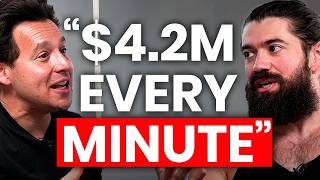
In this candid conversation, Alex Hormozi and Shopify President Harley Finkelstein dissect the strategic mindset and concrete tactics that power successful Black Friday/Cyber Monday campaigns. They begin by reflecting on entrepreneurship as a performance‑based equalizer and the necessity of aligning growth ambitions with macro‑economic realities. The dialogue then moves into a rapid‑fire rundown of real‑world case studies: Gymshark’s focused product suite and limited‑time pop‑up; BarkBox’s quiz‑driven personalization and data capture; Mischief’s extreme gamified stunts; QVC’s frictionless video‑commerce integration; BK Beauty’s collaborative approach with large brands; Burger King’s advent‑calendar “multi‑dip” promotion; and ButcherBox’s value‑first educational content model (e.g., 60‑second tax‑code videos). Throughout, they emphasize principles such as scarcity, urgency, clear keystone offers, seasonal site wrappers, and the seamless merging of marketing and sales as a continuous education process. The conversation ends with reflections on speed, agility, and the power of giving more value than you capture, positioning these insights as a playbook for businesses of any size to dominate holiday sales.
Chapters
All right, we are here Black Friday. I have a special edition today with, uh, the man, the myth, the legend, Harley, who is president of Shopify. We're going to go over 5 to 7 stores that are absolutely crushing it. Now here's the advantage that Harley has and that we can share that no one else can. He knows what's going on in every single store across the world in Shopify, so he knows who's killing it by how much and what they're doing. And then we're going to highlight some of the things that they're doing specifically well so that you can, you either apply these to your Shopify, if you have a Shopify store, or just how you sell whatever it is that you sell.
We're effectively turning on the camera for conversations that you and I usually have privately, right? Like over texts or phone calls or whatever. I'm like, "Hey, check this out, this is really cool." And so now we're just gonna kind of like open up the kimono for it. Before we do that, would you check this out?
Yeah, let's go.
So we, so Black Friday, Cyber Monday weekend is sort of Super Bowl. We have millions of stores on Shopify. And so what we want to do is, project in real time, literally like minute to minute, how things are going. And we, I think we hit peak a little earlier today, revenue EST, on Friday, but we're now at the $3.475 million in sales every single minute.
Minute.
Every single minute.
Minute.
28,000 orders per minute and almost 30,000 unique shoppers. What is amazing though, okay, so we're about to, North America's about to come here. Can I stand up?
Yeah, yeah.
So what you're about to see, so this is North America right here. So you see where the order's originating from, where it's going to. But there, you may also, there's these little fireworks. Oh yeah.
Okay.
So those fireworks, every one of those fireworks is a brand new entrepreneur getting their very first sale. Oh, okay. That is a brand new entrepreneur being created. The common thread of what we're gonna, what we're gonna talk about today is that they're doing things that I think are unobvious, incredibly effective.
Well, let's kick this off with Gymshark. I was just texting Noel before this.
Yeah.
Being like, hey, is there anything, That is the best. Yeah, I think with Gymshark, because obviously we're gonna look at the site, we're about to break all like the little details down, but there's also the things that they do prior to getting to the site, right? Which is what is the brand, what is the brand context that this sits within? And so I think Gymshark does such a good job of building the brand and giving and providing value and making positive associations with the right people, the right athletes at the right time, um, that when they give when they need to give, and they did like Reps for Mental Health, like they give when they need to give, but when it's time to ask, they ask if you need it. And so Black Friday is the best time to ask. And so let's dive into it.
They also know their audience really, really well. So remember, there's a couple things. Let's start high level and we'll go into actual tactics.
Yeah.
High level. Gymshark is the quintessential online retailer. Yeah. They started online. Ben Francis starts this. He's literally a pizza delivery guy. Yeah. In 2012 starts Gymshark and they build this amazing online business. It's an online brand predominantly. But actually right now, one of the most interesting things about them is they have a massive physical store pop-up in New York City. So they are not necessarily staying within the confines of one particular channel. They're expanding well beyond that as well. This offline presence is going well. Now, they will still do the majority of their sales, but I suspect— they haven't told me this— I suspect will be online. It doesn't matter. This idea of having a 12-week pop-up for the holidays is amazing. That's one. Second is it's a 12-week holiday pop-up, right? It's not 4 days, it's 12 weeks.
Yeah.
And so the fact that they're doing a 3-month pop-up about holidays means not only are they starting before their competition, they're also ending after the competition.
Yeah, right there.
So they're expanding that. That's something that's really cool. They did this really cool social media campaign, which was sort of titled like, quote, "There will be signs." And no one knew what "there will be signs" meant. Well, what it meant was in all their advertising, there would actually be Easter eggs. These little clues of what they were doing. Now, it wasn't obvious. It was super unobvious. But because Gymshark is so creative and their community and fans are so creative, their fans kind of understood something's there. So people started going, doing a deep dive into every marketing campaign, every new product. So they actually convinced people to spend more time on the site —to look at their marketing. —To look at what is actually doing that.
It's kinda like the Super Bowl when people are like, "Oh, I just wanna watch the ads." That's right. It's like they're actually, they're getting their whole audience, the most engaged audience to pay attention to it. But not only that, but also make content about their marketing.
That's exactly right.
Which then gives them this whole extra, you know, lift to their impressions.
And so I thought that was really, really cool. So a couple things.
So I'm just good at, what is this? Easter eggs.
Yeah. Just a lot of Easter eggs. They did really, really well. All right, cool.
So let's start with the, Let's start with this site. So what's the— what's the—
if we're talking pure conversions, look at it, Mike.
This site is effectively a giant coupon. Yeah. Now one of the little— this is me getting soups. We're up to some weekend tactics. So if we look here, there's a couple of things that I want to point out to my folks, which is number 1 is they talk about lowest prices on top sellers, which is nice because number 1, it's like, okay, we're not just doing it on the crap. We're doing it on the good stuff. All right. So that's point 1. Number 2 is, now this is a little bit of, again, this is just tactics. Notice that it's with the code. And so I know this sounds like a small thing, but sometimes basically getting people to, I think you maintain the retail value from a brand perception perspective, and then only at the checkout, people then realize the savings. And I think it feels different as it's closer to the purchase. Now that I don't have a double-blind placebo split test to back that up, that's just me as a—
Well, actually what I would suggest though is that in this particular case, They're being incredibly— like, they're giving it to you on a silver platter. They're saying effectively, go buy right now. Yeah. Now, traditionally, if you look at this site in 3 weeks from now, it's very slick. Oh yeah. Black, incredible imagery, great product photography. This is different. I don't know what— like, this is a completely different thing that you've never seen before. I also want to point something out also. Look at the order on top. There's only 3 things in the top header. Yeah. Women's sale, men's sale, accessory sale. They don't have any of their other product categories. This is deliberately designed for this particular week.
So if we're thinking about when you're, when you're making offers for whatever it is that you're selling, it's, it's, it's narrowing focuses, right? Or fo— fo— foci, right? So we've seen that word. Yeah. Foci. Foci. Yeah. The, um, so they did this experiment. There's 24 jars of jam and then 6 jars of jam at the supermarket. And they had people try them out. And the 24 jars of jam had more people try them, but less people buy. And then the 6 got way more buyers, like 2 or 3 times more buyers. And so the same thing happens is that we have to focus as entrepreneurs and say, okay, I'm gonna have a disproportionate amount of attention. My customers are gonna have their wallets out at this moment. What am I going to prioritize? Yep. Yeah.
And I, it's the paradox of choice. Yeah. Give people too much choice and they're gonna get lost. So this I think is very, very effective because they are, they are giving you breadcrumbs leading you exactly to where they want you to go.
So I'm gonna say focused product suite is another one. Yep. And I'll add in the, uh, the conversion coupon emphasis. All right.
So there is one other thing that before we move on from them that I thought was interesting. So I was curious about why would they do a longer pop-up? And one of the things that I think they did, they didn't tell me this, but I think it is, at the early stages of their pop-up, again, this was a holiday pop-up that was 3 months in duration, is I believe they figured out very quickly what was going to be the hottest items for the action season. So I think—
They pre-tested.
Again, this is only my hypothesis, but they're very smart. I think the fact that they were able to get in. On October 1st, they knew what was going to sell at the end of November. No one else was able to do that. I think that type of, I don't know, like crystal balls. Yeah. I think that is very effective. And I'm certain that in some marketing meeting or some meeting at that company or even in other companies, they said, why would Jim start you with 3-month pop-up for the holidays? And I think they were thinking to themselves, we're going to get so much data so much earlier.
This is such a— so all businesses, I like, I'll say this big generalization, but like data is so powerful when it comes to weaponizing resources, right? And so for us, for example, like I'll just completely different perspective, but like the content that we know performs the best tends to be when we look at past content that has done well and then we combine just winners. And so it's like we create, you know, 450 pieces of content a week. We only make 1 or 2 vlogs. And the longs do really well. But it's because we have 438 shots on goal that we say, okay, we're just gonna take the top 20 of the—
You don't have to make any assumptions, right? You can see right away. We know this before.
Yeah, that's exactly right. So those are some of the things I think for Gymshark that work really well. All right, rock and roll. Let's move on to—
Let's actually, let's go to BarkBox if you have it up here. Let's rock it.
Okay. Okay, BarkBox.
Okay, BarkBox, if you have a pet, you likely know—
You wanna move this up? Yeah, yeah, I'm gonna answer this guy.
We'll recap after we ask. Yeah, here we go.
All right, BarkBox.
This is like an, you know, an Alex-sized Post-it note.
Is this how everyone wants it? Yeah. Okay. All right.
So BarkBox, if you don't know it, is this incredible pet food business, pet company. And one of the things that I think they do really, really well is that they have a deep understanding of their customer, not too dissimilar from Gymshark. But one of the things they did was they actually created challenges to get discounts. Ooh. So rather than simply give out the discount, they created these pet quizzes. They've been doing this for a couple weeks now. But it also, it created this interactive gamification. It wasn't simply, here's a coupon, go buy it. And they have competition. I mean, there's a lot of Chewies out, there's a lot of other companies out there. But I think one of the reasons that BarkBox is winning is because it doesn't feel like a simple transaction. It feels like you're actually doing something a lot different. It's like custom.
It's like more different. That's right.
And you're also challenging people to say like, if you do this and you do it well, you get this reward. Right? It's almost Pavlovian. Yeah. Yeah. And I think— Pun intended. Yeah. So I think they did it really well. I also think the other thing they did is they created a very personalized experience because one of the things they got from the quiz, they got a lot of great information about the customer.
Notice common theme on the data here, side note. Yes. Oh yeah, exactly.
I mean, all these people are, they're retailers, I guess, primarily, but they're incredibly smart business innovators. They look at data, they're scientific about how they run these promotions. And so here's a great idea because they did this challenge-based coupon. So you got this gamification piece of it, but you also, they were able to ingest a ton of data from their customers. So now, you know, like I didn't take the quiz, but I assume one of the quiz questions was name of your pet. Tell me about the age of your pet. Now you actually have a wonderful database.
And they know they're remarketing what they're gonna be doing. Precisely.
Now you have this wonderful database where— Probably breed, right?
I'm sure.
But I think this idea that like, the best entrepreneurs play into the brand's, the, the strength of their brand. They're not trying to be at some point we're gonna talk about ButcherBox, not because it's Artifox. If you make that mistake, it may be awkward. Yeah. But they're not trying to be like a, a high-end meat company. They're just trying to be who they are. Yeah. And I think they have a really good understanding of that. So low-key personalized experience that was delivered through this gamification. I think they did really well. And Artifox is doing phenomenal.
And I'll talk about, uh, one, one really big one. So on Gymshark, I didn't mention it, but it was there. They had a top banner. And so one of the, one of the best and most valuable pieces of real estate on, on any online store is going to be the top banner. And I think when I was scrolling, this guy— there it is. Yep. So you can see they have their top banner, and they're, they're making—
like, that is especially on mobile, which you probably know the percentage of traffic, but a huge percentage of traffic right now across the internet, more For online retail, more than half the traffic is on mobile. Historically, the actual checkout was lower. That's changed with things like Shop Pay. Ah, what's this like Shop Pay? I'm not— this isn't a Shopify pitch, but it's true because even though you may browse on a mobile device, you didn't want to have to put in your credit card number on a mobile device. That was annoying. But now Accelerated Checkout, whether it's Shop Pay or Apple Pay, makes it much easier. So conversions have gone dramatically up on a mobile device because of Accelerated Checkout.
Which is great because that's where a lot of impressions are served. Precisely. So BarkBox also has this, but I want to double-click into— not actually double-click, like, but like, let's zoom into, uh, the— they wanted to make it easy for first-time buyers. And so they're going, you know, obviously they have all this marketing, they have all these people who are sharing stuff, and get your first box for $7, right? So they know, obviously they're gonna, they're gonna do things for their repeat customers, they're going to take care of their existing audience. But you have this opportunity where you have a disproportionate amount of eyeballs with new customers. And so if you can double down and make a crazy offer because you know what your LTV is on that customer It's a great time to do it. Now, when paired with— and this is again, we're going to mix and match stores here— but with Gymshark's in-person emphasis, it's like you can get this deep relationship. Now, they're approximating that by getting tons of information on them, but in the IRL setting, so in real life, you also get the— this test.
Yes.
For in a clothing store, right? And they're like, wow. And it becomes a totally different shopping experience. It becomes an identity shift. You say, you know, I'm a Gymshark fan, I'm a Gymshark athlete, whatever.
And look, products that are on there, they are their top, I don't know, I know I can't really see if there's light there. I think those are top 4 selling products likely, right? They're just making it obvious. Here's what we sell. Do you want these things? You can buy them right now. Yeah.
So first-time buyer incentives, and they did the same thing as Gymshark, which is prioritize the buy box, right? They know what people want and they're making sure that it's clear and evident —And it's—
look, it's timely. Look what the banner says: Bark Friday. That web— this page is created for today. It is Black Friday. It is not like the weekend or holiday special. This is a deal for right now in hyper-real time. And if you don't get it by midnight, you know, as they say in French, c'est fini. Yeah. C'est fini, mec.
So, yeah. But yeah, so banner urgency and first-time offer, prioritizing the best products, using data to, to create deeper relationships for remarketing the future. People are going to have lower action thresholds, uh, now. So they're going to— it's easier to get people to take that first step and give you a little bit more information. We actually did something like that this morning as well, which is like, okay, we're going to make this big for acquisition.com. Uh, we have our scaling roadmap that came out, but people had to fill out all this information for the business. Now obviously that's going to help tailor the thing that we're going to give them, but it also helps you.
It's going to be useful for me. And actually, that's a great quid pro quo because Most people don't want to give information for free, but if I can give you information in return for that information, you're going to give me a discount. You're going to give me money back. It's more personalized too. I'm in. That's right. And also, bottom left corner of the screen. Yeah. This is what they want. They want you to basically sign up for their subscription. Yeah. Right? So they like— yes, you can buy things à la carte. Gifts are up there as well. Yeah. But it's ultimately they want a multi-month subscription from you, and they're giving it instead of to do it on Bark Friday.
Now, also to bark back, to hark back to Harley's point earlier, notice the top. We've got— there's only 3 3 or 4 things that they had there, and I'm sure that their site probably has a more in-depth navigation. Of course.
I mean, this is a trend we're seeing right now, right? These sites are built for today.
Yeah. Built for today. I mean, when you have—
that sounds cheesy, but I mean, like, literally built for Black Friday.
Yeah, because you might be able to do a month— like, think about the amount of work that you do for a month. If you can do that amount of sales in 3 days, then you should allocate the same amount of resources. You should respect that time as an additional month of the year. That's right, yeah. Yeah. All right.
So I'm saying, I mean, look, like, you know, 12 hours ago, Shopify, you know, if you looked at that counter when it first came live Thursday night, it was about $800,000 a minute. Yeah. Now it's $3.5 million a minute. Like, this isn't just some random thing. This is the day that consumers are purchasing and these people have, have been getting prepared for this.
How many minutes would we go on? Rough 10? Yeah. 15? I was gonna do the simple math just to say while we've been on, there's been probably another $50 million in sales that has happened.
I was gonna say we, we gotta, let's, we had a lot to cover here. Yeah. Let's do it. Let's All right, uh, let's go to QVC next because this is not unobvious. All right, when I told you I was going to talk about QVC, you told me, you're like, are you sure? I was like, yes, trust me on this one.
And I was like, save it for the live because everything you started getting into, I was like, everyone's going to want to hear this. So if you remember, if you were like me, you remember QVC is like what your mom was watching on TV for like the 17th pair of fake jewelry, uh, that's not fake, it's a stone from Africa that was mined and, you know, whatever, right? Uh, and so This is a totally different QVC from what I grew up with and probably you grew up with.
And so, yeah, Harley, take it away. Okay. So QVC, the way that it used to work is actually very different. It used to work. It's a very simple process. You had— it was a channel that ran like basically indefinitely. It was like always on. And they had these people coming and presenting these beautiful things. Check out this. If you want this, call us now. Then it evolved and it became, if you want this, go to this particular webpage. So actually QVC came to Shopify and they said, we actually wanna build video on demand. They wanted to build something where concurrently with the actual ad, the video, you could actually purchase right then and there, like one-click checkout. And so the way it works is you actually see these product thumbnails show up in the video on demand and it's under like the hottest holiday host gift channel. But the thumbnail link over, it's built on Hydrogen, which is Shopify's headless product. And you can actually check out while you're watching the video. The reason this is interesting is because there are way too many ads videos out there where you effectively have to leave the video to go make the purchase. Meet people where they are. If they're watching the video, allow them to continue to watch the video. Don't stop the flow of information. Don't stop the entertainment value because that's not what they want. There's a very high likelihood of chance that if you get them to leave the video and go into a checkout, like a 4-page checkout or even a 1-page checkout, too much friction. And so the fact that QVC, which is— I don't know how, how long they've been around, someone can probably figure that out, but they've been around for many, many decades— the fact that they've created a seamless, like, concurrent shopping experience tells me that even older companies are able to innovate and use technology, some really cool stuff.
And I would bet dollars to donuts that the people who buy once are more likely to buy a second time while they continue to tune in. And so it's like, we don't want to break this moment. So we talk about this in our stuff, like we have hyper-buying cycles. Like there are these moments where buyers will enter. So like, let's say you decide you wanna start doing a turkey trot or you wanna do some 5K or whatever. Well, as soon as you make that decision, all of a sudden you're like, well, I want new shoes and I want some shorts and I want one of those iPod, you know, armbands. Yeah. And so if you immediately sell the shorts and then they have to leave, they might forget about that and then they'll remember again, but with a different retailer. And so it's like when they're in that window, a lot of business owners are afraid to like kind of lean in. It's like that's when the, when the, when the iron is hot, strike, whatever the saying is. But yeah, go ahead.
The other thing I was going to say is, you know, when I was last on, when I was on your podcast, you talked about that, you know, a lot of people that you meet with sort of own more traditional businesses, gyms. There is this, this, I don't know, this thing that I hear a lot, which is, well, this is the way it's done, right? Like I've inherited this business or I bought this company and this is how we do sales. This is how we do, you know, how we conduct business. I don't believe, like, if QVC is able to innovate entirely on the process, there's no reason that every one of you watching that has a more traditional business is not able to do so. And I just, I have to give credit where credit is due. It's an amazing experience. And the fact that they came to Shopify, which is not, it's not the traditional Shopify merchant, I think is great.
So I like the idea of reducing friction. And common themes here. So boom, we've got a top banner. For right now with a code, same thing. Look what it says, Black Friday.
Yeah.
So everybody knows they're in the right place at the right time for them. And I will bet you, again, dollars to donuts, that those 4 boxes that are the first thing that you see underneath those deals are probably the things that they know are the things that we're getting. This page has already been optimized for conversion. They know that these items that they have in each of these categories are the things that people are wanting to buy right now. Yep. And look at the products, right?
The products are amazing products. These are things they wanna buy right now. They also have this game spin to win, but they like added I just, I like the fact that it's, it's a clean site. It's very obvious what they want to do. It doesn't look like a 50-year-old company. Not at all.
Yeah, the cool thing that QVC has is they probably have more data during this season than maybe like anyone. And so they know exactly what people want to buy right now. And they— and so like, also for a smaller retailer or like any kind of smaller business, a lot of times we like to think about things as David and Goliath. And we're going to talk about a David and Goliath story in a minute, but We have this idea that like we wanna like beat the big guys. One of the best things you can do is look at what they're doing. Like if they have a certain different categories that are put up there, it's for a reason. They've got a team of people that did a ton of research for 6 months. And the cool thing is, is that you can use someone else's team and research and basically take the inferences and then still use them for your business.
Yep. Let's talk about the David and Goliath thing. 'Cause there, there is one store, BK Beauty. Do we have that? Those, those up here?
Can you pull, pull up BK Beauty? There we go.
Okay. So first of all, BK Beauty.
There they are.
Yeah, it's to look like you and me. Yeah. So fairly simple in terms of the look, clean, great imagery. They, you know, they give you their endorsements of like why you should buy from them. Very simple, you know, value statements here. But here's what's really neat. Something that people don't know about BK Beauty They're actually, I think they're the top-selling, like out of all brands on TikTok Shops, which we power, they are the top-selling shop, BK Beauty. I'm not kidding. It is unbelievable. And most people don't, haven't heard of them. But here's the thing about BK Beauty. They are, they're not Glossier. They're not Kylie Cosmetics. I know Glossier and Kylie well 'cause they're on Shopify, Fenty as well. They're not like that. They're more of a startup brand. And so when you talk about startups, you often end up in this like David versus Goliath thing. The thing that I think was so genius about what they've done recently is they said, look, there's mass— like the cosmetics industry is littered with hegemonic incumbents, big companies out there. Instead of going head to head with them, they went and actually created partnerships with them. So listen to this. They created partnerships with Maybelline, L'Oréal, and other major beauty brands that were just getting started on TikTok. They went to them and said, look, We actually know how to do TikTok ads better than you do. Instead of us competing with you, why don't we do collaboration? And actually, this idea of David and Goliath, they said it's actually going to be David actually partners with Goliath. And it's amazing to see a startup partner with these very large brands. And they've done some really cool stuff. They've also native integrations. I said TikTok, but they've also used Shopify to native integrate into YouTube as well. So right from a YouTube cosmetic tutorial, you're able to buy BK Beauty., but they just seem to be doing things completely different. And so speaking of the different thing, so I said that they're one of the biggest stores, but the biggest store on TikTok shops, they also do traditional marketing. Usually you see these merchants or these brands that do one or the other. They're either the insurgent or the incumbent. If they're the insurgent and they're social media, they're doing things that like, you know, that the big companies can't, or they're incumbent and they do traditional marketing. Yeah. BK Beauty, you can find them on TikTok and you can also find them on The View, for example, right? So they actually, they don't, they have no specific biases towards different marketing channels. They're impression agnostic. Exactly. Show me the return on ad spend. What is the ROAS? Where can I get my CAC to a particular point that it makes sense for me relative to my lifetime value? So that's a company that I just think is doing things completely different. They haven't emulated anybody else. And I love the idea of collaboration versus competition.
And I'll just say as a personal different side note on this is that this direct and native integration. So this is actually kind of a similar thing to the QVC story earlier. But if you have the opportunity, it's one of those high leverage things that's worth investing in, which like I'll give you a very simple example. Like I have on Twitter, this little box that's integrated. It's called X now. Oh, sorry. Yes.
Yeah.
And so on X, there's this little box. It's like a buy box for people's products. But for me, I just made it a $0 product that then just goes to my email list. And so because it's so native to the platform, it outperforms relative to my view count compared to other platforms I have because it's so native.
Well, same thing with TikTok. Like TikTok really wants to make TikTok Shops a thing. I don't know how long that's gonna last. Yeah. But if you were early on that, you did well. Same thing with YouTube and Spotify. When Spotify wanted to get into the podcast business, those early podcasts generated a lot of sales. Yeah. Because you were actually aligning your growth with some other company's macro mission or, you know, objective for that particular space.
Right. And they're flooding. And so like the David and Goliath thing is that if you're one of those early podcasts, it's like spot— you get to basically tap into their resources and their distribution and their kind of track record where they get to tap into your innovation, your adaptability. And so a lot of these big guys, like real talk for all the smaller entrepreneurs here, you are a dangerous player on the board, right? Because they know that given the size of their infrastructure, it's so difficult for them to make big bets. And everyone's afraid of losing their job and having the bad idea. That a lot of these bigger companies just kind of stay relatively stagnant. They just, let's just stick with the playbook. It's worked for 5 years. It's worked for 10 years. Don't, don't mess with it.
And the big companies, you know, just to say it like they don't have the founder, they don't have the founder energy. Right. Right. You know, I, I've often said, and I bet Ben has heard me say this on the Gymshark side. I was like, I bet you there has been some board meeting where someone on the Nike board went up to the, the whiteboard and said, some of our, you know, major risks are, is Gymshark. Yeah. That is unbelievable. Yeah. That a 10-year-old company is an existential threat to a company like Nike. Yeah. But it's true. These, you know, a lot of the small businesses that are watching, you think of the big companies, like you're worried about the big companies eating your lunch. They actually are way more worried about you eating their lunch. And the reason is they have way more resource. They have way more capital deployed and invested in their ads. So if you use creativity and they're using capital and you beat them, well, you can come up with a new idea. They can't spend unlimited amounts of money. And you can do things as a small business that they can't, which is things that don't scale. So for example, I bought this amazing— I talk about this all the time. I bought this. This is, if you really like coffee and you're not price sensitive, there's a coffee machine called XBlue. What is it? XBlue. And letter X in blue. And it's this beautiful, you know, the pour-over method for coffee.
Do you drink coffee?
Probably not. Sorry.
I drink coffee in the morning though. I have a machine.
Excuse me. So the, like, the cool way to drink coffee is like the hipster Brooklyn style pour-over, right? I don't have the patience for it. Xplorm has actually figured out how to actually do that. What I loved about it, so I bought this coffee machine, I found it on the Shop app, it was really great, but I got a handwritten note from the CEO, from some of the founders of it. And the note was like, "Hey Harley, thanks for buying it. I love Shopify. I watch your, I have this podcast called Big Shot." He's like, "I like all these things." There is no way that any major coffee company could have ever done that. That doesn't scale. So actually, you know, Xplorm was probably thinking about how Breville was gonna eat their lunch, but Breville should be way more worried about them because Xplume can do things that, that don't scale.
And that's where you can get those crazy ROAS. Like, basically you can compensate for their lack of capital by having superior ROAS. I'm talking about them right now.
Yeah, right. What's that worth, right? I'm talking that, like, it took them 8 minutes or 5 minutes to do some research on me, write that letter. Yeah. And now I've told that story 10 times, and then I'll probably sell 10 machines.
Yeah, it is a great coffee.
It is expensive. Um, okay, let's keep going here because there's a lot going on. I want to talk about one that is super Which one is it? Let's talk Burger King for a second. Yeah, let's do Burger King. Okay. So this is weird. Burger King signs up for Shopify. Not our typical merchant by any means. They also don't sell a lot of like physical product that would ship to you. They're a burger restaurant, but they created this thing. It's called the Most Whopperful Time of the Year. And it's a fricking advent calendar. And I was like, this thing, it's weird. And do you see it there? There you go. Yeah. Pull it up there. Okay. There it is. There we go. This thing sells out instantaneously. Okay. It was 12 items ranging from figurines to branded sunglasses. It started on November 22nd. It cost $19.54. They were created in 1954. And you had $100 worth of product in it. It was unbelievable. It sold out immediately. The reason this is so interesting is because McDonald's doesn't do anything like this. Like none of the competition do anything like this, but they were able to create these things that actually are collectibles. It's not for people that like the burgers there. Yeah. It's for people that like pop culture. Yeah. Right. And they expanded their brand well beyond that. But it was this, like the thing about advent calendars, even though they're as old as time is, it's a consistent reminder about the brand. And actually BrewDog did one. Vossages did one. Fly By Jing did one. A lot of great brands did advent calendars this year. I haven't seen advent calendars come in in a long time. But the reason I think advent calendars actually could work if you have the right type of product and brand is because it's not a one and done. Can you define advent calendar? Yeah, it's basically, it's a scheduled release. Okay. So you buy it, it could be 30 days. In this case, for Birkin, it was 12 days. But it's effectively something you get multiple times. Okay. And it could be delivered to you all at once, or you actually can get it every couple of days for a period of time. So you buy it once. Now, there's an element of surprise. There's an element of discovery and mystery about these advent calendars. You don't always know what you're getting. And it worked really well. One of them. So Fly By Jing, which is sort of a sauce company, a very popular sauce company. I don't know if you can pull up Fly By Jing. They're really fascinating. If you can find it, it's worthwhile. Just for a while.
They pull that up. This is also the same like Easter egg energy vibe from Jim Park. It's the same idea.
So look at this.
And these are cheap things.
This is their advent calendar. It's beautiful. But here's the thing. They're testing sauces here for 2025. This is entirely— I mean, it's a cool product. They made money with it. But it's also a test of what they should make next year. So one of their sauces, I'm going to pronounce this wrong, but it's not Szechuan, but Sichuan sauce was in this. And they wanted to know whether or not their fan base was going to like this. And the presumption was use this, like, have your bestsellers, you know, as a couple of these releases, but have a couple of demos there and see what the crowd thinks of the demos. And in fact, this completely sold out. So this was sold out in 2024 and all that they did strictly by email, social media, and by text messaging. And this is a way for them to test things that they're considering launching next year. And they're able to do it through the Advent site.
And so one of the cool things with this is you can drive huge amounts of scarcity, huge amounts of PR around some crazy unscalable thing, right? Like fundamentally, you don't know which of these sauces are gonna be good. Hypothetically, every business has their own sauce, right? Their own products, their own whatever. And so for them, they get to say, okay, well, we don't want everyone to try all of them 'cause some of these might suck, right?
Yeah.
And so, but they get their hardcore fans with lots of scarcity, lots of urgency, tons of earned media that comes as a result of that. And then the, the big cookie for them is like, not only do they get all that stuff, they get the data.
That's right. Now let's go back for a second to Burger King, because the other thing that Burger King did is Burger King typically has their total addressable market is— it's large, but it's fairly shallow. Okay. I think what they were able to do with this particular calendar, on this advent calendar, was they were able to create a different relationship to the brand. Yeah. Very few brands can possibly do that. A lot of the race car companies do. So you may drive a Porsche, for example. There's like no wearing Porsche jackets. Yeah, yeah, not my, not my style. I really like that stuff. But now they're able to— like, you only, you only may drive that car once, and a lot of people can't afford the Porsche. But a lot of people that cannot afford a Porsche are walking around in Porsche merchandise, right? Or Ferrari. Or Ferrari. Ferrari is probably even a greater example of that. So that's kind of what Burger King did. They're like, look, the transaction is typically you buy a burger or fries from us, but now actually we're going to create limited edition product that is going to be super cool. And I think that they created a new type of relationship with the, an unobvious constituency of their brand.
And I'll piggyback on two other things I think Burger King did really well that we were talking about before this, is that they've been very nimble and like they're almost, dare I say, like becoming almost cool. They're almost cool.
Yeah. Well, they're like, in fact, their tagline now is forget the clown McDonald's, go with the King.
And then they did this massive, I don't know if you guys saw this, but they did this national deal where it was like you could get a Whopper if you were within 500 feet of a McDonald's. And they geolocated it. Yes. Yes. And so, but they, so this is how they got this massive adoption of their app was, but it's like, think about how many different ways can I get adoption of an app? It's like, but not only did they do it, they did it in a fun cheeky way. Yeah. So people would drive to McDonald's to then buy the, the Whopper.
I always thought like Uber should do that with push notifications at a particular hour near bars, like near like 6th Street, Austin, Texas. Yeah. Or like, you know, in, in downtown in, in Vegas or something. Yeah. Where, you know, someone is a rent— is, is probably out at a club or a bar, they've probably had a few drinks. Why not just say, would you like the car right now? Push it as opposed to have them pull it, right? And I, I, I think there's a lot of opportunities. Or, or, you know, um, Uber Eats even can kind of do that. Hey, it's late night, hungry, you just got out of a car, yeah, right? We know you went from the club district to your home, you probably want like a snack or something like that.
Well, when they get into the car, get into the car, right?
Like you're driving, by the time you get home, I can guarantee it, right? That's where you sort Forget the— this is actually— I'll take a sec. We— Tropic has been public now for 10 years. We're about to celebrate a 10-year anniversary in May 2024. This will be sort of the— May 2025 will be our 10-year anniversary. We went public in May 2015. We did this roadshow where you meet all these investors. We did 93 meetings on the road. I absolutely loved it. I was like, take a company public. I think from an entrepreneur perspective is like one of the coolest things. I was able, you know, our team, we rang the bell at the New York Stock Exchange. It was a very special moment. But the number one question we got when we were on the road for Shopify was, we like the company, we like the product, but your TAM feels very small and your total addressable market. And the reason that that was an annoying question for me or annoying point was they were sort of looking at us taking a bigger piece of the pie. Yeah. Rather than growing the pie itself. Yeah. And at the time, the pie was retail SMBs. Right. If you think about Shopify today, a lot of people like that use Shopify, we have B2B business. A lot of them are not SMBs anymore. They weren't able to properly predict what we were going to sell to. I think that's what a lot of people do wrong. They look at, I own a gym, therefore the people that I'm going to target are going to be people that go to other gyms. And that's you taking a bigger piece of existing pie instead of thinking about like, what if I targeted people that have never been to the gym before? How do I grow the pie itself? That's how you build real billion-dollar companies, I think. So one of the really interesting—
so it's obviously I'll jump on the gym analogy. But one of the things that we used to talk about is your biggest competition is the couch.
And so—
not other gyms, right? Right, exactly. It's the couch, right? And so one of the really cool things is we like to sell in a vacuum in every business you have, right? Because you don't want to price compete. You want to be able to have your own unique message that's going to resonate with specific audience. And so with— when you, when you create your market, they don't— you're, you're everyone's first love. Yeah. They don't know. They're not like, well, you know, the other guy down— like, of course you're going to have some people who price shop, but But the vast majority of people, if you're kind of activating, going from 0 to 1, 1, the market is a gazillion times bigger.
And so, Reed Hastings used to say, I know Reed a little bit, and he used to say that Netflix's biggest competition is sleep. And I think that's sort of how you have to think about it, that your total addressable market for what you're selling is the same TAM as oxygen. It's just a matter of how do you find your way into it? And Burger King is now like, again, are they gonna change our entire business? No, but they've created this new way for customers to engage with them. And I think that's really, really cool. Let's get to ButcherBox. Let's do it.
Okay. So— Not to be confused with BarkBox.
Yes. Yes.
That's right.
That also beautiful site. Yeah.
Beautiful photography. Are you a carnivore?
Oh yeah. Okay. So like, so am I like just, my mouth is watering just kind of looking at this, right? It's just spectacular. So here's the thing. So first of all, their Black Friday thing in advance of Thanksgiving was they want to sell as many turkeys as possible. Okay. That was their thing. They're like, they want to sell turkey. Now it's gone now because it was last night. They've already changed the site. Yeah. But if you would have looked at this 2 days ago, it would have been all about turkeys. But here's what they did. There is— they acquired a company called Truffle Shuffle. Okay. Truffle Shuffle is a really cool company, but it's live cooking classes. And they acquired them. And they did this thing called Gobblepalooza. And it was all these amazing cooking classes. They over-delivered free information, like, in an insane way. Not gimmicky, not social, like, sure, but actual incredible things. Here you go. And they gave access to this amazing class. This class could have been— you ever seen, like, those amazing documentaries on, like, Netflix about, like, Chef's Table? Yeah. It was so beautifully done. And there was only, like, the logical step would be to have a call to action for the class to go directly to, you know, to the brand. They didn't do that. They simply over-delivered and didn't ask for anything in return, knowing that by creating more value than people expected, they would come back the next time. And eventually, to your point, they will say, now it's time, like you said about Gymshark, eventually they're gonna say, if you wanna actually do this with us next time, go buy your own ingredients and here's where you buy it from.
So here's what's really, so I love, anybody in my world knows that I love this strategy a ton, right? So one is they went after a media asset first. And so they're like, okay, well we have a superior monetization, vehicle than, you know, this, this media company does, right? They can sell sponsorships or whatever. And the thing is, is that when you, when you buy into a media asset, I'm not getting super deep on the M&A side of this, but like whenever you buy media, their monetization mechanism is sponsorships, right? So they run it. And so basically if every one of your competitors, and maybe you are running ads in a specific channel, it's like, well, wouldn't it be cool if I got those ads for free? Yep. Right. It says Fundamentally, they basically bought all of the ad space forever for one price.
Yeah. Be the content.
Yes. Right. And so obviously with what we do, we do the same. I mean, I love this strategy. It's what I do. That's why I wanted to end with this. Yeah. And so we're— so I saw a different company do this really well. It was actually Levi's. And so it was so funny. So I was looking for a pair of jeans or something. I can't remember what it was. And they said how to dress this pair of jeans. Now it's become a little bit more commonplace, but the first time I saw it was years ago. And they had one guy basically wear this pair of jeans in like like 6 different settings. And basically when the video, he like would walk in and then it would like freeze for a second. So it would, it would show all the different things and then it walked out and then another version with the same jeans. And so it very subtly cross-sold a ton of other things while also saying, okay, jeans work for a lot. 'Cause I mean, jeans are so like, you've got hipster jeans, you've got working men, like it's such a broad category. So it's like, how do you know even, 'cause like even the way that they put the model together is gonna automatically only convert a specific type of the audience. And so they showed basically 4 or 5 different avatars who you're like, oh, I don't resonate with the hipster, but that one's mine.
Right. They basically took a shopping cart and added to their TAM, right? They're just like, they're going down the aisle like TAM, TAM, TAM. I love that stuff also. I also think what it does do, it makes, it invites you in. Let's say you're not as cool as a hipster, but maybe you wanna be. But you do self-identify with one of those other characters. Yeah. You believe, oh, this is for me. Right. And I think that's really great. I also like the fact that you do this well, but what I loved about ButcherBox is they didn't actually ask for a— there was no call to action to buy during the actual class. Just check it out. Just check it out. Yeah. And I think that that is remarkable because I don't think that is how traditional marketing typically worked. And I think the best companies, you don't know that you're being sold to.
And people wanna buy, they don't wanna be sold. That's right. And so I had a conversation with Chris Davis, who's New Balance's CMO.. And so we had a really good conversation the other day. You guys will, it'll, you guys get access to it, uh, my notes from it. And one of the most amazing things they did was he basically went all in on this concept. Mm-hmm. And so if you guys have seen the big re, you know, boom of New Balance, he came in and said, okay, 70% of our advertising budget is going towards bottom of funnel. So meaning like direct asks, go buy shoes, whatever. Right. And only 30% is dedicated to storytelling, kind of value creation, emotional kind of, you know, identification for an audience, whatever. And so what he did was he said, let's flip that. And then for 18 months, it basically didn't pay off at all. And then at month 19, it just, and then it just started taking off like a rocket. And there's a couple of like, I think meaningful lessons from that. It was probably my, it was probably my most significant story that I heard this year. Wow. At least for me. Wow. And so number one is given the amount of spend that those guys have, it still took a year and a half. And so if you were a—
and they're New Balance, right?
Yeah. And they're like, people know who they are already. And so, So I think it's like the patience game of this is so big, especially when it comes to brand, because I think one of the things that obviously we broke down the sites, we showed, you know, there's banners, there's specific coupons, everybody optimized their page for the day. There was specific urgency, there was clear 3 offers or 4 offers that they knew, they streamlined the top part. This one didn't have one, it just has banner. But the stuff that's happening outside of this is the stuff that really dictates how well this is going to go, right? How much give has happened prior to this ad? Risk is almost directly proportional to the amount of sales that they're generating.
Yeah. Can we put up the globe for a second? 'Cause I wanna, there's one more thing I wanna sort of point out here, which I think is interesting. So, you know, you're looking at millions of stores. It's great. We're about to go to North America. Yeah. When you see these stores, there's this, often most people have this assumption that those are, well, look, that's Alo Yoga and those are like the big ones on Shopify. Yeah. That's not, those are like millions of different stores. The one thing though that I think that is remarkable now is if you sort of think the consumer side of it, bit. But my big takeaway from like Black Friday 2024 is that consumers actually prefer to buy direct from the people that, that they believe are behind the product. Yeah. That this idea of disintermediation isn't just a fad. Direct-to-consumer is not a fad. That ultimately, if you want someone to come to your gym, don't put some model up on the ad. Put you up on the ad. People actually want to buy from other people. So one is I think consumers are voting with their wallets to buy by the directly from the people behind it. And even larger brands, like, you know, with Fenty, it's Rihanna, right? Like, my favorite shirt is James Perse, and he makes the best black t-shirts. Like, James puts himself out there to the extent that I feel like he cares more about black t-shirts than anybody else, right? There's this inherent personalization and personality to it. That's the first thing. The second thing is, we talked about this a bit today, but there is no online versus offline. There is no channel. You sort of use a great term. I think you said advertising agnostic. Yeah. It's also, we're all channel agnostic now. Oh yeah. Like there is no, I buy online, I pick up in store. It is literally just about consumer choice. And if you think back, you know, 30 years, 300 years, I don't know, maybe 3,000 years, how retail was done. The retailer, the merchant dictated the consumer how to buy. If you want to buy bread at the, you know, at this town square 300 years ago, you go to the baker. The baker would say, here's my hours of operation. Here's how you pay. Wait in line here. The one major thing that is clear to me through this is that things have been flipped on their head. Now the consumer is saying, no, no, I'm going to purchase in the most convenient way for me, which means I'm going to buy it online if I want, or buy on TikTok or Instagram or the online store, buy it on a mobile app or buy it on a marketplace. But I think if you have an opportunity, you're watching this right now, to sell across different channels, even though that's not— well, I'm not a physical retailer. Ben Francis, Gymshark, was not a physical retailer. They're an online retailer and they're killing it in physical retail right now because they don't give a shit. It doesn't matter where you buy. Can I swear? They don't care where you buy. They care that you buy. They care that you have a great experience. That is the future of retail. And one of the reasons that I think that it's reflected here is because this means That means that entrepreneurship is becoming so democratized that companies that didn't exist 5 years ago are now beating the shit out of the biggest companies in the world. I don't know how Macy's is doing today. I don't know how Best Buy is doing today, but I assume they're not doing as well as these people are doing because they simply are too removed from the transaction, from the value creation. And I think like, to your point, like value first, right? Like soft ask, give people more than they expect, and then eventually they'll give you their hard-earned dollars.
So I'm gonna go super historical 'cause you said 3,000 years. Yeah, sorry. No, it was good. Good. And so you think about the Roman Empire, right? And so there was this period of time before Shopify, before social media, where a lot of things got democratized by technology, right? Where, but what defeated the Roman Empire? It wasn't another massive empire. It was lots of barbarians nibbling at the sides. And then eventually, obviously, it imploded.
You're saying no silver bullets?
Yeah. Hundreds of golden BBs.
That's the game.
Golden BBs, right? And so the thing is, is that we as entrepreneurs represent those golden BBs. That market share is— these are the babies, literally, is that market share is up for grabs. And you can't— the thing is, it's like you can always outcompete. So I'm just going to draw them here. So it's like you're not going to beat somebody at the world, right? It's very tough to do that if you're starting out. But you can be the absolute mayor of this tiny little dot and say, like, in this world, if you were an entrepreneur who likes black t-shirts— I am obsessed with black t-shirts, And people are like, you know what? There's these other brands that I like, but I'm gonna buy my black t-shirts from this guy James, James Pierce, right? And it's because like, well, I'm sure they have this whole catalog at Vori or whatever, but like this guy just loves black t-shirts.
And I have a black t-shirt back. That's all I wanna wear. Right. That's exactly. And actually, so I just actually, I pulled up, I wanna show you. So the top trending products right now across the world, these are millions of stores. It is an Alpine waffle beanie from Vori. It is a two-piece pajama set from Lil Sleepies. It's a blanket from Lola Blankets. It's a lip liner from Victoria Beckham. It's a peptide lip treatment. I don't know what that is from Rhode. And it's hair serum from Olaplex. These are not like, other than Fiori, I haven't bought anything in any of these stores. Yeah. But there's a, there's a massive business called Lola Blankets that sells blankets. Yeah. And I'm willing to bet, given that they're trending right now across millions of stores, they probably really give a shit about blankets. And I'm pretty sure that Lil Sleepies, really cares about sleepwear and pajamas. Yeah. So this idea of taking a niche and blowing it up and inviting more people to participate, you can build these multimillion-dollar, I mean, or billion-dollar companies. Yeah. In your niche if you do that one thing really, really well.
And this is where the TAM expands, right? And so if you think about like, okay, well sleepwear, pajamas. Yeah. Well, the traditional person will look at that and be like, well, okay, what's the, what's the number of pajamas sold every year or sleepwear that's sold every year? And be like, all right, well I think I can capture 5% or 10% But the thing is, is like what we don't take into consideration is like, can I make sleepwear cooler than being naked? Yes. Tough on that one. Yeah. But like, can I make it cooler than maybe a muumuu or big t-shirt or whatever? And so it's like, okay, that's what, that's, I'm, I'm, I'm fighting the couch. I'm fighting sleep. Yeah. And I think that's where these new categories can emerge. And then you can so quickly with online now scale like to the moon.
Well, I, I was actually gonna say that as well. So the percentage of cross-border orders right now is, is getting to 20%. Which is quite remarkable because what that really means is that in 2024, the businesses that I admire the most, they are default global. Now again, if you run a gym in a particular city, that may be more difficult. I understand that. But if you are able to sell to a larger audience, let's say you're based in Las Vegas. Yeah. I mean, Canada's not that far. That's where I come from. Like it's a 3-hour flight. Yeah. There's 40 million people there and the average household income is pretty much the same as the United States. So you have another 40 million people right there. Yeah. Most shipping companies will go there. At least for now we have free trade agreements. So it's not that difficult for you to ship there. So this idea of saying, well, I'm a US-based or I'm a Canadian-based company, like the fact that Gymshark is based in UK, I think most people don't even know that. Yeah. The fact that Shopify is based in Canada. Yeah. I assume most people don't know that. Yeah. Because it doesn't matter. It's 2024. Yeah. Right? We are all default global. Global. And I think that is also an amazing opportunity that if it's working in this geography, it's very easy to expand if you do it well.
And that is where this little dot over here just starts— it just starts being this little, this little, this little dot that could, right? And realistically what happens is it actually grows outside of the original TAM, right? It's that there's a whole other group of people, and maybe you capture this a little bit here that says, you know what, this— I do like their pajamas better than someone else's, but all these people are like, man, I like this just better than than whatever I was doing before.
I'll personalize it. So, one of my best friends in the world is a guy named David Siegel. David Siegel created a company called David's Tea. All right. David's Tea. I met David in 2015. He was taking David's Tea public. I was taking Shopify public. So, he built a billion-dollar— like, he took the company public. It was an $800 million market cap company. And it was— I think there were 350 David's Tea retail locations all over North America. Amazing tea entrepreneur. He ends up leaving the company and we're, it's, it's during the pandemic. We're sitting around. I'm like, what do you wanna do next? He's like, I don't really know. I'm thinking about doing this or that. I was like, you're obsessed with tea. He's like, yeah, I know. I was like, have you ever thought about doing high-end tea? Like really great? Well, cuz I was like, I, I drink, I, I drink tea, but I have no idea what I'm drinking. Yeah. Or I'm like a green tea please or mint tea. Yeah. I'm like, what about teaching the world about really high-end tea? This stuff. Great product.
Exactly.
Right. Yeah. Teach people about it. And he's like, well, the problem is we tried to do David's Tea. And it was too high-end. It didn't work for that audience. David's Tea was a mass audience, a lot of flavors, a lot of like, you know, like tropical flavors, very sweet. And so they're like, it was too small of an audience. I was like, but what if we do it, if we just do it the two of us? We built this thing called firebellytea.com. It's a small tea company, but we have one particular demographic. It's for people that love high-end tea. And even though it's a small little dot in a larger tea market, because we're the best at what we do in that particular market, It's actually a real business. Yeah. That makes real money. So I think that there is like, you may be working at a company right now. You can kind of the, the, I don't like this term, but like, you know, like intrapreneur, an entrepreneur working at a big company. And there may be, be something right now in that company that you think is a great idea, but that company's like, it's too small of an opportunity. Yeah. It's priority 7 and we're only doing the top 3. Yeah. You may be able to start that thing and it may be big enough for you and 10 people to work on together, even though the Fortune 500 thinks it's not that big of a deal. Sure. And I actually think that is where those opportunities opportunities for entrepreneurs are endless.
Yeah, those crumbs on a, on a $100 billion cookie, the crumb on that cookie is enough to set you up for the rest of your life.
Shopify app store, right? Yeah. We have 13,000 apps in Shopify app store. Yeah. So if you're an entrepreneur, you're a merchant, you can find all these amazing apps. And often we're asked, why don't we build it ourselves? Well, because what we, we can't do that. We have millions of stores. We have to do what most people need most of the time. Sure. So we leave room for people to build their own companies. And through that, Klaviyo is a billion-dollar company. Yeah. Uh, Affirm is a multi-billion-dollar company. We partnered with Stripe, companies that were built on the ecosystem. We actually encourage them. We want you to go build because it's not something that we can do because we're focused on like, you know, transactions and checkout and order and inventory and order management. The bigger things we have to, I think those are huge opportunities.
And that's all collaboration. And I'll just say that because I just, I know Harley off camera too. And like he collaboration is like in his bloodline. Totally. Um, it's like, I mean, he's probably the most gregarious guy I've met. Like, Like if I needed to connect with like the president of Zimbabwe, I'd probably text you first and be like, "Oh yeah." No, I don't know his name. I'm gonna mess something up.
I don't know the president of Zimbabwe. I'm sure he's a great person. And I think he should be an entrepreneur as well. I think he should start some sort of Zimbabwe butcher box company, BarkBox type company.
And I'll bring this home here, but the list of items that Harley just read is the top selling items that are happening across all of Shopify. So number 1, everything that we just went is from the horse's mouth, the man Yeah, you're hearing it first though.
I did like, I did CNN, I did like ABC, I did CBS. Like I didn't mention some of these on there. Like this is for you and your community. You are my people.
I am an entrepreneur like all of you. And so, but this is from pulling back the curtain of the things that these guys are doing. And Harley knows the CMOs and the CEOs of each of these companies and got to, I'm sure, participate in some of these conversations that led to the creation.
I remember when some of these companies were getting started at their mom's kitchen table. A lot of them had the same question I'm sure you all had. I think the difference is that one, like they had, I mean, if you're an entrepreneur, you gotta be, you have perseverance, right? Like, you know, I always describe it as like, there are two types of people. Big tidal wave is coming and you have the people that run for the towels on the shore and you have the people that go get the surfboard. And like, you know, entrepreneurs are the surfboard people and they're the ones that build these massive global companies. I think it's like a golden age of entrepreneurship. You know, one thing we didn't talk about, we talked about opportunity, but also the cost of failure. Right now. Yeah, it's about as low as it's ever been. So in terms of your, you know, 100 or 1,000 BBs, you can throw out those BBs because if one doesn't work, it doesn't mean you're going to lose your house.
So I, I give this analogy of the lottery ticket, which is like every entrepreneur has this like ultimate stack of lottery tickets, and so you can scratch them off and cash them in. And the thing is, is that if you lose, you're back at the exact same position you're at. So you have basically unlimited shots on goal right now for the cost of probably a subscription, you know, a, a software subscription. And if you compare this to the bakery that you have to start, you know, in 1930 where you have to work for 10 years, put up half the money yourself, sign away everything so that if for some reason the bakery doesn't work, that's it for you. That's it for life. You'll never get a loan again, right? Yeah, that's all you get. And so it's like we have so many more shots on goal. The difficulty is, so what's the competition for entrepreneurship? It's distraction. It's your phone. It's never been easier to be successful and it's also never been easier to be distracted.
It's also hard, like, you know, I'm Canadian, so I don't celebrate US Thanksgiving. We have Thanksgiving another time. But I suspect last night a bunch of you were sitting around your dinner table with your family and they're like, you know, they're going around the table and you got like cousin David who's a doctor and you got like, you know, cousin Jennifer who's a CPA. She's an accountant. She works at, you know, some big accounting firm. And they get to you, you're like, what do you do? You're like, oh, I'm an entrepreneur. They're like, oh, like how's—
like the TikTok guys.
Right, exactly. So like I have felt like that my entire life. It was, I kid you not, I've been at Shopify now for almost 16 years. I'm 40, so more than a third of my life. And I think it was only around like the IPO, maybe a year after the IPO, that my mom and dad were like, "Okay, like now I realize why you'd make a lot of money." You're legit. Like you are legit. So like, I feel that too. 'Cause it is a little lonely. Totally. Right? I mean, entrepreneurship has a lot of perks and a lot of wonderful benefits, but it's also quite lonely. And unlike, I think, our parents' and grandparents' generations, it's not celebrated like it is now. No. Usually people went into entrepreneurship There's this term called forced entrepreneurship. That's why most people did, like most people became entrepreneurs in the, in the like '30s, '40s, '50s, and '60s because they had no other choices. We are now choosing to be entrepreneurs because we're deeply passionate people who really give a shit and wanna build cool stuff. The older generations don't understand it as, as well, I think.
And I think the, the, the point you made about legitimacy is something that I, I'll just, I'll just make my quick statement, which is, for everybody who's watching this, That, that is a struggle that all entrepreneurs go to at every level. And so some people call it imposter syndrome. I, I've never really resonated with that term, but the idea that you're like, no one thinks I'm legit, right? But fundamentally, if you have a product and you sell it and customers are happy and you exchange goods and services for money, you own a business, period. As long as you're, you know, abiding by the law, right? Uh, because you can have an illegal business, but as far as, as far as I'm concerned, I'm encouraging, you know, legal entrepreneurship. Worship. Um, that's it. That's legitimacy. And if someone has a problem with you doing that, fuck them. The snide comments at the, at the things— oh yeah, he's got his little tea thing. Oh yeah, how's that going, little guy? But the thing is, is that no one— everyone thinks about today, not forever. And so like Shopify is celebrating their 10th year, but like 10 years, as much as that's a long time, it also isn't that long to go from— what did you guys IPO at? A billion. A billion. So going from a billion to 150 billion in 10 years, right? And so I think, I mean, Microsoft was, I think, 7 years from inception to their IPO and was a, you know—
It took us 10 years to get to the billion, right? Like we were a snowboard shop. Yeah. We were a snowboard shop in Ottawa, Canada above a buffet restaurant.
Right. And there's this, and the thing is, is there's this, as you said, endurance, right? There's this perseverance that has to kick in. Basically, business is an infinite game. And the only way that you lose is that you give up. Up. And so many of the permutations of the biggest companies in the world right now started as, as surf shop. Slack started as something completely different than— game, gaming company, right? Completely different. And so your first business won't be your last business. It's very unlikely that you're Zuckerberg or you're Bezos. Most people have like— I have 9, 9 failures before my first real big one. And so like, it's just part of the game.
And I know you did t-shirts, you did DJing, I've done so many other things that have not worked out. And you know, the one thing something that you and I have to do better. And maybe we should do this. Maybe you do this better than I do. But I often will talk about the highlight reel. I don't talk about the bloopers, right? I talk a lot about t-shirts and DJs. DJ went well for Shopify, of course. But I don't talk about— I had a slipper company. I had a poker chip company. I had a bunch of stuff that failed miserably. But I didn't like this idea that you can just like have that endurance, that the next one has the same motivation as the previous one, I think works really well. Like we are literally looking at, like I pray at the altar of entrepreneurship and these, this is the result of entrepreneurship, you know, $2.8 million every single minute. This is not coming from like, you know, this is the long tail of Shopify stores that are generating, that are selling to 30 million unique shoppers. 30 million. That's almost, that's almost the population of the entire country of Canada where I come from.
Yeah. And so failing itself, I think being able to separate failure from being a failure. So basically failing from being a failure. And so like failing actually makes you more likely to be successful than not because you don't take any shots. Right. And so it's just making sure that you make that shift. Um, and whether it's also at the higher level, whether it's a new product line, I mean, like we talk about specific businesses, but there's been products or features that you rolled out.
You're like, oh, that was a disaster. Shipping. We had Shopify.
We had fulfillment.
I remember that. We bought a company for, you know, for over a billion dollars and ended up selling it for, for, you know, like, because we didn't, we needed to get out of it. It wasn't, it didn't make sense for us. We were We sort of called these things like main quest and side quest. And we felt that shipping was a side quest. And eventually we said, let's go back to our main quest. And so we still make a lot of mistakes, but the key is that I'm not gonna make that mistake twice. And I think you also have to read sort of the, the tea leaves in the environment. Like right now, if you're a publicly traded company, there is no room. I think frankly, generally, if you're a company of any scale whatsoever, there's no room for growth at all costs. Right? Right. Like you, like you wanna grow a business. Business properly, but you also want to show that you can be profitable. Yeah. Um, see, like, now a couple years ago maybe that was different, but I think you sort of have to react to like what the macro environment dictates from you. Um, but more importantly, I think entrepreneurship is the greatest thing in the world. I think it's the greatest way for humans to self-actualize. I think it, it creates— it allows people to find their own definition of success, whatever that might be. And it doesn't matter what your last name is or who your I'm like, my father, you know, is not anyone who anyone would ever know. He was a failed entrepreneur. He was a wonderful man. He supported me, but he was never able to help me financially. And it doesn't make a difference because the value that I am, my value as an entrepreneur is how much value I create, not who I am. And that's sort of where I think entrepreneurship is like this great equalizer.
Yeah.
It's all based on performance. All performance. It doesn't matter.
Nothing else matters. Which personally is something that I've always been very attracted to, which is like, like you don't have— it's not based on, uh, your ability to, to kiss the boss's ass.
No, exactly.
It's like, how good are you, right? One more thing. This is, uh, this is good. This is how— this is how I like to think things. All right, so we're gonna do a rapid-fire recap of the tactics. Yeah, we're gonna do it. We're gonna strip down. It's, it's strip tactics. Okay, so right off the bat, we have, um— this is a mess. Hold on. We started here, I think, right? With Jim Kirk. Yeah. Yeah. Okay, here we go. So Gymshark, number 1. So they had an offline presence. So this was big.
I'll put a little check mark here. Okay.
So online company, offline presence. Yes. They wove in these little Easter eggs into their marketing to get their audience and their fans excited about their market. Like literally excited about the brand.
And it was like a bit of a secret, right? It was like an open secret of like, what are they gonna do next?
Yes, exactly. Now also in terms of products, they weren't trying to sell everything. They were trying to be more focused on the few products that were gonna drive the most revenue that they, because they did a 12-week pop-up, probably already knew and will know for next year what they're going to do next and crush it. Yeah, I love it.
I mean, can you imagine the meeting where they're like, "Let's do a holiday pop-up. Great, how long?" Someone's like, "Let's do it for 3 months." And they're like, "It's a holiday pop-up." They're like, "Do it for 3 months." And they did it and they're winning.
It's a lot like a crispy, crispy pop-up. Exactly. Yeah, yeah, yeah. I don't know what it is. Yeah. Also, just making sure that the sites that you have during the seasons where people have their credit card out are optimized for conversion. So like, there is a time for branding, there is a time for making an ad, test. And when that— when the going is good, go hard. Now, uh, we covered the pre-test winner, so I'm gonna— I'm just— we're gonna go to— what do we got? We got BarkBox. Okay, so BarkBox did this great thing, which I think every business— I mean, I'm a huge, huge— this is a star one for me. Quizzes, challenges, in-depth data collection so that you can personalize a discount or personalize an experience. I think makes it just— it just— it You get data, they get something back in return, everybody wins, and then you get all the remarketing on the back end. It's just like a super, super—
If you want to see who does challenge-based commerce better than anyone on the planet, it's a company called Mischief. You heard of Mischief? I believe it's spelled like this. Yeah. Okay. So Mischief does these crazy things where they'll say there is a PT Cruiser. Remember the PT Cruiser? There's a PT Cruiser in this block radius with the door unlocked and the keys in the ignition. You can find it, you get to keep the PT Cruiser. That's insane. And they do these crazy stunts all the time, but they are the masters of creating these, like, these gamifications. And if you're interested in this particular topic, go study Mischief.
And so if you're like, okay, where does that fit in my marketing strategy? So when we're talking about the New Balance and the 70%, this is basically delayed ROAS, is that you're putting this money in saying, okay, well, instead of spending, you know, again, this is scale here, but let's say you spend $1 million a month in advertising. If you say, you know what, we're gonna spend '50 grand on this car and we're going to give it away,' you will probably get more than just spending 5% more on your ads, right? So there's this point where you get these trade-offs for having the story and the emotional connection, etc., is, is big time. Um, I like highlighting this, which is if, if you have— when the going is good, make sure that you've got something where first-time buyers know what to get. Now most of these stores had like a keystone offer that they had either— it was aligned with their banner, and even on the, on the bottom left for desktop, where it was just like, hey, Hey, this is the— like, start here, go here. I love directing. I mean, every— everything that I put on my site says start here.
Like, just this is where you start. Yeah, leave the breadcrumbs.
Lead them down the road you want them to take. Yeah. So common theme here, obviously, prioritize best products, making sure that you have urgency in the banner. These are super, super tactical things.
And optimize for the date. It doesn't— not every day is Black Friday. I get that. But there are particular days, like, you know, like New Year's is a day, Christmas is a day, Boxing Day, whatever it is. Like, there are particular—
Halloween, What do you mean?
There are particular days where you can simply just add a very simple new theme or skin your site to make it so it's so timely that you know you need to check out right now because tomorrow, you know, it's gonna be totally different.
I can virtually guarantee you that if you put a seasonal wrapper, so in the Offers book, the last chapter is about the wrapping paper. It's like, how do you change your offer on a consistent basis without changing your business, right? And so my theme here is become a fraternity party planner, right? Like if Tom gets his tooth pulled out, like kegger, wisdom teeth, right? Like, you— it doesn't matter what the reason why is, just that you have a reason so that you can have your promotion. And so it could be your daughter's birthday, it could be your anniversary of your wedding, it doesn't matter, uh, as long as you say, hey, I'm celebrating my anniversary, and because of that, everything that's couples related, boom. And you can get that information through these challenges, right? And this is why this is like a super high leverage. All right, boom. So next one was QVC. This is lo-fi. Low tech meets high tech. I like it.
So, oh, this is what I like because on the video demand, like QVC, this is to me a story of creating the least amount of friction. Even though QVC has done something for decades a particular way, new technology came out. They made it less like, again, this is concurrent video. You don't have to leave the video to buy. You can buy it right then there through a thumbnail. They are, if they can change their way after 50 years because new technology made it easier, Here, everyone else can do that. I think it's amazing.
And so I'm just saying, like, what's the fundamental of this? It's frictionless. Yeah, right. It's streamlined. It's meeting the customer where they're at. And every single— every business can take one step towards your customer. What is crazy is that when you take one step, it's an order of magnitude improvement in terms of conversions.
Um, BK Beauty. I mean, this is like, you know, like, you don't have to compete with the biggest companies. If you want to, you can. But also, there's like some of these big companies, I kid you not, you're sitting up, you're watching this right now, they, they are scared of you. And so rather than you going ahead and competing with them, they got big budgets. Some of them are worth collaborating with and not competing with. You may actually create something amazing. They're going to love it. Maybe they can pay for your ad budget and you just made yourself less of a risk to them and you can sell more product.
And this is coming from somebody who's in these boardrooms, who's talking to these big brands. So I want there to be credibility behind what Karl is saying.
No, this is real. The biggest brands on the planet are scared of not their exact competition, They're scared of two people in a garage.
Yeah. Who's gonna be the next, the next guy to dethrone them? All right. So we got Burger King. So having the advent calendar, the promo calendar. I can't believe we have Burger King on here. It's awesome. It's great. It's awesome. Yeah. And so, you know, obviously they were cheeky with their marketing. They're like almost cool now, which we're like, I don't know if we're gonna publicly say that. Yeah, yeah, yeah. Like I think they're almost cool. And using their advent calendar to test. I mean, this is this emphasis that we talk about Gymshark. Obviously Burger King did it. Bit, but I think this is like, it's a multi-dip, right? Like, I love talking about like, how can I double dip or triple dip or quadruple dip on one move that I make? And so this gets lots of PR, it gets lots of earned media, it gets lots of shares, lots of people paying attention. It generates sales, it allows you to reward the most hardcore fans, and it allows you to collect data so that next year you have a huge advantage over your competition, or at least what you would've done if you didn't have the data to sell more product.
Yep. Love it.
All right.
And then ButcherBox. I mean, this is sort of, this is like, this is you, right? This is like, like, like it's just totally, it is all about giving, give more value, provide more value to them than you capture for yourselves and do that over and over again until you're ready to say, now it's time for us to share in this upside. But this idea of creating classes with no call to action, no sales pitch, just here's an amazing class. Here's another amazing class. Oh, by the way, this next class, if you want to buy, if you want to click book, but simultaneously, here's, here's a link to actually buy the ingredients. It just creates this different relate—
it doesn't feel like you're being sold to. I mean, this has been my entire marketing strategy, and so I'm like, I'm super privy to this. And the thing that I will, I will highlight and that I want to push back on, because there's—
I can hear, I can hear the comments saying, well, must be nice, right?
Of, well, how they could acquire someone like that, right? It's like, they can do that, but— or, or, this doesn't apply to my business as an accountant, or this doesn't apply to my business as a whatever. Literally. So this is my— this is Alex's per se, my two cents on this is that marketing and sales are one continuum, first off. All right, so they're not like these two separate functions. Just because different people do them does not mean that the actual psychological process is different. And as far as I'm concerned, all of that acquisition process is a process of education. And so all we're doing— so if we define education as, uh, a change of behavior with under the same condition, so if If same conditions, new behavior, someone has learned, we have educated. And so the point of marketing is to change their behavior under the same conditions of what we, of what we put out. And so if somebody comes in as a regular tea user and then all of a sudden finds out that these teas contain some things that aren't as good and these teas are much better and they digest better, they're more cognitive clearer, they're deeper taste, whatever, then all of a sudden you, you move, you're like, oh, I'm no longer a normal tea goer. I'm actually, I kind of do like these higher ones. You, you mentioned accountants, for example.
I assume that's one of the, look, One of the greatest examples, because the tax code changes fairly rapidly in most countries, even in the US, right? If you put it— every time the tax code changes, if you put in a 60-second video that says, here's everything you need to know about Section 87221, this new change, 60 seconds, and you do that again and again. If someone is looking for a new accountant, they're like, who do I actually go to take advice from most? Oh yeah, it's this person on YouTube who puts out these great 60-second videos. I'm going to see if he's available. He's available. He's obsessed with black t-shirts.
That's right. Right? Like he's obsessed with the tax code and specifically, okay, so we're thinking about accounting. So we'll just, let's use this. Give me the overhead. So if this is, you're like, well, I'm not going to compete with PwC or EY or some of the big accounting firms. It's like, yeah, but, but all we got to do is beat them with plumbers.
And by the way, they are never, EY, all those big firms, they're never going to be able to do a 60-second video that's organic like that. It'll have to go through compliance and committees and all that.
That you can outcompete them because you can go faster. It's amazing. And so with this, this is the Black Friday wrap-up from behind the scenes from the man, the myth, the legend, the president of Shopify, Harley.
Thanks so much for coming on, man. Appreciate you. This is so much fun. And thank you all for joining us. This was unhinged and wonderful.
For me, at least. Appreciate you guys. Rock and roll. Enjoy the weekend. Enjoy the holidays. Get back to work.










