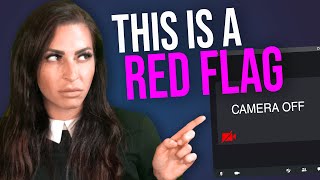
In this solo presentation, Leila Hormozi shares practical guidance for hiring managers on how to identify bad hires in remote or virtual workplaces. Drawing on her experience running three virtual companies (service, software, and physical products), she explains the concept of "good churn" (early turnover of poorly‑fitting employees) versus "bad churn" (loss of long‑term talent) and why minimizing the latter is critical. Hormozi argues that spotting problematic behavior is harder remotely because candidates can hide behind screens, so she outlines six observable red flags: (1) slow response times on communication tools, often indicating competing commitments or low engagement; (2) lack of positive feedback from the team (“no good news”), suggesting the new hire isn’t making a good impression; (3) keeping the camera off during meetings, which signals disengagement and resistance to transparency; (4) calling in sick immediately after hire, which can reveal dishonesty or fraud; (5) dressing inappropriately for a virtual office, reflecting a lack of professionalism and commitment; and (6) failing to set up required technology before the start date, indicating low initiative and autonomy. For each flag she provides real anecdotes, explains why the behavior matters, and advises managers to set clear expectations early and investigate any red flag promptly by asking direct questions. The talk concludes with a call to action for viewers to apply these checks and subscribe for more content.
Chapters
What I want to share with you today is how to spot a bad hire in a remote workplace. And the reason I am very passionate about this is with 3 virtual companies, one in service, one in software, one physical products, I've had to deal with this a lot. And you see the commonalities, and I probably have a story for each one of these red flags. And so I want to share it with you because I think that the goal is always to have good churn in a company, right? And so good churn is defined as people who, like if a company has high turnover, but it's in the first 6 months and it's that you let those people go, that's considered good churn versus bad churn is that it's people that are, you know, they've been there for years and they're leaving. That would be considered bad churn. And so I want to show you how to avoid bad churn and to only have good churn in your company because I have had a lot of churn in my company, but it's all been good churn. I want to explain this. The reason I think it's, and I say virtual or remote, it could be applied to either, but I do think that actually being able to spot the red flags in a virtual place is much harder than in person. Because I know that anyone who's worked in an in-person office, you know, you can pretty much tell in like the first day or two if somebody's gonna be a good fit just by like how they act, their behavior, their attitude. Because those are like fundamental things that you want in a new hire. You know, if somebody comes in, they're negative, they're not talking to anyone, their body language is bad, like it's easy to point off right off the bat that that person shouldn't be there. Versus in a virtual place, people can hide behind the camera, they can hide behind the computer. And so you have to be able to see the little spots and then pull the thread and pull that thread until you can figure out what's really going on. And so I wanna explain to you the red flags that I use. The first one is going to be that they are slow to respond, right? So whether you use Asana, email, Slack, whatever it may be on whatever your primary communication tool is, if they are slow to respond, here's what has happened to me the many times that people have been slow to respond. One, they didn't tell me that they were taking care and homeschooling 5 children while they were also doing their job. Turns out they were only working like 30 minutes a day. The second one was that I had someone that I hired on. They wouldn't respond for a couple of hours. It turned out after I let them go that they actually were still doing consulting work and they had about, I think, 8 companies that they were consulting with on the side. This is an executive. And so slow to respond has never been good. When someone is first on the job, you would think somebody who wants to do well will be fast to respond. They want to make a good impression. They want to be like, I'm here, I'm ready, etc. Now, of course, you always want to set expectations at the beginning, but I do that. And so if you set the expectations of what a speedy response is and that person's still slow, I would keep pulling that thread. Because often, especially because it's work from home, some people think that they can kind of bypass and they can get by with doing another job, working, say, 2 or 3 jobs, having clients on the side for a consulting gig, having a ton of kids at home and homeschooling, and just kind of like doing this between hours. There's a lot of stuff that people can try and pull. And so that's the first one I would say. The second one I would say is no good news. This should seem obvious, but what I think happens a lot, and this happened with one of our portfolio companies the other day, is I was— they were trying to figure out if this person was the right fit. And I said, well, what's the team say about them? Like, what kind of, you know, what's their feedback? And they're like, oh, I guess I haven't even asked them for feedback. And I'm like, how long has this person been there? And they're like, a month. And I was like, you don't know what the team thinks? And I was like, I bet you they can't wait for this person to be gone. And so ironically enough, they go to the team, the team's like, Yeah, they suck and I don't even think they're working. Boom, they were gone. And so your team honestly are the best advocates because they have to work with this person day in and day out. They don't wanna work with some schmuck who's gonna give them all the work. And so if you ask your best teammates on that team what they think of this new person, if they have no good news, no good news is typically not good news when it comes to new hires, I can tell you that much. I've never hired someone and when people have had no feedback from me for the first week, that person has never stuck. And it's usually because that person doesn't make a good impression, they're slow, they don't have a good attitude, they don't stand out, they're not enthusiastic about the job, they're not taking initiative, they're just not into it. And so that's why no good news is usually a red flag. The third is camera off. So I have a camera on policy in all of my companies, which I am very strict about. Like your camera is on if you're on a call, if you're on a meeting. And so much to the point that I personally message people to let them know, on a meeting if their camera's off, that's not okay. We don't do that here. It's written in the handbook. It's all over. Everyone sees it. Everyone else has their camera on. Obviously, if somebody has something big that came up, they'll let me know and they'll message me and tell me why their camera isn't on. But what I've seen is that the people that are disengaged have their cameras off. And so this has happened to me with quite a few new hires, which is the first day they show up to a meeting. I had it so far as to a woman showed up to our one-on-one when it was just the two of us on Zoom and her camera was off. And I was like, can you please turn your camera on? I can't have a one-on-one with you without your camera on. And she was like, I just look really bad. I was like, this isn't gonna work. And so needless to say, camera off, big red flag. Usually don't come back from that one. The fourth is calling in sick pretty much immediately. I've had this happen a number of times. Um, the worst situation I'll tell you was that I had a guy who we hired him, and on his second day he calls in sick Tells us he has a very serious disease and says he must take and use all of his sick and vacation time immediately. Right. And we have like a really great benefits package. I was like, that's a lot of time. This seems really weird. Turns out he actually was pulling medical fraud. And so he wanted to get hired to have us pay him while he was on leave and then had a fake doctor write a fake doctor's note to then try and show us that he had some terminal disease which didn't exist. So that was my worst case scenario. Best case scenario is that I had somebody who said that they were sick. Turns out they actually had a vacation they had preplanned and they lied. And so then they took sick time in their first week for 3 days. We ended up not keeping that person, not out of the fact that they had the vacation, like if they had just told us I've been fine, but the fact that they would be dishonest. Right. And so that is another one of the red flags. The fifth one I will say is that they just dress out of step. And what do I mean by that? Right. Okay. Well, we're a virtual workplace. And so I still have dress code requirements because I believe that people are more productive when they dress in a manner that is in accordance with their future self, who they want to show up as. I think it builds confidence. There's been lots of studies done on this. And so I don't want someone showing up in sweatpants, right? It's basically business casual or you wear swag given to you by the company or polos, et cetera, what we provide. And I've had people show up to their first day, second day of work, and they look like they just rolled out of bed. And what that tells me is that they're not engaged, they're not excited, and they don't feel there's anyone to impress, right? They're not taking the job seriously. And this is important in a virtual workplace because in lots of virtual workplaces, you are just as professional as you would be in office. But often people don't have the cojones to show up in their pajamas to an office, but they will do it virtually, which sucks. And then the last one, and this is, uh, one that I have just time over time again, have come in to run into, which is that they don't have their tech set up before they start. This is very interesting. I don't know why it's correlated with people who we end up not sticking with, but for some reason, people that have been bad hires— the good hires, what they do is they go figure out how to use Zoom, Gmail, Asana, Slack. Like, they go watch how-to videos before they show up to work. What I've noticed with bad hires is that they show up and they're late to meetings, and then they say, oh, it's because I don't know how to use Zoom. Or they don't use Slack and it's like, oh, I'm not responding because I don't know how to use Slack. And what I've noticed is that they don't take their initiative and then they wait for everyone to try and teach them. And that especially doesn't work in a virtual workplace because you need people that are more autonomous, right? Like, I'm not sitting there seeing that you can't go through things. And so that has also been a red flag where a lot of people who have not had the tech set up ahead of time and done their own research just don't end up working out. And so the 6 red flags: slow to respond, You do not want that. No good news, meaning the team doesn't say anything good about them. If you don't hear anything in the first week, I'm serious, I've just never had it work out. Their camera's off. They just don't show their face on meetings and they're not receptive to when you ask them to. They call in sick. That can mean many things. They dress out of step, so they're essentially not dressing in accordance with the dress code or even they could be just sliding by, but they look like they rolled out of bed. And then lastly is they don't set the tech ahead of time. And so I hope those were useful. Anytime I notice any one of these things when I first hire somebody, I immediately investigate. So that's how I would encourage you to do is that once you notice this stuff, investigate, talk to them, ask them, clarify why it's happening. And oftentimes the reason it's a red flag is that when you ask them why it's happening, they don't have a good reason. And then that is a bigger problem in its own. And so if you like this video, go ahead and hit subscribe. I will see you on the next one.