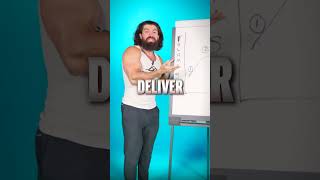
The Van Westendorp price-sensitivity meter asks four questions about how customers perceive price: too cheap to believe, too expensive to consider, a great deal, and barely acceptable. Plot the answers and the curves intersect at your optimal price, where you maximize both units sold and profit.
Chapters
2 guys ran a research study to figure out how to get the perfect price for any product, and they did it by asking 4 questions. And when getting those answers, they could plot them on a graph to find the perfect spot where you'd have the highest price with the most number of units sold, which is typically where you'll make the most profit. The first question you ask is, at what price would this be so cheap that you wouldn't even believe this would work? And this honestly is where a lot of people who are beginners actually are. They price so low that no one actually thinks they could even deliver on the thing they're promising. The second question you ask is, at what price would this be so high you wouldn't even consider buying it. This gives you the upper range for that particular customer. The next question you ask is, at what price would this be a great deal? You believe it would work, but it would be a bargain. And then fourth and last, at what price do you think this would barely be in your range, but you'd end up buying it anyways? And then this one tends to be the price point where you generate the most profit. And then by doing that, you can select a price not by guesswork, but by data that'll make you the most money.