What an Operator REALLY does...[my rant]
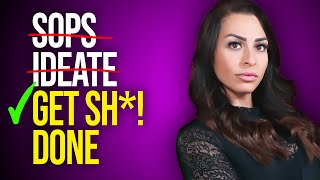
Leila Hormozi argues an operator isn't an admin writing SOPs but a scaler who drives revenue and shapes culture. Visionaries get you to $1M, operators take you to $10M and beyond. Most companies hire operators to systematize, when they should hire them to lead teams and generate revenue.
Chapters
And the first thing a true operator tells me when I say, what are you going to do to impact the business? They're going to say, I want to make sure that we're culturally aligned. They're going to say, I want to make sure there's no culture issues in the team. I'm going to turn around the culture if I need to. What is up? Welcome to my channel. My name is Leila Hormozi, co-CEO of Acquisition.com, which is a portfolio of companies that does about $100 million per year in revenue. And my goal with this channel is really get you from wherever you're at in your business to between $3 and $10 million for free. That being said, today's video, I don't have notes and I don't have slides and I don't have a script. This is just a video that I felt like I needed to make because of a lot conversations I've had in the last week, and I feel a little fired up about it. And so not sure how it's going to go or if I'm ever going to post this video, but we're going to find out. So I have been quite frustrated this week because I'll tell you one of the main things that we do— not main, but one of the things that we do with the portfolio companies that we take on is we often identify or find an operator for those businesses. And now let me define operator. An operator is not somebody who's like a fucking office administrative clerk who sits behind a desk and, you know, does your billing. Okay, I'm— I think that the term is misused and misunderstood. An operator is somebody who's going to scale your business through the proper systems and people. People would probably come before systems. Typically, an operator is complementary to the visionary. And so often, the people who start businesses are not the people that should be scaling them. The person who gets the business from $0 to $1 million is often not the person who gets it from $1 to $10 or $20 or $30. Often, the person who gets it off the ground is much better than going off to the side, making creative things the rest of the time, because they're very good at starting things, not good at scaling things. And so often what you want to find is you've got a starter and a scaler, and they pair together. And so I consider an operator to be a scaler. Now, what I have noticed in the last few days, what I've been frustrated by, is my probably inability to articulate this to people, and people's inability to understand it, because there's so much bullshit out there about what an operator is. And I think everyone tends to think operator, and they think, oh God, yeah, I don't want an operator, because, you know, the last one I hired, just so many systems and SOPs. And I'm like, I'm swear to God, if one more person says, oh, I can't wait to get an operator in to build SOPs, I'm gonna fucking shoot myself. Like, that is not what an operator does, or at least not what a good operator does. Is Sheryl Sandberg writing SOPs all day? What? You know what I mean? Like, it's fucking batshit. I'm like, she's not writing SOPs. Jesus Christ, she's building the fucking team. And so it's just something that's really been frustrating because in order to get your business to where you want to go— if you're at 7 figures, you want to get to 8 figures, rip, 8 figures— I want to say it's between 10 and 15 million that you really need an operator that's going to be able to get you to 25, 30, 40 million. This is where people people really misunderstand what that person is supposed to be doing. And I think actually for the CEOs and for the founders who are visionaries, they underestimate how much an operator should be doing. And so they often think that they're in the background making sure the back of house is together. That's often not what's needed. You need basically the person who is your hands, meaning you communicate with this person and basically nobody else on the team. That's often what a lot of visionary leaders need. They need someone who is not just a doer, is also a leader, is also a manager, can also implement anything that they're asking for, and also provides filtering to them and can basically give them feedback. So they're not giving the visionary feedback, uh, to the team about like, hey, these are the things we need to do because, you know, so-and-so said so. They're also saying, here's the feedback from the team to you. So they serve as a filter or a buffer between the two, right? So they are a filter from the typical visionary to the team, and then they're a filter from the team to the visionary. Not a bottleneck, a filter. And so I've been trying to wrangle my head around this because I realized that I haven't been able to articulate this well. And I think that those are probably the two best ways that I could, is that this is not, um, an operator— quote— is not— I don't even think I'm gonna use the word operator anymore. It's a scaler. It's somebody who's going to scale your business. They're the 1 to 10, you're the 0 to 1. And they're not a bottleneck, they are a filter. They're not someone who should stop information from flowing to you. They should basically decipher the information, filter the information, sort the information, and then provide what is most important to you. So you don't have to spend hours and hours digging through things, hours and hours talking to people, hours and hours figuring out what's going on in the business. And so because of that, that's really what an operator— quote, operator— is supposed to do. When I hear about people that are telling me, and they're basically putting process and SOPs and systems on a pedestal, like the first thing I think is I'm like, you're so fucked when you actually have a real business. Because like right now, sure, you can spend all that time and like little task management and SOPs and all things. That's to make up for value. The best companies in the world are run by value, not by rules. If you want to run by rules, you will have people who do not have values. People who have strong value systems, they are not attracted to businesses that are run by rules. And lots of operators run things by rules. That will not scale your business. You cannot scale— I mean, you could scale things by rules, but that is essentially not going to be— I don't think anyone watching this channel wants that, what that creates, which is a culture of fear and a bunch of people who can press buttons and they can't make any decisions on their own. Once something goes wrong, there's no SOP for that. Oh, well then I don't know what the fuck to do. You see this a lot in like big, big corporations, and that's why I'm not an advocate for an operator coming in and putting a ton of SOPs and a ton of systems in place. The right operators, guys, I interviewed top-notch operators all the time, they would never come in and bombard a company with systems. Never. They all know that one, they're there to make sure that we generate more revenue, more sales, we grow the business. They're revenue-driven. They're revenue drivers. I had an operator that I was interviewing the other day. She's been doing this for 20 years and she's an absolute stud. And she literally said to me, she goes, yeah, I mean, well, who else is supposed to drive revenue in the business? And I'm like, dude, amazing. But that's not what anyone thinks. They don't think you drive revenue. Nobody thinks I drive revenue. They think, oh, you take care of little back office shit. That is such a misinterpretation. An operator should be driving revenue while the visionary's out there thinking about like 5 years in advance. Or like making things, making creations. That's essentially like what a lot of people in this day and age do. And so it's a little frustrating, but I wanted to try and break it down in this video, which is turning into a rant. I don't know what it is. We're just going to say because I just— I hate seeing so many people think that they have this great person on their team when they don't. They're like, no, they've made so many SOPs. You should see this book. When someone gets hired— I had someone tell me this, like, when someone gets hired, we have a 75-page manual. And I was like, barf, 75 pages? Who the fuck reads that? And let alone if you read it, do you remember any of it? You know what I mean? Not me. I don't give a shit. So like, When I think of a true operator, that's somebody who's going to come in and say, do we have the right value system in place to get us to where we need to go? And the first thing a true operator tells me when I say, what are you going to do to impact the business? They're going to say, I want to make sure that we're culturally aligned. They're going to say, I want to make sure there's no culture issues in the team. I'm going to turn around the culture if I need to. Great operators are brought in to change a culture, to innovate a culture, to drive revenue, not to put SOPs in place, to put systems in place, and to put processes there. You can have a project manager, an administrative assistant, or another manager of pretty much any department do those things. And so I think often Oftentimes people think they need an operator who can put systems in place and processes and document things, and they hire somebody and pay them way too much money to do those things. Because what is actually the case is that their managers that are below the operator suck. A manager of their own— each department should be able to put processes in place. That's part of a manager's job. You don't need an operator to do that. You need better people below the operator. And so often what you think is a need for an operator is actually just a deficit on other teammates.. And so you have to coach those teammates up or coach them out, either one. But you don't need an operator to put SOPs and systems in place. And so, um, I wanted to make this video just to explain the nuance to that because I think it's something that's a lot misunderstood and misinterpreted, and it's causing a lot of people a lot of pain in their businesses because they keep people on the teams, they keep people very close to them who don't do any of those things. And I think that first and foremost, like if you were to look at a lot of the best operators of all time, you wouldn't go in and say that that person's an operator. You would say that's the CEO, that's the person leading the business, that's the person driving this ship. You wouldn't go in and say, oh, that's like a, you know, They're building all those SOPs. That's not what it looks like. And so if you have a sizable business and you're above, I wanna say $5 million a year in revenue, um, that's what it needs to look like. And somebody who doesn't embody your culture, who believes that SOPs and systems are king and God, like that kind of person is gonna prevent you from scaling to the next level. And so I guess honestly, I think I'm making this video, I'm trying to figure out why while I'm making it, because what is most frustrating to me is to see somebody who's like a brilliant visionary and they have a shit operator and it's because they don't understand what that's supposed to look like. And I'm like, dude, this is the reason why we can't grow this business or we won't be able to grow this business.. And I feel like sometimes I just wanna jump into certain businesses because I see like there's this brilliant person who has like these amazing ideas who like anyone would be lucky to work with. And they've got someone next to them who's like not doing the work, not doing the job. They're not leading the team. And it's just frustrating to see because if you are that visionary, maybe if you watch my channel and you're a visionary, that's the kind of person you need. You need someone who's so loyal to you to a fault, someone who wants to protect you all at costs and someone who wakes up every day thinking about who, not about what, not about SOPs. They think about the team, they think about values, they think about the mission. And that's what they're driven by, about building an amazing team, Building a place people want to work, building a place that we're constantly growing every year, we're surpassing our goals. Someone who's driven and hungry. And so I think that often what happens is that in those visionary roles, you think I need something so opposite of who I am. But at the same time, if you get something that's so opposite, how do they take anything off your plate if they don't have any of the same skill sets? Something to think about. And so I felt the need to make this short video. Um, I hope if you don't understand what an operator quote unquote is supposed to do and you are between $3 and $10 million in revenue, this video can be a little bit enlightening to you. And if you're an operator and you're new and inexperienced, like I just plead to you not to get on your high horse and think that like every time you enter a new business, like you need to put in all these processes and systems to validate your worth because that's not what people want. That's not what a visionary leader wants. They want you to make their life easier, not to make it harder. And so you've got 6 systems that you've got to go through and I need you to log into Asana and HubSpot and the CRM and all these things. Like there is no black and white and you've got to do what works for the company and what works for that visionary. And bombarding people with systems and processes and SOPs that they're never going to use, but it makes you feel important. It's just not helpful for the business. So with that, I'm out. What's up guys? Thank you so much for watching my video and this channel. Um, I wanted to go ahead and encourage you to subscribe so you can find out when I have new videos that are releasing. And if you really, really liked the videos, uh, go ahead and share with somebody else, you know. All right, thanks. I will see you on the next one.










