Why I REFUSE to label myself a "female" CEO...
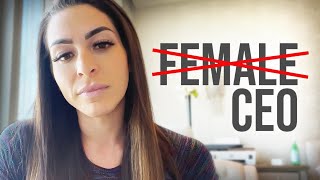
Leila Hormozi, co-CEO of Acquisition.com, refuses to call herself a female CEO because she believes gender labels function as psychological crutches that limit performance. Harvard research shows women reminded of their gender before a math test score lower, and Hormozi argues labeling reinforces the idea of handicap rather than encouraging skill-building and personal responsibility.
Chapters
What is up? Welcome to my YouTube channel. If you are new, my name is Leila Hormozi. I'm co-CEO of Acquisition.com, which is a portfolio of companies that does about $85 million per year in revenue. And my mission with this channel is to get you from where you are to between $3 to $10 million in revenue for free. So that is what I do on a weekly basis, is just think of tools and tactics that I can provide and insights that you can get to that point with your business. And today, um, this video has absolutely zero to do with getting your business to between $3 and $10 million. This is actually a video that I I wasn't really hesitant to make, but it kind of just came out of a tweet I made the other day, which came out of an Ask Me Anything I did on Instagram. And basically what it was is that I put out, you know, Ask Me Anything. I was like sitting in the car waiting for some appointment or something, and I had like probably 5 women say, you know, how do I succeed as a female founder, female entrepreneur, and female CEO? And, you know, the first thing that like came to my mind is I was like, stop calling yourself a female CEO or female founder. Like, you're a founder, you're a CEO. And I tweeted that, and it's just gone viral. And so I felt like obviously hit a vein with people because honestly, I feel like I'm isolated in my opinion. And I feel like anytime I put anything out there that's like, why are you calling yourself female stuff? They're like, fuck you, you don't support the women. And I'm like, I do support women more than anyone. I am a female CEO, but I don't support people labeling themselves. And so that's kind of why I wanted to explain this video is why I don't call myself a female founder, female CEO, and instead I just call myself CEO or founder or an entrepreneur. And the first reason for that is I don't believe in labels. I don't find them helpful. I don't find them useful. And the reason I don't believe in labels is I think most the time a label becomes a crutch, right? And so I'll give you two examples, one that's not related to this topic and one that is. The first one is, you know, there have been multiple times where I've talked to founders and they say, well, you know, my therapist, my doctor, my mom tells me I have anxiety, and so that's why it's so hard for me to do X, Y, and Z. That label was probably put there by that person to help them to understand why they're feeling the way they're feeling. But what I see so often is labels like that actually then turn into they identify with being a person who has anxiety and has stress, and they take more actions to confirm the label that they didn't even put on themselves. And then that label no longer is helpful. That label becomes a crutch, okay? And so then they just point to that label and say, that's why I can't do this, that's why I'm so nervous, that's why I'm this, rather than you're a fucking human, right? And this is human experience. And so the same goes for female. There was a woman in my business, it was about 2, 2 and a half years ago, and she felt like the leadership team wasn't listening to her. And so she came to me and she was like, Leila, she's like, I have to say I feel like nobody's listening to me because I'm a woman. Like, I hate to say it. And I was like, interesting. And I was like, well, okay, maybe, because there are some men who don't want to listen to women, which, that's life, and life's not fair. But let's really dissect this, because in my mind I was like, that's definitely not why. Um, and I broke down, well, there's not even just you on the leadership team, there's 3 other women. Do they not listen to those 3 other women? Do they not listen to me, who's a leader? And she's like, well, no, I think they listen to all of you. I was like, so then is it fair to say that they are discriminating against you because you're a woman, or because maybe you're not worthy of respect yet because you are an inexperienced leader? And she was like, shit. She's like, I'm an experienced leader. And I was like, yeah. I was like, stop using being a woman as a crutch. It's not a reason for why people don't treat you well. But if you constantly are identifying with being a female this, a female that, when something goes wrong or someone doesn't respect you or someone yells at you, you're gonna be like, oh, it's because I'm a female, rather than like, maybe you suck, maybe you're not good at something, maybe it's the— and it's the same reason that for anybody else. And so that's the first reason why is I just believe that people start off with labels to empower, and those labels actually end up hindering them and being crutch to them. And so I don't believe in labeling yourself. That being said, a second point to that is I'm not going to call myself a tall CEO. I'm not going to call myself a Persian CEO. What does that indicate about my ability? Nothing, in my opinion. You know, it's just like, it's just identifying more differences between people. So it's funny because people seek out labels and they seek out titles. They're trying to bridge inequality, I think, between men and women. But in doing that, you actually widen the gap of inequality because you are differentiating yourself. You're saying being a female CEO is different than being a male CEO, which makes no sense to A second point to that, to just kind of explain that labels— this isn't just my opinion, this is based on a lot of facts— which is there are multiple studies done at Harvard which were before someone would go into a test, they would ask them, for women, they would say, are you a female, yes or no? And then they would have them take the math test. The women who were asked that question before the math test did worse than the women who weren't asked that question. So to— it's funny because like these stigmas are still stuck with women. And so when they're asked, because women are, uh, statistically, not typically as good at math as men. So when they're asked, am I a female, before they take a math test, something like, I'm a female, maybe I'm not as good at math, and they question themselves. And so, you know, this is something that I think some people, I'm sure, will be upset by. That life isn't fair, and like, these are the facts. And so constantly labeling yourself as a female rather than just seeing yourself as equal with all other men on the playing field, I just feel like it hinders you. And so that's the first thing, that I don't do it. The second reason is I really believe that you limit your community. I have so many amazing male entrepreneurs and male CEOs I get to connect with on a daily basis, on a weekly basis, I get to learn from. And I know a lot of women they don't want to join groups that are mostly men or male dominant or whatever because they're like, well, I need a group with more females. And I've just never even had that thought because I'm like, I just want to learn how to be a better CEO or be a better entrepreneur. I don't need to put myself just in a room with females. I can learn just as much from men. And so like, if you imagine if a man said, I'm a male entrepreneur, immediately there's like more distance between the two of you than there is likeness because they're putting, oh, I am this thing, and that's what they're identifying with. And so when we do that, it does the same thing for men. Honestly, I think if I did call myself a female CEO and a female entrepreneur more, I would probably attract more women, and I would deter away men. And personally, I just don't like the label, so that's what it is. And maybe I'll attract less women to watch my content because of that. I don't really give a fuck. I am who I am, and I'm not going to change who I am because of how people want me to be or what's going to get more likes and shares, right? And so I just feel like when you confine yourself in a gender box, you just completely shun the rest of the population that's not there, you know? I think that's honestly for anything. Like, if I just constantly was talking about how I'm Persian and Persian, I'm Iranian, and all this stuff, like, I would attract more Iranians, but then I would also deflect everybody else who's awesome, who's Asian and Black and white. And so, like, I don't identify with that because I like people in general, and I don't want anyone to not want to hang out with me. And even if that means that I have less people who are more attracted to me, that's fine. I don't care. So that's the second reason. And then the last reason is I think that most women— and I know this is their intention— is that most of the times they want to— they're for equality, right? And so they want to close the gap rather than widen it by saying I'm a female CEO, right? By empowering women. But when you seek to empower by putting that label on there, you're actually just reinforcing the norm because you're reinforcing the fact that there's a difference between a man and a female CEO. And here's the thing, is that in sports, it makes complete sense. Men are physically superior to women. I don't know why and how we've gotten this mixed up, but they are, physiologically speaking. I literally learned this in college 10 years ago. They were like, statistically, men are superior to women. That is why there are separate sports, because they could maul and kill women if you put them in the same sports, which, you know, we're doing nowadays, but whatever. I don't— my opinion doesn't matter. That being said, a lot of women, I see their arguments be, well, there's women's NBA and then there's the men's NBA, so, you know, we're gonna have— I'm a female CEO and we're a male CEO. But if you look at studies, there's no difference in intelligence between men and women. So you're basically saying, like, inherently, like, without even knowing, that there is a mental handicap for women to be CEO when you say, I'm a female CEO. There is absolutely a physical difference between men and women. There does not have to be an intellectual difference. There are probably social norms that don't work in your favor as a female. There are probably beliefs that you hold from people that you grew up with that reinforce the fact that you shouldn't be a CEO, that you shouldn't have that kind of power, that you shouldn't have that kind of responsibility, that you should be doing other things. But it's not— biologically speaking, there's no difference. And so every time we say female CEO or male CEO, you're reinforcing this idea there's some mental fucking handicap, and there's not. And so what's the difference?. And so that is why I don't call myself a female CEO, because I think that it is reinforcing the gap in gender rather than helping the gap in gender. And ultimately, here's the thing, even if it's harder to become a CEO, to become a founder, to be a female entrepreneur if you are a woman, because maybe some men don't want to listen to you— plenty of men don't want to listen to me— here's the thing, you can't control it. So if every time something happens to you and you say it's because I'm a woman, and you just puff and huff and all that shit, and you complain, it's so disempowering because you I can't do anything about it. Whereas if it's because I'm not good enough yet, I'm not worthy of the respect yet, I need to be more talented at this, then I can do something about that. But if every time somebody doesn't respect me, they don't look me in the eyes, they don't talk to me, they don't acknowledge me, they don't come up to me at an event, that I think it's because I'm a female, all I'm doing is taking away my own personal power. And the thing is, is that you can't control it anyways. And at the end of the day, even if men don't always— not as many men will respect female CEOs as they will male CEOs because of the gender biases and all that crap from whatever— even if that's the case, and even if there's truth behind it, even if studies have been done, what fucking good does it do to think about it? Like, really, how is that going to help you be a better CEO? You know what I'll say? If that's the truth, and I know because I have experienced many people who maybe don't respect me as much, maybe don't want to listen to me as much, I can say that I've had experiences and I don't give a fuck. Why? Because all I think every time that happens is I'm like, guess I gotta be better. I have to be so fucking good that it doesn't matter if I'm a male or female CEO. That is exactly what I. And that is an empowering thought to me. And so if you are a woman out there, or if you are, you know, a man who's married to a woman and you're in business together, maybe this will shed some light for her. Or maybe if you're a woman and you've been calling yourself a female CEO, maybe this will help you with something. But honestly, you know, I prefer my opinion to the other because I do think it's more empowering. At the end of the day, I would rather be known as an iconic entrepreneur, not an iconic female entrepreneur. She's got a point. She's an icon. She's a legend and she is the moment. So with that, I hope you have a great rest of your week, day, month. I will see you on the next one.










