Panel: 2020 M&A and Investment Overview, Expectations & Consequences PG Connects Digital #2
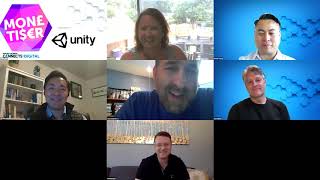
The panel, moderated by Ella Romanes and featuring Jason Della Rocca, Mike Chang, David Blum, Shanti Bergel, and Jim Yang, examined the state of mergers and acquisitions (M&A) and investment activity in the video‑game industry during the COVID‑19 pandemic. Participants introduced themselves and highlighted recent high‑profile deals such as Zynga’s acquisition of Peak, Stillfront’s purchase of CandyRider/BitLife, and AppLovin’s sale to Oriental Huntai. They discussed how the pandemic altered deal logistics—remote due diligence, limited site visits, and reliance on Zoom—while noting that overall activity remained robust. The conversation shifted to the changing landscape of buyers (publishers, ad‑tech firms, private equity, public market players) and the rise of games‑as‑a‑service, discovery challenges, and new distribution channels (Discord, TikTok, Twitch). Panelists offered practical advice for early‑stage developers: treat the studio as a business, build community and discoverability into the game design, maintain long‑term vision, stay current with social platforms, and cultivate relationships with investors and industry peers. The panel concluded with forward‑looking thoughts on the next 12‑24 months, emphasizing continued market health, the need for flexible runway strategies, and the importance of networking in a largely virtual environment.
Chapters
The panel is gonna be talking about some pretty interesting things around mergers and acquisitions this year. And, you know, holy cow, this year has been, you know, a heck of a roller coaster. So what kind of investment overviews, expectations, and consequences are we looking at? For the balance of 2020. One of my favorite moderators is going to be hosting this panel, Ella Romanes. Would you please introduce your panel and take it away?
Hi, everyone. Thanks for joining us. I think we're almost there with all our panelists. Right, so I'm going to ask— initially, we're going to start off asking each of the panelists to tell us a bit about themselves, but I'd particularly like to hear about one or two recent deals that you've done and kind of what, what excited you about that deal, what you're interested in at the moment. Who wants to go first? Jason?
Oh, am I at the top?
I'll put you on the spot.
Yeah, I mean, it's interesting to see some of the deals that are still happening even amidst the pandemic. I mean, my guess is those deals were sort of a year in the making as opposed to kind of came about from a Zoom call. But obviously the most recent one, the Peak deal with Zynga, I mean, that's a monster deal. That's super interesting. And to kind of see how Zynga has adjusted their strategy over the years. But I guess we'll get into that. I mean, my own active investing days, you know, are kind of done at the moment. We had Execution Labs, which was a very early seed stage fund. We did 25 deals in startups, and often we were the first external money into those studios. So very, you know, sort of incubator accelerator-like investment process. It's a little bit different than some of the approach that the other folks on the panel are taking. So that's super quick for me.
Brilliant. Who wants to go next? Michael? Sure.
My name is Mike Chang. I just celebrated my 10th year in gaming. I fell into this job being the number 2 M&A professional for Electronic Arts, really to help a friend's startup. That startup, Playnomics, was ultimately acquired by Unity. In terms of the largest deal I've done to date, it's for NCSoft, it's the third-party publishing deal with Harmonix. Their game FUSER is about to come to fruition and be released this year. It's not an acquisition, but why is this relevant in this panel? My number one focus is acquisitions, but acquisitions are the right tool in only some instances. Other instances, it's investment, third-party publishing, or some other, some other form of business development deal. So for entrepreneurs and for our audience, I think it's very important to have a clear sense of which path is the right one for you to achieve your long-term goals.
Great. And, uh, David, how about you?
Oh, he's on mute.
Oh, you're on mute.
There we go. Is that better? All right, well, I'm really glad to be here. I think there's, you know, quite a bit of, uh, dysfunctionality going on in our current world and, um, daily work, and it's, it's fun to at least be part of something that is growing, doing well, and making an interesting contribution. I don't think games have ever played a bigger part in the daily lives of people given COVID and the shelter-in-place and some of the other restrictions that have been put upon us. My name is David Blum. I'm with Ignitio Capital. We're a boutique investment bank. We just focus primarily on M&A. And what we call, I guess, the lower middle market, independent game studios. We've seen just a really great environment over the last few months. Certainly, the people interested in growing their business through acquisition are healthy, doing well, feel confident in the future. They've seen the COVID lift in their games downloads, DAUs, retention, and of course, revenue and EBITDA. But that's been the same with our clients as well. I do think that we are hampered with performing a proper due diligence given you can't get on a plane and most companies wouldn't be comfortable going through an entire deal transaction without doing a site visit, getting to know the senior team leaders and that sort of thing. That's definitely an issue. We have had buyers tell us straight up that they would do a deal over Zoom. I don't know if I believe that. We'll see. But there is that kind of positivity in the air. I guess you were asking for some examples. I guess from our side, the last deal we closed was an acquisition by Stillfront. A Swedish public company that acquired CandyRider and their, primarily their franchise property BitLife, which is an unusual game to say the least, in that it's a text-based virtual life game and had quite a bit of novel attributes, both in performance and in the way that it virally promoted itself and addressed a unique market in terms of text-based games. So, So, that was a bit of an unusual one, but a fantastic property in terms of performance metrics and EBITDA, and that made it quite attractive. So, that deal was started before COVID but did not slow down and was not in any way delayed because of the problems with COVID But in that case, we got site visits and other things under our belt before the COVID restrictions, in all fairness. So, it was— largely something that just needed to be finalized. But, you know, overall the top message is it's very positive and there's a really healthy environment on both sides.
That's good to hear. And Shanti, how about you?
Yeah, hi, my name is Shanti Bergel. I'm founder and managing director of a venture fund that invests exclusively in games and game-related businesses called the Transcend Fund. So we were started actually in the midst of the pandemic in, excuse me, in March of this this year and have been actively investing ever since. And so in a way, you know, like life in lockdown is all we've ever known as a fund. And we're, as everyone said, you know, business continue to benefit from, you know, kind of this sad situation. And, you know, like we have done investments with folks that, you know, like we have met sparingly. We have done, I think, one where we have never really met the team, like physically in person, but we knew of them for quite a long time. So the topic of like, how do deals get done I think is interesting. I've spent a lot of time actually with the M&A folks kind of after they do a deal, I'll call them up and say like, "So did you do this in lockdown? How did that work?" And, you know, to be honest, I think most of the deals are actually not being done, you know, kind of start to finish in lockdown. I think a lot of these deals are, you know, kind of deals that have started prior to lockdown as David's did and they're kind of flowing through. And so I think the real impact of COVID will probably be felt, you know, like in the third quarter, fourth quarter, border in terms of like what it means for M&A. But the business overall is super healthy. We're seeing it, you know, kind of investments we're doing, you know, kind of we, I think, are unique in that we are a new fund. And so we can't really afford to slow down because we're starting from a dead stop. But, you know, like I think even other games investors that we speak to have expressed continued enthusiasm for the space and they're also continuing to make investments despite the fact that they can't meet with teams in person. So our MO is we do early stage, meaning seed to Series A, So it's check sizes from a couple hundred K to a couple million. We invest globally, all platforms.
And Jim, how about you?
Hi, I'm Jim Yang. So I'm based in Seattle. I'm with CB Capital. We're a Shanghai-based investment bank. Primarily what we do is help companies that are looking to raise late-stage investment, Series B, Series C, or M&A. In terms of a couple transactions that we've done, the largest that we've done is that we were sell-side advisors for AppLovin when they first sold to Oriental Huntai and then subsequently out to KKR. We also earlier this year did a raise for Skybound Entertainment down in LA. And yeah, it's definitely an interesting time. We've kicked off a couple of deals post-COVID, and so I've started doing some outreach and had some conversations with folks that haven't even met in person before, just through Zoom. So folks are curious kind of what's gonna happen and whether they're gonna be able to close. 'Let me get back to you in 3 to 6 months as to whether or not we can actually get these closed.' Okay, well, I mean, that was—
thank you for the introductions. Actually, I felt that was very positive. You all seem quite upbeat about the current climate, which is really good to hear. I think what I'd be interested to know, and Shanti, you touched on this about, you know, how things might change going forward, perhaps in the third, fourth quarter of this year, perhaps into next year. It'd be interesting to hear from all of you kind of what you think your activities and plans will be going forward, and are they going are you planning for any kind of change in what you're already doing, you know, over the next 12 to 24 months?
We're gonna go in the same—
you can if you like, go for it Jason.
Test our memory.
Yeah, I mean, obviously there's a lot of things to factor and the unknown element of, you know, how long and what this you know, what the sort of tail end of this is going to look like, you know, obviously can change that to a huge degree. I mean, at this point, I'm working with a bunch of startups and independent studios that are looking to raise. And I mean, there's a couple of issues there. I mean, there's going to be a greater pressure on bootstrapping and extending your runway based on your own kind of reserves, own savings. you know, and sort of the love money pool or pot of funds, uh, to extend runway and, and sort of try to minimize as much uncertainty as possible, uh, by, by running a closed beta or doing your soft launch, collecting some metrics to kind of reduce, uh, uncertainty and, and potentially raise, uh, investor confidence. So that, that's kind of one piece is like, oh crap, we have to do more with the little funds we have right now, or kind of the bootstrap funds that we have. And then the other piece related to that is the sense that there's pressure to raise more money as opposed to less, because a lot of the investors are concerned about the next round, and they don't want to just give you, you know, 9 to 12, 15 months. They want to, you know, they believe you should have 24+ months of runway just so you have that kind of buffer to run the operations, run the studio, find success. But, you know, if I'm raising $1 million, that's kind of one story, one risk factor, you know, one set of economics. But now if I have to raise $2+ million, or, you know, whatever the math turns out to be, I mean, that starts to change investor appetite. And then if you add on that this kind of weirdness of like, well, I never actually you know, had a dinner with the founders, never kicked the tires of the studio, and now I have to put in more money. And so there's some weird things to kind of balance in that. I think, you know, if there's something truly promising, that there is that potential. But these are some of the things you have to think about in sort of the next kind of 6 to 12 months if you're planning to do a raise and the factors you need to look at.
Interesting. I can't even remember who was next. Michael?
Look, obviously our, my Korean compatriots, 4,000 of them, are back in the office. So South Korea is taking care of things, Taipei, Taiwan is taking care of things while we have not. They're back in the office. For ourselves here in the West, we expect no travel, no E3, no Gamescom. Whether it be our Bellevue office of 200-odd people, whether it be San Mateo, whether it be Aliso Viejo down in Southern California, whether it be in South London. We'll see you about slush. And generally, I get to see Jim, Jason, David, Shanti at these different conferences, so I'm missing the fact that I'm not seeing them in person. But we continue to evaluate opportunities. There have been a whole lot of video conferences, emails, and game tests going on. Some people ask, how can you get to know a management team remotely? Number 1, my answer is actually through these web conferences, I get to know how a company handles adversity. And number 2, I get to know if these management team members I'm dealing with have kids or pets oftentimes because they're running across the screen. You know, I went back and actually started thinking about, and I'm picking on EA here, the 4 deals that I did at EA and how much actual time I spent with management. Dinners, like one-on-one time, not follow-up time on phone or video conference. The majority of them, I only spent like 8 or 10 hours and it was spread across a number of members of management. It just wasn't just the CEO. So yes, it's a little bit different, but it's not an insurmountable task. Now certainly at the end of a transaction, we've started a few right now where we're going to have to within a few months make some decisions here. It may be if we get very serious, we will have to figure a way to ship team out, kind of quarantine for a brief period of time going out there and then quarantine coming back. We'll see what happens, right?
So—
David, how about you?
Well, a great answer from a panel of experts is, I don't know. You know, I'm looking at the numbers this morning even because we're in Washington. I'm also in Seattle out here with Jim. And we were the start of this COVID thing in the States. And we don't seem to be handling it very well. The last couple of weeks. And so there's a lot of concern that we're going to go back into maybe some more tightening here if we don't get a handle on the most recent directionality of this virus. But that puts a lot of unknown in terms of continued travel restrictions and ability to go see people face to face. And like I said, I don't know if somebody is willing to go through an entire process over Zoom, even if I'm told that. In a conference call by an experienced, you know, savvy acquirer. So, we don't— there's a lot we don't know. Here's what I do know. We will have several transactions that will close this year, one of which has already been started and we expect it, you know, to close. And it has not also been delayed, although again, it was started before COVID And we have other processes that have what I would say higher energy than they've had in the past in terms of momentum and conviction, but whether we can finish those due diligence processes and put something into a closing cycle, it's really hard to know. And I just don't know. I think the more important thing for most of the people on this audience team is fundraising. And I think, you know, Jason brought up a lot of great points. Investors aren't sure either, you know, they've got a primary duty, just like we do, to their own kids now at home homeschooling and their own personal portfolios. And then they start worrying about their company, their venture portfolios, and those need a lot of work and a lot of mechanics right now. And they don't have as much time looking for new deals. So it's not their first priority all of a sudden. And that's a primary change with venture investing right now that you see everywhere is, you know, they're just like us. Their first priority is their own personal situation and then they've got a corporate portfolio that may need extension of runway or more money than they thought or, you know, we don't know when the next viable funding window is going to look like. So, they've got to put more money to get them to that funding window. And that takes a lot of workout. So, it's going to take still a little bit more time for them to stabilize their current portfolios before they spend the majority of their time looking for new deals and new investments. I think a counter trend to that is that we are seeing more early stage funds formed and getting active. Shanti being a great example, but Ed Fries at 1UP Ventures has been doing deals over Zoom and was on a call like this at our last PGC talking about it. Unabashed by the current events, he's going forward and putting money into deals and finding syndications. And I'm coming across new small funds being formed every day. Which is really encouraging. Case in point, I came across one that's just focused on infrastructure, just the services, the tools, and the platforms that help game companies get to market and monetize and scale. And I thought that was really unique, and that's a really great focus because some of those businesses take second, you know, seat to some of the game projects that we all get excited about and like to watch and and review. So I think there's some positive things, but I think there's also some challenges that we just don't know going forward. And I think this is what really makes entrepreneurs shine, is that they rise, they figure out a way to innovate, be creative, hustle, scrap. And that is a bigger separator. It's, it's harder to start a company in these unknown charted times. It's harder to fund a game studio, but If you do it, you know, there's a big payoff. And so I would just encourage everybody to, you know, just stay scrappy and fight and claw through this and be a fast learner because we're all going to learn this in real time together.
And Shanti, I mean, obviously you've just started, but it would be interesting still to hear kind of how you think, or if you think your plans might evolve over the next 12 to 24 months.
Yeah, so a lot of the factors that the panel is bringing up are quite real, but I think they're always the same factors, right? So it's just a question of balance, and the balance moves with the business ecosystem. Right now, the business ecosystem is in a very weird, uncharted place, but the balancing act is still familiar in a lot of ways. So it's like, you know, how do you think about runway risk? How do you think about market absorption? How do you think about the size of something and when it might be acquired? Those are all still kind of the same, and so how do you path around that is not an unfamiliar question. A familiar question for, you know, I think a lot of folks from all the different parts of the ecosystem, whether it's investing or acquiring or, you know, kinds of service providers, what have you. So I think, you know, like finding that new balance is, you know, kind of the task in front of everybody and it opens up new opportunities for each one of those actors. So people who are more aggressive right now as an M&A buyer may find themselves all alone in a process that nobody else is willing to compete for. And you're like, there you go, advantage for them. Same for us. I mean, like, I don't think I would have imagined a scenario where I would have been, competitive with the biggest funds in the world. And yet we're all on Zoom calls, so their big fancy office doesn't matter right now. So I look about as good as they do on a Zoom call. And so I can compete with any fund in the world anywhere right now. I'm serious. I have people coming to me and saying, will you lead our round? I didn't expect that to be true. I expected to be a small fund and kind of like singing for my supper for the next year and a half and people to not really know who I was. And so the fact that that's not the case, that people are actually saying, well, you know, like, uh, in, in the big scheme of things, what does an investor provide? And you're like, how do I get to know you? I'm basically on a level playing field with everybody else. Um, and that's true, you know, like, no matter how many zeros your, your company has behind it. Um, and so, you know, in a way, like Michael said, you know, like, there's a flattening and equality that kind of like comes into focus in an environment like this. It's quite different, but the balance is all the same, you know, like, so it gives people a different way of looking at that balance, I think. And so, but the questions are real. So like, as Jason is saying, like you're gonna run into investors who are very concerned about runway. I think that's absolutely true. But to be honest, you know, like I think a lot of the fashion over the last couple of years has been frankly kind of dangerous. The idea that you could just raise a little bit of money and go from kind of like train stop to train stop without really thinking through your plan and, you know, kind of not really understanding how you were gonna come to market and how you're gonna hire and how you're gonna think about your cap table. Those are all really healthy hygiene practices practices that should have been there anyway and are now being forced back onto people because that's the way the business cycle works. And so I think that's good. I think that's actually a pleasant kind of side effect of all this. Yes, there'll be effects on valuation. Yes, there'll be effects on a lot of things. And as you as an entrepreneur pathway through it, it's going to be different. And a lot of the opinions that you used to hear that were just kind of received wisdom that was always true. Are not going to be quite as confident, or they shouldn't be anymore, because, like, this is different. That said, you know, like, there will be, you know, I think, a strong business macro behind all of us. So I think we can, we can all kind of take comfort in that. Like, unlike most of the folks, you know, kind of in my neighborhood, for example, that are directly impacted and, you know, like, have to think about, you know, kind of more pressing personal issues. I think the rest of us get to kind of live in a pretty luxurious, you know, kind of world where, you know, like our business globally is directionally healthy and like our personal circumstances as entrepreneurs, investors, acquirers may map to kind of like different pieces of it. But I do think that, you know, like we're all able to, you know, kind of continue to make games, sell games, you know, like buy game companies, invest in game companies. None of that has been directly impacted and our overall market is comparatively speaking, amazingly healthy. And so, yes, there's some balancing that needs to be rejiggered. But overall, I would say—
and Jim, is there anything you'd like to add to that?
You know, I say historically, whenever you've had a recession, deals, investment, M&A tends to go down. Where they do happen, it's folks focusing on distressed assets. And in this situation, it's definitely not the case. You know, I was concerned that with COVID the deal activity would take a dip. From everything we've seen, it really hasn't. You know, folks took some time the first few weeks shifting to work from home operationally, and so some of the conversations were paused and slowed a little bit. But since then, things have really picked up. I think, you know, when everyone's stuck at home, folks are very willing to engage and jump on a Zoom call to chat. They're looking for reasons to escape the craziness at home. I know I am. And, you know, definitely there's going to be challenges. So I think when deals get to the due diligence side or when they're trying to set up management interviews, it's not going to be as efficient as having it in person. But I think, you know, folks are getting used to having these video discussions and from everything that we're seeing, it's continuing to move ahead. You know, definitely personally, I do miss all the conferences. I see all these faces typically in person. You get to hang out and have drinks and dinners. That part I do miss.
Brilliant.
Okay, well, I've got lots of questions, but just wanted to open up to the audience. If you do have any questions, please post them in the chat channel, and I will keep an eye on it, and I will prioritize your questions over mine. But in the meantime, I'm going to carry on. So just thinking about mergers and acquisitions for a minute. Now, I know that early-stage developers may not immediately see how this relates to them, so I just kind of want to put this question in context before I ask it. You know, in reality, mergers and acquisitions is all about long-term thinking and potential for exit, both of which are crucial aspects for anybody raising investment to think about. So, you know, on that note, it'd be really interesting to hear your thoughts about kind of notable investments or M&A transactions that have been announced this year and what the significance of those is on the landscape? An easy question, who wants to start? Go for it.
So let's go through the deals that happened in recent times. Obviously Zynga's acquisition of Peak is quite notable right now. Stillfront, as David mentioned, has bought CandyRider, Storm8, Kicksight, Applovin, did a deal with Machine Zone, they've done a deal with Ewa as well. Scopely with their existing partners PeerPlay, Digit, and kind of a more of a stranger, Fox Next. If you look among the Americans, EA, Activision, Take-Two, they actually haven't been super aggressive. But we all have friends at Social Point Corp Dev for Take-Two who are looking for mobile deals. Activision just hired a new Corp Dev person, and EA has open reqs for Corp Dev folks. In fact, I was just talking to the head of EA Corp Dev the other day. Glu just raised $100 million for acquisitions, over $100 million. Scopely raised money for acquisitions as well. Nicola DeMasi, some of us know, is the former, former CEO of BlueMobile. He just raised a SPAC looking for targets to acquire. Ubisoft has done a number of acquisitions, whether it be Green Panda and Ketchup in more of the mass casual world. Roblox and Wildlife. So Roblox, obviously a large, large company, but private. Wildlife in South America, they've been recruiting corp dev leaders for some time now, and as they get those leaders, they will then transact back in some period of time in the years to come. You know, the Chinese chicken farmers or the construction companies, they're out. So those, those buyers from 3 or 4 or 5 years ago, partially because of government demands and restrictions. So you see this manifested in the divestiture of Jagex, the current divestiture of Leyou. So as you, as entrepreneurs, as this audience grows their business, you should consider who might you might be exiting to 3 to 5 years from now or longer. Private equity has come back. Back when I started in gaming in 2010, private equity buyers were competitors. They went into Trion Worlds. The Ontario Teachers' Pension Fund went to the Trion Worlds. TA and Summit, they went into Bigpoint in Germany. And they got burnt, and they went away. Well, they're back. KKR led the last round of Epic Games. I think we should imagine Epic will raise more money soon. Silver Lake is a leader in Unity. And I get a lot of inquiries from firms that I would have never expected to invest in games. So the dynamic of who is investing and why they're investing right now has certainly changed from 10 years ago. It goes in different ways, right? There'll be a different set of buyers. I'm going to point out to AppLovin, a little bit more of an interesting one. You find now ad infrastructure companies who are now buying game studios. They're capturing proprietary ad inventory of their own. And that's a very interesting dynamic, and we'll see how that plays out over time. Time. And I think the overall arching issue for this is discovery. We only have so much free time in the day. We can watch Netflix, we can go to Amazon Prime, we can play video games. And frankly, all these video game publishers, developers, they're all making games as a service now. It's not 20-hour discs, 30-hour discs, 50-hour discs. It's games as a service. They're locking in users for years at a time. So to pull users off into a new game requires great games, and a whole lot of marketing. What, you know, I do have some numbers on Fortnite. It has exploded, right? So how are you going to pull a Fortnite user off of their game onto something new? The challenges of that discovery are very high. So again, I think ultimately great content rules the end of the day, but getting your content discovered is going to be part of that challenge.
Really interesting. Anyone else want to add to that?
That was a pretty impressive summary, Michael. I think there's some, some other players that still really haven't shown up in the way that they can as well. If you're talking about a healthy top end of the M&A spectrum, people like Amazon and The media companies that have gone in and out and had success and failures, but this is where the eyeballs are, and that's ultimately going to attract all the players Michael mentioned, plus a few other industries once they feel like they're either savvy or confident enough to, to make critical decisions and enter into big kind of leveraged transactions, or They just can't simply ignore it and, you know, they're in more of a desperate mode to get a foothold as they see competitive players move quickly. And we've seen that, of course, in the past, those creates very big rapid succession of deals. So I guess I need to state the obvious. This is important to the small independent studio in that if there's not exits, then there's not investor interest at the early stages. So the deals like Candy Rider and even Peak, they show that you can build shareholder value in a pretty significant way competitively with investors putting their money in other markets. So this put games in a very favorable view in terms of where do you put your money to get healthy returns. And to the degree that the entire market is healthy for video games is the degree that money swings back in, and that really does promote large private equity players like Silver Lake and KKR and others to come and look at gaming and prioritize it much higher. But that also filters all the way down to the early-stage VCs who have more confidence that they can create games that can have healthy exits in a reasonable shareholder timeframe. So it all adds up and it's all very good, even for the early-stage people. And hopefully, it'll foster more new small funds that focus on gaming as a core investment thesis. And I think there's all the rationale is in place for that to happen, given that games is going to outperform so many other markets, even across tech, that it's going to be a very attractive place to draw more investment dollars.
Yeah. I'd like to add in on that. So absolutely, you know, like I think games will be a bright spot for a lot of investors and, you know, like hopefully for acquirers as well. But the dynamics of social discovery or, you know, kind of distribution and all of these, you know, like really are, you know, always have been in some respects at the core of our business. I mean, making great product is kind of, you know, like, and of course you have to do that or else, like, why would anybody care? But the nature of, like, the gatekeeping and the nature of, like, how things get found, has always been, you know, like a thing that has shaped the way that our industry has moved. So, like, whether it was back in the— like, I come from— I've been in the games business almost 30 years now, and it's like I used to work on platforms that went on CDs and into boxes, and the gatekeeping was all done, you know, like at the retail level. These days, you know, like, thanks to digital and the explosion of kind of content and and device penetration, you know, like the opportunity space for creating your own franchise and then leveraging multiple techniques for getting it to market is unprecedentedly large. And so like whether you use, you know, like Discord, Twitch, Reddit, you know, like Triller, TikTok, you know, like Instagram, the list of things that you can use in order to connect with an audience and create fandom around whatever it is that you're making is unprecedented. And so, like, the ability to use money and buy traffic and basically have your game discovered that way is also unprecedented and quite sophisticated. And that was one of the very first channels to reach scale in a meaningful way and then be turned into, as Michael kind of talks to, you know, a competitive advantage in distribution. But it's not the only one. And I think one of the most interesting things about, you know, kind of investing in early-stage companies right now is the ways that they're kind of mapping the emergent landscape and turning it into strategic advantages advantage for themselves in terms of how to connect with an audience and how to turn that audience into a long-term fandom. How to bring people into the thing I'm making and connect with them over a period of time. This is the really big opportunity in games, in my opinion. And the toolkit isn't necessarily dictated to you by a platform, and the platforms know it. So, the platforms are reaching out to game developers and doing deals and offering more competitive publishing terms probably than they ever have because they themselves don't have the same gatekeeping power that they used to. And so the diffusion of all of that creates an even bigger kind of wave behind which, you know, like, I'm ecstatic to be investing right now. I think this is probably the best ecosystem for games I've ever seen. And like I said, I've been doing it for almost 30 years.
Tim, did you want to add something?
Yeah, I'd say it's definitely a very interesting time in terms of the buyer market. and investors. So you have companies like Scopely, Zynga that, you know, they're doing acquisitions to consolidate in the space, but there's a couple of players in the space that are doing some really interesting things. So Michael mentioned AppLovin and Machine Zone before. I think, you know, this is a trend where I think you'll definitely see more of this, where in broader media you have the distribution pipes companies that are picking up content. So, you know, Comcast, AT&Ts of the world But in gaming, you haven't really seen this. You have some of the console players, Microsoft, Sony, they have acquisitions, they scale up internal dev studios, but really that's to drive their platform differentiation. Whereas you have AppLovin, I think IronSource is probably gonna go in this direction also. So it'll be interesting to see whether you see this consolidation of distribution and content moving forward in games. And then also as a reaction, you know, what are some of the big gaming companies gonna do? Because these distribution players, these ad tech players, are kind of coming into their space. It's also interesting, you see a company like Playrix based out of Eastern Europe, Russia, where they've been doing a lot of acquisitions under the radar, and they're already a huge multi-billion dollar company. And then you have the European public co's, Stillfront, Embracer, EG7, there's a whole cohort of public companies that are essentially doing multiple arbitrage, where they've got high multiples on some of the public markets in Europe and the Nordics, and they're able to buy up companies at lower multiples, similar to, I think, what some of the Chinese companies were doing, let's say, 3, 4 years ago. I think one particularly interesting area is private equity funds, as was mentioned before. They have skipped out of games over the last couple of years, but recently whether it's Silver Lake, KKR, Blackstone, CVC, they've all dipped their toes in the gaming space. I think because there is a flood of capital out there with low returns generally, they've avoided gaming, but now a lot of the game companies have gotten to the scale and to the predictability of revenue where the private equity funds have started paying more attention. So all in all, it's a very exciting time in the investment M&A space. There's a lot of big players out there that are looking to do deals, so I think it's good times to be in games.
Thank you all, that's really very comprehensive. Just to kind of— oh yeah, go for it.
One thing that has been touched on but not fully covered here, the public gaming companies, EA, Activision, Take-Two, their stock prices are at all-time highs. So that multiple arbitrage that Jim references, if you're buying a company at 2 to 3 times revenue multiple or 10 to 15 times EBITDA, and yet you're trading much higher, there's a whole world of opportunities that you can take advantage of. With NCSoft, we're sitting on over $1 billion of cash, $2 billion if we want to make more things liquid. It's a lot of money sitting on our balance sheets that we can use if we can find the right opportunities. So, thanks.
Brilliant. And so for developers who might be earlier stage, they might be raising seed, or perhaps they're a bit beyond that, what are the key trends that you see? So what are the areas that you think investors are most interested in? You all, well, quite a few of you touched on games as a service and long-term discovery, things like this, but what were the areas that you would advise people to be focusing on that investors are looking for?
I'll jump in here. I mean, on the one hand, certainly for the folks in the audience that are kind of just starting up or at the earlier stages and kind of listening to us talk about all this late-stage M&A and big, you know, private equity deals, you know, they might be sort of thinking, oh, that's not for them. But I mean, this is kind of the mindset you need to have if you are looking to take on external investors whether it's angels or VC funds, I mean, this is how they're thinking, right? That's their model. They put money in, they believe you're going to build, you know, company value, the growth of the studio, profitability of the studio is going to increase, and you'll be attractive to the next investor and potentially, you know, M&A activity. And if you're not thinking about those things, at least sort of, you know, theoretically, of how do you build a business that puts you on that path, then the investors looking at you right now are not going to want to invest because they don't believe you'll ever get there. So there is a certain kind of, you know, planning in that sense that you do have to be mindful of that, even though day to day you're just thinking about, you know, your ninjas and dragons right now, and is the gameplay smooth and so on. But if you're looking for external investment, you have to be thinking in that kind of long-term trajectory. And then I just want to sort of reinforce the sort of the notion of discoverability. And what I'm seeing is the most exciting studios at the startup level are the ones that understand that building their community is building their game, right? And building their game is building the community. It's like one and the same. It's inseparable. And that they're thinking about how do they capture those eyeballs, how do they, you know, how do they solve the discoverability problem, but they're thinking about that fundamentally at the product level and the game design, you know, whether that's something like Twitch integration or leaderboards or social aspects or the metagame and so on. It's not I make a cool thing And then 2 years from now, I ask a PR firm to send out some press releases and hope, you know, then we make enough noise about it. So, you know, it's something that I see, you know, even 2 years ago when I was doing active investing in the early-stage startups, this notion of how do you solve the discoverability problem and how do you build your fan base and your community over time? You know, that to me, that's fundamental. And I think a lot of investors, whether they articulate that or not, it's one of the things that they're, they're looking at, you know, aside from, you know, are the founders cool and can they execute and, uh, you know, is the game interesting? All the sort of the usual checkboxes are true, but I think now more than ever, this idea of discoverability, uh, is, is critical.
Yeah, I think Jason brings up some really important mindsets for really people founding studios. And really, I guess the way I would sum that is think about building a business, not a game studio.
Yeah, exactly.
There's people that get really caught up in the game and, you know, as he said, focusing on the dragons and the characters and the game mechanics, but investors do look at whether you know how to build a business. And those are really different decisions and they require different disciplines, often aren't very fun to traditional game developers and game studio and creative people. The idea of live ops and self-publishing, you know, I think of it in terms of a success or a value pyramid. The bottom is, can I build a core game loop that's fun and replayable? And there's a lot of studios that can do that. Then you get into, can I really understand and design and execute on a monetization layer? And that separates a lot of the game studios for, I mean, just the first look at a game studio, that's the biggest separation point, whether they can really build a game that can monetize and build a business on top of that game experience. And then you get into the idea that, um, can I publish that and do I have the publishing infrastructure disciplines, those are very different than being creative and going from green light processes to pre-production to post-production and having the discipline to come in daily and look at numbers and BI charts and really make daily decisions about how to optimize what's going on day to day among your player base. And then finally, you get to the ultimate thing is, can I publish worldwide but in a geo-specific way that I have expertise in every one of those geographies So I'm optimizing a game I built for a worldwide audience, again, because you're building a business, and can I really execute on that? And that creates the most valuable standalone company and the best exit by far. Whether you're really willing to build all that or not is a personal decision. And if you're talking about small independent game studios, you know, you have to start with what you want out of, you know, a quality of life scenario and what you're trying to accomplish. But if you're looking for that ultimate exit and that ultimate business accomplishment, then you're trying to pay attention to all those levels in that value pyramid. So, I think, you know, Jason's right on. It just depends on what you want out of this experience. But if you're trying to, you know, track those kind of exits that you're reading about and seem kind of mind-bending, you know, I'll bring this down to really specifics. In the Candy Writer deal, I think Shum and Alexis did a a review on this. Well, I know they did a review on this yesterday, fireside chat, but, you know, when I came across that game, I was really humbled and kind of pissed off. They had a clever idea that I never— you know, I was involved in building 3 game companies and we hit all these challenges. They're harder now than they were back then, but, you know, they took your contacts and put them in the game. So when you encountered somebody in the game fiction, in the story arc, they were from your contact book. And so, you know, if you chose to be a drug lord and you needed to get off of a felony count and you hired a lawyer named Michael Chang, um, and Michael got you off, then you'd post about that And I'm telling you, this was an incredible viral way to build exactly what Jason just talked about, is that game community, without paying for it, without hiring a bunch of live ops, UA, marketing specialists. The game went to number 1 download on both Apple and Android without any— it was all organic, without any paid UA. And of course, once they added paid UA on top of that, they really enhanced their revenue and EBITDA. But that's an example of what Jason exactly just alluded to in terms of really thinking about how can I build a community, and they did it cleverly and in a way that didn't even cost anything. And so that was an example of, you know, a lightning in the bottle app, I guess, or game project, but that kind of innovation really paid off for them. You know, that game is not 2 years old. And they just sold that company for $190 million. So there's an example. You know, obviously not everybody would expect that kind of result and outcome and execution was done by a very small independent studio. There wasn't 5 people in that company when we met them, and they still don't have more than 12 people in the company, virtually scattered, and some of them are part-time. So So that's a famous, you know, if they can do it, you can do it kind of story. But nonetheless, it should be somewhat inspiring.
Tying to David and Ella, I want to be mindful of the time here since I know we don't have much of it. I had a career in venture capital prior to coming to games. One of the things that we're always looking for and I focus on is, for this audience, a compelling vision for an area that will be interesting 3 to 5 years from now, not today. And here's the greatest challenge that I think we all face. We all run across heads of studios who are 30s, 40s, 50s. They've worked their way up to become the heads of their studios, and they're making games. They're making games potentially for 20-somethings when they were 20-something, not actual 20-somethings. And so I would encourage our audience to keep that in mind as they are working on hopefully something very valuable for the long term. My original test used to be I'd meet someone physically and say, "Hey, connect with me on Twitch." Amazing the number of people who couldn't do that. Then Instagram, then Discord. Today my test is TikTok. Can you connect with me on TikTok? It's amazing how many can't. So I'd encourage, and you know, for better or worse, you're the heads of your studios, you're masters of your own destiny. You have to stay fresh with what is current today. Otherwise, frankly, we can't back you.
So just on that, I think the question originally was about, you know, like what are investors looking for? and, you know, like a lot of this is basically a way of saying scale. I mean, like investors are interested in big exits and that, you know, implies scale. And so, you know, like as Michael said, the keys to scale today are different than they were in the past. You know, if I was applying the playbook that I learned when I was coming up in the games business to today's industry, I'd fall flat on my face for good reason because the, the nature of scale has changed completely. I mean, what used to be a hit, you know, like back when I think a lot of us first came into the games business has been, you know, kind of, you know, exceeded multiple times over. And so, you know, the nature of what it means to build a compelling piece of entertainment and then find that entertainment's audience and scale that up to a level that's interesting to an M&A buyer, that is the opportunity, that is the challenge, but it's also unprecedentedly large. And so like To think about, you know, kind of making a game just for yourself and your friends and your family, I think that's an entirely noble goal and everyone who wants to do that should do that. But if you approach an investor, the investor is looking for that scale story. And so, you know, like I've worked at indie studios and, you know, like we were dedicated to quality of product and, you know, we made games for a very small audience and we were okay with that. But the minute you talk to an investor, they're going to want to know how you're going to, you know, you're going to hit that billion-dollar exit. And so unfortunately, when you come talk to a VC like me, those are going to be the first couple of questions out of my mouth. It's not necessarily prescriptive, however. So, like, as many kind of these type of situations as you might watch and hear, like, oh, you know, like, AR is dead, VR is dead, instant games are dead, whatever. You know, like, that is the received wisdom right now, and it may actually be true. But it's your opportunity and job to figure out, like, what is a unique and compelling path through all of this to scale? And so, like, whether you choose to kind of follow the obvious stuff, it's like, oh, well, what's big right now? Like Match 3 and kind of strategy games, you know, like that seems to be a big thing. Okay. But you're going to be competing against a lot of big companies with a lot of sophistication. And it's a red ocean, if you know that terminology. And so what is your play that allows you to get to that scale in your unique way? Like the BitLife kind of example, you know, like this is a very small team with a very kind of big idea executed well in a very short period of time. You know, like that opportunity, you know, like is, I would say right now, you know, happening again and again in different kinds of subcategories. It isn't easy. And that's what makes all of our jobs and lives, I think, interesting. But the minute you talk to an investor, I would say, know who they are, know what makes them tick, try to craft a story that at least addresses the scale question, or else it's very hard to even get off to the second conversation.
And I think one quick thing I'll add, similar to building out the business and building out the community, which these guys have been riffing on, it's equally as important, I think, for some of the earlier folks here is build that community of investors and folks in the industry that you're talking to. Even if you're not quite in the market to raise, a lot of it is establishing the relationships. And I think that's what, to some degree, is missing with the going away of some of these physical conferences where it's just opportunistically running into someone and then starting to build that relationship so that when something like COVID hits or when you're actively looking to raise, you already have some people to go to as that first step and they can make warm intros to you. So for folks that are earlier on, you know, definitely I think these types of events are great, but you know, right now everyone is stuck at home and flipping around what Shanti said, just as it's an equal playing field for the folks that are, you know, competing with some of the bigger VCs. I think for a lot of the earlier companies, it's a level playing field in terms of being able to reach out to folks and get some early feedback. Yeah.
Guys, this has been absolutely amazing, and I want to let all of the viewers know that even though our panel is out of time, you can certainly catch up with them on Discord, on our Discord channel. Please continue to stay online, and we'll be able to get you in touch with these fantastic panelists. I know I've used up an entire sticky note pad.