Panel: Where is the Money at in M&A?

Four gaming industry leaders break down why 83% of recent M&A deals involve self-publishing studios. They discuss what drives acquisitions, how to preserve studio culture post-deal, and why games that become part of players' daily lives still matter most.
Chapters
You are now having done your own talk, done a fireside, and you're now, I understand, going to be chairing the panel as well.
Yeah, I intend to do a lot less talking on this one, but yeah, I thought it'd be fun.
That's good, that's good. No, you're doing very well. You can have my job, to be honest. I'm sure your job's probably better paid than mine, but fair enough. To close off the, um, so Close off the microtrack. So yeah, we're going to have a panel focusing on the exciting and very hectic world of M&A. At the moment, it's insane, just the amount of deals and investment flying around. So you've got a great panel, I think, who are joining us now, some fantastic folk there, some friends of Pocket Gamer. Well, hello, Shanti and Alexis, love to see you too. Gosh, nice, looks good, it's looking great. So I think everyone's here, so I'm going to shut up and let you take it one final time. And after this, you can stop working for a bit. But over to you, Martin. Thanks a lot.
Thank you, Chris.
Cool.
Well, welcome everyone to our third session on the CFO Summit track. My name is Martin McMillan. I'm the CEO and founder of Pollen VC. We provide credit facilities to game developers to help them scale in a non-dilutive way. So typically, people we're working with can borrow up to 4 times their monthly revenues on a revolving credit line basis to help fund user acquisition if the well is open for drinking. So this, I'm really excited about this panel. It's like we wanted to put this together. I've been stewing on something over the last couple of months around, you know, on the M&A side, obviously there's a red-hot market for M&A going on just now. We worked with and used some data from the guys at Invest Games. We had this hunch around the sorts of studios that were being acquired and some of the trends that we were seeing in the market. More people coming to us saying, "Hey, I've been working with a publisher for my last game, but I want to self-publish my next game," and looking for capital to do so. We thought we'd see if we could try and just do some analysis on the market and see what type of companies were being acquired, and then put some interesting people together to try and comment and shoot it around. The objective, really, from founder point of view is, what lessons can I learn? What kind of studio am I building? How should I think about financing? Some of these some of these stories. So I'll let everyone maybe just go around and do a quick intro, maybe just who you are, where you're from, and then just a couple of sentences on where you sit, and then we can sort of get into some of the topics here. So Sean, you're first on my Zoom list. Do you want to kick off?
Yeah, I'll definitely kick off. I'm the only one without a virtual background as well, so I'm feeling like a A little bit left out. Anyway, my name is Sean Rutland. I'm the CEO of Hutch. We are an automotive mobile free-to-play focus studio. I guess the relevance for us on this panel, or me, is we recently exited in December last year. Yeah, that's me.
Cool. Kartik, do you want to go?
Yeah, my name is Kartik. I'm a partner at Areen, which is a gaming-focused investment bank. You know, we've had the pleasure of working with Sean and Alexis on various deals. So we are— so we've executed something like 35+ gaming transactions, and you know, there are 17 of us across London, San Francisco, and most recently Moscow.
Cool. How many hours sleep are you averaging per night at the moment?
I, I try between 6 and 8.
Uh, cool.
Thank you. Shanti, do you want to go next?
Hi, my name is Shanti Bergel. I'm the founding general partner of a venture capital firm called Transcend. Uh, so we focus on the digital entertainment space. My background is games. I've been in games for about 30 years, um, half production, half corporate development and investing. Um, so we focus on early-stage games investments around the world, primarily in game development, but also in game-related high-growth businesses.
Great. And then, Alexis, you want to round off?
Yeah, sure. Thanks, Martin, for the invitation, first of all. But very quickly, so I'm Alexis Ponte. When I was 16 years old, my childhood dream was to have a games company. So by the time I was a little older, I started a company called Iripublic Labs back in 2007, sold it to a Swedish company called Stillfront, which is publicly traded on the NASDAQ. I think I was the 5th studio to join Stillfront, and since then, we've done about 15 acquisitions plus 1 asset acquisition, so we're now a group of 20 game studios.
Fantastic, cool. Thanks, guys, for taking the time to the panel. Hopefully, we'll have some interesting and lively discussion. One of the things that, just to frame it a little bit, when we were looking at the research, we wanted to look and see what kind of studios were were being acquired and what the tea leaves, basically, in the M&A market were telling founders, both at a very early stage in terms of, you know, who do I want to be? What do I want to be remembered for? Which path do I want to take? And then also, if I'm doing so, then if I'm going to go and raise venture capital for my business, then what are my VCs going to expect down the line? And so on, to try and sort of like, you know, think it forward. So we were a little bit surprised by what the InvestGame research told us, but on a sort of high-level analysis, of the M&A data from January 2020 until end of March, there were 17 transactions. So it was 83% of all acquisitions by value, if you like, were studios whose primary business model was self-publishing their own games. 15% were third-party publishers themselves, and just 2%, so one transaction, was a studio whose kind of primary route to market was through third-party publishers. So I just wonder, and obviously everyone's got a different kind of viewpoint around the table, but maybe Kartik, you're sort of super close to this, you're seeing it all kind of every day. What would you say are the key drivers, the market conditions and so on? What are the deals that are getting done? And maybe we can sort of unpick the DNA sort of high level of those deals.
Yeah, sure. So I think, look, maybe as a general comment, I think the first half of 2021 in terms of deals, we're probably at twice the level that we saw in 2020. And 2020 was itself a fairly active year in terms of M&A. But it's not just M&A, it's public market more companies that have gone public either through SPAC or direct listings. You have more larger late-stage financings that have taken place. So in general, the momentum that we saw last year around general deal activity has continued to accelerate, and we aren't seeing that change despite headwinds like IDFA and so on. So I think part of it is that I think one, M&A actually works and creates value, and there are different approaches, of course, for the acquirers. But in general, because it's work, there is— acquirers get more credit for executing successful transactions. And the flavors of deals, of course, come— there are different approaches to this. But by and large, you know, there are larger studio acquisitions where there's a fair degree of autonomy, the studios can continue to operate the way they have. And increasingly, having a bigger portfolio of games is key from an overall public markets perspective in terms of just diversification but also growth opportunities. So I think in that context, particularly on mobile, self-publishing, as you said, is key because it's the IP, it's the expertise that really creates the kind of appetite from acquirers to potentially acquire a studio. So I think the backdrop is really, really, really healthy, and I don't think we're going to see any slowdown in terms of activity that we've seen over the last year and a half.
Cool, thank you. Thanks for that. Maybe move to Sean. You've been through the process. We knew each other back in the early days, and it was great to see the journey. But when did you make— in starting off, did you always want to— did you consider publishers? Was self-publishing key from the start? It'd be great to just get a sense, Sean, maybe of the of the sort of high-level journey and the way you thought about things?
So the background of Hutch is we started, um, well, the founders, we met at PlayStation and we had a really interesting, challenging, but quite an informative stage of learning about working with a big sort of corporate. And, um, so when we founded the business, it wasn't really a question about self-publishing or not. We wanted to to publish ourselves. We wanted to be closer to the player. We wanted to learn about it. We wanted to really broaden our skills in terms of publishing. Now, back in 2011, that was a lot easier to do than it is today. But we did have the limits of capital in terms of investing in a broad team, the broad skill set. And I think actually thinking back to that early stage, I did a lot of partnerships, worked with a lot of people in order to get what we needed to, in order to improve and iterate a business. So I think that still is a thing that should be done and is done, especially as businesses take investment and they only have a certain amount of money. But for us, I guess our focus tenacity and just sheer might to try and do things ourselves and learn and fail and dust ourselves off and keep going. I think that's what really worked out for us. But there wasn't really ever a question about whether we self-publish or not. It was, I mean, iOS and Android just offered the most incredible environment in terms of being able to get content out there to players. And then the app stores were obviously easier to get users from in the early days when it came to featuring. But we knew that that those days were going to be limited. When the engine started firing in terms of us really learning how to do performance marketing and that sort of stuff. So, yeah.
Cool. And we'll come back to the later part of your journey, perhaps a little bit later on. In terms of— maybe over to Shanti next. In terms of the studios you're looking, again, the DNA the fit, um, and the, the kind of the founder ambition, um, that you guys are, are looking for and investing in. Shanti, maybe you can talk to that a little bit around, around the sort of the, the sweet spot for you guys in terms of the, uh, the, the, the can— the companies you like to back.
Yeah, so the companies that we like to back are, as you say, ambitious early-stage digital entertainment companies going after high-growth opportunities. So, you know, we're investing globally across all platforms and all the gaming interaction models. So that allows for a pretty broad kind of place to kind of look for those types of opportunities. To unpack the word ambitious, I think, like I said, it's been said, the possibility in gaming has quickly shifted from kind of being a bit of a hobbyist niche environment to being a huge global audience that kind of spectates, plays, and creates, in fact. So the types of things that we see that have scale has changed quite a lot, particularly over the last 5 years. And so, you know, we see businesses that were kind of considered, you know, somewhat niche in the past becoming super investible these days. And so when we look at the type of approach that folks take to questions like publishing, I would say, you know, of course, the long-term economic results are, you know, super primary, but we view that decision as part of the company's overall approach to its audience and its fan base. So we often find that, you know, self-publishing results in a tighter feedback loop, as Sean was saying, with the company and its customers. So there's— that said, there are a lot of cases where publishers can add, you know, like a great deal of value, and we don't rule out, you know, partnering with companies that choose that route, but we tend to view it through the authenticity of audience as a primary filter, meaning that, you know, like, how are you going to develop a, you know, a true scalable audience for the type of service or product that you're building. As the games business has shifted to more of a service model over the last 10 years, it is, I think, more and more the case that you need to look at ways to authentically interact with your audience over a long period of time. And whether you call it self-publishing or community, or, you know, kind of some other aspect of keeping in touch with your fans, you know, that tends to be something that we spend a lot of time with when we assess, like, what ambition means and whether it's incredible.
That's super interesting. So, connection with, you know, and again, whether you call it self-publishing, whatever, it's that connection that came through from you as well, Sean. How do you reach the players? How do you keep in touch? And they're so, they're yours, they're not someone else's, and it's that direct line of connection.
Yeah, just to add to that, so when we worked at a big corporate, we literally made a game, threw it over the fence, marketing took it, and then went and sold it to retail, right? So That is a pretty crazy divide. Like, how do you get the feedback from the players? How do you iterate who your audience is, and how do you get closer to hitting goals, I guess? So I think it's really important. It's not just about cutting out margins or getting funding from publishers. It's about really making better games faster and quicker and more focused.
Yeah, I guess the world's changed, you know, from the traditional world of, you know, publisher effectively pays for a lot of the game development through an advance, it's then recouped over time, and then they ship CD-ROMs and stuff to, you know, Walmart and Best Buy and stuff. Obviously the democratization of the app stores means that anyone can publish, and some of the companies we enjoy working with the most are the real underdogs, 2 or 3 person teams in fairly remote corner of the world, have exactly the same power as anyone sitting in the US or the UK or whatever it may be. We love that about it. Super interesting. Alexis, in terms of moving over to you, talk about— obviously, you see lots and lots of deal flow, you've been obviously very, very active and stuff as well. Is there a secret sauce DNA or some commonality about what makes a studio attractive to welcome into the Steel Front family?
I mean, it's not really, I mean, a secret sauce. If you think about it, it's about people. It's still about great teams. Great teams will build great games. Teams that have the experience, that have done this before, that's really the key thing there that we're looking for. People that have the humility of having failed many times and having had a few successes, that's really the key, key, key thing that we're looking for. Obviously, it's always better to be the, you know, to have the full package, you know, being, you know, developer, publisher. I mean, the reason I went into games, like, you know, I came from the internet world, and to me in 2007, it made no sense that people were still selling, you know, games in boxes and with anti-piracy stuff. You would lose the paper, you can't use your game anymore, you'd have to upgrade your computer, you know, every time you wanted to play a new game, all this sort of stuff that made no sense to me. So to me, like, the fact that Now, Sean was saying that you're able to have this direct connection with your players, I think is a key thing. So for us, it's, you know, if you're the full package, that's always better, and that's why you're seeing more transactions being done, you know, with studios that are the full package, because it is a competitive edge, it is a competitive advantage to have the full package. So obviously, we look for that, but also, quite honestly, you know, sometimes, as Sean was saying, it's becoming more and more and more difficult to scale. So there's, I mean, there's companies like yours, Martin, that help the smaller guys scale, but sometimes you also need a bit more oomph than that as well. And that's kind of, you know, so when we're looking at potential, you know, potential new studios to join us, we look at, okay, what are the things they're really good at? What are kind of maybe the product verticals that they have that are really interesting? How strong is the team? And then more importantly as well, we see, okay, where can we help them? You know, what are the things where we can help them scale faster so that we can create value? And also, potentially, what are the things that they know how to do, where they're stronger than we are, that they could help our other studios to basically also scale faster. So we're always looking for these things and these potential collaborations. But if I had to summarize it to one thing, team.
Team.
Great.
Makes a lot of sense. I think, I mean, one of the interesting things we're seeing is when you look at a Look at companies who are like yours, who are acquiring studios, and the primary model seems to be— and this is, I don't know, maybe this is something unique to sort of game development and sort of the DNA of the, of the, the founders and the teams that build these sorts of companies. But, you know, if, if we were in a sitting in a different world and there was that sort of traditional private equity roll-up play where you smash companies together and you strip out finance and HR and user acquisition, whatever, and have central services, whatever, It seems to be that no one's— well, I'm not really aware of anyone, Carter, you're probably closer than me, but no one's really adopting that model. So, maybe, Alexis, stay on you for a second, talk about the model post-acquisition, how you arrived at that, and how you create that environment where people can still grow, but they still keep control of Destiny as well.
I'll try to be very brief. I mean, it comes from the fact that my previous company, I was a part of the founding team of a company called Lastminute.com. That was kind of the Expedia of Europe, you know, big online travel agency. And we made 15 acquisitions. And actually of the 15 acquisitions, actually no, 16 acquisitions. Of the 16 acquisitions, we killed 14 companies. And what did we do? We did exactly what you were defining. We forced them to use the same technology. We got rid of the finance team. We told them how they were supposed to run their businesses. And we basically destroyed 14 businesses. So I promised myself that the day I would, you know, do something similar, I would never do that again. And Jørgen, who's also, you know, the founder of Stillfront, had a similar experience before. So we were very clear about what kind of model we wanted for Stillfront. But that doesn't mean that we're just adding up studios and not doing anything between them. We have what we call the distributed approach, where basically we make sure that there's a lot of collaborations between the studios, and every single studio that joins our group is really a piece of the puzzle, is an essential piece of the puzzle for either there's a product expansion reason why we're doing it, either there's a geographical expansion reason why we're doing it, or something like that. We're really not in the business in just adding up studios just for financial reasons. It needs to make sense. So it's actually pretty— it's actually very, very kind of organized and very thought through in terms of how we make everything work together. And we're increasing more and more the types of collaborations we do between our studios. There's about 75 collaborations right now in our studios. And there's lots of advantages you can get from that, like faster go-to-market, superior UA firepower, access to geographies you won't have access to. There's a really long list of things you can do, but for that, you don't need a big centralized team, because when you have a big centralized team, you become slow. And then you're not leveraging what I say was most important, is the talent. The real talent, the best talent is in the studios. So why not leverage that talent that's in one studio across all of our studios where that makes sense, instead of trying to build a separate talent in a central organization.
Yeah, that makes a lot of sense. And then, so Kartik, so you're sort of, you're advising, you're handholding, you know, founders through the process. How do you sort of prep them in terms of, you know, what to expect afterwards? What sort of typical questions do you get around what is life like, going to look like, you know, the day after?
Yeah, so, so maybe, you know, building on some of the things that Alex has said. I think, you know, look, a lot of the gaming, it is hard to break out whether it's in a particular category. So when companies are able to do that, you know, they tend to be growing, they're profitable. So, you know, the M&A is a choice largely for the team, which is, you know, what what kind of setup do they want to be part of, right? And I think clearly acquirers, just as Alexis just mentioned, you know, there's clearly a secret sauce, whether it's the culture, the way, the approach of the team. So maintaining that, not breaking something that's working is key. And I think that's also the reason why a lot of deals have worked, right? So So I think when we start working with companies, very often there's a process of just understanding what the founders and the management teams of these studios actually want. And so beyond the deal, the value, a lot of it is about the fit because inevitably, if you look at the deal structures, everything is set up so that there's long-term alignment between the company that's being acquired but also the acquirer. So as a consequence, it's a longer-term partnership. So we tend to see that founders or management teams have clear views on what is it that they want. And the process of engaging with buyers is also finding whether that's the right fit. The other point I'd make is that, you know, There's different types of deals, certain— I mean, it's incredibly difficult to scale. So whilst certain studios are at a scale where, you know, they can run pretty much independently, there's also certain studios who will say, you know, we've gotten to the scale, but if we are part of a larger firm where there's other pockets of expertise, then we can leverage that to accelerate growth and to do better than what we're doing, right? So I think that's again another consideration that oftentimes management teams have, which is, you know, what do we expect the buyer to provide? Is it just total independence, or is it a total independence plus certain capabilities? Or sometimes it's, it's, you know, it's a more deeper involvement. Um, so that, so that's the process that we run through early on, which will then help determine what the right home for the business is through that process.
Right. And if the process is working well, then from the acquirer's point of view, you've got this scenario where the whole is more than the sum of the parts, right? You can leverage this without having to smash together HR and finance. You can extract the goodness from it by keeping people kind of in their lane, if you like, in terms of what they're doing, but with a wider network of people they can they can support. Shaun, you've recently been through the process. It'd be cool to maybe understand what your journey was as a founder and how you evaluated different potential longer-term partners for your transaction, what the key things were maybe for you going through that process.
Yeah, I think it kind of echoes what Alexis and Kartik was saying, which is so much M&A fails, then you really have to ask the question, why am I doing this? And we built a model around home, purpose, and value. So value is how much, you know, is the deal worth. Purpose, what's the purpose of this organization? And then home, in terms of can my team flourish? Is it, is it a safe place for us to, to join? Will the team be proud? That triangle kind of helped us, but as we got to the crunch point of making decision, it was very, very tough still because there are some great, great acquirers out there. I think for me personally, like, I love this job, I love this business, and I want to keep going. So I was looking for a long-term home that I could keep personally growing and learning. You have a lot of voices in your, like, coming at you from founders or co-founders, investors' needs, then also the acquirers' needs. It's a pretty— I would say business-wise, it was the toughest choice I've ever made, and it was pretty exciting. And it was a really weird— it's quite a weird feeling when you make that choice. There's like a— there's a happiness but a sadness. It's like the best and worst day of your life. Sorry, somebody clue me. But it was— it's very emotional because you're the business kind of represents you and everything you wanted out of the business and you've been building it for 10 years and then you get to this point. I will say the bank, like working with Areem, I had a lot of fun working with them. I thought they would be like just spreadsheet guys and not really talking to me much and telling me to shut up when I say too much. But I actually had a lot of fun. It was during a pandemic, so we were kind of stuck in hotels that you couldn't leave after 9 PM. It was a surreal experience because I've only done this once, but I thoroughly enjoyed it. I got to meet a lot of good people. I got to meet Alexis and Jurgen and had some good times there. And, you know, it was— but it comes to an end and you've got to make a choice. So you've got to step up. And yeah, it was quite tough.
And then life post-transaction, you seem to be just getting on with what you were doing before, obviously just part of that part of a kind of wider family. Are you getting the benefits of the whole more than the sum of the parts benefits from other people in the wider family?
Absolutely. There are things, I think in this business, you think you've almost done it all the time and you get to the top of the hill and you're like, yep, I've nailed it. Oh shit, there's another hill to climb. And that's what I'm doing with a bunch of other people, sort of holding their hands going, oh, don't go down that cul-de-sac. We've been down there before. This is what we did and this is what why it failed. It's, oh, that's interesting. So I think for us, when we were selling, why were we selling is exactly what Kartik was saying before, is like scaling up. When you get to a certain point, you want to go faster, and your team starts to get anxious that you could take a risk that could jeopardize the business because things— the stakes are getting very high. So you want to do that with a partner, and that's what we're doing now. We're really expanding our marketing and really getting to understand that piece of the piece of the business a lot better. There's a lot of reporting when you become part of a publicly listed business. I don't think anyone should shy away from saying this is a necessity. It's natural. I'm actually really enjoying the learning from it. Like, it's a new phase of the business for me. And then there's, you know, everything has changed but nothing has changed. So I know that's a bullshit kind of answer, but it kind of is true. It's like there's lots of reporting, there's lots of this and that, but actually I'm still accountable. I'm still, I'm still Shaun with 4 other co-founders thinking, oh, this is still up to me to make this a success. Like, I haven't got people telling me what to do in terms of what product to make and when to make it and how to make it. So that for me is really important and really exciting. And it kind of rolls down to the rest of my team that they're still accountable. And so life is, apart from a pandemic, which is weird because I've only met my new owners like once, I think. The rest has been on Zoom, so it's hard to build, you know, relationships through a screen. I would, yeah, selling a company during a pandemic is quite tough. Alexis must have lots of experience buying companies and Kartik as well. So yeah, it's a very, very unique time to try and sell a business.
Interesting chapter in the book, right? Shanti, in terms of your portfolio companies, do you try and engender the same sort of sharing is caring type of philosophy? Do you try and help people share best practices and experience? Obviously, it's like an earlier stage, obviously post-acquisition, but it'd be interesting to kind of think about. There's obviously the capital raising process, and then there's the value-add process. I think a lot of people are considering as part of this, who's a good partner earlier on as a as a venture capital provider as well. Maybe, maybe talk a little bit about how things work, you know, within portfolio companies with you guys.
Yeah, for sure. Um, yeah, so there are some similar dynamics, as you say, you know, like between, you know, being part of a VC portfolio and being part of a big company where you see some learnings shared across lines and founders, you know, kind of getting a lot of value from other founders in the portfolio sometimes, as opposed to you know, kind of the VC portfolio managers like me. Um, so, you know, specifically, I think we find that, you know, like, as we have folks who have challenges around whether it's fundraising or hiring or scaling, you know, like, some of the most, um, relevant feedback they can get will be from other folks in the portfolio who've just done that. Um, because I think one of the things that is, um, a very salient point around service-based models is that your knowledge needs to be very current in order to be valuable. And so the last person in our portfolio to kind of experience something is usually kind of the most popular. So everybody wants to talk to the CEO who just raised that big Series B. Everyone wants to talk to the person who figured out kind of some growth technique. And so we do kind of do our best to share across lines. So I think one of the reasons that, you know, like the dynamic that you were talking about before exists where companies are not necessarily forcing, not smashing one another together and not forcing everyone to centralize models, you know, tracks to this, but a lot of it has to do with the differences in where the conversations end up. So it used to be that, you know, you would have a central services company in a big company because you needed to talk to retailers. So the sales organization needed to talk to retail, and the PR organization needed to talk to the magazine. And that was basically, you know, kind of the core centralization, you know, methodology that organized the rest of the company. And now, because, you know, the development team can be in close contact with their customers through, you know, a variety of online methodologies, It creates this multivariate touchpoint directly with the consumers, which is where a lot of the value gets created, where a lot of the complexity happens as well, and where we see the most sharing inside our portfolio is, what did you do on TikTok? What did you do on Reddit? What did you do on Imgur? There are a lot of little techniques that turn out to be valuable that can be shared portfolio company to portfolio company. Company.
That's interesting. Yeah, no, for sure. It seems to be— there's the whole sort of like the secret sauce. And if someone, you know, someone has something that's working for them, they don't want to go and openly share it because then it's going to stop working. But sharing that within a smaller, you know, unless you're after the same players, and that's exactly the sort of data that would be really valuable. So one question, and I got asked this the other day on a podcast, and I'm not sure I'd really thought through things, but I guess you guys will have a view on it. You see increasingly people who are raising very, very substantial amounts of money. So, you know, the game's good, they've raised $15 million, whatever, and then they raise $50 or $70 or, you know, just crazy amounts of money. So I open up TechCrunch and I read it and say, you know, these guys raised this X months ago, and now they're raising 5x now, and the funds will be deployed into user acquisition. Now, like, for me, you know the way I'm going to play this, right? I'm an ex-banker, capital efficiency, you should use debt, not equity, whatever. And then the other way to look at it is like, well, yeah, but maybe you're saying a clear signal. So we've got, you know, we're putting a moat around here for an acquirer to say like, ah, I'm really gonna have to pay up for these guys because they just raised blah from blah. I don't know if you guys have got a view or anything you can share around those big mega rounds that might follow with an acquisition within relatively short spaces of time and what it means for founders as well is the thing I guess I would anchor back to. I don't know who wants to take that. Alexis?
So I think right now there's a race for size, very clearly. There's a race for size in terms of consolidators, you know, consolidating in terms of— there's a race for size in terms of startups, you know, trying to grow their games as quickly as possible, as fast as possible, to get to a size where they're, you know, they're really, you know, strategic and attractive. The reason for that is, and it's heaven for companies like Kareem, is there are dismal buyers right now. There's a lot more buyers. So if you're starting a games company or you're skinning games company, it's a great time for you. If you're a buyer, you know, it's getting a bit harder right now. And we've, at Stillfront, you know, as you know, we have this big M&A engine and we've been very, very cautious these past few months on a few deals where we think that the prices are getting a little bit out of whack. That's probably going to hurt us short term, but medium to long term, we think is the right thing to do. It's like sometimes you just have to be careful and not overpay because in games, if you overpay for a specific target, short term you might look good, but medium to long term, you're going to end up with a lot of egg on your face, and you're going to pay for that. I think a bit of that is happening as well in the VC markets, to be honest. I think there's a bit of overpaying, like rounds that are a bit too high. And I think it's a bit overheating the market right now. So that's kind of my feeling, but maybe others will disagree with me.
Kambate, what do you think on that?
So look, I think two things. One is, you know, experienced operators like Shanti running specialist funds. I think that's been a big difference in the last few years. Even at the early stage, there are a lot more sector specialist investors, which I think sets companies up way better. And I think then there's a natural progression because, you know, for the companies that are doing these big rounds, you know, there they're automatically taking the view that, you know, it's a standalone strategy and that they can get big, right. And I think now there's been enough evidence that, you know, if you can scale a game, you know, it's hard to break into that to be a top game. But if you can, there is value because these games aren't going away, IP sticks around, live ops are important. So I think some of that— there's a lot more evidence as a consequence. I think more later-stage investors have the confidence to back what is then a much bigger outcome that you're targeting. So it happens, but that doesn't mean it happens every— there's still a lot of bootstrap businesses that get great outcomes. There are ones who consciously are more cautious about how much capital they take in precisely for the reasons you outlined so that they're in the zone where from an exit perspective there are a lot more optionalities because the bigger you get, the fewer the buyers. But I'd almost argue I see what Alexis is saying, but actually I think if you compare gaming as a sector relative to others, I still feel that it is fairly, if not undervalued, at least fairly priced, I believe, in the current markets, the listed companies. You know, there's growth, they're highly cash generative. So relative to, if you look at other pockets of tech, I would argue that it's is, you know, undervalued. And the same thing that you—
I agree with you on public companies. I'm talking about private companies. You're seeing private companies go at higher multiples than public companies, private companies with higher risk and less diversified portfolios. And that's where I see when there's a disconnect on that side, where there's a little bit of overheating. That's all. But which is— which makes sense because a lot of buyers that need to make those acquisitions.
So yeah, yeah, yeah, yeah, yeah, I hear you, I hear you. And I think, look, it's also specific deals always, right? I think you can't draw broad stroke conclusions because if the trajectory is there, it just depends on what the investors see and how much of that plays out. So a deal that appears to be very rich, depending on the performance, can seem very fairly priced 18 months later, but that's always the But I think your point, Martin, about, you know, does everybody think of the most capital-efficient way of scaling UA? I mean, UA is, and performance marketing is a big part of the spend, but does everyone say we've analyzed it and we know what the right optimal sources are? I don't think that happens all the time. So surely, you know, there's room for improving that. 'cause it will mean a better outcome.
We're certainly trying. Shanti, what do you think on that?
Yeah, I mean, I definitely am intimately familiar with some of the questions that have been brought up here, of course. I mean, we've seen fairly insane graduation rates from our portfolio into follow-on rounds at multiples that we didn't expect, just because of the hotness of the market. And there's so much capital, particularly at the later stages, that wants in on games. So games have been recognized all of a sudden, seemingly, as kind of where you need to have allocation. And at the very significant kind of billions of dollars pools of capital level, people are underallocated in games. And so there is a lot of movement at that level into games, and particularly in places where it has been proven to be safer. So if you look at later stage rounds, of course, there's going to be a lot of attention there from more kind of private investors. At the earlier stages, things— aren't as frothy, but they are in specific markets. So I'm based in London now, in no small part because we want to have access to a broader geographic spread of deals, some of which are at lower valuations. But our portfolio tends to be concentrated historically in California, which is the highest valuation place you could probably look at. And so some of the frothiest deals, 1 or 2 European deals excepted, are in California. So there's one in particular that came up recently where it was raised on the back of some founders in the DEX essentially, and it was stratospherically high, but it was an outlier and it probably won't be repeated time and again, unless you see that particular pattern again, but it's not universally across the board. And I would say, to Kartik's point, the overall trends behind gaming have been for the last several waves and now are extremely strong. So even if you just look at the demographic trends of like Gen Z plays more games than any other generation before them, Gen A looks to be even more. If you just hold those trends constant against the current gaming environment, it's going to grow big time. And so against that, M&A buyers measuring themselves, private money measuring themselves, it's not completely irrational. Is UA money going in the wrong place? Perhaps. But usually, if you see a $50 million round, it's not earmarked exclusively for UA. They're going to build out an international publishing function. They're going to invest heavily in community. They're going to hire some more engineers. Engineers are more expensive because we're all bidding up the ecosystem in parallel with Amazon, Google, and Facebook, who are competing for that same engineering talent. And I would say, for us as a fund, That tends to be the place that we, when we are looking at what keeps us up at night, it's definitely the talent that keeps us up at night. Looking at how are all our portfolio companies going to get access to the things they need over the long arc of their development.
Cool. I think we're running pretty short on time. Sean, very quick answer from you. Do you wish you'd gone out and raised some crazy mega round or?
I was quite glad to have only raised about $5 million. It kept me quite focused. But just because you raise $50 million doesn't mean you're worth a billion, right? You fundamentally have to build a strong business. And I think like Areem can't do it. They can't just make stuff up and sell a business because it's raised so much money. So you talk about building a moat and I've got one tip for founders early years on and Efran told me this a lot from Areem. Stopped talking to M&A buyers. I spent so much time talking to all these different buyers thinking somehow at the end of the meeting they're going to offer me, you know, to buy the business. And all it ever did was send the early-stage people I used to speak to a bit of a brand signal of who I was, a scrappy startup of 20 people. When we grew to 120, all the real contenders in the market didn't have those judgments from early on. So it's actually just build a fundamental business, put your head down. Yeah, make friends, have drinks, don't get too drunk, but don't go too deep with some of these buyers because they fundamentally cannot get past the point that you were when you're in your first few years. I think it was the biggest thing I learned because all the people I thought would be up there for the purchase couldn't get past the fact that we weren't the 15-person scrappy team and we're now 120 people. And I think they found that very, very hard. So that's my founder's tip.
That's great. Cool. Listen, guys, thank you so much. I think we're probably out of time, just waiting for Chris to hop on. Hello.
That was fantastic. I was letting you go. I could let you talk for hours on this. I find it incredible, really interesting to listen to the personal stories from both sides as well. And so thank you so much for sharing that. Really, really appreciated it. I've got a couple of questions if you don't mind hanging around for a couple of minutes. There's loads in the audience, but I'll pick just a couple out that I'm most interested in. That's the kind of perks of being in charge, right? So, yeah, I won't— some of them you kind of answered really about whether there's going to be a slowdown in sight for the M&A sort of activity. I think, Shanti, you just answered that kind of very nicely, just so it's good about, you know, you see movement in it. But another question here is Where do we see as the next exciting growth areas? Obviously, mobile has been an engine that's driven the games industry as a whole for the past 5, 6 years, a decade, whatever. And great, I'm very grateful for that as well, being part of that. But what do we see next? Is it a return of kind of XR? Is it metaverse? Is it streaming? Is it some new genres that we're just starting to start now? Where do Where are people looking, or is it just piling still into the big boys? Obviously, a lot of the consolidation is big companies buying middle-sized companies at the moment, but is there new exciting areas you're looking at? I know, Shanti, you probably are.
Yeah, we're seeing a lot of very innovative things happening, a whole bunch of different vectors at once. We look all the way from these kind of spectation and creation to game development, platforms and the tech that supports all of them. And I would say in each of those buckets, there's, there's definitely super interesting stuff going on. I think the, the discipline to remain focused on things and teams that have the potential to actually scale to businesses that are interesting enough that folks like these will consider buying them, you know, like remains a filter for venture investors. And so, you know, in terms of flagging specific areas, You know, I think it's actually quite difficult. I can tell you the areas that are super hot. That doesn't mean that that's where a real business will be built. And so, you know, that's always the interesting part for me is to try and discern the difference because there are a lot of trends and fads and things that come and go. But the one true thing I think in games is that, you know, things that people play frequently and care about and make part of their life on a regular basis, that's where real value is. Like franchises and IP and teams that underpin them, this is where we, I think, call home as an industry. Alongside that, yes, there's things being discussed around NFTs and instant games and VR and the metaverse. Whether any of those will scale to what mobile has become, I think, is still a bit of an open question. Although, A lot of inside our fund, we talk about the pre-metaverse, for example, as opposed to the metaverse, just because we think that there's a lot of inception of some of these concepts, and we're interested in seeing where they land from a commercial perspective. But we don't yet commit to the full interlocking, ready player one, player-owned economy of that. Because we think that there's actually a lot of complexity that goes into just building a great game franchise. And frankly, if you look at the M&A data, as Martin has done, that tends to be where the buyers are right now.
Yeah, fair enough. Thanks for that, looking forward. I'm gonna ask Alexis something if I can here. There's a question here that just says, can you speak a little about the flood of games companies onto public markets? It feels like the number of of games-related companies has doubled or more in the last 12 months, thanks to industry growth and new vehicles like the SPACs, which a lot of companies— is this a great encouraging sign or something to be worried about? I guess you obviously are, you know, a listed business or part of this.
Yeah, yeah, we've been a listed business for a few years now. And just really quickly to build on what Shanti said, I think the whole NFT blockchain space is really interesting, especially for game teams, because if you look at a lot of things there, The games aren't very good, but some of those— So if you have a really good game team that understands NFT blockchains and is able to do something that is really interesting and allows players to earn and do— There's a lot of interesting things you can do. I spent a bit of time on the Tezos board, which is one of the leading blockchains, and I'm looking at that space really carefully. So anyway, so that part I think is— If I was doing a startup today, I would look at that. Really seriously, basically, that would be my piece of advice as a founder. In terms of more companies coming to the public markets, I think it's a healthy sign that the industry is growing and doing well. It actually is very hard to become a public company. I mean, it's a bit different if you do it through a SPAC, but if you're doing it the proper way, it means that you really need to have all of your things lined up in the proper way. You need to have all your finances in order. A lot of things need to be— so it's It's a pretty challenging process to get to. And as Sean was saying, you know, once you're a public company, there's a lot of things that you need to do in terms of reporting and all that. So I think it's just a sign that the industry has grown up, first of all. The second thing, the second part about that is maybe some companies are coming a bit too soon and are underestimating what it means to be a public company. I think you need to be a certain size. You need to have liquidity. There's a few things that you need to have. So maybe that's also one of the reasons you're seeing some of those companies, you know, really being very aggressive in M&A, maybe a bit late to the game to try and grow fast. Because the reality of it, if you're a public company that has a very small market cap and low liquidity with your share price, normally what you're using is you're using your shares as a currency in terms of M&A. But if they're not liquid, then there's not much you can do with it. So I think there's really good sides to it, but there's also negative sides to it.
Okay, and final question I'm going to ask, and sorry I'm not going to everybody, but just I know it's a spin-off what Sean was saying, that someone says here, it's really interesting listening to Sean about experiences selling his business, and he talks about looking at different stages. This is quite a big question, but how do you know when is the right time to sell? Are there obvious kind of right or wrong reasons?
To sell?
I think it's really personal. It's about what you want to do. I mean, like, if you just want to sell and retire, then you need to enter the M&A space saying, that's what I want to do. If you kind of bullshit that point, then you're just going to have a miserable time and the business is going to be bad for everybody and it's going to be a lose-lose situation. If you want to sell Specifically for us, we wanted to take more risks in areas that we felt we could do quicker with a partner. So whether that's raising from a VC or if that's actually exiting the VCs and getting with a publicly listed business that has expertise in what we wanted to do, then that was the right route for us. So it really— you've got to be really clear about it. And I think— and I know it sounds cheesy, but it can't just be about personal wealth. It's— you've got to live— well, personally, I think you've got to live your life with some purpose. And, um, you know, I enjoy my job. I don't want to finish making games. I've still got lots more to achieve. Our best years are yet to come. So that was my sort of angle and viewpoint on it. Like, we had— we've got way more to do. Like you guys mentioned NFTs, my heart keeps racing every time that word's mentioned because I need to— you know, we're thinking and we're working on stuff all the time about this. So, um, just because you sell a business doesn't mean it's, it's game over. It's actually the next phase of your sort of business career, um, as a founder.
Fair enough. Um, yes, well, okay, uh, I'm sorry to interrupt everybody, but thank you so much. I'm gonna have to move on, so I've taken it, taken it too long. Thank you so much for time and sharing your insights to Kartik and Sean and Shanti and Alexis and of course Martin for the last 14 hours of speaking. I really appreciate that.
I'll book a game of triple now, I feel like.
Yeah, you can do that, you get a special sticker. I'm gonna let you guys shoot off into the ether and enjoy the rest of your day. I'm sure you've got plenty of work to do. Thank you very much. We are—
Thanks so much, Gary.
Bye guys.
Thanks for joining us.
Thank you.
More from Shanti
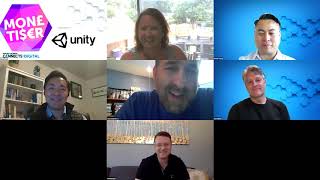
Panel: 2020 M&A and Investment Overview, Expectations & Consequences PG Connects Digital #2