Paani with People | Ep 4 | Neeraj Shetye | Between Thane and Oxford

Neeraj Shetye, a scholar at Oxford India Centre for Sustainable Development, talks about growing up between Thane and Mumbai, studying at SOAS and Oxford, and his work on Indian scholarships and marginalized students in the UK. He reflects on observing the 2019 Maharashtra elections and navigating identity across languages, cultures, and political spaces.
Chapters
Such a coincidence that we met already outside the Italian restaurant.
I don't know what Serene told you, but like I can talk about literally anything. The government gave like a three million pound grant to the university saying we want to start scholarships in the name of Mrs. Indira Gandhi.
What year was this?
Twenty thirteen.
So you'd know right before.
Yeah.
My my father works in the Indira Gandhi National Open University. अच्छा ओके नाइस। I'm just waiting for it to change its name.
UCL is like randomly spread all over.
One building फिर किसी का घर है। A lot of my friends say कि when you come to university You're placed right in the heart of the city. देखो ये ये सब तुम्हें मिल सकता है। उसके बाद जैसे ही खत्म होता है, accommodation से निकालते हैं। Yeah, I think you're thrown out and you have to go like some north or some south. Didn't have anywhere to be. तो मैं सोचा मैं क्या करूँ? यहाँ पे London में भी अगर मैं rent पे लेके रहता हूँ तो उतने पैसे लगेंगे। So I went to Paris.
The whole psyche of people from Mumbai or like around Mumbai is that you don't leave the city.
Right.
They live in a bubble like you know. They feel everything's here and people some people are coming here. So why do you want to go? हाँ, इंडिया is very cruel. Like it's Bombayya Hindi, which is very crass. And I didn't realize it until I went there and started speaking to all these people from North India. And they were just like, तुम ऐसे मत बात करो। What the fuck is तुम?
Eat food, they'd say तेरा खाके हो गया। And I was like, what words are these? What does that mean? The conflicts that I've had is कि the learnings that I've come with, I want to apply those for my country. मुझे लगता है कि यार मैं यहाँ पे इनकी सरकार के लिए काम कर रहा हूँ। वो ही काम। At some point I do want to make that infrastructure.
All the best. That's all I say. I would have actually preferred studying. In Delhi.
It's just like I couldn't get through JNU, which is the JNU of the UK.
I mean, yes, if you quote me on this now, like if this ever goes online, I'll be bashed by SOAS graduates.
In 2014, I helped manage a campaign for the BJP, and it was such a crazy election.
Very intense experience. Everything that I had only read in books happened in front of me. You know, the violence, the tension, the— you know, you're exposed to like— but I enjoyed it. I don't know, my parents call me sadistic for this, but I did enjoy it. I enjoyed the risk, actual violence that takes place, the attacks, you know, arson. Just things that if I say out loud in public, probably nobody would believe. I'm still sort of struggling to unlearn things that I've learned all my life and then relearn stuff. Reels? Oh no, it's such a soft boy core thing that I'm trying. You know how you try to be mysterious but you're not? That's my vibe at this point.
Would you choose Thackeray or Modi as your favorite?
Oh my God, what is this kind of question? I remember I got this one Instagram DM from a college friend and they said the 2019 Neeraj would come and slap me. I do miss my parents, like living with my parents, but They, it's a very momentary thing. I don't know whether it happens to you, but it's I think there's an expiration period of say two weeks and two weeks later even they are like, what are you doing? We call once a week, but that once a week is a long call. Which is what I like.
कि हाँ अगर बात करनी है four hours. Wow, four hours.
Believe I recorded a podcast last last year with this other collective in Mumbai, and she listened to it. It was a very long podcast. She listened to all of it, and she made notes, and then she criticized me about. क्यों बोला ऐसे क्यों नहीं बोला? You know, I'm very sure like if you put it out online. Yeah, they put in the time.
I look forward to her comment. Thank you so much, Neeraj, for doing this. Uh, so I'll tell you a little bit about the podcast. So it's called Pani with People. The idea is to just have regular casual conversations with people. Um, it started with the idea of talking to people as if they were celebrities and how people generally talk to Uh, celebrities on podcasts, but मुझे लगा कि it was copying something else. And I just like having conversations with people, and the agenda of this podcast is just to be able to do that, for me to meet new people. And I genuinely believe that all of their stories are the most important stories, of course for them, but also for other people. Like, they could be the most important stories. If you end up becoming the Prime Minister, then this story would, would be important for everyone else, but regardless of that, it stays important for you anyway. And that is what I want to explore, just understand what makes you you, um, what are your priorities, your values, your beliefs, your fears, and just have a casual conversation. Uh, the format is that the person I talked to before you recommends the, the person. So I talked to Sahreen, and she, she told me you're a great person to talk to when you make a wonderful conversation. And it's, it's such a coincidence that we've met already. And yeah, I don't remember, I don't remember if we talked, uh, then. We—
I think we just said hi and like we introduced ourselves, but yeah, we were probably very drunk too.
Yeah, yeah, it was singing, uh, yeah, outside the Italian restaurant.
That's all I remember too. Yeah, that's all I remember, honestly.
And after that, we'd— we're all so drunk, we went—
we walked to South Bank And right, and we walked with you guys halfway and then we went home and then you all went to South Bank.
Yeah, yeah, a small world.
Yeah, small world.
So why don't you tell me a little bit about Sahreen? How do you know her? How you met?
Uh, okay, about Sahreen, um, that's actually, uh, quite a coincidence because Sahreen's partner Manzar and I were shortlisted, uh, for the Chevening Scholarship. So we were preparing together in 2021. And Sairin was already in Oxford. She was doing her master's in public policy. And she had separately reached out to me on LinkedIn because her project was in food security. And I was working in this organization where we used to tackle hunger and we were looking at hunger as a policy problem. So she reached out and we had a conversation about food security and stuff separately. Later I found out she's Manzar's partner and Manzar was also preparing to come to the UK. And he had gotten into like LSE, Oxford, and all of these places. Uh, I met her only after I came here, like 4 months after I landed. So October I came, and February I visited Manzar, which is when I met her for the first time. Um, and yeah, I mean, there was that instant connection in the sense that she's always been a very hospitable person at Oxford. So, and I loved the city, um, so I used to visit quite often, at least like once a month was my visit here. And I used to be with Manzar and Sairin, so I used to stay with them. And they were such like, like both of them were very hospitable. They used to like, they kept their doors open. Of course, like if I have to be a bit more philosophical, that they kept their hearts open and always accommodated us, uh, every month. It was me and like my friend Sanjana, or sometimes just me. So, and they were very supportive. And then when I applied for jobs, um, they had suggested that I apply to one of these, one of these positions here in Oxford, and I got through. So I moved to Oxford, and of course they were, they were a very important reason why I moved to here because I knew there was a support system in place. And when I moved here, of course, Manzar's term had ended, so he had to go back. And that's when, like, I got in— I started getting, like, closer with Sairin. Like, I was there, I used to hang out with her. Both of us used to work. Rest everyone, like, everyone else in our circle was students. So, you know, that was easier for us to hang out and, you know, do things together. Weekends were open. So, um, yeah, I mean, that's how I met. And it's been, like, more than a year now, like, um, when we you know, spent time and like got to know each other. Yeah, so, and she's always been like that elder sister kind of figure. I generally, I don't like to mirror these kin relations on friendships, but with Serene it's been like, uh, she's like that matured voice for like us where we are, we are very chaotic and very like yappers, as I said, on our text. But she's always been like that, um, like that, like matured presence. Again, I don't want to make it sound like an ageist thing, but she's She's like, she has that experience of dealing with things much longer than us. So, so it's been— so that's been my connection with Serene individually.
Yeah, I know Serene. I, I had a— that was the first time that I talked to her on the podcast. Like, before that, we just, we just had a call. Um, but I got to Serene through Manzoor. So Manzoor was— so I had talked to Manzoor, and before that, I don't know if you know Kanika, but Kanika was the first I know of Kanika, I've never met Kanika. Right. So yeah, so you're officially the 4th person to be here.
Okay.
I haven't put any of these online yet because I'm terrible with managing my time. So I want to have some buffer before I start putting them out. But hopefully soon.
Yeah.
So what is this conference that you're supposed to go to today?
This is a workshop on this. I mean, Manzar runs— Manzar and Serene both are part of this collective called Project Edu Access. I'm sure you would have heard of them. So they are conducting like a long half-day workshop on what are the things we could lobby for better, you know, what are the learnings that they have had in the past 2 years. And I work at the Oxford India Center and we provide scholarships to Indian students. So we are also trying to diversify things. And as someone who has been through the system as a student and someone who works with a, with an entity that provides scholarships, we'd also benefit from those findings. So we'd like to know what are the things that students require, you know, if they're coming from like certain marginalized communities and what is the support system that we need to build for them. Once they are here. So that's the kind of learning that I'm hoping to get out of the workshop. And it's like, we have a bunch of students, around 50 people who are coming in from different parts of the UK. So we're just going to have like, I think there are sessions, multiple sessions, and I'm going to try and contribute my learnings from the India Center and see how things work, which is also what, which is something I would have loved, I could love to discuss today to like really root our conversation into something. And I also don't want to go in like 100 different directions because yeah. Um, I don't know what Serene told you, but like I can talk about literally everything.
That's okay. That's, that's excellent because I'm mostly a listener. So I love asking questions and then listening to what you have to say. But yeah, why don't you tell me a little bit about your work with Oxford India? What is it that you do?
Um, so basically, um, I joined the center. I joined this Oxford India Center just 11 months back, but the center in itself is 11 years old. Um, and it was like a partnership between the University of Oxford and the Government of India and they In 2013, basically the government gave like a £3 million grant to the university saying we want to start scholarships in the name of Mrs. Indira Gandhi at Somerville College, which is one of the colleges.
And sorry, what year was this?
2013.
So you'd know, right, right before.
Yeah, yeah. So this is politically, you'll realize, and at the time it was, um, it was founded and the scholarships were endowed. So, uh, Government of India gave some money, University of Oxford matched that funding, and basically we started these scholarships in her name. Um, which Somerville College, um, I mean, Somerville was chosen because that's where Mrs. Gandhi studied, and Somerville just made a bigger thing out of it, and they just established the center. So it was earlier called the Indira Gandhi Center for a brief period of like some few months, but then we changed it to more neutral Oxford India Center for Sustainable Development. Okay, ideally because, yeah, um, Indira Gandhi was the first leader globally to speak about sustainability on international forums. So she's the one who delivered the speech in 1972 I'm not very sure of the place, but I think it was Stockholm. But that's where she delivered the speech and encouraged people to think about climate change and sustainability. So she became like that voice for, you know, global voice for sustainability. So we named the center and we run the scholarship in her name. And over time, we have had support from friends of the center. So there are lawyers who have started scholarships. We run this scholarship called the Cornelia Sorabji Scholarship. Again, the first woman to ever study law in Oxford was an Indian woman. Who came from Pune. So we started a scholarship in her name. And last year, historically, we started the Savitri Bai Phule Scholarship, which is like the first scholarship for a student coming from a marginalized background in India. So if you're an SC, ST, OBC student, um, or a first-generation learner, you're eligible for the scholarship. So over time, like now, we have set up newer scholarships. We, we are giving at least 10 now. This year we're giving 10. Last year we gave 10. Um, so yeah, this became like a bigger thing.
Then yeah, so, so the original scholarship is still named after—
it's still there. So we give the Indira Gandhi Scholarship for a PhD student. Um, so it's either one or two. Sorry. Yeah, yeah, they know, but they can't really like— because it's endowed, right? So endowed scholarships are better. So government doesn't send money, of course, because they've endowed a bigger chunk. Now we run the scholarships on the interest that we get. So, so it's, it's there for eternity. And they really can't do anything about it, I want to say.
But yeah, well, let's hope.
Yeah, I mean, also because like they, they can't really refute it because Mrs. Gandhi studied here. So it's not like, uh, you know, randomly a scholarship was instituted in her name. She personally studied here as an undergrad. Um, so I mean, she has her tie— she has ties with Oxford in indirect capacity. So I mean, they have stopped certain scholarships, as you know, in India, but, uh, this, they There is no rationale to stop it. Yeah, so that's been the case.
My my father works in the Indira Gandhi National Open University. अच्छा ओके नाइस। I'm just waiting for it to change its name. Yes.
I don't think they do that because it's very counterproductive. What are you going to achieve by doing this?
You know. It's the world's largest university.
Yeah, yeah, and it's an open university. It provides support to so many. It's not even about the name at this point. It's about what the institution does. It supports so many students who are, who otherwise can't go to classes and stuff, you know? So I've noticed so many people who want to pursue education but were not able to when they were younger have now been able to do it because of Ignoo. So I went for a conference there in 2017, I remember. And that's what the first, that was the first time I was exposed to what Ignoo is because we are so used to like the traditional institutions, like where you come as a day scholar or you come as a hostel student. But like Ignoo is a space where people are working and then attending classes and doing so much in life and then doing classes. So it was almost inspiring, and it's quite an international university. I mean, when I went for the conference, there were presenters from like Afghanistan and Iran and all of these places who came to present. So it was quite nice to see that.
I started a master's degree in psychology from IGNOU back in 2019, which I'm still in the second year of.
Okay, what did you study here? You were at, I think, Imperial?
I was at UCL.
UCL.
I studied an MPA.
Okay, public administration.
Yeah, in innovation and public policy.
Oh, nice.
Yeah, so I'm a second-year student of psychology. The course is excellent. Um, I love the kind of approach that they took towards changing how the public sector works in terms of making it more entrepreneurial than, uh, than just market fixing.
Where was your campus? The main campus?
Yeah, so our department was just beside the British Museum. ओके, but UCL has just one.
Yeah, UCL is like randomly spread all over the place. It's just like right में देखो तो UCL left में देखो तो UCL. It's just one building, फिर किसी का घर है। There was there was this random building where I lived. I lived on that Caledonian Road and from King's Cross when you go up and suddenly your Eduroam connects and you realize oh there's an Institute of Physics of UCL right like in the middle of nowhere. You're like why is it? So yeah, that I have that had that experience with UCL. I feel it's a very underrated place.
Yeah, but I mean, यहाँ पे I haven't seen many campuses. Like LSE also is you can't. Yeah, there's a central building and then there's just a city.
Yeah, and UCL I heard has started a newer campus right outside of London.
Yeah, it's closer to West Ham, I think. Oh, अच्छा ओके या मेक सेंस, मेक सेंस टू बी हॉनेस्ट सबको लाइक इफ यू इफ क्राउड एवरीवन इन सेंट्रल लंदन इट्स जस्ट गोइंग तू बी डिफिकल्ट टू वर्क। अलॉट ऑफ माय फ्रेंड्स से कि अलॉट ऑफ माय फ्रेंड्स से कि व्हेन यू कम टू यूनिवर्सिटी यूअर प्लेस्ड राइट इन द हार्ट ऑफ़ द सिटी। या देखो ये ये सब फिन्सबरी के बियोंड जाओ। और फॉर वन ईयर यू यूज्ड तू दैट सेंटर। हाँ हाँ सब कुछ। बट यू यू वर इन वायमसीए। या आई वाज़ एट वायमसीए। फॉर द फर्स्ट सिक्स मंथ्स और सो, एंड देन आई वाज़ जस्ट रोमिंग अराउंड फॉर द नेक्स्ट सिक्स। व्हाट डू यू मीन? सो आई हैड अ आई हैड द तो आफ्टर आफ्टर मार्च आई वेंट बैक टू इंडिया फॉर अ मंथ, देन आई वेंट आई केम बैक आई स्टेड विद विद अ फ्यू फ्रेंड्स फॉर अ वीक और सो, देन आई वेंट तू बार्सेलोना, केम बैक, देन आई वेंट तू बार्सेलोना अगेन, देन आई डिन't हैव एनीवेयर टू बी, तो मैं सोचा मैं क्या करूँ?
Okay.
So yeah, the other six months were mostly just crashing at friends' places and wow. So yeah.
And now you work in London?
Yeah, I work in London. I mean, I I just moved houses, so I'm right opposite to Caledonian Road. I'm on Holloway Road now.
Oh wow! अच्छा ओके ओके I know the space. Yeah. I like that space. Yeah.
But हाँ अभी पर इससे पहले I was staying in Hounslow. Hounslow is the desiest it can be. It's too intense.
Yeah, yeah, yeah, I'm sure, I'm sure. It's like you've never left India. Yeah. Where did you grow up? You grew up in Delhi?
Uh, lots of different places. As I said, my dad's in a government job, so we kept shifting places, but majority of it was in Delhi. So yeah, my, my later years of school, my college, work has been in Delhi.
Were you born in Delhi?
No, I was born in Jaipur.
अच्छा मेक्सेस नाइस आह हाउ बोट यू आह आई ग्रोअप इन थानी विच इज़ न्यू मुंबई एंड माय फैमिली इज़ बीन देयर फॉर लाइक आई थिंक जनरेशन एट दिस पॉइंट सो आई हैव नॉट रियली मूव्ड लाइक आई नेवर मूव्ड फ्रॉम देयर अंटिल माय अंडरग्रेड एंड फॉर माय अंडरग्रेड आई वेंट टू शिवनादर So I was there for four years, and then I came back to India. Like, I came back to Mumbai and worked there during the pandemic. So I was working for the Maharashtra Legislative Assembly elections in 2019. I was posted in this place called Ahmednagar in Maharashtra, which is like a small district, small district and just in terms of development big. It's the biggest, the largest district to be honest. But then pandemic, I was in Mumbai. I got through SOAS and UCL and all these places at the time, but pandemic may I didn't take the risk of coming. So I deferred my offer, and, uh, SOAS was the only kindest institution to offer me a deferral, you know. And then I came in 2021. So I've always, like, I've been for 4 years of my undergrad, and I think that was quite revolutionary to move out because nobody— like, the whole psyche of people from Mumbai or like around Mumbai is that you don't leave the city, right? They live in a bubble, like, you know, they feel, oh, everything's here and people come, people are coming here, so why do you want to— yeah. But I think that was a good decision. To not be in that space. Today, if you ask me to go back and work in Mumbai, I can't. I just can't.
And at home, do you speak Marathi?
I speak Marathi, yes.
Was language a challenge when you moved to Delhi?
No, actually it was a challenge in a very different way because my Hindi was terrible. And we speak Hindi. It's not like I don't understand or speak Hindi. It's just our Hindi is very crude. Like it's Bombay Hindi, which is very crass. And I didn't realize it until I went there and started speaking to all these people from North India. And they were just like, तुम ऐसे मत बात करो। What the fuck is तुम? I'm sorry, I'm swearing, but like, like, because I'm so used to the तेरा मेरा language, and that was apparently like really rude for them. And I had this friend from Kanpur who said it's like one of the harshest, harshest tones that they've ever heard of Hindi. And, and now Bombay Hindi is not Hindi, it's basically Gujarati, Marathi, and Hindi, like a mixture of all of those. And plus you add English sometimes. So they didn't understand. So that language barrier was a challenge, uh, but otherwise these were residential universities, right? So like these are newer residential universities, so the population there was also quite diverse. So we had equal number of North Indians and South Indians, and we were just in the middle, and there were people from the Northeast, and it was a good cohort of people. So yeah, I had a nice time.
I, I have a couple of friends from Mumbai who, uh, who I met actually I was no friends with Marathi people before this. So when I came here and I would eat food, they'd say, "तेरा खाके हो गया," and that felt so normal to them. And I was like, "What words are these? What does that mean?" खाके हो गया हाँ.
Like I had this feeling when I used the word गड्डी with so much confidence in people. People people like, "What is गड्डी?" And until imagine twenty-one years of my life, I didn't know that गड्डी is not an Hindi word; it's a Marathi word just put into like Hindi. गर्दी means crowd. So इधर इतना गर्दी है, इतना भीड़ है basically. I didn't know. I knew the word भीड़, but I didn't use the word भीड़ so commonly in languages. When I said गर्दी and like lift full of people would like what is that word?
Actually, गर्दा in भुजपुरी means dirt.
Oh my god! This is going in a different direction.
Yeah. So it's very. I'm I don't know where. I mean, it's not just dirt. It's ghul.
Ghul. Okay, got it.
So maybe it comes from crowd. I don't know.
No idea. No idea. I mean, that's the thing, right? And then a lot of these words are like, in a way, bastardized. Like, they are like— even like people who speak proper Marathi, which is very like a very— like, I would say a very caste-specific term, but generally upper caste groups speak like this proper pure Marathi, as they call it. And even they can't handle— like, people from Pune and all them, I mean, they're quite snobbish, I'd say, but they think The Marathi that we speak is quite like crude and crass and influenced by Hindi and Gujarati. So the tone is very Gujarati, but the words that we use are very Hindi-English-Marathi. So it's very— it's a weird set of, uh, like a culture. There is a culture shock when you move to Mumbai. And if you've grown up especially in places like, say, Jaipur or Kanpur or Lucknow, where you speak with so much respect and like, you know, and then suddenly someone's treating you like you're nobody. It's just weird, I feel.
Yeah. What's it like growing up in Thane?
It's very nice, actually. So that's the thing, right? I mean, you grow up and you don't really think it's a problem. Like, you don't see yourself as a part of Mumbai. But Mumbai is where you go for, like— I mean, it's literally next to each other. Like, you know, there is no boundary between the two. And it's only when I— growing up, I realized, you know, there's this whole culture of like, oh, Mumbai and Thane are separate cities, or Mumbai and Thane is the same, and Thane is a gauw, an extension, and this and that. Whereas historically, I— then I started reading about stuff and I realized, oh, it's basically 2 different cities. But people know Thane as that first railway that started between Mumbai— Asia's first railway that started between Mumbai and Thane. So that's how people know Thane. I have always been of the opinion that Thane is a separate city. It's historically like way more different than Mumbai. Mumbai is a reclaimed city, right? It is an artificial built out of like reclamation and stuff, whereas Thane has this longer history of people staying there and kingdoms and this and that. It was very nice, to be honest. Like, I grew up in old city, old Thane, and, uh, which was a Portuguese territory which was handed over to the British. So I studied in a missionary school started by the Portuguese, which had, which had a very inclusive culture, I feel. So I grew up in like the old Thane in a very mixed neighborhood. Most of my neighbors were— I mean, there were, of course, Marathi population, majority Marathi population, but we also had a good number of Christians and Um, especially Malayali Christians and Mangalore Christians. So in a very mixed neighborhood, uh, my classmates were also like— we had classmates who, um, practiced of course Islam, but also like Judaism and Parsis, um, small sets, but we had exposed— we had been exposed to a larger like diversity. So it was, I feel, in a very cosmopolitan experience, but at the same time rooted quite in culture. So it's not as cosmopolitan as Mumbai, but it's there, like it's almost there. It's just that Thane, because it has a longer history of cultural stuff. We were rooted in some Marathi culture, but that Marathi culture in general was also mixed, you know. It was an inclusive Marathi culture, I'd say, to some extent. But then I have to acknowledge my positionality. I come from a privileged background, so maybe perspectives might be different. But I had a very nice time growing up. I still am very fond of the city. I— whenever I go back, um, I mean, there's a sense of home that I get. I wouldn't call it Mumbai because Mumbai is just chaotic. Khan is now become chaotic now, but it's always been for me it's always been like a very peaceful, homely city. My family is there. My mother grew up. My parents also grew up in the same place. So you know relatives are all there. Right.
And would you say you'd you'd want to go back at some point or do you want to stay in the UK?
Good question. I when I came here I had this whole idea of moving back and I do want to in the long term. Like I don't see. I don't know about your experiences, but I don't particularly see a future in this country, um, especially with the kind of, you know, there's no care, community care, or, you know, um, all of the support system that you need is not here, um, in terms of family. And like, I have friends and stuff, that's great, but that was my perspective when I was studying at SOAS. But now I feel like after 2, 2 and a half years, I feel it's not so easy to take that call because you're building your life. And I'm queer as a person, like, in terms of my identity, I feel I can't even compromise that because I know I'll— I won't have the same privilege back home, you know. I mean, the security that you have here, um, the safety net that you have here, the protection, or the, uh, the community that I've built is also quite nice here. So I know it might not be the same back home. So work-wise, I've settled here. And you work here, you know how strict this place is about work ethics, and you know how horrible it is in terms of work ethics. So yeah, maybe I'll retire and go back, but I don't know.
At some point you'll go back.
Yeah, I can't take a call right now. And also, like, I work in policy and, like, I work— I have to work with bureaucrats and politicians. So, you know, right now it's not very conducive to be there for someone like us. Like, I don't know about you, but, like, for me, I don't think so. It's a space to— like, I can't work there effectively.
Fair enough. Uh, so with Oxford India, you said you work Around— so your work is still, uh, around India, right?
It's literally on India. So this is an ideal job, I would say, touch wood. Uh, it's because I get to work on India but not in India. So, uh, while I work, like, like, our work is basically, um, one, to like promote research on India in Oxford. So there are so many people working on India in different aspects, we just try to bring them together. Of course, we have our own set of scholars, but we also try to work with other, you know, people, other Indians who are working on India, bring them together. Second, and we also do policy-oriented work. So if their work is going to impact India's policy space, we try to make those connections. So if we know organizations in India who work on certain things, and if they are going to benefit from some research that's done here, we connect them with them, with, you know, that organization. That's something that we do. And of course, we provide scholarships to Indian students. So we try to bring, you know, I mean, Oxford is one of the most expensive in the UK and people get offers but they have to leave those offers because they have no funding. So we try and mobilize funding for Indian students. Like, so far we have done a great— like, I feel the team's, um, it's not a big team. It's basically, there are 3 directors and there's just me as a full-time employee. So it's, you know, there's autonomy. There's also like you get to do things your way and, um, work with different kinds of people who have aspirations to support as well. You know, sometimes you need vision to set up scholarships, to work with students. I get to do that, and I think that's been like— that's why it became like a very good, um, opportunity.
That sounds excellent. And if so, one of the conflicts that I've had is the learnings that I've come with, I want to apply those for my country. Yeah, or for the good of What I know my identity is a majority part of और वही मुझे लगता है कि यार मैं यहाँ पे इनकी सरकार के लिए काम कर रहा हूँ वही काम मैं इंडिया में अच्छा ये इंडस्ट्रियल सर्विसेज I I work with the NHS okay so it's still like it is government funded work yeah of course yeah NHS is expensive मुझे लगता है कि यार यही चीज़ मैं इंडिया में करना चाहता हूँ पर वो स्ट्रक्चर वो कैपेसिटी है ही नहीं infrastructure नहीं है right So at some point I do want to make that infrastructure, but it just sounds—
that's all I say.
It's a long way.
We need that in India, but it's so difficult right now, or like in general, to work there. Um, it's not like we can pretend things were always better, but like, you know, right now, like, there is no appetite for people with aspirations to go back and start something like this. And not expect a backlash, you know, from from the machinery in some some way.
Yeah, there's still some work happening in silos, but hopefully it'll improve and there'll be more more good coming out of it. But in in college you studied conflict and peace studies?
Uh, an undergrad I did sociology and I did a minor in international relations. For postgrad I studied politics of conflict, rights and justice. Um, which was slightly different than international politics at SOAS because you focused on peacebuilding and you focused like— there was hyperfocus on like things like, you know, conflict resolution. And, um, the cohort was slightly different, smaller cohort, much more focused cohort. Not like— I actually didn't— there were only 3 of us who were from India. So it was also very different because SOAS has a good Indian representation. Um, so in that way it was a very, a very nice different thing that we probably wouldn't study in India. I don't know, I— after I came here I realized that there was There were like, you know, there's an Aung San Suu Kyi Center for Peace Studies at LSR. Yeah, I think they call themselves that anymore, but whatever. That Center for Peace Studies exists in Delhi, but you know, I don't think Mumbai has any of those things, or like any other university has a course that offers something on peace.
There's, there's a course in Jamia on conflict and peacebuilding.
Again, Delhi, right? So if you want to be— if you want to study something like that, you have to move to Delhi and be around Delhi. I would have actually preferred studying in Delhi.
It's just like I couldn't get through JNU, so which is the JNU of the UK. I mean, yes, yes, that's what my question has been. Yeah, uh, because I— the first time I walked into SOAS, accidentally of course, because I was trying to find the Senate House, uh, and it's right next to UCL, I walked into SOAS and, and it really gave me very JNU vibes. Yeah, or maybe more TISS. But it may be a mix of those. Yeah. And I hadn't seen that at all in UCL or LSE, like protests, just people.
Yeah, it was the normal— it was after a point it was a headache, but we still supported it and we still do support it. Um, I actually went to SOAS. I had offers from UCL, LSE, and all of these places. It's just I went to SOAS because my professor in undergrad had always told me that you'd fit in at SOAS, and I never understood why they said it. Because not like I was a mischief maker or like a person who was— I was not, never into activism. So, you know, I don't know why they said it, but they always thought my research has a better space in SOAS. And I do think that was a very good suggestion. I had a very nice time there. I am very critical of SOAS too as an institution, but my department, I think you're right in the sense that it's a very politically conscious space. So, you know, you can say stuff, whatever stuff you want. There's sort of that freedom of speech, but at the same time you can be held accountable, um, which, like, if you quote me on this now, like, if this ever goes online, I'll be bashed by SOAS graduates because there is this whole student movement against our director. And, you know, um, as an institution, the space really needs to work on itself. But I personally am very fond of the department that I studied in. So yeah, I'm quite— I was quite happy with my experience, right?
And how did you come into— how did you fall into conflict as a area of study?
Uh, no, I mean, my work was actually on policy. So I used to study, um, in my undergrad. My undergrad was 4 years, so our BA was structured differently. So we did 4 years of BA instead of 3 years. It was 3 years of coursework and 4th year was basically a dissertation. So I— we had to work on our undergrad dissertation, which was not something we were used to. Um, I don't think undergrads are exposed to that in India, but I, I worked on— I did like a very preliminary fieldwork for 2 months and, you know, learned all these methods in undergrad. And, uh, worked on like right-wing, um, right-wing political outfits. I was looking at Shiv Sena at the time, and I studied conservative political ideology, um, to understand how do they function and what do they want. So I was positioned in a better like way because again, I'm a— like I can say I'm a— I come from a privileged background. I'm an upper-caste Hindu man. Uh, I had access to these spaces without compromising myself, so I could enter these spaces, talk to them, have a conversation, understand what they wanted. Um, so I worked on that, and then I wanted to look at a larger picture, larger scheme of things. I wanted to look at social justice, and my program was called Conflict, Rights, and Justice. So while there was conflict and peacebuilding, there was also like human rights and social justice as part of the theme. So I chose that, and because the professor I really wanted to work with was at SOAS, um, his name is Professor Rahul Rao. He left actually the year I joined. Oh no, but don't ask. But I really wanted to work with him and understand like, you know, Um, how does access work and how does social justice, uh, I mean, social justice phenomenon works. But then I ended up working with Rojana Bachpai, again a very brilliant professor. Uh, I never thought I'll work with her because she's— she was senior to Rahul in a lot of ways, and— but I got to work with her. And a product of JNU, of course, so, you know, JNU and Oxford. So she, she sort of inspired me to work on policy. And slowly, like, during— at SOAS, I wanted to shift to policymaking. Um, and I ended up working on a dissertation that looked at how Hindu nationalist ideology translates in social policy. Like, you know, that's how I started hearing things like, uh, over 60 years and nothing happened, we will, we will bring in an Indic perspective or whatever. So I was just trying to look at what is this, what is this narrative about. So I started looking at what is this Indic perspective, what is Hindu nationalist ideas. Yeah, so I ended up becoming like, I ended up going in that direction. I wanted to shift to policy which is what I did through the program.
I think that sounds great. Uh, so you also worked in the Indian elections. Uh, was that— did you work with a party or did you work with the—
No, I was, I was working with a political consulting firm, so it was not IPAC. We— I worked with a smaller firm in Maharashtra and they work with candidates, not political parties. So we had a— but again, they work with candidates from a certain political, you know, ideological base. Um, and I worked with, um, this candidate in in Ahmednagar. He's a— I mean, he's, um, he's quite well known now, but his name— he was, he was just beginning his first campaign. His name was Rohit Pawar. He's Sharad Pawar's, uh, great-grandnephew or grandnephew. Grandnephew, basically. And then he's in that family, so he came from a very elite political family, but he was contesting from this really challenging seat where BJP was in power for the past 30 years or so. So I was, I was on the field and I was posted in Ahmednagar. Very intense experience. Everything that I had only read in books happened in front of me. You know, the violence, the tension, the, you know, you're exposed to like for— but I enjoyed it. I don't know, my parents call me sadistic for this, but I did enjoy it. I enjoyed the risk-taking. That's like one of the most riskiest things I think I've done in my life. And I had a very nice experience. I think someday I'll write about it, but yeah, I had a very intense firsthand experience working with Yeah, with the team.
Which year was this?
This is 2019. It was for the Vidhan Sabha elections, right, for the state assembly elections. Now we have it in this September again, but, uh, it was in September at the time. So I was there from— I think I joined in July, and then until like November I was there. So I was on field.
And so did your political ideology align with that of the candidate?
Uh, it did, um, but again, like Maharashtra is quite diverse. So I came from a very urban background, and of course I believed in the liberal idea, progressive ideas. And this party is known to be liberal and socialist in its working, but mostly in rural areas. So, but again, urban-rural, there's a big gap, right? And I was posted in a rural area, so this was the first time I was exposed to rural politics and, you know, how rural, uh, political ecosystem works, which is very different because I've, I've been— I've noticed For my fieldwork and stuff, I used to work in Mumbai, so I did see how Shiv Sena as an organization functions in a cosmopolitan city like Mumbai. But then I'm— now I was in a space which is slightly more homogeneous, right? It's the people from same caste community live together, or people from the same community or same religion live together. It's very different, like the political nature, the discussions that happen are very different, how you approach the problem is very different. So I think that was a very good experience. I did align largely with what the party stands for, what the candidate stands for. Um, but then, you know, nothing's changed after elections and stuff, so might not be the same later.
In 2014, I helped manage a campaign for the BJP with the elections. Um, and this was in North Delhi University campus, the candidate from there. And it was such a crazy election like that. Yeah, when everything was changing. And I knew nothing. I was, I was I think in my second year of college. मुझे मेरा एक दोस्त था who was politically connected. He asked me to come help manage it. And I was there. I had no idea क्या politics, क्या ideology है उनकी। Obviously my parents voted for BJP since childhood. So I knew कि अच्छा BJP is the party to vote for. और Congress तो पैसा खाती है। That was the only bit of politics that I knew. And then now I look back and, and that candidate lost, incidentally. Really? Yeah, I think it was Delhi election. Uh, that was, I think, against Yogendra Yadav, uh, who was in that constituency, if I'm not wrong. Yeah. Oh yeah, he was in AAP at that time. But yeah, the, the election campaign by itself was— the amount of money that was flowing.
Yeah, you know, money, it's not even like money is the obvious thing. When it comes to Indian elections. But what I was exposed to was, because you've always heard of this violence, political violence, in a way, like I only read stuff that happens in, and you associate it with like UP, Bihar, and rural areas of those places. But to see that intimidation happen in front of you, like, or happen to you directly, it's something that, uh, you know, I was taken aback. But at the same time, I wanted to get into it deeply, more deeply, which is even weird. Uh, but like to be in a war room and like observe how the voting is happening and the actual violence that takes place, the attacks, you know, our Just things that if I say out loud in public, probably nobody would believe me. And like, I don't even— I would— I should have just gathered evidence at the time, but I couldn't because I was taken out of the constituency overnight because we were told that, uh, some external elements, extremist elements have come into the constituency and they're going to create some ruckus on the day and they might just, you know, threaten you. So you just come out. So they took like my entire team out of the city like in that morning, early morning, we just left. Um, and next day was the election. So we were taken out and we were taken to Pune, and then from there we were observing what was happening in Himachal. They're right next to each other, but we were observing from there what's happening here, and, you know, keeping a tab with all the people, like our folks, booth workers. And my God, and then it was very, very— first time, I think. And when you're like 21, 22 and you see all of this happening, you're just like, what is happening here? I think it's 2021 at the time, so it was a very Intense experience.
I'm sure. Yeah. Do you have water with you?
I do, but I've just had breakfast now, so I drank a lot of water. So I'm just water, juice, everything I had.
Okay, no problem. For branding purposes, I want—
Yeah, I mean, I have water. Don't worry. I mean, Serene asked me to keep water next to—
That's so nice. Manzar also asked Serene to keep water. Actually, with Serene, I forgot.
कि मुझे पानी का कुछ बोलना है, मैं पूरा भूल गया। मुझे उसने खुद ही बोला कि हाँ मंजर ने बताया था कि पानी रखना है पानी रखना है you're right but something that you feel you don't like about yourself don't like about myself sometimes I do things and I'm not comfortable which I'm not comfortable to do so yeah one of the things I'm trying to learn is how to say no I've always said I've always say yes to things and I overcommit myself and sort of like Because I'm always scared that I'll disappoint somebody. But then after a point, you're just like, and then you put yourself on the back seat. So I think that's something I want— that's a habit that I don't like about myself, that I overcome it and I try to deliver it, but at the cost of my, you know, my health or my mental health or like my well-being. So yeah, I think that's the thing I don't like.
Thank you for sharing. I'm sure You're working on it and you'll get there. Yeah, yeah. Uh, what would your Instagram Reels say about you?
My Reels? Oh no, it's such a soft boy core thing that I'm trying so much. You know how you try to be mysterious but you're not? Like, that's the— that's my vibe at this point. Like, my Instagram Reels are just all over the place. I try— I'm not an influencer, I can't be one, and I just try to make things. I try— my Instagram is all about my like, you know, my regular life. There is actually no filter to a lot of things that I post. So I mean, that's what my Instagram is all about. It's, it's out there. Like, if you, if you follow me on Instagram, I think you know 60% of what happens in my life. Uh, of course there are some secrets that I don't post, but you know, most of my— like, people I feature, mostly people I like, people I love to spend time with, uh, you know, some raw emotions if you have any. And as gotten much better at not posting everything, but whatever I post is also very close to my heart. So my Instagram is all about that, and my reels are actually slightly more like all over the place. But yeah, the soft boy core trying to be mysterious, but it's not.
Uh, would you choose, uh, Thackeray or Modi as your—
oh my God, what is this line of questioning?
It's just random bits that I'd written while talking.
I'm very confident that Modi is never going to be my answer. So even if they sort of send ED or like whatever, I don't think— and I've already— I think people who know me know very well that if at all in the future I ever write anything appreciative of like our current Prime Minister, they would know that I'm in danger because it would take me— like, I don't— I just don't get along. It's not just him. I think that entire ideology just makes me very uncomfortable. Um, and when I studied the Shiv Sena, uh, I think Shiv Sena made me super uncomfortable as an organization. And my parents, uh, my family I would say were very like loyal. There are actually— there's a mixed group, but like majority of my family has been a loyal voter base for the Shiv Sena. And, uh, but their idea was different, like, uh, it was not an Islamophobic version of Shiv Sena because Shiv Sena was an organization that started as a Marathi linguistic pride kind of a thing, right? So Marathi speakers look at Shiv Sena also in that, that way. So that was the Shiv Sena they promoted. It was not a Shiv Sena of Hindutva. Of course, when it turned to Hindutva, my, like, our family was blind that they just decided to support it irrespective of that, because locally Shiv Sena still projects itself as a Marathi people's organization, you know. So the Hindutva thing is just people took some time to ingrain in it, ingrain in themselves. Um, I personally, at this current point of time Because I would vote for the India Alliance. I would say I would— I still feel they are the better option, uh, out of the two. So, and Thackeray is a part of the Indian Alliance, Mr. Uddhav Thackeray. So yeah, I mean, I would— it's— that's the thing, right? I mean, when we voted on 20th May, I wasn't there, but a lot of my school friends, like, when I posted story, like, endorsing certain candidates, they were just like, do you realize you wrote things against them like 6 years back? And I said, I was critical of them, I was not entirely against them. And like, I remember I got this one Instagram DM from a college friend and they said the 2019 Neeraj would come and slap you. But that's the thing. That's the, that's where we are in terms of Indian politics. So I'm just stunned at this point. But in this time, on 1st June 2024, if you ask me, I would vote for Uddhav Thackeray over Mr. Modi. Yeah.
Sounds good. Is your wall slanted?
Yeah, it's slanted. That's why everything just goes back.
I was trying to figure out ये कैसा ये zoom out हो रहा है क्या?
Basically like it's on the top floor and the roof is yeah.
But it's it's just so little like the incline is not huge as it would on a roof. Yeah, it's just a little slant.
It's slightly it's slightly slant. You're right. Yeah, I don't know why that is. But the roof is right above and I'm in my office. I'm not at home.
Oh okay. So this is your office room.
Yeah, because the workshop space is closer. Like it's right here five minutes. So I thought I'll just be here. Okay, I've got a camera.
Fair enough. Okay, we've come to an end almost. Uh, like, I think, um, these are most of the questions that I want to talk about anyway, and obviously we can continue talking for really long, but I'm conscious you have to be somewhere.
Uh, there's time. Yeah, we have time, so you can ask.
Uh, there's, there's so much that I left out. Um, let's see. Um, What's it like to, to grow in a Marathi household? What does it mean for you?
Uh, that's a very good question actually. I've been reflecting about that for the past couple of years because, um, it's like my parents— I mean, I come from a background which is quite traditional, um, traditional in the way that, you know, they're religious people, religious folks. I am not. Um, I've sort of— again, that's a part of my unlearning. I've questioned myself and all of that. But they are very traditional folks who were exposed to a lot of cosmopolitan beliefs and they accustomed— they got accustomed to it but still try to root themselves in what they— what their, you know, what their ideology is or what their belief system is. A lot of it I give credit to my parents. They have changed themselves over the years. They've become much more open-minded, acknowledged that they were problematic in how they perceived certain, you know, like say for example the whole idea of, um, look— looking at us, looking through a skeptical lens at Muslims, for instance, was something that they unlearned after like years of like believing in something. Um, they are not— they're very religious people, but they're not religious propagators, which is why I'm very happy that they don't vote for the, um, the right-wing, that they are very uncomfortable with how things are working at the point— at this point in the country because their religion is very private matter to them. They're not outright bigots, uh, you know, where they just believe that they, they're practicing their faith, let others should— I mean, others should have the rights to practice their faith. They don't believe in, uh, controlling what other people eat or do or drink or whatever, you know. They are very like— that's the kind of household I grew up in, which I feel is a very cosmopolitan and a very, uh— I mean, it's, it's one small part of a larger community, right? I mean, I have actually grown up looking at friends with more conservative beliefs and more liberal beliefs or progressive beliefs. So I've— I feel we are still quite moderate on the spectrum, or like center-left kind of a spectrum. Um, and we have relatives who are super conservatives, uh, super conservative in their outlook. Um, so they have their own set of things. We— and I've noticed my family sort of distancing themselves from them. So which says a lot about how they look at themselves as well. I have always stayed away from, you know, because as a queer person it's also difficult to fit into what they want. Um, I've just tried to distance myself from all of this. Um, yeah, I mean, it's, it's, it's been a very unlearning, relearning kind of, again, a very, uh, conflicting experience. Um, but yeah, I mean, I'm, my, I'm rooted in my language in a way, like I credit my father for that personally. He's someone who's always pushed me to— I still think in Marathi, um, whether I speak in English or not. I mean, whether I speak Marathi or not is a different story, but I still think in Marathi. So I think I'm still rooted in how things work back home, probably.
Yeah. Do you dream in Marathi?
I don't actually. I think I've realized— I don't know, to be honest, because— but then my friends who— like, we recently had a sleepover, and like my friends told me that I speak English So I'm pretty, pretty sure, like, I sleep talk sometimes in English, so I'm pretty sure I don't dream in Marathi necessarily. I dream in multilingual aspects.
Yeah. What would you say is the most difficult bit for you, um, living away from home? Home? Yeah, I mean, not Delhi. When you come, when you come to the UK, what's— or when you stay in the UK now, what's the most difficult thing for you?
Ah. I don't know. See, honestly, like, I love my life. Like, I've moved— I moved out at the age of 17, so I was not used to living with my family for a— for a— during the formative years of when you're entering adulthood, or like when you're figuring stuff out. Um, and I used to only go back during— for summer vacations for a month or two. And you know, that— that went way past faster. So I was— I'm not used to that lifestyle, the way they function. Um, So there are not many things that I like. I do miss my parents, like living with my parents, but they—it's a very momentary thing. I don't know whether it happens to you, but it's—I think there's an expiration period of say two weeks, and two weeks later even they are like, "What are you doing?" Like to jabai to just ruin the discipline of the house because you'll do whatever you want and you move in and out of the house. But like when you're at home, you have to tell them, you know, to take the. To take permission, but you at least have to inform them. And I'm not used to like those restrictions anymore. So I do miss the food. Might sound super cliché, but I do miss like a good fish curry or like fish cuisine. I'm not very happy with the fish we get here. So, you know, seafood cuisine is something I miss from home. And my parents have always been like, like always been hands-off, to be honest. Like they, they were really good parents until When when I you know during the formative years when you learn stuff, but then after that once they realize we can take our own decisions, they've just been hands off. I've never been pressured into doing anything in terms of career. So you know I never did engineering. They never forced me for anything. They I told them at like when I was fourteen I think that I want to study history, and they were just like yeah please do whatever you want. Just take the right call. Yeah of course they hint you okay UPSC try कर सकते हो Not interested at all. But like, yeah, there are people who are open-minded and want to learn things, and I'm just happy to share that with them. And also, like, I don't know whether you go through this, but after a point you— and this is what Serene actually made me much more sensitive about— is you also become aware that they are also getting older and they are also sort of living— like, this is also their first time, right? I'm the eldest child on both sides of the family, so for everybody I'm like the project. What Kanangil calls the project. Yeah, and Serene also made me sensitive to also think about them, like from their lens. You know, I'm also the first child, so I give them that benefit of the doubt. It's fine. Like, I'm not a rebellious kid, but I also am not the traditionally हाँ हाँ बोलने वाला kid. So yeah, they've been nice, and they're growing old, so you have to be sensitive to that as well.
Yeah, we had this conversation with Serene.
Yeah, and she made me much more sensitive about these issues. With my family especially, because I, I see how she looks at her parents and, you know, how she looks after them and the care that she, she believes in. And fortunately, unfortunately, I mean, I'm not exposed. I— luckily my parents have been self— uh, like, they take care of themselves, so they, they are not in that state. But I know that at some point I'd have to, you know, weigh in, check on them. Like, we talk once a week, so— and but that's a very long call. So I do that, and I think I've learned a lot from Sahreen in that that space for sure. Yeah.
I'm gonna send this to my mother and tell her कि सिंह को कुछ यह हफ्ते में एक बार बात करता है। My mother wants me to call every day. Are you an only child? No, I'm I'm I'm the younger one, so I'm the more loved. But she wants me to call every day and not talk for long. Just say हाँ मैं उठ गया सोने जा रहा हूँ। Whatever.
मैं खाना खाया। I have actually stayed like I've never put them into that habit when I was like when I moved. To undergrad also, I never call them every day. I because we're on WhatsApp and they they just chat there. But like we call once a week, but that once a week is a long call.
Which is what I like. कि हाँ अगर बात करनी है तो उनसे बात करो। Wow, four hours!
Believe me, like when I say long, it's long. It's not an hour-long call. It goes on like my mom wants me to cook when I'm like talking to her, and then she'll ask and she'll give suggestions. She'll criticize. She wants all my news about what I did on a Monday. Like she knows about this podcast. Like she knows, and she'll like drop me a text later in the evening or tomorrow when we call. Like she'll ask, what did you talk about on the podcast? And you know, I recorded a podcast last last year with this other collective in Mumbai, and she listened to it. It was a very long podcast. She listened to all of it, and she made notes, and then she criticized me about it. You know, I'm very sure. Like if you put it out online, she's going to listen to it. Yeah, they put in the time.
I look forward to her comment.
नहीं नीचे तो एक तुमलोगों के कुछ काम नहीं है कि तुमलोगों को ये बातें करने के लिए इतना दूर भेजा है माँबाप ने। That will be your first comment.
Like what is the purpose? Well that is the that is the point. There's no purpose.
That's why when you started and you said I'm just trying I love talking to people and my mom will be like इसको मिला दे हमसे। चार घंटे तो उन्हें मैं नहीं बात कर सकती। Yeah so I think yeah I think it's a good idea but If it ever goes online, I don't know what we are going to see. I don't know how you're going to edit it or how you're going to put it out.
There's— I don't think there's much editing to it. I want to keep it as raw as possible. I'll just do some intro bits and stuff. Somewhere where you say— where you feel like you want to cut out something that you said and don't feel as comfortable.
Those— yeah, they'll read all of that later. So whenever you guys— yeah, I don't actually mind. I'm very conscious when I speak. It's just, uh, fumbling stuff is something I'd ask you As long as you're comfortable with it, yeah.
It's it's a part of what who you are. That's true. Coming to the recommendation, so as I said, the format is that you recommend the next person to me. Yeah. Whoever you think would make a great conversation. So do you have someone?
I actually wanted to recommend a friend, a common friend with like. I think you'll be in the circle only, but like. I want to get out of this circle. I will try. Okay, I can give you two recommendations. Recommendations, but my one recommendation is verified and has said yes to this. The other one has still not responded to my text, so I don't know. Uh, but I can give you 2 or 1 or whoever you want. If you want to step out of the circle, you won't be completely out, but you'll be slightly out. But otherwise, the one that I'm going to give you right now is very much in the circle, but it's— I think you'd have— and she can help you get out of it.
Uh, this is at the end, but thank you so much for your time.
No problem. I hope you got something interesting.
Yeah, of course, it was a wonderful conversation. I look forward to— actually, I have to come. You're in Oxford now? Yeah, come. No, come to Oxford. I have to, I have to. It's— I've been— have you been too long? I've been a couple of times, but, uh, I, I— it's been a while. And I have a few friends who stay there. I've been meaning to visit them for a while.
Yeah, I mean, we're happy to host you at Somerville at some point. And yeah, summer is quite open, so, you know, we get to go, go punting and stuff.
Oh yeah, for sure. Yeah, I haven't been punting yet.
Oh, you haven't? Okay. मतलब I won't do the punting if you are, especially if it's your first time. I am. I'm still learning. I have friends who could do it, like who can help us out. So that's sure. So बताना next time when you're in Oxford, we can take you around, show you around.
Yeah. Yeah. I'll hit you up.
More from Ambikesh
Promo | Paani with People Ep 6 | Siddhi Kalbhor | Blabber, pauses, and thoughts


Promo | Paani with People Ep 5 | Adya Jha | On anger, memory, individuality, and freedom

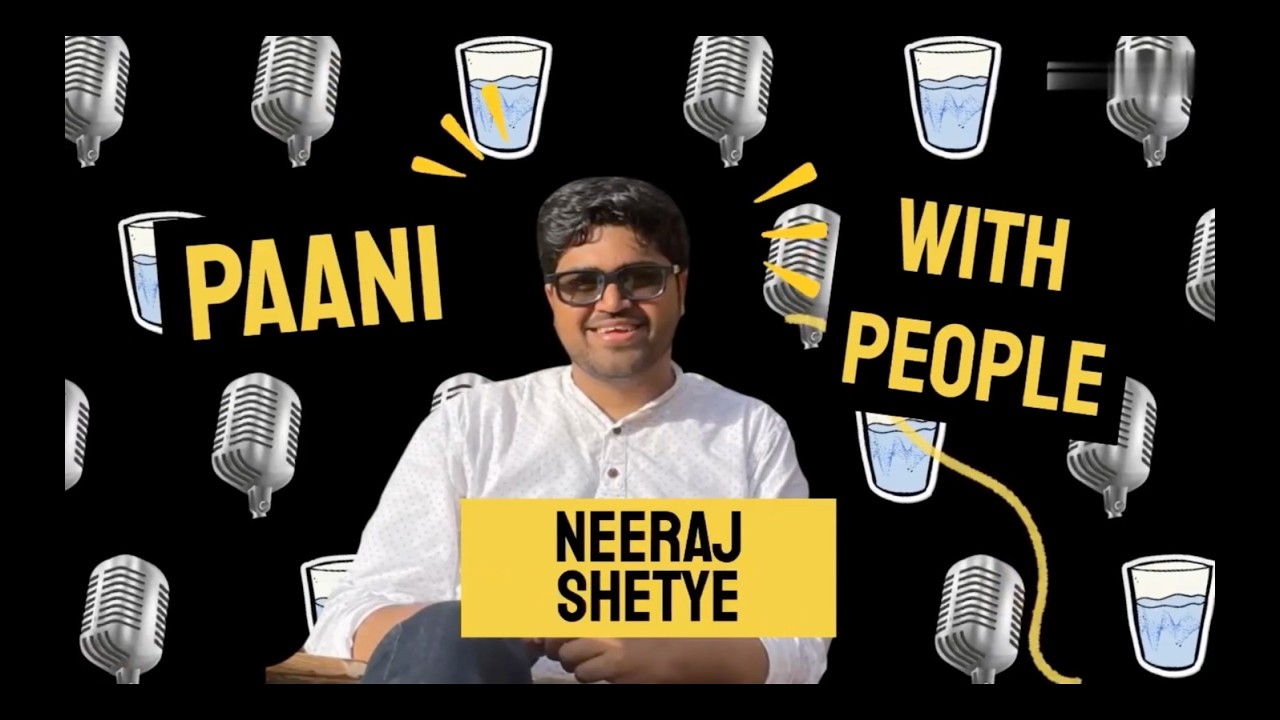
Promo | Paani with People Ep 4 | Neeraj Shetye | On Elections, Identity & Future in the UK


Paani with People | Ep 3 | Partnerships: Sahreen on marriage, migration, and ambition