Paani with People | Ep 6 | Siddhi | Fragments of a mind in motion
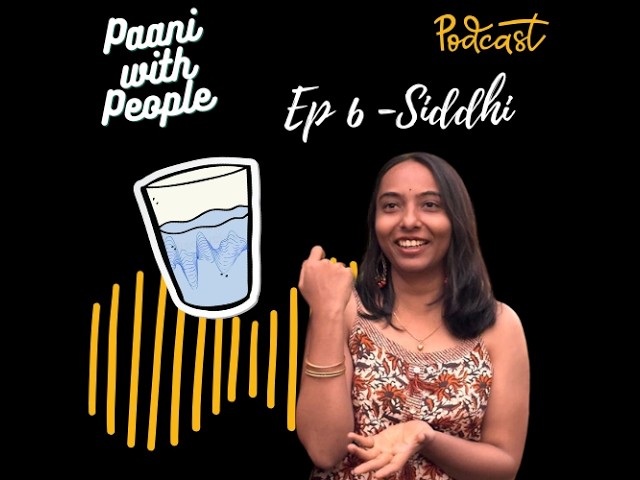
In this episode of the "Paani with People" podcast, host (Speaker A) and guest Siddhi (Speaker B) engage in a free‑flowing conversation that weaves together personal histories, professional work, and creative passions. They begin by explaining the podcast’s informal format and how Siddhi was recommended by a mutual friend, Adya, whom both met during the 2022 India Fellowship. Siddhi recounts her experience running a community children’s library in Gopalganj, Bihar, describing how the space was deliberately designed to be vibrant, inclusive, and interactive—contrasting sharply with the authoritarian, silent libraries Siddhi remembers from her own school days. The dialogue expands to broader reflections on the declining relevance of libraries in India, comparisons with reading cultures in the UK and other countries, and the role of leisure in reading habits. The conversation then shifts to digital media: Siddhi shares how she discovers poetry through newsletters, Twitter/X, and Instagram, while the host expresses confusion about Twitter’s algorithmic curation. They discuss the tension between writing for personal expression versus performance poetry, with Siddhi expressing skepticism toward the performative pressures that can dilute poetic authenticity. Siddhi also outlines her multiple creative and professional projects: a book in progress (a hybrid of diary entries and narrative), an innovation consultancy, and a personal umbrella initiative called "Khwabshala" that aggregates her passion projects around mental health, youth work, and dreaming. The dialogue touches on writer‑mythos topics such as smoking, dreams, and the romanticized link between writers and cigarettes. They exchange favorite media—TV series like Gilmore Girls and This Is Us, poems by Mary Oliver, and music—culminating in a brief sharing of Siddhi’s own poem about air. Finally, they contemplate legacy, discussing what they would like inscribed on a gravestone, a funeral song, and the desire to be remembered as an advocate for poetry. The episode ends with logistical notes about future guest recommendations and mutual gratitude for the conversation.
Chapters
First of all, thank you so much for making time, agreeing to do this, and bearing with me while I kept canceling and rescheduling. But we finally made it. So the podcast is called Pani with People. The idea is that we Just have a free-flowing conversation. There's no set criteria of, um, what we're going to talk about or what the themes would be. We'll just talk about whatever comes to our mind. Um, essentially, I just want to know people a little better, get out of my shell, be able to talk to other people, and also then as a result of it, hopefully get more stories just out in the public domain. I don't know yet if I want to market it or how I will market it. I haven't put any video out yet. I have done 5 as of now, so you're the 6th person. Um, but yeah, it's, it's just, uh, going as it is. I haven't really done much to do anything around it except for just have these 5 calls. But I will request you to get a glass of water for branding purposes, and that's mostly it.
Can I get it?
I'll have to go downstairs, or Or if you have a bottle of water, that's also okay.
Yeah, I have a bottle of water.
Yeah, okay, that works.
Literally pani with people with pani.
So yes, okay. Um, so Adya recommended you as a person to talk to. I have known Adya for a while. Um, I don't know how we started talking. We just started talking randomly and then we just attached. And since then we've been very close, but there are still a lot of things that I don't know about her, or things that we discover every time we meet. And she's been one of the most interesting people that I've met. Um, and I had taken these— so the idea is that one person recommends the other person for, for this. And then the 4th person that I was supposed to talk to, um, that person just couldn't make time or they had some things in their life, so I thought I'd talk to someone new. And, uh, that's how I started with Adya again, and then she recommended you. So technically you're second in the new series. I want to know, how do you know Adya? What's your relationship with her been like?
First of all, yeah, thank you for also inviting, and I thank Adya also. Thinking me as an interesting— thinking of me as an interesting person, maybe. But, um, Adya and I met in the fellowship, India Fellow Fellowship, that we did together, um, 2022. We met in Udaipur and we were doing certain activities and immersions, and there are times when you just sometimes do click, connect with people. So while we were on those, uh, bus rides or our little visits from there, yeah, amongst many people, I felt some, yeah, instant comfort connection with her because of the things we started talking, sharing, and, uh, I don't know, there's one moment which I very clearly remember, and that's like much later in the fellowship when we were doing rounds of, uh, sharing feedbacks to each other. And she said one thing which has stayed with me for like— yeah, it will stay with me. She said that, um, you have an interesting inner world, and I imagine as सिटिंग टुगेदर टॉकिंग समटाइम्स एंड दैट वाज अ वेरी लाइक इमेजिनरी आह अब्सट्रैक्ट थिंग शी वाज रेफरिंग तू कि कोई एक एनवायरनमेंट है जहाँ पे या सम इन्नर पार्ट्स ऑफ़ अस आर टॉकिंग सो या दैट्स हाउ आई नो अस्तिया व्हाट व्हाट डज़ दैट मीन आह इंटरेस्टिंग इन्नर वर्ल्ड आई I've seen her catch bits and pieces of sometimes saying, "Oh, even this is similar about us. Oh, even that is similar about us." Like there are few things which fascinate both of us. Say leaves, for example. Both of us, we collect leaves. But yeah, again, the way she curates them is different. I like to mostly press them in books, and she has these whole flower arrangement sorts of things. Then birds— I think birds is a very much later, uh, discovered thing. But there are pretty many things which, uh, the way we look at certain things, and then we'll pause to— maybe ruins was one of those when we used to go on walks and She has this way of clicking pictures as she goes and pauses.
Ten thousand pictures.
People and places. But yeah, the the way we कोई एक पढ़ा हुआ मकान है या फिर कोई एक shop है जिसका arrangement something feeling aesthetic about it. Or just aesthetic, but yeah, something. So I think those kinds of observations, the way we shared, talked, that I think, yeah, that's what she refers to in her world, as in how we see. I also, yeah, I remember telling her once, sometimes I feel that I don't just have my eyes, but I'm wearing yours also sometimes when I'm looking at certain things. Uh, yeah, I think that's probably what I got close to. Yeah.
And, and how was the India Fellowship for you? Did you also go to Gogunda, or were you based in Udaipur?
Uh, I was based in Bihar, and Adya was in Gogunda. So I was in, uh, Bihar's Gopal Ganj, and there I worked with the children's library.
Okay, so you had gone to Udaipur for like A meeting or conference or something.
Yeah, yeah. The induction of this fellowship, twenty days immersion that began in Udaipur, and from there we all yeah dispersed to our different organizations that we all work.
Right. So what did you do in Gopal Ganj?
A lot of things. To begin with, yeah, this whole world of children. being able to witness that closely. And also again, um, library— what is a maybe community library and what is children's literature? Because until then, yeah, my idea of children's literature and library was very limited, like a room of books and that's all. And even the way I had experienced library in school was you know, very limited. That librarian used to be like that authoritarian person who will be like a guardian of books. He will just give books in so-and-so way. But over there, uh, we were just putting displays of books and children were choosing the books they want and they were taking them home.
And so did you select the books that you would put there, or Yeah, yeah, those were really—
actually, that was one of the key aspects of the library, is that every book in the collection was a thoughtfully chosen one. No book just came like that. So yeah, it was a children's library which was supposed to be filled with a lot of elements, but a good ambience where you you know, children feel like invited and welcomed. So it was a nicely, vibrantly decorated space, also open, and also where things happen, activities happen. There was a scene in one book which was very imprinted because we also, as facilitators, read librarian stories. And one of the inspiring stories was how a librarian, she had sort of changed the notion of libraries, uh, and she was one of the first female librarians also. And she was taking down the silence please board. So in our library, there was never silence, which was something, you know, invited. Always playfulness alongside learning, reading, playing, whatever. Yeah, it was very different kind of library that— I mean, I didn't know library could be so many things.
And was that just one library or were you working in multiple?
Oh, the organization themselves, uh, had built a library cum a campus, but we also took library to villages. Different— these were mobile libraries, rural libraries, as you must have heard. So we went into the community where they had Allotted spaces to us, and it used to be usually किसी का आंगन या children used to know कि यहाँ पे आज weekly there's a library session. So they used to gather at that time, and then we used to in the evening go to these libraries, and there used to be a session somewhat some activity around a book, and then at the end of it children used to do the book lending because they were also getting familiar with the culture of a library, as in I am a book borrower. And they used to make their own library cards and take books at home, exchange books, tell the stories.
Yeah.
Nice.
It's very interesting because I think in the recent past libraries have gotten more irrelevant Like now, libraries don't exist as much as they used to, except outside of the university or school context. I don't even know how much libraries are important in schools anymore, because when we were children, we still had a library in school, but we had like a library period. We'd go to to the library in that period and read a book, and I was still I I loved reading, but library period meant for us just मस्ती। We'd sit and in a corner whisper and talk, and the rule was that you can't talk in the library. And now that you said it, that they were taking down the board, I don't know where that has come from, where you have to be silent in a library, because it's not that other places where people read books are essentially silent. People love reading books in gardens, in bookstores, and all of those are not silent. So पता नहीं ये कहाँ से आया and how it has stuck.
Yeah, really, even I am wondering. I mean, essentially, why does it have to be that boring place also, and somewhere where there is some power, something happening? Because even when the librarian— when you mentioned just now, keep— there are children who would like to just sit there and You know, laugh, play, giggle in the corner. So space for everyone to be themselves. And then if I want to read, I will read. And then eventually everyone discovering their own maybe connection with reading. When you said, Abhi, um, there used to be a library period, the one thing that I remember is even in that library period, I used to be तोल कि तुम ये साइंटिफिक अमेरिकन पढ़ो, कोई तक एकेडमिक बुक ही पढ़ो। लाइक रीडिंग एस लेज़र भी नहीं देखा जाता है, या फिर देखा जाता था, या इवन चिल्ड्रन आर नॉट यू नो इनिशियली मेड टू फील और हैव द चॉइस कि व्हाट कुड रीडिंग रीडिंग मीन टू मी? इट्स ऑलवेज़ तोल्ड एक्चुअली And this is how it should be. Something related to पढ़ाई, something like a virtuous thing. That's where maybe we picked up how everyone likes to maybe mention. I'm into reading. I or someone when someone says that they will deal with me, Kishore, saying he maybe I'm not so interested in reading or some there is some virtuous or dogmatic ideas around even. Reading, reading how the act should be.
Yeah, that's true. It's, it's always been prescribed. And even like the libraries are curated in a way that you only have access to things that are considered virtuous, as you said. Um, in our school library, um, there were loads of books, but I don't remember any of them. My favorite book was the Guinness Book of World Records. So every time in the library period, all 6 of us would sit with one Guinness Book of World Records, and it used to be this big. So just look at random pages, and that was the most interesting thing there because everything else was prescriptive. They did have the Enid Blyton books, the the famous five and बाकी में नाम Secret Seven, and those were like I had grown beyond them. Eighth ninth classmate had gotten कि हाँ अब ये पढ़ने में उतना इंटरेस्ट नहीं आता, पर उसके अलावा बाकी कोई भी ऐसे इंटरेस्टिंग बुक नहीं थी। But fortunately, I had great access to books as a child. My dad had a good collection, and he would get me to read random books and then write summaries of it. So I had read these Treasure Island, Oliver Twist, David Copperfield quite early. So so that way, I feel lucky that I got access to some of the books. But उस time मेरा मन करता था Tinkle Digest, Champa के सब पढ़ने का and those we weren't allowed to read. Much. And but then we had a small, ऐसे एक store जितनी library थी that I think was a passion project of someone in our society who had opened a library and then वहाँ मैं जाता था चुपचुप के tinkle लेके आता था और अपने school की किताब में tinkle digest पढ़ता था। But yeah, it's been very interesting. Now I I don't see kids reading as much anymore. But I don't know how reading is going to evolve as a thing, especially with AI and, and how books are going to be made in the future. It stays very uncertain.
It does. I keep, um, meeting this mixed kind of picture. Yeah, there's somewhere it's changing, it's changing, and it's maybe complementing also the process. But largely, even when you don't get the chance or the exposure to maybe explore what good reading means, what a good book is, and to even find what is something that I would like to read and I will immerse in, I will indulge in, उसके पहले ही शायद एक ये होता है कि this this this is maybe my way of consuming as we say content today. But yeah, I'm hopeful. It it does feel like a gloomy picture sometimes because in India when I was working with this organization, we also got a chance to explore the maybe the social cultural aspects of, uh, and there are comparisons about how across world how the library culture is and how people read. Like there are these famous images of people in train being very silently reading. So they are mostly from some European countries or in, uh, I don't know, mostly I've seen them from, or from some Japanese Japanese cities. But public library also is something that is taken very seriously in some countries. One of my friends, she was telling how in Denmark there is a whole culture of how people silently read and take it up. But over here, sometimes when I see the institutional aspect itself, sometimes lacks some rigor, and it has been left to individuals or the people who are working maybe in social sector, as to say, who are maybe hopefully taking like that work. But yeah, libraries that, yeah, are falling behind.
In London, I see around, I would say, 30 to 40% people in the tube, in the metro, read books, uh, like either on the Kindle or their books. And like, now that you said it, I just thought about when I used to travel in the metro in Delhi. I would read books anyway, but there'd be so less people who read books. They'd either just be on their phones, or I don't know what they do if they're not on their phone or on their books. They're just sitting, looking, staring at walls and other people. Um, but at the same time, I think leisure is also luxury. And I think it reflects in the development aspect of it. Like, if developing countries don't encourage reading as a leisurely activity as much because you don't have time for it, there's no space for it, you have to continue to evolve and produce, and there's no time for fun. And that way, I think people, um, in developed countries find that time and, and Fight it back from from the society to be able to engage in leisure. जैसे अभी now that spring has come, it's still a little sunny now. So a lot of people just sit in parks and read through the day, just lie down, and it feels very weird to just look at them doing nothing because in India many people by themselves sitting in parks. So yeah, I think that luxury will evolve hopefully in India as well, but feels like it's a long way to go.
Yeah, and, um, it, it could always be as per— it could be different things for different people. Essentially it's about the need first. What again also as a reader, what need of mine is being fulfilled. But, uh, now that you mentioned, uh, sitting peacefully and reading, I used to always feel that dilemma, that feeling conflicted between, oh, I am getting a chance to engage into this idea today, there's this dialogue happening and there's One page of book which is taking so much of, and then to sit with ideas or something that has just struck you is also a luxury. Yes, because I used to then see some of my members who were into different roles. They used to always be on the go to do something, and then it used to really feel even that thought to occur or something that will really make you some time just. pause and reflect or evoke something in you. It, it, yeah, it has become a luxury. And that also really worries me, concerns me, that how we all are differently placed in terms of having access to that.
Do you get time to read anymore? Are you reading for luxury, or are they all UPSC books?
Currently, yes. But, um, there's one thing that is always handy even in my busiest days, and those are poems. Otherwise, yeah, mostly reading right now. Non-UPSC reading is past, but poems and writing, yeah, that doesn't go away so far. Yeah.
So do you read them online? Like, do you find a random poem, or do you have books that you read?
It's both ways, but mostly these days, uh, where I encounter them the most is newsletters or, uh, yeah, Twitter. And, uh, yeah, my poetry books also, but mostly, yeah.
Twitter is one website that I haven't gotten the grasp of ever. I just don't understand how it works. I've tried a couple of times in different phases of life to be able to get on Twitter and because people who use Twitter are such advocates of it भाई Twitter पे सबसे best material होता है and and I see like their feeds are very well curated मैं जाता हूँ तो मुझे कुछ भी दिखता है मुझे समझ नहीं आता मैं क्या करूँ Twitter पे I'm I'm so confused I think that's one thing that I'll never be able to get and since it has converted to X I feel like it's got more distant from it.
Yeah, yeah. I must say, I would have not stuck around if, uh, yes, the, the curation part which you mentioned. Uh, there was a time when I realized that, yes, even the random things that are pouring, they are from either art, academia, poetry, and paintings and some random stuff. And I'm like, this is— this randomness is something. And yeah, that's why it's hard, even though, yeah, I've come away from other social media. Instagram, I keep switching off most of the time because, uh, I want you to stay away. I kind of feel that, yes, there are some moments where they have been points of creation and inspiration for me, creative inspiration. while I'm on Instagram. But then still, with— even with all the costs of it, I thought something that I don't want to continue. And so it's good in bits and pieces. But Twitter, on the other hand, yes, you know, random images of fascinating matchboxes made of marble or granite, you'll see pictures of them on Or some birds, something. And like, I like the randomness of it. And then yes, poetry, of course. Some people who really share. And then there is— I used to feel even when I have to share my own writing, there's a lot of anonymity that I get. So this is sort of good for me.
Yeah, yeah. I feel like Twitter feeds are a representation of who you are. And and a culmination of all of your identity, and which is why mine is just all over the place because I'm so lost always. मुझे कुछ we'll just let it go. मुझे Twitter नहीं समझाएगा. We'll let it be.
No no no no. I don't think so. नहीं समझाएगा is not the case. But yeah, I don't know कुछ technicalities हो सकती हैं. But I don't think it's because or what You are, or no, I don't think that's the entire.
Maybe I just don't know where to begin, but it's not that I want to begin anyway. There's so much information that I am exposed to anyway. Okay, I can't afford to have more.
Yeah, exactly. It's it's up to that also. Like, do we need another? Yes, social media platform. But yeah, coming back to poetry, poetry say. So that happens, and I think even without that, then I get into the writing mode. Then, and then there are few collections which I like to visit and revisit. And these days, so it has become all about how something that I see, read, or some conversation reminds me. And उससे अलग-अलग पोइट्री के लिंक्स बनते हैं। Like when Adya was here, she just she and Vishnu had visited Pune in January this year. And we had been to a place called Chizuri, which is very fascinating. And I was like it's a pilgrimage site per se, but.
Yes.
But, uh, that's not the only reason why. I mean, of course we are young people who are fascinated by places, but I know that this place would definitely bring something very different for you. And that was based on a poetry collection because I've been growing up and visiting that place since I was a child. But later in life, I encountered a writer, poet Arun Kholatkar, and he has written how he was just viewing different elements of the place that was so bustling as a pilgrimage site. It's full yellow with turmeric and all, but he was talking about how, um, what is happening essentially in the moment. You know, in as in he has noted some small small aspects like when he's traveling through the bus and how the you know the flap of this plastic card what is it called trampoline or something which is used to cover.
Trampoline. No.
Tarpon. Tarpon. Something like that. Yeah. Tirpal. Yes. तो वो flap कैसे कर रहा है and how when some— there are people who will be also, um, requesting for money and they will be seen as beggars, but how that interaction goes and how the skies and all that. And I was like, I want you to visit this place. So poetry has become something like that, which goes from people, places, and then again it's like a full circle. To me sometimes. Yeah.
Nice. Can we hear anything that you've written, or would you like to remain behind anonymity? Um, you have it ready, you know. You're like, yes, ma'am.
So these are lying around usually. This is my table, and yeah, I like to keep my, um, journals very handy. कि कभी-कभी बीच में जस्ट पढ़ाई करते-करते इट्स लाइक आज इसके बारे में लिखा है लाइक आई वीन स्टडिंग मिडिवल इंडिया और उस दिन मुझे लगा कि मैं पढ़ रही हूँ जमींदारी सिस्टम एंड बैकग्राउंड में कोई तो What's that instrument called? सितार, तबला, the snake charmer's instrument. कुंगी कोई बजा रहा है because there are people who come to also ask alms तो उनमें से कोई ऐसे गांव में शायद चल रहा था and it felt very metaphorical symbolic कि मैं पढ़ रही हूँ एंड आज़म राइटिंग द वर्ड जमींदारी मुझे लगा कि आई वांट टू कैप्चर दिस थॉट कि आह इट्स लाइक समवन इज कमिंग फॉर दैट सिस्टम दैट जमींदारी इट्स इट्स गोइंग टू एंड सुन एंड इट्स टॉकिंग मेकिंग अ कमेंट्री अबाउट द द वेरी शेकी नेचर ऑफ़ इट इट्स सिटिंग ऑन Um, that's why I like to keep it very handy. These are very like, uh, yeah, the way—
The connection that you're talking about with Adya, because she also makes connections like this.
Yeah, connections, exactly. Uh, associations, um, one thing leading to another, and then we usually forget where we had begun talking about this. Multiple doors open at one time in our brains. Yeah, right. I, I won't call it poetry per se sometimes, but recently that's something I've read and read my, um, I remember sharing it for the first time with a lot of my friends, so maybe that.
Of course.
Sometimes I'm very uncertain about the form. It's like, um, call it poetry, call it prose, or free verse. I, I like to not rhyme it always, essentially. But recently I've been observing sometimes rhymes do come up, and I'm liking how organic it's— sometimes it does come up and rest of the times it is just that. So yeah, they're usually about the walks that I do go on in the evening and some observations. And this was written on March 18th, that some hugely elegant-bodied blackbirds fly high in the deep currents of the sky. Some are flying closer to the air that I can hear. I can hear the dust dropping from their— from the flicker of their wings. The sunbird with its tiny body makes a significant appearance by wearing that shiny metallic blue. Meanwhile, The feet webs of pigeons pluck my anaesthetic window grilles. To each its own music, own raga of life. Through a seeming vacuum gushes the one thing that unites us all. The air. The air that makes holes and plays our shared music. The air that sustains our breath. the air that pushes us under one roof of the sky.
It's beautiful. Thank you for sharing it with us. It's got so much imagery in it. Like when you were talking about it, I could imagine from your eyes what you would have seen. And very interesting, I've never thought of air as just one body. And that's true. If there is one thing that is connected throughout. That is air. I used to think the same way about water, but water is divided so many places, like there are different sources of water, but air just exists as one single piece. Very interesting. Thank you.
Thank you for— yeah, I'm glad to share. Sometimes I, um, I usually am very anxious or maybe skeptical of sharing. But then when it comes to one-on-one spaces and when I somewhere get this, uh, sense that maybe, uh, yeah, there I become like I want to share. And other times I am always coming away from it. But yeah, at times I, yeah, this become like I want to share.
Nice, I'm glad. Hopefully you find yourself in more places where you want to share more of your poetry. It's really good. I used to, I used to write poetry and perform for a long time, and then I stopped performing because I just do not like the idea of performance poetry at all. Um, but yeah, in, in places that are comfortable, poetry still exists.
May I ask, why do you not like the idea of performance poetry?
Um, yeah, specifically in performance settings, I think a lot of people come to perform and rarely do they come to listen. But what bothered me more was that I was becoming the kind of person who would write poetry with the intention of performing. Or thinking what would get more people to snap, what they would like more, and what would make my performance more performative. And that attempt took away the essence of poetry for me. Like, how I started, why I started— that started getting dissolved into like a communal sense of creation where everyone was writing similar things because we know what, what The audience likes. So that I felt very detached by.
Yeah, yeah. नहीं पसंद आता। I can see what you mean. Yeah, that's also one reason why. Yeah, this sharing out with the world, it does warp our sense of expression some in some ways. We would want to write for yeah. how it will be seen and received. Uh, and that sometimes, yeah, takes away the joy in writing itself, why we write and how we would want to express. Very true. That's why I— that's one of the reasons that becomes like an excuse for not sharing sometimes. And like, I want to not let this go, so I would keep on writing just for the sake of writing. And then yeah, देखते हैं कभी एक बार just publish करने का मन किया तो I do feel that there's some time maybe in life that I meet an editor sort of personality who they will be and what age they will be I I have not imagined that usually I imagine them to be a very Experienced person, sort of. But they will just see, read some pages, and something which I had thought कि ये नहीं जाएगा मेरी, and they would be like, "No, we can make something out of this." And it's not essentially poetry, but I've seen so many accounts of writers who have had viewed their own life's documentation. As they would say, journals. But journals mean not essentially दिन का सब कुछ लिखा है. But there are musings, there are observations. There's something in the outer world and there's something in their inner world, and those two make something. And those are the kinds of accounts that have been shaped into books. I imagine, yeah, that's something I would like to make. maybe out of this.
Nice, very interesting. I'm sure you'd get an opportunity to do that, and you've already got the content part of it sorted, so there's not much to do. There's just the marketing and the, the execution of it, which I'm sure you'll get to.
Yeah, I had, uh, somewhere I remember maybe Adya's mentioning or Maybe you mentioned in one of any of our calls that even you are working on a book of yours.
Yes, I— in fact, when you're seeing these things, know that there's something that the writer creates and then it's a mix of their internal journey and something from the outside. I was thinking about my book because it sounds very similar to that. I have been writing for a while now It honestly, when I think of my ideal self, it shouldn't have taken me very long. I can technically finish the book in 60 days, but I, I started writing on 1st of January 2023, so it's been a little more than 2 years and I still have only got some 36,000 words done, which is much more than none, but my target is to write 90,000 and then try to cut down. But it's, it's very similar. It's a, it's a combination of my diary entries, and then— so my diary entries are the thoughts that I think, and those thoughts then define what happens to the character of the story. Um, but yeah, it's, it's a long way to go.
Interesting.
And hopefully it'll come to something at some point.
It will. Yeah, I do also believe in this, that books Book has its pace of its own to be written and completed. I mean, yes, we like to attribute some things to our own nature of carrying it forward and then relaying it, but a part of ours is also sometimes, yeah, somewhere faltered in writing, expressing it. It'll come next time, I think.
Yeah, what are those things on your green board and your wall and the whiteboard? Are those all UPSC notes?
No, there's nothing related to UPSC over there.
What is that?
Uh, can I just, yeah, slide the curtain? Give me a minute. I think that the day is going down and then I have lots to Can I take a minute to?
Yes, yes.
Ah, so there are few things like there's a fellowship cohort photo. Then there's a poem. Is it okay if I narrate, or—
You can do whatever. There's— there are no rules, whatever you'd like.
Yeah, so there are a few things from the series that, uh, you can take me there if you'd like.
You can take the laptop there.
Okay. Yeah, I think Okay, so that's I see before sunrise. Yeah, before sunrise, before sunset also. Then this is Mary Oliver.
What poem is that by Mary Oliver?
Uh, it's wild geese.
Oh, uh, I'll look it up. There was one Mary Oliver poem that I got introduced to that said, what, what will you decide to do with that, with this one wildlife?
One wildlife, yeah. Summer of something, the name of that one is. Yeah, it's a beautiful poem. This is the library card.
Oh, oh, nice.
Yeah.
And that doesn't look like a library card.
Sorry?
It doesn't look like a library card. What?
Yeah, we were— we used to have this idea that, you know, the front of it could be something that, you know, you would like to Put yourself on that.
All right, and on the back is is the books and stuff. Yeah. Okay.
So I always like this idea of calling myself as a patchwork and multitudes. So that's what I tried to put there.
Right.
And yeah, these are this is a postcard from Nepal. And This is a poem which we read in the last day of fellowship. Layers. We did a collective reading and it had a fascinating story that we did that collective reading in the train, in the midst of a train which had gotten delayed so much. But yeah, we did the reading. And that has become a very, like, oh yeah, core memory.
Nice.
Uh, this is—
sorry, this one, the picture that you're pointing to, are those kids?
Yeah, those are the kids. And this is the library campus. They had made a seesaw out of the log that was lying just there, 2 logs of wood. And yeah, these trees in the background are very special to me. I mean, Simar Ka Paed was also something that I saw for the first time in Simar.
Like, yeah, I've never heard.
I'll share a picture today. It blooms very beautifully in the spring. It must have gone now, but Yeah, there are a few things that just, yeah, they start coming up and I'm like, I'm having a conversation but now also I cannot let go without mentioning Seymour. That's how it is. Uh, this is, uh, yeah, one of my favorite series, Gilmore Girls, and I like to associate a lot with this character. Rest, uh, This is Aga Shahid Ali. Yeah, again, uh, you have you heard of him?
Yeah, Call Me Ishmael Tonight.
Yeah, uh, his book, the, uh, his poetry collection The Veiled Suit, I think that has been curated later on, but that was very, uh, yeah, impactful. That's when I first got very connected to him.
Yeah.
Yeah. And, uh, if I have to say and keep going on and on and on about any TV series, I think that would be This Is Us.
Oh, it's It's heart wrenching. Yeah. I've I I watched. I think I I've lost track of it. I think in the third season, तीनी सीजन आया है ना या फिर there's also a fourth season? सारी आए हैं sixth season तक। अच्छा तो फिर मैंने I think fifth season के end तक देखा था and then I was like अब मुझसे नहीं हो रहा it just doesn't get any better.
It'll get better, I promise. It gets— yeah, there's not a single episode which you can really— I don't remember, you know, getting through without crying.
Yeah.
But yeah, it's— it is something which is like, uh, ऐसा होता है ना कि there's everything essentially, everything that you could stuff, put, involve, accommodate, that has been brought and with so much of nuance without just generalizing or just oversimplifying, just portraying it for the sake of portraying.
Yeah, that is heavy.
Yeah, what parts of it were heavy for you?
So much. I think I, I related to almost all of the characters in their different senses. Like, I think it was very well made to the point like every character was real. And I'm sure it wasn't just me. Everyone would relate to one trait of any of those characters. It was just the kind of conflict that existed between— within the family and then their individual lives. It was all so imaginable, like nothing of it felt fictional or fantasy.
Yeah.
And which is why I think— which is what made me sad is that this is— this exists, and this is a possibility. And the possibility that it does not get better, it just stays as it is. And when you feel like it would get better, it still is life as it is.
Yeah, raw, very raw.
Yeah, yeah. I don't know what the writers would have lived through. I don't want to know because I'm sure, like, I, I don't believe fiction can be created just by itself. You have to live some of it.
Yeah, yeah, it's not pure imagination. It's, yeah, it stems very much from lived experiences.
Do you get a lot of dreams? Dreams.
Lot, I would say lot, but yeah, dreams.
Do you remember the last one that you saw?
I don't actually. This is the thing, I, I don't remember dreams. And there are only—
Is there one dream that you remember that you're very curious about?
Yeah, it was a very weird dream. I like when you were mentioning now, um, dreams, and then that's the one thing that's coming to my mind. Maybe, probably, uh, I'm not sure if I want to, uh, share, but yeah, it was something about—
You have to.
Yeah, I mean, it's not an endorsement or something, but Back then, uh, I had first discovered that there's something between this writing and smoking that I used to always be curious about, how the connection of writers and smoking is. And then somewhere that got romanticized in my head. And then when And during fellowship, I got a chance to explore. And then that was the first time, I think, uh, I— for the first time, something that really I found that I'm enjoying. Otherwise, these all things used to be just parts of, you know, um, stories being heard from people. And then I remember coming home, and then somewhere this dream of cigarettes and then old house where somewhere those packets are being buried and behind some this this renovated house though was not even in the dream. And I was like, I've not thought about that house for a long long time. And उसके भी Kitchen के countertop के नीचे से there's this this weirdness that was coming out and I was like why and how come? Now I feel why did I bring up this dream also? But anyway, there's yeah let's just let it go. There was nothing very particular. There are many other interesting dreams but कोई याद नहीं है। अभी No worries.
I'm sure there is something. Between smoking and writing, because Hemingway used to smoke, and if Hemingway used to smoke, I believe होगा एक कुछ correlation.
Yeah, a lot of writers seem गुलजार समेत. I'm not sure today does he, but yeah, there have been times so many writers, and they also don't essentially just encourage it for that and. There are writers even who have even called it out in a very funny way. You know, you have— you'll have to have this pathetic, miserable lifestyle because, hey, what is writing life without pain? So they've tried to make fun of that also. Don't just romanticize pain because you seek to make writing out of it and then encourage others to also Do it and then find their writing. But I like how it runs both ways. And then it's it's all about मुझे क्या लगता है how has my experience about it has been? And then I've been feeling कि yeah there is some connection. Initially maybe it has been coming from these writing personalities, but then yeah eventually we also become acquainted or familiar with whatever might be appealing to them.
Have you been able to quit smoking now?
Yeah, I mean, when I'm at home, so, uh, one good thing is there's no, uh, access, and then I also actively don't want to buy, but I don't know when I'm on my own living out, doing my own thing.
Yeah, yeah, you never know when it comes back.
Your wall has been, yeah, catching attention since the very—
Yeah, it is a summary of everything that has defined me. So these are mostly books, movies, writers, and then people in projects. There are less than no people there actually, but some organizations that I worked with. So काफी कुछ है उसमें। It'll take me a long time to take you through it, but I'll send you a picture.
Yeah, please do. I can see Malboro right now.
Yes, this is Malboro.
But yeah, a lot of Other stuff too.
There's the swadhisth.
So yeah, am I also allowed to yeah ask questions to you? I don't know.
Yeah, of course.
Ask me whatever.
Yeah, then we're both guests on this platform.
Right. Great. So yeah, since you mentioned working and yeah, then I'm curious about. what your work is and how, how this all has come up in that.
Yeah, my work is all over the place and it's, it's been the same throughout. I studied literature when I was in undergrad, and then since then I stepped into the social sector. So I try to combine my writing skills with the needs of the social sector. So most of my work was around communications. But then I kept doing my own projects on multiple things. I just felt like I had a lot of energy and motivation and the need to do more, mostly around the social sector. So I, I started an organization on mental health and then a couple of other organizations on youth and failed at some of them, some of them succeeded. So it's been a very interesting journey. Now I, I live in London. I work with the health department, so it's called the NHS, and I help manage a community mental health service but on the non-clinical side of it. So all of my friends say it's a made-up job. There's— for this to exist. We just do fun activities with people. We do movie screenings, singing sessions, dance, meditation with these people, and My work is more on the strategy operation side of it, but it's really interesting. I really enjoy what I do, but that's just my day job. उसके अलावा I'm trying to, of course, write this book, which I don't know when it will happen. But I've also recently just started my own company around innovation. So it's an innovation consultancy that I'm doing with my friend and flatmate, where we're trying to build an innovation ecosystem that makes organisations. More capable of doing innovation with more ease, and then there's a combination of my passion projects which I've combined together. It's called Khwabshala. Khwabshala essentially stands for a place where you can dream, and so all of these special so Panyut people comes under the umbrella of Khwabshala. So I'm trying to bring all of my passion projects and things that I'm interested in. Under that, so there are. I'm just looking at my whiteboard, which has things that I that I do actively. So these are all the things under co-op shala.
Yeah, placement for you. Yeah, I've seen that.
Placement for you is the thing that I do on LinkedIn. Get more access to jobs. So it's just been very interesting. A lot of want to do more and a lot of less energy to be able to do more, but I'm trying to balance the both of them.
Doesn't look like it though, less energy.
It took me to get you to this point.
And now I can better imagine, of course, then the delay is, yeah, very justified, understood how come that happened, but You know, a lot of passion projects, I've seen myself keep them just as somewhere in the corner of some written diary and note. But it's so, uh, lovely to see that someone is doing, and in whatever capacity it's being done, at least out there. And, uh, it's— yeah, the list also Quite looks endless. That's yeah.
Well, I don't know about doing, but I'm trying, and I intend to continue to try and learn some of it.
Yeah, Khubabshala is a beautiful name. It does say out loudly. Yeah, dream. Yeah.
The the idea it came from. I think Jodha Akbar मैं देख रहा था. काफी साल पहले और उसमें उन्होंने बोला इधर तो जोधापुर और सम वन ऑफ़ दोज मूवीज़ विच हैड लाइक अ मुगल इन्फ्लुएंस एंड दे सेड ख्वाबगाह एंड ख्वाबगाह लाइक अ प्लेस वेर यू स्लीप और ड्रीम एंड आई थॉट जब मैं अपना घर बनाऊँगा तो मैं उसका नाम ख्वाबगाह रखूँगा एंड दैट स्टेड It's not just things that you see when you are asleep, but the ability to dream has been lost from people in the pace that we live in.
Yeah, yeah. I mean, yeah, I get it, reality and everything, but I like this narrative of we cannot get through life without Again, consciously deluding ourselves through certain things and also dreaming while we are— even our eyes are open. Yes, it's very necessary. Yeah.
If you, if you were to die and if you'd get a grave for yourself, or like a monumental place, whatever, that would have some words written for you, what would you like those words to be?
Hmm, I'm not sure yet.
I'm sure we wouldn't be until— because it will continue to evolve. But if there are any that come to your mind, send me a message.
Yeah, maybe there's something at the end of— yeah, poetry only. Yeah, sometimes I do attribute a lot to— I like to exaggerate and believe in its power to do a lot of things. There was one essay and I liked that, um, I was surprised in the first place that UPSC has asked it, and it had the title Um, poets are the unacknowledged legislators of the world, something like that. Like, wow. So that is the sentiment. And I don't know, sometimes I feel he— I would like to underscore wherever, in whatever capacity, go and be the best advocate of poetry. And something about, yeah, please, please Please do this, please look at this, please never let this go away. It's much more into your reach than you think it is. Yeah, something of that sort, maybe.
Yeah, there's this one, uh, gravestone that I found in a church in Bristol, and that has stayed with me forever. And like, that's The kind of person that I aspire to be, कि ऐसा कोई बोले मेरे बारे में तो that'd be great. I'll share a picture with you and also put a picture in in this video later. But yeah, that's I aspire to be the kind of person that is able to even even a little aspect of it would be great. But if if there was one song that you'd like to be played on your funeral. What would that be? The first that comes to your mind right now.
Yeah, it's coming. I have not thought of that song for a while, but it's a Marathi song from that movie Anandi Gopal, and it's called— I mean, not the whole so much, but there are a few lines which resonate, and it used to feel like That's me basically. It says, मैं त्रिनमाजी मी समाला अप्रूप माजी, as in I am the only friend of mine and I'm amused with myself because yeah back then I was sort of yeah like that feeling alone and not like nobody gets me and all that but. Today, yeah, that's not the feeling anymore, but that's the first thing that came to my mind.
Yeah, nice.
I like share it. Yeah, and I, I'm also equally surprised that, yeah, that's the song that's coming to my mind.
Interesting food for thought.
Yeah.
Okay, we've almost come to our end now, uh, and I know that you have loads to do anyway, so thank you so much for making time for it and taking out your precious time from UPSC prep. I'm sure it gets crazy, but hopefully this has been a good break.
Yeah, it has been. I also love to connect and meet. Like, when Adya mentioned this idea, I was like, yeah, it sounds fun. It's interesting. Uh, I would love to. And I also heard about you from her, so I was keen. So it has been— I've been looking forward to this. So yeah, I'm glad we did.
Which, which brings me to my last question, is do you have a person yet who I could talk to?
I do. Uh, and I've, uh, just mentioned this to them, but, uh, They were not sure back then. And, uh, yeah, I just hope that, uh, I'm— I am— I was okay with the, yeah, the schedule and I could manage it, but I'm a little bit uncertain about how their schedule and your time zones are going to match because he also studies right now in Australia. So Um, I'll ask, and is it okay if I—
then yeah, yeah, you can tell me later. Um, but if not, I'm sure I'd be able to find some time, hopefully in a better capacity than I was able to do with you. Um, but if not, then any other person would also work who you think would be interesting.
Yeah, I, I have a— yeah, 2, 3 other people I, I can ask.
Them. And yeah, great. All right, sure. Okay, it was so nice talking to you. Thank you so much for making this time.
I— yeah, I did not realize when the time passed.
Okay, I'll stop this recording.
More from Ambikesh
Promo | Paani with People Ep 6 | Siddhi Kalbhor | Blabber, pauses, and thoughts


Promo | Paani with People Ep 5 | Adya Jha | On anger, memory, individuality, and freedom


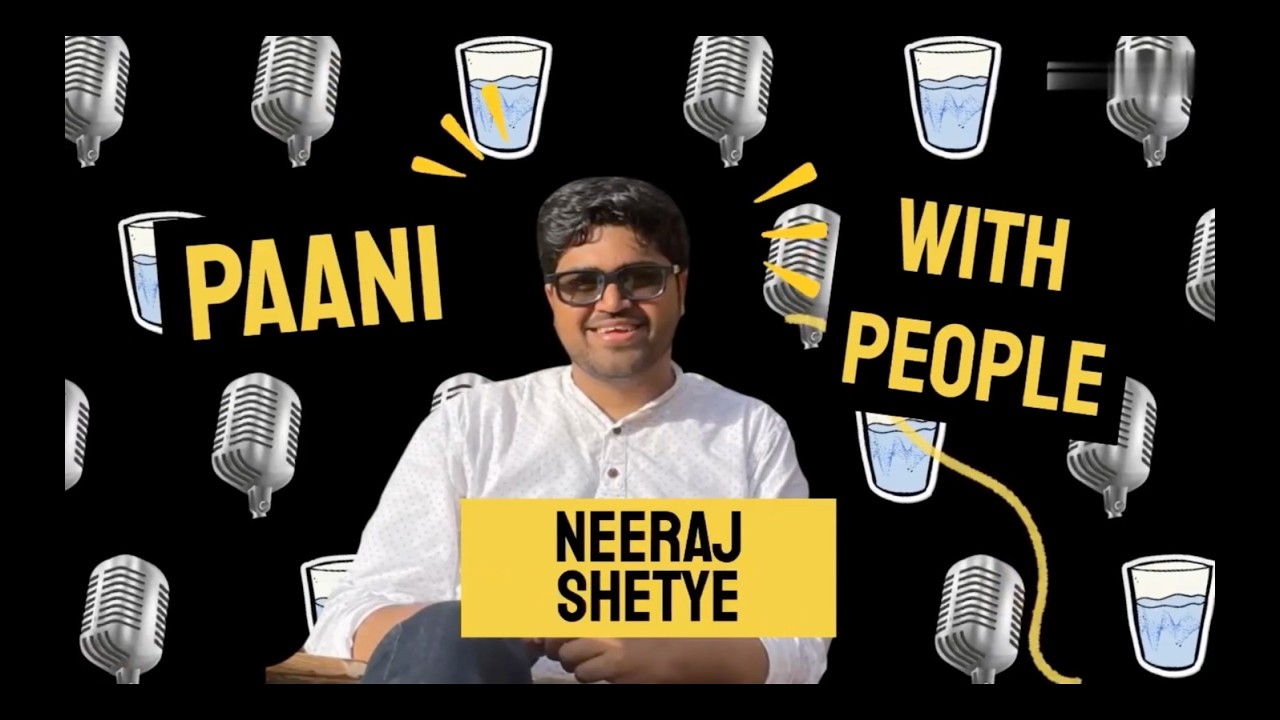
Promo | Paani with People Ep 4 | Neeraj Shetye | On Elections, Identity & Future in the UK


Paani with People | Ep 3 | Partnerships: Sahreen on marriage, migration, and ambition