Episode #28: This Moment Matters: Part One

In this episode of the Better Life, Better Business podcast, Shawn Ellis revisits his 2012 keynote “This Moment Matters,” originally delivered to the Independent Community Bankers of America. He opens with a rehearsal clip that stresses the urgency of being present. Ellis then shares the famous Washington Post experiment where world‑class violinist Joshua Bell performed in a D.C. subway, yet most commuters ignored the music, illustrating how people live on autopilot and miss the richness of the present. He connects this observation to a survey of 95‑year‑olds who wish they had taken more time to savor moments, and notes that children are the only demographic consistently noticing the performance. Ellis weaves personal anecdotes about his rural upbringing, three generations of memorable moments at a community bank, and his own experience of burnout during the Great Recession. He argues that breaking life into discrete “moments” makes overwhelm manageable and improves personal, marital, and business performance. The core of the session introduces mindfulness concepts, a “Box It Up” cognitive‑offloading exercise, and guided breathing techniques to help listeners pause, focus on the current moment, and set aside non‑urgent thoughts. Throughout, he tailors the message to bankers, emphasizing that each customer interaction is a moment that can be enhanced through present‑moment awareness.
Chapters
This moment is all there is, but somewhere we lose that. And then when we're older, we realize we missed something. So let's learn the lesson now rather than when we're 95. Let's learn to appreciate now, to be here now. And that's where today's session begins. Just a simple reminder to be more aware of the moments in our lives.
Hello, my friend, and welcome to the Better Life, Better Business podcast. This is episode number 28. And it's titled This Moment Matters, Part 1. That clip that you just heard at the beginning, that's a clip from a recording of me rehearsing from my very first This Moment Matters speaking engagement, which I delivered back in March 2012. So almost 12 years ago as I record this today. And I heard this recording recently just sort of by accident. I don't know if you've had this experience where you, you get in your car and your phone connects to Bluetooth and just pulls up some audio out of your phone. Well, that's what happened to me. And a few weeks back, this— my phone just somehow pulled up this audio of this, this recording from when I was rehearsing. I didn't even know it was downloaded to my phone. And first of all, when I hear my own voice recording, it's not my favorite thing. So I would turn it off pretty quickly, but my phone kept doing this. So over time I would get little clips of this message. And it's been a fairly stressful time in life lately. And my message back in 2012, This Moment Matters, was really all about slowing down and being more aware of the moment, as you just heard there, learning to be more present and more engaged for more of the moments. Not only to find more fulfillment in life, to find more joy and meaning, but also as a way to simplify. Because so often we're rushing, we're pushing, we're striving, trying to get there, trying to get somewhere. And if we can learn that lesson to just slow down, to take a breath, then life feels a lot different. Because in this moment you can find peace. In this moment you can find stillness, you can find calm. And so as I was listening to this recording of that rehearsal, it was speaking to me even though I didn't necessarily love the speaker's voice because it's my own. But the message, I was like, man, that's— there's some good stuff there. And so what I decided to do was to pull that recording off and break it up into pieces and share it here on the podcast with the hope that if you've been in a place in life where things are maybe a little too hectic, moving a little too fast, overwhelming, frazzled, whatever the adjective is that you might use, if that's what you've been feeling, then I hope that this message will speak to you. So what I'm going to do is play the first 15 minutes of the presentation here for you. And in it, you'll, you'll hear the first story that I ever told as a, as a speaker, which was a story of Joshua Bell, who's a classical violinist, and this experiment that was done in a Washington, D.C. subway, which is a story that captivated me at the time. At the time, it was a fairly recent story. It's been several years ago now. But you'll hear me tell that story. And then from there, we'll get into this idea that this moment matters. And I'll also share a tool or exercise I created called the Box It Up exercise, which is something you can use when life is feeling a little too full, when the thoughts inside your head just won't stop. I'll show you how to, quote, box them up and then pull out the one idea or thought or item that you need to focus on right now. This was helpful to me then because this message came to me at a time when, when again, life was pretty stressful then, a lot of uncertainty. I had a young son. I had my business, but we were just on the other side of the Great Recession. So just a lot of stress and a lot of uncertainty. When I speak today, this is just a small part of the message that I share And yet it's still a part of the message that, that really resonates the most. So as simple as it sounds to just say those three words, this moment matters, it's as relevant today as, as ever, because life just keeps moving faster and things keep becoming more and more complicated. So that's enough of me chatting here. I'm going to let you get into the first 15 minutes of this, of this message. You'll hear mention of, of my grandmother, which was pretty, pretty neat for me to hear because my grandmother has since passed away. But I mentioned speaking to her in there. So that was interesting. The audience, by the way, I should say I was speaking for the Independent Community Bankers of America at their annual convention. So you'll hear some references to banks and to the bankers. And I went ahead and left that in because if you're a banker, then you'll get this. But even if you don't, I hope you'll find the story to be meaningful. So thank you so much for being here. I'm so glad that you're listening today, and I'll talk to you again on the other side of this message.
About 5 years ago, the Washington Post conducted an experiment during the Friday morning rush hour at a subway station in Washington, D.C. They arranged for a young violinist to set up just as any normal street performer would. So he did just that. He was a normal looking young man wearing jeans and a long sleeve t-shirt and a baseball cap. And, and as any street performer would, he walked up, took out his violin case, set the open case at his feet, and threw in a few dollars and some change to prime the pump, so to speak, for the tips. And then he began to play. Here's what wasn't normal, though. This wasn't just any street performer. It was Joshua Bell, one of the greatest classical musicians of our day, an internationally acclaimed virtuoso. And the people who came to the subway station that morning would be treated to a performance not so different than the one at the packed Boston Symphony Hall just 3 days earlier. Where the pretty good seats went for $100. In this subway station, Joshua would play some of the most respected classical pieces, starting with, with Sambach, then moving on to Ave Maria, 6 pieces in all on a $3.5 million violin, no less. The experiment was this: would people notice, or would they rush on by trying to get from point A to point B, just as they do every other weekday. What do you think would happen? What if you walked through that subway station on that morning, that Friday morning, on your way to work, just like every other day? Well, let's say if Joshua were to play for 45 minutes and 1,000 people passed by during that time, how many people do you think would stop to listen to this beautiful music? And how much money do you think they would drop into his case? And do you think anyone would actually recognize him? Well, over the course of 43 minutes, 1,097 people passed by. It took 3 minutes before a man altered his gait just a bit and turned his head to notice that some guy was over there playing music. A few seconds later, a woman threw in the first donation. 6 minutes in, someone actually stood against the wall and, and paused to listen for a little bit, and that's about as good as it got. In total, only 7 people stopped for at least a minute. 27 people gave money, most while on the move, and the donations totaled $32.17, by the way, which isn't bad for 43 minutes of work. Except when you consider that Joshua Bell normally earns up to $1,000 a minute. So of those 1,097 people, well over 1,000 just hurried on by, oblivious to this concert that they could have enjoyed on a normal Friday morning. And that's why I chose to share this story, because I, I think it's a great picture of how we often live our lives caught up in the routine, always rushing from here to there. Often on autopilot while life is happening right here without us knowing it. And by the way, do we ever really get there? Do we ever think, okay, I'm here, this is it, I've arrived? No, we're already thinking about another there. You know, there was a survey of people over 95 years old a while back, and it took place in Florida, of course. And they were asked, if you could live your life over, What would you do differently? One of the most common answers was, I would take more time to reflect and enjoy more of the moments. And you know, these seniors aren't the only ones who know this. If we take a look at the Joshua Bell video, there was one demographic that consistently noticed Joshua in that Washington, D.C. subway. Do you know who? It was the children. Every single time a child walked past, he or she tried to stop and watch, and every single time a parent scooted the kid away. Just watch this little boy on the video. Notice his mom is pulling him along by the hand, and he's tugging and trying to do everything he can to turn back and listen to the music and watch Joshua play. You see, to a child, of course this moment matters. This moment is all there is. But somewhere we lose that, and then when we're older, we realize we missed something. So let's learn the lesson now rather than when we're 95. Let's learn to appreciate now, to be here now. And that's where today's session begins, just a simple reminder to be more aware of the moments in our lives. And that's why the title of this presentation, This Moment Matters, is actually a mantra that I hope you'll carry with you just to remind yourself as you're going through, as you're on autopilot, I hope a little voice inside your head occasionally will just say, this moment matters, and cause you to pause. But it goes beyond just noticing the music or the beauty. That's around us. If we're gonna be happier or more productive, if we wanna work toward our goals, it can only happen here and now. It can't happen tomorrow, not someday in the future. It's only this moment that we're alive and, and breathing. It's only in this moment we can be productive. It's only in this moment we can work toward our goals. Everything comes to a head in this moment. But because life is moving so fast and things get so hectic, we're in this always-in, always-on mode. We live in what's been called constant partial attention, and we're sacrificing moments, whether intentionally or unintentionally. So in this session, I'm going to share some ideas and strategies that will help you be more aware of the moments in life, be more engaged in more of those moments, even in those moments that don't turn out quite the way we would like, when things don't go according to plan. This, this will benefit you in your personal life, but also in your bank and in your business. As a matter of fact, what much of what we're going to be talking about today is, is under the umbrella of a field called mindfulness, which is simply paying attention to the present moment. And companies like Google and Facebook and many more have actually created mindfulness programs because they've discovered that this helps employees be more effective, to bring more of their attention to work, to reduce burnout. And as a matter of fact, I can tell you exactly what moments have to do with your bank. You see, anytime I'm going to go speak to an audience, I always want to do research so I can learn more about the audience and what their particular needs or challenges may be so I can tailor my presentation to them. And I did that for ICBA too. But before I did any research, I already knew a little something about you. Because you see, I grew up in a small town of just over 4,000 people, about 3 miles down a dirt road. And in one of my younger brother's elementary school assignments, when he had to answer where he lived, he wrote, "I live in the middle of nowhere." So that might tell you a little something. Well, anyway, 1 mile further down that road was my grandparents' farm, and my grandparents were basically our babysitters growing up. We spent a lot of time with them, and I have a lot of memories with my grandparents, from, from milking the cows to being out in the field harvesting the crops. But I also have a lot of memories of going into the little community bank with my grandparents. To me at the time, I didn't know anything about a community bank. It was just the bank. But I can still see that place in my mind. I can still smell it. That was, you know, that was big business to me at the time. You know, again, I grew up on the dirt road, on the dusty farm, and to walk into that bank, I mean, that was That was something magical. So that bank was a part of several moments for me, even though I'm sure the, the bankers and those working there had no idea about that. But as I was talking to my mom and sharing this with her, she told me about a time how she remembered going into that same bank with my grandparents when she was a little girl, and the banker would give her a nickel every time she came in. Then talking with my grandmother, she still remembers how they had such a great relationship with that banker, Mr. Ledbetter, and how when they needed to buy a piece of farm equipment, they could just call him up and he'd ask what they needed and how much. And he'd say, well, you know, just go buy it and come in tomorrow and sign the note. That's 3 generations of memorable moments at a community bank. And I know how complicated your business is. Or at least I have some sense of it. And I know that these last few years have been especially challenging. I know at this conference you're going to be talking a lot about the technical aspects of banking, and there's a lot at stake with this being an election year. But for your customers, every time they come to the bank, it's a moment. So how do you and your team members deal with all the challenges behind the scenes but deliver the service the customers need at the same time. You know, it's, it's not so different than the challenges I face as an entrepreneur and small business owner. We've been hit hard by the economic crisis in our business. We've had to deal with the new federal regulations in the meetings industry. Then at home, I was actually, I was burning out and I had to find some way to manage, or I was at risk of losing my business, my marriage, not to mention my personal health. And it was after years of searching and trying different things that I realized it all comes down to the moments. I don't have to worry about my marriage or my business or my life as a whole. All I have to worry about is this moment in my marriage, this moment in my business, this moment in my life. Does that make sense? I realized that if I broke life down into the simplest component, the moment, then everything was, was much more manageable. It didn't feel so overwhelming to me. And also it was a lot easier to, to bring my best into one moment than it was to figure out how am I going to manage my whole life and my whole business. And remember, it's, it's only in this moment that we're alive anyway. So there's no need to worry about the future right now. There's no need to fret about the past. We can just be here now in this moment, and we can be somewhere else later. So as we move forward into this session, I'd actually like to do a little exercise now, because this idea to be here now and to be somewhere else later, once you're aware of the moment, This is how we, we move in and actually engage in the moment. If we were just fully in this moment, not worried about whatever else may come. And to do that, breathing is a great exercise. And we'll, we'll come back to breathing a few more times in this session because it's, it's so powerful. But I'd like for us all to just take a breath together. Just breathe in and breathe out. Because I know we've all come from different places and I know how hectic it is to get to a conference. And I don't even know what, what you've dealt with so far this morning. Maybe you've got things on your mind back at home or, or back at the bank. So if it's helpful to you, imagine that you have a box, an empty cardboard box sitting on your lap. And now think about everything that's been on your mind so far this morning. And imagine putting all of that into that box. There may be some, some important things there, but if it's not so urgent that you need to attend to it right now, then put it in that box and set that box under your chair. So all that stuff, it's still there, but you don't have to attend to it right now. You can be here now and you can be somewhere else and attend to those other matters.
Later.
So put the stuff in the box and breathe in, breathe out, and just, just relax knowing that here we are in this, this beautiful room, nice cushioned seats, climate controlled. All you have to do is, is be here now. And there's no need to let those other things occupy space and energy in your mind because you know how when you use a computer, the more programs you open on the computer, the, the slower the computer gets. Because every program requires a certain amount of memory, and your computer only has so much memory. Our mind is kind of the same way. Just in these last few weeks, I found myself kind of at the intersection of, of 4 major projects all coming due at the same time. I, I thought I had it all planned out, so this project would end in November and this one in December, and then this one in January and February. And somehow, wouldn't you know, they all, they all came, came due because of delays or this or that. They all came due within 1 or 2 weeks of each other. And one morning I was, I was trying to solve all these at the same time in my head. So I had all these things processing in my head. Well, how am I going to do, how am I going to do that? Um, how am I going to get this project done? And I felt like my head was about to explode, literally. So I had to use this exercise and figure out, you know, what really matters now in this moment. Because if we can't attend to something in this moment, then there's no need to let it occupy that space and consume that energy. This works, you know, really well when you feel like you're getting too many programs open in your head. Just pause, take a breath, and just box them up for later.
All right, that's where we'll stop for today, and we'll pick up the rest of the presentation or the next segment of the presentation in a future episode. But thank you for listening. I hope you found something valuable there. I hope you found a nugget of inspiration, and maybe that box it up exercise, maybe that's something you can use today or, or as you go through these days ahead when things get you get a little bit too cluttered, when there's too much in your head, to just pull out that invisible cardboard box, that imaginary cardboard box, and box up all those ideas, and then pull out the one thing that you need to focus on right now. Because all that matters right now is right now. This moment matters. Thank you again for listening to the Better Life, Better Business podcast. Please like and share the episode if it speaks to you. Leave us a review. Again, thank you so much for being here. I'm Shawn Ellis. I'll talk to you again next time.
More from Shawn
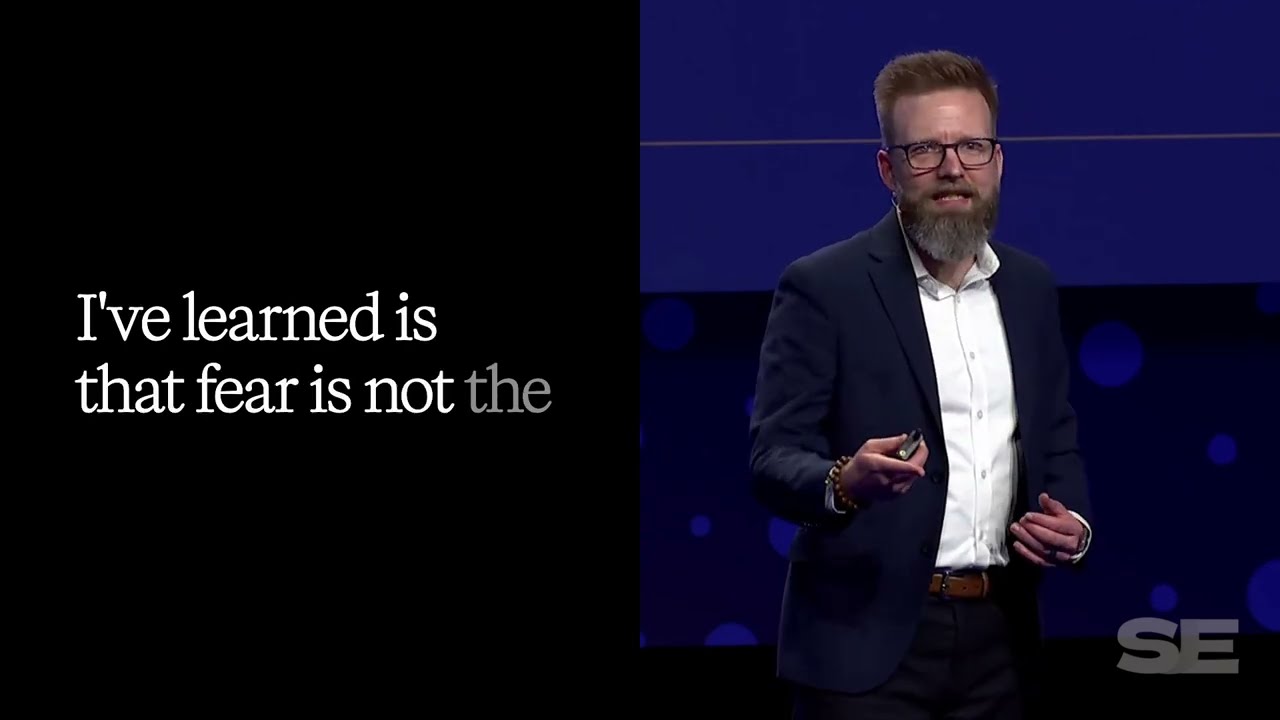

Shawn Ellis | Choose Your Ending™ — Radical Adaptability Keynote Speaker Highlights