Akwesasne Radio Interview Reen Cook with Tewentahawih'tha' Cole and Sheila Warnock
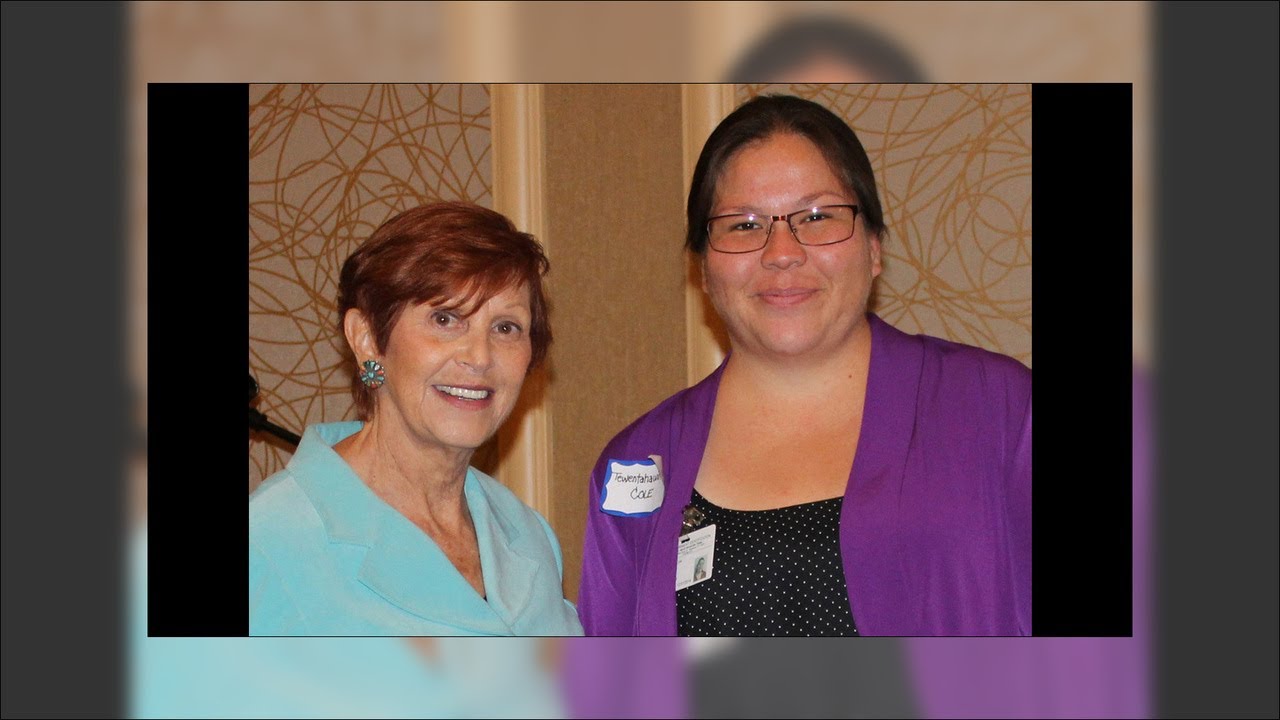
Sheila Warnock, founder of Share the Care, discusses her model for organizing groups of friends, family, and neighbors to support someone who is seriously ill. The system uses scripted meetings and task divisions so the primary caregiver can focus on the care recipient. It has spread to 13 countries and 48 U.S. states and can adapt to elder care, Alzheimer's, post-surgery recovery, and other situations.
Chapters
Sagawakwesasdi and the rest of the Seaway Valley, good morning and welcome to a live edition of CKWN's Deadwood Talo, the original air date of the program live Thursday, July 6th, 2017. So we are back to business here, and guest-wise today we have joining us live in the studios Dewanda Hawita Call. She comes to us from the Office for the Aging as a health educator. That's the senior center in Hogansburg. And we also have by telephone Sheila Warnock, and she is the founder and president of Share the Caregiving Inc. She's also co-author of a book. It's called Share the Care: How to Organize a Group to Care for Someone Who Is Seriously Ill. And she's got a unique perspective on caregiving that we're going to share with individuals. We'll find out what's going on. I know we have a special date in August for this particular training that'll be going on here in the territory of Akwesasne. We'll let you know who we would like to train and why and how this training will benefit our Akwesasne community. So with that, we would like to let you know as well, if you're at work or maybe you're at home listening online, you can also check out sharethecare.org, which is a website that we'll reference throughout today's program. And talking with, as mentioned, dewatahowita Cole, health educator for the senior center, and also author and founder and president, uh, Sheila Warnock of the Share the Caregiving Inc. So with that, we will say good morning to both DeWanda Hawita Cole and also our friend, uh, new, new friend here in Akwesasne, Sheila Warnock. Good morning, ladies.
Good morning.
Good morning. So pleased to be here.
Yeah, excellent. Where are you calling in from, Sheila?
From New York City, where actually is where Share the Care all started.
Excellent. We're going to learn about that and more. We appreciate you dialing us up here today and being able to join us live. I and Wanda, of course, getting ready for a couple of big trainings this summer, and this is one of them. It's coming up in August. So before we speak with Sheila about what Share the Care is, we would like to again get started with our health educator, Daywanda Hawita Cole. Seguin, welcome.
Seguin, yawa.
Now, we're getting ready for some training in August, right?
Yes, yeah, and we're all pretty excited at the senior center for this one as well. It's part of the caregiver program, and it's an opportunity for us to bring in another resource for our caregivers in the community through the caregiver program. Share the Care is going to be another one of our resources that we offer to the community.
We're gonna learn more about Share the Care right now. Thank you for getting us started. They want the how-ee-ta.
Cole.
She is our Office for the Aging health educator at the senior center in Hogansburg. So, wassayseggo, and welcome back to the airwaves, Sheila Warnock. Now, Sheila, maybe if you could just introduce yourself a little bit more, tell us about your position with, uh, Share the Caregiving Inc. And also, of course, you've authored a book here, and it was named one of Library Journal's best health books of the Year, which is very nice as well. So Sheila, tell us a little bit about yourself.
Well, my caregiving journey started when I had to take care of my mom by myself back in the mid-'80s, and I did that for 4 years. And so I have experienced what so many caregivers go through, you know, depression, isolation. I had to quit my job. I did a wonderful job taking care of my mom, but I didn't do such a great job taking care of me, which is something that often happens with caregivers. At the same time, I had a friend named Susan who was a divorced mom with 2 daughters, and she was also— had a high-powered job at a big corporation, and she developed cancer of the parotid gland, which is like your salivary gland. It was a rare cancer, and it began to spread throughout her body and became bone cancer eventually. But when she was diagnosed, her friends knew about her first surgery and radiation, and then Susan went back to work, but her friends didn't know that it came back 3 times and it was spreading. So, I was one of the few people that knew this because I was so close to her, but she reached a crisis at some point in her illness, and it was actually her therapist that said, "Get your friends together." have them come to my office tomorrow night, we'll figure out how we can help you. So she called 15, and 12 of us showed up the very next night to see what we could do, and it was a very emotional evening. Also, we didn't know each other. We came from different parts of Susan's life. Some of us were, you know, really close friends, there were moms, there were coworkers, there were neighbors, clients. It was a real mix. I knew two other women in the room. And the first thing that we did was have Susan tell everyone what was going on with her so that everyone learned right away what was happening, so we weren't dealing with rumors or hearsay. And of course, she cried, we cried, and we got to work, and that night we broke up into little teams of 2, so we had 6 teams, and we decided that each team would be responsible for 1 week of finding out what Susan need, getting the jobs filled, and giving her a schedule of who was coming when to do what for how long. This took away one of her hardest things. She didn't have to ask for help because we went to her. And we started in the next day. This little group of strangers for the next 3 and a half years did everything imaginable for Susan. Wow. Including towards the end of her life, we organized her youngest daughter's wedding, which was quite an event. And by that time, we were well known as Susan's Funny Family. Mm-hmm. And, um, You know, we did the cooking, shopping, cleaning, everything that you can imagine. When she passed away, we thought, "Well, we did a good thing. We helped our friend." But we didn't really understand the depth of what we had done until we were asked to help another group start for a woman in similar circumstances. And we got our group together with our forms and our systems and we met with these 20 other people, and there were men in this other group, and they arrived very nervous and scared and skeptical, just like we had the very first night. We didn't know— they didn't know what to expect. And as we walked them through how we worked, how we shared responsibilities, how we solved problems to help our friend,— and how we became very, very close, like a family, we saw these other people transform. They began to relax. They began to— you could see it in their face. They didn't say anything, but it was like, "Oh, we could do this. This isn't hard. This is logical." And, as the evening went on, they literally were raring to go. And have their own meeting to get started. There was also an enormous amount of love in the room for this woman that they wanted to help. Her name was Francine. And it was that experience that got me the next morning to call one of the other funny family members, my co-author Cappy Cappicella, and say to her, "Cappy, did you see what happened? We must put this down on paper." We must make it easy so other groups can follow this system and, you know, not have to go through a lot of trial and error. So, we wrote Share the Care: How to Organize a Group to Care for Someone Seriously Ill in 1995, and it was out there spreading around grassroots style, mostly through word of mouth, because Cappy and I weren't advertising. We weren't in healthcare, we were in advertising. So, um, we started getting lots of calls and thank you letters, and when email came along, a lot of emails about how this really saved the day for many, many people with many different challenges. And so over the years it spread. It spread to like 13 countries and 48 states.
Wow.
But in 2002, my co-author was diagnosed with a brain tumor. So, it was very shocking and ironic, but I put together a group of 33 to help her because she had brain surgery and she wasn't able to speak or walk or write or just do anything. And 10 months later, she passed away. And that's when I decided to leave my career and organize an organization, a nonprofit, to spread the word to a much wider audience. And that was 2004. So since then, we've been doing Seating Share the Care in Your Community trainings all around the country and up in Ontario. And getting the word out so that other people, Share the Care groups can start. They can just pick up the book and do it, or if they need assistance, that's what the training is going to do. There will be professionals and aging service providers and hospice people who will be trained in Share the Care who can provide information and coaching or encouragement for people to do this. Share the Care empowers friends, family, coworkers, neighbors, acquaintances with a plan on how to help somebody they know.
I noticed that you had made reference to large number of group, like individuals like in each group. Were, were those all family members or were they friends? Were they coworkers? Was it all combined?
A group is made up of everybody imaginable when you are organizing a group, and this is not a job for the caregiver or the person needing the help because they have enough to worry about. They need to just focus on what they need to focus on. It is up to two friends or coworkers or neighbors to follow the plan, to sit with the family, to figure out who to invite to a meeting and what kind of help is needed. The meeting is scripted and there are chapters 2 through 9 are written to these two people so that they can follow the steps and make this happen.
Now looking at the book itself, uh, Wanda, will our participants take a book home with them?
Yes, actually they will be taking home the Share to Care book and a manual that they can follow, um, as part of the training.
We mentioned again, Sheila, if you could stress for everyone who we're looking for to attend this training.
Yes, anybody who works with people who are caregivers or patients. So that would be nurses, social workers, hospice workers, discharge planners, geriatric care managers, faith community volunteers, anybody who meets with people who are in need of support. Also, I just wanted to mention that though the book title is How to Organize a Group to Care for Someone Who Is Seriously Ill, Share the Care is a model of teamwork, so it works for anything. It works for caring for someone who's elderly, for a family who has multiple births, like there was a, a Share the Care group for a woman who had quadruplets. It could be for grandparents raising small children who need support. It could be for a widower or a widow with small children. It can be for any kind of illness, recuperating from surgery. I mean, it's about teamwork. It's not about the specific challenge, it's about teamwork. And everybody at some point in life will be facing a caregiving circumstance. It's inevitable. So by learning this model and bringing it into the community, it's about community and it's about people learning how to be a caregiver. So oftentimes Most people who are put in that position have no idea what to do, and they really can use the support, whether it's emotional support, just knowing they're not alone in their struggle to care for someone. And it gives people who want to help a way to help that works for them, because they get to pick what kind of jobs. They will be involved with and the amount of time that they can give.
But one of the challenges that I noticed continually comes up in these classes is, "How can I get extra help?" So, um, which is one of the reasons why the Share to Care kept popping up. "Well, maybe we can try to bring this in. Let's try to bring it in." So it was just all about finding the resources to actually bring it in, and after 4 years, we were able to do so. So that's why we're excited to get it done. We're hoping it addresses that concern that comes up with the caregivers, you know, and their family caregivers, their everyday people, their friends, their— the wife, their— the daughter, their niece, or the uncle, you know, or, you know, it's just everyday people. So, but that's one other thing that came coming up was just how can I get extra help to deal with, you know, helping my father through this illness, you know, or helping my husband or helping my wife.
So—
Also, could I—
excuse me.
Yeah, sure.
Could I just add in here to what you're saying? Share the Care is about taking care of the whole family, not just the person who needs the care, because when someone is ill or aging or has issues, the whole family hurts. So it's about how your friends and neighbors can also pick up your kids after school or keep their, their lives going in ways that a caregiver might not be able to do because they're so busy.
Now, how, uh, how would you, uh, approach— like, does it tell in the book how you would approach your family, like, um, your immediate family siblings or, you know, your parents or, you know, other, uh, maybe your aunts and uncles and stuff like that. Does it tell how to approach these individuals to let them know that you'd like to form this group, Sheila?
Yes, in fact, there are a number of suggestions in there because sometimes the hardest part is getting the person who needs the support and/or the caregiver to accept I mean, that's an emotional decision that may take a little time. Some people will say, oh yes, absolutely, I want help. Other people may need to sit with it for a while and think about it and finally accept it. But once they do, then the wheels can start turning. And also, the person needing the help and the caregiver need to understand that by allowing your friends and neighbors and acquaintances to help you, you are giving them a gift because they are going to get so much out of this experience. It's an incredible experience. It's— they've often called it a life-changing experience to be part of a group. And sometimes groups go on to help other groups start or mobilize again to help somebody else. It becomes part of life, not just something that you have to do once in a while. And which in fact is something that we are all facing because we have an aging population that is due to double, 71.5 million by 2030, and that's not far away. And to take care of all the people who need care we're going to have to rely on others because there won't be enough professionals or there won't be enough younger people to take on the role. So the sooner we help each other and make it part of our everyday life and include children and teenagers and the elderly in that caregiving circle, then it's, it's gonna work out fine because it will be a normal part of our life to give a couple of hours a week.
Now, I know that our children, of course, our children are sponges. And if they were to see family members or their mom or dad or siblings see that they are helping to take care of someone, that they are helping to provide, you know, relief for someone, they learn from that. And that would be something great to be able to model for our children. You know, they learn compassion and empathy and how to take care of someone, how to caregive, Is it harder to have, you know, because females, matriarchal aspect of things with the caregiving, is it harder to work with men than it is for women? I know you mentioned men during one of your examples that there was a group of men. Is it different the way you have to approach males versus female?
Not necessarily, but women are more inclined to do this because that's always been their job, to be the caregiver of the family. But it's just like today where you where you have men and women having to go out to get jobs to support the family. You know, it's not really like that anymore, and there are many, many wonderful men caregivers. It's just that they're going to be doing jobs they feel comfortable doing. I mean, someone may need things repaired or be— drive somewhere or do research. It's about using their skills and talents, and that's what Share the Care does, help a group uncover what all the special talents within the group are and be able to utilize them. So, there are principles, you know, to keep a group going and also, if a group has been going on for quite some time, there are even signals of when a group may need to regroup and that usually happens when there has been a dramatic change in the person they're caring for. Maybe they're getting better, maybe they're moving closer to, you know, dying, or maybe they're moving away. So the need for the group changes and what they're doing may need to be adjusted.
How?
Depending on the condition.
How would you approach— I know that Wanda must have experience with this or are learning from those that take the caregivers. Looking at when someone needs to go to a facility, whether that's an assisted facility, a living facility, or, you know, whether that's a full 7-day-a-week, 24-hour care where that individual needs some medical-ish things taken care of and whatnot. How do we get to— with our loved one to make that decision to have them go to a facility, to leave their home or to leave your home? Is that included in it as well? Information for the group to be able to address that type of situation?
Well, they can address any situation, and in fact, many Share the Care groups have had the person they're taking care of reach a point where it's beyond what they can do. Now also, I just want to point out that a Share the Care group may also have a nurse's aide or someone else who has been professionally trained in something to come in to assist. It's all about working together. But many Share the Care groups where the person really needs 24-hour care, the group doesn't just take them to the nursing home or the assisted living facility and drop them off and that's the end of it. They continue with their visits. They continue to take the person out for lunch or do something or whatever they can do or sit with them or— just be with them. They just do it on a little schedule and continue their care that way.
Excellent. Wanda?
Yeah, and I just wanted to point out too that with the shared care model, it also encourages people to utilize those resources to keep somebody at home for as long as possible. That is the goal that we have through the caregiver program. One of our goals. So accepting help, asking for help, and also utilizing your community and family resources is a very good way at keeping somebody home. Because when it does come to the point that you have to send somebody to a nursing facility, then yeah, but there's also other avenues that you can take. So training is one of them, you know? Really just looking at what you have in the community to help you.
Okay, so again, we're very fortunate. Sheila, I'm not sure if you're familiar with all the resources and programs and individuals that we have to, to offer Akwesasne. When we're, you know, needing the caregiving or need to tap into those resources for whatever reason, we are very, very fortunate. To have all of the resources that we have here, Sheila.
Yeah, well, yes, and you know, there's never enough. So everybody's resources and everybody's programs are vitally important, you know, to have choices, to have different ways of finding help, and to be able to tailor, you know, something for your own situation.
So I wanted to to just remind trainees what they can expect to learn.
Please, yes.
In the Seed In, Share the Care in Your Community training. So, first off is how to motivate, and Sheila, feel free to chime in at any time. So, it's how to motivate patients and families to accept help. That's one of the things that trainees will learn. They will learn the steps and forms used to organize first shared care meeting.
Okay.
Why the shared care meeting is key to the group's success. Systems the group utilizes to maintain their efforts over time. How a group can maximize everyone's skills and talents and resources. Sheila had already talked about the signals of when a group needs to regroup and even readjust their support. As the care recipient's condition changes, and also what it takes to work in a small mock shared care group faced with a challenging caregiver case study. So Sheila and I will be discussing a case study that we can use that's from the community. So that'll be included in the training as well. So it's a little tailored to us.
Yeah, and I think that the participants really enjoy that because they're broken up into small groups groups, so it's kind of like as close as I can get to giving them a Share the Care experience, you know, in an hour's time. But they all learn something from it, so it's very useful.
And with the training, you will be receiving a copy of the Share the Care Handbook, also a 98-page training manual with electronic notes and the 23 Share the Care forms that are available. And also, the most important thing, I think, to include in this is the firsthand advice from the authors and the creators of this program so that you have what you need to, I guess, just guide you through every step in the process of organizing a group and keeping it functioning and maintained even when times get a little tough.
Also, I do a lot of teaching through story, so I'll be telling a lot of stories about how Share the Care worked with different circumstances and also showing people, the real people who really did this. So it becomes inspiring and very hopeful to see that, you know, anything is possible when you put your mind to it and work together. People often say it's, you know, it changed their lives because working this way gives you an opportunity to learn how to be a caregiver if you've never been one before, in the company of others. You meet new people, you learn new skills, you discover strengths within yourself that you never knew existed, and there's so much love and goodwill that happens. It's a special energy that surrounds a Share the Care group that people who don't even know the person they're helping want to join in because of the good it's doing in the community.
We have a question from one of our listeners. They would like to know, do you have mental health people that help the caregivers in the home?
Share the Care is being used to help people with Alzheimer's disease. The group has to work a little differently. You can't have 20 people coming into someone's home when you're working with someone who has Alzheimer's disease. So, I give strategies at the training to these professionals who will be working in your community about how a group can do that. And you would work with a very small group of maybe 5 people, but those 5 people could be supported by an outer ring of people who don't come into the home, but who do the shopping, who bring in food, who do other things that help support the 5 people within the Share the Care group.
I have another question, Wanda. Is it different, or do you find that we're going to tailor it differently because we are a First Nations people in the way that we take care of our loved ones, you know, culturally or traditionally? Is this something that will be taken into account when the training takes place, Wanda?
Yes, definitely. There are situations like that. And with this program, what I appreciate is that it has been brought to other First Nations communities. Okay. Um, and it's also delivered throughout the United States and other countries as well. And every community that I've read about are different, you know? They have their own set of unique needs. Their own set of values. Traditions are taken into account as well. And what I appreciate about this is that it's not really pushing somebody else's ideas onto you, but it really just, it takes your situation into consideration, your ideas, your beliefs, and it helps you tailor the resources around that.
A lot of times, sometimes people, I would imagine, feel overwhelmed and it's hard to try and even pinpoint your thoughts and emotions when you're trying to organize something like this. So with Share the Care, everything's in black and white and you get to learn it as well. And like you mentioned, tailor it to your specific need.
It's an excellent point because I'll tell you, each and every Share the Care group is using the same model, but they are each unique because of the culture, the location, the people who are involved, the person who's needing the care. I mean, they become very unique. It's not cookie cutter. The model is specific, but it leaves room for every kind of circumstance, type of people, whatever.
Sheila, quickly, what's on the website itself? I've pulled it up. There are a number of different headings that people can get help with or learn more about or research. ShareTheCare.org, anything specific specific you'd like our listeners to know that is contained?
We broke it out into 4 sections so it would be easy to find the information you need. It's broken out into caregivers and their concerned friends, faith communities, health professionals, and corporations. So obviously I think the caregiver and concerned friends is where you're going to find videos about how a Share the Care group starts, excerpts from the book, stories about groups. There's a lot of Q&A, a lot of testimonials, links to purchase Share the Care. You can get it at Amazon.com. They even have discounted copies. Just everything you want to know about Share the Care is on there. Also, if there are any questions that anyone wants to ask me, I'm always available. You can send us an email at info@sharethecare.org. So we are available to answer your questions or provide advice or brainstorm with you if you still have questions. But after this training, you should have a lot of people in your community who will really be great at this.
Excellent. Well, thank you so much for joining us on the air today from New York City, Sheila Warnock, founder and president of Share the Caregiving Inc. and co-author of Share the Care, the book, and also handles the website as well, sharethecare.org. So thank you very much, ladies. Thank you as well. Please pass along our thanks, dewanda howita, to whomever is responsible for, you know, the grant writing, or, you know, whoever got these monies for us here to be able to have people like Sheila Warnock come to our community to train our professionals so that our professionals can take care of our community members, and that circle continues of, of making sure that we're taking care of ourselves and so that we can take care of others when the need arises. So please pass along our thanks. And Sheila, thank you again for joining us. Safe travels when you come up here. And you know, a lot of people are going to really benefit from this a ton because it's, uh, you know, even though it seems like it's an easy concept, you've basically put the whole map in front of us and teaching us how to use that map and adapt it to our specific needs and situations. You know, what better way to learn that than from the author herself, than from our founder and our president of the Share the Caregiving Inc. So it's great that you're able to come up here. Thank you very much, and we'll see you in August.
All right, thank you so much.
More from Sheila


Lori Miller of Kawaii Hospice in Kawaii Hawaii - Share The Care - Sheila Warnock