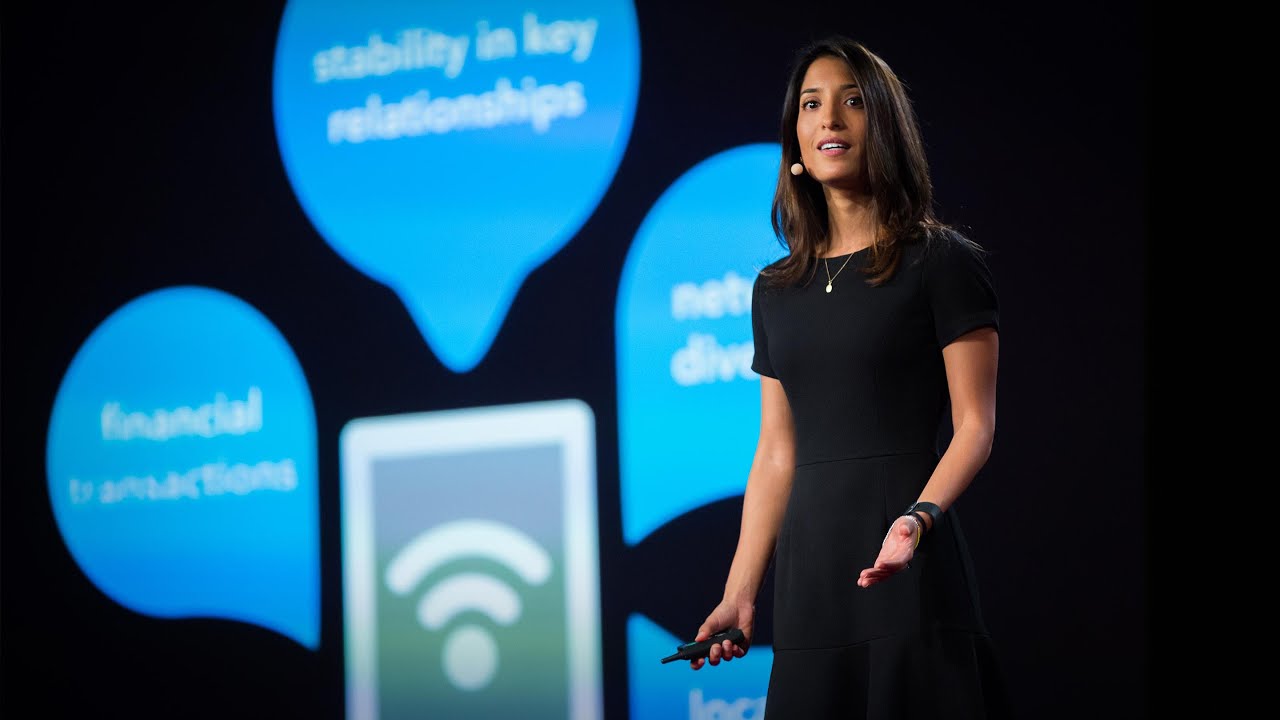
An Interview with Shivani Siroya, Tala and Ben McLannahan, FT

Shivani Siroya, CEO of Tala, explains how her company uses phone data to build credit scores for the 3 billion people without access to traditional banking. Tala charges a flat 11% fee, achieves a 92% repayment rate, and has expanded from Kenya to the Philippines, Mexico, Tanzania, and India.
Chapters
Thank you again for having me, and it's my great pleasure to introduce Shivani Siroya, the CEO and founder of Tala. Now, Tala is not a name that's familiar to me. Perhaps you also will not know immediately what it is, but in Kenya, it's one of the top 5 apps, I learned today. It's up there with Facebook and WhatsApp and the Bible in terms of popularity. And you launched there in 2014. You've since pushed into The Philippines, Tanzania, Mexico, India. You've now aggregated $400 million of small-dollar loans, 1.5 million borrowers. So I'm just wondering, draw all this together, what are the fundamental drivers of this business?
I think the fundamental one is really one of expanding financial access. So when I think of, you know, why we're doing this work and what's really driving myself and what's driving the team, it's really the fact that there are 3 billion people around the world that are currently underserved from traditional financial institutions and financial services. And they don't have a financial identity. And so when we think about, you know, not just being in one country, what's guiding us is the fact that we have to build globally and we have to build locally. And so, you know, when we are going into a new market, we're obviously looking at, You know, what does the political climate look like? We look at what does it look like from a currency fluctuation standpoint. But what we're really looking at is really what's the demand for credit. So what is the opportunity and the problem in that market that we want to solve? And then what's available to us that enables us to then solve that problem? So payment rails, if there is a national ID in that system that we can actually plug into, which is pretty rare. Any credit bureaus, if that happens, for identity verification only. And then obviously looking at what does it look like from a servicing and a talent perspective as well.
And what kind of services are you substituting for? These are people that I presume may not even have a bank account. What sources would they turn to if Tala weren't there?
I mean, when you look at a market like the Philippines, you know, I think we think of that market as actually somewhat of a developed market, and it's not. You know, you see that about 70 to 85% of the population is really underserved by these traditional institutions. And so even though you have a population that is, you know, really employed, it's English-speaking, they have— a lot of people actually are college-educated, what you're really seeing is the fact that, you know, you have to fill in for what a traditional bank would do. So even loan sharks aren't really meeting the needs of the top of the market because they're never going to go to that loan shark. And so you really are coming in and serving both the convenience and the speed for the top of the market and then serving the access piece for the true underserved.
So with this lack of data, with this lack of basic information about what kind of credits you're dealing with, how do you go about building a picture, a financial identity of a potential customer?
So my background is really kind of part of how I discovered the problem, but also the solution. And so I worked at the UN Population Fund in between working in investment banking.
UBS and Citi?
Yeah, it's kind of a long story, but when I worked at the UN Population Fund, I ended up interviewing about 3,500 people in person across 9 different countries. And what I realized was that not only did this massive problem exist, But I actually unconsciously started lending to these people and did it based on their daily lives. I was actually seeing the inflows and outflows of capital, how they were running their businesses, seeing them actually firsthand make financial decisions about, you know, when to buy inventory, when to pay school fees, electricity fees, all of these little, little intricacies, and had this hypothesis that daily life data could be used to do underwriting, and it would be a better predictor than kind of data that we've had 3 years ago in traditional bureaus. And so started to realize that a lot of this daily life data is actually sitting right on our devices.
Mm-hmm.
But in addition to that, uh, we can see the fact that our interactions and our behaviors as who we are today is actually a better predictor of your creditworthiness as well, and that then kind of falls in line with credit strategy.
So the fact that you lack a credit history doesn't matter because you've got a real-life portrait of somebody's behavior. So what kind of signals are you using? So if I'm scrolling through my mobile phone, maybe if I'm calling my mother twice a day, does that make me a better credit, maybe more reliable than someone who doesn't?
I mean, I think it does go into contextual identity. And so it goes into how do we understand you holistically? And so there's not gonna be one factor, like you calling your mom, that's gonna necessarily move your credit score or your profile, but it's gonna be a bunch of different factors. So we always think of it as 3 separate things. The first piece is, can we actually verify who you are? And so we have a hypothesis that if we can actually weed out fraud, then we can actually lend to about 95% of the population. And really what we're using then data for is actually segmentation and pricing. And so making sure that the product that we're offering you is actually customized to what you want to do with money, what you need to do, and what you should do. From there, in terms of after identity, we're then looking at capacity. And so we wanna understand, are you consistent with your bills? You know, what does it look like in terms of your bank account, your income? You know, how, when are you buying that inventory? When are you paying the school fees? Are you facing a lot of volatility? And then the last piece is really around behavior. And this is a lot of the kind of fun stuff, which is really how does a person interact with us? And so if we're giving you options to, let's say, review your application, do you take that? That tells us something. And then if you take that—
So you can see how long I've spent reviewing the terms and conditions.
Exactly. And we want to understand how long. And so if you've reviewed the application, but you review it for, let's say, less than 30 seconds, Have you actually reviewed it? And so in that sense, it's kind of thinking of each individual will have a unique way of actually navigating through an application.
Okay, so you derive a price of the credit on that basis. And what does it typically come out as? Say if I want $100 and I promise to pay you back in 30 days, how much are you going to charge me?
On average, we charge about 11%. And so it's a flat fee. And so there's no accruing interest rate with that. And so no origination fee. No application fee. It's just a flat percentage.
OK. Does that effective quite high annual interest rate, if you can call it interest, not really interest, but does that have consumer groups anywhere in the world up in arms?
No, because I think when we, again, show it to them as what we've been able to do is actually increase the amount of access. I mean, I think people realize the fact that it's completely unsecured credit. We don't meet customers in person, pick up the phone. We do this entirely digitally. And you're lending to probably the most risky populations. And so in that sense, the fact that they are able to make a very large turnover on that capital actually shows that it is towards productive purposes.
I spoke to one of your investors today. I think I got the sense that you're a balance sheet lender, right? You're not securitizing stuff. You're not selling stuff to a bank. You own the credit risk. How does the portfolio stand up to all these sort of variables that you don't really have much of a clue on?
We have a 92% average repayment rate across our entire portfolio. And so in that sense, you know, I think we feel really good about it, especially because of the fact that it's completely unsecured. But we also really believe that the reason that we need to be a lender is to really develop a relationship with these customers. And we felt like, you know, if we were just doing credit scoring, then we weren't actually solving the entire value chain. And to really fix the financial system, we felt like what's important is not just the identity, but it's actually proving that these customers are creditworthy. And to do that, in a sense, we had to be the lender.
So the 8% that aren't paying it back for whatever reason, is this fraud? Is it just bad borrowers?
It's hard to tell because there is a lot of volatility in the daily life of these customers. And so, you know, when we explicitly know that it's fraud, we can say that. But a lot of times you will see in that 8% that there's partial repayments. And so in that sense, it doesn't just indicate fraud, you know, one way or the other.
Are there any clues that you can scan for to indicate an obvious robot or an obvious scumbag?
I think we think of it as patterns. And so I think the one example I gave was, what's the length of time that a person's reviewing the application? Another one would be what we notice is fraudsters are really lazy. And so they're going to tend to actually put in the exact same PIN code because they don't want to remember multiple different passcodes. So you can put in really simple velocity rules where if in the same location you're suddenly seeing the exact same PIN Okay.
I love the tagline, giving credit where it's due. That's on your website. But the fact that so many are repeat borrowers, again, do you have consumer advocate groups drawing connections between the service you're providing and payday lenders, which like to, you know, get people in a cycle of borrowing and then borrowing again to repay that loan?
Yeah, so, you know, No, because I think a huge factor is the fact that we do not allow more than one loan outstanding at any given time. And so when you've got this high repeat rate, it's not because people are rolling over the same loan. It's actually because they've repaid that loan and then they're now taking out a new product with us. Um, so that's very different than Payday in that sense. The other factor is that 70% of our customers are actually sole proprietors and small business owners. And so they're actually using the capital for working capital, inventory, and actually further, further investing in their businesses. And then I think the last piece is the fact that we actually score customers loan to loan. And so even though they may have successfully repaid their last loan, that's not the only factor that's gonna then determine whether, one, they get the next loan, but actually what the size and the term and the, and the rate is gonna be on that loan.
And are you helping these people ultimately to get onto some kind of grid?
We are. So we are positively and negatively reporting to credit bureaus wherever possible. So I mean, amongst all our markets, it is in about three to four. But you know, it's not exactly what we would think of as a holistic credit score. And so that's really what we want to do is work with these institutions to think of it as. Yes, there's positive and negative reporting, but it's actually much more about understanding what a customer wants to do with money.
Okay. And a repeat customer, I imagine, gets a cheaper rate each time?
So we do dynamically price. And so yes, over time the rate does come down, but it's also remembering that there's 3 factors. There's the rate, the size, and the term. And so you wanna actually be customizing across all of those. And then the last piece would obviously be the verticals that the customer wants to put the capital towards.
I'm going to talk in a minute about, about the future, you know, what's next. You ticked off 5 countries. There's a lot left if your addressable market is 3 billion people. But, um, what about the supply side in terms of the credit funds which are supplying the money that you recycle and give to your borrowers? Is that supply unlimited?
I mean, it's— we know that, uh, it's not unlimited. Money currently isn't necessarily unlimited, but At the same time, the way that the capital turns over in our portfolio, we are actually able to use a small amount of capital and actually, you know, originate a large sum. So, in a sense, you know, we've raised, let's say, about $30 million in debt capital, but able to originate over $350 million.
And what kind of net yields are these investors seeing?
So, I would say our average cost of capital is about 12%.
Okay, so the expansion plans. Um, as I say, you've ticked off 5. Where's next?
So we're looking at Southeast Asia, we're looking at, um, Latin America, and then we're also looking at other parts of the African continent. Mm-hmm.
Is it basically the same template you're looking to roll out in each, or do you have to tailor the offering for each market?
So we do both qualitative and quantitative user research to really understand, really, again, what are, what are people's feelings around capital? And so what we want to do is actually make sure that our product is meeting their pain points. Um, and so it does look similar, but then the credit strategy, um, and the localization of payment rails, integrations, um, and messaging is gonna look completely different.
What, what's the biggest roadblock you've encountered so far in your pretty rapid expansion?
I think, uh, a, a roadblock would be that we've realized that we're not doing just the scoring or just the lending. The reality is that to really solve this problem, in a sense, it does take cooperation and collaboration with governments and banks. But at the same time, we've had to take on challenges of really developing KYC solutions, fraud solutions, and really identity solutions.
Right. Yeah, in the US, of course, KYC, BSA, AML, that's front of mind, especially for the government. But to what extent does it impede your progress elsewhere?
It doesn't. I mean, I think we've made sure that we're compliant in every country. And I think this is what I mean by cooperating with the government. So if we're doing digital KYC in a market like the Philippines, we need to be able to make sure that that's compliant in the way that we're doing that. And so you do need to talk to the governments in these markets and say, hey, we're not gonna be issuing paper receipts, right?
Right.
If we're doing an email or we're doing a different way of doing that, Is that compliant? And making sure that they feel comfortable with that.
And what about some other products that you could potentially offer, given that you have these connections now, these relationships, lots of data, lots of visibility into what kinds of people they are? And can you sell them a credit card, a car loan, a mortgage ultimately?
I think that we think of it as we want to help these customers throughout their financial life. And so we will explore various products that enable that.
OK. And you touched on your background earlier. I was curious, you're sitting there in Citigroup, was it, in Los Angeles? What was the eureka moment? You mentioned this UN experience, but what made you cash in that day job and do this?
I think I found a problem that I couldn't stop thinking about and that I was very, very passionate about. And so I think sometimes it's not that you expect to start a business, But really, I started this company to solve a problem. And so that's the thing that fuels myself and our team, is that every single day, we're solving a massive problem. And so that's why I took the leap.
OK. And collections is something that some— I cover Lending Club, for example. And they've really stepped up their collections process. To what extent do you rely on people with baseball bats to ensure that people do actually pay?
So we do not, again, do any in-person collections. The way that we think about collections is actually, we don't even call it collections. We call it recovery. And so we think about it really as, what can we do to educate the customer on the value that we're providing to them? And so in our calls to the customers, it's actually telling them, hey, if you don't repay, you're no longer a member of this network.
Okay.
And so it's getting them to understand also the positive and the negative reporting aspect as well.
All right. In the time remaining, there's a couple— well, I think the theme yesterday was established that I fire out 5 rapid-fire words and you respond with overrated or underrated and expand as you see fit. So the first one, AI.
I would say maybe underrated in how it's being used to really create impact.
Mm-hmm. Uh, brick and mortar branches?
Overrated. Um, but there is an aspect of community that I think is useful through having a presence.
Yeah. Yeah. What, what do you lack, um, without, um, you know, boots on the ground?
Mm-hmm. I think that, you know, we're thinking a lot about what does Tala look like in a physical sense as well. Um, and so yes, we have this connection with them digitally, but, you know, I think customers want multiple touchpoints. And so maybe that's not brick and mortar, maybe it's brand ambassadors, maybe it's kiosks.
Next word, Citigroup.
Neutral.
Fintech regulation.
I think underrated.
In what sense?
I think that there is a place for it, and I think that, you know, we'd like to be a part of how that comes about. Facebook.
Pregnant pause.
Probably overrated right now.
You were saying backstage that you actually don't use Facebook. In fact, social media full stop, you distrust?
So I wasn't saying it personally about myself, but I was saying it actually in our algorithm that We don't believe that secondary social networks are as telling as, you know, someone's primary social network or really, you know, being able to really see both sides of the equation. So how does a person interact with the world or their network, and then how does the network connect— interact with them back?
Yeah, a couple of years ago— I'm just wrapping up— I was talking to someone from FICO, and they were saying if somebody uses the word wasted on their Facebook feed or whatever. It has some informational content. Is it perhaps an indication that that person may be a less reliable credit than someone that doesn't use that? But the fact that that person has volunteered that, does that make that information less valuable to you?
I think so. And again, I think we— you have to think of it as, you know, what time period is that, right? You really want to think of it as what does the person look like today, and what's their mindset? What are they going to use this capital for? And really be building in that way and not focusing so much on always the past. Because I think a lot of us are talking about this, but really it's how do we build a relationship for the long term? So I think when you think of our product, it's— we actually don't think that loan one is that important. We actually think of it as we want to have a relationship with you over the next few years. And so we want to understand that behavior forward more than in the past. Great.
Well, thank you very much for your time, Shivani.
Thank you.
Thank you very much.
More from Shivani

Grounded Insights: Shivani Siroya on Building Tala to $300M ARR (Founder & CEO)


E681: Tala founder Shivani Siroya on transforming microfinance & loans in emerging markets