CNBC TechCheck chats with Tala founder and CEO Shivani Siroya — 10/14/21

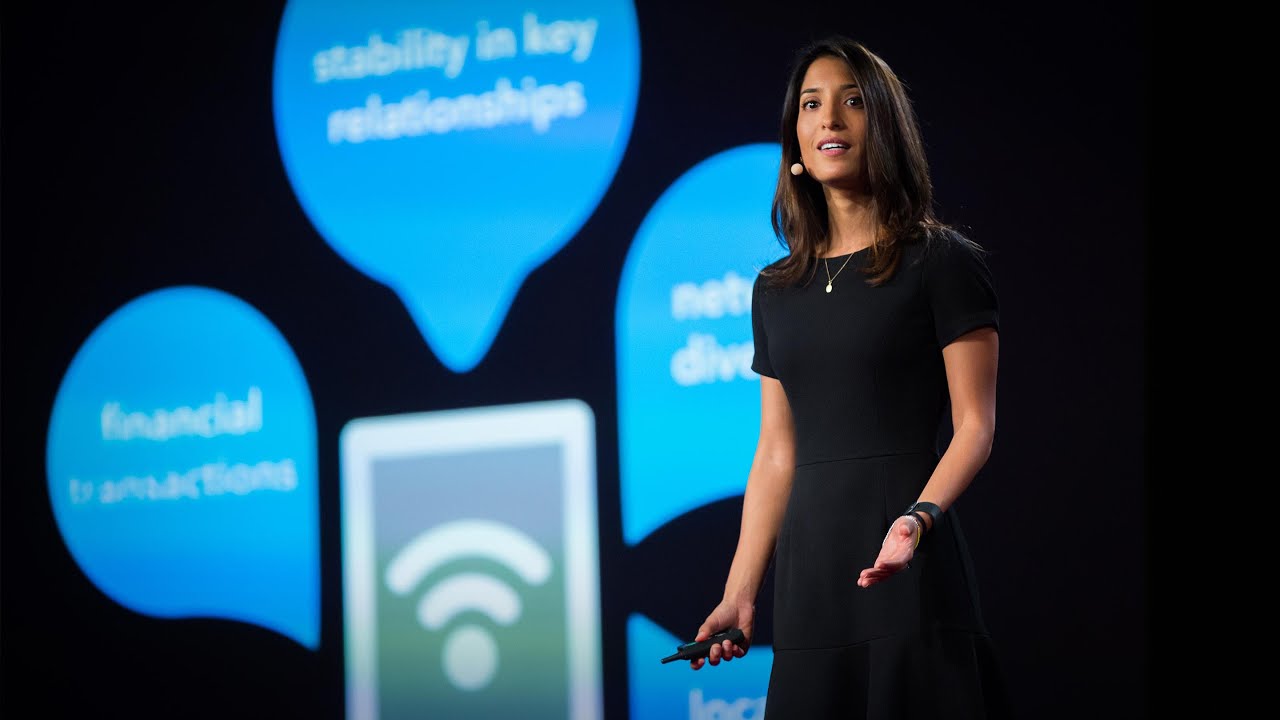
Shivani Siroya, CEO of Tala, raised $140 million in Series E funding to expand financial services to the 2 billion unbanked. The company uses phone data to score credit instead of traditional records, achieving over 94% repayment rates globally. Tala plans to add savings, a full financial account, and crypto services through Stellar.
Chapters
Good morning, everyone. I'm Julia Borstin, and I'm so happy to be joined now by Shivani Siroya, the CEO and founder of Tala, which as of today, or I believe as of this fundraising round, is the largest financial platform for the global unbanked. Shivani, thank you so much for joining us this morning.
Thank you so much for having me on the show.
So the big news for Tala, you've just announced a $140 million Series E round led by Upstart, bringing your total— $145 million, I should update that— $145 million, bringing your total funding to more than $350 million. And this is a big deal and will really help you accelerate your growth. But before we talk about what this means, why don't you first just explain what is Tala? Sure.
So Tala is a mobile technology company and data science company that is really focused on enabling financial agency for the underserved globally. And so we started over 6 years ago and we realized that, you know, over 2 billion individuals around the world lack access to formal financial services. And so there's 2 billion individuals that are not able to use their money, to protect their money, and to be able to grow their money like the rest of us. And we felt like that was truly unlocked potential, that not only are they not able to improve their lives, but really the entire financial marketplace is not able to benefit. And so we've been really working to essentially open up that entire segment and really make it a win-win for all of us.
And at the center of the business is this idea that there are a lot of people who don't have credit scores. So they can't borrow money, but they should be able to because they perhaps are creditworthy, but just don't have the proof of that. Explain how you identified their ability to borrow, why they should be able to borrow, and how you maybe put the mobile phone at the center of that and how that's evolved over time.
So my background was, you know, at the UN Population Fund. I worked across many countries and I had the opportunity to really interview and understand the daily lives of these customers. And so I had the opportunity to essentially observe the lives of over 3,500 individuals directly in person and to really understand, you know, how they use their money, how they think about savings, how they think about what bills to prioritize. And so I was able to see firsthand that there was daily life data. And so even though we don't have traditional credit scores on this customer base, What we have is the ability for us now through mobile technology to be able to understand their behavior, their capacity, and to be able to leverage alternative data as proxies that can allow us to then turn that into a traditional credit score. And so I was just able to see the connection dots between what I observed and what a traditional credit score could be and saw that we could actually bring in a different form of data.
And so you use that data, that everyday data, to figure out who you should be lending to. And then you started lending and you started in a couple of key markets and now you're expanding. So explain to us where you've been geographically and where you plan to go geographically next, and then also how you're expanding into new product lines.
So we're definitely looking to expand. I would say that, you know, as a company, We have a global vision and we realize that this is a massive problem that needs to be solved. And so at this point, you know, we work across 4 of the largest regions around the world. We work in Kenya, in the Philippines, in Mexico, and in India. And so our goal over the last 6 years was really around ensuring that our first product, our credit product, could work across these 4 very disparate regions. And now that we've done that, our goal is to say, let's move beyond credit. Let's really provide our customers with that holistic set of financial products. And once we do that across these 4 countries, at that point, we will start to think about further geographic expansion and really bring not only our credit product, but this entire account experience that we're building to these other markets.
And for each of the markets that you're in right now, how do you tailor the experience to address the differences about the way people interact with money in those markets?
So from the very beginning, we've been very, I would say, intentionally focused on building a global platform that is truly scalable across these regions, but that also has the ability to be localized. And so we've built the platform with that intention, but we've also built our team with that intention. And so we're over 350 people across the company. And we have offices in each one of our markets as well as full country teams. So that allows us to really understand from the person up what our customers need. Where do they transact? How do they think about savings? How do they think about hard money versus soft money? And so we're then able to put those kind of nuances into the product, but at the same time, it's really building on a global infrastructure.
And how have you decided where to launch in the past and what will be the factors that influence which countries or regions you launch into in the future?
Initially, when we first launched, we really thought about what is the infrastructure in a market that we can leverage. So as an example, we would look for national ID systems. We would look for, you know, payment rails and You know, let's say in Kenya, which was our first market, there is a national ID system. In addition to that, there is a major mobile money provider. And so we were able to essentially start as a very small company just by doing a very minimal amount of integrations. But then as we've continued to expand into markets like the Philippines or in Mexico, where national ID systems don't exist, we had to develop that technology ourselves. And then in addition to that, most of the markets that we work in, 85% of our customers transact in cash still. And so what we've had to do is really think about how do we meet their needs? How do we meet them where they already are? And so then we've done direct integrations with over 280,000 different cash-in and cash-out pickup points. And rather than going through aggregators, we felt Like we should actually directly develop those relationships and integrations so that we're able to then further customize the product to our customers.
And one thing that I've always found so interesting about Tala is that the repayment rates are so high and that there isn't really a huge risk of defaulting because people really seem to repay at remarkable numbers. Tell us about those stats and then also What has changed during the pandemic?
So for us, our portfolio actually became stronger as a result of the pandemic. We really saw that our customers were resilient, our markets were resilient. And if we think about the underserved customer, this customer faces volatility every single day. And so in that sense, when we think about what we can learn from them, It's really, we were really listening and learning and seeing the fact that our customers were prioritizing things differently. And so we were able to then rebuild all of our credit models to essentially bring in new features that we were seeing firsthand in terms of how we could understand their new capacity and how we could really understand their behavior. And so we've rolled out a whole new set of core credit offerings as well.
So, so how did that work, or what were some of those other credit offerings, and what was that based on? I mean, what were your default rates before, and, and what have they become now?
So, uh, prior to the pandemic, I would say, you know, our, our repayment rates were above 92%. Now what we're seeing is that our global repayment rates are above 94%. And what we're also seeing is, in terms of the kind of features or the kind of things that we learned about our customers. I would say it's really essentially thinking about new data features. So things like mobility, things like remittances, understanding different ways to understand the consistency of their cash flows. And so we just really talked to our customers during the pandemic. And so we really felt like this was an opportunity to really enhance our relationship with them, And so we couldn't physically meet them. And so instead we got on the phone with them, we texted with them. We wanted to really understand what were they doing day to day and what was actually happening in the market.
You know, on Tech Check, we talk a lot about how the pandemic drove an acceleration of some of these digital trends. Do you see the pandemic having converted more people into borrowing through Tala as opposed to, say, borrowing through their neighbors? It seems like you were never really competing with banks.
We've never been competing with banks. And I would say that, you know, even when it comes to friends and family and, you know, whether they choose to go that route or to work with Tala, in some ways, you know, they've always come to Tala because they value the privacy. They value the ability to not depend on anyone else and to really feel like they are true owners of their financial lives. And so for us, we saw that during the pandemic, it became apparent that not only did that trend continue, but I would say the need for more than credit. And so that's the other thing for us that during the pandemic, we rolled out products beyond credit. We started really piloting this account experience that we're now excited to go accelerate.
Yeah. So tell us about what's next for Tala now that you have this big funding round that you just closed and tell us about the crypto piece of this.
So we just closed this round and it is, you know, fully focused on accelerating the ability for our customers to use Tala, to be able to save with us, to be able to use their money with us through physical mechanisms, through virtual mechanisms. And it's also the ability for our customers to grow their money. So what we see a lot is that, you know, there's a lot of leakage around the financial system, especially for the underserved. They're having to spend a lot of time going to physical locations. There's also money being spent for transportation, and then there's additional fees to actually go get their money or to be able to use their money. And so we saw during the pandemic that our customers couldn't even physically go to go get the money. And so that became an even bigger obstacle. And so for us, what we're looking to do is really ensure that, you know, they have that safe place, but essentially they can actually more efficiently and more, I would say, cost-wise use their money. And so that's what we're thinking about with crypto is really thinking of how can we leverage this technology to really ensure that we can help with that essential movement And so I understand that you're partnering with the Stellar Development Foundation to do that, to create a new mass-market crypto product.
How do you see that playing out? Do you think you'll be working with existing cryptocurrencies? Are there certain companies you think you'll be partnering with? How do you make this accessible to your target audience?
I think as we've already done in terms of our supply chain, we will continue to really focus on interoperability. And so we're not looking to just build on one particular platform or even within one particular currency, we are ensuring that, you know, from our side, our customers can trust us. And so on the back end, we want to ensure that we're working with a wide variety of partners. And so that way we're giving them that stability because essentially we are bringing them into this new ecosystem.
And speaking of partners, I want to hear a little bit about PayPal. PayPal has been a backer of Tala for a long, long before this current investing round. And I'm just wondering I was wondering if you've gained some insights or some best practices from partnering with this obviously leader in the fintech space as you focus on this global market.
We've learned a lot from them. They've actually now been on our board for over 3 years at this point. And they've really helped us, I would say, as we think about our internal operating structure. thinking again about where we place our teams, how we think about product development. And then in addition to that, they've given us a lot of insight into, you know, what are some of the trends that we should be seeing across these different regions. But I would just say overall, it's been, it's been phenomenal to actually get to work with an operator that has the kind of scale that we're looking to achieve.
Well, $140 million Series E round, expanding both geographically and into these new business lines and into crypto, a lot going on with Shivani Siroya, thank you so much for talking to us on Tech Check this morning.
Thank you so much.
More from Shivani


Grounded Insights: Shivani Siroya on Building Tala to $300M ARR (Founder & CEO)


E681: Tala founder Shivani Siroya on transforming microfinance & loans in emerging markets