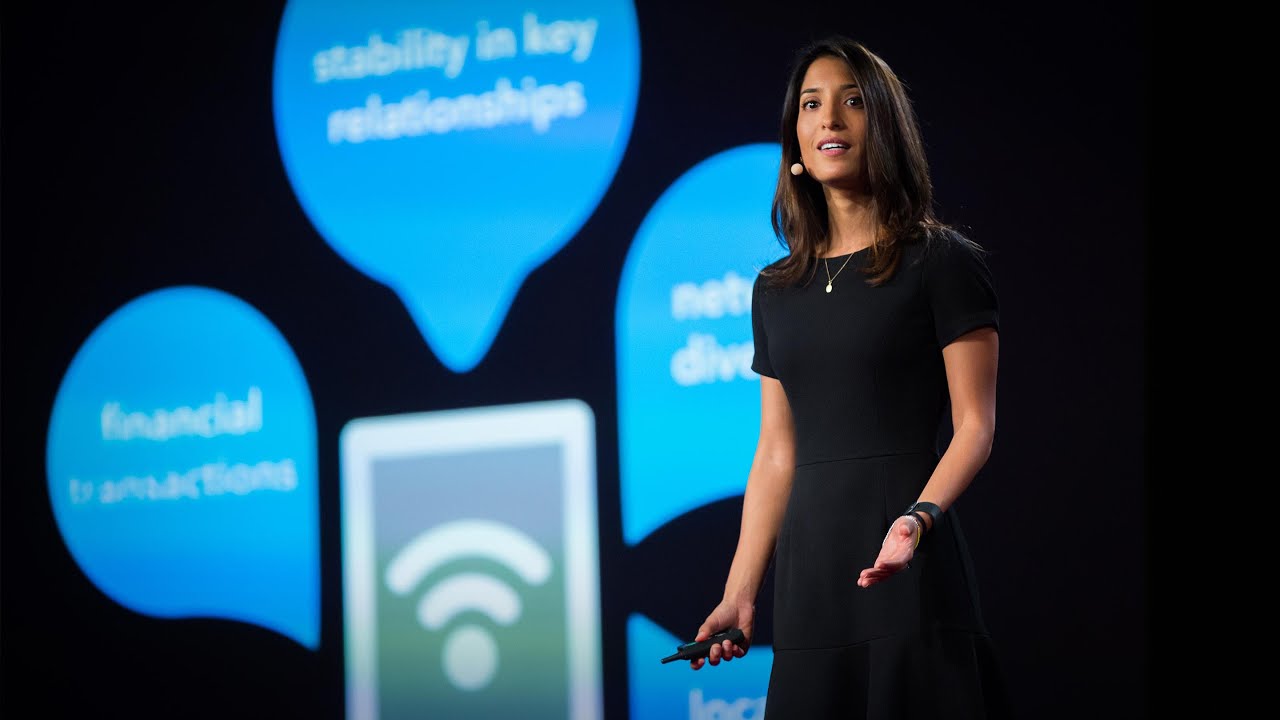
Shivani Siroya, CEO & Founder, Tala

In this interview, Tala CEO and founder Shivani Siroya discusses how her company has built a data‑centric, vertically integrated financial platform that serves the "global majority"—the 4 billion un‑banked and under‑banked people who represent about 52 % of the world’s population and $10 trillion of economic potential. She explains Tala’s core thesis that abundant alternative data can unlock credit, savings, payments and other financial services at scale, and how this thesis has guided a decade of growth across three continents (Kenya, the Philippines, Mexico) serving over 10 million customers with more than $6 billion in credit. Siroya details the challenges of last‑mile distribution, identity verification, and regulatory environments, emphasizing that building a full‑stack infrastructure—data collection, KYC, credit scoring, and product delivery—was essential. The conversation moves to Tala’s AI strategy: an experimental, always‑on learning framework, warm‑start models that leverage global features to avoid blind lending, and the importance of proprietary, unstructured data versus commoditized external sources. She highlights how AI enables real‑time personalization, even on a customer’s first loan, and how this drives risk‑based pricing and customer trust. Looking ahead, Siroya outlines a roadmap that expands beyond credit to broader financial services, focuses on delivering tangible value to customers, and stresses the need for industry‑wide infrastructure that puts the consumer’s experience first. Finally, she offers advice to founders: tackle systemic, end‑to‑end problems rather than isolated B2C solutions, view competition as potential collaboration, and build foundational systems piece by piece.
Chapters
Please welcome to the stage our keynote speaker, Shivani Saroya, CEO and founder, Tala, who will be interviewed by Jason McCullough, Managing Director, FinTech Business Weekly.
Thank you. So we're here to talk scaling financial access. And if you think serving underserved consumers in the US is difficult, it's exponentially harder in other countries that have less robust data infrastructure. So I'm really pleased to be speaking with Shivani, Tala's CEO, about how she's scaled that business to operate across 3 different continents and competing in markets that do have domestic lenders. Can you tell us a little bit about the competitive differentiation or what Tala's right to win is in those markets, given there are Sure.
So one, I'm excited that we're having this conversation.
It's an important conversation to have.
Yeah, because I think we are talking about, again, the majority of the world here and how we serve them. And so excited to kind of talk about how we've navigated that. I think to start out with, what I would say is that it's important to know what we do as a company and how it's different, to your point. So, we are a financial platform that leverages the power of data to create the infrastructure that's required to enable financial agency around the world. You know, I started the company with a very simple thesis, which I think really has held true for us and remains our competitive advantage as well as our differentiation, which is that there is an enormous amount of data that can be leveraged to serve billions of individuals around the world. And when I say billions, at Tala, we refer to that population as the global majority. This is 52% of the population worldwide. Most traditional institutions, as well as most neobanks, aren't able to serve this population because they lack that underlying data as well as end-to-end infrastructure that's required to be able to reach this population at scale and very cost-effectively. What's crazy to me though is that, you know, the population that I'm referring to, it's 4 billion people around the world with $10 trillion in economic potential. And so there's real value to be unlocked here and a real opportunity to go after. We've been now doing this for 10 years. We work across 3 different continents. We're in Kenya, the Philippines, and Mexico, and now starting to expand beyond these markets. And what I think we've been able to prove is this— with this vertically integrated platform, not only can we actually split risk at scale using these data models, but we can provide unparalleled value. So this platform allows us to provide services beyond credit, savings, payments, and really serve this customer throughout that financial lifecycle. life and to really be able to do this in an instance. So what I mean by that is, you know, how can we create experiences when we have the data and the platform that actually are better than even what you and I have access to? So the majority of our customers will be able to get approved for credit and get money in their accounts in under 3 minutes.
As somebody who has a bank account with BBVA in Mexico, I can tell you it's truly a horrible UX.
Yes.
We were talking before we came on about Mexico, one of the markets you operate in, including teaching me some new things about some of the challenges to even proving identity in that market. So I mean, I'm sure everyone is familiar with the fact 50 states, 50 driver's licenses. There is no national ID in the US, but similar challenge in Mexico. As you've sort of built and scaled Tala in these distinct markets, what have been some of the biggest challenges or some of the biggest learnings that you've developed doing this over the course of 10 years that have allowed you to expand into what are maybe similar demographics, but entirely different markets that you operate in?
If I look back at the last 10 years and the fact that now we've served over 10 million customers and delivered over $6 billion in access to credit to these customers across these 3 continents, I think really our key enabler goes back to the fact that we dared to do it. Like, I know that that might sound crazy, but I do think that whether some people might call it that stubbornness, I would call it our willingness and our commitment to solving the problem. But we really went ahead and built piece by piece that full financial infrastructure that's required for a global customer base. And really nobody else is doing that. to get to that last-mile distribution to this customer in a way that, again, creates the real value we're talking about. And I think if I think about what the learning is, the key piece of how did we go about building that vertically integrated platform, it's that data was at the core.
Mm-hmm.
And those investments in data have now led to having more depth and insights into this consumer base. That again has that huge economic potential. And so it's not only how can we deliver these services, but how are you able to continually learn and have more of that understanding of the behavioral data on the customer?
I mean, the last mile challenge is a very real one, right? And I think about that a lot in the remittance space. Wise, formerly TransferWise, is a great product if you have a smartphone and a stable internet connection. But if you're dealing with physical currency, there's a reason why Wise has chosen not to serve that segment. It's operationally complex, it's expensive, but to your point, there's a ton of potential there when you look at those markets in aggregate. I know that AI is the buzzword of the year, the decade maybe. Undeniably trendiest area in tech in the moment, including in fintech, in the financial technology space. But the real value comes in applying those tools to the kinds of challenges that we're talking about, including lending. Can you talk a little bit about the different types of AI that Tala uses and how you use them and sort of what the inputs, what kind of data you're leveraging in those models? Sure.
So, I mean, when I think about AI and how we're leveraging it, fundamentally for me, it is about how do we leverage it to improve our systems, both in terms of the value we provide to our customers, internal value to our teams, but ultimately it gets back to, you know, how are we actually serving this customer in a better way? I do think it is, we talked about this before, which is, you know, AI models are only gonna be as good as the data that's been provided to it.
Mm-hmm.
And so as we think about how we leverage this data across our systems, we're automating how we get smarter in real time as a team so that we can learn faster, but also making it easier so that as we continue to create new value, as we continue to expand experiment, we're also doing it in a faster, more efficient way for the next time. And so for us right now, it is really about leveraging it again across and proving that our data models and our capabilities can scale across diverse markets, diverse customer segments, and that we can actually again see that shift of it's increasing in value with actually diminishing effort. And so as we think about rapid market expansion, I think this is going to be one of those key unlocks for us.
Can you expand a little bit on how you measure sort of the return on investment of developing those AI capabilities? Right. So I, well, I come from a marketing background primarily, but in thinking about the credit space, you know, folks would be very familiar with the idea of split testing credit models to understand, you know, is this model actually better at predicting risk in order to iterate over time. How do you think about measuring the return on investment that you spend on building and deploying these AI capabilities?
So I can say 2 things there. I think the first is always-on learning. And so for us to be able to do that, we actually had to create an experimental infrastructure so that you are actually continually— that the models are actually continually learning and deploying new samples or new pilots at a time. The other piece of it, I think, is also, I would say, about how we ingest data and start to benefit from the compounding effects of the kind of data we have. So again, we're 10 years in now across 3 different countries, over 10 million customers served, and over $6 billion deployed.
Right.
And so there's the aspect of the data we bring in into KYC, into onboarding, into credit scoring. But then the continual data that is actually building on itself as we again retain and serve these customers. And so I think that's that piece of what doesn't exist right now that other fintechs don't have that we do have, which is the depth of data as well as the breadth of data across these untapped markets.
Folks who follow me will know I'm very interested in the regulatory space, particularly in the US. A lot of the regulations that govern how we do things, particularly in consumer credit. A lot of them were written in the 1970s— Fair Credit Reporting Act, Equal Credit Opportunity Act. Don't worry, I'm not going to quiz you. I think everyone would fall asleep, probably. But are there differences in how you're deploying AI in the different markets in which you operate, whether it's based on what kind of data is available? So we were talking before this about credit bureau coverage in Mexico and how a relatively small proportion of the population actually has information available on the bureau, or the kinds of regulatory constraints that may exist in Mexico that don't exist in another market you work in?
On our side, I would say that we are actually looking to apply AI and use it in the same way across all markets. So we're not looking at that in different ways. I would say that In some ways, this comes back to maybe our stubbornness or our commitment here, which is we are purposefully pursuing a strategy to expand to multiple markets at a time to really prove the power of the data models and the AI capabilities that we have at scale. So to be able to show that there actually are more similarities across these markets that can now be leveraged Versus the differentiation.
I mean, can you— is there an example you can give us of something you've learned in one market and how it sort of was translated into a different market, or whether it was really just like— I mean, probably not identical, but is there a concrete example you can give of a learning of deploying AI in one of these markets and how you sort of rolled it out?
Sure. So I think as we think about even credit modeling, I think an example of that is in new markets, we're actually building— we're actually bringing in global features. And so we have what we call kind of warm start models. So rather than starting cold and having to do blind lending, which is what many of us used to do, right, we're actually coming in—
Expensive way to learn.
Exactly right. And the reality is that we're finding the same characteristics across markets. And so that's just one thing, is the speed to which you can get to both the ability to scale in a country, but also profitability starts to shrink.
Do you find that the consumer behavior— it sounds like you do, but I just want to make sure that the consumer behavior across these markets is similar enough that that works. The reason I ask, being an American who lives in the Netherlands, which is a very debt-averse, credit-averse country, and then spending a lot of time in Mexico, What always strikes me is just how phenomenally different some of the cultural attributes are. And that's not to say good or bad, just to say different. Are you finding that the populations you're serving are more similar than dissimilar?
So I would say that the demand for credit, access to credit need, and also the need for the right product at the right time is going to be the same. But I think this is where we bring in, again, the power of data as well as how we can leverage AI to personalize, right? That actually does allow us to customize at scale. So, you know, when we think about the right limit to provide to a customer, I think historically companies could only do that once you've had, you know, a few loans with a customer.
Mm-hmm.
But now what we're finding is that we can actually personalize at the very first loan. And to your point, yes, customers will look different, but it's about having that infrastructure in place now and always-on decisioning that allows you to create that personalization. But it's the infrastructure that's the same and applied across markets.
I mean, you've obviously spent a lot of time thinking about this. What do you think fintech or more traditional banking players are getting right? and getting wrong about AI, how they're thinking about applying it, and about the potential?
So I think that as we go into what is everyone getting right, I think it goes back to the power to personalize at scale. And we're seeing this across all industries, not just fintech. And so I'm really excited to see customers getting that kind of personalized experience or customized experiences and what the value will be there. I think what we're seeing that is still what most people are getting wrong is It goes back to data and the fact that AI models are only going to be relevant and useful at creating that personalization based on the data that they're being fed.
Mm-hmm.
Most institutions are still reliant on external sources of data. And most of that data is publicly available data, which is low quality, has a lot of flaws, lots of shortcomings, and you know, a lot of it is commoditized. If everyone's using the same data, how are we really creating any differentiation? And so I think for me, I go back to we have to be all more committed to really thinking about how do we generate really new data and what is that relationship that we have with our customers and how do we leverage that data and insights into the AI. And that's what we've been committed to doing since the beginning is Again, working on the infrastructure side to say, can we ingest fully unstructured data of all forms? And then also being committed to creating our own proprietary datasets within the walls of Tala.
That makes a lot of sense. We were also talking before we came on stage, when I started in consumer credit industry 10 years ago and the buzzwords were big data and machine learning, not that much has changed, I suppose. But the company I joined, I asked, what makes you different? And they're like, oh, our secret sauce is the underwriting. And then I asked, well, what data sources are you using? And it was DataX, Clarity, LexisNexis, the same commoditized data that every other lender in that space was using. So absolutely, over the arc of time, you know, an increasing amount of personalization. I mean, you know, if you think far enough back, we didn't even do risk-based pricing. You know, everyone got the same APR. So the direction of travel that you're describing, you know, absolutely makes sense to me. I mean, you've been on this journey for 10 years now, which congratulations.
Thank you.
You know, what's on your roadmap going forward? What are you sort of focused on as far as building and leveraging the kinds of data and AI capabilities that we've been discussing?
So, I think in short, we will use AI across all of our systems. But really, when I think about where we're going, I think it's also important to point out that we never thought we were going to be a credit company.
Yeah.
And it really started with me interviewing 3,500 individuals across 9 different countries, realizing that this was a global opportunity to unlock $10 trillion in economic potential. And what we needed to do was really find a way to create the underlying data as well as that end-to-end supply chain to serve this customer. And so credit was really the most efficient path for us to be able to prove that our data models could work at scale in these very untapped markets. And so Now that we're 10 years in and working across these 3 continents, I see that we've now proven that we can split risk at scale, take that credit risk, and generate profitability. And so it's now about how do we leverage it to create new value beyond credit? How do we leverage it to really create more trust with this consumer to potentially take action on their part, create more peace of mind, and then also rapidly expand, as we're talking about, to new countries. The last thing I'll say on kind of our roadmap and how we think about leveraging AI that is also, I think, important for us as an industry is that we can create the best infrastructure, we can create the best tech, you know, technology, data models, but it is also about how does that customer feel that value? in their hands. And I think a lot of times we forget about that. And especially when it comes to AI, I do think that there's this aspect of how do we last mile that value to the customer? And so a lot of our roadmap is also on how do we learn into that and not just kind of think about us as the builders.
I mean, building any business is incredibly difficult. Building a lending business even more so. We have exactly 1 minute left. Any advice for aspiring founders, whether fintech or another business altogether?
I think I'll always say this, which is I really think the way I would go about it is really thinking about the systemic issues and the system-level problems versus just really, you know, only the B2C side, right? Ultimately, we could only get here because one by one, piece by piece, we really were putting together that foundational system that has now enabled us to be at that tipping point. And so while that can seem challenging to take on more than you set out to solve, I think ultimately you get to be in a place where, you know, you are able to then provide that holistic framework both to your customers But also to kind of invert this idea of what competition could be. Now I think we have an ability to start to think about competition as collaboration because we're both— we're sitting in the middle of that.
Fantastic. Shivani, thank you so much.
More from Shivani


Grounded Insights: Shivani Siroya on Building Tala to $300M ARR (Founder & CEO)


E681: Tala founder Shivani Siroya on transforming microfinance & loans in emerging markets