Flipping the Script: How Wyatt Johnson Went from Electrician to 7-Figure Real Estate Investor
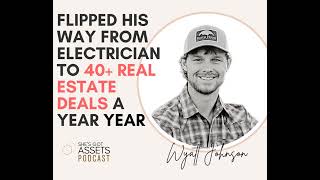
Wyatt Johnson went from electrician to 7-figure real estate investor by starting with a $15,000 Craigslist lot and house-hacking. He quit his trade in 2021 with $80-90k saved, then scaled to 47 deals in 2023 using handwritten direct mail and local TV ads. His edge: transparency with sellers and what he calls his "super-power" of building trust.
Chapters
Hey everyone, this is Shona from She's Got Assets. We're gonna do a really fun interview today on the podcast. I have Wyatt Johnson here. We're in the same mastermind. Super interesting guy, has a great story from going from electrician to flipper, really focused on rehabs and figuring out a strategy that makes sense. Wyatt, thank you so much for coming on today. I'm looking forward to this.
Yeah, Shona, thanks for having me.
Awesome. I, I, it's always fun to get into your backstory and I think the fact that you were in the trades gives you like a unique perspective. So if you wanna just give us a little backstory and your journey to where you are today and we can dive in.
Yeah, definitely. So I think things, I guess I would start back to where I grew up. It was a small town, Cowtown, and I did the pretty normal thing, went to high school, got out, and was gonna go to college for business management. I went for a semester for that and I did really well, but the professors and stuff I had really put a damper on my enthusiasm for business. And so I started looking for other directions to go and I actually dropped out after that first semester. Luckily enough, I found out about, uh, the electrical apprenticeship at that time and found out that they would pay for your school and you would get to work while you were doing it. And so it seemed like a pretty good deal and I jumped into that. I had been lucky enough to develop good spending habits in high school for some reason. And when I started being an electrician, I started making a lot of money, or at least a lot of money to me at the time. I think it was $50,000, $60,000 a year. And so I started saving that up pretty quick and I had read Rich Dad Poor Dad, so I knew that once I started having money in the bank, it was time to buy real estate. That seems to be, uh, the overall premise of that book. And so I started looking for properties to buy, and I started listening to BiggerPockets and finding out about everything that happens off market. My first property was a lot that I found on Craigslist, bought for $15,000. I was able to buy a mobile home for $10,000 and move it onto that lot. And then I think after all the setup costs and stuff, I sold it for $32,000 and I made $2,000. And, uh, nowadays I wouldn't get too excited about that, but at that time I was making $18 an hour. And, uh, when I added up my time on that deal, I'd made $2,000 at $50 an hour for the hours I put into it. It was like 40 hours. So I was like, wow, this is great. Like, this is amazing money compared to what I'm making as an electrician. And so started looking for another place to do it with. And it took me a while because I was using the metric that BiggerPockets uses for cash flowing real estate. And that's not something that's as prevalent where I'm at as far as rents to purchase price goes. So I ended up buying a house that it had been raided by SWAT and there was drug stuff going on there. It was an REO. So I bought it through a realtor and moved into it and started renting out the rooms because that was the only way I could make the numbers work as far as cash flow goes. Which is a strategy I recommend to anyone that is getting started in the game for sure. Anyhow, while I was living there, I was fixing it up and also collecting rents from people that were living there. Sometimes, oh, there was one guy, the guy, because he wouldn't pay, but I was able to live in that place a couple years, fix it up, turn around and sell it. I think I made, oh, I want to say I made $45,000 on appreciation of the house, and then another $14,000 in cash flow renting it out. And that was all tax-free because I lived there. So I continued on with that while I was being an electrician for the next few years and did a couple more live-in flips until 2021. 2021, I quit my job as an electrician. I think I had $80,000 or $90,000 in the bank when I did that. And then I had 2 properties at that time that I was renting out the rooms on. I was living in one of them. Yeah. I quit my job as an electrician, went to Peru for a month because I always wanted to check that out and decided that when I came back, I was going to go full-time in the real estate. And that's what I did. I spent 6 months doing nothing but cold calling, door knocking, sending letters, built a couple, a website in that time. All this different stuff to find off-market properties. Through all that work, I ended up getting one deal. 6 months in, I got one deal. It was a door knock and she had a realtor sign already in her front yard because she was getting ready to list in a week. I got really lucky that I picked that one up. But I got that one deal, spent a month working on it myself because I knew how to work on properties. And, and then I got back to trying to find other properties and I actually started feeling like I was running out of money. I wasn't, but I was feeling that way. And so I went back to work as an electrician, felt like a big idiot because like I had tried and failed. I'd only done one property that year. I thought I was going to be a real estate tycoon. I did that for about 3 months. It was a pretty busy job. And so I made a lot of money really quick. And then got another deal that next year. So this is 2022, and I was able to jump out, flip that deal. And around that time I got good at direct mail. I wasn't just doing it, I was doing it at a higher level. And so then in 2022, I think I was part of 15 deals that year. 2023, I got on TV on top of the direct mail, and that made a huge difference. I think I bought 47 properties that year, or I was a part of 47 transactions. I think 5 of them were referrals or wholesales. And we talked a little bit about wholesales already, but now in 2024, I partnered up with another flipper. We purchased 37, I think 37 properties this year, 39. I need to go back and count. And did way better than last year revenue-wise when I was by myself. And now here we are going into 2025. I'm still full-time in it and still doing a whole lot of flipping.
I love that story. I think that journey of reading Rich Dad Poor Dad and house hacking, and that's just like how everyone starts. And yeah, for anyone listening, house hacking, having roommates, the ticket. So I love that story and you're really successful and you got started from humble beginnings. I'm from a small town. I get it.
Cool.
Real estate was very expensive. So what did, to go back a little bit, what was the moment you were like, when you were gonna quit? Was it like, what was that kind of, 'cause that's a big kind of pivot, right? To go from like being in the trades and having a steady W-2 to going out on your own.
Yeah, that's a good question. If I was gonna put my finger on an exact moment, I'd have a hard time, but I do know what the transition looked like. So I, it starts back in high school, like growing up, we didn't have much money. My, my parents were the super middle class jobs and they weren't good with money on top of it. And so I always was jealous of the kids at school that had big lifted trucks and stuff that their parents would buy 'em, cuz that never happened for me. And so it turned into. And like an insecurity, like a complex for me.
Mm-hmm.
That made me wanna work super hard and save a lot of money. And I guess that's where my saving habit came from. And so I was always working way more than my friends in high school and ever since then, more than my peers. And then I was always saving more. And so I think what happened with quitting the electrical job is that I wasn't seeing enough progress. In that field to make me feel like I was getting to where I wanted to go. Like I really needed financial success to feel good about myself, which is a, not a good thing in general. That's not a good quality to have. But also like, it's, it's real for a lot of people and I never figured out how to get rid of it any other way other than chasing money. And being in the electrical trade. I worked with a lot of guys that, you were the apprentice, they put you down, they didn't treat you very well. Made decent money, but geez, it wasn't great for, for your self-esteem, right?
Mm-hmm.
I would journal a lot and I'm a pretty introspective person and I came to realize that if I stayed in that, I would be stuck at the level of all those guys around me. They say you're not a real electrician unless you've had a divorce and a DUI.
Wait, for real?
Oh yeah. Oh, believe it or not, it's true. The statistics are there. I didn't have either of those things and still don't. And I didn't want them either. And fuck.
Welcome to the She's Got Assets Real Estate Investing Podcast. I'm the host, Shona Leppis. Follow along as we unpack and demystify real estate investment strategies through expert interviews and personal experience. From how to find off-market deals to creative financing to long-term and midterm rentals. We aim to educate and inspire others to gain financial freedom and generational wealth through real estate. And as always, please subscribe so you never miss an episode. We really appreciate reviews. It helps others find us and just helps us get found.
I decided I needed to get out into this real estate thing because I'd made way more money in real estate up to that point. And, uh, real estate didn't have the ceilings that the, uh, electrical apprenticeship did. And the timing for quitting that job was we were finishing a big water treatment plant and schedule-wise it made sense to stay with the company till the end of that project. So I didn't leave Maggie. But yeah, the reason that I actually quit that and jumped into the real estate stuff full-time is because I didn't like who I was and I was hoping that real estate would make me like myself more, which, you know, a lot of people, I think, try to, they try to motivate people based on what you could be like, or like entrepreneurs will talk about, oh, I just wanted better for myself. Knew I could do more, that kind of thing. For me, it wasn't like that. It was like, gosh, like, do you always want to be a loser or do you always want to, and I'm not saying like people in my position before, are losers, but that's just how I thought of it myself. And that's what made me get out of the electrical trade and go into real estate. And that's what kept me in real estate too, because if I had to return and totally give up and never made it through real estate, I would not be a big fan of myself and I would be a pretty sad person, I think.
Yeah. I, you, I appreciate how honest you're being. Cause I think, I mean, our work is our identity, right? We really, that's who we are. So the fact that that's very introspective. I didn't, that's, yeah. And the trades are well paying and there's respect, but it's, yeah, the ceiling. Okay. So we're, I wanna talk a little about mindset, right? Cause I know, and feeling confident in making that move. Cause it's a, that's a really big move, right? To leave that kind of security, I would imagine was like not easy. I remember, I still remember the, I was waitressing and I was restocking wine and I was like, eff this.
That's what did it for you?
Yeah, I was, I was a, so I was a designer. This is, I've had a lot of like careers, but I just remember being, I was waitressing and I had done college, right? Which has, for anyone listening, right? College is great, but you do not, that's what I love about this. You do not need to have a degree to that. Like my degree in studio art has no relevance to this, but there was that moment and I was like, I don't know how I'm gonna do it, but I did it. And so I, it takes a lot of guts. That, to do that. And so I think that's a lot of that mindset and being, having a vision or whatever you wanna call it. And I, it sounds like you've done a lot of work on that.
Yeah, definitely. And I, I think it was different for me because when I did quit, probably the first, maybe the first 4 months, it was almost every day that I would have that sinking feeling in my gut, like I had messed up and that things weren't gonna go right and I'd made a big mistake. And, uh, it's gonna ruin my life. That was just a constant feeling for me in the beginning, especially cuz I had no one around me like Trevor, our coach, to show that success was actually real. It was just something that I'd seen on Instagram or heard in YouTube videos or podcasts and stuff. And that's a lot different than talking to someone in the flesh that has gone through that stuff and made it through. And so that was really hard on me, not having that faith that things were gonna turn all right, turn out all right. Caused me to beat up on myself every day. And so instead of having hard things to do, cold calls to make and whatnot, that are just hard as they are, cuz it's conflict, tough situation. On top of that, I had, I, I had a constant voice in my head saying, well, it doesn't even matter if you make that cold call, you're not going anywhere anyways. Like, why do you bother? Luckily enough, I had enough guilt driving me that I just kept doing those things and didn't stop. And eventually the results started showing up and they took a lot longer than I expected them to.
Hey there, savvy investor. Quick question. Are you ready to jump into midterm rentals, but not sure where to start? I've got you covered. And she's got assets. We help real estate investors set up and fully book their first midterm rental. With quality guests, you can double or even triple your cash flow. And here's the kicker, we dive deep into marketing strategies, including how to tap into the lucrative niche of getting insurance leads for displaced families or long-term stays that can really boost your bottom line without all the hassle and regulations of short-term rentals. Sound interesting? Head over to she's got assets.com/ntr and get all the details. And if you're new to real estate investing, we've got something just for you. Check out our REI Playbook course where we teach you how to snag your first investment property by finding off-market deals without cold calling or door knocking. We'll even walk you through creative deal structures like owner financing and how to leverage what you've already got. You can find all that goodness at she's got assets.com/REI. Oh, and one more thing, don't miss out on joining our free She's Got Assets community. We've got a ton resources plus weekly livestreams where you can dive deep into strategies to help you succeed. You don't wanna miss it, trust me. Hop into the community at she'sgotassets.com/network and let's get you crushing those real estate goals. All right, back to the show.
And so I, it's different for me now. My drivers now are to build a company that has the opportunity that I didn't get when I was an electrician. So that has people in it that treat each other really well. They're getting paid really well. Guys get more opportunities for advancement than they might, um, at other places. And that's what I'm working towards now. But at that time, I was just running from the identity of being a loser. And I ran from it long enough that I started making money and, uh, now I don't have to worry about it. Which is interesting. I'm curious what you think about that, because I don't think that I've gotten rid of that fear. It's still there. It's just, I have enough success in, in business that it staves it away and I don't have to worry about it. But what happens, and I don't know if you've had a reset like this or anything, but what happens if I mess up and lose all my money or the real estate market shifts or I get sued and I go back to that place? That I was at before I had the validation of business success, what am I gonna go back into that same mindset, do you think?
Yeah, that's a really good question. So this is gonna sound like, how do I, okay, let me think for a minute. I think when you have a taste of entrepreneurship, it's really hard to go back. Somebody once put it this way, this is gonna sound crazy, but once you're an outside cat, you're like, it's hard to go back.
I love that.
And I'm like feral at this point, so I don't, that's the best analogy I can think of. I think that the tools as an entrepreneur, it's a twisty turny road, but the, yeah, I don't think I could ever go back. And I think you have so many tools and you'll, you, the fact that you're built, you built a successful business, you'll, even if you were to switch gears, you have all the, that knowledge and all of the, I think even if we transition, like you can put it into something else. So I think, I don't think it's ever, I still have those doubts. I feel like the most, I have the biggest, what do you call it? Complex. Anyway, when you—
Yes.
Yeah. We all have that. And I have the receipts to prove I coach students and they do really well and we've built a portfolio and, but I don't think it ever goes away. I think you just, I, and I, I've come to believe, I don't know if you've heard this thing, turn your car into university. Have you heard that term?
Oh yeah.
And so that's, I drive around, I listen to a lot of books. That's like kind of what I do. That's how I keep myself from going into that or the gap or the gain, because the bar is constantly moving, right? If you're successful, you look back on yourself, you're like, a couple years I would've thought I was killing it now, but you're always, because we, if we're not growing, we're dying, right? That's kind of the way. So I think there's always gonna, the bar will move. You're always gonna have some questions, but if you keep at it, you'll just keep growing. I don't know if that answers.
Yeah, no, I agree. I like, like you said with the skills. The things I know how to do now, I never could have dreamed of knowing how to do 3 years ago. And that kind of gives me a new floor. Even if things did get messed up, I think I'd be landing on a, a, a higher place than I was before.
Yeah. And I think, and then I also just having that why, like you said, providing a company that has opportunity, I think you have to have that really clear because it's, this is not an easy business and I, there's just, I want to unpack a lot here, but I think we hear like wholesale and flip and it's super easy and everyone tries wholesaling and it generally, they don't like it or, or they try flipping and it's a good learning experience. The typical like journey that people go on. So it's not easy, but if you stick with it, it's a great industry, but it's not easy and you need a lot of gumption, I guess I would say with it.
Yeah, I agree. You gotta have something pushing you for sure.
So you're clearly really successful. And I think we often see people that are like killing it, right? All these deals, but we don't go back to the origin story and you did all that work and you just look like you're instantly killing it. So I think it's important to stress that it takes hard work and if you stick with it, it works out. But I love that story because it's how we all start, right?
Yeah. Because you're in short-term rentals mostly now, aren't you?
Midterm. Yeah. Midterm buy and hold midterm. And then I coach, but yeah, it's, yeah, I didn't know anything about any. I'm always learning. I don't think you ever stop learning in this industry either, right?
Oh no. Yeah. It's a lot of, a lot of success is learning what you don't wanna do more than it is figuring out what you do wanna do. Cause I tried medium term and I tried short term and that was not my game, like 100% against my personality, caused me a bunch of stress. Didn't feel good even when I was making money. And so I'm happy to leave that to you.
Yeah. So I have to ask, just side note, what was it? Was it like the guests or what did you not like about it? I'm just super curious now.
Uh, so I think what it was, I think what it was is my personality is I'm more of a whale hunter. And so I like to Go find big deals, take them down and make the big chunks of money and yeah, just keep chasing after big stuff. It seems to me that short-term rentals and long-term rentals too, to an extent, are more of a, a consistent monitoring, always hitting the small wins to make the money on those things. So I like working for months at a time, hitting a big one, making a bunch of money and then going back in and working for months at a time and that cycle is what you do with a lot of the deals we do. So when it came to short-term rentals, I had a bedroom in my house that I rented to traveling nurses. And then I tried a whole house where I bought the whole house with 5 bedrooms and I was going to try to do short-term rental by the room because I always wanted that as an electrician. When I was traveling, I would've loved to have a room I could've rented that had a kitchen that was short-term. Anyhow, my personality didn't jive great with that. I didn't like having to monitor and oversee all the little things that needed to happen and then feeling bad when those things didn't happen because I wasn't watching close enough. And it was just super stressful for me. The idea of renting out rooms short-term, there might be other people out there that are successful with it. I've done great with it long-term, but doing it short-term was total brain damage. The, the people in the different rooms do not get along and crazy stuff happens too. And it happens times 5 because you've got 5 bedrooms in that house. And so that, that did not work out for me for either of those.
Yeah. I feel like the co-living thing, it's fairly trendy and we hear that's, I love that you're saying that because I, we hear all these strategies and they all sound sexy and oh, it's the next best thing, but Do you actually like it? Is that the best fit for you? Even if it, that's what everyone's talking about, like PadSplit, right? I, so I personally, rent by the room just freaks me out. All the personalities, I, no thanks.
Yeah. Yeah, no, and that's, that's an important topic. I think a lot of success in business, and I'm sure life too, always extrapolates, is finding what's right for you and your tendencies and finding what feels light versus heavy. And so that place that I was doing short-term rentals by the room, I did terrible at. And if that was my whole business, I would've folded and never went anywhere. But that particular house I had bought from a direct mailer through a divorce list and I got it at a good price. And so after I was done trying the short-term rental thing, I lost a couple grand going that direction. But I turned around and flipped that house and I think I made $48,000 on it. And so I was like, this feels a lot lighter. I like this direction. So I started going more that way and did a bunch more flips that year and obviously was still doing a bunch of flips. And then somewhere along the line there, I started trying to wholesale and wholesale was a similar thing. It was really heavy. Because you have to deal with, first off, getting a buyer to agree to sell their house to you without you actually being the one buying it. And I'm a super honest person. And so it hurts, or it's hard on me to walk a line and try to leave things out and make, let sellers think one thing when another thing is happening. And so trying to toe that line and then pairing that with having to find someone to buy that thing and negotiating with them and then expecting them to keep their word. So what happened to me on my first wholesale is I, let's see, the tenants at the house that I was wholesaling asked if they could stay. I asked my wholesale buyer, hey, can these tenants stay? And he says yes. And I was like, okay, told them they could stay. And they thought it was coming from me. A week after the wholesale was complete and the new buyer owned it, he kicked the tenants out. And the tenants came to me like, what the hell? You lied to us. This is bullshit. And I felt bad because by extension I lied to them.
You know what I mean?
And I was like so pissed and I was like, I'm never letting anyone that like my reputation be contingent on anyone else's work. And so now we buy every property that we deal with and, and we do exactly what we say we're going to do. And some of those tenants ask me if they could stay. I'd say no, because I'm going to resell it or yes, because I'm going to keep it as a rental. I don't have to go ask the wholesale buyer. And same thing. All these people are making all these millions and talking about it. Wholesaling is the easiest way to make money in real estate. That wasn't the case for me. Wholesaling sucked for me. And if that was the only option I had had, I wouldn't have been unsuccessful at it. But you know how it is, obviously you just bob and weave as you're going through stuff and just make sure you're putting your effort into what feels light.
I love that light and heavy. And yeah, what you said is exactly— I tried dabbling in wholesaling and I didn't like that I was promising to execute on something, not knowing if I could find a buyer at the right price. And I think like every industry has bad players, but I feel like wholesalers especially, it's typical to lock up a property, come back and renegotiate, and there's just so many parties. I just couldn't. And so one of my coaches has this thing, it has to feel right in the head and the heart, and it did not jive with me.
Yeah. Do you think that you're like a pretty highly empathetic person?
Yes. Yeah.
I think that was my problem too. I think wholesalers just have to be salespeople, drivers. They have to have a certain personality to, to, and not have that stuff stress them out like it does us.
Yeah. And I, I look, I think there's a place for it and I think ultimately we're helping sellers in difficult situations sell and finding buyers and there's a need for it. But I think what bugs me is a lot of these, you hear all these people out there and they're just like, start wholesaling and flipping and make all this money and then do buy and hold. And it's, first of all, you just, it's not that easy. It's really a full-time thing. It involves a lot of marketing and a lot of cold calling and it's a sales job. I don't think anyone says that, and I think it really is sales, right?
Yep. So much sales and so much volume. I thought I've had a lot that I've never actually done. And this probably comes from being an electrician and being in the trades and whatnot. But if you have base level experience in the trades and you wanted to build a house yourself, you could do each part of the trades yourself, be mediocre at it, and still have a house built when you're done, move into it for 2 years and sell it probably at a $100,000 gain tax-free. And if you got on a schedule to where you were doing that every 2 years and maybe every other year you built a house that you had to pay taxes on, you could make really freaking good money just swinging your own hammer, building one house at a time and have a ton of freedom and a great lifestyle and all that stuff. And to, to look at real estate as just wholesaling or just flipping or just any strategy that it might be is a big mistake because there's so many little things that you could do to make money in it that can work with your personality and give you things you want out of life. You just really got to keep an open mind and, uh, and you have to pursue whatever it is you think is going to work. Um, cuz obviously you're gonna miss the shots you don't take.
Yeah. Oh God, I wanna touch, I wanna go back to the, oh my God. Okay. So yeah, wholesale, like it, some people love it, right? I think just so, you know, if you're new to this, like there's so many strategies, right? I think I love the light heavy. I think you should try things and if you don't like it, I also think you should seek out mentorship or a coach cuz they're like, there's a lot of strategies and it's hard to do it yourself and not, and, or a community or go to meetups and feel awkward and just make friends because it can be very isolating and it's not as easy as everyone says it is.
100%. Yeah. And on that note, a lot of the, a lot of the progress I made was because of those meetups and masterminds. Like the one we're in now has been amazing for me, but all of them, the reason I got good at direct mail was because I was paying $300, $250 a month or something for a direct mail coach. And that one year I paid $3,000 in, but I think I made $150,000 that year on the flips and stuff that I wouldn't have if it weren't for direct mail. So don't be afraid to, well, actually not even don't be afraid, spend money on courses, on mentorship, on coaching, because that stuff's always going to pay off a million times. In, even if it doesn't look like it will upfront. But the other thing you had mentioned was the local meetups, and those have been huge for me. And one of the best strategies or things I was doing that helped me at those local meetups is I was super open about the problems I was having. And so sometimes I'll see these new guys come in and they'll want to act like they already know everything and everything's going great. That they're not having any problems, they'll blow up their numbers, like those kinds of things. For me, I was always the opposite. I always let on that things were worse than they were and that I was dumber than I was and I needed more help. And people gave it to me. I was like a lost puppy and it made people wanna help me. And a big part of that was questions. Every time I'd run into something I didn't know or understand. Other people love getting asked questions about how to do the business. I'm sure you've experienced that a lot too. Mm-hmm. And, uh, so I started to build those relationships because of the questions I had and the stuff I was going through and, uh, figuring out the business as a result of that. And now 5 years later, after starting to go into those meetups, there's 6 out of the 30 people that are usually there. That consistently lends private money to me to do deals and stuff like that because they've seen the journey, know who I am. And that's how I got to start getting private money lending was with someone in that group. He was my first one. So yeah, definitely utilize those things, coaches, education, local meetups, and don't be afraid to let on about your challenges because that's actually going to be a big, a big asset or a big opportunity to get better.
I love that you said that because I do think, yeah, we go there and we're pretending like we're great, but that, yeah, being vulnerable. It's funny you say that because I went to a meetup and they had this like mini mastermind session, which was amazing. And I was just really vulnerable about, I'm struggling with keeping up with my leads and we had this little session and I got this idea and now I've hired 3 sales guys. It was just so powerful. I could have been like, I'm just killing it. It's amazing. But I was really like was honest about what I'm struggling with. So yeah, 100%. Go there. And being consistent too, I feel like you get to know people and you get more comfortable. If you just go to one meetup and you feel awkward, you never go back.
Yeah. Oh yeah. You gotta stick in it for the long haul.
Yeah. And then there's like certain regulars, right? You get to know them and you just feel— I still feel awkward. I still go because I think community is super important. Okay. Yeah. And mentorship. So I'm curious. I know we're in the Carrot Mentorship. Amazing. Trevor is amazing. He's just speaking about entrepreneur— and we are really as entrepreneurs, right? We are running a business in real estate and they're not necessarily— you have to learn those business skills. You don't just— they're not part of— it's just a lot of tools. So what would you say is like how you've got— how has that helped you grow your business? I'm just curious. Carrot?
Working with Trevor in particular or coaching in general?
Just coaching in general. We all, Trevor's great, but I feel like people sometimes wonder the value or like we talked about the return or like, how do you think you'd be where you are without that kind of mentorships?
Yeah, definitely. No. So the first, the one we already talked about is the direct mail course that I started taking. It's called the Deal Finders Academy. It's still around and still a good thing to get into if you want to learn direct mail. But, and I'm still in it actually, honestly, just for the Facebook group. But, uh, that was how I learned direct mail and I spent $3,000, but I made $150,000 that year. Um, and it's continuing to make money. Before we hopped on, I had a seller call from a direct mail piece that he called me instead of anyone else because of the quality of the piece and the stuff that I did. And so that was one of the early ones that, uh, helped me figure that stuff out. And then after that, a big one was, have you heard of Uncle Carl? Carl Spiegel? Spiegel?
Yeah.
Okay. That dude is a real estate ninja. He does like dirty title stuff and just crazy subdivision deals. A lot of interesting stuff. He had a mastermind and in his mastermind, he was teaching how to take on properties that had liens, didn't have clear title. And had issues with the land, issues with the seller, whatever it was. And so I was paying $100 a month to be in his mastermind. And that was how I did my first sub-to deal was, uh, I learned it from him and was able to put it into practice with what I was doing in the business at that time. Since then, I've probably done, I'd have to look, probably 20 sub-tos. And then done several dirty title deals where I've bought deals that had judgments on them or working on one right now where we're buying half of the ownership of the property. So it's owned by a dead person and the live person, we're buying out, we're buying out the person that's still alive. And then we're going to have to go through a quiet title to be able to, or partition sale to get to get titled to the state side of the property. Got another one that I just bought that was going to pre-foreclosure and the guy had passed away. And so by Montana state law, it, it passes to the parents. So I was able to buy out the parents' interest in the property, stop the foreclosure sale, and then go through a quiet title to get title to that property. And I never would've been able to do that without Carl. And he is, of course. And so those are just a few examples, but I might've spent a couple grand there also. And, you know, even just that first sub-2 deal that I did, I made $35,000 on. This, this one we just stopped a foreclosure on, gonna make $50,000 to $80,000 on when it's all said and done. And this is gonna keep paying off through the rest of my life. And so when you look at that ROI, It's just crazy how much that small amount of money and time in the beginning turns into where we're at now. And so now we're both in Trevor's Epic Mastermind, which is more based around business. And that's been great because that's like the season of my life I'm in now. Before it was just hustling, trying to put some deals together and make some money. And now it's actually about building a real business with structure. That makes money by going through processes and routines. And God, Trevor's been amazing for that. And like the, the progress that I've been able to make in the last year from seeing the stuff that he does and then giving, having him give us his frameworks to understand what we need to do and customize it to us. It's just been a total game changer to be able to build a business that actually has some consistency and recurring profit instead of just out there whale hunting like I was before. It all relied on me.
Yeah. And they're different things, right? Having the skill and then running a business or not. And yeah, that's, yeah, I love that you call it whale hunting and that there, it's fun, right? It, that's the fun part. You get the lead and you go out and you get that like endorphin, but you also have to work on the business too. Yeah.
Yeah, definitely. And I've had to do a lot of work around that because I was bumping up against a wall with the business where I was getting pulled away from the wheel. And that's what I like to do because I was dealing with all this BS in the business, whether it's payroll or accounting or compliance with construction. God. Selling the houses. There's so much you can get buried in. That's been one of the best parts of Epic is Trevor has shown us how to build a business that takes care of those things so that you can get back to doing what you like to do when what makes the business money too. And that's the whale hunting thing. Yeah. If you looked at the tasks that I was doing a year ago versus the task that is that I'm doing now, it's a lot more revenue-producing activities that I'm doing now. And, and I've trained away that other stuff and gosh, yeah, I sure wouldn't be enjoying things as much right now if it weren't for that.
Yeah, I think it's Trevor that said, don't outsource your zone of genius. Is he the one that said that? Because if we're outsourcing stuff we enjoy, then, then we're doing the stuff we don't, even if we can do, we generally can do a lot of things as entrepreneurs, but should we be doing them? I think that's, tricky, right?
Yeah, definitely. And that's the difference between Trevor and other people that you'll see on social media and whatnot is for Trevor, it's not always about what makes you the most money. It's about what gives you the most energy.
Mm-hmm.
Because things giving you energy are what keeps you in the game and keeps you going. And by the conventional knowledge in the space, I should have trained off sales already and I should be managing that instead of doing it. I don't care because it gives me a lot of energy and I have fun doing it and it keeps me going. And I take every call that comes from any of our marketing and I'll write on my cell phone and I plan on doing that for at least a couple more years, I would expect, even though I could be running a team of sales guys. Probably pushing more revenue, um, I'd be a lot less happy. And, uh, it's cool that we get that distinction working in Epic instead of just trying to get rid of all your responsibilities and maybe taking away some of the enjoyment you get out of those responsibilities.
I, I, it's a metric that it doesn't, on paper doesn't show up, but I think, yeah, you wouldn't keep doing this. So I, okay, I have to talk sales for a minute because I'm really doing a deep dive Sales. So what is it? And, and marketing too, 'cause clearly you're good at that. I've, I'm trying, I'm re— for me, I'm reframing sales into like, how can I provide service and a value instead of being like, sales is funky. What do you love about sales? I'm just curious. I know it's a side note, but talking to sellers, right?
Yeah. No, I like the, it's an interesting, I don't know if I would call it all sales though, like the parts that I like. So I I like finding the deals, like researching county records and stuff like that. I've actually handed that part off, but I like seeing the potential property come through. And then I like talking to the sellers and hearing about their specific situation because it's always interesting. Gosh, there's some crazy stories with that stuff. And when it comes to the actual sales side of things, I would expect that I have worse numbers than most companies as far as lead to deal ratio, but it's okay because I make up for it in marketing. And it's interesting that selling to— I think selling to investor, to an investor, isn't the right option for most people. I think that working with a real estate agent is. And they just don't know it. Most of the time they don't. Real estate agents just aren't good enough marketers. It's the issue. And so, yeah, rather than putting your face on a bus bench and expecting a seller with a house in disrepair to call them or whatever, I'm putting out a TV commercial that says, sell your house in disrepair, you won't have to do anything. Which one of those marketing Pieces speaks to the seller more. It's not the headshot. I don't have any headshots. And so these people are calling me and whether their house is a hoarder house or it's just got a few things that need to be fixed, they still have the same feeling that they have that problem and they want me to fix it. And part of my sales process is pushing people away. And so when people call in, The first thing we're going into is tell me about your situation, what's going on. And then I let it take, let them take it from there. Usually we end up on the condition of the property and I bet you 7 out of 10 times I'm telling people, hey, it sounds like that property's in decent shape. You're probably going to make the most money if you list it with a realtor or if you sell it yourself. It might not be the best option for that. We make most of our money. Off of the construction side of things. And so if I was going to make an offer on your house, I wouldn't be competitive with someone who's going to buy it, move into it with their family. They either do two things at that point. They tell me why they don't care that they could make more going the other direction and give me the real problem that needs to be solved. Or they say, oh, okay, I didn't know that. I guess I'll go that direction. And so I probably lose a lot of properties that could be deals because I do that. But I do so much marketing that I have so many leads coming in that it's okay. We always have way more deals than we need. And so we don't have to make the most out of each lead. Is that the best business strategy numbers-wise? Probably not, but it goes back to that energy thing where if I was buying John Smith's house that was in decent shape, and then he finds out a couple months after selling it to me that he could have gotten $50 grand more working with a realtor or something of that nature. I would feel shitty about that, and I don't want that on my conscience. And I don't beat him over the head with what I think it's worth on the market and what I'm paying, but I always tell him, like, you're gonna get your best money if you go through the process of selling it yourself or selling it with a realtor. And so I think that there's a double-edged sword to that in that it builds trust. You know, when you meet someone and they try telling you that you're the answer to all their problems and they're trying to convince you of that, you naturally get defensive and don't believe them as much and stuff like that. Whereas with me, I'm pushing away, it's, it's like, oh, like they, they don't want me. Why don't they want me? Like they start chasing. It is kind of me. I end up working with the right people that I'm supposed to work with. And so that's, that's how I've always ran my whole life is I'm just super open about everything. Don't hide anything. And I hope that the trust that I build outweighs whatever reservations seller might have or anyone I'm working with. And, uh, and it seems to work out all right. Now, all that being said, there's things with framing and negotiation and all those different things that happen in sales that, that I definitely need to do better on and need to improve on. And I'm going to be working towards those things. But as far as sales in general, I think I do that part of it a little bit different. Than, than the average bear.
I think that goes so far. I do the same thing because a lot of times people, they don't know the model and I'd way rather be like, hey, this person got me the most money. I'm off-market deals. We're not the right, we're not retail buyers. We're just not. And I think people don't understand that. And I think that trust and that goodwill goes so far. So I love that you're doing that because I think that's a lot. Not everyone does that. And ultimately that's going to bring you more business and your reputation, right? You're someone that's Really trustworthy. But it goes back to the marketing, right? I'd love to— you're doing TV, you're doing mailing. So what are some like tips that you can share? Because there's so many ways to market. I don't know what would be your like recommendations of some for direct mail and I got on TV. I don't know nothing about TV. I do direct mail, but TV is interesting.
I'll start with direct mail. So for us, we don't do any high volume direct mail, no postcards. No massive mailers. I just sent one out that was 500 letters. So we start with the Driving for Dollars list, which in my opinion is one of the best lists you can get aside from maybe pre-foreclosure if you're doing it right. And so because we're doing smaller lists, we send out better pieces. My mailers cost about $3.50 a piece. Mm-hmm. Compared to some guys that are putting out 50-cent postcards. And the reason they're so expensive is because they're handwritten. We get them done through Open Letter Marketing.
They're really good.
They know their stuff. And then we're putting a business card in there and a something to have them remember us by. And I don't, I try not to talk about what it is. Most people probably guess it, but it was something I learned in the Deal Finders Academy that I can lead to that program. If you want to learn what it is, go take that program. Anyways, when people get our letters, there's stuff in there that they're not seeing in any other marketing. And so we stand out. Also, the messaging is different. So instead of saying urgent notice, house is wanted, or buy your house tomorrow, quick relief, whatever. It's just a handwritten letter that says, hey, my name's Wyatt. I'm interested in your place at 123 Main Street. I don't know if you thought about selling it, but I'd like you to make an offer. Call or text me anytime at my number. So it's really friendly and open. It's not super— there's just not a lot of copy there.
It's not like blinking yellow and red.
Yeah. Ciao.
Yelling at you when you get it. Yeah.
And then it's in a postcard-sized envelope and it's a different color and it's handwritten. So it's gonna stand out from what you're getting from American Express or whatever else. Uh, and Yeah, that's the typical letter we're sending for a lot of stuff. And I need to get better about doing follow-up mailers. There was a time when I was doing second, third mailers. Lately, I've just been doing the initial mailer and we still get plenty of deals from it. We always have more deals than we have bandwidth to deal with them. So that's part of the reason I haven't gotten better in that, but those are the major things there that I do with direct mail. That I think contribute to our success with direct-to-home. When it comes to TV, so I work with Tony Javier, he's got 10X TV, and basically he's running an agency for real estate investors specifically to run TV ads. And so Tony's been doing it for 20 years or something like that. And he knows the copy that he needs to put out there to get people to answer the stations that it needs to play on, the times to play on those stations, and then how to negotiate with the TV stations to get the best rates and make it economically make sense. I think, so most of the success in the TV I owe to Tony. I think that a part of the success there though is that I look like a pretty average dude from around here. And I'm younger, I'm 28 right now. And so when you watch my TV commercial, what looks like a younger guy to most people in a flannel and a ball cap or whatever, like all of the town kids around here look. And so people respond to that pretty well, as opposed to a guy in a suit that is maybe running a national firm or something like that and just doesn't feel as inviting or local. As that. And so that's done really well there on the TV commercial. And I've even had people that call me and tell me I have a great commercial. They're like, I don't have a house to sell. I just want to tell you, I appreciate your commercial. So there's some good stuff going on there with the commercial, apparently. Some of the numbers on that, I'd pay anywhere from $5,000 to $8,000 a month on the TV to be able to run. I don't know how many impressions it runs, but it runs a lot. And a lot of people see it and know we've run it and stuff. And I think last year I had 300 and 370-some calls from it. And what would that average out to? $784,000 in spend. And I got 370-some calls from it. That turned into, oh, probably 30 of our deals.
Okay.
So I can break that all down, but the, at the end of the day, the return on ad spend on TV, just TV itself actually doesn't look that great. It might be like a 3x return, which is at the bottom of what you're shooting for. You know, ideally you're 4 or 5, 6x return on your marketing. To be able to have a viable business. But I don't care about that because TV builds a ton of credibility. So now when I call, cold call people, I've had people that recognize my voice on the phone from the TV commercial. And if they don't, then I just have to talk about, I've got, I just mentioned that I've got the TV commercial because I'm the only one. I guess there's one guy that's running way lower volume than me. But once I mentioned that, people automatically attach credibility to, to the phone call and they're more likely to open up and actually be open to talking about the options and stuff like that. Versus back when I didn't have a TV commercial, you'd be like, who's this kid calling me about my house? I'm gonna buy, you know what I mean? And. So the return on TV itself is decent. I mean, a 3x, but when you consider the referrals I've gotten because I'm known as the guy that flips houses because I'm on TV, or the deals that I've been able to lock up because people were more willing to talk to me because of the credibility of TV, or the website doing better, or shoot, I've had it a lot where There's another investor in town that has a trailer that says, we buy houses on Hector. There's other investors putting out bandit signs. People will call me and say, hey, I saw your bandit sign. I saw your sign on the corner of Bantam Street, but I didn't call you. I called you from the TV commercial. I'm like, great. Glad you saw that sign. From actually getting the lead from other people, other people's marketing, because I have the biggest presence with that stuff. Gosh, if there was a way to break out all of those benefits, it would add up to a lot more than a 3x return. And on private money lending, like, I have blown up the— our private money lending network this year because when I say, oh, I'm a house flipper and I pay 18% interest, people are automatically more interested because I'm on TV and I'm as legit as they get. Whereas if they had no idea who I was or what my business looked like, they would be a lot more cautious.
Yeah. That is the ultimate kind of authority, right? I think being on camera, being on screen, and that's brand building, that's marketing, right? That's, I just, and I wanna say it sounds like you're being really authentic. And I think the more I do this, the more I'm my, I'm not trying to be someone else, the more you attract people and the more people connect with you when you're just being. Real, right? And not trying to be someone that you think you're supposed to be in a suit. If you put on a suit and were like a used car salesman, like, I buy a house.
Yeah, that wouldn't do great. Yeah. At least for the part of Montana.
Was it hard for you to like do the TV? 'Cause you seem like a, not the type that'd be like, I'm gonna be on TV. Like, how did you, clearly you're very, and was that intuitive? Like that's the next step or what was that kind of like?
You know what? It's interesting. That was actually the result of coaching. So the first summer that I quit my job as an electrician and I bought that one house, I was standing in the gal's living room and we were working on signing the contract and the TV was going again. So it was going the first time I met her, then we met the second time, still going the third time. And I, I remember thinking all these people with houses to sell, they're watching TV all the time. And the first one to get on TV is gonna be the one that wins. And I just filed that thought away and whatever, just musings. I got a business coach the next year, so it still took me another year to get a, my first like business coach for business. And that was the one, one of the things she pushed me to is we looked at where I was at and where I wanted to go and what were the most likely things to get me there. And TV kept coming up and I always pushed it away as no, I don't have enough money. I wouldn't be able to handle the volume. I don't know what I'm doing enough. People are going to be assholes. I don't want to do it. She, those were all limiting beliefs and she helped me through all of those to the point where I still wasn't sure, but I was at least ready to take the risk and see what happened. And when I decided to go into TV, I was scared shitless because at the time I was starting, I had to pay, I think I had to pay $10,000 up front. And then I was starting out at $8,000 a month in ad spend. And at the time I might've had $100,000 to my name. And so you do the math, that's running out in 8 months, 9 months, whatever. I knew that if I wasn't able to harness the business that came with it, I was going to be in trouble. Luckily it worked out and he figured it out along the way. But at the time that seemed like a monumental task. And so when it came to actually filming the commercial, I, I drank 2 White Claws before I went through. But especially commercial. And that must have worked really well because they said I was pretty laid back and I did a good commercial. And that's been a feedback session. And then from there, it was just talking to people that called in from it. That stuff was all set up really well. It worked. People called. And then I was just talking to people and I love that and I'm great at it. And so it was pretty easy from there. Now I do get some crazies that call in for sure. Even people you wouldn't expect. I had a guy call in and I answered the phone and I was like, this is Wyatt. And he's like, hey, are you that little boy on TV that buys commercial? And I was like, yep, that's me. Then he's like, oh, fuck you. And I knew, well, that was it. I looked up the phone number and it was a 65-year-old dude in a small town that had a totally normal house, looked like a totally normal dude. Felt the need to call up and tell me that. I don't know why.
So bizarre. Yeah.
So it's made for some good stories, but luckily there's enough of a positive response that it hasn't really hit me too hard.
Yeah. It's really fun. Yeah. It does. I, so I, as clearly you're getting your own leads, cause I think you either buy from a wholesaler or get your own leads. And I think the best leads come from direct from seller because you can negotiate. You're, that's my favorite. I don't know. Do you ever, I'm assuming you get all your own leads right from your own marketing.
Yeah, I should have looked at my numbers before I jumped on here, but we got a, we're starting to get a lot of referrals. So with the TV and then being in the business and having a good reputation, realtors, bankers, family, friends, everyone's referring stuff. A lot of people call in from the TV commercial and say, hey, I don't actually have a house to sell, but my sister's trying to sell her place. Can I give you her number? And so we're buying deals that way. With the change in the market, we have started buying stuff off the MLS. I think we bought 3 off the MLS this year. 3. One of those, the seller contacted us directly. And so even though it was on the MLS, it was technically a direct-to-seller lead, but that has started happening a little bit more. And that's definitely a strategy. We're in the group with Remy and Matt, and those guys are making millions on just MLS leads and definitely not going to jump on that strategy. But I do prefer the off-market lead because one, we're already set up for it. And two, I think that not just realtors, I have a high opinion of realtors in general, low opinion of some in particular. But anytime you add extra person or God forbid two people in between the buyer and seller, it makes things so much harder, so much harder to trust, so much harder to communicate, so much harder to make a deal work. And so to be able to have a brand and a reputation out there that allows a seller to call and talk directly to me. Removes so many barriers to making a deal that would otherwise be there that you can't really beat it. The call I was talking about getting earlier, he is in pre-foreclosure and I already told him you can get more money if he goes and sells with a realtor or something. I told him he can get the sale postponed if he needs to. The banks are usually pretty workable, blah, blah, blah. He doesn't care. He's just done with it. Doesn't want to touch it. Wants to see what I can do right off the bat. I asked him if he'd be open to some sort of payments and he's like, I can't do that. I have a mortgage. And I was like, what we've done with other sellers in the past is taken over their mortgage to where the debt would stay in your name, but we would keep making the payments. If we ever stopped, you could take the house back and take over the payments again and be in a better situation. And he's open to it. Trying to have that same conversation, it'll look like a couple of engines. Yeah, that's definitely a fan of direct to seller for that reason. And then the second reason is because you can control your destiny. You can't control how many people list houses for sale on the MLS, but you can control how much direct mail you send out. How often the TV commercial plays, how much SEO or optimization you're doing on your website, and when you need more properties, you can get more instead of just taking what's already there on the market.
100%. Yeah. I just want to underscore, so I have a coaching course and I teach direct mail and it's a very similar style. It's a letter, it's invitation size, and I get calls all the time. Like, I never call back, but this letter felt different. It's just, and it's very much a friendly, we're not harassing them to sell, or you look really distressed on paper, so you need to sell right now for all cash. Maybe they don't want all cash. Maybe there's tax reasons, right? This is like, and I've gotten the calls like, I will only sell on a note, or which I think is incredible. I get those calls and it's really, I had a meeting with the seller yesterday, multifamily, talked landlording, just would never have had that conversation. He like, and these people, The other thing that I like to say when I'm coaching students is you're planting the seeds, right? And these letters get saved. I don't know if you've had that where people save the letters and call you later, but they do have staying power.
Oh yeah. We got calls years later.
Yeah. It's right. And then I've been to meetings where you see your letter like next to the manila fold.
You remember when you did the popsicle?
Oh my gosh. Because, and normally they just get thrown in the, in. And I think I just want to say to you, like, every kind of marketing works, right? But you've clearly found marketing that makes sense in your head and your heart, and you're really good at it. But if you tried to do something, you probably wouldn't stick with it if you're sending out cheesy postcards, I'm assuming, because it wouldn't feel like right for you.
Yeah, exactly. And that's why cold calling, I only do— I say I'm a sharpshooter with the cold calling stuff where if we can't reach someone with a letter, then I'll cold call them. And then I'll door knock. If I was like, uh, one of these guys that was just dialing the phones all day, I would be so depressed so fast that I would quit getting deals just like that. And I'd be out of the business for sure.
Hmm.
So you mentioned, uh, talking to a guy that had some multifamily and stuff, and I know you were looking to buy more multifamily going into this year. Is that right?
Yeah. I'm always looking to grow and every deal is different, but yeah, multiple. I view investing as buy and hold, right? I'll, I flip on occasion, right? It's really profitable, but I like to get the property and then maximize it like with midterm, right? Because the cash flow is really good, right? And you only need so many doors. Yeah, but definitely. Yeah. It was like an hour and a half. We talked landlording and it was like a conversation I never would've had if I hadn't sent the right kind of mail. And he saved the letter. I don't even know when I sent the letter, but it was just like, yeah, he need— yeah. And he actually scanned it in and sent in the email.
Oh, well, I'm buying a bunch more multifamily then that you're just going to keep as long-term rentals.
That's the goal. To me, investing is really buy and hold. That's where I see all the things we talk about, generational wealth, passive. I like the way evergreen, it's evergreen, right? It's not passive. Let's be honest. Oh, you thought we're— Yeah. So I'm always looking to scale, right? And then especially, I don't, in the market I'm in, it's pretty expensive. So really the only way to cash flow is doing like STR, MTR.
Yeah.
Unless you have a million doors, which, yeah, that takes time. So I'd rather like small but mighty portfolio kind of thing.
Yeah, definitely. That's interesting.
Yeah.
There was something you said in there that, oh, that's what it was. They, You think buy and hold is investing, and that's an important distinction that I think a lot of people miss in the real estate space. Short-term rentals, midterm rentals, flipping, wholesaling, those are all businesses. They're, it's not investing. And so for me, I'm investing in my growth and my capabilities, and I'm investing in a company that flips houses, but flipping houses is definitely not investing. And that is a transition we're starting to go through where now we've got a company that generates a lot of active income and we need to start investing it into things that produce passive income. And so I'm looking at different things like doing lease options with properties where we can keep them longer term, or maybe buying rentals in a certain part of town that's actually going to appreciate. Faster in other parts. But yeah, it's definitely, a lot of people get it wrong thinking that I can start buying rentals and I will invest myself out of a job or invest my way out of my job. That's not the case. At least not here. Maybe in Wisconsin at one time or, or Ohio or God only knows, but the way it's actually supposed to go. Is you need active income so that you can have the money to invest and then create passive income. And so that's why we're flipping when people say flipping is dumb, because we're building a business with a bunch of active income and we'll be able to take that and then actually do real investing and have passive income that's going to amount to something more than $100 a month on whatever it looks like on GoInvesting.
100%. Yeah. And I get it's all the tools, but I think, yeah, you need to balance it. And you hear these things like you just start like wholesale when you quit your job. Don't do that. It's not that easy. And it takes time to get enough assets to have enough passive. And plus, if I think my goal is to be like work optional, right? I like working, but I should be optional. And I know when you really think about, do you really want to stop working? You just want to have enough passive income to have that time freedom, right?
Yeah, time freedom. Oh my gosh. Yeah, I think, and this is just my belief, so this can be 100% false, but I think that what everyone really wants is time freedom and options, freedom of choice. And some people, because of insecurities or things that have happened in their life or whatever it might be. Get that confused with wanting material things like cars and watches and houses, or wanting a big company, or wanting to have a big number in net worth behind their name. But I agree with you that at the end of the day, what really matters is being able to choose to do what you want to do with your time. And, uh, the surprising thing about it all is that, uh, Even after you achieve the time freedom, you find that you still want to use a lot of your time to work.
I think that's— we go into this because we like real estate. That's why I did this podcast. I just like talking to people about real estate.
Yeah.
Excuse me. But yeah, I think, but knowing what you really want and the why, because it's not easy and knowing, and sometimes knowing when to stop working and like to have that— there's such a thing as balance. I don't think there is, but maybe someone's figured it out.
Yeah. That counterbalancing thing.
Yeah. I do wanna circle back really quickly cuz I, I love marketing and I love talking about it. I, you said driving for dollars list. So are you, who's, are you, who's pulling that for? How are you getting that list? That's manual, right?
So it used to be, it was me that did it. And here's the best way to do it. And I know cuz I've been through several ways of doing it. Get the Onix Hunt. App, which is— it's a satellite imaging thing, but you can track yourself and do different things on it. And you use that to track your route as you drive through town and drive every single street and look at every single house and write down— I shouldn't say write down— then you get the Deal Machine app and you can add properties in there. Well, you add every single property you drive by that looks like it's in disrepair. Or it has some sort of distress, broken windows, long grass, bad roof, furniture in the yard. It's a really good one.
Hmm.
Anything like that. Or maybe it's a property you think would be good for development. It has a big lot, whatever it might be. You add all those things in the Deal Machine and then you could take that list out of there and send the notes. But when I would do it, I would drive the whole town and all the neighboring towns and as many Population dense areas as I could, and even some that were less dense. It's going to do two things for you. One, it's going to get you properties on your list that you're not going to find anywhere else. No one, at least not in my market, maybe in California, no one's driving the streets, making a driving for dollars list and selling it to all the other investors. Typically you have to work to get that. You'll have a list that no one else has, and then you'll also have a crazy amount of market knowledge. You wouldn't know it, but seeing the different neighborhoods and the different parts of town and just feeling what those places are like can give you a way better sense of what a house is when a seller's calling in and giving you an address. And it gives you different ideas of doing things. There's just a ton of learning wrapped up in it that you'd never expect. And so definitely would recommend going that direction when it comes to Driving for Dollars. Nowadays, I've done it enough times that I don't need to do it anymore. I used to do it every 6 or 8 months, but now I pay a guy to do it for me and he's putting the list together and the properties. And then we're sending out the marketing. But gosh, that's just a great list compared to out-of-state. Oh, what's it called when it's a rental and not owner-occupied?
Y'all know. Yeah. Yeah. That, that is really, yeah. Because I think the, this, the typical distressed burger list that everyone's harassing these people and they may or may not want to sell if they, even if they look like it on paper.
So.
You're just, I don't want to call it vultury, but that's okay.
You did throw her in with everyone else.
Yeah. So great tips. This has been really fun. Is there anything else? I really wanted to talk about flipping because I think it's, everyone watches HGTV and they think it's really easy and it can be really profitable, but I also think you have to run your numbers and clearly you're good at it. So if you could give someone advice, just, I don't know, it's like a big topic, but. There's a lot of misconceptions about it and how to do it well and profitably.
Oh yeah. That's, that's actually something I'd really like to talk about because it's been a big part of my journey. A lot of people that are in the, in the space denounce flipping. And that's, I think they have valid reasons. I'm not saying that their reasons are invalid. Steve Trang is a big guy that I follow and I attribute a lot of my success to him. As well, and he hates flipping and he says, why would anyone ever flip? Wholesale everything. He's also in a market that has, I don't know how many millions of people, but there's tons of sellers with houses that are similar and easy to comp and were built at a massive scale. And then there's tons of buyers that are similar and are looking for those kinds of houses. Up here in Montana, what I've found is that there's not a lot of houses that are the same. There's houses built in the '20s, '50s, '60s. There was a boom in the '80s, maybe some from the early 2000s, but there's no just massive glut of houses that were all built at the same time. They're quickie, come. And we've got a deal that we're gonna make probably $70 grand on that's out in the middle of Wyoming, in the middle of nowhere. And it had a meat processing plant attached to a shop with a robbery. What the hell? Where are you gonna find comps for that?
Yeah.
You're not. And so have to go in there and trying to throw together a deal. With really limited knowledge, and that one's going to pay off really well. Obviously in those situations, I'm a little bit more, a little bit more conservative with that. The reason I bring that up is because, because our market is so much different, there's less people, the houses are a lot different, the properties are a lot different from property to property. We have had to take on a much wider range. Of deals that we're willing to do and figure stuff out. And we're still making really good money to do it. And, but at the time listening to the podcast and things like that, I'm doing it wrong because I'm not focusing on one asset in one area and one buyer, whatever it might be. And flipping is a part of that. So wholesaling would be a lot easier if I could get a house, a 3-bed, 2-bath, 2-car garage built in the '80s and be able to wholesale it to someone that's looking for that kind of asset. But that doesn't happen. Instead, we're getting the property with the meat processing plant one day, a vacant lot the next day, a property on the boonies on 7 acres another day, a mobile home on an owned lot another day. And so Where I actually found the niche was going into each of those deals and just being extra conservative with underwriting so that we could still make offers and still take those deals down and make money on them, even though they're outside of any sort of conventional buy box. And the flipping thing, because we've had to do more of that, when you do hear people talk about flipping, they're saying that you should always use subcontractors. So you just oversee it. You bid everything out. You get 3 bids. Take the lowest one, maybe. I don't know. And then you just manage that. Around here, there's so few, uh, contractors and so much work that you can't make money. I shouldn't say you can't. It's a lot harder to make money bidding stuff out and using subcontractors. And once you do that, even if you're getting at prices that are gonna make money, those guys are gonna require a ton of oversight and it's gonna require a ton of decision from you. Deciding on the materials, the layout, the problems that come up, all these things. And that option wasn't really viable for us. Yes. Where we ended up. Is we're flipping and we hire our own guys in-house that we keep busy full-time. And so we've got 7 contractors that are just working on our different projects. We do sub stuff, some stuff out, but we're not doing whole projects, usually just sheetrock or roofing or whatever it might be. And then we're building a company where we just keep these guys busy all the time and we're flipping stuff. And so that looks a lot different. Than what the conventional wisdom would be in the space. But also it's working freaking awesome because we're making a bunch of money in a market that people wouldn't expect to be able to do that way. And I think that would be my biggest piece of advice when it comes to flipping is don't be discouraged when you find that the industry knowledge doesn't match what you're finding in your market. It could be the case that it does. You got an easy market.
Great.
Go full speed ahead with that. But if you don't, don't stop and throw your hands up and say, well, this isn't going to work because it's not happening the way that Pace Morby said it was supposed to, or whoever it might be. Don't be afraid to rely a little bit on your own intuition and do do some experimenting, trial and error with stuff until you figure out a lane that's going to work. And then the other thing with flipping that I'd say is make sure you have a system for tracking them that works for you. So don't, oh, what's that called? Don't just abdicate that to a bookkeeper. I'm pretty passionate about doing your own accounting to some level. Or at least learning it and then training it off because I've had bookkeepers destroy my books and lose me money on properties because it was being tracked wrong and stuff. And so with flips, I break stuff down into categories as they happen in a project. So you'll start with demo and then the next thing might be rough framing and then rough plumbing, rough electrical, sheetrock, paint, blah, blah, blah. It goes. In order, and I have the guys break out their hours and materials based on those categories so I can know where we're at in the project, whether it's on budget or not, and then have numbers to be able to estimate costs with when I'm making offers on different properties. And that's hard to, uh, justify putting the time into in the beginning. Mm-hmm. But man, is it worth it once you start getting some data built up. And I have something to look back on.
Yeah. That data is really— that I have to ask, like you starting out as in the trades, was that how— I imagine that was really helpful. Is that helped with the flipping, understanding the different trades and where to start and how to—
or—
Yeah.
Yeah. And that's, I think that's part of the reason also why I am in flipping is cuz I understand the trades and know how to do those things. Mm-hmm. When I started off doing all the work myself, I'm not now because I don't have the time, but knowing what that stuff should cost and what I could do it myself for, that saved me from a lot of blunders in the beginning. And that's why I was able to figure it out going this direction versus if I was in sales, I was a car sales or software sales or something like that, I probably would have pushed harder on the wholesaling thing and maybe could have made it work and been running a cool business. But yeah. Being that I started off in the trades, it seemed to take me that direction cuz I already had the knowledge and then the connections too.
Yeah, no, I'm a little jealous cuz I don't, I can't fix anything. I'm really good at, I call it cat herding. I'm like, I bring all the subs in and I like oversee it and they're pretty scrappy. I'm embarrassingly not handy, but I've come to realize I've got other skills.
Exactly. Yeah. And that's, I tell people all the time, it's a great place to start off. If you want to get into real estate, but don't know how, go get a job in construction. Like that's going to be giving you a ton of industry knowledge and it's going to springboard you into it for sure. But if construction isn't your jam, then don't do that. You know what I mean? Rely on the other skills that you have and figure out how you can get those closer to real estate or be able to use them in real estate.
Yeah. And I, I would, I guess maybe every industry, but I feel like real estate, you can bring whatever knowledge you have and it can translate to some, there's so many pieces of marketing, whatever relation. Yeah. It really, you can bring it there and be valuable. Yeah. No, I, I brought in subs in the wrong order and, you know, doing tile and they're like, why isn't the electrical done? I'm like, I don't know. I didn't know that. 100%.
Well, I know exactly what you mean.
Really stupid mistake, but we joke about it and I was like, bring them lunch. I'm like, okay guys, we're gonna do this fast. And they, we have this, so my electrician makes like tons of holes, right? We're like, oh, the gopher was back, all the holes.
Yeah.
Wait, this has been really fun. If you have a few more minutes, I have a couple wrap-up questions. If not, I could totally get it. I don't wanna keep you if you're—
Yeah, no, let it run.
Okay. Awesome. Thank you for just being, this has been a really fun, I appreciate your like honesty and transparency cuz I think you look so successful. You're like on TV. Thank you for just sharing the journey.
Yeah.
Inspiring. So take this however you want the, and we touched on some of this, the top business or life advice you'd give someone to live life on their own terms.
Ooh, live life on their own terms. I don't know if this If I, if I'm really qualified to give this advice, cause I don't think I could follow it myself, but it's something I've seen others do. I'm not very religious or spiritual. I'm super like golden rule. Like I want good reputation. I do to other people what I want done to me. So I've got morals and values, but, uh, I could care less about the rituals and stuff that surround spiritual spirituality. And a lot of that's because my dad was pretty religious growing up and he was a pretty big hypocrite. And so I rebelled from that whole mindset. But somewhere that's hampered me is I think that I have less faith than other people I've seen, than religious people. Uh, because they grow up with this inherent belief in whatever it is that they're following, that translates into other areas of their life and allows them to believe, have faith in other things that, that might be a little more intangible. And how that showed up for me was I was being super logical about this business thing. Okay, I'm an electrician now, but I want to be a real estate investor. How's that ever going to work? I'd start looking at all the logical reasons why that shouldn't work, why I won't be successful, why I suck, basically. Whereas I've seen other people who just decide they want to be a real estate investor and believe it can happen. And that belief keeps them pursuing the goal instead of wasting time beating themselves up and being reluctant to do things because they don't believe in the results. And so now that I've been through that struggle and seen the success, I'm a lot more likely to believe I could be a billionaire. I don't want to be a billionaire and I don't want to do the things they have to do to get there. I think it's possible and that if I really wanted to, I could create a plan to chase that and have a 70% chance of getting there in 40 years or whatever it might be. Um, and so if I was gonna give some advice, it would be to try to allow yourself to believe in the possibility a little bit more and have faith that if you do the right things, you're gonna end up where these other people have ended up that have already done it, because that's gonna make the journey a lot easier than if you're constantly looking for the reasons why you won't succeed.
My trap. It's, I'm with you. I'm not, I feel like there, I'm whatever the word is, spiritual. I'm not, I don't follow organized, but I, you have to have it and whatever you're focusing on, it's gonna happen. So it's really what you're saying is it's very important. Okay. Thank you. That was a great answer. And okay, next one. This is silly, a superpower and if how you use it. Business, maybe what's your superpower?
Ooh, yeah, no, I like this. Steve Trang asked this question on his podcast and I always love to hear the answers. I think if I ever had a superpower, it would be like connection or trust building. Um, I've had a lot of people tell me, I knew I could trust you in the first 5 seconds. And I, obviously part of it is that I'm super open. I don't try to hide things. I tell people my shortcomings and insecurities and stuff like that. Maybe some of it's my demeanor too, or the way I talk. I don't know what all it is, but that has been the number one source for my success is sellers work with me because they trust me and believe in me that I'm going to do what I say I'm going to do. Private money lenders do the same. All that stuff compounds and I've never been, I'm not super smart or super good at strategy or anything like that. I'm not connected family-wise, any of that stuff. But I think I'm pretty darn good at connecting with people and, uh, making them feel safe, maybe.
Yeah, I'll say that cuz we haven't had a one-on-one before. I just knew from our group calls that you'd be fun to talk to.
Always.
Funny, I'm like, you're just, something about you is very relatable in any way. Yeah. So I love that. I think that's super, that is a good skill, right? That is important in this industry. It's a people business. Yeah. All right. Okay. So almost last question. I always like to ask for a book or a resource or a podcast or something to point someone to. It could be anything.
Oh my gosh. Yes. Never Split the Difference. Have you ever read that?
I have a couple times. Yeah.
Okay. I just listened to the audio version, so I've read it multiple times and then listened to it. I think all told I'm up to 7 times going through it and I need to do it again because that book is so full of communication strategies or habits that it can totally change the results you're getting. Whenever, you know, in your life and business. And I really hate that so much of our younger lives are wasted on learning Pythagorean theorem or some silly history day when we could be teaching kids about communication, how to communicate better, how to deal with their emotions better, whatever it might be, because those things would be way more powerful and Yeah, Never Split the Difference does that for you and it gives you the tools to understand your emotions and then use them in a way to communicate with people to get the things you want instead of creating chaos in conversation.
Okay. A couple things. First of all, I love that you said you listened to it multiple times. I think we read a book once and we think we got it, but you have to listen to it. I listen to things like multiple times at 1.5 speed driving around and I hear something different every time.
Yes, I would.
That's right. Uh, so I have to ask, have you used the late night DJ voice?
Absolutely. And the way that plays out for me is, um, now when I get mad or scared or anything like that, I have a habit, just subconscious habit of slowing down how fast I'm talking and talking lower. And just that is so impactful. Think of the last time you talked to someone that talked really fast and they were trying to say all these things. You were very annoyed and probably trusted them less if it was in a context that that came up. And I absolutely am using the late night FM DJ voice because it's effective.
I'm working on it. I get, I know I talk fast when I get nervous, so I just, I always, every time he says that, sometimes I do livestreams and I feel like, here I go.
And I'm progressively working on it.
Work in progress. Okay. And okay, next question. How can people find you or if they're wherever you're at online, reach out to you, work with you, all that stuff?
Yeah, definitely. So I don't do, I don't do much as far as coaching, mentorship, that kind of thing. Some local guys and stuff, but nothing that's structured. So really I'm just doing the business. BillingsHomeBuyers.com, if you look that up, it's got my my personal cell phone right on it. I'm on Facebook, Wyatt Johnson. This is a picture of me in a flannel with a hat that says Ranch House Meats. I look exactly how you expect me to look. Uh, those are the best ways to get ahold of me. Awesome.
This has been really fun. Appreciate all the wisdom and just the honesty and transparency. Yeah. So thank you for coming on. I appreciate it.
Yeah. Thanks, Shannon.
Yeah.
More from Shona

Choose categories and add 15–20 services Google Business (She's Got Assets Podcast w/ Trevor Mauch)

Why long pages beat short ones for big decisions and SEO (She's Got Assets Podcast w/ Trevor Mauch))

The 1 website element that drives 80% of conversion (She's Got Assets Podcast Trevor Mauch)

3 things your business must do for you (She's Got Assets Podcast with Trevor Mauch)

MTRO PRO - The Midterm Rental Operations System MTR Operators Have Been Waiting For with Dre Galaviz




MTR AMR — average monthly rate for midterm rentals on MTRO PRO platform (She's Got Assets Podcast)

