How to Escape the 9-5 & Achieve Financial Freedom with Real Estate & Intentional Living with Jona...
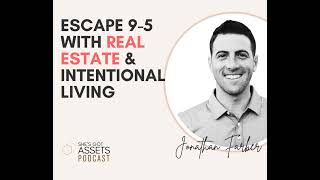
Jonathan Farber uses Notion to time-block every task, sleeps with no phone and a weighted blanket, and stopped intermittent fasting to gain weight for golf. He credits intense focus and delegation as superpowers, and says communication matters most for vision-setting and sales.
Chapters
The first thing that came to mind though was like, there are options different than that. And like Colombia, for example, it's the greatest place ever. Like I love it so much. There's so many amazing like things and reasons about it that, that I like it, but it's inexpensive. So the first thing I would say and think about is if your FI number, your financial independence number is maybe $10,000 a month or $8,000 a month in the US, you need that to cover your mortgage, your car. Or clothing, you probably don't need that much, but lifestyle creep is real and we all spend, some people spend more than they should. I'm a minimalist, so I don't spend a lot of money at all on anything. But anyway, like in Colombia, for example, or other parts of the world or country, like you could probably be like financially independent on maybe $2,000 a month. So your bar is much lower to actually achieve that. And that's like the first thing that came to mind of like, how do I achieve that?
Welcome to the She's Got Assets Real Estate Investment Podcast. I'm the host, Shona Leppis. Follow along as we unpack and demystify real estate investment strategies through expert interviews and personal experience. From how to find off-market deals to creative financing to long-term and midterm rentals, we aim to educate and inspire others to gain financial freedom and generational wealth through real estate. And as always, please subscribe so you never miss an episode. We really appreciate reviews. It helps others find us. And it just helps us get found. Welcome everyone. This is Shauna from She's Got Assets. I have a really special guest on today, Jonathan Farber. He is a real estate entrepreneur doing lots of interesting things. Jonathan, welcome. Maybe give yourself a quick intro and just thanks for coming on.
Shauna, thanks for having me. What's up everybody? My background, I'll give the shorter and sweet version, then we'll dig into stuff, I'm sure. But I'm 31. I live half the year in New York and then half the year in Medellín, Colombia. I am a real estate investor. I also own a bookkeeping company and make some content, have a podcast about business operations. But yeah, my quick background was I was working in corporate America. I got that job from cold calling the chairman of that company. So good tip for people out there. Especially when you're young and people will appreciate that you have some, we'll call it energy. You will get some conversations that you can't otherwise. But anyway, started with that job, worked my way up and I bought real estate on the side when I was living in North Carolina. And then it got to a point where I was getting close to like stage 1 FI, financial independence, and then COVID hit and then I really just turned on the gas and just went for it more during COVID and bought more properties and maxed out my debt-to-income and used some creative financing. And then when COVID was all, whatever, the first phase of COVID like wind down and people were coming back to office, I was able to just leave the job and be full-time real estate. And yeah, just grew it from there, made more content and tried out some different projects around just like groups and different types of digital products and real estate stuff, but still have my portfolio, 15 units. And then yeah, have the bookkeeping stuff and the lifestyle that I was always interested in was trying to maximize and have fun and just have enough money to do what I wanted, like not to make a ton that I didn't even know how to spend. But for me, when I was at this like group thing, a little while back and it was like, how do you want your life to be? Like, not to get like too airy fairy here, but it was like, what, not around like goals, but what's your like perfect like lifestyle? And for me, I was like, when was I the happiest? Which is why I'm trying this thing now that I've been doing for 2 years, which is I work for the 6 months that I'm in Medellín, like really head down building stuff, property acquisition, bookkeeping stuff. And then for the 6 months or 5 months and change that I'm in New York, I pretty much don't work at all. I just play like 20 to 35 golf tournaments and that's like my job over the summer. Really love golf and played in college and yeah, so for me it's like seasonality or seasons of stuff. But, yeah, love to work, love to play golf and, love to travel here in Columbia, not be cold. That's cool too. And that's me. Yeah.
I, I, I love that. I love how honest you're being and I think we, we go into this because we want all these things and we don't really define to find them and the fact that you're actually doing it is very impressive. So like, how did you do that? How did you like, and this is a little bit like big picture, we'll get in the weeds, but that just sounds like an amazing, uh, lifestyle to be honest.
The first thing that came to mind when you asked is it's so hard to break outta like the dogma of like normal, just follow the path that everyone does of high school, college, get a job, work 40 years, work your way up and Hopefully you have a little time before you die between retirement. So trying to avoid that. The first thing that came to mind though was like, there are options different than that. And like Colombia, for example, it's the greatest place ever. Like I love it so much. There's so many amazing like things and reasons about it that, that I like it, but it's inexpensive. So the first thing I would say and think about is if your FI number, your financial independence number is maybe $10,000 a month or $8,000 a month in the US. You need that to cover your mortgage, your car, your clothing. You probably don't need that much, but lifestyle creep is real and we all spend, some people spend more than they should. I'm a minimalist, so I don't spend a lot of money at all on anything. But anyway, like in Colombia, for example, or other parts of the world or country, like you could probably be like financially independent on maybe $2,000 a month. So your bar is much lower to actually achieve that. And that's like the first thing that came to mind of like, how do I achieve that? Let's say it all went away. Everything, my properties, my business, whatever, like to get back to living like a comfortable lifestyle here would be so much easier than in the US and like with online stuff now and just possibilities. So that's the first thing I would tell people as far as like how I did it. I did it like one thing at a time. So it's like the one thing I used to love that book by Gary Keller, like having a goal, a target, and just focusing on that and prioritizing that is like the way. So for me it was like I just wanted to add one or two rentals a year and then it starts to snowball. And for me, I always tried to keep my costs down with virtual assistants. I've always been like a systems operations junkie. And I'm always curious about like comp plans and incentives and motivations and just how do we do things creatively. And yeah, I think the way that I did it was I had an engine, which was a high-paying job. It wasn't that high-paying a job, but I was in sales so I could make money doing what I was doing. It was enterprise software sales. So I had an engine and I was able to use that to invest into something. If someone isn't even into real estate, I assume they're into real estate if they're here, but if they weren't, then they could have a side hustle or build a business while they maybe have some coverage from a job. So for me, I took the money from my job, put it into real estate. That gave me enough like confidence and a little bit of cash flow to maybe take a few more risks. And then from there, I just got some confidence and momentum with it and I kept my cost low. Like I didn't, spend more than I needed to in my personal life. I always had like pretty low expenses and then I would use virtual assistants for leverage on things and systems on things. If it was cold calling or deal acquisition or analysis or property management, that's how I was able to do stuff and not have my costs be so high. Yeah, that's, I guess, how I did it, but Also, I even still to this day, like I said, I keep a very light footprint. I don't want to have a lot of overhead. It just stresses me out and I don't need a lot of stuff. I like experiences, hanging out with people and just like working on projects. So I just try to build my life around that. But yeah, have an engine, use the engine to invest in stuff or start a side hustle and then yeah, find a place or a lifestyle that you can match that with, and that's just what I try to do.
I love that. So I have to ask, a couple years ago, would you ever thought you'd be where you are now? Did you have this like huge vision or was it like, cause that's, oh, I think about that a lot. Hey there, Savvy Investor. Quick question. Are you ready to jump into midterm rentals but not sure where to start? I've got you covered. And she's got assets. We help real estate investors set up and fully book their first midterm rental. With quality guests, you can double or even triple your cash flow. And here's the kicker: we dive deep into marketing strategies, including how to tap into the lucrative niche of getting insurance leads for displaced families or long-term stays that can really boost your bottom line without all the hassle and regulations of short-term rentals. Sound interesting? Head over to she's got assets.com/ntr and get all the details. And if you're new to real estate investing, we've got something just for you. Check out our REI Playbook course where we teach you how to snag your first investment property by finding off-market deals without cold calling or door knocking. We'll even walk you through creative deal structures like owner financing and how to leverage what you've already got. You can find all that goodness at she's got assets.com/rei. Oh, and one more thing, don't miss out on joining our free She's Got Assets community. We've got a ton of resources, plus we weekly livestreams where you can dive deep into strategies to help you succeed. You don't want to miss it. Trust me. Hop into the community at shesgotassets.com/network and let's get you crushing those real estate goals. All right. Back to the show.
Like, I'm actually not a big goal setter. It always makes me laugh when people are like, you can't hit a goal if you don't know what your goal is. I'm like, I— plenty of people do. I'm like, Steve Jobs didn't try to build a trillion-dollar company. Like, He just wanted to make cool stuff. I think that's like kind of the person who's saying that, they're probably trying to sell you something on like goal setting, just transparently here. But like for me, I like short-term sprint goals and like my goal change, the goals change and my plan changed. Like originally I was like, oh, I want to be Grant Cardone. Then I had friends that were like syndicators and they had tons of investors and they were complaining about it constantly. And I was like, I don't want that. I think having a direction and a vision is good. A lot of my goals are a lot more around activity metrics and 90-day sprints and just having one target for 90 days. And then if it's not good, we pivot. I think at the beginning, I, it's better to try multiple things. Like, uh, bookkeeping is a good example. Like when I was gonna start bookkeeping, I was like, I don't know who my client is, but I'm gonna try a bunch of diff— different people. It could be contractors, service providers, real estate investors, and I'll see what sticks and what's the easiest and what's the coolest client who pays the most. And we'd all be happy that way. But I wouldn't have known that without trying. And then, by the way, it's still very affordable, but some people just have more discretionary income. I just feel like I need to say that. But like I needed to try it. And if I would've just set the goal of I'm only going to do this and this type, it Yeah, I, I have always been like ambitious to do stuff and reach out to people, but for me, I don't really like to set goals for longer than a year. And then I just reassess constantly. Like the 90-day sprints, I really like. I think I got that from like The 12-Week Year, which is another really good book. Instead of 12 months, 12 weeks, and you can have like more speed to stuff. But yeah, it, it has changed a lot, but yeah, I like shorter goals.
I find that really refreshing actually. It's like we set these really crazy goals, like 100 doors. Like, why do you want 100 doors? Like what? And they're just these just numbers we hear. And I like the seasonality thing too, because it feels more organic versus like a quarter. I don't know, it just feels more like. Life goes in seasons. I do wanna get to the businessy stuff, but I just think like you, I have to ask, are, do you have a place in each location? That's like my mom, the mom part of me, like the logistical thing. Sorry. Like how do you navigate that? Oh, for sure.
So I thought about this a lot and I thought, what is like a simple version, a complex version? What is like stroking the ego? If I, do I I get to tell people I have places in all these different places. For me, and then there's a financial aspect of it. So for me, I decided I, I was going to rent. I was going to rent furnished places where I lived and operationally it just made life a lot easier that I wouldn't have to buy and sell furniture. I could travel extremely light and I wouldn't have to worry about like just the ops of like ownership. Like I own real estate, but I actually think I might rent for the rest of my life. Like I love being able to just call someone to fix something instead of me having to like deal with it. Who the hell wants to do that? And people are like, no, like owning is the American dream. Yeah, maybe, but who told you that? Like, why? I, so for me, and I can't give like a full tour, like this apartment here in Colombia, it's the nicest apartment I could ever want and live in. It's amazing. It's like a beautiful building, all the amenities furnished, the furniture is super high end like this. I pay 20, a little like just over $2,000 a month and it's everything I want. And then in New York, I rent something also furnished in Long Island for $2,500 a month. So yeah, do I, I could, put that into a down payment and I could do the math and all that, but it just like, there's a part of me that I value simplicity and like lifestyle, like quality of life and operations. I did try to buy something here last year, but it just didn't work out. Like we were negotiating for a few months and it didn't go, but so I rent in everywhere I go and usually furnished rentals and maybe that'll change. But I don't know, also like in most places that I find right now, the rent ratios to buy are, are not as good. And I don't, I'm happy like just renting nice places. So that's just me for now.
Yeah, no, I appreciate that. I feel like I'm always fixing something. Hey, fix.
Yeah.
I'm in a house. I'm like, I wish I could call my, what was that?
No, it's, I find it's like scar tissue because I own places. I'm like, you know what goes into owning it? Most people, I feel like when they buy even not a rental, but their own home to live in, like they don't factor in like a water heater going or needing a new roof or replacing windows. There are a lot of benefits and like net worth, you know, benefit to owning, but there's other stuff to think about also. So. Yeah, it's just little life calculations.
Yeah, no, I love that. Okay, so there's so many places to go from here. I, so what would you, I guess just to let, I know I wanna keep talking about this, but if you were to tell someone like that, just, it sounds like you've just, you've engineered this amazing lifestyle. I'm sure it wasn't easy, right? I'm sure there were some bumps in there. What would you tell someone that's like, that's me, that's where I wanna go, right? I don't know. It just sounds like you really, the fact that you have these seasons and It's really cool.
Wow. I'm thinking maybe what would I tell myself or someone else? My mind goes two places with that. Like right now it's easier than ever with the internet, I think, to have an online business and to have a lifestyle business. That could be like you start an agency that helps companies learn how to implement AI. Spoiler alert, that would be an amazing business right now. If you found 5 clients that pay you $2,000 a month or $1,000 a month, like you could have a lifestyle you like and you have 5 clients, you have to do a good job for them, but you don't have a boss that can take it all away from you at any point. So that's the first thing I would say is that is doable. And also if you're, I'm, I wasn't like entrepreneurial as a kid. I wanted like something stable. So that's why I always go back to then you can get a job for the coverage and then you can build the side hustle and you can do something like this. Um, just cause I feel like people always wonder like insurance is not the reason to stay in a job you hate. Okay. Like if you can pay like $300 and something a month for insurance, I have amazing insurance. I have global insurance. Okay. Now, yes, I'm single and. 31, maybe it'll go up in time, but like, you can figure out insurance. If I hear one more person say to me, no, what do you do for insurance? I can't, like, dude, like your whole life is not happy because you don't want to take a few hours to figure out insurance. Listen to yourself here. Let's snap you out of this. But yeah, I think, so remember what I said before is I'm not a big like goal setter, but I do think having like a plan and some concept of what you want your life to be. That I've found to be effective instead of like, I want 100 doors or $50 million. Who gives a damn? But if it's, I want to be able to have a certain quality of life and work X number of hours, or if your goal is, I like these types of goals, a very like tactical goal that you back into, but it's okay. I want to drive this car, live in this type of apartment, have this golf membership. That's going to cost me like $8,000 a month. Okay, then let's back into a way to get to that. Instead of just like a goal for no reason. But, uh, so I would say, yeah, like having an idea of it, but if you're not entrepreneurial, I would still say get a job and then you can build a side hustle on the side. Or if you're listening to this and you're just ready to kickstart something, it could be like you could do video editing for people on the side. And again, you don't need to know how to do video editing. You can learn with AI tools, or you could learn how to do ops on AI stuff, or If you learn sales, back to what we were talking about before this, Shauna, like you could become a high-ticket closer. You could find influencers on social media and say, hey, I'll do your closing for you. If you're not good at sales or you don't like it, just gimme 10% or gimme 15%. People will say yes to you. People don't like sales. So if you can learn a skill, that's a high-income skill, sales, and you could do it for other people and then you could have your own product. That's what I would say is there's skills you can develop and you can start just asking people for money or tell them you'll do it for free and then you'll be able to work your way up to getting paid. But then if you're not that vibe at all, you can get a job and then you can have a little more runway to do it. So yeah, I guess that's how I think about it. Check out Alex Hormozi. That's what we were talking about before. He's got great content on this. Of course, like we're talking about our stuff ourselves, but he's got a lot of good tactical content as well on just how to start a business or do sales or marketing. But you can do it. Anyone listening to this is capable.
That's very inspiring cuz I think I get in the weeds a bit, right? Like I'm an entrepreneur, but yeah, that's, I love that. Have you ever done a vision extraction? Have you heard of that? I just have to ask.
I've done vision boards, but I don't know if I've done a vision extraction. What's that?
You, it's, I, I went to a mastermind and it's basically where someone sits and I don't know a lot, I'm gonna probably butcher this. They sit with you and they kind, I know someone and they just extract your vision and they guide you through it. And then you come out with this document that's maybe things you didn't even realize you were looking for, but it's just, yeah, it's, I think it's cool. It's on my list.
That is cool. 'Cause I think a lot of the stuff, it is easier for someone to pull outta you.
Mm-hmm.
And you just think about yourself. That's really cool.
Yeah. And I think we get caught up in the tactics, right? But to your point, AI is, is just mind-blowing. And the internet, right? Yeah. So there's, we have so much flexibility. I think there's really no excuse, right?
Yeah. No, I, there isn't. And some people it's easier for, they jump into it harder, but no, it's, There's opportunity like never before right now.
Yeah, no, this is gonna sound, this is gonna date me, but I'm gonna say it. Back in 2005, I was living in California and I bought a house in Oregon and I remember telling my client like, I'm gonna, we're gonna work remote. And I bought this little webcam.
No way.
I had dial-up and I'm like, you got, I'm doing, and it was like very much like not normal, but we did it. And I would fly down there every so often. It was an inn, so they put me up, but yeah, it was just like, I had my dedicated dial-up, I had my fax machine.
Trendsetter. I love it.
I don't think we ever did a video call, but it was more like, hey, if you ever need to see me, like, I'm right here.
We have the capability. Yeah.
And it was like, it was dial-up, man. It was way back. But yeah. Okay. I love this conversation. I want to bring it back to business. So I think when we go into real estate, like, If you don't have to be an entrepreneur, but I think it is a business and you need to know how to run that. And I think that we don't often talk about that. So I know you have a point of view on systems, but I think being very intentional about that and not just like, I'm gonna buy an asset and it's gonna produce passive income and I'll be set. That's how we, I think how we hear about it a little bit.
Yeah. Like the vehicle is important, but it is tricky. If someone is a beginner or trying to figure out what vehicle to take, there's so many options out there. Is it Section 8? Is it midterm rentals? Is it short-term rentals? Is it flipping? Is it wholesaling? Is it Sub2? There's so many different options. It's hard to say which route to go. My default kind of thought on this is to try some or research some and see if there's any that gives people more energy. Like it can't be a reason to not do stuff. Like I'm sure you see this, Shauna, too, of just like, there's so many options, so it's easy to get like paralysis analysis, but that can't be the thing either. That's why I really like picking stuff and trying it and being only dedicated to that and then giving it up or going further with it. But yeah, I mean. With any of them though, I'll say the beginning is the hardest part. And also the first deal or the first thing, like it's not to get a home run, it's to get learning experience. So if you make a little bit of money on your first thing, your first deal, awesome. If you lose money on it, that's what's expected. If you break even, you're, you're doing great, but you're learning a skillset in doing something to know if it's going to be good or bad. And like when I look at my first real estate deal, It was a house hack. I bought it with low money down. I rented it, my other rooms to friends, and I made a little bit of money and it was like great. You know, I was excited about it, but it wasn't like this monster home run, but it gave me the skills and the experience and the confidence to try the next one and the next one and then go from there. So trying and starting is so important and there's a very different like thing of doing than researching. Researching, you can learn everything you need to know about this stuff to at least take some sort of action, like in 3 to 6 months. You don't need years. If you've been on the sideline waiting to start the side hustle or do the thing for longer than that, probably time to act and then get over it or get a coach or a mentor or a group that can help push you a little bit to do it and go from there. And I think that's where getting help is really important. I get help in every phase. Like I have a bookkeeping coach for my bookkeeping business. I have, I just paid $4,000 yesterday to someone who's going to help me with my Facebook group. They're like a Facebook group growth and monetization specialist. Because I want to become an expert at that. So the way I think about it is if my goal is $30,000 a month in bookkeeping, and right now we're doing $15,000. Like I have a $15,000 a month, like deficit in learning and like skills and actions that I don't, I need to find and buying it for maybe $4,000 to get it is worth doing for me to get that. And maybe this guy will be great. I think he is, but if he's not, like, I still need to do the things and the research and the learning and the, like, people to bridge that gap. Someone knows how to do it. I need to figure out who they are and maybe they can pull me up and either for me giving them money or like mentorship. So yeah, but a rambly response there, but it's like really about like research, starting, seeing what's firing you up and then seeing how fast you can bridge the gap. If you don't have a lot of money, then you know, you're spending your time and energy. If you have a little more money, you can probably fast track it a little bit with paying to level up a little. So it's like taking self-inventory to know which of those you're in, but which direction to take action on.
I'm really glad you said that because I feel like we tend, there's a lot of gurus or experts and everyone's like, you don't need that, just buy a property. But I have had multiple mentorships and I have a toolbox now that I would not have had without doing that. And I'm always, I'm, you're never going to stop learning. And I think having that coach or that Like I coach Tiba, it's so critical because you, you can read something in a book and you can get it, but until you have hands-on and someone being like, go do this and giving you almost that confidence, I think that's really critical. And it's sometimes you're in a different place, but it is bridging that gap. Like you said, I think we, and we tend to say, oh, you don't need it. You can buy something with nothing down, which I've done, but guess how much I spent in education to get to that like understanding of how to propose that and how to do it.
Totally agree.
Yeah. Okay. Yeah. And I, I have this silly analogy and my kids are, they're like learning how to cook and there's like, you get those boxes, right? It's like the 2 eggs, cup of water. It's like that kind of thing when you have a coach or a recipe to follow, it's versus just like making it from scratch, right? Like I wouldn't, I'd be like in there, it would probably turn out wrong. It wouldn't rock. That's my latest silly analogy. But I do wanna dive into like business systems and I, I think a big pain point as entrepreneurs is we're like big shiny objects and the bookkeeping, the backend part of it is something I personally dread it. I always wait till the end of the year.
We all do.
So I'd love to hear more of some, how you work with people, any recommendations or things we can do because it, it's so important. And how do we know if we're profitable if we're not running our numbers or having metrics?
So for me, the first person I hired was like an executive assistant, a personal online assistant. Okay. But also there's a lot of AI tools for that now. But I still think having even a person to maybe manage the AI tool is sometimes is maybe where we're at right now, the recording of February 2025. I think, huh, it's cool to start a business. It's cool to have assets and a side hustle, but also the, the reason we're doing this typically is for some quality of life or improvement in quality of life. And when it's usually just you or just me, like doing everything, it hurts everyone. It hurts the clients, it hurts me, like it hurts maybe the people around me who don't get to see me as much. Like it's good for no one because it's just all on one person. It's like the time and place of bringing people on. And even with where I'm at, again, like I'm happy to talk to anyone who's curious or interested about bookkeeping and we could talk about that too. But even like when I think about when I was starting this business, the bookkeeping business, I really was doing everything myself at the beginning. So I think for a lot of people it's okay to do everything yourself at the beginning. For a bunch of reasons. The main one is so that you know how to manage other people that are doing different parts of things when you do replace yourself. But then also, like, you learn the subtleties and the nuances of doing things so that you can maybe make improvements that you wouldn't be able to do otherwise if you never did them. And also, by doing more of the stuff, you realize, or might find, and I found this, what I'm good at. What I like doing, and what makes money. That's the, the perfect trifecta combination. And then you want to figure out what you're bad at, what you don't like doing, and what is not income generating. And those, for me, are always the first 3 things that I want to try to delegate, but only after I've done somewhat all of it. That's just me. Like some people, they hire out from day one, but so Yeah, that, that's how I thought about it and do it. We could dig into like people operations of hiring and managing and like what I think some of the easy tasks are to start with. But like for me, I was doing everything and then I just looked at those 3 buckets of what doesn't generate income? What am I bad at? What do I not like doing? One of those things for the purpose of this conversation was bookkeeping. I'm like, I'm good at relationships. I'm good at content. I'm good at sales. I'm good at marketing. I'm good at vision. I'm not good at like spreadsheet, like administration work. I just, it doesn't make me money. I don't like it and I'm not good at it. So like to have the ego to think someone else can't do it better and cheaper than me, that's important. But then also I think a good way to think about it for people to justify it is once you, I do think this is important to get an idea of what your dollar per hour like value is.
Mm-hmm.
I think that's important. I know some people are like, no, I don't wanna think about like my time hourly. You're not, it's just like, you're thinking about like what your like outcomes are, like what your like efficiency is. If you work 100 hours a week and you make $30,000 a year, you want to evaluate that versus if you work 4 hours a week and you make $200,000 a year, like you're in a very different place with your time and like your time per hour. So once you, once I knew that. Then I would just think about like, how can I delegate things for a lower cost per dollar? As long as the quality was around what I could do, or maybe it was much better than I could do. And that's again, how I like backed into, okay, I could find an executive assistant to handle my email or make my appointments or cold call or post stuff on Facebook for me, which took up a lot of my time when for me, any hour that I wasn't doing a sales call or like doing a podcast or an affiliate conversation with someone. I was like losing $500. So it wasn't even my dollar per hour. It was just like, it's taking me away from things that actually make money and grow the business. Yeah, I, I like thinking about it that way of dollar per hour, starting with stuff myself and then removing myself from certain parts of it. And yeah, back to the bookkeeping thing, like I can't stand doing my bookkeeping. It's super important. It's one of those things that's high importance. But also not income generating and I'm not good at it and I don't like it. But like, if you get tripped up on your books, like you could go to jail, like you could be audited, you could be hit with like a $10,000 penalty. So it's not something to take lightly, but it's not urgent, but it is important. So someone needs to do it. And that's another good way to think about it of just like that quadrant of tasks. That's an important thing. but it's not gonna ever be like something you can think you need to do more than something else. Anyway, that's just how I think about it.
I, I think, and when you said that, the first thing, it's like the opportunity cost. It's like, are you better off doing your marketing or content versus updating your expenses? Like, mm-hmm. Yeah. One, I have a coach that says don't outsource your, I don't like your zone of genius, right? Like what make, what brings you light? And I, yeah. Is if it's content or whatever, that's the return on that. And it's like an evergreen thing. There's no evergreen in updating a spreadsheet.
No.
Right?
The one I, I actually literally, I just pulled this up, a note that I wrote to myself. Like I have a way that I just keep notes every week and this one, like certain things I'll just pin. But like, I literally just look at this random thought. I need less tasks. My time should only be spent on sales calls, podcasting, prospecting, and writing content. Those all move the business forward. Everything else, I'm like evaluating that. I'm looking at all my Notion tasks. I'm looking at all my calendar. I need to give away anything that's not that because it's like, those aren't there. The last thing I'll probably add is customer success. But again, like I do have people on the team that can help me with that, but I should oversee that and check in on that. But it's like anything that isn't those things, is a distraction in some way, especially during business hours, like 9 to 5 when people are working. I could, we can be generating income and growing the business, you know? So of course, yeah, if you only do those things, other things will suffer, but it's just priorities. It needs to be really clear.
Okay. I, I do wanna talk more business, but I wanna talk content for a minute and marketing because my journey was like, I was If that's okay, because I think it's a good— I was very private. I thought people are going to find out we're landlords and they're going to judge us and we're evil. And then I somehow a couple of years ago was like, screw this. I'm one of the good ones. Like, I fix the toilets and I do the extra mile. But I think people are so afraid to put— to talk about what they're doing. But I think if you are building a business, you are the face of it and you have to talk about it. And I'm like a major introvert, right? So putting myself out there is like very like, I have to go. But I, I think it's so important. I don't think we talk about that enough either. So any advice? What if it's something you don't like doing? Do you think you should do it anyway or outsource that? That's part of business, right? But I think it's so important because the more human we are, the more relatable, the more we're going to attract deals or whatever.
Two things came to mind. The first was I have a friend who, he was like, I want to get into content. Can we walk through what you've done with content? And I was like, yeah, I'm happy to, but why do you want to make content? What's the, uh, the reason for doing it? And I was like, usually people make content, it's a marketing tool. Like people aren't making content usually just for fun unless it's a true passion project and they're already like uber wealthy. Like it's a marketing platform. It's to raise awareness. It's to sell something.
It's.
To get awareness, attention towards something that you're trying to do. And it could be long-term or short-term, but if someone's making content, they, there's something that they're trying to get at the bottom of that funnel. But he literally didn't even have an answer. He's like, no, I don't, I'm not looking to do coaching. I'm not looking to get raised money. Like I just thought it's something I should be doing. I'm like, I don't think it is. And then he was like, you're right. I'm not going to make content. Like, It doesn't serve any purpose or get me closer to any of my goals right now. On the other side of it, if someone like does like it and there are monetization paths, I think you can start without a clear, like at least some idea of why you're doing it. And it can, you can find your path a little bit more, but like content is hard. And if you don't like doing it, then it's going to be even that much more uphill and Like without a reason for doing it, it's gonna fail. Like you're gonna not get to your 100 days of content, whatever. Second thing is depending on your style and personality and your skills, like you could just focus on a platform that works best for you. Like for me, I definitely had imposter syndrome around content. So for me, I started on TikTok because I was like, no one follows me on TikTok yet. My friends will never see this. And if it grows, it's because of the content instead of me hoping my friend from high school is going to like the thing. And what happened was it grew a lot. And it gave me confidence to then go back and post on Instagram and Facebook because I was like, strangers actually value what I'm saying. So it gave me like that confidence. What's funny though is I got burned out with it. Video content is not my natural favorite thing to do. And I don't like the time that it takes to sit and set up a camera and get the lighting and edit and script it and all that. So I was like, okay, I, there's other types. And for me, like I found I could write and I could post stuff on Facebook that was easier, took me less time. I didn't hate doing it. I actually like it now. And it still got new business and got the word out and spread the message. So I think what I would say is like, have some general idea of why you are making content, just because it is really hard. Like, not just something, the best content creators, like, it is serious and there's tons of money and energy put into it. And then, like, you, you, how you would want to monetize it, because there are also costs on content that you would like to recoup. but then figuring out the way that works best for you, like writing on Twitter and Facebook, that is the least expensive and the lowest, like LinkedIn, Twitter, and Facebook. It just requires the least like oversight and work. There's no editing and it still performs. That was where I landed with it. Like I needed to know the reason I was doing it, which is still to grow my businesses, but on a platform that I don't want to throw myself off a building for having to create create. So that's why I do what I do. But if you love video and you're extroverted and you like can just riff in front of a camera for 30 minutes, crush it. You're gonna do great. But if you don't, there's other options for you.
Okay. All right. That's really helpful. Yeah. I think what, it's good to know why you're doing something. Don't do it just because like you're supposed to, right? Okay. Yeah. That's very helpful. Do you think it— I have to ask this— has that helped you in like your goals with real estate or deals or anything like that? Any kind of like side benefits? I'm just curious because I, my perspec— my point of view, I guess, is why I'm asking is I think if we go to ask for PML or whatever, or a deal, and if we're not talking about what we're doing on some level and not sharing it, we're this unknown. And, and there's a lot of, it's a relationship business. And if we don't talk about it, even if it's just a story, then it's You're just, who are you? So I, I think that's why I was a little biased.
I do think there is a real part of it now, and only more in the future that like, if you have no online presence, it's gonna be harder for people to work with you because a lot of reasons, but it's like, if I think people think about it now, if you don't, it's almost like, what are you hiding? Or it's, you might not know as. Here's the other thing too that's funny. It's like the, the person who's a content creator around their business might know 50% as the person who's just an operator, but like they're the best kept secret then. So no one, 50%, but you're like getting the message and word out. You're going to beat the person that never, you know, has awareness around what you're doing. Word of mouth is great, but it can't market the same way and use leverage that content can. And yeah, I think about it too. Like most of my agencies or consultants or coaches that I work with, like they have an audience of some type, maybe they were referred to me and then I can check them out to see if I like their style. And then, you know, it's like a gateway into the relationship. It's definitely important depending on the business, but I think more and more people are just going to want that thing. Like I have a friend, he's a financial advisor. He's like, yeah, I'm trying to do marketing and stuff. They're kind of like archaic. Like he can't do marketing in certain ways because of, I guess, financial rules. And I don't know, it's like he's cold calling, which like, who the hell wants to do that? Or who wants to be sold through cold calling? Like, I can't remember the last, I don't, one, I actually, I don't get any notifications on my phone. So someone can't even reach me. If their way to get to me was cold calling, I'm literally not physically possible to reach. Like, it just doesn't make any sense. Like, my phone doesn't ring, so I don't know. But yeah, you got to go where the people are that are your audience and fish in that pond. And if you do that, then— and you're good at it too— you'll really do well. But without it, it's going to be harder and harder.
Yeah, for sure. Yeah, it is. It's fishing. I have a one coach, he had a lot of hunting analogies. For real estate, he calls them bird letters, sending out letters. But yeah, I find it funny because I'm very much not a hunter, but like in real estate or fishing. Okay. So I'm gonna circle back to systems and, and maybe more bookkeeping stuff. Like how do you know when to outsource that? Because I think it's some, I don't know who doesn't struggle with that, frankly, unless you just love it. But I mean, you talk to a lot of people, what are the biggest pitfalls? I'm curious, pain points, what do you hear all the time?
Because I think it's interesting, but I think most people just hit, they hit like a breaking point where it's maybe they hit a wall or like a sadness where they're like, this is harder than I thought, or I'm spending way more time than I hoped or thought or ever wanted to. And it's like, I need help. That's one bucket of people, which yeah, there's also a threshold that I think for certain types of things you want to outsource. You're just, you need to get to a certain point to be able to do it. Like for someone that has one property, like I'm a big proponent of virtual assistants. We, I used to run a virtual assistant staffing company. So it's still, I've probably hired over 300 people, but for most people, it's, if you have one or two properties, unless they have a really big revenue number, like it's probably going to be hard to justify. It's also a lot of times going to be hard to justify a property manager. Until you get over a certain threshold of revenue because it's like you need to take something home for yourself typically. So what I usually see is like either a breaking point or people get over a certain threshold where they either have enough revenue in their business or they have enough like properties that it makes sense to get help in certain like parts of things and refine things. Rarely, sometimes people are like, I just want to start this with a base. And do it the right way and have a VA on property management and an EA for helping me and then a bookkeeper. Those people are usually people that come in who have a lot of money already and they understand the value of their time and then they're just looking to do what they're good at from the beginning. They're either like wealthy from family or a job or whatever. That's them. But yeah, I think for most people, it's then just a matter of getting help in the most critical parts. And it's easier to do though when you have the revenue to justify it. I find when it's a really hard place for people to delegate anything when their cost is not like being taken out of cash flow or revenue that comes in. It's just another like net cost on themselves. Like that used to be a really hard sell when I would talk to people that they had 4 or 5 properties. They weren't making a lot of money, but they wanted a VA to get themselves out of it. And it's, they couldn't afford a VA, but also they weren't happy with their business. So it's, it's tricky. You want to either just take the leap of faith and know that you need to invest in stuff to get yourself out of the bad part or improve the business enough to have cash flow to then be able to put money back into it. Like for me, even the, let's say the investment I made yesterday, the $4,000 into growing the Facebook group. I wasn't as comfortable doing that a month and a half ago or 2 months ago when I wasn't even sure if this was going to work or if I wasn't sure if I was going to be getting customers consistently. But now a lot of customers came in. I have money from that and I'm more than happy to reinvest it back into improvements, coaching, consulting, things like that. But again, there have been times where I had nothing and I just, I knew I needed some help. To get going and I had to go negative and I wasn't paying for the thing with cash flow. So it's definitely situational. I think having self-awareness and if you're listening to me say that, to think which bucket you're in or which type of person you're in or what you need at the time. And then starting with something small, I prefer to do that. So it's, if it's hiring a VA or a bookkeeper, what I always recommend to people is start with a small thing or some simple tasks and then you can grow it from there instead of having to jump in with two feet and unwind stuff, and then it becomes just harder to start and to undo. Like self-awareness, figure out if you have the money to do it, or if you think this thing will get you to where you want to go. And then starting with baby steps or small steps and then like building and growing from there. In almost all of these cases, if you're going to be doing something for somewhat long term, like you're gonna need help. There's no one that's doing this for 5 or 10 years in any business other than like true outliers that don't have a team or systems that help them run what they do. It's just the, the table stakes of running a business and getting leverage and removing yourself from the middle of it.
No, that makes a lot of sense. I think sometimes it is like an investment in your future self and knowing when that is, but if you don't make that investment, you won't get there. Like I know with coaching I've been like, this feels like a big thing, but I learned something that was like such a game changer and I, so I think that's a balance, right? But you have to, it's an investment and if you don't make that, you're not really gonna get to the place you need to get to.
Yeah, it's hard to give blanket advice on it, but it's back to what we were talking about before this was sales. Like I was talking to someone yesterday, they were looking at, once in a while we help people hire like marketing VAs. To do like our strategy on Facebook. And they were like, yeah, like I want to do this. I've been trying to do it for a year and a half, but I'm really, we're still just focused on sales and marketing. We want to get that going before we can invest into something like this. And I'm like, you've been at it for a year and a half doing it the way that like you think should be working and like, it's not going good. So, so do you think it might be time to Do something different. What you're doing is getting you where you're going right now, which is not where you want to be. Like, for that type of person, I'm like, no, you need to invest. Like, you, a year and a half and you don't have a customer? Like, something is terribly wrong. Like, you are running into a wall every day for 8 hours. Like, that just sounds miserable. So for that type of person, I'm like, you need to change. If someone's earlier on, or they haven't maybe done as much, maybe they're looking for something different. But yeah, that just came to mind because I was like, don't you think you need to change something? You haven't gotten a customer. You just, so yeah, different situations, but it's not easy to just say one or the other, but if you're in that situation, you need help. If you haven't even tested it yet, you might not know what you need.
So you're making me think, like, when I look back, when I first got into real estate, right? Like, I house hacked like everyone. I had a random roommate, Craigslist. Like, I didn't know what the hell I was doing, and I did, but I knew on some level I was investing, and then I was too scared to pull equity out of my house. So I convinced a family member about a duplex. But if I would've invested in education way back, I'd be in such a different place. So do you ever look back and think, I wish you would've— I'm curious, 'cause I know I would be in a different place if I knew I just didn't even know being an investor was a thing. So I wonder if you look back and think, or you're clearly very successful, so maybe you don't.
I think the thing that I did was like, I always got around people that were doing cool stuff. So I was always able to like see over the hill of what this hard work could lead to or what like the possibilities were, or maybe some shortcuts I could take. Whereas I feel like sometimes if you're not hanging out with the right people, doing the right stuff, or like just improving a lot, then you're, you could get stuck down in what you're doing. So like environment is huge. That is a big part of this that we didn't talk about, but I think for me, that's also why I wanted to be in Columbia and New York around cool people and weather and environment that I like. It just. Like it, it helps me and I would always try to seek out people in groups to try to amplify that. Um, so that like always gave me a little bit of like, I would say confidence in what I was doing that like, okay, I have these people around me. I see they're being successful. I can try to do that. Um, but then also there's just like an element of trial and error and trial and failure. And that's like a big part of it too, but it is easier when you have like support. From groups or mentors or coaches that can, like, you can fall back onto. And you can get it a lot of different ways, but that was something that, like, when I look back, it was really a lot about people. I was not operating in a silo. Like, I always had people that I could call or ask or listen to about how to handle certain situations. 'Cause I didn't come from like a real estate family. So made things easier for me. But I, you know, there's always struggles. There's no, it's like, that like entrepreneur path of whatever, like it's not just straight up into the right. It's like, there's most days you're like, I'm a failure. Like, what am I doing here? But then, you know, one, you get good ones too, and that brings you back.
Yeah. Have you read the Gap and the Gain book?
Have you ever read that? No, what's that?
It's called the Gap and the Gain. In a nutshell, as entrepreneurs, that bar is always moving and we tend, we tend to focus on our gap versus the gains we've made. And it's just like reflecting on that. So it's a good one cuz I think even no matter how successful you are, you're always gonna be around people doing bigger and better stuff and you're always gonna feel like, I'm not there.
Yeah, it's tough. Like I deleted like all social media from my phone this year and like I just realized also I was getting. On one hand, you wanna be around the people doing cool stuff and are like there, but also social media is terrible in the sense of like, you're just seeing like the produced highlights of someone's life and it's super easy to just feel like you're terrible and you're like way behind and comparing yourself to other people, which like led me personally to just a lot of like negative thoughts.
Mm-hmm.
And I just. Now I, I only want to use social media. I don't want it to use me or control the way that I think and just feel. Not always possible, but yeah, I, it's easy to only focus on, oh my God, this person's the same age as me and they have double what I have, but like maybe they don't or maybe they do and they had a very different like path. It's just, it's tough because in some cases there's, you can be inspired by it, but then sometimes it's easy to just get really down on it. Yeah, about having a, like a balance and I like the real life people that I know that are like doing cool stuff or that are like good people and I could still go to and get the real story instead of like the highlights, the BS.
100%. So I have to ask, are you like batching stuff or you're just very in touch? I love that cuz it is a real rabbit hole and we, I call it PR, it's, we don't put out the crappy.
Look what I'm doing. Or my favorite are like the person starts with something like, this is terrible. And then at the end it's like they have this amazing silver lining. You're like, oh, it led to 20 more deals. I'm like, okay, relatable. Not like, it's just, it's cringe. But for me, yeah, I batch. So, okay. My process is like pretty simple. Again, I want that it to be the highest leverage and not have my mind just be like toxic from this crap. But usually what I'll do is I'll scroll for an hour and then I will script for an hour. So 2 hours a week, I'll get all the content done. And like our content, my goal though, I need to get 6 months worth of content done in the 6 months that I'm working. Same with podcasts. Like I record 48 podcasts in 6 months and I batch 6 months of content when I'm in Colombia. So I'm almost done with the full year of content. I got really ahead of it this year, but yeah, I just sit down. If I could screen share, it could be cool too. But anyway, like my exact process is I scroll social media, I hit send, I send all the content to a Notion database, which is a swipe file of all the content I want to model, and then when it's time to script, I just sit down, I open a Google Doc. I have 3 types of content I make: short form, long form, and then like hand raisers to either get people lead magnets or to like try to get customers. And I just try to create in that hour like 15 pieces of written content. So that gets me ahead 5 a week, but I'm doing that every week. And then the only thing I jump back in on is like interacting with comments. But I use this thing on my computer. It's called News Feed Eradicator, where if I pull up my Facebook or Instagram right now, like it's just blocked. Like I can't bypass it unless I do this thing and open up another tab, which is annoying. But like my Facebook group, the groups are not blocked, so I can go in and just comment back on groups. And I like Facebook groups and that's pretty much it. And then I don't want to be, don't get me wrong, I'm not like a Superhuman once in a while if I'm bored and I just need like that dopamine hit, I'll go, I'll scroll Twitter. But again, I am weird in the sense, like I try every time I scroll any social media to get at least a few pieces of content added to my swipe file. So it's like I can feel a little better that I'm not just like watching like Colombian girls, like dancing. It's great too, but I also have a girlfriend. I don't need that. And that doesn't get me towards my goals. So yeah, I just, I wanna be very like practical with using it and not, you know, consumed by it for a bunch of reasons, but it's just a waste of time. And also I feel like it messes up your head like bad. So I don't want that.
Yeah, I, that's very intentional. I love, so I used to be a designer and what I would have swipe files of design I liked, but I haven't done that 'cause it was always like I needed some kind of input. I, that's a really intentional way to go about it. What do you use for— what was that?
I just said highly recommend.
Yeah. No, I've also, my husband like puts his phone on black and white, which I'm like, I should probably do that.
We need to help ourselves, but yeah.
Yeah. Guardrails. 'Cause it's kind of like eating junk food. I feel like the first couple bites and then you just go down and then you just feel like you're comparing yourself and everyone else is killing it.
Totally.
Yeah. 100%. Well, it's a dangerous thing. Um, but it's also powerful. So I have to ask, what do you use for scheduling? Do you have some magical software stack that you're using or is it—
I genuinely feel like in the, whatever, what is this, 2025, 10 years in business. That's crazy. I feel like this year, this new tool that we've implemented is one of the biggest game changers in the 10 years of doing business as far as like scheduling and team productivity. So I, we use Notion as a company. Which is a project management, task management tool. For those that don't know, it's like Monday or Asana or ClickUp. But what they came out with was a Notion calendar. This is like the, the best part. So what used to be tricky was like, okay, where do tasks come from? They come from a lot of times emails, they come from like texts and Slack messages, and they come from doing things, the more you do, then you have things to do, like to follow those things up.
Right.
So doing things, that was easy. That would end up in Notion and then I would put it on my calendar and whatever, but it wasn't perfect. I would have these big time blocks on my Google Calendar and then I would just go through Notion tasks on that. And then with like email, it was a pain in the ass because it's like you got to move something from email to a Notion task and you go back to email. Like, I don't want to be in email. I only check email a few times. Like myself a week. I don't want to be like sucked into it. Notion calendar, what's amazing with this is it takes all of your to-dos from within Notion and it merges with your Google Calendar. And then your task that you had in Notion, let's say what, what I used to hate, and we all do this, is you have 10 tasks that you want to do in a day. Where do we start? The easiest ones.
Okay.
I'm not a robot. Like we start with the easiest crap. We get some like wind feeling dopamine and then 4 or 5 o'clock rolls around the hard stuff we didn't do and rolls to the next day and it's BS. That's no good.
Mm-hmm.
So what I like about the Notion calendar is it's, since it's, it, it sets up time blocks on your physical calendar and it's merged. So what I do every morning is I time block the most important things as the first things I do. And this is a little micromanagery, but I found it to be useful. I go onto my team's calendars and I do the same thing. I move what I view and know as the highest priority things for the company to do at 9, 9:30, 10, the most important things because we all do it. But also they would do it sometimes unintentionally because they don't know everything that I know. I have all the context for the business. I speak to every business unit, like. I have the ideas, so they wouldn't sometimes know what is the highest priority thing. So by me moving it up to the first thing they do every day, I know it's getting knocked out. They can intentionally just do the stuff they would do so we can, and also I can see it now on everyone's calendars. So that has been like unbelievably powerful cuz I love time blocking, but now all the Notion tasks, instead of it just being 10 tasks to try to figure out time in my day, Those tasks are now all time blocks in my calendar that I can either do, move, comment, bring other people into, and get it done. And it's just been, we've gotten so much more done the last few weeks just using this and now everyone being on it than I could remember in multi-month or like year-long periods. It's been like incredibly powerful. So highly recommend it if you're not a Notion. I don't know what to tell you. Maybe try it or maybe Asana or Monday or Trello or ClickUp has something like this. I haven't found it, but this has been like a game changer as far as productivity and time blocking. Super tactical. Hope that helps.
No, I, I think when you put something in your calendar, there's like a mental commitment to it. If there's something I need to do, I'll put like call X person, but there's that book, Eat the Frog, right? You do the hardest thing and if you don't eat that frog, that's after that, everything's like cake, right? But it's the frog that you put off and then it's It's noon, like delivery. I love that. No, I love tech and I love, I love productivity stuff. I love that. Yeah, I know. I've been hearing a lot about Notion. I've been in Basecamp for years, but it's a to-do list and it's not scheduled and it just keeps growing and it's—
oh yeah.
And I'm like backed up on all these things and I tend to wanna get that quick fix, right? It's do the hard, which for me is like the sales calls. Like I just don't—
we all do it.
Yeah. Humans, right? It's why we eat junk food.
Yeah.
And I have to ask, cuz like you're clearly very intentional. The whole, like Miracle Morning, do you have like routines in your day? I know this is like all over, but I'm just curious cuz is that something you're big on or you just get your stuff done and—
gosh, I don't wanna offend anyone here, but I'm like in the same camp as a few other people with this, like I just wake up and I just go to work. I don't know, like I put that in the bucket of the, the hardcore manifestors. Like you're a girl, but I'm just talking to the figurative man here. Like, dude, like you just gotta do the stuff. Like the time you ice bath and meditate and go for a walk and work out. Like, dude, I need a nap. That's doing like all the work and energy that like I have for the day. So no, I just, I wake up, I try to do the most important things first, knock them out, and then prioritize down from there. And like, I've experimented. The thing that I've been obsessed with lately is like sleep improvement and like health. So I try to be consistent, but the thing that I also found is like, yeah, it's great to get up at 5 or 6 and have that time where you're uninterrupted. It just. It was hard for me to stay on that rhythm and still get 8 hours of sleep. So for me, like I, that's a non-negotiable for me that I need to get 8 hours of sleep. So if it means I wake up at 7:30 because I went to bed at 11:30, like that is what it is. I'm not gonna push on that, but I just wake up. I don't drink coffee. I just drink some water, take my vitamins and sit down at my desk and I literally, whatever's the most important thing for my Notion task. I just do it like, and then I'll take a break and go for a walk maybe, but not even a lot of times. I just have back-to-back calls for a lot of hours and like, and that's pretty much it. But that's the grind of a different phase. But no, I don't have like a morning. I have a more, actually a better thing. I have a night routine, so that's maybe more like, ooh, yes. So I, like short and sweet here, I was diagnosed with a minor heart condition, but it made me just evaluate like sleep and breathing and like how to just optimize my sleep and feel better during the day. And so for me, like I've made a lot of improvements that have made my sleep better. Like I, I use this thing, it's called a Whoop, whatever, like just to track numbers. But I found when I would come back to Columbia, cuz it's at altitude, it's almost like 6,000 feet. My body, my recovery would be terrible. My sleep would be so much worse because it's harder to breathe. So do a lot of things, but anyway, like the things that I have changed, which have made a huge difference for my sleep and just like happiness is I don't bring my phone into my bedroom. I only read a paper book before bed. I have a tiny little night lamp that just like is good. I stopped eating at 6:30 and drinking. That one was the harder one. Cause like I get thirsty, but then I don't want to have to go pee in the middle of the night. That wakes me up. So stop eating, drinking, weighted blanket, body pillow. I went full Psycho here. I put like tinfoil and like blackout shades on my window. So it's like just a black box. And yeah, like I'm trying to be in bed reading at 9:15, 9:30. And then I'll read for maybe an hour, an hour and a half and try to go to bed around 11 and wake up at 7. But if I eat late and if I drink late and like I don't sleep good, it's just whatever. But that's just the season I'm in right now. In the summer when I'm playing golf tournaments and it gets darker later, like I can't follow that as, as well, but I'll do the like best version I can. But that then sets me up so then I can just wake up and, and just get stuff done.
I, I love that cuz I, I think that we don't talk about sleep enough. And then I'd like that routine thing, I think, cuz I think in our mornings are our most productive time and we're spending 2 hours doing all the, it, it's just, that's very productive time. That's very inspiring.
Whatever works. If someone is, if you're crushing it and someone's listening is crushing and doing those other things, rock it, do it. But for me, I just don't have enough time. Maybe that's an excuse, maybe it's a limiting belief, but I look at it. Between the hours of 9 to 5, when the people in my ecosystem are working and my clients are working and I can talk to them, like, I need to be able to be my best and do that and help them. And then if I need to do admin work between 7 and 9 or 5 and 9, that's fine. Then, but yeah, I just, there's not enough time for me to do the other, like, that stuff.
Yeah. Yeah. I had, are you, so you're, I, this is more in the weeds now. Like I did this healthy eating thing and it was very much intermittent fasting. So is that kind of what you're doing or is there, is it more just stopping the—
I've done the intermittent fasting. I stopped doing it cuz I'm actually trying to gain weight for golf, believe it or not. There's like a lot of studies that show you, if you hit it further, you have a big advantage in golf and gaining weight is a part of that and working out. Doing that stuff. So I liked intermittent fasting because also I'm a, a weirdo, but I, when I was hun— like when I had to eat all the time, like then I would just be pull— it would pull me away from work and whatever. So the longer I waited to eat, the less hungry I'd be. But no, the reason I just stopped eating early is mainly because it's like I tested it and I like looked into it that the later you eat and the later I ate, the worse I slept and the later I drank, then the more I'd have to go to the bathroom in the middle of the night. So I just didn't wanna have to, to deal with that.
Okay. Okay. Interesting. Yeah. I don't eat till 11 now and I don't get hungry. If I used to think I had to eat breakfast and now I'm just like, I just drink coffee. Okay. And one more, Rin, what was that?
Body adapts.
Yeah.
That's valuable.
So I had, this is like another just random, if you want, can humor me, like I've never learned golf. I feel like all the boys play golf. I'm like, we are member of this private golf club. Like I just, it's on my list, but not, do you think it's worth learn? Is it good for business? Because I feel like everyone was like this networking thing and I just don't have that tool in my networking.
I'll say if you don't hate it, it can be awesome for a lot of reasons. Like It's nice to just be outside and be in nature and like you get time to develop relationships with people that there's no other real good excuse to spend like 5 hours with someone. What are we doing 5 hours in another setting? So you learn about people, you build relationships, but if you just hate it and you get no satisfaction out of trying to get better, cuz it is very hard, then I would say you can be way productive without it and it does take a lot of time to get better. But if you want to get outside and you can embrace like learning it, then yeah, there's a lot of people to be met and business to be done. And it's something that I'd say is a big net positive for me. It's not only because I do enjoy it. If I didn't enjoy it, I would find other ways to like make up for any of the gains that I'm making business-wise through golf from other stuff.
Okay. Yeah. No, it's been on my list and there's this, it's this beautifully manicured golf course. It's just like every time I go there it feels very like peaceful and yeah. So it's on my list. Thank you. Okay. I guess we can go on, but let's wrap it up. So we didn't get to all the things, but this has been fun. So I would like to ask everyone, or is there anything you would add that we didn't cover as far as bookkeeping or tools or anything that we didn't cover that you want to—
if anyone has any questions on anything I've said, it's been interesting. Like I try to be as approachable as I can, especially before May when golf season starts. If anyone has any questions, I'll give Seanna my email and link to my stuff. But if you have any questions on anything I've talked about, feel free to get in touch or join our Facebook group. And I post a lot there and just talk about like little experiments I'm doing and life stuff. And yeah, bookkeeping-wise, if you don't like doing your books, if you're looking for an affordable but quality solution, get in touch. Or just happy to answer any questions if you want me to do a call with you and walk through how I do my bookkeeping personally. It takes me about 30 minutes a month. Happy to walk you through it.
That sounds like a dream. Okay. Definitely will link to all of that. Um, so one of the questions I like to ask is the top business or life you'd give someone to live life on their own terms, or to cover that, but just maybe nutshell version of it.
Let's see. I think a big one, it's more of a little bit of a higher level thing is, so the, I think this might be the best life advice I ever got, which was not to not listen to people who aren't either doing what I want to be doing or doing much better than me in general, which is hard cuz it's easy to take advice outta convenience instead of impact. Our parents love us and our friends love us, and usually they wanna see us do good. Sometimes they don't wanna see us do better than them, good in general, but, uh, it's hard because we're thinking these are like the people that know better or they have our best interest in mind, but a lot of times it's like, it's all they know or they're thinking they're helping us when they're really hurting us. It's about getting in circles and talking to people and like changing your like information feed of what you're getting to see what's possible. Like I, when I was in high school or college, I never would've thought that I could live half the year in one country, half the year in another and just be warm all year and have— cliché, but lifestyle design. But I had to learn about how it was possible. And go into that path and break away from everyone telling me that if you don't work a stable W-2, you're gonna just have a big risk. So for me it was about, and I'd recommend just going down a path of learning, seeing what's possible, seeing what you like doing and learning from the people that have done what you want to do. That's, I think, the biggest.
Very good advice. I love that. 'Cause I think we're so risk adverse, or some people are, but really anything as possible. Just, yeah.
100%.
Okay. Thank you. This is a silly one. However you wanna take it, your superpower and how you use it in business or life.
My superpower in business or life?
Mm-hmm.
I don't know. I don't really think that way. I think I'm pretty normal and average, to be honest. So maybe someone could take it as if I can do it, they can do it. But I think two things I'm decent at are focusing on one thing when I do focus on something, and it's like just going at that with all my energy. Which usually leads to outsized returns for whatever I'm doing at that time. And then delegation. I think that's something I've gotten good at and more comfortable with coming from someone that like somewhat recovering control freak, but like just that people can do stuff as good as me or better than me. And like when you empower people, it's fun, like to see things grow. And I like having a team because entrepreneurship can be lonely. So like, I love having a team of people that are capable, but also we can have fun and do stuff and grow together. Yeah, I'd say focus and then delegation.
I, I would call it a superpower. Own it. And this is another silly one, like however you wanna take it, business, personal, what's like your, your biggest asset in your life that you would consider?
Wow. Biggest asset. Let me think. I will say communication. I think everything's communication until we become AI robots and just become the Matrix. Communi— because in communication, I think encompasses a bunch of things like setting a vision with my team and managing them and making sure that they like work, but they get the right stuff done. Sales is communication. Like it's important to be able to, the business can't grow without some level of sales and like charisma and being able to bring people in. And then also like relationships, my friends, my family, hopefully they like me like somewhat. And that's, I think because of communication, like we can talk and dig into stuff and I just think it's important. Like personally for me, communication, I've gotten so much better at over the last few years of doing this because I feel like I've done it more and, and just like learned from other people that do it. But yeah, I think that, uh, is like such a, a pillar trait that has helped me like do different things in business and life.
I, I think it's so true. That is the, that's so basic to how we, to just, and it's, we're in a people business, right? So I, that's, yeah, I love that. Okay. Again, I always like to ask for a resource and then obviously how to reach you and find like good stuff. How they wanna work with you. Okay.
Like resource as far as anything?
Yeah, like a book or a podcast, just something that maybe that was pivotal for you and then maybe, and then how to work with you directly. You can promo your podcast or whatever. Yep.
I would probably say, still like my favorite book of all time is The 4-Hour Workweek by Tim Ferriss. That has just been like, I've read it so many times in different parts of my life. It, it also, it just helps, like me, well, helps other people explain, I think, how I live my life and why I live it of just doing things in a way that like, not, not on my own terms, but just in a way that I feel like is different, but like totally achievable for people. Like lifestyle design, creating a life that you want. So that book is probably the book I've gifted, I don't know, maybe 100 times. Just such a classic. And it was written a long time ago, like not a long time ago, like 2000-something, but it was so ahead of its time that the stuff still holds. Correct. So that's what I'd say. And then, yeah, as far as like me, if anyone wants to get in touch, I'll give Sean my actual personal email if anyone wants to just shoot me an email. And, but so Facebook is probably the main way, either just messaging me on Facebook, friending me, or joining a free Facebook group rehab, or just shooting me an email. And if anyone also wants to just talk to me, I'll give a Calendly link if anyone wants to ask questions or book a call, it will be me. It won't be like someone on my team, at least for the next few months. And then maybe it'll be someone else for that period and then me again. But yeah, email, Facebook group, shoot me a message and I'll see it.
That's very generous. I just, I wanted to underscore what you said about reading books again. I think sometimes we read a book and we, it, you don't just read a book once. You really, you need, you get something different out of it. So I love that you said that.
I read the first time I read that book was in corporate. It like didn't land with me at all. And then I read it a little later and I was like, whoa, okay. So yeah, 100%.
Yeah. Jonathan, this has been really fun. I think I have to have you back. Thanks for the generous— I'll link to everyone, to all your stuff, and thanks for coming on. I really appreciate it. This was really fun. So thank you.
Thank you so much for having me. It was a blast. And look forward to a part 2 and look forward to chatting with you on mine. So that'll be fun.
Yeah.
Awesome.
More from Shona

Choose categories and add 15–20 services Google Business (She's Got Assets Podcast w/ Trevor Mauch)

Why long pages beat short ones for big decisions and SEO (She's Got Assets Podcast w/ Trevor Mauch))

The 1 website element that drives 80% of conversion (She's Got Assets Podcast Trevor Mauch)

3 things your business must do for you (She's Got Assets Podcast with Trevor Mauch)

MTRO PRO - The Midterm Rental Operations System MTR Operators Have Been Waiting For with Dre Galaviz




MTR AMR — average monthly rate for midterm rentals on MTRO PRO platform (She's Got Assets Podcast)

