LIVE STREAM TONIGHT! Discover How I Scored a Dream Deal with Zero Down! 💰
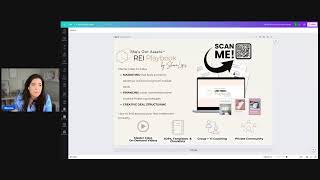
In this live YouTube/Instagram stream, the founder of She's Got Assets walks viewers through a recent off‑market duplex purchase in Portland that required no cash down. She begins with a personal introduction, describing her background as a landlord‑turned‑entrepreneur and the evolution of her real‑estate business. The core of the presentation details her "secret direct‑mail formula" for reaching "tired landlords"—hand‑picked lists, personalized letters, and a low‑tech but high‑touch aesthetic that prompts sellers to respond. She explains how she built rapport with the seller, uncovered their motivations (capital‑gains avoidance, tenant turnover, desire for passive income), and crafted a creative financing package: zero down, 6% interest‑only payments, a $1,000 earnest deposit, a promissory note secured by a deed of trust, and standard inspection and escrow contingencies. Throughout she emphasizes the importance of thorough due‑diligence, long inspection windows, and protecting both parties. The session also serves as a promotion for her REI Playbook course, outlining its content (marketing templates, financing strategies, SOPs) and coaching bonuses. The latter part of the stream is a Q&A where she answers audience questions about BRRRR, wholesaling, leveraging equity, and targeting specific seller types. The overall narrative showcases a repeatable, authentic marketing and deal‑structuring system that enables investors to close creative, low‑cash‑out deals in high‑cost markets.
Chapters
Hey everybody, good evening. Welcome to the She's Got Assets group. I'm gonna do a really special case study tonight, really excited about it. We just closed yesterday, so I'll give everyone a few minutes to log in. I'm gonna start my streaming everywhere. I'm going live on Instagram and YouTube. We'll see how that works. So you guys know the drill, let me know if you can see me and hear me. We'll get started in a few minutes. It is an absolutely gorgeous day here in Portland. It feels like spring for sure. It's really sunny, it's quite bright in my office. So I'll just give everyone a few minutes to like tune in. This is a little last minute, but we do go live every Tuesday evening at 5:00 for the most part. So yeah, but let me know where you're calling in from and maybe what the weather is like. Again, it's like super gorgeous here in Portland. So I'm gonna start at like 5:05 just to give people a few minutes minutes to log in. Again, if you can just let me know if you can see me and hear me okay, um, that's super helpful because if you can't, that's a problem, right? So yeah, again, if you're just tuning in, we're gonna go over, um, my latest acquisition. It's an off-market deal, really creative, really fun, direct with the seller. This is my favorite kind of type of strategy. Hey, thanks for calling in. Let me know where you're calling in from. I can't see names on my other screen here. So, and as we go along here, you know, as usual, I'll hang out for a little bit of Q&A. It's kind of a lot to cover. I can't go over everything on this call, right? Because there's a lot of, you know, pretty meaty things. But I do teach this in my REI Playbook course. So I'll kind of go over that and how to book a call if you're interested in that. But this is some really fun— this is like the really creative juicy stuff that, um, I love talking about, and I'm really excited to share it. Kind of like how I got the lead, go over the marketing and how I talked to the seller and all that good stuff. So, um, and you know, I'm in a really expensive market in Portland, Oregon. I think sometimes, you know, you think there's no deals out there when you're in an expensive market, but there really are. A lot of it is mindset and doing the right kind of marketing. So we're going to cover the marketing piece of it. Again, thanks for tuning in tonight, and we'll get started in a couple minutes. Just while you're waiting, maybe share a win for the day. My win is I'm here, changed my shirt, I put some makeup on, so I'm here. It's been a busy day. Um, had a showing from one of my MTR rentals for an insurance lead. They had a tree fall on their house, which was really sad. So that went well, they really liked it. We'll see. Um, but yeah, let me know. I'll give people like another minute or two again. Hey Laura, I can see you. I went to— yeah, awesome. Let's celebrate the little things, right? My kids aren't having meltdowns and I have my water and cold rainy day. Hey Nancy, thanks for calling in. Yeah, we have those too. Portland is like, I don't know, it's crazy. It's like super rainy and then it's like the most beautiful sun is out, like blue sky, clouds in the sky weather. So yeah, it's funny. Thanks for calling in. Um, I'll give people like one more minute. I know it's annoying to like hang out here while we do this little intro, but, um, I appreciate everyone's time a lot. I know everyone's super busy. Um, if anyone is like listening to the replay, like feel free to post in the comments. I always circle back and try and answer questions. Sometimes it's hard to go over stuff and I'll jump on a chat with you, but really feel free to reach out. It's really helpful for me to know what you guys have questions about, what you want to learn more about, and hopefully you get some value from this. So let me know in the comments. Um, all right, I think we've waited long enough, so I'm going to dive in here. So, um, tonight is a special live stream. We're going to go over a case study for an off-market duplex with zero down. Totally sounds like a unicorn, like that doesn't exist in expensive markets, that's crazy. I totally thought the same thing, but it really comes down to mindset and doing a particular kind of marketing that I've learned that I really love, and it just resonates a certain way with me. So That being said, we're gonna dive in. So hopefully the screen sharing works. Yeah, so just a little bit about me if you don't know me. If you know me, sorry, just skip this part, get a drink of water. About me, I like to say I was raised by capitalist hippies. Growing up, I helped run the family vacation rental business. This was like pre-Airbnb, it was full on. You know, we had an answering machine, a paper calendar, very low tech. We even had a fax machine. That was a big deal, right? Fax machine. So I grew up like folding sheets and making beds and, um, you know, doing that whole thing. Um, so, and I'm from California. I have to say, I never thought I would own real estate. It's a very expensive market. It seemed just utterly unattainable, right? So that's, that's a long time ago. That's what I thought. Then way back in 2005, um, I followed some good friends up to Portland. I was just newly out of a relationship and I just up and moved to Portland kind of on a whim. It's a little bit spontaneous, um, but I ended up buying a property. It was on stated income. This was way back in the day, right? And I house hacked, which was called having a roommate back then. I put up ads on Craigslist and had total strangers live in with me, but that's how I made it work. Built a lot of equity that way. So I love this house hacking strategy. Um, I've been a landlord since 2006. I've been at this a long time. I used to be really private that I was a landlord, right? I thought I would get judged or people think I was an evil landlord. And so I was just very kind of secretive about it, to be honest. And then finally, a couple of years ago, I was like, you know what, I'm a good landlord. I take care of my properties. So I'm kind of, as you all know, very open about it now. We need more good landlords. And before I got into real estate investing, I was the co-founder of a creative agency. So that might— I'm kind of a creative at heart. I did marketing for the agency. And as someone once put it, if you've been an entrepreneur, if you, you know, I've rarely been employed, right? I'm an outside cat. I'm pretty feral. Like, I love, I love making my own schedule, doing my own thing. I probably work a lot harder, but for me, I'm forever an outside cat. And they went from, you know, investing being a side hobby to being a full-time investor. I'm essentially like a serial entrepreneur, you could say, the founder of She's Got Assets. I'm I'm a podcast host. I'm the course author of the REI Playbook and the MTR Playbook. And then I have Cedar and Porch Properties, which is our buy and hold rental properties, and then Show No Buy Houses, which is kind of my, on my SEO name, right, to get found, if you know what that is. So I live in Portland, Oregon, and with my family who's involved with the business. I'm sure you've seen my kids in pictures. We own a mix of long-term and midterm rentals. I love coffee, baking, design, and treasure hunting, especially treasure hunting at properties that I buy. We were just in a garage and we found this like some fun signs and like an old lasso. It was pretty fun. And I'm obsessed with real estate if you haven't noticed. So that's a little bit about me. I just saw the Marketing Queen. Thank you. Yeah, I feel like I'm harassing people, but I appreciate that. So just a little teaser here. Like I really want to leave with as much value as I can, give as much information so you can run with it. Some things are just more complicated. Complex, and really it's helpful to have a coach. Like, I have, I have a coach, Greg Pineo. He helps me deal structure. And so I'm a big believer in it, but I— people are asking me so much that I have developed courses, and I'm really passionate about real estate. So it's a little teaser. I'll go over that. But either way, hopefully you get a lot of value out of this and walk away with some stuff. So just to kind of level set, you know, when you're looking for off-market properties, which I think as investors, right, that's the Holy Grail we want off-market properties, you know, generally the 70%, you know, 70%, the golden rule. Sometimes if it's a fix and flip for buy and hold, we're analyzing it a little bit differently, right? It's— to me, it's a very long-term game, so we can pay closer to retail. But in general, right, if we're going after traditional marketing— I'm bringing this up because there's different ways to market. Everything works. You have to find what's right for you. I found what's right for me, and I'm going to kind of COVID that more. That's how I found this deal, but I just kind of want to go over the whole gamut of marketing. So traditional marketing, I call it the distress burger, right? You're going after foreclosure, divorce, probate, tax liens, driving for dollars. And this all works, right? And we can really help people. But it's just, it's a different, you know, you're kind of harassing them, right? You're sending them messages, you're door knocking, it's more outbound, right? And it's sometimes not well received, right? Even though we can really help people. That is one way to do it. So what's a lot of these tactics kind of an outbound are, I call them the cheesy postcard mailers, like fast close, cash offer, no repairs. They're pretty much like blinking signs, you know, at you. I get them too, you know, and I'm like, in the recycling bin with a few choice words, right? They generally don't hang around. They generally don't get your phone to ring. You have to send a lot of them, right? There's SMS campaigns. The laws have changed a lot around that. Be really careful. There's cold calling, dialing for dollars. Again, all of these work, but my opinion is you have to— has to feel kind of authentic to you. Do you feel good doing it? These all work. They're all extremely effective. That's why courses teach them, right? RVM, ringless voicemail. Then there's the classic bandit signs. I kind of— they're just like on the telephone poles, like, we sell houses, or sell your house for cash, or fixer, right? And these all work and they're all great and they all have a place. I just found I've tried them all and I didn't like them. I didn't like how I felt. So, but these are all valid ways. And these are some examples of like, you know, the classic cards that we've all probably sent out with probably, I'm assuming, like not too much of a response. Like I never got a response from my postcards. They weren't quite this bad, but this is kind of the flavor and the vibe of the postcard. So it's just not that appealing. And you might get a response like this, right? Like, leave me alone. I don't want to sell. Go fuck what, you know, some choice words, right? And with the kind of marketing that I teach, that I've learned, I've very rarely gotten someone to— this really never happens. It's really a blue moon. So in general, like, you can put it in the chat. How does it make you feel, like, trying those strategies or getting one of those cards in the mail? I don't know if anyone's done that. You know, just let me know because I tried it and I like to speak from experience. I tried it. It can be very effective, but you know, it's also very expensive to pull those lists. Lists and skip trace them and all that stuff. So in my opinion, there's a better way, or a way that works for me that I love to talk about. So there's a better way to connect with sellers, and it's just different, right? We all different, you know, a little bit different. What makes sense to me, and that's what I'm going to talk about, and how I found this, um, off-market duplex. I'm kind of just setting the table for, you know, off-market to buy real estate, right? We either buy it on market, which is an MLS, we get an investor-friendly agent, which I think is great, I'm all for that, Frankly, most of our portfolio was bought with an agent. Um, it was before I knew a lot of this creative stuff. So the other way is to do off-market, and, um, you know, you have to do the marketing or work with a wholesaler, right, to get off-market property. So, um, this is just an example, you know, of— I do inbound. I have a website, and I also teach inbound marketing. So I get like these responses all the time. I got your letter. I never call back. Those mailers. They go right to the shredder. There was just something different about yours. Like, literally, I get this like every day, every week, a couple of these calls. Like, I just went to closing and the escrow agent was like, the seller was just raving about you and saying like— she was asking how she found me and she's like, she just sent me a letter and it felt really different. And so, you know, it is a form of marketing, but it's a very different and very kind of unique kind of marketing. So That's the kind of response you get. And this is another example. You know, it was a voicemail. Um, let's read it. Maybe we can make a deal. I have other houses for sale too. By the way, we're getting too old to sell, to sell our rentals, right? Anyway, goodbye. Thanks for sending us the letter. So here's the little nugget here, like, thanks for sending us the letter. Like, when you send a postcard, when you door knock, when you cold call, it's unlikely— I'm sure it happens— that someone like thanks you for sending them the letter, right? Usually it's like, take me off your list, do not disturb, right? So I get a lot. It feels extremely personal, right? And so however it goes, it's just a really friendly communication. And so to me, it feels more authentic than I like it. Um, so with all that being said, we're going to break it down. This is like the official case study of how I bought an off-market duplex with zero down. Sounds like a unicorn, right? It really happened. Um, and I have learned a lot. I would have thought this was impossible not that long ago, but, um, and I also did it without all traditional marketing that makes me feel kind of yucky. I don't know how you feel, but that's just me. So we're gonna talk about this really specific direct mail strategy. It sounds super old school. I like love technology. I love ChatGPT, anything tech, I'm like all over it. But this kind of marketing really works. So we'll kind of talk about it. So you start with a handpicked list. We're probably, you know, familiar with that. I call this my secret direct mail formula. You know, this is a quote— I think this is from Jeff Stevens or Greg Pinho, I don't remember who, but it's really salient quote for me. We're shopping for a person just as much as we're shopping for a property, right? That's really important. Um, so the beauty of looking for off-market properties with certain criteria is that we're buying the property that often comes with financing, and that is the key here. The property comes with the financing. That means no banks, and the opportunity for creative financing. It's not always right, but when you stop and think, if you've bought a property conventionally, if anyone's bought a property conventionally, like, say yes or put something in the chat, because it is hell working with lenders. They underwriting wants like all your paperwork. They want the papers for your purebred pet. They want your firstborn. It's just, it's really challenging. And yes, lenders are great. I love lenders, but It is a beautiful thing when the financing comes with the property, and that's really the key with the people that we, you know, in the course I teach you how to market to, which is essentially tired landlords that own property, they're not owner-occupied, and they sometimes— it's not always guaranteed, but they're more likely to have the levers for possibly being open to owner financing. So I just can't stress enough, I went to closing, the amount of paper was like this And when you have, you know, a bank loan, it's like this, right? I wrote my own promissory note. I mean, it was just a way— a very different experience. Um, so we're going to break down kind of how the marketing looks, and I'll get into kind of the deal structure. But the first part of this is the messaging, right? It's really important how, you know, are you saying sell my house fast, no repairs? No, because if you're a tired landlord, you're not typically distressed. right? You might be tired and like thinking about a change if you've owned the property for 10 to 20 years, but you're not classically distressed. You're not behind on your mortgage. There's no tax liens, right? So essentially, you know, it's more of a just, hey, have you thought about selling kind of messaging. And I have a template in the course. And then the vibe and positioning, right? What does the paper feel like? What is the color of the ink, right? And the design and the envelope and the way it's folded and the presentation, right? So this all goes into like kind of the aesthetics of the marketing, which sounds funny when you think about traditional marketing. It's pretty just like in your face and screaming, right? But here's an example of this letter. It's basically a template. I have a few templates in the course and it's just like, you know, we're using certain strategies like mail merge to customize the letter just enough so it feels personal, but it's a mass mailing, but it feels like you go to your mailbox, you're like, oh, who sent me this a cute letter with a cute little stamp on it. Does that look like a traditional letter, right? Probably not. And how can you resist, like, a handwritten envelope? And that's just— you're most likely going to open it. And I get a lot of calls like, I just checked my mail and I got your letter. So it really does work. And the other, the other thing I love about this is, unlike, you know, those cheesy mailers that just get recycled, people are actually going to hang on to these. And it's kind of like planting a little seed, right? I get calls, hey, you sent me a letter last year or 6 months ago, and I hung on to it. And the crazy thing is you go to these meetings and they have their letter like in their pile of papers. We're like, oh my God, that's my letter, right? They actually hung on to it. So it doesn't feel like junk mail. It feels like a very personal letter. And you know, we're doing this on a mass scale, right? Reasonably mass scale, but it just, that's the way it kind of feels. That's the vibe. And that's what I love about it, right? So it really hangs around. You might not get a response right away, but someone's more likely to, Maybe when their tenant moves out or there's some other motivating factor that comes in, right? They're going to give you a call. And I mean, I see letters all the time where they'll have it in their hands up and meet them at the property. So like examples like this, like you sent me a letter a year ago and I held on to it. Like this really happens. This happens quite frequently. So it's just an example. So what happens is, you know, you send out a letter and I kind of— it's cover a lot of this in the course, right? Really in detail how to do it, the nuts and bolts and mechanics. So I talked to the— in this duplex, I talked to the seller. I learned about their story, why they wanted to sell, just kind of got to know them a little bit, build rapport, right? Make conversation, ask questions, right? Listen. Um, and then you— I set a time to meet them in person. Like, as my coach Greg Pinho says, you know, living room meeting. You want to meet them in their living room. You want to know the language of the seller. Do they have grandkids? Do What kind of art do they have on the walls? You just really want to connect with them and understand, like, what their goals are with the property. We're not there to make an offer, we're not bringing a contract, we're just like getting to know them, understanding what they're looking to do with the property and what their end goal is and how we could possibly help them with that, right? So it's very, it's very conversational, it's very engaging. We're really just trying to get to know them, understand what their goals are. You really want to know what, you know, ask a lot of questions. Don't be afraid to ask questions and listen and, you know, comment on what they have in their house, what their hobbies are, right? Just really try and connect and understand what they're trying to do. And sometimes that takes a while. And you also, with that, you know, want to weave in numbers like, well, what do you think it's worth? Or what is your rent? You know, those kind of things. What are your utilities, right? But it's this kind of dance between right and left brain, connecting with the sellers and understanding the numbers. And we're just taking that all in. We're not like reacting. Sometimes they'll say like, I don't want to sell because capital gains, in our head we're like, ding, ding, ding, like, would you sell on a contract? We just want to take it in and really understand what their goals are. We're not making any proposals generally right away, right? So in this case, the main reasons that they were selling was they wanted to avoid capital gains, right? Because if you've owned a property for a long time and you're not living in it, you generally have a pretty big capital gains bill. They were in the process of evicting a tenant. A lot of times that's kind of the trigger, right? If for landlords. They're just tired. They have one more turnover, they're just done. They want to retire and not deal with rental properties anymore, right? Um, because it's work, right? They wanted like true mailbox money, right? Passive income. And the key here is when I was listening, they said, we're not very concerned about the down payment, you know. I think— and I was like, oh, you're not— you don't really care? They were like, maybe 5%. It was just— it was not one of their big reasons, right? So it wasn't You really want to listen, like, what's their one big thing? Is it like, is it cash flow? Is it income? Is it avoiding capital gains? When you know what that one, as Jeff Stevens would say, um, what's their one big thing, right? That way you can really tailor a proposal that meets their needs. I mean, maybe it's cash and you make a cash offer, right? But knowing what they want is really helpful, and that takes a lot of listening and a lot of asking questions. So then after I kind of understood what they were looking to do, I said, okay, great. It was lovely to meet you. We met at the property, we walked over to their house, we had some tea. It was a lovely conversation, got to know them, really connected, right? So that was awesome. And so I went home and worked on my numbers, pulled my spreadsheet out. I have that in the course, right? You know, how could I make this cash flow? What I have to pay, all that fun stuff. And then I came back and, you know, I think this is really important. As Greg Pinion would say, ask questions of proposition, like get comfortable asking uncomfortable questions. Like when they said we don't care about down payment, you know, that was a little light bulb. I thought, well, what if I don't give them a down payment and actually put the money into rehabbing the property? But you have to really listen and understand what they're looking for. That's not right in all situations. They might want a certain amount of money to like buy an RV or buy a boat. But you really have to like listen for that and then be comfortable. As Greg would say, ask questions, a proposition. It's a little bit uncomfortable, but the more you do it, the more you practice, the more comfortable it gets. Um, so, and in the course I have kind of a proposal. I usually do a couple options. Sometimes it's cash, sometimes it's creative, sometimes it's like listed. I'm not an agent, but I like to give options. And I'll kind of outline here, you know, here's the purchase price, here's all the options. Just, it gives, it's very simple. It's, it's not like, here's a contract, sign it. There's no pressure, right? It's like, hey, this is what I'm thinking, let me know what you think. You present it, it's, you know, open for feedback. It's very just like, hey, I heard what you said, I heard what you're looking to do, and here's, here's some ideas to get you to where your next chapter, to where you want to go. Um, so we did that, and then these are the terms that we came up with. And again, this is always unique, and that is the beauty of you know, working directly with sellers is, you know, you don't have agents involved who are worried about their commissions. Understandably, that would, you know, that they do get paid, but, um, it's just really, you can have a direct conversation. There's no game of telephone, right? So these are the terms that we agreed to: zero down, 6% in interest only, and/or more. There's very specific languages. Greg Pinho would say lettuce and tomatoes, um, that makes things cash flow, right? When you can add principal or not, it just makes it cash flow when you're kind of stabilizing the property. $1,000 of earnest money, which is, right, a lot lower than on market. Usually you're like 5%, probably, right? And then a promissory note for the purchase price, which is just a fancy way of saying I owe you X amount of money, right, for this property. I will make you monthly payments. And then the security, right? You— and, um, basically it's secured by a deed of trust, which is just essentially a lien on the property, right? So their, their note is secured by the property that selling you. So it's a very secure way for them. Basically, they're the bank, right? They put their money in the stock market, can go up and down. If for some reason I stopped making payments, right, they would get the property back. And I'm going to improve the property. I'm not— I'm not going to not make payments. But it's a very secure loan. It's very safe. And that's why I love these kind of deals. So the security, like I said, is secured by deed of trust, which is a lien. They're named as a loss pay you on the insurance, right? It's like additionally insured, right? Um, so these are all kind of security measures. We really want to protect the seller as much as we do ourselves. And then, you know, the standard contingencies. Um, we're buying it as-is, so we're doing the repairs. That does not mean we're not going to do inspections, right? It is contingent upon inspection and due diligence. I am a big believer in full home inspections. Unless you're like an expert or know someone, you really can't see around a lot of corners, and oftentimes you find things that you need to renegotiate on. I've walked away from deals due to inspections, so I can't stress this enough. I think often in off-market we tend to not do our due diligence and just say it's a great deal, but I'd rather have no deal than a bad deal. So I mean, I've heard stories about leaking oil tanks. We're in the Northwest, we have to do like an oil tank scan, radon test, you know, full home inspection. And then again, just, you know, so we make it clear we're not asking them to do repairs, that we'll do our due diligence. I like a really long, um, inspection window. I'll, you know, normally, typically on market in our market, it's about 10 days. I will try and do as many days as I can just to make sure that I have enough time to get experts out and do inspections, right? So if you can negotiate a longer inspection period, I highly recommend that. So that's kind of it. And then, you know, we're off to escrow, right? And again, it's just like you have a traditional contract. There's a lot of addendums go with seller financing. I have all templates in the course, kind of the terms of a loan. I use a long-term escrow company and cover that in the course. But everything, you know, in our state it's escrow. In some states it's an attorney, right? Everything is going to that neutral party to make sure title is clear and get title insurance and all that stuff. So really quickly, a little plug here. Thanks for hanging in, by the way, so far. So, um, feel free to scan this if you want to book a call with me to learn more. I do have a course. It's called the REI Playbook course, and we kind of COVID all of this stuff. We cover marketing that feels really authentic. Again, I've tried a lot of it. I'm covering— I have kind of a hybrid strategy of online marketing, showing buys houses example, that's my domain. And then this off-market letter writing, um, we cover that. We cover like different ways to finance properties and then creative deal structuring. I think a lot of us have heard of sub-2s are like the really sexy thing right now where there's a lot more creative stuff that that I have learned from Greg Pinho that is like, will blow your mind, right? Like really creative ways to leverage equity. And I've also leveraged equity with HELOCs, but I really dive into that a lot. So that's kind of the big overview. And you get access to on-demand classes for a lifetime with really specific notes on how to do this. You get all my SOPs, like how to do the marketing. As a special sign-on bonus, I am offering a one-on-one call with you to get your list hold and do your first campaigns. I think that's the biggest problem with— I know I struggled with it. It was like I didn't do my marketing, I didn't get new leads, and I felt bad about myself and I felt like I wasn't an investor. Right. So it's really important. I really want people that join to be successful and start getting those leads. And so I'm going to walk you through that. You get 3 one-on-one coaching calls and then weekly coaching calls for 3 months. And then there is also a private community. So thanks for listening, everyone. I'll dive into some Q&A now. Feel free to If you have any questions, again, I just appreciate your time. I hope you learned something from that. Let me know in the comments. I'm just going to scroll through here. Do I— so, Laura, great question. Do I burr my properties? I haven't. I've done a couple burrs. It's not my favorite. I mean, it's basically— a burr is leveraging kind of like equity, right, and getting at the right price. There's some different strategies like substitution of collateral, but it's really all about leveraging, buying at the right price. So I have done some, but generally I just I like owner financing, right? That's the best way to buy property. You don't have banks involved, right? But BRRRR is a great strategy. Um, well, thank you. Um, wholesalers. Yeah, you know, I have mixed— I'll be honest, there's good and bad wholesalers like anything. They're a little— I— this is gonna sound, you know, there's good and bad ones, right? I think sometimes the deals really don't make sense to me. Like, I run my numbers and there's not enough margin, so I'm a little bit, just be really cautious. And you have to get things, especially for fix and flip. Like, I love fix and flip. I'm really teaching in this course buy and hold, right? Because I want people to, you know, real estate investing to me is really buying an asset. Therefore, my name, She's Got Assets, that was ChatGPT. So I, you know, I really— wholesaling is great for capital raising, but you're not holding the asset. You're not getting the benefits, appreciation, all the tax benefits. The cash flow, right, that goes up over time. So, you know, um, and you just have to be really careful and run your numbers backwards and forwards and have an extremely conservative ARV, after repair value, because a lot of times wholesalers will have, you know, what I call an optimistic ARV. It's like, well, there's 3 comps, but they're like a year ago, and maybe they're, you know, really it's here and you're running numbers on this and that's your margin, right? So just be really cautious. Um, So, um, so Laura, when I was pulling— yes, I'm pulling time. I cover this in the course. I'm pulling tired, you know, tired landlords, which is basically non-owner-occupied people that have owned their thing, you know, 10 to 20 years, right? You can kind of fiddle with it. I'm— and I kind of go over how to do that, what software I use. But yeah, I'm targeting tired landlords. I'm not— I'm like a, you must be tired, but like, hey, are you— have you thought about selling, right? It's a very kind of friendly message, but they're more likely— if you're— the tired or you are, right, the longer you've owned a property, the more likely you've maybe paid it off, and then you can— there's the option for seller financing. Again, it's not always a fit, right? I don't want anyone to think this is a guarantee, right? And you really want to serve the seller, right, ultimately. And really, you want them to leave the transaction feeling like they got what they want and didn't even really know what you wanted, right? We're really trying to propose something that works for them. That's truly a win-win, right? And often, clearly, it's great for us, but also really serves the seller. So, um, what I put in the letter to stand out, you know, it really comes down to the messaging. And again, I have that in the course. It's really just like, your name, you know, have you thought about— we're local— a little bit about yourself, right? And I have the specific template, but let people know who you are. And I think a lot of times, like, if you are a landlord or you are starting out, Don't pretend to be some big— we're a big XX company. Like, hey, I'm Shona, I live in Portland with my family and we're local, you know, landlords. I never say investor, right? Um, we're looking to build our portfolio and we're family-run. If you've ever thought about selling, we would love to chat. It's very friendly and very just like conversational. And I think it just— you're not like, hey, it looks like you should sell because you're really distressed. And You're behind on your taxes. And it has, you know, nice paper, right? It's like a kind of a nice white paper, has a certain color pen. The envelopes are hand addressed, and I kind of COVID how to do that in the course. So it really feels like a very personal letter, does not feel like it— people think they'll call me like, I got your letter. And I'm like, oh no, I'm away from my desk. Like, let me go check my notes, right? Because I don't realize you're sending out more than one letter, right? So it's a real vibe. And that's, I think, what gets foundering. So yeah, hope that covers that. And again, I do have the template in the course. I'm reading the notes here. How do you find your target list to market to find STRs? Yeah, I mean, I think when you're pulling your list, right, I mean, you like any, any kind of marketing, right? And who is your audience? Who are you trying to target? You know, there's different ways to do it. They cover in the course, honestly, title companies will do it for free because it's business for them, right? And that's they're happy to do it. They generally have marketing departments. Find an investor-friendly title company. Um, I have software that I use that I just like to do it myself, but you can do it for free. You don't need fancy software, right? So, um, yeah. Um, what is the price for the REI Playbook? And yeah, it's, um, I can go over that. It's $3,000 is the investment, and the code is on the slide right here, and I will— I'll pop it in once I'm off this call. But hopefully if you just scan this right here, it'll work. And then I can hop on a call with you and see if it's a good fit. If not, hopefully I'll leave you with some kind of advice or tips or something, right? I really— but I am really passionate about this. And I've taken a lot of courses and had a lot of mentors. And I've kind of taken everything that makes sense to me and packaged it up. And I love working with students. So yeah, I'd love to chat with you and see if it's a good fit. If not, stay in the group, hopefully keep learning. So yeah, I think if I find any— I'm— we're all looking for multifamily for sure. Yeah. I mean, I talked to— I get a lot of— I've got quite a few like fourplexes. I've got a string of duplexes right now. There's something in the air. And this kind of marketing, right, you can target multifamily, single family, right? There's reasons to buy both, right? Usually you want to buy buy and hold for multi, single family is great for— sounds crazy, but you're buying the house, as Greg Pena would say, for the financing, right? There's some pretty crazy strategies to buy a house and then sell it and, you know, keep, keep money from it. It's a little too complicated to go in right now, but, um, yeah, there's some really creative stuff you can do. What I've learned from Greg Pena specifically, um, but yeah, if you're watching the replay, like, feel free to jump in or, you know, put a question in, or if you want a link, I'll message you directly and we can chat and see if it's a good fit. Um, the doors are open until I think Thursday at midnight or something like that, so if you're interested, be sure to save the spot. If there's any other questions, like, feel free to ask them. If I miss anything, just pop it back in the, um, the question box here. I'll go back through the list. Um, but yeah, I just— it's, it's exciting to have deals going on and talking to sellers, and, you know, I think it really kind comes down to marketing that you love and understand, you know, kind of how to do that. Because if you don't like the market— that was my big takeaway. I didn't like the marketing that I originally learned. It just felt kind of weird and spammy and didn't do it. I didn't get any leads. And I, you know, so I had to go looking in other places. You're welcome, Alex. Yeah, thanks again for joining us, Laura. I appreciate all your comments. Nancy, Yeah, I think if there's any other questions— I know it's like dinner time, so, um, appreciate you tuning in. Again, if you're watching this later, feel free to chime in. I'll tag anyone that wanted a replay. And yeah, I appreciate the time, and let me know what you thought of this if you have any questions or comments. I really appreciate feedback. Um, so yeah, have a great evening everyone. Thank you.
More from Shona

Choose categories and add 15–20 services Google Business (She's Got Assets Podcast w/ Trevor Mauch)

Why long pages beat short ones for big decisions and SEO (She's Got Assets Podcast w/ Trevor Mauch))

The 1 website element that drives 80% of conversion (She's Got Assets Podcast Trevor Mauch)

3 things your business must do for you (She's Got Assets Podcast with Trevor Mauch)

MTRO PRO - The Midterm Rental Operations System MTR Operators Have Been Waiting For with Dre Galaviz




MTR AMR — average monthly rate for midterm rentals on MTRO PRO platform (She's Got Assets Podcast)

