Mastering Mindset and Real Estate: Insights from STR Expert Emmanuel Pani
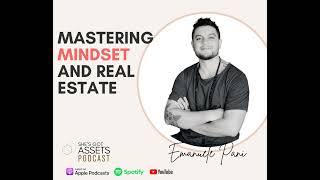
In this episode of the She's Got Assets Real Estate Investing Podcast, host Ashona Lepus interviews Emmanuel “E” Pani, a short‑term rental (STR) expert, real‑estate investor, and co‑host of the STR Secrets Podcast. The conversation weaves together Pani’s personal journey—from a maintenance role at a tennis‑academy rental to owning an entire apartment complex—and his philosophy on why many aspiring investors fail despite having access to the same information. Pani argues that the decisive factor is the internal paradigm: the self‑image, desire, and burning obsession that drive consistent action. He outlines a framework that moves an idea → want → goal → desire → obsession, emphasizing that goals must remain fixed while tactics can change. The discussion expands to practical STR advice: prioritize clean, well‑communicated basics over flashy amenities, protect one’s vision like a newborn, and choose a single strategy to copy a proven system before scaling. Pani also stresses the importance of mindset coaching, mastermind groups, and intentional decision‑making, warning against “trying” language and highlighting the power of language, self‑image scripts, and emotional visualization. The episode concludes with actionable recommendations for aspiring investors, recommended books, and ways to connect with Pani’s podcast, mastermind, and coaching services.
Chapters
That's like another big thing that is huge for me because I realized 15 years in, about 6, 7 years into coaching, that we give the mechanicals and the mechanicals are usually easy to find, right? We can all go YouTube University and just look at things. And yet, why can't we all do it? The information is there. And I see people come through the course and it's the same course. Why do some people make it, some people don't? And what I've realized is just like, really is just What's in between the years and what is your concept of yourself allowing yourself to do and create in your own life?
Welcome to the She's Got Assets Real Estate Investing Podcast. I'm the host, Ashona Lepus. Follow along as we unpack and demystify real estate investment strategies through expert interviews and personal experience. From how to find off-market deals to creative financing to long-term and midterm rentals, we aim to educate and inspire others to gain financial freedom and generational wealth through real estate. And as always, please subscribe so you never miss an episode. We really appreciate reviews. It helps others find us and just helps us get found. Hey everyone, welcome to She's Got Assets Podcast. I'm really excited. I have a special guest on today. Emmanuel Pani goes by E. He has quite a resume. I'll just give you guys a brief intro and he can introduce himself. E is a, a real estate investor, a short-term rental expert, and co-host of the STR Secrets Podcast. After immigrating to the US at 15 from Tuscany, Italy. He built a thriving portfolio from the ground up with an unwavering passion for real estate and entrepreneurship. He now runs Dolce Vita Vacation Rentals and helps others build wealth through STRs as a partner at Doma Private Investment. So E, welcome. Thank you so much for coming on.
Thank you so much for having me on. I am super excited.
Awesome. I know you have a really cool story and I've heard you tell it, but I'd love to hear it again. And maybe I think it was owner carry, which I got— that's like my favorite strategy. So I'd love to hear the crazy world of real estate and what your, yeah, your journey was.
Yeah, I'd love to share. So I started in real estate right out of college, graduated in 2010. As you guys remember, 2010 financially wasn't a great spot. And so I came back from Europe, I went to school in Geneva and came back from Europe. And my mom at the time was living in a short-term rental or midterm rental technically that was associated with the Chris Evert Tennis Academy, because my little sister played tennis at the time. And I had my tail between my legs, right? I was coming out of college, not really sure what I wanted to do. Went to school for accounting and finance and tried an accounting season and hated that more than going to school for accounting. So I was like, we can't be doing this long term. And at the time I met the gentleman that ran that community, his name is Hanan Ben-Avi, and he, he asked me, hey, like, I need somebody to work weekends. I am Israeli and unorthodox, and I cannot work weekends, right? I need you to do all of Shabbat and answer the phone. You're young and your English is okay, so maybe you can answer the phones as well. There was another Israeli guy that worked there, his name was Jack. But he had a very thick Israeli accent. So Hanan used to say, Jack scares clients away when he answers the phone, right? So we cannot have Jack answer the phone. So can you please do it? And that was 15 years ago. And so that was the beginning of my journey in real estate. I was a maintenance guy, hybrid office kind of person. And fast forward 15 years later, we now own that entire apartment complex. And I've done everything in real estate from fix and flips to syndications to buying with other people's money to owner financing to— I've done it all, right? And yeah, it's been such a fun journey and I love what I do. Like I feel very fortunate that I get to host the SDR Secrets podcast with Mike and I love being part of SDR Secrets as a community. I love coaching and helping people create this life and help people with mindset.
Hey there, savvy investor. Quick question. Are you ready to jump into midterm rentals but not sure where to start? Well, I've got you covered. And she's got assets. We help real estate investors set up and fully book their first midterm rental with quality guests so you can double or even triple your cash flow. And here's the kicker. We dive deep into marketing strategies, including how to tap into the lucrative niche of getting insurance leads for this Placed families are long-term stays that can really boost your bottom line without all the hassle and regulations of short-term rentals. Sound interesting? Head over to shefoundassets.com/ntr and get all the details. And if you're new to real estate investing, we've got something just for you. Check out our REI Playbook course where we teach you how to snag your first investment property by finding off-market deals without cold calling or door knocking. We'll even walk you through creative deal structures like owner financing and how to leverage what you've already got. You can find all that goodness. At she'sgotassets.com/rei. Oh, and one more thing, don't miss out on joining our free She's Got Assets community. We've got a ton of resources plus weekly live streams where you can dive deep into strategies to help you succeed. You don't want to miss it. Trust me, hop into the community at she'sgotassets.com/network and let's get you crushing those real estate goals. All right, back to the show.
That's like another big thing that is huge for me because I realized 15 years in, but 6, 7 years into coaching, that we give the mechanicals, and the mechanicals are usually easy to find, right? We can all go YouTube University and just look at things. And yet, why can't we all do it? The information is there. And I see people come through the course, and it's the same course. Why do some people make it, some people don't? And what I've realized is just like, really, is just what's in between the ears. And what is your concept of yourself allowing yourself to do and create in your own life? That's really the reason why some make it and some don't. And some that you're like, he's definitely, she's definitely gonna make it. She has all the attributes and they don't. And then some people you're like, there is no way these people are not set up for it. And they do, right? So it's just like, why, what's the difference there? Right? And so that's That I've really obsessed about, and this is the area of most work and study for myself. I continue to create and do hospitality and boutique hotels and short-term rentals, and I love, love hospitality. Like, it's one of my— being Italian, I think it just comes with your passport. Like, I don't think you can be Italian and not love food, good living, and just enjoying life. And so that hospitality for me is the perfect way for my people-pleasing side to express itself and take care of people. And so I feel very fortunate that I get to do that and I get to do it with an amazing team of people that really allow me to spend time learning about mindset and coaching and helping others, 'cause I couldn't do what I do on the SDR Secrets side or on my mindset coaching side if I didn't have my team. So I'm very fortunate for that too.
Oh my God. That's, I love that. So I have to ask, I think mindset is so important and we are in the hospitality business unless we're like an old-time landlord with the 12-month lease. It's so important. What do you think, is it like your belief system or what do you think makes as an entrepreneur, real estate entrepreneur successful? Because it's not easy, right? It takes a lot of persistence and yeah, I think, right? We don't talk about that enough.
Well, so that's such a good question because what I come to know, or at least what my truth is now, is that the biggest thing that makes a difference is your— how intense is that burning desire for you to actually do it? Cause you probably heard me, if you heard me speak before, you, you probably heard me saying this, right? We go from idea to want, and most of the time we stay there, right? You get an idea, you listen to a podcast, you go to a conference, you something, right? And you get this idea and you're like, I want that. And then sometimes that want becomes a goal. And so what a goal is, is a want that you actually want, right? Cause again, if you think. That wanting things is what's gonna make you successful, make you, or makes you ambitious. It's just what makes you human, right? There's no, we all want things. To want more is to be human, is to be humans is to want more. So that's never gonna go away. And so going back to your question, I think what makes a difference is those people that turn that goal into a desire. And then those people that really take it a step farther, that turn into a burning obsession, because as you and I know, and anybody that's listening to this knows, once you were obsessed about something, I guarantee you, you had it. Anything in your life, right? When you become really obsessed with something, you always get it. And so what I think the big difference is, is that people go from idea to want and never make it a goal. And they most definitely never make it a desire or rarely make it into an obsession. So the moment the goal doesn't work out, doesn't get like Plan A doesn't work, instead of changing to Plan B, C, D, and go through the rest of the letters of the alphabet, they change the goal. And so that's the biggest thing is don't change your goal. The plan can change, the goal cannot. And most people that do real estate, It's always a changing goal. It's always a moving target. It's the Burr method, then it's the syndication, then it's the other people's money, then this, and it's the that, right?
Yeah.
And we all do it. And my thing is this, I don't have a problem with you doing more things. You just can't quit until you're successful in the other things. So if you tell me, E, I have tried, STRs or MTRs and it's not working out, all I tell you is, okay, you're allowed to quit the moment that you actually get your first profit. Because most of the time, what I think is true is that you quit just because you get down on yourself. But if I told you, hey, if you were winning, would you feel the same way? 99% of you would say no. No, E, if I was winning, I would continue to do this. I'm like, okay, then continue to do it until you win. That's it.
Yeah. So having an obsession. So I think we all, we start out with these kind of passive income, financial freedom. That's what I think every investor says, right? Like, but do we, how do we, is it more than that? Because that's what we're all, that's the goal. I think we are, if you would ask any investor, why do you want to get into real estate? That's what we all say. But how do, is that enough? Is that internalized enough or what it is? I'm curious, because—
Yeah. So in my experience, most people actually don't know what they want. That is the biggest problem. There's this vanilla answer that is, I just want more money. I just want to be financially free. I'm like, what does that mean? Have you spent time thinking about it? Have you really allowed yourself to think, okay, what would my life look like if I was making the money that I'm making from my W-2 job as a full-time real estate investor? Have you allowed really yourself to spend time emotionally feeling what that life would look like? Most people haven't. And so since you're emotionally invested in your current life, that's what you keep creating. You're not emotionally invested in your new life because the new life doesn't have the texture and the reality that this life has. Because all you do is say, I want, and the moment that wants don't come, like, I want this and I want that. But you have to make that want into a goal and the goal into a desire and the desire into a burning obsession. Because the moment that happens, then the beautiful thing that's going to start happening is that your decision-making process is going to change. Because the moment you're really obsessed about something, the moment a decision comes to do things the way you've always done them, or to do things the way that it's gonna get you to your goal. You're gonna have a split second where you're gonna have a chance to make a different decision. And then that over time will compound itself to what? A different reality. But it's just, you gotta make it enough times at the beginning. So is that fits that I love fewer, like, okay, like I want to get healthier, right? And it's like, I wanna stop drinking soda. It's like that the first day that the chance comes, you're at a restaurant and what would you like to drink? And your natural response is, I would like just a Coke. And you catch yourself, you're like, actually for today, can I have a glass of water? It's the same muscle, but the way the new self-image comes in, you need to give it time. Like you have to allow it to become strong enough to replace the old one. And chances are, if you're listening to this show, you're at least what, 25, 22, 25, right? Well, realize that you've been that way for 25 years. And so it's gonna take you some time to realize that the way that you make money is different, right? Because also it's understanding the relationship with your goals and where did that come conflicting with core beliefs that you have. And I'll give you an example, right? Have you ever said the only, like, to make money, you have to work hard?
That's my paradigm right now.
Right?
Yeah.
But how many people do you know that work really hard? They have 2 or 3 jobs and I have no— don't have any money.
Right. Yeah.
But if you believe that that's the only way to make it, that's the only way you're gonna make it. So a lot of the times in understanding what it's like to be an entrepreneur, to be a real estate investor, to do this, You have to decide what your belief systems are. You're like, what do you mean? I was like, yeah, how do you feel about things? And understand that if it's not something that you can comment or defend or explain, that's not even your belief system, it's somebody else's. They view, have internalized it as yours. But so many people you talk to, they're so passionate about things. I'm like, why are you this passionate about this? I generally don't have an opinion. Why are you so passionate? Because my dad. I'm like, okay. So is this your belief system or is this your dad's belief system? Do you actually care? And so it is a simple answer, but it's not a simple process because life changes very easily. Decisions are hard, but change is not. The moment you decide that you're actually ready to change, It happens. You just gotta make the decision. And the decision is what? Make that want into a goal and the goal into a desire and that desire into a burning obsession. That's the decision. 'Cause once that decision happens, everything else changes.
This is kind of related, but I don't know if I'm just gonna— as I've been— I heard you say in a podcast that you, it's education's a constant thing. We always need to be training ourselves. So my favorite book right now is Bob Proctor, Change Your Paradigm, Change Your Life.
Mm-hmm.
But I'm like repeat and I'm like, it sounds so simple that like you're talking about changing your paradigm. And I think when I first got into real estate, even saying I was an investor was a real switch. I really had to just like embrace that. And it was, felt very self-conscious because it's such a loaded thing. But even just embracing that was tricky. It took me a long time to come out myself as an investor. I know it sounds silly, but for me that was a process. So I'm curious. Like, how do we go about doing that? Is it just practice? Is it setting the time aside? Or how do we change our paradigm?
Um, yeah, so I love this question because you, by knowing that you have a paradigm, you're already ahead of the majority. And so what a paradigm is, for those of you that don't know, a paradigm is preconceived ideas or stored information that is processing new information. Right? So the paradigm is that natural response of you. So how do you naturally respond to those things? And that repeats over and over. And the reason that repeats over and over and continues to repeat, because it leads to the same decision that you've always made, that lead to the same results that you always have. So this first step for me is to understand, okay, I do have one. The step number 2 is understanding, okay, this is the one that I have. What is the one that I want? And so in a really simple way, if you guys listening want to do something for yourself, is actually take some time this weekend and allow yourself to write out your new self-image script. And what a new self-image script, it just, it's exactly what it sounds like, right? If there was a movie script to your life, what would your character be? And then again, add the textures, add the feelings, add the emotions, add the colors. So I am A real estate investor that does what? What kind of life do you have? What kind of money do you make? How do you feel? How do you dress? How do you look? How do you hang out with people? What charities do you support? Where do you go to eat? What do you drive? How does that feel? And then having that, you continue to reaffirm it day after day. And then you start creating moments in your day-to-day life that you just allow yourself to tap into that image. So you really start, so it's not even visualizing, it's like almost future pacing. Like you allow yourself to see yourself in that moment. So when you get into your car, you might want a Porsche, you're now driving a Toyota Corolla. When you get into the car, in your mind, you get into that Porsche, get into the Toyota Corolla. And so it's almost living this life in a very delusional way for a second. Where you deny the evidence of the senses of what's current, and you're just leaning to what you choose. And what you choose is to create those wants into goals, and goals into desires, and desires into burning obsession. And so anytime the paradigm comes— because this is the other thing, right? You can never be free of a paradigm. There's always going to be one. We just need to be making one that is there to serve you and what you're trying to, what you're working on creating. So your desires go to battle with your paradigm until the paradigm behaves in a certain way. But the self-image, Joanna, has to continuously and consistently be under construction because anything in the universe that is created starts to decompose and die. So the moment you create the new you, You have to continue to create it because the real point of a goal is not to get, it's to grow. And to grow into what? It's, it's to grow into what you know you can do in your awareness of how infinite and powerful you can actually be. That's what we're growing into. And that's why when people tell me like, I've been at this for 6 months and it's not working, I'm like, okay. Have you grown? Cuz I know you have grown for sure. If you're actually doing it, you have grown. And so it's who is that natural you that creates the life that you want? And how can you step into that self-image more and more every day?
So do you think our paradigms are always evolving? I think that's what I, my recent kind of realization is you reach a goal and you're on, you have to keep growing. It's human nature. It's not greedy. It's just, we're meant to.
Yeah. Um, grow.
Yeah.
What does the Bible say? Go out and multiply. It didn't say go out and grow linearly, little by little.
Yeah.
Like, you don't serve anybody by not growing. Cuz if you have the desire to grow, that means that you have the capacity to do it. Cuz that's the thing, Shannon, once you become aware of your paradigm, you're aware of it. And the tricky thing with awareness is that you can become unaware of something once you're aware of it. The moment you actually try something for the first time, you have a taste of something for the first time, I can't tell you, forget the taste. You can't. You've become aware of it. Now the question is, what are you going to do with that awareness? Because the paradigm is going to go back to its original thing. Because when you do it through willpower, you're trying to force it. but you're not changing it. That's why so many people go back.
I think the other thing is if we don't internalize it, we might think these thoughts, but if we don't, like you're saying, feel them, taste it, and that's, I think that's a disconnect because we can say all the affirmations, but do we really actually believe it?
Yeah, most of us don't feel it. And so that's the reason why, like, the real feelings that you feel are the feelings that you have right now. And those feel very real to you until you get into that moment. And so if you're listening to this and you have this moment for yourself where you're like, yeah, how do I feel these things, right? One of the things that one of my mentors taught me that works very well is before you see yourself, before you start visualizing the things that you want, right? Before you start actually visualizing this new self-image script, or before you read it to yourself, it's to allow yourself to put yourself in the right mental state. And the best way that I have to do it, which is simple, is allow yourself to actually close your eyes and see something that makes you emotional. So that may be your kids, your parents, your grandparents, your best friend, right? And really allow yourself to be in the moment, memory of a very special moment you guys shared. Once you're able to lock into that image and that feeling, And you're in those, I'm happy, like you might have a little tear coming down your face, like you're really feeling it. And just like your phone, you're gonna swap out that image. So hold that feeling, change the image, and replace the image with that version of you until you can naturally get into that state about that particular thing. But the other thing for me that adds a lot of emotion is actually adding context and feeling to it. So if you say, I want to be financially free, that feels a certain kind of way. If you say, I want to be financially free so I can be there for every single one of my kids' baseball games, and I can then take him or take her to Europe every summer, and I can see us in the square eating the gelato at the end of the day, and me and my wife are holding hands as we're walking back to the Airbnb, and we can hear our kids laugh. Can you feel the difference?
Yeah. In my head, I have a picture.
You can see it. How much more powerful is that than you just saying, I want financial freedom. I want $10,000 a month. I want 5 listings. I want, right? It doesn't have the same feeling. Because then you go through this process of just going through the motion of saying the things. Saying the things doesn't do anything. It's the meaning and the emotions behind it. Because if I curse you out in a language that you don't know, it doesn't do you anything because you don't know it. You don't know it, you don't emotionalize, you don't understand, you don't have feeling to it. If you know a meaning to a word, it can be hurtful. It's the same thing. You're just saying words, but you haven't added the feeling. You haven't added the emotion.
Yeah. That's so interesting. I'll be, I'll share a little personal. I don't know. I'm going through this paradigm with, I'm a coach now and it's not something I ever really thought I would be. I'm very passionate about it and I found this thing I wanna share, but it's a weird paradigm shift for me that I'm like, capable of being a coach and that I'm— this imposter syndrome, that's what I struggle with. I'm trying to work on that, but it's a journey, right?
Yeah. As my— one of my favorite quotes is from Yoda is, do or do not, there is no try. And the other big thing that I'll share with you is the power of language. And so I hear that so much, is that I am trying to. And the worst part, and you'll see it with me if we are in person together at an event, you hear me speak and you and I talk, I'll catch your language all the time. That's one of the biggest thing I did for Mike when we were, when we first got started. And a lot of you are not trying, you're doing. So why do you say you're trying?
Yeah.
If you are going to the gym and you're eating You're not trying to lose weight or trying to get healthier. You are getting healthier. If you're working on your first co-hosting client or your first arbitrage property or your first MTR property, whatever that is for you, and you're doing the things, then you're doing the thing. You're not trying to do the thing. You're doing the thing because in that way you discount yourself. And what you're telling your subconscious mind is that you're like, so I'm not doing it. And you put yourself in this thing that you're always in the process of, you're always getting there. Oh, but what's that gonna, what's that gonna do for you? It's gonna keep you where you are.
I've heard the analogy of like a thermostat, right? We have this internal thermostat and, or I don't know, a paradigm. I can, we, and we're always gonna reset to where we're comfortable. I don't know if that relates, but that to me is a metaphor that always made sense.
Yeah.
You don't see yourself as that thing. Yeah.
Mm-hmm. Yeah. You'll always reset to your worst habits, right? When you're not feeling good, when you're not doing your thing, you're gonna reset to your worst habits.
Mm-hmm.
But even in those perspective, in your new self-image, there is also that literally everything about me. Comes from my self-image script. Anything that I would like to change goes into self-image script. Anything I would like to start doing that I'm not currently doing goes in my self-image script. And then the self-image script becomes my north star as I'm going through life. And I ask myself, okay, in the split second that I have between my desire and my paradigm in making the decision, Who's gonna make the decision? My desire self or my current self? And then it's understanding, okay, as long as I keep making decision from the desire, my desire is gonna get strengthened by my decision making, and my discipline is then gonna kick in and discipline my desire, my decision making. And then results are gonna change, because the moment results change And life starts changing. That's why it becomes easier, because you see it, right? The moment you start seeing yourself losing the weight, it becomes easier for you to say no to the extra order of fries, because you can see it, right?
You can—
it's not out there, it's here, right? Like, you put the pants on, you're sitting down, you're like, this feels more comfortable, like, this is working. Maybe the body is not quite there, you're not quite down on the weight that you want, but you have that moment, that the first moment you're like, shit, this is work. Yeah, that moment is actually the moment you have to become the most aware about what's going on, because that's the moment the paradigm is going to get the strongest. It's going to try to pull you back because it's a living organism. It's trying to serve— like, what the organism— like, what the paradigm wants is to survive. So you're starving it. You're starving it. Yeah, that's a big thing, Shauna, in that moment. As you guys are working towards changing your reality, changing who you are, it's in understanding where you find your point of support. Your point of support cannot be anybody but you. As an Italian kid from an Italian immigrant family, that's a really hard concept to understand. I grew up in a family that is very involved in my life, but what I learned is the moment that I communicated things that I was working on creating, to my family, a lot of the time their responses was to keep me in my paradigm because that's what they're comfortable with. And so it's understanding as you get these ideas, they become wants until they become burning obsessions where you cannot be shaken from them. You have to be very mindful of who you communicate it to. So unless it's somebody that has what you want or has done what you want to do, do not talk about it because they're going to should all over it.
Yeah.
You shouldn't do this. Have you thought about this? It's just, have you done what I want to do? You haven't? Amazing. Please shut it. But it's your responsibility at the beginning to protect it. And the way that I have described it in the past, Shauna, is like, When you have a baby, how protective are you of that baby? Anybody coming to your house and touching your baby when the baby's like a month or two?
Right. Yeah.
No. Or anybody that comes in, you're like, I need to know who they are. Please wash your hands. Don't touch the face. Don't do this. Don't do that. Be like that about your goals. Be like that about this desires. Be like that about this. Want that you have to change your life. Like really allow yourself to become overly protective cuz you deserve it.
But how is that, and this is gonna sound silly, I love all this. Do we write it out? Do we take that time to just really, and I think giving ourselves permission that we can just have that vision and that burning desire and burn the ships. Like how do we, I think it's the internalizing part that's missing from a lot of when we hear this, we just think it, but we don't. Really, we're not, the paradigm does not change. But how do you get that? How do you just, is it practice? Like how do you, I know we've talked about it, but is it writing it out?
So it's really whatever works for you, but it's understanding that one, it's making the, the actual decision. Have you decided that this is what you want? And then is it going to work for that? And so it's however it works for you. If you like to read it, if you need to write it every day, write it every day. If you wanna listen to yourself reading it to you, do that every day. It's however it works for you and whatever makes you feel emotional. Okay. Just find a way to make it feel to you.
Okay. Because I know I've heard you say, I think most of our thoughts are pretty negative, especially like real estate, right? It is, it's, it is a calculated risk business, right? And there's so many things that can be great and that can go wrong, but there's just so much fear about it. And I, that's where I, when I talk to people, they're just like, oh, what if this, what if the toilet bursts? I'm like, yeah, that's where I, there's so much fear around investing. I feel like all the worst. And how did someone starting out, maybe it's all true, right? But what are you going to focus on?
What you focus on is what you want and deny the evidence of everything else. Because my answer to that is, and what? And what? Because again, like you want something that most people don't have. You are a hot habit. And so what is the difference between successful people and the unsuccessful people is their willingness to do the things that unsuccessful people don't want to do. Like they, meaning successful people, they go after pleasing results. So it's, what is the result that I want? And unless I'm getting what I want, nothing else is acceptable. So what are your standards when it comes to your results, your feelings, and your emotions? If you allow yourself to be okay having a shitty day every single day, and you allow yourself to be an emotional roller coaster every single day, And you allow yourself to accept results that are not what you want, but you're like, this is as good as it's gonna get. Well, shit, you're gonna have that life. Because again, like, you want something that most people don't have. And the way to get it is doing most of the things that most people don't want to do. It's uncomfortable to grow. But at the same time, isn't it uncomfortable to have the life that you have right now?
Choose your card.
But most people are more comfortable with the misery. Like with the certainty of misery, the misery of uncertainty. Like most people are like, I take the misery that I know. I'm like, why? There is more, but I don't know. But there's what you want on the other side of that uncertainty too. I don't want that. I'd rather be miserable the way that I know I'm gonna be miserable. I wonder if life is gonna change.
Yeah, I love this. So to full circle it back to real estate, right? We have, so I think getting, knowing what you want and the why and all of that stuff. And then you get into just the strategies, right? There's LTR, MTR, STR, and there's all these shiny objects out there. And I think it's easy to hop around or not stick with something. And I know you're in the STR space. I'm curious, like, like how do you decide what makes sense? And there's a lot of, What I hate about this industry, I'll be honest, it's like start with wholesaling and flipping and I hate, I, those models are just a job. It's not actually holding in assets. I'm very much about getting hold of assets and want to making them cash flow. I don't know what your opinion is, but there's just a lot of different ways to get started and I have my opinions, but.
So if the question is what works, the answer is that everything does.
It's true.
You just gotta choose it.
Mm-hmm.
And the problem with most newbies nowadays, 'cause when I started, I was 22 and I didn't know. I didn't know.
Yeah. Yeah.
And not knowing allowed me to do. And so most of you come to me and I've done meetups and conferences and people come up to me and ask me questions that I'm like, I don't even know the answer to that. And you don't need to know the answer either. Quit complicating your life. Like, just choose one thing that is in alignment with what you want. Choose one thing that you know works, and then find a system or a process or a roadmap or a blueprint that somebody else executed on that works. And then just copy and paste and find support along the way. And then find yourself a group of people that are not your current group of people. They're doing the thing and then just tune out everything else. Like commit, like really commit. Most people don't have what they want because you're not committed. You've done it for a couple months and you're like, it doesn't work. It's, I don't care.
Yeah.
It doesn't. I've been doing this for 15 years. Like I got slapped in the face more times than most of you. But my knowing is eventually I get to slap you too. I just gotta wait for that moment. And it's the, in the, and the moment is unless the evidence is always in my favor. Life is always happening for me, never to me. So I'm mastering doing this, I'm mastering doing that. I trust that it's in my favor. You're mastering sales. Understand that every time somebody tells you no, it's part of the process. You're mastering presentation. Every shitty presentation you do is part of the process. Every time you go meet with a property owner that you're like, oh my God, that was terrible, part of the process. But if instead of saying this is part of the process, the way to my journey, you make it mean something else. Then you're screwed. Because if that thing becomes how your paradigm keeps you down, I'm not great at sales, I'm getting better at sales, ah, that was terrible, we should never go into selling anything because we're terrible at selling, what do you think you're telling yourself? Hold this belief just for a second. Just allow yourself to believe that you can have the things that you choose for the next 6 months. And deny the evidence of everything else. 6 months. And if you want, your old paradigm, it's gonna be there to wait for you. If at the end of 6 months it doesn't work, you'll fall back to your old shit, no problems. But what I'm telling you is you don't have to. What I'm telling you is that you, you can. And you will. You just gotta choose it.
That's, that's such a simple thing. Such a simple switch though, but yeah.
Change, change is easy. The decision is hard.
Yeah. Okay. I guess to switch gears a little bit, I want to talk about hospitality. And I think what you and I have in common is I grew up within a vacation rental business too. It was like before Airbnb. And I, I heard you talk about answering the phones. I grew up with that. And so it's in my blood a little bit. And I, for me, it was a natural thing, but what do you love about short-term rentals and hospitality and experience? And I think it's mindset too, because it's not easy, right? But there's a lot that goes into it, right? Or the strategy.
That's a funny, that's a funny question because what I love about it is the fact that I am in the business of making memories, right? So I, and my team and our properties and our hotels, like we are so fortunate to be the canvas where people get to draw a memory on. And so I take great pleasure and honor in being that. And then understanding that difficult people are difficult people. And it's your job. So one of my favorite books is A Reasonable Hospitality, right? One of my favorite concepts from that book is the fact that if somebody is having a shitty time or they're cranky people, they know they are. And they know the way that they're always being treated for being who they are. And so as a host, you have a very unique opportunity to change somebody's life. And so you have that moment, and I've had moments like this with people that scare my team, right? They're so mean that my team is scared. And my opening line anytime I go deal with a client like that is, are you the lady that's been scaring my team? Is everything okay? How can we help you?
We're here for you.
Chances are most of the people in the room, husband, kids, are gonna laugh. Because again, they are who they are. And it's your chance being in hospitality to change that. Like love on people, not for the money, not for the thing. Have a heart of service and understand that being in hospitality, that is your gift. If you're like, eh, that does not sound inspiring to me. I'm like, great. Go do any other part of real estate you want. If you don't like people, invest in self-storage.
That's a great part.
Yeah. Harvest like you'd like anything you want. Buy land.
Yeah.
If you want to come in hospitality and you're going to have people sleeping in your properties and having their heads in your beds, you're in hospitality. And the way that you'll be successful is one, give a shit. And two, it's treat everybody As if you treat your grandma or your mom coming to stay at your property. So how do you clean your tree? Like how you treat your cleaners? Is this property clean to the level that you feel comfortable if your mom or your mother-in-law was coming to stay here? Everybody's eyebrows probably raised. They're like, shit, if I was cleaning for my mother-in-law, these places would be way cleaner than they are. That's the game. That's the standard that you should be, that you get to aim. And understanding that you're not like being an entrepreneur in, in, in general, for me, the most beautiful thing about it is that I get to create my life. I don't have to. I don't have to continue to push and grow and set bigger goals. I get to.
So, and I think that in the space we are in the hospitality business with short-term and midterm, and you really have to have a passion because if, again, if it's a people business and it is about that experience, it's so important. I don't know if we talk about that enough. And I love from the midterm, I love that, but it's, it's less of a churn, right? It's a couple months. With short-term, I feel like the bar is getting a lot higher in the experience and the pickleball courts and the jacuzzi and all the things, which I love, but I just feel like it, I guess it's always evolving, but do you have any tips on like, how do you balance the amenities and all of the things? I feel like the bar has just gotten really high with experiences and upping your game constantly.
So I think what's true and remains true is that good quality service will always beat ammonities. And a good, clean, and well-communicated experience is always better than over-ammonitized, if that's even a word, house, right? So I have people that want to spend tons of money in amenities and don't have the basics down and dialed in. Dial in your basics. Make sure your houses are clean and spotless. Make sure your guest communication is good. Make sure that you provide the highest quality product that you can provide. And then choose to sprinkle in the amenities that make sense for you. But if you don't have the basics dialed in, don't worry about the amenities because you're not going to make it anyways. Don't, don't dump an extra $200,000 if you hate hospitality and you hate hosting people and you hate taking care of things and you hate having a clean place. You don't have a good cleaner that's going to take care of things. You don't have good quality bedding and towels. Like, I don't care about pickleball court if the bed is uncomfortable, the sheets are dirty, and everything else. I want to enjoy it because the moment I come into that property and I lift up that comforter and there is dirt on my bed, I'm not staying there. I don't care if you have the jacuzzi, the mural, the Nerf guns, the pickleball court, the paddle court. You can have 8 acres worth of shit. I won't go outside. 'Cause the house smell bad. And so don't, again, don't overcomplicate things. The basics are the basics and the basics work for a very specific reason.
That's, I, that's a really good point because yeah, if we're not meeting that, all that other stuff isn't gonna cover that up or yeah. Interesting.
It's not gonna make it look good. Yeah, 100%.
So for me, I guess, how can I, so, okay, so we're in the hospitality business from a short-term perspective. What? Is it something you just know that you like, or do you try it? Like, I've heard it's not for everyone. It's definitely, it's communication experience, all the things. How do you know if it's right for you? I think we all like love the cash flow, but it's, it's not an easy business. I don't think. I love it too, but right. But it's pretty involved unless you, until you get a system in place and a team, right? Maybe you have the secret sauce. I don't know.
Yeah. For me, it's always an equation of the cause and effect. And what I mean by that is if your lead cause of getting into the business is just the money, the effects are not going to be what you want. So if you're somebody that is just money-driven, hospitality is a difficult business because again, the cause has to be actually giving a shit. So if your lead, just because you want cash flow, you're not going to create a good business because you're not going to make the right choices the moment that right choices are the opportunities that are given to you. You're always gonna think about the Benjamin and you're gonna save pennies and lose dollars because you're gonna make decisions that are shitty in quality, shitty in terms of the overall experience to the people, or you're not gonna win. And so the answer to that question is really, I don't know, because to me, the reality is You have to know yourself. So I think you know yourself enough if you're in a position of starting a business like this that you will know, do I even enjoy hospitality or the idea of hospitality, the idea of taking care of people, the idea of cleaning and being, being in this industry. And if you generally are like, oh, I don't know. Maybe I will not, then okay, then just, you can try it. But then in the way that I would tell you to try is to try it in the least painful way possible. So if you're unsure, go buy a vacation home for yourself. So even if everything goes bad, you at least have a vacation home for you. Don't be going out and doing things and going after markets that you don't want to be, because again, this is also the gift of SDRs is that it allows you to be and buy lifestyle assets if you want to. And so if I was starting from scratch and I was in a position where I had the money, but I was looking for more financial freedom or time freedom, but I had the opportunity to buy a place, I would buy a vacation home somewhere where I would actually like to vacation in and then create an experience that speaks to a family like mine. And so that would be my avatar, would be myself and my family and my friends. And then I will create an experience that me, myself, my family, my friends would love. And then I will give it and be in the mindset of committing and also understanding and always asking yourself, does this thing that I want, what are the costs and consequences? And understand that from the beginning in when you make the decision. So realistically, for this business to be successful, I need X amount of time. Then you have to commit it for that amount of time. Because then if you let yourself wishwash. And be unsure, then the journey is gonna be a lot more difficult. Okay. If you know you're running 100 miles, you know you're running 100 miles, you're ready to run 100 miles. If I tell you we're going for a walk and then I lead you to run 100 miles, it's gonna be painful. You're gonna be pissed off. I'm gonna be annoyed. It's just gonna be, it's just gonna be a mess.
Yeah.
So set the course and choose it and go for it.
Okay. Yeah, that's so true. Okay, so next question. So I figured this out on my own. Like I, sometimes it's like that, do you hire a coach? Do you figure it out on your own? Is it, what do you recommend? I feel like there's the easy path or there's the hard path and making the mistakes or having that guide with you. What's your opinion on that?
The way that I feel answering this question, obviously I run a mastermind, right? I know the power and I've always invested in coaches. To this day, I invest in coaches. For me, the reason why I do that is because when I ask myself what's more important, money or time, I say time, but I actually mean it. Most people you ask that question to, they say time, and then you look at their choices and their decisions. And they show you in their decision that they protect their money and waste their time versus protecting their time and investing in their money. So obviously do your due diligence, but once you find a good mastermind or a good coach or a good community, understand that having a proven system and allowing yourself to execute on it, it's gonna change your life. But then it's the moment you come into the mastermind, you make a decision. Don't come into a mastermind hoping that just by joining the mastermind, your life changes. And I know I use a lot of gym analogies, right? But that's the same thing of you getting a gym membership and never going to the fucking gym and thinking you're gonna lose weight. It's the same. It's once you go there, that is the easiest choice. As much as masterminds are expensive, That is the easiest choice to make. Then the thing is you gotta continue to make that choice day after day after day after day after day until you wake up one morning where you don't have to make that choice anymore. That's naturally who you are.
Do you think there's like an— this is gonna sound a little, right, woo, but there's like an intention when you invest in something, you pay attention to it and you make, you take, you actually do the work versus just YouTube University. I feel like for me, when I've hired, I've been through lots of programs and I'm like, okay, I spent the money, I want to do the thing. And I learned versus me just, it's all out there, right? But to me, there's an intention behind it. I don't know what you think. I'm just curious.
So I, I love that question. And I think the biggest thing that I see with that question is those people that have actually made the decision. Cause a lot of the times when you're at conferences, it's easy for you to make the decision. Cause what, you are in that different environment, a different vibration around people that are doing the things that you wanna do. And then when you go home, you go to your current environment with your current things, and then you let yourself off the hook. So for me, it's not so much, it's more of like, have you made a decision? Was it a true decision? It was a dirty decision. And what I mean by a dirty decision is a decision that you weren't ready or willing or actually making. It was just a dirty decision because you were influenced by other people. You were influenced by a thing. You were influenced by your environment. So those decisions never work out, but because you didn't make the decision in the first place. It wasn't a true decision. So going back to your question, The biggest thing that leads to change is the decision. Has nothing to do with the thing itself. So have you made a decision? Have you really made a decision? And have you made a decision? And are you unwilling to go any other way but the decision you made?
Yeah. Cause we all sign up for stuff, but if I don't think if we're on the fence or we're not, it's not like a direction, then it's not gonna solve it for you.
Yeah. And that's what I said earlier, right? There's so many people that you see that sign up for things. You're like, oh, these people are going to make it. And there's some people that you see and they're like, they're never going to make it. But it's because who made the truer decision between those two people is more of an indicator than the actual signing up.
That's so interesting. Yeah.
Like, was it a want or was it a goal? Was it a goal? Was it— The desire is a burning obsession.
Okay.
Because if the same, you and I make the same decision, but I have a burning desire and you have a want, you have no chance.
Because, and I think we're tested on that, right? We have these like—
100%. And we're tested over and over.
Yeah.
Yeah, absolutely.
But so how do you, I think we see, we, something happens, right? We're like, oh, I had a bad, mm, I don't know, a guest experience. They were jerks. And then I think that derails a lot of people instead of realizing that's probably your old paradigm testing you and you, I guess if you have that burning desire, he just falls off your back. Is that kind of the idea? Yeah.
Yeah. I don't care about what happens. Because then again, it's just the thing. If you tell me that the outside circumstances influence what you want to create, then I tell you, you don't have enough of a desire. Because if you wait until it's convenient at the right time and the right moment and to never have anybody that's mean to you, Which doesn't even happen.
Yeah. Yeah. Interesting. I know we have to wrap up. Is there anything about short-term rentals specifically that you'd love to share that we didn't cover? It's a great model, right? There's just a lot that goes into it. So I'd love to hear your opinion.
I think what I shared is if you want to be successful with short-term rentals is one, you have to care. You have to provide and really understand that it's quality in, quality out in terms of how you talk to people, how you care about things, and then really allowing yourself to design it and to run it and to create it with the understanding of what the end goal is. And so if you are going after families like yourself, like the family, like a family that's in your ecosystem, right? If you're thinking about, I don't have kids, but my brother does. What would he want in the house? And design from love and care. And run and host with love and care.
Not what's trending.
No, you can look at what's trending, but not to the damage of doing things with love and care.
Yeah. That's Very sage advice. Yeah.
And just have fun with it. It's easy and fun. It doesn't have to be hard. It doesn't have to be difficult. It can be easy, simple, and fun. So how do you create with ease, simpleness, and fun in mind?
Do you have a few more minutes? I know we're wrapping up here.
We can, yeah.
Okay. Okay. We covered this kind of in the beginning, but I just wrap up every episode with this.
Okay.
So you might be reiterating, what top business or life advice would you give someone to live life on their own terms?
Make decision based on your desires and what you want versus what you think you can do.
Yeah. Love it. Okay. The next one. What is your most, and then take this however you want, your most valuable, like business or personal asset?
My willingness and my love for doing hard things.
Okay. And your superpower?
My willingness and love for doing hard things.
That's a good one.
Yeah.
So I know what, and I, if there's a book or what would you recommend as a resource? I know you have a mastermind too, but just a book or a podcast or something for someone to dive more into what we talked about.
So there is a book by Neville Goddard called The Power of Awareness that is one of my favorite books. And if you love hospitality, Unreasonable Hospitality would be one of my favorite books. And about service and taking care.
Love that. And lastly, how can people like find your podcast, work with you, learn about your mastermind?
Yeah. All that. Yeah. If you are in STRs and you'd like to schedule a call, you can just reach out to me at @epani.realestate on Instagram or Facebook, and we can talk about short-term rentals. The STR Secret Podcast is the name of the show. And then if you would like to work with me on one-on-one mindset coaching, you can also reach out to me on Instagram. That's probably the best way, or Facebook, or however you want to find me. I'm around. Yeah.
Thank you so much. This has been really lovely. I appreciate your time and insight. Thanks again.
Appreciate you. This has been great.
Yeah.
Have a good one.
More from Shona

Choose categories and add 15–20 services Google Business (She's Got Assets Podcast w/ Trevor Mauch)

Why long pages beat short ones for big decisions and SEO (She's Got Assets Podcast w/ Trevor Mauch))

The 1 website element that drives 80% of conversion (She's Got Assets Podcast Trevor Mauch)

3 things your business must do for you (She's Got Assets Podcast with Trevor Mauch)

MTRO PRO - The Midterm Rental Operations System MTR Operators Have Been Waiting For with Dre Galaviz




MTR AMR — average monthly rate for midterm rentals on MTRO PRO platform (She's Got Assets Podcast)

