MTR CONNECT: Unlocking Profitable Insurance Contracts for Your Mid-Term Rentals
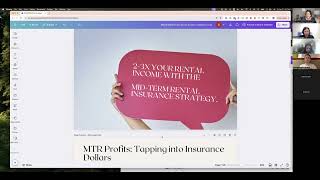
Shona Lepis walks through sourcing mid-term rental contracts from insurance adjusters: build a Google Sheet database and call insurers weekly. Target single-family homes with 4-5 bedrooms in B-class neighborhoods on Airbnb, Zillow, and Furnished Finder. Use keywords like "temporary housing" and "displaced family," charge lower security deposits but higher pet fees, and expect 20% property-management costs.
Chapters
Again, if you're just joining us, I'm filling in for Bonnie. I'm not Bonnie. She's on vacation. She deserves a break. So I'm just filling in. So this is just a one-time Zoom link for anyone that didn't get that. So a couple housekeeping things. If you can turn your cameras on, that's awesome. Unless you're like in the bathroom or something. It's always nice to see your faces so we can kind of connect more. I did literally just got done dropping my kids off, threw a shirt on. So I'm a bit of a mess, but I'm here. So yeah, a couple quick housekeeping things. This is the MTR Connect. It's a weekly meeting. I don't know what time zone you're in. It's 9:00 AM PST for me. In the Zoom chat, most people are probably pretty familiar with Zoom. Just make sure to use the chat feature, maybe introduce yourselves, where you're calling in from, maybe a win for the week if you have any questions. And then there's a little thing. Hey, Raina from Winchester, New York. Awesome, East Coast. Learning to learn more about MTRs. Very cool. Patricia from New York City, new to REI and signed up with an agent. Oh my God, that's amazing. Got pre-approved. Like, that's, that's the— I— yeah, perfect. You guys are, you're on it. Um, okay, so yeah, but just introduce yourselves, like what you're looking to get out of the meeting. Typically, if you have— if you're new to the group, there's, you know, just kind of some housekeeping stuff. Um, sometimes there's featured speakers, sometimes it's just Q&A, but it's a really supportive group. So if you guys have questions, we'll get to those. If everyone else wants to drop something in the chat, and then as we're talking, you can— there's a little kind of in the middle, it's a little heart, you can hit react and you can like raise your hand virtually or, you know, in real life on the camera and I'll get to you and then we'll get to some Q&A. So today I'm going to do like a short presentation on midterm rentals and kind of the insurance niche. I can't talk for just displaced homeowners. So it's a pretty meaty topic. I won't have time to get into everything, but it's kind of going to be an overview, and there'll be lots of time for Q&A at the end. So I'll kick that off in a minute, and then we'll leave lots of time for Q&A. And if you guys have questions going along, just, just, you know, hit me up. Small group today. So again, Bonnie will be back next week. I'm Shona Lepis, just filling in for her. So yeah, if everyone can have their cameras on and just introduce themselves in the chat, that would be awesome. Get to know each other. Again, I don't know who's a regular and who's not. So if anyone's new here, maybe put that in the chat. That would be awesome. So I'm gonna get my presentation ready. And while we're doing that, if anyone can just— if anyone's familiar with midterm rentals and the specific niche of insurance claims for displaced families, like, and you've done it before, you're like an expert, and maybe type a 1, and if you're not, maybe a 2, just so I kind of know who the audience is, and I can tailor it a little bit to where you guys are at, because there's a lot of nuance to it. It's a great strategy, but I just don't— I don't want to be too basic if you guys are like all experts. So you can chime in too on the mic if you want to just tell me, but let me know kind of where you're— if you've heard of that, where your comfort level is, if you have questions.
I'm certainly aware that that is a tenant type that, that leverages a medium-term rental.
Perfect. Okay. Okay. That's great. Yeah, that's a lot of people don't even know that. So that's great. Perfect. Okay. Awesome. Well, I'm going to kind of unpack it a little more. Anyone else have questions or have heard of it? Okay. I really don't know anything. Great. Okay. That's what this is for. Anyone else have experience with it? Maybe heard about it. Um, okay, well, we're gonna do a really, um, Kate's saying set up MTR in Cleveland, didn't get any traction. Okay. Yeah, that's a great question. Um, what's, that's kind of a marketing thing. Um, after this presentation, let's do kind of a hot seat deep dive on that. Um, there's a lot of reasons why, but we can definitely dive into that. Um, okay. So anyone else wanna chime in on kind of their experience with mid, you know, especially the insurance niche? It sounds like everyone's hasn't done it before, and I'll keep it just— I'll kind of unpack it. I just— if everyone had done it, I don't want to be too basic. Okay, so, um, yeah, just housekeeping. If you can turn your cameras on, raise your hand. It's a small group, so you can ask questions while I'm presenting. I'll keep it pretty short. I know there's a lot of cute questions, and that's what this is about, is being really supportive. So, that all being said, I'm gonna just make sure I have my presentation ready here. And again, feel free to chime in. I'm gonna share my screen here, but everyone just welcome. Thank you for coming. I know we're all busy, so it means a lot to take time outta your day to kind of invest in yourself and education. Kate, you're saying very interested in finding ins— insurance clients, but seems like a closed network. You know, there's a lot of nuance to it. It's very much a relationship thing, and I'm gonna really kind of give you some actionable tips hopefully in how to optimize for it. My cat just jumped on my desk. She might hit a keyboard. Okay, I'm gonna make sure I'm on do not disturb too, because I feel like calls always come in when I'm on these things. Okay, so I'm gonna start, I'm gonna start doing my presentation and we'll have lots of time for Q&A. Oh, you're so welcome, Kate. Yeah, thank you. So I'm going to share, share my screen. You'll see my really messy desktop for a second. It's always okay. My cat's in the way. Sorry, this is home office life. Can you guys see my screen okay? Everyone? Okay, awesome. Okay. I'm not going to go in presenter mode because I feel like I won't be able to see the comments. So let me just get things sorted here for one second. But while this is, you know, unlocking the insurance contracts for midterm rentals is what we're talking about today. I don't know if I can see it. I can't see the comments when we're sharing. So just pop your mic up if I'm— you have a question. It's just easy. You might forget it, or just put it in the chat and we'll totally get to it. So I'm going to do a little short intro about myself so you know who I am, that I'm kind of qualified to talk about this. But this is the topic. I'm going to admit someone really fast. Um, okay, so here we go. So a little bit about myself. Oh, and this is not in presenter mode. Okay, so a little bit about me shortly, just so you know who I am if I haven't come across you. Um, I like to say I was raised by capitalist hippies growing up. My parents had vacation rentals. It was like pre-Airbnb, right? It's like paper calendars and answering machine. And so I've been at this a long time before it was cool, right? So it's kind of in my blood, I guess. Originally from California, very expensive market, right? If anyone's in California, you can probably relate. I never thought I would own real estate. It just seemed like a fixer was $1 million. It was just like just rent forever. And then Long story, but I moved to Portland way back in 2005. I ended up— my parents always told me they would not pay for a fancy wedding, but they'd help me buy a house. So I took them up on that in 2005 and I had roommates. Now it's called house hacking, right? But back then it was just roommates. I had random, like, Craigslist roommates, right? So I did that thing. And a lot of investors, that's kind of their origin story, right? We like house hack. So that's how I got started. And we slowly built our portfolio, like, pretty traditionally. Now I do a lot more creative things. So I've been a landlord since 2006. I don't love that word. Housing provider sounds like a nonprofit. So now I kind of go by MTR operator. I don't know if you guys have a better word. I'm totally open. And I used to be really private that I was a landlord, right? Because I thought I'd be judged and I'm like this evil landlord. And then at one point I was just like, you know what, I'm one of the good ones. I'm going to share that. So for anyone out there that feels like can relate to that, like if you do, if you're a good landlord and you're, or you're an MTR operator, let people know what you're up to, right? Share that because people, we just need to change that paradigm, I think. So that's just, I always like to share that because I used to be really private. I was not out there. I'm like, what if someone finds out we have rentals, right? They're going to judge us. A little bit more about it in my background, then we'll totally get started. So prior to being in real estate, my background is as an agency owner, right? I was a designer, branding. That's, I think, why I love midterms too, because there's that design aspect, that experience piece. Somebody once said, when you're an entrepreneur, you're like an outside cat. I'm like, really? An outside cat. I'm kind of feral, right? I've been an entrepreneur pretty much my whole life. Um, so I went from being an agency owner to a full-time real, real estate investor. I'm kind of a serial entrepreneur, but of the shiny object thing, right? Um, I have a lot of resources if you guys are interested in reaching out. Um, I'm gonna let somebody in here. So, uh, my brand for this is called She's Got Assets. Um, so I have a podcast by that name, She's Got Assets. I also have a couple courses. I work with students on like either buying their first investment property or scaling their portfolio if without like door knocking or cold calling, all those things that I tried and I didn't like. And I also, I do one on— you guys are all pretty good operators here, but I coach students a lot with like midterm rentals. And then my rental business is Cedar and Porch Properties and I buy fixers under Shona Buys Houses. So that's like my little brand structure there. And I'm from Portland, Oregon, right? It's a pretty expensive market. We have a mix of long-term and midterm rentals. And on a personal note, I love coffee, design, and I'm really obsessed with real estate. That's why I'm here, right? Okay. So that's a little bit about my background just to show you guys that I'm qualified. This is a picture of me back in the day with our Scrappy Agency. So marketing is kind of in my DNA as real estate, all that stuff. So you guys know. So today, I meant to hide this. This is a presentation I give to the general public. You guys all know 30 Days to Day, right? I'll just skip over these kind of basic slides, right? Why we love it, cash flow, all those things. I don't want to bore you guys. But this part I think is really important. You know, I don't know the mix of properties that you have. There's an avatar, you know, a guest type for every kind of property. You know, the one bedroom is typically like travel nurse, a digital nomad. What I'm going to focus on today is kind of the larger properties and they're really the best fit for the insurance claims, right? So when people ask, that's really what we're focusing on. That's why I kind of broke this down like this, because when we think about it, a typical family, right? It's a 3/2, right? Or bigger, right? So they're looking for larger properties. They don't typically, if a family had something happen, they don't wanna go to a 1/1 or a 2/1 if they're coming from a big house, 4 or 5 bedrooms, they're always gonna want a bigger property. So that's where this niche, it's really for this. Sometimes we get leads for smaller properties, but like the really juicy leads, if you've heard the numbers, right? I can give you some numbers. It's always the, like at least a 3/2 if, and ideally a little bit bigger, like 5 bedroom. 4 or 5, right? So that's kind of what we're focusing on. I just wanted to break that down because for this niche, typically you need this kind of property, right? So also when you're looking at properties, just know, um, that this is really the ideal kind of property. So, um, so we're right now we're going to kind of break down, you know, how to really maximize your cash flow. We throw around a lot of numbers on this. You know, I think it's ultimately also we are really helping families out with this strategy and making money. And so I really love it, but we are really helping families, right? And there's a lot of— it's kind of one of those, you hear a lot of the numbers that we are helping, and I just want to kind of explain the process and how it works and how the pricing works because there's a lot of nuance and it can be really confusing. So, um, basically what, what happens, and I'm gonna have another slide, but a family— so say there's a family, right? And they come home one day and Someone left the water on, the house is totally flooded. They can't live there anymore, right? So what do they do? They're like, oh my gosh, they call their insurance company and the insurance sends out an adjuster, right? And they say, okay, you, you cannot live here anymore. You need to do rehab. And you know, that's covered on their insurance, right? So they're gonna call like Allstate or USAA or State Farm, all these typical insurance companies, right? And if you go and like, it's a good thing to do, go look at your actual policy. I feel like I never look at mine, but it's good to know. You have something called additional living expenses, ALE, and that's where the budget comes from this kind of housing. It's a specific, it's in your insurance. And so if you've heard like ALE Solutions, that's one of the bigger name brands, that's kind of where they got the name from, right? So it's a really big business and they have big budgets. Not to say there's not budgets for each property, but that's kind of where this money comes from. So this is coming from your ALE budget on your insurance claim. And a lot of times when families go through this, they don't really understand what their budget is. They don't know how it's paid for, and it's kind of an overwhelming thing. So I find when I'm getting a family, or as operators, we really should understand like, hey, you, you're, you're being denied for this claim, but look at your thing. You're living in a $600,000 house. Like you have 20% of that typically for ALE. There's other things that go into this besides housing. But that's where the budget's coming from. So it's really important to understand that. So we're a small group. Are there any questions so far? You can just like chime in because I'm— or I could open the chat. Otherwise, I will keep moving. I'm just going to answer questions as we go. Yeah, so can they pick a larger house? That's a really good question. Typically, it needs to be of like kind, right? And so, but they're often inventory is an issue. So I, you know, if you're coming from a 2/1, your budget's going to be for that. So if you're trying to upgrade to a 5-bedroom, there's not going to be a budget for that. I mean, I would say typically you're going to go a little bigger, but if you're going from a 2/1 to a 5/3, that there's not— that's the budget. It'll be out of budget, right? So typically they're trying to find properties that are in the same zip code about 10 miles away that are kind of comparable to the house they're being displaced from, if that makes sense. A really good question. Um, Okay, another question. Chelsea is asking, is it usually that they're approved for most of the times the same? Yeah, I mean, it's similar, but here's the thing, right? If a lot of, like, a typical landlord, right? And I'm going to unpack this a little more. They don't want to do less than a 12-month lease. So sometimes they have to upgrade because there's no inventory, there's no property. So they will have to upgrade, right? But typically they're looking for a like-kind property. It's a really good question. But yeah, we'll unpack that a little more. So, and then, you know, there's a huge demand for these. You know, this is just one example of, you know, claims per day. This is just one agency, 80 to 100 claims per day. This is nationwide, right? There's all— and you think about, there's always things happening. And, you know, we all just saw those fires in California, really devastating. And obviously there are a ton of claims for that, right? Typically it's like during the winter, we like in the Pacific Northwest, we have like pipes bursting or something is frozen or it's a lot of typically water damage. I just placed a family for fire damage and depending on the kind of disaster that kind of dictates how long they'll be staying. But there's a lot of demand for it. We can't predict when we'll get a claim, right? But we can optimize for it. Almas is asking, I hope I said that right. Is there any place that we can look at the numbers? It's not public information. There's just, if you are in a, basically if you're in a metropolitan area, there's gonna be claims. There's no like data to go look at. No one shares these numbers, but any urban area is gonna have a reasonable amount of claims. Yeah, we're gonna get to the needs. So yeah, I think someone had a question. You can just, you can chime in here. We're a small group if someone wants to.
[FOREIGN LANGUAGE] It's Chelsea.
Hey.
I had that same question. That Alma had is like, how do you— like, you guys live in a big metro area. How would I find out if this was even something that was like viable in my small town?
So like when you think about it, anyone that has a home, right, they could have a pipe burst, a fire could happen. They're going to need— they're going to be displaced. So it's probably less of a demand. But the thing with this stuff is we need to— we want to optimize ourselves to be found if there is a need. And I'm going to cover that, right? So we're optimizing, we're networking, we're putting ourselves like, hey, we have a property We understand the model, but we can't predict it. And there's probably less claims, but any area is gonna— I mean, there's families and what— I'll go over this, but they're typically put up in a hotel. And like, if you've got 2 kids and 2 dogs, like, you do not want to live.
That's not gonna work.
Yeah, it's not. Maybe it's fun for a night or 2, but like, the logistics of going up and downstairs with 2 dogs and your kids, and you can't sit down and have a meal and cook— it's not comfortable, right? So there's demand everywhere. I think it's just The bigger the population, right? There's going to be more demand. So that's a really good question. We'll cover that too. So great question.
Thank you.
Yeah, no problem. So what we're going to do here is kind of COVID the overview, the 7 steps of the process, right? And then we're going to dive in a little more with some specific examples. So like I said, something happens. Typically I see a lot of water damage claims. I feel like we're always fighting water, like leaks or like a pipe burst or a dishwasher wasn't installed correctly. Like I hear it all. Like I had a family and they, they had a new dishwasher and and, you know, the water line wasn't installed, so there'd been a leak going on for months. They finally discovered it, and they've been living in this home with not a non-functional kitchen, right? And so, you know, I always like to ask because I, you know, I care about the families, and it's helpful to know what kind of damage it was because it dictates kind of the claim. So something happens, like worst case it's a fire. Like I said, I just put someone in for a fire. It's like a 4-month contract, um, a $9K for 4 months, right? That's a really great lead, and they typically Well, I'll unpack that more, but so something happens, right? Some kind of disaster where someone cannot live in their home. So what they do is they, they call their insurance company, like State Farm, Progressive. Again, you guys can look at your policies, look at your ALE, right? And so State Farm's like, okay, sends an adjuster out. They kind of, you know, um, they check out the property. They say, yes, we need to do rehab on this. Typically the family will go stay in a hotel. Every situation's really different. I mean, there's just That's why this is so nuanced. But typically they'll put them up in a hotel. Sometimes they'll stay in the home, but typically they're in some kind of short-term hotel or Airbnb until they can find more, you know, permanent temporary housing. And again, if you're like a family and you have pets, it's not that comfortable. So the adjuster comes, they're probably putting them up in a hotel. But here's the thing, like insurance, insurance is insurance. They're not housing companies, right? They're dealing with insurance and adjusters and claims and that, Providing housing is not their business, right? That is just not something they do. It's a whole nother business. So then there's another party involved and these are like temporary housing providers, right? So if you've heard the name like ALE Solutions, Sedgwick, all, there's a lot of, it's a huge, huge industry. Essentially insurance partners with these temporary housing companies to put the families up and you know, they're paid, they're paid by the insurance to do this. It is a huge industry, right? And ALE Solutions I think is the name we hear of the most. There's a ton of them. Them. I'll, I'll get to that a little bit later, how to connect with them. Um, and they have what's typically called a relocation specialist that works at these companies. So what happens is the family files a claim, they're probably put up in a hotel, then ALE gets involved. Sometimes the families go hunting for their own properties. That happens sometimes, and that's fine. And that actually saved them, saves them money cuz there's not this third party involved. But typically the family's just dealing with their life and dealing with rehab. And so these temporary housing specialists companies come in and they go searching for properties. And I'll show you examples of what that looks like. But they'll typically say like, I've got a family of 2, there's 2 dogs. Sometimes you get like random things like a lizard or a chicken or a duck. And these are homeowners, right? They're homeowners. So they're not used to being renters. So they can, they're gonna typically have pets. If you guys are not pet friendly, you, you, I would, I don't wanna say it's mandatory, but you're gonna miss out if you're not pet friendly. And you can charge pet fee, pet rent, but they typically have pets, sometimes unusual pets. Pets, and they're typically very responsible because they're homeowners that have been displaced. So this, we will, these relocation specialists kind of go hunting around sometimes in their own databases. Sometimes they're typically on Airbnb, Furnished Finder, all the sites we've heard of, right? So they're, and there's, then they're reaching out and I'll show examples and saying, we've got a family of 2, there's 2 dogs. We're looking through a 3-bedroom in this zip code, right? And then as the MTR operators, we say, okay, great. Like, Thank you, I have these properties. If I don't have a property, I'm really big on networking. I will reach out to my network. We all are part of networks. Like, I have a, I have a group. There's a lot of groups out there. Just, you know, put it out there and try and help them out, right? So you're positioning yourself as like a resource in your area, right? So, and then they will reach out and they will ask you these questions and they'll say like, what's the price? You know, what are the cleaning fees? And the thing about the pricing is like, It's really nuanced because we want to understand, like, if we can say, okay, they are coming from a 2, 3-bedroom home, 2-bath, what is that market value? Like 20% of that, like approximately, is the budget. But we don't— they don't always share the budget. Sometimes they do. And typically what they'll do is they'll come in and say like, well, the adjuster approved a month. And you're like, a month? That's— I mean, we're in midterm, right? We're looking for at least 3 months, or at least I am. So they will typically come in with a very short kind of contract. And when we say our pricing, we often are raising it because when we're listing a price, right, we're probably assuming it's like a 3-month price. So we're going to say, well, if you just want to come in for a month, it's kind of a tiered pricing strategy. Like if I'm listing it at $3,500 and you want to come in for a month, I'm probably going to say 4+ because you may or may not extend. And they generally do extend, but adjusters are very stingy with their approvals. Um, sorry, my cat's in the way. And they typically want to start out with very short contracts. That's why we are kind of tiering our pricing. We don't want to price gouge like, oh, it's double the price, but we, that's why we're charging a little more. So if you hear that, oh, Insurance, you're charging more, it's because of that tiered pricing. It's just like when you go to buy software, right? And they're like, you know, pay up front, you get a discount, or you pay monthly, there's always like a 30% premium. And that's kind of why we're doing that. And we always want to be very transparent about it, but it's okay to ask more if they're coming in for like a month, right? Because it's just, that's a lot of risk for us. We need to be compensated for that. Or like if you think of long-term leases, month to month's always more expensive than a solid lease, right? So we kind of negotiate the price and I'll unpack that a little more. Then that has to go over to the adjuster and the adjuster has to say approval. And I always make sure to make it clear, hey, let me know if this fits in their budget. Sometimes I noodle on like The pet fees, like, I want to work with people. It's a relationship, right? So I'm always like very clear and like, these are my pricing guidelines. Let me know if that works for the family, if it's in their budget, right? Sometimes they will be really upfront about their budget. Yeah, almost go ahead. You can just ask your question.
I heard that. So before, right, historically, what they used to do is basically come with their own budget, right? Which was great because, like, let's say in my case, I put on Funders Finder one, like, price, but the insurance come and quite often it's more than what your price on Furnished Finder, and I've heard that these days now they're scaling down, uh, basically giving you exactly what you ask on Furnished Finder.
No, no.
If they're— and how would you try to negotiate your prices up?
That's a really good question. I'm glad you asked that. Like, when I— and Furnished Finder is the bottom of the barrel, right? It is not— you know, if you're, you're tiering your pricing, make it high. Airbnb is the top, Furnished Finder is the bottom. If they're coming in and saying I want to rent, my price is $3K and I want to rent for a month. Well, that's at least a 3 to 6— I want at least 3 months of a lease. So they're typically coming in and saying, we're going to start with a month. The adjusters, it drives me nuts. They're always like, we just— they don't— because they don't want to overpay, right? Like, I just— they're always going to start with a very short lease term. So we say, well, the price that's advertised is for at least a, you know, a 3-month lease. So if you're coming in for a month, here's my price for, you know, a month. And when you do your proposal, you can say one month is, you know, one month is accurate. X, you know, 1 to 3 months is X, 6 months plus is X, that we're very transparent about it. We're not just pulling it out of a hat, but it's like they always come in with like really short terms because they're trying to be budget conscious, that we're like, well, if you just want a month, you might move out in a month, you might extend, and we're kind of holding that, right? They have— I don't book— if I get an insurance claim, I will never book someone immediately behind them typically, so they typically have to extend because we all know contractors are never on time, right? So it's a bit of nuance in how you position it. If you just come out there and say, well, your insurance, like I'm doubling your price. Yeah, that's shady and that's kind of price gouging. But if you say the price I have advertised is at least for like a 3 to 6 month lease and you're coming in at 1 month, well, there's a premium for that. And they typically, if you explain that and you're putting that in your proposal, like we need to charge a premium for that flexibility. That's our business model, right? We can't— we're eating— we could have more vacancy. So that's again, if you think about software, when you buy software, they want you to do the upfront cost, right? Like pay upfront, you get— or if you're doing month to month, it's always a lot more. So that kind of helped unpack that a little bit. Yeah, it did. It helped a lot.
Thank you.
Yeah, no problem. It's, it's nuance, right? And I think the industry is, to your point, right, it's a lot of people are hearing about this, so they're saying, oh, it's insurance, let me double it, and not kind of framing it in that way and just just doing it randomly, right? So you have to be like very intentional and like, here's my tiered pricing structure. I just talked to a relocation specialist the other day. I'm like, it's pretty— she's like, oh great, I get it, right? And it's also like maybe the adjuster would be like, whoa, like let's go ahead and spring for 2 months versus 1 month, right? And you can just explain that and you're being very transparent. But when we don't do that and just double it, and that's where people are getting a bad rap and they're getting a little pissed about it, understandably. It's risky for us. Like, you know, we could have some vacancy. We don't know if we'll get booked after they leave, but they typically extend sometimes a lot, sometimes once or twice. So just know, but we, we're not, they, they're gonna give you 30 days and you may not be able to book someone right behind them. Right? So really good question. And the more of these you do, like when I'm working with students, we kind of COVID all this, but it's just, you know, make yourself a template. I mean, I have that in my course, just like one month is this, and then you're like, okay, great. Thank you for your inquiry. Here's my pricing. It's tiered and I think that's very transparent, right? And there's not like we're just raising it because it's insurance, right? Because people are catching on, right? And there's— we hear all these really great numbers. So really good question. So I'm next, I'm going to kind of COVID the types of claims. And also I want you guys— I want you to kind of look for these keywords. So here's an example. Like last winter we had this crazy storm, like there was just so much damage. So it says we had a tree fall on our house. We're looking for a fully furnished short-term rental. Looking forward to talking with you. This is a family reaching out, and when I'm reading this, I'm like, tree fall, okay, it's probably insurance, right? And they're not saying that. They're not saying, I have an insurance claim, right? So we have to kind of put our goggles on of what, what is the family going through? How can we help them? So, and I'm not like, hey, let's maximize this, but sometimes there's education. I'm like, oh great, I'm just curious, are you working with an adjuster? Do you have a claim? Because they may not know their budget, and if we say Well, the price is this because they want to start with a month, they're going to be like, well, I can't afford that. And they're not paying for it, right? So we always want to like look at leads and sometimes families reach out and there's no temporary housing company just working with the adjuster, which they love that because that saves them money. I've had that quite a bit. Typically there is a temporary housing company. So always look at your leads and like if there's anything about rehab or repair, you always want to like suss out who are you working with and also be like, hey, I can help advocate for you. I can help negotiate like because it's We always wanna keep the families first and foremost in mind. They're going through this like really difficult situation. If it was a fire, they might have lost stuff. They could have lost a pet. They're like staying in a hotel. They don't have their stuff, right? So they don't always know, and they've never been through this typically, so they don't know how this works. And just a tip here too, if, if someone's in the beginning stages, there are actually public adjusters and they're actually independent and they're paid on commission. So it's well worth getting a public one because they're gonna advocate you a lot advocate for you a lot different than the in-house adjuster, right? So just when you get leads, just kind of look at them and, you know, kind of ask some questions like, oh, this— there might be insurance. Let me just ask some questions, right? So this, I think this was a Furnished Finder lead. I know Furnished Finder, everyone has an opinion. I get a lot of insurance leads from— I think it's worth it. Their interface absolutely sucks, like no doubt, but it's worth it. I definitely get a lot of leads from there. So this is an example of a family reaching out. This is an example of an email, right? This is kind of like a fire. And so then they're saying, hello, we have a local family has some damage to their home. I found this rental in our database. And this is an example of we're actually going and being proactive and putting ourselves in their databases. And I'll talk about how to do that. And they're looking for a 6-month lease with the option to extend. That's really typical. They're going to tell you like 2 adults, a kid, and all the pets, right? Again, so being pet-friendly is— I can't emphasize it enough. If I don't— is everyone pet-friendly on this call? I'm just curious because It's really important. Awesome. Okay. Some people are just definitely afraid of cats and dogs, and I've dealt with it all, and there's ways to protect yourself. Charge, charge the fees, right? Really important. And they're part of your family. Like, if you're not, everyone is, but what are you gonna put them in a kennel for 6 months, right? So it's really important. So this is an example of like, they come in all different ways. This was from a database one. Um, here's some other examples. It's very rare to get the budget. I've had, had it happen, right? And here they're saying, unfurnished and furnished, right? Sometimes they're actually looking for unfurnished. I don't like unfurnished. There's a couple reasons. I don't want people banging furniture in and out of my properties, right? It can do damage. Also, if you're doing like the hybrid model, if you can fill in your gaps with short-term, then you need a furnished property so you can just maximize it more. We are charging a premium for furnished. Occasionally they'll come in and say like, we're looking for unfurnished, and they get kickbacks from like furnishing companies, right? So I, I don't get them a lot. There was a little bit like, I think a year ago there like some hubbub about it, but typically they're looking for furnished. If you have an unfurnished property, they can furnish it very quickly, right? We're just not charging that premium. So these are some examples, right? And they're always gonna kind of, they're gonna tell you we're looking for like a garage or, you know, and here's an example of like a bunny and a lizard, right? Some unusual pets. And again, these are families. They're not like typical renters, right? So let's say be open. This is probably an email, right? They're saying, and they're always gonna say ASAP. That does not mean tomorrow. They just say that because They're probably in a hotel. There's always a process. You're gonna screen them. They're probably staying somewhere. So if you're not available for a week, don't think, oh my God, it's not available at this moment. Right? That's just how it works. They always, always say ASAP. Um, how do you set your rent? Chelsea, great question. Yeah. So I'm gonna cover that a little bit later, but it's typically if they're— you, you have to base it on what you're currently charging. Like you, if you're charging $3K, you might maybe charge like $3,500 or $3,800 if they're coming in just for a month. You can't just raise it because it's insurance. But we— it's helpful to know, like, if, if they're coming from a 2-bedroom home, right, and we go look and say, okay, that's probably a $500,000 house, their insurance is probably— it's, you know, about 20% of that, their ALE budget. But we, we can't— and that's kind of good to know. So we also want to make sure their budget lasts, like, because they have— they do have a fixed budget for ALE. So we always kind of want to know what they're— what kind of property they're coming from that we need. It needs to be— it might be bumped up a little bit that We can't, we can't say $3,000 and get insurance claim and say $6,000 out of the blue. That just, that's too big of a jump. And that's kind of like, you know, we have to kind of make it make sense. Again, it's that tiered model, right? Um, that we could talk about pricing more. So yeah, MTR is the base. And again, it's really just because they're coming in, they're gonna say a month and it's just maddening. It's like, you know, they're not gonna stay for, they're gonna stay longer, but insurance is risk adverse. They don't wanna overspend. So they're gonna approve a month and then they're gonna extend and probably extend again. But it's uncertainty. So that's why we're charging that premium, right? And so sometimes you get the budget and you're like, oh great, that's really helpful. I know, like, I have a property that fits that. It's not that common. They also don't really want to give that up because I don't want you milking and saying, oh well, the budget's, you know, like this, right? Um, so, and sometimes I just, hey, like, it's helpful for me to know, does this fit your budget? When you make that proposal, always ask, always let them know that you can. I mean, sometimes I'm modifying like a cleaning fee or a pet fee or something if it's a little bit less. I'm, it's a relationship thing, so I want to work with them. I always make that super clear so they'll come back to me, right? I don't want to lose a lead over like $100, right? So just, I'm always really clear about that. Here's an example of an Airbnb booking, right? This is like a really great lead. It's $28K, right? And you get these and these happen. This is, they're really, they can be really juicy, right? So these are like examples of how they come in, right? But anytime we see like displacement or rehab, we're always, we want to think, okay, it's insurance. Who are they working with, right? So yeah, here we go. How does, you know, how did, how much do they pay? It's called loss of use coverage, the ALE thing. So you can pull up your policy and actually look at that one. That's like the annual budget and then you divide that by 12, but it's typically 20 to 25% of the value of their home, right? Oh, no problem, Tricia. I'll let you back in. Do I get insurance? Yes. Airbnb, 100%. I get them all the time. You need to be on Airbnb. It's like the biggest search engine. So great question. So this is kind of more on ALE. We're going to cover marketing shortly. And it doesn't just cover housing, right? This ALE, but go look up your policies. Just look at what you're going to see a line item for that. And also, I will, I will educate families like, hey, like, if you're getting pushback on this, go pull up your policy because they often don't even know. They don't— no one tells them what their budget is, right? So I'm like, hey, let me just explain this. Like, let me be your advocate. Like, go look at your policy. This is a reasonable amount. You should be able to get approved for this. So we're in this, you know, temporary housing in this bucket, but it's usually restaurants, some kind of additional stuff. But the bulk of this ALE, additional living expenses, is for housing, right? And sometimes that needs to stretch, like they might need that budget to last like 6 months or a year. So we need to make sure what we're proposing fits in that, that's not— they're not going to run out of money, right? So yeah, so what to charge, you know, everyone's a little bit different. Every policy is different, right? So there's no blanket way to know what their policy will cover, but typically It's the size of the home, right? The neighborhood that they're in, the estimated home value, the type of claim. We covered this, like fire. Like I just got one for 4 months, right? Water is typically a month or two and they usually extend. So I'd say probably about 3 months average, but every policy is really different. But I definitely, again, I've mentioned this, ask the homeowner to check their policy because they typically don't know that. No one's really educating them on that. And we want to make sure that price point works for a couple extensions. So I see a question. Do you pay membership? No. So Airbnb, great question. Airbnb, um, there's no membership fee. They get paid like fees from the site, right? Like there's all those taxes and fee and hosting fees. So there are ways to get people offline pretty easily that I'm gonna cover on how to optimize your site. But, um, no, there's no fees. And like they will, they will sometimes just book right from Airbnb, which is, I mean, you're, if you, you know, you screen them, you check their references, right? And I'll accept that. I won't do my typical screening. But yeah, Air, I get a lot of leads from even VRBO, you guys. Is like, I thought it was dead. I just— my latest fire claim came from VRBO. We took them offline. I'll teach you how to do that. But yeah, it's the biggest search engine, so you really want to be there. Um, so again, this is the Coverage D, lots of use. Go pull up your policy, check it out. And if you're dealing with a claim, you might let people know, hey, go look at this. Um, so kind of napkin math, right? Like, um, say a home is, depending on your market, say $400,000. Say about 20% of that is $80,000, right? Divided by 12 is about $7,000. So you wouldn't want to be over that. You wouldn't want to definitely be under because there's other things that fall in that bucket, right? So, but that just— it's helpful to kind of do some rough napkin math. Um, does that make sense on pricing? I know it's very nuanced and it's a little confusing, um, when you haven't done one before. Share slide 17. Yeah, totally. Okay, 17. Yeah, so yeah, and I can— I'm happy to share the deck if anyone wants it, like no problem. I'll send out a PDF. Um, but yeah, I think this— it's a lot of moving parts, a lot of parties, So like, you know, it's taken me a while to figure this out. I work with students on this, that once you do a couple of them, you kind of figure it out. And I— there's just— there's no cookie-cutter way. They're always a little bit different, a little bit nuanced. Um, you're welcome. Um, so yeah, just, you know, just— but knowing kind of how the process works, I think is really helpful. Hopefully you're getting some actionable stuff out of this. And, you know, use your network, right? Again, when I'm working with students, I have all these templates, but But so here's some, I don't, did I cover the slide already? What is the question? Okay, tip later, we'll get to that. Yeah, so typically, they want to be in the same zip code, right? Because when you think about and you have kids and you're doing a commute, like I commute really far from my, anyway, that's a different story. But they don't want to commute for work, right? They want to be about 10 miles away. Sometimes they will travel farther for the right kind of property, right? But typically, it needs to be in a certain zip code. So they will tell you in this zip code, 5 to 10 miles ideally. That's not to say that's hard and fast, but these are just like frameworks, right? A comparable home. Again, if they're coming from a 3-bedroom, they're not going to want to downsize to a 2-bedroom. Like they might go up in size, they're not typically going to go down, right? Having an open calendar is so, so important, right? If anyone's doing like a hybrid strategy, if you have your calendar peppered with short-term stays, you will not show up in search results. So I teach something called the, you know, it's duplicate listing strategy. You can Google it. But if you're doing the hybrid, have one for short-term, have one for midterm, especially like on Airbnb, right? Because if you have any kind of booking, you will not show up for those longer bookings and you can miss out. And there's ways to strategically kind of have guests move around or something. So you just— calendar is so important. And I will, you know, here's a tip.
Sorry, Shana.
Yeah.
Did you, did you mean list your, your property twice?
Yeah. So basically, if you're doing the hybrid, if you have, if you're doing, filling your gaps with short-term and then you're doing midterm, right? Have two listings. One is optimized for the vacation avatar— beautiful hot tub, vacation mode, relax by your spa. The other one is like all about midterm flexible stays, long stays welcome. And you have two listings and one of the same house— the same house, right? And you can have— I think they're cracking down on it— you can have two different accounts. Um, I have clients, including students and clients, that are still doing it. Um, they even have an option to duplicate your listing, but they're very different. Different optimized listing. Like, I'm working with a student, we're saying like extended lease, you know, flexible lease terms, long stays welcome. The short-term, we're like, come enjoy this relaxing vacation. The photos are different that we're positioning. We're focusing on like the juicy amenities, like the, I don't know, the hot tub, the Instagram wall, the pickleball court. Long-term, we're like, great kitchen, fully stocked, washer dryer. We're like, come.
That's interesting, did not know that was possible on Airbnb.
Okay, good.
Yeah, it's a really good tip, especially if, I mean, I in my market, I can't do that. But if you can fill in your gaps with that, definitely have 2 listings. Yeah. Great. Thank you. Yeah. And obviously never cancel a list, a short-term, right? But you, there's, I like, I have my course, I have templates. You can ask a guest like, hey, like something came up, here's some other options. Maybe even give 'em a little bit of a cash incentive, but they need to cancel themselves, right? Because would you rather have a weekend booking or a 4-month booking that's at full price, right? And no vacancy, right? So, um, but you won't get found if your calendar isn't open, right? So that's super important.
Right.
Okay.
The amenities I see a lot are pet-friendly, fenced yards, parking. A lot of times accessibility is an issue. So like a single-level ranch-style home is really awesome. Like a 3/2, if that's your buy box, 3/2, 4+ bedrooms, right? Get that, you know, available and ASAP. It's, you know, air quotes on that. Like there's a process to get people and they're not gonna move. I've done same-day leads, I mean, or next day it happens, but typically there's a process. Process, and you're going to screen them and do all the typical stuff. So, um, any other questions on that or the kind of properties that they're looking for?
Shawna, just so you know, I'm trying to log on to my phone because I don't have a charger for my laptop, and I'll make sure to admit you if I see it.
Yeah, no problem. Um, okay, I see a question from Dana. If you get inquiries from Airbnb, I'm curious to know how you advertise your property in the platform. Let me talk to Yeah, so do I cut— what you do is you say, okay, this is— let me, let me come back to that. I want to get through this and I'll share how to do that. But so marketing-wise, right, you guys get it, you're on Airbnb and there's ways to get people off platform that I'm going to cover. But there's also— this is a huge, huge industry. Remember that like 7-step process, right? So typically there's the, the— it's the homeowner, then there is the insurance, right, right? State Farm, all of that. And then there's these temporary housing companies. And these are some of the bigger names. Like I have a huge list in my course, but just Google like temporary housing, ALE Solutions. I do a lot of work with Sedgwick, CRS, right? And you go to their sites and you just noodle around and you, you can— there's usually a link to submit your property, right? You go submit it. It's not the best interface. Sometimes you don't even know if it went through, but just get your properties in their databases, um, because sometimes they're looking in their databases. And I suspect that it's easier to go out to Airbnb, look for properties, because— but you never know. I get emails and like, hey, we saw your email on our in our database, is it available? And you wanna, you wanna be kind of omnipresent with your marketing. So take the time, or if you have a VA, it's pretty tedious. Go list yourself in these databases. Again, these are like very high level. Um, you know, if you're a student, I have a full list, but just, you can go Google this, right? And find, I'd use ChatGPT, right? And even find local ones in your market that are temporary housing. So this is really important. It's tedious, but it's really important. And then you wanna be on all the main sites, right? So. So these are like the database listings. Anyone have questions on the database piece of this? Okay.
Um, yeah, I have submitted our housings to Ale Solutions and just like you said, like, I don't know if it was really submitted or not. Are you looking for confirmation emails once you submit these, or are you reaching out to or try and get ahold of somebody to make sure it went through? Just like cross your fingers.
Yeah, that's a really good question. You know, it can't hurt to call and be like, hey, you know, just really friendly, not in a badger-y way. I just want to make sure because I've done that and I, I wasn't listed properly. It's hard to get through, and I think they get a lot of calls of people saying, hey, I've got a property, do you have any, you know, do you have any families? So just be nice about it, and I don't think it hurts to follow up.
Um, okay.
But yeah, they're really kind of just— I mean, this is not their database, is not their business, right? Like, this— so you often don't know if it went through. But I, I do get emails where I'm like, oh, they did look in their databases, but I feel like most of the time I suspect they're not that easy to use. So they're really, and they're in there, they have like these huge caseloads. It's like not just one family, they've got multiple families. They're like shuffling stuff. So they're going to go out to Airbnb. It's easier to find properties, right? And that's why, so yeah, follow up with them, resubmit yourself. Um, but it's just kind of, it's not the best experience, but yeah, it can't hurt to follow up. I do weekly emails too. I built my own kind of database and I share that with my students, right? So if you get leads, even if they don't go through, put them on a Google Sheet and just send out an email occasionally. Hey, you know, if you have anything, I have a great network too. Always position yourself as a resource. Even if you can't help them, you want to be that go-to person. Like, oh, okay, yeah, call, you know, Patricia in this market and she's always helpful, right? That's what I've tried to do because their job isn't easy. And a lot of times, you guys, they call landlords and they're like, why would I do a 2-month lease? Why in the hell would I do like less than 12 months? I don't want that kind of turnover. They do not understand this model. They tell them like they think it's a scam. So we forget that, like, we're knee-deep in this. But a lot of times the traditional landlords— no landlord would do like less than a 12-month lease, right? They just don't understand it. They don't know they can charge a premium, right? So a lot of times that's what they're getting. So if we're like, hey, I, I totally understand the model, we're really flexible on our terms, right? And when I say flexible, I don't mean like no lease. We're saying we'll do like less than 12 months. That's what I mean by flexible, right? And sometimes people think that's just month to month, but I always start with like a firm lease unless you know, an online booking like, you know, Airbnb or something.
Yeah.
Um, any other questions so far? Um, so yeah, just very high level. Like there are a ton of places to advertise. These are the top level ones. You guys are all pros. I'm sure you're on here. Be on Airbnb. It's not just short-term. Really, really, really important. Zillow Rental Manager. A lot of the places, there's a bit of a turf war going on right now. There's a lot of new upstarts like Checkoutministays. A lot of new ones. A lot of them now have a checkbox for furnished, right? I get a lot of leads. These are like, for, you know, insurance, I get a lot. Airbnb, Zillow Rental Manager, Furnished Finder, VRBO is— their interface sucks, but I'd be on there. I think a lot of homeowners look on there too, and there's ways to get them offline. Like, if I get a lead, they'll say, hey, I'm calling from this company. They'll put out an inquiry, and then I'll write them back. So I will get on the phone, I'll be like, oh, they're calling from from Sedgwick, I call Sedgwick and say, hey, XX name, do you know who they are? Can I talk to them? And I get, I get that direct booking. I just pick up the phone because I, and I say, hey, this is Shona from Portland, Oregon. You put an inquiry through on Zillow and you always, if there's a family name or something, 'cause I have so many cases, but I will be very proactive in following up. If I get any kind of lead that they drop any kind of business name, pick up the phone, call them. They're busy. And if you don't, you know, just be proactive. And they love direct bookings. It saves them money. It saves insurance money. Yes, there's more paperwork, but you can screen better. So I, if I, as soon as I get any kind of lead, I pick up the phone and I can usually get ahold of the person that reached out and they're generally very happy to hear from you because they're not gonna go, well, there's ways for them to search you, but they're just busy and they're probably not gonna go through that extra step. Right? So I always do that. So we're almost done here. I'm gonna just go over some optimizing, right? This is an example of Zillow. So we are, when I say optimizing, if anyone's, is anyone familiar with like SEO or any of, any of that kind of thing, kind of websites?
Stuff.
So really high-level SEO optimizing is like when you're typing something into Google, right? Google is serving up relevant results. Like if I'm looking for like, say I'm looking for like, I don't know, like a pet care place and Google sees a bunch of websites that say pet care in the area and it has good reviews. So basically we're trying to put keywords in our listings that let families know and temporary housing companies know that we understand this model, we are flexible. So we're relocate, pet-friendly, specifically designed for families in need of temporary housing. Because again, most landlords don't understand this. They will, they will just tell you to fuck off if it's less than 12 months, right? We're, we're using all the keywords that we found in those listings, like temporary housing, displaced, right? And we're also saying we're dropping our business name in very strategically. Like mine is Cedar Import Properties. You don't have to have a website. It's helpful. Another really good tip here is set up a Google My Business account. That way you can get found. You don't need to have a website. Google will serve that up. You can have your phone number. You can get reviews there. But we're saying, you know, at Cedar and Porch Properties, we offer flexible stays, right? These are all the keywords, right? Flexible for those encountering home repairs and/or relocation. So when someone reads this, they go, oh, like flexible. They're not going to ask for a 12-month lease. Maybe my insurance will approve this, right? And then temporary housing sees this and goes, oh, they understand the model, right? right? And we're saying we work directly with insurance companies, policyholders in need of temporary housing, right? So it's just, we're just letting people know in our marketing that we understand the model. And it might sound kind of basic, but again, there's so many landlords, or if you're short-term, you're like, no, I just do, I just do nightly, right? Why would I want to book it for 3 months, right? I want to maximize my income. They don't realize we can actually charge, we can get to similar numbers from STR. So we really have to be very clear on our marketing and our messaging and kind of our brand Funding. If you don't have a brand name, like, that's fine. Or you have an LLC, I wouldn't put like XX LLC, just go get a DBA. It's pretty simple and make it like something properties or something that's more brand focused. Like, I think a lot of LLCs are a little bit stuffy. And so I always like to have a good name, right? ChatGPT can help you with that. So any questions on the optimizing thing? Can you list your website? And no, these platforms, they don't want you leaving their platform. They don't want you, they want you to like be booking on here and using their thing because they spend a ton money and marketing, right? So you just say, you can say something like, hey, at, you know, Cedar and Porch Properties, we offer full— and your response, you're always dropping your business name. And then I'll do this on Airbnb and my phone rings, I'm like, okay, they got it. Like, you never want to put— don't spell out your number, apples and oranges. Don't say contact me, just say like, hey, at X Properties, we, you know, you can reach us. Just you're doing it kind of under the radar, right? And there's a lot of AI and it's getting tricky here, but anyone savvy enough, they will find you, right? But temporary housing typically won't go the extra mile. It's more families, right? But so if I get like a brand name, I'm going and calling them right away, and I can usually figure out who that person is, or they, they know someone in some department, right? They're big companies, but they typically will know whoever that is, right? And I'll just— so that's what I'll do. But this is really important to take a screenshot, just optimize, use ChatGPT, right? Like I have templates in my course, but this is what we're doing. We're just letting people know like what we're up to. Um, so any, any questions on that before I go on? Okay. Um, so the proposal, right? Like I have this in my course, but they're basically going to ask you these questions. When is it available? Okay. What's the price? They're always going to ask you the price. They always— they're never going to assume the price listed is the price because they know if you're coming in for a month, it's probably going to be different. And they typically don't give you pushback. And if, and if you're doing it in that strategic way of the tiered pricing. Like, yeah, it's different than listed because you guys are coming in for a month, and that's like a huge amount of risk for me. That's the business we're in, right? But we also— it's a business. We can't like have a couple months of vacancy, so we need to like be really strategic in that pricing. Is it furnished? Um, and they will typically tell you what they need. Sometimes they don't. Um, so I have a proposal template that I just fill in. Are utilities included? I think we all know that's expected. Some people do a cap. I don't. I don't want to deal with like all the back and forth of managing that, but just to make price covers that. The property type, right? A lot of— I get a lot like, is there a fenced yard? Is there parking? You know, the zip code is really important. Share the address. Don't hide the address because I need to literally Google it. The house is here. How— don't be squirrely about that. Just make it easy for them. Be like, here's all the information. Does this fit your budget? I'm really happy to work with you. Don't be like, well, like, what's the budget? And just be as efficient as you can. They are extremely busy. They have a ton of cases and workload. Um, so I'll get to that question too, Chelsea. Yeah. So they have a ton of just, and if they don't get back to you, it's not personal. I'll follow up a couple times. I also don't wanna be a pest, right? The family might have found a different property. They might have just stayed with a friend. So it's, it's good to follow up in a nice way. And I'm always like, how can I be helpful? I wanna be the person like, oh, I worked with Shona. She, she got it. She was really easy. It's relationship based, right? You wanna be the person like, just be helpful, be a resource. They will ask you about fees. So here's a tip too, application fee, security deposit. This is a really big tip for you guys. Typically, it's, everyone has a different thing. I'm typically, if it's $6K, the deposit's $6K, right? But with insurance, these families, they were not expecting to move. They were not like, oh, we're gonna move, we're gonna save for a deposit. This is like a very much an unplanned expense. So I typically will say the deposit is $2K, and that's a very strategic number because it's a number that most people have in their bank account. Accounts. Typically, insurance will not cover the deposits coming. It's an out-of-pocket expense for the family, and an adjuster is way more likely to approve yours if that deposit is lower. So it's a very strategic number. So if you're not comfortable with that, I'll say you could miss out on leads because your deposit is too high. And how is the family going to come up with $6K out of pocket? Yes, it's returnable, but that's a lot of money, right? Um, um, okay, I'll get to your question too. Admin fee, they'll ask you about an admin fee. And I used to be like, uh, no. Now I'm like, yes, there's a $250 admin fee because it is a lot of paperwork. There's even like a paperwork department at one of the companies I work with. I'm like, oh, it's, it's Joe from the paperwork department. Love him. Hey Joe, how's it going? Like there's just a lot of moving parts. And so I would say charge. I don't always charge it, but don't feel bad about charging because it's, it's just a lot more parties than you have with like a typical direct booking, right? Um, I charge a pet fee and I charge pet rent. Again, I don't always do that. Sometimes I'll, with insurance, I'll be like, okay, yeah, insurance will cover all of these with a typical guest. I'm usually charging a higher deposit and not charging a pet fee is non-refundable. Always make it clear what is refundable and what is not, right? Because they wanna be very clear that refundable things are deposit. That's kind of it. You, they generally will pay the cleaning fee up front and any other fees. They're always gonna ask you that. And again, they're not gonna like generally go battle on the price. Sometimes they do and you say, great, well that's, if you wanna stay for 6 months, let's chat, right? Um, they're always gonna ask for the contact info. So one thing I didn't cover is in this really big picture, and then we'll get to Q&A. This is taking longer. When they reach out to you, right on this slide, when they reach out to you, they will get the price, right? And what happened— I didn't cover this, I don't think. They will reach out to you, they say, here's my proposal. They send it back to the adjuster. The adjuster has to approve it. Then typically the family will come see it in person. For my direct bookings, I don't ever— I hate in-person showings. I do video tours, virtual tours. I'm like, I get tired kickers that with insurance, they're typically in the neighborhood. They're gonna be there while they wanna see it. So that's typically the model. If it's, if it's booked, right, it can be tricky. Just do your best. But typically they're gonna wanna come see it. When they come see it, always say like, hey, like, you know, we've had a lot of interest. Always let them know if you want this property, we can't reserve it for you. Let your adjuster know, let your temporary housing contact know that we've had a lot of interest. Um, I always make it clear, hey, we, what do you, if there's something missing, what can we accommodate? I've had families come, they wanted a crib, no problem. We get a crib. Ordered. They wanted a desk moved around, no problem. Always make that clear because we are charging a premium and these families have been through a lot. So I always want to accommodate any requests they have, and they will not necessarily want to bug you for that. So it's really important that you're there in person to do the showing, or whoever is doing that, to say, hey, like, I just didn't, you know, rearrange the furniture, no problem, right? They're staying for a couple months, it's a low expense, or they need a certain, a certain thing like a crib, or I don't know what else, bunk bed, just, I would go ahead and do it. So that's just something I didn't cover. So that they will not show the property until, and once the investor approves it, it moves very quickly, right? They're like, okay, it's approved, here we go. So I just want— I don't think I covered that. So I think we kind of got to the end here. I mean, I'll get to Q&A. So again, I'm Shona. Um, this is kind of what I do. Um, I have a podcast, She's Got Assets. I have a Facebook group, you can scan that. I have a bunch of resources. I also do coaching, but this is, you know, a group I wanted to lead with a bunch of value. Reach out if you are interested in any of that. But again, have a YouTube channel, all these— I do a lot of interviews, I do a lot of free content. So I just— feel free to join the group and then we'll get into Q&A. So thank you guys. I hope— let me know if that was valuable because I talk about this a lot and sometimes I don't know what I missed or not. So, um, okay, I'm gonna get to some questions. Um, okay, Kate's asking, I thought you shouldn't put the exact address because, you know, it's on Zillow. I've been in this business a long time. The insurance has to know the address because they need to map it. I wouldn't hide it. I've, you know, I do things in my properties like I have the blinds down, I have the lights on, I have a radio video playing. Like I've, I've had one issue and it was a house we flipped. It was beautifully staged. The windows were wide open, the lights were on. It looked really inviting. So, you know, do what you're comfortable with. I think they really need that address to be able to map it. So I wouldn't hide that, but you, you have to figure out your, what makes sense for you. But good question. Um, Kate is asking, Unfurnished Finder reaches out. Yeah. Ask that, give them the address. Like there's just, they need it. They need to know, they need to be able to map it from where that displaced family is. And they usually wanna be fairly close. And if they don't, they can't map it, it's, they might just move on. Or like, if you're not easy to work with, like they're just really busy. Let's, let's make their jobs easier. So I will give them the address, no problem. Um, yeah, I, I put the address out. I, you know, do what you're comfortable with, but I, people generally wanna map something. I'd rather have them map it than do it touring and just be like, well, I didn't know where the location was. So I'm, I'm pretty open about it. Yes, there's scams with everything, but again, I think if you take precaution and you know, you're kind of monitoring your property, you have like a Ring doorbell and a smart lock, you're gonna know if something's going on. So, um, yeah. Kate, you're so welcome. Chelsea, you're welcome. Awesome. We'll be sure to, yeah, I have like a, a group where we put a lot of resources out is also, I will share, you know, insurance leads and I get nationwide leads. And so again, if you guys get leads and you can't fill them, just put them out to the network. You can also charge like a 10% referral fee, right? That's totally a reasonable thing to do, but we always wanna position ourselves as a resource and we all have networks. This is a network, right? Reach out to Bonnie. Um, so yeah. Um, I know there was some, we're kind of at the hour. I definitely have a little bit more time, so I'm gonna scroll back through here. Anyone can, you know, turn off their mic. I will stop sharing this, make sure I get a screenshot. I'll actually, you know, I'll put it in the chat too if anyone wants to join my group. But yeah, if anyone has questions, just jump in. I will scroll back through and see if I missed anything. I think someone has their hand raised, but I can't tell. Yeah. Hey Shawna. Hey.
I have always wondered and wanted to get into insurance, but I get a little weary. What would be your advice for finding a good property that would fit well in an insurance claim?
That's a really good question. So first of all, I want to say like we don't want to just get hung up just on insurance, right? We can't predict when these claims happen. We can for sure optimize them. I think sometimes people get— we're just so focused. I want this like, like 9K. I just got a 9K booking a month, right? But we have to make sure our property fits for different advertisers. So I would say typically it's the larger homes. Like some people say like the, like a 4 or 5 bedroom. It's the reason is it's harder to find. Right? Families can always upsize. Single level is like no stairs, right? A walk-in shower, fenced yard, parking. Like when you think about what is like, you know, what is the typical American home? That's what it is. You know, there is— because they're hard to find, right? And we can really charge a premium for those kinds of properties. So I would say also that, and then you can, you know, go after different avatars like people, B2B, people traveling on business, right? But when you get that insurance claim, time. They're like, I have someone coming into a 5-bedroom and it's 2 people. Do they really need 5 bedrooms? No, but I think they have a pretty fancy house, so they're approved for $9K, right? So it's like, yeah, I'd say single level, or at least a primary— or not prime, like a bedroom on the first level. Yeah, no stairs, fenced yard, parking, like all the things that we just want, right? When you think of the boxes of like— but accessibility is definitely an issue. So that's what I would look for, um, and just that you, you're, you're optimizing for that kind of lead. We can't guarantee it, but I would say that's the best kind of property, right? Single family. People don't really want to share. They don't want to be in an apartment. They're not, they're coming from a single family.
Yeah. So that's what we all, our current portfolio is all small multifamily. So I either have duplex or triplex. And so I have listed them, obviously nothing really took. So I'm wondering, um, as we're like looking to add on properties to our portfolio, would go like no less than like a B-class neighborhood? Because we have some neighborhoods— Cheyenne's like really small though. And sorry if I'm just like monopolizing this time for me, but I'm just thinking Cheyenne's like literally like 15 miles long. So when you say like within 10 miles, like you could be in various different neighborhoods, would you lean towards more like a B-class neighborhood or would you go— because obviously the price point's cheaper in like a C-class neighborhood— would that fit the bill? Or these people are looking for that safety factor?
Okay, that's a really good question. I don't want— I want a solid B because when you— my people want to feel safe. Any avatar, if it's a sketchy neighborhood, if it feels unsafe, like, I, I don't— as one of my coaches puts it, you want to be in a romantic location. Location is so important. If someone drives by and doesn't feel safe, they're not going to stay there. So yeah, I would say I would not go for C because these families are— I mean, you could have someone coming, but a lot of times those are more like multi-family, and they're not going to be putting them up in a single family, right? So these bigger claims are definitely higher-end homes, right? I think in general, my metric when I'm looking at property is like, okay, if everything went to hell, right, would I want to live there? And if I wouldn't want to live there, worst case, then I won't buy it. That's my metric. And I, I think neighborhood is really important, and where it is, like, is it like double yellow line? Is it on a corner? Is it really busy? All of those things factor in because we're dealing with families and pets. Um, so I think, yes, I think location is really important. Um, I mean, maybe it's like on the verge, right? Like, and you kind of have to get a vibe for the neighborhood, right? But I definitely think a property that is— was going to appeal to multiple people. Like, I know for nurses that's a really big thing. And I'm in Portland, people ask me and I'm like, well, it's relative, right? Like, it's— I think it's fine. It's urban though. It's— it's— there's homeless people here and I have to be as honest as I can be about that.
Yeah, probably.
And it's so important, like, and it's so nuanced. You could be on the wrong— on a corner lot next to the busy street, and then two blocks in you're like, oh, it's— it's so— it's— I think it's so important. I would skip the property if it wasn't in the perfect location, even if it's a good deal. If it's not desirable, then I don't think it's a good deal. And that's just my own, like, personal, like, soapbox on that. So I'm glad you asked.
I have another question too about cats. We're fine with dogs, but I personally have two cats, and they literally have destroyed my house, so I feel like I'm a little jaded. What is your advice or guidance around cats?
Yeah, you know, let's see, I'm gonna put this in the chat. This is my free group if you guys want to join. Um, I've had cats. Um, I, you know, pets can do damage. I'll be honest, I've had— I've dealt with some serious dog pee. Um, I, I'll say, like, my experience, if they're— if the— if you're screening properly and the owners are responsible, they're typically pretty responsible. I've had scratches with cats. I've had more problems with dogs with pee, honestly. So I think you just, you know, I, there's things like cover your couches, right? Like put a couch cover on it, make sure that they're responsible. There is someone I, someone said like there's a, a pheromone plugin thing, which makes it the cats feel more welcome. I've, I accept cats and dogs and I haven't had any major damage, but it is, that's why specifically, right? I would say charge that upfront pet fee that is non-refundable. I'm usually like $600 per pet. It is non-refundable. Fundable that will cover some damage. Um, again, there's no way to totally know, but it's— again, if a family has a cat, they're not going to leave their cat somewhere for 6 months. So I would say just covers and just making sure their family is pretty responsible. And you can have like house rules, but aside from that, I, you know, they sometimes do. And just know you're charging a premium, so you might have to replace them. But I think— I love couch covers. They're ugly, but it keeps the hair off them and limits the kind of scratching and stuff.
So for sure.
Okay, cool.
Thank you.
Yeah, no problem. Great questions. Um, Kate, you're asking, do I have fams other— you know, I don't. I'm kind of like old school. I mean, like, I'm one of those in-your-own-backyard investors. Like, I like the appreciation, um, I like the cash flow, especially with midterms, right? I want to know the neighborhoods. I want to— I want to be close to the assets so I can manage them. A lot of people do it really well, but I've also heard stories of people going out of state and not knowing the neighborhood and not having the appreciation. So I think it depends on what your metrics are like. Like I think we can make cash flow work in an expensive market with, with the mid-term model. And that's why especially insurance, right? I mean, the numbers are crazy, but I think you really have— if you have some kind of connection, I personally want to have everything in my neighborhood. I want to like be around. I want to be able to jump over to the property. But people do it really well. I think just if you're going to do it, I would say make sure to visit the area and understand the nuance because something can look really good on paper but you don't know the neighborhood, who's going to want to live there, right? If it's like in the wrong location. And I think that's so nuanced, um, to me. So that's just my personal opinion, but people do it really well, you know, successfully. So just depends on your goals, I think. I don't know if I answered the question. Um, is pet fee covered by the insurance company? Yeah, so the beautiful thing about insurance is like, I, I would say I do add a few more fees for insurance, I'll be honest, because it's more, more they'll cover it. The only thing they will not cover that deposit. So always, so I will charge a lower deposit, but then I'll up my like pet, my non-refundable pet fee and my pet rent. So my pet fee typically per pet is $600 per pet. Pet fee is $150 per pet. If it's a direct booking, I'm more like $75. So, but I'm also charging a lower deposit, so it's kind of balancing it out, right? So great question. You live in Laguna Beach, it's very difficult. Yeah, I mean, I'm in an expensive market. Yeah, I think, you know, there's, I think it's also, there is opportunity everywhere and you can buy creatively like with owner carry, like, and that's where you kind of negotiate terms directly. Yeah, it is, it is trickier, but like you can have a small but mighty portfolio, I think. And that's kind of depending on how your market, if you're buying like off market, if you can negotiate directly versus like a, I'd rather have a couple properties and really desirable places that have really great appreciation than a bunch of doors with like crappy cash flow and no appreciation. But yeah, I mean, a lot of people go out of state for that reason and they kill it. I think it just comes down to the kind of marketing that you're doing and how you're— if you can find off market and negotiate. Like when I— what I teach in my courses and what I do is I look for tired landlords and I can negotiate like sometimes zero down or interest-only payments. And that's the beautiful thing about buying on terms, which is a totally different topic, but it's something I'm passionate about. So great question. Yeah, I don't think it's— if this was easy, like more people would be doing it. But there are ways, I think, to buy in your own backyard. For sure. Yeah, I can't afford, I mean, I think there's deals everywhere. I just think it, I think it does come down to marketing and what you're, if you're willing to get creative. I think there are deals like sub-to-owner carry where we're not having to come with that 20% down. There's owner-occupied house hacking. There's so many ways I think to do it in expensive markets, but I know for a lot of people it's just, it's just unaffordable and I get it. I totally get it, right? You're not going to scale as quickly, but just think of the value of a property in your backyard versus out of state. That's just me personally. But yeah. Yeah. And especially with this insurance model, right? We— and we— you always want to underwrite very— now I'm getting into it, but conservatively, right? But this is gravy if we get an insurance lead, then there's relief, but we can't predict them. So yeah, really good questions, you guys. Yeah, I'm going to scroll back through, but feel free just to turn open your mic up or pop something in. I'm going to scroll back through the questions. Um, Alma says, asking, I constantly have an internal fight. Do I charge monthly cleaning fee? So yeah, my two cents, I always just like to speak from experience. I only charge a cleaning fee upfront for insurance because they pay it and it just makes it easier at move out because I'm not saying, hey, to the family, you have to move when you clean it. So I, for insurance, my model is I charge a cleaning fee upfront. With a direct booking, I typically don't charge it upfront and I just say like, hey, the expectations. It's professionally cleaned. Typically, you have a template. Most guests prefer I take care of it and take out of the deposit, but I don't charge it up front. That's just me. But a lot of people do monthly cleanings. They kind of want to get eyes on the property. Um, I feel like MTR guests are, for the most part, so responsible. I walk in, I can't even tell they've been there half the time because they're really responsible. You know, they're not like long-term, whether they're just there for a shorter amount of time. That's just my policy. Um, again, so, but do what feels right, right? If you want eyes on the property, but with insurance, I always charge a cleaning fee upfront and I, you know, I usually make it a little higher than it, you know, you can, you can pad that a little bit.
Got it. So when you do it upfront, um, is it like one or monthly? That was, you know, the question. So would you charge monthly cleaning fee? Again, that is like is a property, but would you charge a different one at the end?
So with insurance, I would say— okay, here's what I would say to that. You— they'll ask a cleaning fee. You can't really charge an ongoing cleaning fee. So I would say charge the cleaning upfront for the move-out, and if you want to include monthly cleanings, just bake that into your price and just say this is an amenity, includes monthly cleaning. But I, I've never seen it proposed. I think they would— I think they would give you pushback if you're saying we're charging for monthly cleanings. You're just baking that. I would bake it into your price and just know that's a line item. You don't need to break it out. Just charge the cleaning fee up front. And then if you want monthly cleaning, just make sure that your price includes it. And then you could say, like, if you're negotiating, hey, well, this price included monthly cleanings. I can take that out and, and give you a better, a little bit of a better price, if that makes sense. But yeah, cleaning, I mean, everyone has a different philosophy on it. I don't— my experience, I mean, I get the eyes on the property. I don't think people like to be bothered, so I don't want to be in their space and coordinate when they're coming, so I don't. A lot of people do. Um, I think just do what feels comfortable. If you're concerned about it, you can also try out different models, right? Maybe try it and see if you like it. I know sometimes cleaners find certain things I personally just don't want to deal with the coordinating and, you know, being in their space because people are funny about that. But it all works, right? I think just try it out.
Originally, I started off like in— and I have a couple of tenants and I didn't want to be up in their space. And, you know, I had my eyes on the property and I knew that they are take care. And a couple times I actually wait to see if they need me at all because they brought somebody with. Okay.
Yeah, there's two— I think there's— you could argue either way. I just, over the years, like, I, I don't love— I just— that's just been me. And I've had— I think if I'd had experiences where, like, places were getting trashed, I'm like, okay, I want more eyes on the property. But I screen really well, and I, I'm— so I don't, I don't really usually have problems with— I call them guests, not tenants. So typically, I, I do think that's really important. Um, so I don't have issues, but if I did, I might be like, well, yeah, I get, you know, build in your monthly cleaning. But yeah. Um, somebody asked about leases. So leases, yeah, no, I mean, my, my— I filter everything through my long-term landlord hat. I do a regular lease, and I'm really, really big on leases that are very specific to your county and your state. Don't use some generic lease. Like, I use a software called Tenant Tech. They're not in all states, but they are— they partner with local landlord-tenant associations, and they're very specific to like the county that you're in. So it's a midterm— is it's your— you're in long-term rental territory, right? So I think— I don't— it just— the only difference is like the terms, right? Like you're including your utilities and Is it like, it might be 3 months, whereas a typical long-term is a 12-month lease, right? So yeah. And I, and they include things like lease breaking fees, which I, I will enforce, right? And that's part of your lease. So I think you can do like a custom addendum, but I'm really big on using forms that are really current, right? And if you're just downloading them from Zillow, I don't know if they're specific to the county that I'm in. So I'm, it's just any kind of long-term lease will work. And then you can do an addendum if you have specific things about your property. Um, but that, that's just my 2 cents on the lease thing. It's just a long-term lease. Trim lease. Um, any other questions? I'm scrolling back through this. I know we're kind of getting close to time here, but I want to make sure everyone got their questions answered. Um, Patricia, you asked about expenses for MTR. So you're saying supplies, utilities, landlord insurance, property taxes, HOA. Yeah, the one thing I mean, sometimes I don't, I don't do this like CapEx expenses, right? If you wanted to be really buttoned up like things like HVAC or something, you could put money away for that, right? Like those big expenses that will kind of hit you out of nowhere or like, like 5% for CapEx, right? Property management for midterm, you said 15%. I, I don't really do it a lot, but I charge 20%. I think any operator worth their salt is probably going to charge you 20%. To manage a midterm and do it well. Um, I prefer teaching people how to do it than doing it for them. But yeah, I would say typically, at least in the market I'm in, it's 20% for midterm management fees.
Yeah, the, the capital expense is more like, um, you know, you building up the reserves for, for anything really. Um, so that's kind of where I started, where I got the 1%.
Did you— oh, I didn't see that. Okay, yeah, so you have that in there. Okay, perfect. Okay, I missed that. Yeah, yeah, that's perfect. I totally missed that. So yeah, yeah, I mean, I don't— and you look, it's good to have reserves, but I think some people get, they get like so caught up in that. Like, it's good, but you can also, there's, you know, you can put something on a credit card, right? But be smart about it. But don't let that hold you back from like expanding or, you know. But yeah, no, I think it's really good to be, you know, smart about that stuff for sure because it can come out of nowhere and you're like, oh dear, right?
Thanks, Shana. I did have a question with regards to tenant screening. So you You said that, you know, you're really careful about that. So in the case of an insurance stay, to what extent— what are you looking for when you do screen the family since, you know, it's really the insurance company who's paying the cost of the temporary stay?
What do you look—
what is your criteria then for these families when you run the screen? Screening.
So I do want to clarify that, right? I've had families run out of budget. So ultimately, yes, insurance is covering, but who— they're not on that lease, right? They are right on the lease.
So it's between you and the family, not you and the agency.
Exactly. So we say that, and it happened once, and I had chalked it up to experience. Like, they moved out early, the insurance company paid out the family for an ALE expense. They didn't— they then they ran out of their housing budget, and I'm like, okay, my relationship relationship with them is the, you know, temporary housing. But so here's what I like to do with— I have a screening company for like a traditional long-term, a direct booking midterm that's like a traveling nurse or digital nomad. They run the gamut. They're checking landlord references, they're checking if the owner owns the property. It's very in-depth. For insurance, to your point, like we know it's— they're good for it, insurance is covering it. So I call it a lighter screening. They're not going to have landlord references, right? Because yeah, homeowners, right, right. I call it lighter. I'm really looking for background, credit, criminal, and background, right? Credit. And if that's good, that's kind of all I do. And if they're— I can— I'm gonna be careful here, we follow laws, but if someone's a good communicator and they have good credit and there's no criminal history, I'm just looking for something like alarming. Like, is there something criminal in their record?
Are they like a red flag?
Exactly. And it's— I— as a much lighter screening. And I also— it's kind of awkward, I always frame it up like, hey, I know you guys are homeowners, I know you're not used to applying, but this is our process. It's a light screening, you know, it's a soft ping, but I do need to do that. And I don't ask for personal references because that just gets kind of silly. But I am looking for if they have really bad credit here. I'll tell you a story, right? I have a colleague in town and she called me. She was like, oh my God, call me. I have this crazy story. And she was doing a co-hosting for someone or maybe reverse arbitrage. And she's like, yeah, the owner, oh, she does, she like, she does like master leases, right? She'll find a lead, get a property and like furnish it and then sublease it to a guest. And this owner was like, oh, you need to do a report. She's like, oh, it's usually fine, insurance is covering it. And so she did the background credit check and she's like, oh my God, Shona, this guy was like behind on his mortgage, right? I'm— this rarely happened, but he was behind on his mortgage. So the thing was like maybe he wouldn't move out at the end and he had really bad credit. And that's a, that's an alarm, right? Like, yeah, they— because ultimately, like, so that's the kind of stuff. And I would say 99% of that time. One time, here's another funny story. I had another one and the guy had, um, I, it was a little bit, you know, I think there was some prostitute charge and we're like, do we tell his wife about it? And I'm like, okay. It was like, she was really nice. I'm like, I don't wanna, like, I just went, I like, I follow the law, but I'll, the rules, but I also like, we'll go a little bit by gut. So we didn't make a thing about it, but that like, some, there could be something more serious. Or do you want, you know, something more serious? You probably don't. Right? So it's much lighter. And that's when I say— but if it's Airbnb and they have good reviews, I'll just take it, right? Some— everyone has a different opinion, but it's, it's much lighter. But I would say don't skip it because ultimately who's on that lease? It's the family. And they always like, do we all have to fill it out? I'm like, yes, you both have to sign it. There's a little bit of hand-holding because they're homeowners and they don't— they're not used to doing, right, lease and application things. So that's my two cents. Like, everyone has a different way, but I feel like you need to think like the bank, and they're in your property, and if something goes south, which it typically doesn't, that's how you prevent that, is by good screening.
Okay, thank you.
Yeah, yeah, no problem. Um, um, Kate is asking what size cleaning fee. Yeah, you know, every market's different. Um, I've been through cleaners. My last cleaners, I love them, but they got so freaking expensive, I was like, I had to find a new one. So I'm— I would say typically in my market, I'm about $600. $600, which is more than I'm actually getting charged, but there's just— it just kind of covers the extra. So I'm about $600, and it depends on the, the size of the property, right? And, you know, if you can negotiate— I usually, I'm usually charging a little bit over what my cleaner is charging me. I'm padding it a little bit for sure, um, just to cover stuff because we don't know. There could be extra pet hair, right, or anything like that. Um, what tenant screening? So here's my short answer. I use Buildium. Um, if I'm doing my light screening, I can push it through. They can do the credit background check. If I'm doing like a direct booking with like a nurse or Digital Nomad or a long-term, I'm using Tenant Tech and it's a software. And then I'm pushing that through to my screening company. And I love my screening company because they're not only just, a lot of times people just screen, you know, the auto screen is background credit and criminal, right? That's typical. But they're not actually, a screening company will actually call the landlord. They will verify they own the property. They will verify that the guest tenant paid the rent and it's very thorough. And that's like $50, but I'm charging that to my guest, right? So it's a wash. It depends on the type of lead. If it's insurance, it's a lighter screening. I don't want them to have to go through the pain of like, they don't need to show proof of income, right? Like my screening company will look at the pay stub and be like, oh, well that's the invoices or the pay stub is like a month old and they'll follow up, say, hey, we need a current pay stub, right? It's very thorough. And that's what I use for my direct booking that's not insurance. Insurance again is lighter and I'm using like Buildium or if a TurboTenant or Avail, you can use whatever. There's so many out there. Um, it just, it depends on the type of, of guests that I'm getting. Um, so tenant screening, it's a service and it's called, it's called Pacific Screening. Um, you have to like apply to get in there and they're, it's kind of like a whole thing, but they are, there's companies that do screenings specifically and there's another one. Let me see if I can find it that, that they typically are more of like a B2B model if you have like multifamily, but I like them because they're very thorough and it saves me time. Let me see if there's another company. They're not— a lot of times screening is just background credit and criminal. They're not actually making the phone calls or texting the landlords. So I'm going to see— there's another company that I talked to recently I think is Nationwide. But yeah, I think screening is super important. And sometimes people are like, well, they're a nurse. I'm like, that's great. I'm still running my own screening. And that's, that's my business. I don't usually have problems with guests overstaying or issues because I'm really big on screening and that's just kind of my philosophy. But everyone has to figure out like what their kind of qualifiers are. I'm just trying to find this screening company. I'll drop in the chat. I think they're called Bemrose and you know, I, yeah, a lot of again screening. It's if you want like kind of more of a custom service, then you can hire one of these companies and they just need, you need to sign up with them and there's kind of a bit of a business business setup. Here, Benrose Consulting. I haven't worked with them. I've talked to them, and I think they will— a lot of times these more custom companies need like a lot of doors, but if you're a smaller operator with just a couple doors, just give them a call and they can, um, let you know if they can work with you. So Benrose Screening, and then I also highly recommend Tenant Tech for leases. Um, they're not in every state, but they are— again, they're very specific to the state and county that you're in, and they coordinate with, uh, landlord-tenant associations. Patricia's asking, what should we keep in mind when reviewing a property management? You know, that's really nuanced in my— here's my honest two cents. I don't think anyone is going to care about your property like you do, and I think most people do not understand mid— the midterm model. They don't know how to market, they don't know how to optimize, they certainly do not understand insurance. Like, I'd be hard-pressed— there's a few operators out there that co-host that understand insurance, insurance, but it's like a handful of them, right? So I would just make sure they— do they understand the model? Who are they marketing to? How are they marketing, right? How are they screening, right? Those kinds of things. But I'm the big advocate of self-managing. But I would just— if you are looking for midterm, you know, ask for references, see if they understand the insurance model, because that's— it's really niche and they often don't. Um, so I'm assuming your question is for midterm, not long-term, but that's my two cents on Um, yes, yes, it is. Yeah. Okay. Yeah. I mean, I might start with like some of the bigger groups and see if there's any, like co-hosting is a really big thing in the space now, kind of coming from short-term. Find a co-host that understands the midterm insurance niche. And if you say that, they should be able to explain it or how, what's their network like? Have they built a network with temporary housing companies? And if they can speak to it in a way that, you know, enough now to understand, like, then I would say it's fine. I would say, I would say maybe, but just ask the right questions, ask for references because I've heard good and bad and it, it's a real niche for midterm. Um, with like, I think co-hosting is probably the way I would go, but that's typically like 20%, which is a lot, right? From your profit. So, but yeah, that is, that's what I would ask for sure.
Sure.
Yeah.
Thanks, Shana.
Yeah, no problem. All right. I feel like I talked a lot. Any other questions before you wrap up? Wrap this up. I'm just gonna scroll back through here. I'm, I have a couple more minutes. I know we like probably should get going. Um, but yeah, really great questions, you guys. I hope that was helpful. Um, again, feel free to like join my group. Um, I post a lot of content in there and it's also a network when I get leads, you know, specifically, typically in the Portland, Oregon area, but I do get nationwide leads and I, you know, I, so sometimes I get leads from out of the area and I always post those, but you can kind of to see what they look like. You know, when I get a lead, I post them in that group or friend me on Facebook. Um, so yeah, I think a last call for questions. I do have another meeting coming up. So, all right, you guys. Well, thank you so much for joining. Um, Bonnie, if you listen to this, thanks for letting me host today. She'll be back next week. So this was like a one-time link. Um, reach out with any questions. You can find me on Facebook or Instagram, all the places at Cheese on assets. Um, so yeah, all right, you guys. And also, not the replay, if you guys want a link to that deck as well, let me know and I could have Bonnie send it out. So yeah, thank you, Shauna. Yeah, you're so welcome.
So much.
Thank you. Thanks for joining, you guys. All right, I'll talk to you guys soon. Have a good rest of the day. Have a good weekend.
Have a good weekend.
Bye.
Thanks.
Bye. All right, I'm gonna stop recording.
More from Shona

Choose categories and add 15–20 services Google Business (She's Got Assets Podcast w/ Trevor Mauch)

Why long pages beat short ones for big decisions and SEO (She's Got Assets Podcast w/ Trevor Mauch))

The 1 website element that drives 80% of conversion (She's Got Assets Podcast Trevor Mauch)

3 things your business must do for you (She's Got Assets Podcast with Trevor Mauch)

MTRO PRO - The Midterm Rental Operations System MTR Operators Have Been Waiting For with Dre Galaviz




MTR AMR — average monthly rate for midterm rentals on MTRO PRO platform (She's Got Assets Podcast)

