When the ink dries webinar by KassaiLaw and Shadow Leaders
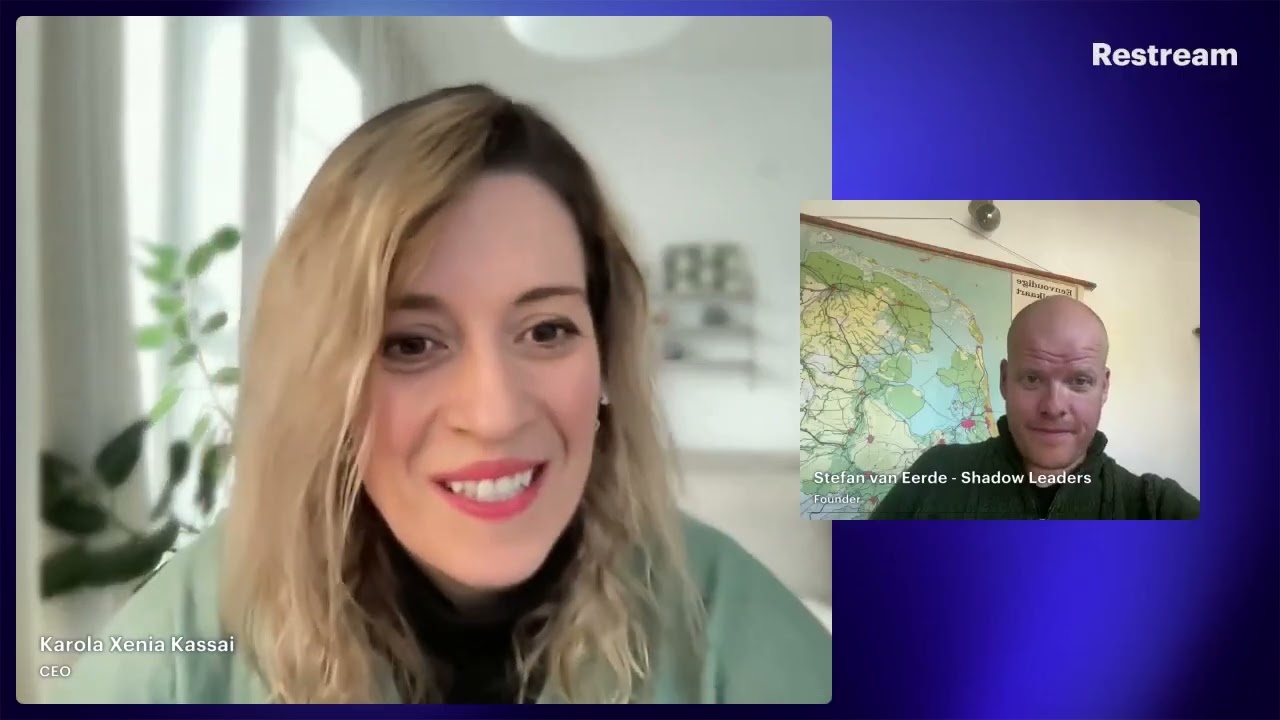
Karola Kasai and Stefan van Eerde break down tech acquisitions from both sides. The real work starts after the deal closes, when culture clashes and leadership redundancy hit. Founders need to clarify their goals upfront and involve employees early, or face the Microsoft-Activision and Twitter-Elon Musk outcomes.
Chapters
Hello, welcome everyone.
Good morning, good afternoon, and good evening for some, I guess.
Yeah, thank you very much for joining us today in this conversation which we started with Stefan van Eerde last year. And today we thought that we're gonna jump into a bit different topic, but before we do so, then please feel free to introduce what we are actually doing here, Stefan.
All right, okay. So I'm the founder of a network of scale-up experts called Shadow Leaders, and within that capacity, we'd like to share insights with founders and with investors, the two audiences we work primarily with. And Carola is also one of the shadow leaders within that network, and with her firm, she does amazing things. So that's a bit my background. I have a background in primarily marketing automation for technical companies. I've been working a lot with primarily technical founders or quite technical founders. So that's a bit about my background. Over to you.
Thank you. So my name is Karola Kasai and I'm the founder and CEO of Kasai Law. And we are basically one of the first, or actually the first, completely virtual law firm founded in the EU who are tech specialized. So we've been in the space as well since 2012, and we've seen a lot of deals and acquisitions, and of course, a lot of other things as well. So when we started to talk with Stefan last year, then we realized that we have a lot of different perspectives here, which could be actually interesting to clash a little bit or discuss a little bit. So I believe we can jump right into our topic of acquisitions, because I got a feeling from you, Stefan van Eerde, that it's basically one of your sweet spots or pain points, up to you. We will, we will see how you think about it because it came up on and on again in our conversations. And then we decided that, okay, let's break it down a little bit. So my first question there would be, is that, so when people hear acquisitions, then they usually focus on the deal itself. And in your experience, So from which point or where does the actual work start there?
Yeah, that's a good question. I think it depends on who you ask that question. For the founder who is selling the company or is being acquired, the real work actually starts when the earn-out term starts and the milestones are being met. Because generally speaking, when you sell your company, you don't get all the money upfront, at least Not a lot of investors do so. But for the employees in your firm, then it really starts when the new leadership team gets started and kicks in and they show themselves in meetings, probably company-wide kickoff and other activities. And they come up with their own requirements, demands, ideas, culture, all these interesting things.
Frustration.
Frustration, yeah, as well.
Fear.
Yeah.
That we're gonna talk a little bit more about, but I think it's very important what you just said, that when it comes to an acquisition, actually, we have to shift the focus a little bit from the deal itself. I know it's hard sometimes, but the real forest actually starts afterwards. And then here we have very different perspectives. So we have the leadership perspective, of course, and within the leadership perspective, we can have significant other perspectives as well as employees and growth and opportunities and failure stories, of course, and everything else. But my next question, still staying general a little bit now, is in your opinion, Stefan van Eerde, what's the biggest misconception when it comes to acquisitions? And again, of course, which perspective? I know you're gonna answer that, but feel free to round up from all perspectives.
Yeah, what do you mean with misconception? Do you mean the expectations up front?
Yeah, yeah.
I think that in that sense, the biggest misconception is that the difference between practice and reality, or sort of between preparation and reality, I must say. So practice is in a way what you do up front, like how will this thing pan out and how will things eventually be implemented. But I think the biggest difference is you can plan whatever you want, but the reality is always different. So you will always end up with—
This is generally true for life, right? This is just one part of life, being acquired.
Indeed, the plan without planning is nothing, but then again, you know, the proof is in the pudding and in the tasting. So I think that is a difficult thing for you as a founder and as a leader, but also for you as an investor, because the fact is you can do all the due diligence, you can do all the prep work upfront, but when it really kicks in, What will happen with the, with the staff? Will people stay around? Will they, out of fear or out of particular expectations, move on to other companies? Will they start their own company? Will they do other things? What will the founder do? How long will the founder or founder team, in case there are multiple founders, how long will they stay on? So you have a lot of ideas and things that you can plan for upfront, but then eventually what happens when it really kicks in, that is always a bit of speculation. And of course you come up with different scenarios. In my experience, in my opinion, but it's still quite hard to predict, okay, who's going to stay, who's going to leave, what kind of impact will change have on people, because some people love it, most people hate it. So that's my experience.
Yes, and it's usually like with every major change, by the way. So I would use the big picture here as well, that, you know, when something changes structurally or any other way in a company, then the first reaction of people is usually that they get scared or they are insecure of what's gonna happen. And it also can—
Can I return the favor? When it comes to your experience more as somewhat of an outsider, as a law expert, how do you prepare founders for this as well? When it comes to this, maybe disconnect between reality and planning.
I think there is one very crucial perspective here, and it's not just again about acquisitions, but when they are founding a company and so on, is that they have to be very clear about their own expectations. So what do they want from this specific acquisition? Because it's so, again, I said, it's very, very easy to get lost in the money part. So the deal itself, and then can come a lot of disappointments and it happens a lot of times because we've, represented both sides as well throughout this year. So also the acquirer, of course, and also the target company. And it's very important that if it's possible, as much as possible, to clarify what goal I have as the founder then, what do I want to get out of this acquisition? What's my purpose with it? And the acquirer company as well. And there is a lot of misalignments And this is a big— this results in big misconceptions, actually. I can give an example that when it comes to integration, for that we can talk a bit more detailed about that later, because it's also a very, very big angle of an acquisition. But if I'm a founder, do I plan to keep my company as is, only being owned by a bigger one? Or am I ready to basically let it go? Because in a sense, if I get acquired, I need to let it go. And a lot of founders get very, very surprised that, what? I thought we just get, you know, a new owner and everything continues. And it's very, very seldom the case. And also the other way around, of course, when it's the acquirer. So what's the acquirer's goal? We have just the recent one is, for example, about So there is a clash between two visions there, actually. The vision of the target company is to grow in Europe, and the vision of the acquirer is to grow in Asia, so in a very different market. They don't care about Europe. And this turned out or became clear at a bit later stage, and it causes now very, very major clashes, actually, between between the two parties. So that's one thing which is very, very important in my opinion.
Great. Yeah, agree. You see, too much debate that we have. We're too many times we're in complete agreement. So let's bring up some more controversial questions.
Yeah, maybe we talk too much.
That is—
how would you structure them? So if you take the perspective of the target company, because it feels like that it's a bit closer to your heart, then what would be the major points or takeaways? So let's say we have some people in the audience who are in the middle of an acquisition or a plan to start an acquisition as founders. What would be the first thing they should take care of or set the focus on to?
Yeah, I think it's a lot about managing expectations, both within sort of the committee that helps you with the acquisition, because generally speaking, it's not something that you do by yourself. You have representatives from the buying company, and probably if you're a big, big picker already yourself, you also have representatives from your side. Make sure that it's a very representative sample also of all the employees in your company. So don't only think about this from a leadership standpoint. I think that is very important. People don't like change, like we talked about already earlier. So if you have people that represent different teams, different departments, different groups within your company, they can also sort of smoothen things already upfront, and they can take away a lot of the fear from their direct peers and colleagues within the organization. If you do it sort of top-down and only with leadership, you might run into some trouble later on. At the same time, I know that it's not always possible. So I've had an example myself also when we got acquired by a listed company, because for that very reason you're not allowed to share the fact that you're being acquired with anyone else because that will have an impact on the stock market. So in that case, you have to keep the team very small, and you might not have the luxury of having a good representation of your organization within the deal-making team. But that's a bit what I can advise. Make sure that ideally you have a very good representative sample in the room when it comes to the people within the organization. So yes, that probably also means that one lady or one guy that is always saying no to change, that might actually be a good person to have in the room.
I once heard a very straightforward and very from some perspective, very cruel comment on that, then yeah, okay, they're not gonna like it, so they can just go. And there is a lot of leadership who actually think like that. But when it comes to— I think let's stick to the leadership a little bit more because it's a very, very interesting scenario when it comes to an acquisition, when we experience leadership clashes. So what's your experience there, or have you been involved in some interesting stories?
Yes, absolutely. Yeah. Yeah. Of course, the most painful thing is when team members hear that there's no longer a spot for them at the table, right? So if you have two, I don't know, VPs of marketing, one from the acquiring company and one from the company that's acquired, you might have double roles and double positions, or two heads of sales, or two CFOs, or two— so that could cause some friction and problems because there might not be a position available anymore for certain leaders. And that, of course, is a painful thing. Of course, you always have this sort of transition period, generally speaking. So, but some companies really want to remove the entire leadership team even when they acquire a company because they want to make sure that it's their way, and their way is the only way that they'd like to do integrations and acquisitions because maybe they do it, I don't know, twice a week, right? So for you as a founder, it might be a really big thing because you're being acquired for a good sum of money, but for a bigger company, this might be business as usual, and you might be just one of 40 acquisitions in a year, for instance. So also in that sense, there is a lot of differences in styles. Another thing, another example I can give is I remember one leader who was saying that, yeah, we have the same culture, so don't worry about it, nothing will change, everything will stay as is, we just have a bigger market and everything is going to be fine. But of course, everyone in the room during that kickoff, or most of the people at least, felt like, I'm not really sure, this might be a bit of a white lie in order to try to make those who are worried a bit less worried. And that they're actually directly confirmed also by the leader from the acquiring company, who said things that the other leader would never have said. The tone of voice, the use of language, the examples, even the personality of that leader was so much different than the other leader that everyone felt like, okay, wow, what this guy was saying is not true. Panic. So actually, the effect that it had on the company, I think, was quite counterintuitive because upfront, maybe they prepped everything well on paper, like, yeah, we're just going to say that everything is just the same and they will just, you know, buy in on it and it's all going to be fine. Because it also had to do with different nationalities, different backgrounds. Yeah, so the point that nothing would change already changed during that literally first session, that first kickoff, very first minutes actually of that meeting. So that was quite quite interesting, but also quite painful to experience. Yeah.
Yes. And I believe that's also a very important key here, which you just mentioned, that it's much safer to think that everything's gonna change from a founder's perspective than to just lean back on and, oh, nothing's gonna change, because then the surprise is much, much less. And of course, as you mentioned, for the acquirer, so if it's a big company, especially you might be one out of 40 this year. So obviously they can do a sort of different strategies there. So like how much the integration level should be and so on, but sooner or later they, they try, they will try to integrate, of course. Of course there are examples to the other way around as well, but that's, that's much more common. And when it comes to the example which you just mentioned that, oh, it's a very different leadership culture. A very big example of the recent years to that is Twitter, of course. So when Twitter got acquired and all the leadership got fired and half of the employees got laid off, and then the other part, significant amount of other people who were not fired then left because they couldn't live with the leadership culture change in a sense, which is also understandable, of course, from a people's perspective, if they are used to one and they prefer that, or hopefully they like their job. So let's say people work somewhere because they like it there for different reasons. And how would you handle that? So what would be your advice if somebody finds themselves in a situation like that?
Yeah, if sort of these leadership clashes, if it escalates, I think what's very important is that you don't— you shouldn't hide stuff from one another, and you should be very open about the intentions that you have and also your ambitions. And that's not just for you as a founder or a leader, but for everyone in the company. So I think if you're in the process of being acquired, even though you might not be able to tell who's going to acquire you, because often there are also multiple bidders, especially when, for instance, it's a succession-based acquisition, the founder wants to stop for whatever the reason may be, age or lack of focus or health challenges. There could be all kinds of challenges because an acquisition, of course, is not always voluntary in a way. So I think it's very important to be open about the intentions and the ambitions and to be as frank and direct as possible about what you want and share that among that team. Because I think it's also very important also as a leader who stays on that you get clarity about your role in the future company so that you have an agreement like the example you gave. If your heart and passion is really into growing into European markets and the acquiring company's like, oh, we don't really care about Europe, all in on Asia, that might be a reason to actually not sign the contract. Because if that's really your thing, or if you really want to be the market leader in a a particular geography or in a particular industry, and the acquiring company is like, oh, we don't care about this, we only care about your team of developers because you have the best developers in the, in the domain. So we want them to stop working on whatever they will be working on, and we want them to focus on company or on projects Y that we have just developed, which is super cool, and they have to forget about everything that they've been worked on in the last 10 years. Well, that's often not really a good story because A lot of people, they choose for something, they choose for you as a founder because they believe in you and the vision that you have, or they truly believe in the product or a project, especially when you have an open source nature that they really love to contribute to the broader community as such. And if you take away their baby, you know, they're going to be mad.
Yeah, here actually it usually comes up in our workshops when we do it in the very beginning, like founder alignment workshop. And very, very many of the occasions, it turns out that the founders have very, very different visions and again, expectations of the cycle and timeline of the company and the lifecycle of the company, of course. And it happens a lot of times that like funder A and B said that they would be super happy about an acquisition like 5 years from now, and then they take their money and leave and do something else. And the other two, so funder C and D were completely appalled and said that they want to work on this for the rest of their life. They truly believe in this and this is their thing. Of course, it's very beneficial if these kind of internal founder clashes come to the light before you found a company. In our cases, almost always afterwards, unfortunately, but this is one very good way if you think at the very beginning, very long ahead, because acquisition is still a very, very great exit tool, basically. So it's absolutely nothing wrong with that. And it's also in many cases, pretty simple. And I don't talk about the paperwork, of course, but your lawyers are there to solve that. But as to a transaction or as to deal, it can be very streamlined and very smooth. So it's, it's still, we don't want to talk anyone out of it because it's still a really, really great tool, but it's, it's worth to think a bit ahead. And then you just mentioned another thing which made me think here, the company culture, because that's another potential clash which can happen. And not just so within the leadership, of course, but I'm used to, I work at a startup, let's say I'm used to a certain startup culture. It has a lot of perks, Actually, that I believe a lot of us who are listening to this can agree to that. And of course, some challenges as well, which are— so this setup is very different if you, if you work at a big multinational company, for example, or a corporation. But there is one specific example which I wanted to discuss with you, Stefan, lately. It's the Microsoft Activision Blizzard acquisition, which was in 2023-24. It was the— what, um, by $69 billion deal value, dollars. Really crazy. It was one of the biggest, or if not the biggest, the largest tech acquisitions. And then there they had the company culture problem, more specifically, that it turned out that the Activision Blizzard had a very, very toxic workplace culture. At least a lot of employees were complaining. There were a lot of lawsuits and so on. And Microsoft had to deal with that. Of course, they still wanted to acquire the company, but this sets very, very different type of challenges. Then I'm taking a little bit of the acquirer's perspective here. Yeah. But what do you think about these corporate— so, because of course corporate culture This is a tough example of corporate culture clashes, of course, but what's your experience there and what to do with it and how to integrate? And of course you can all the time fire the CEO and start to try to integrate and so on. But how would you start there? What would you do?
Yeah, that's a very good point. Of course Activision is a huge company all by itself. So I think that is probably different than most founders here in the webinar today as well. I'm also primarily working with founders in the 2 to 10 million, 2 to 20 million $20 million annual recurring revenue range. So I hope for you that you will sell your company also for billions of dollars, don't get me wrong, but it might be more in the millions, tens, hundreds of millions range. So there could be a little bit of a difference there. But then I think the fact that as a founder your company gets acquired, um, you often quit as soon as possible, or they will ask you to leave the company also because As a founder working in the Microsoft ecosystem, to be quite frank, oh wow, that's not for me and not for many founders, I think, as well, right? So if you all of a sudden have to sign all kinds of agreements, all kinds of documents, all kinds of compliance things that you wouldn't even think about when you're a bit smaller, that could really eat up your energy in a way as well. So I think the reason why you're a founder is also because you wanted to start something and probably break away a bit more from the corporate structure. So when you're integrated again into a corporate company. Yeah, I think it's often also talking about your exits and the moment of exit is very important. So I sold one of my companies as an example, and I stayed on for a few more years to make sure that there was a smooth transition and that the milestones were met. Also was in my own interest because the acquisition amount was cut into different milestones. So if I, when I met the milestone, I got more money, right?
So that's very common structure.
You have an incentive to stick around and do your utmost to get good results. But then it's also truly a relief when you get out of the company, because also in that time of transition, you see that the company is changing and things will be done differently than what you would have done yourself. And you literally alienate from your own company, so it's not your company anymore. You see it also changing in ways that you might or might not really like. So generally speaking, it's good that you step out of, out of a place also after a few years. When it comes to more of the complex example that you gave, Yeah, I think that is something that Microsoft should also have taken into account in the due diligence, not just the financial outcomes and that it is cool that you are now, uh, have the Call of Duty series among your, your, your suite of offering and maybe connected to Xbox and the huge financial potential that you see there, because I get that point. But then also, like, if you're buying a company that is very toxic, it could actually also backfire within the bigger organization. So maybe that would actually be a good reason to keep them as is, put them on a bit of an island make sure that they do things their own way, build a bit of a fence around it, and don't bother them too much. Because if they really come and get integrated into your company, also if it is that toxic, then very likely it's a leadership problem. So it probably comes from the top. If you get these leaders and you promote them into your wider Microsoft organization, then—
which is similarly toxic people to work with.
Yes, yeah. But then it could also cause sort of, you know, sort of a shit show even beyond the scope of your acquisition. So then the real cost come after the integration. Yeah.
And back to the example which you just gave about your own acquisition, when you were, you were actually the target company and the CEO of the target company, and you said you stayed on for a while. Of course, that's usually also a requirement so that so far business has usual, but in that specific story, what were the biggest challenges for you as a leader who just got acquired, stayed on because of contract purposes, and worked very hard on the integration and so on? So I believe this can be very interesting to hear.
Yeah, I think biggest challenges come down to, I think, at least 3 different elements. So one is the personality side, the other is the culture side, and the third one is the I would say the strategy or structure side of things. So when it comes down to—
sorry, before you continue, how many were you? How many employees at the company, at your company?
I had a fairly small company of 7 people. So, uh, okay, but still it was big enough to, uh, to do cool stuff together. So yeah. Um, so yeah, when it comes down to personalities, that I think is a really tough thing because generally speaking, like the example I gave, this was also a bigger, bigger company, uh, well-funded by investors.. And they did this very regularly. So for me, it was a very special thing, especially because it was the first time that I sold the company quite some years ago. And yeah, so I was like, wow, you know what's going to happen. I had good advisors. So I think that is also an advice I'd really like to give you. Make sure that you don't do this alone or with your founding team, but make sure that you have experienced advisors who have gone through a similar process already. So work with with experts like the experts we have in the Shadow Leaders Network, for instance. But make sure that you also have a connection on personality or that you're able to find a good balance between personalities. Because one of the persons in that committee who have from the buying side of things was very narcissistic, I must say. So very— well, narcissist may be a bit negative. It was a very strong personality. Let's put it a bit that way.
And I think it's good to name the elephant in the room. I'm a bit tired of trying to wrap up up into some words which is actually common to play narcissist.
That's true.
I don't know who you are talking about, by the way.
I think that's also, that's why we have to keep it. But the thing is that he had such a strong vision and ideas. If you didn't like it, it was a bit my way or the highway. So that, I think that's why I label it narcissistic. But it was visionary with very good and clear ideas. So that could be something that can also eat you up along the way. Right. So they say, Culture eats strategy for breakfast, and that I think is also in that sense related to personality. And that's a nice bridge to culture. The way things were done was very, very different. We had quite a, quite a modest organization, small, so we did a lot of things together. We befriended more or less everyone, so all the colleagues knew each other very well. And they had more, more sort of top-down structure. We had a very I don't know how to say it properly in English. Sorry, I'm Dutch. I think egalitarian, is that the way? Like everyone was sort of an equal, although of course you had differences in ranks more from an informal leadership standpoint. But there it was like top-down. They told other people what to do and we joined them also physically in the same office space. We became part of a team of around 200 people and we had our own sort of corner. And that was really awkward because you were just seeing things like, oh wow, that's never going to happen to me or my team. So we were literally still on island, but then within the bigger group. So that was quite fascinating. But we were like, okay, I will never ever allow him to talk to my people like that. So you were still thinking in us and we and them kind of terminology, even though we would share the same office building. So that is quite interesting when it comes to culture.
And what did you do? So you said, okay, I'm never gonna allow this person to talk to my people like this. How did you protected them then afterwards? You were also sitting in the organization.
Yeah, so you did it as much as you could, also in management team meetings and other occasions where you had the opportunity to do it. But the fact is, of course, you're also traveling, right? You meet customers, you go to conferences, you do things internationally. So the reality is you cannot. So there are always— because literally when you're on the same floor, people start talking to each other, both positively and negatively. So people became part of that culture, and, uh, uh, you know, for better and for worse. And for a lot of them, it was, was great because they also had opportunities to understand what the other companies that got acquired were all about, what they really did, built very nice bonds. Because what was really great about that acquisition was they had a very party-style way of, of doing things. So they, they were very top-down, but at the same time, they, they threw in parties once a month all paid for, people stayed in hotels, super cool. So for the younger people in my company, and I was young at the time as well, by the way, I was 23, it was a lot of fun because it was like free drinks, cool places, all the cool stuff, things that I couldn't offer in my, you know, with my humble budget. And I could definitely not do that every month. So that was a very nice thing actually that they could offer. And also it attracted new people also even from the other teams who were like, wow, the cool technological things that you are doing with your team, can I join you? And then of course I could also talk to management like, hey, we really need this person to join our team and we need to find a replacement of course in the, in the other company. So that was really nice about the integration and doing things together because you can offer things that you couldn't do all by yourself because all of a sudden there are budgets for things. You have more capacity. So also the, for instance, the development power was really, really an asset. So all of a sudden he could say, oh, okay, let's put 20 developers on this project. And I was like, wow, I all of a sudden get 20, 20+.
What a pace, right? Cool.
You know, that is really nice. So, so that was really great about it. Um, and structure, I think, is the easiest part, to structure it in such a way that you become part of it. Um, That is like you mentioned also about the legalities. That's just a matter of organizing things properly. I also know that companies, I think it is Cisco if I'm not mistaken, who actually intentionally leave things as is. So they buy a company, but they tell the management team, you should run the company like it is still your own company. We don't bother, we just make things possible for you, and, um, but you keep your own culture and keep your own thing. So there are actually big companies out there will also by design let you be and let you stay on your own little island, maybe even keep your own office in your own place.
That's exactly what I wanted to ask, your take about this. So, but do you think it's better to preserve the company culture in the target company as is or to integrate? And I already know what you're going to answer, but let's hear.
Yeah, I think that's, it's a very, very tough question to answer. So it takes it takes a bit of sort of thought as well, because I think ideally integration is best, right? Because you have economies of scale, you have a lot of benefits there, you have more personal development opportunity also for the people in your team, your own employees, your own leaders. So in the, in, in the theory, integration I think is always best, but in reality, most often preserving the original company is easier to do and also more more straightforward. But yeah, then also you accept the fact that you cannot really get the most out of the cooperation and out of the acquisition. So I think that is a bit of a trade-off that you as an acquiring company, but also you as a founder of a company being acquired, yeah, you need to think about it. You need to make that together with the other experts involved.
Yes, and also here, like everywhere else, do your homework. Of course. So find out the policy or the direction which the acquirer would go to, or usually goes to, and so on. So that again, align the expectations. I believe it's very, very important to eliminate surprises here. Yeah. But it's generally again, true for life, right?
Yeah. Yeah. From a founder perspective, in a way you're in the easiest position, right? You walk away with a bag of money if you do things properly.
If they let you walk away though.
If they, yeah. If they let you walk away, then yes. But then of course, for everyone who stays behind, that is really, uh, a challenge, also often a positive challenge because indeed you have way more opportunities than what you maybe could offer as a small SME, but nevertheless, yeah.
I actually wanted to talk a bit more about the opportunities, but I need to jump back here for a sec because I'm so interested in like, did you manage to keep your people and employees within the big organization even after you left, or how did that turn out for you?
Yes and no. So some stayed on, some moved on very well within that bigger organization, some left, and one I actually hired back in another company a few, I think about 8 years later. So that's also interesting. So with some you also have more of a natural click, some people you stay connected with, most people you don't. At least that's my experience when it comes to moving from one company to another. So that was a bit the reality. So yeah, yeah, I think it also depends on the personality. Some people like the comfort of knowing what they have, even though it might not be optimal, but they'd rather stick around. And others are often looking for, for change, for a new thing, maybe better salary elsewhere, job hopping here and there, which I personally would also not really recommend. I think it's good to find a bit of a balance there between sticking around in a good enough organization, um, also from a leadership standpoint, and don't Yeah, don't be frustrated too easily, I would say. Sometimes you just need to stick around and go through it and make the most of it.
So then again, as a CEO, you have to be ready and prepared for everything and anything, right? We always end up there, actually.
Unfortunately, often, yes. Yeah. But then again, you don't have to do this all by yourself. So I think that is the biggest lesson learned as well from my own experience. Make sure that you surround yourself with great experts. Because it's a bit naive to do it all by yourself. And of course, you might have co-founders. I had a co-founder as well, but they come up with different expertise and a different experience also of the whole acquisition process. So make sure that you surround yourself with people who have done this before, trustworthy mentors or other people you might already know. Or if you need subject matter expertise, you can work together with a specialist network like like our network, the Shadow Leaders Network. But that's really up to you to make up your own sort of dream team who can support you in the boardroom, but also during that time of transition.
And was it easy to get on board and all along with, with your co-founder during the acquisition or pre-acquisition and post-acquisition?
Yeah, I think, I think pretty much so, because we knew each other already for a long time, so that helps. But it's still Yeah, of course, like the examples you gave, people have different expectations and normally you select the co-founder because they are very different than you, right?
So, yes, just one thing here, please don't select them because you went to school together, just please, because that happens extremely a lot of cases. So it requires a bit more due diligence than that. I also love to work with my friends, of course, but unless it was elementary school or high school.
So that's just a small, because then there's so much time in between between one could do an engineering degree and the other a business degree and a third law degree. So that's fine. So that's the only small asterisk I need to put next to your comment.
Yeah.
So finally we are in disagreement somewhere.
Oh, finally, because I have to add here that that's in my perspective, it's not enough yet. So because to build a— now we are doing a little pivot here, but still it's important that together a really good founders team and founding team, you have to complement the skills, not the universities. It's very, very important. And who is the right person who has the right skill set to do the CEO job? Not necessarily the one who is the most knowledgeable in the technical part, for example, and so on. So just because I have 3 friends and what you said, one went to economics, I studied economics, the other law, the third one developer, and the fourth is marketing. And we know each other since we were 10. Now that doesn't mean that it's gonna be a good founding team, but this is a people— we can talk about that later in another discussion.
Very true. And then I think it's the problem also sometimes with experts, because you're an expert in law or engineering doesn't mean that you're an expert in everything. I think that is a need. I think a problem that I also see in the, with the the founders that I speak with. Some founders are so full of themselves, also in a good way, because it's important then to have a clear vision and see an opportunity that no one else sees, because that is in essence, I think, what the, what a founder should do. But you could also overreact in a way that you think that you know it all. So yes, you are the founder. Yes, you are the CFO because you did this evening course of finance. Yes, you know how to, how to build something with Loveable, so you're a programmer as well. Yes, you can do, you know, because that actually is a bad thing. Also make sure that you know what you're not good at and surround yourself with people who are better than yourself. But that's more like you need a bit of a sidestep. That's general advice for anyone.
Yeah, that's a general, yeah, exactly. Entrepreneurship advice. I also teach it at the university courses all the time as well. Like good entrepreneurship starts with self-knowledge actually. But let's step back to the acquisition track here because We talked about a lot of potential traps and things to be cautious about, but you also started to talk about the opportunities, which is also very, very important. So you mentioned the great office parties and so on. That obviously could be one perk depending on the company itself, of course, but what other opportunities can an acquisition unlock?
I think generally speaking, you will be able to make more impact with your products and your services. There's a larger market.
Do you think it's true? Yeah. Or your product's gonna disappear in the big goliath?
No, I think it's true, but of course it also depends on your product and your personality as a founder as well. How strong are you in also conveying that message to a bigger company? Because indeed, if you're one out of 40 acquisitions every year, it also, you need to fight for attention in a way, right? Because otherwise they move on to the next shiny object. So, but I think generally speaking, you can make more impact because that's also the reason why you got acquired in the first place. You've shown something that is worth money for an investor or someone who does the acquisition.
Except if you are acquired to shut you down, because we saw Stefan van Eerde, you know, that's a very aggressive strategy, but a lot of companies use it, that you could be potentially dangerous from a competition perspective. So they buy you to shut you down.
I agree. That's also— but that, for as a founder, that could also be a good thing, right? So if you have a competitor at your level that you've been competing with quite fiercely, and all of a sudden you're, you're at this level and you can actually acquire them and they could become one of your colleagues, um, and that I think is also a great opportunity, right? So it could be to acquire other companies or suppliers or competitors to optimize the complete supply chain for your offering. Or like the example I gave, all of a sudden have access to 20 extra developers, so you can do things maybe 3 times faster than what you could do before. So I think there are a lot of benefits there. You can have a better distribution system. I think that is also a very important factor. And if you acquire a company that is the market leader in a particular geography, then all of a sudden you might be able to sell products in Japan Maybe that was your big dream and now all of a sudden it's a reality. You probably have more budgets, more people, more capacity. So I think that those are all positive things, generally speaking, about an acquisition. But then again, if you're just one out of many, you have to constantly fight for that attention and also prove your worth. So upfront, of course, everyone is friends and everyone, you know, it's champagne and all the good stuff. But then you need to show that you're worth the money, right? So they put money into you with particular milestones. If you don't meet these milestones, then the relationship will become sour quite quickly, I guess. So make sure that you also stay on track and also deal with all things that will be thrown at you and what will happen to you.
And in that sense, what do you think what the most important leadership skill when it comes to acquisitions or like during an acquisition?
I think the ability to listen very well. And to be very frank, I'm bad at it. So because I was also one of those founders who was full of himself and full of the cool technology and everything else that we developed. So that's what I learned the hard way also over time. Make sure that you really listen to the acquiring party, to the people within your company, to the advisors. So make sure that you really build a more, I would say, holistic view of the reality than just your own sort of narrow, narrow vision in a way, because it will benefit you and the company eventually. So listening very well to the signals in, and not just the voices in the deal-making room, but also the voice of the people outside of the room, and find a good balance between speed and letting things be for a while. I think that is also very important as a founder. And you get acquired and you might have this thing on the top of your list for many, many years because that always has been the thing. And now all of a sudden that becomes priority number 5. That is quite painful because you see that certain things will go tremendously slow. Other things that you hoped for that would be finally solved because that was a pain you had for a long time, you're like, okay, now we have the budget, now we have the whatever it is that the solution is from the acquiring company, and then nothing happens. So that could also be very frustrating, like, crap, you know, I thought that this would be solved because now finally we have access to this, this team of talent or to this new market, and nothing happens. Why? And yeah, that is, that is something you have to, you have to cope with and deal with. So be flexible, but that of course is something that you already learn with your, within your own organization. But make sure that you listen very well also to voices of people who might go against your own gut feel and your own ideas and visions.
And what was, or do you think there are some moments during an acquisition process which founders usually underestimate actually? Other than the paperwork, because I heard a lot of people complaining and venting about it, that they had a PTSD of all the paperwork. And it's like, oh, sorry.
You get like a room full of these nice binders with all kinds of terms you could, and then you're like, oh crap, am I really signing all of this? Like, what are the, what are the, what's the catch? But that's the neat part of it.
Yeah. In 20 copies, preferably, right?
Yeah.
The good old times when the closing took like a whole day in a room. With some mineral water and some food, and all you did is just like, fine, fine. Yeah, that's a bit faster.
But the good thing is that, um, that day will, you know, will end at a certain moment, right? So then it's, it's in a way back to this. I think the process of adoption to the new reality, I think, is something that you really shouldn't underestimate, because for some leaders in your company, things go too slow and they get upset and they get annoyed because of the sort of the slow speed of change. For other leaders, things actually go too fast and they get upset and annoyed too. So you need to find this really— yeah, it's of course, as a leader, you can never do it in the right way, right? So you need to find this sort of balancing act, find a good equilibrium there, and make sure that you keep also a very close eye on your superstars. You know who is the best performing salesperson, you know who is your lead developer, you know who is the best finance person in your company, or whatever is important to you. Make sure that you also spend time with that person or with that group of persons regularly. Because if you see that they become annoyed, or if they start calling themselves in sick, or something is happening, then you really have a problem. Because then probably you will not be able to live up to the expectation and meet the milestones. Because if, you know, if your team of developers walks away because they're like, okay, this is such a crappy thing, you know, he will be gone as well in a few years or months. So what will be left is just a pile of shit. I don't want to be part of that. So let's move on. So that of course is something you want to avoid.
Yeah, I agree here as well. So then what it made me, what you just said, it made me think about of another perspective here is that it's a bit similar, but still not that. What lessons do founders usually learn only after the acquisition, what you've seen so far?
Because, yeah, what do you learn after acquisition? That, that reality is a bit rougher than what you anticipate often, but also in the positive way, you could all of a sudden have things really surprising you, like things go much better than what you always thought would be where you anticipated that if you would enter that market, you would get a lot of problems with the competitor, and then nothing happens from the competitive side. So actually, you, you take a lot of market share, you see a lot of revenue growth. So it's really how things work out in practice, I think, is something that you cannot really plan for. So I'm repeating myself a bit there, but I think you just have to make the best possible decision with the people in the room and the people outside, uh, and in clear alignment with the, with the bigger company, because then sometimes you also Your assumptions can be wrong as well. Your market research can be wrong as well, can be outdated as such. But also vice versa. I also have noticed another example of a leader that was so full of himself, and it was really like, you know, like, we have state-of-the-art technology, this is the best ever. And then a team of more introvert analysts and developers were like, screw you, you know, this is not state-of-the-art at all. This is like used to work with that stuff 10 years ago, but because you, you're not on top of things, you think this is really— so the whole, the whole team moved on. So the whole team left the company. They decided together, like, I don't want to work with this guy. And that, of course, is also something that is avoidable in a way if you do the culture fit properly. If the allocation of teams, you're like, okay, this leader will lead this, this team. Is it going to be a match, yes or no? Um, so this is, I think, an avoidable situation if you have a leader with such a strong personality, but also let's call it the Trump effect, that you think you know it all, and if you're wrong afterwards, you say that's how you planned it.
Here we have a more exact word to use as well, but okay, we can start to practice using it the other time.
Yeah, yeah. And I think that is something that you have to be aware of. And of course, in the good sense, that is also the case, right? If you have a very strong leader and all of a sudden that leader who was maybe the leader of a group of 10 becomes the leader of a group of 50, and all the 50 people really grow and excel and are super happy in their new created environments. I've seen that as well. I've seen also examples of leaders like that really stepped up also to my own surprise, like, wow, I didn't see this in you, but you can actually lead a way bigger team and you're doing an amazing job.
So it's not always the loudest people who are the most competent. Actually, it's usually the other way around. That's very important lesson, I believe, which we could spread, because if you're actually competent, you don't have to be loud.
Yeah. And how do you deal with that, Carola, as well when it comes to the deal-making process? Because I can imagine that's a lot of either founders who are being acquired with a very strong personality, or founders who are acquiring another company with a very strong vision and idea. How do you keep all the, uh, yeah, how do you keep all the The Dutch say all the frogs in the same boat. That's how we say it in Dutch, but I don't think that's a proper way of putting it in English. So how would you deal with sort of strong personalities and potential clash of personalities also in the acquisition process?
That's a very, very interesting part in our job as well, I have to say, being business lawyers. And the term business lawyer is a bit misunderstood in Europe actually, because they still think about it, and the most common thing about it, that we are lawyer, so behind, behind the paragraphs and so on, but we are actually business advisors. That's very, very important that there are some countries where this culture is more like stronger, but in EU it's still a bit different. So in that sense, a very, very significant part of our job is actually being the bridge which you just mentioned before. So it's a lot of clashes also in the background. And, you know, we stand in the middle, we try to create a deal which hopefully is beneficial to all parties or both parties. And everybody is just coming and ventilating. So one to the left ear, one to the right ear, of course. And it requires a lot of skills, actually, like both psychologically and, you know, those kind of communication skills to actually get them into the same boat. But I said I really like this part of the job. And this is also why I'm absolutely not worried that AI is going to take my job as a lawyer. No, it's not. It's just going to make significant certain part simpler, but an even more significant part is left there. So it's a very good question. And as I said, requires those kind of skills, which is not always present, especially with lawyers, I mean, especially if we are talking about different business cultures. So let's say that a US company wants to acquire a Swedish company, and then we are sitting in the middle, try to negotiate and make a deal. And it's exactly what you just said. The one is complaining about that the other is too slow. The other is complaining about that the acquirer is too arrogant or too fast or try to use force or pushing it and so on. So it's actually very, very interesting to not get stuck in the middle and not getting influenced actually by the lot of emotions, because in a certain point, especially if the transaction starts to be a bit challenging of, you know, the conditions and ping pong and back and forth, more and more emotions usually come to the surface and then managing those emotions and then calm people down. And so it's a, Yes, it's very present, and as I mentioned, it's, I would say, at least 50% of our job as business lawyer to manage these. So I put always great emphasis on teaching it to my colleagues so that they can do the real help as well. And I believe one thing is very important here, but that's a bit other. I just thought of it, so I can get back to that. So feel free to say what you just thought now.
Yeah. And you're a deal broker in a way as well, right? But not just from the factual side, but also from the interpersonal side and the management of expectations side, I think. So that is also something that is very important.
Yes. And how we do lawyering at Casilo is also from the business side. So it's not just like, okay, draft an agreement, but an agreement is 95% a business document. That's what I always have to explain as well. It's like 5% of strict, straightforward legaling. Yes, it's there, but it's a business document. So yes, to try to create exactly like a broker, to create a deal which could be good or bad and use certain strategies there and so on. That's really interesting. And I believe our time is also up, by the way. So we can, we can then close the conversation, but there is one very interesting aspect which I wanted to say now. And I would be very interested in your take as well, because we've not discussed a lot of soft aspects. So not the hard, like this is a piece of paper to sign and what are the milestones and the conditions, but equally, if not even more important aspects here when it comes to an acquisition. And you also mentioned that when it came to the Microsoft acquisition of the toxic culture and so on, that Microsoft should have put more emphasis on that. So, it's very interesting to see from the acquirers, so the acquiring company's perspective, that the scope of an acquisition process throughout the, I would say, last 10, 15 years started to broaden, because it's not just about the numbers anymore. It's not just about the finances. And the IP, but it's the culture. It has, for example, the cybersecurity perspective, the AI security perspective, so many things which didn't exist before when it came to acquisition, and the human perspective, which we talked a lot about, the cultural perspective. So I believe it's very, very nice to see this development and tendency, even though a lot of companies still don't really act on it, or I'm not even sure that their leadership actually realized that this part is also changing. Like, this part— by this part I mean acquisitions and the whole process and everything around. It's also changing like everything else. But, uh, I'm very happy to see it.
Yeah, and time management is tough, especially from the acquiring side, right? If you are indeed acquiring 40 companies a year and you need— your signature needs to be on the documentation as well, it means that you need to understand what you're signing, right? Because you're you're liable either. So that can be tough, right? So yeah, of course, as a natural consequence, you might take some shortcuts and think like, okay, this is going to be fine because the lawyer who's always looking after this took care of everything, so just sign it. I think that is also a tough thing for an acquiring company, that you— these sort of soft things are probably the most important but also the hardest to manage, especially if you have limited amount of time. So the sooner you start with that sort of transition and that sort of acquisition process, the better. Do not sugarcoat things too much as well, but also at the same time, don't highlight the negativity too much. So find that, strike that balance there as well. And I think what's really important, make things as specific as possible also for the acquiring company. So what's going to happen to the employees in the company? Who can stay? Who needs to go? What's the package for them? Be very open and transparent about it as well. And also ideally picture the bigger picture for them, like, okay, if you join the company, you can lead a team of 50 instead of 20. And what happens unfortunately very often is that you lead that team and nothing changes. You keep the same salary, maybe even the same budget, and all of a sudden you have 20 extra products that you have to look after. And I thought, Of course, that is also bad management. So make sure that you allocate budget also for the people who stay and give a very good future outlook and perspective to them, especially if they are the superstars in the company that you acquire. Come up with a good personal plan, work with your HR and talent team to make sure that you keep the ones that you really want to keep. And of course, there are always people that you probably also want to get rid of because that could also be a consequence of an acquisition that you think that we can finally say, Goodbye to this person.
Yeah. Yeah.
That's also a very natural and logical thing often. Right. So yeah.
Yeah. And also make sure that you can lead a team of 15 instead of 20, because again, we are shifting in leadership skills there, but I believe we don't have time to discuss that now today, unfortunately. So thank you very much for this great closing, Stefan van Eerde, and sharing your experiences there. And thank you very much for everyone. For joining us for our acquisition conversation. And keep an eye on us because we're gonna come with other very, very practical topics later on.
Thank you for having me. It's been a pleasure, like, like always. And I'd like to invite everyone also to post questions that they may have also for a later stage. So this will be— this is recorded and it will be shown also on the LinkedIn event page. So also, if you see this at a later stage, you might not really have a chance to mingle. Just share your comments and we come back to you. And also, if you are in need of advisors, don't be a stranger and reach out to us, please.
Because we have a topic of ghosting, investors ghosting. Do you remember, Stefan van Eerde? There was a lot of questions about that last time. So I believe next time we can jump into that one. It sounds also like a big pain point.
Yeah, let's go.
Yes, I agree, feel free to come with questions here as well, and then we can get back to acquisitions of course too.
Great, thank you.
Thank you, thank you everyone, and thank you Stefan van Eerde. Bye-bye.