Stop Rebuilding Your Life (Do This Instead) | Tanya C. Oliver
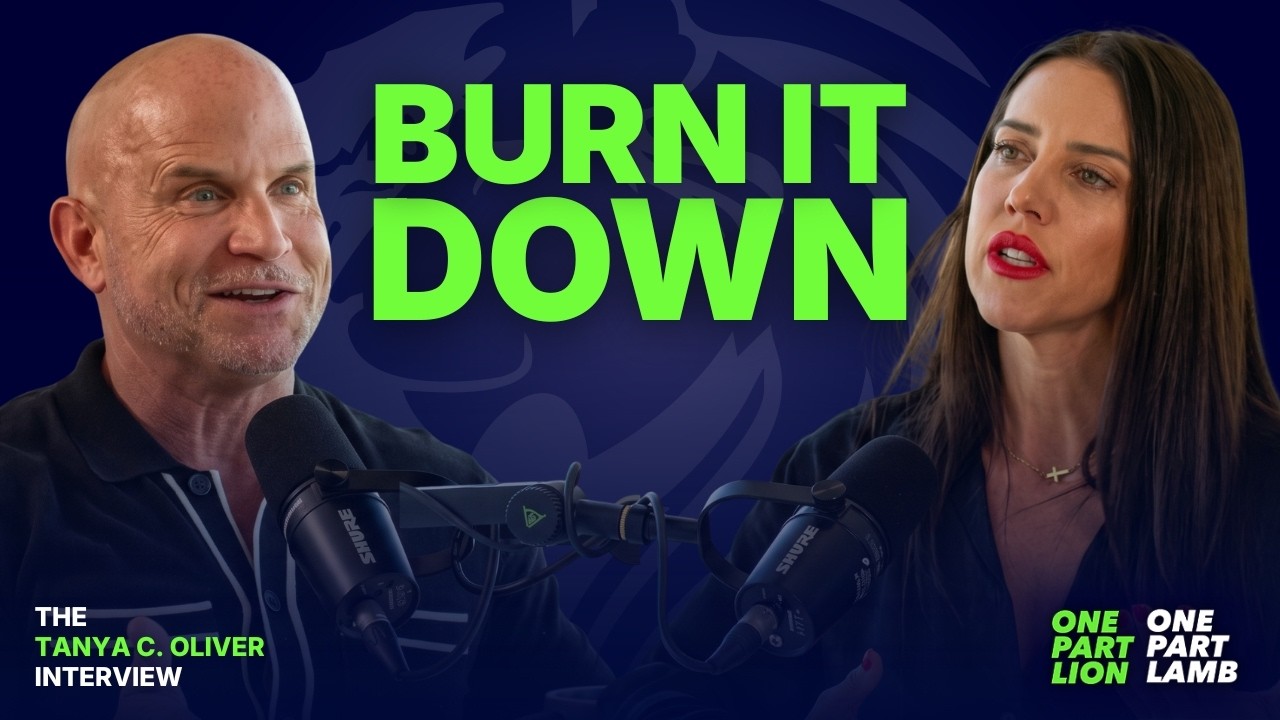
In this episode of Stephen Scoggins’ One Part Lion, One Part Lamb series, host Stephen interviews author and speaker Tanya C. Oliver. The conversation moves from a vivid illustration of Jesus offering a larger “teddy bear” of identity to a child clinging to a small one, into a deep dive on what it means to be a “daughter of the King.” Tanya shares that God repeatedly affirms her role as a daughter of the King who will teach other women the same identity. They explore practical frameworks for living that identity: stewardship of self (God‑led, self‑governed), daily disciplines (night‑time routines, prayer, breathwork), and the importance of clear values and standards that act as “bodyguards” against counterfeit influences. Tanya describes her transition from a New‑Age, self‑centered mindset to a kingdom‑centered one, emphasizing authority, submission, and interdependence in relationships. She announces a new women‑focused initiative, “Mast Her Minds,” and offers a free year‑long accountability tracker via her website. The episode concludes with a rapid‑fire round where Tanya reveals personal preferences (discipline over desire, night routine, the word “authoritative”), best‑ignored advice (“don’t get with him”), and the core takeaway: surrender the life you’re trying to escape rather than rebuilding it. Throughout, both speakers stress the need for intentional practice, accountability, and surrender to God’s authority as the path to authentic transformation.
Chapters
Okay, you get all the success, you get the house, the car, you get the girl, the wife, you get the trophies, you're on the stages, and then what?
Tanya C. Oliver is a performance coach for kingdom entrepreneurs with more than 20 years teaching high achievers emotional intelligence, high performance habits, and leadership, but with a Christ-centered focus and from the inside out.
So I was chasing all these things, but, but it all came back into places that were based on insecurity, self-glorifying, Proving myself for attention. But why? And for who? I gave my life to Jesus, and I went all in for a year. And I didn't say forever, I just said a year. And I don't wanna rebuild. That's where Building the New came from, is like, I don't wanna rebuild all of the patterns that I got myself into. Because part of building the new is you have to take personal responsibility. I mean, it's really hard to admit that you're the problem. If you know that you're the problem, you're also the solution. Surrender it to him.
Hey family, welcome back to One Part Lion, One Part Lamb. Uh, I hope you're enjoying these episodes as much as we are. We've had some of the most profound, fantastic guests as of late, offering value bomb after value bomb. Uh, today will be no different. Uh, as you know, we're all about teaching you how to scale and/or carry strength and surrender simultaneously, which is the One Part Lion, One Part Lamb way, mainly to make sure you can carry that which you're actually called to carry. And today is no different. Today's guest is an exceptional, exceptional leader in the marketplace. And once I get done telling you a little about her and a little about her book and we have a fantastic conversation, I know you're going to want to share this with a friend. So, as always, do me a favor. While we're going through the episode, while you're listening in, while you're watching in, make a mental note as people pop into your mind and then share this episode with them as soon as they do. It's okay to pause it. Not going to hurt our feelings. And that way, we can get the episode out in ways that actually transform and help other people. So today's special guest is someone who is amazing. She has rebuilt twice. She's already been— and the crazy part was, is she's rebuilt and rejuvenated, if you want to call it, reignited her life twice. But the second time was after she, like me, had it all, where she felt like she had everything coming up. So this, this episode's not about being a comeback. This episode is about identity. Hmm. It's about finding your authentic identity that, once found, will actually help you accelerate faster than anything else. Tanya C. Oliver is a performance coach for kingdom entrepreneurs with more than 20 years teaching high achievers emotional intelligence, high performance habits, and leadership, but with a Christ-centered focus and from the inside out. Guys, please help me welcome the one and only Tanya C. Oliver. What's going on?
Thank you.
You're welcome. Yeah.
Wow. Thank you for the intro.
Yeah, it was funny when I, when I first, uh, was, um, making my way through all your work and, and whatnot, I think the bio ended up being like 3 pages long. I was like, I probably couldn't get that all out at once. So I appreciate, uh, your patience is, um, I just shared a little bit about you.
Thank you.
Um, you know, we met through our mutual friend Rhonda, who's now relaunching MentorBox 2.0. And I was like, okay, this is exceptional. We shared the same stage, uh, that weekend. And one of the things I noticed about you really quickly was, um, authority and presence. So recently, because I've been this part of my own journey, recently I've been understanding that authority doesn't require words. It follows you, carries with you when it— when, when you're, when you're deeply connected. And like you, um, in many respects, we both went through metamorphosis, if you will. Um, I went through mine kicking and screaming. I don't know about you.
Oh yeah.
Um, yeah. And, you know, and then so I began to kind of research more and more about what you're doing. I obviously got Building the New, and I was like, I mean, yeah, that makes a lot of sense. And the more and more I got into it Your book is really a highlighter book, by the way. I don't recommend our listeners and viewers read it all at once. I want them to take their time and go through it because you're very methodical about the transformational transcendent process you went through. I think what I'd like to know more than anything else is when we're teaching people how to build the new, what are they most often getting wrong?
That question is such a great question. And the book is a playbook. It was a 5-year Act of obedience. Um, I think a lot of people just want to start with this, and I'll get into your question, is, you know, when you're on a God assignment, you're not like necessarily always willing. You're like, nah, I don't want to do this, because you don't always know what you're really getting into. And people see the external trophy. That's why the COVID is a trophy, because it's the outcome of the steps.
Yeah.
And if I knew what I had to go through to get that book to where it is, I probably wouldn't have wanted to write the book.
We got similarities in our stories for sure.
Exactly. Exactly. But getting back into Building the New, I'll just share my testimony because there's power in stories, is that I never planned on building the new. God gave me the name of the book because I had hit a rock bottom in '21. I didn't want to be here anymore. I was suicidal. And my brain is very athletic. I played 9 years of competitive ice hockey.
Let's go. I'm an ice hockey player myself.
Yeah. So it's, uh, I played— I do believe, like, coming from that space of athleticism at a very competitive level, that setting targets. And so I said, okay, well, if I'm willing to die, then what if I just gave my life to Christ? I gave my life to Jesus, and I went all in for a year.
Okay.
And I didn't say forever, I just said a year. And I just went all in on it. I would find mentors and coaches and people that were doing this thing called Christianity, talking about God. And I just would try to find as many pillars of support and strength that I possibly could in order to figure it out. But I also mostly took the line of work that I did because this was a line of work that I've been doing. And I just put myself through it because at that moment, I didn't know anybody that taught the way that I did, that had the many different practices of the 4 pillars of the mental, physical, emotional, and the spiritual.
Mm-hmm.
And so I was like, okay, it's not just one pillar or the other pillar. We have to have all 4 pillars in order to be optimized as human beings. So let me put myself through my own programs. And I don't want to rebuild. That's where Building the New came from, is like, I don't want to rebuild All of the patterns that I got myself into, because part of building the new is you have to take personal responsibility. You have to say, okay, I came into agreement with this relationship, or I came into agreement with this business, or I came into agreement with this thing, this substance, if you're doing substance abuse and addiction. And now I need to break the agreement.
Mm-hmm.
And this is where you're like, I'm not trying to build back on that type of— with that, um, I call it like soil, like the toxic soil. So I have to enrich my soil, enrich my ecosystem, and build completely brand new. So that's kind of like where the building the new is, is, you know, if somebody's looking to build the new, you have to get clear on, are you rebuilding or are you building from ground zero?
Mm-hmm.
And in what identity are you building from? As I mentioned, I clearly was not building the right direction. So I was like, I'm gonna build what it means to be Christ-centered. My identity, not on things, people, places, or circumstances, but in, in Jesus. And what does that mean?
Yeah. Yeah. No, it's so good. You know, the more and more I've made my way through the manuscript of the book, um, there's a lot of things I, I, I showed you last night. We're having our kind of our, our team dinner or whatever with everybody that's, uh, so graciously come out to Safe Haven. And there are like several themes that I saw overlaps of the things that I experienced in my own transformation, things that I had to become aware of as part of my own transformation, things I had to take accountability for, a lot of which had to do with pattern recognition, like patterns.
Amen. Yeah.
And one of the things I jotted down as being one of the important nuggets, because I see when I, when I, when I work with high-capacity leaders, Um, they would say, been sitting in front of you, that like, I don't really know why I'm continuing to struggle with this, this, this, or this. Mm-hmm. I don't know why I still feel this way about this, this, or this. And the more and more I sat with them, I was like, well, it doesn't take very long, a handful of questions really, to kind of back your way into how you got to where you got. But as someone who just turned 50 this past year, All the way to 48, I was running a pattern playbook, like for the longest time. But I was getting the same outcome repeatedly over and over again and not being aware of that outcome. And so one of the commonalities that, these are kind of a little bit of my words, but you have the same phrasing.
I know, that's what I was like, our verbiage is very, is like running parallel.
Oh yeah, well, and it's funny that God took us on similar journeys. So that just tells us, just like we were talking about before we went on air, like there's structure to chaos, there's order to chaos. Your life will always be chaotic or dysfunctional until there's order.
Yeah. Yeah.
But talk to me a little about the importance of taking an honest inventory, because I feel like there's 2 things that happen. Either we don't take inventory at all, or we take inventory and then we cast blame everywhere else but accountability for ourselves.
Yeah. I mean, it's really hard to admit that you're the problem, but the moment— like, I'm somebody that wants results fast, and most high achievers achievers want results fast. And what I've realized is in order to get to where you want to be the fastest, you have to be honest about the problems or the problem. And if you know that you're the problem, you're also the solution.
Yeah.
And when I say you, I'm not saying being completely codependent on self, but to be— God tells us like, let's go. So meaning it's a collaboration with what he's telling us to do. And even though, 'cause I had this question, even like pre-Christian, as I had this question, it was like, well, if I haven't accepted Jesus into my heart yet, how do I still feel like the presence of God's hand on me? I've always felt protected by him. And that's the thing too. So if somebody's watching and you're not yet given your life to Jesus, but you feel like you're being guided, yeah, it is possible.
Mm-hmm.
You can still have that guidance from God. But getting back into like the aspect of somebody like recognizing things is I've come down to realizing this like pre-Christian that when I— so my first career was in personal training.
Yeah.
So that was all about behaviors and patterns and structure and discipline. Yeah. And there's a lot to be learned in your journey. I mean, 'cause you train, the importance of the discipline of taking care of your body. I mean, scripture tells us to train our bodies like athletes. But it does. But what I realized when I was in that career was that it came down to a 3-part framework to transforming any area of your life. And it was self-awareness was the first step. But then I realized a lot of people, including myself in certain phases of certain seasons of my life, is I wasn't being honest because if I didn't have to be honest, then that means I didn't have to be aware.
Or accountable.
Exactly. And then the second was to be curious. So once you're honest, you can be aware, then you become curious versus judging it. And then the third step is to seek out solutions. So coaches, mentors, podcasts, like anything that is running like in alignment with answering those questions that somebody might have. But it, I mean, if you want to get on the other side the fastest, you have to admit that you're the problem.
Yeah.
Because then there's— you're gonna get there the fastest. Yeah.
Yeah. That's so good. In fact, one of the things that kind of dawned on me, uh, 2 things. Um, there's a scripture, uh, in the Bible. I want to say it's either Isaiah or Jeremiah. Um, but it said— it says something of the nature— I'm gonna paraphrase— the, the gifts and talents and/or anointings are beyond repentance, meaning they are already Excuse me. Um, they're already in you, right? So you can operate in a gifting, in a level of skill set, um, and still not be a person of repentance or faith. Um, and God never takes those away. However, what I have discovered is it seems like he will woo you and shape you so they can be used for the right intentions.
Amen.
And so much of identity is connected to intentions. Um, And, you know, I would have never classified myself this way 5 years ago, but being delusion or delusional in certain areas of my life, right? Um, I now would. I would say no, I was projecting, um, you know, what I wanted or whatever in an environment. Um, I was focused on more the outcome rather than the authenticity. The outcome was essentially The creating, right? You know, and part of that is, I don't— I think I mentioned this with dinner with a group last night. I feel like a lot of us are still walking around a little bit like walking wounded.
Mm-hmm.
You and I both know some very successful people who are navigating some difficult things. And for me, I found that encouraging because I know who this person is, and I think, I think the world of them. And I know they're like 1 or 2, maybe 3 shifts away from being completely released. Mm-hmm. and free to operate on what they were created for to operate in. The problem is success can get in the way. Like, success—
Distraction.
Distraction, like, you know, or validation, performance.
Yeah.
Right? When you look at performance, authenticity, and identity, because when I was going through the manuscript in the book, one of the things that came out was discovering and/or developing an authentic identity rather than this element of, well, it's always been this way, I guess it's not going to change. Or this— we talked about this at dinner last night with the group as well. It's like surrender. Right.
And submission. Yeah. Because I actually spent some time with that this morning. I was like, let me look into— because that's the thing too, is like, you're going to have conversations. And I could have been like, no, this is what I was told. But I was like, let me get curious, going back to that 3-part framework. and be like, let me understand, like, what does submission mean? What does surrender mean? And there was actually a sequence to it.
Yeah.
And I was like, what comes before what? Does submission come before surrender? Does surrender come before submission? It's like surrender, submission, obedience, alignment, you know, and then action. And I was like, there's frameworks to all this stuff. But like, as you were saying too, but the power of words, like, what is alignment? What is submission? Like, taking time to meditate on God's definition, perspective, and understanding of what these words even mean versus just bypassing them.
Yeah. Yeah.
Be like, what does that mean?
Yeah. Well, I mean, let's, let's maybe let's go back to before, before you went all in, if that's okay.
Sure.
What was life like before you went all in? Because you, like, you had been successful, right? You'd rebuilt once and then rebuilt again, but it was like, you know, we're We were talking about some of the different, um, elements of that.
Yeah.
That you shared privately. And so many times I don't think people realize they're actually, that they are being wooed. Like there's these things, they, they see life circumstances as this is something that's coming in to destroy me rather than, you know, they are punishment. It feels like punishment. Um, you know, rather than, uh, progress, you know, kind of walk me through a little bit the earlier journey a little bit.
I can't ever say that I was never all in on something.
Okay.
Because I have a very— I'm just built different. You're built different. High achievers are built different. There are moments where my fire has been out and it turned into another way of addiction and getting into really bad relationships and putting myself in like really dangerous, uh, places. But I made those decisions because that was the rebellious part of the personality, or, you know, if we're talking about spirituality, rebellious spirit.
Mm-hmm.
And it was me just betraying myself. And if people talk about loyalty, well, it's like, what is loyalty? That's kind of like— I'm going to emphasize coming back to words and understanding what words are. And you talk for a moment about success. Well, what does success even mean? Because success is very personal. So success just means I am in alignment to the things that I say that I want. And that changes over time because we believe those things are going to make us feel some type of way within our heart. You talk a lot about heart. Hearts carry emotions. But in scripture, they say, do not be dependent on the heart because the heart can deceive you.
Yeah.
So this is where we're talking about deliverance work. And like, I got a lot into deliverance actually this year. I didn't even know about it. That's why I'm talking about it, because people need to know about it,
because
it's gonna set you free, you know? And I just wanted to have freedom. So everything that I chased was freedom. And what's the one thing that can only give us freedom?
Faith in Christ.
Exactly. So I was chasing all these things, the relationship, the— but, but it all came back into places that were based on insecurity, self-glorifying, proving myself for attention, and just— I don't know, just wanting to be the best of the best. But it's like, but why? And for who?
Interesting thing, yeah.
Right? And it's like, you got to take it a step further. You have to dig into these questions. OK, so then I get all this success, if we're talking about visualization. Okay, so let's go there. Okay, you get all the success, you get the house, the car, you get the girl, the wife, you get the, um, the trophies, you're on the stages, you have all these things going on. Everybody's, oh, Stephen, oh my gosh, you're amazing. And you— and then what?
Yeah, there's— I, I, I do things for an audience of one, right? Um, stewardship is, is the one that chases me. Yeah, I shared with, with the group last night Um, a story about where that was crushed out of me, um, the pursuit of that. Even because I think this is— since we're talking in the, in the, in the sphere of faith today, people are given prophetic words pretty routinely. Okay.
And we have to have discernment on those words too.
Well, yeah. And that's kind of what I was going towards is you have prophetic words that are given. Like I had before I had this session, this section crushed out of my life, I've been given professional prophetic words I would be doing X, Y, and Z. Right. And a lot of them had already come true by that point, um, you know, from the certain level of success, whatever, blah, blah. Um, what I didn't realize was that could actually have been evil tempting me to lean into pursuing only that, even though it was a truth. that God was, was ordaining for my life. Where I'm really happy is God used those moments to call me back to his intent versus mine. Mm-hmm. Right? So whether those things turn out to be fully true throughout the course of my lifetime, I finally gave up the need to know the outcome. Mm-hmm. Right? I'm going to show up. I'm going to do my best to serve people, um, with whatever experience I have, um, mainly the hard-fought stuff, right? The stuff that was really hard to learn. And then, uh, he gets to— he gets the rest of it. You know, he, he— I'll share with you one of the things that I say, um, is I'm a steward of the Most High. I remind myself that— of that every single morning. And I do that because I want to be in accordance with his will, not mine, you know. But I didn't get there overnight.
Yeah.
You know, I got there, um, lacking honesty. I got there lacking accountability, um, lacking follow-through and consistency, um. When I started pursuing what it was for him, then I started rebuilding all of those things. I know one of the things you talk about in the book is the difference between a goal and a vision, right? I think high achievers pursue goals.
Yeah.
Rather than setting a course for a vision. So I'd love for you to unpack that for us.
Absolutely. I unpack a lot of words, so I'm going to use your word back to you. I spend a lot of time with words. I spend a lot of time dissecting words and meditating upon them and making sure I'm understanding what I say. There are power in words, and it's not how much we're saying, but it's the quality in which we say something that will hit somebody in the heart. That's why I was very intentional with that book, and I was very selective when I would just change a word to a different word that was a synonym, created a different emotional state. Mm-hmm. when I went back and read it, and even the people reading it. And when we're talking about like the power of like what we're doing between goals and visions is visions are gifts. They're gifts from God. You can't like give yourself a vision. This is God-sent. Even if you're somebody that doesn't really have a relationship with God, you're gonna have some type of a vision. But visions only get clear when we move.
Mm-hmm.
That's what I love about high achievers. And for me, like, I'm I was just moving in a lot of the wrong directions.
Me too. Yeah.
Running around circles. And I was like, I don't want to run around in circles anymore. And I want to be in alignment. And I want to be in alignment with God. And I want to make sure that this life is done on purpose for the time that I'm here. But the vision is kind of like stairs, and there's never an ending to stairs.
Mm-hmm.
Um, it's kind of like the top of the staircase. I kind of saw this because I see things like God gives me kind of like, like an imagery of things like pictures, like drawings and stuff like that. And I'm like a doodler. So I'm always like doodling.
Yeah.
And, um, in the book, I kind of did this doodle. Those were my doodles, by the way. And then the team like made them into pictures and they become reverse engineering it and just taking a step. And when you're taking a step, a goal is just like, okay, if I saw this and I saw that I was going to, we'll just say write a book. I'm going to write a book. Okay. What can I do today that I have the resources to do and the time to do it and take action on it now?
Mm-hmm.
As you take those micro steps, they compound into more clarity of the next step. And then God starts to see how, how I've been given clarity on this is God starts to see, oh, she's trustworthy. Oh, he's trustworthy. I'm gonna bring in now this person to help them write the book, to help them read the book, to give them the strategy. But if you're not even showing up for the writing, God's not gonna give you the person to bring in to then help you get to the next level. It's like, it's like sports. Sports. There's levels to this thing. There's levels to everything. And until you show up for level 1, you're not gonna get to level 2, 'cause you're not even showing up for level 1. Yeah. So God is going to put his hand on the assignments, on the assignments, on the assignments, when we are showing up for what we can do today based on the resources that we have, the financial resources, the people in our phone contacts, Um, whatever's available, the time that we have. And he's, you know, he says, bring life onto dead things, bring life onto all things when we show up for them.
Yeah. Yeah. You know, I, I, a thousand percent agree. What's really interesting to me is the Bible talks a lot about, you know, casting a vision, right? Mm-hmm. For, was it, um, have a vision and make it plain. Mm-hmm. So I went back and traced that word back in Hebrew, um, based on the context of that verse, and essentially equates to make it a strategy.
Yeah.
So it's not make it willy-nilly. It's not guessing.
Yeah.
Right. Which you talk a lot about is like, how intentional are you with, uh, this effort? The other thing too that, um, that I used to struggle with was, was partly avoidance. Right. So avoiding the— What
do you mean avoidance? Like procrastination or in what context?
Yeah, I mean, it could be a little procrastination. I definitely want to touch on that for sure. For me, the avoidance was not wanting to do or being resistant to doing the thing I knew I needed to do to create the most amount of leverage. So I would do everything else around it.
Yeah, it's called active productive procrastination. That's got its own category.
Yeah, yeah, for sure.
It's called the busyness.
Yeah. Well, that's it, you know, so you're in this activity, but you know, one of the things that I've shared with the audience here is like anxious activity is not productivity.
Yeah.
Right. But it seems to me that so much of that comes from the subconscious mind or the behavior system from it, which is where I feel like Christ does his best work, is on this, this, this layered these different levels of layers, and he has to bring— part of the reason I think we go through adversities is because we have to bring what is hidden to the surface just so it can be dealt with.
You know, I love— I was reading in your, um, I was reading in your kit, like in your marketing material, how you had said something about— you had— you— I, I think it'll be great if we like touch base on that part because you had said something about that more. You had, you had a quote On there. I can't remember like the quote that you had in there, but it was okay. You had said it wasn't about the progress, and I'm sorry, I'm not saying exactly the way that you said it. You know where I'm going with this? It's not about the progress, but it's who you have to become within the process or something like that. Yeah. Because I say that too, and I was like, oh my gosh, we're so in alignment to the messaging of what God gives us. Because this is all wisdom, by the way. When you follow Jesus, you become so smart, you guys. Like, so smart.
Become a conduit for sure.
Yeah, way smarter. Um, the wisdom that's received. But you had said that, and I was like, that is all about the identity shift that happens within anything. An identity shift in your finances, an identity shift in your friendships, in your marriage, in your whatever it could be.
Yeah,
like in your body and your health.
Yeah, I mean, the pressure that we feel I had to— and this was a hard lesson for me, so maybe it's simplistic for other people, but the pressure that we feel in times of adversity or birth pains, if you will. Um, I used to think, I used to think every time it was punishment. Like, I remember I was thinking of sharing with you guys last night at dinner that when I went through the embezzlement season, I felt like I'd been punished, but I wasn't sure I was being punished for. Mm-hmm. And I didn't realize until after the fact that I wasn't being punished at all. Like I was being refined. I was being— was it, uh, was it— is it Michelangelo that was like chipping away the David out of the stone? Right. And each of those cuts didn't feel good.
Yeah.
Right. Um, key relationships that kind of fell apart, um, without a lot of notice. Um, betrayal in business. Um, not being able to trust myself.
Yeah. Yeah, that's a big one.
Yeah, because when you get shaken, you're like, oh, I made all those decisions and it still didn't work out. Can I really trust my decisions moving forward?
Well, that's also getting caught up in the bus— the busyness that you're not taking intentional time to pay attention to the red flags. Because when we are present and we are paying attention to things and we're not— we carve out moments in time, even time with God, like, we'll prevent those things from happening. So sometimes it is a season of refinement. But what I've realized is like, if I really want to prevent those things from happening, That I need my time with God for him to guide me, that when I'm being guided by my spirit man, that there's something to not let that person in. It's like I have a resistance. Yeah. And I have to lean into that resistance. Yeah. That there's something off because there's a lot of people, and we did talk about that too last night, that are— talk a great game. Mm-hmm. Great game. They are saying all the right things. They look the part, they sound the part. Um, but, and these type of people attack not right away. It's years later, years later. And because they're tactical, the enemy is tactical, it's strategic, and he comes in through the people that you let the closest into you and, or the things that are closest to you, because the higher the levels, the bigger the giants.
Yeah, yeah. Sometimes I think that God gives us, um, I mean, he allows the enemy to do whatever he's going to do because it ultimately leads to our perfection, our redemption, and, you know, kind of rebirth of sorts. One of the things that stuck out to me, though, is as part of that process of transformation, I guess you'd call it. Yeah, I think I'd go transformation, transcendence. Yeah. Is understanding that in those moments, God is going to use literally everything. Right. So even the enemy testing at different points in time and then making headway in different ground, um, I can't think of a single adversity I've been through that God didn't ultimately use every bit of it to—
Restore.
Yeah, I'll steal a word— offer more value to other people. Um, yeah, I mean, it's just really interesting. I know one of the things I've said publicly too on this platform, um, is that My, one of my greatest mistakes in business is making decisions out of dysregulation. Not being aware of what's, what even what, I didn't have this terminology 2 years ago, triggers are.
Yeah.
Right. Not being aware of what was making my, um, body tense. Yeah.
Your nervous system.
Before I reacted. So, you know, um, and this dysregulation cost me millions of dollars.
Yeah.
And poor decision-making on my own part. So I know you believe in, um, Sorry, my throat's dry.
Oh, it's written in there. I'll take over for a second.
Regulation before execution. Well,
you have to learn. Sometimes you don't have the time to ground and regulate. And there's tactical emotional training that are tactical things. That's chapter 5 in the book. Specifically, there's tactical training and different tools for anxiety. There's different ones for fear. There's different ones for anger. There's another ones for out. Like, it's like tools. You can't use, uh, the same tool to take off, to, you know, put your TV up as you would to maybe take off your license plate. You know, like, there's different tools for different things.
Yeah.
That you have to know. Same things for emotions. Um, but there is a 4-part framework when it comes to your identity shift from transitioning from achiever to leader, because achievers operate based on survival. And what I've noticed, all of us, because patterns, I mean, from early childhood is dysregulation is familiar patterns that have led you up until a certain point of your life to reach external success. And what got you here isn't going to get you there.
Yeah.
And so you have to now identify like, okay, I don't have to operate from this space anymore. And you identify them. So it's a 4-part framework. So it's identifying your emotional state. I'm dysregulated because XYZ. Then you would state the emotional state that you're in. So I'm feeling anxious or I'm feeling angry. And then from there, you would identify just the— for the other part to transition over is like, well, what's the opposite of this? Mm-hmm.
Yeah.
But then you have, well, if you're sticking on here, you have your behavior. So how do I behave when I'm dysregulated? I tend to go into, every human being goes into 4 phases, fight, flight, freeze, and fawn. Fawn is people pleasing. So you betray yourself. Stephen goes over here and then you're going to just compromise your integrity and let somebody else get their own way because you don't want to stir
Yeah,
rock and roll. Anything, right? So then you start to see the patterns of dysregulation equals to behavioral patterns, which leads to the way that I make decisions or I don't make decisions if you're talking about avoidance behavior, which you talked about earlier in the conversation. So what you do is you're already familiar with this because you've lived it for, you know, 48, 50 years. So all you got to do is create a new familiar pattern. And just like repetitions in the gym, you start to practice those. And then that— because how do you know unless you put it into practice? And that's when I work with people, I realized, like, even when I was building myself, I was like, I need to learn what a woman like this— how she operates, how she behaves in certain situations, because you're going to be dysregulated. Welcome to the game.
Welcome to life.
Welcome to the big leagues.
Anything's not going to work out the way you want it to, okay?
Yeah. Well, welcome to the big leagues. And if you want to be an A player in the big leagues, you have to know how to be regulated when fires are going on. Because the calmest person, you're talking about presence and authority, is the one where everybody are going to turn over to because that's what leadership is.
Yeah. Well, I mean, Jesus did that all the time. He would escape, go by himself. He spent more— It's funny, if we actually studied the scriptures, I wonder if we'd find out that Jesus was like 50% by himself and 50% with people.
What's the stats?
Yeah, yeah, what's the stats? What's the percentage here? But, you know, a part of that is also part of, I think, limitations and transformation or resistance is impatience, or we think we can will our way through it.
Yeah, but where does impatience come from?
Yeah,
fear.
Yeah, yeah.
Like, it comes from fear. So it's still like there's a key emotion, and then there's subcategories of emotions that are hidden under the umbrella of one.
Yeah.
So you have to always go back to the root, which we talked about at the beginning. If I'm the problem, I'm also the solution. So let me identify what the antonym of this thing is, because there's synonyms to it.
Yeah.
And we operate in it because I'm afraid if I don't, then Yeah.
Hey there. I hope you're enjoying the episode. Look, I love making great content for you, but more importantly, we like creating great resources. So before we get you back to the episode, I want to make you aware of the Aligned Leader Index, which you can find at stephenscoggins.com/leadership. This is a one-of-a-kind tool that I wish I had when I was actually building and scaling my own organizations. Why? Because a lot of times the bottlenecks that we think are actually in our way are not really the bottlenecks that are actually in our way. And what the cool thing about this specific thing is, it's gonna let you know what the number one constraint is internally, the number one driver that's actually in your way or being disrupted, where chaos and dysfunction are showing up. And number 3, probably most important, where your leadership blind spot likely is. So if you're tired of your business actually running you and you wanna take operational control over your own organization, make sure you take complete advantage of the Aligned Leader Index. It takes 5 to 7 minutes and it'll give you instant clarification. On the thing that's holding you back right now. Let's get back to the show.
One of the things I discovered in working through what it meant to become someone who could carry strength and surrender simultaneously, our Lion Lamb theology, is that almost all immaturity, selfishness, things, self-abandonment, almost all of them come down to fear. Okay? However, all of their— call them perfected manifestations, meaning it's, you know, it's Love, it's joy, it's peace, and all these things. It's all rooted in love. And I think— I don't think there's any secret why Jesus was trying so desperately to get us to root everything in love, including our own identity. Right?
God's definition of love, not love based out of manipulation or what's the word? Like, if you do this, then I'll love you. Condition.
Yeah. Transactional. Yeah.
Yeah. Transactional love, which I think a lot of us were raised with and the correlation of— I run a women's Bible study. And one of the interesting patterns that I realized once I started in January was that all of the women that were brought in there had father issues, like the root. And that's why they weren't able to fully trust God because God is our heavenly Father.
Yeah.
So they've never had experience of what it feels like to be around a man that embodies safety. Yeah, but not from this world, but that is also surrendered and submitted under Christ and what that feels like on a nervous system level, in the heart, in the mind. Because we also talked about that too, when it— about relationships and almost like anticipating, yeah, when are they going to turn?
Well, I think it's subconscious. Like, I was sharing a You know, sharing the story last night about, you know, when I first met Katie, and we've been dating and things are going great. And
I
was like, oh, I'm used to— I'm used to the honeymoon season. I'm used to it being great for a while.
Yeah.
And, you know, only to end up seeing chaos, or you start seeing signs of chaos, right? And one of the things I shared with the group last night, as we're all having dinner, was this concept of like, it took my nervous system another 60 days to realize that's not how she operates. Like, she's— it's funny, when I did this, um, journal, uh, session we can talk about later, but the word that came up was steadfast.
I love that word.
Steadfast. And, um,
I love that word.
She's the embodiment of steadfast. She really is. Um, it takes a lot, um, to get her dysregulated. Um, not that I try, um, but like life in general, um, because she's a business owner and she's, you know, she's had to walk through different things. But what was really interesting about that word is I, I had dysfunction. Kind of like some of the stuff was popping out of us last night. It was really cool. I really wish we had cameras last night. I know. Yeah.
Yeah.
But when she did it, God said, in order to attract steadfast, you have to become steadfast.
Amen.
Yeah.
So yeah. And that's why it's so important since we're already like naturally in this conversation. I mean, I've been single for 4 years. And I— it's like the desire of my heart is there, right? The desire of your heart is there. But like, there's no timeframe on healing. And you really do have to become what you're praying for. You can't say like, well, once I get this, then I'll become this. You won't be able to sustain it.
Yeah.
And you'll get it and you'll abuse it or misuse it and it won't— Lose it. Yeah. And that's why, like, for example, even money. Well, once I make a lot of money, then I'll do good. No, do good now.
Yeah.
And then you make a lot
of money. Yeah. Money is a great example because money just makes you more of what you already are.
Yeah. It's like a magnifying glass. I see people all the time and then they get it. We were also talking about this last night of some people that were great people and all of a sudden they get their trophy. I call everything trophies. They get their trophies, their outcome of what they prayed for, and then they've been a completely different person that you're like, who is it? Not in a positive way, but like, who is this Yeah. And they think all of a sudden that they're, you know, can talk to people a certain way or behave a certain way. And it's just so unattractive.
It's interesting you say that, because it's also interesting to not— like, I've had to learn to not take on that energy. So that person can be whatever they're going to be.
Yeah.
And I physically do this from time to time. If it's like, this is not mine to carry. They're on their own journey. God's got them. I'm going to operate and lead this way. And what's in accordance with stewardship principles that, you know, God has shown me. You know, and that helped me a ton. Um, you know, one of the programs that I, that I was running subconsciously, and I realized— it's crazy. Here's, here's how crazy stuff is when you're ready to deal with something. And God— and God will, by the way, he will continue to bring stuff up.
Oh yeah.
Until it's dealt with.
Oh, it's like I'm going through some stuff right now that I'm about to tackle, and it almost becomes like— have you ever dealt with gnats?
Gnats?
Yeah.
Little bugs?
Yeah.
Of course. I have one in here flying around a little bit.
Okay, well Well, gnats start to multiply and they get bigger and bigger and bigger. And it's kind of like what goes on internally within you, that the heaviness consumes you until you just deal with it. And if we want lightness in us and we want freedom and liberation, the only way to receive that is to go through the things that we're not dealing with. That's the only way. And you're asking me too, is like, I don't want to feel like this anymore. So I know I have to deal with it and I'm the only one that's going to have to deal with it.
Yeah.
Because you can't delegate these things.
No, you can't. And you— because they're all internal.
Like,
you can't, you can't assign to anybody. You can try. You can try to blame or shame your spouse or your kids or your job or your money situation. Like, you can— there's lots of different ways I think that we use to try to manage what we don't want to face. And, um, again, I think it, I think it ties back to fear. Because fear equates to doubt, and doubt is essentially historically what the devil himself has been using throughout scripture to sway people.
I can see how that is because I'm starting to see, like, there's an equation I typically will use a lot with myself and my students, and it's like, once I X, then I'll Y. So when you're talking about that, the only way to get to the X is when you flip the 2. But it's like, well, why? Once I X, then I Y. Or yeah, then, well, why aren't we doing it if we know it's going to get that result or it won't get that result? It's like, because we're afraid that we're gonna lose money or we're gonna lose time or we're gonna— do you get what I'm saying on that part? Because I'm kind of listening to what you're saying and I'm thinking, going back to the part of procrastination, because procrastination Procrastination is just the inability to process our negative thoughts and emotions around specific tasks, specifically emotional states of overwhelm, distractions, and feeling unsafe. Yeah.
Yeah. Which, yeah, for me, I think the combination, I mean, the common denominator is gonna be tied back to fear.
Yeah.
Fearful of a result. And that result is either, it could be success, it could be failure. Mm-hmm. It could be, uh, it could be divorce, it could be marriage. Um, it could be the birth of a child or the, the desire to not have one. Like, there's, there's something that's mechanically happening in the subconscious and the soul that's like a bit of a— it's a bit of a roadblock.
Yeah, you're absolutely on point with that because it really does. There are 2 key ones, and under those key ones lie umbrellas of all the other emotional states. It's either fear or love, and they say that in scripture.
Well, this is why I love the work that, that, um, That we both agree on, just on pattern recognition. You gotta, you gotta find the pattern.
Mm-hmm.
Like you have to be able, cuz you can't, until you find the pattern, you can't go work your way backwards towards the denominator.
Yeah.
In my opinion.
Yeah. And that, but that's also the cool, so like if you guys are overwhelmed, don't be
overwhelmed.
The coolest thing though that I saw optimism within like the, the journey of building was that I can establish patterns at some point that will become habits, and habits are just effort on autopilot.
Yeah.
So at some point, this is just going to be how I operate. And then right now, it's not forever, but in this season, it's going to require a lot of effort and a lot of intentional redirecting because you have to constantly redirect. For like, if you go in fear, redirect to love until you can expand that, like, for most of the day.
Yeah.
And those are also a lot of questions too, like side conversations that, uh, you and I were talking about with the whole thing with presence. And when you're really starting to walk with God, it, it's almost like you kind of have your weeks and years planned out. Yeah. But at the same time, you're just super flexible in your day. Yeah.
Yeah.
Because if he tell— if you had your whole schedule planned out and the Lord is like, hey, um, I need you to go there today. And you're like, uh, I have this on my calendar.
Yeah.
And Holy Spirit's like, no, you're gonna go there.
You have to learn to be flexible.
You have to list— you have to have structure and order, but also flexibility within that structure. Yeah. And that's kind of what makes it kind of fun. Yeah. Makes it really fun and exciting. It's not boring. It's like a—
Yeah. I mean, that, that gets me thinking. I mean, one of the things I, I work— when I'm working with leaders that I share with them is like, Yes, apply effort, but release the outcome. That one thing took me 10 years to break.
It's a, it's a practice.
10 freaking years.
It's a daily practice.
And I would tell myself I wasn't doing it, right? And then I would turn right around and say, did you just construct something to get a guaranteed outcome over here? I'm like, uh, yeah. But then I had to tie it back to, to safety. The reason I got good at doing that is because that was my only way to have predictable safety as a child.
Mm-hmm.
Right? The pattern I was mentioning to you before, um, that took me 40 years to bust, um, with God's help, thank God. And it's almost like he's like, you're not going any further until you deal with this. Mm. Right? And it's been one of the most freeing things once it was, um, tackled. And it took time. It didn't happen overnight. It took mentors, it took coaches, it took advisors, it took discernment. It took journaling, it took prayer.
Yeah.
Like, because God was revealing things to me. Here's, here's what I didn't— this is, this is a wild pattern. This is why I think this work can be so profound for so many people. I realized the reason I kept trying to jump in and save people— not, it wasn't just because I had the financial resources or the time or whatever to do so— is because I was still trying to save my grandmother as a 9-year-old boy.
Mm-hmm.
If I could just work hard enough, if I could help around the house long enough, if I could, you know, help her, you know, take care of her hair when she was, you know, because she dealt with chemo, right? If I could, if I could, if I could get my brother up at, you know, 6 AM and get us dressed and off to school— I'm a 9-year-old, right? Forced in a little bit of extra, right? Then my grandmother, my nanny, will still be
here.
And I didn't tie that back together until God showed it to me abundantly clear in New Zealand.
Yeah, yeah,
yeah.
And I, I honor you and your vulnerability because it's set, I'm sure, a lot of people free from your testimonies. And the root of deliverance work, because I'm speaking more publicly about it, is deliverance has a lot to do with taking back the fragmented pieces of ourselves and our heart from childhood.
Yep.
A lot of mental disorders, a lot of strongholds, that we have come from unforgiveness. And majority of the time, specifically for this niche market and personality of high achievers, is not forgiving self.
Yeah, guilt. Yeah.
And it's easier to forgive other people than it is for self, or even to forgive the people from childhood. But the moment you can forgive from your heart, not from your mind, Like forgiving that, you know, little boy for not doing enough,
right?
Because that's kind of what the whole pattern was. One simple pattern— simple, not easy— that led to, you mentioned, 40 years of going back and getting him. Because as an adult, we can abandon that little child, and that becomes the abandonment spirit. And going back and getting that version, but then also adopting them and knowing that he still coexists inside of you.
1,000%. That's integration.
And I think I hear a lot of Christians are like, no, that's like New Age stuff. Like, no, it's our job to take care because when you're in a relationship, that version, that vulnerable version of that other person is gonna come through. So when you're with your— what's your lady's name?
Katie.
Katie. When you're with Katie, there will be moments when that little 9-year-old Stephen comes to her. And if she's not aware that she also signed up for co-parenting, right?
And you signed
up for co-parenting. co-parenting. But that's the most sacred intimate things that we get to share with the people that we really let into our heart is like our little childlike self. And we're talking about identities. Different versions of us are going to come through depending on the relationships that we cultivate and the gifts that we get to have, be a safe space for somebody else's like little kid that maybe never got the love and the safety and the attention that they needed. And when you're with other people, whether it being friends or mentors, or, you know, husband, wife, you get to share that version and he gets to re-experience, you know, what safety means in that part. And those are things that I learned a lot when I have healed myself and that little girl of no longer attracting a specific man ever again.
Mm-hmm.
Because now I've taken her in and it's my job as an adult to protect her.
Yeah.
So why would I allow her to go be with a predator?
Yeah. Yeah. No, 1,000%. It's interesting because I feel like— all right, so this is a— this is a loose—
We can have like 30 different conversations right now.
For sure. Um, yeah, one of the things that's coming up for me right at this very moment regarding what you just shared is this moment of, okay, something comes up, God is bringing it up for a reason. Okay. You're going to be introduced to parts of yourself that maybe you've been repressing or resisting. That was, that was me.
Or rejecting.
Rejecting. Yeah. Flat out rejecting. Okay. You're not, you're not worthy to be part of us. Right?
I left you there.
Yeah, I left you there. That's a scary moment. And what was really interesting to me was part of integration. I've mentioned this a few times for the— because I want people to understand, because a lot of times I'm like, there's really 4 phases. of the Alignment Method specifically, which is aligning, integrating, embodying, expanding. Most of us want to expand without doing any of the other 3 steps or doing these other 3 steps kind of half-butt. Mm-hmm. Right. And this is my phrasing, right? One of the things that I learned that through, I didn't begin to integrate and fully heal until, number one, I saw every part of myself out of love. Like every single part. Like the— God's love is so vast that your human mind cannot understand it, including the sides of you that may have disappointed him in the past. Mm-hmm. Like, which is all about choices. You know, I also believe that, um, not full predestination, but I believe God— there's a lot of insights because I think you make choices and because of free will and whatnot and things can happen. But God loves you so much that he loves all sides of you. Mm-hmm. I think part of the human, human journey is learning to love like God loves all sides of you. Because it wasn't until I could accept the little boy, the 9-year-old version of myself, and, and be like, oh, you know, I'm— you were trying to protect this. You were good. You know, I really appreciate you trying. And, um, you're loved and you're cared for. Um, and there was a 12-year-old version of myself. There's a 17-year-old version, the 18-year-old. You know, one of the things I've said publicly, and I've said it from stage 2, is the greatest purpose in life you'll have is serving the person you used to be. And it's not one person. It's layers of who you used to be at different times and instances. And what I've, what I've seen is, is every time I'm introduced to a side of myself that maybe I repressed, rejected, put away, whatever, now I sit with it. I'm like, okay, God, well, you're showing this side of myself to me. Mm-hmm. Historically, this is called blame, shame, and condemnation. I know that's not love. Those things aren't love.
Mm-hmm.
Right? Can you help me reframe this? And I know you talk a lot about reframing and reworking that. Can you help me reframe this to be out of love?
Hmm.
Right? So then this, this side of myself, like, um, the, you know, I talk a lot about the embezzlement season, right?
Mm-hmm.
People betrayed me. They stole from blah, blah, blah. What— it wasn't until I started working on the new book for next year that something else came up. It was like, who was the leader that created the environment for that to take place in the first place? And I was like, that was me. What did I— what was my leadership style during that season? Oh, it was this, this, and this. What do I know now that I didn't know then to extrapolate the lesson?
Right?
And I got so caught up because my— at that time, you know, I'd started writing books and speaking. And at that time, where I had organic growth, it was like rocket ship growth.
Mm-hmm.
I said, well, this is where God wants me. And I took my eye off the ball. I stopped holding my leaders accountable. I stopped trusting our structures. I stopped showing up to the office. I started showing up to the other office instead,
you
know, thinking that they've got it right. So these—
And they did.
And yeah, yeah, they did. You know, and
they believed it.
Yeah. I mean, they did. And yeah, right, wrong, or indifferent. In truth, if I'm using truth as the barometer, Did they make poor decisions that cost us all? Yes. My opinion. Secondly, is it also true that I did not lead in such a way that allowed me to have safety in my own organization? And that is also true.
Yeah. And they were your responsibility.
To steward.
Yeah. Yeah.
Yeah.
And that, and that takes so much courage to admit that. And that's why you've been able to build again. And I don't say the word because it never felt right in my spirit to say rebuild.
Yeah.
Because when you're going through something like that, you're like, I'm not rebuilding this. Yes. I don't know why people say rebuild. I'm like, I'm not rebuilding any of this. Yeah. We're gonna build. I might take segments that I still want to keep, but it's like having beautiful property and having to demolish something and to build it like on purpose. Yeah. And being on purpose is being intentional. When you're intentional, you're strategic.
Yeah. Yeah.
And it also is alignment.
Yeah.
Too, because alignment from 2 seasons ago isn't alignment for this season. Alignment requires pivoting. It requires you— it requires honesty. Am I operating in default or am I operating Based on vision.
Yeah.
Because the vision is going to shift also.
Yeah.
Once you complete things.
Yeah. Yeah. Well, and the, you know, what's interesting is most of us are trying to get to an outcome. I say most of us, a lot of high achievers are trying to get to a certain outcome. And whether we get to the outcome or we don't get to the outcome, we hold ourselves accountable to whether or not we got to the outcome in the first place or how quickly we're getting to the outcome. The tricky part, or the interesting part for me, was understanding that the outcome is not, is not the focus to begin with. It's who do I become as part of that journey? Um, you know, for example, I never in a million years, when I was building a construction company from the trash piles construction site, thought that I would ever write a book. Mm-hmm. Or I'd ever travel and speak, or I'd ever want to coach or mentor. I was, I had my head down and I was doing the best I could, but the best I could. Mm-hmm. And that was my my early season, essentially. It wasn't until later that I realized, oh crap, I have to learn how to lead. Oh dang, I need to understand what a P&L is. Dang. Uh, what do you mean cash flow? What do you mean there's no money in the bank? We had money last week. Right. And like, I had to go through all these different levels of learning to then realize that again, those were all experiences that were— God was using to develop the next season.
Yeah.
Right. And he's not going to give me a lot of visions for the 3 seasons from now. He's going to give me one step at a time. And you mentioned the word trustworthy, right? And what set up my soul when you, when you mentioned that is trustworthiness is equal to trust. Can you trust with the one step that's in front of you, or do you feel like you have to take control and grasp it and make it something else? Because every single time When I wanted an outcome and I was certain about the outcome that I wanted, and then God stripped it from me, every single time what he gave me back was 10 times better than what I thought I wanted. Every single time.
Well, he promises that too. That's why understanding and declaring and decreeing the promises that God has made, but divorcing the outcome— because when we don't divorce the outcome, that's when our attitude starts to get stinky.
Yeah.
We have like, like I tell people like, yeah, the Lord was giving me an attitude adjustment and a little head wobble. Like, I was giving me a massive attitude adjustment because like complaining and, you know, doing it because he knows I'm gonna do it.
Yeah.
But I wasn't doing it in a joyful posture. I wasn't doing it and glorifying him. I wasn't doing it knowing and trusting that his way was better than my way. So it's kind of like a child throwing a temper tantrum and you're putting them in timeout. Just take a moment to pause to know like, hey, I'm looking out for
you.
And I know you don't know what that looks like, but I'm about to teach you.
Yeah.
You know, like you're about to learn today. And yeah, I mean, it's— but if you break down trust, trust comes back to reliability. And reliability is proven. 1 plus 1 plus 1 plus 1 plus 1. Yeah. Equals the compounded of, oh, he does give back. He does— would say like he wipes out the locusts and the locust wipes it out for a season, then he brings 10 times back to you.
Yeah.
And I always think about the little thing, the reel that was going around where the little girl was like clenching on to this little teddy bear and she wasn't letting it go. And then Jesus is right near her and he's got a really big teddy bear behind him and he's like, just give me the teddy bear.
That's my experience. I want to trade you.
Yeah. And she doesn't know because we have to give it first.
Yeah.
We have to move first. We have to show that we're going to step forward first.
Yeah. I'm sitting in that for a second. So I shared with you last night that one of our mutual friends you— we were chit-chatting about was on my heart. And as I was praying for this person, like, literally, because I don't— I have no idea what they're facing today even, right? I felt like God shared something with me about you. Hmm. And I'm going to share it.
Okay.
And then it's not— you don't have to talk about it or whatever. I just want to share it so I don't forget to do it. But one of the things that he kept saying is, she is a daughter of the King, and she will teach daughters of the King to be daughters of the King. So, and he kept— that phrase kept coming up in that structure. She is a daughter of the King to help daughters of the King become daughters of the King.
You're going to make me cry.
Right. That's what he can't— he just— and it can't—
Can I share what— Yeah,
please.
So thank you for being obedient, because one thing I've learned is that God will tell us to do things and to speak boldly and to be messengers to help somebody who's been praying about something, who's been praying for an answer, and God knows the most receptive way of a season that somebody's in to deliver it with the right messenger. And so that was you today. So thank you. And when we don't deliver, it's something I was reading was like, delay is disobedience. Yes. And when we are so caught up back into self, like, this is going to sound weird, or what if she's like, where did this come from? Or what is this person going to think about when I go and I say this message? Because this can sometimes happen. And I've done it too. Yeah, sure. Like, I'll be at the beach in prayer and God's like, you're gonna go and pray over that person. I'm like, I'm not praying over that person.
I don't know them. Yeah.
I'm on the beach. I'm trying to enjoy my time.
I'm on my sermon.
I'm on my time. He goes, no, you're on my time.
Mm-hmm.
And then you're somebody's answered prayer. So thank you. The Lord has been telling— my whole life, I played 9 years of competitive ice hockey. Mm-hmm. I have twin brothers and a sister, but she came around a lot later. So for 17 years, it was me and my brothers. Um, I've— men have been like, mostly I've been the tomboy, right? Like always around the guys. I've coached men. I've been in rooms with real estate investors. I've been one of the only female speakers or the only female coach. And the Lord is like, this year in January, he's like, you're gonna run a women's Bible study. Oh, wow. And I'm like, I don't wanna deal with women.
They're crazy.
We, yeah. Well,
by the way, we're all a little cray cray somewhere.
Without the Lord, we are.
Yeah, for sure.
The unhinged version is we have to be— we learn, we need to learn to become hinged. Hinged is very important because I know that was the whole culture going around last year, and I was like, no, you guys, that's why there's mental health issues. So he's recently been telling me to create Mast Her Minds, of bringing powerful women together that are Christ-centered, where we do day of training in the morning. Women need to get in the gyms. We need to start like lifting, getting strong mentally, physically, emotionally, and spiritually.
Yeah, your pillars.
And he's also like to start sharing that too in women's healing. Because recently too, I've had a lot of multi-seven-figure successful women that have been close friends Just talking about being impatient in their single season and attracting counterfeit.
Well, you're always going to get the counterfeit ahead of the real thing. Even before I met Katie,
100%,
I was given multiple opportunities in the, in the season of dating, which wasn't a very long season, but in the season of dating to re-engage with the same type of partner that I had historically gone for. And even patterns, yeah, patterns for sure. And And Katie's beautiful in a lot of different ways. But one of the things that, that became evidently clear, I think I mentioned this at dinner last night, her steadfastness was so steadfast, it threw my nervous system for a loop. Hmm. Like I had to, I had to do my own embodiment work. And I think it goes back to some of the self-awareness and the growth, which actually leads me to a question I wanted to ask earlier that I haven't, that I haven't done yet. All right, I'm gonna question over here. We'll put it over here for a second. Statement over here, because I feel like this is coming up. Um, you mentioned Christ-centered women, faith-aligned women as part of this new momentum. Um, the one thing that's coming up for me related to that specifically is the phrase, they don't know they're a daughter of the King. Hmm. So whatever you do, Mm-hmm. This is— again, I feel like this is coming through. So if it resonates, great. If it doesn't, it does. Okay. Whatever you do, whatever— like, whether you're following all the frameworks from this book or you create additional frameworks to support what you've already created, you're going to teach them what it means to be the daughter of a king and then respond likewise. And what it means, like, um, what it feels like to be a daughter— like, they're gonna feel like a daughter of the king. Now they have to act like a daughter of the king. And I feel like that's a huge piece of it. So—
Yeah. Well, that's what I had to build myself into. Like, this was not natural. It was programming.
Maybe that's why the Lord reminded you of that this morning, like today.
Programming. It was building. It was understanding authority. You talked about authority and presence. It's been declaring and decreeing, which we spoke about when you were showing me around in your vision of your retreat that you're going to be starting in October. Um, it, it's been a daily practice. It's repetitions, like going to the gym, like brushing your teeth. It is a, a daily reminder. And the podcast that I'm gonna have you on right after ours,
Yeah.
Minding My Business, is based off of Romans 12:2. Do not be conformed by the world, or do not be conformed by the world, but through Jesus Christ, you have now become a new creation. And the thing of, of women is like, God's standard is God's standard, to not compromise it, to not negotiate it, to not be gaslit otherwise. And I've grown up with so much gaslighting that I was gaslighting myself.
Yep.
And I think you can attest to that as well, where it's like when you are going in a direction of where God is calling you, they're going— you have to eliminate all of the voices. That's why when Jesus went out alone, and even this morning before the podcast, like the part of me is like, I want to go hang out with everybody. Yeah. And come here earlier in the day. And the Lord is like, I need you to be with me. I want to spend time with
you.
I need you to be in my presence because I need you to take my presence over there.
That's good.
And so it's like, well, you know what I mean? The versions of you don't disappear. It's just which version gets stronger and which one becomes your natural state of being. Because the natural state of being is a practice, is a daily Practice.
Yeah. Yeah.
A daily practice.
Yeah. No, that's so good. In fact, it's, it's actually bringing back up the question.
Yeah. Steadfastness, which is
good. Um, the question is, and this is from all the experience you had and all the knowledge you have and whatever, um, God gives you in this moment, what does it mean to be a steward of self? Hmm.
I love this. When I was establishing my core values, which is in the book, how to do that. This book, I didn't realize I was writing for myself.
Most books are that way.
Yeah. You can attest.
Yeah, for sure.
I, um, spent a lot of time with God on this book. And when I was coming up with core values, going back to your question, God-led, self-governed. There was a thing I used to write on my—
God-led, self-governed.
Yeah. Because it's like, Because what was the way that you said the word? You had said—
Well, the question I was asked is, what does it mean to be a steward of self?
A steward of self is to have that God-led and self-governed. A steward to self is— because I'm very open and transparent. I came from the New Age space. Everything was about the universe. Everything was the center about me, what I want, and I'm going to build this and I'm going to do that and I'm going to make this happen. And it's exhausting. Like, how much relief I felt as a woman to understand my security, because you mentioned the word security and safety in my nervous system, is not based on my husband. And I already proclaimed my husband.
Mm-hmm.
So I pray over him too. If we're talking about a daughter of a king, I have a posture of a wife. I'm not, even though I'm in a single season, in the spirit, I'm married.
I
don't even know who he is. I haven't met him yet, but I just know God's promise for me. So how am I behaving? How am I acting? How am I carrying myself? How am I talking? What type of energy am I putting out there, especially in different genders?
Yeah.
So what I'm talking about, like, that's governing myself and understanding God's promise. But coming from the New Age is like, I'm gonna make, I'm gonna, I'm gonna. But when you understand the relief that comes and the peace that comes to understand, even on a nervous system level, Safety and security and peace and joy are intrinsic things that come from the acceptance of Jesus into our heart. So giving and laying your heart down to him and allowing him to come as you are. And I wrote something in the book because I really needed to hear and write it about belonging.
Yeah.
And going back into the reasons why we do things and why we behave in certain ways. Human behavior is we want to belong. I always wanted to belong. I always wanted to fit in, and I never did because I never belonged to myself. But we don't really belong to ourselves. We belong to Jesus. We belong to God. So until we learn to belong to ourselves and to understand, to be authentic to self, but take time to understand what does authenticity mean? It's just, what do you want?
Mm-hmm.
What are you— what are the things you love to do? What are the things that bring you joy? Is it to sit by the lake? Is it to go for long walks? Is it to take care of your body? Is it good? Like, you know, conversations that you're having, like those things are part of the authenticity.
Yeah.
The rooms that you're positioning yourself in, the conferences that you're going to, the career that you're showing up for.
Yeah.
So I don't know if I'm answering your question because I'm kind of going in circles with it because I feel like it can kind of like start to a center but expand out.
No, I think you absolutely did. If I'm thinking about, all right, so let me just, I'm gonna use the Daughters of the King framework. Um, as someone who used to try to rescue everybody under the sun.
Oh, I gave that over to the Lord.
Yeah,
that was Jesus's job, not mine.
That's right.
Well, I'm totally fine with like, no, that's Jesus's job.
But that's a good place. I mean, that— what I find is self-abandonment is nothing more than abdicating your agency. Right? You're, you're, you're giving your agency away. Temporarily or for long-term.
What do you, if you were to use another word besides agency, what would that be?
Um, it would be governance.
Okay.
Yeah. Govern— governance. Yeah. Have you, and 'cause most of them—
So like responsibility.
It's responsible, but you know, responsibilities, account, like responsibility, diligence, accountability, uh, trust, uh, truth, choice, consistency to me all fall under self-governance.
Got it.
Right? And if the purpose of stewardship, and by definition, in my worldview, stewardship is doing nothing more than valuing what you have and multiplying it. Right? It's the 5 talent principle that Ricky and I talked about. Yeah, exactly. So it's a— it kind of comes from that frame of reference. But when I'm thinking about the daughters of the king, most— and I have a daughter. Right. Melanie. I love her to death. Um, but when she's gotten herself in pickles, it's been on agent— it's been on governance and agency. It's been trying to rescue and save other people. Um, she and I have very similar background upcoming, so I understand her in a unique way, um, which probably allows me to challenge her in unique ways. Mm-hmm. You know, but like, I know every woman on the planet is a daughter of the king. Like every woman on the planet. However, I'm gonna— I may speak out of school because this could be completely wrong. Um, this is a perspective, an opinion. Um, the vast majority of them don't believe it.
Mm-hmm.
Don't know it. And even what that means to care.
That's what the enemy wants.
Exactly. Exactly.
He doesn't want us to remember who we truly are.
Yeah.
So this becomes a becoming of coming back. It's, it's a, it's a coming back to, to who you're meant to be.
Mm-hmm.
And it becomes like, like a wiping of who you think you are. I was writing about this the other day, and God told me, he gave me revelation. He said, you're gonna publish this book, but there's gonna be a second edition, and it's gonna be kingdom-based. Mm-hmm. Because this was my transition identity shift into kingdom.
Yeah.
So he's like, this level was for the version of you that learned how to become who you are now. There's going to be another that is going to teach authority.
Yep.
Declaration, decree, breaking strongholds, and deliverance.
Gotta add agency in there.
Agency.
Agency or governance.
Self-governed, God-led. God-led, self-governed.
That was the one question after— when I first mentioned the daughter of the king thing, he's like, I want you to ask her this exact question. I'm like,
okay.
Yeah. But the thing is, I want to quickly say this is that's a value. Values then expand into standards. Standards are communicated when people are going to show you if they respect your values or if they're going to try to cross your boundaries or cross your standards.
Yeah.
And then that's when you set boundaries, is this person no longer has access or they have more access. And then that leads into expectations. This person understands my values, they understand my standards because we're now communicated to it, and therefore there's an expectation that they're gonna meet it or that they're gonna— they're gonna—
yeah,
in or out.
Yeah, for sure.
And too many people— we talked about impatience, especially women— will allow those standards. Number one, they're not clear on the standards, especially if we're talking about kingdom, and they're conformed or intertwined to the world. And they only kind of choose and take what kingdom says. But no, God's standard is God's standards. And I've been told so many times, your standards are too high. I'm not negotiating them.
Yeah. Nor should you. Exactly. And not only are standards how you prevent counterfeits from getting in.
They're, they're your bodyguards. And God gave me revelation. He goes, your standards and your values are your bodyguards. Yeah. They're your protectors. Yeah. Just like It's like if you were a bodyguard to a high-profile person protecting them so they can just move the way they need to move. Your core values and standards are like a parent protecting a child. If we're going back to inner child stuff.
Yeah, for sure.
And it's like the moment you drop those bodyguards, you're going to— you already know what life like this is like. I'm not going back in those places. And I put myself in those places. And I understand that I put myself in those places. So now being on the other side and appreciating this side.
Yeah. See, that's a bit— going back to that, that's also acceptance. Like, just being able to accept, hey, I put myself in these, these particular positions, but I don't have to do it again.
Oh yeah. What
do I need to know about my agency, my authority, my authenticity? Like, what do I need to know?
And it's so important to say this, especially for women, because I've had conversations where women really built stronger trust with me because of me sharing the story of what happened and the relationship that I got myself into and what happened because of that. Is that, um, you just, you, you can't compromise that stuff.
Yeah.
Because the moment you do, you've just, if you're talking about handing over your life to somebody else, and it's just not living.
Yeah. Yeah. The safety that you crave is on the other side of this work. 1,000%. Before we head into the rapid fire round, that's because it's our, believe it or not, we've already— Oh, we're in rapid fire. Yeah. We've already like blown through an hour, which is That's always a good sign of a great conversation. Um, where can we find out more about you and more about the book? Um, and I, I personally, I love the book. Everybody should grab a copy.
Oh, thank you.
It'll bless their lives for sure.
All glory to God.
Yeah,
all glory to God. Couldn't have written it without him. Um, Instagram, I'm pretty active on there, but it does get— if it ever gets deactivated, um, I have free— a free accountability tracker for the year. Like I said, when I had went into this, I said I was going to give myself a year. Anytime I go into something and an assignment, I'm gonna go all in for a year.
Yeah.
And, um, because it's about a year to make that change. So they can go to taniacioliver.com/calendar, and that's a free gift for you guys to get a whole year accountability tracker to understand accountability, because part of, uh, acceptance and, you know, change also comes through the accountability of the journey and holding yourself accountable. Um, so social media, all social media platform Tanya C. Oliver. And, um, another thing to get to what you're saying is God has my new assignment. God is telling me to be on YouTube. Mm-hmm. So I have YouTube.
Cool.
And now I'm gonna be active on it.
It's a long game, but it's worthwhile game.
Exactly.
Yeah. You never know who's— the thing about YouTube is you never know who's watching. Um, because the audience of one, the vast majority of people, um, will watch channels. And I'm, I'm guilty of this too. I've, I've, I felt convicted recently, so I went and subscribed to a bunch of channels I was, I've been watching for almost a year. Um, but the vast majority of people, uh, watch but don't necessarily subscribe right away.
Yeah,
but every time they engage, the algorithm sends them a little more. So, um, yeah, it's a great platform for sure.
Yeah, well, the Lord is like, okay, you're gonna start speaking. And I've been praying about, well, who am I speaking to? And then you just told me. So
it might mean the @DaughtersOfTheKing. So
exactly.
Yeah, I think there's a, um, This is— excuse me, this is Stephen, not the State of the Lord by any stretch of the means. But you're going to, you're going to discover a lot of women, really, that's what they really crave, is to feel so seen and so safe that they can't shake it. Which is, again, that's the daughter of the king, right? Where they— I'm saying this as a father now, this time. The one thing I would want my daughter to know is that she doesn't require another person to make her feel safe, seen, and heard, and validated and valued. All she needs to do is to love herself.
Mm-hmm.
If she loves herself well, and can see herself clearly, then the man that she's partnered with will be a great man, will value her autonomy and her independence, as well as the relational nurturing side of her that she brings to the table. Um, in the relationship that, that I've seen be the healthiest, every single person— I know we actually didn't touch on this— is interdependent. A healthy relationship is interdependence. I trust us, I love us, but I'm also me.
Yeah, well, scripture tells you that he created us to have interdependent relationships, but also to have core values to understand The people you're yoking with. Yeah. Because when you're investing your time, your energy, your finances, you are becoming yoked with people.
Yeah, for sure. Well, on that, on that point, one of the things that— sorry, I got a little notification on my thing. Your power, your power is going to die. I haven't looked at the battery.
Never going to die with the lights.
Yeah, it's fine. I don't use it very often. I don't use the iPad that often. But one of the things that he reminded me of is Everything is a choice. You just got to choose differently.
And you can choose again.
You totally can.
You can. If we're still alive, like, one thing that got me up every day in days where I didn't want to get up is it's like God gave you a second chance and it's called today. And it was almost like—
I like that.
And it was almost like a, um, it was one of those, those things that I held on to. Like, when I really first was Just win today, and God gave you a second chance, and it's called today. So it was like, like, you're clean slate, girl. Clean slate.
That's awesome.
Start, go, get up.
Rapid-fire round as we wrap up. You ready?
Yeah.
All right, first thing that comes to your mind. Occasionally I'll ask you to say why. All right, here we go. I already know some of the answers because just go to our conversation, but they're
okay.
Discipline or desire?
Discipline.
Why?
Because discipline equals freedom. Discipline is going to get you to the endgame. Without discipline, there's chaos.
Morning routine or nighttime routine?
Night routine.
Really? Wow. I would've guessed, I would've pegged you for a morning routine person.
Your night impacts your morning. So if there's no discipline, going back to the first question, there's no discipline in the night, it's going to be very hard to execute in the morning.
Yeah.
I always get to the root of things. Like, what is the one thing that impacts everything else?
Yeah. Yeah. See, for me, I guess, I guess I kind of fine-tune it, but I'm definitely a morning person because that's when I do my journal sessions and stuff. All right, here we go. This is a, this is a pretty good one because this is your material here. Which pillar is the hardest for you personally in today's time?
In today's time?
As of today.
The mental. Mental, physical, emotional, and spiritual. Right now, I feel like my spiritual is pretty locked in the mental because the Lord is guiding me in Romans 12:2. So I have to forget everything that I think I believe and I know, and I have to question everything and bring it back to my authority in him. So it's more about almost like stagnation, but it's coming to a
clear
because it's a new.
One word for who you are now.
Authoritative.
Let's go. Let's go. This is one of my favorite ones. I've been adding this one into almost everybody because I feel like there's a beautiful nugget here for us all. Every time I've asked this question, there's some something beautiful falls out every single time. Right? So here you go. Best advice you've ever ignored.
Don't get with him.
Don't go with him. Here you go. Yeah, no more counterfeits. That should be the you have no more counterfeits be your next one of your next.
Yeah.
All right. Breathwork or black coffee before a hard call? Well,
I don't drink coffee. I drink tea.
All right. Well, okay. Well, breathwork or tea before a hard call?
Hmm. Could I add one in there?
Sure.
Prayer.
That's good.
Because that's what I do.
Yeah.
I say, Father, give me the strength. Give me your eyes. Give me your ears. Give me your words. And I know you're ahead of this.
Yeah. Yeah, that's awesome. Yeah. When I go to speak, I started doing this, uh, about 2 years ago now because, you know, part of that I am a steward of the Most High, right, resonates on this. But before I go on stage, or even I did this in the bedroom, you guys don't know because I'm doing my own thing, right?
Uh, give your own routines.
Yeah, your own quiet time. It's my commitment, right? It's from you through me to them. Nothing but the truth.
Let's go.
And it's been— it shifts it and it shifts the entire heart posture before you even take the stage. Love it. All right. All right. Last one here. Finish this sentence. You do not need to rebuild your life you're trying to escape. You—
Say it again.
You do not need to— you do not need to rebuild the life you are trying to escape. You just need to— I had just need to because I figured that was probably a little easier.
Yeah. Hold on. Say that one more time. I'm closing my eyes.
You do not need to rebuild a life you're trying to escape from. You need to
surrender it to him.
There you go.
Yeah, because I just saw an altar of handing it over.
That's awesome. Yeah. And part of my New Zealand story that we've touched on a little bit off and on has definitely been the surrender piece.
Yeah.
Yeah.
Well, you said that too last night when we were talking, and I was really meditating on it. And I was like, because this year, last year actually, God, I told you this, was teaching me submission. It wasn't surrender because I had already surrendered. So what he was teaching me as a woman was submission. Because I knew— because he knows my heart posture is I want a husband, and I meant to be a wife, and I'm in the posture of a wife.
Yeah.
And so he— that's why when you had asked me the question, authority, because I know my authority, and I know the promises. So he was teaching me submission and what it felt like to be submitted in healthy context because a lot of times when men are talking about submissions, it's very toxic. And that's why that part, like, because there's another part of me a lot of people haven't seen in a very long time.
Rebellious.
Exactly.
Yeah.
And, um, she's like, she just, like, when I'm in protective mode and when I see things of danger, like, people, I'm not, I'm Kind, but I'm not nice. I have very strong boundaries and I have another side to me that will come up when I know that it's not safe or somebody's not safe because I don't tolerate stuff. And you wouldn't think because I'm tiny. The scary part.
No, my grandmother was 4'11 and she was dynamite.
Yeah. But it's just— I forget where I was going with that part. I'm just like, oh yeah, I could see that other part coming. Where was I going with that part? I don't know. We could go so many parts of this conversation. I just literally— maybe I wasn't supposed There
you go.
Sorry, Lord.
It's all good. I think we covered a lot of ground.
We covered plenty.
Yeah, yeah, for sure.
We'll close on that note. Some things are meant not to be said.
Yeah, that's— this, this is true. That's part of regulation. And knowing, knowing some stuff, sometimes it makes sense to hold your tongue for a hot minute. Um, I, I tend to— I tend to— I've learned to hold my tongue, uh, for at least 24 hours. Because by 24 hours, I've simmered down. I've gotten some perspective. Yeah. Ask myself, well, what, what's, what's causing this? What's, what's in me? What's in them? All the things.
Well, that, that's actually part of the process. 24 to 48 hours. Anything other is avoidance behavior.
Mm. That's a good way
for confrontation.
Well, thank you so much for coming on the show. I really appreciate you big time.
Thank you so much.
Yeah, I hope, I hope you enjoyed it. Um, I know that everybody in our little ecosystem and family absolutely did.
So, uh, well, it was an honor and I'm excited to have you on my show now.
Let's go. Awesome. Oh, gotta reach across the table.
I know.
Okay guys, that's gonna do it for this episode of One Part Lion, One Part Lamb. Um, I hope you're getting all kinds of techniques to run And last, um, today we spent a lot of time on faith. It's, uh, sometimes this, this deep dive into faith is the best bedrock, if you will. I think I've shared with you guys publicly that one of the first things I heard God share with me, um, in New Zealand, like the very first words were, I had to break you to remake you. And he wasn't telling me, he wasn't telling me I was worthless before. He was saying he had something more important for me to do next. Hmm. So whether or not you're in a diversity season, or you're in a discovery season, or an exciting season, expansion season, just know that what might be pressure is not punishment. It's really— it's not. It legitimately is preparation. I've lived it. Tanya, you heard today, she's lived it. We've had so many of our friends and thought leader friends also live it as well. So while you're going through that season, rather than asking for it to quickly be over, why not just go ahead and surrender to the season and say, God, what is it you want me to learn in this process? I've learned that this resistance, if you will, to the fire, or resistance to going into the fire willingly, the forge willingly, is what holds us all back. And part of this, well, this inevitability of God is going to get what God wants ultimately. Yes, we get free will. Yes, we have choice. But if you— if any part of you is surrendered to him, there is certain wine, certain fruit, certain things he wants inside and outside of you. So I hope you enjoy the show. Thank you. So if you want more amazing podcasts just like this, all you gotta do is click right here. Check it out. We got plenty over here. If you want more instructional videos or things to help you actually break down different things, different systems, different strategies, whether or not it's the Integrated Alignment Method, whether it's not one part lion, one part lamb, what's business strategies, life strategies, all you gotta do is click right here. So until then, we'll see you in the next one. God bless. Take care. Peace.
More from Stephen


The $3 Million Mistake Most CEOs Make, And It's NOT What You Think | Rick Jordan


You Can't Scale Dysfunction (Why Most Founders Aren't Ready to Go Viral) | Remy Davenport