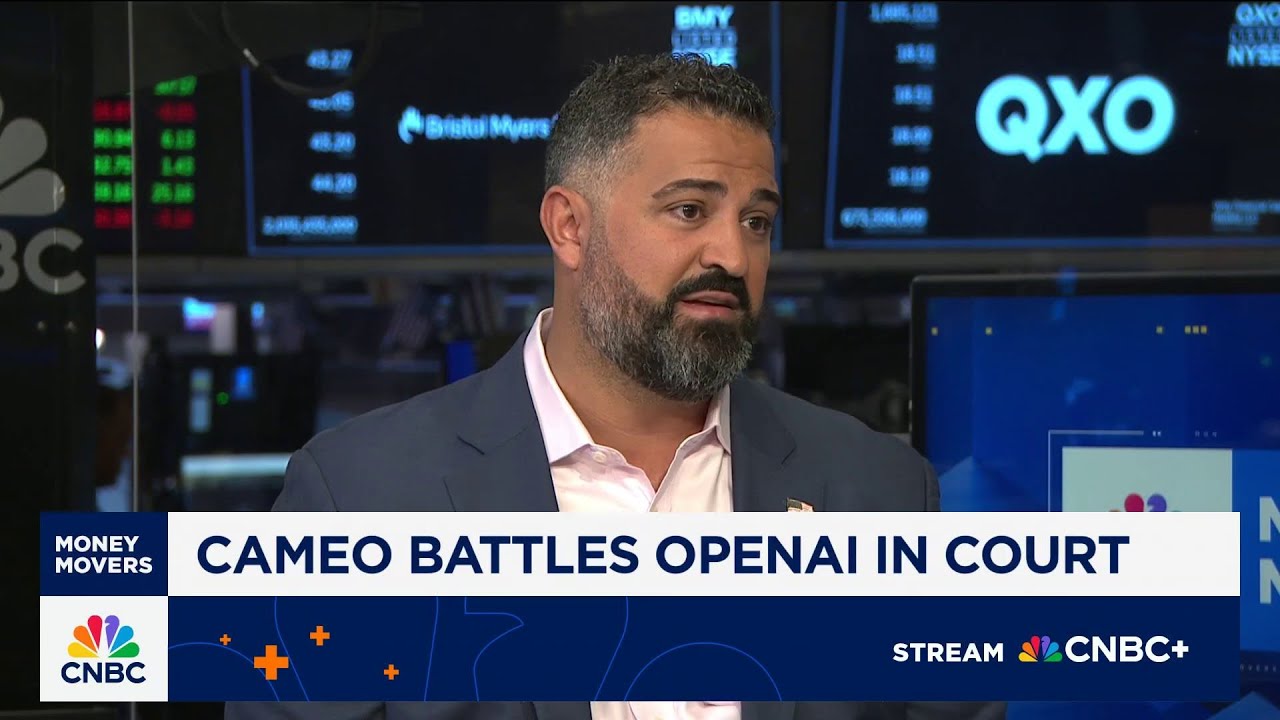
In a televised interview, Cameo CEO Steven Galanis explains the company’s lawsuit against OpenAI over the latter’s Sora 2 feature that is also called “Cameo.” Galanis asserts that Cameo holds an incontestable federal trademark for the term “Cameo” in Class 42 and Class 9, covering downloadable video assets created by celebrities. He argues that OpenAI’s use of the same name infringes on this trademark, creates consumer confusion, and threatens brand dilution, especially as the holiday season—when 30% of Cameo’s annual revenue is generated—approaches. Galanis describes a cease‑and‑desist sent to OpenAI that was ignored, prompting a request for an injunction to force a name change. He cites real‑world examples of AI‑generated videos of public figures (e.g., Martin Luther King’s estate) being posted without permission, leading to social‑media confusion where users mistake AI‑generated “Cameo” videos for authentic Cameo content. While acknowledging the appeal of AI technology, Galanis emphasizes that Cameo’s watermark serves as a digital certificate of authenticity and that the company will continue to use AI for internal purposes but insists the Sora feature be renamed to protect the brand and consumer trust.
Chapters
Cameo, a personalized celebrity video marketplace, is the latest company to sue OpenAI. Cameo accusing the ChatGPT maker of launching a similar Sora 2 feature also named Cameo, saying the offering infringes on its trademark. We've reached out to OpenAI and it said it had no comment. But The Verge says a company spokesman told them, quote, we disagree with these claims and that no one can claim exclusive ownership over the word Cameo. Joining us now to discuss is Cameo CEO Steven Galanis. Steven, I guess you disagree with that statement because you say that you own the trademark for the word Cameo being used in this sense.
We do. So first off, thank you for having me. We have the federal trademark for this and we've had it for over 5 years, meaning it's incontestable in both Class 42 and Class 9. It literally covers downloadable video assets made by celebrities, actors, entertainers that can— that are coming through a web app or a mobile application straight down the fairway. I don't have a problem with the Sora 2 technology. I think it's really cool technology. We have a massive problem where with using our name unlawfully.
Okay. So just so that I understand it, Sorare 2 obviously is this latest iteration of this video creation and it uses AI. So they're not actual celebrities doing it. It's an AI version of a celebrity potentially recording a video message.
Well, it can— it could be in some cases. So the way it works is that any of us could opt in to creating— you have to opt in. It's called creating your Cameo.
Okay.
Separately, there's a whole class of public figures that are being put on there without their permission. Right. So you may have just read that Martin Luther King's estate was really under fire because people were making crazy videos with that. So if you want to see Mr. Rogers arm wrestling Stephen Hawking on Mars, you can go do that on Cameo, on Sora, but without any of their permission or their estate's permission.
I see.
Well, I mean, it is a fairly bold thing for them to just to do that, given they could have named it anything else, I guess.
Yeah. And that's the big thing. The app is called Sora. They could have named this feature anything. And the big issue for us at scale, and right now Soar is in a public beta, we, we gave them a cease and desist first to try to rectify it. You know, they completely ignored it. And at this point, like we had, we felt our hand was forced. The big issue at this point is really what happens on Google and the search engines if suddenly hundreds of, you know, hundreds of millions of AI slop videos are the first thing that pops up when you Google Cameo. We're coming into our busiest part of the year. We do 30% of our year between Thanksgiving and Christmas because cameos are all about these magic These magical moments, these gifts. And that's why it's so urgent for us to get some type of injunction here. And really, we just need them to change the name.
Yeah. All right. But even, even if they do change the name, what about the threat to your overall business regardless?
Look, I think AI is going to be a thing that is out there. Like, we're not looking to put the cat in the bag. We use AI for, you know, things like customer reviews and giving people better algorithms. I think in an age of AI, the Cameo watermark is a digital certificate of authenticity. And at the end of the day, like, what really Cameo is all about is it's It's the hearts and the minds. It's making people jump for joy. We talk about smile, laugh, and cry with the magical moments that our talent create. And it's the personal connection that people get. I think that the Sora technology is fun. I've enjoyed it personally. But at the same time, like, it should just be called something else.
Do you have a business case so far for consumer confusion about what's, what's been happening? Consumers that have come to you saying, hey, I created this, but it's not exactly what I thought. And last week, wrong business.
Last week, we literally had a customer that went on ChatGPT and had questions about Sora Cameo. And ChatGPT itself directed them to go talk to our customer service. We've had dozens and dozens of social media posts where people are taking their Cameo videos that they made on Sora, posting them on social media, tagging us in there, and it's not the real thing. So at the end of the day, like, there are literally thousands of words they could have called this exact service. Don't call it the one that we have a federally protected, incontestable trademark for in multiple classes covering the exact thing.