Pomp Podcast #347: Steven Galanis on Creating The New Autograph With Cameo
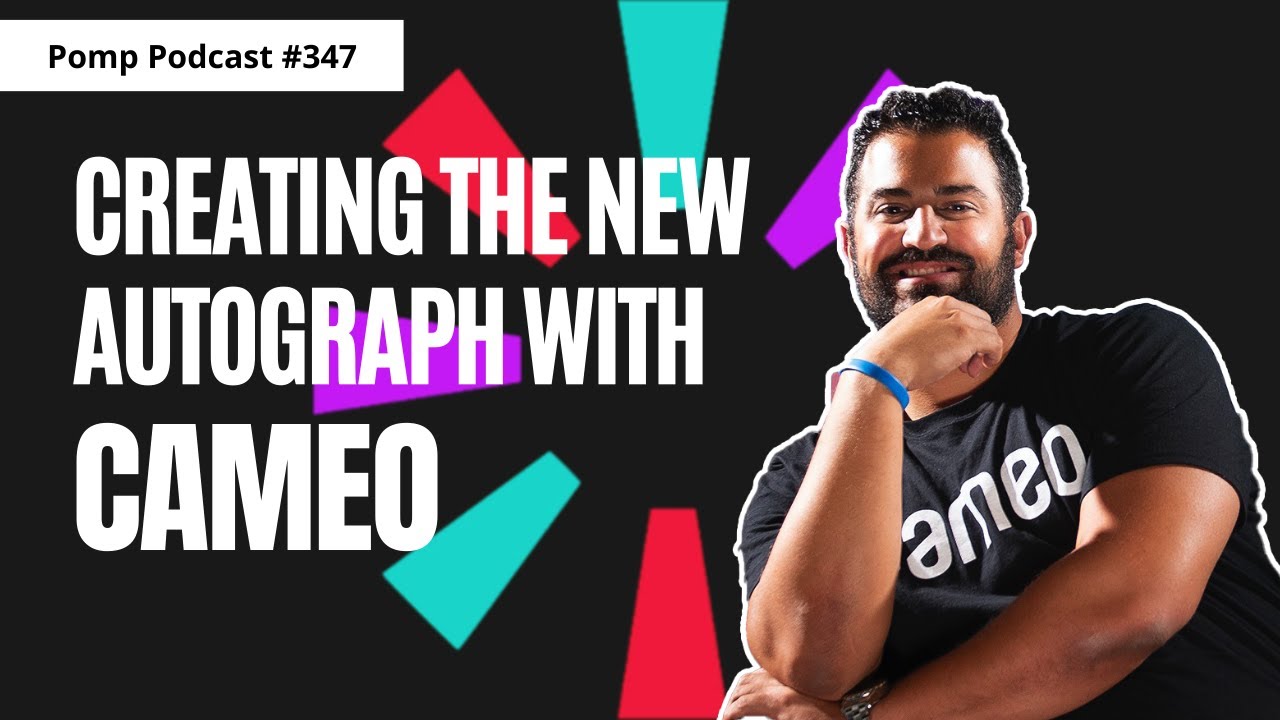
In this interview, Steven Galanis, co‑founder and CEO of Cameo, walks host Anthony "Pomp" Pompliano through his unconventional career path—from options trading on the Chicago Board of Trade and a stint in film investment to a senior role at LinkedIn—before founding Cameo. He recounts the eureka moment at his grandmother’s funeral that inspired the "new autograph" concept, the early product build with engineer Devin Townsend, and the decision to launch with professional athletes as the initial supply side. Galanis explains how Cameo’s growth relies on a supply‑driven flywheel where talent markets themselves, and how each video acts as a viral commercial, leading to 40,000 talent and over 1.2 million videos. He details product extensions (promotional videos for brands, Cameo Live video calls, and Cameo Direct texting), the challenges of recruiting athletes, consumer acquisition tactics, and the evolution of the platform’s monetization. The conversation covers the company’s funding journey—from bootstrapping and a $500 k angel round from a former LinkedIn exec, through Chicago Ventures, Lightspeed, and Kleiner Perkins—to the strategic advantage of building in Chicago’s marketplace‑focused ecosystem. Galanis shares his perspective on the expanding fame economy, the threat and opportunity of deepfakes, the importance of authenticity, and the cultural significance of Chicago tech. He reflects on leadership lessons—mentorship, hiring for potential over résumé, and building a Hall‑of‑Fame‑style executive team—while also touching on personal anecdotes, his stance on crypto (never owned any), favorite books, and quirky interview questions. The interview ends with practical details for listeners to engage with Cameo.
Chapters
All right guys, bang bang! Steven's here. He's got a massive beard, got the Cameo hat, ready to rock and roll. Thanks for doing this, man.
Thanks for having me.
Absolutely. All right, for the few people who are watching this that don't know you, let's go through your background. What'd you do before you started Cameo?
So coming out of Duke, I was an options trader for the first 5 years of my career. So my very first job was clerking at the Chicago Board of Trade in the soybean oil options pit. That's open outcry market making. Literally, I was a clerk, so somebody would make the trade, they'd write it on a card, I'd take the dupe, I'd drop it, I'd check it with the other trader to make sure there was no counterparty risk, and I'd drop it off at Goldman Sachs's clearing desk and Yeah, that was my first job. The hours were great. The grain room's only open 9:30 to 1:15, and there's nothing you could do before and nothing you could do after. So that was a fun first job. You know, traded for a while after that, eventually got badged up, ended up at the SPX, traded in the CBOE and the SPX pit, so open, out, dry options. Really enjoyed that. While doing that, I had the opportunity to start a film investment fund. So, my uncle had actually produced the movie Lone Survivor, among a bunch of other ones. Irishman was his most recent. And when Lone Survivor came out, I ended up renting a theater for all the guys in the pit to go kind of do a premiere. And at that, a bunch of the guys I traded with were like, Steven, why the hell are you, you know, trading in the pit with us? Why aren't you in Hollywood being a movie producer like your uncle? So I did what any entrepreneurial, you know, young Greek hustler would do. I stayed in the pit and I started raising 25 G's a pop from all the guys that probably would have pissed it away, you know, betting on sports. Uh, there wasn't crypto at that point, uh, you know, to be speculating on it at least that much in, you know, 2011, 2012. So this was still, you know, I'll take the under of the first half of a, you know, college basketball game between know, Rutgers in Towson or something like that. So, these guys were happy to part with their money and tell their wives and their girlfriends that they were investing in movies and television shows. I started doing that. I met my now co-founder Martin. We started a film investment fund where we produced a couple movies and television shows. If you guys are really bored, you can watch Safe, S-A-F-E, on Amazon Prime right now. Probably the worst television show ever made, but Amazon Prime just launched it about 7 years after the release. So we were catching up on that last night, which was a lot of laughs. Remake of Baywatch in 2013 with GoPros and Dolph Lundgren as David Hasselhoff. So if you guys want something fun, go watch that. Give it a shout out. Maybe we'll get some residuals, you know, for all the money we lost on that investment. But anyways. So ended up at LinkedIn after trading. I'd say one thing that really hit my mind when I was trading, I remember walking into the CBOE for the first time, and this is a place where over 40,000 options traders, you know, worked. And at this point, you know, back, back in the day, every stock had its own pit. You know, Amazon, Apple had their own pits, and suddenly, you know, GE had their own pit. And I walked in, it looked like a dinosaur graveyard. There were only about 1,000 open outcry traders left. There were really two pits. It was the VIX and the SPX. The SPX was the biggest. But I remember thinking, with trading, it's like all the good times have kind of happened already. And of course, as the new guy, you know, I was hearing stories about what I missed in '08 with the flash crash, what I missed with the flash crash, what I missed in '08, you know, what I missed in Then the 2001, '99, in trading, all the big stuff had happened already. And I was very fortunate that a buddy of mine from Duke recruited me to come work at LinkedIn. And then when I got to tech, it was totally different. At LinkedIn, all the good stuff was gonna happen. It was about having a mission and a vision and realizing that. And I ended up, you know, having kind of my dream job at LinkedIn, working with amazing people. You know, getting to learn from people like Mike Gamson and Jeff Weiner, you know, how to build culture, you know, how to work with, you know, people in different offices. It was just a totally— a total game changer for me. And we had the idea for Cameo leaving my grandmother's funeral of all places. It's October 5th, 2016. Martin flew in from LA for the day for my grandmother's funeral. He was an NFL agent at the time when I went to go work at LinkedIn. He had the idea that if he could sign a 6th-round draft pick that was a big muscular guy with a big personality, he could maybe back into signing the next Rock or the next Jason Momoa and turn him into a huge action star. He signed the guy, he wasn't able to turn him into a movie star, so suddenly he had a big, you know, cash liability, you know, by backing this guy that he was having to pay for his training, but there was no way he was ever going to recoup the investment. And he pulled out his phone and he showed me a video that he'd gotten made for his good buddy who was pretty high up in Nike's marketing department. He loved the Seattle Seahawks more than anything and had become a father for the first time. And he made this video and said, hey Brandon, this is Kashaw Marsh from the Seattle Seahawks. Congratulations on having your son Maverick. I hope he gets your athletic ability. And if so, he'll be playing with me on the Seahawks one day. Go Hawks! And this video, I saw it, the guys, you know, Cash Marsh, this tatted-up guy wearing no shirt driving in Southern California, just a really compelling piece of content. You didn't know— have to know who Brandon was, you didn't have to know who Cash was, but there was something magical about it. And Martin showed me this video, and the second I saw it, I had the eureka moment, and it's like That's the new autograph. And it was so obvious to me that, you know, today when you see someone famous, today you pick up your phone, you try to take a selfie with them, and if it's not on Instagram, it didn't happen. I grew up in Chicago, you know, '90s Bulls. You saw Ron Harper, you saw, you know, Dickie Simpkins at a restaurant, you're pulling the menu out, you know, they're signing the menu, they're signing your shirt, they're signing your hat. And, you know, that that menu ends up on your wall in, you know, a house like mine in Glenview, Illinois. Or, you know, I think back to the '98 Cubs season, opening day today, shout out, welcome back baseball. But I think back to summer of '98, you know, trying to get Sammy Sosa or Mark Grace to sign something, but you end up with Rod Beck or Glen Allen Hill and Scott Service. And 20 years later, I shouldn't remember their name, but because they did one thing nice for me one time, you become a fan for life. And really, that's kind of what we try to build with Cameo. We tried to build a platform where every time somebody made a Cameo, the person who received them becomes a bigger fan of them for the rest of their life. And, you know, fast forward 4 years, we've now got 40,000 people on the platform. We've done 1.2 million of these. We call these not Cameos, we call them magical moments. Every time we make one, we really feel that You know, we're making people smile, laugh, and cry. We're totally changing an inflection point. We're being an inflection point change in their in their day, and you know we've just been blessed to to be off to the run that we're on. And and you know we think it's early. You know it's spring training ball still for for us. We don't even think we're at the top of the first inning yet, and how big this could get.
All right, before we get into Cami, I got a lot of questions, but I grew up in North Carolina in Raleigh. And so I know Shooter's Bar at Duke there. You gotta tell, what's the story with you and Ryan joking around?
Yeah, so I'm a Dukie. I actually, again, this is another kind of tie to technology and network effect, not knowing that I was doing network effect businesses back then, but I was a freshman at Duke and one of my really good friends from home is a guy named Zach Moridis. big crypto guy today. He's the founder of a company called Teamworks, which is a— it's a Series C company out of Durham, North Carolina. So, you know, big shock if you knew Zach and I, that we're both running tech companies now. But anyways, so Zach invited me to partner with him. And we, in the very early days with Facebook, this is when you still needed a .edu address to come on. You know, he was the senior that knew everybody. I was the freshman that knew everybody. We combined forces, we created a company called Spartan Entertainment. We're both Greek. Our dads are both literally from Sparta, and we ended up aggregating over 17,000 college students in this Facebook group. And over, over the course of 4 years, we came to really dominate nightlife, you know, at Duke certainly, and then we started getting into Raleigh and Chapel Hill by the end of it. But we basically ran Shooters too, you know, it started with Our first entrepreneurial hustle was taking the most popular bar on campus, which at the time was just a biker bar really. It was a bar that you would go to at the first week of school and the last week of school, and then it was just a kind of a redneck biker bar at the meantime. And we rented it out on Wednesday nights, which was kind of the athletes' Friday nights, because at Duke you weren't allowed to drink 48 hours before your game. So we figured, you know, if you had a Friday game or Saturday game, Wednesday was actually your Saturday as an athlete. And we started getting $3 pitchers and we set up beer pong tables and started having that. And today, if you go to Duke on Wednesday night, our legacy is living strong. I think that's my— that is my legacy to Duke, Wednesday night beer pong at Sheetz.
That is an incredible story. All right, so when you start Cameo, what's kind of the first couple of things you guys do? So you see this piece of content, you're like, bam, this is You know, kind of the new autograph, do you immediately say we got to go build a tech platform and kind of build a marketplace and, you know, what it comes to today, or is there some other idea you start with?
Well, the first thing I did was we literally had the idea as I was driving him from, you know, we were downtown Chicago and he'd always wanted to go to Trump Tower because it's a beautiful building. I live across. Trump hadn't won the presidency yet, so it was still fine to go to Trump Tower. But anyways, so we go get a cocktail on the roof, we have the idea. I drive him to O'Hare. The second he gets through security, he calls me up and it's basically like, man, this is awesome, this is exciting. We're kind of getting each other worked up. So I'm like, screw it, I'm gonna get on a plane to LA the next day. So I flew to LA the next day. And Martin and I kind of dreamed up this marketplace where for X amount of money you could do Y activity with Z person. So the video was one thing, but we thought we could sell autographs or personalized merch or, you know, anything, you know, tweet at me, like, follow me on Instagram, any, anything you met, you know, from Brett Favre throwing a football with you to anything you could possibly imagine. Like, we just felt X amount of money, Y activity with Z person. Uh, Martin and I are— neither of us are technical, so the first thing we needed was the part find somebody that could come build it. And I had a buddy from Duke named Devin Townsend that was the best engineer that I knew who actually happened to have been an early Vine star as well. So Devin, in 2014, him and his best friend Cody, who's now Cody Ko, one of the biggest YouTubers on earth, they decided to quit their jobs at Apple and Microsoft respectively. They went down to Bali, they started messing around on Vine, they spent a year traveling the world, And Devin ended up with about a billion loops on Vine, and Cody had 3.6 billion loops on Vine. So they had actually become more famous than they were rich. They were never able to monetize that at all, but they really understood becoming a creator. Devin moved back to LA, you know, he started being the first engineer at different startups. He was at one that was just kind of floundering, and I told him the idea. You know, he didn't think much of it, but he was a friend, and I think he cut his best friend rate and was, uh, we were paying him $150 an hour or something like that, uh, before he became an official co-founder. And I think I remember it was like December and we had a $17,000 bill. So I was still working at LinkedIn at the time. Martin's an NFL agent that's losing money on his only client. So I remember we brought that check over and it's like, shit, we need to, we need a little better deal here. And we cut Devin in. Uh, got the hourly rate down, gave him some upside. It was a good trade for everybody, uh, involved. And, um, and, you know, Devin was really the perfect person to build this. Um, I mean, how many CTOs, how many heads of product on earth were actually influencers themselves? So he, he intimately understood the problem. And, you know, Devin also brought a discipline that Martin and I did not have. We were like you know, let's do the autograph, like anything we could think of. It's like, let's build a site that does everything. And Devin was really, he's like, we need to be focused, we need to pick a vertical. So we decided to go with pro athletes first, and we really felt like, again, we're building the new autograph. And the problem we were trying to solve was, uh, you know, ESPN had released a documentary called Broke, and they talked about how 80% of NFL players go broke within 5 years of playing their last game. So we were thinking about that problem a lot, and again, that's not a problem that a lot of people like wake up like try to solve, but it, you know, it's certainly one as athletes or as people that had been around athletes, it was just something that we were thinking about. And this gap between fame and monetization was just another big theme we were thinking about. So we decided to focus first just on athletes, and, you know, if you're building a marketplace, To connect, you know, athletes with their biggest fans, and you have no athletes and you have no fans, you better pick, you know, do you go with the chicken or do you go with the egg? We picked the chicken first. And we really had conviction that if we can recruit athletes to the platform, they all have Twitter followings, they all have Instagram followings, and if we got them on and we kind of made a sample video, we would be able to get them to promote on Twitter, to promote on Instagram. and turn their followers into our customers for free. So that was very much the conviction that we always had. In our marketplace, supply could beget demand. When we launched, I'll never forget launch day. It was mid-March. I was in— I literally was in Arizona. I was in Scottsdale trying to get the second person on Cameo. We had one person on at this point. You know, we'd get on a plane, we'd go anywhere if someone wanted to talk to us. And Jason Kipnis, the guy who grew up around me, was also our second baseman for the Cleveland Indians at the time. Guy works with at LinkedIn, was his best friend. He knew about the idea. Steven, let's go. We get— we pack the bags, we go to Arizona to go pitch Kipnis to get him to sign up. So he, you know, and of course I get there to talk to him about it and immediately he's like, yeah, sure, I'm in, right? It's like I have like 3 more days there, so Anyways, it was a Tuesday night. I'll never forget. It was about 10 o'clock. And we had built the very first version of the site. And today you go to Cameo, there's 40,000 people, there's a million videos. It literally— imagine a Google Form that just said, you know, who— like, there was only one talent, so there was no even other profiles. It was like, who's the video for? What's your email? What does it say? That's it. And I'll never forget, we took the Cameo that was the first one that gave us the idea. We had Kasia send a tweet. and basically said, hey, I'm on this new thing called Cameo. For $20, I can make a video like this for you saying anything you want to whoever you want. You know, can't wait to hear from you. And he clicks, he clicks Twitter. I was at a restaurant in Scottsdale. The guys were in Venice Beach. So Devin, Martin, my co-founders, and Kashif, the only talent on Cameo, were all in Venice Beach at Devin's apartment. Kashif sends the tweet out. There are 2 dots. There was one in Scottsdale, one in LA. He hits tweet, we expect there to just be a flood, and it was crickets. Nobody else came to set. And immediately, you know, we're looking and, you know, I'm like, ah shit, maybe Google's not working. So I literally, I signed off and the dot in Scottsdale went away. I came back, then it's like, no, it's not that Google's not working. And then at the same time on Twitter Cash has just started getting eviscerated. I'm talking, you know, you're a millionaire athlete for $20. How much is this company paying you? He just given us $25 G's as our first investor, you know. So he's pissed off, you know, everybody's ribbing him on Twitter. He gets pissed off. Hey, screw you guys, I'm out. He leaves, he walks out. Martin's freaking out, our other co-founder, because suddenly his only client is now out money. He's given us And now his brand is getting tarnished on Twitter. So, he runs after him. And Devin and I are just having a conversation like, wow, you know, maybe, yeah, maybe we shouldn't have left our jobs, you know, like before we'd sold one. We were now 3, 4 months in, you know, this was the only thing we were doing. And as we're talking, a dot popped up in Renton, Washington, which is where the Seattle Seahawks facility is. And somebody came on site. We're like, wow. You know, I remember literally being on the edge of my— I was on my elbows like leaning in. with my phone on, on, you know, Google Analytics, like, what are they gonna do? What are they gonna do? And this person must have been on the site for 2 to 3 minutes, and it felt like 2 to 3 hours because we're like, are they gonna buy? What's gonna happen? And all of a sudden, the dot just disappears, and we were so dejected because it was like, somebody's there, we thought they might buy, and they didn't. You know, this is a disaster. I need to try to, you know, get back to LinkedIn. Will they take me back? Like, whatever. And then all of a sudden my phone starts vibrating and I get a message. I get a message in my DM and this guy goes, hey Cameo, this is, you know, blah blah blah. My daughter Lane loves Cassius Marsh and it's her birthday on Thursday. I'm trying to buy a video from your service, but the payment processor is not working. So at that point I'm like, just tell me what to say, what's the name, like we'll get it done, don't worry about money, you know, go. And, and, and the guy gives me the information. I text Cash, no response. I text Martin, you know, he's pissed off at me, they're pissed off. It was Tuesday, the birthday was Thursday, we missed Thursday, you know. It's now the next Wednesday when I finally get this video back, and it was the most unenthusiastic video I'd ever seen. Hey Lane, heard you're a big fan. Sorry I missed your birthday. See you out there. Like, it was, it was so bad. I skipped this video. I was cringing. I didn't even want to send it, but I'm like, you know what? Fuck it. Like it's just good to do. I'm gonna send it. We'll see what happens. So we shipped the video, and about thirty minutes later, I get a video back, and this dad records his daughter watching the video, and she literally started crying. She was so happy. This girl's wearing a Seahawks jersey. Her hair is literally painted blue and green. It's like. Seahawks superfan, and she watches this video and she starts crying, and she goes, Dad, how did you do that? And he goes, Daddy's awesome. That's how. Like, if we made a commercial for Super Bowl, it wouldn't have been better than this. And he sent it back. And then the second I had that, like, I still get the chills, you know, down my spine thinking about it, because the second we saw we could make one person feel like that, we had high conviction we could make Millions of people feel like that. And then when we were going to athletes, it wasn't like, hey, join this marketplace where there's, you know, no fans and there's no other talent. It's like, now the question was, we would show it on the video, don't you want to make your fans feel like this? And people said yes. And that's really how we got it going.
So as you're doing that, what was the biggest pushback from the athletes first? Because you're building this marketplace, right? You guys focus on the athlete side, you go to them, And I've got to imagine, like, yeah, I want to feel— I want my fans to feel that way, but like, who else is on, right? How much can I make? Like, all these normal questions. What were the big obstacles there?
Yeah, all of them. And I would even go one more. At the time, any type of direct-to-consumer monetization of fans was like super weird, right? It's one thing for Patreon to do it, and you're like a long-tail podcaster or musician. and you have no other funds and, you know, it's not that weird to ask your followers to support you. But these are like athletes making millions of dollars in that case. And, you know, they were worried about their brand. They were worried about selling out. They were worrying about charging their fans for something like this. They were worried that nobody was on it. You know, is Cameo even gonna be the one, right? You know, early days of platforms, there's no guarantee. Like at some point you start getting escape velocity, but you know, there's 7 other companies that had tried this that never got any traction. You know, we found out later, right? So there were, there are people that have been burned. You know, probably the one we were hearing the most about at the time was called Thuzio, which was Tiki Barber, I think was part of it. So, you know, these are like serious athletes and entrepreneurs teaming up, trying Trying to do similar things, weren't able to do it. I think Steve Aoki had founded one with like Dan Bilzerian, you know, a few years before we got going. So people had tried it, but what we had pretty high conviction was we really never set out to like build something that LeBron James would do. We really felt there was an opportunity with Cameo to help people like, you know, my good friend Lance Thomas on the New York Knicks who, you know, wasn't the superstar. He wasn't Carmelo Anthony, but he's like the beloved player that gets out with the community, you know, people love him, huge personality. We really felt there was an opportunity for those— to serve those type of people versus— that said, I'd be lying to you if I told you we really found product-market fit with, you know, backup quarterbacks, you know, or practice squad, uh, you know, left tackles. We found product-market fit one day when Devin walked, uh, down to our morning meeting and he goes, hey, Steven, I think Cody, his roommate Cody Ko with 3 million YouTubers at the time, and people like Cody, you know, ex-Vine stars would do really well on this. And we put Cody in on a Cameo. He made— we actually seeded— we bought him a Cameo for a YouTube video that he made that went hyper viral. He decided to launch himself on the platform. He popped off and other similar kind of Vine stars popped off. Then that started the expansion into reality TV and comedians. And today sports is still probably— we're famous for sports. We kind of came up as the new autograph, but as our business, it might be 10% now. And, you know, we've really found product-market fit for people that are huge personalities or people that are really funny.
How did you grow the consumer side? Right? So it's kind of sounds like you just went and did the hard work of recruiting, you know, personality after personality or athlete after athlete. Where do all of the users come and, you know, how do you convince them to actually pay for this stuff?
Well, just like anytime you're inventing a new, completely new product, right, the best way for people to know what it is is to like experience it or see it. And, you know, a couple interesting growth dynamics that we benefit from. Number one, all of our supply, unlike Grubhub or Uber, or any other marketplace you think about, our supply can literally market themselves, right? They have— they're famous, they have Instagram, they have Twitter, they have followings, and their fans are the most likely people in the world to book them. So that was a big thing. Like, our supply can beget its own demand. That's a really important concept to Cameo. Secondly, we always say that every Cameo is a commercial for the next one. So just like I was able to show athletes once I had the first reaction video, Don't you wanna make people feel like this? The customer flywheel was, I buy you a Cameo, you share it on Twitter, you have 300,000 followers on Twitter, they all see this roast that I get, Michael Rapoport roasting you. They're like, what is that? That's amazing. We had the watermark there, people started learning. Then they go to the site, Cameo, oh my God, look at all these people that are there. So it's really the flywheel effect of, Supply begetting its own demand, and then the fact that every Cameo is a commercial for the next one. 85% of them are gifts. The vast majority of Cameos are shared on social. So that's the flywheel.
And today you've got what I'll call kind of the traditional Cameo, which is literally, hey, it's my friend's birthday, I buy, somebody sends them the video. You also have these promotional ones, and then you've got the roast. Maybe talk a little bit about the different variations of How somebody can buy or what message they can expect?
So the first one, the promotional Cameos, is actually a product that we've had for a while. Basically what we found was 5% of Cameos that are booked get declined today, right? So the talent can say yes or no to anything. When we dug into declines, we found that 60% of declined Cameos were actually small businesses looking for kind of cheap influencer marketing. So we went back to our talent and we said, hey, uh, Brett Favre, Waukesha Chevrolet has a, uh, 4th of July sale coming out. You know, they, they wanted to book a cameo. I know you didn't want to do it for $400, but would you do it for $5,000? Would you do it for $10,000? Whatever the number is. And we found that the talent were all with— almost all would be willing to do to create assets that companies could use for their own Instagram or their own social media. They just want to do it for more money. So very quietly we added for, yeah, I think there's 500 or 600 of our 40,000 talent opted into this today where you might see on the, when you go to cameo.com, is this for myself? Is this for someone else or is it for my business? And if you hit for my business, the price changes and it's more expensive. The second product That we released that's gotten a lot of fanfare recently is Cameo Live. And Cameo Live is our first stab at synchronous video conversations. So basically it's literally— well, not basically, it's literally getting on a Zoom with, you know, your favorite talent. And that one is something that's captured the imagination. I think people, when they first saw Cameo, they always assumed, well, in the future, you know, FaceTime is obviously something that they're going to get into. But frankly, until COVID, we really resisted it because we felt that the coordination needed, like it was so much logistically harder to say, you know, hey Steven, what are you doing at 4:42 Central Time, right? Like pick up your phone for this thing. And then frankly, like Devin as talent always believed that like fan conversations are just kind of awkward, right? It's like, you know, a lot of, and this is why Cameo works, because when you go run up on somebody, That's eating at a restaurant, like they freeze, you freeze, you don't know what to say. Like, we've all kind of been there. So we, we really had pretty high conviction that synchronous wasn't going to be a thing. But as Zoom became so prevalent, you know, since COVID like the talent was excited about it, you know. Now that my mom and her friends play their card games on Zoom, it's like everybody's using it. So at this point, it became a very natural extension and I think we have about 100 talent that we're testing with Cameo Live, and so far, um, you know, the feedback's been incredible. Uh, the feedback actually has been— we launched 10-minute Zoom calls because we felt like 30 minutes would be awkward, or if it was weird, you want to cut, pull the cord. But what we found is like every one of the conversations, basically people are like, I want to stay on longer. The talent and the fan are having fun, they're staying on. So that's, um, that's a product that we're excited about. And then, and then our third product we have is called Cameo Direct. And Cameo Direct is in the app. It's our texting product. So if you— there's talent that have enabled you to actually text with them and have an ongoing conversation. So that's, you know, that's super interesting. And, and we think all these are parts of building out that equation for X amount of money, being able to do Y activity with Z person.
Walk me through the funding of the company, and then we'll get into some of the questions that people sent in. But how have you kind of funded this?
It started, Martin and I, you know, bootstrapping it. So my money from LinkedIn was going into Devin's pocket at the $150 an hour best friend rate. Yeah, I don't know if that was actually best friend rate or not, but I give a shit about sometimes too. But so it started there. We bootstrapped it for about 5 months while I was at LinkedIn. Every single person that I worked with, like those— I had one quarter while I was still at LinkedIn when I was working on this at the same time. And honestly, I was probably the worst employee at the company that last year. Martin would call me in the middle of the day. I'd miss like a sales call. Like, I just, I just remember, but I was so distracted and all the, like, the people that I worked with. All like got it right away, and now about five or six of them are working for us, which is kind of funny. Of the people that sat within like ten feet of me while I was at LinkedIn, but you know we we were basically going to build a billion dollar company while staying on our our fat salaries and our free lunches at LinkedIn, and and then I remember the big turning point for me actually happened. LinkedIn gives Christmas Eve through the first week of the year off for all employees. And I went to Nicaragua with about 10 people that I work with. And we were sitting on a hot tub in Nicaragua on New Year's Day. And this guy, Will Hearn, who was a buddy of mine, worked in another office, is like, Steven, this idea is so big. Like, if somebody else builds it and becomes a billionaire and you stay at LinkedIn and never like take a shot, could you live with yourself? And honestly, nobody had ever asked me that question, but the answer was so obviously no that I never went back. I wrote my next play letter, which, you know, it's kind of funny, you can go on my LinkedIn profile and actually see my next play letter, and I shared the letter that I sent to my team, and I actually never went back to work. That was— I never went back. I went right to Los Angeles after I, you know, got Martin and Devin, and I'm like, we need to burn the boats and just try this, and I'm not asking you guys to quit your jobs yet, but I'm going to do it. And I just felt like that momentum was needed. So, you know, for me, I kind of needed that kick in the ass. And, um, and, you know, very shortly after I decided to go full-time, that's when, like, you know, friends and family were wanting to bet. You know, I'd never asked anybody for anything. I was always the ultra connector, the helpful person. So now when I had something that I was gonna do, that's when people were like, okay, let me get money, let me get money. But the one that was most life-changing was exactly 3 months after me leaving LinkedIn. This guy, Mike Gamson, who was the top of the global sales org at LinkedIn, just cold-called me in the morning. He's like, Steven, I've been hearing what you're up to, give me a call. And I called him back and on the spot, you know, led a $500,000 you know, angel investment that, you know, he's like, I think this is awesome, I think this should be built here in Chicago. And frankly, if he didn't give me the money, Cambio would have never been able to be built in Chicago. And once he came in, it was just a series of fortuitous events. You know, the second day of this guy named Jackson Jin, his VC career, just graduated Notre Dame, he was an associate at Chicago Ventures, he got locked in the Merchandise Mart in Chicago, Couldn't figure out how to—he couldn't figure out how to get out and of the building. He was locked in because he's working after eight when the elevator shut down, and he saw me and my team working. Came in, met us, thought Cameo was the most amazing thing ever. Next morning, he goes to Ezra Goldstein, who was at Chicago Ventures at the time and big crypto guy as well. And Ezra literally is like Jackson. you know, you're just falling in love with the first entrepreneur you've ever met. You know, like a million people have tried this. It's not gonna work. It's not gonna be built here, whatever. And Jackson's like, Ezra, you need to take a meeting with Steven. This is different. And Ezra met me. He put in $100K on the spot. So Chicago Ventures, that was their first venture investment. And then frankly, since then, every one of our rounds has been preempted. We've never made a pitch deck. Like this is— been incredible. You know, Ezra ended up leaving Chicago Ventures to start his own fund called Starting Line. He ended up co-leading the round with Chicago Ventures and Origin Ventures in Chicago, their seed round. So all of our early money came from the Midwest. And then Lightspeed ended up leading our Series A. Jeremy Liu, who famously was the first money in Snapchat, saw Cameo at a party asked for the intro, sent an email that was basically like, Steven, Cameo's genius. I don't know where you are in the world, but we're having breakfast tomorrow. We ended up meeting, had a— I was 10 seconds into my pitch to him, he goes, Steven, I've been looking for a business like this for 10 years. Basically like, shut the fuck up, I get it. And I flew to Los Angeles from San Francisco to LA that day, I met another Lightspeed partner named Nicole Quinn in the LAX airport. I was just texting her today 'cause I passed the coffee shop we met. We had a meeting there. I walked her onto the plane basically. She came to fly out to Chicago the next week. Our Series A was done. And then about 4 months after that, Kleiner Perkins came in and led, you know, a $50 million Series B into the company. So again, we've been really blessed because these investors, they've had a high conviction because they've been customers. They've bought them, they've received them, they understand the power. And then when they learn more about the business, there's only 2 things you have to really believe to understand how big Cameo could get. Number one, you have to believe that there are more famous people on earth today than any time in history, right? Like, just think about quarantine, uh, Tiger King comes on and Carole Baskin goes from somebody nobody had ever heard of, or I guess a million people on Facebook had heard of, To someone that can make a quarter of a million dollars, right, in a month on Cameo. It's unbelievable. And, and then you have all these other people just popping up on TikTok every day, on SoundCloud, on YouTube, on Instagram. So as there's more content, as content is exponentially increasing, the amount of fame in the world is exponentially increasing. So there are more famous people than ever. And then secondly, people today are more famous now than they've ever been at any point in history. Last summer, Lil Nas X released a song, Old Town Road. You know, he now has tens of millions of followers, and even if he's a one-hit wonder, he now has a platform upon which he can monetize forever. So within a post-Cameo world, in a post-social world, your 15 minutes of fame is something you can live on the rest of your life. Think back 20 years ago when, when Chumbawamba created Tubthumper, and who knows where they are today, right? Because they didn't have social, they didn't have a platform, so there's no stickiness. So all those millions and millions of people around the world that love their work, it's just not— it's not around anymore. And, you know, even on the sports side, you're a North Carolina guy, and I was talking to Danny Green about this last week. You know, he played on those teams with Tyler Hansbrough, and Hansbrough was, you know, the best maybe college basketball player since Christian Laettner, just absolute legend. And because he wasn't like— because he did it, you know, 10 years too early, he only has 21,000 followers on Instagram, right? And then Zion Williamson had 2.1 million followers before he played his first game. So the people coming up are more famous than the ones that came before. And all you have to believe is that this is just an area under the curve. Like, there's more fame in the world And then people are more famous in magnitude than ever. And because of the way these platforms work, the wealth distribution, it's like the power laws are crazy. You know, on YouTube, the top 3% of creators makes 97% of all the ad revenue. TikTok didn't have any way to monetize creators until I saw today they announced a $200 million fund to basically, you know, almost put people on retainer to just keep keep making content for them. Spotify, the top 1% of musicians streaming make like 99% of the revenue. The same is true in pro sports. The same is true when you think of endorsement deals. There's 5 people in the NBA that have shoe deals, right? So when you look at all this, people are more famous than ever before, and the gap between fame and monetization is just getting wider and wider and wider. It was just the perfect storm for a business like Cameo to come to allow people to monetize their fans in a way that is brand positive. Its value prop in the fame economy is that you are getting paid to become more famous. When you get a Cameo from someone, you like them more than you liked them before, and you got paid to do that. It's the ultimate.
So I got a ton of questions from people, many that you and I both know pretty well. Ian Borthwick, who is the influencer marketing guy at SeatGeek and is very, very deeply entrenched in the influencer world, said, will Cameo go real world? Like, at some point, will it actually be you can pay to have somebody show up for an appearance?
I mean, it's funny, you know, in the COVID world, that's the last thing in the world we're thinking of. But if you look at what we're doing with Cameo Live right now, we're building the mechanisms for bookings, right? Like, the first step is like coordination of calendar. When are you available? How do we do it? Will you show up, right? Then adding location—it's something harder. It's it's something that we've strayed away from because, frankly, I think that asynchronous conversation or even us being on Zoom together right now is probably like 95% as good as us being in person. But it might be like one percent of the effort of you know you coming out to Chicago and like us. sitting down somewhere, right? Look, think about how much effort's saved. So for us, I do believe that Cameo Live, AKA live experiences, meeting people in real life, is something that will happen assuming the world gets back to normal one day. There's just a— it's very logistically difficult, and, you know, to us there's just a million things we can do, you know, that are really tech-enabled first that kind of give you like almost the same experience without having to worry about the logistics, the location, and safety.
Makes sense. Who's the most requested talent that's not on Cameo?
For a long time, it was, you know, funny that Ian asked the first question. For a long time, it was David Dobrik, actually, who he's famously done a lot of stuff with at CP, giving away cars, all that. He's a big vlogger, for those of you that don't know who David Dobrik is. Really funny. You know, a lot of people think he might be the next Jimmy Kimmel, like he's that talented. The most requested person recently has been like The Rock. You know, that's, that's the one that, you know, everybody would love to get on the platform on the customer side. But, you know, people like Taylor Swift, people like Bieber are requested, but not as much as The Dobricks of the world, the Shane Dawsons historically of the world, the Casey Neistats. So we have a really interesting dynamic where the majority of users on Cameo, like the people coming to the website, are actually like 18 to 24, but our purchasing demographic is actually older— 25 to 34, 35 to 44, 45 to 54, and 55 to 64. And then 65+, all buy more than 18 to 24 because of disposable income and who can afford it. You know, for someone like my dad getting, you know, Jerry West to wish his buddy happy birthday for $400, like, that's like the bargain of a lifetime. But for, you know, someone that loves Jake Paul, getting— paying $200 to him is like, man, am I going to go to Coachella? Am I going to do that? Like, the trade-offs are different. So we've found that a lot of the people want the digital talent. That's probably the people that get requested the most. And I'm sure if I look at the last 3 months worth of data, I'm sure Joe Exotic would probably be the most requested person we don't have.
We got Carole Baskin. I saw that people were real hyped when she came.
Yeah, she was, she was there for a while and it's kind It's kind of funny because I reached out to her like immediately after Tiger King and basically they told me to fuck off. And, you know, it's kind of funny that now she's just been this superstar on camera.
How'd you get her? What finally got them across the line?
Honestly, I don't even know. Somebody on the team got through to the charity and she's doing it all for charity. I mean, she raised I think in her first 2 weeks she did like a quarter of a million bucks and it's all going to Big Cat Rescue. So, you know, what, you know, in a world where all these parks are closed and I mean, what an awesome way to be raising funds.
Yeah. Shervin Pishavar asked, who are the top 10 in earnings? So maybe not exactly go through the top 10, but just who are some of the people who do the most volume?
Yeah, there's a couple of archetypes of people that do really well historically. Last year, the top broker was Gilbert Gottfried. So again, comedians do extremely well. I think this year, last I saw, Kevin from The Office, Brian Baumgartner, was kind of the top of the heap. He's doing great. A lot of these viral stars from Netflix shows like Jerry Harris from Cheers have done extremely well. The Real Housewives as a vertical have done incredible. So the Sonya Morgans of the world do really, really well. Hall of Fame athletes is another place where we do really well. So Brett Favre has consistently been, you know, a top earner on the platform. The Bachelor franchise is big, and someone like Chris Harrison or Lance Bass, you know, boy bands have done good. Nostalgia as a whole does really well. And when I think of the product-market fit for Cameo, if you were to take out a $1 bill and you're to look at the back of the pyramid, right? I think Cameo has great product-market fit the second you have your 15-minute fame, all the way until you become the most famous person on earth. And then at some point, for some people, that curve, those— basically the gap between fame and monetization that we talk about, like, those curves just inflect. And there's actually a point where you become more rich than you are famous. So like Michael Jordan would never, would probably never do Cameo. He, he, we've heard him turn down $10 million for a golf outing. I knew that Paul McCartney turned down like $7 million to play someone's wedding before, right? These are things we've just heard being in the industry and all that stuff. So I think there's a point where that curve inflects. But then the thing that's kind of cool about Cameo is Cameo is also someone somewhere where You can go when you were the most famous person in the world and you're not anymore, right? So retired NFL players, like if you've got a gold jacket, you're on Cameo. Almost every Hall of Famer is on. When you're talking about the Ray Lewis's of the world, the Brett Favre's, you know, it's amazing. Emmitt Smith just joined today, right? So it's like the people that, you know, you expect to be there are increasingly there, which is exciting. And, you know, a lot of people get caught up in the, the 300 to 500 people on earth that might be at the eye of the pyramid that are more famous than they are rich, or more rich than they are famous. And, and frankly, if those people were on, they'd probably be priced at a point where most people wouldn't even be able to afford it. So while everyone says they might want Taylor Swift, like, Taylor Swift might need, you know, $5,000 or $10,000. How many of those could she actually do? So I think we haven't built a product yet for the super A+ list. And we think we can build a massive business without them. We think that there's the problem of people being more famous than they are rich. It literally doesn't exist for those people. So we wanna focus on building great product for the people we have product-market fit for. And the thing that's kind of cool is like, as we've gone along, people like Snoop Dogg, who are some of the most famous people in the world, or, you know, Kyrie Irving or Pete Alonso, like, These guys now are just seeing Cameo, think it's really cool and dope. Or Maluma, big reggaeton star who's now the most famous person in Instagram terms that we've ever gotten on. And those people come on the platform and they're seeing other interesting people, they see the impact. And, and then when you start getting more and more of those people, then others come on. Like, uh, Vicente Fox, the president of— ex-president of Mexico, is on Cameo now. So you start looking at that, and then if you're Tony Blair, if you're, you know, George W. Bush, Senator Obama, suddenly it's like, wow, okay, cool, my peers are there. So this business is built brick by brick, relationship by relationship, but all starts with having a very high NPS product for both the customers and the fans.
Josh Elman wants to know, what's the weirdest place that people like to record?
The toilet. I think that's always funny. Dwight Howard went viral earlier this year for literally being on the shitter and making a Cameo. We spoofed it for April Fools'. We actually, we did a fake product launch. We called it Cameo Now. And the whole idea was like the second you booked this celebrity, their front-facing camera would just turn on And we catch them like wherever they are. And, you know, it might be like Lindsay Lohan blending a smoothie and just looking up. But we've had some fun with that. I think that's probably the weirdest. We haven't had— trying to think. Yeah, that's— I think the toilets is probably the funniest. But, you know, some— especially the Tiger Kings, like you got a Doc Antle one. He's like literally with the lions and they're there. I mean, the tigers and lions. So watching Cameos is pretty enjoyable.
How do you think about deepfakes or like generative media, and is that an advantage coming down the pipe for you guys? Is that something that you guys have to kind of fight against, and kind of just what's the thoughts there?
If Cameo is the new autograph, it becomes inevitable that there will be, just like in the analog world, right, there are autographs and there are forgeries, and that is as old as time. The dense— there's fake Dead Sea Scrolls out there, right? So forgeries have always been a thing, and I think if Cameo truly is the new autograph, there will be, you know, forgeries in the digital world as well. And I think deepfakes are just scratching the surface of that technology at scale. I believe that a Cameo video, like, that watermark will be this— that will be the certificate of authenticity in the digital age. And I think again, some people are like, well, couldn't they, if they put the watermark on the deepfake? The technology will be there, but I think we will develop a core competency around authenticity and our value. Our mission at Camm is to create the most personalized and authentic fan experiences on earth. So authenticity is always going to be something that I think is a core competency for our business. And we're gonna have to continue to iterate. Technology is going fast. Deepfakes, you know, there's crazy things happening. But I think when people come to candidor.com or in our app, they know that what they're getting is real, and that's important.
So you obviously have a lot of pride, and a lot of your early investors have pride in having built the company in Chicago. Maybe talk a little bit about the Chicago tech scene. Eric Carr said basically he wanted to know about your favorite places to eat, but I figured we'll talk about the tech scene instead.
Sure. So the Chicago tech scene is, was, has, was and has been extremely important to Candia's growth. I truly believe that if I had built— I really don't believe that this business could have been built in San Francisco. I don't believe that this business could have been built in LA, even though that's obvious place where it was built. I think if we were getting built in LA, that depending on which angel investors had come in, there's so many vested interests in entertainment there that, you know, if you took money from this person, then these people wouldn't work with you. There's just so much ego around the entertainment business. So, the fact that we were able to raise all of our money very quietly in Chicago, it kind of gave us the opportunity to be like, It's like a plant that gets watered and nurtured, and, and all that happened. And once we had this strong foundation, then when the press kind of learned about it and Hollywood kind of learned about it, we'd already got to a point where like we had hit some escape velocity. And one thing that's really interesting about Chicago, while it's not known as a tech hotbed, like Chicago is famous for its marketplace businesses, right? like literally the Board of Trade and, and the CBOE. Like, there's 150-year legacy of building great marketplaces in Chicago. You know, that's why Groupon came out of here. That's why Grubhub came out of here. Raise.com and SpotHero were some, you know, other marketplaces where those founders really kind of took me under their wing. And, and, you know, the best businesses in Chicago have been marketplaces. And, um, and as somebody that was building a marketplace, like, to have people like, you know, Matt Maloney or, you know, the CEO of Grubhub— I mean, in 2017, I remember we're on the phone and he's like, Steven, I built the biggest marketplace that's ever been built in Chicago. You're building one that will be way bigger than mine if you don't fuck it up, because you were— because you were selling bits. I'm selling bits. Sorry, you're selling bits, I'm selling apps. Meaning nobody cares about how many pizza parlors I have on Grubhub in New York if I'm in Los Angeles. Your talent are global, their fans are all over the world, and location isn't a variable. And, you know, hearing things like that from people like him as an entrepreneur, it gives you confidence that you start to realize like, wow, I'm on to something. And, and I think, you know, the, the presence of people like Mike Gamson who, you know, very quietly like gave me the everything I needed And then 1871, the tech incubator in Chicago, you know, it's one of those things that, you know, the critics will say like, hey, you know, Chicago loves to pump its chest about having the world's best incubator, but who's really come out of there? All it takes is one Cameo to come out of there. And for us, if we ring the bell and it really works, that like, that was the greatest investment the city and the universities and everybody could have ever done. Because if Cameo wins, it can literally be one of those tentpole companies that could transform the whole ecosystem. And the biggest thing that Chicago lacks, it lacks that steady parade of exits and winners and billion-dollar companies exiting, early employees having their equity and their options that they took turning into cash. People at Cameo, in many ways, like, because they haven't seen— they don't look around like in the Valley where they see their friends were early at this company and it changed their life, right? And then in Chicago, you know, my employees are— look like they're sitting on gold mines, and a lot of times they don't know it because they don't see other people that have been successful. And that's one of the reasons it's been personally important to me to build this company here, to make sure that you know, the next me, like when I was 21 years old, I remember telling my mom, Mom, if I didn't have the trading job, I would have to go to New York, I'd have to go to LA, I'd have to go to San Francisco. There's literally nothing for me to do here unless I want to work at Groupon. And frankly, like my hope is that the next me, the 21-year-old version of me that's at, you know, Michigan or at Northwestern or at University of Illinois or at Wisconsin, they're in the Midwest, they look at companies like Cameo and they feel like they can come work at one of those. They don't have to go to the Valley to go work at a Facebook or Google. They can go work at a homegrown one. But more importantly, they can see people that look like them, that grew up like them, that went to the same schools that they went to, that fucking, you know, hit it. And I think if you see that, that's really the most important thing. And Chicago really fosters that. And You know, it's interesting now. Our headquarters was sold by the landlord. We are now fully distributed, and we've actually decided that we're not going to go back to offices. We're going to stay fully distributed out of that. Now, that doesn't mean Cameo is no longer a Chicago company. It doesn't mean that it's an LA company. It doesn't mean that it's a New York— it means that if you are talented and you're out there and you want to work for Cameo, you don't have to live in Chicago and you don't have to live in LA. Talent is evenly distributed around the globe, opportunity is not. So the fact that we can go fish in multiple ponds now, I think that can help us avoid some of the pitfalls that Chicago companies tend to have, namely a lack of executive bench. You know, there are very few people that have, have kind of been there, done that. So now the fact that, you know, we can bring in great people if they're in the Valley, they're in New York, they're in Seattle, they're in Austin, Texas, like wherever they are, they can come work for us. But the early people were here, and if this wins, then those people win, and then those people become the next founders or the next angel investors. And you just need that flywheel going, and all it takes is one. And for those people that, you know, talk about 1871 and they say, you know, nobody's come out of it, we're all the logos. I mean, look at any venture firm, right? If you're a venture— In a venture portfolio, you might make 40 bets, maybe only 1 or 2 of those are really going to work and everything else goes to zero. So if you're looking at a stage before venture founder, these are just entrepreneurs with an idea that have nothing that are coming there. Yeah, of course, 99.9% of businesses suck, right? And people are going to be there and they're going to play entrepreneur and they're going to, you know, come every day and try and dream. But like, I love that that place exists and And I hope that Cameo's ultimate success is the validation for that because that place exists— the fact that that place existed, that kept me home in Chicago and had me build the company here. And without that place, I wouldn't have been here.
People can't argue with the results, man. And I learned a long time ago that there's nothing more fun than winning. And if you could do it with the people that you grew up with or the place that you grew up in, It's kind of just a middle finger to everybody who tells you you can't do it, right?
The winning is the most important thing, right? I mean, I remember when Techstars Chicago turned us down because they're like, this business can't be built in Chicago, you're gonna have to go to the coast, all your money's gonna have to come to the coast. That's what everybody said, but at the end of the day, like, I will always— I have to win, that's the most important thing. Cameo has to win. So if there was ever a point where like where I physically am, like if it was better for me to go to LA, I'm there in a second, right? But it's important for the ecosystem that Cameo wins because if Cameo wins, Chicago wins.
Couldn't agree more. What's the biggest lesson you've learned running the company over the last couple of years?
The biggest lesson I've learned running the company, the value of mentorship and coaching. Right? Like, as an athlete, you know, I played hockey, uh, my whole life, played football, played baseball, played through college in hockey. And one of the things that I always, you know, looked at was the difference between like having an exceptional coach and a shitty coach is so different. And, you know, for a company like Cameo, I'm running this business with like a bunch of my friends who essentially were all doing this for the first time, right? We were all first-time founders, first-time executives. Every one of my senior management is basically running the biggest team that they've ever run. But, you know, what we lack for in experience, like, you know, we've picked up a lot, you know, in 4 years of running a hypergrowth business. You know, it's like, like we're running so fast that sometimes when we brought people in, we outgrow them. But the one thing that I've just learned is that by continuing to invest in your co-founders and your and your key executives and your early employees, you know, who have like what one of my CEO coaches called the vampire blood, right? They're kind of— they got to spend time with the founders. They, they're, they're missionaries that are not mercenaries, right? Later, like people that joined Cameo before, you know, we had raised any money, right? Those are the true— those are true believers. Now other people will believe as they come to have it, But, you know, sometimes, like at this point, there's people that are joining Cameo because it's like, oh well, this is the next billion-dollar business, and, you know, I come here and I can make a lot of money. But we're really a mission-oriented place, and I think, I think everybody talks about how, you know, you can't win without the best team. And, you know, at LinkedIn, Jeff Weiner, every all-hands used to say, you know, talent is our number one priority. And as CEO, you learn how true that is. You've got to have the right talent there. But I think one thing that I've learned is that every time I've hired for resume over kind of potential, I found that, that ultimately, like, that didn't work out for us. And the best hires we ever made are people that are in stretch roles, that are curious, that have a lot of grit, they want to get better. And by surrounding them with world-class coaches, like, you know, for me, Bing Gordon has been the guy for me that's just changed my life. you get world-class coaches around, you know, you and your team like that, that, I mean, that pays dividends like you wouldn't believe.
What's the biggest obstacle for Cameo moving forward?
The biggest obstacle is team building. Again, it's like just finding, uh, great, you know, hiring great people, uh, developing great talent. Um, it always, you know, in a world where we're distributed now, like We were famous for the culture that we built in the offices. You walked into Cameo headquarters in Chicago, you just felt special. And now we're— we have a— I like to joke, we have 134 offices around the world. And, you know, we're back in a hiring spree, and we're, you know, we're going to grow from 130 to 200 people in the next 6 months. And, you know, how do you maintain culture, you know, via Zoom? And how do you build trust with people you don't know. And very specifically for us, it's like, you know, we do want to hire some of these, you know, senior execs. And Bing Gordon, my CEO coach, I asked him, I'm like, Bing, what's a Hall of Fame— what does a Hall of Fame executive team look like for you? And he goes, the best advice I ever got about how to build a Hall of Fame executive team came from Ray Bourque, the Hall of Fame hockey player. Because Ray Bourque, you know, for those of you guys that don't know, he played 19 years on the Boston Bruins, won a Stanley Cup in his 20th season with the Avalanche. I think he got traded halfway through the season. So Hall of Fame player, best defenseman of his generation, had never lifted the Stanley Cup. And Ray Bourque told Bangs, he goes, to win the Stanley Cup, you need 1 or 2 grizzled old vets that want one last taste of glory, that have been there, but maybe they never lifted the Stanley Cup before. So their flame is burning blue, but they have all the experience. You need 3 to 5, like, you know, 1 or 2 lines of otherworldly rookies that are too stupid to know what they're up against but are going to play unbelievable hockey. But then, like, the most important thing is you have a core that runs 2 to 3 lines deep, 6 to 9, you know, A+ players who are at the peak of their career and are going to play the best hockey for the rest of their lives, or in the case of a management team, for the next 6 to 9 years. These are the people that you know, forever going to be known as I was ex-Cameo, I was the one that helped ring the bell, right? And it's not just, you know, it's not just hire the biggest resume and everything. Team building is so important, and that to me made sense. So for us, it's finding, you know, someone on the operations side and someone on the tech side that have been there, done that, they've seen scale, but they either They either raised the Stanley Cup one time early in their career, want to do it one more time, or they've, you know, maybe been the number 2, or they've been— they've seen scale, but they haven't been the reason why they won. And we need to get a couple of those people in the seat.
That is an awesome answer. Uh, Bitcoin and crypto, what, uh, what are your thoughts or experiences?
So, uh, sure, Radloff and Zach Meridis and some others, Ezra, laugh about this. So I was making a lot of money in college. Zach and I were making cash, you know, shooters taking $5 cover from everybody. And Zach told me, he's like, hey, you know, I'm setting up a couple of these mines and, you know, I'm gonna do Litecoin or something like that. This is probably, I don't know, 2012 I was trading. And I'm, at the time, I'm an options trader at CBOE. What the fuck are you talking about? I had no idea. And I'm just like, you know, he's like, just give me 10 G's. Zach's like, give me 10 G's, like, we'll split this, you know, we'll split these computers. And he started telling me all this stuff and I'm just like, you know, no. And then there's a guy named Dan Romero who, you know, was at Coinbase. Dan was literally my across-the-hall neighbor freshman year at college at Duke. And I'm watching him and all these guys, and they got this Coinbase thing. And Dan was always my— like, he was always that, that friend that like was playing with the future. Like, when we were in college, he's the one messing on Twitter. I'm like, why are we on— you know, why are we on Twitter? He always just kind of like— like, they talk about for what's next, like, go look at the smartest people in the world and what are they messing around with on the weekends. Like, Dan was always like— he's somebody I should have drafted and followed. more. And I should have just said, if Dan's doing it, he's pretty damn smart and, uh, I trust him. So I ended up not getting into any crypto. Uh, I've never bought any Bitcoin. I've never bought— I literally have never touched it. And, uh, I, I could feel the bubble coming when my mom and her friends were buying it. Uh, and I think they did pretty well. They bought it and it kind of felt like it was going up and up and up. And at some point it's crashed and it's just been there. Look, I believe it's the future. I'm a huge fan of crypto. I am also, as someone who is a professional options trader for 5 years, I have not traded a single option since I left trading, and not because I don't care about the market. I know how much edge the professionals have. So for me, if I can't have edge, if I can't have the most information, if I can't have the best technology, I'd rather not play the game at all than feel like I'm getting front-run by anybody. So I have— that's my claim to fame. I've never owned any type of crypto.
So there's people obviously that come on all the time that are in that position, but there is nobody who comes on and says Dan Romero was their neighbor at freshman year in college. You know, Ryan Radloff, like all these guys who, uh, for those that don't know those names, are very big in the crypto space, and you've never touched it.
Never. And Ezra Goldstein from Starting line. You know, he— when he quit Chicago Ventures, he literally, you know, he had made a lot of money in crypto, and, and he left his venture fund, and he basically was like, Steven, I will personally lead your seed round. Like, like, me personally, I'm gonna raise the fund. I haven't raised— so like, Crypt and Zach has turned his, you know, server money, that $10 grand, you know, that turned into $25 Grand and the cameos, friends and family. And you know, he's done pretty— I'm sure he's gonna do pretty well on that unless we fuck it all up here. But, uh, but that's— yeah, I've never, I've never traded any crypto.
I love that.
And I had all the information about it too, and I, and I believe the thesis. So that's the other thing. It's not that I'm, uh, it's not that I'm agnostic, and it's not that I'm a disbeliever. I just believe that if I I cannot be. It's the same reason I have not traded one single option since I did it professionally for five years. If I can't be all in, I'm all out.
It's a fair point. I ask same two questions to wrap it up. What is the most important book that you've ever read?
I read a book a week. I would actually go back to seventh grade and a book called Ender's Game. And that was the book that really turned me on to reading, and before that I didn't get it. Like, you know, I'm Greek, so I was always like a storyteller, and I loved history, and I was a history major, but when I read Ender's Game, that was the one that really turned me on to reading for life, and, you know, at this point there's so many great ones. I mean, as a CEO. I think Hard Thing About Hard Things is just incredible. You know, I'm looking literally at my desk right now. Another one that I think was just, you know, transformative for me, like I loved Atlas Shrugged. You know, I just finished, like I've read all Gladwell, you know, the Gladwell books, like those are another fun one, but I think The Tipping Point you know, which I think was his first one. That to me really, like, as I think about how you build viral loops and how you build things that stick and how you build trends, like, that was one I've been thinking a lot about. There was a book I read early about category creation that a good friend Scott Siegel gave to me that's called Play Bigger. That was another one that everything we did as we started thinking about the name of Cameo, the look, the brand, it was all category creation and we— and that was really influential. But I mean, I've been reading a book a week since I was in 7th grade, so I'm happy to, you know, go toe-to-toe with anybody on what's there. Come to my bookshelf anytime and I'm sure I can pick a couple good ones out.
Play Bigger is a highly, highly underrated book. That one is fantastic.
Yeah, shout out to Scott Segal for that. He gave me that tip at Weiss.
Second question, a little bit more fun, and then you get to ask me one to finish up, is aliens, believer or non-believer?
Yeah, I mean, look, I think the universe is pretty damn big. I think that it's crazy to think that there's nobody else out there. So I'm gonna bet the field, and I'll bet that there's something out there with the right, you know, recipe of life. Are there other humans? I would bet that there's other humans in the world somewhere. It's somewhere in the universe. Like, literally, you know, 100%, there are other types of life, but I believe that there's literally human beings like you and I Better somewhere else. Maybe we'll meet up, maybe we won't. We'll have to bet on Elon for that.
We— I've never had anyone say that. That is, that is pretty good. Uh, you get to ask me one question to finish up. What do you got for me?
Um, all right, so I— for new hires, I, I always ask, uh, a series of 3 questions, but all
right,
one of them isn't relevant, so I'm only gonna ask you 2.
Okay.
Number one, what is one interesting thing about you that nobody, none of your listeners know? So it wouldn't be on your Twitter, it wouldn't be on your LinkedIn. And then second, what's your death row meal?
What is— wait, what was the second question?
What's your death row meal?
Death row meal? McDonald's for sure.
What from McDonald's would you get?
I'd go a McChicken sandwich with a large fry and a McFlurry. Flurry.
Oreo?
Nah, I go M&M's. Yeah, yeah, I can take M&M's on that one. You'll like this. Every Saturday I basically either go McDonald's or Domino's. And, you know, everyone gets all mad because they're like, you got to go local. But come on.
No, that's important. I, you know, somebody asked the question we didn't answer about best food in Chicago. I have a very contrarian take that Domino's pizza is the best pizza in Chicago, and people ridicule me for it all the time, but I will stand by it. But if you actually want to know good eating, I run an Instagram food blog that I'm not as active on anymore, but it's Off Da Bone, O-F-F-D-A-B-O-N-E, on Instagram. And it's all food you, you can eat with your hands. So it's basically big pieces of meat. You know, from some of the best steakhouses in the world. So if you're into that type of thing, check it out on Insta and you can see what I eat. My recs are there. Anything I put on, I stand by.
I love that. The fact that you say Domino's is the best in Chicago, I know you get a hard time for that because people give me a hard time in New York. Like, what do you mean? How is that possible? Look, man, it's just consistent. You know what you're gonna get every time.
Every time. I'm with you.
Yeah, uh, most interesting thing, um, I don't know, I'm like pretty transparent about everything, so the hard part is like that people wouldn't know. Um, I would say—
I'll give you an example. So what you don't know about me, in 1988 I was Chicago's best-looking baby. I literally won an award at the Chicago Tribune. So there's got to be something like that in your life that I hope, you know, is equal, that, you know, you can be proud of, maybe never told anybody before.
Do you start, do you start the interview with new hires with that fact? Is that how you just immediately put that?
Yeah, I got more where that came from, but that's, you know, that's one that really blows people's mind.
Yeah, that one's pretty good.
It's hiding under the COVID beard.
Yeah, that one's pretty good. I'm trying to think what— if we go like way back when we were younger. Oh, well, this one's pretty funny. The day that I met my now wife, We would go to a coffee shop and playing football, I basically have this finger that I tore a ligament and, you know, waited like 8 months to go get it fixed and they couldn't fix it fully. And so, somehow in the middle of the conversation, I was looking at her, look, you got to chill out, like, I can't get married. And so, you know, kind of I got what I deserved on that one.
Well, that's awesome. I saw the finger poking out and I was I was gonna ask you about
it. Yeah, I feel like, like weird stuff like that. Uh, I grew up with 4 brothers.
You need to make an OnlyFans for your finger.
You have brothers and sisters?
I've got a little brother.
Okay,
so, uh, big shout out, big shout out to my brother. John came up with the name Cameo.
Oh really? Yeah.
Oh, and he's, he's actually a big crypto guy, so he made me listen.
So, I've got 4 younger brothers. And so, if you grew up in a family with just boys, you'll get this. But probably the things that people don't know are like just the all-out brawls my brothers and I had as kids. Like, I've got brothers with staples in the back of their head, like all kinds of crazy stuff where people are just like, wait a minute, when you were 12, like you guys were putting each other in the, you know, in the doctor's room and in the hospital? Like, yes, like that is literally what happened.
Iron sharpens iron, right?
Absolutely. All right, where can we send people? Cameo.com? What's your Twitter account?
Yeah, come see us at cameo.com. We are @BookCameo on Twitter, unfortunately, because @Cameo has been squatted by Cameo Wood for years. Her name is Cameo and she won't give it up. I've offered her a lot of money. If you guys want to, maybe we could start like a GoFundMe with some, you know, crypto, and maybe we can Have a compelling thing, or if you guys just want to do what I like to do, just just tag anytime you buy Cameo. Just tag at Cameo anyways, and that's always a lot of fun. I'm at Mr. Three One Two M R then the number three one two Chicago's area code on Twitter. So you know this is a lot of fun, and you know hope you guys all enjoying Cameo. And if you got special requests that people that we need on, tweet it @BookCameo or @me, and we'll do our best to get them on there for you.
All right, everyone, that is Chicago's prettiest baby from 1988 signing out. We'll do this again soon, man. Thanks.
Awesome. Thank you.
More from Steven


#27 - From Funeral to Fortune: How Steven Galanis Revolutionized Celebrity Connections with Cameo...

How Did Cameo Come Out of Nowhere? CEO Steven Galanis Tells All | How I Raised It | Foundersuite