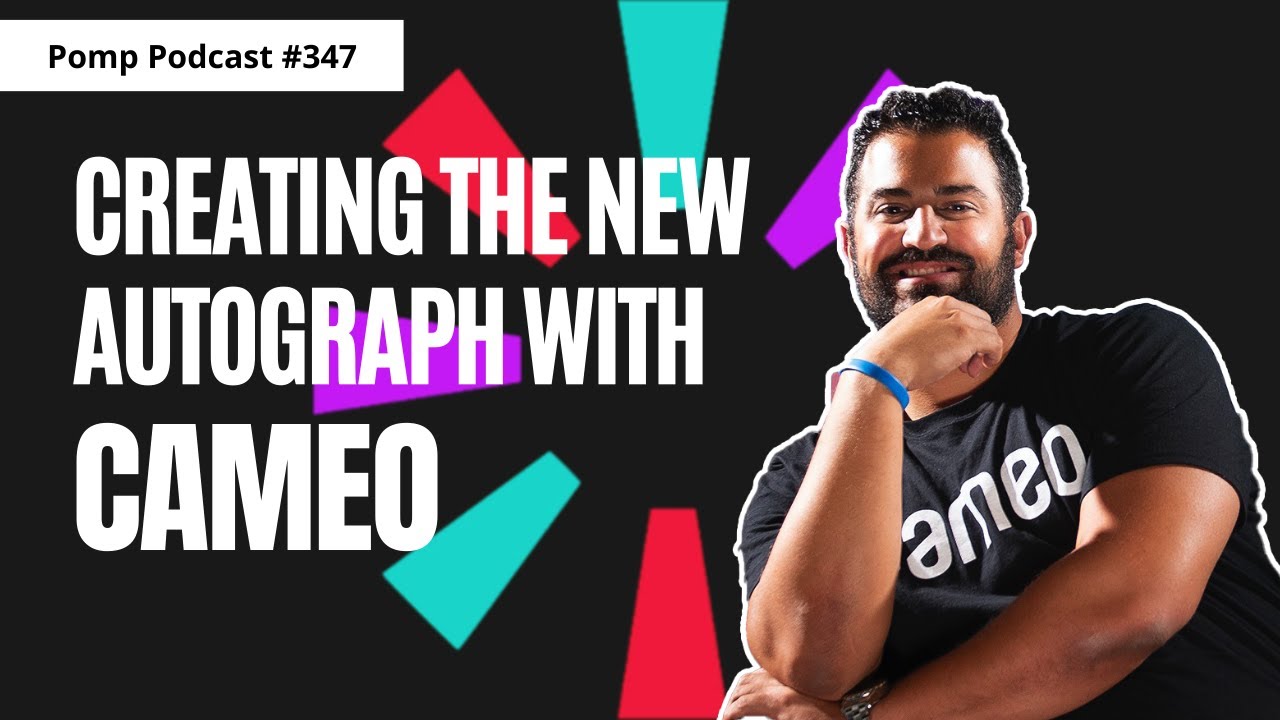
How I Built a $1B Business - Cameo CEO Steven Galanis

Cameo CEO Steven Galanis built a $1 billion marketplace by hiring for entrepreneurial DNA and living by values like "Act Like an Owner." He survived a Brett Favre scandal by meeting the star personally and weathered a COVID revenue collapse that forced 90% layoffs before returning to profit.
Chapters
I'm a deep believer that entrepreneurs are born, not made. Are you learning? Are you growing? If you're not, you should find something else.
Are you giving 100% to it to even see what you're capable of?
If you found that thing, then you are going to put the time and the effort because you love it, you're great at it.
I saw that you have 6 core values. Number 1, roll out the red carpet. 2, 3.
Those are the 3 that have stood the test of time. When COVID hit, the whole world shuts down. Our business went down by 50%.
How did you keep your shit together? There's
parts I handled better than others, but one big learning that I took from that is
Hello everyone, and welcome back to the show. We have a tremendous conversation for you today with Steven Galanis, co-founder and CEO of Cameo. Yes, that Cameo, the marketplace where you can connect with creators, sports, with athletes, celebrities, all kinds of different influencers, icons. And have them send personalized messages either back to you and, or to a team member, a loved one. People use Cameo to send happy birthday messages, thank you messages, crank congratulations messages. It's a wonderful platform for connecting people with the individuals that they follow, that have influenced their lives, who've done meaningful work and building that business. While, as Steven will describe, you know, Cameo had product market fit from very early on. was not without its major crises throughout its development. And we get into those, dig deep on the leadership philosophy that Steven and his founding team have used to navigate those crises and what has consistently allowed them to bounce back and be one of the most successful marketplace businesses of our age. Wonderful, wonderful conversation. You are going to love it. If you're watching this on YouTube, please like the video, subscribe to the channel if you haven't already. If you're listening on Apple or Spotify, subscribe, leave a rating and review. It's incredibly meaningful to me. It's telling those platforms that more people should watch this show, and it helps connect us with more audience members, helps us grow the show. And then if you have questions, comments, et cetera, YouTube is where we capture those and we pull off those questions in future episodes when we do our Q&A shows. So love you guys for being here. Love you for listening to the show. With that, let's get on. to this absolutely tremendous conversation with Steven Galanis. Steven, it's great to have you on the show, man. I appreciate you making the time.
Thanks for having me.
Yeah, I, there's a part super early in your story that I'm interested in because I think it's something that happens to a lot of entrepreneurs and I, and I just wanna take you back, like in college you start this Spartan Entertainment, you're, you're building this big community, you know, so far as I think I saw that you're, you were nicknamed the mayor and, and all this kind of stuff, which is awesome. So very entrepreneurial. And then your first job out of college is actually kind of going back into the corporate world, right? Like a trader for large finance. I'm interested in, because I see this a lot in entrepreneurs' journeys where early in life or college, they have this pull to build their own business. And it's almost like we have to try the other side. Like, was there, was it like a feeling like you needed to try corporate life? Or like, why not roll your, your kind of entrepreneurial spirit right into an entrepreneurial endeavor right out of college?
Yeah, that's a great question. Happy you asked it. You know, one thing I know a lot of you that are listening, you know, probably can empathize with, you know, the entrepreneur that was, you know, finding every excuse to be entrepreneurial, uh, even before college was over or while it was going on. I can't tell you how many successful founders I know that were running the nightlife at their school. And, you know, I think it is a very similar skill set. But in my particular case, I had built the moat of my business in college, which had gotten really big. And there's a little background. So Spartan Entertainment was a company I started with my co-founder Zach Moritas, who's now running a really successful software company in the Triangle in North Carolina called Teamworks. The 2 of us started this, this, this business where we used Facebook in the OG days. This is still when you needed a .edu email address to even get on Facebook. To eventually aggregate a group of 17,000 college students at Duke, North Carolina, NC State, Elon, and the surrounding communities. Yeah, this became like the dominant force in nightlife in that area. In that generation, by my senior year, we were throwing 17 recurring events a week. You know, I'm getting paid cash every single time somebody's coming in the door. It was a great business. But what ended up happening was Right at that point, because I was the first like grade that had Facebook all through college, eventually once people started graduating, they needed to get rid of the .edu limitation. So they ended up opening it up and then suddenly the bar owners and the venue owners, like anybody could kind of create Facebook events. It didn't just have to be college students. So we kind of lost our edge, if that makes sense. That said, the network that we built was, you know, was pretty enduring. In fact, The signature party that we started Wednesday night, beer pong at Shooters, still goes on today. And I'm about to have my 15th year reunion. So this thing's going about almost 20 years strong now, you know, which is, which is pretty funny. But, you know, really to answer your question, like, I think you also have to go back to that time period. I graduated in 2010, which was right in the middle of the financial crisis. So, you know, you could imagine that, you know, maybe if I'd graduated 3 years earlier or 3 years later, you know, you're, you know, sophomore year, junior year, you're interning on Wall Street or at a consulting firm and then you're going to go work there. And, you know, there was this whole cohort of people that were walking around Duke at that time that like maybe otherwise would have been at Goldman or maybe otherwise would have been at McKinsey that ended up starting companies like Coinbase and Plaid and Airtable. You know, these are guys that were like all the same age, you know, as me. And that cohort from Duke in that era was, was pretty incredible about the talent and founders that came out of it. But you know, one thing that like I I feel really confident about is like the the time that I spent you know both trading and at LinkedIn were things that really did shape me professionally. Now I think in both cases I probably especially trading if I'd done two years of it versus you know five years of it you know I would have been better off. But at the same time like I don't have regrets because I learned a lot. I made a lot of the connections that ended up. being those that were my early investors or early employees of the company. So, I don't have any regrets, but I do tell people that I always knew I was going to start a company. It just took me like 9 years to find my really good idea.
Yeah. I actually, when I'm talking to younger people or whatever come up, and whenever you have a public platform like this, people seem to assume that you have all these answers. And sometimes you do, sometimes you don't. But You know, so I'll get questions asked and stuff, and I'll tell them like, look, I think for some people, and probably my guess would be the majority of people, actually taking that time, if you have an entrepreneurial bent or that is ultimately your goal, taking that time to go into the corporate world in some capacity and getting a feel for that side of business, because there are a lot of really good lessons that you can learn, and also, you can learn a lot of things that you don't like, right? And I find that, like, my most successful entrepreneurial endeavor was actually the result of building, I'm not gonna say solely, but building against aspects of the business that I didn't like or I disagreed with, and then building off of those. And I wouldn't have had that if I hadn't spent, you know, about a decade of my life in different kind of corporate endeavors. Um, do— does that play with you? Does that sound right? And maybe what should someone be considering if they have a similar entrepreneurial bent that you have when they're coming out? Like, how do you make that decision? Should I just press into more entrepreneur or whatever?
Let's start from the top on this. So, yeah, yeah, yeah, yeah, yeah. I'm a deep believer that entrepreneurs are born, not made. Yeah, I think you can become more entrepreneurial by being, you know, hanging, working at startups or being around other entrepreneurs. But you know, most entrepreneurs that I know, like they, you know, they were entrepreneurs in kindergarten. Like it was like they had, you know, they were the ones with the lemonade stand or they were, you know, flipping baseball cards or Pogs or like whatever the fuck it was. Yeah. Like, like Pogs. Oh my God. Like I just, I just see that over and over and over again. And you know, in fact, there's a personality test we used to make everybody take in the OG days of Cameo. It's called 16personalities.com. And only 3% of the human, of the population has what's called the entrepreneurial archetype. And, you know, this is someone that's like forward-looking. It's someone that's not deterred by failure. They're resilient. And those are just skills that are like absolutely needed, 100%. Now, one thing that I'll tell you is that entrepreneurs can be fostered by being around other entrepreneurs. And one thing that we've done, and I take a lot of credit and I take a lot of pride in, is we have always like openly wanted to hire like future founders, like people that know they want to be an entrepreneur. They like want to get their feet wet. And I think there's probably over 10 people that have left Cameo over the years to become, you know, venture-backed CEOs, including 2 that became unicorns. Right. Which is, which is something, you know, I like to think I'm a college sports fan. I love thinking about like coaching trees and, and, you know, like the CEO tree and the alumni tree at Cameo. Has really spawned some incredible founders that have come through and, you know, try to do things from pet insurance to NFTs to, you know, marketplace for art or, you know, different things in the creator economy. So like we've kind of run the gamut, but, you know, I think that's super important. And then the last thing that I'll mention is that if you are an entrepreneur and you know eventually you're gonna start a company, but I really would say this is true for like anybody in any job, It's critically important to find the thing that's your ikigai. This is a Japanese philosophy that I really love. For those of you not familiar, imagine a Venn diagram with 4 circles instead of 2. And basically you're trying to find the intersection of what are you great at, what do you love to do, what does the world need, and what can you get paid for? And if you find the intersection of those 4 things, you kind of get what I call like the Iron Man heart, right? It's like that perpetual motion machine. It keeps you going through the good times, through the bad times. You know, you could have the best ride up ever, but that doesn't mean the, you know, the comedown is going to be anything but rocky. But like, you know, 99.9% entrepreneurs go through major, major adversity at some period. And, you know, sometimes the sector that you're in is the hottest thing in the world. And then other times, you know, nobody wants to touch you with a 10-foot pole, especially on the venture side. So ultimately, the way that I've always looked at it is If you find the thing that is your ikigai point, it allows you to keep going on regardless of what's going on around you. And then the last thing that I think is really important, and this is, you know, when you asked me the first question, Ryan, like, do I regret, you know, being in the professional world versus being an entrepreneur? As long as you're learning, you don't regret it, right? But the big thing is like I see too often, and I've been guilty of this myself, Like I mentioned, hey, maybe if I had just done 2 years of trading, I kind of got what I needed out of that and I would have been ready for the next thing, but I stayed for 5, right? And ultimately, I think, I think that's so important whether you're in a role and thinking about a promotion or at a company. Should I stay? Should I leave? Are you learning? Are you growing? And if you're not, you should find something else.
Yeah, I completely agree with that. I also think one, one, just to build on top of that idea, Even if you're at a job that's not your dream job, or maybe you aren't necessarily, you know, it's not your ikigai, I think oftentimes we then downthrottle how much effort we put into it, right? We're like, oh, well, I'm, you know, an administrator in this company and it's not what I want to do. I want to be over here. And then they— then we spend half our day memorizing baseball stats because we can do our job in the first hour, right? I mean, that was like my career at American Express. Yeah. And, um, you know, so it's like, I, I'll actually ask people, you know, yeah, I get it, like, you don't love this thing, no doubt, but like, are you giving 100% to it to even see like what you're capable of? And I think a lot of times we get into these positions, and if it's not what we see ourselves doing for 10 years, we downshift and coast, and that just kills all our momentum.
Totally. And that's really what the whole premise of the Ikigai, you know, framework Means to say, like, if you found that thing, then you are going to put the time and the effort because you love it. You're great at it. You know, you're, you're inspired by it. Like all those things, like you can get— you can make money doing it, right? That's— it's so important.
Yeah. Now, do you think— I want to go back and double-click on this idea of you having, you know, multiple successful startup founders coming out of your culture. And, and I saw that you have 6 core values. I'm going to read all of them, but there's 3 I would love for you to kind of expand upon. But I'm gonna read all 6 for the audience quick here. Number 1, roll out the red carpet. 2, act like an owner. 3, challenge assumptions. 4, embrace innovation. 5, fight for simplicity. And 6, make it memorable. Yeah. The 3 I would love for you to maybe expand upon in whatever way you see works, because I think they're, they're topics that to me are kind of a little different, and I think very interesting, are 1, roll out the red carpet. 2, act like an owner, and 3, fight for simplicity. Those 3 ideas immediately caught me as differentiators from what I've seen in other kind of corporate core values. Well,
I will, I will tell you that those are the 3 that have stood the test of time. The other core values have been altered at different points, but those 3, along with run through walls, which is no longer a core value but still like very much an ethos of Cameo, are really the pillars upon which we built the company. Roll it. So the thing that's kind of cool, I mentioned there were like 4 kind of OG core values at Cameo. We have 6 now, but each one of the founders and then Arthur Leopold, who was our first employee, founding COO, each one of us had kind of a value that we brought to the table that became the bedrock and foundation of our culture. So starting with, you know, fight for simplicity. Sorry, starting with Roll Out the Red Carpet. That was the one that came from me. Like, the whole idea with Roll Out the Red Carpet is any single person that interacts with our brand, whether they're trying to interview for a job or they're a talent on the platform or a customer, like, the way that they should feel after interacting with Cameo is like they were just escorted down the red carpet at the Oscars and like they're the star of the show and, you know, the red velvet rope is there and everyone they want to meet's behind it and And like we're lifting that red velvet rope up and introducing them to everyone they ever wanted to meet. Like that is us to a T. And, you know, when we think about that from an employee perspective, you know, we always talk about like your first day at Cameo should be the best day of work you've ever had in your life. And then your second day should be better than the first. And like, that's such an ingrained part of our ethos. And when we think about things like roll out, like the return to office policy that we just did. You know, we're giving a $10,000 raise to all of our Chicagoland employees to come do that. We lived up to our value of roll out the red carpet there, right? Like, I don't know of another company on the planet that's doing that. I totally think that people, we're asking more out of them if they have to come in and their peers don't. So like, why should we not compensate them for that and do that in a really generous way? So roll out the red carpet, number one. Number 2, act like an owner. Is actually one that was a LinkedIn value. I worked at LinkedIn right before, so did Arthur, and this was one that we stole, but we really liked. You know, it's this idea that like every single person, like you mentioned earlier, you know, being in that role, but you don't really love it. So like, you know, you're remembering baseball cards. Like if you act like an owner, like you're the CEO, if you're the janitor or you're the COO of the company, like you're going to act like a CEO for your role. And we really believe in that. And part of putting our money where our mouth is, every single employee at the company has options in the company. So literally, they are an owner. I've always felt that that was really important. And on top of that, it's just this whole idea of, for the owner, the job's never done. So it's like, you're never just going to go say, this is good enough. You should really own your work and feel like you're, like you're, you're named the, you know, Steven Galanis or the Ryan Hanley, like, you know, money-back guarantee is like stamped onto the work that you're doing. Fight for simplicity is a really interesting one that came from Devin, our co-founder. Devin ran product and engineering for most of Canva's history. Today he kind of oversees like all creative and runs design. And the idea with fight for simplicity is To build something like globally scalable, it is so hard to to do that if you have like all this complexity, like different buttons, different SKUs, etc. So what we're always trying to do is like you know how do we delete? How do we streamline? How do we make this as easy as possible? Because if you make it as easy as possible, it actually allows it to scale. And you know fighting for simplicity often means like. You know, very difficult trade-offs, but, you know, cutting it all the way down. And, and, and that's something that I, I think that, you know, we're, we're pretty proud of as far as like the core product that we built, like what the whole universe of things we could have done was, but like focusing for, you know, we're 9 years into like this personalized video product.
How do you, do you have a framework or maybe just, maybe just a, maybe expand on the philosophy a little more? 'Cause I, I think a lot of people struggle with this. I think they struggle with it with all their work. Creators struggle with this, entrepreneurs struggle with this. I think we all want to add in features or like, like, you know, complexity into the product as, as a show of value. And it is a very difficult, I think, conversation oftentimes to, to stay focused on this idea of simplicity. So like, how do you cultivate that inside the company and really stay on target?
Well, of course we want good ideas coming coming to get surfaced, right? And, you know, it's funny, I was in a product review yesterday for this product called Broadcast DMs that we're rolling out. And one of the ideas that we had, so, you know, imagine an algorithmicless social feed. So basically if you follow anyone that follows you on Cameo, Ryan, like you could send them a mass message that appears in a 1-to-1 DM thread and start having like a personal conversation with them. So we're really excited about that. One of the killer features we're thinking about is the ability for the talent to actually own, not rent their audience. So right now, like you're following on Instagram, you're following on Facebook, you're following on Twitch or YouTube, like the platforms own your followers, you just kind of rent them. But like, what if like we actually gave you like radical ownership and you could take anyone that followed you and export, you know, export their, you know, their email or their phone number, their birthday to a CSV and like use that In whatever direct-to-fan rails you you think is best to go cultivate your network. So we were talking about this yesterday, and you know we were really thinking about okay if we were to do this like what are the critical things of information? Like you want the name, you want the email, you want the phone number, you want the zip code, you want the you know you you want their birthday. But like like do you really need email and phone number? Like so it's just constantly because every time there's another field. going to have drop-off. So, you know, we ended up getting to a really elegant solution where, you know, 3 of those 6 things that we said were critical are like what we decided to move with in an MVP. And then later you can always add, add more information on or complete your profile in a deeper way.
Have you had any— that's not the right way to ask that question. This idea of radical ownership of your audience is so much different than most platforms, as you just described. Like, why are you willing to do that when your peer kind of social platforms are unwilling to do that? What is the— what is the thought there? And are you— you know, what would be the concern of other platforms not to do this?
Well, number one, the business model. Our business model is really different from TikTok and Instagram and Snapchat. We do not have an ad-based revenue model. So for those platforms, They monetize on DAUs, MAUs, and basically selling their user data. The talent or the creators make the content for free, and then they sell ads against it to advertisers. So they are always gonna be an advertiser-centric model, and the talent are— the deal they basically make with the talent is, hey, use our platform, you're gonna get famous, but then we're gonna sell, and if you get really famous, you can make money doing other shit. Like, that's basically how it works, is the, the rev share that comes from any, like, any of that on TikTok or YouTube. It's, it's, it does not— you cannot support yourself unless you are like the biggest person in the world on the platform. So that's kind of the— so then what happens? Like, you sell merch, you go on Cameo, you, you know, have a subscription on Patreon or OnlyFans. Like, that's how you monetize. For us, the talent are the Fort Knox, right? Like, our business model has always been talent-centric. Like, the talent make more money than we do for everything. So for us, if we can provide the best tools in the world, the best rails in the world for talent to directly monetize their fan base and nurture it and cultivate it and strengthen it, then like, I think we win in the long term. But it's impossible to go from, you know, a TikTok or YouTube business model where, you know, they have, you know, 100% gross margins basically on this ad product and they don't have to give anything to the talent or they give almost nothing versus our model where the town are making 75% to begin with.
Yeah, yeah, I get that. It's— and it's also, it's such a direct relationship as well and so personal. I mean, that to me, it definitely changes that aspect of it. And, you know, I guess I want to pivot into, and maybe this is the right time, this is the wrong time, but I'm so intrigued by the Brett Favre story. And not necessarily, you know, you can do any kind of just preamble into, into how it happened. I'm not so interested in the, in the how. Yeah. I'm interested in your mindset and, and philosophy to act, to, to actually execute and, and to go see him. And then, you know, to kind of tell that story for us. 'Cause I, you know, the, the thing that happened, whatever the controversy, that, that's less interesting to me, but probably important. But to then go and do what you did, I was like, This is the kind of guy that if I did want to work for somebody, this is the kind of thing that I would want to see out of the person that I work for. So I, I love that story.
Well, thank you. I appreciate that. Let's take it all the way back. This is December 2018. We're right in the middle of Christmas season, which is our busiest time of the year. I think literally this was like Thanksgiving weekend. Brett Favre had joined Cameo earlier that year and at this point is the biggest person on the platform. Platform, you know, like an American legend and like Hall of Famer. And, you know, just getting a Bret on had really started to be a halo for us to get, you know, Snoop Dogg and other like, you know, that kind of level talent onto the platform. So that we were really just hitting kind of this big tipping point at that point. We had closed our Series A, you know, maybe 6 months before. And all of a sudden we get a— actually, I think we closed the Series A like like weeks, 6 weeks before this happened. And all of a sudden, I get a frantic text message from this guy named Sean Finnegan, who was extremely important to us in building this business. And Sean was working with Brett on a lot of his social stuff. And he goes, Steven, we got a problem. And I go, what happened? Some alt-right group had tricked Brett Favre into making a dog whistle antisemitic video where basically the script said something like, he was talking about, you know, the shout out goes to the families of the USS Liberty, which was this ship that Israel bombed of the US in like 1970s. Ah. It's like a very like esoteric reference in history. And Brett just thought he was doing the shout out for, for, you know, basically for, he thought he was doing a shout out for veterans. And then this group took that and put it on 4chan and they'd made a bunch of little dog whistle references that I wouldn't have caught, or I don't think anybody reasonably would have caught. And suddenly, you know, they were making it look like Brett was, you know, advocating for these, you know, like these Proud Boy-like groups, like these alt-right kind of neo-Nazi type groups. And this became like a massive, massive story. And, you know, first things first, we always want to make sure our talent's safe. As I mentioned, like, the talent are our Fort Knox. Without the talent, we can't do what we do. We can't manufacture happiness. So the biggest fear at that point was, holy shit, if like Brett loses his Wrangler jeans ad or, you know, and he leaves the platform and he never comes back, that will put a cap on whoever could go and join Cameo because suddenly he becomes the cautionary tale and every single agent's going to be like, yeah, not worth it. I don't care how much you make. You just threw everything else away. So this is really existential at the time. And so what we immediately do is we kind of let our talent base know that this happened. Like, we were super transparent. We immediately built this kind of like early AI bot on Slack that would basically, you know, we went to the Southern Poverty Law Center and got this list of all these like hate words and different hate groups. And then it would, it would basically flag, we called it Nazi Bot at the time. It would basically flag anything and then let our talent team know, hey, there's something fishy about this request or this reference. And then what we did was, you know, I needed to make sure Brett stayed and he felt safe. And I had heard that the '96 Packers, the Super Bowl champions, were having like a reunion. And maybe it was '97. They were having a reunion up in Milwaukee, like signing autographs and everything. So like me and my Chief of Staff at the time, Adam Ostrom. We drove up in a huge snowstorm from Wisconsin, from Chicago to Milwaukee. We waited in this big-ass line. There were hundreds and hundreds of people there. And we got to the front line and, you know, hey, I'm Steven from Cameo, Adam from Cameo. We talked to Brett. We told him how much we appreciated, you know, him and, and we were there for him. And you know what he— and by the way, we were— I didn't want to have that conversation like that, you know. But you know what he said to me? He looked me straight in the eye. He goes, Steven, Wasn't my best day, but it wasn't my worst day. I love how Cameo makes people feel, and you know, just thank you for being there and stepping up. And honestly, that's one of those little moments that kind of saved the company at the time. And what we didn't— what we didn't realize was, even though that was as bad of a press cycle as you can, you can kind of get, a lot of people found out about Cameo from that. And you know, instead of the platform dying, like, we had the biggest month we ever had. And that really Started, you know, just accelerating the flywheel of our business, and the rocket ship really started igniting at that point.
Was there anyone inside the organization that didn't think making that trip, getting in front of Brett, like, was there any pushback, or was everyone kind of like, this is our Hail Mary pass, let's go?
Look, I mentioned like run through walls was that value that's not there, but like, that's just how we built this business, right? Like, Cameo was built by very gritty people Building the business brick by brick, and you know when some insurmountable obstacle came, you know, in our way, we busted through it. And that's something that you know it's really even as we're rebuilding our culture right now, like that's the thing that you know. And by the way, that run through walls, like what is that? I mentioned we hired a lot of entrepreneurs at this company, right? And like what are entrepreneurs? They're run they're run through walls type of people.
So that's not the only crisis. I'm sure you've had many minis, but fast forward, you know, COVID hits, you guys just absolutely go bananas. It becomes this way to communicate and deliver messages. It's also right. I mean, I remember this time and, you know, there's Cameos everywhere and it's just, it's become a cultural icon to a certain extent. And then there's a downturn. You know, just reading through all of my material and doing research and digging into the story, so incredibly impressed with the decision to, to kind of knowing that you had to down throttle and how painful it would be. I would love for you to talk us through that time because you've come out the other end now, this being a second major crisis, you know, come out the other end in a very good place. And this is another moment where, just like with the Brett Favre incident, I think people who don't have their head on their shoulders or maybe don't have the values that, that you guys have, they fall apart and you didn't. And I'd love you to take us through that time and kind of your, how you led your company through, through that period.
Yeah, it was, it was a really, really difficult, tough time. But, you know, let, let's start even going into COVID because I think it's a really important part of the story. So coming into COVID, I mentioned like this Brett Favre thing happened. And, you know, when you look at the first 4 years of our business, like we became a unicorn on the exact 4-year anniversary of launching, right? And, and that was at a time where like there were no like AI, you know, unicorns popping up pre-revenue. Like our business went from $300,000 to $4 million to $20 million to $100 million in its first 4 years, right? And this is just like the classic, you know, rocket ship. And, you know, for us, one of the things that happened and, you know, we get called a COVID darling a lot, but people don't really know that in 2018 and 2019, we were the fastest growing consumer marketplace in the world at that time too. So coming into COVID, we had this huge momentum. We had just raised our Series B from Kleiner Perkins and Chernin Group and a lot of like incredible investors that that joined the cap table and like this thing was like ready to launch. When COVID hit, initially we didn't know how that was gonna deal with our business, right? The whole world shuts down. And in fact, the first week of COVID the first week of lockdowns, our business went down by 50%. Mm-hmm. And we had an emergency board meeting that Sunday night about, hey, like what, like were we gonna need to do layoffs? Like what were we gonna need to do? We didn't know how long this was gonna go on. So like I remember me and the founders, we cut our salaries to zero. We got rid of like a lot of these benefits that we had. Like you could Uber to work back in the day or like gym membership. We're like, well, if everything's shut down, like we're not going to need any of those things. So we just basically did everything we could to avoid laying people off and took some costs out of the business. And then basically the next week, like it rebounded and then it just shot out like a cannon. And you know, in 2020, we grew about 500% in revenue, right? Mm-hmm. So suddenly, you know, this thing is like full speed ahead. And as I like to describe it to people, that period of time was like playing the game Mario Kart when you hit the star and you could kind of go 10 times faster and you can bump into shit and you just keep going. And it, but it, it, and then at some point like that star just kind of fades off. And for us, that was when the second vaccine came out, right? And, and if you think about like why our business accelerated during COVID so much, You know, you mentioned that this was becoming a new way to communicate. Like your mom, you know, is living across the country, so you couldn't see her for Mother's Day. Like you sent her Kenny G to, you know, tell her how much, you know, you loved her and wish her a happy Mother's Day. So you're literally sending digital love. And you think about the missed weddings and birthday parties and like life events that happened. And like a Cameo is such a great way to do it. But on this, on the supply side, for the first time in history, Every athlete, actor, celebrity in the world was out of work. And none of them, even those that are like, if you're a pro, if you're an MLB player, you're an NBA player, you have an annual salary, but you get paid per game. So guess what? When the games weren't happening, they weren't getting paid. So this was a massive supply-side tailwind for us. And, you know, there was more availability. They were busy and it just kept— people were on their phones and at home and it just, it was just the perfect storm, you know, for our business. Our leadership team knew that at some point that was going to end. But at the same time, like, we just raised $100 million and now we are, you know, we are building up to try to future-proof the business and ultimately take it public. If you remember that period of time, this is SPACs, this is direct listings. You know, coming into 2020, Cameo was named the most promising consumer internet company in the world by The Information. You know, and we are Like we are just like humming on all cylinders. We hire a public company ready management team. We, you know, hire kind of the best of the best. The team goes from 100 people who are all in person in Chicago and LA to about 400 people that are fully distributed across 38 states and 13 countries. Right. And, you know, we're building international out. We're starting new business lines. We're doing all these things to try to diversify. By our base. And then all of a sudden, the second vaccine comes out, like when people got their second shot, and organic traffic to our site ended up dropping by 65%. So the core business, which was never built on paid marketing, was always built on virality and talent promoting and customer sharing, like just 65% less people came into our store and OpEx had 3x'd. Right. So suddenly, you know, we went from being profitable, break-even business to burning $6 million a month. And it happened in like under 90 days. So when that happened, all of a sudden our leadership team was like, we have to take costs out of the business. We— it was a falling knife. We didn't know how far it was going to go. And over the next 18 months, which were probably the worst 18 months of my life, you know, we had to tear the company down to the stuts. And, you know, we went from over, you know, 350 all the way down to 32 people. And, you know, when we got to that third one, this was basically like, you know, our board was talking about, hey, if we go that deep, you're a zombie company. There's no way you can grow again. You guys are dead, blah, blah, blah. But I was just like, I can't go and look at my team again if we're not profitable. I'm like, we have to get to profitability. And, you know, happy to report that last year you know, we break even for the first time. And, you know, this is a company that was burning over $50 million 2 years ago. And it just was an absolute wild ride. And some of the lessons from that, you know, my biggest regret is in the first RIF, we ended up, you know, laying off 25% of the company and we should have gone deeper. We absolutely should have gone deeper in that, you know, our, you know, my naivety and like trying to save people's jobs ended up costing more jobs in the long term. And it's something that I deeply regret because if we could have done that in 2 swoops versus, you know, versus 3, there's so many great people that aren't here anymore that I wish were here. But, you know, I'm so grateful to those that stuck it out and stuck around. And, you know, you mentioned, Ryan, like that culture is what kept people here because, by the way, like when you lay off 300 people, these are awesome people and suddenly they're at new companies and great jobs, and, and they're calling the people that are still there like, hey, the water's warm over here, like, what the hell are you doing? I remember Mackenzie, my now chief of staff, came up to me one, like, late last year, late in that year, and she's like, Steven, I kind of feel like it's 2:00 AM at the bar, it's closed, and like we're the only losers left on the dance floor. Like, what, you know, what's going on here? What are we trying to do? And, you know, I— and this is where, like, having a product that makes people happy every day And having a mission and core values and teammates that they love and leaders that they're inspired by, like, that's what kept people together.
How did you handle that? How did you keep your shit together during that as, you know, one of the individuals that everyone's looking at through this hard time, which people may understand logically, but there's almost no way to fully rationalize emotionally? Like, how do you as a leader maintain your discipline, your perseverance, drive through— those are incredibly tough times. I mean, that's just—
Yeah, I think there's parts I handled better than others, but one big learning that I took from that is in the ride up and the initial crash down, I was probably the most positive person on the rope, on the ride-ups. Like, I was the Pied Piper. No matter how excited anybody was, I was more excited. And then when shit was going bad, like at the beginning, like my expectations were so high that like my tolerance for missing plan or like, you know, shit not like shipping when we needed to or things not getting done, I just was so pissed off all the time, right? And I was more mad than anybody, you know? So one of the things that I've been really working on myself through coaching that I've tried to do better is to be more of the ballast of the emotional ballast of the company. So when things are very exuberant, like, that's where I want to pull them back. Or when things are really shitty, that's where I want to pull people up, right? So I've been working on that a lot. But, you know, at the end of the day, like, you, you know, you have to be putting a brave face out to your company. If you, you know, you have to have conviction in what you're doing. And, and, you know, in that period of time, I leaned on You know, some amazing entrepreneurs that were part of my YPO forum and other other people that kind of have come up when I did. And you know, we we spent so many nights on the phone with each other, you know, talking through the issues that we were all going through at that time. And it was just, you know, I know it's funny. My dad was like a longtime finance leader at a you know multi-billion dollar company, and I remember him saying like. Man, that 18 months, you got like 30 years worth of experience at
that point. Yeah. Well, that— I mean, the worst part is— I shouldn't say the worst part. My guess is years from now you will look back at that moment and it will be the success that you have coming in the future will have only been possible because of the maturation process, that accelerated maturation process of that, both of those 2 incredibly hard situations, right? Which were both different. One's a PR issue, one's an internal operations issue and sales issue, you know, revenue and just business. I mean, those types of experiences, I think you almost have to have them to a certain extent. You don't want them to happen. You don't wish for them to happen. Yeah. But I look at some of the worst moments of my career, whether inflicted by a decision that I made that wasn't right or just something that happened that I had to address, And those are the— like, it's funny, like, when you talk to people, those are the things you talk about. Not like, oh yeah, we hit this goal, or we made this tweak to the product and this happened. You tell the stories about how you overcame these things because it's ultimately what shapes you.
Yeah, I think that's a great point. And, you know, one thing I was really worried about culturally, like, as we went from, call it, 100 to 400 in 12 months, it had been such a winning team that had literally had, you know, like we had, you know, we had the Brett Favre issue. We, you know, of course in any business you've got your little minor lumps, but like in many ways, like it kind of, Cameo just kind of worked from the beginning, right? We had, we found product market fit right away. The first thing we ever sold ended up being like the thing that we did, you know, had the name, had the space, like just, it kind of was this company that had everything. And when we started hiring people in that pre-IPO level that were leaving public companies to come work for the next one that was gonna be public. Like we had, you know, the resumes of people we were hiring were way better. They went to better schools, you know, they had, you know, they had, you know, better resumes. And we started hiring for like resumes and experience over kind of what got us there, which was giving like really smart young people with no, that had no business, like having the responsibility, giving them the shot to be great. And That was one of the periods where I really felt like organizationally my Spidey sense at the time was like, I don't know how much resilience or grit this, you know, this group of people have, right? And obviously, you know, as layoffs started, you know, like we really found, you know, we really found at that point, like those that remained, the 32 that like cut down all the way from the mid-300s, like Those people, like they've been through hell with us, right? And that's why, you know, when it came to the return to office, I'm like, of course I'm going to roll out the red carpet for these people. I know we need to be in the office, but I love these people. I want every one of them to be here for ten years. And you know, part of the reason I want the people back in the office is because this group of people creates magic when they're together, right? So I don't want to do anything to force somebody to get another job. Like These are people that, you know, when push came to shove, like every single time in those spreadsheet exercises kept being on the green list versus the red list. And, and by the way, there's so many people on those red lists that I would kill to still have at this company. Right. But like, you know, we had to do what we had to do.
Yeah, I think you made a really good point about, you know, kind of cultural hiring over resume hiring. And I've also found, and I'm interested in your take on this, you know, I found often when you find someone who is talented, smart, driven, but maybe doesn't check the resume boxes, but you can tell there's real potential there, the ideas you get from those individuals tend to be— there's real upside because they're not thinking like— they haven't spent enough time in the box or even around the box. to believe, to start to believe that you can only do things that are in the box, right? They're like, well, hey, there's this thing over here that we can take from and integrate. All of a sudden you start to see this mashup of ideas because it's almost like their inexperience actually allows them to think bigger, if that makes sense.
So, right, I got my CEO coach who's now my board member, Bing Gordon, kind of like legendary long-term partner at Kleiner Perkins. like founding board, like board member of Amazon for 20+ years. He one time, like, we're both hockey players and he gave me, he gave me a framework on like team construction that I think was so valid. And he had basically went back and looked at all the Stanley Cup champions in the last like 25 years. And he found that they had a mix of 3 archetypes of players. And, you know, you'll see where I'm going with this when, when we come and talk about how that applies to company. But basically, he's like, every great Stanley Cup-winning team first had, you know, kind of your, your 2 lines of guys, like 6 players who are at the peak of their career and they're gonna do the best work of their life right now. Then you also have like a group of, you know, another 6 that are, you know, young, dumb, hungry, stupid, but like they're playing out of their minds. They don't even understand like what's at stake. Like they're rookies, they're second year in. But they're just workhorses and they're going to do the best work of their life later. But like, they're playing out of their mind right now. And then he goes, lastly, every team needs this. You have to have the grizzled old vet that still has the blue burning flame that wants to lift the Cup one more time. Maybe they've had a Hall of Fame career and they never won the championship and like they become the, the people that rally around this. And, you know, at Cameo, we've had a really good mix of those types. But that's a framework and archetype I like for team building that at least resonated with me.
Yeah. And then your job becomes, and I'm going to position this in a question form, your job becomes managing those per— not managing is the right word, creating an environment for those personalities to mix so that they can, we can, you can pull from their respective viewpoints and everyone feels heard. heard, understood, and access to all those ideas. Is that kind of the idea? Now you become kind of of service of those groups to make sure that they mix in the proper way?
That's how they draw it up, but in retrospect, like, that's probably the single thing that I fucked up or got wrong most in the buildup, especially in the heyday. So when we were building this executive team, like, we're, you know, we're preparing to be a public company and some point in the next 2 to 3 years. And we went and hired like kind of the best of the best. You know, our, our head of product was one of the top product leaders at Uber. You know, our CMO led Hims& Hers, which was like the, you know, kind of hottest brand out there at that point. Our COO was the global head of ops at LinkedIn. Our chief people officer was the global head of people at McDonald's. Like, you know, our CFO was the CFO that everybody Everybody thought she was gonna be the next great one to take somebody public. So we built this like all-star team. But the problem was, and I remember at the time, one of my board members told me something. She's like, Steven, you've been Michael Jordan this whole time, but now it's time to be Phil Jackson. You know, like The Last Dance had come out and really like what she was asking was like, you need to now be the person that just brings all these people together. And I don't know if it's because it was remote. I don't know if it's because I brought in 6 senior executives, like all at the same time and everybody's kind of fighting to be number 2, but like the sum of the parts, the whole was worse than the sum of the parts. Like that group of people, I could not, and this was my failure and it cost, you know, it costs the company time. It costs the company money. It costs a lot of people their jobs. And this was my failure. I couldn't bring that group together to make that a cohesive, you know, high-functioning, high-trust management team. And that is the regret that I have from that period of time. So, and as, and as we've torn the company down, I realized that like the consensus-based management or trying to get everybody on the same page, like that's not— I just had to step up more and be like, this is the direction we're going. Like, figure it the fuck out, right? So I actually needed to become Michael Jordan again and not be Phil Jackson. So I think the— I think like a lot of the management books will tell you it's all about being the maestro and creating the culture, but like, you know, as a CEO at the end of the day, like, hey, I ran the company, you know, we as founders, we control the board. You can't really look at anybody else on the bad things, you know, at the end of the day, like that starts and ends with us, with me and my co-founders, and ultimately I didn't do a good enough job in that period.
I think there's also a part to it that is knowing what your strengths are. You know, there are certain aspects of business, having, you know, founded multiple companies now, that I, I know, like, this thing that maybe in a leadership book is bullet 4 on the leadership list, I'm just never gonna be good at that thing, right? It's just never gonna happen that I'm gonna be that guy. I'm East Coast. I grew up in the woods, you know, like gun-toting crazy parents, you know what I mean? Like, I'm just a straight shooter, and I get told by any— every time I'm in a company, you know, I like the HR stuff, I just have to back up. They're like, you're too straightforward. They're like, you can't say those things to people. They like won't hear it. So like, I've always— I now like know that, but man, figuring that stuff out is just so important.
Well, let me— I think that's a really important point. point. I also think that that period of time was a very weird period, right? You had the Great Resignation. You had all these startups have, you know, Series A companies had more money than Series C companies. You had like, just, there was so much craziness going around. Quiet quitting, you know, people wanting to, you know, only be remote or only be in office. Like it just, it was just chaos. And then you had, you know, employee activism and wokeism. To the point where, like, as a leader, you're trying to foster a culture that's inclusive for everybody. You know, we're trying to build diverse teams. We're trying to build, you know, have different leaders with different perspectives there. But at the end of the day, like, I don't know, like captaining sports teams my whole life and having other businesses, aligned teams have always been the ones that have won, right? It hasn't been the dream teams. It's been the ones that are aligned, that have a shared They have shared core values. And that doesn't mean I don't care about diversity. And it doesn't mean that I don't like bringing in different perspectives. But it means that at the end of the day, like, everybody's got to be pulling on the same rope.
Yeah. Steven, dude, I could, I could talk to you for another 3 hours about business. This has been absolutely incredible. I want to be respectful of your time. You know, Cameo is an enormous platform. I don't think we need to do a shout out of where people can find more of you. But are you creating— I'll just ask, are you creating creating any content, or do you have a— do you personally have a newsletter? Do you do anything like that that you'd like people to go chase your ideas? Because I think the way you approach brilliant— or approach business is brilliant. And if you're sharing that anywhere, I'd love for the audience to be able to follow along with that.
Well, stay tuned. This is a plug for the soon-to-be-launched Zeitgeist podcast. I'm going to be interviewing the top founders and marketers in the world that have shaped pop culture and hear the story behind the brands that are influencing like pop culture. So I think it's gonna be a lot of fun. We've got a really killer season 1 lineup, uh, but look out for that, uh, probably in the next 3 months we'll get the first episode out.
Tremendous. And, and I'll get with your team and when that comes live, I'll make sure we get it out to the audience here so that we can get people pushed over to the podcast. So just again, man, thank you so much for your time. Appreciate the hell outta you.
Thanks, Ryan.
Appreciate it. Thanks, bud. You be good.
More from Steven

#27 - From Funeral to Fortune: How Steven Galanis Revolutionized Celebrity Connections with Cameo...

How Did Cameo Come Out of Nowhere? CEO Steven Galanis Tells All | How I Raised It | Foundersuite