[Leadership] Creating a culture of coaching and skill improvement with Sai Guduguntla
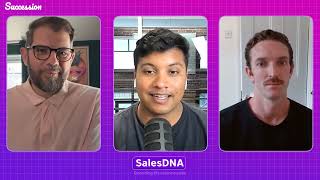
Recorded interview with Sai Guduguntla (co-founder & CEO of Hyperbound) about using conversational AI to scale sales coaching. Sai describes Hyperbound as an AI voice role-play platform trained on large volumes of sales calls (claimed ~2.2 million hours) that provides instant, unbiased coaching feedback, supports persona-specific bots (e.g., 'scientist' persona), and can accelerate certification and enablement at scale. Discussion covers cultural barriers to coaching, manager time constraints, measurable benefits (cited win-rate and coaching time stats), deployment examples (a 2,600-rep customer certifying for 27 products), and a free demo at Hyperbound.ai.
Chapters
The technology itself has gotten to a point where these models can be trained on tons and tons of data, and this was not possible before. There was actually an unlock in the last year that allowed these models to be trained on significantly more data, and that's what allowed these models to get more realistic as well and get down to the nooks and crannies of these different Personas that you're talking about.
Right.
In fact, Hyperbound in specific, we've actually trained our models on nearly 2.2 million hours of sales calls across a variety of different industries and Personas. And you'll be surprised, man, when you go onto Hyperbound and set up a bot, you can build a scientist Persona in a matter of three minutes. And it's scary real.
Welcome to the show. We're just happy to have you here.
Awesome. Excited to be on here, Harrison. It's been a long time coming. I know we've been talking for a year now, and I'm glad I'm finally on here.
Yeah, I know one of the reasons we originally got connected is because you guys have a platform that does your sales, role playing, sales coaching, leveraging AI, sort of all of the different passions that I have specifically around sales AI, role playing, coaching, all these types of things, training. And so I think it's just like a really good fit to have this conversation, have you on and just sort of talk about, you know, how you built Hyperbound, why you built it. So, yeah, we'd love to dive into that, but before we do, we always kick off every episode with a crazy or funny story that's happened in your career. Awesome.
Interesting. Crazier, funny story. You know, it's interesting. I actually just made a post about this the other day, but it was my birthday not too long ago, a couple of weeks ago, and my co founder decided to get me a doll for my birthday, and it turned out to be, you know, this massive LeBron doll. As I swear it was like, you know, a foot foot long and, you know, now just sits on my desk in the office. And he got it because, you know, I'm a huge LeBron fan in general. I've been following him my entire career, and I look, you know, he's kind of like a role model for me. And, you know, I thought that was pretty funny because it wasn't even like a regular LeBron doll. It had, like a varsity, and, you know, it's. It looks pretty cool. I did not expect him to get something like that. And now everyone just walks by my desk and they're like, where'd you get this nice?
Or is it like, like a bobblehead type of thing?
No, no, no, it's like a big doll. Like it's like this big.
We need to clarify some points for the non US listeners. There's two things we need to clarify here. By dollar, he mean stop doing the balloons. By doll, he means figure. We only call dolls in the UK the ones that like little girls play with, that have the pigtails and all that.
Oh, yeah, yeah, yeah.
Right.
So you mean a sports figure model.
Right.
And it's LeBron. He plays the. The bouncy, bouncy one, right, Exactly.
He plays basketball. Yeah, one of the. The greatest basketball player I know.
Oh, that's too funny.
Clarification.
Yeah, I heard some story or I was listening to I think the My First Million podcast and one of the guys on that show got a like life size version of Devin Booker, maybe.
Yeah, like, oh, really? That's crazy.
Wild. He has like one of a kind bought it. Like, yeah, it's a crazy story. So apparently this is becoming like more and more of a thing.
He's like, oh, yeah, maybe, maybe, you know, a couple months from now, maybe next year I'll get a life size version. But this is just the same starting point.
Yeah. Where do you put that? Imagine bringing that back to your wife. So, yeah, that's what I just.
I'd rather have a lifestyle version of Shaq.
Yeah, that'd be.
Oh, that's even crazier. Yeah.
All right, well, getting on track. So why don't you give us a little background? Maybe the founding story behind Hyperbound. What do you guys do? Get some context for everybody and then we could dive into the full discussion for sure.
Yeah. So a little bit of background on myself. So my name is Sriharsha. I go by Sai. I'm one of the co founders and CEO here at Hyperbound. Been running the company for nearly 18 months now. By background, I'm actually a conversational AI engineer. And people are probably wondering, what the hell is a conversational AI engineer? Totally fair, right? Conversational AI engineer. Really what that means is I spent the last decade along with my co founder building these AI models and trying to get them to be as realistic and human like as possible. Right to the point where you can't even distinguish is this AI or is this human? And every day this technology just keeps getting better and better. And it's funny because everyone talks about ChatGPT like it's this thing that just came out of nowhere overnight. Believe it or not, there were iterations of it that existed nearly a decade ago when my co founder and I started. And, you know, it's just gotten better and better and better every year. And now it's at a point where, you know, you're able to have real life human conversations with this AI. And that's exactly what we're trying to build at Hyperbound is really trying to use this technology in a very specific manner that allows salespeople to practice their skills. So the idea is it's AI sales role play. So, you know, the AI will pretend to be a client or a prospect and reps can practice role playing with this AI. And it's like a voice, it will talk to you back and forth. And it's really interesting because, you know, it will coach you on where you did well, where you could have improved. And it's like a, you know, personal AI coach, essentially.
That's awesome because I know when you're onboarding new reps, one of the there's like really like two ways that it kind of happens that I see it in the wild as one, you just throw them in on calls and have them listen to other reps. One, you don't know if those other reps are actually that good. Right. So that could be an issue. And then they're just picking up bad habits right out of the gate. Or you have a manager who does some of these role plays with you and that's, I think, a luxury. Like not many managers are actually going to take the time to sit down and go through all of those role plays, these different scenarios, and troubleshoot all this stuff with you to really help you hone your pitch and whatnot. And so I think it's really interesting what you guys are building and you're being needed. To be honest, I think another alternative.
Is actually you keep recording the calls.
Right.
In the hope that you'll get bound to reviewing them. So so many people will say, oh, we're going to record calls because we want them for sales training. We're going to review them and then we're going to give you feedback. And then I've been a sales leader for years and you have the intention of doing it, but it's always something that can wait because it's not time dependent and you never really get around to that. So to have this like instant feedback I think is really critical.
Absolutely. That's what I tell everyone that tries the role play is as soon as the role play finishes, you're talking within 30 seconds you have detailed coaching feedback on every part of the call. And for a manager to be able to do the same thing, it could take them up to 45 minutes to an hour. You gotta actually listen to the entire call and write thoughtful notes and, and then have suggestions. And you know, that's just not going to happen. And it's, you know, there's actually a stat out there. Managers spend 5% of their time coaching and 60% of managers will actually admit to that. So yeah, that's where the industry's at.
Most managers actually say they don't coach. That's.
Yeah, yeah, like there was, there was a survey done. I forgot which, which org again. But yeah, I mean most managers admit that they just don't have time for it and they're not doing it enough.
And I would guess what, I guess the ones that admit that are actually the ones that are doing it 10% of the time as the ones that wodeme are the ones that don't do it at all. So actually the number's slightly skewed, right?
Absolutely. Absolutely.
Yeah. I think it's interesting that you say that because what is probably your biggest leverage point that you could have as a manager is coaching your reps to have them be more successful, have them be better, and then generate more revenue from it. And it's like I think we have people getting. There are a subset of people that get into management because they don't want to sell anymore. They don't want to be on like the front lines. They kind of like, you know, would rather sit back and be like the dashboard manager and just like look at the numbers and try and like dissect things that way. But then you really can't get into. Well, one, you just get disconnected from like how your reps are actually performing. And two, like the reps, every rep needs coaching. Like even if you're a top performing rep, like there's always something that you can get better at, whether it's from like big challenge to do something more or what. But like everybody can always improve. And I think that there's just this aversion to coaching and just like people thinking it's so I don't want to say a waste of time, but it's a time sync that where they could be better spent time doing other things like creating.
The. I like we've been talking about LeBron already, right? And sports. I like the sports analogy here because it's one of the only industries that sees coaching as a continual thing. Even the best rep for there's no difference between the worst and the best rep. They both need the same amount of coaching because there's still those incremental gains even if you're at the top. And I realized that when I read a story a while ago about the top surgeon in the world before I'll get someone to come review me. And it was an old, older surgeon from years ago and he thought he was going to just come in and give him a load of green ticks when he was like, actually did you realize when you was doing something the light just slightly swung out of your view so then you was working in the dark. And he's like, I didn't even notice that. And he's like, the point of a coach is to just pick up on these tiny details to make incremental change.
He.
And I think that's something we miss. We think we're. That we're finished article.
Yeah.
And. And you know, like the other thing I think that gets downplayed, Nick, is, you know, everyone thinks coaching is like, you know, this generic thing where, you know, you, you watch a couple videos, you know, you get some feedback and, and you're good to go. It's like a one and done thing. But the reality is coaching is there's always contextual coaching, right? Like, think about, like Steph Curry, for example, right? He's the greatest shooter in the world and he still shoots free throws every day. And he still has a coach that's telling him, you know, what plays they should execute during the game, right? You would think a guy that's, you know, he's a point guard, he's one of the smartest players in the game. Why does he need a coach, you know, helping him execute plays, right? But the thing is, it's just, you know, the coach's job is it's not just about like individual plays. It's about the entire bigger picture, right? Like, how do we actually accomplish the larger goal together?
So. Yeah, yeah, no, I think makes a lot of sense. And I think the other. I think there's like another version that I hear a lot about coaching, which is for the reps, where they kind of view it as like criticism. And so reps are scared to like, work more calls. They're scared to like have these like coaching conversations. And I think it's because most coach, most call it coaching is done in this like very formulaic and forma. Formula driven manner where it's like, I noticed you did this and so next time do this. Or it's like when you said this, you should say this next time versus having something more, like, in the moment or even rather than like, reactive coaching, where it's like, after the call, you could even do something proactive coaching. How are you going to prep for this call? What are all the things you're going to think about? So that way when you're on the call, you're fully prepared and it's less about this, like, critiquing and more about, like, guiding and helping and in the moment, providing that guidance versus having it feel like this postmortem, you know, from a manager. And I think that's where some of that can come from. And so it's interesting to be able to have this, like, postmortem come from AI because then it's like, now you have this unbiased party. Like, I'm not going to get pissed at the AI for its feedback. It's like, well, clearly, right? I might disagree with it, but, you know, I think it's really interesting to have this, like, objective third party that doesn't have feelings be providing the sets of feedback yet.
Yeah, I think the key word there is unbiased, right? Like, you know, objective, unbiased. Right? Those are the words that come to mind. You know, when we first started Hyperbound Harrison, that was actually one of the biggest concerns that everyone had. They're like, oh, like, you know, are reps going to use this? Right? Are they going to take it seriously? And here's what we've learned, man. Like, reps take this more seriously than they ever took their manager's feedback seriously. And the reason is because AI takes the emotion out of the picture, right? Like, if I'm a manager, like, it's tiring to go to my rep after every call, you know, do the classic compliment sandwiches. I do. I do, like three or four compliment sandwiches, and by the time I get to the fifth one, it's like, okay, like, can I just give you the. Can I just give you what you need to work on? Like, I don't want to do this whole compliment sandwich thing because, you know, they feel like they're forced to do that because they don't want the rep to hate them. Right. The nice part about AI is it doesn't care if you're a top performer, doesn't care if you're a bottom performer. It doesn't care if you're nice or kind or mean. It will give you the same feedback no matter what. In fact, we always say AI is. Is not judging you. It's Just scoring you. Right. There's, there's no emotion in the picture and I think that's. Yeah. Reps are so much more willing to take feedback from it. Which is also why, you know, our adoption has been through the roof compared to what, you know, a lot of people predicted in the early days when we first started deploying hyperbound.
We think the safe space too. Right. It's like a rep can go and do this without feeling the pressure. Like if I want, I don't know, I'm sure if I wanted to like load it up and be like, okay, I'm going to go through my objection handling this morning. I'm just going to like, you know, load it up. Maybe I could test a few different objections, test how I would respond and that's like my, you know, warm up for the day. But I imagine this is like you can use it in these bite sized formats so it doesn't have to be this. I'm going to practice a 30 minute full conversation. I'm sure you can really get tactical with how you decide you want to do these things too.
But like just to, to touch on the emotion thing. I think part of it comes from when we do our most coaching as leaders as well. Right. So I can tell you the single time I know I was coached and I was coached quite successfully was at the very early stages in my career. I was put on a PIP performance improvement plan and I was coached to an inch of my life. Because in the UK you can't just get rid of someone if you put them on a pip. You have to show that you actually tried to change it. Right. So I had a meeting three times a week to look at what I said I was going to do and see if I did it, et cetera, et cetera, et cetera. Fast forward eight months, I actually got promoted. Right. There was a reason I was not performing. But you know, not to get to the long story, message me, I'll tell you the whole story if you want. But I was coached the best I've probably ever been coached because of negative behavior. And we link those two things.
Yeah, no, I think it's, it's super underrated. You know, there's actually a stat as well that says, you know, coaching actually improves Win rates by 27%. The problem is it's just not done enough because, yeah, I mean, you know, most reps, you know, they forget most of what they're taught within the first month of learning it. As soon as you give them like a video or a PowerPoint. Yeah. As much as a day, right?
Yeah.
No. And yeah, I think there's never. And you can't blame them. There's never been a way to really practice those skills. It's always been trial by fire and sales. Right. Just jump in, practice on prospects, and learn as you go. Right. And you're going to burn some. And that's okay. That's what they've been taught. But that is changing. Right. And I think we live in a world where you can go into that very first call fully prepared and the best version of yourself.
Yeah. One of my favorite column influencers that I like to follow when it comes to like, sales leadership coaching is KD Kevin Dorsey. And like, he has that line, the practice on prospects. I'm like, it's so good. It's like, practice on purpose, don't practice on prospects. And I think this is a perfect example of creating an environment whether you use Hyperbound or whatever. Right. The whole point is like, you need to be coaching and you need to practice in a real world environment before you just get thrown into the game. The teams practice all the time. The best players in the world, they practice all the time. Steph Curry shoots probably a thousand free throws a week. They do this stuff to make sure that then in game time, they are able to perform at their peak. But for some reason, we think that in sales, we can just show up and wing it and hope for the best. It's like, I don't understand, like, where this disconnect lies, but it's so interesting to just think about this problem.
Right, Right. Yeah. And, you know, it's funny you mentioned KD because he is one of our customers at finally, and he uses Hyperbound with his team. And he's actually, you know, his team is probably the highest user of Hyperbound that we've ever seen. Just because of the amount of. Yeah, they really stress, you know, practicing every day. They have warmup setup on the platform. They make sure their reps are going in on a weekly cadence, at least to, you know, practice certain situations or objections over and over again. Like, he set up a really structured process. And the thing is, the reps love it. A lot of reps will also come in on the weekends and practice on Hyperbound, believe it or not. So, you know, like, when you, when as a leader, you give your reps that space and you give them a structure, you know, they will follow it because. And if they're not, then they're not meant to be there. Right?
Yeah. I mean, it's a cultural thing, Right. If you have a culture of constant improvement, of coaching, of, you know, wanting to get better, then everybody around you is going to want that thing, is going to want that, they're going to do it. And so then everybody's going to want to get better, they're going to want to improve, they want to spend the time to make that happen. But if you're, you know, this can be a challenge, right? It's like if you think that you can just all of a sudden, I'm sure, you know, this was buy Hyperbound, roll it out to your team and think it's going to work, it probably won't. Right? Like you have to have like the culture of training, of coaching, of personal development, like embedded into the org. And I don't know if that's a hurdle for people. I'm sure it kind of is. You know, coming into it where they're saying maybe you run business in your sales process where it's like, yeah, this sounds really cool, I would love to do it, but nobody's going to do it because it's not part of our culture or something. And it's just, I think that's just such a bad excuse for saying we're not going to perform as well as we could because, yeah, we don't feel like yet. Yeah.
And you know, this reminds me of a funny story. I recently ran into a CRO who, you know, basically their SVP of sales, huge fan of Hyperbound. You know, he had built a whole business case around it. We ran a POC with over a hundred of their reps, by the way, and, you know, it was a huge success. The enablement team was fully bought in. And, you know, we had built this like bulletproof business case, went to the CRO and presented it to him and the first thing he said when he saw it was, so why wouldn't I just give all my reps a bottle of wine, just put it on their desk? Wouldn't that accomplish the same thing? Right. Because he was like, if it's a confidence problem, I'm sure wine will do the job.
You have it in the US and then we say Dutch courage.
Right, Dutch courage, Exactly.
Alcohol gives you Dutch courage. I don't know why that phrase comes out, but.
Right. But I think the crazy part for me was he was dead serious because he was like, why would I have my reps do quote unquote, non revenue generating activities when I could just put a bottle of wine and have them on the phones instead? Right. And I was just, I was on the call, I did not know what to say. I was like, how do I end this call right now?
Wild.
But this is the problem. People see coaching and sales training as non revenue generating activity, whereas I see it as the opposite. If you increase your Win rate by 10% because of training and coaching, that has just made more revenue. So it is revenue generating activity. It's just not directly associated right now.
It's.
And it's all about perspective.
Right?
And some of the. And and you know, not surprisingly, that particular company, their SVP left about two months later right after that and their head of enablement left right a month later. And yeah, their entire sales leadership has changed. So you know, it's not surprising people don't realize, you know, coaching is the best way possible to improve your reps or there's, you know, they think the solution is hey, just replace the entire team, get brand new people and hopefully it works. But the amount of time and money you waste, you know, hiring new people and onboarding them, you could be spending that time actually upskilling someone and they could be generating revenue for you in that period of time.
Perfect example. If you have to let the team go and hire new people, you're paying recruiter fees on all those new people that you're going to hire. You're going to have to pay probably new comp. They're probably going to ask for more money than the previous team. All of these sort of expenses are going to be hidden into this. If you don't coach the team, people are going to leave and then you're going to have to go through this too. So like okay, or why don't we just spend some money on training and coaching and developing to make the team better? Right? It's like that saying is what if we train everybody up and they leave and then it's like, well what if we don't train them and they stay you sort of Rampelli. It's like if you don't train them and they stay, you're now you're stuck with, you know, underperforming reps on a regulated is this is not what you're looking for. One question I would love to hear from you is maybe hyperbound aside, how do you see companies set up these structured coaching programs? I'm sure there's a piece of which hyperbound fits into that process, but I imagine it's more of a piece of the overall coaching program and enablement type of program. So how do you see but companies that roll out These sort of initiatives, have you seen them do it well versus the ones that don't do it well?
Yeah, that's a fantastic question. I think it starts with the culture, like you said, Harrison, first of all, you need to believe that practice and coaching is worth it and so do your reps, right? Because if you set up a program and your reps aren't going to be participating in it, there's no point. Right? And you could try all the things in the world we've had. We had some early clients who are no longer customers now just because they didn't have that culture, right? They tried everything under the sun. They did like the, the gamification piece, right? They tried like, you know, getting these people to come in person, right. They tried setting up a two hour block where everyone comes in and they do breakout rooms and practice together. So tried everything under the sun and they just couldn't get their reps to do it. Because leadership, that's where it all starts, right? Leadership wasn't even bought into this. So what was being communicated from the reps from leadership was different from what was being communicated by the sales enablement team. So when there's that disconnect, nothing happens. But with our successful customers, we typically see that early alignment between leadership and enablement. Usually the CRO is in lockstep with their VP of enablement and they're both working towards the same goal of, hey, how do we get all our reps upscaled on this new product or this new feature launch? Or, you know, maybe they just hired, you know, 100, 200 reps this year and they need to get everyone up to speed as soon as possible. So there's different, you know, change management initiatives that people use Hyperbound for. I'll give you like a really simple example, right? We had a customer recently, they had 2,600 reps around the globe, right? Different regions, different languages, right. Different methodologies, different products. And the company was really releasing 27 new products this year, right? You can imagine. So 27 new products, 2500 reps across all these different languages and methodologies. And they had 300 managers that they had to enable on all these products as well, right? So typically what they would have done to run a certification across all these people is, you know, they would get all these managers in a room, right? Do like a PowerPoint session and they're like, all right, good luck, go teach this to all your reps and hopefully this works out. And with Hyperbound, they actually got a chance to build out different scenarios for each of those 27 products. Right. Deploy them to all these reps without any managers having to get involved. The enablement team was able to do this by themselves and then use the managers as a way to kind of look at that data and build a strategy for their team for the rest of the year.
Right.
So at the end of it, they got like hundreds of hours of role plays and there's so much data hidden beneath that too.
Right?
Tells you like, hey, which team is struggling at what products? Right. Where are the areas of weakness? Is it a problem with sales acumen? Is it a problem with technical acumen? Is it product acumen, Business acumen? Like where, where are the reps struggling the most? And how can we build a program for the rest of the year to make sure every rep has their own personalized training program?
That's cool. That's cool, right? Like basically saying, hey, we noticed that you were struggling. Maybe not struggling, but these are some areas that you could improve. And by improving here, you're going to see greater results. Let's build a custom program specific for you or you go through. I don't, I'm making stuff up like warmups every day and then like, you know, one full taller week or something. It's like around a specific product or around a specific set of discovery questions. Right. And then now all of a sudden you're still, you're basically skill stacking these people over time. Right. You're slowly improving each and every skill that's involved in being a rep to the point where now they're going to be a much higher performing rep.
Absolutely. And you know what took them eight months to do before Harrison to certify that many reps? They certified them in two months and also got the data that allowed them to plan out the rest of the year.
Yeah, right.
Whereas before they were just flying blind. So that was, that was the big unlock for them.
Yeah, that's, that's awesome. And I think to like, a lot of people listening to this may be like, wow, that's great for a really big company. But like we have 10 reps. It's like, well, if being you have 10 reps, like, all the more reason you should also probably be working with that because each rep is responsible for 10% probably of your revenue. So there's like more reason to coach them. And I think that is. And probably if you have 10 reps, you are probably underwater as a founder managing them or as an early sales leader managing them. And you're probably wearing so many different Hats like to have something where you can. I don't want to call it offload coaching, because that's absolutely not what you're doing here because you still have to coach, but you are supplementing your coaching capabilities. You're supplementing your training that you're doing. And I think that's. That's just, you know, really interesting. And I think if you do it at the early days, early days, you're just going to see much more success in the long run because you're going to build that culture early.
Absolutely.
Yeah. Right. Well, I know we're getting close to time. I know one. One question. I know other people are probably thinking, which is, you probably get this objection all the time. How could you possibly make a Persona that embodies who we're selling to? Right? Like, well, I sell the scientists. And these scientists are so specific, and all of their research needs that they're doing are so broad, and they could be doing all of these different things. They're going to ask me a million different, you know, really super technical questions about their particular science. How could you possibly make an AI that can handle that?
Yeah, no, that's a great question. And. And you know, Harrison, there isn't, like, one answer to that question. It's. It's really an amalgamation of. First of all, the itself has gotten to a point where these models can be trained on tons and tons of data.
Right.
And this was not possible before.
Right.
There was actually an unlock in the last year that allowed these models to be trained on significantly more data, and that's what allowed these models to get more realistic as well and get down to the nooks and crannies of these different Personas that you're talking about. Right. In fact, Hyperbound in specific, we've actually trained our models on nearly 2.2 million hours of sales calls right? Across a variety of different industries and Personas. Right? And you'll be surprised, man, when you go onto Hyperbound and set up a bot, you can build a scientist Persona in a matter of three minutes. And it's scary real right down to, like, the AI will be able to speak to the terminology of that industry, right? It will bring up, like, it'll bring up acronyms that you might not even understand. You might need to search it up. Like, it's crazy. I've seen all kinds of things, right? We actually have a customer that in the healthcare space that sells physical therapy services, Right. And they have a wide variety of terminology, medical terminology, you know, that their reps have to be super familiar with. And they were shocked when they first went on to Hyperbound and built a bot. They were like, oh, wow, this is like some of their reps didn't even some of their newer reps who just joined the first time they talked to the bot, they were like, wait, what does that mean? They're like, that's exactly what we wanted to hear. Because it shows that there's space to learn.
Right?
So, yeah, it's hard to give you a super technical answer here. Harrison's a long story, but really at the core what it is, it's the amount of data that's trained on. It's just phenomenal how these models are able to ingest all of that data now.
You know, I was listening to this thing. Jason Lumpkin is like going deep into. For anybody listening, Jason Lumpkin is like CEO of Saster. He's a software founder, started a company called Echosign. He's an investor as well. Pretty popular in the tech community. And he's going, he's started really going deep on AI recently. And he's sharing all of his learnings like, basically like building in public and building AI within his company in public. And one of the things that he keeps coming back to is like, the AI is not good if you don't train it right. It's like out of the box, it's fine. But the real value comes from constantly iterating it, training on it, adding content to it, adding these resources, probably practicing and really digging into it to build it to be what you need it to be. So it's probably not this magic button that you can press and all of a sudden revenue shoots out the other end. But if you spend the time to invest in it, you will get much greater results on the output. And I think it's really interesting to think about it that way. It's like training an employee. It's almost like you have a employee who's going to go and role play with every single one of your reps on an ongoing basis and give you all of that feedback. You can't just tell that employee, hey, go have fun. You'd have to train them and you'd have to coach the trainer as well. I imagine it's somewhat similar here, right? Yeah.
And you know, as a whole too, when, when customers deploy hyperbound into their orgs, Harrison, like the AI is also, you know, getting smarter over time, right? It's, it's starting to collect data on, hey, what works for your org, right. Where are the performance gaps for A brand new rep that usually comes in, like, what are the typical things that they struggle with the most? Right? Like what's, you know, what are top performer traits that you. And you know, how is like, good evolving over time? Right. It allows you to kind of build these models that maybe like, you know, you don't even have right now. Most companies, if I, if I asked you, like, if you go to any company, this is the best way to stump any sales leader. By the way, this works really well on every disco. I asked them, hey, what does good look like for you guys? And they don't have an answer. They almost never have an answer.
Right.
And, and the way I look at Hyperbound is that's exactly what we're trying to help you develop a model for what good looks like. And that takes time. It takes experimentation.
Right.
It's not something where I can just like throw in all your gong calls, have AI analyze and boom, it tells you what good looks like. You know, good is also evolving over time.
Right?
Like good pre Covid versus post Covid probably looks very different.
Right?
And as a sales leader, that's difficult to keep track of at scale, especially when you have like hundreds or even thousands of reps. In the case of that customer I was talking about earlier, it's literally impossible to manage all of this and maintain that, like, model of what good looks like.
I know we're both. We all have hard stops here in a minute. I think there's a really solid way to end here, which is you to take away. How can you identify what good looks like for your organization, Coaching in general? Right? Identify what good looks like and then figure out how do you coach that across your team. And yeah, people want to know more about Hyperbound. What should they do?
Yeah, the best way to try it out is if you actually go to Hyperbound. AI that's HYPR B O U N D A I There's actually a free demo available on our website. So you can go just hit try free demo. And there are nine bots that are publicly available. There's cold call role plays you can do. There's warm calls, there's discovery calls. So yeah, feel free to go try it out. It's super fun. I promise. It's not like talking to Siri. It's definitely much more realistic than that. I will also say they are some of the rudest bots on the planet. So I apologize in advance if one of them shuts you down or they, they hang up on you. They can be a little bit dicey. Awesome.
Well, Si, great to have you on the show and look forward to continuing the conversation.
Thank you so much, man. I appreciate it.
More from Nick


[Leadership] Founder selling and how AI will change how team's work with Angie Schwab