[Sales] Support your prospects during market volatility with Jocelyn Foye
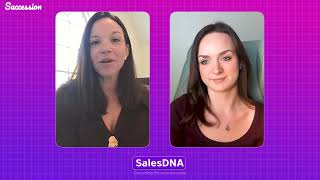
Jocelyn Foye, a district sales manager at Corning Life Sciences, talks about how to support prospects when markets are unstable. The conversation covers building relationships through volatility and shifts in global sales dynamics.
Chapters
The culture of life science is to, like, benefit humankind, then you want to show up as a kind human. And one of the things that's really key is that as you referenced, in sort of a negative environment where an organization just shed a number of employees, fortunately or unfortunately, they're likely going to have additional budget available. And so would they still be making purchases? Yes, and that could benefit me selfishly. But again, it's going to be something a working environment or for your customers that might not be ideal. And so how are you able to kind of do both things at the same time? Go and obtain a purchase order, but also present yourself as an empathetic resource to that customer?
Hey, and welcome to another episode of the Sales DNA podcast, episode three of the Women in Sales Month Takeover. Unfortunately, Divya couldn't join us today, so it will just be me and I welcome back Jocelyn Foy, who is the district sales manager at Corning. And we take on the topic of market volatility. So we explore what might be driving that in different regions and also how to navigate that as a salesperson. So being a little bit more empathetic and the concept of being that supportive resource to your customers as opposed to someone that is just chasing for pos and how that often leads to, you know, a lot more. Not nows, but you are the first person that they end up calling when the time is right. We also explore, you know, how to navigate the job market. Right now there's a lot of people that are finding themselves out of jobs, how to go into that, how to show support of people that are navigating that themselves. What you need to think about, if you're a scientist, considering a commercial role and kind of where the industry is going as a whole in terms of shifts from R and D to manufacturing around the globe and how that's a lot of the time consolidated in the U.S. but the innovation and partnerships that are happening in different regions too. And I think what I thought was going to be quite a somber conversation turned into something really positive. And there's a lot of hope for the future in terms of the shifts that are happening and what that's making room for. So I hope if you are a salesperson or a scientist that is maybe feeling a bit of doom and gloom right now, this gives you some positivity and a boost for the future. So without further ado, I guess we will dive. Dive right in. Hey, Jocelyn, welcome back to the podcast. Great to have you. Thank you.
Thanks very much.
So I'm determined to make this episode better than the one that you did with Nick and Harrison. Have to. Yeah, we have to. Right. It's. It's Women in Sales Month. Um, so maybe before we start, then I will ask you a different question to the one that you asked last time. Um, and I like the crazy or weird story, but I think let's go for a little bit of positivity and go with what's a kind of thing that happened to you in your career that made you realize that sales was the right role for you?
Yes. So I fell into sales sort of accidentally, and I worked for quite a while without really any proper sales training. My first sales job, I was hired by a customer at a company I had been working at. But the role was more of a sales support role. I was involved. It was an application scientist role, but I really was involved in, you know, setting up demos. And so I got a call and a request to join as a salesperson. And I spent quite a while traveling around all on my own, using Excel spreadsheets for company names and emails. And it was really hard. I had never done sales. I didn't understand the constant level of rejection that comes with it. And so, like, the first six months in, it was all these questions around, you know, numbers and are we going to hit targets and are we selling enough? And I started really questioning if I was in over my head. And then that year wound up actually surpassing the expected sales total. And I was the only sales rep in the US And I was covering the entire Eastern seaboard. So really, by the end of that first year, I'm like, wow, maybe I stumbled into something that aligns with my personality and a skill set that I did not know I naturally had. And it was really exciting. And that really set me up. I got, you know, kind of classic sales 101. I got addicted to the chase. The feeling of finding somebody that doesn't necessarily want to talk to you, and by the end of your interactions, you become, you know, their best friend. So that, to me was really exciting. And that set the stage for 20 plus years of me being in sales.
Nice. That's great. I think having that feeling to remind you when, like, times are tough and, like, things aren't going well is. Is great. Yeah, I think that's really encouraging for anyone, like, starting out as well, because it's like, look, it's going to be tough. Like, rejection is hard, but the wins are really great. And when you're like, high performing and it's something that just sort of clicks with the way that your personality is, is, yeah. An amazing feeling. I mean, well done. Sounds like a great first. First year.
The expectations were probably lower than they should have been, but. No, it was, yeah, it was fantastic. I mean that's the. I think there's moments where all of us kind of look back and go, how did I. And it's fantastic to sort of, I think, study that so that you can understand it and then really build that confidence. Confidence is more of a skill than something you just naturally have. So really work to kind of build and bolster your confidence and keep going forward.
Yeah. Reminder that you can actually do it when you're on your 10th ghosted email of the day, right? Yeah, definitely. No, that's great. And it's, it's a double edged sword as well, isn't it? Because you do really well in that first like period of time and then it's like, well then your targets are going to go up for the next year and you're like, great. Exactly. Was already overperforming. You don't need to keep them away from the. But yeah, that, that's just the way it is, I guess. Great. So maybe just give a little bit of a recap then for anyone who is new to the podcast about, you know, your role now and a little bit of background on your career and then just sets the scene a little bit.
Yes. So fortunately for me, I am now a district sales manager at Corning Life Sciences. So I manage a team of six in the northeast. But my career has spanned a wide array of sales roles as well as products that I either directly sold or manage sales teams selling. So it's something where I've gone from large companies like a Sartorius to my last organization, Fortis, which was a startup. Now I'm back in a large company at Corning. I've sold capital equipment services, commoditized products like classic reagents, antibodies and enzymes. And now for Corning, really working closely with the sales team and being out in the fields supporting the Corning Life Sciences portfolio. So it's been fun.
Nice. Yeah, it sounds like a fun mixed bag of doing lots of different things. So I think probably in that span of your career then you'll have seen the market in kind of different industries go up and down quite a bit. So I think one of the things that we wanted to talk about today was the market volatility. That's quite top of mind for a lot of people right now. And we just came back from a conference where it is nice to talk to other people in the commercial side of things, also the scientists, because everyone is feeling it. But I don't think really you realize how widespread it is and how many people are suffering a little bit until you go out there and talk to people. And it's quite comforting in a way because you sit there and go, oh, it's not just me. Like, it's not me in isolation doing something wrong. So, yeah, it would be great to hear from you what your sort of view of the market is right now, what you think is driving the volatility that we're seeing and how you're approaching that.
Yeah, I mean, I think your point is really important because one of the things that. And again, I'm not like an economist, and I'm not, you know, market leader, industry expert by any means, but I think, qualitatively speaking, the personnel stage of changes in the market, it's sort of the last step. It is. It is the final symptom that sort of emerges as part of a bigger issue. So if an organization is shedding its workforce, then they likely, for a long period of time, have seen negative trends. And so if you're looking at the market both on the vendor side and the research side, that's something that's been happening really over the past six months. I was also part of a reduction in force. And I think having that camaraderie, both on the vendor side and the customer side is so important. Individually, it can be really scary. It can be, you know, a confidence shaker. It's something where you really have to sit and kind of ask yourself, what do I want to be when I grow up? Because whatever projects you had really attached yourself to, you're not a part of any longer. And especially on, like, the customer side, the actual scientist side salespeople have the benefit of being trained to build a funnel, being trained to network, being trained to have uncomfortable conversations and put your best self forward. If someone is in the lab, they likely chose to be in the lab because that's not something that they enjoy doing. And if you're released from your organization, it really does challenge you, I think, mentally and emotionally with, how do I go out and find another dream position for myself? And so I think that camaraderie is really super important. I've seen it, like, in the past, I don't know, 10 to 20 years, there's been waves where you'd have a whole bunch of biotechs pop up and then pharma would come in and swoop them up and you'd get a market consolidation. I don't recall a period of time where there were quite so many rifts in the marketplace where it was so widespread. I mean, regionally speaking, being in the northeast, I can look at, you know, trackers, layoff trackers, which is really kind of depressing and sad. And you just get these numbers that kind of blow me away. I think everybody's aware of an organization like a Mercury stating that they're going to release 6,000 people over a span of years. And so again, that can be alarming for all sorts of reasons. And so one of the things I think about just market volatility is just really showing up, whether you're interviewing or you're still employed and you're outselling, or you're still in the lab and you're researching, but really showing up with that authenticity. And I think, just as you said, camaraderie, but empathy, really being empathetic to what someone's experience likely could be, if the company just went through a riff and they made it, they're probably still nervous for a certain reason. And then also me having gone through my own experience of being let go, walking through that story can be a little bit unnerving. So I think as you're discussing with interviewers, or if you're the interviewer, again, showing up with empathy and understanding that somebody wasn't necessarily released because of their skill set. And so again, I think just market wide with that volatility, showing up empathetic and authentic is important.
No, I think that's absolutely right. And I think you touched on two important sides of that. There is, like, how you're approaching customers, but then also how you're approaching people that are no longer your customers because they're out of a job and they're looking for something else. But maybe if we dig a little bit deeper then into how you're approaching potential customers in the market, that the way that it is right now, Are you changing your sales approach in any way? Like, are you talking to them differently? You coming at problems or are you. Yeah, sticking to the status quo. Really?
Yeah, I think so. The number one thing that I learned in scales that in sales that is really important is patience. And so I wake up every morning and my focus is selling my products and obviously chasing numbers. But have I added to my funnel, Am I creating opportunity? Am I. Am I making a sale? I know my customers don't think that way. My customers are waking up with their very own individual priorities. And so again, showing up with Patience and really trying to understand, you know, even if this is a problem that you have, and I can solve the problem. Leaning into that timing and understanding that timeframe. And it's sort of obvious. It's kind of a blind flash, the obvious, because understanding timelines is really part of qualifying a customer for sale, but now approaching them with the understanding is the timeline affected by something ongoing in your organization. If an organization froze positions that they had open, if they are paused on hiring, that would likely indicate that no matter how much a scientist wants to purchase something, they might not have the ability and they might not be aware. And so walking in with that context, I think is really important. Adding something to the prep of what is the current economic state of this organization. Can I do a couple of Google searches? Can I look at press releases? Can I find out when they announced their last round of funding and if it was over a year ago? Again, showing up maybe with a little bit of skepticism around the ability of the company to buy something. And so it's not so much pressing on the individual that you're working to sell to. It's really going in and qualifying a customer in a manner that takes into account the current market conditions. And I think it's a small, subtle change, It's a nuanced change, but I think it's necessary so that inadvertently you're not actually adding stress to the customer, chasing them down for a purchase where, you know, they might not have the control they thought they had on spending that budget.
Yeah, no, that's a really good point. I think we talk about a lot, like, sales is all about meeting the person where they're at, and like, right time, right person, right message. Right. And I think it's so important to consider that context of what's going on in that organization around them. And we run a lot of kind of signals campaigns for our clients. And typically you're looking for, you know, investment and people that are hiring and all these things that kind of shout positivity. And I think one of the things we've been doing more of at the moment is actually looking for companies that are actively have hiring pauses or they're announcing layoffs because they. Then you go, okay, so they might be getting rid of this entire department. And this is what we do. So we want to be able to go and support them. But it's also really tricky to kind of craft the outreach because you don't want to go to a customer, be like, oh, I see your whole team has been laid off, and we can help you there. And like, you've got to come at it from that place of compassion, of, like, support. And being like, we can be an extension to that. Like, we're here when you need us, as opposed to we can replace all your colleagues that you used to have lunch with and were your best friends. And we're just here to be these cold salespeople who are going to take your money in place of that.
I mean, absolutely, it goes back to the empathy point. But really, if the culture of life science is to, like, benefit humankind, then you want to show up as a kind human. And one of the things that's really key is that as you referenced, in sort of a negative environment where an organization just shed a number of employees, fortunately or unfortunately, they're likely going to have additional budget available. And so would they still be making purchases? Yes, and that could benefit me selfishly. But again, it's going to be something. A working environment or your customers that might not be ideal. And so how are you able to kind of do both things at the same time, go and obtain a purchase order, but also, you know, present yourself as an empathetic resource to that customer? And so I do think it's a little bit challenging, It's a little bit tricky of a dance. There's the just fact of the matter that life has to continue and life has to go on. But as you referenced, that doesn't mean you show up cold. You know, you can say, I understand that this has been a really challenging year for you. If there's anything I can do, let me know. And just really present yourself not just as a resource as a work individual, but a resource as a personal individual as well.
I really like that, like, terminology of, like, being a supporting resource for your customers. And I think now more than ever as well, showing that compassion to people and being there is supporting me. Like we're, you know, we're here, like when you need us. Yeah, is. Is more. Is. Is so much more important than it ever has been. Even if they don't have, you know, that budget or that access to that budget that they do right now, like, they're going to remember the salesperson that showed them empathy and was kind of understood what they were going through time where everyone else maybe was just carrying on with being cold and being the typical salesperson who's maybe just chasing them for a po. So when the time does come, they're probably going to think of that. You when, you know, they need to reach out and buy that product or service or whatever it might be.
Yeah, I mean, I had instances where I have customers where it's taken years to actually close my first sale with them. But that does not mean that I don't continue to reach out to them. And it does not mean that I only call them if I think that they're going to buy something. And we're all people, right? Everybody goes to work. We're all human beings. It's not necessarily that I'm going to establish a relationship because you want something from me or I want something from you. Can I establish this relationship because we could support each other and be resources to each other and then it benefits everybody. It might not be now. It's. I, I got this advice early in my career. It's not necessarily a no, it's just a not now. And if you can approach business relationships in that manner and again really genuinely present yourself as a resource, not as a sales tactic, but that you really do want to be a resource for somebody, then everybody's going to succeed and everybody's going to win inevitably. It might not be today and it might not be this year, but it will likely come to fruition.
Yeah, and you kind of build up enough of those over time that you have this like bank of people who could have said no if you had approached that very differently and you hadn't built that relationship. But there are this bank of not now has eventually become a I'm ready. So yeah, that's great.
And I'm actually starting to see. Over the past week I really have been trying to look for the positive signs that are out there. And there's been a number of investments that have been ongoing for series A, B and C startups. It might not be big splashy names and I think there might be a lot of skepticism around biotech startups especially. But the, the market could be shifting in the sense that the classic R and D type of work that's been done consolidated a bit over 20, 25. Early Stage R and D programs maybe were shed, but now the market's starting to potentially correct itself and things like, you know, cell and gene therapy research, the classic way that that had been done may be shifting. So you might see announcements of people exiting certain programs, but that doesn't mean that that research is shutting down altogether. It could just be shifting, could be a move more into preclinical and clinical as opposed to early stage development. And then again, investments in startups seem to be bubbling back up. So I think that there's, I think that there's near term hope for everybody. And that's something else that I want to, you know, highlight is start to have those kinds of questions. If what you were doing, you know, before 2025 is no longer occurring, what is your organization shifting to? It might be a different priority, but there's going to be be a priority that gets set. And what does that look like? Can I learn more about it? Are there ways that I, you know, haven't yet supported you but could move into supporting you in a in a different priority?
Let's take a quick break from the podcast to talk about what we have going on over here At Succession, we work with 40 plus life science sales companies to help them find more opportunities and close more deals. We provide a range of services to support your sales growth. So whether it's increasing top level funnel opportunities with done for you lead generation in person or virtual sales training reinforced by personalized training plans, recruiting top sales talent, or just building custom AI workflows to help make your team more efficient focused on selling. So if you're ready to transform your sales strategy, visit Succession Bio and schedule a call with Nick and I and see how we can support you.
It's really easy to get caught up in the like doom and gloom when everything seems like it's going downhill and everyone's complaining and like everyone's feeling it and has that insecurity about it to just shut off from it. But yeah, I think you're so right there, like looking towards where it's going. Can I fit in where it's going? And if not, what do I need to kind of pivot to myself? And I think that's the reason why a lot of salespeople end up in sales, to be honest, is they're like, I have this skill in this area and I know this science, I know this industry, but there's no scientist jobs right now. So I'm gonna go and, you know, explore the commercial world. And we refer to it as the dark side quite a lot, but it's, it's more fun than it sounds and I think it's the same thing for scientists as well. And one of the things that I'm seeing a lot at the moment is academics making that jump into industry because as industry is academics, academia is pretty tough right now. There's a lot going on both in the US and also globally in terms of funding. And yeah, I'm seeing a lot of nervousness there in terms of roles and job hunting and people looking for more into industry. But I feel like there's always some hesitation there when you get these academics who are so, so attached to being that kind of academic and going through that academic lifestyle and doing that, like basic research, because that's what they believe in and they don't go and explore what's out there. So got any advice there for people that are looking into going into industry as a scientist, but also maybe making that jump from scientist to commercial?
Yes. I think my advice is really sales to me is sort of like playing sports, right, Where I know how to play tennis. I'm never going to be a professional tennis player. I, you know, so there's, there's lots of people that know how to sell. If you really want to be good at it, you have to go through a lot of the basics and the practice and the repeats. And so if you're willing to do that, you're willing to invest in your customer, if you're really willing to focus on a customer, you could start to pick up sales. Academia. I think a lot of academics are really good at focusing on science. And if you can make that mental switch and put that same dedicated focus into people, then you'll succeed. I think it's less about, you know, do I know how to close a sale? Do I? Am I, you know, technically read into the actual work that the customer's doing? It's a lot more about how can I relate to people. And so if there's an academia that's looking at going into industry for selling for sales in a commercial role, then that's definitely a big switch. But if you put that dedicated focus into learning people and working with people and just relating to people, then you'll be successful. I think the, the salespeople that struggle the most are the ones that are sort of focused inward on what their mandate is, as opposed to being focused outward and really, you know, putting the customer first before them. And as a salesperson internally to your own organization, you're the face of the customer. You are the customer. And so if you can manage that, then you'll succeed in sales and selling. And I, I just also think it's an interesting time too, because sales has really leveled up. If somebody has an issue, they will likely go solve the problem themselves. They're not going to necessarily want a salesperson to show up and say, I bet you have a problem and I bet I can fix it. So it goes back to that resource. Right. If you can really understand your customer base and your market, you can manage your own, you know, business, you're then able to Effectively position yourself as a resource so that when someone does wind up with an issue, they will call you, they will reach out to you.
Yeah, no, that's a great point. I think with scientists, like one of the things scientists are known for is like, they enjoy learning, like that's there. Therefore they set up experiments and learn new things to gather new data. And I think that's. There's so much transferable skills there into sales of you just need something your customer is doing, what their problems are. But come at it from a place of I want to understand you and kind of. Yeah, like you said, be that resource to help when it's, when it's needed.
Yeah. Customers will pick up on your genuine interest in, in what they're doing. And so as long as you're able to enjoy that and maintain that, then you'll be successful.
Yeah, that's a great point. Maybe just to shift a little bit then. You were talking about earlier, you know, your focus on the northeast of the U.S. which makes me laugh. I'm in the northeast of the uk, so whenever I hear the Northeast, I'm thinking of like Newcastle and like Geordie accents. And that's definitely not where you live, but I enjoy the Northeast. I imagine you also enjoy the northeast of the US as well and think it's way better than everywhere else because that's what we do when we live in a place. But it would be great to get your kind of thoughts on whether you think the market volatility is very similar around the globe, whether you're seeing changes in different trends in different places or what you think is driving it in those different locations as well.
Yeah, I mean, I think sort of the economic challenges that we've had in the States have actually set the stage for other areas of the globe to really grow. So if you look at, like in India, for instance, they're really primed and ready to be a hub of biotherapeutics. There's a lot of manufacturing that's, you know, potentially transitioning over to the States. But I think while we might be shifting, you know, a little bit away from early stage R and D, there's other pockets of Europe and APAC that are likely working to really pick that up. And so I think globally speaking, it's. It's almost like a rebalance in a way where there was a ton of manufacturing over in APAC and India. And obviously that's going to remain, that's going to stay. But if the US is actually shifting in to supporting more manufacturing sites. To me it looks like there's early signs of early stage R and D picking up elsewhere, you know, across the globe, which I think is really interesting. I think it's an exciting time, you know, quite honestly, to see what emerges. I'm not really. I would love to hear your feedback on market trends, specifically in, in Europe. But that being said, I think right now, you know, even with new biotechs popping up, I think a lot of the focus in the States is really going to be the pre clinical, clinical GMP type of work and expanding on that here. And so that is a clear shift from I think the past, you know, five, 10 years.
Yeah, that's really interesting. I think I enjoyed the positive spin there, just seeing what it kind of rebalances to and what new things pop up. And I think that's always interesting as someone in commercial because there's always like new opportunities there. And I think it is for the scientists too. And it goes back to the point we were making about making that pivot and figuring out where you fit. Now based on where things are in terms of Europe, I think, well, we worked with a number of different clients like across the globe and I think they all say the same thing. It's like, oh, we're suffering here. But then because they're saying, oh well, it's all going over to this place or it's all going over to this country and I think everyone ends up saying the same thing. And actually it's just like you said, everything's just shifting around and things are moving to different places. But I think in Europe particularly, we like everyone is talking about how, you know, pharma and manufacturing are all moving back over to the US and that's causing issues with people's customer relationships or just logistical issues of trying to get stuff from one place to another. But I also feel like that is impacting the US in a way in the sense that a lot of the particularly pharma and big biotech companies are plowing a lot more of their budgets into, okay, well now we need all these new manufacturing sites. But that's taking away, like you said, from the early R and D. It's taking away even from some of the commercial teams, you know, the people that are right at the other end of the pipeline and they're selling those drugs to those patients, taken away from those resources. So they're suffering there. But I do think you're right on like the APAC side, that seems to be like a upwards growing trend where there is more and More innovation going on there. But also I think there's more and more collaboration between Europe and APAC as well. Like it seems now more than ever that particularly even for like cold outreach, which always seemed to be something that wouldn't quite work, particularly where the sort of working culture is quite different, that everyone is a little bit more open to communicating, everyone is a little bit more open to building some sort of collaboration and doing stuff together, which is great to see, but I think it is a slow process as people try and figure out where everyone sits.
Now I love you bringing that up because again, just qualitatively speaking, I can't really quantify this. It just, it feels like there's lots more discussion around global strategic partnerships. There's lots more work being done where entire groups are getting established and large organizations focused on partnering, long term contracts as opposed to just one to three years big initiatives with collaborations and partners. And I think that's a really interesting and positive outcome of some of this market volatility. You need others, right? If you don't have the resource, is there a way to still continue the work on, can you lean into another organization? And I think that's also really exciting. I think that there's global partnerships getting established that will really set the stage for exciting therapeutic developments long term. And I think large companies now are really investing in that type of partnering. And again, it's just sort of an impression that I'm getting. But I don't think it's a new way of working. I just think it's an investment in a way of working that wasn't necessarily a key focus. The traditional sales team, where you have, you know, 20 people covering the US and another team of people covering other geographic spots across the globe. I think we're starting to see it might not be as efficient as it used to be. It is costly. So are there ways in which we can still get the positive commercial outcomes that we want, but we do it by partnering and we lean into these relationships to help accomplish those goals? So I think that's also really an interesting shift or interesting component to this market.
Volatility. Yeah, no, I think that is really interesting. Like you said, it's things that have been happening in the past, but I think the changes that have been happening across the market and maybe the kind of increase in restriction in what resources people have has pushed people towards, okay, what else is out there? How can we do more with what we've got? Are we, you know, combine with what someone else has got and we do it together. And I think that's kind of a message for anyone with whether they're in lab as a scientist all the way through to a highest level. Commercial sales is. I was at a networking event on Monday night and it was part of a conference in the ELRIG organization. And one of the things that we're talking about is the community that's been built there in the drug discovery space. And the chair was saying, you can't go alone. And if you're doing that, good luck, because you're not going to get very far. And I think a lot of people do sit in isolation and they worry about what's going on immediately around them. And it's so important to look out and go, okay, who can I, you know, who can I go and talk to that can help me with my problems? I can help them with their problems and we can do it together and make something better than what we've got kind of on our own? So there is positivity. I like it. I think.
Yeah. And I think whether it's just being a salesperson outselling and learning from other salespeople to get better, or whether you're an entire company or a commercial organization and you're partnering to help drive growth, you know, as you said, not working in an echo chamber, really leaning into relationships goes back to the everybody wins kind of thought. And that comes from when you're out in the fields and you're including more customers in your visits or you're including additional salespeople if you're working with other colleagues that can support commercial efforts. And then again, if you're linking teams based on a partnership your company might have established, Everybody wins. And I think it's great. It's a great support for the customers. But I also think it's really exciting in terms of just general market trends. Right. Like, what can we start to do more of better by leaning into each other as people? And it's. I mean, it's been a difficult year, I think, for a lot of us, for most of us. But that's the kind of stuff that keeps me hopeful and keeps me really excited. I'm looking forward to see kind of how 2026 unfolds.
Yeah, that's great. It does feel like it is picking up. And I feel like I've been through phases where I've said that before and it does happen. And then you go back into a dip. But I think it's different dips. Right. Different things happen and it drives different changes. I think in the UK specifically, because that's what I've kind of been talking about quite a lot this week is, you know, it seems like pharma are disappearing and there's a lot of changes there, but there's also a lot of positivity around more investment in smaller biotechs. Like you said, like the money is flowing into different places and you're just going to see changes there. But I'm kind of excited to see what happens with that and what, you know, innovations it breeds and what companies pop up. And there'll be companies that pop up and there'll be companies that disappear and hopefully, you know, everyone ends up all right on the other side of that.
Yeah, and it's also keeping, you know, an eye too. There have been advancements made, you know, there have been, excuse me, drugs that have gotten approved. There have been benefits in terms of treatments for significant diseases. And also like back to the cell and gene therapy space, I think there's a big focus on GLP1s, which, you know, people, they're trendy and people can kind of talk about in, in a lighter manner, but that's just going to set the stage for other significant advancements and things like rare diseases. And so I do think in on the therapeutics end, again, keeping an eye to if an organization has shed early stage R and D, does that mean that something big is coming, that some of these, you know, companies can actually start to launch meaningful treatments for people. And so again, it just goes back to my level of excitement about, you know, the outlook. I think I, I was looking at some data right now the life sciences market in general is about, you know, 85 to $90 billion. And I think it's gonna 3x 4x over the next 10 years. And so out of that should be some pretty significant therapeutic developments. And so again, that's just really exciting.
Yeah, that's great. I think that's a really great positive thing to end on as we're kind of coming up time here. But maybe just to ask you one final question linking back to your story of being a early, very successful salesperson in your first year. Do you have, if you could give like kind of one piece of advice for someone that sat there experiencing what is going on in the market right now? They're looking at their quota. They're going, it's the end of October. We've not got long left at the end of the year. What would you tell them if they were kind of sat opposite you right now?
Yeah, invest in yourself by investing in your customers. So the more that you put into your customers, the more focus that you put on supporting them is going to just benefit you tenfold. So whether it's learning about research, if it's making a sale, if it's being able to find somebody that you know you'll go to lunch with and can make you laugh, the more that you put out there into supporting your customers and again, establishing yourself as a resource, the more it's going to benefit you as well. And so that's sort of what I've been trying to remind myself of throughout this year as things have really been volatile.
I love that. That's a great way to end. Thank you so much for joining us again. Maybe we'll do a third one. Oh, I'd love it. Hat trick. Go for the hat trick. I wonder what we'll talk about. Yeah, well, thank you so much and I'm sure we'll speak to you again soon.
Sounds great. Thank you as well.
More from Nick


[Leadership] Creating a culture of coaching and skill improvement with Sai Guduguntla
[Leadership] Founder selling and how AI will change how team's work with Angie Schwab