Let's Go Girls: Women in Sales Takeover with Jess and Divya
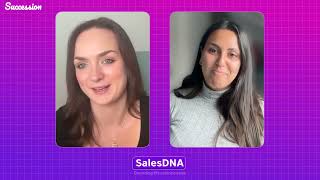
Podcast episode (Women in Sales Month takeover) in which hosts Jess and Divya discuss experiences of women working in life-science sales. Jess opens with a sexualized LinkedIn response anecdote, then describes her career path (master's in chemistry, ~6 years lab experience) and transition into global inside sales. The conversation centers on the confidence gap (women self-selecting out or feeling they need more qualifications), the importance of mentors (female and male allies), intra-gender competitiveness and the need for supportive networks, and pressures around women's appearance/aesthetics in professional settings. Episode closes with a call for listener stories and continued Women in Sales programming.
Chapters
As much as I have had amazing women in sales in science, I've also really struggled in certain situations where I feel like sometimes women aren't as supportive as I would like them to be, or almost expect them to be. Especially whenever we're both women and we understand each other's struggles, or we should at least. And I feel like it kind of boils down to a few different reasons. But something that we have previously spoken about is there's almost this competitive edge where it feels like if there's X amount of women, only one of them can be successful or only one of them has to be triumphant and beat the rest. And in order to do that, sometimes that may involve tearing down other women in that situation, and that's just not nice.
Hello and Happy International Women in Sales Month. Um, we didn't actually know whether it technically is International Women in Sales Month, but we've established that we're going to go global either way. So welcome to the podcast. Divya, how are you doing? Thank you, I am good.
Happy Friday. How are you?
I'm good. I'm super excited to be doing this podcast with you today and then throughout the rest of the month of October with some, hopefully lots of women who are going to tell us some cool things about what they're doing in sales. You know, in the spirit of the podcast and in the absence of Nick and Harrison, who we definitely don't need for the rest of the month, we will.
He said it, not me.
We will do our usual intro. So I want to ask you about a crazy or funny story that you've experienced at work.
Okay. Well, fitting in with the theme, I thought I would share an outrageous one, so please do be warned. And so in my last role, I was the inside sales manager there and I actually was the end user for succession. So I worked with succession and I don't know how familiar everyone is with the succession sort of emails that you get, but essentially whenever there'd be a positive response coming in, selected people would get notified, so you'd get an email back. So as the key prospector in the company, me as well as the CEO and a couple of the sales teams would get notifications of these emails and we launched a LinkedIn outreach using my account and I was away on holiday and I always check my emails because I'm really bad for this need to get better. But anyways and received an email coming up on my phone saying that this person was not really interested in, like, the services at the time. However, they find me very Beautiful, very attractive. And they were starting up a business and, you know, they had offices and they were going to rent in Germany and would love to meet me and would love to like fly me over, etc. And yes, that was the response that I received. The CEO received, the Director of Sales received. And yeah, it was just. And really, really fun receiving it on holiday and everyone else receiving it. So, yeah, that's probably an outrageous, funny story for you.
Wow. And you were incredibly diplomatic in saying this person sent me a message. This person was a man. Right.
Oh, yeah, sorry. Yep. Just to make that clear. Yep.
Oh, yeah. I feel like that is setting us up quite nicely for the kind of topics of this month. Yeah. You want your boss to see while you're away on holiday?
No, definitely not. But it happened.
That's great. I've, yeah, heard. I heard similar stories and what I love about that is, like, he didn't tell you what the company was about that he was setting up or.
No, just the location. Because surely that's all that matters. Right. That's the reason why I'm outreaching on LinkedIn. So for that information, that's. That's my purpose.
Hey, you never know. It could have been opportunity of a lifetime, that company.
Yeah. Giving that one a solid miss.
Yeah, definitely. Great. That's it. That's a great one. So maybe just to tell people a little bit about yourself then obviously you've just joined the team and it's been great. You've been here three weeks, but it kind of feels like forever already.
Taking that as a compliment, you definitely.
It's been a fantastic addition. In the spirit of equality, we are now a 50, 50 man woman team. So I. A lot. Yeah. So maybe just tell us a little bit about your kind of journey to succession. Really, where did you start from? And. Yeah, cool.
So I graduated with a master's in chemistry and then naturally decided to pursue a career in biosciences and biotech. So that was hurdle number one. So because I knew I wanted to sort of steer away from working in organic chemistry or analytical chemistry labs, hurdle number one for me was sort of learning more of the biotech bioscience industry. So taking a step back during university, I always knew that I wanted to end up somewhere in the commercial team. I always had a passion for sales and business, but I loved science and being in the commercial team joined the two nicely together. So I knew that was going to be my goal. But just how to get there and when to get there was key for me. So I thought you know, working in laboratories in a few different biotech and bioscience industries would be sort of the best first step. And so that's what I did. So I have about six years of experience working in labs, associate scientists, senior scientist, all different types of sort of disciplines within biotech bioscience. And I thought that would sort of be a good foundation for me to really understand the industry, not just the science, which is obviously the key thing. I wanted to be able to sell the best I could by learning products and learning the industry as well as I could. But yeah, learning how, I guess biotech, the biotech industry operates and pharma as well. So that's why I decided to start in the lab and try and get familiar with sort of the main processes and technologies there and then in the company before Succession, we hired Succession. So we worked with Succession as an end user and I became the global inside sales manager. So they created this new position and I was eyeing it up as soon as it was officially released because I felt like I had a good foundation of science lab experience under my belt. I felt like the timing was right and, you know, I really, really believed in products and I just saw myself that, you know, this is a good step, becoming a business development Manager. I wasn't 100% sure as and when and I thought it would be a good, a good first step because global inside sales is mainly prospecting outbound lead generation and every sales rep needs those skills. So I thought that would be a great first step. See if I like it then, if so then I can decide to pursue a career in sales. So yes, that's what I did and that's how I met the team, met Succession. And so I worked with Harrison in particular launching campaigns and yeah, sort of of driving the, the outbound strategies and Outbound sort of campaigns really to get people into the business. So yeah, fast forwarding, I, I was at my last role for around eight months. I say, I'm gonna say. But yeah, I saw Succession was hiring, um, and I did all my sales training with Succession because they have like sales coaching and all sales modules. And you know, I was subscribed to the newsletters and was really interested in the podcasts. And now I'm here, which is quite crazy actually. So, yeah, and I thought, you know, I really enjoy Outbound, I enjoy the chase, I love the hunt. And it's so satisfying and fulfilling to have worked on products in lab to then get clients that are interested and really grab them and bring them into the business and driving and scaling that pipe initially. And I really enjoy that. And why rush, like, why rush to become a bdm? Do I even want to become a bdm? Like, I'm really enjoying what I'm doing. Let's perfect those skills and really sort of dig into that a bit further. So if the people who I learned from very successfully mind and were hiring, I was just, I was just straight in there and I really wanted to be part of that sort of team. And yeah. So, so grateful. And now here I am on podcast.
We're incredibly happy that that big, long journey kind of led you to where you are now.
Yeah.
And I know because I work with you now and also kind of from the way that you described your journey there, that you were incredibly methodical and process driven in the way that you approach things. And obviously you've kind of this plan, okay, I'm going to do this for a little bit and this will give me this experience for this and I'll be able to make. And you were connecting all those dots in your head, which is great. And I think it's something that some people can relate to. And then there's people on the other side of that spectrum, which is just like, door opens, run for it, see what happens. Chaos. Yeah. More aligned with kind of what where I'm at. And I think there's different things that play into those decisions. But kind of in the spirit of our theme for this month and talking about the different challenges and stories that we have as women in this sector, one of the things that I remember talking to you about you when you first joined, or maybe on the first call that we had where we were just getting to know each other was that you always knew that you wanted to go into a commercial role. You said that there was some experience that you had when you were at university or in education at some point. And when you were just telling that story, then you were talking about, you know, that's what you were always working towards. But you felt like you needed to have X, Y, Z under your belt before you went.
Yeah.
Do you think that there was anything in terms of like, confidence or bias there that played into why you felt you needed to go on that? You know, six years of lab research is a very respectable, pretty hardcore amount of laboratory to be like, right now I'm ready for a commercial role. So. Yeah. Just interested to get your thoughts on why you felt you needed that.
Yeah, well, I feel like there's a mixture of things, you know, working, graduating even from a chemistry degree, and then Pursuing a career in biosciences and biotech, I felt like I owed it to my end goal to learn like the processes and sort of understand the technologies because ultimately I wanted to sell as best as I could. In order to do that, I needed to learn about what I'm doing. And also what I really like is that because I've worked in the labs for so long, I feel like I know how to talk to scientists who ultimately a lot of the times, or end users. So having that natural engagement skills to speak with scientists and end users, I think what I thought would be a great advantage and a great skill. But yeah, I feel like, I guess it's something we can talk about. You know, six years as you know, you're saying it in this light, is quite a long time that I decided and to spend in the lab before making that transition. Yeah, the time was right. But also, you know, as like a young woman, I felt like I needed a lot of experience before making, making that jump. And that may not necessarily have been the case. Like I, I feel like I should have felt maybe more confident to make that jump earlier in my career. So yeah, it's something to reflect on because if I knew I was going to end up there anyways, that's what I wanted. I guess what was hesitant, what was holding me back to make that jump sooner.
So yeah, no, that's a, that's a really good point. I think maybe let's talk about that sort of confidence gap then. And you know what, no one's saying spending whatever number of years, you know, prepping for a role or getting that experience, doing something a bit different, to see what you do and don't like is the wrong thing to do. But I think there's a, they have an underlying point there, especially something to which is this confidence gap, particularly that I see in younger women. I think I'm in male dominated fields which happen to be a number of the fields that are out there, particularly in stem, you know, life sciences as we are in. And there's an interesting stat I think that our wonderful co founder Nick actually told me and is one of the reasons why I applied for the job at Succession, which was if you have 10 different kind of criteria on a job posting. So we need you to have these 10 essential criteria. On average men will go for that position if they have three out of those 10, whereas women see that and think they need at least eight to even bother trying. And I think that ties. I feel like I needed all these like boxes ticked off before going for it. And a lot of the time that's because that's how we're perceived. But I think a lot of the time that's how we expect it to be on our heads. It's something that is a gaff in our heads as well, because. Yeah, we're just not given that support from the sort of wider world really. Of being like, no, yeah, just as good because we don't see as many people that look like us and have the same experiences as us.
Yeah.
Those in those roles. So I think that's a. Yeah. An important thing for breaking into such a competitive space. Such a space where it's high pressure and require a lot of drive. Yeah. I had to hear your thoughts on any of your experiences kind of making that leap from lab scientists into a fairly. Yeah. Male dominated commercial world.
Even whenever I was working in the labs, we would have our team meetings and they would be quite informal and I think, you know, it would be a relatively even mix of both male and female. But as soon as I made that jump to commercial, I was involved in meetings where it would be sort of just general company or operation meetings which involve sales. And I could immediately see that shift where the majority of people around the table or on the calls were male. And it just felt like the dynamic was different. Of course it's going to be different because it's sales versus brand lab meetings, which are totally different types of meetings in general. But I felt like any time I would go into a room, I would overthink more of what I was going to say. It was almost like in my brain I was internally checking myself, which is something that I know that I wouldn't do in the lab or do in any other sort of job I've had just in. In general. So that's something that, you know, upon reflection, I do think about and I feel like I do struggle with that. And I'm sure I'm not the only person that struggles with that. Checking themselves and feeling that sort of pressure Whenever you're in a room and you know, am I speaking too loud? Am I speaking too quiet? What is my demeanor? How am I being perceived in this room? Am I being outspoken? Am I speaking at the right time? I don't want to interrupt. Yeah. I want to make sure my point is, you know, involved in the conversation. Is it a valid point? As you can see from just this little brainstorm, a lot goes through my head and that's something that I feel like, you know, women tend to internalize a lot and for me, even having these types of discussions with other women in sales, in science, it really helps because at the end of the day a lot of us feel the same and a lot of us are in the same boat. And it's important to acknowledge and address.
Yeah, no, I can, I can massively relate to that as well. And I think making that step from, I mean, before I was in my last role, which was a business development sales role, was in a lab, but it was quite a lot of women there. And you kind of, you get more comfortable with that. You get comfortable sharing your opinion, even if you might not be the kind of core expert in the room. But that bar that you then set yourself when you step into that commercial environment, whether when you walk into that room, there is such a tiny percentage, if not anyone at all, that kind of looks like you and comes from a similar background or similar experience. And then, yeah, that bar that you set yourself in your head of when you can open your mouth and when you can be a bit loud and when you can give your opinion just kind of like skyrockets. And I think one of the things that helps a lot with that is one being able to identify more people in that room that you can relate to and have the same experience as you. It's always nice to walk into a, you know, a sales meeting, kind of high level management meeting, customer meeting, when there is more women there. I think that naturally sets me at ease because I know that they understand my experience. I think they're more likely to, you know, ask for my opinion. And I think what that leads us quite nicely onto is how important mentors are in that journey. We're both quite early on in our careers and I think some people struggle on, on their own because they think, no, I'm tough, I can do it. But I think one of the most important things for me has been seeking out those mentors throughout, even from like early education onwards and continuing to do that as I progress because they're able to share their experience and how they've navigated things. So have you kind of had any mentors along the way that have kind of given you that support?
Two main mentor springs to mind and one mentor was whenever I was sort of carrying out my lab based activities. So I was in the lab scientist, and then another whenever I transitioned into sales. But I think both are relevant because both I learned a lot of skills and lessons from both that apply to me now. So I guess the first one would have been the first biotech I joined after University and lovely, lovely woman. And she was a director, and she was the only female director, so the only female director on the board. And she kind of sought me out and I sought her out. So it was a mutual seeking, it was a mutual agreement. And she was a great mentor because of how she sort of presented herself in the workplace. It felt like she wasn't trying to prove herself, which was something I admire because I feel like, especially in your first role, you're always trying to prove yourself of like, yes, I am valued and I'm worthy to be here right now. I'm worthy to be in these discussions. And as a young female, even more so. And I think that it almost seemed like she just didn't have that element to her, her presence and was enough. And yeah, I think that was so encouraging to see that, you know, after my first job after university, that there is a director who's a female who has bossed it to this stage, and she is just an incredible role model. And we had lots of conversations and chats and she really helped me to see, you know, who.
What.
What is achievable, what are hurdles. She. She confided me in the challenges that she faced and was very open and honest. And I think that was also really encouraging because it was real. It was real conversations. We were talking about real challenges. You know, she was saying about how she faced the amount of time she was in meetings, board meetings, and she just felt shut down. But overcoming that and trying to rise above that, learning lessons and teaching other women, young females of her experiences and how to overcome that, I think sort of that being instilled in my first job post uni was just great. And. Yeah, but after that, I've sort of always tried to seek role models, particularly women in the same sort of field. And when then I transitioned into sales in my last job, and there was a couple of women in the commercial team that if they're listening, they definitely know who they are because there are literally only two women in the commercial team. So, yeah, both were absolutely fantastic role models and felt like I felt very comfortable with them. And whenever I would have conversations with them, they would make me feel at ease, especially making that jump from the lab to commercial, because both of them had done it before they walked those footsteps. So it was great to have that support and just seeing them being their authentic selves, seeing them during calls, call out actions, whenever. It was stuff that I would be thinking about, everyone else was thinking about, but they had the courage to just say it. And I know it's just so easy to say it like on this sort of podcast, but when you're in that situation surrounded by, you know, older men, really, it is, it is. It's hard. I find it difficult. What about you, Jess?
Let's take a quick break from the podcast to talk about what we have going on over here. At Succession. We work with 40 plus life science sales companies to help them find more opportunities and close more deals. We provide a range of services to support your sales growth. So whether it's increasing top of funnel opportunities with done for you, lead generation in person, or virtual sales training reinforced by personalized training plans, recruiting top sales talent, or just building custom AI workflows to help make your team more efficient, focus on selling. So if you're ready to transform your sales strategy, visit Succession Bio and schedule a call with Nick and I and we'll see how we can support you.
Yeah, no, I'm. I've had a big smile on her face the whole time because one, I'm really kind of happy that you've had that. I think it's so important and I think for anyone listening, particularly early on in their career, like, don't be afraid to go and seek that mentorship and find people that you admire that you want to help guide you. Like, so many women out there are so happy to do that and it's so nice to see that. And I think as well, like, you know, I can't speak for people that are like much later on in their career, but from the conversations that I've had, like, even having that mentor throughout your career is so important too, because you're never stopping, like growing, like, you're never going to be perfect. You're never going to feel, you know, a total lack of that imposter syndrome, I don't think. I think it's natural to always have those little niggles that, you know, just that having that support there is really useful. But as you were, as you were saying that, I was thinking back to. I think I can probably identify three mentors from, I want to say career, but it goes all the way back to high school, really. I had a teacher who taught me biology in high school, and she was this tiny little Scottish woman who had done a degree in genetics. And it was when I was getting to the point where genetics was my thing, I want to do genetics. I was so interested in biology. And that was the thing that really grabbed me. Everyone hated her and was terrified of her because she was the deputy head or something and she used to Walk through all the science classrooms and there was. Was this big, long corridor and she would just stroll through at, like, the pace of a mountain. Like, just clip, clop, clip, like, and just. And she would just look around at people and, like, call people out if they were, like, misbehaving. And everyone used to hate her for that because we were kids. It was like, oh, it's the strict teacher.
Yeah.
Actually so, like, subtly funny in the way that she used to teach and, like, say things. And she had, like, a real passion for what she did. And it was the first person that I saw that was like, she just doesn't care. Like, she is a really teacher. She's being herself. Like, she's actually hilarious. But we don't get it because we're like kids. And I only really realized afterwards, like, how great she was. But I think she, despite her quite, like, coldness, knew that I was, like, really trying. Knew that I had a real interest in biology and would, like, take me aside and give me advice on what I needed to focus on or, you know, what the different options were, you know, after school. Because she knew that I was always overthinking, like, what the next steps were. And I think she gave me that push to be like, right, I'm going to go and pursue this. And obviously genetics research is not what I ended up in. So I thought what I would end up in before I moved over to the dark side, she. She was definitely the first one. And then the next one is when I started my first commercial role at Magnitude Biosciences. We had a fantastic CEO joiners called Fawzia Saleem. And I'll call her out because I think she's great and I hope she listens to this episode because I'm going to definitely send it to her. So. Hi, Foz, if you're listening. But she came in about nine months into me joining the company and it was amazing. It was one of those moments of like, I want to be you. Like, she would walk into meetings and you just knew that the whole room was listening. And what is amazing about that is she is quite a small, petite woman. She's a lot shorter than I am. And she comes from a kind of similar place. I mean, like, from. From the north, so not from, like a super affluent background. Her heritage is, like, Pakistani. And she has always been the only person in the boardroom when she's been in corporate jobs that looks like her. And she has been that small woman that people underestimate and you just wouldn't know it from the way that she is, she, like, commands a room. Like, I've never seen it. And she just gave me, like, such a boost of like, I want to be like you and I can be like you and people will listen to me. And she was my line manager at Magnitude and she the kind of advice that she gave me about how to navigate that and how to navigate being a young woman in the commercial space, managing people that were older than me but still be able to have that confidence to be like, no, you know what you're doing. And if you don't know what you're doing, that's okay because you're still learning and I will help you with that. And one of my favorite things, which is kind of unwork related is remember I was going to a conference and we were at a hotel and just there was a problem with the room and the way that she just like sorted that out at the hotel reception desk, where I'd have been like, no, I'm not going to bother them. Like, oh, no, it's fine. It's my problem. She just went in and got it sorted and it was so simple. And I was just like, just remember texting my friend and being like, I want to beat this woman. Like, she's, yeah, so unapologetic, but not rude. Like, and I think rude is such a weird, like, fine line because I think a lot of women get called rude when they're not actually being rude. But, yeah, she has been great and I think I took a lot from the experience of having her as a mentor. And we're still in contact. So I'll be calling on her again soon, I'm sure. But yeah, I think just to finish off on that point, whilst this is Women in Sales Month, I think it is also fantastic that there are so many men out there who call out the behavior that they see in their peers. When they see women not getting listened to in meetings, someone might ask a question and they completely ignore the expert in the room who happens to be a woman and situation like that. And one of the mentors that I've had is actually Nick. So we all know Nick. If you listen to this podcast and you don't know Nick, go back and listen to some previous episodes. This should not be your first one, but if it is, great. Nice to see you. And we got to know each other through elrig, which is a fantastic organization. And I kind of reached out to him because I didn't have anyone from that sales space who had had that commercial experience. In like a CRO or in sales. And it was just great to have that advice. But also, he has three daughters. He is the biggest feminist out there. And having that male support and validation of that instead of just having the women in my life as well was, Was really great too, because it didn't just feel like it was like, oh, it was all these women sticking together and we're just telling each other what we want to hear. It was having that validation of. No, there's actually a lot of men out there who have that respect for that voice in that room and want to sort of celebrate and elevate those voices and think that we deserve that place too. Which I think is some sort of bias that we have in our head sometimes that we're actually not wanting that room. And I think it's such a battle between the actual bias that is out there and then the bias that is in our heads. Yeah, I think both are important. But yeah, love the female mentors in my life as well.
Yes. However, I do think we should flip it and have a bit of an uncomfortable conversation, but.
Well, if we're gonna have an uncomfortable conversation, I'm going to pick up my half empty wine glass. For the people that are listening over audio. It's a Friday afternoon. Wine time for Jess today.
Whereas I have casually a jug of water here. This is who we are. Yeah.
So.
As much as I have had met amazing women in sales, in science, across the board, both of them combined, I've also really struggled in certain situations where I feel like sometimes women aren't as supportive as I would like them to be or almost expect them to be, especially whenever we're both women and we understand each other's struggles or we should at least. And I feel like it kind of boils down to a few different reasons. But something that we have previously spoken about is that there's almost this competitive edge where it feels like if there's X amount of women, only one of them can be successful or only one. One of them has to be triumphant and beat the rest. And in order to do that, sometimes that may involve tearing down other women in that situation. And that's just not nice. It's not fair. It doesn't feel great, especially if you're just joining a team or just joining a specific discipline. And yeah, it's just. I feel like a lot of what I've experienced this a lot throughout my career, unfortunately. And yeah, it's just shocking to me, if I'm honest, that it happens. And I just wish that it was all just very much happy families and we all, you know, women would be supporting each other, bearing in mind we understand the struggles we're going through as it is being a woman in sales in science, or just a woman in science in general. So, yeah, I mean, I don't really understand why or where it comes from. Jess, any thoughts?
No. It's like you said, it sometimes feels like a bit of an uncomfortable conversation, but it is a really important one to have. And I think that there is this misconception that we can't all succeed together sometimes. And I think that really comes from this unconscious bias in our head sometimes because we are in a male dominated field and we feel like, I have to be the best woman in the room, otherwise respect me. I have to do better than her so I can be even close enough to the men on my team for them to respect my opinion. You have to try and go above and beyond it feels.
Yeah.
To kind of match what you see in your male peers. And that comes at the expense of being like, well, I need to get myself there. I'm gonna leave her behind. But it's so much. It feels so much better and it's so much better for everyone to go together and to have that support. But you know what? I'm definitely guilty of having that misconception, that kind of bias in my head, which I have to and have had to in the past physically sort of overcome of. When you get a new woman on the team and they're quite similar to you all, they're also quite loud. I'm quite a loud person. So when you get someone else who's also like voicing those opinions and getting involved, it's like, well, two is better than one. Like, having those opinions extra. Cause you're gonna have a different perspective than me. And whatever it might be is. Is fantastic. But there's that little voice in your head and go, no, no, no, no, no. Like, you need to do. You need to do better. You need to prove yourself.
Yeah.
Why? You're gonna get. You're gonna get left behind. No one's gonna listen to you. And it's that little voice in your head that you have to be like, just shut up. Like, yeah, I'm not coming from a place of like, support or kind of. Yeah. What's the right word? Like logic. It. Yeah. That pressure to try and be better and live up to what you think the added expectations are. So I think that's a good reminder for us all, really, particularly this month and beyond. Is take people with you on your climb upwards. It will feel and will be so much better for you in the long run as well, to have more people up there with you.
And, yeah, like, I mean, I recognize that the further up the ladder you go, the less women you see in those positions. And that's probably another place where it's coming from, where it's like, well, there's. It's so hard to sort of get to that. That level. You might see a woman there, you might not. Okay, well, then I have to out compete these other women to be able to even get to that point. But in reality, it would be amazing if we can change that. But again, we, as women, we need to support each other.
Yeah.
To do so.
No, that's a really great point. And I think we're kind of coming up on time here. I feel like I just heard Harrison in my head, because that's the phrase he used. We're coming up on time here.
Oh, really? I feel like we only discussed, like, three points. I have so much more to say.
Well, we've got enough full month with this. We're just gonna do. I think we should just do, like, 100 episodes, and then people are gonna be at the end of this month, like, I never want to hear from women again.
We'll just get all of these women subscribing to the podcast. And here I'm so for it.
We'll talk them over. Harrison and Nick Darren. But this is. They're doing a podcast again. This is our show now, so get used to it, guys. I think it was, like, slightly building on the point that we just made. And I know we could chat for hours and have so many points I want to cover, and I think we will do over the next month. But if we were to maybe end then with maybe one change that you still want to see across this industry that impacts women. I will. I'll go first and then you can. You can finish us off and say goodbye to everyone.
Pressure.
But it's a little bit on a bit of a tangent to what we just said about women. Supporting women is, I think, like, the aesthetics of women in this industry and the pressure on that. And so we had a conversation before this call about, like, you know, when we go to conferences and when we go to sales meetings and when we turn up in the office and whatever it might be, like, what are we meant to wear? We feel like we have to, like, dress to the nines and do we put makeup on and whether that's what you normally do or what you don't normally do. And I think the main point there is that it doesn't. Shouldn't matter how we show up physical appearance wise to whatever it might be. It's important that we do what we want to do. And I feel like I today I have got makeup on. I have, you know, I've got some nice trousers on one because it makes me feel better than sitting in my pajamas at my work from home desk. But I get so in my head when I go out to like in person events or whatever that might be about someone looking at me and be like, why has she got a full face of makeup on? Like, oh, she must just be like, all like, aesthetics, like, no skill. Everything that she's doing into, like, you know, she's gonna close deals because she's charming people. And I hate that, like, misconception, that thing that gets joked about about women in sales are only gonna go out and they're gonna flirt with the clients and they're gonna land those deals because of that and not skill. And it's like, I can be highly skilled and I could be wearing the shortest skirt in the world and the biggest vase of makeup. I'm not walking around in tiny little short skirts. Just as a disclaimer there, but I should be able to do that and not question whether someone is gonna perceive me differently because of that. And I think that's something that is massively exclusive to women. And I wish we would let go of that as men, but also as women ourselves and not look at other women and be like, oh, she's not done her hair today, or she's not put extra makeup on or she has got, oh, she's got too much foundation on. Like, what is she doing? Why does she care so much about her appearance? Like, yeah, we should be able to do what we want to do. So I would like to see that sort of general view on, on women in sales change a little bit. And yeah, yeah, there's a lot of, A lot of work.
Love it.
I'm not going to apologize for it. So, yeah, do you see want to change?
I mean, I was going to mention similar things, but I will mention similar things but finish on a different point. So I think just yet less judgment projected towards women in general. So I'm touching on the aesthetics when I. This is hilarious, by the way. When I joined, like, transitioned into sales, I went straight to the shops and bought suits, like blazers. I. If you go into my wardrobe right now, you will see like, all these different Colored, like blazers and everything, ready to go. Have this expectation, okay, out of the lab, out of my jeans and sweatshirt, in the sales, got my blazer, got my skirt ready to go. Why, like, why was that? What? What. Why was that triggered in my brain? Why did I feel like I have to do that?
I did exactly the same. Burn them. We should collect them all and burn them together.
They just sit in the wardrobe. I have not worn them in a year. But the thing is, there was two things. So first of all, I felt like, yeah, there was a bit of pressure that I needed to look the part and it was part of the job. But also, I really enjoy dressing up. So those are two separate things. And so at the time, I leaned more on the. I enjoy getting ready, but everyone goes through phases. And now no makeup. I'm in, like a comfy knitted sort of. I don't even know what this is. Turtleneck, top. And yeah, I feel like I don't have those pressures, but I think it's because my outlook on all of this has changed. Why should I sort of. Why should I be doing those things? There's no this judge. There shouldn't be judgment in it. And maybe not because I am fully remote. I feel like, oh, I'm not going into an office. But, you know, in our, like, next in person meeting, for example, I feel comfortable enough to not wear blazers. I didn't pack any blazers last time, certainly not going to pack any blazers next time because I feel like I shouldn't have to dress up because I am a woman and I need to prove myself in this space. And part half the job is being attractive, etc. That is not. That's not the case at all. And I think. But that is because of we are. I feel like as women in sales, there is just heavy judgment. I feel like there's no winning. It's a lose, lose situation. You're either underdressed, you're overdressed, you're trying too hard, or you're not trying hard enough. And I feel all of these pressures are because of the judgment that we're feeling. And I just think that, you know, internally, if we feel we're being less judged is because we actually are not being judged by others. Whether that be other women judging other women, whether it be men judging women, doesn't matter. So, yeah, I think less of that would hopefully make women in sales and women in science and life sciences just more comfortable in their roles.
Yeah, I. I totally agree. You make a really good point about it being A lose, lose. And you be able to do what you want to do. Like, if I want to, I want to put on an eyeliner wing. I want to put on an eyeliner wing because I like it because I'm an. I'm an artistic person and I think it looks great and that it does. I like walking past the mirror and being like, yeah, you look good.
He was her makeup artist. Oh, wait, it was me. Yes, agreed.
But it makes me want to go out into the world and, like, you know, smash it. Not because, oh, I want them to think I'm pretty so they will buy my things off me. That's not what it's for, guys. It's not what it's for. Yeah, I think that's a great point, and I think it's something that we can all work on regardless of gender and I think is a fantastic point to end our first Women in Sales Month podcast. Maybe we'll make it just a Women in Sales year. Right?
That's decade, century.
Okay with you?
Right?
We'll just keep doing this and we'll. I'm gonna just go into our settings now and lock Nick and Harrison out so they can not get back in.
No objections here.
So really great to have you on. Super excited to be working with you. Yes.
You say?
Made a great start here today and looking forward to getting some wonderful women in sales in stem.
Yes.
On.
Yeah. And on that note, so for whoever's listening, if they're interested, if you're interested and have some stories that you want to share, please get in touch with either of us or our co founders. Just find us on the succession page, etc and just drop a mat. Drop us a message. Also, if you don't feel comfortable to be on the podcast, even just send us a story or a question and we can happily just talk about it as well. It's also a valid option.
Absolutely. Couldn't have said it better myself. So, yeah, we'll see you next time. Thanks, Divya. See you soon.
Thanks. Bye.
More from Nick
[Leadership] Creating a culture of coaching and skill improvement with Sai Guduguntla
[Leadership] Founder selling and how AI will change how team's work with Angie Schwab