Salesloft CRO, Mark Niemiec on Steering Business Transformation
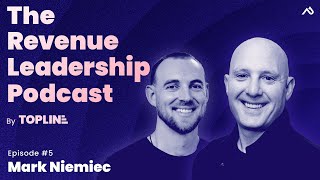
Interview (YouTube transcript) with Mark Niemiec, CRO at Salesloft, discussing Salesloft’s strategic shift from a product to a platform, implications for talent (value-engineering/business-value hires) and operations (weekly/monthly/quarterly cadence, 13-week planning), and practical tactics for driving transformation and adoption across sales, pre/post-sales, and RevOps. Includes anecdotes, examples, and sponsor reads.
Chapters
That's awesome. Because the intent signal thing is everywhere these days. Everybody's trying to figure out what is a legitimate intent signal, how do you weave it into the business? And showing sales loft as a linchpin in that. In that manufacturing line will be. Will be really interesting. Well, that's cool. That's. I'm excited to hear more about that one. Hello and welcome to the Revenue Leadership Podcast by Topline. I'm your host Kyle Norton, CRO@owner.com and every Wednesday we dive deep into the strategies and tactics being used to drive success by the best revenue leaders in the world. So join me as I sit down with revenue operators to discuss actionable frameworks that you can implement in your business today with no fluff, no sales pitches and no platitudes. But first, a word from our sponsors. This episode is brought to you by Momentum IO. Momentum is a powerful tool for turning sales and customer conversations into go to market data. Using Genai, it extracts, analyzes and automates customer intelligence across your org. The best part, it's not a new platform for your team to adopt. It integrates seamlessly with your existing stack and writes data back to Salesforce directly. Some of the most innovative companies out there like Zscaler, demand based Ramp1Password, and even my company, owner.com use Momentum every single day to capture, forecast and churn risk. Autofill Salesforce fields share product signals and track sentiment. So check it out with a free trial at Momentum IO. All right, Mark Niemick, welcome to the show. Appreciate you coming on.
Thanks so much. Glad to be here, Kyle. Yeah.
So let's I'm going to introduce you separately to queue up the episode, but give folks your 60 second bio to get to know you a little bit more.
Yeah, real quick. I Mark Niemick, I joined Salesloft back in January of this past year after about seven years at Salesforce where I was the ou leader of the comms and media business. And before that I worked for Cisco for 10 years and had a had a great time running their financial services business in New York. Before that I had a bunch of different jobs and one of them somebody chronicled recently. And I worked for the Associated Press because I wanted to learn what it was like to be a buyer. And I spent two years on the customer side of the world purposely outside of sales to learn what the buyer goes through and how to empathize with my buyers a little bit more. So that was a fun little career detour. And before that, my first job was adp selling payroll In.
Oh nice. Yeah, yeah. One of the OG sales boot camps out there. That's, that's awesome.
One of the best.
Yeah. And so ou is operating unit.
Operating unit.
Operating unit leader. And what does an operating unit leader do at Salesforce to give people some.
These days an operating unit leader runs a business that is typically global, that is one of their seven industries. And comms media was a big industry for, for Salesforce or I think still is today. But leaders typically run one of those industries. So it's a little bit of product, little bit of marketing. Certainly the go to market and sales function as well. But it's really taken the leadership role to define Salesforce's go to market approach in that particular vertical market.
Very cool. So how, what was the makeup of your team there then?
The team was about 130 folks, sales folks. We covered accounts primarily in the U.S. we were very heavily weighted into the global telecoms and the largest media companies in the world. We were doing things like helping them figure out, you know, how to sell their products and services more effectively in the market. I think definitely about multi channel selling and how to bring those disparate channels together to create a consistent experience for customers in service of growth, in service of some investments they may have made in acquisitions and doing better cross sell upsell with the products they were bringing to market. Very cool.
And so a lot of like true, the biggest enterprise type customers, the biggest.
Enterprise customers, the biggest names you all know that you deal with every day, those are the customers.
And so now you've gone from running a massive business unit in one of the biggest software companies in the world to a CRO role in a private company. I mean late stage, large private company. How have you had to modify your, your operating rhythms, your leadership style coming into this environment after so much time in, in big companies.
Yeah, you know the, the biggest thing we're, we're, we're later stage as you said. So we have a very mature business, relatively mature business and a lot of the things that, that, that you would expect to, to be present when you come from a large company to an earlier stage company are certainly here in terms of how the organization is structured and what's not necessarily built in yet is all of the different functions and the depth of those functions. So things like, you know, design thinking, helping our teams get bring those skills into the organization, helping our sellers think more holistically about how to solve business problems, moving themselves from selling a product, selling a platform and some of the things that go along with that. How Much we invest in sales engineers or value engineers, the functions that support the salesperson to create those, those opportunities for our customers and then the functions that codify those, those concepts or ideas or cases for change and help make sure they're compelling at the executive level. Those things were things that we certainly had to bring into the organization. And, and it took me some time to observe sort of where the, where some of the soft spots were and where we had opportunity to, to double down. So that's taken a little bit of time to identify both the skills we needed, but also how to introduce them into the company so that they'll be metabolized, accepted and welcomed because they do make such a big impact in how we help our customers. Awesome.
And that's going to be the topic for today. We're going to go deep on transformation because I think you've seen a lot of transformation at Salesforce. Now you're in it at Salesloft and calling the shots. And I've really enjoyed listening to David O. Brand talk about the journey that you guys are on which, which we'll take some cues from. And so have you had to modify much of your leadership style or your approach or have you been able to bring over most of how you've led teams and, and bring it over pretty, pretty seamlessly?
One of the things that David and the board asked me to bring in is some of that enterprise grade thinking around how to run a sales organization. So, you know, they're looking for some of that maturity, some of the rigor, some of the structure that you would expect at a large company. We, we grew as a startup for, you know, for 10 plus years. We operated with a very, very flat, you know, kind of structure. And, and now as we mature, as we have investors with different expectations, we've got to be in a different position to be able to, to make our numbers, to be able to call, you know, accurately where we are in the quarter where we're going to end, how we can do things to improve our hand in the short term. Some of those things are the things that, that leadership asked me to bring in. My, that some of the, maybe things I've had to think about a little bit differently is I'm starting in a complete digital world or a complete online world. When I started in every other job I've had, I started in person. I started flying around and meeting the team and you know, collaborating by sharing the air. As we say. I haven't had that opportunity necessarily. We don't have a, a real central Hub or an office, you know, system that allows our employees to congregate and to, and to get together on a regular basis. So that to me has been a little bit challenging and I've had to adapt my style certainly to that. It's been a lot more travel for me, which is fun, but you know, it's taxing in some ways as well. It's also. We were teaching people a new motion. We're teaching people, you know, sort of where we need to go. So meeting them where they are and showing them step by step where we want them to go is, is super important. So I've had to do things like, you know, write down my long term plan and share it with folks. There's an eight page long hand written document that tells folks exactly how I expect them to operate and show up and what the operating rhythm looks like, what good looks like in a, in a deal review or a forecast or an account plan and how those things are to be achieved. And, and that to me is new. Having to longhand write those out, that was helpful for me in many ways because I hadn't had to do that before. I worked in a business that I iterated on and sort of shifted and shaped and changed over time. Doing that all from the beginning is a different motion and it's required me to be a little bit more intentional about the sort of the beginning to end process, which is also a great opportunity for me.
Awesome. Is that Doc V2 mom?
It is not a V2 mom. We, David and I are, we're big fans. We did think about using that format. I wrote mine in a. In what? A VSEM for Vision Strategy Execution and Measurement Framework, which is something that was employed at Cisco, which is the, the sort of first way I learned that these concepts. I, I do love the B2 mom. David does too. We decided not to use it, but that could change in the future. Who knows?
Yeah.
Vision.
Give me that one more time. Vision Strategy, Execution, measurement.
Yep. Yeah. Okay.
I haven't heard that one before, but that but seems sharp. And that's how Cisco plans.
Cisco brought that in. Oh, I was there. So it was probably 07 or 08 that was introduced to the staff. May have been around before that, but that's when I first learned about it.
Okay, awesome. Last preamble question. Have you now you're six months into the role, spending a ton of time with customers I imagine, and prospects. Have there been any really interesting use cases that have really popped out to you that are worth sharing with folks?
Yeah, I Can't share the name of the customer. But there is a really, really cool example of a customer who is. They think of their business as a data and APIs business and household brand, everybody knows. But one of the things that we do that is unique is we capture all kinds of first party content and turn it into intent signals. So think about a more mature business, maybe that, that has a ton of customer data. How might you turn that into intent signals? When should our team engage in a cross sell motion? When should our customer success team get engaged? When should we take that customer from a freemium customer to a, to a paid customer? What does that look like? What's the motion look like? How to do that precisely and prescriptively every time. That use case is one that we are, that we've deployed our platform for and it's a very exciting brand that hopefully we'll be able to share publicly soon. But yeah, it's a little bit unique. It is actually what we're built for. But it's the first example of a customer using it at scale in a customer facing environment of their own. So yeah, we're really excited about it.
That's awesome. Because the intent signal thing is everywhere these days. Everyone's trying to figure out what is a legitimate intent signal. How do you weave it into the business? And showing sales loft as a linchpin in that, in that manufacturing line will be really interesting. Well, that's cool. I'm excited to hear more about that one.
Yeah.
So let's hop into the topic of the day. So we want to talk about transformation. You have a unique perspective on this, which is why I think it makes a ton of sense for us to dive into in terms of, you know, the shape of Salesforce changed a lot in your time there. And now you and David are in a similar transformation with Salesloft, which as a customer I've noticed and been really excited by. And so I think a great starting off point is to just to talk strategy down in terms of how you're thinking about transformation because it seems like the, the underlying strategy of how Salesloft sees their position in the market and where the market is going is, is a great place to level set. And then we'll get into how that dives into talent transformation, operational transformation, and we'll share some specific lessons learned. And this is, I think a topic on the tip of everybody's tongue. I like a lot of Dan Gottlieb stuff on this. He's calling it sales tech mayhem. You know, everybody seems to Be competing towards the same platform vision. And there's a bunch of acquisitions and AI throwing a major wrench into everything. So I'd love to start and just hear how you're thinking about sales loft's strategic position in the market and then we'll dig in from there.
Yeah. So the big change that we're going through is going from becoming a product focused company where we were a category creator, we got famous for what we did, into a platform company. That journey started well before I got here. It started probably with Ellie Fields introduction of the business about three years ago where we started building the product into more of a platform. And you know, over the past maybe three years, we've, we've been building that capability, but we haven't been marketing it and selling it the way that, that we could and should. And so that's the big transformation that I'm here to help the company get to. But going from a product that we were famous for, that we're known for, and bringing it to more of a platform approach. And that requires our sales organization, our marketing, our customer organization, product team, all to think differently about what it means to introduce products, sell products, support products, market. That message and narrative, help customers work through that journey. What happens on the sales cycle? How does it change from a, from a, from an investment perspective, how long, how do we think about deals and durability? How durable are the deals that we're doing when we move from product to platform? That's the big strategic shift for our company is going from that product into a platform. And that brings with it all kinds of other changes that we're doing.
And how do you define product versus platform? What does becoming a platform mean?
Yeah, so a platform, I think by definition is a capability that provides opportunity for other folks, other companies to create and deliver business value. So we talked a little bit about some of the signaling partners. And so our platform is, think about it as a central meeting point for all of those intent signals. Those intent signals are all plumbed into our platform depending on what the customer wants to do in their business, Whether they need top, middle, bottom of funnel sort of help, all those different buying or those intent signals get plumbed in different parts of the architecture. So that creates an opportunity and ecosystem for our partners to provide value into our platform, making it more valuable. It also provides extensibility for customers through the same. So customers are able to build their own signals or applications onto the platform so that they can determine their own data what customers buying intent might be. And so we become that clearinghouse or platform to capture all those digital signals, process them against our patented AI, which is called conductor AI, and then turn those into buying intent signals. Those intent signals then in turn get turned into insight and action. Those actions are what our sellers use every day or customer sellers use every day to determine how they're going to run their, run their day, engage with their customers, bring in resources and all the, all the wonderful things salespeople do.
Really interesting and almost seems counter to the narrative that many of these platforms are trying to be everything and own everything and be a walled garden and is a marked shift from my outside view of this sales tech landscape that I think makes a ton of sense.
Yeah, I think that's a view. You could be a walled garden. I think we've seen that model before. We're betting that it's more we than me, if you will, and that the ecosystem and the approach that includes our partners is one that is more, more beneficial to our customers at the end of the day. So I'd say we believe more in we than me.
Certainly if you intend on winning in the real enterprise. Yeah, yeah, it has been, I won't name names, but I have certainly been frustrated by some of the walled garden approaches that I experience with other vendors that we work with. Because as a company that is in a high velocity business with a lot of transactions and data, one of the things that we've been doing on top of Salesloft is really leveraging the API ecosystem to be able to do our own data manipulation in Snowflake with custom built tools and having the ability to then API into Salesloft and bring in leads into specific cadences and pulling the data back. It's been important for us and I think makes our sort of long term attachment to sales loft much stronger than if it was. You know, hey, we have all of these things and you can only use those things in our, in our environment.
Right.
Or series B business nowhere near a true enterprise. Okay, well that's, that's the bet we're.
Making is that more companies are like y' all than than not. And as folks spend more time and effort investment in this space, they're going to look and feel more like you do and than others who might want a walled garden for.
Yeah, certainly today with AI exploding and everybody trying to find ways to get really efficient and I think you're going to see a new golden age of revops. I haven't talked about this on the pod at all, but I've been chatting with folks in My same shoes. It really feels like there was this early golden age of revops really on the backs of the sales engagement explosion around sort of 2015 and onwards. And now we're in this second phase where a very different set of skills are going to be required and.
I.
Think composability will matter a lot. And I'm obviously I'm on my fifth sales loft implementation, so I'm a biased opinion probably, but as a customer I was, I was pretty excited by it when I heard David on, on the Top Line podcast originally. So. Okay, let's. And so let's talk about. You've already sort of teased it. This new strategic direction requires talent transformation as well. So how are you thinking about talent going from what you encountered on day one to where it needs to be on day 365 and beyond?
Yeah, well, I'm very fortunate. Sales loft has always attracted amazing talent. And so one of the things that I've, that I've loved about it since I've joined is the culture and the culture of inclusion, diversity of thought and openness to change. And so the organization's gone through a ton of change and exhibited amazing resilience to accept and adopt more change. And so we do need to transform as we're going from a product first company to a platform first company. Sales cycles get longer, they're more complex, they require more hands and feet. Our customers have more questions about the how and the in the implementation and what does that look like. And so David started this journey before I got here, but started connecting the pre sales and the post sales organization more directly to bring sales into pre sales. And I use the same sort of technique or tactic in doing some of those. As you opened up the conversation, some of those big deals, we brought our post sales team right in. You don't do things like that without the post sales team, without the how team as part of the sales team really. And David and I, you know, had a really good time when we first got to know each other, talking about how we've done those things in different places with different mindsets. But that's, that's where it started. The things that, that I identified were gaps in the organization that needed to, that we had an opportunity to invest in were true business value creation. And so diving deeper on business cases more deeply understanding our customers business, putting our our terms in their words more deeply. That requires a whole lot of closeness, a whole lot of expertise and our team is already an amazing one, but we need some additional horsepower in that regard. The Horsepower we're missing that, that we've brought in is this the capability to develop a really, really thoughtful and compelling point of view. And this is something that we did, I did previously and some of the, some of the same team members who did that with me are here now. And that's a skill that we're bringing into the organization. And it's been metabolizing through the business value and the sales engineering and the sales team in a way that frankly I didn't expect. I thought we'd see a little resistance to it. I thought we might need to bring in more folks to change sort of some of that capability or how much folks embraced it. But we've had a really great receptivity from all the functions I mentioned in evolving their approach. And I think the reason partly is because we had a group of folks started bringing this to customers early on and when they did, the reception they got was, was jarring. Customers like, this is what I've been looking for. Cool. This is the problem we thought we were trying to solve or we were working on for two years. You guys have codified it into a point of view that, that we haven't been able to do ourselves yet. You put our problem into your words or you put our problem into. Yeah, into your words in a way that we haven't been able to. And so that provided us a little bit of, you know, probably wind in our backs as the team started to learn more and metabolize these capabilities throughout. So that's been a big investment we've made that's been super helpful. And our customers have definitely seen the, seen the shift in approach. And we are now investing in bringing that sort of down market. We invested in that very, very small subset of folks. We are continuing to make that investment into our enterprise and mid market teams as well. And that's one of the big shifts that we've made.
And is that like a value engineering team or what is that specifically? If you can't give it away, then we'll.
No. Give it away. I can't describe it. It's like describing chocolate. Tell me what chocolate. And these people are unique skill sets. They are storytellers, they are mathematicians, they are economists, they are engineers, all in one person. And you find a handful of these people that have these skill sets that are wonderful, really storytellers. They pull the best out of the people around them. And so we brought in handfuls of them and our team has embraced them and started to metabolize that capability throughout. But they're Very unique. And the way I would offer the description is tell me what chocolate tastes like. And, and that's a way to describe.
Describe this kit sounds like somebody I wish I had selling with me at a few points in my career. That's awesome.
They've been my secret weapons for the past 7 years. Super Helpful engagements.
Today's business landscape is full of unseen certainty. And succeeding as a go to market leader has never been more challenging. Pavilion is here to provide you with the education, support and resources you need to grow, learn and unlock your full potential. Join more than 10,000 of the world's leading go to market executives in a private membership community designed specifically to fuel your success. Visit joinpavilion.com and use the code Topline20 to get 20% off your membership. That's join Pavilion and The code is Topline20 to get 20% off your pavilion membership. And now back to the show.
And so how do you think about bringing in a new type of talent and supplementing the organization while also maintaining the DNA of the company that's clearly been a bedrock of how they've been this successful so far. How have you threaded that need?
Yeah, carefully. Is, is the, is the way you know it is a great company with a great culture. And one of the things that people ask me all the time is, you know, what do you, what do you like about it? And the culture is the thing that I like about it the most. It's, it's, it's organic, it's not, it's not, it's not crafted or curated in somebody's, somebody's personal vision. It's how the employees treat each other and think about, and care for each other and care for their customers. And so the folks we've brought in, we've had to be very thoughtful about how well they fit into the culture because those are things we want to very much keep. At the same time, we've got to change, you know, kind of the skill set that we have and evolve it. And so we've been thoughtful about it. We bring folks into, into different teams and we think about where they fit in terms of geography, culture, industry expertise, skill set. And we, we've been, we've been lucky in. The folks we've brought in have been great fits in the company, but have also made an impact. So they're, they're both fitting in and they're helping to change. Right. Sometimes when folks fit in too, too closely or too well, they might not also help you drive change. But we've been fortunate in the folks we brought in have been able to help us do both. Embrace the current way of doing things and thinking, but also help us evolve and where we're going and bring some of those new ideas and perspectives. And many of these folks I've worked with before, so I'm very confident and comfortable in their leadership and their style approach.
There is such a power in that, having a known commodity that, you know, you have high trust and conviction. And I have a few of those folks on my team today and it makes a world of difference.
It does.
So I'm going to come back to the culture thing when we talk about some lessons learned. But so we talked about a strategy transformation, talent, and then I'd love to hear about what you've had to evolve from an operational perspective, like what has changed in the way the company operates quarter to quarter and goes about approaching driving results.
Yeah, well, that mindset for sure. Quarter to quarter. Right. So I grew up in a business where I thought week, month and quarter. And so I brought that thinking very much back to the organization from an operational rigor perspective. You know, we have a very clear and defined cadence in certainly how we forecast, when we forecast, what we say on those calls. Also what are the metrics that we look at and what are the second line, third line or first line, second line, third line leaders looking at. Everybody has the same dashboard and set of expectations. So it allows our team to be, you know, on the same hymnal, same page in terms of what we're looking at, what's important. So bringing that cadence in has been super, super impactful. I'm going to allow us to get clarity on where we are in the business so we know where to invest and press and push on things that we might want to change. It's also helped us identify where you might have some weak spots where we either augment or change resources. And it's been been really eye opening. So once you use a common framework, everybody, you get to baseline the organization, you get to see, hey, where are my weak spots? Where am I? Where are my superstars? And you get a sense of what that's going to look like as you go forward and where you want to make those investments. So we move to a weekly, monthly, quarterly commit process. We have a clear definition around what a commitment is, what an upside deal is. We clearly understand the value of a champion stakeholder, a clear business case, when and how we to have that, what a point of view is and what the point of view, what the role of a point of View is in a deal and how we want to make sure that's agreed to well in advance of getting into the point of, you know, talking about commercials and, and what we think about for the next quarter and the quarter after that. So I produce a 13 week calendar at the beginning of the beginning of the year. And what are we all doing in week one, week two, week 10, week 13, it's all mapped out for the, for the 12 months in advance. So for instance, in week seven, our leaders all know they're going to be asked about the next quarter's forecast in week seven of the prior quarter. And that's already pre published in advance. So they're not surprised when we join the forecast, call and ask for, hey, we're, it's week seven after you finish your, your current quarter commit, we want to review next quarter commit. So they're aware of what's my day one open pipe requirements? What are my, you know, what are my, my commit requirements in terms of growth and linearity and those sorts of things. Things. And then they have an opportunity to share, you know, hey, here's where we're a little bit short. So inbound for us has been slowing down and so that's been an opportunity. When we built our, our goals, we had a certain expectation for what inbound was supposed to be. It hasn't lived up for those expectations. So that's driven a different set of conversations with marketing and our RXCR organization around how do we drive more of that inbound? How do we help the sellers if we can't? What investments we need to make in improving outbound. But once we get everybody in a common framework of where we need to be at a certain point in time, that helped us to make that, make that analysis and make those decisions much more clearly than otherwise might have been the case. When you do that stuff with the hair on fire, hey, it's week 12. I got two weeks before my next quarter commit and I'm 25% short on expectations. You know, those things happen all the time, but we want to control for those wobblers as much as possible. And in the way we've built in the operational rigor, we're controlling for as much as we can, market's going to give us plenty of wobblers. We don't need to, we don't need to create a run that's.
I could do a separate two hour podcast on just this topic. It's like one of my most favorites. And we are rebuilding a bunch of our rhythms as well across the business. So who runs. So you have outlined the 13 week quarterly calendar. Then who runs that cadence to make sure that the managers know, hey, next week's is next week is this and the following week we're, you know, talking about a different topic.
Yeah, I publish it to the leaders and then sales ops runs it and make sure that everybody continues to focus on that each week. And we know in advance what's expected this week and next week. But you can't just have the expectations. You got to have the support for folks to be able to, you know, get the view into the business for, you know, where they are in week seven. They got to start looking next quarter. You got to have the team front running the sales organization to make sure that they're analyzing that so that the sales leaders have the information so they can provide the insights that they need to ask for the help and share the information they need. And so sales ops, we have an amazing sales ops route ops organization and they do that for our teams to make sure everybody's on the same hypno.
Very cool. Hold on one second. I'm in the basement so my space heater will go on when it gets too cold. So quite a new, probably quite a new operating cadence. How well did people respond to it originally? How did you get people to adopt it? Well, like, I would love to hear about how it was implemented.
I wish I could tell you there. I wish I could tell you some more stories. I don't have any. It's been extremely well received. I think folks in this business, like I said, we're very lucky to attract great talent and sort of super raw talent. It's well developed. But the good people and a really good ethos in terms of folks knew that new things needed to happen differently. They knew that the struggles and challenges they were having in the business in prior fiscal periods wasn't necessarily normal and they were open to change. And so I joined an organization that has been really, really great at embracing some of the things, all the things we brought in. Frankly, I don't think one thing. Well, maybe one thing we thought about doing that. After some feedback from our leaders, we said, man, we may want to revisit that in the future. But everything we've done has been really, really well received by our team and, and accepted. Now there are some learning curves. There are some things like, hey, you know, didn't quite know how to do that, how to do that analysis or how to quite understand the value of that. And that's certainly normal. But we haven't had anybody who wasn't ready to embrace the ethos that we've, that we've brought in in terms of providing more rigor and, and, and support for understanding our business more deeply. The team has been really, really receptive to the things we've done.
So that obviously helps a lot. Is there anything else that you or the team have done to help the organization absorb new things, like a pretty substantial change in operating rhythm?
Yeah, you know, one of the things I didn't even think about it was a, was, was, was a tactic or a technique. But one of the things I, I, I did for the team was I, I wrote down in longhand a forecast call. Wrote, wrote it down. And so what I'm going to ask you and how you're going to respond and fill in the blanks. And I did that, I did that years ago. I had a team that I was, I had taken over. This is probably 15 years ago. And, and every week the team would, would, would say, ask them for their commit and they'd say, run rate 10k. Run rate 20k. Run rate 50k.
Yeah.
And after about four weeks of this, I got, what is going on here? This is the way this team operates. This, this can't be right. You got, you know, you got, you know, 10 sellers. All of a sudden, you know, those, those numbers start to add up and you can see you're kind of going to, you know, get to substantial numbers. You get a couple of big deals, you're going to be okay. And so I wasn't exactly sure how I was going to address it. So one weekend I had this creative idea. I said, I'm going to write down an idealized call what it would feel like and sound like if the call went perfectly well. And so I wrote down longhand what I wanted one of my sellers to say. And I said, when I call on you, I want you to read this script as if it's your own words. And then I thought to myself, better than just have him do it. Why don't tell everybody the same thing? And so I also, I said, I'm only asking you to do this, so don't tell anybody. And after the call, the energy in the room was palpable. And I asked the team, so how do you guys feel? They're like, feel amazing. This was the best forecast call we ever had. And I said, each one of you guys thought you got a unique script, you all got the same script. But what you did was you inspired each other with what you're doing with how you're talking about your business, the clarity and the vigor with which you're describing what you and your teams are accomplishing. And that's, that's contagious. And it's. When you do it in a way that is common, you're all speaking the same language and you can, you can build off each other. And so we went forward. This is like I said 15 years ago, we went forward doing that every week together the same way. And then I got the salesforce. I didn't do that. It didn't seem like it fit. And then once in a while, I would be or somebody be out for the forecast. Oh, hey, submit a manual forecast. And I thought to my grub at Cisco, where there's no such thing, right, every Monday morning, 8 o', clock, you'll do it, your forecast. And they said, oh, submit a manual forecast. And I was forecast. So I know it is. I'm gonna write it down. And so we started doing the same thing and it got back to that super, super repetitive and clear articulation of your business. And so I thought, as I'm taking over this new organization and I want to deliver some commonality, I want to shorten that change curve. I'll give it to them in longhand. And that's one of the things that I think has really helped. It also helps me, frankly, to understand and listen for the right things. And so I get a lot of feedback on that. I've got a lot of customers ask me about it, they hear about it. I also was with a customer in Germany three months ago, and, and they had the, the folks I was talking to were describing a new sales forecasting process. And I said, sounds like he came from Cisco. And, and certainly I asked the question, you know, what's his background? I joined this from Cisco. I said, I know exactly what he's doing. And it's the same philosophy that I showed them the document. They said, yes, this is exactly what he wants us to do. And so I just, I grew up that way and I found it to be so helpful. The consistency and the repeatability, and that's almost, it's almost like a religious. You show up every week and you. And you do your thing, you know, kind of approach. I find that to be super, super helpful. I mean, getting people aligned around the same ethos and mindset. So it's something I've always done or not always done, but I've done a few different cases in different ways. And there's that theme that Shows up all the time, which is he wants people speaking the same language in the same way in a very repetitive kind of orientation. And it certainly starts to change mindsets.
And so what's the most important part of that scripting or structure? Is it the fact that they are answering the same questions or. I'd love to hear more about it, like the actual formatting.
Yeah. Well, first of all, the format is probably for me because salespeople are great salespeople and they want to tell you a story about how great their forecast is. And then you are stuck listening for the needles in the haystack. And I find that to be really challenging. So in order to get away from sort of the metric that you might want to share with me that is, that is favorable based on what you're doing this week, this quarter. Metrics are all the same. So sameness is a big part of it. Reading it out the same way is also super helpful. The clear articulation of when you talk about your deals, who the customer is, what the deal is, what problem we're solving, the business case and the next step, everybody talks about it the same way. And when you start with, hey, here's the problem we're solving, every time you start to hear each other's problems, you start to hear how they're talking about them. And that for me is super helpful. I think it's also helpful for the peers on the call. I think about my job in some ways as a bumblebee and, you know, cross pollinating from flower to flower. There's so many great things that happen in a sales organization and, you know, there's no amount of knowledge or experience I or any sales leader could have that could trump the power of that we again. And so hearing each other's articulation in a standard way allows you to listen for one of those things that may help me in my business. And I've always thought of my job in that way. And so this also helps to create clarity for folks to be able to collaborate. So I don't think it's one thing. I think it's the approach and the format overall that allows for sort of a common understanding of one another. That's, that's the thing that I think would be sort of most, you know, sort of most substantial.
And so are you also standardizing the way that your leaders are running their standups and meetings and forecast calls?
I haven't done that. I don't know that I need to. But I've joined a few and they feel the same. And so that's also. That's a little bit inspirational. It means they're taking message and driving their teams. But, yeah, they very much feel the same. And I did think about, you know, formatting it all the way down to the front line. I let it happen the way it's happening. And like I said, we are very fortunate to have attracted wonderful employees. And as a testament to that, the leaders have taken out of this approach and driven it down to their team without being told to. And so, you know, it's just a good example of the culture of the company.
Yeah. As somebody who's worked with Salesloft for almost a decade and still has a bunch of relationships, I have been sort of shocked with the lack of noise. Like, you know, company gets bought by private equity, you switch out, you know, a CEO who people have like, you know, admired and looked up to for a long time, and sales leadership and all this stuff. And yet. And typically in those scenarios, it's chaos. It's chaos for 12 or 18 months of the organization kicking and screaming and fighting change. And it wasn't until you started to, like, really talk about this, my brain was like, man, I'm surprised I haven't. In talking to folks I know there or who have been there for a long time, I'm, like, shocked that I don't hear any grumbling or the same negativity that you would in all in 98% of private equity purchases. So it's. It's clearly a testament to the DNA of the organization. But also you and David and others that have.
Have.
Have smoothly been ushering, and there's always bumps, but. But smoothly ushering things into a. Into a new phase.
I'll tell you my experience. Divista. I know PE gets a wrap sometimes. Majorly sensible people, they're running a business. They're doing it to deliver business value to both their customers and our customers. We are a proxy for that. And I found their decisions and their guidance and their recommendations to be right on in every case. And so it's been a really good experience from my point of view. It's. Look, I think the entire industry got, you know, sort of super frothy, right? And we needed to bring some. Some sort of back to reality back into the business. And they've represented both their willingness to invest in innovation and to take, you know, calculated bets, but also a really strong connection back to the rigor of running a business in a way that the business needs to be run. So my experience with them has Been nothing but short of stellar. I think their guidance, recommendations, recommendations and inputs and awesome. So, you know, it's, it's. There are bumps for sure, but David's an amazing leader in the culture of the company and the employees have been wonderfully receptive to the changes that have been made because they know that it's a great company. And for great companies to last, you got to be willing to change and evolve. And if we're going to stick around and be the leader that we, we've been and claim that winning spot in the market, we're going to have to evolve to do it. And bringing in more operational rigor and clarity of how we help our customers solve more complex problems, which means other things like longer sales cycles, more challenge, more difficulty. We need to augment the business in other ways. The team's been amazingly receptive to the changes we've brought in to put us in that position. So I think all around it's a testament to both Vista's great investment capabilities but also the company's culture and certainly leadership is a big of part.
Yeah, I was talking to another senior leader from a Vista acquired company and they had similar things to say. You know, the, I think the word was pragmatism, which I believe you also just used there. You know, like a pragmatic approach. We don't need to make change for the sake of change. So that's exciting. And you'd have to imagine that a lot of the organization buying in the way it is is shaping a vision that people feel compelled by. You know, that, that I would guess is, is, is something David's done. Well, maybe you can speak to that.
Yeah, you know, so the, the vision that we have for our, our customers or our company is to help our customers solve their most complex problems. And so those things usually revolve around how they engage with their customers. You know, the, the product we sell happens to fit really well into that, you know, into that, into that, that area. And the, the capabilities that are built into the platform that Ellie and her team have developed provide us a whole lot of flexibility to do that. So it allows us to create maybe more surface area to solve their problems than, than if we were just a singular product focused company. And so, you know, I think the, the company is, is really, you know, poised for the future. The platform has been really, really well developed and invested in. You see it as a customer and how you're able to do things that you might not be able to do in other cases. And we drive the message with our customers, our partners, and our employees around how we're working to solve more and more complex business problems every day. So it's been a great first six months, and we're about to launch our second half and some new messaging and some new capabilities that we're going to bring out in the product that are super exciting. So, yeah, this is. We're just getting started.
Very cool. So in terms of setting a vision that folks can rally around, one of the themes there is that you keep coming back to is starting with the customer. Yeah, you know, it's, it. It's like a natural thing coming out of you is just like, customer, customer, customer. In a company like Salesloft, who was so customer centric, I think that probably resonates a lot. And any other major pillars of vision setting that you try to orient yourself around when you're. When you're trying to get a group of people to move in a new direction. Like how else have you architected your messaging?
Yeah. So the value of the problems you're solving is a big part of it. And if you're solving, you know, small problems at small dollars, you're going to have sort of small relevance. When you're solving big problems, big dollars, you're going to have big and different relevance. And so helping our team see that, articulating that for them very clearly about how we would invest in a platform that solved a problem that we were having, that drove us 10% incremental revenue, or that drove us, you know, something more meaningful than that, we'd be willing to do all kinds of things with that vendor or that partner who brought us there. And so we use ourselves as a proof point for what we would do, how we'd make those decisions. I find that to be super helpful as one of the things we've asked our teams to do is become students of our business. That, for me, has been helpful in my career to be a student of the companies that I've worked for. It's allowed me to understand the financials of the business and how all the capabilities that we bring to bear will help our customers. And so I've asked my team to do that, and they've done it with real acceptance and interest and curiosity. And so we talk about the future of our business in that context. If we're solving problems that relate to one subset of. Of a subset of a sales organization, you know, that makes us relevant to that sales organization. If we're solving problems that are relevant to all of the folks who face all of the customers that our customers have, we are relevant at the CEO, at the board level, and our team understand that intuitively. And that's been a big part of reshaping the vision is, is the problems we solve are, are relative to the, to the value that they deliver to the customer. And so we got our teams oriented around solving much bigger problems I've had in the past. That goes back to some of my first points about, you know, investing more in business value, in point of view development, helping customers identify problems they may not have known they've had. And that's one of the big, big parts of that vision setting is we want to make sure we're solving problems that, that folks care about at, at the C suite level, which wasn't something that saleslock was doing before. I'll tell you. We shared a video that we presented for a customer a few weeks ago to Kyle and, and he was, he was blown away. He said, what is this? This isn't my company. And I'll send you the video after this. Yeah, yeah. And he was like, wow, like, you guys are doing something really cool. Like, I knew this was possible, but I never saw it articulated this way. And that was a real, real exciting proof point for us to hear him say that, to say, like, this is my company. But you guys have taken a direction that I, that I, that I definitely didn't see quite at this stage. So. Yeah, I'll show you the video in a little bit.
Very cool. One more question. I know we're tight on time here, so you, you mentioned codifying a point of view earlier when we were talking about how to run great deals and, and the, the gaps, like there was a gap around business value creation, understanding the customer, and codifying the point of view. And you just came back to point of view. So what is, what does that mean, like when you say you're trying to get tighter on having a point of view, what is it and where are you expressing that in the customer journey?
Yeah, so it's early on. We start with an industry point of view. So we have six industries that we focus on and we create a point of view for how salesloft is uniquely positioned to help those six industries. And then we click down into the specific customer of a customer example, and whatever that customer challenges that they may know or not know they're having, it all starts with the externalities that are affecting the market. And, and that's the foundation of it. And then how are they working within those, in those, in those challenges, you know, to to deliver success beyond, you know, whatever their competitors are doing. So an example could be, hey, medical device manufacturer has a, has a great opportunity to sell more medical devices. But one of the things they may not be doing a great job at is understanding how their existing customers are using those devices. And do they have cross seller opportunities that might exist that if they don't go address them, one of their competitors is coming in? Well, the sales organization is focused on selling new devices, servicing those new devices and thinking about the old stuff. And so when we show a point of view we say, hey look, we think there's an opportunity for you to take all the information that's your machines that you put in the market given off and to, and to, you know, capture that information, helping our sellers understand where those cross ups opportunities might exist. It's not just in new business, it's also in servicing some of the existing base. If you don't serve that existing base, that's opportunity for your competition to come in and take your customer away. Even though they may have your heavy metal in there, they may not stick with you. And so we show how the competition's thinking. In our point of view we show the value of going and serving that customer in terms of keeping that customer and selling cross selling, upselling to an existing customer versus going, acquiring a new customer. What the economics of that look like. So easiest and cheapest customer to sell to this customer you have today. And we articulate that both in a, in a point of view, in that document, some of those videos, but also in the business case and talk about the business implications if you don't, if you don't take this approach and serve your, your new market as well as your existing market, here's what may happen to the business. Our recommendation is you leverage Sales Loft to serve both of your new and existing customers and to sort of shift and shape how they think about using Sales Loft to help grow their business.
Fascinating. So I have long taught what I have named point of view positioning. You know, when people talk about positioning a product because I come back to this art of worst saying compete with no one and no one can compete with you. And so architecting a decision choice for the customer that is. And if I go back to Shopify, Shopify, the customers that most benefit from Shopify are the customers that view their business as creating great products and telling great stories and they're not trying to win. On being a tech company. As an e commerce company, you may want to be a tech company and hire a bunch of developers. And engineers. Yeah, but then sales or Shopify might not be the right choice because they're going to solve so many of those problems for you. They're going to be your innovation engine so that you could focus on great products, great stories, great customer experience. And so that point of view positioning makes it very clear who should opt in and opt out. And I heard this from Mike Maples, who's a venture capital like an early stage VC legend and he said give people choice, not comparison. And if you put two platforms that you're comparing, you get into feature function stuff, you get into pricing. But if these two platforms, if it's SalesLoft versus Outreach and they are just totally different views of the market, then they have to make a choice. They have to make a strategy choice and that strategy choice leads to the vendor selection. And so really I have to convince them of a point of view. And this is the first time I've heard somebody else talk about this in, in this language, which that choice is.
Exactly what drove that first story I told about a customer doing something cool. That choice is what we, we pray onto the customer. Either you believe the world is going to look and feel like this or you believe the world is going to look and feel like this. By the way, this, this point of view, which is the sales law point of view also aligns really well with who we believe you are and that certainly the choice that they made. And so yes, we're very, very well aligned on that thinking. It's, it's something I learned probably at Salesforce, but also both companies are deeply, deeply connected to that idea.
Very cool. I have 20 more questions on a bunch of stuff but we have to wrap. So let me give you some quick fire questions and then I'll let you go. What did you, what do you wish you knew early in your leadership career that you only became, you only really came to understand later. So when you first had your second line team or first started to own a, a larger group of individuals, what, what do you really wish you could tell your your early leadership self?
Slow down and let people fail. It's not a short term thing. I worked for a guy once and we were a woman, we were hiring and she came to me, I was a friend of hers and she said I don't want to tell him I'm, I'm pregnant. And I, and what do you think he's going to do? He's going to give me the job. And I just went, the boss was a friend of mine. I said hey, like Nervous about telling you this. He goes, that's cool. We're not making a nine month decision. We're making a three year decision. So like, totally cool. She got the job started, I don't know, six months after, after the fiscal year. But that for me, that leader that taught me that, that was instructive for me to even flinch. We're not making a six month decision. That's fine. Long. That was really, really good stuff.
What's the most common advice you give to your leaders that are with you today?
Get your hands on the wheel. Get in the deal with the sales folks no matter what level you're at. One of the things that I think, you know, again, both companies I spent a long time at, they, they, they expected their senior leaders to be in, in front of the customer and on the wheel. I had a, I had a senior leader with me at, at Salesforce who flew out overnight flight for a 9am meeting for a, it was end up being a 20 minute meeting. Came to the meeting, put him back on the plane, flew back and said, why'd you do that? He goes, when I get asked the question tomorrow, did you look the customer in the eye? I'm gonna say yes, I did. And that, that another example was instructive to me. That's awesome.
What's the hardest leadership lesson you've had to learn?
Oh, you can't convince everybody all the time. You're not gonna get everybody on board with you. That's been challenging, that's been frustrating. But got to accept it.
Accept it and move on. Yeah. What's the best thing you've read in the last 12 months? That's great. Followed, followed by the qualified sales leader. Oh yeah, John McMahon. Yeah.
Those are two books on my desk. I reference both of them regularly.
And for the folks that are just listening, the first one was a book of dad jokes. Yeah, that's awesome. Well, this was really great, Mark. I mean, I feel like we could have gone another two hours. I have a bunch of really interesting takeaways in my notes. I think the way that you're talking about point of view is really interesting. The vision setting, starting with the customer, articulating impact related to the size of the problems you're solving. There's some really great stuff from today, so I'm excited for folks to listen to it. And where, where can people find you? Where?
Plug Mark niemick@, @salesloft.com. i'm not big on social, I'm on LinkedIn, but that's about it.
Cool. And if you want to use a platform that you can do a lot on top of in the enterprise, people know where to find you now.
Yeah. All right.
Thanks so much for the.
All right, we'll see you.
Thank you for listening to the Revenue Leadership Podcast. If you enjoyed it, don't forget to subscribe and you can find a link in the show notes and be sure to leave a five star review. Share it with your network and please join me next Wednesday for another great conversation.
More from Kyle
E99: How GTM Revenue Leaders Are Operationalizing AI for Growth with Kyle Norton of Owner.com
On the Record #14: Change management made simple with Kyle Norton (CRO, Owner.com)
Scaling SMB to $30M, Investing in RevOps Early, and Stage-appropriate Sales Hiring with Kyle Norton

Building Repeatable Revenue Engines at Outreach and Catalyst with Mark Kosoglow