India to SF: Raising $24M after 7 Attempts! Ft. Mem0 Founder Taranjeet!
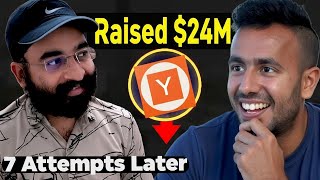
Taranjeet Singh, CEO of Mem0, tried seven times to get into Y Combinator before landing a $24M raise. His startup solves long-term memory for AI models using retrieval-augmented generation. The open-source project hit 22k GitHub stars and 140-150 contributors, with hiring built directly from the community.
Chapters
They said they get 80,000 emails in a week from India.
I took like, uh, 7 attempts in starting a company. This was like one of the last ideas left in my problem statement bucket, and I ended up launching it, got good feedback, and then since then the journey has been great.
Uh, then you got accepted, right?
No, no, still then also we didn't get accepted. Oh really? Yeah, this was a 6th rejection with RAG and AI-based projects.
Second time with AI, you got rejected.
Yeah, yeah.
So even after failing 7 times, what kept you going?
No matter whatever you're doing, you always stick to basic and basics. Company technology business, that's what kept you doing.
So this is Startup HQ where Taran's startup is incubated. So hello everyone, today I have the honor to interview Taranjeet Singh, CEO and co-founder of Memzero. If I have to show you with an example how it impacts me in my apartment, we have Katie, Srujan, and me. We split our rent and some amount is fixed, some is repeating, and some is variable. So I have put it into Memzero and every first of month, if I say split my rent extra dollars of $90, let's say $90 extra rent, it automatically remembers rent of Katie, Srujan, and mine and automatically divides. It has a memory layer. If you want to ask your manager today, I want to take off, it will remember that you are going on a vacation one month later and will write that custom email. So it is very useful for me. And now let's get to know the journey of Taran, what it took to build the startup. Today we have Taran here. He had an incredible journey of getting into YC. He applied 7 times, coming to Bay Area. We are currently in Startup HQ, which is incubators for startups like, you know, inspiring startups like of Taranjeet Singh and pehle garages mein startups shuru ho dete. Now we have like, you know, these buildings which are on lease and rented for the startups so that they can start their journey. So hi Taran, can you please introduce yourself?
Hey, like thank you for having me here. I think really excited to be here. I keep watching some of your videos and like it's like fun to be doing one. So thank you for this opportunity. I think my journey started in India. I did my undergrad in computer science. I did work at Paytm when it was not a well-known brand. I did a lot of— I took multiple attempts in starting my own company. And it's been a journey of learnings and failures and reflecting what went wrong and then improving it. Into the next iteration. Currently, I happen to run a company as co-founder and CEO. The company name is Memzero. We are an open-source company. We have like 22,000 GitHub stars. We are loved by our developers very much. We are building like a long-term memory for large language models. It's one of the most important problems in this AI, Gen AI era to solve.
And 22K GitHub stars. Amazing.
Yeah, I mean, like, thank you all our, like, supporters for all the love. I think without you, we wouldn't be here.
Excellent. And first of all, like, I really want to admire how you, you know, made it finally. Abne, you started with, you know, SaaS. Explain karna, how you started pitching to YC and how you pivoted to make it finally the 7th time. In AI?
I think, so I applied to YC for the first time in 2020.
From India online?
Yeah, from India online. So tabs hai, I've been just trying to apply. The first time when we applied, I was trying to build an alternate Android app store. We got selected for an interview but were rejected. But then we kept pursuing it and then it was a series of multiple I think pivots on the idea and even on the team also. I was working with someone else before but went through a journey of reflection also wherein initially the problem that I was trying to solve, it felt like a problem but at a small scale. Then what happened that I left my job in October 2022 right before this Gen AI wave was about to start and I applied to YC, I think it was like 4th or 5th time with our idea, which was like a GPT store, which is what we have right now back then.
So GPT-3 era at the time.
Yeah, so this is like, I remember dates very well. So August end, stability was launched, and at that time I started like the resignation process, like right, I mean around that time only. And 30th November 2022, the GPT-3 is launched, and then 1st December I think ChatGPT was launched. That's the time. And 6th December ko I launched this product, which was like a PT Store and I applied to YC. It was a late application but I think we didn't get selected. I was solo also at that point of time and then I applied, I got like good, I think I didn't get like, I mean to be clear like very the feedback that was missing but the product was getting me feedback from the user so I kept improving. I then applied again to YC but got rejected —With same idea or different? Yeah, it was like a— yeah, so what happened, I applied with GPT Store only, but there was like some modifications that I made, and I think the common feedback that I got was like, you know, it will be better if you get a co-founder. And then what happened that I focused less on applying to YC and I focused more on solving or figuring out a problem. At that point of time, this GPT Store led me to a problem which was like a developer tool power, wherein I realized that developers are struggling in creating AI applications. So I built this product called Embedchain, and I have a longtime friend called Dheesh Raj, who is my co-founder and CTO right now. We both met in undergrad college in 2012. Which college? So we went to a college in Noida, it's called JSS Noida, and both of us like did a lot of projects together in college, and we also built a very popular open source alternative to Kaggle together. So then we decided, like back then this was happening, I was launching, I was like going through like multiple iterations on this developer tool product. I ended up at one form which was like EmbedChain, launched it on GitHub, it went viral. I mean like got like I think 1600 stars in 2-3 days.
Wow, EmbedChain, can you elaborate what is it?
So basically the large language models, they have like a training cutoff date. And they do not have context of your own data. So let's say if you ask them, you know, how many emails in my Gmail inbox are talking about fixed deposits or credit card, they don't know because they don't have the context of your Gmail inbox. So there is this technique called RAG, which is Retrieval Augmented Generation. So we built like a very simple, I think the simple framework in the world to do RAG back then. Oh, with vector database or without? With vector database. So we made it very easy for even like my brother who is like very beginner programmer to get started and build like an AI app. Back then this is like June 2023 when like the AI field is still new, people are figuring out like what to do and it's difficult for them to get a hold of these technical concepts. And we built this, I built it, launched it and then like we ended up, we got like good traction. I think I wasn't expecting that. I think I was like thinking to take like a, I mean, break because I've done like so many. I think I was at a hacker house in Bangalore during this time at one of my very close friends. He runs a company. I was staying with him for like 3 months. I went there for like 7 days, ended up staying for 3 months. And this was like one of the last ideas left in my, I think, problem statement bucket. And I ended up launching it, got good feedback. And then since then, the journey has been great.
And then you got accepted, right?
No, no, still then also we didn't get accepted. Oh, really? Yeah, yeah. So the journey is— so what happened that I, uh, we launched this, uh, I, I still was like alone, solo on this idea. I launched it, wrote like 200 emails to people in the valley, uh, about like, you know, raising, like raising a round with them. Two of them responded, uh, one of them ended up investing and like helped me with my I mean, helped me in my further journeys and the other person also helped. And I came to, I mean, Valley like literally in just 2 days. It was like, I mean, I'm just talking to them and like in 2 days I ended up being here. My parents were very surprised with what's happening. And then Deshraj ended up joining as co-founder and CTO and then we applied to YC but we got an interview and we were not selected. So this was the 6th rejection.
Yeah, this was the 6th rejection. With RAG and AI-based projects, second time with AI, you were rejected. Yeah, yeah.
And then what happened at, I think, the feedback that we got was good, where like the feedback was, you know, you need to figure out more about what kind of use cases this RAG framework will enable. So we took that feedback in a positive way and went deep. We started doing a lot of improvements on the product. And now this is like December 2023, January 2024, which is this year starting. We ended up realizing a very fundamental problem, which is what Memzero is about. We changed the name from EmbedChain to Memzero. We did a lot of product improvements as well. And then this time we applied to YC. YC opens up their early applications. So we applied to YC this time and this is like March 2024. And this time we are already in like, you know, I mean, I think we were like, we just applied with the application. We got an interview and this time we got selected. Wow.
And you know, this year we have 3 batches of YCs coming and usually 2 batches, but 3 batches because the craze for AI is insane. Just like how inspiring is the journey of Taranjeet Singh Singh, it is also of the app called MooMoo which started from Palo Alto, California as well and has reached almost 23 million users. And I use it every single time I look at the market trends or if I have to look at China and Hong Kong's market because there are rarely stock brokerages apps in America like Moo which allow you to, which allow you to invest in Hong Kong's or China's stock market and look at the level 2 data with that much information. And just like 62% of Americans in the US who have a stock brokerage account. You can be one of them. It's completely legal on F1/H1B visa. And get started immediately by going to start.moomoo.com/singinusa and get up to 15 free stocks and 8.1% APY. Go start right away. What an incredible journey. So I really want to ask you, in this process, uh, what is the difference between 5th, 6th, and 7th in your product, MemZero Embedded Chain? So Aapne feedback ko kaise implement kiya? So it was first a rag pipe, I want to integrate in my email and it will become a chatbot. Now what is extra now than before?
I think so, fifth time pe, uh, there was this product called Kookaburra.ai, which is the GPT store that I mentioned. It was an application-level product. What does it do? Uh, if you know the GPT store right now, you can go and create your custom GPTs. So it was like a natural language-based interface wherein you can type in, give me like a restaurant, give me like an app which takes in the name of dish or name of ingredients that I have and give me like a proper recipe. So it started like that. That was like application-level product. Uspe, I figured that it was too early and we figured that maybe the users that we are getting are not finding this product much valuable. The 6th product, which was EmbedChain RAG framework, The feedback that we got from YC was, uh, maybe you need to figure out like 2-3 big use cases where you feel like this is super valuable. Because when you're building like a framework, frameworks are hard to monetize. So you need to figure out like what is something that will monetize on top of framework and what is something like a general purpose framework would do well. That was the feedback that we got from YC and we, when we were working on this feedback, we got feedback from our users. About this memory problem. So what happened at this year starting and last year December, we started noticing that a lot of our users are doing frequent interactions with AI models and they have to just tell them everything again and again. So let's say if I am doing like one interaction with ChatGPT right now, I will enter my name is Taranjeet Singh, I'm based here, I grew up in India, I do XYZ, I love ABC. So these sort of things I have to tell ChatGPT again and again. What happened in February, ChatGPT ended up launching an early feature of their memory, which is what they tried to solve it for. But the idea is that these models, they are stateless. They are sort of dumb in a way wherein they don't know or they don't remember things about you. So we figured that this is happening because in their architecture, they don't have this concept of memory baked in. Like, I've met you. Let's say if I'm meeting you again, I'll remember that you were wearing like a black color t-shirt, I met you at the SF, I met you in SF, right? So I will maybe crack like some joke about SF or maybe like say something which is like related to this meeting, right? That's something that LLMs can't do by themselves. So then we started focusing on this problem statement specifically. And this problem statement is like an emerging problem statement right now. I think only OpenAI has ChatGPT, no other LLMs right now have memory built in with them.
So, so only OpenAI and, uh, ChatGPT, and also like I think Google has memory, right?
No, so Gemini doesn't have any memory.
Perplexity has it.
Perplexity also doesn't have memory. Uh, what they do is, I mean, if you just chat in the same thread, the context is passed. But let's say if you go back and be like, who am I sort of question, it won't remember. Oh, maybe you— they might build like a profile wherein you can add in details, so that's how they remember. But right now that's not there.
So they have chat history but not memory. But not memory. Yeah, OpenAI has memory. It remembers who you are. So memory is important. For example, hamna splitwise badi uskarte hai. Like for example, I put in ChatGPT, uh, like for example, ab mere room me do Taranjeet Singh ka room rent hai, and there is extra amount this, divide karte hai. I have to put in the formula every single time. OpenAI doesn't remember, ChatGPT doesn't remember. I have to pull put it again, ki last rent chittna hai, extra amount hai, split karka hai, add karka hai. So I have to tell it every single time and that is feature I really want. Frustrating. Yeah.
So we are building like a developer tool, but what we are doing is since this is a problem that all the users who are using like LLMs will have, so we are building like a playground sort of feature wherein you also can come and use it. We built like a very good Chrome extension for Claude. My co-founder launched it last week and that's like a button which says MemZero. It comes next to the send button in Chrome extension in the cloud and you can use it to add any memory or send it out there. Excellent.
And since you have done RAG too, does it have a feature, for example, mujhe jaa problem dikhti hai na, when I'm talking to ChatGPT, there are so many history topics. Do you have the ability with RAG to add ki aap hazaro topics, 1000 topics of history can be consolidated into 5 or 6 that I can click? Using RAG. Is that also top of your mind?
So that's not a problem that can be solved using RAG. That's a problem that involves summarization. So maybe you have like, you know, 100 subjects or 100 topics out there. You're trying to condense it into like, you know, 10 things out there.
And on that also, charts. So 1,000 charts of history consolidated into 5. Oh, you mean the chart history?
Oh yeah, that's what memory will do it. So that's something that you can do using RAG. But what will happen that RAG is not the best way to do it. So I mean, there are like technical limitations when you're doing RAG. Memory may, what happens that we are building like this technology which understands, okay, this is a kind of information that should be stored in this way and this should be retrieved in this way whenever this thing comes up. So you can give your thousands of chats out there. We'll make sense of it and we'll give you like a profile. So you will see your profile, your all attributes. 'Based in ABC, does this, works at this, runs this,' these kinds of things. And that's how your profile gets created.
Incredible journey. So 7th time when you got accepted, the biggest difference is you are solving a biggest problem in LLMs, that memory is lacking. And we discussed, jo main apko problem batai, both problems are— one is solved, and second, you are in the process of solving, right? Yes. You told me that the biggest challenge for anyone to make a company and apply to YC in India is that ki product ban jata hai, you can make the product, but it's really difficult to do anything after that— finding co-founder, finding that. And I was at an event of Southwest Commons, the biggest, one of the biggest VC here. They said they get 80,000 emails in a week from India. No, everywhere, all over the world. Oh my God, 80,000 emails! And you sent emails too, and it stood out. So can you share product to this, how you made it, what it takes?
I think India, I mean, I think India also is a land of opportunities and the startup system has matured a lot. Some of my, I mean, I have been early at Paytm, I've been early at Khatabook, so I've seen a lot of people around me starting their own companies. But I think like if you're trying to build like a technology company, which is like, you know, pure technology company, it will still work well in India. But the point is that in Bay Area, I mean, you might find it more favorable because people take bet on new technologies. People take bet on something which sounds weird, may not make money right now, but may end up making money in the future. So I think that's one thing that I feel is there. And I feel like India also, you can like, you know, do startups. What did— what something that I learned and improved in my journey was, rather than just building like a cool product, if I can figure out actually what is the, you know, user problem that's there, why is it important for the user that that problem should be solved. Like there are many, many problems that I have, right? I can say like, you know, my shoes are not good, but that's the problem that is not important for me to solve right now. So then if that problem is important for the user to be solved, and then if I feel like you are one of the best persons to solve that problem, so that's what the founder-market fit thing is. So I feel like if you try to figure out, let's say I can't go and run a delivery business. I don't know much. I can figure it out, but I don't know much about it. So I feel like if you focus on truly understanding what is a problem, once you start doing that, everything else generally happens in place. I also used to feel like startup is some, you know, magic recipe, ki kuch toh hoga, which I don't have it. But I took like 7 attempts in starting a company, not the YC application. I've been doing, I've been trying to do I think my own startup since 2012. And each attempt that I took taught me that if you understand there is a particular type of user, their problem, why that problem is very important for them to solve, and then if there are many users of that kind, it's not like you're solving problem which is specific to one user. You need to have many users which has the same problem, then you are much closer to doing a startup. And then eventually, if you build a product, if that product is clicking with a lot of users, it's solving a problem, and what will happen, that things will start falling into place because you have— you're building something that people want. Since they want it, they love it, they will use it, they will talk about it, they'll tell it to their friends, family, and more people will come, more people will use the product, and you will see like a user growth. And that's something that, you know, is the most important thing for like, you know, getting a startup off the ground. Where there is a product that's growing, people are using it. So that's something that I always tell people to do it. And that's what I started doing.
Well, like, bahut popular saying hai, for example, you should start a startup only when everyone is telling you not to do it and you still do it and you are motivated to do it. Agar aapko dusro ko aapko kya na padh rahi hai, ki tu startup kar, then you should not do it. Do it. Yeah. So even after failing 7 times, what kept you going?
Uh, I think, uh, so it's a combination of few things. First, uh, so my father used to— my father has a watch shop, like he, I mean, repairs and sells watch. I used to sit on that shop with him since class 3rd. So class 3rd, I think Papa ne dukhan pe bithana start kardiya tha. I was decently good at studies, toh my studies were managed, so he would like call me on his shop. And our like house and shop is like literally 5 minutes, so I would go on his shop and sit with him. I even used to— I still know how to repair a watch. I can do like— I learned a lot like while working alongside him. And that time only I learned the importance of galla, right? You know, in India, like, we have this, you know, a place where we keep all the money. So I used to see my father, I think, saw it happening. Then ek dosal mein, I used to run the shop. My father would go to market to get, you know, things, but I would run the shop on my own. So I think that thing taught me basics of a business. It was like a brick-and-mortar shop, but basics kaafi clear ho raha pe. So I think that inspired me. I don't know when it hit me, but I was like, I will do something of my own. Second, I started quizzing in my school days. I used to do a lot of IT quizzing. There was this quiz called TCS IT Quiz, so I was like a regular participant there, and I could never, I mean, win it. I think it was like a very prestigious event which used to happen citywide. But I learned a lot about Silicon Valley back from them. To usse, I got like very much interested in computer science. And when I got interested, I think I became good at it. What show is it? It's called TCS IT Whiz. It's a program. Tata Consultancy, TCS IT Whiz. So they have like 2 quizzes, TCS IT Whiz and Tata Crucible. Okay, so Tata Crucible is for like MBA students, TCS ITW is for like school students. Training keliye? Training keliye, it's like an IT quiz, national, nationwide. It's a competition that runs and it focuses specifically on IT quizzing. It's not GK quizzing. So, uh, so that inspired— I mean, that drove me towards computer. And then I was like, I mean, I generally, uh, generally like to learn new things and I want to do something which is much, much, much bigger. So that kept me motivating. And so, doze bahara se I've been taking attempts. So each attempt was difficult in its own way. Matlab kaibar kuch nahi chalta raha gayi bahar, like co-founders thing not working gayi bahar, paise nahi hai. But what happened that I think there is some sort of inner drive which is like, you know, It will happen. We will figure it out. Let's, you know, keep taking attempts. If you stop taking attempts, I think that's the biggest mistake that people do make. It's hard. I'm not saying it's easy. It has been hard for me. But I also figured out, like, you know, there were few problems that I realized, ki maybe like there is like a financial stability in my life that I need to sort. So I solved it first. Yeah, I started understanding more deeply about Why should you build a company? It's not just ki apne website banadi hai, ek problem solve ho rahi hai toh wo bhi solve karna start karte ho. So I got a lot of groundedness from my parents. They are very humble. So I think that also kept me grounded ki nahi, tike career mein no matter whatever you are doing, you always stick to basic and basics ki company banadi hai, kuch toh technology business banani hai. So that's what kept me going.
So your family always motivated you?
Yeah, I mean, like, they have been a constant source of motivation. I think father, mein papa training diya hai. I didn't used to like it back then because my other friends would be playing and I would be sitting at a shop with him. But now I feel it's so valuable.
So did you make a plan B, ek set of savings rakhi for like, let's say, 6 months, 1 year, like a plan B savings when you quit your job?
What was that? I think biggest thing that I learned, one of the biggest thing that I learned is ki plan b hona hai, but finances ko leke jada mess up nikar sakta hai ab life mein when you have like things around you that are dependent on you. So what I did was I figured ki the reason why, I figured that startups take longer. Like I started my journey in October 2022, now it's 2024, those are lotne wale. So I figured ki lamba time lagne wale, toh if I can figure out like a decent runway, jismein bhi jitne bhi dependencies hai, uh, vo runways mein solve koriye, so that I don't have to worry about at the end of month ki I don't have this money. So that way I felt ki, uh, it becomes easier. Then there was this thing ki abhi jump liya agar abhi job chodi, toh, uh, ho sakta hai things don't work out. And paise khatam ho drenge, like bandhagon will start going down, right? But I think that, I don't know why, but woh aaya nahi di baat mein. I was like, I was very much excited ki badiya jo, I think, kuch kiya mein bhi nahi ho bannet toh let's do it. Worst case mein, ye yuva ki matlab kahin na kahin toh fit bati jaenge. Malaa figure out karenge sakta hard ho, but there would be like one company who would take a bet on me again and like kriega, you work. So that will happen. So that way, I think—
Excellent. Like, I think when you don't have any plan B, you give your 120%. I think, yeah, no, for sure.
Plan B will make you weak because you'll always be like, TK, uh, plan B hai, to spay kya hum karte hai. Same.
I mean, my student, when I YouTube channel start kiya, I had $300 in my bank account, or ghar wano se paise leni ka mann nahi tha. I gave 6 months to YouTube channel. That's why I'm sitting next to you. So I think It has a lot of truth to it. In the space of AI, there are so many competitors coming, you know, LLMs also features daal rahi hai. How do you stay competitive in this space?
I think jo startup ki paas fundamental advantage hota hai, which is like, you know, they move very fast and they're very close to their user. So right now, I think both of us thankfully are with us, we are developers, we're building a product for developers. So, hame apni needs padhao thi, hame log khud bhi kaise saree apps banare wohte hai, toh woh padhao tha ki, you know, this is how this should be built, this is how this should be built. And then by default, uh, woh jo early phase of the startup ka wherein like there are a few cracked people or there are like few crazy people who are like, you know, so, so much motivated about the problem statement, so much motivated about creating an impact that they are doing their 500%, 1000%, and they'll move mountains in just like few hours. So I think that's the advantage that any startup has. Maki, I feel like, I mean, like, this is like a new paradigm that has come up. Nobody knows what will happen. So the best way to stay competitive is stick to basics. Like, you know, just keep the feedback loop tight. Whatever you're building, if you know who your users are, what are their problems, and is your product addressing that. And if you just keep improving the product, I think, yeah, you'll survive.
And you'll stay competitive. Exactly. Like, I think just like, you know, pictures agar aapne dekhiye in that TV show, 17 years ka ek college student churaal hai de pein da life se, but they still stay strong and still get the funding. Yeah. So I think you're saying that you have the power with the best engineers in the team to pivot at any point of time.
Ha, Malav, I think we'll do whatever is needed for the company to be successful. I think that's the motto.
And in terms of hiring, it's said that 1 to 2 engineers who are top-notch can do the best work rather than 10 average engineers. How do you hire? How a CTO— your team is of 4. How do you hire the best talent?
I think the best thing that works for us is we have like an open source project. We hired this person called Dev from India. We hired Prateek from US. Both of them reached out to us. Dev started, I wrote about him on LinkedIn and Twitter also. I mean, his journey is very inspiring. He's like in some small town in Gujarat. He started contributing all of a sudden to like Memzero. Wow. And he was just contributing. Like, I mean, no interaction with us. He was just making pull requests and pull requests was getting merged. We're giving you feedback, he was addressing the feedback. And then I just spoke with him and I liked him. I was like, you know, let's figure out if we can collaborate. And then we ended up, you know, getting him full-time. Similarly, Prateek, uh, who is based in US, uh, discovered us like from YC and LinkedIn. He reached out to us with a very personalized— I mean, we are building memory-to-remember personalization, and his email was one of the best personalized emails that we ever saw. It was super clear with why we should hire him. Like, he was upfront in the value that he brings to the team. So I feel like open source teams ke paas, like, Shuvat mein, they have like an edge wherein you see like people who are contributing to the repo, making it better, and if you just talk to them and see if they are at a stage in their life wherein they can collaborate more deeply with you. You can build like a team there, and that is a good way because the engineers or the people that are contributing, they've already navigated the code base. They know kya chha, this is how it works. They even are contributing without your guidance.
Wow. So open source brings so many benefits because when you have the product open source, You are making it safe because everyone can contribute. So how many developers contributed to your project to become like 22,000 stars?
I don't remember the exact number, but I think now we have more than 150, at least more than 140-150 contributors out there. Yeah, we have seen contributors from every part of the world. I mean, and this is like such a grateful thing for us wherein the world is helping us improve. Excellent.
And how do you measure growth so that you can continue grow and like, you know, get more funding if needed? So how do you measure success and growth in your startup?
I think for us, I mean, though we have like a good number of stars, but the only thing that we focus on is adding value. So right now, whatever developers are using our product, we are just trying to make like a very optimal low latency system for them so that if they add like this memory solution in their product, the product experience becomes much, much, much better. Their eventual users are happy, so they are happy, so that's why we are happy. So we are— it's like a— I mean, it's very simple for us. Like, our growth is, uh, the number of users or number of developers that we can make happy, because once they are happy, their users are happy.
Excellent. And last question will be, which I am asking every founder these days, is: would you chase success slow and build character, or success fast and build ego? An exit, maybe. Hypothetically.
I think, is there not a third option where it's like fast and character? But there is.
That'd be great.
I think I would opt for that. So I was one of the early team members at Katha Book, and Katha Book went like a crazy scale in India. One thing that I learned there was like the exact same thing where like super, super growth moat. Like, Indian merchants love Katha Book a lot. And down-to-earth, like, humble team. Good ethical people there who generally have, like, I mean, they are like one of the smartest people. I mean, a lot of the early team at Katha Book was from IIT Bombay. So very smart engineers. I think, and still, like, you know, very good. They taught me like a lot of things. A lot of things that I learned in my journey is a combination of things that I did at Khatabukh also. So I feel like, I mean, if I have a choice, I would always prefer to build character and grow fast.
Yeah. Excellent, excellent. Thank you so much, Taranjeet Singh. Learned a lot. Go check out MemZero. It's super useful. And thank you so much again. And share with the friend who can be inspired to get into YC.