how he made $30,000 trading as a COMPLETE beginner
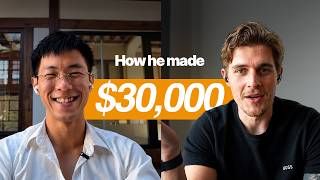
Webber, an ex-Royal Marine, made $30,000 trading in four months using the Blueprint program and prop-firm challenges like FTMO. He trades only during high-impact news windows, keeps strict SOPs and journals, and takes regular breaks to stay disciplined.
Chapters
The guy that you're about to meet has been trading for less than 4 months, and before that he actually spent 10 years as a Royal Marine Commando. Ultimately, he left service a few months ago, and within like 4 short months he's pulled close to $30,000 in payouts, has had multiple funded accounts. Weber is pretty much a complete beginner to trading who got the kind of result that most experienced traders will, you know, only hope to get. There is a reason why it happened, and we're going to dig into it. Correct me if I'm wrong, but you spent like 10 years as a Royal Marine Commando?
Yeah, it's about 8 years, but yeah, most of my adult life.
Yeah, sick, man. How old are you this year?
Uh, 31.
Damn. All right, so basically fresh out of what, uni?
Yeah, so I went to uni, pretty much instantly decided it wasn't for me, but finished it out of stubbornness. And then went into the Marines after that.
Got you. Um, so like, how did— like, back when you were a Marine, like, how would a— how would like a normal day look like?
Like, it would depend. So it's quite, uh— so obviously like the training is famous. The training is just hell, and it's the longest training in the world, the Royal Marines. Um, for infantry, and I was an officer, so it's about 60 weeks. Um, but I got injured, so it took me about double that, including like rehab. And then you start your work and you change job every 2 years. So it's basically new location, new team, new job every 2 years. And the longer you stay— so as a brand new troop commander, you're in charge of 30 Marines. And then as you move up and get more experience, you get command of more people, but also you start doing more of an office job and less of the fun stuff. So that's why I left after 8 years, because basically I joined to be a soldier and I was sat there doing Excel spreadsheets and I was just like, nah, this no longer for me anymore. So then I left.
I see. Is this like a normal progression for a lot of, uh, once you become a commander?
And I think a lot of people get to that 8 to 10 year point and they're like, all right, I'm either in this for life or I'm gonna leave now, because otherwise you get trapped. People get trapped, but they'll promise you pensions and they'll say, oh, promise me you will give you the job you want next time, next time, next time, and then Before you know it, you've done your whole life.
Got you. So ultimately, um, like, you left because you didn't feel like it was right for you?
And yeah, I, yeah, I left because like I wanted the, the excitement of like, you join the Marines to be a soldier and to fight and to go on operations and like my era, we joined like world peace most of the time. Now I've left and World War III is starting, obviously. But so there wasn't really much going on, and the training is great, but then once you find yourself sat at a computer, you, you're still making the sacrifices. Like, you, you don't choose where you live, you don't choose where you spend Christmas, you know, the pay is not great. So you still have all the sacrifices, but you don't get the rewards of jumping out of helicopters and shooting guns. Instead, you're just doing an office job. So there comes to a point where you're like, right, this— the sacrifices are not worth it anymore.
Got you, got you. And like, what, um, what made you choose trading? Because I think you left in like November and Blueprint was like, like a month later. Like, yeah, so I was trading something you always had in mind?
Not at all. It was basically, I wanted, after like most of my life being strict hierarchy, strict rules, strict timings, you don't have any freedom. I was— the thing I was craving most was freedom, like to choose when I work, where I work, what I do, um So it was always going to be something like that. So I was going to be self-employed, do my own business, which I'm sort of starting now. And I looked at trading as if I can make enough money to survive from trading, then it takes the stress off the business. Like, I'm not— because you only have so much money if you're starting a business, and eventually that's going to run out. But if trading can alleviate that stress, like, my income's secure there's no ticking clock, then— so that was all I was looking at it for, really. Like, if I could earn a couple of thousand a month just to survive as a supplement, that'd be great. And then obviously, like, having done Blueprint and getting some good results, now I'm like, well, actually, the trading has potential to earn way more than a startup business is going to do. So Really, like, trading is going to become number one and the business is going to be secondary to that, if I even bother with it at all. We'll see how trading goes.
Yeah, I'm so happy. I'm like, I'm so happy to see like the result that you managed to get because, you know, a lot of people can only dream of, you know, getting to this point. And the fact that you've managed to do it, just, it's great, man.
I think being a beginner is an advantage, to be honest, when starting Blueprint, because I don't have any other systems or any other competing ideas. It's just like one system, learn this, do that.
Yeah, it's interesting that you bring it up. It's, um, I think you definitely hit the nail on the head on that one. There are quite a few students that have come in, you know, people that have, you know, messed around with other systems before. So like the first couple of months, it's almost like unlearning the bad shit that they've got, like, you know, the bad habits that they've picked up, and then they can start from ground zero and kind of build the way up. So it's— we've seen it more than a few times actually.
Yes.
Out of curiosity though, like, you know, you mentioned earlier that, you know, you came from a— basically for most of your adult life, it was structure, it was a complete lack of freedom, but rigid. And I would only assume that there was a sense of kind of like stability in that structure. On the day that you decided to hand in the resignation, what was going through your— how did you feel? What was going through your head? Was there like uncertainty or were you like, So I, I take the next step.
I was just excited. I think, I think that's why I always said to myself, I'm gonna leave when I'm young, because you still have that fire to do the next thing. Whereas I saw a lot of people who were veterans and they, they joined when they were 16 and then they were left, left when they were 50. And at that point, you know, you've got kids, mortgage, and then it's like terrifying because you, you, you're, you're an expert in this thing, but you're just going to have to start at the bottom somewhere else. And like, you could be the best soldier in the world, but most, most people don't care if you're a sniper. That's not very transferable into other jobs. Like, so yeah, that's why I always said I want to leave when I've got that passion to do the next thing, um, and I'm still young enough where you can take risk and But I think for me, I wasn't worried because I think the biggest thing the Marines gives you is like self-confidence. Like, you— it takes you to lows that you've never imagined before, and you survived it. So you leave like, whatever happens, you back yourself to, to get through it and do well. Um, and yeah, so I wasn't really worried, I was just excited to, to get going.
Got you. And like, what about your loved ones? You know, how did they feel about, you know, you taking this next step into the unknown, basically?
I think they were like, they really, like, obviously really proud of you being a Royal Marine, but also like didn't really like it because, oh, what if, what if something kicks off and you he gets sent over there. Like, so I think they were on one half, like, a bit concerned, um, but also relieved. But I think also, like, they knew I had a plan and I would be okay. So they're both self— both my parents are self-employed, my brother's self-employed, so there's quite an understanding of that, a sort of wealth of knowledge of, yeah, it's risky but it's possible. And it's worth the risk.
Got you. Basically runs in the family, eh?
Yeah, exactly.
And so once you, you know, once you actually left and, um, you started getting back into civilian life, like before you found me, like, did you— were you kind of like exploring, like, were you watching anyone else, or did you just somehow magically discovered me as the first one.
So before I found you, I was, I was invested in crypto, but I wasn't trading. Um, and then I was watching, I was watching so many people, too many people. And like, because I was a beginner, like, you know, someone says, oh, Bitcoin's going up to $200K, and they've got a million followers, they seem legit. But then you learn. So like, for me, I think it was that October 10th when it crashed, and luckily I wasn't trading at that point. But it was like, that was when I realized, okay, I'm like fully reliant on the market going up, otherwise I don't make money. Um, I need to find a way where it doesn't matter if it goes up or down, I can make money. And that's when, like, because I was watching you just as a like, oh, what— as part of my watching content telling me what's gonna happen next. But it wasn't until that when I was like, oh, actually, like, trading— because, because if you were in— if you were trading on October 10th, you'd have lost 1% and that's it. Whereas all these other people who are like investing via leverage, they've lost like— they've just been liquidated, all these people. And so I was like, okay, that's, that's what got me first interested and sort of watching you more and listening to you more and actually listening to the trading part and the setup part rather than just like the overview of what's happening. Because I think it was like, it was eye-opening to me. It's like no one knows what's gonna happen. Like, so that's when I sort of stopped listening to everyone else and just started listening to you. And then luckily that aligned, lined up really well with the first like masterclass was happening soon after that.
Got you. Yeah, somehow, some way, that was magical timing, man.
Yeah, yeah, definitely.
At the time, something you brought up definitely is like, for most people, they kind of have that realization as well, like going away from that, you know, just pure speculation. Oh yeah, here's the macro, that's why Bitcoin is going to go to $300,000. And then they start realizing that, you know, you don't have to predict the markets in order to make money, up or down, as long as you've got, you know, a setup. That's what matters. I'm really happy that you came to that realization pretty early on, man. A lot of people don't realize this.
And it also just means, like, I used to spend hours just watching, like, people who now I'm like, why the hell did I ever listen to them? But it's like, now I just don't have to do that. It's so nice.
Yeah, in a sense, it's like, I don't know how you did it, but you just had a stroke of like genius. Maybe it was self-awareness, but like you definitely saw through some bullshit. And obviously, you know, everyone I assume has good intentions, especially the, you know, the content creators or whatever. But even for a lot of other traders out there, even with, like, a really, you know, catastrophic big drop and they realize they lose money, most people never come to the realization, like, hey, you know, maybe something needs to change. So, the fact that you were able to catch on to that, like, that's amazing, something that, you know, a lot of people don't really have. And back then, like, obviously, like, once you started, you're kind of narrowing down to you know, me, did you attempt to kind of like start trading at the time?
No, I didn't. I didn't start trading until the, like, the first VIP group. And I think I joined, I joined that group, I did the first day, the first trade. And at this point I didn't have like a prop firm or anything, I was just on a crypto exchange using leverage. And it was like first day in the VIP group just executed your setup and it was like enter the trade, 10 minutes later, 2R, done. I was like, okay, maybe, maybe this is worth paying attention to. And then it's sort of after that is when I fully learned.
Yeah, I remember you're, uh, I definitely remember seeing you in the VIP group. Yeah, I was, um What do you think of that overall experience, by the way?
Like, so I, I think it's really good. So one thing I've, I've come to the conclusion that actually I— the, the chats are really good as a beginner, but I found like I was too concerned with what other people were thinking and doing to the point where eventually it became confusing. Like, because I'd have an idea and I think that's a good trade, and then if someone else posts something like completely different, talking about like, oh, the EMA is up here. And it's like, that makes you doubt yourself, even though obviously now I'd be like, I don't care, that's not part of the system I use. But so it's like, on one hand it's good, but really in those VIP groups, like, I only want your messages. Like, that's what I'm looking for. Like, and everyone else was just— I just found it confusing at that point.
Got you, but my messages were helpful at least.
Yeah, yeah, exactly.
All right, yeah, it was, um, it was hard to balance with, um, obviously we can't just make a bunch of WhatsApp groups because at that point, you know, it wouldn't be too different from a Discord. But then there was also the problem of like too many, you know, different opinions. Yeah, but I'll definitely keep that in mind moving forward.
When you're a beginner, it's just good to see like because you have like, you don't have any confidence, and the only way you get confidence is by winning trades. And so having like a WhatsApp group, it has that, it sort of holds your hand for your first few trades, like, this is what we're doing, this is why, and then see it through to the end. And then, so I think it's like, it's the perfect introduction because you get to see it start to finish and start building your evidence of of why the system works.
Cool, man. Absolutely amazing to hear. Like, this was the same message that I tried to convey, like, on— I tried to run another VIP kind of like group again. It was the same message that I tried to convey, exactly what you're saying right now. Turns out not as many people are kind of like at that level of awareness where, you know, it's not really about the information that's gonna help you, it's more about having someone, being able to just pick the brain of someone who's, you know, experienced, and to see like the actual execution day to day. So I used that messaging, did not hit at all. Yeah, this time around we had like 20, 20 VIPs.
Yeah, it is crazy because it's like, um, it's, it's one of those things like you, like, I was, I don't know why, but when I was watching your masterclass, like, I remember writing at the top of my notepad like I'm gonna learn and master one system, and like, that's all I want to do. I don't— I'm not going to listen to anything else. And I think that that's the difference maker, is that like, I fully committed to just one thing and by no means mastered it. But like, whereas I think a lot of people, they are like, they'll probably join the VIP or the Masterclass, just they just want the setup and they don't see the value. And actually, the value is in the, like, in, in the Blueprint, like, the first few modules and that, like, the probability theory and stuff like that. Like, that's the gold, I think. Like, it's not like the setup, like, dude.
Yeah, actually, um, just to touch on— just to touch on what you're talking about there. So you, you were saying, like, most of the value that you found from Blueprint wasn't necessarily, you know, setups, technicals, whatever. It was more on the, like, the foundational side.
Yeah, definitely, definitely. And like, especially the, the, just like the probability theory and the maths of it is something that's really helped me recently when it's like, actually, it doesn't matter if I win or lose. If I, if I stick to— if I only lose 1% and I win 2%, it doesn't matter. Like, you're, you're gonna be profitable. And so, like, try— you don't have to win every day. And it's like, once you understand that, and the same with prop firms, like, once you understand the maths, like, yeah, you fail a challenge, you fail a challenge, pass the challenge, one payout, you've paid the cost. Like, it's just maths, and it's just probability as well. Like, you, you don't need to win every trade. You don't just, like, Understanding that foundational side is so much more important.
Man, you have no idea how happy I am to hear that, because that's the same message that I try to share as well. Like, yeah, everyone, everyone can have a system. Sorry, everyone can have a strategy, but just knowing, you know, really good strategies is not going to get you through the finish line or even over the hump. It's something more foundational, you know. Yeah, that's kind of what I emphasize as well. So to hear it from you as well, that, you know, that was the biggest thing that helped. Just happy to know that we're on the right track at least.
100%.
So I'm just gonna bring it back for a moment on, you know, the moment that you, you know, ended up joining Blueprint. At the time, So you already joined the VIP group, and at that point you were already basically kind of listening to me only. And like, when you joined Blueprint, do you remember filling in like an intro form, kind of like an onboarding form? Yeah. So like, I actually read through that for a moment, and one of the things that you said in that intro form, or at least one of the things that made you decide or rather the biggest thing that made you decide to, you know, join Blueprint was like you felt that I had credibility. Like at the time, like what did credibility look like to you?
So for me it was, it was the fact that you were like, anyone could make a YouTube video like, oh, I won this 8R trade. But for me it was the fact it was like every day you could go back and watch all your videos and like, this is what I'm looking at. And this is why. And then the next day it's like, yeah, I took it and it lost, I took it and it won. And it was that, like, there was no, like, trying to make it look better than it was. It was the fact that you were showing the losses and the wins and the days you didn't trade. Um, because I'm sure you, you could just post like, oh, this is how much I've made this month, and it would look amazing, but for me it was the fact that you were showing the losses, showing the days where you're just like, yeah, there was nothing, it was just chopping around, I did nothing. That was, that was the real difference for me, I think. And like, you don't, you don't hear many people talk about— like, that's not a very exciting YouTube video, is it?
Like, yeah, exactly.
Yeah, you don't, you don't hear many people talking about that, but it's like One of the most important things, and still the thing I struggle with most, is that's often the best thing to do is no trade.
Great to hear it, man. And yeah, you're right, it doesn't make for a very exciting YouTube video. Probably that's why I don't get too many views.
I'm glad though. I don't want everyone winning. It's not, it's not how it works.
Yeah, yeah, not how it works. And so at the time, like, before you, you know, decided to join Blueprint, so credibility was, um, you know, the reason why you ended up joining. Was there something that almost stopped you from joining, like any doubts that you had?
Well, I'd say the only thing that once would have stopped me joining is, like, for me, as someone who wasn't into trading trading seemed like, because my experience of trading before that was just people using leverage on exchanges and like not using systems or anything, just like when I would buy Bitcoin, just buying it with 3x leverage. Like, so for me, trading and gambling were like similar, and that was, that was the only thing that would have stopped me doing trading was like, is this, is this, uh, like actually worthwhile, or is it just gambling? Like, am I just gonna lose my money? But I think because I had that VIP class and like learning the system behind it, and then also learning about prop firms— like, I didn't even know they existed before, because for me as a beginner, like, you trade your own money. That's all I knew existed. I didn't know that was— there was an option not to do that. Um, and so that's, that's much more intimidating, I think, than once you learn about prop firms. You're like, I can sort of— I know what my risk is, and it's, it's not gonna— if we do get a crash, it's not gonna take all the money out my bank account somehow, like. So that, that was the only thing that I was sitting on the fence with, whether to trade or not.
Got you. So it was basically something, so if I could put it, at least based on the way that I'm hearing it, it's a bit more of like there were some unknown factors and because you just recently learned about it, so you didn't know what to expect. So that would have been the only thing.
Yeah, yeah, definitely.
Cool. And just to touch on that analogy that you had with, you know, trading with gambling. Knowing what you know now and obviously being in your shoes now, would you still say trading is a lot like gambling?
I'd say it is. It can be. It depends how you execute it. Like, you could— you can trade, you can definitely gamble, but also if you— it like, like if I just like lost and lost and lost and lost and just kept trading until I won, then I would say that probably that's gambling. But once you build up an amount of evidence and you're like, okay, this is working in my favor if I execute this system, then I think it's— it changes to something else. Then it's just maths. Like, you— if you, if you know you win more than you lose, or you know your, your profit is more than your loss, then it's, it's not gambling. Um, it's only if you're like, I, I don't know if— like, I've had it a few times where I enter a trade and my gut is like, oh, what's going to happen next? It's like, well, obviously that's a trade you shouldn't be in. Like, you should, yeah, you should know what's gonna— or at least have an idea of what you expect to see. So I've had a few trades where I'm like, even the ones that I've won, when I look back and I'm like, okay, that was gambling because I, I didn't have a clear idea But I think if you have a system, then it changes. It's not—
Makes sense. It's like, you know, people say poker is gambling, and yet if you know what you're doing in poker, sure, you might be gambling, but, you know, you're also at the same time, you know, it's like, it's profitable. So can you really— and if you're following a system as well. Can't really call it gambling anymore.
No, it's just, it's just like taking risk. Like, is there a difference between gambling and taking risk? Like, I think to be successful in anything, you, you need to have a certain risk appetite, um, and accept that as long as you are aware, like, what you're gonna lose and you've thought about that, and if you're able to lose that, then that's just taking a risk.
Got you. That's a really important point that you brought up, actually. Like, to be successful at anything, you've got to have risk appetite. Like, was that how you were— was that something that you had throughout your life? Like, you're always okay with taking risk?
Yeah, I've, I've always had quite a, quite a high risk appetite. But then I think where, where what's probably helped me is that in the Marines, you do like a lot of risk management or risk mitigation. Because, like, you know, like, you, you have a mission, you have to achieve that mission. Like, there's no option to not achieve it. But, like, you have all these risks, you can't get rid of them, so all you can do is mitigate them and either make them less likely or less severe. And so it's like, I think that helps me because it's like, well, you gotta jump, you gotta do it, but how do you do it? How do you mitigate the risks as much as possible? Without just freezing, because doing nothing is not an option. So that's probably a skill that has really helped me.
Interesting, man. Like, I never would have knew, or like, logically it makes sense, but I never would have thought about it until, you know, actually speaking with you. And yeah, that's interesting because this is One of the other, like, super successful students inside Blueprint, like, he basically— I think you guys are kind of on par with the amount of results you guys managed to achieve, like, in a similar time frame. His name is Vincent, and he's an ex-professional poker player, basically, like, used to play poker for a living. So, you know, and one of the core things, two things actually, that he talked about that helped him succeed a lot was he really understood probabilities, knowing that, you know, in any individual trade outcome doesn't really matter, all that matters is long term. And the second was like, he was always constantly dealing with the idea of risk, right? It's always about risk management, like, do I bet more, do I bet less? It's always decisions like that. So to hear it also from you, kind of like, It's also starting to make more sense now why you were able to achieve what you did in such a short time frame. So yeah, that's interesting, man. So just to get back to like, usually like the first 30 days that, the first 30 days of someone, you know, joining Blueprint, is what I've observed is kind of like the make or break point, because at that point you're kind of— there's so much information that you're consuming, and when you start, you know, actually putting in the reps and to practice it and to actually start trading, it's like nothing makes sense, or usually what happens is so confusing that you just, you know, just start losing immediately right off the get-go. I'll start by like your experience. Like, how was your experience at the start? Like, how was the first— how did the first 30 days look like for you? Was it a lot of failing or did it kind of make sense immediately?
It was, yeah. If I look, if I look back now, like, um, it was a lot of failing, but it was, it was more when I, when I failed, it was never, you know, I never executed by the system every time. And failed. It was always I did something. I either broke the rules or I was impatient, or it was something outside of the system that resulted in the failure. Like, you might lose 1, 2, 3 trades executing perfectly, but it's very unlikely. And still to this day, I've never blown an account and looked back and said I did everything by the system. Like, so I think it was like I knew very early that if I execute this like a robot, which is obviously impossible, but if I try, I will win, um, overall. Um, but so very early I was like, okay, this, this is a, this is a psychology game. Like, it's a— that's the only thing that's going to make me fail is my own brain and my own psychology. Um, and then that, that's where most of my struggle has been, most of my failures have come from. Um, and it's like after 30 days I felt like I was pretty, pretty comfortable with the system and I understood it very well and I didn't need to learn anything more technically. But the, the psychology side, the execution side of things is like a constant work in progress and, and that's where you really put in the hard work.
Got you. And I'm quite curious, like, because everyone kind of knows that, you know, psychology is the bottleneck, but you've, I get the feeling that you were able to, not feeling, like you've proven that this did not affect you as much as it would, you know, a regular person. Would you say that your background in the military kind of like helped you? Like, were there certain things that kind of translated over in just being disciplined or following rules or just being like more mentally resilient? Yeah, you say that was a big factor?
I think it's more the— because I, I wouldn't say I'm like amazingly disciplined or, you know, like I'm— but I think what, what you do get from, from my background is like the fear of failure doesn't exist. Like you expect to fail many times and eventually you will succeed. And so then it's like, that really helps you because when you fail, you fail a challenge, instead of like, this isn't working, or having some sort of meltdown, I'm able to look back and say, okay, why did this happen? And then how do we prevent this happening again? I think that's the biggest thing. Like, we call it in the military, we call it after-action reviews. So anytime we do anything, training, exercise, whatever, you have an after-action review. Like, what went well? What went badly? What are we going to do next time to do this better? And so, like, that's probably a really useful skill. Like, I failed a challenge. Why was that? And then can actually look through and say, oh, it's because I've revenge traded like this day, this day. Okay, why did I revenge trade? Oh, it's because I— it's because I— a lot of the time for me, it's because I wanted to pass by this date, and like that time pressure ultimately is what started the failure process. Um, so like, that's the thing I've learned most, is like, I'm— I know subconsciously I will put a a time window on things. And I just like, I need to constantly work to remind myself that that's stupid and pointless, like, and that will have a knock-on effect which will end up in revenge trading or entering poor trades or whatever. So I think that like, when you, when you fail, being able to take a pause, like don't jump straight back in and like analyze why did I fail Okay, why did that happen? Why did that happen? Why did that happen? And eventually you find, you chase it back to like the root cause, and it's never, oh, the system doesn't work. It's something you've done.
Got you, dude. That is, that's powerful, man. So it wasn't necessarily, it wasn't necessarily like some inherent talent that you were just more disciplined or like more mentally resilient. Is journaling. Like, if we could kind of break it down, like, you just had a habit of trade journaling. Yeah, like after-action review.
And like, I'll— I get through like a notepad a week because I just write every thought I have down, and I always have done. But like, I'll have it by my laptop, and everything I do, I write down. Everything I think, I write down. And then if I lose a trade, I'll like write, why did I lose that trade? And then at the end of the session, I'll write, like, what key things do I want to remind myself tomorrow when I sit down? Like, what are my messages to me tomorrow? And it's that, like, thinking out on paper and just everything you do, analyzing it and just interrogating it. Like, why did that happen? Why did I— because I think when you make a mistake and you know you've made a mistake, you sort of want to bury it. You have a shame, like, oh, I just revenge traded. I, I'm embarrassed with myself. I'm not going to tell anyone. I'm not going to put it in the journal. Like, that's like the natural reaction. And it's like, no, what, what you need to do is, yeah, okay, that was, that was a bad day. I've had a stinker there. But then take a few minutes to say, why did, why did that happen?
Got you. Like, so basically acknowledging that there is in fact a problem, not trying to shove it under the rug and just taking— you don't have to accept it right away. Take a moment to have a breather and try to look through it objectively. That's what you're saying, right?
Yeah, yeah, exactly. Because I've had it where before, like, I've done something which I know is wrong and then I've not put it in my journal because I know it's wrong. And it's like, well, why did you do it?
Got you. And it's also kind of stupid if you think about it, because, you know, the only one who's ever going to read your journal is yourself.
Exactly, yeah.
Of all the places to be honest with yourself, it's in the journal, you know.
Yeah, exactly. Whereas that's why, like, I write everything I'm thinking, because I just find it's like you can— you have that, like, constant stream of consciousness and I find that really useful myself.
Got you. Dude, that is powerful. And this is, this just kind of drives the point home. Like I always, this is what I usually say to, you know, people that are like, they understand the theory, but then they can't translate it into, you know, like proper execution every time. Dude, you just gotta get, you just gotta get into a habit of journaling. And like, it always kind of boils down back to that, because if you keep doing things but you never take a moment to actually like review if you're doing it correctly, or if there's anything that should be improved or can be improved, or things that you should stop doing straight up, you're just going to keep walking down that path that could be completely in the wrong direction and you'll never realize it.
Yeah, like, definitely.
Yeah, to hear to hear you say like that, that was the determining fact. I mean, not really the determining factor, but one of the bigger, you know, kind of factors behind your success. I hope whoever's watching this will use this as their wake-up call if they have, you know, put off journaling.
And even for myself, I didn't do it at the start. I think for the first month or so, I did it sort of half-heartedly, journaling, but just like results and and the, the numbers. The important part is the, the thought process. And like, that's why for me the notepad is so helpful, because I hate typing into a box, but writing on paper, I love it. So that's, that's what works for me for just the thought process side of things. And then my like journal on the laptop, that's just numbers and results and stuff. But I always have the like notepad to look back to yesterday, because you don't need to look back like 6 months if you've got if you've got like the trades, but like you can look back. So like this week on a losing streak and like I had the, I had the results, so like I knew if I just kept going and didn't change anything I would break it. But it's that because you lose confidence after a few losses and you start thinking about changing things, or, or maybe it was luck, maybe I'm I actually don't understand things. Um, so like on my notepad, I would just remind myself like every day, like, I know, like, now I've proven and I have the evidence. If I stick to the system, stick to the rules, I am profitable. And the only thing that's going to prevent that is if I change something. Um, and so that's where journaling is really useful because it builds up that body of evidence, that No matter what crazy thoughts you're having, what doubts you're having, the evidence is there. Just stick to the plan.
Nice. Yeah, that's also like, yeah, you're— I think you've got all you need, man. Like, as long as you continue like this path and keeping that in mind, there's no way you're not gonna just eventually hit like a million plus plus in trading, sorry, in funding, just being able to sustain like immense numbers. Every, you've basically got all of the building blocks already. And something that really, two things that you said in that sentence, or like with what you shared there, which is super important for anyone that's listening, is you hate typing into a laptop, or like you hate typing into a little box, but you love, or at the very least, you're much more open to the idea of scribbling on paper. And that's something a lot of people don't realize about journaling. It's like, you gotta remove the friction from the things that you're supposed to do, right? If you have the thought of like, oh shit, I have to type into a laptop, then you're never gonna do it. So finding a way that makes journaling enjoyable for you is super important. And second thing is just that body of evidence, like I say it time and time again, but hey, you know, if you've got data from like 1,000 trades that you're profitable, as long as you continue executing it that way, then 90% of your trading struggles just disappear right then and there, because you can always just kind of bring it back to the evidence, you know. So to hear you say that is banging. Was there it, like again? Just to, we keep going off on these tangents, which is amazing by the way, because like there's so much more that, you know, I'm learning about you and learning about the thing, like how you've managed to achieve this. But just to bring it back for a moment, like in those first 30 days when you said, you know, you were kind of struggling mostly because like you weren't executing the system correctly, or at the very least like you know what you're supposed to do, but then you, you know, you didn't end up doing it. Were there any moments where you thought that, that you thought that, hey, you know, maybe trading isn't going to work out? And, or at the very least, like, some tough moments? And what was it that kind of kept you going through, I think, the tough moments?
I think, like, I remember having my first, first funded account. Obviously you get, like, huge sense of achievement, and it's like that first time when you're like, oh, maybe I can actually do this. And then I blew that account, like, quite quickly because I hadn't, like, had a mindset shift from, like, challenge to funded and, and of how that's different. And the idea of, like, this is real money now, I can actually make some real money— things changed. Um, and that was, like, that was obviously a tough, like, oh, did I pass that challenge because of— was I just lucky? Like, like, if you buy enough challenges, you probably pass one.
Yeah.
And that's probably the first time I felt like, oh, maybe I'm not getting this. Maybe I thought I understood it, maybe I didn't. But then I've always just like, fail, get up, try again. So didn't even feel sorry for myself or anything, just start again. And then the next challenge, you pass your second challenge, then you're like, okay, that's not luck. You're doing something. So yeah, I think that your first few failures, you're sort of going to doubt yourself, like, oh, maybe I don't understand it as much as I did. Luckily, my sort of history is failing. It's just expected and normal. So I think, yeah, the only time I've never sort of think, oh, I'm going to give up, but I've sort of reined in expectations of how long it's going to take. So when I first started, I was like, well, maybe it'll take me a year to learn this. And that first challenge I think took me 2 months. So it was maybe just like expectation of how long this might take, but it was never like, I'm gonna quit. It was just like, okay, this might take twice as long as I first expected.
Mm-hmm, got you. That's interesting as well. So basically just reframing, not even reframing, like just having a healthy relationship with failure, you know, understanding that it's not the end of the world, you can always step up and try again.
Yeah, exactly. Yeah, it's like the most important thing in life, I think. I think so many people are paralyzed by fear of failure.
Yeah, especially guys, or especially people that get into trading. Yeah, it's like every time they lose a trade, it almost feels personal for them. Yeah, it's like, oh, I lost, I'm, I'm not good enough, and then they give up.
Yeah, yeah, exactly.
And like, so you mentioned the first funded account was, you know, it took a couple months, ended up blowing that, but then you got funded a second time. And at that moment you realize, okay, maybe you like, this is a bit more evidence now that, you know, I do actually get this and it's no longer just luck. In that moment, was there a moment where something clicked that allowed you to kind of like, just like a moment that made you go, okay, I think I get this now? Because like, yeah, a moment that, you know, I think I get this now, that kind of led to that second kind of funded account.
Like, I think probably when I like, because at the start I was like, I wouldn't enter a trade unless it was a setup that you called and like basically gave me the entry for. Um, and then I think once I started exploring like Forex and other assets and there was more options, that was like the first time when I was taking trades like on GBP and London session. And that was like me doing it by myself. And then when you win a few of those trades where you've not been waiting for someone else's signal, you've not been waiting for someone else to reinforce your idea you've just— once you've done a few trades that like you've called yourself and they've worked, that's like where the next level of confidence comes and you're like, okay, actually I'm doing this, I, I do understand it. Um, and so that's probably like— that account was like— I was trading mostly in London, so I wasn't using other people's setups, it was just my own ideas and that's probably where I like unlocked that next bit of confidence that, okay, I, I can do this, like, because clearly I understand it because it's worked a few times and, and I've done it myself. So I think that's really important, like, not just constantly waiting for someone else to, to give you the idea, because then even if you do win, you get the, the profit, but you don't get the confidence and the the reinforcing of your knowledge that, that you would have done if you executed by yourself.
Yeah, it's so important to understand, and I like how you bring up confidence so many times throughout this conversation. A lot of people do underestimate the importance of confidence because if you lack confidence as a trader, like, nothing can be done. You're going to be afraid to take trades. Even when you're in a trade, you're going to be afraid to let it run. Like nothing can happen without confidence. So really love that you're, you're bringing this up so many times as well. It's really important.
Yeah, I think this, this week was perfect example of like, I was in the, the Canadian trade that you took on Monday and I ended up stopping out at breakeven and then it went to like 8R and then I was like, fuck, why did I do that? And then because I did that, that affected Tuesday, and then I lost on Tuesday. And then, and then it was like, and then on Wednesday and Thursday, I, I had valid ideas, but I'd lost the confidence. And so then my losses were still full losses, but my wins were break-even or 1R. And it wasn't until like last night I was like, right, what's going wrong here? And it's like, it's not the system that's going wrong, it's my confidence. It's the fact that I'm not letting the winners run. I'm stopping them out early because I'm worried about compounding yesterday's loss. And then like today it was like, right, if it's a valid setup, I'm leaving it. I'm not— I'm gonna set it and I'm gonna walk away from the laptop and I'm gonna let that trade run just so that it regains that confidence. Um, because I think that's— it's so important because like I found myself this week in a losing streak. I'm staring, I'm watching every candle because you've lost that confidence, whereas the week before I could set a trade and walk away and go and do something else. So yeah, it's so important because otherwise your winners, you won't let them win, and that's, that's what's going to get you out of the losing streak.
Exactly, exactly, man. Exactly, like, I'm glad that, I'm glad you came to the realization of this yourself. But yeah, something people definitely do when the tendency to, once you get into a losing streak, the tendency of like most people is to start taking profit early or to start sizing down to recover losses, but that's exactly what's going to prevent you from actually getting back to where you're supposed to be. So it's good that you brought that up, man. From your first funded account that you ended up losing and the second one that you managed to achieve, and obviously now you're doing way better than both of those combined, was there anything that changed with your process? Not the— we know the result, of course, but was there anything that changed in regards to the process?
I think just like, um, definitely trading less. Like, I always— one of the things I go back to the, the most is like, you know, on the prop firms, a lot of the time you can have like a calendar view and it will show you your each day P&L and number of trades. And like, I'll just constantly remind myself that like my best ever week was like one trade, no trade, one trade, no trade, or something like that. And then like the other weeks where I've had bad weeks was like 3, 4, 5s. And it was just like the, the understanding that trading less is so much better. And that was the biggest change. I think my first, my first account, I was— I just wanted to win and do it now. Um, and then it was that understanding, like, you know, like, slow is smooth, smooth is fast. Like, if you take your time and do it correctly, overall it's actually going to be quicker. Um, and that's probably the biggest change, and it's still like constantly having to remind myself that. Um, but I say that second account was the first time where I was taking like one or two trades a week, maybe some weeks. And that's great because if they're both wins, that's, that's an amazing week. That's like, that's probably better than a month if you trade every day.
Yeah, yeah. And I feel like a lot of people actually do understand, like, conceptually or theoretically, that, you know, trading less is trading better. But like, in your case, how did you How did you met, like, you, for you was kind of like constant reminders of looking at, you know, that good week and like, okay, I should be trading less. But like, practically speaking, like, how are you, like, how are you deciding which trades to pass on, like, which trades to, you know, take?
So yeah, so I've, because I've sort of had the standard rules, like, I'll only trade twice in a day or whatever. But having rules is great. That doesn't necessarily mean you're going to follow them. Like, so for me, I know I'm not going to follow— if I lose twice, I'm probably not going to follow that rule. So it's like, okay, I need something a bit more hard than that rule. So like, you need, like, you need a habit. So for me, I realized things like, if you need something else to do, basically. So when I was just— when trading was all I was doing It's like I was winning more, but I was also losing more, and I was trading too much. Um, so then it's like, okay, I need to, I need to get back to like my routine of like going to the gym, going for a run, working on other things, whether it's like your job or your business, so that you can feel like you've achieved something outside of trading. Because if like trading is your one thing that makes it— today was either a successful day or a wasted day, then you're going to force that trade. So for me, it's like, right, if I go to the gym or go for a run before I even start trading, then I've already got a plus, I've already got a positive that day. So I'm not then looking to get that from trading. So if I end up not trading, it's like, oh well, I've been to the gym, I've already made progress today in some other area. And then like now like realizing, okay, I need to— although I may not want to do like my business, it's actually really useful to have it even if I don't care about it, to have it to work on.
Yeah.
So that like I can feel like I'm achieving something while not just forcing trades.
Got you, bro. Like, do you— I try to tell a lot of people do ask me, you know, if I'm, if I'm already making money trading, why, why the fuck am I you know, even bothering with this whole AOC stuff and, you know, putting out YouTube videos and coaching students and stuff. But dude, having some— if I had nothing else to do— yeah, even when I look back at my own trading, the times where I just completely overtrade is when I'm just avoiding, you know, working on the business and like, yeah, I'm gonna trade today.
Yeah, exactly.
And you end up like 8 trades in a day.
Yeah, you end up winning and then just giving it all back and you're like, why, why did I do that? It's like you need something else.
Yeah, it's so important, man. It's great that you brought that up.
Like, I've, I found the link because I started trading Asia recently because I like, I had a few really good results trading gold in the Asia session and so then I was like, okay, this is worth pursuing. But then I found out there's a huge difference between like waking up and going straight onto the charts and trading, because that like— you've already subconsciously sort of forced that desperate desperation to get into a trade. Whereas like, go to the gym, have a shower, have breakfast, have a coffee, then look at the charts. It's like you're not seeking your dopamine from that trade, you've already got it. Um, because I ended up— I did really well in Asia, and then Asia was just killing me, a lot of lose all the time. And it was like, it was— it wasn't until I identified, like, that's why, is because I was just going straight in rather than going through whatever your morning routine is, like doing something else and then looking in. Like, that was, that was the difference maker for me. Like, right now I can trade Asia but only if I've gone for a run.
Got you. And damn, you must be getting up like early, man, if you're trading Asia while being in the UK.
I'm in Asia at the moment.
Oh, whereabouts?
I'm in Korea at the moment and then going to—
You're in Korea?
Yeah.
Oh, which part?
In Busan at the moment.
Got you. I'm in Korea as well.
Are you? Where are you?
Yeah, I'm in Seoul.
Ah, I'll be back that direction Saturday.
Saturday, like tomorrow?
Yes, yeah, tomorrow, yeah, get on the train tomorrow.
Crazy. I'm, uh, unfortunately I'm leaving Korea tomorrow.
Where are you going?
Back home to Malaysia.
Ah, okay.
And then I've got Europe booked, although—
Nice.
Bali is definitely an option that I'm considering right now because the flights to Europe have been absolutely bonkers.
That's true. I'm going Bali next.
Thanks. Dude, how long have you been in Korea?
Probably like a month now.
Fuck, yeah, I was in Korea for like 3 weeks as well.
Probably next to each other.
Yeah, wait, were you in Seoul or were you in Busan the whole time?
Uh, no, like not in Seoul but like near Seoul.
Got you. Um, just traveling or?
Yeah, yeah. I'm just like, the whole, the whole point of trading now is I want to be able to work anywhere with Wi-Fi. Um, I want to leave the UK, um, but I don't want to be fixed in any location. Um, so I'm just bouncing around, going, going all over the place. That's the plan, dude.
And to know that you have managed to achieve this this goal with trading is— that's why I did it as well.
Yeah.
And to this day, I'm really grateful that, for me, one of the biggest things that I enjoy about trading is the fact that I can kind of work anywhere, and I'm also bouncing around everywhere. Dude, crazy. We could have probably evened that up, no?
Yes, would have been easier.
Yeah, um, what made you decide on Korea though? Like, it's pretty rare for a Korean— seems like Korea is honestly like a pretty underrated place for most people, actually.
I think it's more really, um, yeah, I think, uh, a lot, a lot of people coming out here now. It's like, but I've always like I've always— I've never like been to anywhere around East Asia, um, and like every time with work, like in, in the Marines you get like jobs abroad and you always see like you get friends who come out and like work in Korea and Japan, stuff like that. And I always wanted one of them but never got them, um, so I've always wanted to come out here. And then Bali is obviously ideal for running a business, very cheap. So I think this region, I'll just keep bouncing around this area. I've done Europe, I've seen all of Europe and it's all right, but I have no desire to go back there or live there. And then like with work, we've done a few countries but never over this area. So this is definitely my preferred part of the world at the moment, I think.
Nice. And you're liking Korea so far?
Yeah, yeah, I love it.
Same for me, man. Like this is my second time being back here. I came for the first time like 5 months ago. Like, twice in 6 months tells you a lot.
Yes.
Yeah, I also speak from the perspective of like, I've been to Bali multiple months, Vietnam, Australia, pretty much most of Asia. But Korea is special, like, including Japan. I've been to Japan, Taiwan, Hong Kong, China. But Korea is special, man, like as far as East Asian countries go.
Yeah, definitely. Yeah, it's like one of the things that's crazy about it coming from the UK is like all the cities, like I thought it was just Seoul, but staying in Busan, the fact that you can be like in a city and in the mountains is what I love because I'm like, I'm a country person. I don't really like cities. But here it's like you're in the city, but you can also like 10 minutes and you're in the mountains or you're in a forest or something, which is ideal.
Yeah, definitely. Heck, I can see a mountain.
Exactly.
I haven't gone into it though, but yeah, that's also what I enjoy about Seoul. It's for a big city, I've only been to Seoul in Korea so far, so this is my only reference point. But it's a huge city and yet it's peaceful.
Yeah, exactly.
And you're always close to nature.
Yeah.
But yeah, all right. That's, um, yeah, that was surprising to know. Like, it's very rare for me to hear that other people are in Korea. But really? I'm gonna— yeah, really. Like, at least amongst my friend group or even just people that I follow and stuff.
Yeah.
It's really rare. Majority of people that I see here in Korea has been Chinese.
Yeah.
Chinese everywhere. And like Americans. Haven't seen too— and French. But I haven't seen too much more of other cultures so far.
Yeah, that makes sense. Yeah, because there's not even a— I don't think you can even get a direct flight UK to Korea. To go through like Germany or somewhere else.
Yeah, I remember. Funny thing is Korea has a direct flight to like Barcelona of all places.
Yeah.
But not having it to the UK is weird.
Yeah.
Considering how much bigger of a hub it is, you know. But just to, just to just bring it back for a moment. So yeah, we talked about the entire process. And now, like, was there something that you kind of believed about trading before joining Blueprint that, you know, after you joined, or like, yeah, was there something that you believed about trading that just turned out to be completely wrong after not even joining Blueprint, but just like Yeah, yeah, you get my idea.
I think, I think that my idea of trading before Blueprint was like the— you hear about like people getting liquidated or like losing their whole account. Like, that to me was what trading was. Like, you, you mess up, it can take your money like that. Um, I think that's probably the biggest, and that's probably what like most— I imagine like when I tell my parents I'm doing trading, that's what they think, like, oh, he's going to lose all his money. It's like that, really. So no, I'm only going to lose the £500 I spent on the challenge. Um, so that's probably the biggest thing that, that changed for me is like, actually, you, you can do it without risking all your hard-earned money. Um, and in fact, it's the much, much better way of doing it because for me, like, trading was like people, people using their own capital with leverage. That was the only trade I'd ever heard of or seen.
Got you. And I take it prop firms were kind of like a big aha moment in order to achieve that as well, eh? Like allowing yourself to not put too much of your own money at stake but still getting like a much bigger outsized return. Out of it.
Yeah, exactly. Because when, when you're trading like your own, or like if I was trading my own capital, I'd be terrified of losing it. So I, I wouldn't have the same risk appetite I have now, but also the wins would be like pointlessly small. Like it would take me like, yeah, years to, to make what I made in the last few months. Like, and I could like fuck it, and then one go just lose it all.
Yeah, exactly, man. Like, would you say like you're at the point—
like, some of my mistakes that I've made in the earlier days, or like some of my revenge trades, just think about now, like, imagine if I did that with my own capital. Like, I wouldn't be able to start again because I'd have lost it.
Yeah. Yeah, exactly. Like, would you even go so far as to say, like, you know, if you're a beginner, you should start with prop firms instead of your own money?
Yeah, definitely, definitely. I think— I don't understand. Like, I'm sure there is a valid reason to use your own money, but at the moment I don't understand why you would. Like, the only, the only reason I can think is if you don't know about prop firms, um, because for me, like, I, I don't understand why I would, why I would do that. Like, because you're not gonna— you're not gonna win as much as you would with a prop firm, and but also the risk is higher. So that was huge for me, realizing that that existed.
Like, for a lot of beginners, the I think the reason why most people, just having spoke to hundreds of students at this point, usually what prevents people from getting into prop firms is just that fear of the unknown, like they don't know what to expect and so they'd never try. Did your experience kind of prove that, or at least for you, like, because you had the same kind of doubt as well that, you know, prop firms as a whole were kind of like an intimidating thing, like once you got started getting into it, did you come to realization that it was a lot less intimidating than people make it seem to be?
Yeah, absolutely. Like, I— because like at the start there's so many different ones and you don't know if they're legit or not. Um, but once you, once you start using it and you see like, like a trade, because you're using capital that obviously if you're used to trading your own capital and then you're trading with like— so I now I have a $400K account, so the numbers are like terrifying. Like that, the thought of losing $4,000 in one trade, like that's, that's like a month's pay. But then it's like, no, that's not, it's not real. Like, I'll, I will only lose if I do that 10 times, I will lose whatever, one, one grand that I paid for the account. Um, so yeah, I think, I think like, I just think just you've got to jump in with two feet. Like, it's, it's worth it, and the only way you're going to learn about it is by doing it. And I just— there's no logic to trading with less when there's an option there. Like, I understand, like, your, your brain thinks like, I'll start small or I'll start and I'll learn the system. It's like, well, why learn the system with making $10 per trade when you could learn the system making $1,000 per trade? Like, for me, I think it comes because I have like a higher— I'm not, I'm not worried about failing or messing up. But for me, it's like, you've got to jump in and just do it. Like, because Once you acknowledge you're only going to lose that account, you're not going to lose any more money than that, then to me it defies logic to, to not use that, that opportunity.
Yeah, absolutely, man. And one thing you brought it up, like, two things actually, like, first of which, profit, like, the number on the screen is a lot bigger than what you actually have at stake. Your account only costs a few hundred bucks, so that's all you stand to lose. But like the second thing is also probably the more important one, it's just realizing that a lot of people seem to think that they can just consume more videos or like get more knowledge and then it'll magically translate. But the thing is, most of your learnings will come once you actually, you know, as you say, jump in with two feet. If you get thrown into the water without knowing how to swim, you're probably going to figure it out pretty quick.
Yeah, you, you gotta— and like, you gotta fail to, to learn from it. So just, just do it. Because I always think like, you know, whenever you're thinking about doing something, you just got to think like, what's the worst case scenario? Like, the prop firm, the worst case scenario is you lose a couple of hundred dollars. Like, oh well, you'd lose that anyway if you trade your own capital. So like Exactly. It's not even a risk, like, it's not that bad, is it? Yeah, just, just jump in, just do it.
Got you. Powerful lesson, man. And, um, out of curiosity, like, when, when did you get your first payout? Was it like on your second account that you got?
Yes, my, my first payout was on that second account. That was like I think it was like, oh no, I got one payout on the second account, which was like 2K, and then another payout on my third account. And then, because I sort of, at that point I didn't understand prop firms and I wasn't sure what I was looking for. And a lot of the times I would get a challenge because it was easy to pass. Like, I choose the challenge that was easiest to pass and but now like I've learned what I want from a prop firm. Like for me, I want like static drawdown and I want, I want something that allows me to take all the profits with no restrictions. Um, so like the first two accounts were like 1-2k per payout, and then once I'd learned what I, what you actually should be looking for, and I went with like the FTMO and it was a much higher percentage and it was going to take much longer to pass the challenge But once I passed, then it was— I could start taking more money out and I didn't have to worry about keeping a buffer or anything like that. And so I think that's when, like, you can start taking better payouts, is once you, once you understand what you want to look for in a prop firm. And sometimes the cheapest and the easiest to pass is, is not the one that's going to actually pay you, pay you more, because there will be some sneaky rule that prevents you actually ever getting your profits.
Yeah, that's why it's so important to just— there's so many prop firms that are offering something that's way too good to be true.
Yeah.
And my advice is always like, if it sounds too good to be true, it probably is. Just stick to the reputable ones. You've got more than a handful, more than 10 actually, that are just rock-solid reputation. Sure, they're going to cost a bit more money at the start, Sure, they might be a bit harder to pass, but at least, you know, you're getting into something that will actually pay you out.
Yeah, yeah, definitely.
It's good that you brought that up. Although, as someone who has, you know, gone through the journey that you have with trying out a, you know, less than ideal prop firm to now using arguably the best prop firm out there, FTMO, you mentioned something on the fact that, you know, FTMO was going to be a lot harder to pass. And would you still, like, if there was a beginner watching this, and would you still recommend that they start with one of those easier prop firms, at least get their first payout before jumping into something or before investing into something a little bit more long-term? Or would you just say, like, yeah, just start with the— like, what's your thought on this?
I think it depends, like, where you're coming from when you start. I feel like you wanna before you invest in something, you want to have like proven that you know what you're doing and you're profitable. So for me, it was like the first two accounts, they weren't ideal, but they were useful for me to know that I can pass challenges and the system works. So then you're able to invest in— what you don't want to do is like invest in a prop firm while you're still learning the basics and end up blowing it. So it depends, like, if you've— because I didn't really, like, backtest for long, I just did my backtesting on prop firms basically. Like, that's where I learned. Um, so if you've backtested for, like, 2 months and you're profitable, then jump in. But if you're just beginning, probably don't spend, like, 2 grand on a prop firm because, yeah, at that point you you don't have the evidence that it's going to work in your favor. But then I also think like you can get a $100K prop firm for like $500. Like, that's not a huge investment for the reward you can get from that. And you just need to look at it like, okay, so you fail 3 times and you pass on the 4th. One trade you've covered those losses. So just look at it as like, yeah, it's a risk, but there's no place better place to learn, I think, than doing it for real.
Yeah, spot on, man. Would you like— this is something that also I see, like, fun fact, I've had a lot of, um, students in the past before that think paper trading means that, you know, they're actually getting somewhere. And what ends up happening is they'll paper trade for 6 months and to date even they still haven't made it work. It's because there's no stakes. And prop firms are great for putting in, not like, again, the risk to your own capital is not that much, right? It's a couple hundred bucks. You would have lost that if you took a trade on your own capital anyways. Yeah, but then it feels serious enough to where, you know, you'll take it seriously. And honestly, it's been a pretty—
it's, it's— and having like the, like some of the rules as well, like the, they're like the daily drawdown that feels annoying, but also as a beginner, yeah, it does force you to stop trading. Like you can only revenge trade for so long. So like, that's, I think that's useful as well. Like, although it is an off, but it's actually helping you in a way.
Yeah, yeah, yeah, yeah. A lot of the rules in prop firms actually do help you. Well, they do force you to be a more disciplined trader. But yeah, definitely, uh, prop firms are definitely a great way to live backtest or forward test, as they would say.
Yeah, yeah. And it's also like, I feel like you can, you can backtest to prove the system, but backtesting doesn't prove your psychology or doesn't test your psychology. Or like, if you have a losing streak backtesting, like, you're not gonna feel what you feel when you do it for real. The only way to learn that is to go through it and blow a few accounts and fail a few times.
Yeah, which is an important point that I really hope somebody watching this will take away as well, which is don't be afraid to fail. Worst that can happen is not that much. And you really got to fail in order to, you know, learn a lot of the lessons, because when you're in backtesting, yeah, there's no stakes, you don't have to wait for a trade to play out, even if it does, it's like, oh, let's just move on to the next one. But yeah, it's not how it works in real life. Um, right now, uh, could you walk me through like kind of how a normal trading day looks like from you? From like, yeah, how much? And also just how much time are you generally spending on this?
So for the past, the past few weeks, I've been spending a lot more time than I would say is ideal, but that's because I've been like, I've done my I've proven that I can pass challenges and I can get payouts to myself. Now, like, my next stage is I want to prove consistent for 6 months. Can I consistently do this and keep an account alive? That— so I was like, I sort of started some fresh challenges on the accounts that had the criteria I wanted for my long-term accounts. Um, and so the last 2 weeks I've just been trying to pass those accounts. Um, and like, I'm fully bought into the, the pass fast, fail fast thing you said recently. Um, because once you've proven that you can pass accounts, like, now I'm at the point where it's like, I'll just go for it. And so I've been trading a lot more the last 2 weeks than I would have done, but now I've passed them and I'm at the point where it's like, okay, now I've got all the accounts I want and I'm these are real and funded, I'll sort of strip it back to what I was doing before, which was like every Sunday I will write down like— because I can trade all 3 sessions, I don't, I don't really mind which session I trade. I can, I can change my day around, around that quite easily. So I'll just target the one with news, um, and then That's another thing, like, game changer for me was getting access to other assets like forex. Um, so whatever the news is, whether it's Aussie news in Asia or USD news in New York, I'll just pick that window, um, and shape my day so that I'm sat at the laptop for that time. Um, and then I'm just executing, like, exactly your system. So going through the I will, I will watch your daily videos, but I will on purpose do that after I've done it myself. Um, so like, you will confirm my idea or, or not, but I've built the idea myself and I've built the conviction myself. Um, and that's like, that's like double. So if I, if I think it's an A+ setup and then you mention it in your video, I'm like, okay, this is definitely an A+ setup. Um, because I'm not like I'm not at that point yet where I'm like super convinced, but I'll make a habit of, of doing it myself first. Um, and then yeah, like I'll always target the news, the news window. And that's the thing, that's the, the biggest thing about trading forex is when you're only trading one asset, you're sort of— you can only benefit from USD news, whereas if you are trading any— everything, then you can still get 4 or 5 trades a week, um, just by mixing up which session you trade and which, which news you trade and which asset you trade. Um, so the last few weeks I've been trading everything, all 3 sessions, and passing challenges. But now that's what I'll do, I'll just target the one kill zone with the news. I prefer London, uh, if I have a choice of like London and New York, I prefer trading London, and I prefer trading GBP. I don't know why, it's just like my— I just feel, I just feel like that's, that's the best performing asset for me. So if I have a choice, I'll trade that. But basically whatever has news, because, because I did— I didn't think news was that important because I, because I thought news was just you get, you get the news and you get the spike, and it's like In the early days, you lose, you get stopped out a few times by that, or you, or you win. It's like, okay, is that what news is? But it's actually when you, again, once you build that evidence, it's like the— I saw the correlation, like trading in the news window, whether you get the move of the big spike or not, it's more prob— the higher probability of winning, it, it just is. Um, yeah, so now like Because I remember in the early days, like, writing down on a piece of paper every bit of news that week and saying, I'm only going to trade these sessions. And it was one of the best weeks I had. I still lost a few because of those crazy wicks, but overall it played out higher. So now it's like, I'm gonna go back to just target that window wherever it is and the news window, and then really make a habit. Like I said, because if I'm just sat around doing nothing, I will if I win in London, I will want to trade in New York, and I know I will. So it's like I need to do something at that time so I can't, or I need to like close my laptop. Like, so that's what I do now is like I pick the session with the news, whichever it is, and that's the one I trade. And if there's no trade, close my laptop and do something else.
That's where, um, That's where traveling kind of helps as well, eh? Like, in a new city, there's always, you could always just go out and, you know, have a walk, see somewhere new.
Exactly, exactly. And I need to, because I know I will look at the charts if the option is there.
Yeah, it's almost kind of ironic, like, when I tell people, like, the fact that I travel actually helps me be more disciplined in trading, even though on paper there's supposed to be more distractions. But it's like the distractions are what actually helps you, you know.
Yeah, yeah. And it's also, I think it's really important to have like breaks. So like, I remember when I was a beginner and I was like, I was doing well and I just wanted to keep that momentum going. If I was traveling or something, I'd want to like trade on my phone or like keep— I'd want to— or like some dodgy setup. It's like, no, it's actually so beneficial just to say, I'm, I'm on a, I'm on a train Friday, I'm not going to try and trade on the train. I'm going I'm just going to take a day off. Because it's like, otherwise you like, you do force that desperation. I've got to look at the charts, I've got to do something. And it's like you're already setting yourself up for overtrading then, or entering a poor trade. Whereas if you're comfortable going, yeah, um, there's news on Friday but I'm busy, oh well, like, that's, that's really important. And then, and then like dealing with like seeing everyone else getting like an 8R trade while you're like "Like, what?
What did I do?" To be fair, I was one of, like, we had a few people that ended up getting stopped out breakeven as well for some reason. But, like, I think the only reason why I ended up getting 8R was, like, I was comfortable with whatever. Like, at the time I was just thinking, like, you know, if I lose, it's like negative 1%.
Yeah. But, like, I see the setup. I'd set up exactly the same one. I'd drawn the, you know, when you put the trade on TradingView, I put it down to the low and I was like, that's where I'm— yeah, but in, in the moment I didn't, and it was because I'd lost before, um, and I'd allowed that to affect. But then yeah, after that I was so much— but it's like, it's really important, like, because I was like, I'm trying to like change my mindset, like, yeah, I've, I've missed out on a huge trade there, but it's like trying to think like, oh 'Oh well, that just shows it's possible, so it might happen next week,' or 'It will, it will happen again,' like, so it doesn't matter. Definitely will happen now.
Yeah, that's a good mindset shift, man. Just, um, in basketball we call this the next play mentality. It's like, don't be too upset if you make a wrong play, if you get ankle broken, if you get dunked on, whatever. Move on to the next one.
Yeah, exactly. And trading is also Very similar because like that, and also I've been doing this like—
sorry, go for it—
the last week I was trading like the challenges and trading more than I knew was good. But there's nothing more frustrating than using your two shots in Asia and then seeing great setups in London and New York. So I think that's just like reinforced me like, yes, target one kill zone or two and take your time. 'cause otherwise you just end up sat out waiting.
Yeah, there's something else you brought up as well that was super insightful, and I should probably do more of the same as well. Like, especially, like, you know, you also kind of reminded me, like, that's how my best trading weeks look like, which is just literally writing every asset that has news, just trade that asset at that time zone.
Yeah.
And that's such a, that's such a great piece of advice, and it's such an easy objective way of like, okay, I'm going to trade less, I'm going to trade high quality, how do I do that? Well, literally trade the assets that have news.
Yeah, definitely.
That was a reminder for myself as well. Like, I've also had very similar kind of performances where if I only trade the ones where there is news. Last week on Canadian was one such example, but we didn't have much USD news, but we had Canadian news on like 3 out of 5 days. And I remember all 3 days I had just big wins on all of them. Even on Monday, I think there was Canadian news and—
Yeah, yeah.
I remember that was also one of the only trades that I took on Monday, which was Canadian. And bam.
Exactly. And, but the thing is with you, like, I imagine if you weren't having to do like YouTube, you probably would've stopped that week. That would've been like week done. But you still have that pressure to keep going.
Yeah, yeah, no, 100%. Like, it's a very counterintuitive thing for most, especially like, as long as you haven't reached a point where you are actively making money in trading, it's hard for people to understand. But it's not like a, like, trading is not like a linear thing where, oh, you have to make $100 on Monday, $100 on Tuesday, and then, oh, that's how you end up with a $500 week. No, man, you could get 5K on Monday and you could stop for the rest of the month kind of thing.
Yeah.
But, you know, I think even if I would probably wouldn't stop, like stop, stop, but I would definitely be more selective on the trades that I do take. Just, all right, unless it's super A+, I'm not even going to bother with it, because I've already achieved my goal. I'm not going to stop because like, you know, when you get this much, ah, you can always still get a little bit more, right? So I'm still going to try, but I'll catch myself and, you know, be a lot more disciplined with it.
Yeah, like I've set it up now because I'm exactly the same, like, and I'm not at a point in my life where like, you know, I'm still, I still want to secure an income, like, um, and so I don't want to, like, I'm not— I don't have the luxury of not really caring if I make profits or not. Like, I sort of need to make profits at some point. So I've set it up so that I have 2 accounts. And so it's like, okay, so say I do have an amazing week or day, that account I will stop trading, and, and then I can still get my itch, still trade on the other account, but I'm not gonna destroy those profits. Um, 'Cause I sort of know, like, I wouldn't want to sit out the whole month even if I had an amazing first week.
But no, I don't do that either. Dude, that is such an interesting way to do it as well. I haven't— I think I do a similar version of that except I have a lot more accounts.
Yeah.
But yeah, that's something I don't think anyone has ever talked about, but it's such a good way of doing it. If you make an amount, like a good amount of profit on this one account or a cluster of accounts, then just stop trading that for the rest of the week or something and just go on to the next ones. Or even scratch your itch by buying new challenges or something.
Yeah, exactly. That's, that's, that's exactly what I do. Like, I— so like my FTMO account, it has the 14-day payout cycle, and so I know if I if I'm just trading that account, I'll have like, I need to make this amount by this date. But now I've sort of set it so like, okay, if I get to like 4% in that account, I'll just leave it alone and I'll just trade this other account which has like a 5-day payout cycle. And it's a much smaller account, but it's like, it's almost just to distract me and not blow those profits.
Got you. What's this other prop firm, by the way?
So I'm using one called Get Leveraged, um, which I— so I first, I only started using it first because it's like, it's a partnership with Revolut, the bank. And because I use Revolut, um, I was like, oh, that, that would be handy because it's just a really fast, simple payout, um, and it's got slightly higher like profit targets. So there's no like one-step, it's all two-step, but you can get, um, like the static drawdown and everything I wanted. And I've got like two payouts of them now, so I'm pretty confident that they're, they're legit and they're not going to scam me. Um, but I also just like that, like their dashboard and everything. So I use FTMO as my big main account, and then this is like I know, because you can get like the, the 5-day payouts. I was like, well, with that I can just make, make it one trade and just take that and use that as like my, my salary, my living costs. Yeah. And then FTMO is my, my moneymaker in the long term, hopefully.
Yeah, that's such a— um, you know, I don't get to have these conversations with too many to many people, because most don't get to the point of, like, having multiple accounts. But once you do get, you know, funded more than once, that is such a good strategy. I do the same as well. It's like I have the big accounts where, like, 30-day payout cycle, like 14-day payout cycle, and once I hit my target there, I'm like, whoop, yeah, all right, stay put. I'll move on to something else, smaller accounts or stuff that has even a lower drawdown limit, just to scratch the itch. And still be, you know, achieving something.
Yeah, exactly.
While those accounts are taking a break. And out of curiosity as well, like, was there a rule or something that I taught inside Blueprint that you felt was really unnecessary at first, but then you ended up realizing later that, that like, that's the, that's the moneymaker?
I think Like, yeah, I think there are loads of things. Like, I obviously, from my background, like, working more, working harder, doing more is the way you succeed. And so the, the whole idea of like trading less to me like seems counterintuitive. Um, but then also like I look at like what— there are probably loads of things you said. Like one was the You said something like, uh, trying to, trying to make money quickly is what's stopping you making like big money. And like, I've shown that like to myself perfectly because as soon as I put a time or a date or, uh, I want to achieve this by this time, I fail. Like, it's almost guaranteed. Like, as soon as you put that time pressure on yourself, it changes your decision making, it changes your thought process. Um, and so that, that one is huge. Um, and then also recently, the, the way— because you— because I was trading challenges and funded accounts the same. Um, and then you, you explained how you traded challenges, like, still same, same system, same rules, but increased risk. Because what's the point of being stuck in a challenge? And that's been a game changer for me as well, because it's like the boost of confidence it gives you that knowing like even if I blow all my accounts tomorrow doing something crazy, I know I can pass a challenge pretty quickly. And so I'm not going to be like homeless and desolate. I just need to survive for a month or so and I know I can get back on my feet. That's a huge, a huge bit of confidence as well.
Got you. Got you. So, two biggest lessons: don't set arbitrary expectations, because when you do, you start trading to meet those expectations, not what the market is giving you.
Yeah.
I had that moment as well. Like, I don't know if you know, I recently did like this live trading event where I was like, okay, in two days I'm gonna pass a prop firm challenge, even though I knew this rule. First day went well, second day I was trying to, you know, get the rest of the, you know, passing. Fucked. Like, I took 6 trades in 2 hours. None of them were like— all of them were against the daily bias because I felt like I had to force something.
Yeah, it's just guaranteed. And it just, it's like, it just defies logic as well. Like, again, like, I know myself, like, I've done it, I've shown what executing the system does, but it's like that first— I got the first big payout in 2 weeks. So then without— I didn't set a day, I didn't say I want to achieve that, but subconsciously I wanted to repeat that in the next 2 weeks. And that, that affects your trading, and it's just like you've just got to constantly remind yourself of little things like that.
Yeah, ironically, it's when you let go of that attachment to that result is ironically when it happens.
Yeah, exactly. Yeah, nice.
And that second thing as well, like, that, that was really insightful. Thanks for sharing, man.
No worries.
And so we've already, like, just— I'm just looking through my list of questions here. Earlier on, we already talked about, um, like, you were talking about the after-action review, so we already kind of understand what you do when you go through a loss, you know, take some time to process it, then write it down. Although if there was one question that I forgot to ask you just now, because it kind of slipped while we were, you know, having the conversation, you did mention that you tried, or at least you note down your thought process during the trading session on a notepad. Like, how are you doing that? Like, as a trader kind of developing, do you write down just kind of like stream of consciousness, all right, this is what I'm seeing, this is what I'm feeling?
I'll sort of like, I'll write like multiple pages every day. So like every— so when I finish the day before, I'll like write a few points to myself. So like either just reinforcing like habits that I know are right, or if something went wrong, like how am I going to prevent that turning into a downward spiral? So like if I lose, it might— my, like, I'll write some reminders to me tomorrow, like, right, today we're only trading the news and we're only taking it if it's A+. We're not settling for anything else. Or like some sort of like start state of the day that I'll look at and I'll read. And then as I'm, as I'm looking at the charts, I'll like write down what, what's looking promising, what am I waiting to see from them, um like, that's how I'll like end up choosing which, which asset I take. Um, but also it's just like my thought process, like when the trade is going out, like, because one, one thing I've had this week, which is like stop closing trades early. So now it's like, right, I'm going to write down what, what would actually invalidate this idea, not like what would make me feel a bit nervous, but what would actually make this trade no longer valid. What criteria do I need to see? Um, so it would always be like a little brief at the start of the day, things I want to remind myself, just stream of thoughts throughout the day. And then write some like, if I lost, why did I lose? Was it just a loss or did I do something? Was it, was it not valid? And then again, write, write notes to myself the following day.
Got you. That's super powerful as well. I haven't done that morning brief, that kind of like pre-trading brief. I haven't done it for trading specifically, but once I started doing it for business, like there's this idea that plan tomorrow today. So just kind of setting the intention, like instead of like plan tomorrow today is just the way that they say it, but the principle behind it is like you want to set an intention, because if you're conscious of it, then naturally you will kind of act more in that way. So that's really powerful. I might start applying this to my own trading as well.
Yeah, I like it because it's like you, when you're in like the heat of the moment and you're making irrational decisions, it's like calm you from the past who is writing these things from a place of logic is like you can see it and you're like, okay, right, I'm being an idiot. Listen, listen to me from 10 minutes ago.
Yeah, that's so powerful. Oh, there's some— that's, I think, for now, just like the blueprint-related stuff. Like, there was so much insight that you've already shared, and now I'm just going to get into like the final few questions. So this is— this was something that I had in mind, and something that I observed from you as well, but basically there is like a trend amongst almost all of the top students that we've had in Blueprint Bootcamp and, you know, everything else in between that we've done in the past, is that majority of the people that actually make it were not like kind of smarter or, you know, more talented or more disciplined or whatever, but they did have something in common, which is they're either in great physical shape, Or they used to be an athlete, or they used to be ex-military, or they run a business at a high level, or they're just, you know, kind of like higher in that corporate ladder. Which for me, it kind of like, okay, so it's not really the technicals, because you can learn the technicals in like 2 weeks. What's more important is that kind of like strength of character. Would you say that's been like one of the, would you say that is the case for you as well? Because you kind of fit this picture perfectly. Like, not only ex-military, but like high level?
I think so. Like, it's— I think what, what everyone who does that has in common is they have a higher risk appetite than most people, and they're not afraid to fail, um, which are probably like the two— I would say the two key things in life, like, and two things I'm really passionate about, like Nothing annoys me more than someone who's like, "Oh, why are you doing that? It's a bit risky." It's like, yeah, that's why you're doing nothing. I think it's important to have both those things, and that's probably all those areas you learn that just through constant failing. And it's like, because you get different organizations, I think in life, like, if most people, if you told your friends and family, like, I'm gonna do this crazy dream and you fail, they'd all be like, yeah, that's what happens. But like, coming from the Royal Marines or somewhere like that, like, failure is encouraged, it's good. Like, that's, it's not something to be ashamed of. And that's probably the most important thing, I think. Like, yeah, you failed, who cares? You're more experienced than you were before. And you can try again. So you're only better off even though you failed.
Got you. That's powerful, man. And just out of curiosity also, just since we were, you know, kind of on the topic, on the background, like, I would assume, or at least to my understanding, Marines tend to run on a lot of SOPs and like procedures. Like standard SOPs. When you joined Blueprint and you realized that the way that I was kind of framing the system was as a rulebook, did that feel familiar with you?
Like, yeah, definitely. Um, and that's like, that's like how, how we do it and how you learn everything. Like, you learn the basics like that, like a rulebook. Like, this is this is how it's done, this is the framework, and then it's like, eventually you can put on whatever flair you want and you can make changes. But when you're new, you learn the basics exactly. There's no, oh, what if I add this? What if I take this out? It's like, no, you're new, shut up, then just do what the more experienced person is telling you. Yeah, definitely is how I think is the best way. You gotta like, you gotta just learn like the rule book, and it's just strict, and you do this, then this, then this, then this. And it's like, that's what you need when you're, when you're new to anything, because you don't have the experience to start complicating things or adding your own twist.
Yeah, so basically just shut up and shut up and listen.
Just learn the basics from the person teaching you and you'll probably do well. Like, definitely.
After all, um, yeah, after all, like, chances are you're learning from this person because you think they're more experienced anyways. So yeah, might as well listen, right?
And like, yeah, like, that's another thing, like, basics done well is, is something that's always talked about in the Marines. Like, you don't need the most fancy plan. You don't need the best plan. You don't need the most complicated plan. If you execute a simple plan aggressively, you will do better. And so, like, I think that's, that's important as well. Like, you don't need, you don't need anything complicated. Just do the basics well, repeatedly, and that's, that's how you win.
Got you. Was that the Was that, like, did you feel like the system that being taught in Blueprint was kind of that simple but executed?
100%. And like, I like what I think, why this system I think works so well with me is because you can run it very black and white. Like, I'm looking for these things and they either happen or they don't. There's no interpretation. And that means you either trade or you don't. You take half risk. Like, there's— it's just black and white. And whereas other things you can, you can interpret, like some people might see it differently to others, whereas what I love about this system is that you, you can interpret it, but if you are, you're doing it wrong. Like, you— yeah, you— if you just, if you just have the checklist and you go through it and you trade off those results, then you're doing it correctly. When you start like, oh, but maybe, maybe this is, this is how I see it, it's like, that's no.
Yeah, and the results will show as well. Yeah, once you start doing that. Nice. That's so much insight, man. Like, thanks for sharing that.
And like, because I still like watch occasionally, I'll watch a video of like some other trading system and just out of interest, um, and it's like, oh, I could add this, you know, this extra layer to confirm what I want. But then I always come to the conclusion like, why? Like, what? Why would I? Yeah, I do that. Like, it's working, so don't, don't complicate it.
Yeah, it's also the same thing that I tell people, like, dude, keep it simple. Like, trading is already hard enough. Sorry, the markets, like, the amount of noise and the amount of randomness that you're dealing with is already tough enough. To have a complicated system on top of that is like, you're just making life so difficult. It's so hard to be sustainable with that, like, Just keep it simple, it's already complicated enough.
And it makes it easier for, like, looking back. Did I execute the system, yes or no? When you make mistakes, yeah, there is a, there is an answer. Whereas, like, if it's complicated, there might not be. You may— some people might say yes, some people might say no. Whereas with this system, it's very easy to look back at a trade and say either yes, I did execute it, or I didn't execute it.
Yeah, that's so important as well. Like just keep, like just having the ability to keep it black and white. Because one thing that definitely gets the, like probably one of the biggest problems in trading is that you kind of leave decisions up to interpretation. Oh, is there a trade here? Oh, so based on this, oh, it actually looks pretty good. But the moment you start saying that, it's like you're doing it wrong already. Yeah. Is there, if ABC, then 123, you gotta do it that way, otherwise, like, yeah.
Yeah, exactly.
It's gonna be an uphill battle.
Yeah.
Got you. And so, like, let's just talk numbers for a bit. Like, the last time I kind of like followed up, or rather the last time I heard from you, you had like what, $25,000, $26,000 worth of payouts? And like, how have you gotten another payout since then?
Yes, I think I'm total, I'm on like $30K payouts across like all my accounts. Um, and then I've sort of, I've not taken any payouts recently because I've been in the challenge phase for new accounts, but now I'm, I'm like funded for $600K in total. And like these are the accounts that I want to prove that, you know, I'm not looking for huge payouts. I've proven that I can get payouts. Now I want to prove that I can consistently get small to moderate payouts, um, so that like improve that security, like yeah, this actually could be an income. Um, so basically for the next like a few months I'm gonna be trading these accounts pretty conservatively, trying to really ensure like I get back into the— I'm not spending all day at the charts, I'm only trading the news windows, and I'm not chasing, you know, 10%. Like, I've— I know I could get 10% because I did in the challenges, but I'll be happy with 3 or 4% and try and do that consistently.
Yeah, that's all you need, man. Ironically, it's also when you try to aim for 10% every month, that's when you start introducing a lot of variance into your trading. Yeah, you could have higher highs, but like lower lows as well. And with prop firms, especially once you start, or rather, once you get to the active phase, then the goal is capital preservation, because like, dude, 3%, if you have a million dollars, that's That's 30k.
Yeah, exactly.
And so like, you don't need much.
The way I'm trying to like ensure I don't like fit focus on payouts and profit and loss is like, my goal now is with FTMO, you have the like scaling plan. And so, so actually, okay, what I want to do is I want to go through that scaling plan and, and hit their criteria. And their criteria is like 4% a month or 4%, 4% payouts. It's like, that's quite a nice framework that will— it's not, it's not a rush because you can't do it. I think you have to do it in 4 months, so there's no point rushing. Um, and then at the end of it, you increase your size of your account. So that's all my goal over the next 6 months is to just slowly scale that, and as a consequence of that, I will get regular payouts, hopefully. Got you.
Yeah, it's a good way to go about it, man. Um, and from what I heard, I believe I read it on one of your comments in school, but you managed to put a deposit on a house using—
I, I've just, I've just sold my house.
Oh, okay. Oh, really?
Yeah, like, well, when I left the Marines Recently, so currently just homeless traveling.
It's a good way of life, man.
Yeah, exactly, yeah.
Nice, okay. And did you like, I don't know if I read this correctly from one of the comments, but do you have a partner?
No.
Like, no? All right, so solo traveling.
Yeah, yeah, living the dream. Just that's what I wanted out after the Marines, just maximum freedom, like do what I want for a little bit.
Nice, man. And having a good time so far?
Yeah, yeah, loving it, loving it. It's, uh, nice, man. It's just like to start with, you obviously, the, the risk of doing that is you have no security. But now it's like developed, I've learned a skill that means I know I can survive as long as I have a Wi-Fi connection, I have a means of paying the bills. So that just takes the weight and the risk off and means I can do this now without worrying about where the paycheck's coming from.
And that's so powerful as well. It's one of the things that, you know Clarence, right?
Yeah.
I, like, one of the things that, like, Clarence, for like a really long time, he was kind of struggling with the psychology of trading as well, until the point where he had a bit more money, like from a, you know, a big bonus, that in his words got him out of survival mode, because when you're trying to, you know, just survive, then you're obviously going to make decisions to try to— because now you have expectations on yourself, like, okay, I have to make trading work, otherwise, you know, I go homeless or something. And I think that's something that a lot of people deal with, and like, ironically, it's also when you get yourself out of that mode where like, okay, I have to survive, I have to make this in order to, you know, survive, Ironically, that's also when training starts to click for you, because once he was able to get out of that, like, yeah, and it's within a month, like, yeah, pass the challenge in 2 weeks, and then in the next 2 weeks got a max payout.
So yeah, it's the same for me, like, the, the first big payout I got was like, that's, that's me, I can live off that for like 6 months. So now I can now I can trade like a professional. Like, there's no desperation to, to do it. Um, so I think for a lot of people it'll be that, that first payout is like the one that you said that gets them out of survival mode, and, and then you can actually start trading calmly and how you always imagined yourself doing it.
Exactly. And so Yeah, like now I'm just going to kind of like ask you kind of like final 3 questions. Now, when, like if you could go back, or like if you could look at, you know, the Webber from 4 months ago, and if there was like one piece of advice that you would give him, like what would it be?
I think it would be just to slow down, like there is no rush. The only, the only time pressure is the one I put on myself. Like, so just slow down and your results would be twice as good, probably.
Slowest moves move as fast, eh?
Yeah, exactly.
And like, let's say that there is a guy Or like, there's someone watching this right now who is really skeptical about Blueprint. Like, would you say anything to him? Or like, would you recommend this?
100%, I would, because I think you— if you, if you properly lean into it, you will learn one system very well, and you can stop listening to all other sources, and it saves you time. It gives you confidence, it simplifies everything. And like, I would say Blueprint, just for the, just for the first few modules alone, is worth it because like your mindset is so important. Like the, the technicals and the, the framework is essential, and I wouldn't be successful without it. But the, the like probability theory, the systems theory, those sort of modules that's worth it alone because that you can apply to everything as well, like not just trading, like that's just life. And I think like it's, it's essential. I think to be a good trader you need other avenues to pursue as well, um, and they will apply to all of them.
Nice, nice. And Like, to that also, to that same person, like, do you think that he would miss out on a lot if he would, oh, let me take 6 months to think about it? Yeah, like, compared to just pulling the trigger now.
Yeah, because I think it's gonna take, it's gonna take time to, to learn anything, and whether you do it in 6 months or you do it now it's still going to take time. And like, there are a few things in my life, it's like, I wish I did that earlier. It's the same with everything. Just do it now. And even if you're waiting for something, like, you know, you're too busy with work or something, you can at least get in now and start learning parts of it or the basics, and that will give you a head start in the future when you can fully lean into to it. And I think the only way you truly learn is through experience. And so you need that experience, otherwise you just won't learn the lessons. So even if it's going to take time, you should start sooner because otherwise you're just going to be 6 months behind from where you would be. There's no benefit to putting things off.
Nice, spoken nicely, man. And just as a, just as a final question, I guess, um, is there anything that I haven't asked you but you would like to share with whoever that's watching this?
I think, I don't think so. I think like my, my biggest lesson is that you've just got to take risk and like be comfortable. And you can mitigate that risk. Like for some people, risk is $100. For some people, risk is $1,000. But you've just got to take the risk and you've got to like look at what is the worst case scenario if everything goes terribly. And it's like, is it that bad? No, probably not. Say like just, just take risk, whether that's getting a challenge, whether that's trading, whatever. Because like you, other people, you just get paralyzed by fear and like you just, you just end up doing nothing. And 6 months down the line you've done nothing. Whereas if you just jump in and say, yeah, this might go badly or it might not, at the very least you, you learn and you get experience. and you might end up actually passing and doing well. So I think just obviously you've got to manage risk, but you most— I think you've got to be willing to take it as well.
Got you, dude. Thanks so much for hopping on, man. This is like— I think this is the best, probably the best interview that I've interviewed. It's probably the best kind of like chat that I've had, like, insightful all around. And like, dude, thanks for taking the time to share all the lessons and everything you've learned in between, man.
No worries. Thanks for teaching me how to trade. I don't know what I'd be doing if I didn't, uh, if I didn't see your YouTube videos. Who knows, I'd probably still be in the UK working a job or something.
Yeah, definitely not in Busan and about to go to Bali.
No, exactly.
But yeah, man, super happy to see the results that you've managed to achieve. And like, up only from here, man. Like, you've definitely got all the building blocks. Just from this 2-hour conversation, I can tell like your mind's in the right place. Like, I don't even think there's anything that I could teach you that would kind of make it already better. Maybe there is, maybe I kind of mentioned it here and there, But you're, you're, as long as you continue keeping everything that you said in mind throughout this call, like, dude, you're already halfway to a million, so at this point you might as well go for a couple.
Yeah, exactly. I think that's like, for me, it's like, I think I can imagine even if I end up trading for like the next 5, 10 years, I would still keep watching you just because it's like sometimes you need someone else to remind you of what you already know. Like, it's— I think that's really important. And I imagine trading can be quite an isolating thing. And it's like, yeah, man, you like— that's the thing about having like something like Blueprint, where it's like even if you're doing well, you still need someone to just keep reinforcing those, those good habits and those reminders.
Yeah, also just occasionally having someone to chat with, like 'Hey, how was US— did you take that US-Canadian trade today?' Yeah. Nobody will understand that.
No, exactly. No.
Or even just to, you know, talk through. Yeah. Or like, 'US-Canadian? Must be, uh, are you sure you're not getting scammed by some forex group?' Yeah. But yeah, man, dude, thanks so much for hopping off. Uh, sorry, thanks so much for hopping on. Um, but yeah, show up, show up a bit more in Blueprint, man, or join the call sometimes.
Yeah, I will do.
Just stay in touch.
Yeah, I dial in most of the time because at the moment I'm in Asia, so usually I try and get stuff done before, before New York and then go to bed at a reasonable time. Um, but, but I think now that I'm, now that I'm I've passed the challenges, I'm getting back to like London and New York, and I'll probably be more on the same time zones as you.
Yeah, but hey, no stress if you can't make it to the calls. I take it that you like— I would love to go to sleep at a reasonable hour as well, man. Holy shit, at the end of the calls it's like 11:30.
Yeah, that's one of the things that I'm really really conscious of, like, since I've been trading more the last few weeks, it's like, use— decision making is terrible if you're tired. And if you, yeah, if you break out of your routine, and like, for me, I need a routine. I know I need a routine that I execute daily, and if I break that, everything falls apart. And it's like, so like, and sleep is part of that. It's really, really important.
Yeah, just keep at it, man. Like, it's definitely— you're definitely on the right track.
Nice one. Thank you very much.
You too, man. Ciao ciao.
See you later.










