How he went from overtrading to $150k funded with his unique trading edge
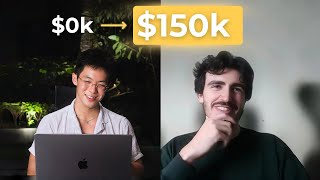
Pablo went from overtrading to landing a $150k funded account after joining The Art Of Crypto Bootcamp. He spent $300-$400 across four funding attempts, learning to backtest rigorously, trade only during focused windows like 10-11am New York, and stick to one quality setup per day. Community reviews and journaling kept him accountable.
Questions this video answers
$150,000
Approximately $300–$400 total (three failed attempts plus the final successful attempt).
Target profit: $9,000 in 8 trading days; maximum drawdown: $5,000.
Chapters
Now that you've gotten funded to 150k on an internal level, do you feel like now that you've got to this level, are you confident that you can do this again?
I'm starting to visualize myself as a trader in the coming months. 300 or 400 in total invested in this before I actually got the 150. So yeah, now let's not blow it up. Let's get away from that.
When you first heard about Boot Camp, was there anything that you immediately felt like you were skeptical about?
I didn't really know what many people you were working with, so I don't know if it was going to be like actual one on one sessions. So I didn't want it to be just like this regular course where you just get endless content and everyone just trying to sell themselves. Like, to be honest, by the moment, I enjoyed. I was still a bit skeptical as to. Okay, what's it going to actually be like?
Yo, what's up, man? It's good to see you.
Yeah, yeah.
Anyways, yeah, so, yeah, this is just going to be a, like, I don't want to say it's an interview, but it's.
It's.
We usually do this with people that have, you know, gotten really good results. And out of so many, like, bootcamp students that we've had the pleasure of coaching so far, like from day one, you were like one of the most consistent. Like, not only were you putting in the hard work, but you also, you got results pretty quick. And it could have been a combination of a few things, but in general, like, I just like to do this just to help, like any others who, you know, may be struggling.
I'm happy to be an example. Cool, man.
Cool, cool, cool. So, yeah, I'm just gonna get into it again. Don't treat this like some scripted interview or whatever. It's just we're gonna have a little conversation, that's all. So, yeah, I'd like to get a bit of a background from you. Your name's Pablo. Just wondering, like, before joining Bootcamp, like, what were you doing as a job?
Well, I'm still at that job, but the goal is to go into full time trading.
Yeah.
And I feel more comfortable saying that as a true owner and in engineering as my background. Then I started working first in tech consulting, then in strategy consulting. So I've been very heavily focused into data, especially at the early parts of my career and on my studying years. A few years ago with the. The last bitcoin cycle, actually, like when we were Already on the way down, I started to bidding. So I was doing things, I was creating money from that. Not really with a plan in mind, just seeing the number go up. Didn't. Didn't know when to exit at the right time. So instead of doing the structure before I realized through trial and error, started this year trying to trade a bit back into different topics. And so I actually found out your channel. So I followed it for a while and seeing the results, I think that that could be like something that makes sense to me, this scenario by thinking you go in with a plan, but you adapt to what the market's giving you to. What are they? Not what you expect, which is something that. It's a lesson that needs to be learned. Yeah.
Do you remember one of the things?
Yes, I saw the results, wanted to have the same thing for myself. That was pretty much it.
But remember those were I think early on in one of the first weeks when we asked how long had you been following me? I think you only. You're only following me for like two weeks, right?
Yeah, I mean it was. I had been watching every video for like two, three weeks or so and. And actually that was, I believe that also part of the positions or interactions. But yeah, after two or three weeks or so they were good weeks, but both in sense of not everything being a tradable day, but also as to realize when to take a step back and not trade on those days. So I saw the ideas were playing out. I was missing that part of some of the concepts and, and the actual execution of it. So yeah, I was convinced. I saw them there were still a few spots available and also was nearing like the time I was going to be up for holiday. So I jumped in and, and went for it. And so far I haven't regretted the decision the least.
Sigma. That was amazing to hear, dude. Of just curiosity, like before you. When you first heard about Bootcamp, was there anything that was. That you immediately felt like you were skeptical about or were you just. Yeah, sounds good. Let's go in.
Yeah, when you hear Bootcamp, you know it's going to be a bit intensive. I didn't really know what many people you were working with, both in terms of like your team as well as students. So I don't know if it was going to be like actual one on one sessions or like there was going to be support behind it. So I didn't want it to be just like this regular course where you just get hours and hours of content, senseless content and everyone just trying to Sell themselves. Like, look at how I do these things. I'm so good at this, I'm so good at this. But you do not get the actual juice. So I had a session with Rich and I mean he clarified some of these questions and topics and yet to be honest, by the moment I enjoyed. I was still a bit skeptical as to okay, what's it going to actually be like when I'm in the group chats. And then I saw that it was like just a cool team of guys sharing their doubt, awesome questions on how they view the market. So I was like, okay, this is going to be more of a community, meaning I'm not going to be just left alone on this. And I saw like the questions out. Some people actually reached out to me from the very beginning. So yeah, I think I fit right in.
Yeah, there's people like the community guys, right?
Yeah. The structure I liked as well, meaning in the beginning so you get some content but you also have like these sessions where you can start asking questions. And I actually see like the new guys joining in now and I feel I identify myself a lot in them in a sense of, okay, I know the type of questions they're asking. I mean module X, like where you're, oh, on the daily bias, I'm getting a 60, 70 win rate. And you're like, okay, yeah, I was that guy as well. I remember sharing those screenshots in the accountability. Yeah, I remember as well.
Yeah.
And now that becomes more of second nature. So every time you go into the next step or next phase, you don't look back at it often. But since there are new students joining in, I actually get to see that process again from this point of view.
Nice. Have you been answering the questions?
I've been answering some have some of my own as well. I mean, you know, I've joined this like two months ago. I cannot say I'm veteran now. I may be a better end compared to some of the guys, but still this is a work in progress. So it's good to see like the different points of view and then the actual answer in some of these cases, which is either Sid or you, that puts moderate. But yeah, you can tell some guys like Nas and Simon that have been doing this for a while. So it's really the dynamic to see everyone involved and it's so many different backgrounds and I even was planning on having a one on one session with one of the guys as well. Yeah, it's a live trade. So yeah, with all one of the guys that are joining at the same time. So, yeah, so far, I mean, I felt supported. I think it's a really good environment to grow in, especially the key part of it. I think there's good content and good work team behind it that actually make this look like it can be a very profitable adventure. Which is, I believe one of the reasons why we all join, if not be reason.
Yeah. So definitely not the big group chat with zero support and hours and hours of content. Nothing like that.
Yeah, you can see that, like answering like the most trivial questions or someone placing in questions that you had never thought of. So yeah, it's a good community feeling and you guys are really involved. So that's something that we truly appreciate, at least that the guys have spoken to us. Right.
That's awesome. Yeah, we'll continue to keep it up.
Yeah. Now the goal is to scale this and I'll continue asking things, but hopefully my next questions are more in the sense of how can I make this even bigger?
Yeah. And you're already asking it.
I'm already starting to ask those because it's. I know. And that's also been one of my areas of improvement or something that I can recommend to the next guys coming down is the market's going to always be there. No need to rush every single step of it. Especially on an intraday basis. You pretty much get at least one opportunity per day. So in this case it's get to a stage, settle there, repeat as much as you need, then move on to the next stage. I believe that could have accelerated my process even a bit more. Especially like go backtest as I passed to the next phase. I know I should have back tested a bit more after that stage, but trial and error again, so. So is that a I either win money or learn a lesson? So far that's the, that's the approach I'm taking. So.
So if you would, to someone who's already in boot camp, like someone who's still a little bit behind you, you would tell them to back test a bit more and take the live trading a bit slower.
Yeah, I think, I mean live testing is also a good lesson, but back testing, I think it is where you get more confident in what you're doing. And when you translate that to actual like live trading, just make sure that you're not at all times standing in front of the chart because you're going to end up seeing ghosts. And you see, okay, now it's bearish. Now it's worth this. Now it's bearish. So you end up taking Senseless traits. It's better to take those senseless traits in back testing that in doing. Yeah, black testing. That's the greatest lesson that I've learned.
100%. Yeah, that's a nice way to put it. Actually, I'm going to steal that. You get a chart too much, you start seeing those really good.
Yeah, yeah, yeah, that's something. And even this week that happened to me as well. One of the guys was sharing, I mean today and I felt really identified, like, okay, yeah, that's exactly what happened yesterday. Let's move on. Let's forget yesterday and let's look for an opportunity today. You get a new chance every day or every week. So this is the long term, is to be profitable in the long term, to reserve your capital, mental capital, as you always say. So yeah, I think that's something that I still need to improve on, but I think I'm getting better at for sure than a month ago or so.
So right now you're funded for like what, 150, right?
Yeah.
How long did you spend on that account to pass it?
I think I had three failed ones plus another one. So since I got at this account, I believe it was like 300 or 400 in total invested in this before I actually got the 150. So yeah, now let's not blow it up. Let's get away from that trading threshold. But yeah, so far I think, I think it's paid off. The investment in that and then the conf.
Good to hear, man. Just circle back for a bit. Like just going back to. At the start, before you joined Bootcamp, you mentioned that you started coming into the markets when it was like back in the 2021 Bull Run when it was starting to come down. Prior to that, like were you doing any other, like, were you already actively trading or were you like kind of not really.
Rather than trading, it was more, more investing. So it was DCA and pretty much that I was not using any, any leverage or anything like that or in most cases I wasn't. So yeah, it was more in terms of long term investment. And as this market started to go back up again and I was seeing some profits, instead of selling at the right time, I held on longer than I should have. So yeah, the key topic there was, okay, I do not want to repeat the same mistakes every four years. I want to learn a skill that is going to be useful for the rest of my life, which I believe it definitely is. So yeah, even if it's for other investments, it's good to know when it makes sense to enter or not like at a larger time frame. It's more things like that that already push me more towards this, towards trading. At the beginning I was thinking of a bit more of a side hustle. Always in the look of for something but an actual skill that could help with the management of money and investments in a sense. Now I'm starting to visualize myself as a trader in the coming months. Still need to finish some things off. Need to make sure that this is not that one week, two weeks thing, but this is something that I can stay consistent at for months at a time. So yeah, I want to do things right. As I was saying, testing it's better to do it if you have a safe safety net. In this case, my job at the time. But if I see this going at the pace and I'd like to for sure I'll go for it and enjoy the freedoms that come. That can come with it.
Would you say the stuff you learned as part of Boot camp has allowed you to think that you can be a better investor in. You mentioned the stuff you learned has allowed you to enter better from the higher time frame.
Yeah, yeah, for sure. I mean I think what drew me to this at first was you were showing videos of an intraday perspective based that I thought, okay, I can do this on a regular basis if my fits with just more capital. But also like once you go in, you see the different time frames, you see that seed, it's more specialized on swift trading. So yeah that for investment as a whole, it gives you a bit in. You know, you always. If you want to invest in something in the long term, it's best to also know the. The fundamentals of it. But having the technical aspect to see good entry points and things like that, I think that's always going to be super helpful to squeeze that extra percent that always is adds up in the long term. So. So yeah.
All right then. Now we just fast forward a little bit when you. So back then before you joined, when you first heard about Bootcamp, the thing you were skeptical about was like, oh, is this just going to be another course? And then you're just going to be one of multiple hundred people, you know, going to get the support. So we've already kind of addressed that. I'm just curious like at the time, even though you were skeptical of it, what was the thing that made you decide to go ahead with Bootcamp anyways? Like, was it just seeing my content or was there like a specific. Anything I'm Just curious.
I mean I already had like my following the videos and the thought process and things like that. It's something that I could get myself into, meaning to better understand. So one of the key problems that I was having before all this, as I didn't know what I would need to know, it was harder to filter out what were the, the good videos, the good creators, things like that. Yeah, but the way you explain it and the consistency, you were not boasting like this is how I make 10k a day. So like so some of these eye catching videos, it was more like, okay, this is how I see this for today, tomorrow it can be a different thing. And just remember that these are. We trade what we get, we don't trade what we expect. So these are the different scenarios. So yeah, I like the thought process behind it. When I called Rich, I liked the way that he was presenting it as well. So yeah, I think that was the big topic behind it, your videos as well as what were the system that was behind it. Knowing that it was smart money, concepts and ict, which I had heard plenty of times but I was lacking that structure to understand. Okay, let's go from this topic to this topic. It's not big. So yeah, I mean if you want the short answer, it was here for videos for sure.
Dude, that's so interesting that you like listening to you explain it that way. I was even considering like we were having a discussion with the team and I was like, guys, hear me out. I think I'm not getting as many views because I'm a bit too like rational or like it's a bit too logical. You know, it's not exciting to hear, oh there's these scenarios this could happen, but that could happen. You know, people just want to know, Bitcoin's going to go to 150,000 like to hear you kind of validate like that was the reason why you ended up joining. I guess I'll, I guess I'll just keep doing that approach.
For me for sure. For me it's, I like the thought process, I do not want to be in it where I see a community where no one's questioning what they're saying. Where in a video he says it's going up and the next one I told you it's going down, down. So I do not like those kind of videos like people about what they do. I like video kept a similar approach every single day that it was something that it was replicable and for me that I'm more on the analytical side. It was perfect for me. So yeah, I think that definitely I. To be honest, I don't remember how I got to your first video, but once I saw that one, I was like, okay, I like the thought process. I will continue doing this on a daily basis. So.
Yeah, that's really good to know, man. And if you can like remember back in your early days inside boot camp, let's say the one, let's say the first couple of weeks, do you remember anything that really surprised you about like the whole experience?
Yeah, I, I remember one of the topics that you had mentioned it also in a video as well. But when I was asked what would be a short term win, like a quick win for me, to be honest, I didn't really know what to put there. So I was like, I don't know, maybe 5k in the first few months or three consecutive trades like that I see as positive. So I didn't even know what to put as as real target. And then in one of your comments or videos you were saying, okay, with 300 to 500, if you get a 10 hour per month, which is not something unrealistic, you can be at 30k a month. So I was like, okay, those are definitely numbers that I was not even considering before or have that pulled me in. Also when I started watching the content, it was the same thing. I was seeing that the pieces start to make more sense and that I was getting better at filtering out what content in elsewhere in other formats, YouTube and other places really made sense to me. So it was not just, okay, this is the video or the contents that they're giving me, but I can also filter out. I'd start off from here what actually is going to be beneficial for me. So that was already a big step forward.
So you're saying like the content inside Bootcamp helped you to have a better filter when you were like on YouTube. Interesting.
Yeah, for sure. Yeah. And knowing what content resonates better, which ones make more sense. So it's not like just treat this one candle a day with all these type of videos.
Yeah, that's funny. That's always the thing that gets the beginners though.
Yeah, yeah, for sure. And I was at that stage where I saw some of them and they were contradictory and one made sense, one didn't. They were boasting about big numbers. But I was like, okay, I don't think this is, I don't think this is it for me. And not only your videos, but the ones that I also follow are on logical sense. And that approach Similar, like the T trades, A trades, things like that. I like that type of content as well. I like the. Let's not overcomplicate this. We just want high quality setups and what makes a high quality setup, and this is it.
So just on that note, so obviously, like, when you hear ict, when you hear smart money concepts, first thing that comes to mind, at least for me, is that it's incredibly long. There's a lot of love to go through and there's a lot of, like, very contradictory opinions as well. Regarding the topic. Was Bootcamp able to kind of like simplify things and allow you to understand things clearly, or was it? Yeah. Did it manage to do that?
Yeah, yeah, it definitely did. And I think the way is presented. So you can start from a Someone that has no clue about any of these concepts or. Well, no clue. I wouldn't say anyone with no clue. That's the target. But at least someone that's interested in topic. Yeah, we don't. You make sense one step at a time. Yeah, we make sense. You make sense through it one step, one step at a time. Meaning, okay, this is market structure. This is what AMD is. This is where draw on liquidity. This is the power 3. So concepts that if you get them one by one, they start to make sense as a whole. And I do think the way that it's presented, I know, like, as you were saying, this is a topic that some people may discuss in a different way or have some different opinions. Well, as you say, the proof is in the pudding. So I don't care if it can be done in a better way. If I get X percent win rate and consistency and I feel comfortable with what I'm doing, for me, it's good enough and always I'll thrive on improvement, on improving. But for sure, it's better to know you need to or you can improve when you're doing at least something that keeps you at a profitable stage or not losing money.
All right, so basically, info aside, you don't really care how it's presented. What's most important is that the concepts and the videos itself has allowed you to start making money, like asap.
I mean, that's a positive thing for sure. The biggest thing is that it made sense of thinking for me. So it's not, I make money because you make money. It's not like a copy trade or anything like that. It's because you start. Okay, so when I make money, it makes sense to me. Meaning, okay, I took this trade that for me was reasonable Same thing the other way around. When I take senseless trades, if I review them afterwards, I'm like, okay, I know that I did this thing wrong. It's not that I was just entering the next thing just for the sake of it. So, yeah, in both scenarios, I think you learn more through the mistakes. At least I can recon what's the error behind them. Meaning before I could fail a trade and not really know, what was the reasoning behind it. Okay, why does this work on this scenario? I need to test it on this one. So, yeah, I'm not saying it's imperfect. I'm steadily. It's an improving game, but for sure, more confident in the thought process and everything.
Cool. That's really good to know. And so that was like, more. It was, you know, the first couple of weeks. But as you continue moving through bootcamp, what would you say is like, the one thing that has helped you just get the biggest results? If there's one thing that was the most valuable.
Yeah. I think backtesting is one. I think backtesting is something that you need to get in the reps. That's for sure, one of them. And then the second one, which is a big part of it, is the psychological aspect, meaning you always want to rush into things and okay, what's. Then I want to know this concept before this next big move happens. But then you start realizing there's always going to be a big move up or down, and on an intraday basis, you don't care if it's. It does not need to be like a 10, 20% move of price. You start realizing that you get opportunities every single day. So it's best to not waste your capital, both mental and physical. And no action can be. Can be the best action in most cases. So, yeah, the psychology of it is something that I know is going to be something that continually needs to be worked on, but I just wanted to make it second nature. So.
Yeah, Nice. Yeah, definitely. Remember there was. When you, I think after you felt your first funding challenge, you're like, I think one of the key topics we were discussing was like, over trading and how you needed to dial back. What was our curiosity? Just what would. So everyone struggles with over trading, at least almost everyone I know. Like, tactically speaking, like, how did you manage to overcome that? So obviously you talked about psychology already, but in terms of like ms, you did.
So I think for starters, I, I, I tried to limit my, my training into a specific time frame in the day that was best suited for that asset. So instead of spending time and time. The more I spend on the chart, the more I'm going to be looking and seeing those goals and seeing like entering on unnecessary trades. So there. There's two aspects of it for me. First one is I limited myself to that silver bullet to 10 to 11 New York time for the indexes. And also only if this criteria is met, I will enter. And even if I fail, I fail once, I will not go for a second. So I later by little, that was my intention. So, okay, let's look for one quality setup trade per day. And then from that, once you get the confidence on. On that one, I. I may start including other topics or. Or other assets. I want to be focused on that. And also it's what I can do best now as I have a lot of work at the moment. But yeah, I believe it was not always intentional, but I think it's helped me stay away from the charts and really focus on that quality setup once a day.
Dude, it's so interesting to know as well, because I always tell people.
One.
Of the biggest Blessings or like one really, like doing boot camp and doing YouTube, like actually teaching people how to do this. Like, me spending my time on this has helped me trade better because a, I pretty much come check the charts for like, in a very specific time window, and I don't spend too much time on it, which ironically allows me to. Yeah, I know exactly what I'm looking for. If it's there, I take it. If it's not, I just go back through. I just go back to work. If that makes sense.
Yeah, yeah, for sure. I mean, I think that. That really makes sense. And it was. I think it was right about the time I was joining. But you had the session on maintenance. Thought it was. It was a really positive lesson, but that was not the attention that I had at the time. I had a lot of energy, wanted to spend lots of time in the charts and looking for the best opportunities. In reality, I think that's one of the best ways to start because you limit the time you spend at the charts and as you're saying, you look for quality setups. Agree. Being busy is helpful for me.
Okay, that's good to know. Outside of the things that you did that ultimately gave you the breakthrough, if you would say as you went through bootcamp, if there was one thing that we did or the program offered in general that you found most valuable or the most helpful, what would that be?
Let me think about that one. I definitely think the backtest review is something that Both for the good that I thought about is good because lets you be the one who you get to the thought process and then it's validated or implemented by someone externally and you actually get the results. So I believe the backtest review to me is the most beneficial topic out of it because you can get the concepts from a lot of different places, but that one is you're actually putting in the reps and they're actually being reviewed or follow up by someone. And also it's very. It's a really dumb thing. But when you are, it's not only the full backtest reviews, the 30 minute sessions or so for individual trades as you need to put them, and they're reviewed in front of more people. You do not want to make senseless traits that are shown up there. So that aspect is like, okay, yes, for sure. Which is also very important that if you make those sense illustrates they need to be showing up in the journal. So you actually get the lesson learned from it. So, yeah, those two aspects, I think are the ones that I've enjoyed the most.
That's good to know, man, because the one thing that we really wanted to do differently and the one thing that at least when we first started bootcamp, my idea was that everyone knows information but nobody's actually reviewing is they're doing it right. So yeah, maybe you watch a video, but did you learn it properly? So what I really wanted to do was just implement like a lot of review into it. Like both in the learning phase, we're in phase one and phase two, the backtest reviews and phase three with the journals. If you make a stupid trade, then you know I'm going to call you out in front of everyone. But if you have a good trade that gets a positive reinforcement.
I mean, I remember like one of the first positive trades, I was like, yeah, we can definitely review this one. But then, so, yeah, let's see how I did as well. So yeah, it works both ways, but it gives you a sense of, okay, yeah, I need to be able to explain my thought process as to how I why or how I took this trade. And if it does not make sense to me explaining it when I'm speaking out loud, it's not going to make sense to anyone else when they're going to review war. So, yeah, I believe that that one super helpful.
Really good to know, man.
Yeah, for sure. I mean, that's really the most differential aspect of bootcamp is the support. Not only, as I was saying, like in terms of the group where it's not like one of a thousand people there, but the actual that actual help 101 knowing that we are all in different parts of the world. So it's not like you need to be at that specific time. You work when you can and then someone will hold it back and let you know what you've done well or haven't.
Really good to know, man. We'll continue to keep that up. And if there was. Well, I think we've probably already touched on this, but if there was one thing that you were doing that really like held you back and if it was like one thing that you would really do differently, you were to start over again. I think you mentioned it already, but it was probably like overtrading and like not back testing enough, right?
Yeah, yeah. I think those are two key aspects. So I think it's the best thing is spend the right time at each, at each stage. Meaning do not rush through it. Do not go into the next one until you're comfortable with one. So or @ least overlap them. So if you're going to start live testing, do back testing as well because that's always going to be helpful. Those are the actual like multiple rips that you can get. So yeah, I believe those two aspects are, are the key ones for me. So spending more time where it matters, which is actually back testing. Spending less time where you can cloud your thought process, which is the charts.
Awesome. Well said, man. And now that you've gotten funded, they'll know the numbers. It's 150k in the future, in the near future, hoping it's going to be much more. But on an internal level, do you feel a lot more confident as a trader? Do you feel like you've got to this level? Are you confident that you can do this again? Like get funded again? Just scale?
Yeah. I mean I believe when things really click where like after failing a few times where I was trying to replicate the fail quick or past week, I realized, okay, I'm going to do this one differently. So I changed the way I was approaching risk because of the limitation of that funding account. So I started doing things in a more consistent way. Okay. As I got funded, I just continued that trend. So I believe that's going to be the thing for me. It's do not over complicate it, do not over trade, continue on working. Because it's always good to have more tricks up your back. But I definitely feel like if I've done this with X amount, I can do it again. It's just a Matter of putting in the same time and thought process. The scaling now is more. I believe the first funding challenge is the one where you. The toughest, where you will spend more time. Yeah, mentally as well. After all that scaling up, it's also going to merely like that barrier has already been lifted. It's just to replicate the same process.
It's a nerve like when you say earlier that okay, initially you were just are you either pass fast or you fail fast one. What do you do differently? Like specifically with your recent funding challenge step kind of allowed you to make the breakthrough.
So this funding challenge was for 150k. You had a target of 9k in 8 days of trading and a max dropdown of 5k. So what I was happening sometimes is as I was risking a bigger percentage of it, they draw them. So if I had a trade that started on the positive direction and then ended up failing, the drawdown impact was bigger on it. So in those cases what I started doing is instead of just trying to get two or three big moves, I'm going to be consistent, make something that will not risk the full account. And as I'm getting further away, away from that drawdown limit, I can be a bit more creative and and invest a bit more percentage. So I believe it was more of a. Okay, take a step back. Do this one step at a time. Do not focus on like what's the full end target. Let's focus on what can I do today to be closer to that target. So got you.
It's a, it's a really good lesson.
Yeah, it's, it's a lesson that I'm sure you've had in the, in the past and more people have had it. But until you actually live it, it's, it's always easy because you, you all this topics, all the psychology of it. I know you guys have already discuss it many of times, but until you actually go through those feelings and those motions and the actual stage is when you start realizing, okay, it's not as easy to start trading if you, if you're not fully confident on this or if you're doubting yourself or whatever. So I see some guys that have had to take a step back in the group chat and then join back again. Said thank you. So instead of publicly stating everything, I took a step back from the group chats as well. I was reading things but I was trying to, to do my thing for a while. As I got the roof I, I started to join back again and say okay, yeah, I believe that was that Was helpful for me at the time.
Yeah, it's. It's funny because I think I just posted a tweet just now. Like, I posted this multiple times, actually, which is usually your desire to make quick money is ironically, that thing. That desire is going to prevent you from making the big money. I think if you just also hit the nail on the head, it doesn't really kick until you go through it and then you realize it like, ah, okay, so steady wins the race.
Yeah, yeah, for sure. I mean, and that's the process that I tend to have, because on days when I have a winning trade, you can say, okay, I'm done for the day. I've had this winning trick. I'm already in the profit that I was expecting. I don't need to. To look for additional goats in this chart. While on the days that you actually fail on your first trade, you start revenge trading. You start over trading. Okay, I. I'm going to at least get back to break even. And then the losses, I came from late, so. Yeah, it's exactly that. It's trying to make money quick or to regain back what you've lost is what. Usually instead of going or working on that, good thing the other way around. Yeah.
Yeah, makes sense. So you've only joined bootcamp, like, a pretty short amount of time. I think it's only been, like, two, three months. If there was someone that is, you know, kind of sitting on the fence or in the same position as you, like three months ago, and you know they're thinking about boot camp, what would you say to them?
What I would say is enjoy the process. I mean, take this one step at a time. The market's always going to be there, so you do not need to rush because the bull market is coming to an end. If you're looking on an intraday basis, every single day is going to present an opportunity. So if you try to go too fast through these things, you may pass that at first, but then you'll start seeing the gaps that have accumulated. So it's good to take the proper time at each stage, make sure that all the concepts or the emotions, everything are, like, in check instead of rushing through things.
Got you. And so I guess. Last question. If there is someone that is on the fence, you know, they're thinking about joining boot camp, they're hesitating. What would you say to them? Would you recommend it?
Yeah, I for sure recommend it. I'm saying if you are committed to learn things in a logical manner and you're not here just for the short term. But you want to learn something that is good for you in the long run and that it the goal is to be consistent, not just one time success. I think this is it. So we're not going for the one off big booms. 10 hours, 20 hours. It's better to learn something that you can do consistently rather than something that feels like luck. If I get that really hard, I will complain, but I wouldn't take it. Yeah, but you're probably.
No, that's. That's good to know, man. You've really matured a lot since the first day that you've rem. Really good to see me.
This is just the start for sure. I mean now it's a matter of I've already done it once it's permits of I can do this consistently and that's it. That's the key topic for me. If I can make it consistently then scaling it. It's just a matter of a different number that is showing up in the charts.
Yeah, it's going to be too much more to it. Yeah. Synchro is just different numbers. Bigger numbers.
Yeah. Hopefully that's the case.
Yeah. How do happen, man? Don't have beliefs.
Yeah, yeah, yeah, for sure. I mean it's going to happen eventually. Again, I do not need threshold risk things. And the same way that sometimes when you have too many, like a few consecutive successful trades, you. You are at the top of the mountain and then you have a few losses, you are at the bottom of the mountain. I think it's more of a. I'm going to be always at the same spot and going to. Yeah, just a number, different numbers. So let's take over.
Nice. All right, man. Dude, thanks so much for taking the time to hop on and no worries at all.
I mean, happy to have this call. It means that I'm at a good stage.
So.
Positive and it's the opportunity. I do not always get the chance to discuss some of these topics with the real life people that I have around because they do not yet to experience some of these things. So yeah, it's good to discuss it with someone has gone through it. Pend your pens. Right.
Have a good day. Yeah, see you. I'll see you.
Yeah, you too. Have a good night in your case. But yeah, I'll see you around. Ciao. Ciao.










