how he's making a full-time living from trading while working as a PhD scientist
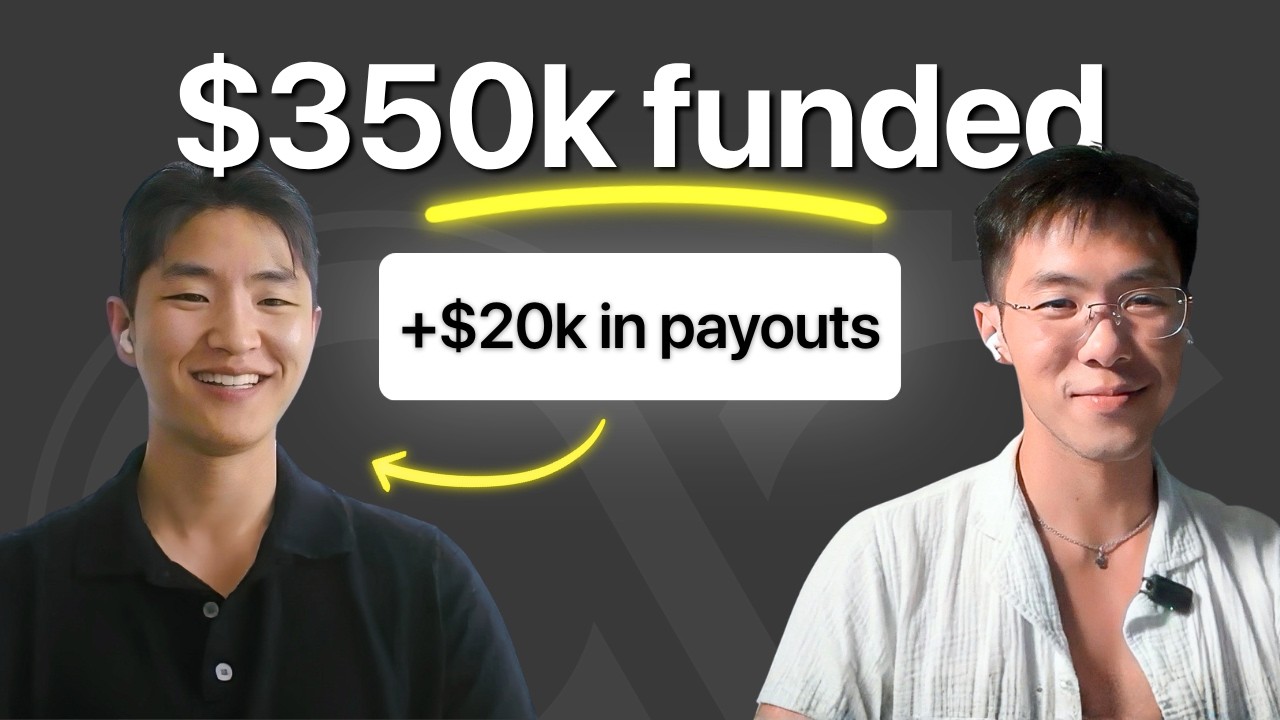
Gyeongwon, a 33-year-old neuroscience PhD and postdoc, trades full-time alongside his research job. He started after seeing crypto hype, now manages about $200K funded with $18-20K monthly payouts, and credits the AOC Blueprint program's structured strategy and clear teaching for his foundation. He stresses risk management, journaling, and sticking to one strategy for months to build real data.
Chapters
The man you're about to meet is a PhD graduate scientist who's pulled so far around $20,000 in payouts with around $200,000 in total funding, also working for Maul, which are great numbers because it doesn't really quite matter how much funding you have if you don't end up actually getting payouts, which he has clearly done. But the more amazing part about his story is that he actually started this whole trading journey while studying for a PhD and is now a fully fledged scientist. And I have a theory about why people like him win. And no, it's got nothing to do with being smart. If anything, being smart nearly cost him everything. So let's get into it. Just to kick things off, can you tell me about what you do and how does your average day kind of look like or like consist of?
Yeah, well, first of all, thank you for having me. I'm happy to be here. Happy to talk to you, Shwen, personally. Or like one-on-one personally. Yeah, so I started trading when I was still a PhD student. So I'm a scientist by training and I've walked through the scientific career, like doing my bachelor's and master's all in this field. So I was doing my PhD in molecular biology and neuroscience. And yeah, so I was a hardworking PhD student. And, you know, I'm not sure if everybody's aware of it, but the path of a PhD student and a scientist, it looks glamorous, maybe on movies and like people flexing with some kind of gene therapy and all that. But in reality, for most of the part, that's not the case. Like there's not a lot of money in science, especially in academia. And I was a, like I said, I was a PhD student. And with PhD student, you don't, you really don't, you don't make a lot of money, not at all. It just, it just reaches the bare minimum of surviving, which is fine for the period of being a PhD student. But like looking at long term, I want to pursue the dream of becoming a scientist and make a change and, you know, work on research and all of that. But there is a chance that I might end up in a situation where I still don't make a lot of money, which is not the primary focus of my career and my life. But still, it gives you a certain type of freedom that I enjoy a lot. So that's why I was brainstorming and thinking about, oh, what can I do to build up something where I can do the stuff that I love, which is science and research, without having the pressure of feeding my family, taking care of my family, and all of that. And that's where I came across from trading, because sort of you can have your own schedule, sort of you can make a living with a little bit of time, sort of you can choose when to look or when to work and when to trade. And yeah, that's why I got interested. I saw some YouTube videos and that's how I met you.
Sick, man. I'm just guessing, like, I'm sure there was probably a moment where you were looking at your professors that were kind of like 20 years ahead of you. Like they're brilliant people by all means, but was this like, probably there was just something about the fact that they haven't quite figured out the financial situation that got you thinking like, maybe I need a backup plan. Is that how it started?
Yes. But to be fair, the professors here, they make a pretty good living, but to get to the path takes ages. And it's just not ages in terms of that the Tongues takes a long time. But it takes a certain amount of soul from you. You can see the people onto that path, and there's a reason why there is a stereotype of scientists, you know, this nerdy looking people always having the same shirt on, like messy hair and that, because it is, it is literally that. You have to do that, you have to hustle and you have to grind. But when I imagine myself how my life was going, even though I have a love and passion for research and science, but I could not envision myself myself going through that path and like in that kind of condition. And that's what I thought, okay, in an ideal world, I would do what I love, I would do my research, but then I have some financial freedom, which doesn't solve anything, everything, but it solves a certain part of it. And I can still enjoy my life going on like nice vacations, going, I don't know, going to sometimes to fancy dinners with my girlfriend or with my family or stuff like this. Where I couldn't do with a basic, I would say, with a basic salary of a PhD student, a PhD graduate, or after that, a postdoc.
Got you. Now you touched on something that was, that I found quite interesting, because a lot of the people who end up coming into trading, they're trying to usually escape kind of like their job. Perhaps they've been working at corporate for like 20, 30 years, or maybe they just don't want that life anymore. And that's why they kind of chose trading. But for you, you actually love research and you love what you do. And so I think you're one of the rare cases where you are getting into trading as a way to just allow yourself to enjoy more of what you're doing. Is that the right way to put it? Exactly.
But that's like, you know, that was perfect. And this is also, and we probably come to that later, this is also that like reduce the pressure on your trading journey. Like, I'm not going to say a trading career because, like I said, I have a career. But the amount of pressure that you put on yourself because you see this as a potential career path and a potential, like you said, escape from the thing that you have been going, that internal pressure is huge. And as you know, trading pressure psychology is like 70% of what's happening.. And that was to a certain amount, to a significant amount, was not the case for me.
Got you. This also has a side question, because as someone who basically had zero background, like I would not put PhD student and trading side by side in a million years. Like how did you actually come to decide like trading was the path for you?
So yeah, like you said, it's not something that you, like PhD and trading, it's not something that you usually say in the same sentence. I agree. And also when I talk with my years and they hear something about trading, like they look at me pretty weirdly because, you know, finance and science are like complete two different— it's like different universe, different worlds, right? You know, I think the, um, the core of it was I was just bullshitting around with my friend. Like, I have a very close— my best friend, he's also a scientist, and we're just sitting on the couch and just bullshitting around talking about finances and all about that. And that was actually at the last peak of the bull run that was happening with crypto. Not the current small one, but the— I think that was like 2021 or something. Yes. Where, you know, fucking, I don't remember. I think it was the Shiba Inu coin where you remember that? The Dogecoin areas where, you know, I saw on Twitter that people, oh, if you would have invested $1,000 here, 2 months later, you would be like a will be a billionaire by that. And this is something that just popped up on like YouTube channels and Twitter. And obviously we knew, okay, this is sort of retarded. And however, there is a serious part behind it, not the coin thing, but that there's a serious part behind it where also big constitutions are actually taking advantage of it. And that's where we thought about, oh, you know, trading is something serious, not like some, you know, gambling on some coins, but actual trading where people, you know, this is what the big banks are doing, right? And this can also be, you know, boiled down to individuals. I was like, okay, you know what? I know this sounds stupid. I was like, okay, we are like, you know, fairly smart people. Trading has something to do with analysis and reading patterns and questioning stuff. So how about we give it a shot? And that's basically how we got into it. Well, I got in.
Got you. How's your friend doing? Is he— did he also start investing?
No, he dropped off. He's like, no, that's not the way, that's gambling. All the people are scammers. And, you know, this is— he dropped off.
Speaking about, like, just to speak about scammers real quick, one of the— like you mentioned it yourself, you would think that you're a pretty smart person and you're pretty good at doing analysis, which I agree on. That's kind of like what you do for work, which is to kind of filter out the noise from, you know, all the research papers so that you can kind of get to the truth. I remember like you said that you felt like the majority of trading content was just really noisy, and that was like, I think, how you described it, noisy. So I'm curious, like, what brought kind of like— what would you consider as noise in trading content, and how do you filter? Yeah.
Yes, um, that is a— that is for me one of the most crucial parts in trading up until now. And from my experience, is it is— there's so much noise out there, especially considering the current situation where we have social media, we have Twitter, we have YouTube, now we have Instagram, now we have TikTok. Like, basically everybody's a trader and they're throwing so much at you with such promising titles or such catchy, like, screenshots or like whatever, where you think like, oh, everybody can become a millionaire, everybody can make $10K a month. And then they show like in a snippet within like, you know, in the frame of like an Instagram Short or something like 25, 30 seconds. Oh yeah, you see this setup? Oh, this is that happening. You have a break of structure there, you have a liquidity there, you enter here and then boom, boom, boom, boom, boom. Like, you know, like in this FX Replay or in this replay mode from TradingView, right? And then you say, oh, it makes all sense, right? It makes all sense. It was so clear. There's a clear structure behind it, but that is not the case. And I feel like 95 to maybe, maybe even higher percent of what I see on Twitter, YouTube, and Instagram is noise. And to answer your question about how to filter it, I don't, I don't really have an answer to it, to be honest. I don't know how to do it. I know, or I am fortunate that In my case, I have found a few people who are legit and I'm sticking to them and I'm not interested at all to get more resources. I'm not looking at the new guy who popped up, the new guy who did this, the guy who made $10 million, or the guy— I don't care about that. I have a certain set of people that I trust where I know, okay, this is legit and I can sort of follow what they're doing, but all the rest, I'm not interested. I just like, for example, on my Instagram, obviously, as I am like in this trading field, sort of as a suggestion on my algorithm, I get like every time a new fucking influencer who's like chilling in Dubai on his yacht and is, you know, sipping margaritas and say, hey, look, I made $10K. I don't care. I just, I just, you know, skip, skip, skip, skip. But then, for example, if you post something, okay, then I'm going to read it. Because I know, I know you. There's another guy I like, oh, what he's posting, okay, I'm gonna read it, I'm gonna listen to it. The rest, I just swap, swipe, swipe, swipe, swipe, I don't care.
Fair enough. Then I guess instead of asking the question of like, how do you filter through the noise? Maybe a better question is like, what drawn you to like the content that I was making or the way that I was making? Like, was there anything specific that kind of made you decide like the content I was posting was legit?
Yes, back in the day with my friend when we were looking at, you know, some YouTube videos, and it was like way back then, like I said, it was like 2021. We were looking at videos and I saw one of your videos and it was A, before your face reveal.
Yeah, that's OG, man.
Before I figured out you're an Asian and not a British guy, by the way, thank you very much. Before you got into this trading concept, because the first video actually that I saw was you still trading EMAs. I think there was this one video where you had like also a pretty good amount of views where you were thinking about, you know, 50 EMA, 20 EMA, and the crossing and all of that. And that's the first, one of the first videos that I watched. And it's not that I really like the content of it. I like the way how you presented it, how you were transferring. There was something that I was drawn into that. And, um, I liked how you presented, how you were setting up. The flow was super smooth and everything, where some people who are not so natural in like speaking and stuff, they are like super jumpy and it's hard for me to follow. But you made it in a way where it was easier to follow, it was easy to focus, it was easy to listen to. And, um, yeah, and that's why, okay, when this dude puts another video out, I'm gonna watch it. I'm gonna watch it, I'm gonna watch it. And that's how accumulated it to a certain degree where I was like, okay, you know what, let me get a little bit more into AOC. And that's how I started.
Cool. So yeah, just to bring it back for a moment, you know, we touched on just now that, you know, you actually do love your work and trading isn't about escaping the job. It was just more about like funding the work. So just out of curiosity before I move on, And I've been meaning to ask this since just now, but assuming that if you solved money, like if money wasn't an issue, like what would you want to work on?
Currently, you mean? Like in general?
Yeah, yeah, in general. Yeah. Like assume money isn't an issue. Is there anything that you want to pursue?
I think I would just do the same that I'm doing right now. So I graduated and I have a PhD and now I'm a postdoc and I'm working on a project and I would just do that. I am actually still doing that. And I think so I would have gotten really deep into myself thinking about if I should continue to do it. If trading would not be there as a support pillar, I would have really made a hard decision of myself because like I said, I'm getting to an age with family, kids, and marriage and all of that, and my parents also getting older. So I would have I'm not sure how I would have decided, but I would have had like a really hard time doing it, um, thinking about it. But currently, um, I am exactly doing that. I would have done my postdoc, I would have tried to continue researching, I would have done— tried to, you know, get into pharmaceutical company where I can work on a certain disease that I was already working on during my PhD and then pursue that dream.
Got you. Yeah, it's great to hear, man. Remind me again, how old are you?
I am 33.
Bro, it's the Korean gene, man. Like, none of you, none of you look your age.
Yeah, I think I get that a lot.
I would have guessed you were like 26 or 27, man.
I wish.
No, no, man.
Getting close to the midlife crisis part. But yeah.
No wonder. When I heard that phrase and you were saying like wife and kids, I was like, I remember Youngwon was like mid-20s, no?
No, no, no, no, no, no.
Just before we kind of move on to the next section where I'm going to ask you like more specific questions as to how you dealt with certain things, just so everyone watching has like a picture, uh, where are you today in terms of like how much you're funded for and the total amount of payouts that you've gotten and if you're working on any other accounts?
Yeah, so currently I'm sitting on, um, $200K funded, um, and the total payout up on till now was 18K or is 18K, a little bit over, but like in the ballpark of 18K. I am currently working on evals and I really hate this, but like yesterday I was that close in passing 3 evals. Yesterday I was hoping that I would just, you know, I would just pass them and I could have for this interview like a bam surprise. I got like a fresh new funded. But then yesterday was a weird day and I lost the trade. So I'm now back to, you know, I'm still gonna pass it. There's no doubt about it. But I really was hoping that I could, you know, present something for this interview. But yeah, I'm working on some evals. And this is also my main priority right now. I mean, sure, getting payout is nice and cool. But I think I'm more focused on passing evals. So I have like a really good foundation to work on.
Got you. No worries, man. For all intents and purposes, I'm still gonna put like 350K funded and then we can just drop the screenshots here later in post. Perfect, perfect. All right. So just to get into some more, just some stuff that's a little bit more specific. One of the things that you, that came across as interesting at the start before you joined our program at the time, I remember one of the things you said was you actually thought you had a good understanding of the basics and that you just needed to build your own strategy, like alone, because there was nobody else that you knew that was kind of like in your situation. Was that kind of like your thought process back in the day?
Exactly. So what happened was that, you know, and maybe something to disclose is that back in 2021 or 2022, something, I think I joined AOC, your Discord group. And I was getting taught there by you and by the other mentors. And then I sort of drafted away, not because the trading was not really working out, because I was extremely busy with my work. So, I mean, at the end, I was a PhD student, right? So I had a lot of deadlines. I was writing on my paper, on my thesis and everything. So I said, okay, you know what, let me just pause that for a second. And that unfortunately prolonged for several months. But then I came back and then I was getting started into trading again. But the core foundation that I learned from you I thought that is the basic that I already knew, and to a certain degree, which still is the case. I mean, the basic, you know, fun, you know, the fundamentals that you taught back then was still valid. And I, I know when people start about trading, I know all the words and I know all the, the theory behind the technique. So that was fine. But then when I got back into trading, I was a little bit up in the air where I knew the foundations, I knew what how I could do it, but it was all over the place. It was all over the place and I didn't know, and I started getting into it. So I used some strategy here and back then, and I had some winning moments, I had some losing moments and all of that. And yeah, and exactly. And that's where I then sort of rejoined, uh, the Yoyo Program again, because I was, to be honest, I was not expecting so much because I thought this is going to be again like a fundamentals basic training, which I think most most of the courses just do, which is, which are out there. And it's, which is fine. But I thought, okay, let me get into it. Maybe there are some details here and there that I can pick up because for me, I had this idea or I was fixed on the thing is that, you know, everybody selling a course is fine. However, I need to find a strategy that works for me. And this is something nobody can do for me unless there's a mentor one-on-one, like, you know, looking over my shoulders 24/7., but you know, there's something about, you know, my schedule, where I live, you know, the technical, my knowledge about the technicals, my, the huge part of psychology, like how do I react to this? How do I react to that? How do I react to this? There is no program out there that will be so specific for me. That was my understanding. So I thought, okay, I have to work on myself to, to get this. And it's not an easy thing to do, to figure something out. For yourself takes a lot of time, takes a lot of losses, takes a lot of failures. But yeah, like I said, when I, um, I thought, okay, maybe if I join your program, there might be a little details that might help me and that makes my, my whole thing pop, and there might be like a click moment. So with that approach, I, I entered this. But then when I saw that you have a different way of now doing it, where you have a strategy that you put out there like a basic you know, like a blueprint, or you call it like a whatever you do. I was then very, very surprised and pleasantly surprised. So I was like, oh shit, there is something that I can build on. Because building something completely from scratch is a different story than something, okay, someone has laid out the foundation, now it's about adding your flavor into it. And that was the case.
Got you. That was an interesting moment that I remember because you said You join Blueprint thinking that, oh yeah, I'm just going to pick up some details, just a couple of missing pieces. And then you realize it was different.
It was different. Yes, absolutely.
And just a hypothetical question here, like assuming that you would have had gone down the route of, you know, trying to figure it out yourself, like would you say like you're different, like your results today would be a lot different from, you know, if you happen to take that other route?
Yes, absolutely. It would have been completely different. I'm pretty sure about that. I am also not certain if I would have kept trading. That is the thing. Because—
Why is that?
Because trading, like I said, I did it as a side hustle. And I had times where I was profitable and I was getting money here and there. Where, like I said, where everything is like super completely scrambled. However, back then, however, the amount of time and mental energy that I had to put in got to a point where it was too much and was affecting my real work, right? Because the, the path of you figuring out on yourself, like I said, has to do with a lot of failures, like a lot of trials, a lot of losses, a lot of this, a lot of that, starting from the beginning, going back to the drawing board and everything, which you can do, which is fine. However, that was like so much draining energy, which is completely different than learning the basics. Learning the basics is fine. I'm used to learn. I'm used to study. That is fine. But then to figure something else where you have to deal with loss every time, it's just like also so draining on your mental health as well. Nobody likes to lose. Nobody likes to lose. And if that has, would have kept going with the addition of maybe failing another challenge, maybe blowing another funded account, like maybe doing this, maybe doing this, I could imagine, or I see it even, even very highly likely that I would have said, okay, you know what? I tried it out, I thought it would work, I thought it could bring me to some financial freedom, but it didn't work. So I'm just gonna have like a clean end here. So yeah, I would really go that extreme.
Got you. And just so like, just to touch on that a little bit more, was there like a stretch or like a moment where like things were not really quite working out and you mentioned again, you know, you have, you're a very busy guy with the whole starting with the PhD thing, and right now you're still doing a lot of research. Was there a moment where you just felt like, ah man, maybe this trading thing feels stupid after all? And if there was a moment like that, what made you keep going?
Yeah, so there was not one moment, there were many moments. There were many moments, and I was super mad, I was pissed about, I said, you know, trading is a scam, Xuan is a scam, AOC is all bullshit, like fuck all this, I just want to get, you know, this is all stupid. There were many moments like this, absolutely. And I think it's natural, like having 3 consecutive losses, 3 consecutive losing days, 3 consecutive losing weeks makes you question things. And I think it's normal. And I think also that's the part where you have to endure. For sure, yes, me, I also had this, had this, um, I had this moments. The reason why then I didn't pull the trigger in like, you know, just, uh, just throwing everything away is I think I told myself that everything big, everything good that comes in your life needs time. Like, I think, I think that was something that I really wanted to stick to my head. And where I always— where I also was thinking about my PhD, I mean, now this comes really philosophical, um, I thought, look, to get to a freaking PhD title I had to work 5 years. I had to work 5 years for a single title. At the end of the day, people are just going to look at my title like, oh, doctor or whatever, oh, something PhD. But to get that, I had to work 5 years. And now you cannot even spend a few weeks, a few months to give this trading a shot to still stick to it. And that's why I was okay, you know what, I will do it. I will keep doing it. I will try it out. I will give another shot. I will give another shot, another shot. I will see it, I will try to refine it, and that's why I stick to it.
Got you. Yeah, it's powerful, man. Because like, I also noticed this with a lot of the, just a lot of students like you who actually make it and build a solid trading career. The information's out there. And also, like in Blueprint, like the roadmaps are kind of already laid out. You just kind of have to follow it. I just see so many people, like they start strong, you know, for like 1 or 2 weeks. And then slowly they disappear. The students that make it, honestly, like if we were to boil it down to like one simple thing, it's like they just decided that, okay, no matter what, I'm gonna, I'm just gonna put in a set amount of work here and regardless of what happens, but I'm just gonna keep going because I trust, like, you know, I want this enough. Was that similar for you?
Exactly. Consistency is key. I mean, I had this for the whole my, like everything in life. Right? You need to have consistency. You want to have a nice body, like a six-pack or like, you know, whatever. It's not, it doesn't come with one month of working out and one month of diet. Like people who are, you're looking at the beach and they have like a six-pack and some nice pecs and whatever, they have worked years on it. So whatever good and, you know, whatever positive and really good for your life comes, it takes time. You need to nurture it. It takes a lot of time. And with everything in your life, everything. And I said, okay, you know what? I'm looking at this in the long run, in the long term, in the bigger picture. So it's going to take time. Will I have, even at this point from now on, will I have losing days, losing streaks, and losing weeks? Absolutely. Will I have maybe come to a point where I'm going to blow all my accounts? Absolutely. I'm not going to say absolutely. I hope not, but this could be absolutely the case.
Hopefully not.
Hopefully not.
Hopefully not. Hopefully not.
But you need to stick to it. You need to be consistent. Consistency is key, everything in life, and maybe even more strongly for trading. Otherwise, you won't survive. It's a rough thing to do.
That's true, man. And, you know, when we talk about consistency, you know, a lot of people struggle with that, like a lot of people, not just in trading, like just in general. And I feel like if there's anyone that would have an excuse, to not be consistent with a side hustle, I think it would be you. So, was there anything that you did that, like, what's your secret sauce? Like, how did you manage to just stay consistent?
I think it was really to seeing all the PhD students graduate to give up their dreams because of financial reasons. I mean, I see a ton, see a ton of PhD students who are super passionate about everything, but then they see the financial aspect of it. And they said, okay, you know what, I can't, I cannot keep doing this. There is no way. And I felt that super depressing, like for your life, you have something, you love to do it, you are passionate about it, you have been building your career on top of it, which is a hard thing to do. Like getting a PhD is no walk in the park, but then to give it up because of your financial reasons, I found it super depressing and extremely sad. And I was at the point, I was getting to that point, right? So I had to figure out, okay, Am I— when I'm 80 or 90 and I'm done with my life and I'm looking back to my life, is this story going to be, oh yeah, I had my passion but I had to give it up, so now I went to the corporate and I'm just looking at, you know, Excel sheets or whatever? Or am I becoming the person who says, you know what, it was a good life, I did what I love to do, I loved it. And there was something where I could not imagine that I would give up on it. And that's why I was so sort of sort of desperately looking for something that it will work, but not to a degree that it will impact my, my actual work. So that balance is like, you know, you can imagine it's a hard balance, but that was the thing. And that's where it made me to, you know, keep consistent. And at one point you will do. And when you reach to that goal and you get the sweet nectar of everything, then you will get to a point you can do whatever you want to do for the next 30, 40 years, you can do your research, you can do the thing, you can change things and not worry about anything else. That was like the driving force.
That's powerful, man. It's powerful. So it's basically just deciding like, yeah, the alternative is not going to be better than this. And yeah, just head down, face forward. Exactly.
That is a smart way to put it. I was just blabbering.
No, no, no. Yours was way more—
That is the smart way to say it. Exactly.
Yeah, no, yours was more powerful, man. And like, I resonate with that a lot. It's just realizing that the alternative sucks and like, kind of like burn the boats, you know, like if you burn the boats, you have no way of, you know, going back, then just focus, just commit. And oftentimes it's that simple, especially when you— I say this in my like marketing when I make YouTube videos and stuff like that. Look, Blueprint's proven, like it's a proven system, right? We've gotten so many people funded, so many people like making a career out of trading. All you have to do is put in the fucking work. That's all. And we still have so many people that just like, yeah, just disappear for whatever reason. They just— we try, believe me, like we try to get them back. Like, man, come on, you know you want this. Do you want this? Right, you want this, right? Just put in the work. Trust me, it'll work. But yeah, at the end of the day, I just realized like, yeah, There was a point where internally in the team, like, we just came to a, like, we now have a motto where we can't want, like, we can't want this more than you want it for yourself. Yeah. So, yeah, that's like the benchmark that we use nowadays.
Yeah, absolutely. I mean, yeah.
Yeah. Got you. So earlier on, one of the things that you were talking about was there were many moments where I actually felt like, you know, maybe this trading thing was not going to work. And I also get this feeling from just because we speak a lot during the Blueprint calls. I think almost every week we have a conversation just on the call. And one of the impressions that I get from you is that you're actually pretty good at dealing with losses. A lot of the times you're very self-aware as to like how you're feeling and also you just have an ability to just kind of stick to the system and trust the system even though you're going through like losing streaks. What would you say is like your— what's your secret sauce to dealing with losses?
Yeah, good question. So I think it also comes from some sort of experience, and I think also that is also the reason why the beginners, they disappear, because experiencing losses is, is something that you really need to get comfortable with. And I don't have a clear answer other than you have to experience as much as possible. Like, it's like in boxing, right? If you're getting a jab on your head, the first time you got a jab, it's got— it fucking hurts. It fucking hurts. But be in the gym 3 months and you're sparring every day there, like one fucking jab, it doesn't, it doesn't hurt you anymore. It's like, okay, fine, that's it. It's like, feels like touches. And I think that is, at least that is the only thing that I have and what I can explain why I am now, I am now a little bit less affected, less affected to losing a trade because I have experienced it so many times. Like, yes. I mean, at the end of the day, when you have like a win rate of 50 to 60% means 50% or 40% you're going to lose. And now calculate that. If you are in trading, I don't know, from several months, you will have hundreds of trades, right? Thousands of trades. And then you will get used to losing. And this is something with a small set of numbers when you trade, this thing you think you would— this will have a huge impact on you, or it will have a huge impact on you. But like, stick to it, stick to it, stick to it, stick to it, and then you won't feel it much anymore. And that is also like why I feel, and that's something that I read, is don't define your trading career based on your wins, but based on your losses, based on how you react to loss. And this sounds like super hippie-like, but I resonated that with a lot. Everybody behaves the same if you have a winning trade. You're super happy, you're imagining yourself driving a new car or whatever. That is fine. You can have that. You can have that dopamine moment. But how you react to a losing trade Tells everything about your, your strategy, or not strategy, sorry, about your trading journal. If you're that person who lost and you are like depressed and down for the whole day, I might say this might not be something for you. You cannot let that impact you so much. You say, oh, fuck, shit. Of course I'm also sad and I'm pissed about if something goes the other way, but okay, fine. Dust up next, next day, like get comfort from your partner or whatever. Eat a donut. Get your dopamine kick there. The next day, you know, regroup, you start fresh. It doesn't matter. And that's why, you know, how you react to some losing trades is really, really important. And you have to work on that.
Got you. A lot of people, I think something that helps is making sure your risk is managed so that you can at least look at that loss and be like, yeah, it was just 1%. Yes. It stings, it hurts, but I can move on from this. Oh yes. And even if you—
Yes.
Yeah. Was it something you implemented as well that kind of helped you?
Yeah, absolutely. So the risk management is key. I hope this is clear. So everything what I said is based on risk management. Like, I'm never going to— I will never, I don't know, full port something or put like 5% or 10% risk. It's always like risk management is key. Like, whatever you want to do, work on your risk management first. Then you do like, okay, can I— I don't know, can I trade 0.5% or can I trade even 1% because you have like high confluence? Like, this is— This is the foundation. But on top of that, there's also something about still losing trades and still losing the number when you're looking at, okay, it's fucking minus $500 and fucking red. Oh, that $500 is a, I don't know, it's like a nice family dinner or would be a nice cool jacket for me. This does something to you, but you have to work on that.
Got you. Yes. Would you say that you've kind of already disassociated from— as I talk about this a lot as well, and it was also for me, it took a while for me to get over that phase of like, yeah, you know, this is a fucking iPhone. This could have been this, this could have been that. Like, yeah. How did you— was there anything that you did to kind of just start disassociating or is it just like, you know what, just stick to the process? Like it's going to figure itself out eventually.
Yeah, it's basically that. There was not like one click moment, and there was not like one, I don't know, one book that I read or something that has changed something completely. Now I also want to say like, it's not that I mastered it. Like I'm not as dissociated as I want to be. Of course, it has an impact on me if I lose money, if I lose a trade, and if I, below an account, for sure it has an impact on me. But I think I am past that phase where I then start questioning everything. I think to a degree it's fine if you're sad about it, but if it comes to a degree where you're questioning everything, when you're questioning your strategy, when you're questioning the trading by itself or whatever, then it gets to a dangerous path. And that is something that I think a lot of beginners do. Like you get to a certain losing streak and then you start, fuck, then what is this fucking strategy? Oh, fuck, what is this trading? It just goes up, down, whatever. But if you get past that, then it's just about small little impacts in your daily life, but you move on.
Got you. Yeah, I was actually about to, at some point, I think one of the questions that I wanted to ask you as well was like, you said something about how most traders never find out whether their strategy works because they just quit too early. And this is something that a lot of people do struggle with. I was going to ask you, like, how you deal with that feeling of doubt when you're still in the early testing phases. I think you kind of already answered that. On a side question though, have you experimented with, like, different strategies? Because you're a scientist, and I almost want to make the stereotype, like, you know, have you experimented with different strategies before, or did you just kind of, like, stick to mine or stick to, like, whatever was taught in Blueprint?
No, no, no, I tried out different strategies. I was betraying you. Uh, no, I, I obviously, I was, I, I was dealing also with other ones, um, and I tried it out, not with real money though, but I tried it out. I was backtesting it and, um, but it didn't really— so the thing is, I think this is all really important to, to say it out loud, is that you have a certain trading strategy, you can add stuff to add confluence to it, but you have to be really careful what you add. Like, some people add stuff where it will change to complete strategy, right? So I saw people trying to— oh, you know what, I'm gonna add now, I don't know, like volume profile. There is a whole trading strategy surrounded, based on the volume profile. I'm gonna add VWAP, which is cool. There's a whole trading strategy surrounding Rewa, who are, you know, super successful people. And that's where I, I started to realize, oh, okay, if I now go deep into another, or if I try out a different strategy, that for me at least would mean I would have to give up completely the, the stuff that you have taught or that you have brought up in Dortmund, which I would've, which I found unfortunate because I knew that it works. I knew I've backtested it, forward tested it, and I have a decent amount of, of a win rate. But just to add maybe 5% or 10% win rate to then completely throw off that would not be possible. So yes, I looked at YouTube videos with like, I don't know, like order flow was I think the least, the lightest that I saw. Like you people order flow with bookmaps and buyers coming in, sellers coming in and obviously these people are successful. You can do that. I mean, you can make money out of every strategy, but you cannot mix them up. Or you have to be really, really careful when you mix them up. I would tell to beginners, don't mix them up. Just don't, just stick to one, try to refine it, try to add a little bit of flavor of yours, but don't add a whole new indicator, a whole new criteria that has nothing to do with it.
Got you. So on that note, like, have you managed to add a bit of your flavor to kind of like the core things that we've got inside Blueprint? Like, is that what you're trading currently?
Yes, yes, exactly. So I mean, you made it really simple and really easy, right? You have certain criteria. If those are met, you go, I don't know, either full risk or half risk, which works. But for me, after looking at the charts for a very long time now, I see some patterns. I mean, this sounds like super hippie-ish, but there are certain types of setups where I really like. And I thought, I, I have now for myself, like, even if all your criterias are met, I'm not gonna do 1%. I have like one another criteria that I have where then I do 1%. And this is something where it worked for me. And the, and the, the thing is, with adding criteria means your, uh, potential trading amount, like the amount of how many setups you see, will decrease drastically. Like maybe with your strategy, you see maybe, I don't know, 1 or 2 setups per session, maybe even less.
I don't know.
But at least 1 per day or 2 per day. If you add 1 criteria to it, it could be that there's no setup and you have to be fine with that. You cannot feel FOMO or anything about it, which is hard in the way you see everyone making money and seeing everyone showing payouts and everyone showing, oh, I got funded or whatever.. But, you know, it's something that you have to deal with.
Yeah, absolutely, man. You hit the nail on the head. It's to get to the 8 criteria that I have inside, like, inside the system right now was not easy, man, because there's a whole lot of experimentation to see, like, because if you add too many, it's like, shit, I'm only getting 1 trade a week. If you add too little, then win rate starts going down. And so I think that leads me on naturally to, like, because you have you know, by trade you're a scientist and also you do enjoy experimenting with just seeing if this fits into and this makes the overall system better or not. I feel like a lot of people do struggle with this. For you, what do you see that makes you decide like, okay, this is worth pursuing, or like, okay, there's something here and I think this is worth looking deeper into? Is there anything like that for you?
Uh, you mean in terms of trading setups, or—
Yeah, yeah, like when you add when you add new stuff to an existing strategy?
Yeah, so I would, and this comes with like personal experience, I think. And if you look at chart for long enough, there's something that, you know, there's some chart memory or something, pattern memory that kicks in where you've seen, oh, I've seen this before. Oh, I remember this from there and there. And that is where I basically, if I can remember it, that hardly, that strongly, then I tell myself, okay, there might be something into it. There might be something into it. And that's when then I, you know, and I have to be honest about it, I don't do backtests anymore so much, but that's where I go back into the chart. That's where I go back into the historic data and I try to figure something out. And that's basically what I did.
Got you. Basically trying it out and backtesting first before you be an idiot and— start throwing real money at it right away.
Yes, yes, yes. And I don't do it, I don't do it often. Like, to be honest, I did, I don't, I actually do it rarely. I actually do it rarely because at this point I try to really not add criteria, but refine the criteria. I hope this is, this is clear. I mean, the criteria that you set is very clear, but I think even within there, you can still a little bit refine it. And that's what I try to do, not add something new to it.
Got you. Pretty valuable stuff, man. Now it's like on a completely different note. This is something that I notice from just speaking with you on the Blueprint calls, because a lot of the times like you're very clear on what you're looking for in terms of trades. And I also get the impression that you're able to execute without hesitation a lot of times, especially when you see the things that you're looking for. Is there like, what do you think helps you to just being able to take trades day in, day out with like confidence?
I think, yeah, I think like proper risk management is definitely key, where I know if I'm wrong with that, I'm just gonna lose this. That's why I never gamble. Like even if I see an A+ setup, and even if 90% of the time it's going to be a winning trade, I would never ever increase the risk that I would take this. So this is something that I have to be really careful about myself because, yeah, you cannot, you cannot do that. You cannot deviate from the plan. And the other thing is, I think it's, it's still, and it's really not a helpful answer to some people who are looking for answers, but it's, it's about experience. I think it's about experience where at one point you don't care really that much, where the noise in your head just goes away. It's just looking like it has to become boring. It has to become like super unimpactful on your psychology and your life, where it's like, okay, I see a setup, boom, execute. That's it. Fine. Not to think about, oh, could it go this, or could it do this, could do this. Doesn't matter. You have your list, criteria are met, I will execute, boom, bye. And this, I think it comes from experience.
Nice. Yeah, dude, that's totally valid as well. It's something I talk about as well. There's something I talk about and I know like it doesn't come off as very useful, but there is in fact quite a lot of bonuses that you get just with experience. But the only way you're going to actually get to there is if you stick around with it long enough to actually, you know, take the punches and take the jabs, as you say, so you can start building the pain tolerance and you can start seeing the patterns and everything else is just going to get easier as time goes on. It's just most people never make it past that. Kind of initial stage.
Exactly, exactly. I absolutely agree.
Nice. So just, you know, background aside, something I always talk about, which is the fact that journaling is what I believe to be the highest, like the single highest ROI thing that you can do as a trader. I just want to ask you, is journaling and reviewing a regular part of your routine?
Yes, yes. I mean, I'm not doing a super great job in having like a full-blown protocol in terms of having like a real, like, a real journal where I document everything that I don't have. And you should do it, don't take an example of me, but I do review all the trades that I do. So I have like a saved folder where I have like the screenshots of, of my trades and where I do analyze, especially the one that you lost, especially them where you sort of redoing it again. That helps to find, I think, flaws in what you did wrong in doing some kind of technical analysis.
Um, got you.
I'm, I'm a very firm believer that still beyond technical, psychology is the biggest part in, in trading. And unfortunately, unless you are recording yourself or you have a really good memory on how you felt during the trade, it's hard to put it into journals. Journaling it. But if you could add that, that would be perfect. But yeah, to answer your question, yes, journaling is important. I do it in some sort of way to look back at the trades to see if there was some kind of technical flaw in my trading execution.
Got you. Just as a kind of follow-up question for you, like how does your process with journaling look like? For a lot of people it's different. Some people prefer pen and paper. For me, I literally kind of brain dump into an AI and like I get it to actually do the sorting for me. But how are you doing it currently?
Yeah, I'm not using an AI, and probably it's something that I should get into, but I'm more of a pen and pencil guy. So I have like a folder where I have all the screenshots of my trades, and then I make notes about what went wrong, what was good even, and if I can remember some sort of events that has happened, so any kind of side information., then I put it in there. And like my, my general, like if I have— so if, if a trade is perfect on paper and it still loses, then, then it's fine. I don't have an issue with that. But if there is a trade that I executed and lost and then I figure out, oh, it's because I didn't look at that criteria, oh, because I didn't look at this, then it will be marked super red to me that I remember, okay, this is the reason why I lost, don't do that again, which I then redo the next week, but you know.
At least we're making progress slowly, 1.75. Exactly, exactly. Yeah, the worst is when you never do that analysis, so like what all of your losses just gets categorized as bad, it's like, yeah, you can't improve on that, there's no valuable data that you can get from that.
No, that's nothing. —your win rate tells you already that. Yeah. You have to get back. You have to take that. I mean, also, like, to be fair, it doesn't take a long time. It's not that we are— it's not that people are expected to spend, like, hours of journaling or whatever. When you get back, look at it, what happened, whatever happened, write down. Like, you can do it, like, for each trade, you can do it within 5 minutes, to be honest. At least I do. Like, probably there's a better way to do it, but for me, it just takes, like, 5 minutes, and, like, who doesn't have 5 minutes Exactly.
Good news for you though, I finalized a lot of the build. Like, I'm basically making my version of the AI trade journal, which initially I just kind of made for myself. Because for me, the biggest struggle with journaling was I struggle with like organizing. I can give you the thoughts, right? I can be creative, but actually organizing and following through, impossible. So I just made like a journal like an AI and then Notion. Or in this case, like, we built a full kind of like database setup already, and the AI is basically already trained on the AOC methodology. So if when you brain dump, it'll accurately be able to say, okay, this is L3, this is, um, this is why, this is kill zone, how many are, blah blah blah. It just automatically kind of populates it. Uh, it's going to be released soon. I think you're going to find it helpful. So I'll just let you know when it's out. Yeah, I'm looking forward to it.
I'm really looking forward to it. Yeah, I was also thinking about, you know, using AI because it's so powerful right now, but I just never got to it. But if you have something already, then, you know, I would love to do it. I would love to try it out.
Yeah, dude, it's, uh, don't, don't like— you can try it yourself if you want, but bro, this took me a solid 15-20 hours just to— of like active time. I tracked my time, so I know active time, like how much I put into the channel, and I still couldn't figure it out. Especially like on the backend side of things, I had to hire a developer. Oh really? It looks easy on paper. Yeah, it looks easy on paper. But like when you actually get into it, you realize like, oh, this fucked up, this fucked up. There's this small thing that goes wrong and oh.
Damn. You should probably sell it, man. Make some money out of it.
No, no. It's to make the, just make the existing program better, you know. Give more value to existing people.
And that's, guys, why you have to join the AOC Blueprint. Like look what where everything comes from.
Nice. So yeah, we're just getting into like the last few questions here. If you could go back to speak to yourself from 2 years ago, and if you could give him or give yourself one piece of advice that would have saved you tons of money, effort, maybe headache, what advice would you give?
I would really say stick to one thing for a very long time because I think I— maybe it sounded like I never was deviating from anything, but I did deviate from a lot of things. At the end, luckily, I came back to the path. But don't try to do that. Really try to stick to your one strategy or to your one idea that you have and try to milk this as much as possible. And, you know, it could be that a certain strategy really doesn't work. I mean, that's also the case, but you need to have like a really good number of examples, like a really good data set to really judge on that. And I think something that was, you know, prolonging my way to become profitable is to not stick it too long enough to get a big data set to really evaluate on, which sounds weird because as a scientist, for me, you know, having big data sets and, you know, calculating significance with biostatistics and everything is like key for me, but it's still a different animal. Like it's not, right? You would think that I would not be that way, but it is. It is. I tried out for a few weeks, didn't really work out, or I didn't like it. I had too many losses. I was, you know, going to another team and, you know, trying to figure this out, trying this. Don't do that. Try to stick to one thing for several weeks and months, and then the results will eventually come. And that's, by the way, also what I hate about I really hate, but I don't like it so much when, you know, like these Instagram people say, oh, you know what, like you can do this within 1 week, you can do this within this day. Like it takes time, dude. It takes really, really time. Don't expect profitable, be profitable within— I tell my friends, don't expect profitable within a year. Don't even think about it. Like I think I saw some videos of like really, really profitable traders and every time when you ask them, oh, How long did it take to become, to you to become profitable? They don't say 2 months. They don't say 1 month. They don't say 6 months. No, they say years. They say years. Some people who makes like $100K a month, I saw a podcast, they say it took 7 years to get to the level. Another scalper that I really love to watch, I asked him once and he said, you know, it took me 4 and a half years to get to this point. Why do you think you have the privilege of becoming profitable within 3 months? Like, that's not the case. Like, you have— you really stick to it. It's gonna take time. Also, for me, like, it took me years. Like I said, I started 2021, and I really became profitable, like, I don't know, maybe, like, maybe like a year ago or something, or yeah, profitable, right? So it takes time. Stick to it. Stick really to it. You will get there, but you have to be patient.
Sound advice, man. It was the same story as well for me, where I thought I was profitable in, like, 2021, I also thought I was profitable in 2022. And then every year I just learn that, you know, I actually don't have my shit figured out, at least from all the way until I'd say like late 2024, mid-2024-ish. And at that time I was already trading for like, what, 5 years? So yeah, it took me 5 years just to get to consistency to the point where like trading didn't like stop feeling like luck, if you want to call that. And I always thought I knew what I was doing, but then, you know, again, statistical significance, you know, with enough sample size, I realized, oh, fuck, I actually don't. So I had to go back to the drawing board and like just not give up. And also just to touch on another thing that you said, which like for me was really powerful, which is, you know, you don't achieve mastery from just being shallow on a lot of like digging a lot of different wells, but just, you know, digging a couple of times and expecting to find water. It's like you achieve results when you actually go deep on something. And I think you will come to a realization yourself as well later down your career. But for me, in year— I think it's my 7th year of trading. Yeah, 7. I am making more money now in the 7th, like in this 7th year, than I have pretty much like all of my other years combined. And it's happening consistently. So it's like not only are you achieving mastery, but you also compound and you realize like the longer you stick to this, the easier it becomes and the more money you start to make, the more comfortable you are at risking larger amounts. And yeah, you'll see. I trust that you'll come to this realization as well in 1 or 2 years. Yeah, I hope so too.
I hope so too. And you know what is also important then for the beginners, like listening to your story, which is, you know, very valuable, is that it took for you like what, 5, you know, what'd you say, 5 years to become profitable?
Yeah, 5 years. Yeah, yes, 5 years.
You might argue, well, just teach me what you have learned, then I will become profitable within the first 6 months or anything. But it's— it doesn't work like that because like I said, and I cannot, you know, repeat it enough, is psychology is so huge in trading. Psychology is so huge in trading. So like, you know, Xuan can give you a strategy, which he did, you know, but the psychology that comes behind it, that you have to learn and that you have to learn for yourself. And that just takes time. And yeah, like I said, the mastery of digging really into one thing, I really hope that this will also be the case for me. But yeah, that's also what I came to realization. You really have to— sure, it's nice to have like a broad knowledge of everything and to be like, really have like a broad understanding. But the one thing where you dig deep, that's where you get— like, for example, if you, if you are, I don't know, fighting someone, I'm not afraid of someone who has done, I don't know, 3 months of boxing, 3 months of Muay Thai, 3 months of jiu-jitsu, 3 months of wrestling. If someone tells me, oh, I've done 10 years of jiu-jitsu, I'm afraid of that dude. And that's, that's, that's basically it.
Nice. One of the earliest things that we touched on during this call was you started You got into trading to fund your dream because you actually love what you do. Could you describe how this looks like currently? And are you confident that you'll, like, have you already achieved that kind of like, I don't want to say financial freedom, but for lack of a better word, I'm going to say financial freedom. Or if you haven't yet, like, are you confident that you'll be able to achieve this like in the near future?
Yes. So when I, back then when I entered Blueprint, Maybe it was even before. I came in with like really little expect— not expectation, but really little goal for myself. I remember 2021, I was coming in, I was gonna say I'm gonna make $10K a month. This is like such a standard for everyone, like references that say, okay, it's so easy to make $10K a month, whatever. I mean, I guess it's a clean number and it's easy to write out, but I started and say, okay, you know what, I don't even want $10K a month. I don't need that. If I can make— and that is literally what I wrote down in one of my notes when I was brainstorming about trading. I said, if I can make $2,000 extra per month, I'm going to be happy. That's what I said. I said $2,000 a month, then I think I can finance, I can support everything and do what I want to do. That was my goal, literally. I didn't want a Lamborghini, I didn't want a Porsche. I was just like, okay, you know what, $2,000 a month, it will give me some extra space for savings, that can give me some extra space for like my, my fun things to do for like vacation or something. And that, that was my expectation, that was my goal getting into it. And in that regard, I fulfilled it fully, like fully. I mean, it's, it's getting $2,000 is I think not a hard thing to do. Um, so in that regard, I am— I, I sort of achieved my, like, let's say, my mini goal. But not to become greedy, but I feel like even though I am funded and even though I have payouts, it has not become too, like, a really stable thing for me where I can't say for sure. So if you would tell me, gun to your head, will you make, I don't know, $3,000 or $4,000 Next month, I could not answer yes. I could not. I'm still in the process of where this becomes like a super stable thing. And if I get to that point, then I think I will reach my end goal. Because trading has to become extremely boring for you. That's where you are. It's a sign that you're in a good place, in a stable place. And that's what I want to have. I want to have a stable position, a stable condition where I know whatever I do, based on my strategy or based on my trading knowledge or based on whatever you want to call it, I'm going to make this amount of money next month, or at least this amount of money next month. And I am not there yet, I have to say. Like, I think you can already see by the Blueprint calls that we have weekly or what I write in the WhatsApp group, except, you know, stuff that I'm asking or stuff that I'm commentating or stuff that I post something. It's not something that comes from someone, person who's like super in the Zen mode and like, oh, you know, I figured everything out. It's like, I'm still in the process, and I'm not sure how long this is gonna take. And maybe this is something that what you called earlier about the mastery. But if I reach that, that would be my ultimate goal. But the mini goal, as I mentioned earlier, I'm already there. Got you.
And that's such a great answer as well. And I love like how honest you were. I think this is, I think what most people are actually looking for in trading. I think everyone at some point looks at the trading gurus, training gurus, influencers out there, and they're promising the Lambo and they're promising like $10K a month, blah, blah, blah. I started to get the feeling like, you know, this is not, this is not what's actually— yeah, sure, that's what's being promised, but like, you know. Yeah. And for a lot of people, like, they'd be happy if they could even just replace like half of their income and have this be consistent. It would give them a lot more options. I 100% agree. Yeah. And just to, just to touch on when you get to that point where everything becomes zen mode, as you say it, it's not going to be like a singular moment. It's going to be like you just get— it's almost like you just focus on following the same process every day. And then when you look back 6 months later and you actually look back, you're like, damn, at least that's how it was for me. I can't share for anybody else, but for me it was just realizing 6 months later, damn, I actually didn't feel too much. Like it was very stable and Nothing exciting happened. Yeah, yeah. That's also what I imagine happening.
I also don't think this is going to be a click moment. It will be great. But I think it's like a really, really long and tiring process for sure. But where it sneaks up on you, sort of. Where you maybe don't even realize you got to the point where you just need to have a look back and say, oh, you know what, I actually did. And I think I'm not sure how long this is going to take, but based on my trajectory, I hope at one point I would get it. Maybe I won't get it. I don't know. I'm not going to say that I will be successful or anything, but who knows, right? But based on historic data, based on my experience up until now, and based on how I imagine the rest of the trading journey, hopefully with you guys, hopefully with you, Shwen, will go, I hope that I will get to that point. Yes.
Yeah, I've no doubt you will be, man. Like, you have your head in the right place. That's arguably the most important thing. So let's say that someone watching right now is, you know, on the fence about working with AOC or working with us for whatever reason. Maybe they think that trading courses in general are a scam or that this just won't work. Would you recommend them to work with us? And why? Absolutely, absolutely.
There's nothing bad that I can talk about here. Like really, I have the feeling and I saw a lot of mentors and gurus, not that I personally was working with them, but I heard from experience and stuff. And like here at the AOC, they really try to get in touch with you individually and really try to help you out. So you will never be left alone. The things that has been taught here is really boiled down so that you can understand it quickly and easily. And then the rest is sort of your, your, I don't know, your, your, your way on how to do it. But that setup is there and they will show and they will try to, to make sure that you will get it. But like when you said your motto within AOC is that you cannot know what, what did you say? You cannot want it more than the people. Than these people, right? Yeah, yeah, yeah, yes. But when it comes to the environment of providing you with knowledge, support, and guidance, is, is there, is for sure there. And I can speak from really experience talking with Shwen, talking with Sid, talking with Rich. Um, it's— you will feel, you will feel that you will be taken care of. And also, maybe one thing that I want to add as well is, which I guess, outside of your realm of, of what you can do. The community that we have right now is great. Like, we have such a great community right now. Like, the WhatsApp group that we have, like, there are so many people in there. I wish people would be more active because I really would like to help, because most of the times they're just like a bunch of people that are always coming and always commenting, and we are having such a great time, and we are learning from whatever thing you say, you learn whatever screenshot you share, you learn. So I would hope that other people would join as well. But it is such a positive and such a supportive environment where we help out. And I mean, it's not a Signal group, for sure not, but where we show, oh, this, oh, how about this? Oh, what do you guys think about that? And then I comment something where, oh, be careful about these things. Oh, be careful about that. Oh, no, looks good. Actually, thanks, man. I'm going to join there as well. Might go bad, but it's a community. It's a community.
And the community is great. Nice, man. I'm really grateful that— I'm just really happy to hear that, especially the part where you say, like, you know, we generally try to reach out to you and, like, we try everything in our power to. Rich has, like, the SOP is, like, you know, if you disappear for, like, anywhere between 2 to 4 weeks, like, we're gonna start reaching out to you, like, weekly. If we still can't reach you, then we'll try to reach out to you monthly at least. 3 months later, we'll still probably reach out to you again, but, like, At the end of the day, we know that this stuff works as long as people actually work. Yeah. That's all it is.
Yes. And to be fair, the accountability, like, sure, it's nice to have that your mentor reaches out to you, but accountability should come from yourself. Yeah. It's nice to have, and it's really nice stuff that you guys are doing to help people out. But at the end of the day, you have to do your work.
So yeah, 100%. And do some stuff. Yes, sir. So yeah, this is— is there anything that I haven't asked you throughout this call that you would like to share?
Feel free to take your time. Not really. You know, one thing that I pretty recently felt passionate about, and this might come off super weird because I'm not a trading guru or anything, but I felt a little passionate about helping other people out, especially the beginners. I'm not on a level where I can help out on a technical skill level yet. I can show you some comments, but I would like to really help out people who started, who invested, but are on the edge of giving up. And I've seen this so many times, and I really want to help out to these people. So I wrote on WhatsApp group like long messages and stuff, and some people, I mean, a lot of people are also actually approaching me privately in terms of like, DM, like a private message. I try to help out as much as possible. And for them, a general advice that I would like to give them is really try to be active in terms of, you know, communicating with people. You know that you have the school community and then you have your— with the WhatsApp now. Try to, try to be in there. Whatever stupid thing you think you have in your mind, just get it out there. Whatever stupid idea that you think you have, whatever stupid trading setup you think, whatever stupid mistake that you have, get it out there. Get the comments of just 2, 3 people. I, I will try to— I will try to comment for sure. And there are many people who are super friendly and are super supportive, so they will also comment on this. But try to get in the rhythm of sharing. Try to get in the rhythm of really be active in that. So this is, let's say, like my general advice that I would like to get it out. The second thing is maybe a little bit technical, and this is like one aha moment. Like, there was not a lot of aha moments, like click moments, in my, in my trading journey so far. But one thing that helped me tremendously, which I think not a lot of people were telling— or I actually, I never heard it. Maybe it was so obvious that I just didn't do it. It was really not really mentioned— is that if you're starting and if you're a beginner, don't try to diversify the charts and the asset you're looking so much, because I did that when I started. I was looking, I was looking at Bitcoin chart, Ethereum chart, I was looking at 5 different Forex charts, I was looking at futures, I was looking at gold, I was looking at what— I was looking at 10 to 15 different charts. And that was actually very, um, counterproductive to me. If you are a beginner, try to look— take one chart, it doesn't matter which chart. You can use EUR/USD, you You can use Bitcoin, you can use NASDAQ or whatever you want to do it. Just take one chart and try to come back every day. Not that you are staring at your chart for 24 hours. Try to come back, like get some, try to get familiar with that chart where to a point I can ask you, oh, you remember what Bitcoin did last week? And you know, oh yeah, shit. Like on Wednesday it dumped pretty heavily, right? If you get to that point, you will develop an eye for certain things. That's also, I think what I mentioned mentioned earlier, like you start seeing some patterns. I mean, not the really the chart, like, you know, like a bull flag, not that. Yeah, yeah, yeah. You start seeing things that is on your own where it's maybe not easy to put in words, but you see, you see start, you see, you start seeing stuff. And that's where later on some memory kicks in. So, okay, you know what, I've seen this before. This looks like a trap. And like on technical, technical terms, there might be a technical reason, which I am not skilled enough to answer, but your memory will tell you there's something going on. And this is something that helped me where I know, oh, I know what Bitcoin did yesterday. Oh, I know what Bitcoin did 2 days ago. Oh, this is something like this. Oh, this is something like this. And this helped me in my earlier careers because if you look at 10 different charts, like how the fuck, like you, unless you are like a fucking robot, you can remember it. Yeah. You cannot. And this is something that helped me tremendously. Like this was like some sort of hurdle or barrier that I had to that I had to cross. And that helped me tremendously. This is some, like, let's say, one technical advice that I would like to give on to some beginners who are really finding it difficult to keep on or on the edge of giving up or anything.
Yeah. Well said, man. Yong, thanks for taking the time. Lots of value, lots of alpha. And yeah, hopefully this helps anyone that's watching. I hope so too.
I hope so too. And like, if you are in Blueprint, Don't be hesitant to reach out to me, me personally. I'm not a mentor, so it's not that I'm super busy in terms of like I cannot whatever, but I will try to help you out, so go for it.
Nice. Yeah, and like really happy to hear that as well. I think it's people like you and a few other guys in the community where, you know, you feel like you've learned a lot and you would like to give back, not only to the community, but like just to help other people that were in the same place as you. Like, you guys are the backbone of the community. I mean, of course there's Sid and, you know, there's me and, you know, there's all these other guys as well, but like, I respect that.
Yeah, yeah, thanks a lot. I mean, it's, uh, I like the community. I like to give back whatever I can, um, and I hate people giving up on something that is potentially life-changing.
Exactly, life-changing. Gyeongwon, this is good. Oh, this is off the record already anyways. Thanks for hopping on, man. It was really great chatting with you. It's getting pretty late on my side, so I'm gonna head off. Let's speak soon, man.
Yes, thanks for having me, man. It was also nice to chat with you one-on-one. I hope I could be any kind of help with answering your questions. So, and like I said, if you need anything, just hit me up.
For sure, man. Take care. Have a good day.
Bye-bye.










