how to continue executing your system even through losses
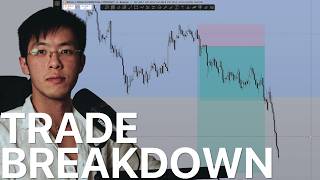
The Art of Crypto compares a losing trade and a 4R winner that both hit the same entry signals, arguing that system execution matters more than individual outcomes. He's maintained a 75% win rate over 200 Bitcoin calls since early 2025 by following the same rules every time, even after losses.
Chapters
What's good guys, so slightly different video. Like in this one I'm going to be breaking down like two side-by-side trades. One that I called yesterday and that I took yesterday that I ended up losing, and one that I ended up calling today, took it, and is currently up 4R. And there are a few things to break down here, but the primary one is the fact that both of these setups from yesterday and today are exactly the same setup. Now the interesting thing here is that the setup from yesterday and the setup from today are both the exact same trades. And one of them ended up being a loss, which was yesterday. Today's ended up being a big win. And a lot of the times, based on, you know, the people that I've worked with, I've seen so many times where people run into this situation where just because this setup happened to produce a loss, the very next trade they start doing something different. But the reality is like trading is not about the individual trade outcomes. It's about, it's about understanding like, hey, as long as I continue to trade the system consistently based on the rules of the system, I trust that it will allow me to make more money than I lose over the long run. And that's the key kind of understanding that you need to have in order to succeed at trading. Now, enough said on this for now, but let me just get into the trade that I called for today and the trade that I ended up taking for today. And currently, as you can see, we haven't hit the full target yet, but I'm making this video anyways because I'm just, you know, getting that little stroke of inspiration. And I really wanted to share a few lessons from this video because it's not just one, it's kind of a combination of a couple. I'm going to put a kind of picture of the video that I made today, but essentially this is the trade that I called. And in fact, Clarence, if you can just drop the segment where I say like I'm going to take this trade right after, you know, recording the video. Based on all of the accounts of the system that I'm using, it matches basically all of the entry criteria that is present within our system. And as long as it does, I will enter. And as long as it doesn't match all of the, you know, entry criteria, regardless of what I think or like how good the day is based on what I think or you know, anything else in between, I'm not going to take the trade because it doesn't match the system. Like, this tells me that, A, this is a strong low, right? Because this was manipulation happening at the manipulation timeframe with a daily bias that is bullish, following the fact that we have now bullish order flow on the 5-minute chart as well as the 1-hourly chart, and the daily is also pointing towards the upside. Even though we have reasons not to trade today, but we— our system, like, this basically matches all of the criteria within our system. And if it does, like, I think we're just going to take it. Like, yeah, this was the— like, this was the moment where I entered the trade. If you take a look at the 5-minute chart, you will see that this is the exact trade that is in that video. And literally right after recording the video, literally entered right here, placed my stop above here, and the rest is history, right? But this trade over here, like, if you guys remember, there were a couple of concerns. One is the fact that we had relatively equal highs, and the second one is that one of the, like, core things that you will have heard me talk about in, you know, today's market update video was the internal monologue of me trying to break down how similar this trade here looked to yesterday's trade. And in my mind, I was— there was kind of like my mind was telling me like, hey, you took the same trade yesterday and you ended up losing. And today is looking like, you know, not only is the actual like technicals very similar, but the market conditions that we're operating in was also very similar in the sense that today we had no high-impact red folder news. So if you take a look at the one from yesterday, we had a, you know, we had a bullish daily bias and then you ended up getting a sweep below the Asia lows, but eventually you got that CIC towards the upside, right? And that, that for me was the trigger, right? At this point right here, that was where I placed my entry. This is where I placed my stop, and my target was all the way at $65,000. And as you can see, like, I would have gotten stopped out today because, like, the target wouldn't have been hit. But if you take a look at the tweet from yesterday, I actually did give an update to, you know, the actual position from yesterday. If you take a look here, my stop was at— I ended up moving my stop higher to $62,744, which is underneath this low right here. So So even before the start of today, I was already stopped out. And like, yeah, granted it was, you know, half a stop. Basically, like my original entry was like that and I ended up getting stopped out here. So I lost, like I already went half risk on that trade and I got stopped at halfway. So that was a very tiny loss. So psychologically it doesn't really matter, but it's more of like the perception towards, you know, the trade setup. Like yesterday was a non-news day and yesterday we had reasons to believe that price was, you know, potentially going to chop. Today as well. We had relatively equal lows, as you can see right here, and we also had relatively equal highs, as you can see right here. So just because— so essentially what that means is that I had reason to believe that price was going to, you know, maybe potentially come sweep out the highs, or in the event that I took this trade, it might just kind of give me a false move, like it might fake me out and basically do what it did yesterday, where after just taking one high, it just did a full reversal and stopped me out. So going back to the trade from today, like, sorry if the thought process is kind of messy here, like I'm really just recording this raw right after gate because I felt like there were a couple of lessons that I needed to share. So firstly, on this trade right here, like, what was the thing that allowed me to still take this trade even though I just went through a loss from yesterday? It's understanding that— and this is going to be like the big psychological shift— which is you, as a trader, you basically only optimize towards one outcome, which is basically if the criteria of your system are met, you take the trade. As long as enough criteria are not met, you do not take the trade. And you do this regardless of what you think or what you feel. In today's example, regardless of the loss, you know, that I took on yesterday, or regardless of me, you know, thinking that, okay, potentially we might sweep the highs or potentially we might sweep the lows, it doesn't matter. Most of the conditions within the system were met. We had a bearish daily bias, the hourly order flow was breaking down lower, and at a kill zone— and in this case, this was the London kill zone— we had a CSD on the 5-minute, which was the confirmation that I needed to say valid entry. So I took it because it's a valid entry. And that is the mindset shift that you guys need to make in order to succeed in trading. It's It's not about like every single day you try and show up to the markets to, you know, use your skill as a trader or like use your ability to read the markets, whatever that even means, to, you know, apply it to the markets and kind of like get a good result out of it. The only thing that, the only result that you will get out of that is super inconsistent results where every day you're doing something different. And if you've been trading for a while and you haven't seen consistent results yet, that's probably why, like you're not sticking to one system. You're just kind of winging it every single day, which like, I don't know about you, but at least for me, winging it is not really a profitable strategy. Now, if that resonates with something that you're actively dealing with, like, this is the problem that we fix inside Bootcamp, which is kind of like my flagship coaching program, right? It's less about like just teaching you my system or yeah, here's more information, man, just take it and, you know, consume the course and run with it. It's more about fixing these execution problems because at the end of the day, like, we kind of have an idea of what to do, but doing it consistently day in, day out, kind of like what I've been doing since the start of 2025, is like a completely different story, right? I've been publicly documenting these trade calls, and if anything, I would have a lot more pressure on my shoulders to, you know, just, you know, apply my skill as a trader, as someone who's been trading for like 6 years, 7 years. Like, if anything, I should have that pressure of, you know, potentially trying to read into the market a little bit more. But the fact is, I am successful and I have like a 75% win rate on these Bitcoin calls, not because I'm trying to apply my own take or trying to read the market, but simply that I am executing this system consistently, day in, day out, for a very long time. And I will continue to do this, but that is the, you know, kind of secret sauce to success. You know, that was just a lesson. Like, hopefully some of these stories and some of the examples and some of the explanations that I gave you, you know, resonated with you. Like, trust me, it— like, trading feels hard when you don't have any sort of consistency, but it gets a whole lot easier when you start to leave the decision-making up to the system. It's kind of like, okay, if system says yes, then you do. X, and if system says no, then you don't take a trade. It's as simple as that. And I really wish there was a better, you know, more sophisticated kind of like methodology to all of this, but the fact is like I have generated— like I have maintained a 75% win rate on over 200 trade calls since the start of 2025. That's a year and a half of track record purely by following this system and just not messing around with it and not trying to apply my own spin or try to read too much into it. Now that I'm looking at the charts, we just hit full TP, so I think that's going to be a cinematic ending to video. Drop a like if you found value from this and drop a comment if you appreciate like these raw breakdowns, like as it happens. For me, this is kind of what I repeat every single day to, you know, our existing students. This is what I try to repeat every day with the YouTube videos. But if there's, I guess, a separate YouTube video just talking about this, probably it is going to be valuable. But I don't know, you let me know. See you.










