NEVER trade double tops/bottoms (here’s why)
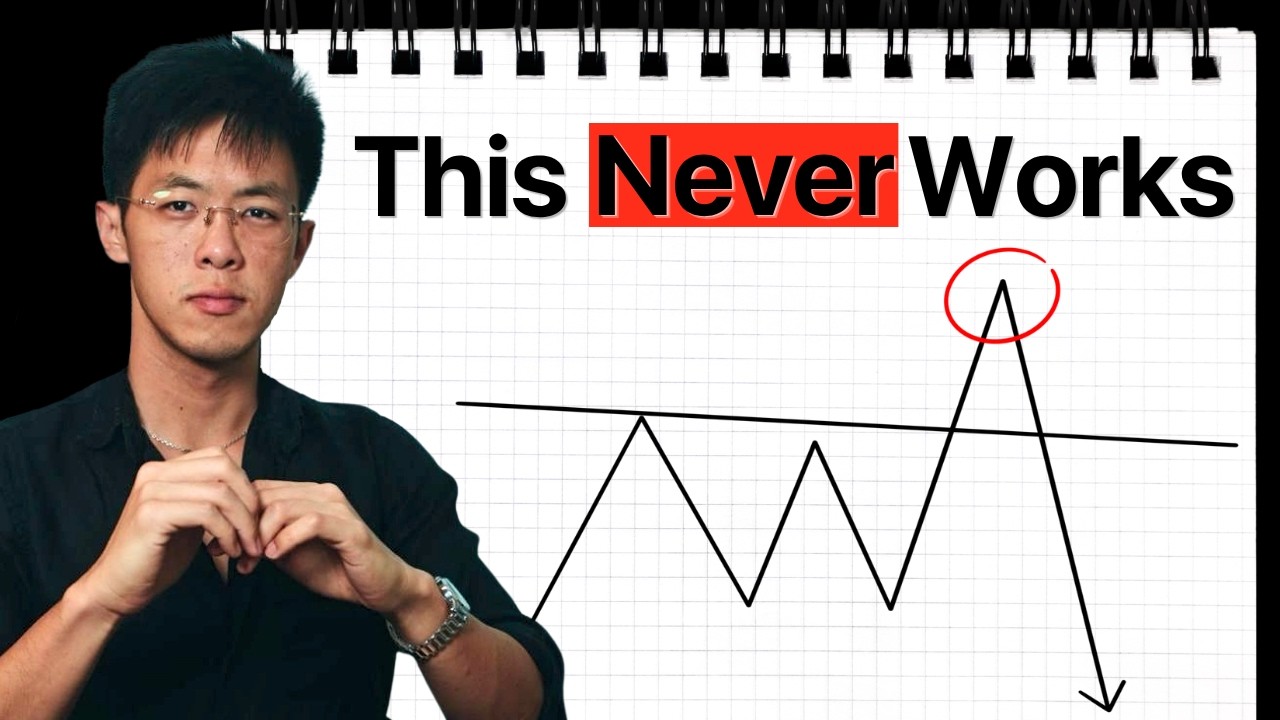
In this YouTube tutorial, Xuan of The Art of Crypto explains why retail traders should avoid entering trades at relatively equal highs or lows—commonly called double tops and double bottoms. He defines these levels objectively using a Fibonacci 0.886 retracement, then delves into liquidity concepts, describing how large‑scale market moves require “fuel” (liquidity) that is supplied by other traders’ stop‑loss orders. Xuan shows how retail traders crowding these equal‑level zones create predictable stop‑loss clusters that smart‑money players can exploit, and why entering trades before the level is swept often leads to being stopped out. He contrasts “weak” (relatively equal) levels with “strong” (swept) highs and lows, arguing that strong levels are “protected” and statistically more profitable (approximately 70 % of the time versus 30 % for weak levels). The video also reflects on his own evolution from pattern‑based trading to a liquidity‑focused, systems‑theory approach, emphasizing probability theory and mindset as core to consistent profitability. Finally, he promotes his paid courses and invites viewers to engage via comments and links.
Chapters
This is why you should never trade into relatively equal highs or relatively equal lows. Now, just to share exactly what I mean by, you know, relatively equal highs and lows over here, it's when you get levels such as this, right, where you have a high over here and another high that is, you know, again, relatively equal. Relatively equal can be a little bit of a subjective definition, so if you want to have more of an objective view of things, you can actually pop up a Fib. And if you just double-click the Fib settings And if you add this number here, 0.886, this would be kind of the official definition of a double top, or like a double bottom, and which is another name that people tend to give to, you know, these relatively equal highs and lows. Now, before I get into the actual, you know, reason why you shouldn't be trading into relatively equal highs and lows, as well as the proper way to take advantage of these relatively equal highs and lows, because the majority of the people that are going to be trading this is going to be retail traders, or it's going to be people that otherwise wouldn't have a particularly good strategy. So a lot of the times what ends up happening is that these people end up getting stopped out while the people that actually know what they're doing and they understand this concept could take advantage of those people losing money to make money. A bit of a mouthful, but you get the idea. But just real quick, if you're new here, welcome. My name is Xuan. I have made over $1 million in trading. And over the last year and a half or so, I have been making daily videos on my YouTube channel here, just calling like, hey, this is going to be the trade for Bitcoin today. And later on, on X, I actually share the execution of the trades that I do take. And so far we're sitting at around a 78% success rate across 200 trades. There's one thing you should understand is that I'm not some newbie, you know, that's new on the block. And like, yeah, hopefully that gives you kind of a reason to listen to me. But with that said though, let's get into the actual, you know, reason why we don't want to be trading into relatively equal highs and lows. And so if we can really boil it down, this comes back down to the understanding of liquidity concepts. So if I could really like boil things down here, Now, in order for price action to make any sort of aggressive movement in the market, you need liquidity, right? You need fuel. If you imagine the market as like a Lamborghini, Lamborghini can go real far, real quick. And that's the same thing about the markets, right? If you take a look at the markets yesterday, kaboom, right? Bitcoin went from $63,000 all the way down to $59,000 in the span of a couple of hours. So this thing can move quick. In order to drive this type of performance, you need fuel. Now, in the context of the market, fuel tends to be liquidity. Now, liquidity is oftentimes a really fancy term, but all you need to understand about liquidity is that it's just money. Need a big influx of money entering into the markets that drives, you know, these aggressive moves. Now, just to tie this back into the context of relatively equal highs and lows, when retail traders tend to think about relatively equal highs and lows, and I'm sure you will be able to resonate with this as well because I know at some point I did the same thing, which is the fact that, oh, when I see double top, that is strong resistance. Or like, oh, let me go short at double top. But what they fail to realize is that two levels that are just relatively equal— now this is completely different, by the way, if like this previous high actually gets swept out, because that no longer makes it a relatively equal level, which I will get into later. But just understand, whenever you have these relatively equal levels, right, retail traders are going to look at this double top, double bottom, and they're going to short. And if they do short, right, as an example, where do you think they're going to realistically place the stop loss? Well, probably above the double top, because that's what we're taught. If we go short, we place it above the double top. Now, there are also a second pool of traders that are looking at this level, and especially as price goes above this level, what they tend to do is, oh, strong resistance has been broken, and so they're going to go into a breakout trade, right? And they're going to end up basically buying high. And where are they going to set your stop loss? Probably somewhere down here. Well, most people actually don't set the stop loss because they're going to be running this on leverage. And what happens when you run on leverage is that you are forced to have a stop loss, right? If you have a, you know, 20x leverage trade, then, you know, 5%, then you're going to get stopped out. And then the third pool of people that are going be within these levels is the part that I'm going to be most interested in. If, let's say, right, I dive into a trade here, which at, at the time, at the time, this trade over here is actually pretty solid, right? Nothing wrong about this. If I do dive into a trade at any point during this down move, chances are I'm going to set my stop loss at the high because that's what we're taught. And there's nothing wrong with that, by the way. We are, we are in fact meant to set our stop loss above previous swing highs, or in the case of going long, we're supposed to set our stop loss below previous swing lows. Now the problem comes when you end up getting relatively equal levels. Just to tie it back for a moment, the reason why I shared those three, you know, kind of like parties with you is that what happens when you have relatively equal levels is that you have a huge amount of people that would otherwise enter the market or be forced to enter the market if these levels get swept. So again, there you're going to have a lot of stop losses getting triggered here, and you're going to have a lot of breakout traders coming into here, both of which are great if you are part of the smart money, or if you have like, let's say, $100 billion worth of capital to deploy into the markets, but you are unable to do so without sufficient people actually filling in your positions. And this is the premise of what liquidity concept is all about. It's the understanding that when the biggest moves in the market tends to come from the big players, right? The whales, the institutions, the smart money as you want to call it. But in order for these people to actually get in into the markets, they need sufficient liquidity, right? They need sufficient fuel to fill up the car before they can move it. And where does this fuel come from? Unfortunately, it has to come from other people that are losing money. It's just the reality of the markets. It's not like they're doing some immoral thing. Like, the markets is a zero-sum game. Like, imagine if you win money, technically you took it from somebody else that lost money, right? It's just a shark-eat-shark kind of game, zero-sum game. And so essentially, this is just how the markets work. Nothing inherently wrong with it. Two things to mention. One, I called this move yesterday, right? This is fully expected, no surprise there. I in fact called a 10R trade. Again, proof is going to be on Twitter. But besides that, one of the other very important things that I mentioned in yesterday's video while I was calling this trade was Hey guys, if possible, wait for these relatively equal highs to get swept first before you dive into a short. And there were quite a few people on, you know, quite a few of my followers actually, and I know this because I saw your comments on X, where you actually started diving in once you saw this kind of like breakdown, right? Once you saw this breakout, you started entering, and guess what? You actually ended up getting stopped out before the move happened. So if you have been in a situation before where, you know, your overall read on the direction was correct, your overall understanding and your overall analysis was correct, but you always seem to get stopped knocked out before the market actually goes straight to your TP, this is probably why. If you just go back and reflect on those trades and just observe, like, are you trading into relatively equal levels? Because if you are, you are playing into the hands of these smart money players. You're playing into the hands of these manipulative, you know, big players. And again, I don't claim to understand that this is in fact how these big players operate. I've just seen this happen enough times to the point where I can conclude that this is a pattern that repeats itself over time. And more likely than not, it is in my best interest as a trader especially if my goal is to make money, to wait for these relatively equal highs and lows to get swept out first before we enter. Which leads me on to the second point, which is once it gets swept out, these relatively equal highs and lows eventually becomes what is known as a strong high. Now, a strong liquidity level, like a strong swing point or whatever, like I'm sure you will have heard, you know, quite a few iterations of this term. A strong level simply refers to, like for example, this swing high over here is a swing high that forms after sweeping out prior liquidity. That by definition makes it a strong high. Now, the reason that makes it strong— let's tie back to liquidity concepts for a moment. If we understand that the market always moves because of a liquidity objective, like for example, if you, if you go towards the upside, chances are you're looking to stop out people that have stop losses around here, right? Let's just use that as the kind of theory here. Then once the liquidity objective has been completed, do you think there is as much of a reason for the market to actually revisit this high? Probably not, because the objective is already complete. If anything, there's going to be way more, you know, objectives down below here, right? If everyone's already stopped out above, guess what? There's going to be a lot of fuel left to kind of stop out from below. And that's why strong highs have a tendency to be what is known as protected. Now that's another term for a strong high or low, right? People can sometimes say, oh, this is a protected high, or this is a protected low. What they simply refer to is that, okay, this is a high or low that forms after a liquidity, you know, level has been swept out. And so chances are it's going to be unlikely that the market returns back to this level. And so that makes it a great place to go short or to go long. So instead of trading from relative equal highs and lows, you want to trade from strong highs and lows. Because if you do get into a short, let's say, on these relative equal levels, there is a very high chance that you actually get swept out before the move happens. How do you prevent that? You go for the strong high or low, right? Because highly unlikely that the market is going to revisit that level. So hopefully this is starting to make sense. And this is also the reason why If, for example, this high over here looks like this, right, where this previous swing high actually came all the way up here to sweep out this one, that makes this a strong high, and that makes it a very valid high that you want to trade from. But the fact that these are relatively equal highs, not so much. Same thing here, right, relatively equal lows. You shouldn't be trading into those because guess what? You're going to sweep it out, and then you're going to sweep, you know, the other relatively equal level, and then you're going to go down. And if you are a retail trader, or— and I don't mean that in a derogatory, you know, kind of way— but if you are someone that trades with patterns, like for example, I used to trade patterns all the time, especially especially back in the 2021 bull run. Like, that's how I made my first million. It's just trading patterns and buying breakouts and retests and stuff like that. Very simple, I know. But that kind of strategy works amazingly well in a bull market where there is so much, you know, kind of hype and mania all around that people just don't really care what they're throwing their money into, and everything's kind of going up. And it doesn't take a genius to make money in a bull market. If anything, even an idiot like myself could look like a genius in a bull market. Back then, this was what I was using. But there is a reason why I have eventually come to the realization that this strategy is probably not the best bet. But there is also a reason I would say that in the last couple of years or so, I have completely switched my strategy to one that revolves around smart money concepts. It's because I realized this strategy over here is fundamentally flawed in the sense where it doesn't trade in line with how markets actually move. This kind of comes from the assumption that, okay, just because it's a pattern and somebody on YouTube said that a pattern works, we're going to trust, you know, whatever that YouTuber is saying and we're going to trade it and we can trust our money with it. But the reality is if you have seen this before, where on a wedge pattern or like a triangle pattern, you'll notice even if you enter, you end up getting into a lot of fakeouts. Like the very nature of these patterns is that you are going to be— you're either going to be doing two things, right? One is you're going to be trading into relatively highs or lows. Like I want you to imagine here, right? If you end up going short, guess what? You have relatively equal highs right before. That could just get stopped out before price dumps. Or B, if you end up going long, same thing here, you have relatively equal lows. So that's the first one. You're always going to be trading into relatively equal levels, which we've already established is completely against like liquidity concepts. And if your goal is to make money, you want to be trading into strong highs or lows rather than relatively equal highs or lows. Now the second thing is, even if you do get a successful trade out of it, what you are fundamentally doing is that you are buying high. I don't know about you, but I'm pretty sure that if you ask most people what is the correct way to make money in the markets, they would say something along the lines of you buy low and you sell high, or you sell high and you buy low, not the other way around. And you're starting to see how fundamentally flawed this kind of strategy is. So it's not to say that you cannot make it work. There are in fact people that make this work. But is this the best strategy for an absolute beginner? I would argue not, because you're just going to be running into a lot of situations like this where you're going to run into a lot of fakeouts. And for a seasoned veteran that already has their psychology kind of down pat and who already, you know, understands systems theory and probability theory, and they understand, they've backtested this for like 1,000 times, and they're fully confident that this is a system that, you know, generates them, like, is a profitable system that makes them more money than it loses them over the long run. Fantastic. Of course they're going to trust it. Of course, the way that they execute is going to be very different from, you know, what you might be facing because you're operating at completely different levels, right? You're starting here. He already has this. So you're comparing like your step 1 to, you know, somebody else's step 10, right? That's just a rant on that kind of topic. So then we move on to another question, right? Because Now I've kind of made the argument that, okay, relatively equal highs and lows tend to get swept out before some sort of true movement tends to happen. But I'm sure you and I have also seen situations before where, you know, these relatively equal highs actually do not get swept out and price just moves. And so what gives? Like, if sometimes I miss out on a trade, then shouldn't I just kind of like take it? Well, I'm going to break it down a bit. Let me just try to find an example of, like, for example, over here, you could argue, right, okay, relatively equal highs over here, but you actually go all the way down to hit the profit before price returns, right? That's just an example of what I'm talking about here. So to answer your question, you got to, you got to understand this, right? A very fundamental thing about trading is that we are always optimizing for the most profitable action over time. And I repeat myself, in trading you are always optimizing towards the most profitable action over time. So let me, let me just break that down a little bit more. Now, based on everything that I've established so far about relatively equal highs and lows and liquidity concepts, do you think that it would be statistically smarter if we were to be trading into relative equal highs or lows, or would it be better if we were to trade strong highs and lows instead? Well, anyone with half a brain would probably tell you that, yeah, strong highs and lows, it makes sense. And that's the thing. And that's your answer right there. Doesn't matter that, you know, sometimes relative equal highs and lows do not get swept and they actually lead to a good move. It doesn't matter. Why? Because statistically speaking, that happens way less often compared to if you were to just use the strong high or strong low. Essentially, you're going to be way more profitable using the strong highs and lows as compared to relatively equal highs and lows. So if we were to kind of like really break this down in terms of statistics, right, let's say for like 30% of the time, relatively equal highs and lows end up playing out, but 70% of the time you're better off taking the strong high or low. Which one should you take? That's right, the 70% one. It's not to say that strong highs and lows are going to be always superior in every single instance, in every single sample size, it is always going to be superior. The truth is, it's not. But statistically speaking, if you apply this to a long enough sample size, It is. And that is the fundamental truth that you need to understand about trading if your goal is to make it in the long run. I've been doing this for like 5, 6 years at this point, and there are a lot of things that I've learned only in the last couple of years, especially as I get more and more advanced. And if there's one thing that I can tell you right now is that if you truly just understand probability theory and systems theory, just these two things alone is going to get you pretty much all the way, like 80% of the way to, you know, just being consistently profitable. And the reason why I know this is because that's been the case for me, but it's also been the case for a lot of the students inside Blueprint and Bootcamp, right? I've done quite a few interviews before with, you know, these students, and consistently when I ask them, hey, what's the most valuable part of the program? I always expect to hear something like, oh, liquidity concepts, right? I just taught you about relative equal highs and lows. But no, it's always the systems theory module, the probability theory module, the mindset modules. So just remember, like, it's always ironic that we forget in order to become a master, you have to master the basics. And Systems theory, probability theory, and just understanding this stuff is literally at the base of everything that you do in trading. But with that said though, if you are interested in my philosophy towards trading and how I make things seem super simple and just really repeatable, and you would like to also get consistently profitable, feel free to click the first link in the description box below if you'd like to work directly with me and my team. Like, we're literally going to handhold you through every step of the process as you are learning trading so that you are doing this the right way. But if you're not interested, no stress though, just drop a like down below and comment if you have a question that you would like me to answer, and if I think it's a good question to answer and if I would make a video about it, that's where you'll see it. But other than that, if you've watched until this point so far, I think you're really going to enjoy this video. Check it out.










