A trader made a million dollars in 2021 using chart patterns like breakouts and wedges, but realized they only work in bull markets because hype masks their flaws. Pattern trading forces you to enter at the worst spots and get stopped out before real moves happen. He switched to Smart Money Concepts to follow institutional flow instead.
Chapters
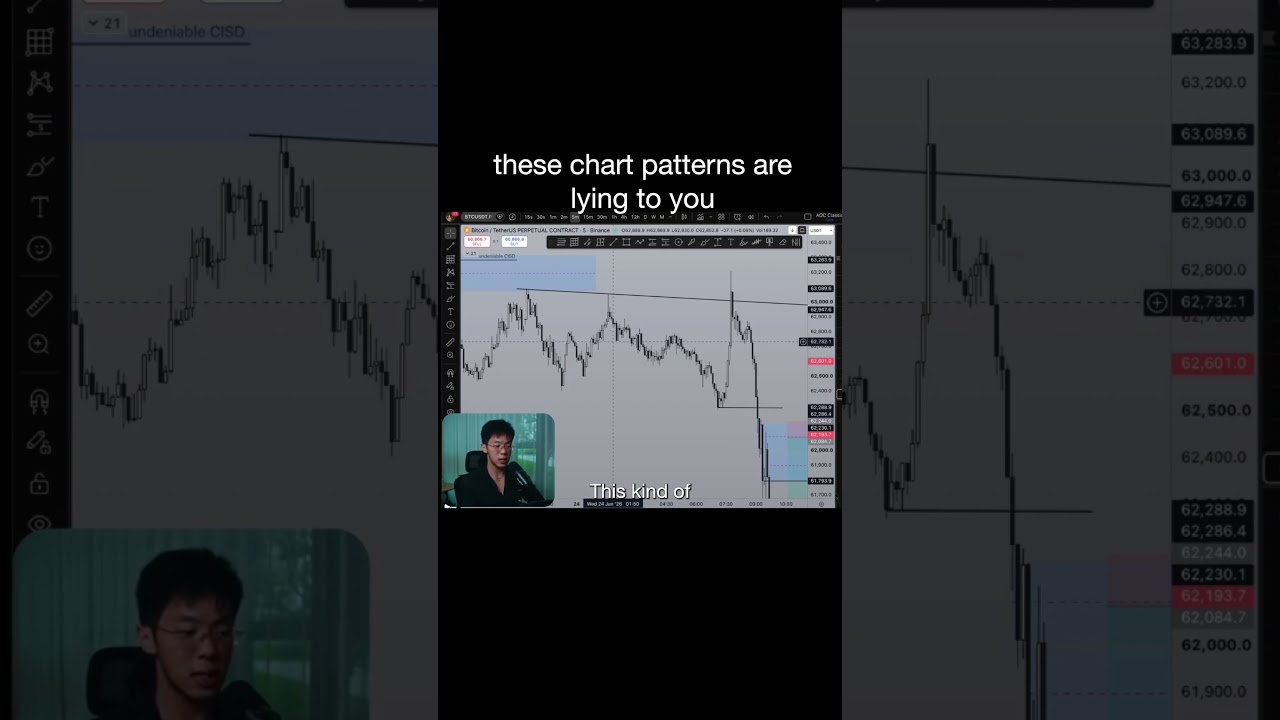
It doesn't take a genius to make money in a bull market if you are a retail trader or if you are someone that trades with patterns. Like, for example, I used to trade patterns all the time, especially back in the 2021 bull run. Like, that's how I made my first million. It's just trading patterns and buying breakouts and retests and stuff like that. Very simple. But that kind of strategy works amazingly well in a bull market where there's so much, you know, kind of hype and mania all around that people just don't really care what they're throwing their money into and everything's kind of going up. And if anything, even an idiot like myself look like a genius in a bull market. Back then, this was what I was using, but there is a reason why I have eventually come to the realization that this strategy is probably not the best bet. But there is also a reason I would say that in the last couple of years or so, I have completely switched my strategy to one that revolves around Smart Money Concepts. It's because I realized this strategy over here is fundamentally flawed in the sense where it doesn't trade in line with how markets actually move. This Kind of comes from the assumption that okay, just because it's a pattern and somebody on YouTube said that a pattern works, we're going to trust you know whatever that YouTuber is saying and we can trade it and we can trust our money with it. But the reality is, if you have seen this before where on a you know wedge pattern or like a triangle pattern, you'll notice even if you enter, you end up getting into a lot of fakeouts. You're either going to be doing two things, right? One is you're going to be trading into relatively highs or lows. Like I want you to imagine here, right? If you end up going short, guess what? You have relatively equal highs, right? Big pull. That could just get stopped out before price dumps. Or B, if you end up going long, same thing here, you have relatively equal lows. So that's the first one. You're always going to be trading into relatively equal levels.