@TheHealHive founder, @everydayexpert chats fertility with @theeggwhisperer
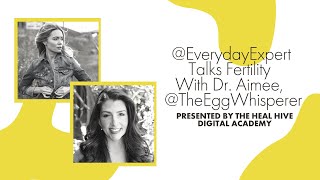
This is a transcript of a May 13, 2020 YouTube conversation between Brooke (The Heal Hive) and reproductive endocrinologist Dr. Amy Avezada (The Egg Whisperer) about fertility evaluation, treatment planning, and lifestyle/supplement strategies. Key points: (1) fertility care should be personalized—Brooke describes her own diminished ovarian reserve and complex medical history and chose Dr. Amy after extensive research; (2) Dr. Amy’s "TUSHY" method outlines core fertility checks (including tubes, sperm, hormones, genetics/diagnosis); (3) timing guidance for egg/embryo freezing: consider AMH testing by mid-20s (earlier with family history), consider freezing eggs by ~32 for those planning future children and by ~37 for additional preservation; (4) supplements and mitochondrial support highlighted as actionable interventions—CoQ10 (strongly recommended), NAD/True Niagen, DHEA, omega‑3 and vitamin D discussed; (5) advanced adjuncts such as human growth hormone (HGH/Omnitrope) and genetic embryo testing were described as beneficial in select cases; (6) environmental (BPA), dietary (Mediterranean, possible gluten/dairy considerations), and comprehensive testing (thyroid, autoimmune screens) are emphasized; (7) practical matters: importance of seeing a reproductive endocrinologist, pitfalls of at‑home testing, and financing options for IVF.
Chapters
Hi, everyone. Thanks for coming today.
Today I am speaking with my own.
Reproductive endocrinologist, Dr. Amy Avezada. I found Dr. Amy when I had found out that I was dealing with some pretty extreme infertility issues. And I did lots of research and with my research, I found Dr. Amy and she is about to join us. You can find her also on Instagram. Instagram as the egg whisperer. Hi, Egg Whisperer, aka Dr. Amy.
Hi, Brian. Good to see you. It's awesome to see you too.
So, you know, one of the things of everyone who's a patient of yours, they know that you're never off duty, even though you have multiple children. I think four or five. Four. And.
And you're never off duty.
So I'm not surprised that you are not doing this from home. And you are at the office as always. So I was just introducing you that you are my own doctor. People ask me all the time, how did I find you? And how did I find you? I basically scoured every single review. I did not rely on my friends and their recommendations. And I want to start off our discussion. The fact that every single woman's infertility issue is different. And because it's different, the fertility doctor for you might not be the fertility doctor for another person. So I have diminished ovarian reserve, but I had no other comorbidities. Even though I have autoimmune disease, they are under control and I am not currently fighting Lyme disease or any of the co infections I used to have. And even though I've had cancer before, I'm not fighting cancer. So I was looking for a person who could maximize my ATP production and hopefully we'll get into that and mitochondrial energy and why that is so important. And someone who knew how to biohack my body to basically pretend that. Well, not pretend, but to remind it that it's still fertile, that there's still a lot of youth in it. So I did a lot of research. I read a lot of reviews. I whittled it down to 30 doctors from the 30. I then really deep dove into the top 10 in the bay Area. I did not want to travel. And then I realized that people came from all over the world for Dr. Amy. And then I whittled it down to three and I interviewed all three because this is an interview process. You really. Your relationship with your fertility doctor is everything. You have to trust them because this journey is not. There's no planning to it. There's some strategy, but you can't really plan what's going to happen. And you have to trust them because it's beyond your control. So I whittled down to three. Dr. Amy, when I met her, it was amazing. We went through my supplements and she asked me if I would give her a list. I did. And I spoke about a supplement that we both love, and she pulled it out of her drawer, and I realized that we were soul sisters in biohacking, and it was love at first sight. So I had a lot against me. I had age. I had formerly being sick for nearly five years with massive, massive issues like cancer and babesiosis and bartonella and Epstein Barr virus and Lyme disease. And then I'm also a celiac with pernicious anemia. And I did, when I was fighting Lyme disease, have. I'm not positive anymore, but I have rheumatoid arthritis and a bunch of other autoimmune issues like interstitial cystitis. So Dr. Amy was not at all overwhelmed by this. In fact, she was not worried about this. She did a comprehensive test with me and we started from there. So, Dr. Amy, I'm really open. I don't care about the HIPAA policy right now in terms of you talking about my fertility journey. But just so everyone has an idea of how important, you know, the kind of basics that you talk about with your tush method, as well as diet and autoimmunity and making sure you screen for that, can you just walk everyone who's listening through, like, what are your basics? What are your basic foundationals? And, you know, don't expect the fertility doctor to actually go through them because not all doctors are the same.
Right. So I came up with an acronym, and it's tushy Method. And the reason is this. A lot of people feel like they just don't know where to start. You know, if you're getting your fertility levels checked or they don't even know what that means or what you're actually going to be checking, and it can cause a lot of confusion. So I wanted to make it really simple and easy for people. And there literally are just five simple tests or steps that we take to kind of give someone their full fertility picture. And those steps are the tubes. So looking at whether the fallopian tube or the embryo transport system is open, and so that's done with an HSG or hysterosalpingogram or a test similar to that, doing an ultrasound of the uterus to make sure there aren't any fibroids or polyps or any blockages. Inside the cavity. You don't want to find that stuff out when you're already pregnant. Then sperm, you know, for women, especially if you're over 37, often they just. We just get blamed for our age and that's why we're there. And we forget that we have a partner. And every embryo takes an egg in a sperm cell. So looking at sperm quality and learning more about that and not sugarcoating it is really important to me. So there's no such thing as. It's just some of it's low or it's still good enough, but it's low or slow. You know, let's just get to the bottom of it and just talk about it the way it is and figure that out.
I was trying to find out through you that fertility issues are. There's crazy statistic like 30, 40% of it is the male. And women just do not know that. It's not your fault. It is many times the fault of the guy. And another thing we learned, I learned through you, is that it doesn't matter how young the guy is. I think we have this sense in society that, oh, because men can still have children at 80, that, you know, it doesn't matter the age of their sperm, but actually it does. And their sperm declines in quality just the same as our eggs do.
It does. I mean, it doesn't disappear completely for most guys, but there absolutely is an age related decline. And I think we're going to see more and more guys freezing their sperm more than ever before. So that's something that. Do you recommend that I do? Especially if the guy is older or if, let's say the sperm quality is lower and we get pregnant, let's say, from an IUI cycle and I'm like, oh, wow, the sperm is amazing right now. Let's freeze it. So that if we end up, you know, doing or needing to do treatment in two or three years, I'm always going to want to have that option. And I'll never look back and regret like, why didn't I freeze a sperm when it was so good? And freezing sperm is easy. It's just a cup in a movie in a room, you know, I mean, it's like it's not surgery, you know, for women that's awesome to get hopped.
Up on drugs and it's not as expensive, right?
No. Freezing sperm is about $250 for this freeze itself. And then you have to maintain doing, you know, the cryo storage. And that's usually around 300 to 500 a year, depending on where you were at.
But just for peace of mind, just to know. I mean, what if something happened and, you know, men get cancer and it could be game over. Not for them in terms of their life, but in terms of their sperm quality. Anything can happen.
I mean, I predict this next generation of folks who are graduating from college. I mean, we talked about when egg freezing became really popular, about, you know, mothers giving their daughters egg freezing as a graduation present. You know, we're going to be giving our sons sperm freezing kits. No joke. I mean, I know that's kind of creepy, but this is the kind of stuff that we'll be talking to our kids about, because we know that my patients are starting their families in their 40s, and our kids are going to be starting their families in their 50s. That's just the reality. I mean, I'm sorry, you really think so? I do. I really do, yeah. Okay.
That makes me feel better about starting my family at 40. My children will be like, who knows how old they are? It's amazing.
Right? Good to know. Yeah. So the other parts of the tushy are the hormones, right? So getting a preconception lab panel, like your fsh, estrodial amh, and there's a bunch of other stuff we look at to make sure you're still immune to German measles, for example, and chickenpox. And then your genetics, like, making sure that you and the sperm source are genetically compatible, that you don't share common mutations, and sometimes even doing a chromosome analysis makes sense. So I just rattle off a whole bunch of stuff, and it can seem really overwhelming, but you can do all of that stuff in one menstrual cycle. Right?
Okay, good to know.
Yeah.
And, you know, one of the things I'm very fierce about is the fact.
That especially if you're high risk, especially if you're over the age of 38.
Please, I recommend to everyone not to rely on their naturopath. No offense, naturopaths.
Or their chiropractor.
Kind of offense to chiropractors when they try and get into reproductive fertility.
Sorry, guys, but not your highway to drive on.
And also with GPS and OBGYNs, I wasn't sitting on my laurels about my fertility. I just trusted the new OBGYN I had. And I was 30. No, 40 years old. And she looked at my follicles, and she looked at my AMH and my fsh, and she's like, you're low, but let's just see what happens naturally. And, like, let's Give it eight months. And it wasn't until I started deep diving that I was like, oh my God, eight months can make a huge difference. So can you kind of walk people through? Because a lot of questions were, oh my gosh, I feel like I'm getting too old. Some people were 32 saying this, some people were saying this at 38, others were saying this at 42. When is this like sense of it's you're too old or when should you start to think about freezing your eggs? One, that's the first question. The second part of the question is, should you freeze your eggs only fertilized or is it okay to freeze them now? Fertilized? Because I have had multiple really close friends freeze them early. I felt bad when I started this.
Journey thinking, oh my gosh, I should.
Have been freezing like my girlfriends did. They froze it over eight, 10 years.
Ago and they've now unfroze their eggs.
And realized that their eggs are not fertilized and did not freeze properly. So I know that technology and has improved, but I think a lot of us have a lot of worries about that. So if you could just kind of answer that in two parts, that'd be great.
Absolutely. So I call them my egg whisper golden rules. Right. So what kind of things can a young woman do to prevent infertility and get ahead of infertility? At the end of the day, we can't control things as much as we'd like to. I mean, we can certainly do things to control the information that we have. But at the end of the day, if you're freezing eggs, you're securing future options, just like you said. But every single person is different. So there are some women who have mothers who went into menopause at age 38. So that woman should get her levels checked by the time she's even 21 and consider egg freezing by 25. So I think every woman by the time she's 25 or even younger, if she has a family history of fertility issues, should do that AMH test. That's the egg quantity test. So that's a test that tells you, you know, around when you're going to go into menopause. And if you've, let's say had ovary removed, have endometriosis, have big fibroids, things like that. Those are fertility threatening conditions. So is PCOS, which is P.S. absolutely. And an autoimmune issue. Right. So if you have an autoimmune condition, do something to preserve your fertility. But the thing is that Egg freezing is not just for women who are in their 20s. It's for women in their 30s and their 40s. So my general rule is, if you're someone who is thinking about having kids and maybe two kids, maybe consider freezing eggs or embryos by the time you're 32, if you're in a relationship and you have one child and you're considering having a second by the time you're 37, do the same thing. Consider freezing eggs or embryos by the time you're 37, and things change. Things change with relationships. I tell jokes to my friends. Freeze your eggs for husband number two, or even three. I see so many patients who are coming in now in their mid to late 40s, over the age of 45, with that great new husband, and she really wants to have children with him. And not that egg donations a bad option. It's an amazing option, but most people would still have wished that they had frozen their eggs when they were younger, you know, for. For that next baby.
Well, I think. I mean, we'll get into the second part of the question, but, you know, a lot of people have asked me, well, you already got a, you know, this genetically perfect, you know, Ferrari of embryos. Like, why aren't you putting the embryo in? And it's because I heeded your advice, and it was exactly that. Is that, yes, I could put the baby in. I mean, the embryo in immediately. But the fact is, I wanted to wait because I wanted to make sure.
That I had one or two other.
Eggs before I started. Because even though Brian and I are very happy to just have one sweet little baby, who knows where we'll be and how much we'll fall in love with that baby and want a second or who knows? If I need a friend, I have a friend that, like, needs an embryo. And I think I could have given them one even at my age with my condition. And it would break my heart that I couldn't offer my eggs. So I think that it's really important for people to have patience, because through this process, it's so easy just to be like, I want it now. I want the result now. And for me, it's been a test, because I. Right now, if we would have put that egg in, I would be delivering almost, I think, late July. And it's hard for me because I'm like, wow, I've waited. But at the same time, you're right. We have to ensure that we protect our fertility as much as possible when we can, so that we do not have Those regrets.
Right?
And the thing is that. Just ask those. Ask the question. Because if the answer is, I really don't want to do another cycle, you won't be mad at yourself in two or three years. I've had so many patients who come back to me after having done ivf, let's say, with a different doctor, and they're like, why did they not tell me to freeze more embryos when I still had healthy eggs? Like, then they get upset. But if you did the right thing for yourself in that time and at that moment, you'll always say, I thought through it and I will never be mad at myself. And you have to do that. That's really important.
I think you asked the right questions. You know, I said this before in my post yesterday, when I asked you if it would be possible to have a baby, you said, well, how many do you want?
And I was.
I mean, I cry. I really tear up thinking about that, because to me, I thought it would be impossible to even have one child. And for you, it was all possibilities. You were like, how many children do you want? And I was like, two.
Just two.
But yeah, it's.
You know, I think it's also important for people looking for fertility experts who only see possibilities, not give you, oh, this can't happen.
That can happen, because technology is pretty amazing right now.
I know a lot of people also wonder if they freeze their eggs, whether they should have those eggs fertilized before they freeze them.
And.
And your thoughts on the new technology and this flash freezing that they have now?
Yeah, I mean, I recommend doing both or as many, as much as you can. If, let's say, you're considering being, let's say, a single mom by choice within the next five years, then maybe do both. Do embryos and eggs. And I want people to freeze more eggs or embryos before they've completely run out. So, you know, you've heard these stories, too, of women who are using their eggs, but they're using that at a time where they don't have any more options left. So I highly encourage women who, when you're. When you're considering your future family options, if you're at that point in time where you're kind of at the point where your fertile window is starting to close and you have frozen eggs, maybe start to think about creating embryos at that point rather than waiting until the window has completely passed. Let's say like 45.
Right.
So if you're waiting till you're 45 and those eggs don't Work you might have wished God, why didn't I look at. Look and see what the fertile potential of those eggs were sooner? And then also looking at your relationships, because relationships change. So, you know, if you're not feeling super awesome about the relationship you're in, you know, don't make embryos with him. I don't like to see people fight over embryos in court, or even if it's not in court, inside their hearts, because those fights just stay with you forever.
I think that's really important to talk about, is that whatever you think is what is now isn't necessarily. And life changes constantly. So you have to start thinking of your fertility for you individually, not in a relationship, and what is best for you over time, and think about all the different scenarios, even the worst ones that can happen, and you've protected yourself as much as you can.
Right. And even if you're married, you can freeze eggs. You don't need his permission. I have patients that say, my husband won't let me do ivf, and I'm like, I'm sorry, you don't need his permission to freeze your eggs. So let's just freeze your eggs for yourself. And then you can see what you want to do later. And sometimes those relationships end up changing and ending. And then five years later, she's super happy that she froze her eggs. And, you know, I've been here in this office for the last 12 years taking care of patients, and my relationships with people are lifelong, so I've seen all the types of things that I'm describing to you. I'm sharing these stories with you because you and I don't want people to suffer the way, you know, the stories that we've heard.
You've seen me suffer in others.
Yeah. Yeah. We just don't want that suffering. So whatever we can do to make this as easy. I mean, nothing about this is easy, but we want it to be as easy as possible.
There's a lot of shame with it. I mean, I. I kind of talked about it today, but, you know, for me, I barely talk about my infertility issues because of just how I still struggle with the feeling of losing womanhood, losing my fertility. It's something you just take for granted. You spend your entire 20s and early 30s trying not to get pregnant, or.
At least I was.
And then the minute that you want to, you feel like you've lost so much. So, you know, I think it's really important that women understand that it is. The sooner that they protect their fertility, the better. Speaking of which, a lot of people following me have issues like Lyme disease or autoimmune issues. And the question is, when? When should they be thinking of protecting their fertility? And I think I know your answer.
But I'll let you, let you answer it. Yeah, I mean, going through a process of fertility treatment is really, it's work, it's hard work. It isn't fun. I mean, I try and make it fun. So you have to do it when you're feeling as healthy as possible. And the answer is as soon as you're ready. You know, if you feel like you're ready to do an egg freezing or embryo freezing procedure, then that's the right time for you. You know, certainly you have to.
So if you're struggling and sick and.
Can barely get out of bed, can.
We walk through, I want to walk through kind of ATP production and mitochondrial like and how mitochondria make a difference.
In how our chromosomes develop and how our eggs develop.
Think.
It's just not talked about. And it's, I believe, essential for people understanding why it is so important not to be trying to get pregnant when you're struggling with autoimmune disease. Struggling have massive fatigue issues, potentially hormonal imbalance, things that are bringing you down, or pathogenic infections like Epstein Barr virus, that's active, or Lyme disease. And can you just kind of explain, you know, from a, in layman's terms of what, when the, when you, when a woman creates eggs and those eggs start to go down that kind of egg funnel, what happens and why is ATP production so important?
Absolutely. I mean, the thing is our egg quality basically starts to decline at a certain age. And age isn't everything. Right. So it's age, genetics and environment. And the environment is if you're very, if you have an autoimmune condition. And you know, I'm not an expert in autoimmunity. I mean, there are people out there and you, Brooke, I mean, I consider you the expert on this. You know, you're, you should go right into medical school and probably skip the first year and just go right into your second year. I'd love to.
Can you write that letter?
I will. I mean, you're so, you're so. Thank you. You're so intelligent and I respect you greatly.
Well, I love medicine.
I know. And, and you know, you're, you're, you are not just self taught, you're well read. You know, you are a scientist as far as I'm concerned. But the thing is that each egg, the way I think about it, it is going to be a normal. Brooke, I'm having a hard time right now talking. I'm feeling kind of on the spot and embarrassed. So. What I'm trying to. Yeah, I mean, in layman's terms, basically, I think the most important thing for people to realize is there are things that you can do to improve your egg quality. And you know, some of the things that you and I have talked about are like CoQ10. I mean, we know that CoQ10 is needed for an egg to develop in a healthy way and it can prevent chromosomal abnormalities. And it's hard because whether it's three months before you're ready to extract the egg or eight years before that, it's important to be on it. No one really knows. But for some people, just three months of exposure to CoQ10 could be a huge difference for them.
So is that your top supplement, CoQ10?
That's number one. As soon as I meet a young person, I'm just like, get on Coq 10. I do a lot of egg freezing consults. You know, for women in their 20s, I'm like, just get on it and stop it when you're done having kids and even stay on it after that because it's a good anti inflammatory supplement.
But not all CoQ10 is, is, is, is equal.
Right.
Like there, it can, I mean there.
Are different companies that make it in a different way with different things to make it more highly absorbed. For example, so there's ubiquinol, ubiquinone, CoQ10. I mean there's one. I don't want to call out any companies or make it seem like I'm promoting any products or anything like that. But there's one that I think it's just one tablet and it's equivalent to about 700 milligrams, 750 milligrams of CoQ10. And I'm sure you, you have your own recommendations as well for CoQ10. So that's, that's probably my number one, my number one supplement.
Leanne asks, should men and women both be on CoQ10 for fertility?
So I recommend male fertility supplements like a prenatal for men. Just like a women take, Women take a prenatal vitamin.
Yeah.
So if we have people watching us who are just trying to naturally get pregnant, even at any age, then it doesn't hurt for the man to be on the Coq 10 as well.
No, I mean if you think about it, if you want kids, you also want to See your grandkids, right. So Coq 10 is a good supplement to take for anti aging, too. You know, I mean, it starts going down when we're 30. You see, for example, lotions have it in there now. My lotion has it. Shampoos, even, you know, you see it in all makeup products now. So you're seeing it a lot of things now for that very reason, which is anti aging.
What about vitamin D? Because I think that one of the things I see with the Heal Head.
Clients consistently, which I think a lot.
Of it has to do with them fighting pathogenic infections and being bedridden, is low vitamin D. But we know that throughout the board, throughout many people in America, that vitamin D is low and it is essential for fertility, correct?
Certainly. And I think that because of what's going on right now in the world, we're going to see even lower vitamin D levels because we're all inside so much. And I wish people could go out or feel more comfortable going, you can go outside. You can. But I want people to feel more comfortable going outside. But the reality is we just aren't as much as we were. So vitamin D is so important. And. And if you look at vitamin D studies and, for example, things that are really important to us, like children, we want to have children that. I mean, if you have an autistic child, that child is so precious. But my job as a fertility doctor is to do what I can to give patients the highest chance of having a healthy baby, not that an autistic baby is not healthy. So I don't want anyone to get me wrong, but vitamin D deficiency in pregnancy has been associated with babies with autism. Whoa.
I didn't know that.
Yep. And then the other two things are breast cancer, and then the third thing is Alzheimer's and dementia. So if you think about it, I want my patients to always remember who I am, never have breast cancer, and I want them to have healthy babies. So that's why I check their vitamin D levels, and then I don't even check the guy's level. If you know guy or girl or whoever your partner is, if your vitamin D is low, chances are your partner's levels are low, because you guys are doing the same thing over the weekends, and you're probably eating the same foods at home, especially now if you're both at home together. I agree. So that is a very important thing to check and look at.
Mila Storm says, is there a brand of Coq 10 you recommend? I will be sharing the Coq 10. I've used for the last year. So when I met Dr. Amy, she put me on a bunch of supplements, many that I was on myself. So Coq 10 is one that is a main one. What about Omegas? What about Omega 3?
Omegas are important too. I mean, I think that there has been some literature looking at brain health in babies and maybe prevention, and it's not clear in the literature yet about preterm labor and preterm delivery. One of my friends from residency did a lot of the research on omega 3s and she actually was the leading research scientist on it. So I feel like that is a prenatal vitamin with folic acid, omega 3s, vitamin D and a CoQ10. You can't go wrong with that regimen. That's really like your go to regimen if you just want to just be on a nice fertility.
Coq 10 multivitamin with folic acid or folate. Speaking of which, I know you're. I can guarantee you're going to get these, these questions. What is, why is it so important for a woman to figure out whether she needs a methyl, methylated form of folate, folate, folic acid or an unmethylated. Do you find that there's a difference in terms of fertility? What is the best way? How do you figure this out?
I mean, the thing is that, you know, the enzyme is MTHFR, and at least, I mean, maybe it's 10% or higher, have one variant for the mutation. And what that means is that if you're heterozygous, you may absorb folic acid at a less efficient rate. And so getting it in a methylated form just means that your absorption is better. So I mean, most, we're lucky. Most prenatals now have the methylated form. So you don't even have to figure that out as far as whether you have the MTHFR mutation or not. But at the end of the day, most of the foods that we're eating, especially in the United States, are already fortified with folic acid. So we're really lucky from that standpoint here. And if you're eating healthy, I mean, I always look in your refrigerator and I say, okay, I want my refrigerator to look like Brooks Refrigerator. So if your refrigerator looks like Brooks.
Refrigerator, I will hook you up every day.
You don't need to worry about necessarily the folate that you're taking because food is medicine and you're getting it from the foods that you're eating. But that's why it's important. It's Important for brain health, it's important for heart health. So it prevents neural tube defects and it can help egg quality as well.
Can we talk about melatonin? Because I think a lot of people don't understand. Well, we do know that so many people in America have sleep issues. And the people that don't want to be taking Ambien or some sort of pharmaceutical go towards taking melatonin. But melatonin, most people don't realize, is a strong hormone. And I was shocked to read that it's actually in many cases better not to be on melatonin when trying to get pregnant because it can screw with your system, your hormonal system.
Yeah. And everyone's different when it comes to melatonin. So, for example, if you have a thyroid disorder, and I have patients where like just the littlest change in what they're doing and what they're taking can just throw their thyroid panel just way off. Like, melatonin's probably not the best idea for you. It is a potent antioxidant. When I look at the anti aging literature, I'm always looking for what can help my patients. And if you think about the Japanese as a society, you know that the Japanese birth rate has gone down, like plummeted. Plummeted, yeah, that's the better word for it. And so they're responsible for a lot of the research looking at melatonin and egg quality. So there might be a role for some patients for melatonin to play with their. Play into their egg quality and help them and maybe in combination with another supplement called inositol. So if you combine melatonin and inositol for some people, that might help their egg quality. So I have some patients that do try that. But a lot of patients hate how melatonin makes them feel it and they feel like they should take it because they read online that it's good for them. And so I always tell people, if you want to try it, try it, but take 1mg and then see how you feel. If you hate it, please don't take it. But if you feel like you're stressed and it helps you, it can also help with your egg quality. But don't take it because you think it will help. It could help, and in some patients it might hurt. So obviously just don't read about it.
Is that just because you read about something does not mean that the clinical data is there, does not mean that it's been actually tested in vitro. That means in mammals, not just in a petri.
Dish.
And that for people, I think I want to talk about this is. It is so important to get comprehensive testing because how many times have you encountered a client who couldn't get pregnant, had even had failed IUIs, even with fertility doctors had multiple miscarriages and you find out that, oh, their thyroid's off, or they have an autoimmune condition that we can control, or they're taking supplements that are completely screwing up their system because they thought that they were doing themselves good.
And I think that that's such a.
Big issue nowadays because we're sold and we're marketed all of these, you know, all of these trendy wellness products. And sometimes they're not necessarily what they say they are.
Absolutely. Especially herbs, Chinese herbs. I mean, my patients want to know what they're taking, what the side effects are. And then when they get a bottle that has no English words on it, just Chinese letters, and they just take it blindly because they just trust that person. That's great. But there's heavy metals. You could be poisoned with lead, arsenic before. So that's why it's super important to tell your doctor what you're taking and know what you're taking too, and where it's coming from.
I mean, I, when I was seeing my fertility acupuncturist when I was in my last round, you know, she was well meaning, but she wanted to put me on these Chinese herbs. And because I know to be really super careful, I looked into them and I found reviews. People were saying that they, you know, were not organic, that they were probably, you know, filled with arsenic and heavy metals. And I was just thinking, she's well meaning, but we cannot trust that. So, yeah, I always say to people, you know, not all supplements are the same. Many supplements contain gluten, Dairy, you know, are not, you know, the FDA does not oversee all of these. And you just have to be super, super careful.
Look at the plastic, the plastic bottles that they're in too. As far as whether you're being exposed to more BPA as well, that's okay.
Let'S talk about bpa, because I think a lot of people don't get that. And I've had like, I've, I've been struggling with reducing my plastic load since I know how much it can affect fertility. But at the same time, because of the pandemic, I've had to store things in a lot more plastic. I've had to buy things in plastic. It gives me so much anxiety. But I mean, the data coming out is Extraordinary for. I think there was a study. I don't know if you've. You sent it to me, I sent it to you, et cetera. But there's a study in which they took a San Francisco, a few San Francisco families, they had them completely not use any plastic for a month and the BPA and their urine levels nearly plummeted to nearly nothing. But the minute that they started eating anything, anything out of plastic. Right. They weren't microwaving with plastic, just like, you know, almond milk out of plastic, their BPA levels shot up. So. And we know that that can really screw with your endocrine system.
Absolutely. And it can affect egg and sperm quality. And there's a cool company out there. I'll send you a link privately. I don't want to say, want to call it out because it's such a new product, but basically it's a urine test that you can do and they do an analysis of all the endocrine disruptors in your system. What? And then you can even. You have to meet her, the, you'll love the, the founder of the company. And then you can put in like it does like a product interview. Like you basically fill in all the products and your diet and everything that you use and then they'll do an analysis of what you should do differently, like how you should switch things out.
That's crazy. Okay, let's move on to these at home tests though. I think it makes me very nervous that there's all of these like Everly Wells, all these tests out there that are like, protect your fertility. Just sign away for this at home test and you have nothing to worry about. And what are the dangers from your perspective with that?
The tests are just not accurate. That's it. They just aren't. I mean, I've had patients come in with these tests and they're freaking out because their FSH level is a certain level or their AMH is a certain level. And then I'm like, well, let's just hold tight, just repeat it. And I repeat it via blood at, let's say another lab. And their levels are totally fine. And I've seen time after time again, they're freaking out, like, freaking out, like I'm in, you know. Yeah. And it's just not fair to people. But at the same time, it's nice that there are companies out there because they have all these marketing people that have taught people about hormones, you know, and so if like, you know, patients weren't doing these tests, they wouldn't have you know, reached out to someone like me so I can teach them about their fertility. So in a way, while it's annoying for that poor patient to have gone through that kind of freak out, it at least got her more information about her body. So that's why I feel like we should just be doing that on our own with our doctors rather than relying on these companies. Insurance. Exactly.
For it.
Exactly. Yeah.
Why do you think that so many GPs are reluctant or even obs to send clients to or patients to fertility experts like you, you know, reproductive endocrinologists. And they think that they can handle the person's fertility issues. That's what concerns me. And I think we see it so much, and I think it's a pretty major problem.
I think that, you know, if you just think about. So I just assume that. I assume everyone's good. Right. So I assume that that doctor. There's goodness in their hearts.
That's where we differ.
I love you. My God, I love you. So what I feel is like they have a prejudice just because they're human beings. And their prejudice is that they feel like that patient wouldn't want to see an expert because they don't want to pay for it. Right. So there's this idea that the patient doesn't want to pay for that advice because maybe her insurance won't cover it, so she's better off being with them, which is the OB for sometimes too long.
Yeah.
So I think that's what's happening. And I think for some obs, it's also a prejudice. Fertility is not as important to them. And the other prejudice is if, let's say a patient is over a certain age, let's say 40, they feel like, oh, that patient's not going to get pregnant anyway, so why should I refer her?
Okay, that's a problem.
Yes. And then the patient doesn't realize, I don't need a referral. I can just call the fertility doctor and start talking to them. And just talking to them just means you're getting advice. It doesn't mean you're signing up for something that you might have an opinion that it's like so expensive. But I have patients, they're like, I've heard IVF is like $100,000. I'm like, what are you talking about? I mean, there's no doubt it is very expensive, but there are ways to pay for it that, you know, that can be manageable. Manageable for some people.
I want to talk about that. And I think a lot of people will be shocked about how we paid for it, which is financing, but we'll talk about that in one second. But what would you recommend for people to do? Because I'm always shocked to find that people will write me or friends will say, I just started IVF cycle and they just started eating gluten free, dairy free, organic. Three weeks before they just started taking CoQ10.
Two weeks before.
There's no lead up. In an ideal world, if you were just going to give all these women.
Watching and these men, hopefully this kind.
Of generalized to maximize, optimize your chances no matter what. What are your top like from diet, lifestyle to the supplements, which we already went through. But like what would you recommend and what is the lead time? What is a Runway before? You know, because it's not just two weeks.
Yeah. I mean it's just different for everybody. So the thing is like if you're overweight, you don't want to. Of course, as a physician, I don't look at someone and just shame them for their body size. Right. I don't, I'm not going to say you're too overweight to be pregnant or anything like that, but looking at your levels, like what's your A1C, what's your cholesterol? Because sometimes it can take six months. What are your triglyceride levels? So there's no magic number for each person. And some people have been really healthy, you know, they're eating healthy and you're like, we're good, we're good to go. But I ideally I'd like, you know, I don't know that it has to be three months of CoQ10. But as soon as I meet someone, I'm like, start your CoQ10. And if we're doing an IVF cycle in two or three months, that's great. If it's one month, that's great too because you know, CoQ10 can be naturally derived from green leaf, you know, spinach. You know, there are food sources too. So especially patients in the Bay Area who are eating healthy, like you waiting a whole an entire three months isn't as important. But if the sperm quality is low, for example, you want to give the sperm life cycle at least three months to regenerate good healthy sperm. And there are extra tests that you can do on sperm, for example, that tells us about the DNA quality. And that's something that I do too, that gives me kind of like that green light to move forward with an IVF cycle.
What about diet? I think a lot of people don't look into diet?
Yeah, absolutely. I mean, I think that sometimes when you read online, you feel like doing IVF is an excuse to eat poorly. Because you see these things on Instagram, for example, where people are driving to McDonald's after their procedures and stuff like that. I'm like, no, that's like the last thing that you should do. I mean, obviously if you want to go to McDonald's, it's fine, you know.
No, it's not.
No, it's not. But at the end of the day, I say this over and over. Mediterranean diet. Mediterranean diet. And what does that actually mean? I mean, just go online. There's so many resources. Like, don't eat chips and crackers and, you know, eat celery and bell peppers and salsa and hummus. You know, don't eat white rice with. Eat the rainbow. That's exactly right. I mean, eat quinoa with, you know, there's so many other options and they're really easy and accessible and even like the frozen meals that you can get right now, frozen meals from today are so much different than what they were like five years ago. I mean, just get organic, gluten free, dairy free, totally, totally. Whole wheat, salmon, low pesticide. That kind of stuff is really important to me.
We know that 18 million people in America approximately have non celiac gluten sensitivity, which basically is not celiac disease. It doesn't mean that the villi become basically paralyzed because of gluten and but their bodies go into systemic inflammation because of small trace amounts of gluten. And that's even 50 more million people than the people in America that have celiac disease. And is that why you put people on a gluten free diet before they start ivf?
So, I mean, I don't. I'm also not, you know, when it comes to celiac disease, I'm far from the expert. So, you know, I have an awesome gi, believe it or not, a GI specialist that I work with and he has a nutritionist that he has, you know, worked directly with patients and he does all those tests for me. So my thing is, like, if I'm not an expert in something, I want you to see the expert in it. I didn't know you had a gastro.
I need to.
He's a hoot. He's such a hoot.
Awesome.
He's hilarious. I'll send you his name. Thank you. You're welcome. So I mean, as far as like being gluten free or not, I mean, it's the same thing. Like, everyone's different you know, for some people that's a good idea. For other people, it may not be just because it might be too restrictive. Because a lot, you know, some people, if their BMI is low, going gluten free, I've seen people lose too much weight and that isn't. Yeah, there's keen ones. Yeah, yeah, right.
But, yeah, yeah, but I mean, since gluten intolerance is so high, those 18 million people, it's going to cause systemic inflammation. And we know that inflammation can impact fertility and your ability to get pregnant. So, you know, overall, would you say that if you can do it safely without losing too much weight, is it going gluten free and dairy free a better option?
So what I, what I would say when we look at the fertility diet, so the fertility diet that has been studied does include dairy, so it doesn't say go dairy free. But I do measure inflammation for patients and that's part of my, I call it the egg whisper diet. Diet is the D, is the diagnosis, ivf, endometrial testing and transfer. So the E part does look at inflammation. And so before even transfer an embryo, I'm doing inflammation testing. And so if the inflammation levels are high, certainly like looking into that and changing your diet is one way to go. And I do have like a list, my anti inflammatory sort of recipe that I give people. And it involves that exactly what you're talking about.
How can people, what would, what are your best tips for people finding a qualified reproductive endocrinologist that can help them if they can't come see you? What would you, what are your best recommendations?
I mean, I think, you know, some patients that I've consulted with in other parts of the country, what they tell me is they never saw the doctor once even for their new patient visit. And they didn't even know. Yeah, and they didn't even, they didn't even know that was an option. Yeah. So they didn't know that they could see the doctor. And then I have patients that tell me, like in their entire IVF cycle, even after it didn't work, they only saw the doctor once for 10 minutes. And the doctor who did their retrieval is different than the doctor that did the transfer. And the doctor, it wasn't even a doctor that called them to tell them their pregnancy test results. Not that there's anything wrong with medical assistance, but it was someone that they'd never met before, didn't know their story, and no one did a post IVF consult. So the thing is that if you don't have Access to a doctor like me, that's okay. If you just know what to ask for, though, you'll be able to get what you need. Right. So know that. You know, talk to a doctor, ask them, what's my diagnosis, what can I do that's in my control to give myself the very best chance of pregnancy and just message me. I mean, like, it's a small world out there. My year of training, There were only 16 of us that graduated from training. Yeah, 16. There were 13 spots in the country in my year that were open when I applied and got into, you know, baby making school. And so we all know each other, so, you know, that's good to know. So. And I do interviews with experts, you know, for my. My show that I'm doing. And so, like, I've gotten to know so many awesome doctors, and they all seem to be really. It's really important to them to also have a personalized approach. Figure out what's going on with the patients. They can give patients a more personalized treatment plan.
Yeah, every woman is individual, and so you need an individualized approach. And it's absolutely worth it to do that research. And I also use fertility IQ because.
Of the fact that they make it.
A really easy search engine to look for. What is your issue? Whether it's pcos, whether it's diminished ovarian reserve, whether it's unexplained, missing, you can then see the doctors that have had success within that. So I love fertility IQ as a resource. And then obviously, it's trusting your doctor and making sure you met them and see them and you have a relationship with them. Let's talk about the financing part, because Brian and I were really scared. You know, we are a young couple. We just got married. The idea of spending that, quote, $100,000 on IVF was overwhelming. And working with you, we found out that there is financing options.
Right.
So we financed it. It's not credit card debt. It is financing. And I think that that is a really amazing option. And a lot of doctors offices actually provide that within the doctor's office, correct?
Yeah, I mean, there are some. Yeah, there are some big clinics, for example, that have a financing arm, and they work directly with patients that way. Or you can work with other companies just like you guys did.
Yeah, so we really like the company we worked with. I'll show that in another post. But it's all possible. And I always say to people, they're like, oh, I could never afford a, quote, fancy, expensive IVF doctor. And when I Say if you have a complex infertility case, you will be surprised that if you don't work with the best, how you'll spend just as much money but cause yourself so much more issues because you'll be in the.
Wrong place with the wrong doctor not.
Getting that individualized approach. And you can have five failed IVFs before you're like, oh, now I actually do need to work with a doctor of this caliber. And then you've now wasted more money. So no matter how hard it seems that if you can, I say go with the best and go with someone who has, you know, is top rated and has a really good relationship with their, with their, with their patients. Because I think that's everything.
I really do and don't leave the country. I tell people, you know, people think that really, oh, I have patients, that I'm going to leave the country because it's so much cheaper outside this country. I'm like, no, there are clinics in other parts of this country that aren't as expensive as the Bay Area, you know, and, and I know them. Message me, I'll tell you where they are. But there are some really reputable clinics that provide lower cost care. And it's a lot better than crossing our borders, especially now.
There's two supplements I think we should talk about. One is really a prescription, but another one, the one that I mentioned in the beginning of this, which was the one that we bonded over, which is a form of B vitamin that they basically discovered. You know, there's this thing called the vitamin revolution. It was when they actually discovered vitamins at the turn of the century, or was it the end of last century? But anyways, there's a vitamin. There's a time when we were like, oh, here's vitamin C, here's vitamin C. Then all of a sudden they forgot an important B vitamin. And there's a few companies. I actually prefer the Mind Body Greens one because it's created by thorn and so it's ensuring that there's no gluten. The one you have is the one I take, but I am going. But I do love the Mind Body Green one more.
I might have to switch to that one then, because if you think it's the best, I'm going to have to switch.
Well, because I called True Niagen and this is what we're talking about and they cann. They, they do. They cannot recommend Celiacs take it because they use a shared equipment that could have gluten cross contamination.
Oh, wow. Yep.
I haven't had an issue with it. And I still use it. I'm using my bottle. But I have tried the vine body green one and I love it. And they're white label from Thorn. And Thorn is like the doll in terms of.
Absolutely.
About cleanliness.
But you wanted to just explain really quickly what true nitrogen or what this NAD is and how it can help people.
So it's the same concept as CoQ10. It helps with the mitochondria in our cells, so it gives our eggs the energy they need. So once fertilized by a sperm, then there's a higher chance that the embryo will develop in a normal way and the chromosomes will divide normally. And I don't know why it helps some people more than others. I'm not sure there probably is some genetic component to that. But I've seen some pretty remarkable results where patients take it and they've done IVF before and then all of a sudden they have more eggs or all of a sudden they have normal embryos where they never had normal embryos before. So the results are so fantastic that I feel like that's just also one of those things. When I meet someone, I'm like, please start taking it. But at the same time, it can have side effects. So some people get early. Like, I'm always a spaz. Like, it's just me. I'm a morning person at night too.
You are?
I am. You're always on.
It's true. So for me, I started taking it and I take it. I started having early morning awakening. So I would wake up at like 4 in the morning and I usually wake up by like 5:30. So then I was like, okay, maybe I shouldn't take it every day of the week.
Just take it.
Just take it, you know, three times a week. And that can help too. And then I found that I didn't have that side effect.
I have the same thing with dhea. Yeah. So we talked about it. I think it really supports my egg quality. But I have more insomnia. I actually have insomnia if I take it. I notice if I take small amounts every other day that I can handle it. And I don't get that sleep effect. But now I understand why I had a hard time post the retrieval sleeping because I was still taking the DHEA and it is a testosterone booster. And I just think that I don't need that extra bit of vim and vigor. It, you know, I just do not need it. I'm already, as you said, like super, super high functioning in terms of energy as Are you? So we don't need sometimes as much of the boost, but it doesn't mean that's not bad to take it. So, yes, a lot of people are asking, what is a supplement? It is nad. You can find it in the form of mind, body, greens, nad they also have. There's also true Niagen, and I think.
There'S a third maker.
But it all comes from the same, you know, same source, which is a B vitamin, which is essential potentially for both energy, ATP production and fertility. And a lot of people have asked this, who are part of my heal hive, who kind of know that I've been doing this, but I think this is a really great thing to kind of end our discussion with is that I have, through you, been taking something that was a game changer for my own fertility. And again, caveat. It does not work for everybody, everyone. And it is exceedingly expensive. And it's not something that is for everyone, but in certain conditions, it can make a difference. And that is human growth hormone, hgh. Can you walk our viewers through that?
Absolutely. I mean, if you think about it, it's been used by athletes for decades, right? I mean, we hear stories about athletes getting in trouble for it. For example, Lance Armstrong. But if you remember, Lance Armstrong had cancer. He had one nut removed, he had bone marrow transplant. Even after that, he was able to still father children naturally without using frozen.
Sperm, certainly with dispersal taking hgh.
I mean, that's kind of how. I mean, it's. It has these properties that can help with healing and DNA repair. So I started using it in 2008. I was using it as a pioneer doctor. I was one of the first, if not the first, in California. I started using it in my IVF cycles for everyone who was over the age of 40 or had a high FSH level. And then I said, you know, anyone who I'm thinking might have an egg quality issue should be taking it regardless of age, okay? So then I started using it then. And then I started noticing that I was helping patients over the age of 40, but they weren't getting their normal embryo until their third cycle. So I'm like, why is that? That's so unfair that I had to put this poor patient through three cycles to finally get them one normal embryo.
But they would get it, but they would get it later.
So then I was like, it took me too long to figure this out, unfortunately. And I wish I had figured it out sooner. I said, maybe there's a cumulative effect, right? Maybe if you take it for more than just one cycle. And I don't know why. For some patients, two weeks ago before you start stem might be enough. For others, maybe two or three months might be enough. But we think it could help with that quality. It might increase the egg count by maybe one egg or embryo, but that can be statistically significant depending on your situation. But just like the NAD story, I've seen some pretty remarkable results where again, like patients over 40, no embryos even make it to blastocyst, they do HGH and now I have like three normal embryos. And it's like, I wouldn't have believed that story. If someone else had told that to me, I would have said that is a lie, that is biologically impossible. But I've seen it now so many times with my own eyes. So I just feel like it's important to offer it to all patients. And that's what I do. At the new patient consult, I say, okay, we know your AMH is, let's say 0.4. You know, you want at least two kids. We want to maximize our chances. Let's not do an IVF cycle and then say, oh, we learned dead quality. Let's do this for next time, let's just do it right now. And most people agree that that's a good step for them.
So for me, before I even had seen you, my AMH was 0.24, I believe when I, when we started working together, I prepped for 3 months. I did HGH injections for 3 months. I also took high dose CoQ10. I live an anti inflammatory lifestyle. I, you know, stopped certain things, I started other things, but I started the hgh. And what we saw was before my retrieval, my AMH level had risen, which is supposedly impossible from point two, which basically would have given me a slight chance of only having two follicles at retrieval to nearly. We got nine. There was nine follicles at retrieval and I was like 0.86. As for my age, getting to one is nearly like, it's kind of not diminished ovarian reserve. So I was inching to actually completely reversing my infertility and my diminished ovarian reserve at that moment. And from that we got three eggs and one was an early blast that I knew was going to be a little special one. And it was a really hard thing to have to choose not to put.
Her in right away.
But I also wanted to ensure that she was genetically tested because I did not want to go through a miscarriage. And so we genetically tested her and can you Just, we don't have that much time. Can you walk people through why it's so important at this age and the type of test people can do?
Absolutely. So I feel like at our age, what happens is if you got pregnant and the pregnancy miscarried, you're wasting time. Right. And it could be even like six, nine months. Because if, let's say you find out the pregnancy stopped growing at 10 weeks and then you suffer, you know that pregnancy miscarries, the next time you'll be able to get pregnant again is at least two months from then. So you're just. Your fertile window is just basically closing as you're waiting to be able to try again. So that is wasted fertility time that you may not have. And each of those months is so precious. So that's why talking through these options is super important, so that you can know that if that embryo is not normal, then you didn't transfer an embryo that could have led to a miscarriage. And if it's normal, then you have the information you need to feel like, yes, this makes sense for me to try again. Right. And then, yeah, so that's, that's basically why it would be important to test.
People are asking, is Omnitrope the same as hgh? And that is a yes.
Yes. Yeah. Omnitrope is one of the brands. There are a bunch of different companies out there that make different versions of it, but Omnitrope is one of the easiest to get.
And you need a prescription. And you probably would not get that prescription from an ob gyn or a naturopath. You have to go to reproductive endocrinologist. Are there any issues with taking it long term? Like, I've been on it nearly a year now.
Yeah. I mean, I would say that short exposures on and off, I feel like, are safe. I mean, there certainly are. And there's anti aging literature on the use of HGH for long term. Yes. You're gorgeous. So, I mean, I mean, I think.
The HGH has helped. I really do.
Yeah, yeah. I mean, in older folks, we know older folks are at higher risk of cancer and it is used in older people as well, so it might increase risk of cancers. But I don't think in the short term for what we're using it for. It does.
Someone said, can you take HGH for a natural cycle?
I absolutely do. I have patients where I'm saying, take HGH and try naturally and see what happens. And I do have some pretty remarkable stories where people have gotten pregnant naturally.
So you have a Show. It's called the Egg Whisperer Show. And can you just walk people through it so they can learn more of your from all your infinite wisdom?
Absolutely. I mean, I just like to talk about fertility. I can do it all day long. I mean, I could sit here on the phone with you, literally, and not get off for 24 hours. I mean, we should do something for the World Guinness Book about talking about fertility. And so my goal is I just want people to have access to this information no matter where they live. And that's why I do the show, so people know that I'm out there. They can ask me questions through my YouTube channel, and I'll answer any question people ask me. Obviously, you're going to talk to your own personal physician, but I'm going to give you the questions that you may not have known to ask so that you can be more informed wherever you live.
So helpful guys and girls like, I can't tell you that, you know, if you just spend the next week, every few, you know, every night, just watching a few of them, you are going to understand fertility in a way that you don't before. And you're going to be empowered and you're going to understand how to support and help your body and optimize yourself for fertility. I think we're going to have to do this again because we have so many questions. I didn't get to all of them, and I just want to thank you. You're so busy even during this quarantine. I just know that you have so many patients and we're all so grateful.
For you and I'm so grateful for.
You and I cannot wait to see you next because I'm really ready to do my next cycle and I'm tired of waiting.
So hopefully I'll see you sooner rather than later.
Thank you everyone who tuned in. We're so sorry we didn't get to answer everyone's question, but we'll do this again and just means you'll have to tune in again. And hopefully many of you. Started on, you know, low stress, getting sleep, you know, don't take melatonin, do, but get yourself tested. Find yourself a good fertility endocrinologist. Use fertility IQ. Also, Dr. Amy has a wealth of knowledge. She will absolutely, if you message her, get back to you and give you, like, subscribers in terms of this is the person to see in Ohio. This is the person to see in New York. I don't know how she does it. There must be like three or four of her back in the closet.
Somewhere, but she does do it, and she's amazing.
And I love you.
Thank you.
Thank you so much from all of us. All right, bye, Dr. Amy.
Bye. Bye. Dear. Sam.
More from The

The Science Of Bee Venom Therapy: Lyme, Mast Cell, Autoimmune + Long Covid With BVT Pioneer, Brooke

What does it feel like to be approved to safely begin Bee Venom Therapy with The Heal Hive?

The Heal Hive Talks Bee Venom Therapy With Lyme Disease Survivor Alex Saidac (@Gypsyonahorse)

Heal Hive Success Story: Alumni Ali Kates On Why Lab Testing Was Essential To Her Healing
Bee Venom Therapy Success Stories: Brooke's Journey Back To Health With The Heal Hive
The Heal Hive's Founder Talks Bee Venom Therapy, Lyme disease and BVT Bootcamp
Welcome To The New Heal Hive: Our Founder Walks You Through Our Bee Venom Therapy Bootcamp
Testimonial: Why The Heal Hive's Lab Testing Course Is Essential Before Beginning Bee Venom Therapy
Testimonial: Why The Heal Hive's Lab Testing Course Is Essential Before Beginning Bee Venom Therapy