@TheHealHive founder, @EverydayExpert, talks biohacking with @OuraRing CEO, Harpreet Rai
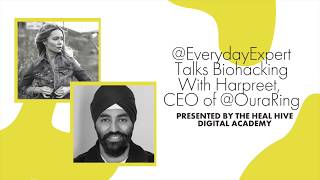
Brooke and Oura CEO Harpreet Rai discuss the ring's infrared sensors and what they measure: sleep, recovery, and physiological signals that can flag illness 2-3 days before symptoms appear. They cover ongoing studies at UCSF and Stanford, a COVID deployment to 3,000 healthcare workers, and how continuous temperature tracking could replace basal body thermometers for fertility tracking.
Chapters
Hi Harpreet, how are you?
Good, how are you? Sorry about that, we were having some technical difficulties joining.
No worries at all. How are you doing today?
I'm great, how are you?
I'm so good. I'm so excited, so thrilled to talk to you. Thank you so much.
Likewise. I am too. And I think as you know I am close to someone that's that's in one of your courses right now and I've been enjoying some of this food. I got my favorites. We can talk about that later.
Oh good, I'm so glad. Have you noticed a difference in your oura ring since eating anti inflammatory to the extent that you are?
Yeah. Again I'm not officially into course or anything but I need to be frankly. Yeah, I think my resting heart rate has dropped a couple points. My HRV is a little bit higher. I have been getting great deep sleep too but I'm still pretty new in so I think probably more progress to be made but frankly I think what I have noticed even as well is just overall like not craving as worst foods feel better after I eat. So thanks a ton for doing what you do, frankly.
Oh, you're so welcome. Thank you guys for doing what you do. I really mean it. There's very few things that I feel that I can't live without and I really cannot live without my Oura ring. My husband actually makes fun of me because if we leave the house I will forget my wedding ring. But I'm like oh my gosh, no, you have to turn back, I'm not.
Wearing my aura ring. And he's like what are you talking about?
He's like, you can live without it for like an hour or two. I was like no, no, no, no babe, I need my data tracked all the time. I'm basically addicted to it because of the incredible feedback it gives me. And I've been using it since September 2019. I've been using it for fertility tracking. I've been using it for basically optimizing my sleep. Even though I had done all the sleep resets, I really was having a hard time converting into a morning person. And I think what the oura ring gave me was it gave me the ability to see how much blue light pollution was causing my sleep disturbance and allowed me to actually become a morning person. And I think if anyone here is watching that, if you have troubles waking up in the morning and you've tried everything, I think getting an oura ring that gives you that biofeedback of when it is necessary to go to Sleep, when it is necessary to wake up is. And what you can do to optimize your sleep by getting rid of the blue light pollution is everything. I know that when I first started, I heard from someone at your company that one of the most remarkable things that they've found is that when you reduce blue light pollution, that you'll see that your Oura ring sleep quality goes up extraordinarily. And I kind of believed it, but I wasn't sure until I became a believer. And I'm such a believer. So a lot of people are still confused about how the Oura ring works. And even though we explain it in our heel hive, because we, you know, so many of our clients are using it to optimize their health and get through chronic illness. Can you just kind of walk everyone through really quickly, like, you know, what's inside of it? You know, how it. How it figures out your hrv, how it figures out your rem, et cetera?
Yeah, no, it's a really good question. It is a tiny ring, but we got, like, a bunch of sensors on the inside. I know these camera lenses aren't always the best, but I can see it. Cool. So, yeah, we have two LEDs, so that's. They're emitting infrared light. So I think people are sort of used to wearables and, you know, like your Fitbit or Apple Watch or Garmin, and it'll sort of have, like a green light. We tend to use infrared. One, it doesn't disturb you when you're sleeping. And two, I think it's been shown in other types of work that infrared light may actually be helpful.
Oh, yeah.
Not harmful to you. So we use. We have two infrared light LEDs, and then we have. In the middle, it's a detector. So essentially how most of these wearables work is you shine light at a really, really fast pace, and then you see. You're able to see a pulse back on sort of the receiver. And so that's really the core of it. Just like most other wearables, we do have three temperature sensors in there, which you can see on the finger, but it's a lot harder to see on the wrist. And hence most of those devices don't track temperature. And we have an accelerometer, which tracks movement, and a gyroscope as well. I think really the focus is. Our focus has been like, how do we really help people optimize their sleep and recovery? There's a lot of wearables that really focus on activity. And frankly, I like to think about that as sort of like a lagging indicator or leading indicator, you know, your sleep, as you start to perfect it really helps you prepare for whatever is ahead in the day.
Oh, without a doubt. It's everything. It's a foundation for your day, for your mental health and for your, you know, how you're going to optimize your energy for the day. I mean, it's a no brainer. Have you guys been looking into the research going into the glymphatic system and just how they've realized that if you do not sleep properly, you basically do not detox your brain. Your brain accumulates all these toxins and it brings you down with your mental acuity along with your emotions. So I think that this is, you know, could be a really, a huge game changer in the future psychologically for people who have sleep disturbances.
So that's so cool.
So this small wearable technology, this wasn't really, this wasn't really, you know, applicable a few years ago until you were able to get these small gyroscopes and temperature trackers and infrared into this small little wearable. And, and so the ring was chosen because of the fact that the finger is able to. It's like a better, more refined temperature tracking.
Okay, well, actually it wasn't just temperature. So temperature is one thing, but the, I think the other thing that drove it is just the quality of the pulse signal. I think like, you know, we're all taught to measure our pulse in kindergarten or first grade. Wherever it was on, like either on your arteries here or like your neck there are probably the two most common. And as you guys probably know, most of your wearables sit here. Can't feel your pulse here. Turns out these arteries here and here have a lot richer blood flow than the veins that sit here. And they go into the palm of your hand. And your hand is sort of really, the skin's very thin, those arteries are really close to the surface of the skin and that ends up resulting in a much richer pulse. Um, and because of that we're able to sample a lot faster, like when we shine those lights from the LED then, and not use that much battery as you would have to do on the wrist. And frankly the signal just looks clearer. So I'd say that's core to everything we do, whether it's sleep, sleep staging, whether it's heart rate and heart rate variability, whether it's even respiratory rate, which is another thing that we measure. And then obviously the finger also had advantages for temperature and Then the other thing is we just found people. People don't want to wear a watch to bed. It's sort of clunky. If you're trying to cuddle with your partner, it's like, you know, you can scratch them in the face, which doesn't look good. And I think it's just something that you sort of forget it's there. And, you know, when it's on the finger. Yeah.
No one really knows you're wearing it.
And, you know, I. I actually like the way it feels. I like the heft. It makes me feel tough for some reason. You know, it's like you put it on your knuckle. We're going to get into a lot of the questions. I know two big questions people have are about the sizing of the ring EMFs, and also about how to basically measure heart rate variability during the day. I know that those are three big ones, but I had a few questions that I sent to you that I wanted to talk about. And the one that really interests me the most, that I think that people who probably don't know about this study is that you guys have sent, is this right? 2000 rings for free to first responders in the Bay Area, doctors, practitioners, to track their response to Covid. And because your temperature tracker is so extraordinary. Can you talk to us a little bit about that? Can you talk to us about whether you've gotten any data back and how.
The doctors are loving it?
Yeah. So, no, thanks again for the question. So, yeah, we actually now have 3,000 frontline healthcare workers that we've given rings to. We did, by the way.
Thank you. Thank you.
No, appreciate that. And honestly, thanks to our first responders that are out there helping deal with this pandemic. You know, we'd be in worse shape without them, but. Yeah, so I think we've been doing a bunch of research at UCSF with a couple different researchers there and. And one doctor, Dr. Ashley Mason, she. She was actually looking into the ring and believe it or not, saunas. Um, so she was doing some work on depression and saunas and improvement in sleep and then improvement in depression.
Awesome.
Yeah, she was pretty aware. I'll have to connect you. She's great.
Oh, please do.
Yeah, yeah, she, she, you know, so she knew about the temperature sensing. And then as all basic research was paused globally, but at least in the state in the US Our research studies that we were doing, we're going to get paused for a bit. And one of the ideas that we had together was, well, she was like, Look, a lot of my peers in the hospital are likely to get sick. We're sitting there, we're seeing people that have Covid that are in really bad states, unfortunately, and we're really high likelihood to get sick and we're working harder than ever. And so even that's compromising your immune system. And so we felt like, hey, why don't we try to learn and also give the healthcare workers frankly safety and peace of mind. So yeah, we have 3,000 frontline healthcare workers. We also opened it to all oura Ring users. So we have I think over 40,000 now enrollees total.
Holy moly.
That's incredible.
What amazing data.
Yeah, it's insane. And then actually the hospitals now, so it's UCSF at Stanford, it's Santa Clara Valley Medical, and then we actually have Northwestern enrolled, there's Beth Israel in Boston and even Cornell Wheel in New York. So we've expanded. Luckily we did receive some funding from anonymous donor who actually did help us get some more rings out to increase sample size from 2000 to 3000. So that was super helpful and appreciate him for doing that. But yeah, the early data looks awesome, I think. You know, we also seen another research institute, the Rockefeller Neuroscience Institute of West Virginia, doing a similar type study where they deployed already 1000 rings to frontline healthcare workers in that state. And you know, between the two studies, I think some of the early data suggests that we can see this two to three days in advance, if not more. It's still early days, the study is not complete. And you know, it's a research study. So, you know, really the researchers have to go through and, and come to the conclusions on it, on the data. But frankly, I think we've seen a ton of interest and support from the community. We've heard from frontline healthcare workers how this is just a little bit of a peace of mind, you know, really like you're, they're working around the clock and I think we've all been there. You know, when you're exhausted, you really don't know how you feel. You're just like, there's something that's driving you.
Exactly.
Which is great. But at the same time getting a little bit of feedback, just make some sure, you know that they're doing okay.
We found the same thing with our.
Chronic illness community at the Heal Hive, that they're able to basically test, not guess, that they're able to see when they can push themselves, when they should take it easy, how well that they're responding to certain things and how Much that they need to do more in order to support their body. Are you finding the feedback with the ring in terms of these first responders to be more because of the temperature tracker or because of the heart rate variability or is it all the data points together?
Yeah, interestingly enough it seems like all the data points I do know from the research data that, that the, you know, researchers have talked about high level, they're seeing, you know, changes in heart rate, heart rate variability, so hrv, respiratory rate and obviously temperature. I think temperature, you know, some of those other things fluctuate. Well, all of those fluctuate, you know, a lot depending on what's going on. But in particular temperature, aside from, you know, your fertility and your cycles, I think, you know, really that's a significant one for onset of any type of influenza like illness, ili. So yeah, I think, I think that one was really interesting and there's been other, you know, wearables that are, that have put out some research before on just how you can look at just heart rate and the resting heart rate and just look at, you know, signs of the flu. But obviously the more data you have the better, the better prediction it can be.
I mean I think that it can be a game changer in the future and everyone should be wearing it especially for the fact that it can show you potentially whether you're about to get sick. And I think for frontline workers it's not just about their own health, it's what they're bringing into their family. And for them to be able to potentially self isolate days before and protect their family, especially because they're putting them not only themselves on the line but their family is everything. And so I prevent everyone and especially that anonymous donor that's helping support your guys research. It's incredible. So let's talk about Oura Ring and research because I think what's so interesting to me is that you see companies like this, especially technology companies and they invest so heavily in marketing and not necessarily in research. And so there's a consumer feeling that it doesn't really work. Where I love Oura ring because you guys are basically investing in research over in fact the marketing. So can you walk us through? I think for me one of the most fascinating research aspects that you guys have embarked on recently is your study, I believe in Berkeley, with temperature tracking compared to basal body thermometers. And for women out there who have gone through fertility issues, which I know I have a lot of followers who have, basal body thermometers are a pain you have to check your temperature before you even get out of bed. You have to make sure you haven't drink a glass of water in the middle of the night. They're just a pain. And you guys tracked women's temperature readings at Berkeley with a scientist there. Can you walk us through the study and what was gleaned from it?
Yeah, so it was Azure Grant is the principal investigator there. She's. She's terrific. And I know again, it's not published yet, but I think it's going to be pretty soon, which we're excited for. And what they tracked was a lot of different things. So they tracked a saliva test for different hormones. I believe it was LH and yeah, that's luteinizing hormone. Thank you. And also they looked at, frankly, they did multiple temperature sensors. So they did I buttons. They also looked at, you know, I forget there was another measure of heart rate and. But I forget exactly what it was. It was some type of even chest wrap in addition or something like that. And then they had oura rings. And honestly, the data, because we do track temperature all throughout the day and night, continuously. I think what they found was basically that the prediction of sort of when different hormones can surge based on some of the blood work and saliva work, they did show that oura ring can actually be even just as good as some of those other methods, if not better. And so I think it was pretty significant. Really excited to get that out there. And honestly, it does come back to like, just. We're one of the few companies that shares all of our data with researchers. You know, most of our companies that are wearables and I think Apple Health Kit, it's at least public on Apple, that you can only pull every fifth heartbeat, you know, from the device. And they see more data than that. Very likely.
And they're not sharing it.
Yeah. And I think it's just our view has been if we come back to, I sort of take a step back and look at how the wearable industry started. Really. It started with, hey, these step trackers and guess what, there's 500 million watches sold every year, of which half are sort of digital. Let's put an accelerometer, gyroscope in there to track your steps. And, you know, there's a market for that. I think when you take a step back and actually want to understand your health, you start to realize, well, you know, they started adding heart rate sensors in later that that's not the best place to measure your heart. Heart rate from a wearable it also doesn't have other things like temperature. And so our view was, you know, why not start with a device that can be more helpful that way? And how do we design the device for the problem, you know, not sort of a solution that already exists on the. On the market that we're trying to modify. And I think since that belief came rooted in science and choosing to ring, you know, in the form factor on the finger, we want to make sure we work with researchers to validate that. And I think as people sort of look at, I call them Wearables 2.0, and everyone's moving this direction, which I think is good for consumers, they're going to be like, okay, yeah, what's better for actually accurately measuring my health? And they want to hear it from researchers. They want to hear it from, you know, people that are more objective and not just the company, you know, selling marketing materials. So it's been core to the product since day one. We had a research team well before we had a marketing team at the company. And I think we're going to continue to do more of it. So we're just excited to help get this out there and for researchers, frankly, to have an open tool which they can learn from.
I mean, if I was a researcher, I would be so psyched to come across your company and to know you guys are being so open with this data. Because, I mean, what we know about science so far is that the more we come together, the more we share data, the stronger side. There I am, the more that we can learn and strengthen medicine. And I think that I see the Oura ring as a wearable device that can strengthen medicine now and in the future. So what I love about it is this idea, and we just touched upon it a second ago, really, is how you're empowering users to understand their body more. More. And to me, this is a big topic and a big theme in what I try and teach people is that, you know, medicine, we come from a place, and I think it's a very antiquated place where we think that doctors are know it all and that we sit back and we're just passengers in the journey of our health. And I think that wearing wearables allows us to not become passengers, but put ourselves into the driver's seat and. And to empower us to get this valuable data that helps us optimize our own health. And this empowerment is so important to me because I think that especially if we're looking at Covid, if we're looking at other infectious Diseases like Lyme disease that are overtaking so many people in America and throughout the world is that the more, you know, the more you're able to protect yourself, the more you're able to understand how your body's reacting, the more you can do to, you know, bring yourself back to wellness or, you know, get on the right journey. In terms of empowering people with the Oura Ring, I know that some people have some issues with understanding how it works and the trends and what that means and, you know, what the heart rate variability actually is. What are the top line solutions you would give people who are looking at Oura ring or already have Oura ring that have these questions about how do I best use it? How do I best use it for sleep? Can you walk us through a few of the top ones?
Yeah, I think first off, I think everything you just said is amazing and frankly, it's what we believe at the company too. And like, empowering people to understand themselves is so helpful. I do think, you know, I think a lot of us think the practice of medicine is antiquated. So, you know, frankly, giving someone a tool and a platform so they can just learn about themselves and what's working, what's not, is so empowering. I've gone through my health struggles, feel like all of us have. And you know, frankly, I think everyone feels like either health belongs to a doctor or belongs to your friend that has like perfect six pack abs. And you know, everyone I feel like wants to improve their health. That's something that's natural, innate in us and understand it, but it's challenging. Different things work for different people and that's all part of the journey. But yeah, in terms of, I would say first off, the material that you put out is also really helpful. So I think everyone should listen to you and thank you. You've even talked about some of the things you've done right, like blue light blocking glasses and just frankly, even going a step further and really getting your home set up in the evening with candlelight and getting rid of, you know, other things that may be sources of EMF and light pollution, that's definitely a top one we found for people improving their sleep. I would say for heart rate variability, you know, there's a lot of different things. Stress is hard to pinpoint. It can be stress from your body and your gut. It could be stress from your coworker or the work environment. You know, it could be stress from your environment, like molds, which I know is another thing you talk about. So I think you know, as a startup, we're trying to put more content and education out there to help users understand. Luckily, we have really a really strong community with people like yourself sharing that. But yeah, it's, I would say, really the power though. I think everyone's aha moment starts somewhere. And you know, I think for me even it was, I know alcohol is bad for me and the first time I had just a single glass, you know, with a friend and who my best friend from college who hadn't seen in a couple of years, it's like, wow, seeing that aha moment of oh my God, my data shift this much. And then I think it's just, oh.
By the way, my heart rate variability plummets. I can go from like super high 90s, 100, you know, for days and days and I have, you know, two glasses of wine and I can plummet down to 30. And it's remarkable because it's still clean wine. But if I drink too late, it's actually caused me. This may not be the best health.
Subject, but it's caused me to be.
More of a day drinker than a night drinker because I've noticed that if I have my last glass before 8pm, even better before 7, that my heart rate variability doesn't actually get affected as much. So in a way it's helped me become a cleaner drinker because of the fact that I know when I should drink and how to optimize if I do drink and how not to drink after 8pm, like, that is a cutoff point which I never would have thought about before. I would have never had that biofeedback. But yeah, alcohol is a big thing.
Eating too much salt.
I've noticed if I have too salty.
Of a meal at night, my heart.
Rate variability will be upset too. And I think it's probably because I'm hopefully drinking water during the evening and waking up and getting restless sleep. But all of these things are just fascinating when you see the details of how you operate in your day and how to optimize your health. Absolutely.
I think there's, yeah, we'll jump into a bunch of them. But frankly, it's that I think it's really just seeing that cause and effect that biofeedback, as you said, like, that's what we find is the most powerful thing. And so I think users that are people who are potentially looking at getting it or people that have it, frankly, I think it's that you take a step back every morning and whether it's, you know, 30 seconds or three minutes. You look at the app in the morning and you get feedback on how you're doing and then you sort of honestly just look within, right? Like you ask yourself, wait, what did I do yesterday that I could have changed or couldn't have changed? And I think it's just that is really the magical moment of self empowerment. And so it may be, you know, late TV or late alcohol and oh, you notice it. But I think once you have one of those aha moments then you just start to be a little bit more conscious and look at those changes all the time. So. So really on how to use it. I think it's just that biofeedback, that checking in in the morning, really, I say you're checking in, not checking out. I mean, I'm guilty of this, right? Like, you know, we have over 100 people at the company in two different places and so there's tons of slack messages, tons of emails, tons of text messages. And so you know when in the morning when you go through and check all those apps, you sort of check out, right. Like you don't ask yourself how you feel. And I think what's empowering about Aura is you look at in the morning and you, you check in and then you ask yourself, you know, and if you have a longer morning practice, you know, like meditation and other gratitude and self reflection, I think like you start to be a little bit more aware of it. I think this helps softly nudging you in a direction. So I think, I think it's really that you check within and you start to be like, yeah, what did I do yesterday? I had a late salty meal. You know that coconut curry that I had, I put, I like it with a lot of salt. Maybe I shouldn't have that for dinner. Maybe I should have that for lunch. And so I think it's really that self reflection that's empowering and you can start to modify all these things. I agree with you. Blue light blocking and just blue light exposure was huge for me growing up as a kid, it was weird. I never fell asleep. You know when you're sleeping over other people's house and you're 10 or 12 years old or however old I was. Like, everyone falls asleep watching movie at 2am and I just never fell asleep.
Neither did I. I was exactly the same. Now I know I was just sensitive to blue light my entire life.
Exactly. And so now when I put on blue light block and glasses and sometimes, you know, sit down and watch something, doesn't matter what it is. Passing out most of the time, which is, you know, just something really interesting to find and figure out.
Totally.
I mean, if people watching are like, will this really make a difference? What I can say is that we're. When I got the Oura ring, I had blue light blocking glasses, but not the really intense ones that block out all blue light. They were more the wearable ones you could wear outside that looked more hip. And I thought they were absolutely okay and that they were blocking enough blue light. It wasn't until I got the Oura ring and then said, whoa, my sleep is not optimized. Let me see if I can bring this down even more. Started using candlelight at night, turned off all LEDs, and wore super, super dark red blue light blocking glasses in which you basically cannot hardly see anything. All of a sudden, my deep sleep, my REM sleep shot up to an hour and a half, two hours per day. And I just was shocked. And if I don't wear them, if I'm out watching a movie at a movie theater or driving late at night, it absolutely depletes immediately.
Two things I want to talk about.
Is that I've also found that we're talking about these kind of data sets in a moment of a day, and those are important. But I also think that the trends that what you guys give us in terms of the graph of the trends can be just as important because so much of our health is not necessarily this one moment, but it's also about our health overall, like how much movement we're getting per day, how much sleep we're getting over the course of the month. Because, you know, certain things will change.
You might have a drink once in a while.
You might have a stressful day. So I love how you guys show these trends. Have you noticed that people use them? And I think kind of hard for people to understand and navigate and get back to the trends. But I use the trend feature a lot. And then I also want to talk about the meditation app or that the part of the app that you have for meditation and for breath work. So can you talk to us about both of those?
Yeah. So no. Thanks for asking them. Trends. Trends is something that, yeah, we were really glad to get out there. We do find users, frankly, using the tag feature and they'll start to make tags and notes and then look at their trends. And I think, frankly, what we really want to do is take that to the next level and make it even easier and make eventually a way for users to share easier, like what's working for them. And what's not just sort of learning from our community.
That's awesome.
Yeah. So I think, you know, we do see people both looking at the daily view and. But frankly, even the weekly and monthly view, I know it's pretty cool. Like most of the times when people go get towards the holiday season, they're eating a little bit unhealthier, they're probably breaking their routines and staying up earlier, not moving as much. We do tend to see larger changes in the whole database and other wearables have shown that too. And so I think you could see that maybe on a weekly or monthly view. And I often find some. Something really cool and motivating is just looking at vacations. So like anytime I go on vacation, I do, you know, get another level of improvement in my heart rate. Heart rate variability and you know, really is the time to recharge and sleep.
Be careful about telling people that publicly.
Because I can imagine that everyone working for oura Ring is now going to be advocating for qualification time.
If I was them, that's what I would be doing.
I'd be like, hey, this is the way I optimize. I'm much better on vacation.
Totally. No, I mean there's look, there's some, there's definitely some truth there that getting a little bit of time away makes you way more effective for the rest of the year. But no, I think trends is super helpful because you're like, hey, even when things get really busy for us at work, I remember seeing a month or two where my data was really bad. And just as that reminder, like, okay, I got to come back and focus on. Um, and so trends is something, you know, we'll be continuing to improve and I think make it easier to access, but that's how we see people using it. Um, your other question on moment, our meditation mode. So yeah, we do. It was a big request by users to be able to see their heart rate variability during the day. Um, you know, heart rate variability does have, from a measurement perspective, some challenges. So you need enough to data points or heart beats to actually show like an HRV number that's meaningful. And so we set that at five minutes. So if you do a meditation for over five minutes, you'll see, see your HRV and your heart rate trend, your HRV trend and your heart rate trend. And I think there's some good, you know, good medical research out there that has shown that perhaps HRV can be linked to the quality of your meditation. And I think that's another moment for biofeedback we've had users tell us like, holy cow. You know, when I first started meditating, my HRVs actually used to go down during the meditation session. Like, I'm trying to focus too much. I'm like too focused on not any having distractions. And then as they progress, see their HRV actually after a week or two or a month, really improve. So I think that's something that's really empowering as well, that biofeedback. But yeah, you can, you can get to that by hitting the plus button on the app. And then you'll see something called Take a moment. There's a couple options. We want to make sure we can increase the content there over time for people that want guided content. So that's something we're working on too.
Awesome. Because I think that it's such an.
Important tool to be able to use.
If you use it correctly. And I think that the Oura ring has an incredible place to grow within that. People have been asking and it's a huge, huge request that there's outside of the movement section of the app that they're able to look at the heart rate variability throughout the day. And are you basically saying that it's because you need so much of these data points to be able to create data that is basically truthful that you don't share the day hrv?
Yeah, I think it's a couple of constraints. That's probably the biggest one. So I think, you know, frankly, yeah, trying to find an exact perfect five minutes of like, clear, quality data, that's the challenge with all these wearables. Right. I think a lot of people don't know sort of where they're not at their best, and frankly, when they're not at their best is when there's movement. If you think about it, you're shining light and you're getting a reflection. It's sort of like if you were to get a satellite beam to your house and it was shaking your household, it's time, you know, that that wouldn't be a clear connection. And so, you know, we've tried to really, when we show data to people, we want to stand behind that it's accurate. And that's why we should, we decide to, you know, really show information that can be helpful to users. I would, I would also say the, the frankly, other thing about HRV during the day and even heart rate during the day that we do hear our users and we're working at trying to address some of that. Your heart rate in HRV during the day can change quite a bit. And frankly, sometimes it's a little hard to understand why something may be changing. It could be, frankly, because you honestly are in a meeting and have to go to the bathroom. And really that's a sign of stress to your body. It could be like, hey, you ate at a different time than normal. Could be that you're running late on a presentation, you're trying to get it done, and you're an hour behind schedule in your day. And those things aren't necessarily permanent stressors. Right. And what's interesting about sleep and frankly, getting back to sort of the brain and the body, really, sleep is this place where your body reflects all the stress of the day. Right. And actually tries to recover from it. Right. Like you sort of mentioned the glymphatic system. You're clearing away toxins. Those are toxins, inflammation markers that have formed during the day. Day, you know. And so I think really, again, these wearables come. Came back that we were taught to unfortunately measure heart rate when we're on, you know, the treadmill and holding it. And that was sort of the idea of like looking at your heart rate live. Frankly, I think what we've tried to do is give people a window that's probably the most helpful and meaningful to look at and focus on that. And I really do come back to even leading versus lagging indicator. The way we've seen even athletes use our devices, they'll go and look at their heart rate variability from the night before, their deep sleep and other things, and how much sleep they got, and then they'll figure out how to train versus hey, I'm going to go out for a run and have a planned heart rate zone and then realize, oh, I'm a little higher, a little low. It's almost like you're reactive versus proactive.
That makes sense to me. Yeah.
Yeah. And so I think what's so interesting about our brains and sleep is like, we're still learning this stuff. It's all new now. People have been studying heart rate and movement and activity for, I don't know, 50 years plus. I know at least Polar was the first one out there with a wearable monitor for consumers at chest strap. And that was in the late 70s. And so I think what's interesting about sleep is this is still like a new frontier. We really, as a society don't know all of the benefits and nor do.
We actually, I think, acknowledge how important sleep is.
Right.
We focus on diet, we focus on other things. Maybe this ubiquitous stress, but not. Most important aspect, I think, to our wellness, as I always say to people at the Heal Hive, you can go a month without eating, you can go a few days, even almost a week without really drinking water. You cannot go a few days without sleep or you literally go insane. And for that reason alone, it is the foundation for everything I do. It's all sleep related. And I think that Oura Ring excels in that area. There are some questions that we got in even from yesterday. But I'm gonna open this up, everyone, because we have about a few minutes, 10, 15 minutes left. You guys can put your questions into the question box and we will go one by one. If you don't know what that is, it's the question box below. But one big question people have and this worry, and it's a big trending topic right now, is emfs. And I'm sure you guys have gotten it before. And people are worried about the EMS that the ring might project, I think. But what I know of it is that it's so little. Can you talk to us about EMFs and for those worried about wearing one, what they can do?
Totally. No, I think, I think it is a concern and I, I understand it. And you know, we've designed a product to help in this area. So we do have an airplane mode. So you can actually just turn off all the connectivity in emf, you know, if you want to just track your data overnight or only turn it on when you sync. And so, yeah, you can put an airplane mode, as Knight Rider UK just said. So that turns off all the Bluetooth transmission and you know, it'll turn back on when you pop the ring on the charger. So that's a notification to the ring to keep actually transmitting. And really from a Bluetooth perspective, you know, we use the lowest Bluetooth setting we could. We actually don't even send a transmission that often. I think it's every 30 minutes. We check to see if the phone is nearby with a very quick pulse check to transmit data or not. I think other wearables, frankly, are probably pinging every five to 10 minutes, if not more. Um, and then the other thing I'll say is we, you know, because we have such a tiny battery inside the Oura ring, we don't really have the luxury of having more power to send, you know, a robust signal to really, really far, far away distance. And so I sort of always look at that too. Like energy can't be created or destroyed. And like we have a much smaller Battery. It's probably 10 times smaller than your average first base wearable. Six to 10 times smaller and probably.
Smaller than your just own watch you're wearing, right?
Oh, definitely, yeah. Yeah, without a doubt. So I think, yeah, because of that, like, you know, we also just don't use a lot of energy when we're sensing all the things we do. But yeah, I think the airplane mode was probably the most helpful and then, you know, frankly sending it less often a wearable signal than, than other devices. So we sort of let users. Some people do want to check their data a lot and they do like having a connection and, you know, the benefits of technology. But I do think for those who are more conscious about it, there's a way to turn it off.
Reid Falconer just asked a question. I'll get to the other questions we've gotten, but he said custom tags and correlations graph showing tags of positive negative effects over a time period. I have to say that this is my big request too, is to be able to search for my tags and be able to find them and graph them. It's probably a big ask because it's asking the algorithm to do so much processing. But do you think that will be in the future?
Yeah, it will be in the future. I think even actually next month you'll see an update to more tags. So that'll help, right? Because I think what we actually did is we looked at all the notes and custom tags and then we went and actually looked at how many people wanted certain amount of tags. And so then we were adding a bunch more to make sort of the correlation feature easier that you can see with regular tags. We also, in the aura on the web, we have a cloud dashboard that any user can have access to. We even added some features there like Pearson coefficients so people can start to run correlations. I think in the future you can imagine correlations against those tags would be really helpful. So, yeah, working on does have design challenges because everyone wants to use it on the phone and it's like this tiny screen and we have all this data, so it is a real design challenge. So, yeah, I think we're working on it, frankly. I might even try to pull you aside and talk to our, our chief product officer to give him a little more feedback on maybe some things that you want in the tag side just so he has a little bit more direct exposure. But we're working on improving it as we speak.
I'll come in and talk with you guys anytime. As everyone knows here. I'm such a fan. So this is a question that we got. I'll bring it up. Dr. Joyce. VB says, I see patients are scared of monitoring their data. How can we communicate that this is safe? That's a good question.
Yeah. Patients monitoring their data. I'm assuming in the study is what that question was related to.
Well, I just think people are scared of this Big brother understanding, knowing your data. I always say to people, they already do. So if anything, don't, you know, don't take away your ability to understand your own data because of this kind of paranoia. You're on Facebook and you have an account, but you won't wear a wearable. Like, please. But why don't we talk about that in more detail?
I wish I could say that when people ask me that question.
Well, I can.
Look, I think we take privacy super seriously. We, we do. We are gdpr. You know, the company started in Finland and because of that, I think we had some, you know, really positive things, and one of them is privacy. So GDPR is Europe's General Data Protection Rights. I might be missing the r regulation of rights, but, you know, all of our data in our database is de identified. So we don't know any individuals data. We don't sell that data to third parties or advertisers.
That's important.
Yeah. So, you know, we take that stuff pretty seriously. Fortunately, like, unfortunately, gdpr, I would say, is even harder than some of the other regulations like HIPAA in the US and, But I think it's the right thing. And any of the studies we've done, any of that research, always opt in. So, you know, for UCSF and sharing your data with researchers, not even sharing it with aura, you're sharing with, actually, you know, the University of California, San Francisco, and they have, you know, independent review board and irb. Right. That, that is appro, you know, what is allowable to look at and what's not. So, you know, we've chosen to work with third parties, frankly, to analyze some of that data because I think it can get pretty tricky if we're doing it. And so I really appreciate that person's question. It's. We're doing everything as we can from a company, you know, on the other side too, I do think the future of health, as we've sort of talked about, is people sharing what they learn with each other. Right. Really democratizing health. Like what works. You know, I think for one person who's preaching something about their diet at any time may not work for another, but there's probably someone who has figured it out that's similar to you. And so I think being able to empower a community is probably something we want to do more of. And, you know, frankly, we did do some user survey work. We found that roughly 70% of our users want to learn from the community, which we found is, like, super inspiring to hear. Right. Like, and I think it shows, like, people still are willing to learn from anyone. And what's so cool about Aura is like, you know, you can see what's working for you and then share that with others just like you do.
Absolutely. I couldn't agree more.
Another question we have is, which I.
Have a question too. Which finger tracks data the best? I have the sizing kit, and I'm having difficulty choosing the size, and I think we see this a lot. I chose my ring finger because of the fact I knew I was going through ivf and I wanted to be able to go between these two fingers depending on my swelling because of ivf. So I've just. I chose it to be able to work on two fingers. But I think the sizing is an issue. People have asked for a half size, and I personally want to see a gold version. So are any of those things happening anytime soon?
A lot of questions there. Gold version. Hear you and a lot of people requested this. We do think appealing to both men and women is equally important. So we're working on it. I will say this. We did do a rose gold, which some of our users may know. The reason we discontinued it was, frankly, because it was fading to gold, as lots of rose gold does, but quicker than we wanted. And so we felt like it's not fair to put a product out that isn't going to be as durable as the rest of our products. Products. And so with the coding for gold, that's. That's been the primary reason for a delay, but we're working on it in terms of sizing. So the reason we send the sizing kit is so you can actually figure that out. Like, which, you know, ring and finger, which finger you want to wear it on as far as data and accuracy, actually, all five fingers or 10, luckily, give great data. The battery life is a little bit worse because the signal can be weaker on the pinky, perhaps, and the thumb. So we Recommend the middle three. But frankly, I think you'd see a 10 to 20% difference in battery life. So really it's like what you prefer. So, you know, we. We sort of say, try it on, feel it. I do agree that half sizes would be nice as you can think about sort of A hardware company that has to make lots of different sizes carrying a lot of inventory can be pretty costly. We definitely want to do it one day. I don't think we're there yet, but hopefully as we grow, we can make sure we do that to give even a better fit and experience for our users. So half size is not coming yet. Gold. I think you could see that happening sooner rather than later, but still no different ended timeline.
Well, I tell people it's not really about the half sizing. It's about feeling comfortable and knowing that you can move it finger to finger, period. Because your fingers are always going to.
Change depending on temperature, how hot it.
Is, what you're doing. Let's see, we have some more questions. Let's see. When will you fix low battery warning notifications?
I saw that. Working on it. Working on that as we speak. So yeah, I think we only give a notification below 25% and we should give a notification even earlier. We've even thought about how do we get that individualized for each person because everyone's sort of battery life will be a little bit different based on how strong their pulse signal is. And so eventually our goal would be to do a personalized battery life. Like you. You will not be able to record data tonight if you sleep for eight hours. So please charge your hearing before. But working on it.
Another question that we got, well, I think we got like 15 people ask this so far is will you guys be able to have an oxygen saturation meter on it?
Yeah, obviously a big request given, you know, some of the, I think stuff that's out there with tracking SVO2 and illness. It's something we think is interesting and we're, you know, I think we look at a lot of different future hardware right now. Not, not something that, you know, we're planning immediately, but I think there's a lot of user requests we get all the time. I do think that SpO2, frankly, for when you're getting sick is. It's not as helpful in the onset, but once you have it, obviously, you know, I think the severe cases that have to go to respirators right now for Covid are people who aren't getting enough oxygen. So I think when it starts to get more severe, SpO2 is really helpful probably in the early onset and warning. You know, I don't think there's enough research out there saying it's. It's as helpful as some of the other things in predicting the onset.
I mean, I think that makes sense is that when you're already that sick. You should already be at the doctor and they should be monitoring you. And you really wear a bulletin. It shouldn't be all based off of you deciding how to manage your own health. Okay, we have a few more questions. Let's see which ones. Actually we haven't gone over because we've gone over a lot. I think a lot of people worry about how long it will last. I think that's a really great question. Do you guys have a sense of how long the Oura ring will last in terms of daily use?
Man, we still have generation ones out there. So our general.
What, how old is that?
Yeah, 2016.
Whoa.
Yeah, actually they started shipping at the end of 2015, so there's still some more rings, believe it or not, out there in Gen1 we. I remember actually just recently a Gen1 user reached out to us saying his ring died and he was like, it must have been man, November 15th. So yeah, he went, you know, for four plus years, four and a half years. And we do have a two year warranty. Most wearables only have a one year. Yeah, we do have a two year out there. So I think that should give people like satisfaction and comfort. So I think as far as gen twos that have been out there for two years, very, very, very few really just prototypes. But no, I think it's titanium. We found it's really hard to break. I think a lot of risk based wearables, frankly the strap used to break. I know from Fitbit, people have even said that's their most common issue, that they're flimsy, no ring, it's titanium, it's pretty sturdy. And yeah, we have a two year warranty life. So I think that that gives. That's best in the industry.
That's awesome. So I want to quickly, before we leave, talk about our partnership with you guys with the Heel Hive is that we are now using and encouraging every Heal Hive Master and Heal High, for those of you who are just tuning in, is a online educational platform supporting those with chronic illness and those with issues relating to modern maladies, like everything from thyroid dysfunction to Epstein Barr virus to as we know, tick borne illness. And you know, for me, I think it's not just about our members being able to wear this to get that biofeedback and to quote test, not guess. But I feel that just as like we're talking about with COVID that if everyone wore these, they'd be able to go to their doctor and be able to show their doctor because so Much of you know, especially tick borne illness, is that you might, it's really, really hard to test for. You know, you might not know on the outset that you're sick, that when you got, you know, bit three months ago that it might have been causing this distress. But if you were wearing it, you were. And even if your numbers came back in terms of your blood serum numbers as fine, because we know that at least for Lyme disease, that the testing is so inadequate, many times over 60%, it comes back as a false negative, that if you could show your doctor. No doctor, it's not in my head. Look at my heart rate variability for the last few months. Look at how badly I'm sleeping. Because with Lyme disease comes insomnia becomes stress on the body, becomes temperature dysregulation. I just think that it would be so helpful. So for any of you that are listening, that live in an endemic tick area, the east coast, the Great Lakes region, Colorado, I mean, there's disease borne ticks everywhere in the world, in every single place besides Antarctica, but especially in America, especially in Norway, in Finland, it's growing exponentially in some areas, 600% a year that these ticks are growing with these tick borne illnesses. And do you see that the oura ring, especially in the future, is going to be a game changer for those with chronic illness, especially as it relates to them getting, you know, having doctors pay attention to these maladies that are not necessarily always visible?
Yeah, I mean, first off, yes, I, I definitely think it can be. I think really still, given what you just said about sort of the false test with Lyme disease and how often there's false negatives, that frankly, doctors are trained to look at those tests and they're not trained yet to look at all this physiological data. I do think that's changing, but I really do think the empowerment starts with the consumer. And honestly, I think it gives the consumer and confidence that hey, even if this test said negative or this doctor said something negative, I know for me that something's not normal and you know, something's off. So I think it gives honestly confidence to people who are searching for answers first. Right. I think that's the hardest problem, right. Is that people run something and you're like, no, I know I'm off. I know something's not right. I didn't always used to feel this way. And you know, I know especially with lime, it can be really challenging because someone called me.
No problem.
You know that most doctors aren't trained to actually even know how to diagnose and treat it. Right. And so I think it's especially helpful as a tool of self empowerment and self learning. I do think we'll get to a future state, Brooke. I hope it's three years, not five to 10 years or 20 years away where the practice of medicine keeps changing. But I think the more data we gather and frankly, the more positive, you know, people like you that are out there showing that no, these physiological parameters that are backed by research are changing. When I start changing my health habits, this means there's something wrong with me. Right? And I think that it really is going to take a powerful community and coalition to change that and that's why we're here.
And hopefully doctors who start to wear these, see how valuable the data is and see that they're going to actually empower their patients to take better care of them, their own health by having this. So for everyone asking, if you want to order an Oura ring, you can go to oura ring.com or for the next two days I believe you can go to the Heal Hive or Everyday Expert and you can get a code for, I believe, $50 off. And that's only for the next two days. And if you think about it, 250 for your health for the next year. There's no better way. So do you have anything else to add to our followers? We've had so many, I think we've had over a few hundred today. Any last words before we say goodbye?
Look, honestly, thank you. I think the stuff that you're putting out there and showing people how to improve their health, that's what we need, right? We are part of the, you know, part of the solution. But frankly, I think people look to you and your journey and all the great content that you've put out. So thank you for doing that, Brooke. And frankly, thanks a ton for having us on too. You know what?
We're stronger together. We all are. And Data is, I always say Data is queen. Data is our friend and research scientists are our friend. And the more that we can work together with wearable technology, with the right data, with research scientists, we can all become healthier and happier for sure. Thank you, Harpreet. We so appreciate it. Love from all of us. Yeah, everyone have a good day. And this will be live for 24 hours. Then we'll put it on IGTV. Bye everyone. Wear your aura ring.
Bye.
More from The
The Science Of Bee Venom Therapy: Lyme, Mast Cell, Autoimmune + Long Covid With BVT Pioneer, Brooke

What does it feel like to be approved to safely begin Bee Venom Therapy with The Heal Hive?
The Heal Hive Talks Bee Venom Therapy With Lyme Disease Survivor Alex Saidac (@Gypsyonahorse)

Heal Hive Success Story: Alumni Ali Kates On Why Lab Testing Was Essential To Her Healing

Bee Venom Therapy Success Stories: Brooke's Journey Back To Health With The Heal Hive
The Heal Hive's Founder Talks Bee Venom Therapy, Lyme disease and BVT Bootcamp
Welcome To The New Heal Hive: Our Founder Walks You Through Our Bee Venom Therapy Bootcamp

Testimonial: Why The Heal Hive's Lab Testing Course Is Essential Before Beginning Bee Venom Therapy
Testimonial: Why The Heal Hive's Lab Testing Course Is Essential Before Beginning Bee Venom Therapy