Theresa Byrne demonstrates EEG-based neurofeedback with therapist Sharla from Neurofeedback in Highlands. The video shows how electrodes are placed, explains uses for ADHD, autism, and PTSD, and shares Byrne's personal results since April: improved attention and memory. Feedback comes through visual movies and tactile vibrations tied to brainwave frequencies.
Chapters
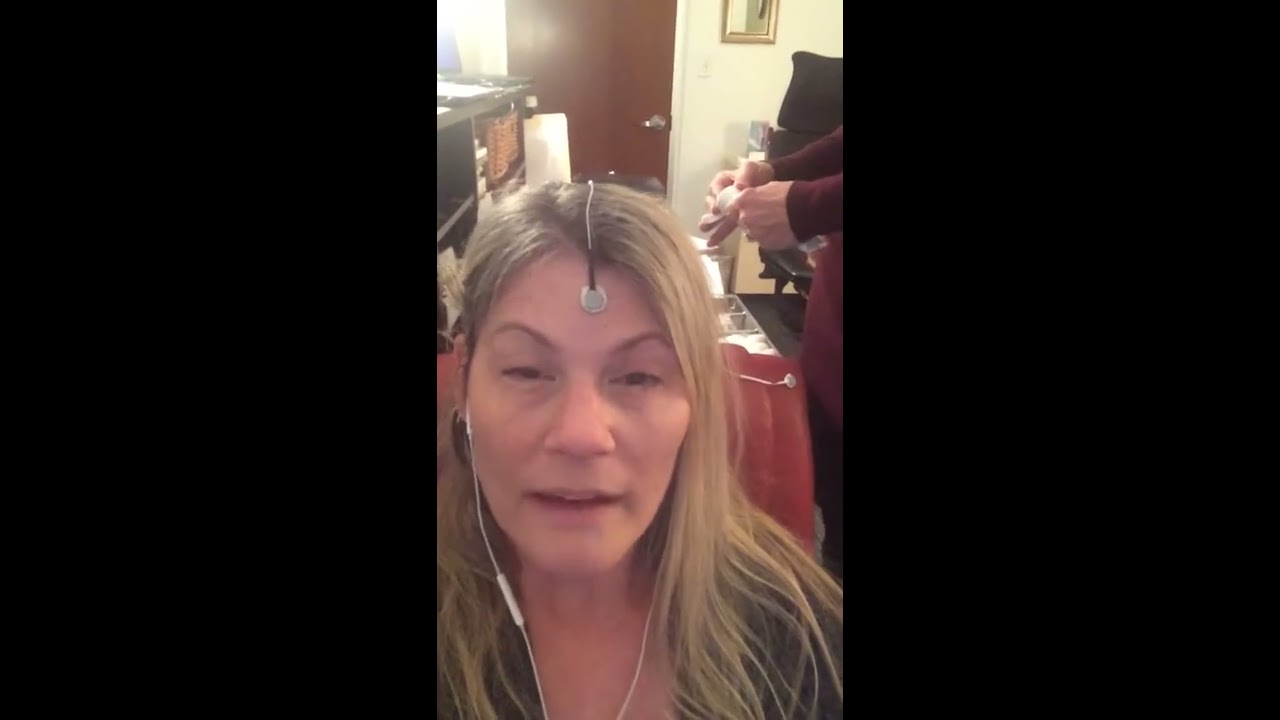
Hey, so some of you guys have asked about what neurofeedback is and what an EEG is, and the lovely Sharla has agreed— my neurofeedback therapist has agreed to show you what that looks like. And I'm going to show you what the EEG machine looks like. I don't know how to flip the camera. Let's see. No, we're not going to flip. We're just going to show you. So that is what an EEG looks like, and it's going to measure my brain waves, and Sharla is going to hook Meet up while we film this. She is a neurofeedback therapist. She also does CBT, which is cognitive behavioral therapy. Neurofeedback's been around for a long time. How long? Oh, probably since the '60s in one form or another. Biofeedback has been— biofeedback's been around since the 1960s. Neurofeedback has been around for at least the last 10 years. It's oftentimes— it's actually been really helpful with kids who have autism, spectrum autism, people who have ADHD, ADD, and they've found research with PTSD. In fact, they did a great study with vets who had PTSD, and they found that using EEG and neurofeedback work Helped them. So what she's doing is putting stuff on my head so she can attach the electrodes. They found that the vets were able to help alleviate some of their PTSD symptoms, and not only that, they were able to live better lives. So for anybody who's dealt with anxiety, depression— and depression and anxiety cycle onto the, the same cycle— And for those of you who have traumatic brain injury or have dealt with traumatic brain injury, you may or may not know that the brain will cycle in and out of a lot of different things. So insomnia, anxiety, depression, PTSD, worry, all kinds of crazy cycles that you might have used to have been able to control, or your thinking might have formerly been, I don't know, easy to manage, you find that after a brain injury or an accident injury to your brain, all of a sudden you're not in charge anymore. And that can be really frustrating because when your brain is the tool that you use to help guide you and it's not working anymore, you're kind of screwed. So neurofeedback has been a therapy that I've been doing since Last April, and it has definitely helped me in terms of being able to track better. I feel like I can hold on to conversations longer. I feel like it's helping me focus my attention mostly. I'm still kind of off the ADD. I have a, I have a super fun kind of ADD called— what is it called? Inattentive? Inattentive. Inattentive. Got it right. ADD. But for me, neurofeedback has helped quite a bit. The interesting part is that neurofeedback, its job is to help measure your brain waves, and then it gives you input into your brain through these here electrodes. Do do do do do. One thing that we have found with my brain waves is that I am calculating. Incredibly high. What are we going to today? We're at 1.6. So I'm at 1.6. 80% of brains tend to be at 0.001. 0.01 through 0.1. 0.01 through— 0.1. Point— what she said. So my brainwaves are calculating at about 1,600 times that of 80% of brains. In neurofeedback. And what we're trying to do is find a frequency that works with my brain so that I can help my body integrate all these new pieces of information and all the brain cycling. So hopefully you can see some of that. I'm going to flip the screen and you can see what I'm going to watch. I'm going to get visual input and stimuli. You get a bear. Oh, I'm going to have a bear. I get a bear. This is a bear. The bear does some cool vibrating things under my arm, offers me some more feedback. You can turn it on if you want. And then there's going to be visual feedback through a movie and a computer screen, and I'll show you what that looks like. I found the match to Bright Big Sun. Yes, I am watching— for those of you who don't know, let's see if you can name that movie. She's a custom jewelry designer, so I showed her the— And depending on whatever feedback my brain is giving, the screen will adjust. So thank you for watching this. I hope this is some information for you about neurofeedback, about what an EEG is, about what brains do, and about the fabulous Charla at Neurofeedback in Highlands. Thank you.