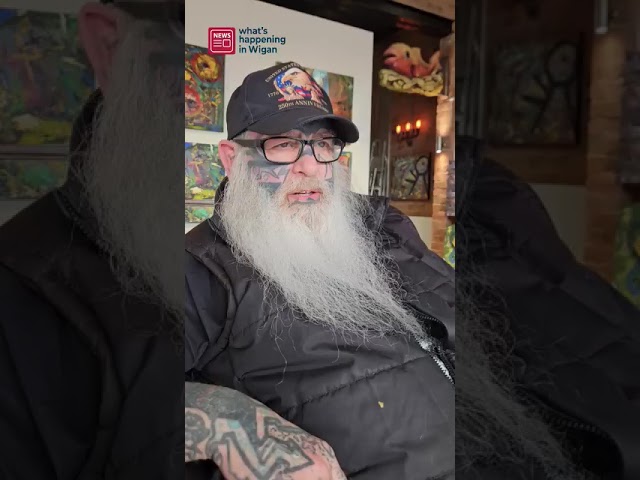
AJ Lynch Interviews The Scary Guy 2021

AJ Lynch talks with The Scary Guy, a motivational speaker and tattoo artist on a mission against violence. They discuss his book 7 Days and 7 Nights, his worldwide trainings that change people's minds years later, and his plans to open a training centre in Wigan with an art gallery and ESL tutoring.
Chapters
So for those who don't know, Scary Guy is an American motivational speaker worldwide, dedicating his time traveling around the globe, eliminating violence and hate, making the world a better place. Scary Guy has a book out called 7 Days and 7 Nights. While working hard, he also runs his own tattoo studio. Welcome to my podcast, Scary Guy. It's an honor to have you.
AJ, it's good to be here, man. It's been a long time since I've seen you. Look at you. How long has it been?
It's been a very— I think it's been a good 14 years because you came to Buttershaw Enterprise College, I think it was called.
Yeah, Buttershaw, yeah.
Yeah, and my missus went to the same school as well, so she's getting on there. And I remember you had like this bloomer week, and I remember sending you a message about you know, because I really enjoyed it when you were there and I got to meet you personally. I got escorted to my class. I remember you had Kit Kats on the table. You had your gold teeth, which you still have now. You had a bit of a goatee, but in a different color, a nice color. It stood out and I was just like, wow, that's awesome.
When I was there and you were there, How old were you?
I was— so we're talking, I left school— I was 16 when I left school. So I was probably a good 12, 13, I think. I think possibly. I'm 25 now, going 26. So it's been a very, very long time. So I wanted to talk to you about— so when you go around the globe with a positive attitude, spreading love and peace everywhere you go. When doing this job, what joys does this bring you?
Well, this is it. Look at, look at you, 15, 14 years later. That's my baby. Yeah, you know, I have to tell you that that means a lot to me. I, I just got a letter from a young lady. Well, she's like you, 25, 26 years old, and I was in Germany 14, 15 years ago, and, um, all of a sudden I get this letter from her and she's spilling out her beans about, you know, how it made an impact in her life and on and on and on. And she's never communicated any of that to me.
Wow.
At that time. But all of a sudden, 15 years later, I get this letter and 15 years later I get a message from you. And here we are on your podcast show. So I can't tell you how that feels. That feels absolutely incredible. And yeah, I get— you know what? I get really good vibes and really good feedback during the actual sessions that I do, but less, I think, less in the moment because people are less apt to speak out and they don't feel the impact immediately. It's not one of those things where when I do what I do in the training, they go, "Oh, that's incredible. I love it. Oh, thanks, Scary Guy. I'm a changed human being." No, I think it's It's a slow, life-changing process once people come to grips with what it is I'm really doing and what I'm saying. And it takes time for them to make adjustments in their own lives. And obviously, because I get the feedback anywhere from— isn't it 5 to maybe 10, 15? Now it's 15 years later, I get feedback. So that's just an incredible feeling. I can't tell you how that feels.
And that's just in— that's just in the UK alone. So imagine all the areas and countries you've been before?
Yeah, I got thousands of emails, thousands of letters, thousands of interactions with people, and they're still coming in. And even now we've been kind of shut down because of COVID-19. Oh, we haven't done anything in schools or anywhere for 2 years now because of COVID And, um, I'm still getting feedback. And I'm— look at now, we're doing a podcast on a computer, and we kicked off our podcast show too.
Yeah, and that's one of the questions I was going to ask you about your podcast, actually. Um, if I can look it up for you. Yeah, um, you see, I said I've noticed you have your own podcast, A Wake Up Call to Change the Mindset of the World. And I was just about to say, tell us more about this and what do you talk about on your show?
We've got, we've got, uh, our number one mission on the podcast is to find people that are really interesting, that are helping the world become a better place. So it's not necessarily A-list celebrities, you know. I don't care if they're movie stars or if they're, you know, big name people. And most of the people we to. Like, we just talked to, um, Mark Richardson. I don't know if you've ever heard of Mark Richardson. He's the drummer for, uh, Skunk Anansi. Ever heard of Skunk Anansi? No, no, I am, I am in a rock band, so you should check them out. Skunk Anansi. He just did a podcast, and ours is a 1-hour show, and but it's not video at all, it's only audio. So it's, uh, it's pretty interesting stuff. And then we just did a guy, um, in Hollywood, California, and his name's Bobby Rydell. Now, you wouldn't know him, would you?
No, I'm normally the person that's kept out of— especially after the pandemic, I've been stuck at home, really.
So yeah, but Bobby Rydell is 79 years old. Yeah, but Bobby Rydell in the '50s was a teen idol, a singer, and him and Frankie Avalon— I don't know if you ever heard of that name, Frankie Avalon. You gotta look these guys up.
I'm gonna definitely look these guys up after this podcast, I tell you.
Fabian. So Frankie Avalon, Bobby Rydell, and Fabian are the old— they're the golden boys, and they still tour and do singing events all over the world. And we have Bobby Rydell on the show, and they talk about an unbelievable human being. I mean, he's out there just still putting positive energy on the planet, and, uh, Oh, we'd love to have you on our show.
Oh, you know what, I would absolutely love that. You know, I would love it.
Yeah, we'll get you on.
How does your podcast go? Do you just phone people or do you invite them to be with you at the podcast?
Well, I've got my manager. Manager's name is Gary Lee. Gary Lee has been with me now, um, for— it's got to be 18, 19, maybe 20 years he's been my manager, and now he's my producer. Producer. So he's the manager and producer for the podcast show, and what he does is he picks the potential guests out and then he makes contact by email with them and he invites them on the show and schedules it, and he does all the background work for the show. Even though it's called The Scary Guy Podcast Show, it's just co-hosted and produced by Gary Lee. So without him, quite just between you, me, and the wall, without him I don't know that I'd have a podcast show because I don't have the knowledge or the energy like you, because you got your own thing going, you know. I don't, I don't have that. I don't want it, um, but I do want to get out there and meet people, talk to people, spread the love and the positivity around the world. Yeah, well, we only want people on our show that are actually making a positive impact in the world in some way, shape, or form, so That's what we're all about.
Yeah, well, you know, it's amazing to see that, you know, you're growing, you're growing extremely. You've worked with over 7 million people around the globe, which is just a massive achievement. I couldn't, you know, you know, you must work very hard because you not only do you, you know, you have your own studio, you have your own podcast, you have, you know, you do painting, you do amazing paintwork. I've noticed, which I really want to buy. I want to buy one. I've got a massive white wall here that has no image whatsoever. It's just white, and I would like a nice big canvas. And but I want a nice, like, meaningful canvas, if you know what I mean. Something that will draw me attention. So yeah, I need, I need that covering for a bit, because, you know. But I don't know how much you charge for your canvases. How much do you charge for your canvases?
Well, you know, they're on— there's a couple, 3 or 4 different art websites that I have.
All right, okay.
Versace Art, and then there's Versace Art, Versace, and I can send you links to them. But yeah, the best way is like what a guy did in Germany. If he's really interested in buying one of my works of art, is to contact me directly.
Oh yeah, definitely.
You know, you can always share my email information on your podcast. So if anybody ever wants to scope them out and check them, then if you contact me directly like he did, you're going to get a better price than if you went to the website. I guarantee it. Because if you do that, you're like, you know, you're like coming to me anyway. We're doing a podcast, you're a friend, so I'm going to hook you up. I'm not going to charge you my normal £25,000 rate. No, you know, I'm gonna get you something that you're gonna enjoy and something that you can handle in your budget. That's, that's kind of where I'm at.
That'd be perfect for me, Scary Guy. Thank you. So there is one question, uh, Piers Morgan once said on Good Morning Britain that people with tattoos are uncomfortable in their own skin. What do you think about his own opinion?
Well, I think Piers Morgan is uncomfortable in his own skin and he needs to get a tattoo so that he can figure out how to cope with himself. I can tell you right now, I can tell you right now, if Piers Morgan got over himself and got himself a tattoo, he'd relax and not be such a— That's good.
I didn't expect that from you, Scary Guy, but that's really good.
No, no, no, I say kind of loosely because Piers Morgan, in my opinion, has had moments of pretty cool time on screen, and then he's had moments of really, really horrible negative vibes.
And putting people—
yeah, he seems to go, um, when he needs attention, he turns into this rabid dog, and then when he's got his attention and he's kind of successful, he turns into this kind of mellow nice guy. So you know, he doesn't know where the happy medium is and he doesn't know how to be that kind of guy yet and I think a tattoo would help him.
I do agree with you there, The Scary Guy, because I personally decided to have tattoos like this, not only did I design them myself, these tattoos personally on my face and side of my neck, they were trying to represent to not judge a book by its cover, so when they look up to me, normally my first reaction is, "Oh, have you been to prison?" or anything like that. But until they meet me and get to know who I actually am, then it kind of— they're like, "Oh, I didn't expect you to be like that," you know. And that's the reason why I kind of got the tattoos, because not only do I like art myself as well, I love being creative in many ways.
Well, you know what you gotta do, don't you?
Yeah, exactly.
You've got to get yourself scheduled to come down to my studio.
Your studio? Yeah, we, you know, we've talked about this before, before the pandemic hit. We did speak about this, and yeah, we've had so many delays so far, so it's not been too good, especially in the UK. But hopefully we can get better and keep going on. Um, so on a serious note, when coming across a child who has been a victim of bullying What's the advice you give to them to make them feel better?
Well, first thing I want to do is back up one sentence, and that is, I don't have the power to make anybody feel anything. That's really important to understand from a psychological and a philosophical way. I don't have that power, and the word make is used in such a way that it gives up individual power to another human being. So what we do is we change the definition of how we communicate and what we communicate. So how do I help someone that is being victimized and picked on and bullied? Well, the one thing I want to say is eliminate the word "make" out of your vocabulary. So nobody has the power over you. You can't say, "They make me angry. They make me sad. They make me this. They make me that." That's giving them the power up front. So we're going to take away that piece immediately and not use it anymore. So what I do though is I do help them understand their power and how they then don't have to be a victim of those people around them that are being so negative. And how I do that is I show them that everything that comes from an individual, everything, all their words, all their actions, Everything that comes from that individual is a direct reflection of who that individual is. So it was created in their brain, came out of their mouth. It goes through the air, their words, and it hits you in the ear and it goes in your brain. So the bottom line is, who's in charge of your brain? That's a question you need to start asking yourself. Who's really in charge of your brain? Is it the person speaking? Or do you have the ability to hear someone speak and not become what you hear? Yeah, that's your power. That's your choice. So once I start showing them that piece and teaching them that that power really lives in them, not in the other person, that it doesn't matter anymore what people say, it doesn't matter what they say on social media, it doesn't matter what they type on the screen, it doesn't matter what kind of words they use. It doesn't matter what they say on the streets. It doesn't matter what they say in the hallway of the school. You got the right to walk down the street, be who you are, and not react to them anymore. You can start responding in a different way. So that's what we teach. And that's kind of it in a nutshell. I mean, it's a lot more in-depth stuff than that. Yeah.
Is this what you mentioned on your podcast as well? Do you mention stuff like this?
Well, sometimes we don't in our podcast, we don't get into a lot of that. It would be cool to have you on because we could get into that because you actually went through the training 15, 14 years ago. Okay, here's what happened then, and now here's what's happening now, and then we could talk about this kind of stuff.
Yeah, yeah.
But Bobby Rydell being 79 years old, you know, he's going to tell his life story, and sometimes I'll have a chance to interject some of my concepts and theories with Bobby Rydell. But it's, it's, it's a little more lighter concerning these theories and concepts with the guests.
Yeah. So you can— so normally on your podcast you have a few guests, you know, just have a nice chat about your lives together. And, you know, is it something that you enjoy doing on your podcast? Is it something that keeps you going? Talking and bringing things out, you know, getting things out of your chest, off your chest and stuff like that. Is that— does that help you?
Well, one of my podcasts I had, uh, it was, um, she was a counselor and, um, Maxine Scott was her name, and she was really, really cool. And she has a— she does a mind-body-spirit, um, training session, and we had her on. Yeah. I had talked to her briefly about my relationship with my daughter, my one and only daughter in Minneapolis, Minnesota. So I had a chance to talk about my emotional connections to my family, and she helped me out with it right there on the podcast. So, you know, just because I teach what I teach doesn't mean I don't have problems. You know, I— yeah, that's the bottom line. You know, everybody's got their own personal life going on in the background. And it's okay to be who you are, and it's okay. And so I shared them with her, and she, she gave me some advice, and then I made some decisions on how to go forward with that situation.
Yeah, well, that's good then. At least that, you know, because obviously a lot of people do have personal issues. I've had personal issues, and I still get personal issues, and people, a lot of people do. A lot of people don't show it, which a lot of people say that it's unhealthy for you if you hide it and don't show your emotions and stuff, bottling it up. What would be the advice that you'd give to them if they are suffering and don't want to talk about anything and stuff like that? Is there anything that would concern you? Would you discuss it to them and go, look, you might need to go to talk to a doctor or go to a counselor or anything like that?
Would you Well, mental health issues in England have always been really, really taboo. I mean, they've always been kind of covered up. I think the British are funny people, in my opinion. I love, I love the British. I live in Britain, you know, give me a break. I'm a dual citizen. I became a British citizen, and I didn't become a British citizen because I think Britain is such a cool place. I became a British citizen because my wife is British. Yeah. And You know, I got married to her 10 years ago, and out of respect for living in England, if I'm going to live in England, which I have for 10 years, I can't really open my mouth and say anything about England unless I'm a British citizen. That's how I feel about it.
Yeah.
So I went all the way through the whole process, took all the tests, did all the, you know, visa checks and all the stuff you got to do. To become a British citizen, and I did. So now I'm not afraid to speak out about Britain or England. And so when I say, you know, British people are funny people, what I mean by that is they have their own way culturally of handling a problem. A personal problem in Britain is handled much differently than a personal problem in America. And I'm not saying that generally that everybody does it this way in England and everybody does it that way in America. That's not what I'm saying. I know that culturally you can see the differences, and there's a reason why they have phrases in Britain called— check this, you know it— stiff upper lip. You've heard of it. You've heard of it.
Yeah, we've heard of this.
Yeah. In America, they call it 'man up.' Ah, okay. So, 'man up,' you know.
The way they handle things, really, is how they say it as well.
Yeah, 'stop being such a chicken,' 'don't be a wuss,' you know, 'get your act together.' I mean, there's all kinds of phrases that the British use and all kinds of phrases that the Americans use to cover up what's really going on inside of a human being. And especially, quite frankly, It's kind of another taboo area when you talk about men and women, you know, there's—
it's getting very out there now at the moment. I mean, I always believed to myself that everyone's the same, everyone's the same, no matter what color you are, doesn't matter how small or tall or big or thin you are, you are still a human being and that should never change. But at the moment it seems to be separating where it's like women power, you know, men power, and then it's— they're all separating. They're not joining together, working together. They're just separating and arguing. Just like Disney, they have recently changed it now, so it's not Mr. Potato Head anymore, it's Potato Head. And I don't understand that because there's a Mrs. Potato Head and a Mr. Potato Head. Why are they now messing around with genders? You know, There were characters, they're messing with characters now. It's getting that serious, which it shouldn't be.
You don't want to get me started on that whole thing because I think it's absolutely out of control. I really do. And I think it's out of control to the point where it's controlling.
Yeah, exactly.
Yeah. And I think that's really dangerous for the future of us as humans, um, to where they're starting to manipulate it control. The words on labels and the words in cartoons. And, um, Dr. Seuss, you know, is being eliminated from schools and because they, they claim it's racist. I mean, I'm going, I'm having a hard time wrapping my head around the idea that Dr. Seuss ever was racist. And they're tearing statues down of history, in history, that are 200 years old, you know, and it's like, that's important to hang on to your history so you don't repeat it, you know. Exactly.
Teach them what's good and what's bad, and you know, but for some reason I think the world's becoming, especially after the pandemic that's happened, I think it's becoming a bit darker, but I think if we can all share love and positive together, then and always help somebody out, it would be nice, you know. I mean, I've helped homeless people as I've gone past, you know, I've gotten food. A lot of people go, "Oh yeah, but you know, they do this, they do that," and I say, "Yeah, but they're hungry still." They're still hungry, it doesn't matter, you know, if they take what they take or if they drink too much, that's not my business, that's their business, and that's that's something that they have to deal with. But if they're hungry, I'm still gonna give them something to eat either way.
That's right.
You know, so I always try and share my care to others, but with the pandemic, I think it's 10 times harder. You can't just go open a door for a lady or an elderly person because you've got to keep 2, you know, you've got to keep your distance now and you can't really help much of it really.
So people, you can't touch people, you never know if you're going to say the right thing. And you know, um, it's just a really strange time for me. I mean, I'm, I'm getting up there in the age now. I'm, I'm 67 years old, you know.
67?
67.
I thought you were going at least 25 as well. I thought you were good. I thought you're looking like you're 25. It looks like you just dyed your beard.
This good makeup.
The tattoos? Permanent makeup?
Yeah, it just covers up whatever little lines I got. Frankly, I don't have very many lines, so maybe, maybe that's just, uh, an omen.
Maybe still looking good. I've noticed you've not got your piercings anymore. You've just got your ears now.
Well, I had to take my piercings out. They— I went to— because I had a a scan, and I had to go into that machine, you know, where you go and they do that metal scanning of your brain, you know. And I said, are you sure you want to look at my brain? And they said, yeah, we want to look at your brain. I said, okay. So they— in order to do that, I had to take all the metal out of my head.
Wow. And so something magnetic—
I took all the steel, all the metal out of my face, which I'd had for over 25 years of my piercings. And then these are my big earrings. Those were easy to take out because I could put them back in. Yeah, you can't do that with a 14-gauge bar. It's kind of hard to do.
Yeah, they kind of heal very quickly and they're very hard and they feel more uncomfortable to put back in if you try. Because I've had a few piercings here. I've had, I've had up my Smilies, I've had septums, you know, I've had lips, so I've had, I've had, I've even had a belly button piercing before. It was a dare, but then I actually enjoyed having, I kind of enjoyed having a belly button piercing, but now the lockdown hasn't been too good for me. I've got a belly, so I don't think it'll look good with a piercing personally. So, so you have 85% of your body tattooed. And a lot of people ask this, this is pretty much personal, where is the missing 15%?
Well, most of it's on my lower back, down by my kidneys, and my butt cheeks are not tattooed. And let me think, that's probably about it, that's really the area. And the reason it's not tattooed is because I don't really look at it much, you know.
Yeah, you know, you're not going to look in the mirror and go, oh, I love that tattoo, you know, because sometimes I forget that I've got on my back. So, you know, if you don't see it, you don't, you don't remember it's there.
I got my back tattooed, but I have to remind myself, well, what did I put back there? Because I don't really look at it much, you know.
Will you be extending that number of tattoos?
Well, yeah, I want to. I think one of my best friends and a couple of my best friends are German tattoo artists and I go to Germany to get my— hang on a second here, I'm gonna look at this.
No worries, don't worry, take a quick break if you want.
I just don't want it, if I don't take it off here it'll keep ringing, it's a message. I go there, I go to Germany now, and, and, um, like, I'm due to get my face redone. Oh yeah, yeah, yeah. I get, I get my face re-tattooed like every 5 or 6 years, um, just to freshen it up and brighten it up. And, uh, I haven't been back there now because of COVID but once, once we can travel again, I'm going to schedule some time with my, my friends and Horst is his name, and Dietmar.
And yeah, it's your favorite tattooist. You got—
well, Horst and Dietmar in Germany are my favorite tattoo artists. Yeah, I mean, there's one in, uh, there's, there's one of my, uh, friends now, and, um, hang on a second, I'm gonna look him up.
Hey, that's fine.
Um, he's in Oh, name, uh, Martin. This is what's weird, he went to my training like you did in his high school and came to me, uh, 14 years ago after he went through the training like you did. And he had drawings in his hand and he said, "I want to become—" you know, he was really excited about the training, but he says, "I want to be a tattoo artist. What do you think of my drawings?" And I said, "Well—" and they were all portraits— and I said, "Did you draw these or copy these?" And he said, "I drew them." And I said, I said, you drew these portraits? These are fresh from your head and on your pencil, onto the paper? You didn't trace them? He said, I made them. Yeah, I made them. And I said, well, let me just tell you the story, young man. You find yourself when you're 18 years old, you find yourself a good tattoo artist technically with a good attitude that's going to treat you with respect. And you, you go there and apprentice with them and you learn. Because if you can put that on paper he'll teach you how to put it on skin. And if you can put it on skin, you will be rich beyond your wildest imagination. So it's really talented. I told him that 14 years ago, and just last year he contacted me like you did, and he's tattooing, and I'm trying to remember the exact town he's in, Gateshead or somewhere. But Martin Cooley is his name, and he is probably one of the finest portrait tattoo artists in the world, and I'm not kidding. I'm trying to— hang on a second here, let me see if I can find it.
Has he done a tattoo for you then at the moment, or is it your plan to go to have a tattoo from him?
I would love to get a tattoo, but the thing is, all he does is portraits. That's it.
So yeah, I did see— I've seen a lot of people draw pictures of you, and they've been fantastic, and they were portraits of you on your Facebook page, which will be in a link in the description below. And yeah, loads of people just come out and draw pictures of you, and they're fantastic. And they look just like you, even when you have your tattoos, well, even your piercings as well. They even have your piercings.
Well, I went into a tattoo shop in Kansas City and, um, I went into this Kansas City tattoo shop and there was a guy in the chair getting tattooed and I knew the guy that owns the shop. And I walked in and I saw this guy getting his rib cage tattooed and he had a portrait. He was getting a portrait on his rib cage and I walked up to it and I walked up to him and I says, what are you doing? He says, oh, I'm tattooing a portrait of you on his rib cage. I said, what? He said, yeah, he's getting a picture of you on his rib cage. And I'm going, I didn't know that. See, when I walked in, Going, this is really surrealistic. This is bizarre. This guy's getting a picture of me while I'm standing there on his rib cage. And I'm thinking, this is too, too crazy. I mean, I was like flattered and I was blown away, but I was like having a really hard time comprehending anybody would want to get a picture, you know. Of me tattooed on their rib cage. But evidently, uh, the guy, you know, he believed in who I was and followed me and all that other stuff.
Very committed to you.
Yeah, I'm trying to find Martin's, uh, uh, details. Yeah, here it is. Martin Cooley, tattoo artist.
That's his name. Look at that, that is amazing.
Yeah, that's what he does. And, and he gets— I mean, he does, he does a portrait, black and gray, color. Here's a better picture.
Look at that. So if you want to go for the finest, best portraits, go to this person right there. That's amazing.
He came to me and he said, thank you for being who you are and helping me out because now everybody comes from all over the world just to go see Martin, and they spend— he gets between £500 and £600 a day, and he can't do one portrait on a human being 7 days a week.
So yeah, he's doing really well, fair. He's going to be a wealthy man for what he does. Because that, that talent, at least that talent has gone— hasn't gone to waste anywhere.
That's amazing. Here's one here on the hand. Check that out. That is awesome.
Wow. See, my favorite animals are tigers, so I definitely have a tiger like that on my hand.
This is Martin here, so you can see him. He's the one with the beard— I mean, he's the one with the hat. Oh, they both got hats. He's the one with the skull t-shirt. Oh yeah, but anyway, he's like you, he's very grateful and he's in contact with me. And oh, here's the Joker.
We did a Joker tattoo. Oh wow, the latest Joker as well. That's nice. So it's not been— that's not an old tattoo that either. That's That's actually quite a recent time.
If you're looking for portraits, and, and that's what he specializes in, his name's Martin Cooley, C-O-U-L-E-Y, tattoo artist. And if you go to his Facebook page, you'll see all of his work. And, um, so if I were to get a portrait, that's where I would go. And then maybe one day I will do that. And then people come to me and they say, hey, I want a portrait up. I go, 'Cotton, nope.' What do you mean? What are you trying to do? I says, 'Look, that's not my specialty. I can— I do a portrait, yeah, but listen, you want the best thing on your body, don't you?' 'Yeah.' 'Well then, here, go to see— go see Mark.' Yeah, schedule it.
Yeah, because certain tattooists can either do portraits. Some tattooists artists are better doing tribals and stuff, or sleeves. But they all, they all have the certain specialties. I can't draw faces, not a chance. It'll end up being a stick person. But I can do, I can do roses, I can do, um, I can do skulls and stuff like that. But the only thing I cannot do is faces. I can't do faces. My sister can. She's got some amazing pictures. She does her own artwork and stuff like that. But But apart from that, yeah, she doesn't go there.
Well, and that's the thing, see, what I tell them is, I says, I'm not gonna lie to you, I'm gonna tell you the truth. I said, he knows what he's doing when it comes to putting portraits on skin, and he could put portraits on paper. So the bottom line is, that's what he's really good at, and that's what he loves doing. I'm not in that ballgame. I don't want to even pretend to be in that ball game. I like abstract, I like bright colors, I like good black and gray solid heavy work. I mean, that's the kind of stuff I like doing. And if you're looking for that kind of thing and you want to be very creative with it, that's to you, that's to go to you.
Yeah, to your studio.
You know, Salvador Dalí-ish, you know, where the clock is melting and falling off a brick wall or something like that.
Melting, like a melting kind of, um, that's my style.
Yeah, I don't want to— I, I don't do, um, I don't do realism. I do surrealism and I do abstract stuff. And yeah, you know, and that's more an old style tradition, traditional tattoo. Like, here, I'll show you one. One I did.
Hold on. Yeah, show us some of your awesome, uh, you're gonna like this one actually.
You're gonna— maybe not. It's really, really far out because it's real old style. It's, um, '40s Sailor Jerry, which is probably not something in your vocabulary, but this is on a chest panel. It's a, it's in a Panther Oh nice, yeah, that's, that's like an old tradition one though, very classic style. '40s artwork, Sailor Jerry, really vivid.
Something like in the army back in the days as well.
Guys in World War II would get a tattoo, it wouldn't be that bright, but it would be that style art. That's what I love doing. I love doing that stuff, and I'll show you another one. Yeah, yeah, you're gonna like this kind of stuff. Now here's a more of an abstract piece, and this is a, you know, those clock tattoos people get on their bodies?
Yeah, yeah, get it on the hand side of the chest there. Guy came to me, he says, I want a clock tattoo.
I said, why do you want a clock tattoo? He says, because I think it's really And I says, well, everybody's got them, so let me fix it up for you. So I took a clock and I blew the clock up like a— like a piece of dynamite went off in the clock. And then he, like, he wanted it in memory of his daughter. And so I put his daughter on a swing set hanging from the moon in the valley. Wow. Pool of water. So the piece underneath her feet is— is— was already there. And I didn't do that, but here's the tattoo. You can kind of see it. Wow, how amazing that is!
Wow, I like that, that it's like she's, she's sat on this like such a nice swing.
Yeah, but it's hanging from the moon and you can see the clock is in fragments and it's blown up and you can see the walls of the valley on both sides where she's swinging. Amazing! Yeah, so I did that. That's the kind of stuff that we draw and that we do. It's real abstract in nature. And then there's this one, which you like seeing this stuff. This is old style. Oh, definitely.
Yeah, that's definitely an old one, that one. That's like I said, the classic kind of design. See, I would love one of them. I ain't got one of them designs yet. I've had like just similar ones, random ones?
When it came to it, look at this one pretty hard to see what I'm talking about, but this guy came in and he said, I want the universe, I want the galaxy coming out of my mind with fire and water on the sides and then buildings exploding above my head. Okay, wow. So there's the buildings. Now I don't know if you can see his face. Hold on, you see his face right there?
It— from what I see, I can see like it looks like an eye, but I can tell obviously the planet. There's his nose.
See the nose right there? Is his nose right there? Nose, eye. Mouth, galaxy in his head, then the buildings coming out of that, and fire on one side and water on the other.
But anyway, I like how you've used the colors for you, the water and the red. I think it kind of gives it that explosion, more of an explosion on the tattoo as well.
And I did this one. This is pretty cool. You like seeing this stuff?
Oh, I love— I could sit and watch, look at tattoo ideas. Um, look at the colors on that. Yeah, that gives it like a nice Indian look though as well, like that, the elephant, because obviously the elephants are most popular.
Really hard to do. And then I did a skeleton on the back of the guy's hand, but I made it look like it was bleeding, so I took its hand and turned it into bone and and blood. Bones and blood. It's really kind of cool.
That is awesome. That reminds me of Terminator, that, that title there.
Yeah, so you know, that's the kind of stuff I do. I don't, I don't do that portraiture stuff.
Well, that is perfect for the next question, Scary Guy, that— because I say, they say that painting can take you to another world when you're painting. How does it make you feel?
Well, I think it's the same for me when I tattoo because it's art, you know. I do go to another place and nothing else matters really at that, you know. I do a lot of cool stuff when I paint. I've done a series called— I call it my Stickman series. Stickman series, is that the title? My stickman series. Here's my, uh, this one here is called, uh, what's this one called, Catherine? Angel Girl. Angel Girl.
Angel Girl. Oh wow, that's amazing.
Yeah, but like, it's, that's amazing because you, you appreciate art. But see, most people get all bent out of shape because it's just a stick person.
No, but it's the colours that you've added though, that you can see, it's like every single colour is into that image right there. It's beautiful.
Yeah. Gorgeous. But I did a whole series of them. Here's another one you're gonna dig. It's a stick man reaching out. That's amazing.
That, like when I said to you, when I can do faces, that's as close as I can get. But if you can make it more colorful and stand out, it doesn't matter what image it is, as long as you can make it eye-catching as well.
But I love painting.
Painting is my life. So is this what you've been doing during lockdown as well?
Yeah, I did a couple different series of painting. I did a balloon series. Which are balloons. You're gonna love balloons, dude.
Wow, it looks like from a distance though, from a distance, if I look back, it looks like pizzas. Yeah, free pizzas.
I did the balloon series and then I did a, a flower series. Series, which I think is pretty hip. Uh, flowers, let me see, show you where they are. This one's cool.
Oh wow, that's nice. It's like a— to me, that looks like a firework. Fireworks, you know, you look at it and you see, right? I can see fire fireworks there. And then the look also, if you look again, it's like it looks like a rose, look like roses as well. So it's like that's what I think images, especially with paintings, you can see different things. Loads of people see different things in a photo, in an image.
This one's called— I just do a short series of paintings of faces and this one's called Olive Boy. Wow! You see the olive in the middle?
Yeah, I could just see loads of color, beautiful colors there as well.
But anyway, Olive Boy is pretty cool. I like Olive Boy. And then a couple other face paintings. And then I did this one I think is really cool.
Oh wow, that's nice!
I like that. Yeah, well, if you like that one, then you'd like this one.
So how did you do these images? And do you use like a square piece of paper? Do you use like a stencil? Do you make your own stencil doing it?
No, I just— in the moment. I don't do any planning. I just put the canvas up on my easel and I just think as you go along.
Just go along with it.
Yep, I don't, I don't premeditate anything. This one is one's really very large and very cool, and when it's on the wall, it looks like it's hanging crooked.
Oh wow, yeah, gives it that kind of a— like an illusion kind of, uh, yeah, that's amazing, that. Wow.
But anyway, when I'm painting, I gotta talk Catherine, my wife, into, uh, let me go out and buy some more canvases somehow from my canvas shop so I I can start another series, but we've got about, uh, what do I got downstairs? Balloons and Flowers series. I got about 25 canvases that are 3 feet by 2.5 feet. So big. Yeah, I gotta get them hung, but I don't have finished walls to hang them on right now because we just moved into our building.
I saw a little clip of a video today of most of them on the wall, and then you want a clock just on the floor or on the side. I saw that and I thought, oh, they're really nice pieces of work there. So you're doing really well so far. So do you know, we were talking about 7 million people you've been working around. Are you still aiming to get higher?
Well, actually, I don't know where you came up with 7 million. It's actually higher than that already because, uh, they, they've got the film that's run in Germany and Europe about my life story, and that film is scary. I don't know if you've seen it. Have you seen it, AJ?
No, I've never— and I, you know what, I haven't— no, I didn't even know you did a film.
They did a film. I didn't do the film. They did a film about me. Oh wow. You know, It was made by Uli Kick, who's an award-winning documentary filmmaker in Germany. He lives in Munich, and he had it financed through Arte and WDR. Arte is the French television company, WDR is the German television company, and he filmed it from 2005 to 2006. It took him one year. And he covered, uh, covered our actions in 3 continents, 3 countries: Germany, England, and America. And it was released in 2006, and it had the highest ratings for viewership in Europe for any single documentary in the history of television.
And, uh, so now, so it's definitely over a lot over 7 million then. Definitely over 7 million. Yeah, I knew that you was on the news a lot, uh, in especially in Germany anyway. Is there any other places that you've been on the news on? Have you been on a lot more news than just Germany and UK?
Well, Belgium, we've been in France, we've been in Sweden, we've been in all over the US, you name it, just about every state in the US. I don't know if we've done anything in Canada yet. I know we haven't done anything in Mexico. I haven't done anything in, in Asia, um, and I haven't done anything in the Middle East. And probably more than likely, probably won't do anything in the Middle East because if I show up there, I'm like a sore thumb and I don't want to be a target for anything.
So Safety first, I guess. Yeah. So, do you know, with your tattoos all over you and stuff like that, have you had any crazy stories to share about anybody who's just completely gone, "Oh, are you a biker?" Because I've got a story about my tattoos, and they're just these tattoos. Do you have a crazy story of what someone's asked you? Have they ever asked you something? Outrageous and you think, oh my gosh.
I got a story that you'll think that is a great story actually. When I first got my face tattooed in 1996, I got my first tattoo on my face in 1995. When were you born?
I was born in 1995.
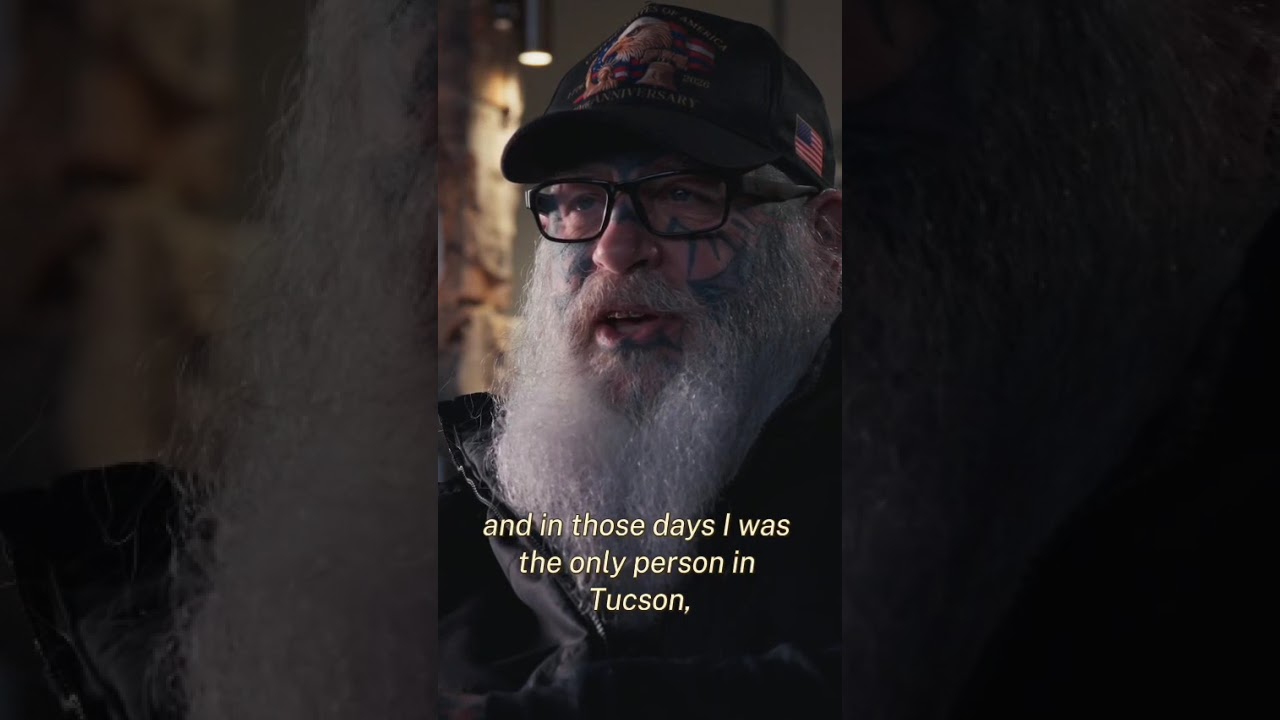
I got my first tattoo on my face when you were born. Wow! And it was some— a little bar on the side and this arrow and a couple little things on my side of my face. Because when I first started tattooing on my face, I was a tattoo artist in Tucson, Arizona, so I never ever thought that I would tattoo. I didn't go, I'm tattooing my face. No, I just did a little mark here and a little mark there and accent, and then as time went, I added to it. Soon I got, you know, into my forehead and into my cheek, and I went— I looked in the mirror at home and I said, what am I doing? You know, really, what am I doing to myself? What am I— well, I like it, you know, it felt pretty cool. I liked it, but I'm glad I took my time and I'm glad I did it slowly over time. But anyway, a year later, I had half of my face kind of covered in some tribal work. I went to a restaurant in Tucson, Arizona, and I got all done eating. And my goal in those days was I was only going to tattoo half of my face, right? The other half I was going to leave blank. All right, okay. Because my philosophy, my thinking was, as a tattoo artist, at least half of the group in the restaurant would like me. And the other half would hate me. And I thought, that's, that's really kind of cool. So I get this side of the room, wherever I sat, wherever that my tattooed face was, I knew that they would have a hard time with me. And this side over here, they wouldn't care one way or another. I turned my head. So that was what I was thinking when I was getting my face tattooed. I thought it was kind of funny. But anyway, that did— that time I remember going walking to the restaurant, eating eating my food, and then coming out the door to leave the restaurant, there was this 80-year-old woman. I predict she was 80. She's pretty old, but very old-fashioned. Old-fashioned. Yeah, she was an older lady, and she held the door for me. She held the door open for me to walk through, which was pretty rare. Yeah. And I walked through the door, and she, she As I was going past her while she was holding the door, she said, "Tell me those aren't real." I looked right at her with the most serious face and I said, "They're not real." And I turned and she goes, "Good." And I turned and I walked away and I went to my car. And I just thought to myself, that's what she wanted me to say. So I told her exactly what she wanted to hear. Yeah, I'm not going to stand there and argue with somebody I don't know, and I'm not going to stand there and explain about your life choices and how happy—
but that was her.
She couldn't believe that that could even be real, so she had to say, tell me those aren't real. So I said, okay, they're not real. That must have made her day.
For the rest of her life until she sees you on the news with more tattoos. She'd be devastated.
What a great story. Anyway, this lady's probably gone by now, but what the heck. So it wasn't real.
That poor woman, that poor woman. So you have a book called Seven Days and Seven Nights. To people who don't know what this book, um, what this book is, what, what does this book bring to them in their personal life if they chose to read this book?
They're actually pretty, pretty darn good book. My wife, uh, was very involved in really writing it, but she went through and, uh, what do they call it, Catherine Marie Edited the— so that it reflected accurately what— Right, right. She went through— it was written by Mark Kaplett, and he's a writer, and he wrote the book because he spent a year on the road with me and followed me from city to town to, you know, hotel to living out of a suitcase and all the background stuff that goes on and getting ready to do shows and big shows and schools and big venues and churches. And I mean, on and on and on. And he— and then he would just be right there on my hip, you know. And if you just watch— so if you read the book, you're gonna get a feel of what it was like. Have you got a copy of the book?
I haven't got a copy of the book, but I want to get one because I am not really a book reader. Right, but I think this would be a great step for me to start reading personally, because obviously not only am I positive anyway, and I try and look at things outside the box than rather just inside. Like, I don't believe in 'I can't do it.' I believe in 'I can do it.' I've just got to try and try and try until I make it. So, uh, but having a book like that will probably help me through my journey and understand how you went through your journey and kind of just try and follow a certain step that way. And so yeah, I definitely would want to get that book because, but I've read up about it and stuff like that, so I really would like it. And I remember you did mention the book when you came to my school 14 years ago, or gosh knows when, but when you You did mention about the book, so it has been out for a long time. Yeah, but I've seen it advertised. I've got an image of it which it will be posted on this video anyway.
Yeah, put a link on there about the film. The film was really, really cool. It's on YouTube.
There's going to be a massive link of all the descriptions of all your links, Facebook, everything you have, even including your podcast and everything else. I've just got a few more questions with you, Scary Guy. And yeah, and this interview will be— you can then go for your loo break, I can go for my loo break, and then that will be it. And I'll stay in touch with you and everything else. So when the pandemic is over, what's your next plan for the future?
Do you have a plan? Well, we're in the throes of building a world-class training center right here, believe it or not, in the beautiful town of— you ready for this? Are you sitting down? I'm in my bed. It's Wigan. Give me a Wigan.
I've heard of Wigan a lot, actually. I've heard it's a very beautiful place.
Well, I don't know if it's that beautiful, but I'll tell you what, it's right in between— 20 minutes from Manchester, 20 minutes from Liverpool, and it is really cool because you just jump on a train when you want to go to Liverpool, you jump on a train when you want to go to Manchester, and Wigan is probably one quarter the size of Liverpool, and it's really quite nice. And our world-class training center is going to be located here, and our art gallery and my private studio. And, you know, anybody wants to come by and hang out and have a cup of coffee or a shot of a single malt or whatever is in— whatever you're into, that is what we are going to be able to do. So it's going to be a lot of fun. We're building that now.
What will you be doing in the center once it's opened and everything else? What will you be planning on doing in the center? Well, I know you'll be having a coffee. Will you be talking about life in general? You'll be talking about, you know, improving Positivity.
We'll be offering new teacher training classes. We teach teachers how to deal with classroom management and negative behavior in the classroom. We'll do— we do one-to-one key personal training, and then Catherine does tutoring and education for English as a Second Language. Are you leaving? Hang on a second. And yeah, English as a Second Language GCSE, adult education, functional skills, basic English and maths. Primary, working with Year 5 and Year 6. And all of the teaching she does with the students, she uses everything that I've taught her 15 years ago when she brought me in for 3 of her high schools. So she's using The stuff that I teach to teachers, she's been using for 15 years, and she's seen as a, as a, um, an expert in the field of behavior management. And so she's taken all the stuff and then uses it real time in the classroom, and everybody in the schools that she sees that hire her are absolutely blown blown away by the fact that she can work with these kind of kids, these kids in the behavioral units.
And it's giving you that positive as well.
Yeah, it's a really good combination. Listen, there isn't anything that we do to downgrade or humiliate or control or slam people to get them to conform. There's— and then behave— that, that whole scene doesn't exist in our ethos. It doesn't exist in our lives. I don't believe in, um, beating people into love. I mean, that's— that just doesn't quite hang with me. It's not gonna make—
it's not a good mixture, is it?
It doesn't make sense, you know. It's like, hey, I remember when I was a kid, AJ, um, my parents, my mom, they used to say, well, you know, you're going to get a spanking because I love you. You know, and then she had me over her knee and bare my, my bare bottom and take a wooden spoon, cupped wooden spoon when I was 6 years old and whack my ass until I was screaming. And then I had big welts on my ass at 6 years old. And her whole belief system was, I did that because I love you, you know, and I could never add up the idea that anybody would hit anybody because they love them.
Yeah, you don't want to hurt them, but you want to try and make them— but yeah, it's a tough one, that one, because with my boys, I would never harm them in a way. I always believed in like naughty steps.
Well, you know, my mom said to me, you know, when I was 35, she sat down in a restaurant with me, and I was 35 years old, and she just said, you know, all the time I I used to spank you with a wooden spoon, you and your brother. I said, yeah. She said, I want to apologize. And I was 35. This is 31 years later she says something to me about it. Wow. Can you imagine what went through her mind?
Yeah, she must have regretted it in a sense.
Big time. So she's sitting there at a dinner and she's saying, I want to apologize for spanking you with a The Wooden Spoon. And I was shocked. I thought, whoa, what are you talking about, Ma? And she said, well, the number of the times I said, yeah, so? And she says, well, I— it wasn't right for me to hit you with that. It wasn't right for me to spank you like that, and I'm apologizing for it. And I just looked at— I didn't even know what to say. I was speechless. I said, well, okay, you don't have to worry about it. But it was obviously something that was weighing heavily on her mind for 30 years. And, uh, and it's like, wow, that's, that's the impact that that negative does, that people have to hang on to it and carry it around. I love you. Bye. Don't take my candy bars.
Eat any Kit Kats? She's taking your Kit Kats.
My Tonics. Replace my Tonics, baby.
Oh, so wow. Don't forget to move the cones. So it seems you have a lovely partnership together, and it seems like you're going strong and going really well. What have you guys been doing during the lockdown? Anything nice?
Well, everything we do now is virtual. Yeah, so Catherine does virtual education. She just got done with, um, 3 hours of it. Now she's going to the school that she's going to for 3 hours, then she's going to come back and do some more virtual education. I do, uh, the podcast virtually. I do your podcast virtually. I do, I do, uh, one-on-one sessions, training sessions virtually. You can come to me if and say, Scary, I want to buy your one-to-one key personal training session. And that would be 3 hours of me and you working on the internet like this, face-to-face like this.
That's amazing. That is a great idea, that, to be honest. Because it's like you do counseling. It's like counseling. You know, you do— even though— I don't know. It's hard to explain. It's like you do counseling because you make somebody feel better by helping them achieve and like, look outside and think outside the box as well and try and eliminate the negativity and stop trying to—
Well, a lot of people are stuck, they're stuck, AJ, in their own personal cycle of abuse, so they don't understand how to break free of it and consequently take responsibility for all of their choices and their decisions. And that's the really hard part. So what we do in our in key personal training is start off getting background information. And then in the second piece, we start showing them pictures of how they learned where they're at. And then you show them in the last segment how to break that cycle and not live in that space anymore. And that is quite monumental. That is something you actually, quite frankly, would love to go through that key personal training.
I will give it a go. I will be holding my book when I get it. I'll be treating it like a Bible once I ordered it. So can you— do you— with your books, do you have your copy? Can you use it, buy it on Kindle or anything like that as well? I mean, I'd prefer the book, but is the options out there?
Yeah, no, you can. I think on Lulu, you can download the digital version.
Yeah, I'll have to get the book because I want it signed by you as well.
That's fine. I haven't bought any books for a long time, but I think what I'll do now is, since you brought it up, because it's really a good book, is I'll probably buy a box of books and have them on stock for these kind of things.
So I can just— because I think a lot of people would love to have some autographs signed, uh, personally signed to them in a book, because I would love that. I would really love that, because if I get a book, I'd love to have it signed and stuff like that and stuff. But you know what, I think after speaking to you about artwork and everything else, I think I might make myself a portrait. I might make a portrait. Gives me something to do during lockdown. I've always tried thinking of ways of getting by while being stuck at home. I really think it'd be a nice idea to do do a picture, probably dedicated to you as well, for all the hard work as well. Because obviously you've not only have you gone around the world and spoke to people and tried to make the world a better place, I think it would be an honor to build something and make a masterpiece dedicated to you. So I would like to thank you, The Scary Guy, for joining me. It's been an honor speaking to you.
You never know what'll happen, AJ. See, one day you could end up being a big time television film producer and then you'll end up coming back to me and you'll say, Scary, we want to do a real updated version of your life.
Yeah, I would. You'd be the first person I want on the show if I ever brought a program out or, you know, made it one day because I'm at the moment, my channel is all about making music, which is still a creative thing to do, gaming, I do gaming on my channel. This is the first ever podcast I'll be uploading on my channel, so, um, I don't know whether it will carry on or I'll be carrying on my games and music. I'm not too sure.
I'm just gonna— I can tell you now, I'll have, um, if you email me, yeah, yeah, I'll email you some links to what we're talking about for the film and stuff. Yeah. And then when you do that, I'll copy Gary Lee, my producer and manager, and then I'll have— I'll talk to Gary and I'll have him set up a time for you to be a guest on our podcast, because I think it'd be great to have you on as a guest.
That would be— you know what, that would be amazing. That would be amazing. We could have a nice coffee, catch up, like, like a long— you know, 14 years of not seeing each other personally, and then we'll catch up and grow on tattoos on my face. Not a kid anymore. It'd be amazing. Scary Guy, so thank you so much. It's been a great time.
Thanks for having me on, buddy.
Thank you. Right, I will see you later, Scary Guy, and I will get in touch with you soon.
All right, all right, take it easy.
Thank you for your time. All right.