That's Scary & The English Woman~Episode 4

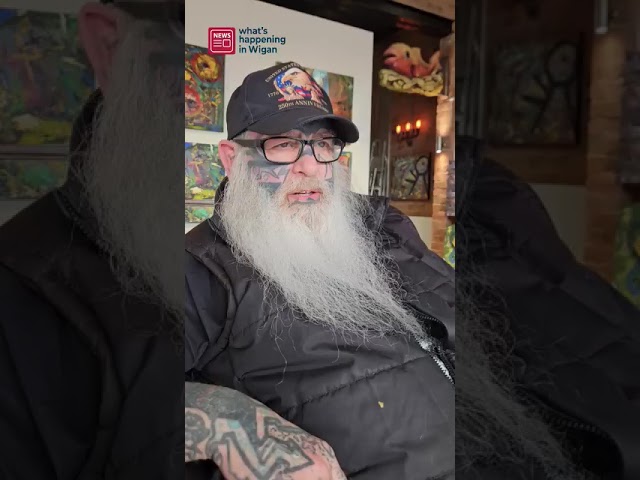
This content was created by The Scary Guy. This content was uploaded by The Scary Guy. This is a YouTube episode titled "That's Scary & The English Woman~Episode 4" (published April 24, 2020) consisting of an informal conversational interview between The Scary Guy and an interviewer (Speaker A, an English woman). They discuss personal value and self-worth after job loss during the coronavirus, how society values services versus physical goods, teaching and learning love (childhood modeling and later relationships), materialism and dopamine-driven purchases, trust in relationships, and brief reflections on COVID-19's long-term effects.
Chapters
Ah, so what am I doing? Ah, well, this morning I was talking to somebody who wanted some, um, hey, I did Zoom call with someone who was, uh, kind of struggling, feeling that they They're not very worthwhile. It's quite funny, we were talking about value. Oh yeah, so value about— because they'd lost their job due to coronavirus, um, they said that they didn't feel very valued. They feel their value comes from being employed.
Boy, let me tell you something, I have zero value because I'm way unemployed right now. If that's how I had to look at my life, I'd be in trouble.
How do people value themselves? I think it was— and then they went on to say that they're starting a new kind of venture but they don't feel— they're training in another area completely, okay, training different, um, different thing that they're training about, not what they've been doing in their life so far. So they're taking up a new venture, but they said that they don't feel that they should be charging anyone for it. So we had this conversation about value, and I said, well, it depends how you view money. Because years ago would have been you're exchanging, I don't know, you'd have a cow and so you could provide milk, and your local next door, he was growing corn, so you would exchange it. That would be an exchange. So if there's an imbalance in what you consider, you know, I don't know, a pint of milk compared to a sheaf of corn, is that the same value? In which case we develop tokens to work out the exchange, you know, where there's a shortfall. So how do you view money? You know, because that's what it is, it's just a token. It's something for an exchange of either something you've bought, a solid thing, like, I don't know, something— so what if it's food, for example? You pay for the food because that's— you're buying something that someone's provided. So if you provide a service, what's different?
It's way different.
Okay, what and why you think it's different?
Well, no, I don't think it's different from the standpoint of exchanging goods. I think it's different from the fact that you can't physically see milk. Like, you can see a carton of milk, you can see, physically see corn, you can physically see those items, so it's easy to say that's a value.
Yeah.
I can place a value on something I can see.
Yeah.
Something you just told me doesn't have a value to a lot of people. A lot of people don't value it the same way they value things. And I disagree with that part, but I do agree with the fact that it— I think it should have value of some kind. Big time. I know because I've been doing that for 22 years, talking to schools all over the world, trying to convince them that what I'm going to share with their students and their teachers and their parents is valuable. And it's just my words. And like, some of them don't want to pay for that stuff. They think it should be free. And I kept telling Kathryn years ago, I said, love— teaching people how to love one another is not free. It costs money just as much as it costs money for us to go to war. Yeah, it's the same thing. The only difference is we can't— we don't never put a line item on the accounting sheet says teaching love or loving each other. There's never been a line item on the accounting sheet. So I'm going, we've got to change how people perceive it. And even governments, they haven't decided that that's something worth spending money on. You know, it's like, everybody should just love each other for free and we should teach people how to do that for free.
No.
Sorry, it's a lot of work. It's a ton of work to give people this kind of information, and they don't get that part. I don't think they get it from you.
Say that again, which part?
I don't think they get that part. They being the—
ah, right, yeah, no, they don't—
society as a whole.
It doesn't.
And I don't think— I think you're in the same business I'm in, and I'll bet money you've run up against it 100 times.
Oh, definitely. I kind of— people would rather go and spend money on, like, couples, if they're not getting on, they say, "Oh no, we'll go on holiday together, we can fix it." Uh, nah. Or they'd rather go out and spend it on, I don't know, alcohol, a new TV set, a car, anything rather than getting that inner happiness. They just don't understand or don't get. They feel that if they— if, yeah, that's— it's topping up their dopamine. So it's that getting that hit of, yeah, if I have a new phone, I'm gonna feel so much happier. Yeah, if I have, um, yeah, if I go and get a new car, that will make me happy. So people don't get But once you've had that dopamine hit, you're going to hit the low again because it's not long-lasting. It's not deep enough, is it?
No, that just gets old real quick. Yeah, things get old real quick. Yeah, I find myself, the older I get, the more I want less. That sounds weird. The more I want less. The older I get, the more I want less things in my life. I just, you know, it's like 2 pair of jeans, 4 pair of socks, a few t-shirts. I just don't want a bunch of stuff, you know, it's like, ugh, because then I gotta manage it and take care of it and dust it and clean it and look at it. It's like, because that's all I'm doing. I become a storage facility. For stuff. And I just get sick of that stuff. And I don't mind having a few things like, you know, a dining room table is important. Yeah. And a sofa. But I don't need 5 sofas. Unless I have 5 rental properties, but I don't have 5 rental properties. So anyway, I just get to the point now where the older I get, Exactly. The less physical things I want in my life, because they don't have the same meaning, they don't have the same value to me. They don't have value. There, you're right on the money. That's kind of funny. They don't have value. You're right on the money.
Yeah, I like that.
Well, it's true. They don't have any value. People say, oh yes, they do have value, you could resell it. Yeah, right, on eBay or Amazon for pennies on the pound, you know. That's like, you can't really make money doing that stuff.
So then what do you do with the money? You buy more stuff. Yeah, yeah. I can ask you, what do you think, um, do you think You said that— I was interested in what you said about teaching people to love. Yeah. Now there is this theory, okay, I, I think it's quite interesting. So people say that you can't love someone until you've learned to love yourself, right? Now, but where do you learn love in the first place? We're not born to love, are we? No, no.
I think you have to learn it from your parents.
And what if you're not taught that from your parents?
Well, then you're going to have to learn it by hook or— I call it by hook or by crook. You know, you have to go through your life's experience. And I think inadvertently, by mistake, people pick up little nuances and keys from other people. I mean, that's— I think that's how it's done. I mean, I've done that my whole life. I didn't go to a school when I was a kid to say, here's how you love and respect other people. I didn't go to this is how you behave as a human being school. They didn't have those schools. I had discipline from my— and teaching from my mom and dad. And quite frankly, the teaching I got from my mom and dad was extremely visual. That sounds weird, but when I was little, I remember watching my mom and dad hug and kiss and play in the kitchen. What I mean by play is banter back and forth and tease each other and do things that a husband and wife do when they're in a good mood, you know. Don't get me wrong, I saw them argue too, but when I remember those times and I remember them kissing and hugging and that kind of thing when I was 5 and 6 years old, that made a huge impact on me.
Absolutely. So you were taught what love was.
Yeah. Well, that's what I thought. That was love. That was a good thing. That was like, oh, that's how— and I didn't say it to myself. I didn't wake up and go, I'm 5 years old. Oh yeah, that's love. No, I could just feel the good feeling from it inside my body. Because they were having a good feeling for each other, I could see it and feel it the same way as a child. And that, I think that is really what shaped my— this is my personal life— I think that's what shaped my— you started off by saying to me in the beginning, you know, and you said, I noticed you guys are really caring towards each other, you and Catherine, your wife. I think that's probably what helped shape how I am with her. And that's, uh, you know, I'm 66 and I remember back to when I was 5 watching that happen. So that's 61 years ago and it's still in my body.
Yeah.
So that's how powerful that stuff is when you're a kid.
Definitely. So if you're not shown it, you're not demonstrated it, you're not If you don't experience it, then how, how do you learn it? Because a lot of people don't. They come from dysfunctional families. They come from families where they don't get that modeling.
I think it has to do with the fact that they trial and error throughout their lives, make millions of mistakes, keep searching. They're always searching for some answers. I can tell you how powerful your childhood is based on your learning. Because I had one of my dear friends, I call him one of my best friends, back in 25 years ago when I had my tattoo shops in Tucson, Arizona. He was a recovering drug addict and alcoholic. So he would, but he was a motorcycle gang rider. So they had a motorcycle gang and it was called Stone Sober. Believe it or not, Stone Sober. So they were a completely sober motorcycle gang. And why do I say gang? Because they were a bunch of rough guys. They weren't a bunch of friendly, you know, nice, let's go to the tea party guy with our suit and tie on and our ascot. No, these were motorcycle riding tough dudes and they didn't care who they offended and who they said what they said to. And anyway, one of the guys that I used to tattoo became a very good friend of me and his name was Scott.
Skull.
Skull. Yeah, that's his— that was his name. That's all he wanted to be called was Skull. Well, I'm really grateful that he became a friend of mine because he was the meanest, most horrific human being I've ever met in my life. Now, I tattooed him so he respected and loved me and he watched out for me. But I said to Skull, he was extremely racist, and I mean racist from the standpoint of hating skin-colored people. That to me is definition of racism.
Yeah.
All the stuff you see, people throwing words out, like every time they don't like something, they say he's racist, which is ridiculous. There's a lot of ridiculous terminology out there now about racism, but he was really truly a racist because he came right out of his mouth and said, I don't like Black people. I hate them. And so I says to Skull one day, and I could still be his friend, I said, how can you like this? How come you like this with the Black people? And he told me his childhood story of how he used to be locked in a closet by his father. And when he was let out of the closet, he was beat by his dad with a belt in a a spoon and then locked back up again. And then he constantly heard his father degrading the Black people every time he was around them. So he was a little boy being taught and abused at the same time he was taught by his father to hate Black people. Well, it stands to reason that at 45 years old, this guy Yeah, he's a brute. He would, he would hit people, he would threaten people, he would intimidate people, he would bully people, and he would hate Black people. And he was not— he didn't pull any punches because he was a biker and he just said it like it was. And I went, wow, that's just amazing, because his whole life was like that when he was a kid.
And that's it. He was taught hate. He was taught all the bad things. So learning to love yourself isn't easy if you're not shown it. So you're not— so I often hear that, that said, well, you can't get into a relationship with somebody and get them to and find the love unless you love yourself first. But sometimes it's that relationship, that other person, that will demonstrate— if you haven't had it in your childhood they will show you the love, and that's how you learn it.
That's it.
So it's not always the case of you have to love yourself beforehand.
Are you a believer of that?
I— it's quite a mixture. I think there's quite a mixture of it, because I think if we don't— if we don't— if we've had bad experiences, then we'll be drawn to somebody who treats us badly. Because that's all we know. So it could, you know, I think if, if a child is abused like your friend was, then that's all he knew. So therefore, if anyone was nice to him, he wouldn't trust it or believe it because that wasn't part of his dialogue, his inner dialogue. Everybody's bad. If someone's being nice to me, there's something wrong here. I can't trust.
That's it.
They've got an angle going on here, so yeah, I can't trust that. So that's why I see so many women, I think, who say— young women especially— I just like the bad boys, because that's what they know, or they think that's more exciting. But I just think it's an interesting kind of statement, and I just was— I've been pondering a lot because I think it's not straightforward. No, no.
It's very, very variable.
Yeah.
Very variable how people learn to love and even learn to love yourself. I mean, loving yourself is learning. You've got to learn how to love yourself and like yourself every day. I don't think once you have it, you're cured. I think you have to do it every day.
Yeah.
I mean, every day you have— it's an attitude. You know, I wake up with an attitude and then I can change my attitude, but I have to work it. Sometimes I have to work at changing my attitude so that I can like myself and love other people and be kind and friendly because, you know what, sometimes I don't feel good.
Physically.
Sometimes I don't, and that affects my mood. And when my mood could be, and I could be thinking about all kinds of like COVID-19, you know, I'm constantly now I'm inundated in my brain about, it's like this, it's like every day, all day, all night, at night when I go to bed, I'm seeing and reading stories about COVID-19 and I go, oh, And the truth is, I just don't think it's ever going to be really, really truly the same world as it was before COVID-19, ever. I think it's going to be a completely new world we're going to live in.
And I'd like to leave that as another subject.
Go for it.
Let's, let's kind of finish here. Because we talked about trust and love and things like that.
It's good, isn't it?
Yeah. So I think we're gonna, we're gonna have another conversation. So we'll leave it and the listeners can then listen to the next, next one. Yeah.