THAT'S Scary & The English Woman~Show
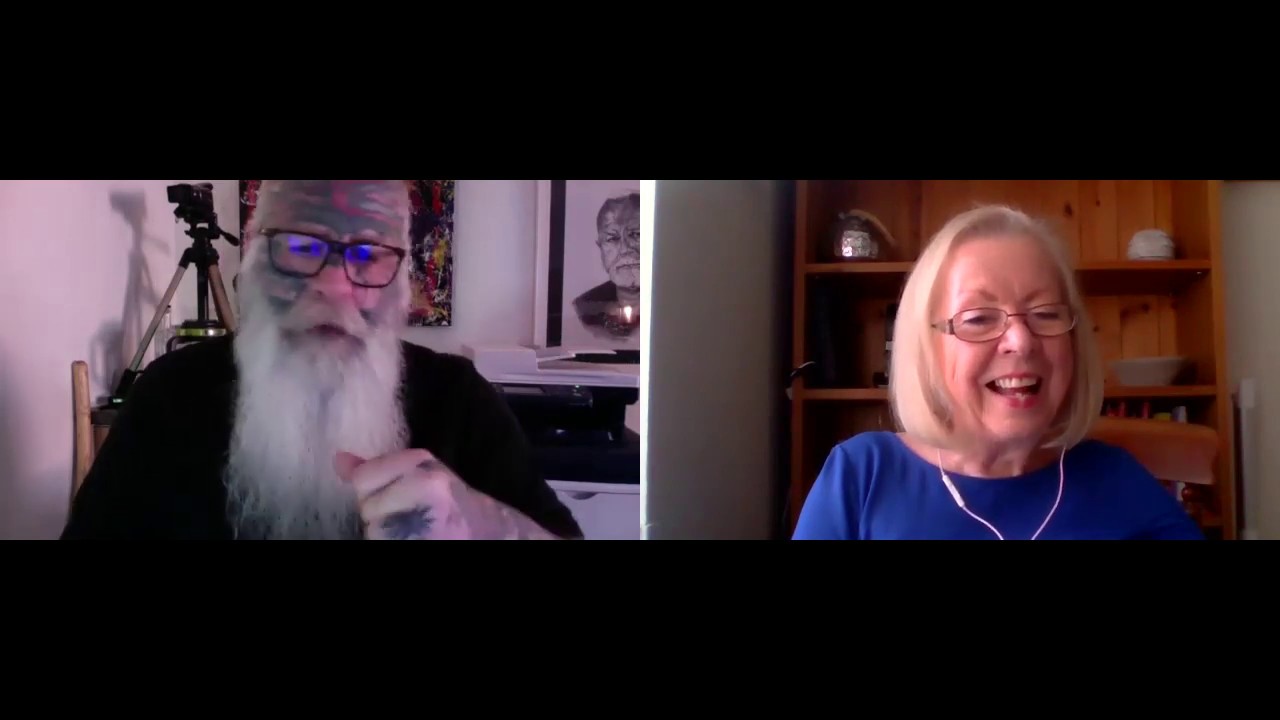
This content was created by The Scary Guy. This content was uploaded by The Scary Guy. This is a YouTube interview / podcast-style conversation titled "THAT'S Scary & The English Woman~Show" (posted 2020-03-03). Host Wendy interviews The Scary Guy about his legal name change and origin of the moniker, his tattooed past as a U.S. tattoo-shop owner, the 7-day change challenge, becoming a British citizen and cultural adjustments, how people judge him, his work with schools and vulnerable young people, coping and perception, and how listeners can contact him. The tone is informal and conversational, blending personal storytelling with discussion of social issues and outreach.
Chapters
Okay, I have with me today, uh, this lovely man who I've talked to quite a lot of times now. He's The Scary Guy, and I'm gonna just hand you over to Scary to introduce himself and tell us a bit more about himself.
Well, it is difficult to introduce me because How do you introduce a guy by the name of The Scary Guy? That's kind of ridiculous. And when you think about it, hey, let me talk about this guy, his name is Scary. And, uh, well, first of all, it's nice to see you again, Wendy. It's really nice to see you. Um, yeah, well, my name is The Scary Guy and it is, it is legal. And believe it or not, I gotta show you this. It's incredible.
Your passport's in the same name.
I don't know if you can read it. Can you see it?
It's a bit difficult, but it is The Scary Guy.
Yeah, and it's on the British passport now too. So I have a British passport, but which is funny about that, when I became a British citizen, I had, uh, which by the way is a whole story unto itself, becoming a British It's not easy. It's not easy to become a British citizen. It took me 10 years and a lot of money to become a British citizen.
Wow. Yeah.
And then I applied for my, uh, my passport, which is what you do when you're a citizen.
Yeah.
And, uh, I sent my data in, I filled out all the required application forms and They, immigration, took 2 years before they would give me a passport with the name on it, The Scary Guy.
2 years?
Yeah, no, legally they, they say on their website that it's, you know, 6 to 8, maybe 9 weeks max before you have your passport. And, you know, and if you look it up, the law that says they legally got to provide you with it, every citizen with a passport, if they require, if they fill out the application.
Well, they had a hard time with my name, but, uh, couldn't they spell it?
No, I don't know what it was. No, I found out that they had a thing called a naming policy and my name, The Scary Guy, which isn't a real name, it's a title. But anyway, they, um, it didn't fit the naming policy. So they were in meetings for 2 years to discuss how they were going to do this with, but, and then, you know, break the policy and put my name on a passport. But I don't know what the whole, all of the details are, but I ended up getting my name on a British passport and people have a hard time with it, but it's The Scary Guy. And it's a long story. I won't bore everybody with the whole details of the story, but I changed my name 21 years ago in a court of law because somebody I don't know called me The Scary Guy in a newspaper advert when I was—
Why?
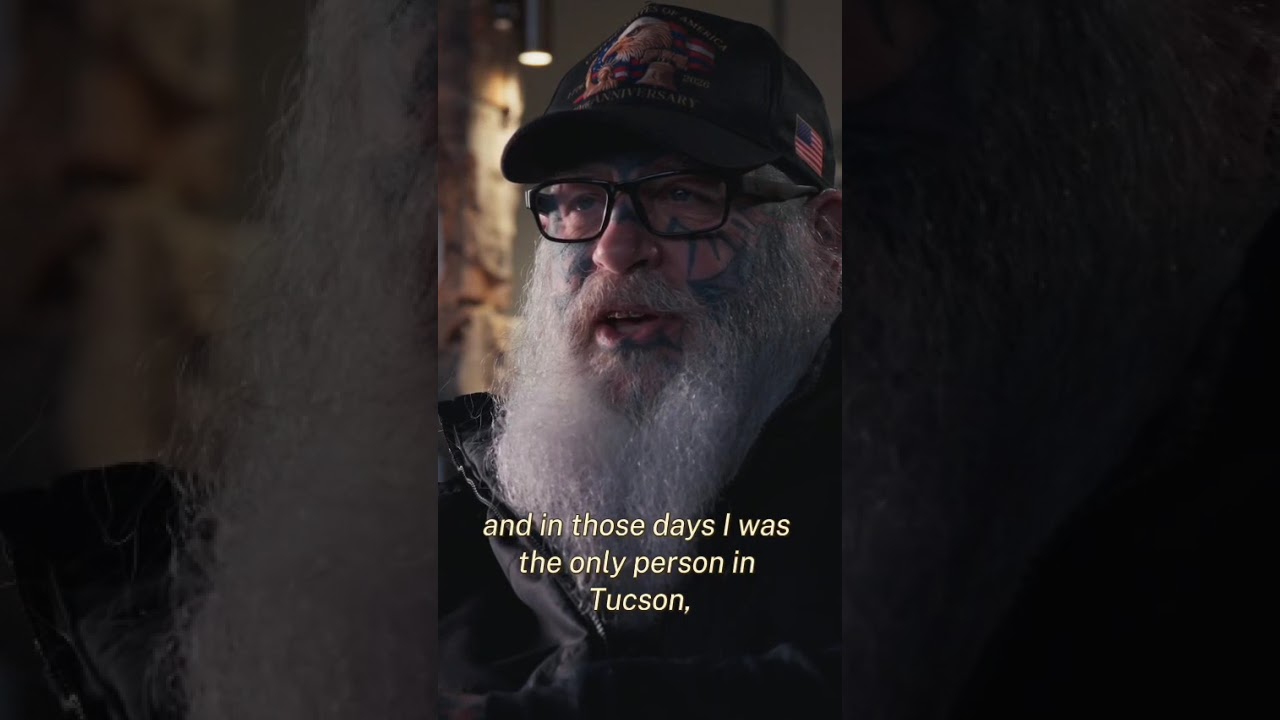
Well, I had 3 tattoo shops in Tucson, Arizona, see, and I was a happy, sassy, Harley-riding tattoo shop owner, and I had 10 artists working for me, and I made a lot of money, and I thought that's what I would do the rest of my life. And then all of a sudden, one day, a competitor in the business ran a full page ad in the newspaper, and he said, are you tired of dealing with scary guys? Guys with Warpaint facial tattoos. And I read the ad in the paper and I slammed it down on the counter. And the first thought that came to my mind was, what am I going to do to get that guy back? You know, revenge. And, uh, I thought, well, I'll run a negative ad about him and I'll talk. And I didn't even know who he was. And I thought, no, no, no, I'm not that kind of guy. I'm a good guy. He's the bad guy. This is what I thought in my mind. See, I went through all these weird things. But then I started looking at my life and I said, you know, I don't know if I'm all that kind of a good guy really, because I'm a name-caller and I can hate people and I talk about hating people and I just haven't run newspaper ads about it. That's all. So I kind of said, self-reflection, I started seeing myself kind of the same as the guy that ran the ad about me. You know, because I was having a hard time with this guy calling me a name and I didn't even know who he was. He called me The Scary Guy, see. So long story short, it all hit me and I just realized that that's really kind of who I was the first 43 years of my life. I lived a scary guy life thinking I was okay and I was a good guy. And so what I did was, and it was kind of a joke at first, I talked to one of my friends. I said, you know, I'm going to change my name. I started using in newspaper ads, like, "The tattoo shop home of the scary guy." That's what I said.
Wow.
Yeah, everybody got to know me as The Scary Guy. So I thought, what the heck, I may as well make it legal. And I went down there and I filed for a name change. And, you know, I didn't even think what would happen. No. Well, the judge says to me, he says, Yeah, she calls me up and the courtroom is packed. It's the 150 to 200 people in the courtroom is full, and there's newspapers outside. And because somebody's read the news, the, the filings, you know, they track this stuff. I didn't know that. And, uh, she says, are you trying to elude or evade any debtors or creditors or anybody like this? And I said, "No." She says, "Well, this is the most unusual name change I've ever granted, but I'm gonna go ahead and grant it." She slammed the gavel down and I became The Scary Guy on that day, 21 years ago. Well, when I walked out the courtroom, there was 3 or 4 news channels in America waiting to interview me about this. What kind of a lunatic would change his name to The Scary Guy? Well, you're looking at him. This is the lunatic over here. So what I decided to do is I put myself on a 7-day, 7-night challenge because if I am really going to change who I am, at that point I decided I wasn't going to be this bad guy anymore and live this lie. Basically, I lived this lie for many years, not knowing it. I didn't wake up every day and say, "Oh, I am a liar today." No, I just thought everything I did was okay. I thought, well, is it possible for me to change my ways? And the name represented my past life. That's what people have a hard time with today. They say, what's your name? The Scary Guy. They go, you're not scary.
No, you're not. That's the first thing I said as well.
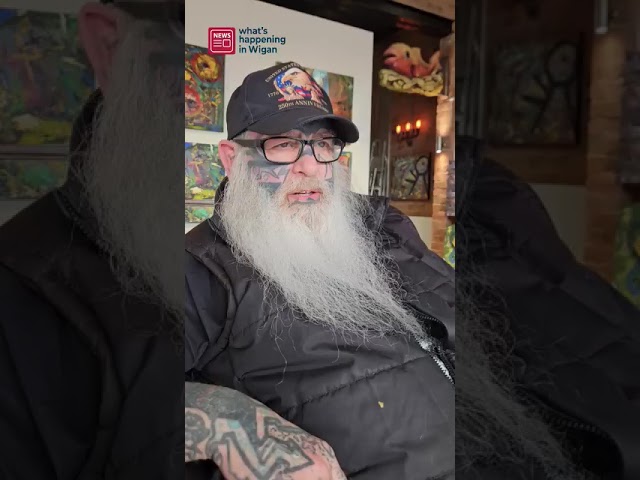
I said, well, wait, it's not about my name, it's about my behavior. And they go, "Oh, oh yeah." I said, "Well, yeah, then it's also about my past behavior. So I've made some changes since then. So in order to make those changes, I put myself on a 7-day, 7-night challenge." And the rest is history. And they can Google it. They can check it out and they can read stories and look at film and all kinds of stuff about what I've done. So that's how I got my name. It's kind of weird actually, when you think about it. I had a lady in the hospital yesterday. It was an interesting story. I went to the hospital, visited the hospital, and one lady sat me down and was doing a checkup on me. And she said, "You are the most intriguing man," she says. "You are so cool. I've got to know more about you," she says. Really positive and really upbeat. And this is the hospital, you know, NHS. And I'm going, Wow. I looked at her and I said, you're really rare. She says, what do you mean? I said, not very many people talk to me. And she says, what? I says, no, they just, they act like I'm either not there or that I'm invisible or they ignore, they look like they ignore me, but I know out of the corner of their eye, they're looking. You know, because if I saw a guy sitting in a lobby that looked like me, I'd be staring at him. I'm sorry, because he's that different looking. He's that unusual. Not in a negative way, just I'd be looking at him. He's tattooed. Yeah, from the top of his head all the way down his body. He's got to be full of tattoos. His face is tattooed. So, um, anyway, I met this really nice, pleasant lady, and I just thought Well, she reminds me of Wendy. Ah, it's true. She reminded me of you. You had the greatest smile and you're so pleasant and kind, and I almost feel like, boy, I don't know if I should be on the same show with you.
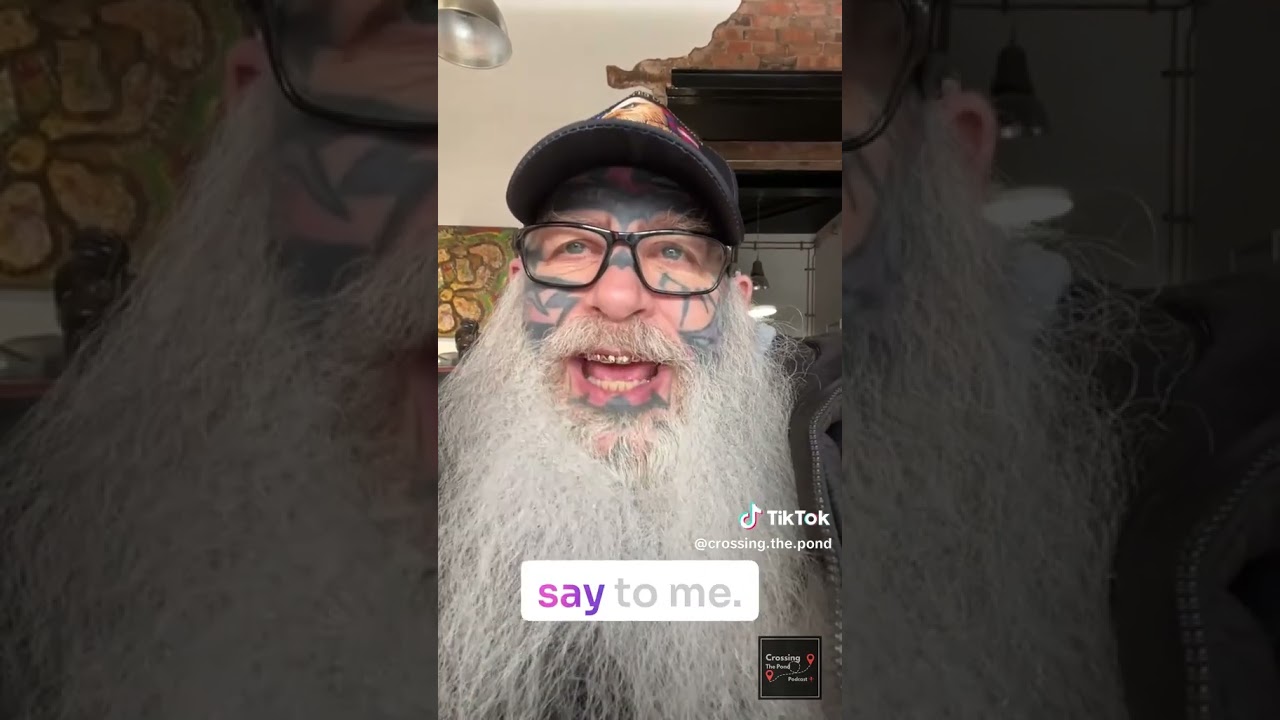
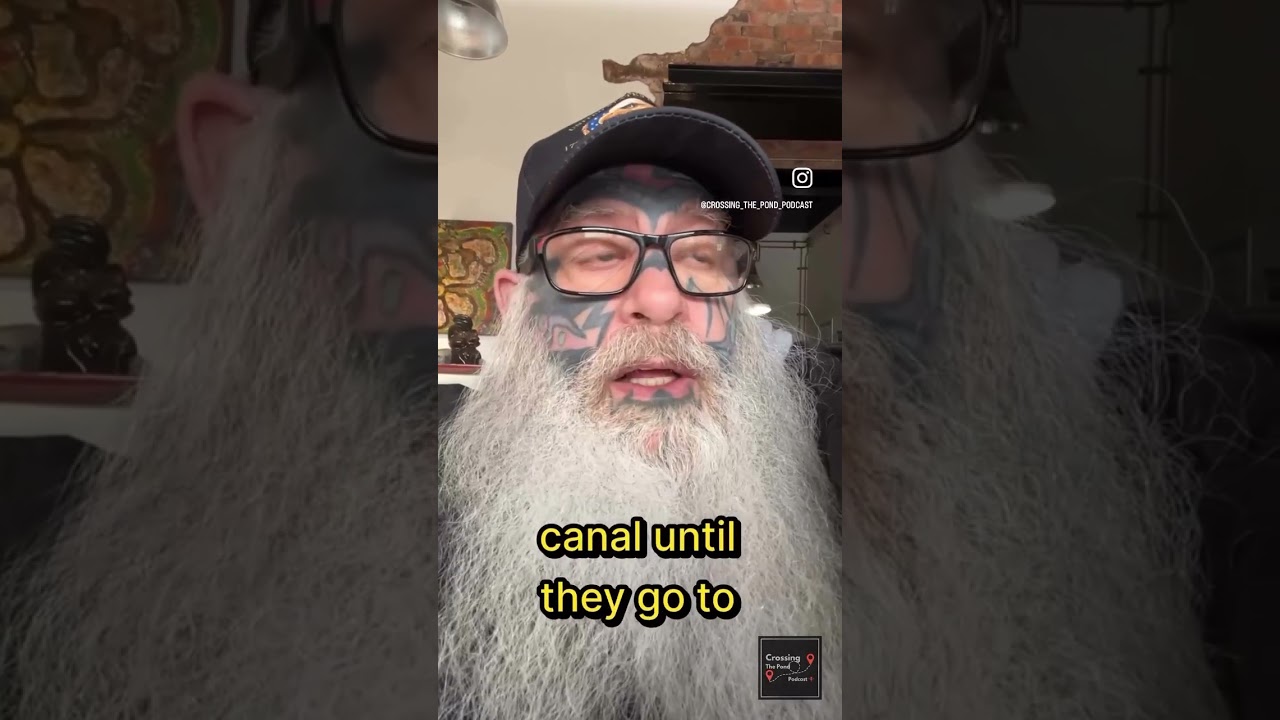
Oh, goodness me. Well, I know when I first met you, I found you so intriguing. Because it was— you gave that— you gave the talk at the TEDx Talk, and yeah, your first appearance, it was wow, you know, you really intrigued. Absolutely, all the tattoos, you had piercings, the long beard— that this is a really interesting man. And so I made a point of coming up and talking to you afterwards because I was intrigued, and I still am, you know, and that is That is part of it. It was, this man is, he's interesting, I want to know more about him. Because yeah, you have, you've got a lot of stories to tell, but it's, it's, yeah, fascinating. And I really love talking to you because I learn a little bit more about you and what goes on in the world. And yeah, I hope the listeners find it interesting too.
Well, yeah, and I think you just, you brought up an idea, and I, and I, and I kind of think I think the idea is fantastic. And I don't know, maybe we should ask the viewers and the listeners what they think too, because you said, why don't we do a series of these? You and just you and me. I mean, you're going to do your, your normal podcast anyway, but, um, maybe we do 4 or 5 of these in a year or once a quarter or something. And, and we do, and I'm open to that. I think that would be fantastic. And who knows where it might go? You know, maybe we get followers and they, and they want to start, asking us questions about certain issues that they've got. And I'm really up for that. I'm, I'm not, I'm not doing anything like that right now. So this is a really good thing for me to do. I miss it. I haven't, since I moved to the UK, which was about 8 or 9 years ago now, see, I met a British woman and I married her and her name is Catherine and she's a beautiful person and we live together and I made I made the UK my residence because I have very little family in the United States and she has a massive family in the UK. So it wouldn't be fair of me to say, we should go live in the US. And then, you know, expect her to get along with 5 brothers and sisters and a mother and, 30 nieces and nephews and say, oh, too bad, they can figure out how to see you on Skype all the time or Zoom or something like that. It just wouldn't be right. So I made a sacrifice in my life and— excuse me— and I can tell you it's not all that easy because my homeland is America and This is not my homeland. It is my homeland because I can say I'm a citizen, but I wasn't born and raised here. I don't culturally— I'm still adjusting. Yeah, it's not easy to, to be British.
No, well, it's not easy for any culture, is it, to be in that position? No, because we speak the same language, but we don't, because we have different words and different ways of being. But people say because we can basically understand each other because we all speak English, then we should be the same, but we're not.
No.
And there are— I should imagine you struggled with all the laws and, you know, the cultural change, everything. It would be very different.
Oh, it's massively different. And I tell you, Katherine said something to me yesterday because I went and had that hospital visit and met that beautiful hospital lady. And she wrote, she wrote me a note to remind me to be gentle and kind. And I went, what do you mean? Aren't I gentle and kind? She says, well, yes, I know you and I love you and I'm married to you and I understand you culturally. And I says, well, just tell me exactly what you mean. She says, everybody else sees you as abrasive, rude, obnoxious. In their face because of the way you are. You're straightforward, you talk, you ask questions. British people don't like to talk about things that much directly. You know, everything's indirect and you're supposed to guess and figure it out. And there's not that much direct communication. And in America, everybody goes, "What do you mean?" And then you go, you tell them and they go, "Okay, thanks." And they get on with their life. Yeah, you know, and I go, okay, yeah. And so I reminded myself when I went to the hospital, I said, okay, wait a minute now, I gotta take it slow and I gotta act a little like— and I gotta say yes, thank you, and oh, that's nice, thank you very much. And I got along just fine. And she's right, because if I would have opened my mouth and did the normal Scary Guy American routine I probably would have alienated somebody and they would have been upset with me. In fact, I know that's true. How do I know that's true? You're supposed to ask me.
I'm going to ask you, how do you know that's true?
Because I was in another hospital in Wigan and they have on the file that I was— they put on the file, on my file, that I'm aggressive.
Really?
I'm aggressive on my file in Wigan at the Wigan Hospital. That's how they perceived me. And I go, I've already got a label at the hospital in Wigan. I don't want a second one in a different hospital. So I was kind and nice, but I wasn't aggressive.
I didn't—
I don't see myself. Do you see me as aggressive?
No, I've not seen that in you at all.
Oh, well, a lot of people take this energy.
But is that because they see you and they see your tattoos and they've made a decision about you without really knowing you? And is that because you are direct? And people, as you say, especially the British, they can't cope with being direct. I don't like confrontation. No, you don't like— what you don't like is you don't like conflict because you assume that if you are direct and say what you want, that it will turn into conflict.
Yep, absolutely.
I think this is what the problem is. People judge. And I don't know about you, but when I have clients and maybe I'll get— if they're referred to me, I may get some background about them. And it's a case of, ah, well, I, you know, if I see— if somebody just walks in the door or I've had a conversation with them, I have no preconceived ideas at all. But if I get notes and there is, oh heck, that person sounds like they could be really difficult to deal with, or that person, they might be tricky, or they might be You know, you start off with that. Or if I have a conversation— I had a conversation with a client. I hadn't— we hadn't met. She called me and said, "Oh, I really can't make this call. I can't make it. I'm really upset and we got to change it." And she really sounded quite feisty on the phone. And I thought, "Oh my goodness, I don't know if I can help this lady. I don't know how I feel about her." And we— she came and she was culturally different. Yeah. And then I went, ah, now I get it.
Yeah.
You could sense all the anger inside her, but you know what? I know inside that tough outer shell, as we've worked more and more together, there is a beautiful person in there. And that's what I think whenever I meet someone. But yes, we can have preconceived ideas, but we need to see what's beyond that.
That's right. That happens to me a lot in my business and doing what I do to help people, you know, and I'm sure like you just said, it happens to you all the time. When I'm in a school, for instance, they'll ask me, they'll say, hey, Scary, we've got this kid and he really needs some help. Do you think you could, can you do a one-to-one session with them in the school? And I said, well, yeah, but their parents have to be there. One, and you've got to have a support person from the school there so that they can work with them when we're all done. And it's usually a 90-minute session. And so anyway, and these are kids that are from 12 years on up, older. And so the principal will sit me down in the chair in her office and she'll say, okay, let me give you all the data and all the information I got on this kid before you meet with them. Would you like all this information? And I look at her and go, no, And she sits there completely dumbfounded, like, you don't want my help? First of all, she takes that personally, like I told her that it's not important for me. You're not important. No, no, it's not about what you've got. I said, if I get the information in my head about all the things you've discovered, I said, then I generate preconceived notions in my mind about this person. And say, so what I need to do is not know anything about this person and treat it like self-discovery. I want to discover who this person is so that I can be open to helping them without all of that. Because I'm a judgmental person and I was born and raised to learn how to judge people based on what I see and hear from them. So, and then I'm not that way so much now, but Sometimes I can slip into that, but the truth is, is if I don't have— if I have a clean slate and I'm not in that mode of creating all kinds of things about what they've heard, it's all hearsay information anyway, then I can meet with this person and discover who they are. And they seem more free to talk and share who they are with me. Because it feels genuine, it feels real.
Yeah.
It's not contrived, it's not made up. So I just tell them all no, no, and I don't want to know any information about anybody before I sit down to talk to them.
Yeah.
And I think that's a great policy in life, really. If you can have a clean slate every time you meet someone. And I've gone so far to say this out loud too, I says, I don't care if they've been in prison, I don't care if they're a prisoner, I don't care if they've Um, if they've been abusive in their past, I don't care what their past history is. This is a brand new day and a brand new moment. And, um, everybody can make some changes in their lives. And if you don't give them that opportunity to make those changes, they're never going to see it. They're never going to be able to do it.
Yeah.
Stuck in that same old judgmental shell and box that they've been put in. And that's who they think they are. So anyway, that's, that's kind of, I'm in total agreement with you.
And I, I do have this mantra that I use, which is don't judge someone till you've walked a mile in their shoes. Ouch.
I get it all the time. Yeah. Wigan, I live in Wigan now, believe it or not. People can't believe I live in Wigan. And halfway between Manchester and Liverpool. And people look at me and they go, "What are you doing in Wigan, man?" The people that live in Wigan ask me, "What are you doing in Wigan?" Like it's a horrible place. I even had one older lady, I say older because I'm older now, you know, but I guess I can say older because I am older. But she's, uh, I'm guessing she's in her 70s and she went to the building I was at and it said Aged UK on the top of the building. And I thought, well, this is where old people go. It's a charity to get help. So anyway, she saw me near the Aged UK building and she walked over and she heard my accent, American accent. And she said, so in her Wigan way, she said, so what are you doing here? I says, I live here now. And she says, you what? And I says, I live here. And I said, live right here in this building. And she says, why would you want to live here? She says, well, what do you mean why? What's wrong with it? She says, Wigan is an asshole. It's absolutely horrible. Now this is a lady that's born and raised and lived in Wigan her whole life. And this is what she thinks of her town. And I'm thinking, okay, well, then I say, well, should I go to Manchester? And then they go, oh no, don't go to Manchester. It's horrible. It's a terrible place. Wait a minute. Should I go to Liverpool then? And they go, oh no, never go to Liverpool, it's terrible in Liverpool. I'm thinking, everywhere I talk to these people, everywhere I go, it's another horrible place. And I'm going, I guess it's not going to make any difference then, is it, whether I stay in Wigan or not.
No, really, it's what you make of it, isn't it? You know, We can all call everything bad, but if there are— you know, I live in a similar place because people say, "Where do you live?" And when I say, they go, "Oh my God!" But what they don't— you know, and it's not a bad place at all, but what they don't see around them is we've got such beautiful countryside around us. I'm 5 minutes from a—
It's actually a beautiful place. It's a beautiful place.
And the people are wonderful. This is it, but people— yeah, I don't know what people want from it really. There's good and bad everywhere.
Well, but then I started figuring it out culturally.
Yeah.
And here I am, I might be generalizing and stereotyping because I'm going to say this. I'm going to say the British culture likes to hear about the downfall of the next guy, you know, something that's happened to them that caused them a grief and a problem. So everybody can commiserate. And create all kinds of negative stuff around it, and they can then talk about all the negative. And I'm going, now they do some of that in America, but there seems to be a lot of the other too. There seems to be a lot of people that are wanting to talk about more of the positive stuff. Yeah, it's 50/50, but here in Britain it feels like it's 70/30, you know, or people are more apt to Look at your newspapers. Look at— I don't even know if you call them newspapers. I mean, gossip magazines, you know, it's like it's one negative story after another. I don't even look at them. I don't even look at the news anymore. It's just that way.
No, I don't either. I don't watch the news. Um, how do you cope? Oh, wonderfully. I have the most wonderful time because I couldn't I don't give a damn what's going on, you know. It doesn't matter to me. When I see or hear there are 6 pieces of bad news, one after another, sensationalised, what does it do? It just creates fear within us. And if you start your day feeling fearful, I can't walk out the door, I might get mugged. I can't go up to London, there could be a terrorist. I can't, you know, I mean, for goodness sake. Oh, coronavirus. Hell, it's, you know, we live our whole lives in fear. But what is interesting, I mean, yeah, they would do it to sell the news, sell newspapers, but I have this theory it controls the masses as well.
Yes, I agree 100%, because all the time we're fearful, we're going to behave.
We're not going to step out of line too far.
That's it. That's it. And I think something to do with how people perceive me because I ask more questions. Probably over 60% of my life is asking people questions. And only because it's the only way I'm going to know more. It's the only way I'm going to find out. But they think it's, I don't know, they just take it real personal. Like, you know, you're intrusive and you're abrupt and you're, What do you want to know for? And they get really defensive. And then they, you know, it's like, wow. And I'm going, hey, come on, man. I'm a pretty nice guy. I ask people about their kids on the pathways and the sidewalks. You know, I see little kids and they're having fun. Kids are really cool. And they're innocent. And I walk up and I say, hey, look at that outfit he's wearing or she's wearing. It's a little 3 or 4-year-old and they're having fun doing their thing on the sidewalk, on the pathway. The parents turn around and look at me like I'm— maybe I'm a pedophile or something, or I'm a stranger danger, you know, it's like, "Why are you talking to me?" And I'm thinking, "Because I think that your kid's cool and I'm saying something positive," you know, in my mind I'm going. But they get— some of them don't like talking about it.
And of course there is that whole fear around pedophiles, stranger danger. They're seeing that any, you know, any of us that are just genuinely just being friendly, you shouldn't talk to them. You know, what do you want? What's the problem? What are you going to do? Why are you carrying a gun? You know, I mean, oh, for goodness sake.
Yeah, well, maybe that's how they cope with things. We were talking a little bit about coping, I guess, but Maybe that's how they cope. They learn mechanisms of coping with things is to close down and not, not interact. It's kind of a dangerous thing to do nowadays, I guess. Yeah, that's what they think.
Yeah. Well, we've been talking now for about half an hour, and I just, uh, I think we had, we had a plan of what we were going to talk about, but I think we're going to leave that to another day, and we're going to keep the audience kind of on their toes and just wonder what we might talk about next time. Because I think, um, yeah, that could be— yeah, let's keep them on a cliffhanger.
Let's do it. Let's, let's figure out in the comments section of— because I'll post this and you're going to post it and we'll cross-post it and we'll put it all over social media. And in the comments section, we want you to tell us what you want to hear about.
Yeah.
And, uh, and we are going to open up and share some really cool ideas and concepts. Like coping was one of them we were going to talk about today. We got there, but next time we'll get to this. But if you've got your ideas, I think that would be really terrific to hear from you.
Yeah, I think you too. And I, I love doing this. I love talking to you. It's always intriguing. And I learn more and more about you.
And I learn a lot about you too. You're fantastic.
So how do people get in touch with you if they want to learn more about what you do? Because you do help people.
Well, they can call, they can call my mobile phone. That's a good thing. They can. I, I brought— I put my mobile phone on Facebook. I put my mobile phone number on Twitter. I put my mobile phone number on everything. And everybody goes, what are you doing? I said, I'm in the people business. Look at me, I love people. I says, you can't be in the people business and close off. And they said, yeah, but it's your private information. I said, I don't care. Look at me, I'm not private anymore. This is my life. So I put it on and you could call me on the phone, you can email me, you can message me on Facebook. You can comment on YouTube, because it'll be on our YouTube channel. You can go to my website, it's thescaryguy.com. It's 07496605866, scaryguy@thescaryguy.com, and all of that'll be put in the—
In the show notes, yeah, all in the show notes.
Oh, and I'm an open book, anytime, anywhere, anything. If you're negative with me, and you want to be abusive and all that stuff, I'll give you a chance. I'll talk to you. But if you continue with that behavior, chances are there's a thing called ban and block. I'm going to ban and block you because I'm not going to sit and take it. You know, it's not healthy for me. So all of that is possible. And we— and I deal with all of it and I hear it and see it. So any way, shape, or form, let's go.
Brilliant. Thank you so much for today. I've so enjoyed it. I hope the listeners have too. It's just always a pleasure chatting to you.
You rock!
Thank you.