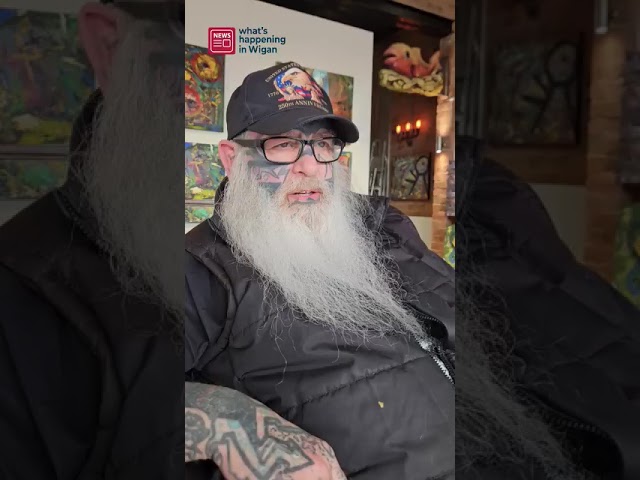
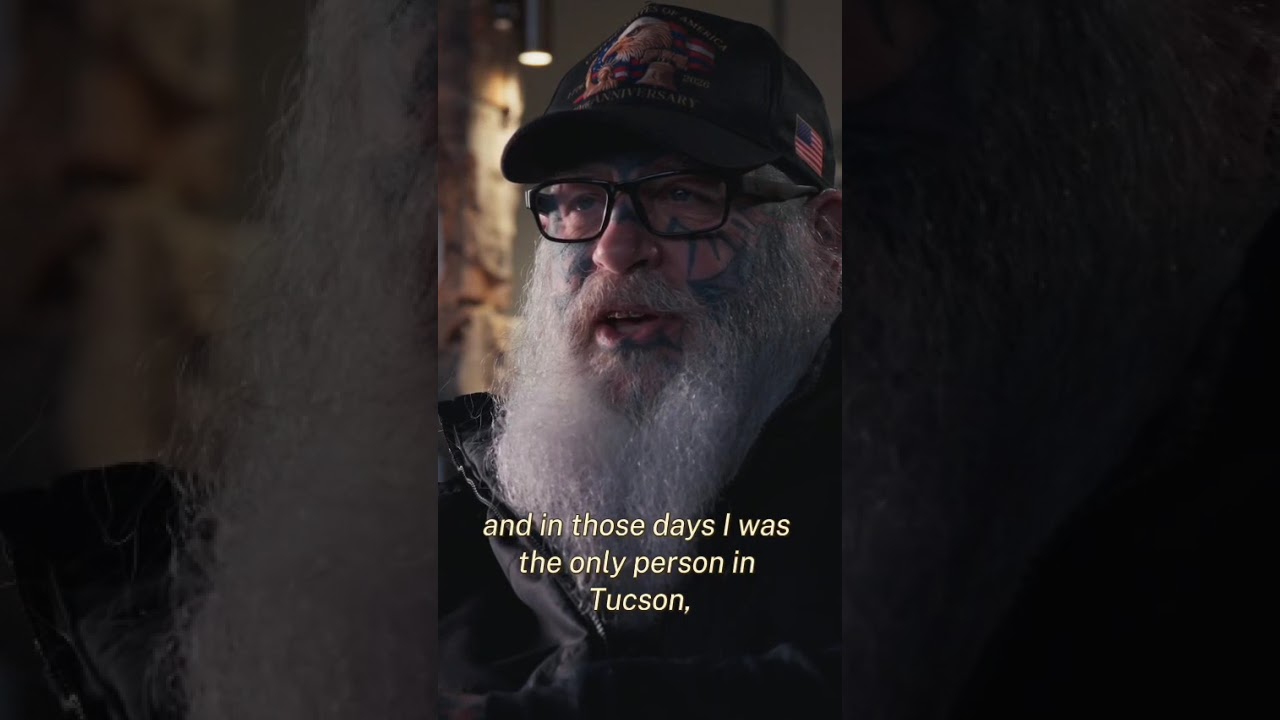
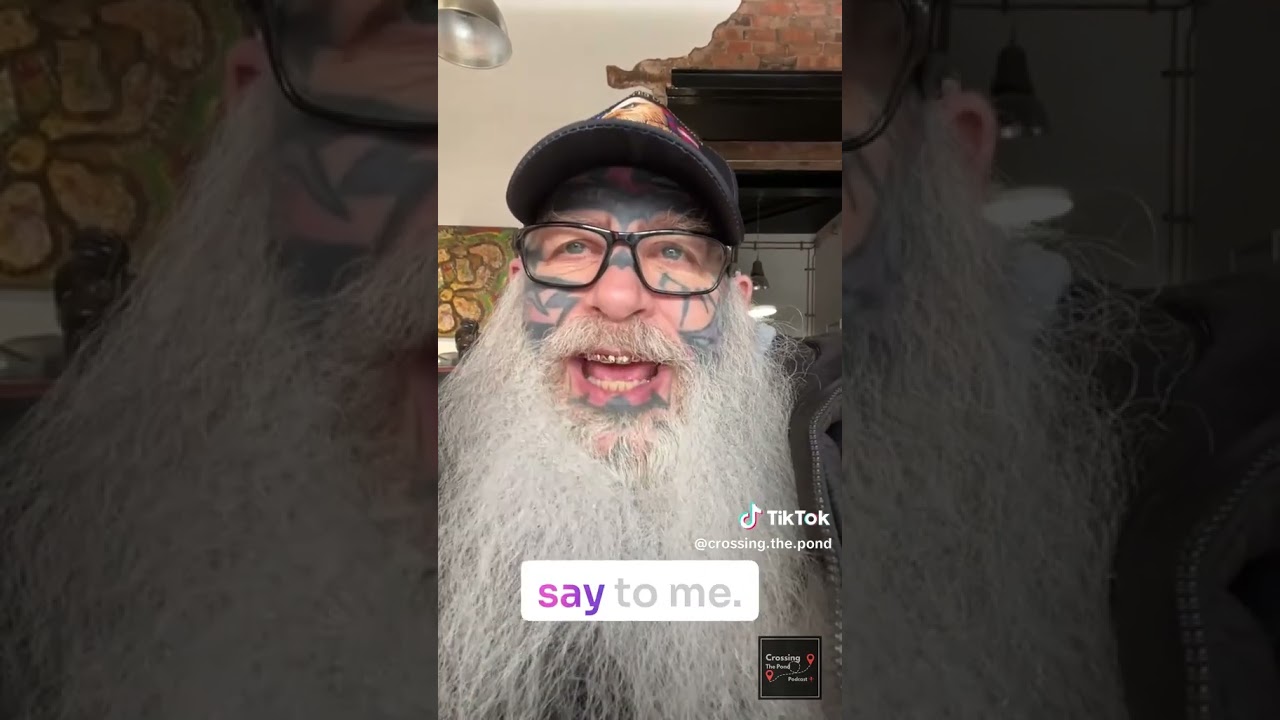
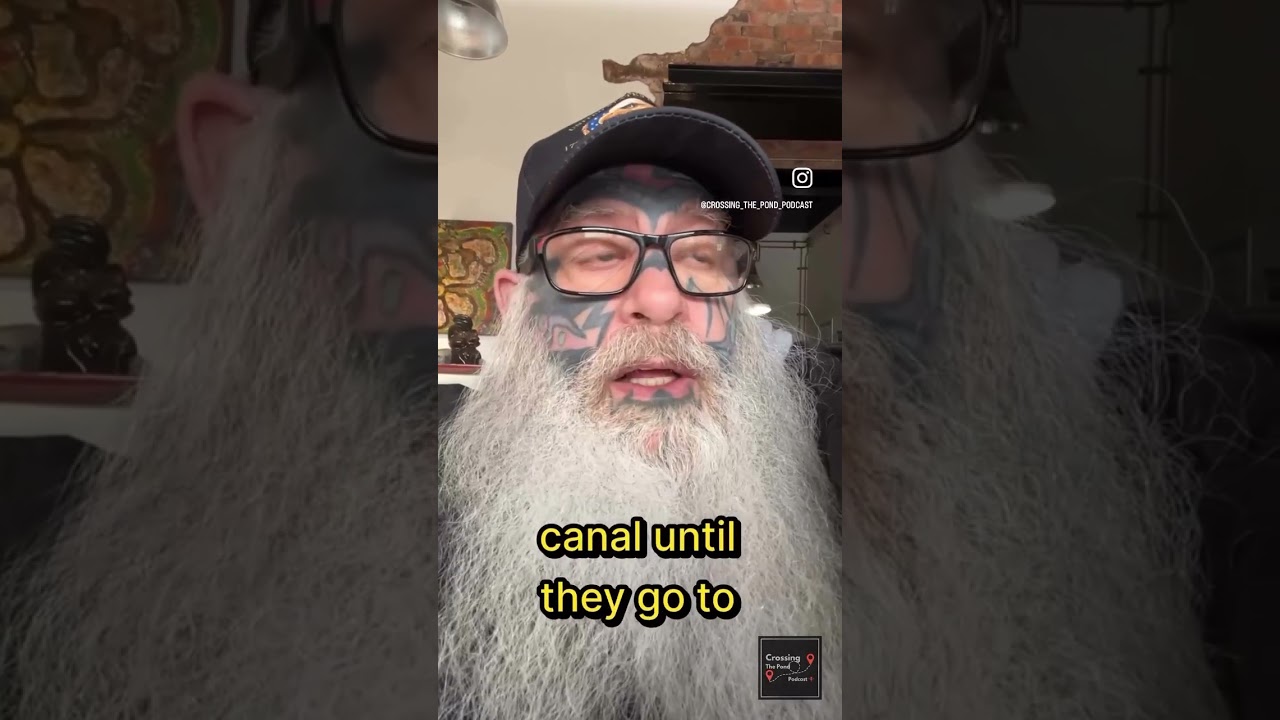
The Scary Guy Podcast With Special Guest James Durbin

In this episode of The Scary Guy Podcast, host The Scary Guy (joined by co‑host Gary) opens with a sponsored plug for Mr. Lee’s Noodles before launching into a deep, conversational interview with James Durbin, a former American Idol finalist, former lead singer of Quiet Riot, and a musician diagnosed with Tourette syndrome and Asperger’s. The dialogue weaves through Durbin’s personal history – his late father’s influence, a family legacy of music, and a lifelong fascination with tattoos – and his early exposure to theater and performance. Durbin recounts his journey from local high‑school productions to national TV, detailing his experience on American Idol (finishing fourth), his tenure with Quiet Riot, and his subsequent solo releases (Riot on Sunset, Homeland, a forthcoming heavy‑metal record). He explains his neurological diagnoses, how tics manifest, and how performing music temporarily suppresses symptoms. The conversation also covers his family life (marriage, two children), his work in voice‑over projects for Disney Interactive and Amazon Alexa, and his advocacy work, including a Make‑A‑Wish encounter that reinforced his commitment to using his platform for neurodiverse youth. Throughout, The Scary Guy emphasizes his mission to eliminate hate and prejudice, framing Durbin’s story as an example of turning “cards dealt” into personal strengths. The episode ends with Durbin performing a rendition of Carole King’s “Will You Still Love Me Tomorrow” and a discussion of future touring possibilities.
Chapters
Hi, I'm The Scary Guy. I have one mission and one mission only. It's the total elimination of hate, violence, and prejudice worldwide. That takes a lot of time. To make sure I can put positive energy out, I need to fuel my body with positive energy. Which is why I choose Mr. Lee's Noodles. They're quick, they taste awesome, and in line with my mission, they contain no nasties. Go ahead, order some noodles today. Go to MrLeesNoodles.com, and if you tell them Scary sent ya by entering the code SCARY10, you'll get 10% off. And check this dude out, Mr. Lee himself. Damien Lee is totally awesome. A serial entrepreneur, a single dad to two boys, and a four-time cancer survivor. That takes some heavy duty positive mindset. Check out episode 1 of season 2 to hear his inspirational story. Make a positive choice today by choosing Mr. Lee's Noodles. Don't forget to get yours from mrliesnoodles.com and enter code SCARY10 to get 10% off. Mmm, let me know what flavor you choose.
You're about to embark on a journey. On this journey, you'll meet many people, Some will advise you, some will inform you, and some will entertain you. Every journey begins with a single step, and the time for that first step is now. Welcome to The Scary Guy Podcast.
My legal name is The Scary Guy. I changed my name in a court of law. All of a sudden, someone I don't know in the tattoo business ran a full-page read, "Are you tired of dealing with Scary Guys with war paint facial tattoos?" First thought that came to my mind was, "What am I gonna do to get that guy back?" You know, revenge. I thought I'd jump into my hot rod Lincoln, find out where that guy lives, go over to his house, and run over his dog. A flat dog will get him back, don't you think? I realized I was a name-caller, a hater. I could stereotype and categorize people at will. I jumped off of my pedestal and I told my friends, "I'm packing my bags." They said, "Where are you going?" I'm gonna travel the world to help people see each other differently, from the inside out. Here's the truth, ladies and gentlemen. We need more people to stand up and get involved, less people watching stuff happen. I don't care about your past. I don't care what you've done. I don't care where you've been. I don't care what you've said about other people. I'm gonna love you the same as I've loved the last guy. And that's all the way. No one is safe on this planet until all of the hate is gone.
Here's the hard part.
You don't eliminate hate with hate. Hate. This is The Scary Guy Podcast.
Uh, so welcome everybody back to The Scary Guy Podcast. Now today's guest, it's all the right notes. You will be informed, you will be moved, and you will be entertained. Hitting the spotlight as a finalist on American Idol, this young man proved that being diagnosed with Tourette syndrome and Asperger's is no barrier to talent. Now he's warmed up for our show with small appearances on The Tonight Show with Jay Leno, Late Night with Jimmy Fallon, and someone called Ellen DeGeneres. Now sadly, we have no house band and there's no walk-on, but please welcome to The Scary Guy podcast, James Durbin.
Yay!
That rocks!
Thank you, everybody. I'm doing a dance.
I like it. There we go. Good to have you here, James.
This is—
thank you, great to be here. Thank you.
Just for the listeners, this is really cool because you're all the way out in California. Yes, yeah, we are, uh, on the other side of the— kind of on the other side of the world a little bit. What are we, 6,000, 7,000 miles away from him?
Depends on which way you go.
Yeah, that's right. That's right. Well, if you go over the US, about 7,000 or 8,000 miles away. And, uh, it's just really a privilege and an honor to have you on our show. And I never really expected to have you on the show until I got an email from you, which I thought was really radical, dude. That was really cool. All of a sudden I get this email.
Tell us what happened.
I mean, I, I was like blown away all of a sudden. And, uh, Tell the listeners what you sent me an email for. That was really something.
Yeah, absolutely. So my cousin, my cousin Chris sent me a text just after his father had passed away. And my dad passed away in 1999. So I was 9. And he sends me this random text with a business card and it has Scary's former name on it. I look at this business card and do some quick research, and he's like, you know, I'm thinking maybe this guy might have done some tattoo work on your dad. And so I never got a chance to know my own dad, and he had all his demons and everything. But through other people and through these experiences and such, I've gotten— I've kind of took it upon myself to do my own research and talk to people that knew him. Or find out different things about him from other people that had those experiences with him. And one of that thing has been through tattoos. I don't have a lot of pictures of his tattoos, and that's kind of a thing I've been trying to find, and it's the whole reason I'm slowly covering my body in tattoos, and it's a real passion for me. So he sends me that business card and I find that you changed your name and you recreated yourself. And I thought, wow, this, this couldn't have fallen in line in a better way. You know, someone that's all about talking about the fact that the cards that you've been dealt aren't necessarily the cards that you have to play the game with. Life is a game and we're all playing the same game. We're all playing with different cards, but you know, you don't, you don't necessarily have to play with those cards. You can have other cards hidden up your sleeve. You can manifest those cards. And, uh, and play the game differently. So yeah, I emailed you with a couple pictures of my dad, and, uh, you know, maybe we'll— yeah, it's, it's just crazy.
Have you, have you done— do you know this guy? And do you have any pictures of him? Did you tattoo him? And all these questions. And, uh, unfortunately in my life, I don't remember everybody I tattooed unless they hung out with me as a, as a buddy, you know, or a friend. But, um, It was just really, really cool to relive that time period in my life and for you to bring that back. And it was an honor. And then I did a little research about you and I went, oh my God, this kid is like unbelievably talented. If your dad was alive, he'd be right there with you. I'm sure he'd be rocking and rolling right with you.
Definitely. Well, it's funny, I just had lunch with a guy that grew up playing music with my dad. His name's Kelly, Kelly Conover. And he had gone to London and there was a, on the River Thames, is that what it's called? The River Thames? And there was a barge that was a recording studio there. And one of the guys that helped run it was a young, shoeless, long-haired, dirty, stinky Richard Branson. And so this dude Kelly, he's a drummer, and he's working on a few albums and a few different projects that they're recording there for Decca. And they bring in this guy, I think his name is Ron McQuinn, and they were saying, you know, we, we need a bass player. And Kelly said, I've got the guy. And he called my dad, who was here in Santa Cruz, and had him fly over. And there he spent 6 or 7 months recording on this guy's album.
So cool.
Yeah, it's crazy. I just got this picture of him sent to me. That's like 40 minutes into London, and he's standing there and he's got a bottle of Jameson and a stogie, and he's just standing there just chilling, just smile on his face.
Did you know your dad at all when you were growing up till 9 years old, and he passed away at 9, you were 9, but did you happen to know him at all?
He was a drifter, he was a rolling stone. So him and my mom had separated and then got back together for one night only, and that's where I came. But he kind of floated around. He came by a couple of times. And he's kind of more of like a legend in my mind.
Yeah.
Because I didn't know him as well. And the more I find out about him, the more that there's things that I wish I didn't know, but I knew that those things did exist.
Did you ever ask about your dad when you were a child? Or is that something that you've now been looking more into as you become a father yourself?
No, I've always been curious about him. I mean, I have his bass guitar here. I always talk about him. So my mom and my sister sisters, they know. But ever since I went on American Idol, there's been so many people that have come forward with pictures and stories and all that. So that's, it's been really nice.
Well, just in case there's someone listening to this that knew your dad.
Yeah.
Yeah. His name's Willie Durbin.
And he was a bass player and, uh, he was based in Santa Cruz the whole time, or do you know of other places that he went to? Obviously he came to London.
Yeah, he was, he was mainly based here, uh, in Santa Cruz. And then, uh, he got around to Tennessee. And I mean, he was—
he must have got to Tucson, Arizona.
Yeah, yeah, he got to Tucson. He used to drive a Shovelhead, a yellow Shovelhead Harley. Yeah, just covered in tattoos, long hair, beard. Super cool dude. It's like the epitome of cool in my eyes is, uh, these pictures of my dad. Just tattoos, long hair, beard.
Did he make any recordings that you know of? Have you got any— anything?
Um, I've sought out different recordings, and some of them have been— I was very glad that I sought them out, and others were not because Yeah, he, he played with, uh, he played with anybody that wanted to play, and sometimes that was for the best, sometimes that was for the worst. But, um, I'm, I'm still yet to, to listen to the Ron McQueen stuff. Uh, I'm— that's what I'm looking forward to listening to next. Um, he played on this funk record for this band out of Santa Cruz. I think they were called The People, and I've looked up the vinyl for it and, uh, it's going for like $200 because it's just It's some random, you know, some random pressing that they didn't do too many of, but it's, it's really, really good shit. It's really, really good.
That's cool.
Yeah, he played like Jaco Pastorius. He played that, that style of bass, fretless, and he played it all, you know. He could, uh, all the spots between where, you know, normally the bass player is playing—
he would be Yeah, he's pushing it.
Yeah, he's pushing in Poland and backbeat, frontbeat, all of it.
Do you think that's where you got your musical talent from?
Um, if that's possible, you know, if it is possible to have talent—
Genes, music genes.
Yeah, musical genes pushed down. Uh, maybe. Uh, my opa, my mom's dad, was a tuba player and played brass his whole life, and he was a great musician. And, uh, my dad's dad kinda drilled it into him and was a bluegrass musician and gospel and country. So I think so. I think it's possible, but I really think that the idea of him and the mystery of him kind of drew me toward music and tattoos and rock and roll kind of culture more than anything.
And when did you go on the— was it The Idol or was it The Talent? Which one was it?
Yeah, American Idol.
Right, American Idol. That's amazing to me. And you, you were the winner of the American Idol?
No, hardly. I got 4th.
But to me, that's a winner, dude.
I mean, yeah, each of us individually, like, when I look at everybody that competed on our season, um, and participated, everybody is doing something. Like, even down to like the 10th person, like, they're on Days of Our Lives. And the 11th person there did some stuff, you know, some people did stuff with the Obamas, and some people did stuff with different TV shows and musical things and, and like all these different things. Like everybody's had their own personal individual successes. It's just, uh, it's cool to have been a part of a group that, you know, everybody— yeah.
So did you— you said this year you signed a contract, a new contract, or did you have one before?
Yeah, I've had a few, um, but this one in particular is one I'm very, very happy about. Uh, it's a record label based in Italy, and they're called Frontiers, Frontiers Records. I sang for the band Quiet Riot for a couple years, and the 3 albums that I recorded with them, 2 studio albums and 1 live album, we did with Frontiers. And as soon as I left QR, my first email in my inbox was from the record label.
Really?
They said, we want to continue to make music with you. You make great music with this band, and we want to see what you can do on your own.
So, well, that must have been quite an experience singing. Were you the— you were the lead singer for Quiet Riot?
Yeah, for 2 and a half years.
That must have been an experience and a half.
Yeah, it definitely was. Some I'd rather leave behind and some I'd, you know, take with me.
Certainly not Quiet.
Yes. Yeah, well, there's probably a lot of stories that you can't tell.
Yeah, pretty much all of them.
There are a few that you—
it was fun singing some Slade songs too.
Yeah, we could do a director's cut.
I know, right?
Yeah.
When were you with Quiet Riot?
I joined them in 2017.
Was it fun?
Uh, sure.
Did you have fun? Yeah. Did you really have fun?
I definitely had—
Dreadful?
There was, there was both. There was definitely both. I mean, it's definitely difficult joining a band of people that have been together for a while and coming in as, you know, a new guy. But it's also difficult because I had been independent and my own boss since 2015. So I—
Now you're working for someone. Right, exactly.
I treat people a certain way when I do business and when I tour and when I deal with management and venues and bookers and promoters and agents and that sort of thing. So I, I have my own—
kind of had to put all that aside, right?
You have to put all that aside and just kind of like sit back and be like, oh, this is how they want to treat people. Oh gosh, this is a reflection on all of us, you know? And then like going to like the promoter and being like, oh, can I help? I don't want that to be like the reflection on me too, because if I come back here with my band, you know, I don't want it to be like 'Oh, that guy's an ass,' you know.
Well, the last 15 years or so must be like a bit of a blur because time just really flies, doesn't it? And this year has gone seemingly even, even faster. And we've jumped right into the middle of your career, so I'm going to put a halt on the whole thing now. Look, Scary normally does this in our podcast. I'm going to go, whoa, whoa, I want to take you back to that 9, 10, 11, 12-year-old growing up in Santa Cruz, just getting into maybe discovering your music and your life. I introduced you in the— at the beginning of the podcast saying that you were diagnosed with Tourette syndrome and Asperger's. When did that happen for you, and how did that manifest itself? And did it affect your growing up, your childhood at all?
Absolutely.
Um, well, let me— let me stop you for a minute.
It's a double stop. There we go.
It's a double—
it's a double stop, and the double stops are kind of fun. But before you get into the story, can you do us a favor? Because I, I honestly believe that they're— not everybody in the listening world knows what Tourette's is, and I don't necessarily believe that everybody knows what Asperger's— is it Asperger's, Gary? Is that what she said?
Asperger's, yeah. It's pronounced differently.
Okay, that— can you help define those, those two things for us from your standpoint?
Yeah, I can definitely do it from my standpoint. Um, so Tourette syndrome is a neurological disorder. I say disorder loosely. That's what they told me is a disorder. I don't look at it as a disorder, and I'll get into that later. But it's, um, yeah, it's just a neurological disorder that causes the brain to kind of have these little spurts, and they come out as tics. So sometimes they're facial, sometimes they're vocal, sometimes they're physical. Like mine, I click my teeth, or I make sounds, or I grunt, or I— you might see me blinking or twitching and stuff like that. So, um, Is it uncontrollable? Yes, it is uncontrollable. There is one type called coprolalia that is the blurting out swear words, and that's kind of like what media has attached itself to, South Park and different movies and stuff.
Everybody that's Tourette's has that, basically.
Right, right, right. There's a comedian called Daniel Tosh, and he says, do you think there's maybe one case of nice Tourette's in the world where someone just blurts out, nice smile, you know, lovely hat. And, and then as for Asperger's, Asperger's is a form of high-functioning autism. And so it's— growing up, I had a lot of difficulty making eye contact. There was some extreme awkwardness, some— and not just being a kid and blurting out, you know, inappropriate things at the wrong time. Like when I was getting my diagnosis checked out by a neurologist, his name was Ching Wong, and I said, are you Chinese? Are you Japanese? Are you Taiwanese? Are you, you know, and just kind of like there was no barrier of, you know, of, of, is this nice? Is this like, maybe I shouldn't, maybe I should. And this is the high functioning. And I've met people that, you know, are on the other side of it that are just very, for lack of a better term, kind of deer in the headlights, very unaware of anybody's physical or emotional boundaries or any of that. So it's, it's definitely been something that I've had to, uh, work on, especially to want to be in the public eye and be able to do interviews and this sort of thing. Yeah. Yes. On stage, all of that. Well, it's funny that you mentioned that is because when I get on stage and when I'm performing, it all goes away.
Isn't that cool?
All of it. Because I'm so focused.
That's why you like it, isn't it?
Exactly. You know, I, I would live on stage if I could, which I kind of do.
And that's really, uh, really interesting because it's well known and the scientists are looking into it, isn't it? How music affects the brain and people with that dementia and Alzheimer's, they can have them just listen to music and it kind of refocuses their brain. They've got talents in the UK. Just recently, a guy in his late 80s or 90s, I believe, with dementia was playing piano and his son was like talking about the music and taking him back into his past. And this guy had developed this talent where he could create and compose a song on the spot just from 4 random notes. Wow. And he did it on the fly, and they've now recorded his song. The— some Philharmonic Orchestra in the UK has now put it together. They've recorded it in lockdown with everybody playing their orchestral parts, and it's gone into the mainstream charts.
That's amazing.
And it's amazing. And you could see this guy come alive from this music, you know. So music is really, really powerful.
And yeah, I recently saw a video— sorry to cut you off— I recently saw a video of a a woman that danced in, like, the Paris Ballet, and she had Alzheimer's, and she's sitting there very frail in her 90s, and she's watching a video of herself when she was in her 20s doing this dance, and suddenly she realizes, in— out of nowhere, and she starts doing the dancing, the routine, from her wheelchair. Like, I had to turn it off. I started shaking and crying and like I can't handle it. It's so beautiful.
Yeah.
It's, it's really incredible. Just the human being, like how we can, regardless of, and I can only speak for myself and again, and the cards that I was given, which were still a good hand. I was given a good hand. I, you know, there's a, there's a couple wild cards and a couple difficult cards to play and make use of, but all in all, it's, um, there's, there's a lot of people and I count my blessings every day and I'm very grateful that there's a lot of people that don't have the chances. And the fact that mine is high-functioning enough and mine are manageable enough, even through my Idol experience, I mean, I was, I was a, I was a mess on camera and it gets worse with emotion and stress. And, and it definitely was. And I was ticcing a lot and having a very difficult time acclimating to answering questions and interviews, uh, not saying the wrong thing, which is It's a, it really is a, it's a skill that you have to acquire. But with that being said, I had some great teachers and I had, I mean, my mom, for instance, she's very, very patient and allowed me to, you know, make mistakes and make my own mistakes and learn from those mistakes.
And, uh, well, that's a great description. Thank you for helping us out. Now, Gary, what was your question?
I can't remember. It's such a long time ago. I can't. It was how—
it was true.
Yeah, it was how the Tourette's and the Asperger's— Asperger's— how it affected your, your schooling. I'm assuming to actually get a diagnosis, there would have been some kind of noticeable affectation or effects for you when you're a child to actually get a diagnosis.
Yeah, so I mean, I've seen video of myself from when I was pretty young, and my face, you know, I'd be making little little faces in the tub and different things. And at first it just seemed like— it seems kids make faces, but then it progressed and got different and more and more. And I remember, I think that there was like an episode of Dr. Phil or something back in the day, and it was talking about kids with Tourette's. And then there was another episode that was talking about kids with Asperger's. And she kind of looked at that and was like, hmm, we might have a situation on our hands. We might have both. And we went to Stanford University out here in California and went and got my diagnosis. And they ran— I remember they ran a whole gamut of tests, and then they put me on some medication and things to try and calm me down and calm the brain. But of course, all medications have side effects. So I played that game for 6 years. I got diagnosed when I was—
medication game.
Yeah, I mean, the— like I said, the emotion and the stress and all that, like, heightens it. So my dad, my dad passed away December 17th, 1999, and then I got diagnosed in like March of 2000 when I was 10. And because that point was just crazy for stress and emotion, and it came out and it really showed itself.
That affected you?
Yeah, yeah, it really did.
Were you living with your mother at the time?
Mm-hmm.
Yeah, me and my mom and my two sisters, older sisters. And yeah, it was difficult on them, it was difficult on all of us, that. And then in turn, my things and facials and everything happening at that point too was— and noises and that sort of thing was really, really showing itself. And it's very difficult to live with. I commend my wife. She lives with it. She tells me all the time, hey, you're doing that thing again, can you stop it? Yeah, I've been married since— gosh, we've been married since 2011.
Whoa.
So we're coming up on our—
You have kids now?
Yeah, we've got two. Yeah, we've got an 11-year-old and our daughter turns 6 in 5 days.
Yeah, well, congratulations, but you don't look like a father.
I'm 31.
With a father with an 11-year-old.
Yeah.
You don't have any lines on your forehead.
Look at you.
He's covering up his gray hair though with the hat.
It's just the lighting. No, we keep going. We keep going. Hairline. There it is. All right. Yeah, there's my fatherhood. That's where it shows, right?
Right there.
Yeah, but you know what, even with that, you still don't— you look— how old are you now?
31.
Yeah, no way, no way. I'm guessing 21.
We started—
we started— no, seriously, I'm not— you know what, everybody says that kind of stuff where everybody looks younger and all that. I mean it, you don't even look anywhere near that.
Well, thank you.
You look like a kid.
Well, thank you. I feel like a kid, you know, always have, probably always will.
It's awesome.
Talking about your children Your son Hunter. There's a wonderful clip. This is where I'm going to persuade you to maybe to play a piece of music, if you can remember it, that is. Yeah, there's a clip of you on American Idol. I think I'm a manly man, but I was kind of like wet around the eye area when I was watching your songs because the emotion. But there was a song that was particularly emotional for you, and it was the Harry Nilsson Without You. Can you remember when you recorded that and that film clip because you were having visits from, is it Heidi, your wife, and Hunter, and then they were having to leave. That must have been really tough at that point.
Yeah, that was, that was, man, that was rough. That was definitely a difficult, difficult, difficult time during the competition. Because when we were out there, you know, I had not been away from my wife and my son for longer than 24 hours. And then at that point, it was kind of like all compiled together had already been like 3 months.
Months.
And then I saw them, and it was great to see them, but it's like I almost in a way wish that I hadn't, because it's like you start to build up a kind of— not an immunity, but kind of an immunity to, um, you know, your emotions.
Oh, you get hardened.
Yeah, yeah, exactly. You get hardened. And at that point, it's just like, oh my gosh, you know, here they are. It's, it's— they're here, and this is real, and I can't, I can't handle this. And I forget what the, I forget what the theme was that week for why we had to pick Harry Nilsson. I think I remember I was looking through a bunch of different songs and trying to figure out other stuff. I wanted to do some, I really wanted to do Humble Pie, and they wanted me to do, I wanted to do like Black Coffee or something, you know, or 30 Days in the Hole, because I love me some Steve Marriott. And but they were like, you know, we want to, we want to strike a different chord. And they played me that, they played me a few songs and nothing really stuck. And then they played me that one, and there's just sometimes there's just songs that reveal things from you, you know, like just, just the words, you know, I can't forget this evening or your face when you were leaving, but I guess that's just the way the story goes, you know, and boom, like, oh my God. And at that moment I'm like, this has to be the song, you know. I try to feel and understand that if something hits you like that, there's a reason, and it just kind of needs to. And I did, you know, played it last minute, decided to kick off my shoes and, you know, do a little Paul McCartney Abbey Road, go barefoot on it. And yeah, it was definitely a tough one. I think I could play it if you'd like me to.
I can't forget this evening, the faces you were leaving. I guess that's just the way the story goes. You always smile, but in your eyes your sorrow shows. Yes, it shows. No, I can't forget tomorrow when I think of all —my sorrow. I had you there, then I let you go. And now it's only fair that I should let you know what you should know.
I can't live if living is without you. I can't give, I can't give anymore. I can't live, live, living, living is without you. I can't give, I can't give anymore.
A little bit. Yeah, that's incredible, dude. Thank you. Incredible.
It's early. Those are my first notes, except for when I warmed up earlier.
No, it's more than incredible. So, so jealous. Your talent is amazing, and your voice is incredible, and your sense of stage and theatrics is also awesome, having watched your other performances and that. So talking of the stage, what drew you into stage and the theater and, and that?
What got you going in the first place? My older sisters were both in theater in high school. My older sister Carrie, she, she was more in the tech side, but my oldest sister Deanna, she was right up there and was getting lead parts and that sort of thing. And I saw that right around the same time that I really started discovering what kind of music I liked. And at that time it was Motown, it was the Jacksons, it was Michael, it was Marvin Gaye, it was Al Green. Temptations and Shirelles and all those. And so when I saw the difference of like hearing people on the radio and seeing concerts and things on TV and then seeing that there's, oh, there's a theater where you can go and sing and perform and act and my sister can do it. So if my sister can do it, that means I can do it. And they were doing the musical Damn Yankees about the Senators baseball team and the guy Joe, and he sells his soul to the devil for one more run at baseball stardom and leaves his wife and disappears and becomes like a, you know, 20-something-year-old guy. And Shoeless Joe from— I can't remember the rest of it— Shoeless Joe from Panama Ho or something like that. And I fell in love with this show. I went and saw it once, and then for the first opening night, I was— I don't know if this was before my dad passed or right after, but I was doing like T-ball and Little League and that sort of thing. Baseball. And I remember I had my baseball pants on and my cleats, and I got like a t-shirt from the show and a little hat. And I'd sit there every single show with like an A&W— or no, a Barg's or a Dad's Root Beer— and a box of Junior Mints and sit there and watch and just take in this whole show. And I would go and see every single performance. Like, I'd get given a dollar, and back then for a dollar you could get, you know, a soda and a box of candy. It was great. And I just sit there on the floor in front of the stage every single show, and I learned every single song, and I took it in, and I learned the blocking, and I learned everyone's parts and most of the dialogue. And then I got to go backstage, and to me, like, looking back on it, it was just like a bunch of high school kids, you know, in like a theater room. But to me then, it was like, this is like, this is going backstage Hollywood. This is, you know, pulling back the curtain for, you know, The Wizard of Oz. There's Oz! There he is! Oh my gosh, there he is! He wears khakis?
No.
You know, and just seeing that and seeing like them putting on their makeup and putting on their costumes and getting into character and it just looked like so much fun. It looked like all the fun in the world. And so the very last night of their performance of Damn Yankees, I was there, of course, and they brought me up on stage. I remember going backstage before the show and they said, James, We want you to come out on stage with us and sing while we think about the game. While we think about the game, the game. And I did, and I thought that, you know, they just keep me in the back, but they pushed me up to the front of the stage, and I'm there in front of a sold-out—
How old were you at this time?
9, 10 maybe. Wow. Huge impact. Yeah, huge impact. And I remember like for a split second I kind of froze and I'm singing And then I look out and I'm like, oh, I'm above everybody else. They're all watching me. They're all hanging on every limb, you know, creating this in my head, but they're all watching and waiting. And I felt like Michael Jackson in that moment where he comes out from the bottom of the stage and it's on like the History Tour and he's standing there in his space suit and he's like, you know, not moving for like 10 minutes and people are just going, you know, batshit crazy. And then he takes off his helmet super slowly and then holds it. And then like, you know, people are fainting and dying in the crowd. And to me it was like, you know, no one was actually having that reaction, but to me it was like, this is what that probably feels like. And so then I just got into it. While we think about the game, the game, big arms and big, you know, big legs and, uh, swinging. And, uh, and I just fell in love with it at that point. I remember the next play that my oldest sister Deanna did was South Pacific. And for that show, they needed a kid. They were looking for a small, black-haired, tan, Cantonese-French boy. Thanks. Thanks. Yeah, I wasn't always this tan. I was very pale. We dyed my hair black, covered me in toner. Put a sarong on this chubby little 11-year-old, and some Jesus joggers, some sandals, and away I went. And I still remember the song, it was a Dis-moi, a French song. I don't know what it means, something about love, obviously, aren't they all?
Dis-moi pourquoi la vie est belle. Dis-moi pourquoi la vie est quête. Dites-moi pourquoi, chère mademoiselle, est-ce que par-ci que vous m'aimez?
And that was the song, and I sang it, and I, I got the gig, you know. Rock, dude. I got the gig.
I want that. You know what, I, I think I want that, like, you know, recorded on— I could just play it whenever.
The ringtone should be the ringtone on your phone.
Yeah, ringtone. That's— I'll send you the session.
Yeah, it's in there. Please, I think it's still recording. Yeah, yeah, yeah, we're still recording. And yeah, so I did that, and then suddenly it's like I was no longer— I didn't have to go sit in the crowd during the show, although I did. I love— because I just love to watch the show. But I was backstage, you know, I had my own spot, I had my own dressing area, you know. I'd get to sit back there and hang out and listen to them sing songs and just be teenagers and high schoolers and, and I thought, this is the coolest. I can't wait till I'm in high school and I get to come to this school and I get to be a part of this class. You did. And I did, yeah.
Did you try out for the musicals and things in high school? I did, yeah.
I got Motel the tailor in Fiddler on the Roof. Wonder of wonder, miracle of miracles, God took a tailor by the hand. And then we did—
Yeah, I remember, I was in Fiddler on the Roof.
I was a bottle dancer. That's so hard.
Did you guys actually do them, or did you just stick a Velcro? Yeah, so they didn't fall off. But I was a bottle dancer, and I was also the bartender.
Nice. Yeah, but that's a fun show.
That's cool that you were in Fiddler, dude. Yeah, that's awesome.
Did, um, the other one in high school was, um, My Fair Lady. That was Freddie, Freddie Eynsford-Hill. How are you, darling?
Yes. Oh, the towering feeling just to know somehow you are near. The overpowering feeling that any second you may suddenly appear.
Are there lilac trees in the heart of town? I love that show.
Well, you know what you need to do, dude? We need to get you in a film. No, I mean, you need to do a classic, you know. Yeah, you need to do it. They need to remake the classics and put you as a starring role in one of them.
Well, thank you.
That would absolutely rock.
I think I, you know, which one would you choose? Who, me? Scary? Yeah, no, well, I think Scary's good for Fiddler right now, don't you think? For that?
Yeah, he's fantasy booking right now.
Yeah, yeah, yeah. Or Aladdin's. I think Scary could be in Aladdin. It could be the genie.
Yeah, he could be, uh, what's the, what's the dude, uh, Laser Wolf the Butcher. He could be Laser Wolf.
Yeah, yeah.
But you, James, if you could pick one musical to do a movie remake, which will be, um, I, I've always wanted to do Jesus Christ Superstar. Oh, I've just— I've never done it, and, uh, I love the soundtrack.
Be on Broadway, do the one on Broadway, dude.
Yeah, yeah, that'd be fun. I was talking to some folks, um, before all this stuff went down, and obviously this put a damper on everything from that kind of live performance aspect. But yeah, it's maybe possible for the future.
I mean, there's— Would you do it if they made you an offer to do it?
Yeah, oh, absolutely. You know, if the offer was good. Yeah. Not, yeah, Jesus Christ. Not just any—
Well, Jesus, are you crazy? Yeah, I'd love to play it. Let us know.
Yeah, the Jesus role would be sweet because I love the Ian Gilliam version as is okay. In my view. But to me, it's really the Ted Neely version from the '70s film. I just think that he was a little crazy, but his voice, just that he had that essence in his voice. Go back and listen to that. He's got that little bit of a Steve Marriott, but it's just something else. And he continued to play that role, Ted did, after the movie. He continued to play that role. Musical on Broadway and live. I mean, remember, Jesus died when he was like 30, and Ted continued to play it till he was like in his 80s.
That must be on your bucket list to do then. You've done stage and drama, you've been on television singing, and we haven't really even got into American Idol and how that really impacted your career. But I can see from where we're going with this, that there's a musical in you. I think there's a, you know, you talk about other people writing a musical, there's definitely one in you, your life story? How—
well, it's kind of what that— sorry to interrupt, um, it's kind of what the album that I wrote is, but it's, it's not necessarily has anything to do with me. I was listening to a lot of albums that circulate around a main character, and I'm always grown up and a huge fan of Harry Potter, and I'm reading the, um, I read those like 10 times all the way through and watched the movies at least 20 times all the way through, and probably more than that, 30, 40 Just obsessed too much. But looking at stuff like that and trying to write something myself that's based around a main character and their trials and their tribulations and their wins and their failures and their death, you know, thinking about Rowling and just how she writes and creates this world and creates these characters. And any writer, but, but her in particular, just because I know the and have watched interviews and things where she talks about the emotional pull that it puts on her when she kills a character and/or kills two characters and the cycle continues again. Like Harry, his, his— she had to kill his parents, she had to kill everybody that he ever loved or attached himself to to further his story. And like the emotional pull that it puts on you for that. And I found the same thing, like writing my own characters and writing my own story, that that he died. And I was like, spoiler alert, he died.
And I was like, I said, are your songs kind of like the, uh, '80s genre music and rock and roll, and where they actually did— and even the '70s and '60s in the real rock and roll, they told stories about life. And that's why I liked it so much, and that's what I grew up with, you know. And so I'm listening to— they call it pop music now— and I listen to it a little bit, is so disheartening to me because I don't even know what the story is, or if there even a story. It's more about movement and right, and then the drum beat and, you know what I mean? And that's, that's hip and cool, but I'm not— that's not where I'm from. What I'm from is, you know, it— I want to hear a story going on in the, in, in the lines. And, and when the singer sings, I want to— I do want to feel some emotions from it. Yeah. And that's kind of what I think you are about, isn't it? You're about telling stories. Um, absolutely. And your music is like that, am I right?
Yeah, yeah, exactly. Especially with this album. This album, I wrote every riff, I wrote every guitar part, except for guitar solos. Those are all provided by some great friends and killer musicians. And are you legally able to play one on our show, or is it too soon? Uh, it's too soon.
It's too soon. You can't legally— you can't really play one because you can't release it yet, right? Right, exactly. And can you play one from a released album that tells a little short story about your life?
Yeah, oh, absolutely. Yeah, this is a song called— this song's called Mustang Livin'. I wrote it about my wife, and she shared this story with me about when she was a little girl and lived in— it was her, her mom, and her little sister living in their '69 Mustang. And right on. It's called Mustang Levin.
Wrap yourself in comfort, dream that things are better than they are. A cold wind blows and it tries to force you over. Your fortress is small but it fights the storm. Well, do you believe in angels? 'Cause they could have been the thing you needed most. Mustang living takes you fast and leaves you low.
There's no place to drive you home. If I could be Gasoline clean, and a fire that keeps you warm. I take the wheel to keep you safe, wash away the rain.
Drive your coast, let me breathe your oceans. You heater's broke as you stare out from your loft. Well, I wish I was there to guide you and help you to find your way when you felt lost. La la la la la. A bird sings, her cage is rusting golden in the middle of —of the night where shadows pass. As Sam has raced the highway, lost in her head behind the looking glass.
Mustang living takes you fast and leaves you lost. There's no place to drive you home. If I could be the gasoline in a fire that keeps you warm, I'd take the wheel to keep you safe, wash away the rain, wash away the rain. Must stay living.
I don't even want to talk. That is absolutely incredible. Thank you. You just made my whole week. Thanks, man. Yeah, absolutely. No, I mean, it's just beautiful. I want to buy it.
Where do I buy it? Oh, that one's, uh, that one's on iTunes. That one's on all the internet ones. That one's on an album called—
just go by your name on iTunes.
Yeah, James Durbin. J-A-M-E-S-D-U-R-B-I-N.
And, uh, for— and I can go Mustang Livin'.
Yeah, Mustang Livin'. Mustang L-I-V-I-N Livin'. And, uh, yeah, that's on an album called Riot on Sunset. Absolutely incredible. Thank you very much. I'm so blown away. The new stuff— I appreciate that very much. That, that song is— that song was a real game changer in songwriting for me and taking a story and crafting it poetically and giving it a hook melodically and everything. And it just kind of went from there. That album was kind of a building block, a stepping stone, as they all are. The album after that that I did is called Homeland, and that one's more of kind of a traveling road trip record. It's mainly acoustic Americana, a little bit of country, like more traditional country, more folk country, alternative folk. And then The one I'm working on now is late '70s, '80s heavy metal.
It's— this one's in— this one, you decided to put everything in your face feeling.
Yeah, yeah, exactly. Yeah, this one's very, very heavy, very riff-based, very Tolkien, very Tolkien-esque. Bards and dragons and wizards and prince and a king and necromancers and The Evil Eye.
And see, I think you're on the map. In my opinion, you're a superstar. Do you think you're on the map? I don't know.
I think a couple years ago I was concerned with stuff like that, and now I'm just kind of— am I on my own map? Because if ever I try to compare myself to anything that anybody else is doing, which I really try not to— I don't follow a lot of bands or anything on my socials and other artists unless they're my own friends because I'm really rooting for my friends and other people that are doing this, and they're more so in their own lane. So I don't really go and see how other people are doing that are in the same lane as me because I don't like being affected by, you know, their wins.
Yeah, but I don't know that you're in any of those 30-year-old lanes, buddy, because I'm listening to your stuff and I don't hear that coming out of 30-year-old people. So, you know, I think you're in your own lane for sure, and I think there's a piece of you that's undiscovered yet globally, and that's gonna happen. And I, I just can't wait for that to happen for you. I just think it's going to be incredible and your life is going to soar even more.
Thank you, brother. I appreciate that very much.
I think a house, an album, and superstardom all in 2020.
I know, right? The 2020 vision. I know, it's— I don't know, I, I've looked around at friends and I've seen what other friends have been doing, and I'm very, uh, happy that I've, in the last year and a half, I've been getting into voiceover work. And so that's been something that's been really successful this year and different voiceover projects and stuff. It's been, it's been good. It's been really good.
What kind of voiceovers have you been doing?
I've been doing stuff with Disney Interactive. So there's different programs for Amazon Alexa, little Alexa thing. And like—
Say that quietly because my Alexa will turn on if you say it out loud. Yeah, so he's always listening, always listening.
There's these programs for that called Free Time Unlimited for kids, and on there there's these different audio experiences. There's one called Star Wars: Choose Your Destiny, and it goes through basically like an animated Star Wars kind of thing, except there's no animation, it's all audio. And it'll go through and the characters, and, and then they'll come to a crossroads at a certain— all these certain points in the story, and you get to decide if they go left or they go right. If they do this choice or that choice. And along that, I've got a bunch of different characters through those ancillary characters. We're not talking, you know, Luke or Han or Chewie, but just different characters throughout, and Rodians and Lepis and all these random little voices. And like, oh, you don't even know the rules.
Is that a deep voice? Just different voices. Is that a deep voice? Yeah. Yes.
A Lepi? Yeah, a Lepi's a— the Lepi talks like this.
He talks like he's kind of from Brooklyn. 'Can you find me a character that would be in my tonal range for me?' Then tell them that I would be more than happy to work with that. Absolutely. You know, in the deep, real deep voice like this. Yeah. It would be kind of cool. Yeah. You know, let them know.
I know, I know it's deeper. A little bit. It's a little deeper than I can go. Maybe early in the morning, maybe if I stay up 24 hours, maybe I can get there.
Yeah, you get your first cup of coffee in and and you just wake up and everything's got that, and it's real great in the morning sound, isn't it?
Yeah, yeah, morning after.
Uh, well, I gotta tell you, I gotta, I gotta tell you, this has been an incredible hour of time in my life. Gary, I'm sure, is feeling the same way, and it's just been an honor and a privilege to be able to even spend some time with you. And we always ask our guests at a certain point towards the end, uh, what one thing would you like to share with our listening audience? That would really be a positive statement or something that's really uplifting and, um, powerful. And what I'd like to do, since we have you and you're so like hyper talented musically, is to pick one of your songs and sing us off the air with that one song as your message to them. Would that be something you could do for us?
Yeah, I gotta think of what the song would be.
So good job you didn't ask me, Scary, what song you should play, because, um, I've got a shortlist, but I don't think he could—
Oh, do you? You have some songs?
No, but I just want to know what he's going to pick first.
What's on your list? I want to know that.
I have two songs that you actually did in American Idol. One of my all-time favorite songs was Carole King, "Will You Still Love Me Tomorrow," and not a Beatles song, but Paul McCartney. And but Carole King would be my favorite if you didn't have one of your own.
All right, "Will You Still Love Me Tomorrow," Carole King.
Here we go. All right.
Tonight you're mine completely. You give your love so sweetly tonight. The light of love Love is in your eyes. Will you still love me tomorrow? Is this a lasting treasure or just a moment? Can I believe the magic of your sight? Will you still love me tomorrow? Tonight with words unspoken, You say that I'm the only one, but will my heart be broken when night meets the morning sun? I'd like to know that your love is a love I can be sure of. So tell me now, and I won't ask again. Will you still love me? Will you still love me? You better love me tomorrow.
Oh man, that's unreal. Thank you very much. I just love it.
I love it. I was very tempted to put the speakers on in my studio and actually open the doors for the neighborhood That's an awesome song. And thank you.
You got to come to the UK and do a tour here, man.
You'd go over like huge. That'd be fun.
I can't wait. So really appreciate you coming on. It's, it's been more than a podcast for me. It's been awesome just to hear you play and sing and hear your thoughts. And as somebody that's worked with many youngsters and young adults with varying degrees of autism and Asperger's, uh, and I know some of them haven't been the deck of cards that you have been dealt with, but so many have got other gifts that they're only just now growing into. So you could so easily have become a victim to your deck of cards, but you've used those gifts and done more than prove that nothing can hold back talent.
Thank you very much. During the Idol process, I was doing it for myself originally, and I was doing it for my family, and I was doing it for a whole list of other things. And then right in the middle of it, Songs for Movies week, I was having a difficult time with the producers and them not trusting me to, you know, pick my own songs and that sort of thing. And right through it all, I got a call from the Make-A-Wish Foundation. There was a kid named Cole, and his one wish, whether he lived or died, was to spend the day with me. And— no way! And not only that, but he has Tourette's, he has Asperger's, and he's had been in and out of the hospital since he was born. He had double kidney transplant, he's blind in one eye. Like, these are things that have happened since since I met him, and he's still, still kicking and still ticking and inspires me all the time. And that's when I realized that I have to use this platform to shed light on and to give the spotlight back to other people. Because when I was their age, when I was growing up, I prayed every day that I could have somebody in my life, not necessarily like related to me or somebody I could actually go see, but just anybody in the public eye that is like me. And I was always looking for that. And I'd always heard rumors that Jim Carrey or Robin Williams or Dan Aykroyd— I know Dan Aykroyd has, he's got Asperger's. Jim and Robin were so influential in my childhood. The idea that they had a fraction of what I had and the fact that I could look at them and say, you know, they're still doing it. They're not letting it stop them. If anything, they're using it to their advantage. So my whole thing is, you know, the cards that you were dealt are the cards that you can play with. And like I said before, you can, you can manifest other cards up your sleeve. And don't feel like you're limited by what society tells you should limit you. A doctor is learned in the ways of a doctor, and they're learned in one way, and that's the way that they have to treat it. You know, if someone comes in and they have to give a diagnosis, that's a diagnosis they have to give. They're not gonna say, well, you know, try this CBD cream and try this GABA root and try this— go down to this river and find this flower and this leaf and grind it up and, you know, rub it in your eyeballs. They're not gonna say that stuff. It's like, you just gotta, you just gotta live. When I was a kid and I was taking medications, I was tired of being what they thought normal was, and I need to understand that what my normal is so I can understand myself and find happiness with myself and find out who I truly, truly am. And so I stopped taking my medications at 16, and I— I learned how to live with how I am supposed to live. That's what I try and push on to other kids and other people that are dealt these same cards, is that you're not who they say you are. It's up to you to define who you are, and only you. Can define who you are. That's right. That's awesome, dude.
It's been a privilege to have met you. Um, likewise.
Thank you so much.
You had definitely have a talent. I'm gonna be proud to say I knew him when he was just James Durbin. Now he's James Durbin Superstar, and I knew him. Thank you. Thank you.
See you later.
This podcast was sponsored by Mr. Lee's Noodles. Make a positive choice today by choosing Mr. Lee's Noodles. To order yours, go to MrLeesNoodles.com. Thank you for listening to The Scary Guy podcast. This is a Vision Heart production.