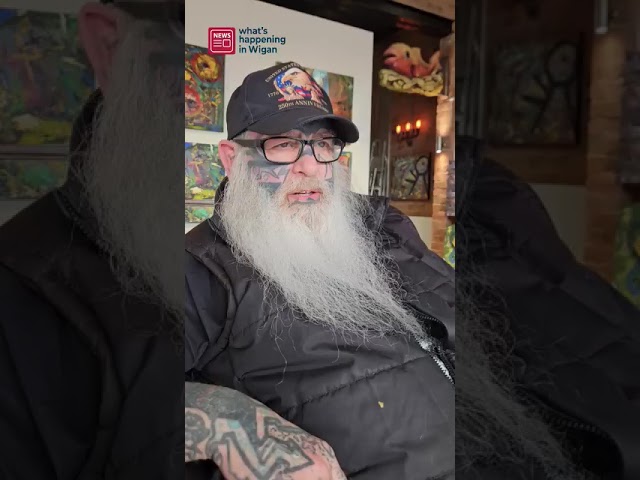
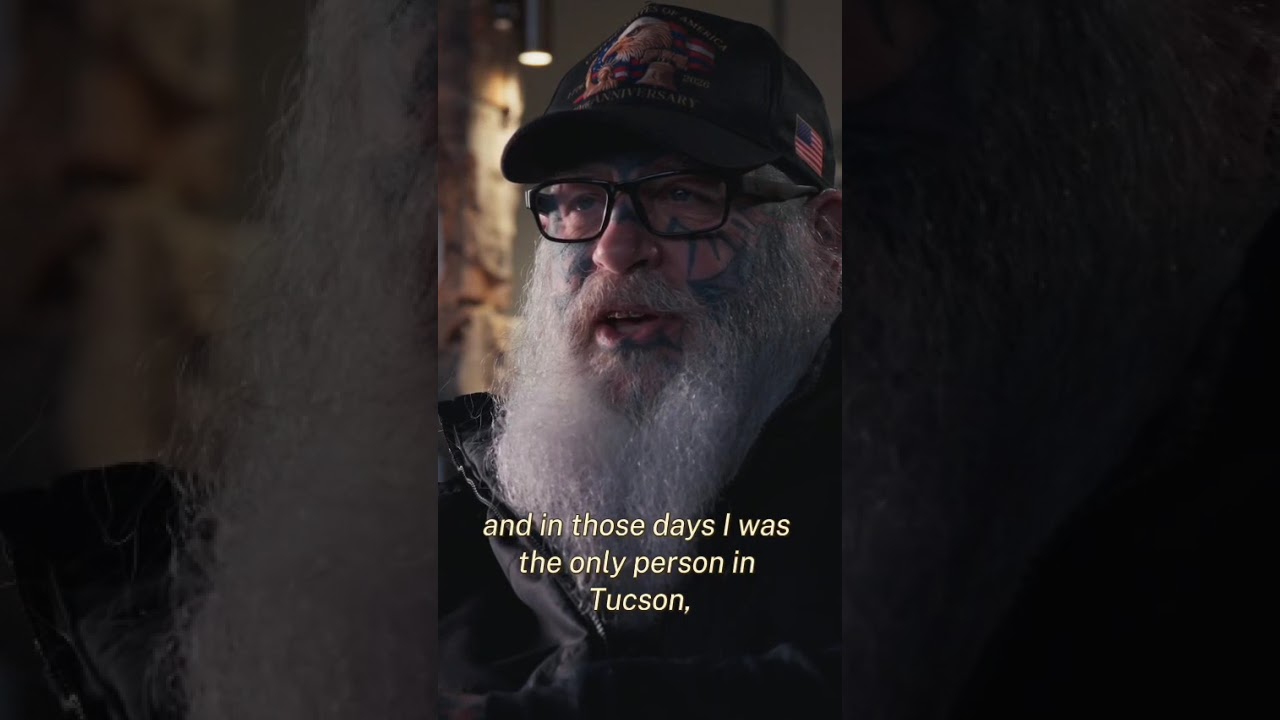
The Scary Guy Podcast with Special Guest Brad Aronson

This content was created by The Scary Guy. This content was uploaded by The Scary Guy. This is a YouTube podcast episode titled "The Scary Guy Podcast with Special Guest Brad Aronson" (created 2021-04-05). It is an interview-style conversation hosted by The Scary Guy with co-host Gary and guest Brad Aronson (speaking from Philadelphia). The episode opens with sponsor reads for Mr. Lee's Noodles and The Noodle Cookbook, includes The Scary Guy describing his mission and personal backstory, and features a broad discussion with Brad about parenting, boundaries, emotional intelligence in schools, saying and showing love to children, and examples from Brad's book 'Humankind: Changing the World One Small Act at a Time' illustrating how small acts of kindness can ripple out to wider change.
Chapters
Hi, I'm The Scary Guy. My mission is the total elimination of hate, violence, and prejudice worldwide. To put positive energy out, I need to take positive energy in, not just in the form of words and actions, but also the food I eat. Which is why I'm proud to say that Mr. Lee's Noodles have chosen to support The Scary Guy podcast. Just like my mission, they've eliminated the nasties with only the finest ingredients making it into each nutritious pot. Now not only can you get Mr. Lee's noodles in a pot, you can now cook your own. Here's my co-host Gary to tell you more.
Yeah, that's right, Scary Guy. As part of Damien's incredible legacy, he created The Noodle Cookbook, sharing his passion for food and his love of Southeast Asian cuisine. The Noodle Cookbook contains 101 healthy and delicious recipes from Shanghai young chow to lobster laksa curry. The Noodle Cookbook has a recipe for every craving—vegetarian, vegan, and gluten-free. Available from Waterstones, Amazon, and WHSmith. And don't forget, you can get it from MrLeesNoodles.com. So get your copy of The Noodle Cookbook today.
Hey Gary, don't forget the noodles. When you order yours, tell them Scary sent you and enter the code SCARY10 to get 10% off. Let me know what flavor you choose. Earlier this year, our good friend and founder of Mr. Lee's Noodles, Damien Lee, sadly lost his 6-year battle with cancer. But his infectious enthusiasm, creativity, and smiling rebelliousness lives on. We honor his memory in our own podcast by continuing to bring you positive stories and meeting inspirational people.
You're about to embark on a journey. On this journey, You'll meet many people. Some will inspire you. Some will move you. Some will entertain you. Every journey begins with a single step, and the time for that first step is now. Now, welcome to The Scary Guy Podcast.
My legal name is The Scary Guy. I changed my name in a court of law. All of a sudden, someone I don't know in the tattoo business ran a full-page ad in the newspaper that read, "Are you tired of dealing with Scary Guys with war paint facial tattoos?" First thought that came to my mind was, "What am I gonna do to get that guy back?" You know revenge. I thought I'd jump into my hot rod Lincoln, find out where that guy lives, go over to his house, and run over his dog. A flat dog will get him back, don't you think? I realized I was a name-caller, a hater, I could stereotype and categorize people at will. I jumped off of my pedestal and I told my friends, "I'm packing my bags." They said, "Where are you going?" "I'm gonna travel the world, help people see each other differently, from the inside out." Here's the truth, ladies and gentlemen. We need more people to stand up and get involved, less people watching stuff happen. ¡Hey! I don't care about your past. I don't care what you've done. I don't care where you've been. I don't care what you've said about other people. I'm gonna love you the same as I've loved the last guy. And that's all the way. No one is safe on this planet until all of the hate is gone. Here's the hard part. You don't eliminate hate with hate. Hate. This is The Scary Guy Podcast.
Welcome one and all to The Scary Guy podcast. We've been silent for a few weeks since Christmas for a variety of reasons. Apologies if you've missed us, and thank you for supporting the podcast. Make sure you tell your friends and feel free to leave an iTunes review so others can find us too. So believe it or not, this is our first episode of 2021, and what a way to start. There's no random act involved. I wanted to share with you the positivity and joy our guest has in abundance. He's an entrepreneur, a mentor, a doting dad, a loving husband, and author of the most heartwarming and inspirational book. It's called Humankind: Changing the World One Small Act at a Time. Please welcome to The Scary Guy Podcast, live from Philadelphia, Brad Aronson. Yay!
Yay! The man, the, the myth. I love it. The book, I haven't read it yet, but I want to read it. Welcome, Brad. It's nice to have you here. Thanks.
It's great to be here. I appreciate it.
So I mentioned you're speaking to us from Philadelphia. At the time of recording to this, there's been like 2/3 in snow.
Yeah, we've got plenty of snow, which are— we have an 11-year-old. He's so happy when it snows. But it's hard now because school is mostly virtual. So he doesn't get a snow day. He says it's very unfair, but he's still having a ball. And we enjoy it. The snow is fun.
So the homeschooling, that you've not allowed him a snow day today? No, not today.
We did. I'll admit that there was another day we had a lot of snow and I told my wife, I said, you know what, we're just going to say it's a snow day and we'll skip school. But school did it on their own, so we were set.
That's cool. There's a lot you can teach a youngster when there's days like that. There's far more they can learn than they can in front of a book sometimes, I think.
Yeah, and fun is important. Absolutely.
And so are you having fun as well, don't you think? Of course. Children seeing their parents have fun, because I don't think that happens enough in families. Quite often the parents are either the disciplinarians or they're the ones that provide, or they're the ones that, that solve a problem and that. But then to see your parents actually having fun and laughter, I think that's really important.
Because I remember my parents carrying— when I was 5 years old and I saw my mom and dad having fun in the kitchen all the time, and they were hugging and kissing and playing. And I never forgot that image when I grew up and got older. So I don't know if that makes an impact. Does it make an impact on people? What do you think, Brad? Absolutely.
Like, we could tell our kids everything, but they judge based on what they see, and they're really smart, and they need to— they need to see us having fun, and they need to see us modeling the type of relationships that they can— that they're— that we want them to have. Like, if we're going to tell them, respect your spouse, Respecting our spouse, they need to see us having fun with our spouses. Uh, so I think it's critical.
So how do kids learn about respect, do you think? I mean, other than watching you and maybe watching your wife or whatever, what— how do they— you know, because you know, you know as well as I do, you've probably been in a million schools, or at least 2 or 3. I've been in a million schools all over the world, and every time I go into a school, I see a banner on the wall and it says respect, and it says, you know, you know, the word respect, or there's a different word, and courage, or there's an honor, and there's all these different words, really cool words on the walls. And a lot of times I don't see the actual actions within the, the student population, or even maybe the staff. I don't see those actions going on. So I, a long time ago, decided that it wasn't the printed words that made things happen in those environments. So what do you think? I mean, I know You just kind of said it about parents and stuff, and the kids got to see it. But what is it about the fact that people keep putting these words on walls and then we don't have a lot of that going on?
That's how I see it. I agree. And, you know, part of it is there's a lot of things going on, but in general, people underestimate kids. Kids are smart. You can't throw up a banner that says respect and not be a respectful place and think that they're going to be fooled. They're not. They're smart. In fact, you know, they're smarter than we are. And we don't, we don't give them credit for what they see. It really has to be an internal value. So as a school, you need to believe in respect, and you need to give respect to your students, and then they'll give it to you. And that, I think that's how people learn. I've been in a bunch of schools, and I've seen, I've seen, you know, so in Philadelphia, urban places where, you know, there are kids who aren't expected necessarily to graduate, kids who have been in trouble with the law, and it varies so wildly. Like, I was in one school where they they expect every kid to get a great job and succeed. And they hold these high expectations. And it's not just something they put on the board. And those kids are amazing. And I've been in a school with the same type of kids where they say that, but they don't really believe it. They're not making the kids pull their pants up and put a belt on. They're not making the kids be respectful. And it's a completely different environment. And it's because of that tone that's set. So I think in the schools, it's critical that we just live it. And at home, I think of my friend. I have a really close friend, and he has dedicated his life to helping kids. I met him when he was my first boss, and I was a social worker. I lived in a group home as a tutor. He does everything to help the world. One day he's driving with his daughter in the car, and there's a woman standing on the street with a cardboard sign, and she says, "Dad." Like, what's that woman's sign said? And he says, oh, it says, can you please help me? I'm hungry. And his daughter says, well, Dad, why aren't we giving her food? And he was like, why aren't we giving her food? And he pulled over, gave her his lunch. And he told me about it and said he was heartbroken because his whole life is dedicated to helping people, and he had just become oblivious to it. And that's what his daughter picked up on because that's what she saw. And luckily she pulled him back And he started realizing, like, you need to acknowledge people and not be oblivious to it. But, you know, kids are very observant. Oh, big time.
And they're fast, aren't they? They're really fast with the way they think and then, and come up with ideas. What about boundaries? What do you think about boundaries? I mean, do we as a culture and a society around the world— now, I'm, I'm a U.S. citizen, of course. I'm living in England, but I'm a British citizen too. But I see the same things happening in Britain as I see happen in the United States, so it's really no different. It doesn't seem to be very many people with boundaries or kindness and, you know, where they consider each other and they care about what other people say and do and, and helping. Like you just said, that there's a help thing going on, you know, where somebody said, well, stop it, let's give them some food, you know, that kind of thing. Um, is it important for kids to have boundaries and that teachers and parents set boundaries for their children and they know what the rules are? Is that really important in life, do you think? Because I don't see a lot of that going on on the streets anymore. I I see people taking advantage of people all the time. And what do you see? I mean, and how does that work in your world, in Philadelphia, in your family life with boundaries?
How does that work? I mean, I think boundaries are really important. Uh, and I think of, for example, and I work with young people who've been through a lot of trauma, and because they've been through a lot of trauma, some people think, okay, just tell them they're doing a good job, like support them. And that's really actually hurting them. Like, I bring in people to do mock interviews and I say, if you're just going to feel bad and not give them a real critical feedback, you're going to hurt them and they won't get a job. Uh, you got to be able to, to say, here's what you need to do. You got to tell them the truth, don't you? You got to tell the truth. And they know if you're not telling the truth, and you're hurting them if you don't. And it's with your kids too. You don't have to lie to them, you know, you tell them the truth. And you're going to set some boundaries because our kids have to behave like that. They have to be good people. I expect that, you know, it's not acceptable if my son is not kind. At the same time, like, I want him to be able to explore and try things and fall flat on his face. I think that's so important that, like, I like to let him go, and if something blows up, that's great. And I try to celebrate that with him so he doesn't feel like, oh no, I failed at something. It's like, that's awesome, let's celebrate! Because some— and I try to share with him when I do stuff that blows up. So you can see that, like, I'm blowing up stuff all the time, uh, you know. Of course, I don't share it with the whole world because, like, sometimes you don't want to share all that. But, you know, it's important for them to see both sides. It's the—
it's blame, isn't it? I think it's the word blame seems to get caught up with children. If they think they're going to be blamed for something, and that blame leads to being shamed, they're not going to come forward and say, do you know what, I've made a mistake. They're going to cover it up, or they don't want to talk about it.
Oh, they lie.
And we have that, uh, philosophy in our house where it, you know, it's not okay, of course, if you've done something wrong, but we'll talk about it and then you move on from it. It's okay, you know, we're not going to sit there going, ah, you did that, no, no, no, we're going to pick on you forever and we're going to be horrible human beings. So I think blame seems to have a huge impact on, on everything. Everybody's looking for somebody to blame.
You know, it's easier to blame than it is take responsibility. And that's what I— I learned that when I was younger. But then my dad corrected me immediately because he was a product of World War II, you know. He was an angry father and, uh, angry man. Silent anger. Boy, I'll tell you what, I, I did nothing my whole childhood but look up to that guy, and I couldn't wait for him to just acknowledge that I was even in the room. And, and, uh, just a tough time for a kid kid. Can you imagine that? Can you imagine that, Brad? That— can you imagine not acknowledging the fact that your kid is there? I mean, that sounds extra—
like, excruciating. Yeah, excruciating. It was horrible. And did that drive kind of your path now to—
oh, it drove my path. It— I think it's part of who I am right now. I mean, you know, 25 years of traveling the world and helping people realize that they have the power to be who they are and, and, uh, and deal with their emotions real and real time and all of that. I think because of those issues in my life, I think it definitely created this being here, you know. You know, it definitely had something to do with the fact that, uh, he was there but he wasn't, and it was a real difficult time for me. So I don't know, I can't imagine what it would be like for a kid to go through that. You know, you got kids. What do they do with you as a father? What do you do with them as a father?
I mean, I try to be present. So I love parenting. So we have one son, he's 11. I always ask him, you know, do you want me to coach your team this year? 'Cause if he says no, I'm not gonna do it. I don't wanna like put him in that position. He was like, yeah. So I'm the person who's coaching his teams. I come up with wild things to do. So right now our favorite activity is called Dudley ball, and Dudley ball is indoor football where the one rule is if you're kicking for a field goal, you have to wear these insane jumbo glasses. And then that's, that's the one rule of Dudley ball. Some of the sub rules are like you've got to make a tackle every play And, and you can only tackle the kicker after he moves. But it's crazy. It's wild. But it's fun. And it's an outlet. And, and, you know, at the same time, I'm also in the role of like having to discipline him and let him know, you know, that, that wasn't quite right. Or here's the expectations we have of you. And it's a fine balance. But, but I believe like, You got to make your own fun. So I just try— you know, he hated making his bed when he was younger, and I just told him, like, you're a superhero. We're going to turn every blanket into a cape, and you're going to run from the bathroom to your room and jump on the— jump on the bed. And that's how you make the bed with each thing. And he loved it. So like, trying to— just trying to make fun, make things fun, get him engaged, and expose him to a host of different things.
How do you do it though? I mean, how do you listen to your 11-year-old or your 12-year-old or your 10-year-old? How do you do it? Because parents don't have time and they don't really seem to want to do it. They, they, they talk about it, they talk about how important it is, but then they just don't do it. Listening to your kid is like, it's tough. I don't know about you, but it's like, I don't know if I have the time for that right now. I'm more busy doing this over here. In your mind, that's That's how it feels. So how do you do it as a dad with an 11-year-old when he really wants to be heard?
This— a friend of mine put out this thing. Let's say you're at your own funeral. What are people saying at the funeral? What do you want them to say about you? And I thought about it. I was like, I want them to say I was a great dad and I did a lot of good in the world. And then I said, well, what am I doing right now with my life? And at that point, I was working extremely hard. And like, why wait? If I want to be engaged and be a great dad, make that my priority, because it's never going to be the right time. You're always going to have too much work. You're always going to need to pay your mortgage. Like, that's— you just have to say, this is my priority. And I think having clear boundaries, which— it's funny, it drives my wife and my son crazy, but when Jack and I are interacting, I don't answer my phone. I try not to have my phone with me. Oh, that's good. He'll even say, Dad, you're getting, you're getting texts. Don't you want to know who it is? No, we're talking right now. Like, this, that can wait. Uh, so it's, it's like you have to just commit to what, what's most important to me, and I'm going to live that now because you just can't put it off. Uh, so, so that's kind of how I do it. I have my priorities, and some nights, like last night, I was up till 1 AM doing work but when he was awake and it was our playtime, I'm not doing any work. I'd rather stay up and do it, but spend my time with him. And I learned about just making things fun. Before you launch into the fun, can I ask you a question about love? Yes.
My brother, who's gone now— he died about 3 years ago— he's, uh, he was about a year and a half younger than me, and, uh, he had a One, he had two sons, but one, the one son I think about that he was actively involved in raising, Nate is his name, Nathan. He and I witnessed him doing this. We, we live in two parts of the world, so we didn't see each other a lot, but we talked to— because of the internet, we could talk to each other a lot. But anyway, I, when I was there visiting him on many occasions, I witnessed something that absolutely blew my mind. And he told his son from the moment they woke up in the morning— and this is from the day he was a little boy until he was a grown man, he's 22, 23 years old now, so he was telling him at 18, 19, and 20 years old— he told his son multiple times a day the simple phrase, "I love you, son." He would go out of his way to tell Nate I love you, Nate. Just random, no schedule, no, no, Nate didn't do anything special to get it. I mean, he, he would just say it, and he did it continually all day and all night. Not every hour, not on a schedule or anything like that, but I know that I picked up on it and I went, wow. And, and it just kept saying it like he was almost like he was brainwashing this kid. And it felt like it, but it was— it wasn't, you know, it was positive. How often do you think it's important? I mean, you obviously listen to— you told us that you listen to you and you put your work aside. You don't even answer your text messages. To me, that's phenomenal. To me, that's incredible, because I don't— I don't think there's a lot of parents that put that priority at that level. But How often is it, and or how important is it to even say the words to your son or your daughter on a regular basis that you love them, and then not attach it to anything really, Brad? You know what I mean?
So I, I think the most important thing is to show that you love them. So again, kids are used to people telling them all sorts of things and then not living it themselves. Right, like the example we were talking about. We got a big banner in our school that says respect, right? We don't really respect you students, and we don't even respect each other. So I think the most important thing is to show our kids that we love them, so to be there for them. And it's not that hard. Like, I have vivid memories as a kid of me playing Little League baseball, and my dad, he worked like a lot. He worked a lot, but he came to every game. He'd be there in his work clothes, you know, you know, watching. And I was not a good player, so it wasn't like he was coming to see a star. He'd come and maybe I'd strike out, whatever. And I remember that, I was like, he wanted to be there, he wanted to be there with me. And to me, that says I love you. And, you know, when stuff went wrong, whatever it was, my parents would be there for me. And I think like what's most important is for us to show our love by being present, by being there, by being a part of their lives. If our kids love something, it's something that we should get involved in because they love it and we want to be part of their lives. Uh, so I think that's most important. As far as saying I love you, it's a strange thing where I feel like culturally a lot of people don't say it. Uh, even I know my wife and I, like, it's just, it's like not natural to come out of our mouths for some reason. Really?
Let's see, now I, I gotta interject there because I'm married to a British woman here and she tells me she loves me, which to me is pretty rare in England. She tells me she loves me all the time, every day, at least 2 or 3 times a day, and I do the same to her. And it's almost like a habit now. So we've gotten into this habit of of doing that. And she'll tell me she loves me when she gets in the car to go somewhere, when she's leaving, you know. It's like, wow, that's pretty cool. So it's like a habit we've gotten into, and, and we've been doing that now for almost 10 years. So I don't know, uh, it's pretty easy for us to do it now, and it's almost, um, part of our lives. So maybe there's a room for you and your wife, even though it feels awkward to, to try it out, see what you think. Tell me, tell me how that goes, dude. I'm gonna monitor you now, Brad. As I'm gonna monitor you, I'm gonna see how that goes for you because I'm curious to see if you can make that shift.
Can you? Absolutely. Yeah, like with— and it's funny how, how we made that. So we did make that shift in part. I don't know what it was, but Jack just, just started saying like, I love you, Dad, I love you, Mom. And we're like, we love you, Jack. So he actually brought that to our lives. I don't know where he got it from, but he started saying it, and then we started saying it. And I wondered, like, where did he pick that up from? And why didn't we say it? Because for so long, it was just, like, understood. You know, I love my wife. I love my family. They love me. I feel that. But it wasn't this verbal expression. Now we're better at it, but with your challenge, I will get better, even better at it, because I think, you know, it's the best thing in the world. We should be shouting about it.
Yeah, I agree with you. I totally agree. My— the culture here is to say love you or I love you, whether we've been talking to them on the phone, whether they're— my granddaughter lives with me, and when she's going to bed, she's 15, she always says love you, Nan, love you, Granddad, and off she goes to bed. So the culture here is I love you when they've been to see us, which obviously is infrequently at the moment because of the circumstances. And it's not because I don't love my mum and dad who don't live that far away, but for some reason, the culture with my dad, I don't even hug him.
Isn't that something?
We rarely shake hands when we part. Now, obviously with the pandemic, it's been very difficult when I've been to see them. I don't even give my mum a hug or give her a kiss on the cheek, which I used to.
You'd probably kiss me on the cheek first.
I probably kissed you more often than I kissed my wife. No, I won't say it. No.
In the years— now this is getting interesting.
In the years that we've been traveling, we've had this conversation before, Scary, when we've been in the car, been traveling and everything else. We've talked about it, and Scary's been teaching the emotional intelligence within the schools. Forget the random acts of kindness, saying I love you. One of the most vivid demonstrations that Scary shows about this disconnection between emotional love for each other is with young adolescent, you know, adolescent boys. So many of them within the school have got disconnected parents. They're either in a single parent family, they've not seen their dad, they don't know where their dad is. And even if their dad's around, Scary would say, when was the last time you hugged your father? And 90— I'd— 95% of them, Scary would say, mind-blowing, I've never hugged my dad. Yeah, it was just mind-blowing. And even to this day, I now— because my dad's a lot older and I'm not sure how he would react, and I'm desperate one day just to throw myself on him and just say, there you go, Dad. And I need to do that, do you know what I mean?
But yeah, you should. That's a challenge now. I'm challenging you, Gary.
Challenge accepted. Uh, Brad, there's a line in your book, Humankind: Changing the World One Small Act at a Time, I've loved reading it and there's a load of links in the podcast notes so you at home can order a copy too. Anyway, Brad, what you say is be aware if you have kids, assume they're watching everything you do because they are. So is that why boys particularly don't hug their parents or hug each other or hug because they just not seen it? Who's gonna answer that? It's like a panel game.
Oh, I'm waiting for Brad. He's the expert.
I'm far from an expert. I do have an opinion, but I'm not an expert.
You're an expert, buddy. You, you've been around. You got a great book. I can't— I can't wait to read the book, and I'm not a very good reader, but I'm going to read it.
I appreciate that. I, I think, like, we know what we see, and it's what we see in our families and what we see in the media. And to what we were saying before, there is this kind of persevering attitude that, like, be a man, you know, be strong. And actually, it takes a lot more strength to show love, I believe. But that's not what's portrayed. And Gary, I feel so strongly, and I'm going to challenge you along with Scary, I think you owe it to yourself. And quite likely, when you hug your dad, he's gonna like it. But you get to a point, I feel like, where if he hasn't, it's just awkward and he doesn't know what to do. And the worst thing that could happen is like it's a little bit awkward. Yeah, but that's the worst thing. But most likely this could become a wonderful habit.
No, I totally agree. And I think it's become more prominent in my thoughts because of not being able to be in their physical presence a lot more. So I'm aware of it, and I'm aware that I've not hugged my other grandchildren, and because they're just not here every day.
So, well, the other thing, Yuri, I got a question for you because this— it's an interesting conversation about the son at your age and your father at your age not hugging, and, um, all of a sudden you're going to change that. Would it be beneficial, do you think, maybe to even have an open dialogue before you hug him? Or what do you think would be the best way to go about it?
No, I think I might warn him. I might let him know I'm coming in for a hug.
Kind of like, kind of like, um, a dive bomber. Is that what you're talking about?
No, I think been thinking it through within these milliseconds we've been talking is something thinking, yeah, do you know what, I talk about it and I haven't done it, so what am I going to do? It would— the easiest thing, I would just tell him, why don't we hug? We've never hugged.
So you're going to ask him a question?
Yeah, yeah, yeah. Because then we can draw in— it may be that he hasn't hugged because of his dad. I never saw him hug my granddad.
Or maybe you should ask him the question about that, maybe to lead into it and say Hey Dad, I got a question for you because it's been on my mind. Did you ever hug your— do you and your father ever hug on a regular basis? That would be one way to open it up, I think.
And it is interesting when you talk about kids being— and you've said it, Scary, in all the presentations you've done— kids are a direct reflection of what they see and hear. So why is it then that I'm so capable of of showing emotion and hugging and everything else, but my dad doesn't. Maybe it's because I've picked it up from other adults in my life, or other—
I even go one step— I even go one step further, Gary. I say there are no bad kids. Check that one out. I don't know if you ever heard that before, Brad. Have you heard that before? There are no bad kids. Kids are a simple reflection of what's already on the planet. So, um, if you see negative behavior in a child, it's because they've learned it from somewhere else, and then they're just copying it and using it. I remember the commercial when I was a young kid— well, not so young— but they had a TV commercial for cigarette smoking and not smoking cigarettes. I don't know if you've ever seen that one in America where the father was lighting up a cigarette and the son was sitting next to him, and it was— and then the— and the ad said, like father, like son. And the son was trying to grab a cigarette out of a cigarette pack, so he would just copy the father. And then, and it was about not smoking. So it was a not smoking commercial. I don't know if you ever saw that one. Like father, like son was really interesting to watch happen.
It sounds like a perfect ad. I did not see it, but like what better message? You might not care about your health, but you, you darn well care about your kids.
Yeah. And that's exactly what the kid was doing. And, uh, you know, I grew up when I was born in 1953 and my mother and father, it was chic. It was the thing to do, was smoke in the '50s and '60s. Everybody smoked cigarettes, period. If you didn't smoke a cigarette, you weren't— you were not human, period. So guess what we did when we were 5 years old and 6 years old? We went to the woods up above the house, and there was an older boy that lived up there, and he was 10 and 11 years old, and he would steal cigarettes from his parents and meet us in the woods, and we would all light up cigarettes. Now, did I smoke the cigarette at 5 years old properly? Absolutely not. Did I inhale the cigarette? Absolutely not. But it was what my parents did, and that's what I did. And I was so proud of the fact that I was this boy smoking a cigarette. I went home and told my mom and dad that I was smoking cigarettes in the woods. And my mom and dad, they looked at me and they said, really? And I said, yeah. And they said, well, Show us what you mean. And they sat us on— my brother and I— sat us on the sofa, and they put the cigarette pack with an ashtray in front of us with two chairs in front of us. Just show us how you smoke cigarettes. And so I'm going, hey, this is pretty cool. I'm a 5-year-old little kid, I'm smoking in front of my mom and dad. Cool. So they light my cigarette up and I puff on the cigarette, and my dad and my mom go, oh no, you're not smoking cigarettes. I said, what do you mean? Now I'm feeling bad because I'm not a part of the in crowd, see? And my dad and my mom go, no, you got to go like this. And they took it and they inhaled the smoke and then they blew the smoke out. You have to bring the smoke into your lungs. And I'm thinking, okay, so guess what? That was the last time I touched a cigarette because I inhaled that smoke and I coughed and coughed and coughed. And that was it. I was all done smoking. So they taught me a little lesson about smoking cigarettes and I didn't like it then. But that's how they did it. It's amazing, isn't it? You would never ever do that today in today's world. Never. But yet we have kids smoking cigarettes.
And it worked.
It worked for you, right? Oh, big time. Never smoked a cigarette my whole life. Check that one out. Never bought a pack of cigarettes.
But if you did that as a parent today, you'd have social services on your door.
Oh my God. Yeah, you'd be in trouble.
Um, so we're more than halfway through the episode and we haven't actually managed to discuss your book much at all, so we apologize to your literary agent for that, but we'll rectify that now. Um, as a book about changing the world one small act of kindness at a time, it's perfectly illustrated by the story you have of the guy that founded a homeless charity, because of an act of kindness he witnessed as a child towards a homeless man by his mother. And I'm sure you'll be able to explain that much better. Could you share that with our audience, Brad? Absolutely.
So, uh, this story is about a man named Wilson Goode, and when he was a kid, uh, during the Depression, everyone was in huge poverty, and a man knocked on the door who Wilson described as a hobo and said, "I'm really hungry. Can you give me something to eat?" And his mom invited this man in and fed them when they didn't have enough food for all their kids. So Wilson's father was in jail. There were many kids and they didn't have enough food. And at first he was furious that his mom brought him in when there wasn't enough food. And then he realized throughout the meal that sharing was so important. Uh, so, so fast forward, uh, Wilson's family winds up moving to Philadelphia because they, they lived on a farm, and with Dad in jail, they couldn't manage the land anymore. They wound up moving to Philadelphia, and Wilson winds up as the managing director of Philadelphia. And at some point, someone comes into his office and says, you need to look outside at Love Park. And he said, what's going on? He said, there's a bunch of homeless men, and they're just sleeping there. And Wilson told me, he said, I knew right then and there, I flashed back to that dinner with my mom. And I knew I had to do something. And without calling the mayor, without getting any approval, he found a city firehouse that had a vacant basement, and put all those homeless people in that basement that night. And he wound up starting the first homeless program of the city of Philadelphia because of that one action that his mom did so many decades ago that resonated with him. And that's like the, the joy for me in putting this book together was talking to people where they could pinpoint this one seemingly trivial thing, experience in their life, that went on to change them, which had this ripple effect on thousands and thousands of lives. Wow, that's incredible, dude.
I can't, I can't wait to get this. I want to, I want to read this. I'm not a reader, but I'm going to read this book. I'll tell you what, this sounds really good, really cool.
The entire book is full of inspiration, but there's a connection between the stories I'd like to explore, if that's all right with you, Brad. Now, you tell an anecdote of how your wife left you $20 in your car because of your forgetfulness. And this led to you arriving by chance at the same time as the CEO that you're due to meet. And the story of that is wonderfully written in your book. It's a fantastic story, which we'll leave the listeners to discover when they order their own copy of the book. Then there's the story of Dan the Coffee Man, a guy who brought hospital workers coffee every day, and he did it for years and years and years. Now, one day a film crew happens to turn up and put it on the news, and the next day dozens of well-wishers turn out to actually give him some money in support. And as it turned out, I say again, by chance, if the film crew hadn't publicized his actions and inspired the well-wishers to turn out, who in turn then offered Dan some money, he was going to have to stop buying those coffees for the workers because he'd run out of his own money. So here he is. Here it is, Brad. So, so Brad, this is the point. Your wife's actions led to your chance meeting with the CEO, the coffee shop worker who tipped off the film crew who just happened to turn up at the right time, enabling Dan to carry on his kind deed. Is there something going on here that's higher than coincidence? Is it something that you believe in?
So I, I think I do believe in karma, so where good things happen when you're doing good things because you're just giving off a positive energy and you're doing good things. I also believe, even though these are extraordinary stories, right? So there's the person who taught a third grader to tie his shoes, one lesson in shoe tying,. And that led to thousands and thousands of kids' lives getting changed. And other stories like that, and Wilson and the homeless program. But really, there are so many stories like that, we just don't hear them. Mm. So I don't know that they're outliers. I think they're not publicized. And the— so I do believe in good karma, but I also think these are way more widespread than we know because they tend not to get covered as much in the media. And because these people people aren't going out and bragging about it. It's funny, when I was trying to find stories, it wasn't the people who told me. It would be someone's spouse. So I was out picking pumpkins with our son and some other kids, and I was telling this, this woman, a friend of mine, you know, I'm writing this book and I'm looking for small acts of kindness. And she's like, well, you know, my husband, every Saturday he goes out and runs with this guy who has Alzheimer's. He could still run and was telling me about This guy Alex, who did the running, was one of my best friends from high school. I had known him for 40 years, uh, actually 20 years. I had no idea he did this because he never said anything. He never mentioned it to me. It was his wife who told me. And in so many of these instances, I didn't hear it from the person who was doing it. It was someone else saying, you wouldn't believe what happened. So I think people also aren't out there promoting it. Uh, because they're not doing it for the promotion, they're doing it to make the world a better place.
So is this underlying energy force going on that a lot of us don't even acknowledge exists, or because we're overwhelmed with so much of the negative and then we're bombarded with it that we don't even have the time, or we don't see it, you think, or it's— we're not looking for it? What do you think it is, Brad?
So I think maybe we're not looking for it, but I also believe that we can't— regardless of your beliefs, if you want to make the world a better place, you have to do something. So going and praying, uh, you know, that, that's really important to some people, but that is not going to help someone who's hungry on the street. And it's not going to help someone who needs a mentor. If, if we want to change the world, it's got to be active. Uh, I like— love is a verb, you know. We got to go out and do something. It doesn't have to be huge because these little acts can have this ripple effect. But really, it's not about hoping the universe helps things. We have to make it happen. And it doesn't have to be something huge. The smallest things can have this, this wave effect.
It's doing, isn't it? It's actually doing something. Yeah, well, there are people out there that, that think praying is doing, and I think praying is doing, but I don't think that it's an action, uh, that's outward. I think it's an action that's inward, and it's a very important action for those people that do that. And I know that for them, and it keeps them grounded and, and connected to whatever they believe, and that's really beautiful stuff. But I also believe What you just said is the real truth. And the real truth is human beings, we have the power to make a difference. And making that difference is an action step. And it is really truly putting those times in place where you take that action step. And that is the most difficult thing in the world, is to take that very first step and make a commitment to do that. And I think that's where people stop and hesitate. I really do. Anyway, there's my two cents. What do you think of that?
I, I agree. And you know, I'd also say that so much good in the world is done by people who are religious. Yeah, I see church groups, temple groups, like religious groups that they go out and they're trying to make the world better, and they're running soup kitchens and doing things. But, and, and that's the component you need to do if we want to make the world a better place. It's our responsibility to do something. Like, that's why we're here. Uh, kind of like, you know, I tell our son, don't just get lucky. Like, you, you work really hard, then you'll be ready for when you have that chance to get lucky. But if you're not working hard, like, the same lucky chance might come along and you're just— it's gonna pass you by. Yeah.
Or, or is the luck part of the karma? Meaning Is it really something that you draw into your life because you've put something positive out, and then we label it luck? And the truth is, is that if you put that positive energy out, it will always come back to you. We just— that here's the hardest part for me has always been as a human being, I don't know when and how much and why. I don't have all the answers to how it comes back. And I don't have all the time for— I don't have any control over that piece. But I can guarantee you in my life, 67 years later, I can tell you that there will be something positive that will come back to me in some way. And it will expose itself. And I, and I'll go, oh my, that— wow, that had a direct reflection of of the connection that I made in some way, shape, or form. Now, did I motivate that person to do that? No, that's not why I gave in the first place or helped in the first place. But I guarantee you that you will always get back what you produce, always. And I used to say, "Hey, I don't believe in luck." And I think luck is just another term for positive energy that comes back to you.
There, that's all it is for me. I think, you know, there's an expression, right? The harder I work, the luckier I get. Uh, you know, what you put out there does come back. Yeah, but there's also an element of luck to it, you know. You know, I look at my own life and I'm lucky that I was born into the zip code I was born into and born into the family I was born into. So there's, there's— it's a mixture of both, but you But yeah, as an adult, what we put out often, you know, has implications for what we receive. Big time.
As always happens, time races away with us on The Scary Guy podcast, always leaving us with too much to talk about. But I can't let you go, Brad, without mentioning my favorite line from your book.
It's, "Living is a team sport." What it is— what is the line again, Gary? Say that again.
It's, "Living is a team sport." That's cool.
That is really cool. How did you come up with that, Brad? Living is a team sport. I mean, what motivated you to think like that and say that?
Well, I, I think one of the clearest examples to me was at one point my wife was diagnosed with leukemia. And like, we're going through life and everything's great, we're planning the future. She's got like a swollen node up in her neck area. It goes to the doctor, and all of a sudden it's, you have leukemia, you got to go to the hospital. If you're lucky, you'll be out of the hospital in a month, and then you have 2 and a half years of treatment ahead of you. And we're just like, oh my goodness. Like, everyone tells us, we can't believe it's happening to you, you're so young, this doesn't usually happen to young people, blah blah blah. And we're thinking, we can't believe it's happening to us. We're supposed to like read about this in magazines and see it on TV, but not happen to us. And I had always been someone who was a volunteer and good at giving help. And it wasn't until that happened, that I really needed help. So the social worker sat down with me, and she said, look, your son is 5 years old. And if you keep his life completely the same, so you know, mom's going to be in the hospital, but if you do everything she did, you keep everything going, he won't notice. He won't be traumatized. And, and of course, my wife was the amazing stay-at-home mom who cut his sandwiches into rocket ships and like did everything. But I'm like, holy cow, I gotta try to do all of this while my wife's in the hospital. I want to be in the hospital and try to juggle it all. And, and people would come to me and say like, how can I help? And I had no idea what to say. I was just burnt out, fried. And then people started just doing things. So my wife's friend Dawn calls and says, "Hey, I know that Jack loves baseball and he loves Little League. I'm going to sign Jack up for Little League because you probably don't realize that it's the sign-up time. And I'm going to make sure he gets put on a team with someone who could drive him because I know you're at the hospital all the time." Now, this is Philadelphia. We're a big city. It's a Little League run by volunteers. Somehow, She got it set. We're on a team with someone who could drive him to all the practices, take care of that. And I— and it really was a team effort. I never would have been able to get through that. My family wouldn't have been able to get through that if so many people didn't step forward to help us— friends, family, strangers. And it was a team effort. And I think in general, life is a team sport. Like, if we're going to overcome challenges, we need to work together to do that.
What is it about that? It's a fantastic, um, story about team and life and people. And but I, I've experienced this in my life, and I don't know if you have, but there's a period of time in my life now— not so much now because like I'm an old man, you know, like I'm old enough to be your father old type of man. And but when I was your age or even younger, I had a hard time accepting help from other people, accepting a gift, receiving something positive. I had a really hard time with that. And I'm trying to figure out in my life where that came from and why it was so difficult for me to receive. I was more like you when you said a give. I was a giver. And I'm, I'm still a giver. And I really enjoy giving. But when somebody wants to give it to me, I sometimes I balk a little bit. I don't, I don't just wholesale put a smile on my face and go, hey man, thanks a lot, you're cool, man, that's cool, that's really far out. No, I go, uh, and in Britain it's really common. I'll tell you what, the whole culture, not everybody, but the most of the people that I've run into, that they're ingrained in their mind to say, nope, you don't have to do that, nope, no, no, no, don't, don't bother, no, no worries, don't. And it's, they'll shut you off. Immediately here. And it's so hardcore to get over that piece for them to, to see that they're really closed off with that piece. So it's got— it's to the nth degree here. So what do you, what do you see about receiving and receiving the help? Because you want— you've gone through some real serious trauma with your wife at that time, and I'm sure there's some residual stuff going on with that. And the truth is you had to learn to receive getting all this, these gifts and help? And was it difficult for you? Did you ever have a hard time?
It was so hard. I had basically the same reaction you did. I'm totally good, don't worry about it. And then as I saw people doing the kindness, uh, you know, someone said to me, you know what, you'd be really nice to me if you let me do this. Like, if you want to be kind, let me do something for you. And then I thought about it. Like, I love helping people. I get— like, it makes me feel great when I can help somebody. And it's important for us to remember, like, we're being nice by letting people do nice things for us. But I agree, it's a natural reaction to feel like, oh no, I'm imposing, like, like I'm making someone's life harder. But we have to look at it as, like, we're giving them an opportunity to feel good. And let them have that opportunity. Because really, we probably need that help also in most cases.
Big time. That's crazy, isn't it? I, I don't know where I picked that up. I, I have no clue. I'm looking back in my life and I go, how did— what is it about my life that I picked that piece up where it was difficult for me to receive, it was easier for me to give? So I don't know what it was. And Gary, you hit it too, because there seemed to be a bit of guilt attached to that. You know, what is it?
I, I don't know either, but I know in the UK there's the saying called stiff upper lip, and it's— I, I should research that, shouldn't I? Because it's an old English saying, stiff upper lip, and I don't know where it— where that comes from, but it's that mentality of you should be self-sufficient, and if you are going through a hard time— and we've used the phrase on other podcasts, we've been exploring emotions and feelings that the phrase comes up very often, like, man up, grow a pair. Yeah, you know, all that. Like, so people are ingrained with, I should be able to cope with this. And also that pride issue of, I should be able to do that. And do you think there's more acts of kindness creeping in and more positive news stories now because of the pandemic and people thinking we should be helping?
Absolutely. I, I think when there's a need, more people step up. And you know what I've heard so many times from people is like, I want to make a difference, but I don't know how. Like, there's so many homeless people in Philadelphia, how can I help? All the schools are having trouble, how could I help? And they really want to help. And when we're going through something like the pandemic, you can see, all right, my neighbor, she can't possibly leave her house, I'm going to go pick up food for her. Or, "It just snowed here. I'm going to shovel 5 driveways because I know those folks aren't going to get out of their house." So I think people are way more aware because they're at home. So many people are at home now all the time. So they have a chance to kind of see what's going on, be more aware, and see individually, this person in my neighborhood needs help. So I've seen way more kindness. And I think it's similar to when my wife and I and our family were going through a rough time. People stepped up because they saw we needed it. So I think people are definitely stepping up. I believe there's always been tons of kindness going on, and in general it's hard for the news to cover it because newsrooms are stretched really thin, and the events that happen that come in are the crime and what's happening in politics, the negative. The good news you have to go out and actually find. So it's harder to cover it, but it's there. And it's funny, that was one of the motivations for writing my book as well. I was very frustrated. Uh, I went to the high school graduation of a mentee of mine. She graduated from a high school called Girard College in Philadelphia. Even though it's called Girard College, it is actually high school. And the students in this high school are from areas of Philadelphia where it's not expected that many of them will graduate, and let alone go on to college. At this graduation, I sat next to a 70-year-old man who told me he came down from New York. And he comes down every year because this school changed his life. On the other side of me was a parent who was crying, because she thought her kid would either be in jail or dead. The graduation speaker, the commencement speaker talked about how this was amazing. Like these these young people were statistically not supposed to be where they are. Every single one of them who had graduated had gotten into a college. It was unbelievable. And he said, you won't see it in the news tomorrow. So of course, the next day, I get out there, I go get the newspaper, I get online, nothing about Girard College. And I was so frustrated that this beautiful story wasn't out there. And I thought, if I'm going to feel this way, I need to do something about it. I should start writing about good news. And that's one of the— that started me blogging about good news stories and seeking them out and writing about them because that frustration that it wasn't out there.
Now you got me thinking, and that's dangerous. But anyway, maybe we should start a good news news channel. I'm thinking, well, that would be really cool.
Would anybody tune in? Definitely, I think so. So You know, there's websites that have huge followings that are all about good news, and I think there's a swelling where people are looking for that now and appreciating it, especially after— in the United States, especially after our most recent election and, and all that's happened here. People kind of crave the bright side. Yeah, I am, I am.
I'll tell you what, uh, I try to escape into a movie every night too, and then I don't know what Maybe it's just because I'm tired of listening to all the negative, you know, and just get away from it in my mind. But well, that's cool. So is your wife now— is she in a— is she at a place where everything's okay with her and the family, or where is that at? Because she was quite ill, wasn't she?
Yeah, I mean, she's doing great. Thank you for asking. I probably should have mentioned that at the beginning, uh, you know So basically, if you go through this treatment and certain tests come out negative, you are in excellent shape. And fortunately, all her tests came out negative. So she's been doing great. And, you know, we're back to living our lives, not spending so much time at the hospital, which is great. I love the people there, but happy not to be there as a caregiver or patient. So, so, so we're, you know, knock wood. All is good.
Yeah, Brad, it's been really incredible to have you on, so I just want to thank you from the bottom of my heart. And, um, I didn't do a lot of research about you on purpose, and I don't do a lot of research about people on purpose because I want to— I want to be in the moment with them. And you are a really, really cool dude, and I don't think your future is riddled full of luck. I think it's because you are who you are, and it's going to be a really immense time for you in the future after this pandemic is lifted. Things are going to soar and go through the roof. And I want to ask you one favor for our podcast, and we ask all our guests: could you just leave us with one piece of valuable, just really strong stuff in your heart that you want to leave with our audience? That one thing that you think will make a difference in their life.
Oh, picking just one thing is difficult, but I'm gonna share something I think will help everyone in all their relationships. The biggest gift we can give to someone is listening. And one of the best ways to be a better listener is when you're having a conversation and someone's done talking, wait 3 seconds before you say anything. Too often we interrupt people because we're thinking of what we want to say, or we think that they're finished. And it's just such a gift if you wait that 3 seconds. So many people will continue because they're just taking a breath or having a thought. And that's a real way to show someone you love them, by listening.
Well, I'm gonna do that. That's a challenge for me because I have the propensity and the tendency to want to get myself heard over everyone else, including my wife. So I don't wait 3 seconds, and she gets in the habit of not waiting. So now you've challenged me, so now I'm gonna do that. And I appreciate that. Thank you very much. You are fantastic, and I can't wait to come to Philadelphia and hang out with you, because I'm coming to Philadelphia anyway one day soon, and I'm gonna hang out with you.
I would love that. I would love that. I would love to host you when you come to Philadelphia. That'd be fun, wouldn't it?
Let's do it.
Brad, it's been an absolute pleasure to talk to you for the last hour. And don't forget, ladies and gentlemen, to get Brad's book. It's called Humankind: Changing the World One Small Act at a Time. Once you've read it, you just want to go out there and find out what you can do to change change the world and make it a better place. Brad's doing that, and he's sharing the stories about the people that are doing that too. And thank you for coming on and sharing the story and making the world a better place by sharing your life with us.
Thank you for having me, and thanks for what you guys do. Your mission is incredible, and it's needed now more than ever. So, so thank you.
This podcast was sponsored by Mr. Lee's Noodles, the award-winning gourmet instant noodles with no nasties. Make a positive choice today by choosing Mr. Lee's Noodles. Order yours now. Go to MrLeesNoodles.com and enter code SCARY10 to get 10% off. Let me know what flavor you choose. The Scary Guy podcast is a Vision Heart production.