Brent Totty built Volv, a platform that turns creator content into habit-forming programs through text and web chat. The startup uses an algorithm to time nudges based on user behavior, and creators monetize through subscriptions. Totty bootstrapped the company and shares advice for creators in the passion economy.
Questions this video answers
March 3, 2021.
All text‑message based (SMS) with links to a dynamic web chat/platform.
About three years and still bootstrapped at the time of interview.
~94% retention through the first 60 days; mid‑80s retention through 90 days (approx.).
Chapters
Welcome to the Boardroom Sessions podcast. In these sessions we meet the most amazing and interesting people. We learn about their passions, their business models, cool new technologies, and of course, their lessons on personal growth. I hope you enjoy.
In this Boardroom Sessions podcast we meet Brent Totti. Brent's building a company called Volve. It's a startup messaging company that uses as AI to build and maintain habits. We have a high energy conversation here around the passion economy, how to build and run a startup tech company, AI or following your life's passion. And great advice for youngsters that are looking to cash in on the passion economy. Hope you enjoy.
Brent Totty welcome to the Boardroom Sessions podcast.
Very, very excited to be here.
So Brett, you're running a company called Volve and you've started this company from the ground up. And rather than me butcher your value prop, why don't you tell our listeners what Volve is and what you're trying to accomplish with this app?
Absolutely. Well, for me and for our company, we've always been very, very passionate about behavior change. We're very passionate about habits and we're very passionate about the creator of Passion Economy. Ultimately, we feel that there's a synergy amongst all of those that really aren't necessarily being addressed and we wanted to build technology that was going to be able to do that. So what we are are a habit formation and engagement platform for content creators that allows them to take all of their existing content, whether it's on a podcast or a blog or a YouTube video or an Instagram post. We take all of that content in for them and we analyze it, turn it into habit and behavior changing programs that they can sell directly to their community.
So your customer our whole value. So your customer is the actual somebody who has a program, right? So somebody who is working on a trainer, right. Or somebody who's working on personal development or a life coach or folks like that that actually have a following, a client base, et cetera. So that's your end customer and then they're selling your product or using your product to help their, their efforts.
It's absolutely a B2B 2C model. And ultimately, you know, it was something that at the beginning of, you know, when we were building this company, we were trying, we were a little unsure which side of the fence we were going to be on. Are we building like end user consumer tech? Are we building this kind of like SaaS based service to enable content creators to build more revenue that's more consistent in their lives and also build in automation? So they can start to scale their businesses. And ultimately what we found is that there's just a lot of noise over in the consumer side of things. And, and ultimately this creator passion economy is starting to blossom over the last few years where if you can find a way to enable someone to save more time and make more money doing the things that they love, ultimately they're able to scale and you're able to scale with them. So much of our model is performance based where we try to make sure that the onboarding fees are relatively low. Because at the beginning, I know just based upon my past as being a creator that you don't really necessarily have the funds to go invest a thousand, two thousand dollars to go build some intricate system. Ultimately you got to start to get a little bit of momentum. And our system is designed with that type of mindset and style for these creators.
Okay, so walk me through it. So let's say I'm a professional life coach. Right. And I'm coaching people on their, on their physical fitness and on their, you know, and their moxie to get up in the morning and do the things they say they're going to do in their life. And I'm checking in and coaching them.
They get the version of your app, but it's my version of the app.
The beauty of our system is actually there is no app. It's all text message based and then it links back to a web based platform that allows you to be able to engage. When you think about behavior change, you ultimately want to make sure that you're lowering the barriers of entry for your end users. Oftentimes people get app fatigue. Especially now there's an app for everything that people don't want to download. This next app that like, you know, you're working with a trainer, you're working with a coach. Maybe it's a three month thing. It's like you're going to download this thing, it's going to sit on your phone, eventually you're going to have to remove it. So we tried to remove that barrier of entry by making it the most engageable style of messaging, which is ultimately text. I mean, if you look at in app messaging versus text message, the engagement rates are like 90 to like 15.
So text. Text, Right.
All text based. Yep, yep.
So I have my website, I'm the coach. Right. And so what you're saying is that ball helps me communicate with my clientele via text text messages, right?
Yep.
And those text messages are automated and pertinent and learn.
Yep. And so ultimately what we're doing is that we're taking your content universe. So say as a life coach, maybe you've got a podcast like this and maybe you've got some YouTube videos and maybe you have some general messages, or maybe you have a PDF that you kind of send to people, or you've got a course. Any of those things are relevant to what it is that we do. And ultimately what we do is we identify the actionability in any particular set of content. So we're looking for the if this, then that statement, or if you want to do this, then you're going to want to do this. Or it's like if you're about to wake up, these are the things you should probably be doing as a morning routine. So as a coach, ultimately you either hand someone a static document and say, you should just reference this. And ultimately we know that like with human behavior, most people don't do that consistently. So what we do is we break that up into actionable little pieces and chunks that nudge people to do the things that are in line with the intentions that they set when they started working with you in the first place. As a coach, that takes off all of the follow up work that you really have to do. Ultimately, people are falling in line to all the different recommendations that you would make anyways, but they're doing it in a way that doesn't cause you to spend any more time on it. And we're automating that with what we call our human state algorithm. It's something that I built based upon the way that I coached people, where I was making sure that I was texting people generally when they were waking up, generally before they were about to go to bed, generally before a workout, maybe around meal times. And then we added in a few more different elements as the algorithm got a little bit more unique and dynamic. But ultimately that's kind of like the finite set of times where we really want to hit someone. And we build in all of these different nudge messages based upon what someone is actually going to be going through. So like an end user might, I might wake up at 5am, you might wake up at 7. So if we're both in a program, we're going to get our morning messages at different times based upon our schedule. And that's kind of where the magic is of like, potential of existing actionability and content matched with what someone is actually going through. And that's how you really try to emulate the coaching experience but never replace it.
Wow, that's fantastic. So you're actually working with folks to help build habits, to build the routines that are being coached to them. Right. And where's the learning come in? So how, if I'm getting these text messages from you from the app in the morning that's coming through my coach, how is it learning my behavior?
So it's actually a really unique style of behavior change. So, like, I'm sure you've heard that a habit takes anywhere from 21 to 66 days.
My dad said 21 days makes a habit.
Yep. And so a lot of those studies, like, you know, it doesn't really lean into the fact that people are inherently individuals and that habits are not really, you know, once you, like, get to an outcome that's not the end. There's still maintenance that's required. There's still things that you have to do in order to make sure that you're staying in line with the intentions that you set and the habits that you. So the way that we look at it is that we allow for our users to be able to throttle up or throttle down the messages that they're getting based upon where they are in their habit formation journey. So maybe it takes you 21 days to get to a habit and you say, all right. After 21 days you're like, all right, I've got this. I don't need your help anymore. It's like, okay, great. And then we'll make sure that we pause those notifications. We'll come back in three to seven days and say, hey, you remember that habit that you were working on? Do you still have it? If they say yes, then we'll continue to suppress it. And over time, we just keep resurfacing it and just say, hey, do you want it? You want to top off on that habit that you're working on before? And ultimately it gives us the ability to understand how long a particular individual is taking to pick up a new habit or a new behavior. And we also get to understand exactly what types of things that they're really interested in. Over time, that builds this knowledge set of us being able to really understand how to help that individual person. But ultimately, right now, it's all about making sure that the coach is driving the most actionable recommendations to their users in the moments that those users actually need it. And to build a membership system and a subscription system that allows a user to stay engaged with a content creator for longer than the standard, like 30 day program. It's like, no, this is like a year, two year type engagement. This should be something where it's like I'm going to release new habits for you all the time. You can engage in different ones that you want to, maybe you want to top off on one that you previously used before, but ultimately it's this ecosystem of continued value transfer, behavior change for consistent revenue.
That's fantastic. You're giving these coaches a monetization ability and a longevity in their coaching program and an interaction with them via their phone during the day so they can scale infinitely larger audience, right?
Yep, yep. And what's, what's really interesting about what it is we do too is we kind of look at it at like, it's like a 95. 5 in terms of our automation versus real one on one coaching. So users can actually engage with the content creator if the content creator chooses to turn this on and ask them direct questions. So it kind of allows someone to be able to monetize like what would normally be like an Instagram dm. When someone's actually in a coaching experience or environment, you're getting these automated messages and maybe one doesn't necessarily make sense or maybe you've got, you need a point of clarification. You can actually ping your coach and that individual will respond directly to you if that's part of their program.
Okay. So if I reply back to the text that's coming to me. Right. As the end user, if I reply back to that text, it goes back to the coach.
Yep. And so we have an internal system that allows us to be able to manage all the different communications between like audience and content creator. In terms of like, creators have their own kind of portal. All those messages come into one place. When you text, you can text the actual phone number for the creator or what we prefer is for someone to click through on the link and go in. Because we have a dynamic web chat experience that keeps the cost down for creators. Text messages are just inherently very expensive. So you want to make sure that you're lowering the amount of time that someone's really spending in text. Text is really just a, a high level engagement gateway to get someone into an interactive experience that's going to help them more than text normally would.
Sure, sure. And familiar with the whole scenario. And I'm assuming you're using Twilio and things of that nature for your platform for texting. Yep. There's definitely a cost model. I live in that world with my clients. So familiar, familiar there. So tell me a little bit about the background. You, you, why, why this? Why did you choose to jump into technology? Right. First and foremost and two, most of the listeners here want to know, how does a young guy like yourself get involved in a startup world? Right? That's a big leap sometimes for folks. Coaching sounds like a very good avenue to make some money, right? But jumping into development of an app, right? And going into this whole self funded originally and then taking on funding, I'm assuming at some point. How did you do that and why did you do that?
Yeah, well, so my background right out of college, I actually worked in AI, primarily influencing behaviors of medical billers. We're more or less analyzing medical data and then understanding what the next most important thing was for a medical biller to be addressing. So use that as like a model for the way that I built this human state algorithm and the way that we're queuing up messages for people. My background before that had always been in health and wellness. I always cared about that, starting from when I was like, your interest, your.
Interest, your personal interest.
My interest, my passion was always in health and wellbeing.
And for those of you that aren't seeing Brett, he's a very, very fit individual. So he looks like a personal trainer.
Well, I've been. That's, that's actually, we can, we can definitely get into that in terms of the battles that happen when you start prioritizing work over staying in shape and kind of the back and forth that I have on a daily basis, definitely give and take on that side of things. But in terms of the way that this kind of all started out, it came down to me being very passionate about health and well being. I learned a lot about very basic AI systems and ways to structure data. In the context of all of that, I was able to take those two different passion and learning, merge them together and create this system that was designed based upon my kind of, I would call my third chapter, which is when I became a content creator, I was writing for a lot of big blogs. I was also, at the time I was a private chef, I was training people, I was running a gym. So I was kind of doing everything in the health and wellbeing space. And I saw this very, very deep inequity of the way that people were spending their time and how it was being rewarded. And so I took all of that knowledge and I said, look, I have a network of a bunch of creators, whether they're trainers or coaches or bloggers or podcasters. I mean, that's really when podcasting was starting to get a little bit bigger. I have all these people that more or less can give me feedback on the way that this product would work. And I went and talked to each one of them. I'm like, look, what is it that would make your business better? After a little bit of a conversation, like, I wish I just had a little bit more time and I wish that there was a way to like make more money. And ultimately most people's answer there is, okay, well, I need to like go partner with like a big brand and kind of sell out on my content or I'm gonna go down the path of trying to do like monetization of like ads on like a YouTube and get it big enough. And my thought process was, why have, why go down that route? And you can still go down that route for sure. But if you can find a finite set of like a thousand people that really engage in your content and you get them to pay you, you know, 10, 15 bucks a month at base level, and then you offer premium programs that allow them to be able to convert at a lower rate, you have a real business there. And that was that feedback loop that when I started seeing the light bulb turn on for those creators, they're like, oh, wow, so I could really be making like 10, 15k a month, just completely on autopilot. And I was like, yeah.
And so as a guy who's a big fan of podcasts, right, early adopter of having one as a mechanism to get a message out, but I listen to them all day and that turns me on to some of these programs that are out there, right? And then I'm watching and interacting with things on social media. I also have, part of the business is working with clients that are reaching out via social media and they're new to it, right? A lot of corporate America is getting their feet wet with social media and interacting with clients that way. You're on the cutting edge here. You're coming at from the, what I would call the millennial angle, right? So the folks that were born with apps, the folks that were born with engagement, that are looking for and naturally seeking followers, groups of like minded individuals, subset groups and things, you, you lived in that world early. And so now you, you've often already saw that the light at the end of the tunnel isn't as an individual contributor with your own content, it's actually going to the folks that are creating the content. And I'm seeing in the last year and a half to two years, just my own anecdotal information. I'm seeing a burgeoning environment of people that are utilizing media to get their message across, right?
Absolutely. No, totally. And what's so interesting too is I think that that even ties in further to your original question of, like, why was a young guy like me so keen on getting into such a risky endeavor? And I think it's because I grew up in a place where the barriers to being able to do something were lowered. We have access to whoever we want at any time that we want. As long as we put in some effort on social media and you talk to the right people and you keep grinding, you can actually get your message out there. And so when I saw that as an opportunity, I also had that combined with a little bit of inexperience on ever really creating a business that needed to be funded at the point.
I had started a few businesses before I started Ball, but they had all been relatively small endeavors, like, you know, just as a private chef or I ran a street art consultancy. But like, all of those things were.
Very much just like street art consultancy.
Yeah, we work was our biggest client. All we did was we would source artists for all the murals that would go inside all the new WeWorks. And when WeWork was blowing up in like, on the west coast in like 2016 is 2017, you know, we had all the work in the world, so it was like, it was a great opportunity.
So you were brokering the artists with the end user who wanted to have the art?
Yeah.
Awesome.
So we were, we were doing that, we're doing that for some brands as well. But ultimately, like, this ties into this, like, inexperience where I, I got, I was infatuated with the idea, but I never really looked at the bottom line. It's like, what are the finances? Can this really work for both myself and my other partner? And, and ultimately 20% of every deal coming through was not enough to make the ends meet for two individuals, especially even like when we were selling a bunch of different art at that point. So I think that that also just is something that when I looked at this opportunity for volve, I was inexperienced and I didn't know any better. And I was like, look, I'm just going to do this because it's going to work out, because I know all these people and I've got this great idea and I think that that's like, ultimately how most startups start. It's just a lot of times those ones end up failing if you don't actually have enough bandwidth or enough experience to go and do the research. I was lucky to have a co founder that pushed me towards like, hey, make sure. That you have all this, like, buttoned up and dialed up and showed you this, like, high level of experimentation that with most founders, either they can never find funding and their idea just kind of falls flat, or they do find funding, but they find it from the wrong places. So someone will give them a bunch of money with the expectation that they're going to burn through it really quick. If I had gotten in bed with someone that was going to give me money at the beginning, that didn't force me to go through the experimentation and didn't force me to bootstrap, I wouldn't have known any better and I would have burned through, you know, 500k in the first year without really knowing anything.
So the advice there is to make sure that you have folks who've been here before, right, that are going to check you on your business model. They're going to make you do the hard work of, where's my audience? Where's my model? How does this scale? What are the trends going on in this industry, right in this, in this space? Where do I see the growth engines? How do I, how do I continue and maintain monetization? Are there, are there threats on the horizon like free texting that might, you know, make this better or worse? Those kinds of things?
Absolutely. And I think the other thing there too is you really want to make sure that whoever it is that you're working with, one, you have to, like, it's just like a marriage. You want to make sure that whoever it is you're working with, like, it's going to work out long term. I mean, all the people that I've ever gotten into business with have been people that I've known for five plus years. So any of the ventures that I've had, if they worked, they worked because, like, the team was working well. And ultimately, like, the opportunity might have slipped on one of the other ones, but with the team that I have now, it's ultimately like, it's an experimentation mindset combined with like kind of a bootstrap mentality of like, don't burn a bunch of money building things you don't actually have data points for. And if you have a team member that is going to push you on that and keep you in check, I think that that's the way that this really ultimately ends up working long term. And I think that the way that startups are starting these days is different. Before it was very much like, dump a bunch of cash and 95% of them are going to fail. Now it's like you want to trickle a little bit of investment into companies that you believe in, see if they can prove their model and ultimately see if that is going to, if that's something that's going to continue to scale and build momentum. The lessons that I've learned building this company have not cost us that much money in the grand scheme of things. I mean, I've been running this thing for three years and we're still bootstrapped at this point. But we're in the process of, it's like, all right, we've proved our model at this point, we're going to go ahead and double down on what we really, truly believe in. But most other startup stories don't really follow that trajectory. It's like you burn out in nine months and if you didn't get it, then people quit and then they move on.
I'm going to take this conversation here for a little left turn right off of what we're talking about here. And I'm going to talk about or ask you some questions about.
For the youth, right? Advice for the youth that are out there. Think high schoolers, think kids that are thinking about their journey, what they're going to do in life, right? I think they're the United States at the world for that matter. But the US for sure in our education system is at a crossroads, right? We all can see that the way in which we're teaching our kids and at least the content that they're coming out of school is designed for them to get jobs in corporate America, right? They're either to be a doctor or a lawyer or a business person and then they subs, you know, subsets of, of practications that they are supposed to go do. That's the way we're training our folks today. This new economy is what's really blowing up. And this new economy of, of social and new tools and apps and web presence, et cetera, is never been a time in the world where the barrier to entry, to make really life changing money is there. And so what advice do you have for those young go getters right now when their parents are telling them go to college, get a job, right?
Find your niche in college and go do it as a, a dad who has one fresh out of college, one in the middle of college and one on their way. I'm looking for advice to you because my advice to them has been there's a multitude of ways now, right? It doesn't necessarily mean any one track you've heard before. Get creative, get some good ideas, find your passion and do something, Right?
Yep. So, and I have this conversation with. I have a sister that just graduated college, and my little brother is in the middle of college right now. So we have this conversation a lot. And ultimately, like, what I've always told them is it's got to start with passion. You have to find something that, like, really, really, really resonates with you. And sometimes passion could just be something as simple as, like, I want stability. That can be a passion of yours. And that's why it's like, I like to have them think outside the box of, like, what is it that you're passionate about? What is it that you want out of life? What's the outcome?
And for you here, that's fitness and wellness right at its core, Right?
Yeah. I look at it as, like. As human potentialism. It's like, what can you do to get the most out of the physical being, the mental being that you've got?
Amen. I'm with you. That's. That's my passion as well. Right. So if you read between the lines on all of my social and most of my podcasts, there's a human element story here of. Of growth and development and reinvention and health and wellness all. All wrapped up in that ball. That's what I listen to. Those are the what books I'm reading. It's all about human potential and maximizing that. Right. Accountability brothers and all that kind of stuff that we roll with is very important. So I'm with you.
Yeah, well, and I think. I think the second that there's. You're able to instill a feeling of human potentialism and to understand that, like, you haven't quite reached your potential and you probably never will, but you can always strive towards it, that once that's part of your being, that's part of your identity, then this belief that you can do anything is part of just who you are. And that's where a lot of that determination, a lot of those, like, those late nights that I had where it was like, we were barely funded, I was working, like, as a creator, I was working as a trainer, I was driving Lyft, like, all the things that I could possibly do to keep the lights on, the only thing that kept me going was that I knew that I had the potential to make a difference and to make a change in the world. And so if you start with something that is as finite and actually relatively easy to go back to in your darkest moments, the moment we're really down, then you've got an opportunity to be able to find something that is going to drive you through those lows. Because ultimately, like entrepreneurship is this like ebb and flow of success and failure. And it's always perceived, you don't necessarily, like, you might perceive something as a failure. Other people are seeing you winning, like, so it's this very internal game that you really have to understand you got to conquer yourself. And that all starts with believing in your potential. That's like absolutely the first place that you start. The second part of this, and this is actually something that I've been talking to my brother about, is this idea of being able to identify an addressable market in the passion. And this is like any standard, like seed or BC pitch, It's like, great, you're passionate about it. I believe that this is something that you could probably do. What's the addressable market? What is it that you can really. Who can you give this to? Who can you make an impact with? And let's start to build like a general product roadmap around like, what you really should be doing. So for someone that's in college, you know, they're not really designing a product. I would say that in college the product is you. You have to start to build authority and authenticity around the things that you're passionate about. Because when, when you come out of college, if you are trying to get a job, ultimately everyone's going to have like a degree of some sort. If you're, if you're kind of vying for one of those different types of, of jobs that would require that you need a differentiation. If you're not going towards the nine to five, then when you're going out and doing cold reach outs, people are going to go and look at your social media. They're going to look at, if you're on any podcast, they're going to look if you have a personal website. And ultimately they're going to gauge whether or not you are who you say you are and whether or not you are worth their time. So passion, potentialism, and then building authenticity, that's more than enough for any college student.
That's fantastic information. And so.
You have a system already in place with that, and I want to just not glance over that. But that belief in your personal potential, where do you channel that? And as a young person, think back when you were in high school or early college, if you will, how did you consistently go and farm that? Because I think that's very. Most folks in life have a tendency to get very vulnerable there, right? You have A tendency to external beliefs or you lose a job.
You break up with a significant other, something happens, those rock you. And so you don't know if you have the ability to do that. You question where to go and what to do. Your parents are telling you things to do and not to do. How did you personally maintain that personal potential, your belief?
What's interesting is I grew up in a pretty strict household. There were things that we were absolutely not allowed to do. And one of those things was we were not allowed to get bad grades. It just wasn't part of the way that we grew up. And our system was always. I was kind of a social butterfly growing up and I was kind of always out hanging out with my friends. So for me, I had to build a system of efficiency in order to make sure that I maintained excellence in school. Because if I didn't, then it would mean that I couldn't have a social life. So I found a value proposition that made a lot of sense to me. And it was like, if I do this, then I can do that. It's this actionability clause that kind of has been ringing true in the way that I've kind of designed my life where I saw an opportunity to build autonomy and it came down to performance in the way that I did in school. And over time I was able to really identify with that. It's like being good at something was part of just who I was. And so if you start to look at that where it's like, even if you don't come up in a strict household, even if it's not something where you really need to have good grades or you need to be excellent in something, ultimately if you build a level of accountability in your system, knowing that whatever it is that you put in today is probably 2% less than you need to put in the next day, that there's this momentum that's built over time that you're actually able to drive a lasting change based upon self measured performance.
I love the algorithm speak that you have.
My brain works.
Yeah. I just want to make sure everybody's picking up on that. So you have a lot of if then statements going on in your head. You're building a success formula based on, based on prior successes. Right. So your grades, let's take your grades. So if you work hard, if you put in the time, if you put in the effort and you succeed, then I know that this is a winning formula. I'm going to use that formula to overcome the next objective. Right. And so I love that thought process. And so you build on your past successes, you build an algorithm of if then statements in your life that have proven successful and you put those into play for the next, the next scenario. And if I'm just fast forwarding here, that's not very much different from the business you've just built. That's what you're actually sending out on these texts right here is this, this algorithm, we're just kind of closing the whole loop here.
Yeah. And it's been the common thread amongst what I would call, you know, the successes and failures that I've had throughout my career ultimately have come down to momentum. And if you can build momentum and there's kind of this like what I would call the template that we tend to use, where it's like if the recommendations or the advice is coming from a trusted source, if it's easy for you to engage in, and if it's helping you drive and build momentum over time, that ultimately those three things are going to allow you to continue to move forward. And you add in a layer of visibility in terms of knowing that you're achieving certain things and adding a little bit of mindfulness around, zooming up to 30,000ft and taking a look at the things that you've accomplished because it's so easy, especially as an entrepreneur or even just someone that's very involved in their work, to forget all the things that you do on a regular basis and so you don't feel the momentum even though you're actually moving forward. So if you zoom out, take a few minutes, be mindful about the things you've achieved or accomplished. It's why I'm such a crazy note taker and list maker is I've got my like, big spreadsheet of things that I'm working on on a consistent basis and I move stuff over and at the end of the week I'm like, I feel defeated and I'm like, oh, I didn't do all the things I was supposed to. And then you look at the list, you're like, oh, okay. Actually did get a decent amount done. I feel like I did like, I give myself like an 80% on that. Like, maybe next week I'll get to like 85. And it's a continued database learning system and it's not for everyone. But ultimately that's why technology exists, is because not everyone's brain works like this. And if you just give someone the opportunity to be like, hey, you get a text message on Friday afternoon that said, and it's from me and Maybe I'm your accountability life coach and I say, hey, take a look at all the things that you were able to accomplish this week. Spend a little bit of time being mindful and, and send someone a note that that helped you achieve something this week.
So giving it back. So you just mentioned taking inventory, right? Which is measuring. Right. Then being mindful is being reward myself a bit. Right. So know that I've accomplished quite a bit and then give away. Yep, those are, those are awesome. That's not even intuitive for a lot of folks. A lot of folks are measure and then where did I fall short and what do I need to do more of? Right. Where do I need to fill in the gaps?
Yep. Well, what's interesting too, and this is kind of like in our thesis around behavior change and the way that we're like putting messages together is that like we like to have our messages that go out to be relatively self contained and a lot of our creators tend to use some of our templatized messages and then make it sound like their own because ultimately that type of way of trying to drive someone to go through those three different stages is not obvious. And so if we serve up those messages and say, hey, make this sound like it's coming from you, then they're able to add their extra little flair on top of it. And it adds an even more automated sense of like creating a program that's going to change someone's behavior is actually not that difficult. When we're working with Valve, it's really difficult to come up with this like where I have to come up with like messages for 90 days, like, how am I going to do that? It's like, well, if you just follow the system and fill in a few things and add your content here, then you've got something that's gonna repeat over time for forever and it turns into subscription revenue for you and also change for your audience.
That's great. Well, I'm blown away at the marriage here of some of my biggest passions on.
Self growth, transformation, human potential and an actual app base. I use the word app, but I mean a business model, right, that you've created from scratch, right in the new economy and are enabling a whole myriad of end users, being your coaches, right. And your customers to go and touch all of their folks. So this is an exponential gift you're giving. So you're also being able to marry the gift of potential. Right. And the challenge out there with your passion of giving that away. And so I'm, I'm just seeing this work out. I've big fan of believing for me personally, my passion of helping. Right. I'm here to help is one of my taglines with my clients and I'm able to marry that work that I do the consulting work with helping clients and helping people. And I can wrap all my passion around that. So I think you found that marriage of your passion and your work and that's, that's, that's amazing.
Yeah, it's, it definitely helps getting out of bed every day when you know that you've got something that you know, one, you know is going to impact a lot of people's lives both on the behavior change side as well as the financial side for creators. But two, that there's like a common thread that like has been in your life for decades and that you're able to find a way to systematize it and give it to other people. Like that's like, in my opinion that's kind of like the dream for any like passion entrepreneur is finding something that impacted your life in a way that was meaningful. And this is like all the best founder stories are like, you know, for like Patreon was like I was this YouTube creator that like is getting all these views and ultimately I figured out that like there needed to be a deeper connection with your, with like the creator and the fan and there was an opportunity there. But that's, it's always based upon this idea that like you've been there, you've done that, you felt the pain, you know others and this is what you want to do.
Yeah. So what would you say to the folks, the. I'll just say that the gendered or not gendered, the, the tenured folks that are a little bit older and not familiar with Patreon or familiar with this new school of tech. Right. There's a whole world of interaction going on out there. Some of it's sullied with political landscape as well. Right. People have a tendency to chalk things up to. Well, I don't, I don't play in that. So I don't go to those places. But there is an world available to you no matter what it is you're into as far as being able to get content. What message do you have for folks that aren't playing in the social game?
I would say one, it's a two sided coin because being on social is actually, can be very deleterious to your overall, the way that you function throughout the day, the way that your efficiency is. So if you're not careful with it it can definitely suck you in. And there's a lot of reasons why to not engage with certain places and certain types of stuff. But the other side of that coin, and this is something that I tell everyone, is that curiosity is something that can never die. So your curiosity should drive you to places where you can find things that interest you. And ultimately, if you're used to only reading books or you're only used to watching TV shows, ultimately you can trace a lot of those back to the people that created it in the first place, and you can start to see all the places that they post. And that'll start this train of curiosity where you might go off on a complete tangent and go find yourself in a place you didn't even know existed. And this happens to me all the time when I'm researching new creators that I just don't necessarily understand exactly, like, what it is that their passion is and how they sell to other people. I go on these rabbit holes where I'm like, off deep into YouTube and I'm like, how did I get here? But it's also like, you can tell that the passion's there. So it's really, I think that ultimately for someone that doesn't feel. Feel like they're motivated to go and look in new places and engage in new styles of. And I kind of use this as like new styles of learning because that's what this is. As long as it's being leveraged.
Exactly that.
You need to go back to the simplicity and the simple thing of what is going to drive your curiosity. What are you still curious about? If you don't have anything that you're curious about, spend some time just like, just online, like just looking for a few things because you have to have one, one thing that you're curious about. If you don't have that, then, like, you really need to spend some time figuring out what that one thing is. Yep.
And I'm. I'm just never cease to be amazed at how many different avenues and angles and rabbit holes, if you will, that are available of information out there. There's never been a time like now to be able to get it. The challenge is there's a lot of noise out there. There's a lot of distraction out there, and you have to be diligent. Right. So I'm definitely cognizant of my time. I would much rather, and my value system is much rather to be outside and in, you know, the ocean or in the trails or whatever those are. But I'm listening on my way to those locations of information that I find important to me. Right. Valuable to me. So I'm listening to audiobooks. Those audio books turn me on to podcast conversations, which I find very, very fruitful because I can get more information. And if you're listening to a podcast conversation between two folks like a Joe Rogan and you name the individual, they're pointing you to different conversations that happened with other people, they're pointing you to different books that they had a conversation on, or they're pointing me to some app that I never heard of before or you know, a new YouTube recording about something. And then I go down that, and that kind of takes me down the right way, rabbit hole that I want to go down. Right. And so I'm, I'm encouraged by that and I think that it's an amazing place. But I'm still, at the same time I'm kind of blown away and taken back by my day to day conversations with folks who are just not at all, not at all looking anywhere. Right.
About that too. Where it's like someone like that, you know, maybe they don't have the time to go and vet the Internet as to what they're actually curious in. There's something, and I kind of put myself in this role because I don't create as much content as I used to. But ultimately there's kind of like what I consider it like a curator or like a micro creator, which ultimately is someone that's really interested in a lot of things and is constantly posting about it, reposting about it, and putting it up on all different sorts of places where it's like someone, they might have someone like me in their life, that they're real, that is interested in a lot of different things and you can use them as your filter where it's like that way you know that the information that they're reposting, as long as you trust that person, is probably something that's going to be a little bit better than what you're going to get off of like a Google search or just digging around. So if you're, if you're kind of putting yourself in this mindset of like, I don't have time to be curious, I don't have time to like look at any of these things. It's like, okay, then optimize the search process by using someone that you trust or know. Look at the things that they're interested in or even just ask them. It's like, what do you, what are you curious about right now? What are you like currently, like reading. What are you like, are you watching anything? Like interesting. And you know that that's a way for you to kind of game the system of maybe you don't nest, maybe you're not starting off with interest or maybe you're not starting off with like a, you know, a burning curiosity for something. But ultimately you can find a spark in what someone else is. Has a burning curiosity in. Right? Yeah.
Great advice, Very good advice. Let's dive back real quick a little bit back towards your business model. And what kind of numbers or statistics are you running off of right now in this coaching community? This you're in customer base, these folks that are building businesses by coaching individuals or setting up some habits, right. So we're now in March, we're on the second day of March and people have had their big bump out of the new year, right? So New Year's resolutions on getting fit or eating, right. I have a friend who runs a package pre meal business, right, where they send meals that are already ready to go. They've already seen their decline start at the end of February. So a lot of people that were on their diet, were diligent in January and beginning of February are already starting to tail off. So how are those business models going? What's the direction there? What's the growth engine in that? And how do you see, how do you see that kind of economy growing here?
So there's always an ebb and a flow. We've seen this every year that we've been in business where there's a massive spike in December and January for people either pre purchasing or purchasing programs that they're just interested in. But ultimately when programs are 30 day programs or they're, you know, they're the finite small little PDFs that like don't really drive further engagement. You see the exact behavior that you're seeing. So people will fall off because ultimately they lose attention and they're not paying attention all of a sudden it's like they're just, they're, you know, they're distracted by something else. Maybe work kicked up, maybe, you know, anything else can get in the way. So if you don't have a way to consistently reengage based upon attention, then it's very unlikely for someone to be able to continuously engage in something over time. And that's why we think that our model is going to drive further engagement. Like if you see any of the numbers that we're seeing for long term engagement in these programs, we see 94% or so people get through the first 60 days saying, hey, this is going to be a 90 day program. Make sure that you stick around. People are getting daily text messages and whether that's like from a university or from one of our content creators, one of the enterprises that we're working with, all of these programs generally have a retention rate in the 90s to be able to make sure that people are sticking around for at least 60 days. And then through 90 days you see a very slight drop off in the mid-80s and then what ends up happening is like, you know, you'll have a 90 day program and someone's going to continuously get text messages for five months and they never turn it off. And so we're seeing that as long as you get someone in this like kind of top level engagement ring where they're getting used to getting messages and nudges over time, they don't mind seeing it. And it's not something that they're going to go and be like, you know what, like I don't want to get those reminders anymore. So it's really interesting seeing the diversion from this kind of short term, I'm going to sell you an outcome in 30 days and you're going to have like, you know, the best body of your life after where you do 10 sit ups a day, like great, it's not going to work. But if you build a program that is going to continuously remind someone over time to continuously follow up on the things that they're supposed to be doing, the likelihood of them achieving that outcome and maintaining it is substantially higher.
And that's what Volv is doing. You're helping these maintain the touch, the activity and maintain the momentum. What about the coaching community though? I see that growing and I see it exponentially growing. I have, I have a marketing coach, right. So I have somebody that I've gone to to help me market better, right. To use these social tools to learn what I call the new school tricks. Right. The trade to, to build my brand, if you will. I know I work in a community full of people that are in, in transition of technology jobs, right. They're looking for the next generation job or next role. So they're actually job seekers, if you will. So I see a potential there for coaching. Right? You could come into there and coach people on how to find their next job, if you will. Right. I see this as a limitless physical fitness, health and eating well. Right. Mindfulness and meditation, all of these are potentials for coaching, right. And running a program. How do you see this Market and what are some of the numbers that you would be taking to, you know, capital to try and help fund the business?
Yeah. So what I'm seeing right now in the coaching space is primarily people are starting to wise up a little bit in terms of like how the coaches themselves are running their businesses. Before they were selling a lot of like really high ticket one on one coaching sessions and they were making $10,000 a month because they were doing. They had 10 people for $1,000 and like that's awesome, like never turn that off. But ultimately like you're still trading your time for money. So what we've seen is that people are starting to sell slightly lower ticket offerings, but they're doing all of their calls as a group session and they're bringing all of their different clients into one place and ultimately they're just moderating a conversation of people with like minded intentions. So we're starting to see that as well as being like kind of like a low tier or a lower tier offering and we see ourselves kind of fitting somewhere in between there where when someone, someone might engage in one of these coaching programs that drives one on one interaction and maybe one of like one to many in terms of the group sessions. But ultimately they're not going to stay in that forever. So how do you keep someone engaged after a period when they're in this kind of like high intensity coaching experience directly with the coach themselves and then afterwards they're not going to stay on forever. So you give them an opportunity to keep them engaged over time based upon all the stuff that they learned in the initial program. That's how we see ourselves as like bolt on consistent and subscription revenue combined with continued engagement where someone might actually end up re engaging with the more expensive program if they want that top off. But ultimately we're the bridge in between human behavior change in the context of like a very, very specific and high intensity program that might be more human than it is machine. And then we're the flip side where we're starting to transition more of the automation based upon all of the machines that we've built to make sure that those messages are coming in on a more regular basis.
Yeah. And so the numbers are in. What do they look like as far as the coaching community out there right now?
What specific numbers are you looking for?
For growth? Right. Have you seen like an exponential uptick in the amount of folks that are actually using coaching as a method to make money?
Absolutely. That's been growing and I think that's primarily because of the Passion economy. And people are starting to understand that they can use their knowledge and sell that for a real living.
The passion economy, I want to touch on that. So define that in your terminology.
Yeah. The passion economy is basically anyone that is passionate about a particular topic and is willing to teach the things that they're passionate about, or at least, like, give someone a view into what it is that they're all about. Ultimately, what we found is that, like, you actually really don't need to, like, over architect or over build. Like, you don't have to be like, oh, that's like, not interesting enough. There's always someone that's going to be interested in something that someone's passionate about. Maybe the community is super small, but. Or maybe it's really big. But you're giving people the tools to be able to monetize their existing passion. And you've seen that in the core system. Like you look at like a teachable or kajabi. Those types of platforms are like static content that's just basically like a nice organized PDF and it allows people to be able to go. And it's like, here's a payment gateway. You can pay me $300 for lifetime access to this. This is all the things that I'm, like, really interested in.
Or it could go the whole different direction with like the YouTube influencer scene, right? Where if somebody likes the way I put my makeup on, I start putting makeup on, and all of a sudden I've got million users watching me or viewers watching me put makeup on, right? Which I see going on, and all of a sudden that gets monetized and all of a sudden they're an influencer and now they have. Their passion of makeup is making them filthy rich.
And what's so interesting about that, too, and this is like something that, like, I think that I try to. I try to coach all the content creators that we're working with, all the influencers that we work with is that that's just one revenue Stream. As a YouTuber gets bigger, ads are probably not that big at that point. Maybe they've got something else that they're selling in the context of a makeup artist. Maybe they start partnering with other brands to sell their makeup as they get larger, then they create their own makeup brands, then they've got their own website and a shop and all that. And ultimately it becomes this cohesive, massive machine that drives traffic to monetization. And what ends up happening is that that process takes a really long time for someone to truly get to, because it's like, there's not a whole lot of visibility into, like, where your traffic's coming from and, like, how all this is working. And if you don't have, you know, 30 grand to go and hire a marketing firm to go and build all your funnels and make sure that, like, you've got all your Google Analytics set up and, like, you really, truly understand your business, you're ultimately just kind of creating in this vacuum. And that's something that we really are focused in trying to fix is, like, how do you give someone more visibility in the way that their business is working? What types of content are people really engaging with? And how does that inform how you're continuously building your own content? How are you trying to build an audience, and what are people truly engaging in? So there's so much to this creator passion economy that a lot of different companies are doing a really good job of focusing on one specific one or another. And we're not here to replace the course system. We're here to say that there's another opportunity to monetize your content in a different way that's specifically focused on habits and human behavior change. And it's completely automated. So it's like a course system is going to be automated because once they buy it, they just have access to it. But ultimately, are your users getting the outcomes that you want? And so there's a very specific type of creator that ultimately is going to care about time and revenue. And that third element is, do they care about the impact that they're really making? And is what they're doing enough way.
To bring that all the way around, creating that habit and the ultimate outcome of what you're trying to get across to your folks, that's really where the rubber meets the road there. And I'm super excited. You're very passionate, Brent, and you've got a lot of energy going on here. It's what it would take, I would imagine, to build a successful business. But I think you have all the elements here. And, you know, as a, as an older dog, I would say I'm very, very keen to hear all of this and learn how the new school is doing and how to adopt the new school. I believe in adaptation and transformation as an individual, and I, for one, am here to learn. And so I like the what you got going on here. I'm super excited about it and looking forward to seeing how Volv evolves and making sure that you move forward. And as a matter of fact, I'm certain that I have some business models around coaching now that are banging around in my head that I can think of just for my own self. So as we let you go here, why don't you leave us with some thoughts? I'd like to get just a couple of thoughts for the youngsters that are coming out like the high schools, the college kids. What advice would you have for them right now at a high level to be thinking about in this new economy?
Yeah, I think it comes down to really just understanding passion. And it's like it's really difficult when you are young. It's like the things that you feel like you might be passionate about you, like maybe that's not enough. And I want to challenge that and say that whatever it is that you wake up in the morning, you're really excited about. People are saying that playing video games wasn't worth anything and then look where we are now. So anytime that someone discounts your passion, just completely discard that. Spend more time focusing on the things that are ultimately going to make you happy and energetic. Like if you felt like my passion and my energy as I've been on this call, it's because I'm passionate about behavior change and I care a lot about potential and human well being and it's been a thread of my life. And so if you can find something like that for yourself, you can always build a business around it. It just comes down to finding more people that are passionate about the things that you're passionate about and solving their problems. And if you can just simplify the model down to find your passion, find people that are like you, build an audience and a community and then listen, you've got a real equation for ultimate success. And success is not really just defined as financial success. It's like, are you happy when you wake up in the morning living your.
Passion, living your dream, living where you want.
That's great advice and I've never been more encouraged than I am right now that in this economy that there's an opportunity for anyone with very little barrier to entry to get into this world. All you need is an Internet connection and a machine of some type to be able to create content or put content out there. We're doing it right now and it's not that hard. I'm here to say and I'm super, super optimistic about the future here and you're leading the way that rent. So look forward to posting this here. I'm going to leave the information on the show notes about Volv and about you and LinkedIn so that people can connect and I have a feeling this won't be our last conversation here in the near future.
Absolutely. Well, I truly appreciate the time and opportunity to chat with you today. It was a blast.
Awesome. Thank you again for your time and look forward to talking to you soon.
Hey Mike here. Hope you liked this boardroom session. Please check back to your future sessions as we're recording a new one every month. If you want to reach out, look for me on LinkedIn or send me a note at mike sidepath.com that's Mike S I D E P A T H dot com.
More from Brent
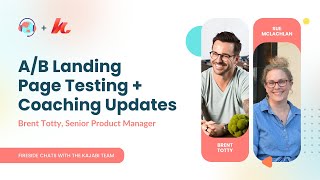
A/B Landing Page Testing with Brent Totty, Senior Product Manager | Kajabi Fireside Chats
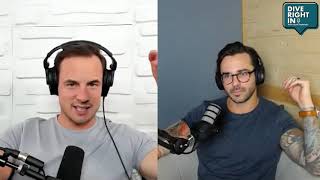
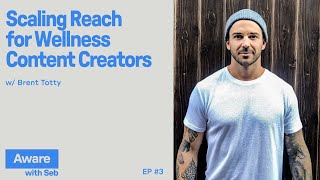
Scaling Reach for Wellness Content Creators w/ Volv Founder Brent Totty | Conscious Profits Podcast