Scaling Reach for Wellness Content Creators w/ Volv Founder Brent Totty | Conscious Profits Podcast
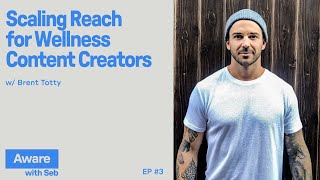
Brent Totty, founder of Volv, built an AI platform that turns creators' content into timed SMS coaching. He bootstrapped the company, launched in January after a stressful build, and integrated wearables and web chat to help wellness creators reach audiences at scale.
Questions this video answers
July 22, 2020.
Seven.
Launched in the beginning of January (year implied by recording context).
HRV of about 6.
www.volv.ai
Chapters
Welcome to Conscious Profits Unfiltered. This is your host, Sebastian Nam. Hey guys. Today I interviewed my good friend Brent Totty. Brent is a wellness tech entrepreneur who obsesses about identifying the true potential of content. What the heck does that even mean? Right? Well, Brent's career started in AI, healthcare, finance and shifted towards his passion of wellness as a trainer and private chef. He has started seven different companies since his departure from the 9 to 5 world, which has culminated in his current project, valve. Valve creates AI virtual coaches out of YouTube videos, Instagram posts, blogs and podcasts for coaches, trainers and well being content creators. Now you get what I'm saying, right? Valve enables creators to build high impact, sustainable businesses. Listen in on my interview with him as we dive into his current journey past micro failures and some interesting insight on trusting in the silence.
What's up, Brent? Welcome to the pod, brother.
Thanks man. I'm really, really excited to be here.
Hell yeah, man. How's that quarantine life treating you?
You know, it was rough for a little bit and as you know, we recently relocated down to Orange county so got a little bit more space. As you can see. We built a little podcast studio in my garage which is really exciting.
I love it, man. Can't wait to go in person.
Hell yeah. We've got, and we also have a backyard which I haven't had in like six years. So it's been as tough as quarantine can be. I feel very blessed that we were able to find this spot and have it work out in the timing that it did.
It's all about being able to, you know, find those little things to be, you know, grateful about big things or little things and just, you know, focus on that.
Absolutely. Well, the other thing that's kind of crazy about all this too is like, you know, yes, parts of like certain states are going to be reopening here in the short term. But you know, being an entrepreneur and like working at a startup and most of my employees and people that work for me or work with me are all remote. So for us, like adding an extra expense to go and reopen an office just doesn't make sense. So for the foreseeable future, like, you're looking at my office right now, dude.
I'm on the same boat. And that's one of the things that I've been blessed with too is like I've been used to operating remote. Both my agencies have been remote for a couple of years now. And even though I love working out of a coworking space because the Energy and the people and the creativity, I love that. But the operation aspect of it didn't change at all. And it also helps that, you know, you operate lean when you're remote. So, you know, if you lose revenue, some of the revenue you lose, at least, you know, when you're operating lean, you know, you don't have that crazy overhead. So that helps too.
Absolutely. It makes it a little bit less scary when stuff like this happens where, like, you know, with all the different PPP loans and stuff that were coming in for small businesses and trying to figure out exactly how to support people, lot of what people were actually gaining those loans was based upon overhead that they had. And you know, we don't really have much overhead because we work so lean and we're so bootstrapped that like, for us it was payroll and like, I thank my lucky stars that we got in early and we were able to get that loan. Yeah, yeah, we got, we got really lucky.
Well, let me get right into it. One of my first questions I want to ask you is what was your last oh shit moment?
Could be anything.
Good, bad, could be whatever.
Well, so as you know, we launched in the beginning of January and we launched with an absolutely massive client and we had to build some stuff that was really, really quick and the normal development time was probably cut in half. And for us we were like, this is such a huge opportunity. There's like, there's no way that we can say no to it. So we took on the burden of like, alright, we're going to build this out, we're going to figure it out and we're going to go live and it's just, you know, we're going to see how it works. January was my oh shit moment of like.
So the entire month of January was oh shit.
The entire month of January was my oh shit moment. Because we spent the entire time kind of just making sure that like, things were working the way that they were supposed to. And in the business that we're in, because one of our distribution methods, and we'll go into what I do later but like one of our distribution methods is sms. So when you're dealing with sms, you're dealing with carriers and carriers are kind of this like black box of like you send a message in, maybe the recipient gets it, maybe they don't, and you really have no idea whether or not they're actually truly going to get it. And because what our business does is very based on timing, if that goes wrong, the interpretation of whether or not you're bringing value is very, very low. So having to balance all of that and me being the only support person was definitely my oh, shit moment. Like, you know, I've been huge into wellness for a very long time, and I use all sorts of wearables. Like, I've got an OURA ring, and I've had a whoop band and, like, all the different things that measure stress. You should have seen my readings in January. It was absolutely absurd. Like, my normal stress readings were like, it's called heart rate variability are, like, usually in the 60s to the 70s. I was at like, 6 all of January.
Your HRV?
Yeah, my HRV was at 6. That's, like, not a joke. Gnarly. It was consistent for the entire month. So that was like. It was a major moment of like, okay, I know what our platform is capable of doing. We learned a lot in the process. And on top of that, like, we learned very quickly where our blind spots were.
One thing that I heard that stuck out was this the typical, you know, entrepreneur. You said I was the entire support team. It's like, CEO, marketing director support, you know, that's great. And it's the beauty about being an entrepreneur. You got to be able to wear all the hats, too, so you could be a better leader moving forward so that you can coach everyone else. Because you did that thing, too.
It's almost like more.
Yeah, it's almost like, know what the janitor feels like and know what it feels like to sweep the floors. It's kind of that whole analogy, you know?
Absolutely. I am actually very grateful that the way that we funded our business was kind of this slow roll methodology. Instead of bringing in a bunch of capital up front and building a bunch of shit that you don't necessarily know is going to be the right product market fit. We built things in a very slow and methodical cadence where we were looking to figure out, all right, we're going to build this and we're going to test it, and it's going to be in the market. We're going to test it with a very small amount of people. We're going to get some feedback. Do we want to continue to go down this path or do we not? And because we did it that way, it made it so that I was building a lot of the actual tech itself. I was designing all of the actual UI and UX I'm dealing with along the way. Yep. And with all that, with all sales, all consumer relationship, like, everything was kind of in my plate. And I learned very quickly, like, you know, when we're gonna bring in the next round of capital, like, what are we gonna use it for? And I have a very clear idea of what that's gonna be.
That's awesome, man. We'll get a little bit into that. So what was your last Hell yeah moment?
I would say, let's see.
My last Hell yeah moment was actually earlier today. I was on the phone with one of our upcoming channels I personally have been working on the way in which I explain our technology in the context of what that particular individual, whether they're a trainer or they're a coach or they're a content creator in the wellbeing space. I have to kind of tailor what my pitch is combined with what features I think they're actually going to care about. And today's meeting was one of those times where I understood exactly what that person wanted. I understood exactly what they valued. They had already gone through and seen a demo and we went and did a follow through call or follow up call and looked and said, look, these are the things we can do for you right now. These are the things that we're going to be doing in the future. These are your action steps right now. Let's not overcomplicate it. Let's just keep it to the very simple basics, hand it over to me and let me do what I do. And that was one of those moments where I felt like I made a huge step towards understanding the sales process because I'm not a salesman.
Right.
Yes, I pitch and yes, I've like started a few different companies but like, that's not my core competency.
But it was essentially the way that it flowed, the flow of the conversation and. Right. That was the hell yeah. Kind of like, hell yeah. That felt good. That was right.
Learning, learning to shut up. Like that was one of the things too where like I have. I tend to speak myself into corners when I think that someone's not understanding me.
So you just keep going and just.
Going and going and explaining, explaining. And all of a sudden I explained the same concept like six or seven times and they're like. And they got it maybe on Try two. So learning that being comfortable in the silence when you're actually talking to someone about something you're trying to explain.
Well, let's rewind a little bit. I want to hear about one of your first ventures.
Yeah.
Why don't you give us a quick little summary about your first venture, about Spiker.
Yeah, yeah. So we've talked about this before in terms of like, what are Our collective efforts that we brought to the table, what have we really brought to market and the things that we've done. So I used to work in healthcare finance. I was an econ major coming out of ucsd and I had a pretty big push towards like understanding data science. And that was my first real job out of school. I worked there for about four or five years, met my current mentor and the guy that ended up funding my company. So it was one of those like opportunities as a 20 something to walk in, have a job that actually mattered and people really depended on you. And then I got to a point where I just hit a ceiling. And when you're working in corporate and you've got your nine to five, like, it's kind of hard for someone that has been working in the industry for 30 to 40 years to take a 22 year old kid that's all tatted up seriously when he's gonna tell them how he should be running their business or how she might be running her business. And so there was a certain point in which I could only learn so much. And my boss at the time ultimately came to this conclusion of like, we had just lost a few major clients. They had just created a section of the company for me and they're like, look like, we've got to demote you. I just hired a kid underneath me. He needs to be fired. You can keep your job if you want, but I don't think that's the right move. And he ultimately gave me the pathway of like, you're meant to do something more, go do something else. And when you cut, whenever you figure out what that is, come back to me. Now, right out of school, I was thinking, and I'd already been thinking about entrepreneurship and like, my buddies and I would constantly sit at home and think about like, what. What's the thing that we really want to be known for? What do we want to bring to market? And the first thing that I did was a company called Spiker Spice. I made it with my mom. She actually made this spice for me when I was like 13 or 14 to teach me how to cook. I didn't grow up with her. So it was one of those things where like, that was one of her ways, that was her love language of being able to show me.
That's awesome.
What she was all about and like how she treated food. And food is such a personal thing that you kind of have this opportunity to really show who you are with food. So we created this company called Spiker Spice and it was Designed to help college age students how to cook. I used it all throughout college. I was kind of forever the chef in the houses that I lived in. And people were constantly having me come and they're like, hey, you need to cook dinner for all of us. And I always leaned on Spiker spice. So first thing out of school, I moved up to la. I was down in San Diego before, started working on this project and got to a point where like, great product market fit. Like, literally everyone loved it. We had different grocery stores were interested in selling our product. And so we were getting to that point of like, all right, we need to change this operation from a done in our kitchen or down the street at a restaurant to an actual co packer.
Yeah.
And I think that that was just the amount of time that it took for us to get to that particular point was pretty quick. And I don't think that my mom was really ready for that. And for her it was like, I want to spend time with you making this spice here. And in my mind I was like, let's turn this into a big ass business and let's take this to the next level where we can affect millions of kids through college and all the different people that are struggling with getting comfortable in the kitchen. It's like such a compelling segment of the market to really go after. So my eyes were much bigger than hers at that point. And we just hit a point where it was like, this is not, this isn't going to work because we weren't making enough money. I was like, I was at the point where I was still, I still had my like, infinity that I bought while I was making way more money down in San Diego. And I was like, no, I'm still gonna hold on to my material goods that I like, quote, unquote earned. And I got to a point where like, I was burning through so much cash on a monthly basis, like I had to get a real job in order to pay for stuff. And it came to a point where we just kind of parted ways. And you know, it was, it was something that was sad, but at the same time, it was a very, very important lesson learned where it's like, if you're gonna work with your family, you need to set the actual parameters of what everyone is trying to do to make sure that everyone's on the same.
And that goes for your family, it goes for your friends, it goes for any business partner, any kind of business partner. Absolutely. And you and I have talked about this and we've gone through a lot of little startups and little ventures and projects and one way or another.
Whatever, failure. Right. And I know you refer to it as micro failures and those little micro failures which may have not been failures because they may have been successful in their own ways, but they're the ones that led us to the next project and to the next one. And you learn from it and you learn from it and I mean, I just, I don't know anyone who just started their own, you know, their first company and that blew up.
Yeah, yeah.
I mean, maybe there's somebody out there, I don't know, but it's definitely not the norm. And I, you know, from that I want to ask you about. Let's just fast forward then through all of these other ventures that you may have been involved with and give us a little bit about what vault AI is and the purpose and the mission behind it. Hey guys, I just want to remind you, if you want to find more content like this, you can visit sebastiannam.com that's sebastian n a u m.com youm can also get a ton of other marketing resources for myself and my agencies ranging from SEO to social media, influencer marketing, branding, web development and more. Again, that's sebastiannam.com thank you and enjoy the rest of the show.
Sure. So Volv is a virtual coaching platform for coaches, trainers and wellbeing content creators. Ultimately our thesis is that they spend all sorts of time putting incredible content out on Instagram or Facebook or YouTube or blogs or podcasts.
And these are influencers. We're talking about health and fitness influencers.
Health influence influencers.
And that means just for anyone out there, is it just anybody that's an influencer on Instagram or is it because they just have reach essentially through their blog?
We like to categorize it as someone that is a content creating influencer, someone that has actionable content and actionable advice that's embedded into their content. So it's actual advice.
I have action on what they are saying like.
Exactly.
In order to be able to write.
Exactly. So when you're looking at things like recipes, you're looking at things like workouts, you're looking at things like mindfulness programs, you're looking at things like any sort of like metabolic reset programs, you're looking at even things as, you know, as simple as driving connection with other. I mean in this current Covid environment there's things like all of a sudden like hygiene is hyper important. You're talking about connection with people that you wouldn't normally be able to Talk to. You're talking about hydration, you're talking about sleep, you're talking about supplementation. So there's anyone that's in this general ecosphere of creating content that's like a recommendation that might be situationally relevant to someone or someone that runs a coaching program where they interject all those little tidbits, things that they've built in their tool set for years and they're looking for a way to be able to scale their business. One of the main problems that a lot of these creators have is that if they're doing one on one coaching, they're limited by the amount of people that they can actually bring in. If they're distributing PDFs then they're limited on the actual impact that they're able to make because a lot of times people will get those PDFs for 9.99 and it's a one time payment. And like maybe they look at it, maybe they.
Or a course, a lot of them are going core the course route scale, right.
And courses are like a nice iteration on the concept of a PDF, yet there is still. You don't feel like that particular creator is walking with you through the process of creating or forming a habit.
So Vaugh is connecting me with my health and fitness or health or fitness influencer on a daily basis. And how does that actually happen? What is actually happening? How are they connecting with me?
So we create a virtual version of that particular creator and we distribute their ideas in the context of what you do all day long via sms. So if they have a recipe for you and it's meant for it to be sent right around breakfast time, then we automate the process of you being able to send that. Now if you have follow up questions, you can certainly talk to them through our platform as well. But the idea is that we're lowering the amount of actual effort that they're putting out when they're sending content to a particular user and we're being proactive on their behalf to distribute their methodologies and their ideas and the things that they think are valuable when they're teaching a new client of theirs.
That's badass, man. So basically you're scaling the way that they communicate with everyone and ideal and in a better form of communication, which is through sms, through text. So now I get a text in the morning about a breakfast recipe from a health influencer that I like to follow. And then maybe for me, if you're coaching me on a workout and I want to be, do I say like, oh, I usually work out between 5 and 7pm and, and then, so between 5 and 7pm, boom, I get that workout, it's leg day. And then I get that texted to me.
Is that how it works? Correct. So that part of our onboarding process is to understand what the end user's general schedule is. Now what's beautiful about our system is that as wearables get more API driven and we're able to get more information from Fitbits or Auras or Whoops or any of those other wearables that are out there, the automation of being able to understand what time you wake up all of a sudden doesn't require you telling us. So in this world of like very interconnected Internet of things where all of our different devices are talking to each other, we're able to connect content to that.
That's awesome, man.
So that highly contextualized and relevant content is sent.
Yeah, that's super sick, dude. That's super sick. And how is, you know, how is this, what is the, what's the mission behind this? So, but beyond the concept of the business of how we're conn people to their influencers, how we're making it easier for influencers to deliver their content, what is the real mission behind this, the impact you're trying to make into the.
Lives of people, it's two part. So one, when you introduce automation into any particular individual that's trying to provide value, you're freeing up their time to be more creative. So when you give them the opportunity where they don't have to constantly be posting on Instagram every day, it gives them a little bit more flexibility where maybe I want to create something that's a little bit more diverse or a little bit more direct or a little bit more longer form and actual video content, it gives them the opportunity to be able to focus on that while their business is semi on autopilot. Now that's one section that's our mission with creators is to enable them to be more creative and to give them more power to be able to do so. But when you're looking at long term impact for the people that look to them for inspiration or advice, it's near impossible for someone to be able to pay for the time of one of those people that have spent 10,000 plus hours becoming a specialist in something to work with them day in and day out. I don't know if you've ever tried to form a healthy habit in any particular way, but it takes constant work and it's not an end destination It's a journey. So you need to be nudged like.
Constantly, all the time. Reminded. Reminded. Reminded. Yeah, I do it by with visual cues. I write them on my mirrors and my bathroom, whatever in order to be reminded.
I put my workout shorts on in the morning or at night before I go to bed and I fill my water and I put it right next to my phone and literally the first thing I do, I wake up.
No excuse.
I throw a shirt on, I'll drink my 32 ounces of water and I get outside.
I'm shocked you throw a shirt on.
To be honest with you.
That was a bold faced lie. I've actually, I've been getting, I don't know if it's flack or admiration in the, in the neighborhood, but it's definitely one of those things where it's like why is that tattooed shirtless dude constantly wearing that weight vest and walking around at 7 in the morning? It's kind of strange.
I love it, dude, I love it. So how important is it to be? You know, I gotta be honest, I saw a post you just recently posted and you said something about your mentor giving you a kick in the ass about being reminded of the mission, of your mission, your personal mission. Right. In life in general, which can be an ever changing thing, but also in your business. So it's like how important is it to have.
A deeper purpose in your business and in your life and how those two tie together to keep you going as opposed to just being. To make money?
Yep. It's in my personal opinion and I think everyone's very different. It's kind of the only thing that matters. You have to have something that you're willing to like say when like a January for me happens and you have to go to bed at 2am and you have to wake up at 4 and you have to do that for 30 days straight. Like if you don't have a powerful why the likelihood of you being able to adhere to that type of schedule and also like throw your loved ones like wishes to the wind. Like while you're like, look, I'm doing this, like I have to do this. Like if I don't do it, I'm going to be unhappy. It's not going to happen. Now I do think that there's a very unique balance between personal purpose and business related purpose. And I think that it's on a spectrum and it's on a sliding spectrum that can happen from time to time. And I think that that's why what you're bringing up is so contextually relevant is you have to look at, you know, when you. When you lose sight of what your particular purpose is in any one moment, it's very easy for that slide or that scale to slide just a little bit. And when that happens, you have to have someone that can take an objective view of what you're achieving and what you're doing. That's not you, and that's not someone that sees you every day and says, look, these are the things that I know that you're capable of doing. These are the things that you told me that you want to do, yet these are the things that are not happening. And this is why I think that you should be doing it this way versus this way. And what was interesting about this conversation today was it was one of the.
That was your mentor. Just to repeat it, that was your mentor. Somebody that's outside separated from seeing you every day, whether it be your wife or your best friends or your family.
Exactly.
So it's. And you had to communicate that mission to your. Obviously, your mentor knew that mission. So he's acting as a reminder for you.
And he's. Yeah, he's kind of my little nudge reminder system. He's my little evolve coach to, like, make sure that, like, I'm staying on track with the things that I. The habits that I intended to form and the things that I tended to achieve. But what's. What's so interesting, too, is that, you know, you see. You see people that are constantly working day in and day out but not making a whole lot of progress. And what ultimately ends up happening is that you get so focused on whatever it is that you're working on, and then you bump that up. And this is kind of part of the entrepreneurial journey, too, is you get. You bump that up against. You want people to like you, but you also want to do something that's very, very unique and different, because in order to be successful, you have to do both. And what ultimately ends up happening is that if you spend too much time trying to get people to like you, you ultimately end up losing sight of the overall mission and the uniqueness that you bring because you take the path of least resistance, and you're like, oh, yeah, we could do that. When really what you're trying to provide is something that's completely different, that's not in the market. And so it was a very interesting conversation this morning where I knew that that was the case, and we were struggling to close a few different leads, and it comes down to, like, all right, I want to make sure that the value that I'm providing for the people that I set out to help in the first place is actually in line with the things that they're trying to achieve too. And it's not a buddy buddy thing. It's like, let's make sure that this is viable for your business. And that was the lesson that I took away from today. And ultimately, morning was a little rough, but you get past it and you move on and you try to learn your lessons and you apply those lessons to all the other conversations you have the rest of the day.
What a beautiful freaking lesson, man. That was a really good lesson this morning. That was this morning. That's really awesome. And, you know, it's easier said than done to just be yourself and be unique and not give a shit what other people think about. You get into that mode, you can get into that mode, and then you get right back out of the mode. You know what I mean? You get right back into, like, okay, I still want to be like. It's human nature to want to be like. Like, it's totally fine. And then there's also, like, being, like, going the whole other side of the spectrum and being like, well, I'm just gonna go after this mission and then also being able to receive the feedback. If nobody fucking likes you or nobody likes anything that you're doing, then maybe there's something that you should be, you know, looking into and be like, okay, wait, is my mission really aligning? Is my mission also going to help others? Is it gonna resonate with others? Because ultimately that was part of. It's part of your mission is to help others too, right? So it's an interesting dance, like you said. It's, you know.
Well, and what I love, what I love about this so much too, is that it comes down to being able to have someone that isn't with you day to day to give you an objective perspective so that you don't take things personally. Because it's not like you're doing something wrong. You just have to adjust your course. And I think that it's been something that I've tried to maintain as an entrepreneur and as a founder and as someone that, like, is getting to the point now where, like, I have to start hiring people and I have to build, like, a team to be able to make sure that, like, criticism that is. That is sent my way is not malicious. It's meant for me to learn and be successful. And the second that you take something like that personally, you're not Doing your job as a founder.
Absolutely, man. Well said, brother. I was gonna ask you what's next? So that's part of what's next.
Yeah, yeah, yeah. We're, we're in a really awesome spot right now. We've got, you know, three or four different ball channels and that those are representative of different coaches and trainers and content creators that we're working with that are all in the process of going live here shortly. We just released this new web chat feature which is super interesting and allows people to kind of upcharge for the one on one coaching. So you've got your, your automated AI virtual version of you that's delivering 90% of the content and then you've got the other 10%. That's that human touch. Because I think that the role of AI in all of this content or humanity or whatever, it's not meant to replace the human element. It's never going to be that good. But what I do think, and that's kind of what I was talking about before, is it kind of takes a little bit of the pressure off you to be more creative and to spend more time providing deep, deep, deep value with people. And ultimately if you're not able to be paid for the value that you bring. That's why a lot of these coaches are ultimately having to work for other jobs while they're trying to build this coaching business. It's so important for them to be able to make the impact they need to while also maintaining ahead of the curve. They have to constantly be looking around the corner and see what's coming next. How can I continue to develop as an individual? How can I continue to teach people new things? But. And you have to do that by learning yourself.
Absolutely, brother, absolutely. And.
I want to leave you with one more thing and that's, you're a great, you know, you're a great leader. You're a leader, you're a conscious leader. And so what should the new leader focus on in today's day and age? One main thing or one main concept? What is the new leader focus on?
I think that it's a two part answer. The first part is empathy. You have to understand where other people are coming from in order for you to be able to make good decisions. And it comes down to not taking things personally, being able to place yourself in someone else's shoes. And it's particularly relevant in this time right now where, you know, people are losing their shirts left and right and you can't get upset if something doesn't go the way that you think it's going to go because ultimately you have no idea what they're going through. So that's. It's one side that and then one side this concept of being a kind of like a forever learner. Like, you have to get to a point where you're constantly waking up and then going to bed smarter. If you're not doing that and you're just staying complacent, you're not going to be in a position to continue to lead other people. And especially in this age of, like, podcasts and like constant facetimes and being able to be, you're kind of like in the limelight as a leader, which is a good thing. But in order to continue to stay relevant and to continue to provide value to people, you can't repeat yourself. Like, there's certain things that are going to ring true all the time, but if you're not staying up to date with what's going on and you're not constantly learning from the top thinkers in the world, like, there's nothing that's new that's being said, however, it's new contextually.
And you have to provide value.
Yeah, exactly. So it's empathy with, you know, being a. Being a forever learner. Forever learner. Word.
I love it, brother. I love it. How can people get a hold of you, your socials for yourself? Vol.
Yeah. So you can check me out on Instagram at Brent Toddy. We're also going to be launching a podcast here called the Potentialist. So we're going to be interviewing all the coaches and trainers and content creators that are aiming to change the world one moment at a time with their content. So that's going to be launching here in the next, like, call it two weeks. So we're building up a little catalog there and then you can find us online at www.volv.AI. and that's V O L V. I love it, man.
I love it. Well, thanks so much for being on and helping inspire, brother.
Absolutely, brother. Appreciate it.
Have a good rest of the day, man. Hey, guys, I really hope you enjoyed that episode. You know, it takes a lot to put these things together, but I truly love doing it. If you enjoyed this episode or the show in general and you listen to it on audio podcast, please take some time to give it a review. It would really mean a lot to me. And if you watch the video, please go ahead and just click subscribe and share it with somebody that you think would like it. It would really mean the world to me. And it helps keep the Show Alive. Visit sebastiannam.com for more content and follow me on Instagram at sevnam. That's S E B n A u m thanks again for spending your time with me. I know it is valuable. I hope you have a great rest of the day and week till next.
More from Brent
A/B Landing Page Testing with Brent Totty, Senior Product Manager | Kajabi Fireside Chats